Specs are compiled from manufacturer listings and verified buyer reviews and can change over time — please confirm the key details on the product page before buying.
You want the Pokémon to keep coming in while your phone stays in your pocket. That is the whole job of an auto catcher, and the difference between a good one and a frustrating one is simple: does it hold its Bluetooth link, and does it last long enough that you forget it is there. Below are nine devices that genuinely auto-catch and auto-spin, ranked so you can pick in minutes — including the current crowd favorite, at 4.5+ stars across 200+ owners.
This guide is built by comparing the manufacturers’ published specifications and the patterns across verified customer reviews, so you get each pick’s real strengths and trade-offs instead of marketing spin.
Some run off your phone’s own USB-C port with no battery to charge at all, while others carry a rechargeable cell that survives days of walking. Match the power style and connection method to how you actually play, and the picks below cover every version of that choice.
A device that keeps catching and spinning on its own turns a walk into steady progress, which is exactly what the best pokemon go catcher should do without asking for your attention.
Top Picks
How To Choose The Best Pokemon Go Catcher
Every catcher on this list does the same two jobs: it throws a ball at a Pokémon and it spins a PokéStop. What separates them is how they stay connected to your phone and how they get power. Get those two right and everything else is secondary.
Power: plug-in versus battery
A plug-in catcher draws its power straight from your phone’s USB-C port, so there is no separate charging routine to remember. The trade-off is that it occupies that port while you play. A rechargeable or AAA-powered catcher runs on its own cell, which keeps your port free but adds a charging or battery-swap habit. Neither is better — plug-in suits long stationary sessions, battery suits all-day walking.
Connection stability is the real spec
An auto catcher is only as useful as its Bluetooth link. When the link drops, the catching stops and you are back to tapping your screen. Look for a device that reconnects on its own after a drop, or one with a disconnected-reminder function, because a catcher that needs a manual re-pair every hour defeats the purpose.
Comfort and wear style
Wristband models keep the device on your arm so it is always within reach and always in Bluetooth range. Pocket and keychain models are smaller and easier to toss in a bag. If you walk long distances, the wristband style tends to stay connected better simply because it never leaves your body.
Side-by-Side Comparison
| Model | Best For | Power Source | Battery Life | Form Factor | Amazon |
|---|---|---|---|---|---|
| Nintendo Pokémon GO Plus +★ Best Overall | All-round daily play | Rechargeable Lithium Ion | — | Handheld | Amazon |
| Pocket GoGo Auto CatcherBest Value | No-charge plug-and-play | USB-C from phone | — | Handheld | Amazon |
| Brook Pocket Auto Catch PlusBest for Wrist Wear | Wristband comfort | Rechargeable | 12 hours | Wristband | Amazon |
| Brook Pocket Auto Catch Reviver Plus | Water resistance on your wrist | Rechargeable Lithium Polymer | 18 hours | Wristband | Amazon |
| Pocket Hunter | Slim pocket carry | USB-C from phone | — | Handheld | Amazon |
| Megacom DuoMon3 | Two accounts, one device | Type-C and wireless charging | — | Keychain | Amazon |
| Megacom DuoMon 1P/2P | Longest runtime on AAA batteries | 2× AAA (not included) | 600 hours | Keychain | Amazon |
| Mcbazel 247 Dual Auto Catcher | Two phones plus raid taps | Rechargeable 1000mAh | — | Handheld | Amazon |
Detailed Reviews
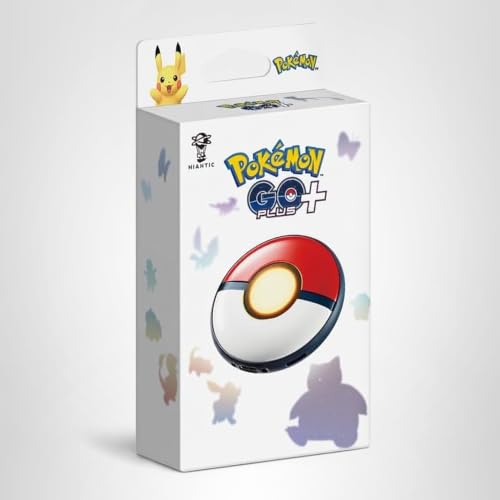
1. Nintendo Pokémon GO Plus +
Our pick — 4.5+★ from 200+ verified ratings; the strongest balance of quality and price.
The one that actually spins PokéStops and throws Great Balls without you looking at the screen.
This is the device that finally makes auto-catching feel like the game’s own design rather than a workaround. It connects over Bluetooth to your phone, and once paired it spins PokéStops and throws Poké Balls automatically — with Great Balls and Ultra Balls in the mix too, which most catchers on this list do not do.
Reliability is what sells it. It keeps catching day after day, across long play sessions and field research tasks. Setup takes a button press rather than a briefing, and the features people actually chase — catch rate, spinning, ease of use — all get the job done.
There is one extra no other catcher here offers: a sleep-tracking side tied to the Pokémon Sleep app. Press and hold the central button and set the device by your pillow, and the Pikachu inside sings lullabies and acts as your morning alarm. The more you sleep, the friendlier it gets, open up more sounds. It is a niche feature, but if you like the idea of earning rewards while you rest, it is the only ticket in this list.
What earns it the top spot
- Spins PokéStops and throws Poké Balls, Great Balls, and Ultra Balls automatically — no other catcher here handles the higher-tier balls.
- Pikachu sleep companion with lullabies and morning alarm on the Pokémon Sleep app.
- Bluetooth connection stays solid through long sessions, and setup takes one button press.
- Reliability is the standout — it does not need babysitting to keep catching.
The honest trade-off
- Mixed value feedback — the added sleep feature is the main reason it costs more than rivals that just catch and spin.
- The packaging is Japanese, but the device itself works the same as the US version.
- Bluetooth drops occasionally, which is a reality for every device in this category.
Go for this if: you want one device that catches everything, spins stops, and doubles as a sleep buddy — the safest single buy here.
Think twice if: you only need basic auto-catch and spin, because you are paying for sleep tracking you may never use.
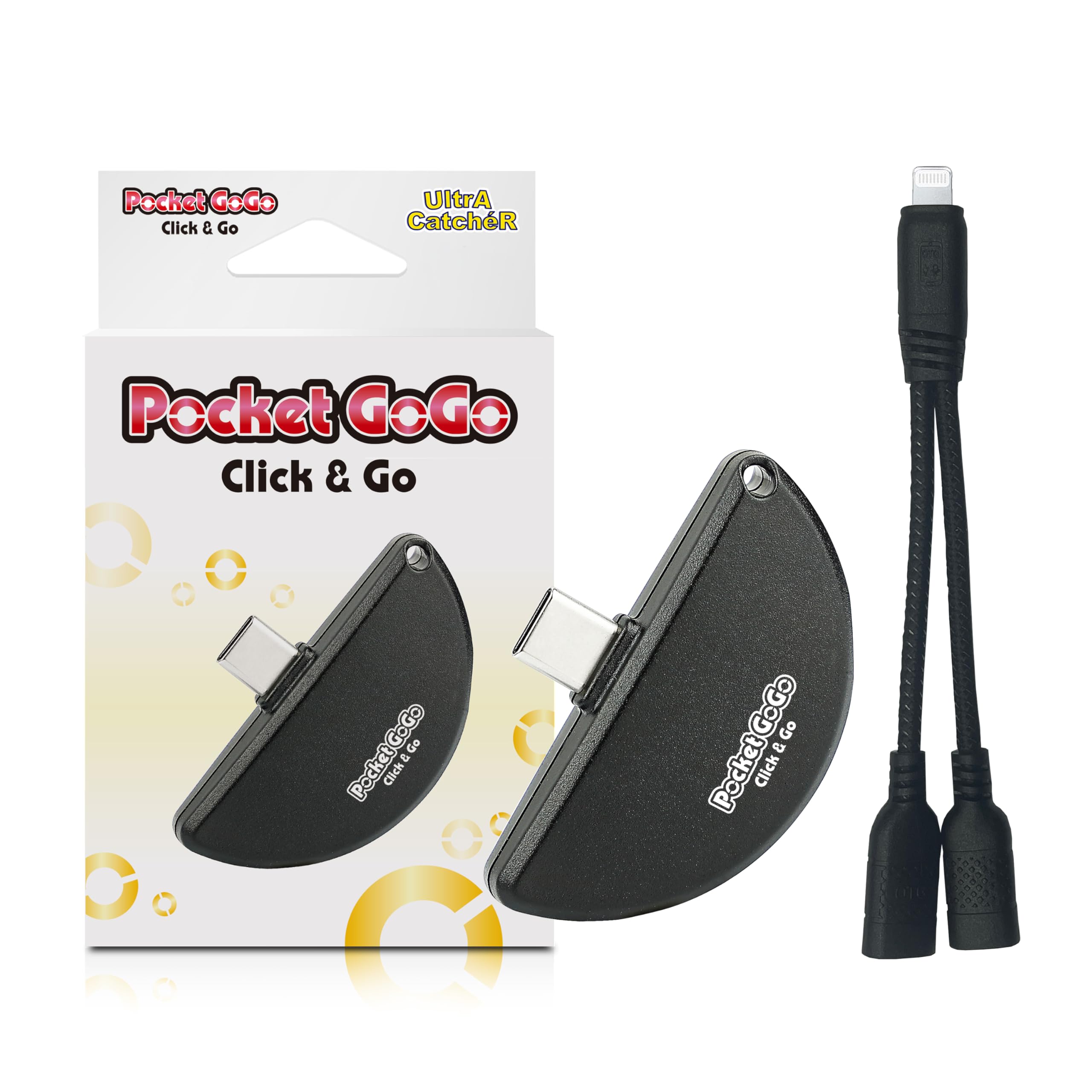
2. Pocket GoGo Auto Catcher – Black
No battery, no charging routine — it just sips from your phone’s USB-C port.
Pocket GoGo makes its pitch on simplicity. You plug it into your phone or a power bank over USB-C, and it starts catching and spinning. No charging schedule, no AAA batteries, no wondering whether the cell is full — it draws whatever it needs from the source you plug in.
The auto-catching and auto-spin are the bright spots. It catches monsters and spins stops as fast as the premium name-brand options, and it does it in a pocket-friendly package. Barely bigger than a lighter, it slips into your jeans with room to spare.
The catch — literally — is that the device’s function and connection are the most-discussed themes across user feedback, and they are mixed. Some find it stops working after about a month, and pairing over Bluetooth causes trouble for a portion of buyers. It is compact and cheap, but it does not have the long-term reliability of the Nintendo or the Brook watch models. Buy it as a low-cost entry point and you will be happy; expect a forever catcher and you might not be.
Where it shines
- Runs off USB-C with no separate charging — one less thing to remember.
- Catches and spins as fast as the premium models.
- Passthrough charging (5V/1A output) keeps your phone topped up while it works.
- Small and light enough for any pocket.
What to know before you buy
- Some units stop working properly after about a month — the durability feedback is weak.
- Bluetooth pairing is where most gripes settle; some find it easy, others cannot connect.
- No battery means it cannot run detached from your phone.
Worth it for: budget-conscious players who want auto-catch without a charging routine, and do not mind buying a spare if one fails.
Skip if: you want a single purchase that lasts through a whole season of play — this is a starter catcher, not a workhorse.
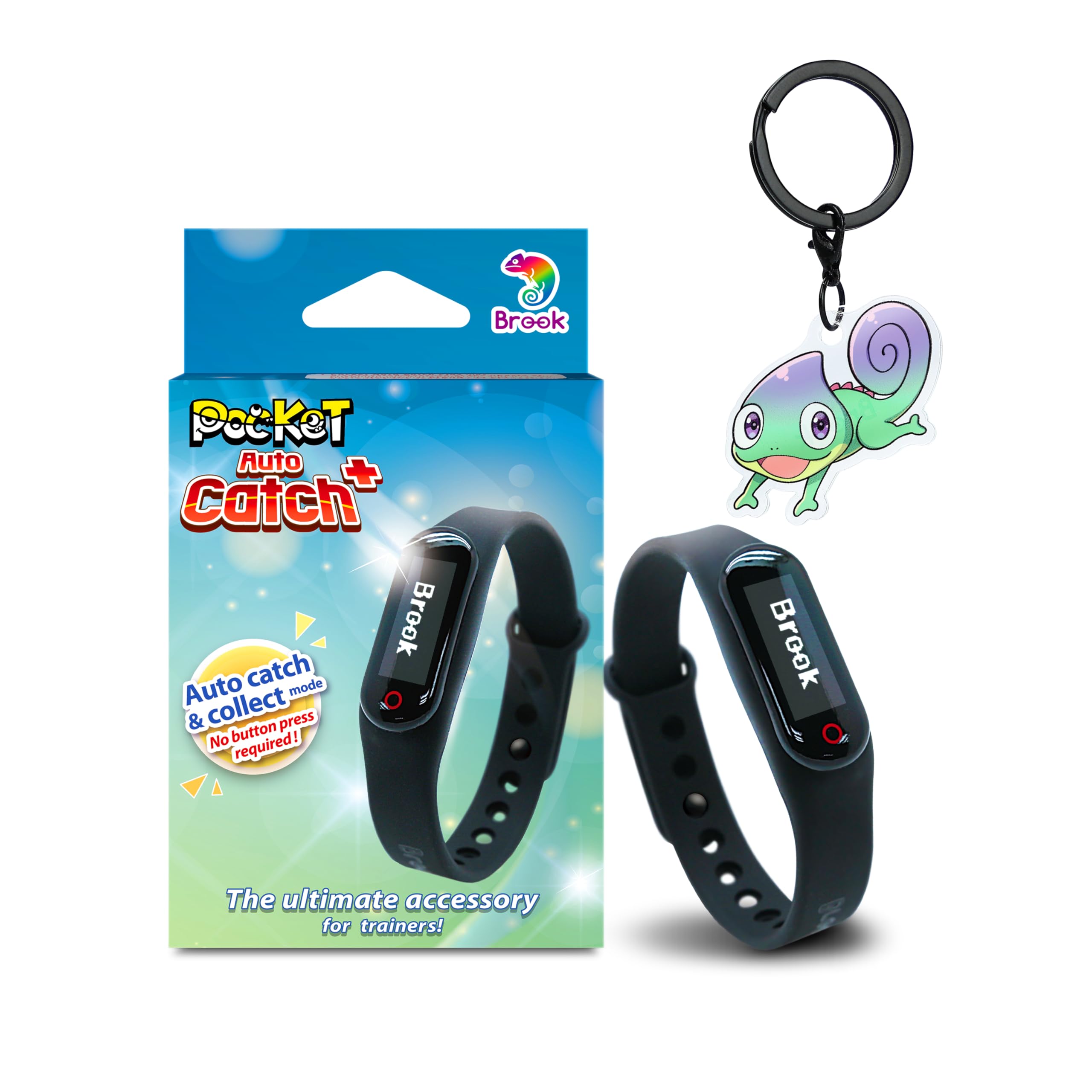
3. Brook Pocket Auto Catch Plus with Keychain
A wristband catcher that runs twelve hours and slips a keychain into the box.
Twelve hours of battery is the headline here, and that is a real day of walking, spinning, and catching before you need a charge. The form factor is the other half of the pitch. It comes as a wristband, so the catcher stays on your arm and in Bluetooth range without you thinking about it. The kit also includes a Brook keychain, so you can clip it to a bag on days you would rather not wear it.
What gets people playing is the gameplay itself. The auto catch spins stops, collects items, and levels you up while your screen stays dark — and the feedback on that side is resoundingly positive. The 8.86-inch overall length is the strap dimension, so it fits a range of wrists comfortably.
The honest read is less rosy on longevity. Functionality is the most-discussed theme and it splits both ways — some devices run smoothly for months, others stop turning on the next day. Durability feedback runs negative, with units giving out within about four months. The Brook Pocket Center app handles settings and firmware updates, but it cannot fix a hardware fault. Treat this as a comfortable wristband you may need to replace within months, not a lifetime companion.
Comfort meets reality: the twelve-hour battery and wristband build make it the easiest catcher here to live with on long walks, and the extra keychain gives you a bag option.
The honest caveat: durability is the weakest link — a portion of units quit within months, so buy it knowing you may be replacing it.
Reach for it if: you want the wristband convenience with the longest Brook battery you can get at this level, and you like having both strap and keychain options.
Look elsewhere if: you want a catcher that will outlast a full season — the durability record here is rocky.
4. Brook Pocket Auto Catch Reviver Plus

Eighteen hours of battery, an IP67 rating for rainy walks, and a disconnected-reminder that keeps you catching.
It auto catches, auto spins PokéStops, and collects items without you pressing a button, with vibration feedback so you know it is working.
The features that make it livable are the ones aimed at connection trouble. A disconnected-reminder pings you when the link drops, so you can re-pair before a long gap of lost catches. There is a battery-capacity display so you always know how much juice is left. And the IP67 waterproof and dustproof rating means sweat, rain, and splashes are not a problem.
Reliability is the split here. Half the feedback says it runs like a top; the other half says it stops working after about a month or fails outright. That is the honest picture for a device this age. The Brook Pocket Center app handles firmware updates and offline push notifications, but it cannot rescue a unit that has already failed. If you accept the single-replacement risk, the 18-hour battery and IP67 body beat the cheaper wristbands on this list.
The case for it
- 18 hours of battery — the second-longest rechargeable runtime here, behind only the Watchic Plus.
- IP67 waterproof and dustproof rating makes it rain- and sweat-friendly.
- Disconnected-reminder alerts you before you lose a long stretch of catching.
- Battery-capacity display keeps the power level in view.
The real-world caveat
- Reliability feedback is evenly split — some units run for months, some quit inside a month.
- Battery-life feedback is also mixed, with some units failing to hold a charge.
- Value for money is the weakest aspect — many feel it costs more than the experience is worth.
Best for: players who walk in rain or sweat heavily and want the 18-hour battery and IP67 body to hold up through a full day outdoors.
Not for: anyone who wants the most reliable unit at this level — the failure rate is a real consideration.
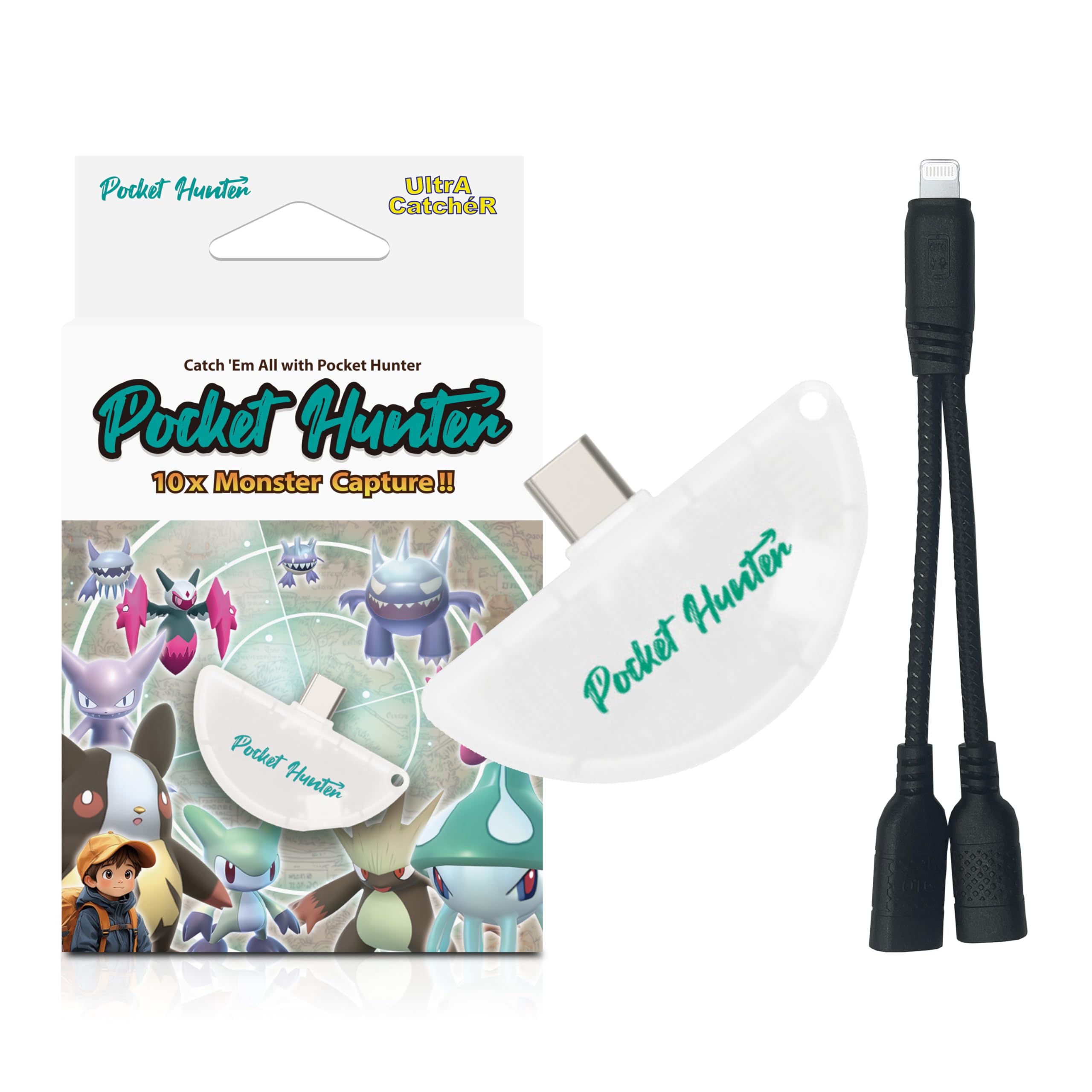
5. Pocket Hunter Auto Catch Device
At 0.03 kg and 2.1 inches across, this is the catcher you forget is in your pocket.
Pocket Hunter is built for the carry crowd. At 2.1 x 1.3 x 0.4 inches and 0.03 kg, it is the smallest and lightest device on this list — meaningfully smaller than the 8.86-inch Brook band, so it tucks into a coin pocket that the wristbands cannot touch. You plug it into your phone’s USB-C port and play begins.
The passthrough port is the feature to care about. It lets you charge your phone (5V/1A) while the catcher is working, so a long session does not drain your battery into the red. The LED pairing logic is smart: green blink while unpaired, purple once paired, and the light dims after three minutes of inactivity to save power.
Plug-and-play is the entire premise here. No charging schedule, no AAA swap, no wristband strap to adjust. The trade-off is that it stays tethered to your phone’s port whenever it is in use, and it depends entirely on your phone for power. At this point in the list, review data is thin compared with the older models, but the design and specs are clean and the passthrough charging is a genuinely useful touch.
Why it earns a place: the 2.1-inch footprint and 0.03 kg weight make it the most portable catcher here, and 5V/1A passthrough charging keeps your phone alive during long walks.
What to weigh: it only works while plugged into your phone, so you cannot run it detached from your device the way the battery-powered picks can.
Reach for this if: you want the smallest possible catcher for everyday carry and like the idea of charging your phone through the same port.
Look elsewhere if: you need auto-catch to keep going with your phone tucked away and unplugged.
6. Megacom DuoMon3 1P/2P Auto Catcher
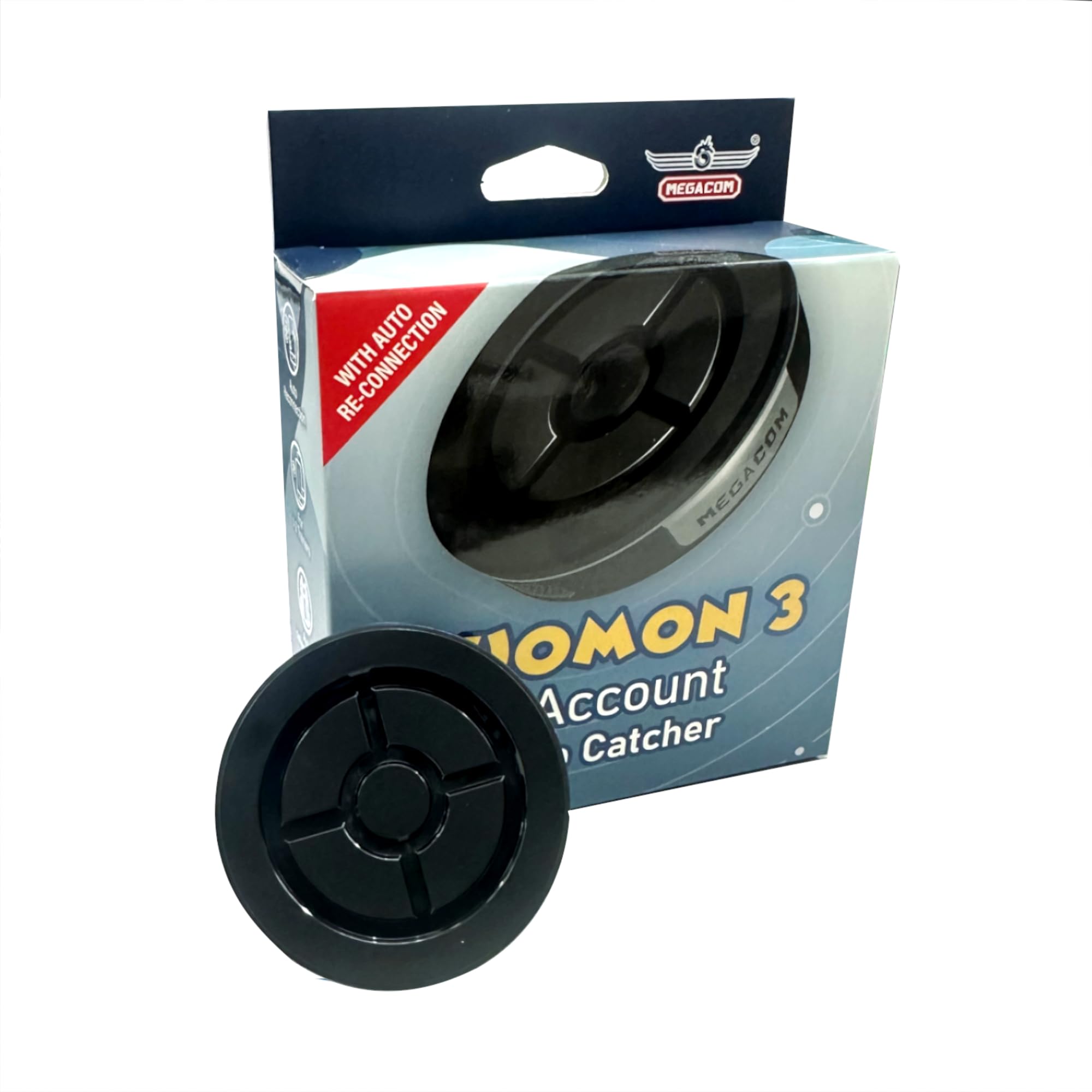
Two accounts, one keychain device, and a connection that reaches up to 20 meters.
The DuoMon3 is built around one idea: two accounts should not need two devices. Two independent chips let you run dual accounts at the same time, auto-catching and auto-spinning for both and collecting stardust, XP, and candy along the way. For households that play together, that is a real upgrade over buying two separate catchers.
The form factor is pocket-friendly. At about 5.5 x 5.5 x 1.4 cm and 29 grams, it disappears into a bag or pocket. It recharges over Type-C or wirelessly, and the wireless connection reaches up to 20 meters so your phone can stay in a pocket while the device sits in a bag.
The best part is the background operation. Once paired, it keeps catching and spinning while your phone is in standby or you are replying to messages, which means you do not need to keep the game screen open. The notification settings are adjustable through the app — light brightness, color, sound, vibration, and language. The honest catch is durability. That is the most-mentioned theme, and it splits both ways: plenty of units run flawlessly, but a measurable share malfunction within about six months. Connectivity and battery feedback are similarly mixed. Buy it for the dual-account ability and the background operation, but go in with the expectation that it is not a forever device.
What works well
- Two independent chips let you run two accounts at once.
- Keeps catching in the background while your phone is in standby.
- Type-C and wireless charging, plus 20m/65ft wireless range.
- App control over light brightness, color, sound, vibration, and language.
Where it falls short
- Durability is the most-discussed theme and it divides — some units malfunction within six months.
- Connectivity feedback is mixed; some devices disconnect frequently.
- Battery feedback splits too, with some units holding charge and others stopping.
Go for this if: you run two accounts and want one compact device to catch and spin for both while your phone stays in your pocket.
Think twice if: you need a single account caught as reliably as possible over multiple years.
7. Megacom DuoMon 1P/2P Auto Catcher
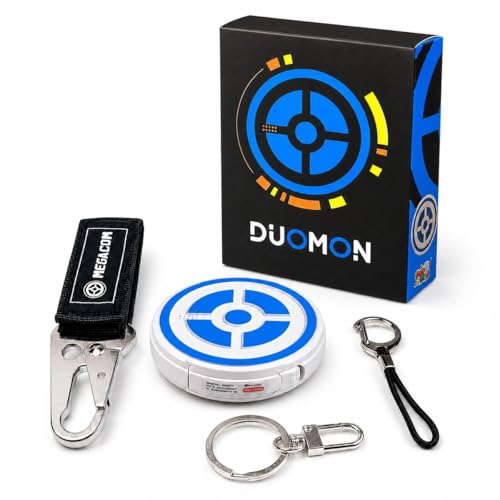
Six hundred hours on two AAA batteries — the longest runtime in this entire list.
Six hundred hours on a pair of AAA batteries is the headline, and it is not a trick. Unlike every rechargeable catcher here, this one runs on standard AAA cells (not included), so replacing the battery takes seconds and does not require a wall or a cable. That is the longest runtime on this list by a wide margin, and it means you can leave it sitting in a bag for months and still pick it up running.
The feature set is unexpectedly strong for a battery-powered catcher. You get voice broadcast that narrates the catching progress, plus LED, beep, and vibration alerts you can mix to taste. It reconnects to your account with one touch, and it connects stably within 20 meters. Two accounts can be connected at the same time. At 1.1 ounces it disappears in a pocket, and a lanyard keyring keeps it clipped.
The honest reality is durability. That is the weakest theme by far — a portion of units give out within about 30 days, and the battery cover, battery latch, and plastic clip are named as common failure points. Reliability is the most-discussed theme overall and it is mixed. The counterweight is that when it works, it works extremely well — quality and catching performance are the standout positives, and spinning is strong too. Buy it with a plan to replace or warranty it if the clip fails.
The reason it earns a spot: 600 hours on two AAA batteries is untouchable for runtime, and the voice broadcast, adjustable alerts, and one-touch reconnect make it feel more premium than a battery-powered device should.
The honest catch: durability is the weak point — the plastic clip, battery cover, and latch are common break points, and a portion of units quit inside 30 days.
Best for: long-trip players, commuters, and anyone who wants to swap two AAA batteries in seconds rather than plug in a cable.
Not for: buyers who need one unit to last multiple seasons without the risk of a broken clip or battery latch.
8. Mcbazel 247 Dual Auto Catcher
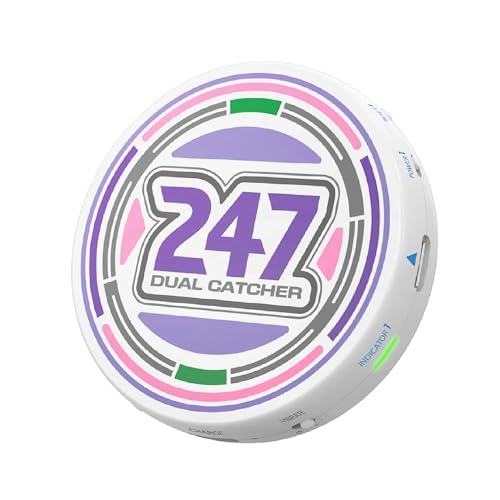
The only catcher here that connects to two phones and taps the screen for you in raids.
Two phones at once is the defining spec, and it is done properly. The Mcbazel 247 connects to two accounts on two different phones at the same time and catches and spins for both as you walk, jog, or commute. No second device, no swapping accounts. At 3.7 ounces and 3.66 x 3.46 x 1.57 inches, it is larger than the pocket-sized catchers here, but it carries the most features.
The 247 mode picks up where most catchers give up. The game’s one-hour connection limit is the pain point, and the 247 cable side reconnects on its own after each drop — provided you keep the phone screen on and disable the screen saver and battery saving modes. Flip the cable and the RAID side taps the screen for you in raids and gyms, which is a genuinely unusual feature. Pre-fit the suction cup holder over the tap point and add a drop of water if your screen protector is thicker than 0.3 mm.
The 1000mAh battery charges in about 3 hours over Type-C, and the device sleeps after 10 minutes without a connection. LED, vibration, and beep alerts can each be toggled. The honest catch is that reliability is the most-discussed theme and it is split — some devices work as described, others stop entirely or feel half-useless. Connectivity feedback also leans negative, with some reporting it will not connect to any phone. This is a device for the power user who wants two phones and raid taps, not for someone who wants the simplest one-phone setup.
Choose this if: you run two phones and want the 247 auto-reconnect past the one-hour limit plus the raid tap mode that no other pick here offers.
Look elsewhere if: you just want a simple single-phone catcher — this is more device than you need, and the connectivity risk is real.
Know the Specs
Battery Life in Hours
The battery figure is how many hours of catching you get between charges or battery swaps. A catcher rated at 12 hours covers a long walk plus a Community Day. One rated at 240 or 600 hours is aimed at people who do not want to think about power for days or weeks. A plug-in device has no battery figure at all because it draws from your phone.
USB-C Plug-and-Play
A plug-and-play catcher uses your phone’s USB-C port for both data and power. There is no separate charging routine, but it does occupy that port while it works. Some models include a passthrough port (5V/1A output) so you can charge the phone at the same time — useful on long sessions where the catcher would otherwise drain your phone’s battery.
IP Waterproof Ratings
The IP rating tells you how well the device survives water and dust. IP67 means it is protected against dust and can withstand temporary immersion in water, so sweat and rain are not a concern. IPX7 means the same level of water protection but without a stated dust rating. For wristband catchers worn during hot walks or rainy commutes, either rating is a real advantage.
Bluetooth Range and Reconnection
Bluetooth range is how far the device can be from your phone before the link drops — the Megacom models here list up to 20 meters or 65 feet. Reconnection behavior matters more than range in daily play, because a catcher that reconnects on its own when it drops keeps catching while an ordinary one stops until you re-pair it by hand.
Common Questions
Do these catchers need the game open to work?
Will a plug-in catcher drain my phone battery?
Can I use a catcher with two accounts at once?
What is the difference between auto-catch and auto-spin?
Which catcher lasts the longest between charges?
Will an auto catcher work with an iPhone?
Do I need the Brook Pocket Center app?
How far away can my phone be from the catcher?
What waterproof rating should I look for?
The Bottom Line
For most trainers, the pokemon go catcher winner is the Nintendo Pokémon GO Plus + because it catches Great and Ultra Balls, spins PokéStops, and adds a sleep-tracking side no other pick here offers. If you run multiple accounts and want one compact device to handle both, grab the Megacom DuoMon3 for its two independent chips and background catching. And if you want the longest possible runtime and swap batteries in seconds, the Megacom DuoMon 1P/2P at 600 hours on two AAA batteries is the one to reach for.
How we choose
We do not accept paid placement. Every pick is matched to a real buyer and a real use-case; we do not hands-on test units.
Sources
Specifications: manufacturer listings and product documentation. Review insights: verified customer reviews, as of November 2026. Pricing: not shown on this page (it changes often); check the current price via the retailer link.
As an Amazon Associate, Tactical Gear Guy earns from qualifying purchases. This does not affect which products we feature.