Specs are compiled from manufacturer listings and verified buyer reviews and can change over time — please confirm the key details on the product page before buying.
Cold, wet runs punish the wrong shoe fast — a soaked upper means heavy feet, and a slick outsole means sliding sideways on wet roots. The eight shoes below all carry a real GORE-TEX membrane, so your feet stay dry, and each one has a different strength: mud clearance, cushioning, toe room, or rock protection. Match the shoe to your trail, and wet weather stops being a reason to stay home.
This guide is built by comparing the manufacturers’ published specifications and the patterns across verified customer reviews, so you get each pick’s real strengths and trade-offs instead of marketing spin.
Fit, lug pattern, and how much cushioning a wet trail can actually absorb decide most of this list. Below, every pick is matched to the terrain it handles best in these men’s gore-tex trail running shoes.
Top Picks

How To Choose A Men’s Gore-Tex Trail Running Shoe
You want dry feet and grip, and those two goals pull in different directions. A GORE-TEX membrane is a thin waterproof layer bonded into the upper — it lets sweat vapor escape while blocking rain and puddle splash. The catch is that the same layer cuts airflow, so the shoe runs warmer than a mesh-only trail shoe. Buyers who run hard in summer often find that trade worth it only in wet months.
Mud clearance versus hardpack grip
Deep, widely spaced lugs are what sling mud off the sole so it does not pack into a slick wedge. Shallow, tightly spaced lugs grip firm dirt and gravel better but clog faster in wet clay. If your local trails turn to slop in winter, give lug spacing more weight than lug depth.
Weight you will feel at mile ten
Weight is the spec that sneaks up on you. A heavy, overbuilt shoe holds up on rocky ground but drags on climbs. A light shoe keeps your turnover quick but gives up some protection. Weigh that against how long your typical run is, not against what the spec sheet brags about.
The fit question nobody agrees on
Fit is where most wet-trail shoe returns come from. A roomy toe box lets your toes splay and reduces hot spots, but too much room means your foot slides on descents. The upper needs a snug midfoot lockdown and a toe area you can still wiggle. Try your normal size first, then plan for a half size up if you wear thick wool socks.
Rock plates and toe caps
A rock protection plate is a thin stiff layer under the forefoot that spreads the pressure of a sharp stone so it does not stab your sole. A reinforced toe cap does the same job for stubbed roots and scree. On smoother trail you can skip both and save weight.
Side-by-Side Comparison
| Model | Best For | Weight | Outsole Grip Tech | Waterproof Upper | Amazon |
|---|---|---|---|---|---|
| Salomon Speedcross 6 GTX★ Best Overall | Wet mud and soft ground | 3 pounds | Grippy mud-evacuating outsole | GORE-TEX membrane | Amazon |
| New Balance Dynasoft Nitrel V6 GORE-TEXBest Value | Budget-friendly wet-weather miles | — | — | GORE-TEX | Amazon |
| Nike Pegasus Trail 5 GORE-TEXBest for Road-to-Trail | Road-to-trail transitions | 1.94 pounds | Nike Trail ATC all-terrain outsole | GORE-TEX upper | Amazon |
| ASICS Trabuco 14 GTX | Long trail runs with cushioning | 1.44 pounds | ASICSGRIP outsole | GORE-TEX Invisible Fit | Amazon |
| La Sportiva Ultra Raptor II GTX | Winter training and wide feet | — | Grippy sole | Gore-Tex Extended Comfort | Amazon |
| Salomon XA PRO 3D GORE-TEX | All-day stability on mixed terrain | 350 to 400 g | Wet Traction Contagrip | Gore-Tex membrane | Amazon |
| Hoka Challenger 7 GORE-TEX | Cushioned road-to-trail comfort | — | Gravel-inspired lug pattern | GORE-TEX Invisible Fit | Amazon |
| ALTRA Timp 5 GTX | Roomy toe box and zero drop | 11.7 oz | Vibram Megagrip | GORE-TEX upper | Amazon |
Detailed Reviews
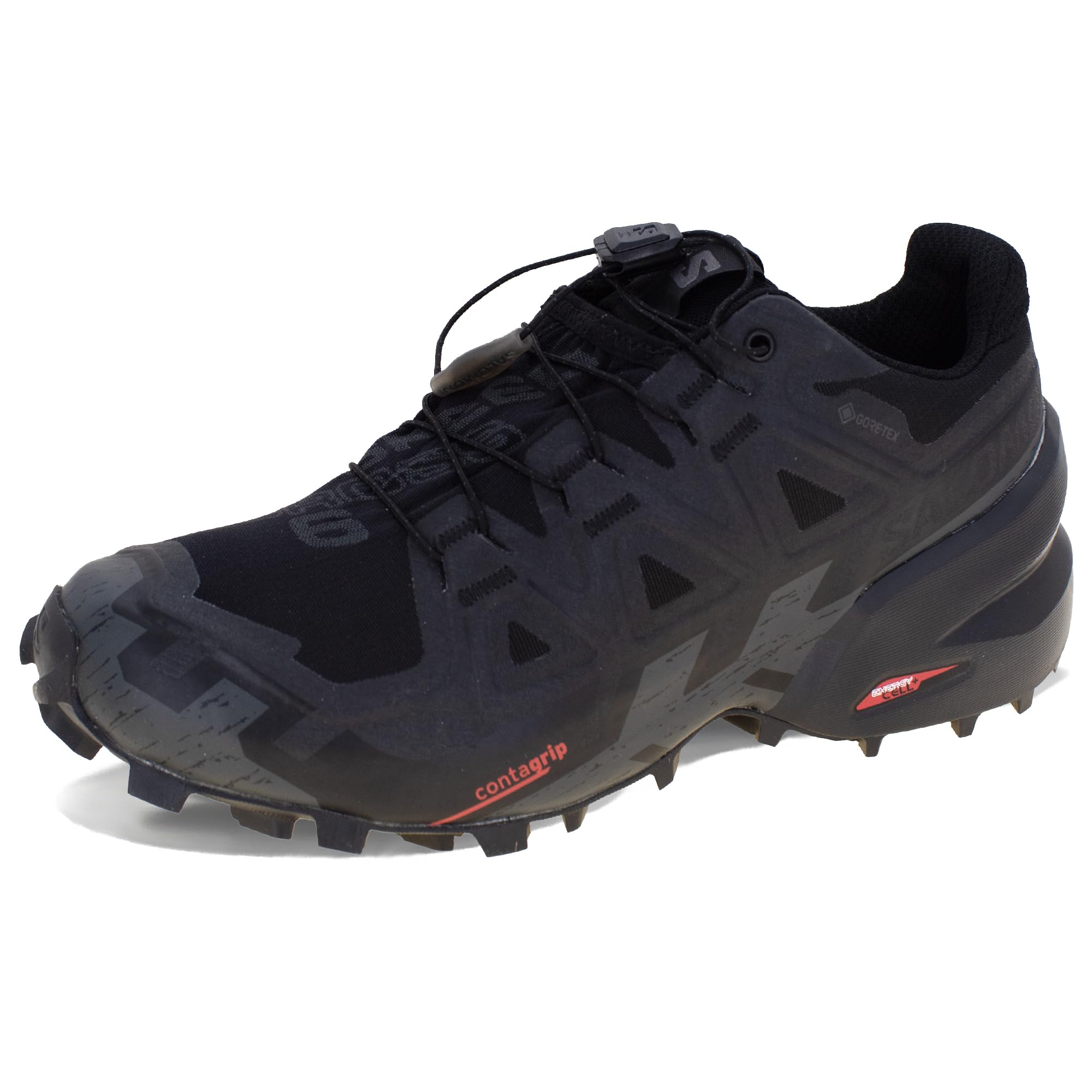
1. Salomon Mens Speedcross 6 GTX
Our pick — 4.5+★ from 200+ verified ratings; the strongest balance of quality and price.
The mud-shedding trail icon that keeps digging in when the ground turns to soup.
If your wet-season runs happen on soft dirt, deep mud, or grass that never dries out, this is the shoe that asks for it. The GORE-TEX membrane is a waterproof and breathable layer worked into the upper, so rain and puddle splash stay outside while sweat vapor can still escape. Salomon also rebuilt the upper and tuned the outsole for a more powerful, grippy connection to the ground with faster mud evacuation — meaning the lugs clear themselves instead of packing into a slick wedge.
What wins people over is the build itself. It is the crowd favorite here at 4.5+ stars across 200+ ratings, and the quality and comfort impressions lead the way among the owners who take the time to write. The fit lands where you expect it to, roughly. In real terms, this is a shoe you lace up in the dark and stop thinking about — the sole does the talking on greasy climbs, and the membrane does the quiet work underneath.
The honest catch is long-term wear on the sole and upper fabric. Some owners find the bottoms wearing out quickly and the fabric tearing, while others call the same shoe tough. Treat it as a dedicated soft-ground shoe rather than a daily do-everything pair and it holds up well. Also note the bulk: at 3 pounds per pair it is 1.56 pounds heavier than the ASICS Trabuco 14 GTX at 1.44 pounds, and it measures 14 x 9 x 5 inches against the Nike Pegasus Trail 5’s 11.37 x 7.37 x 4.11 inches — a shoe that takes up real space in a pack.
What earns it the top slot
- GORE-TEX membrane handles wet and muddy conditions without letting water through
- Outsole is tuned for faster mud evacuation, so traction returns quickly after a slop section
- Fit runs to expectation for most owners, which cuts down on guessing your size
- Classic Speedcross comfort holds up across a full wet-weather run
Where it asks for care
- Sole wear and upper fabric tearing show up for some owners, so rotate it rather than run it daily
- At 3 pounds per pair it is the heaviest shoe on this list
- The 14 x 9 x 5 inch footprint is bulky to pack for travel
Reach for this if: your trails go soft and muddy and you want the shoe the most owners back for exactly that job.
Look elsewhere if: you want one pair to cover road miles and rocky hardpack too — the sole wear and the 3-pound weight make it a specialist.
2. New Balance Dynasoft Nitrel V6
The entry-level wet-weather pick that keeps feet dry without asking you to commit to a specialist.
The waterproofing is the headline here. Owners consistently find these keep water out during use, and the shoe stays light on foot while gripping the dirt. If you are stepping into your first GORE-TEX trail shoe and want a pair that can pull casual trail duty without a premium-tier outlay, this one covers the basics with a lot less money on the table than the Salomon XA PRO 3D or the ALTRA Timp 5 GTX.
It is a light shoe, and the traction earns praise from owners who take it off pavement. The tricky part is sizing. Fit splits cleanly — some owners with wide feet find it perfect, others say it runs half a size too small and can be tight around the ankle. If you are between sizes, plan to go up, and if you wear thick socks on cold runs, start there.
Durability is the honest trade-off you should weigh before committing to it as a daily trainer. A few buyers report the rubber bottom peeling off after about a month of use, while plenty of others call it very durable. Treat it as a shoe for lighter trail use and shorter wet-weather runs rather than a rough-terrain bruiser, and it delivers well for the price tier.
The real draw: waterproof performance and a light feel at a budget-friendly tier, backed by solid quality impressions among owners who recommend it.
Budget for a fit check: the half-size-small feedback is worth planning around — order a half size up if you are on the fence.
Best fit for: the runner who wants a dry foot on light wet trail without spending premium-tier money.
Worth a second look if: you log heavy mileage on rough ground — the peeling-rubber reports make a heavier-duty shoe the safer bet for that job.
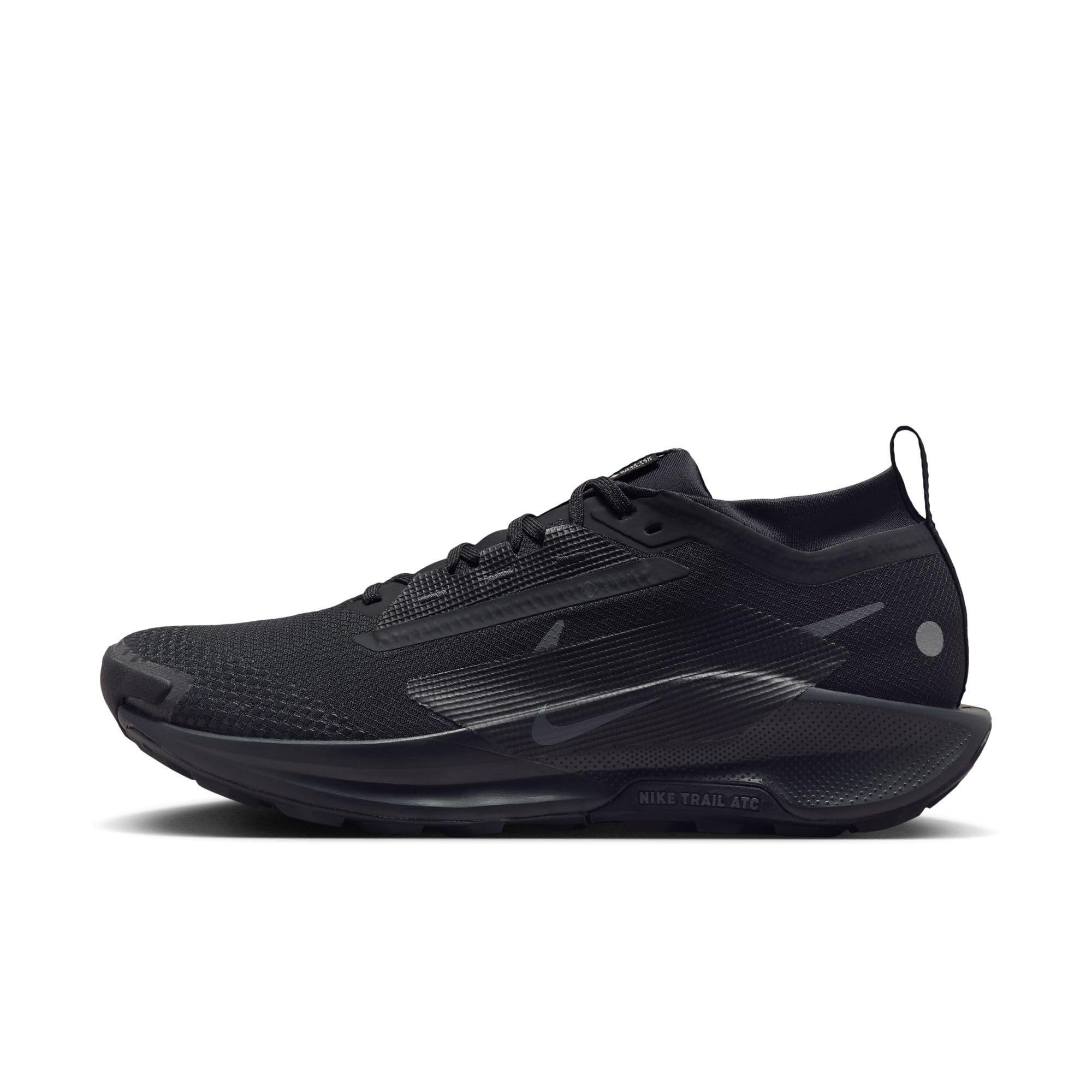
3. Nike Pegasus Trail 5 GORE-TEX
The pavement-to-dirt crossover that keeps the miles coming when the weather turns ugly.
Nike goes straight at the wet-runner’s problem with a GORE-TEX upper and a 3D print toe cap, both built to keep water away and your feet dry. The ReactX foam midsole pairs with an Air Zoom element in the forefoot, and Nike claims the ReactX foam returns 13% more energy than the previous React foam. The point for you is a springy, cushioned ride that bridges the road section before the trailhead.
Grip comes from the Nike Trail ATC outsole, an all-terrain blend that holds up in wet weather. Owners rate the quality highly and the water resistance is what most of them call out, with durability and support landing positively too. A high ankle cuff keeps dirt and debris out of the shoe, which matters when the trail is half puddle. Its 11.37 x 7.37 x 4.11 inch package is markedly more compact than the Salomon Speedcross 6 GTX at 14 x 9 x 5 inches, and at 1.94 pounds it is far lighter than that same 3-pound shoe — easier to stash in a gym bag or a car.
Fit is the decision-maker. Some owners find it perfect, others say it runs too tight — so if your usual size sits on the snug side, consider a half step up. Value is genuinely discussed both ways among owners, which is fair for a shoe at this tier. Go into it with the right fit and you get a fast-feeling wet-weather crossover.
Where it shines: a cushioned ReactX ride with an Air Zoom forefoot unit and an all-terrain outsole that keeps its grip in rain — road to trail in one shoe.
Mind the sizing: the tight-fit feedback means trying it on before a long run is worth the effort.
Your shoe if: you mix pavement and trail on the same run and want GORE-TEX coverage for both.
Pass if: you need a roomy toe box — the tight-fit reports make a wider or roomier model the better call.
4. ASICS Men’s Trabuco 14 GTX Trail Running Shoes
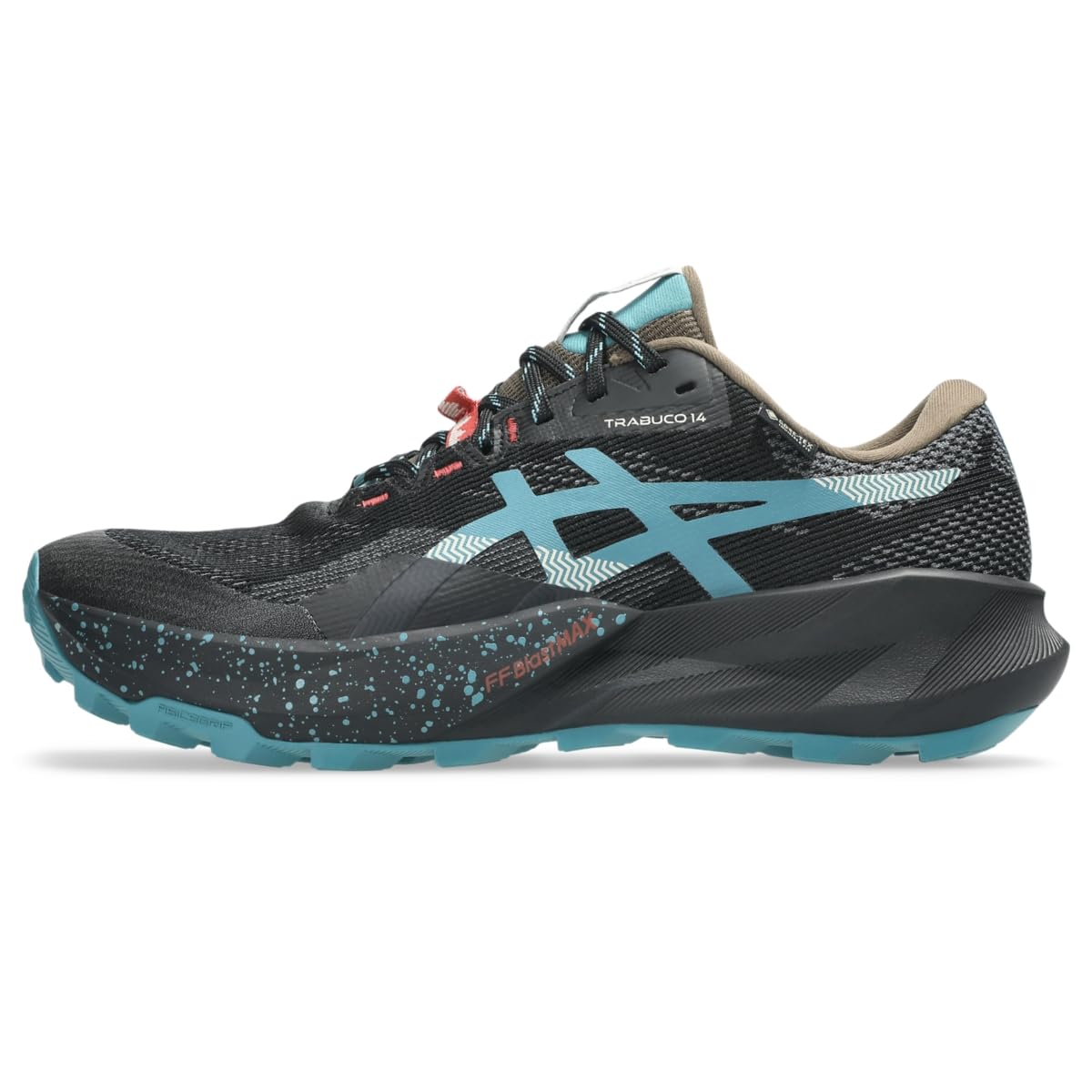
Extra foam underfoot, a rock plate above the trail, and a fit built for hours rather than sprints.
ASICS adds 2mm of FF BLAST MAX cushioning underfoot here, which turns footstrike into a soft landing and pushes an energized toe-off. For long trail runs on wet, uneven ground, that extra 2mm is the difference between a sore forefoot at mile eight and still rolling. The GORE-TEX Invisible Fit membrane is bonded directly into the upper rather than layered on top, and ASICS says that design promotes quicker dry-out times after the rain stops.
The fit is the other half of the story. ASICS built a trail fit with a more supportive midfoot lockdown that cuts movement inside the shoe, plus a wider forefoot for long-run comfort. Owners back that up — they describe the shoe as comfortable with good inner support and rate its quality highly. An elasticized strap on the tongue gives you somewhere to tuck the laces so they stay tied, and reflective details add visibility for early-morning or nighttime runs.
On the trail, a flexible rock protection plate shields your foot from rocks and rugged terrain while still letting the shoe bend. ASICSGRIP in the outsole handles off-road traction, and the engineered mesh upper keeps the weight down. At 1.44 pounds per pair it is the lightest shoe on this list — 1.56 pounds lighter than the Salomon Speedcross 6 GTX at 3 pounds. The one thing to know is that it is a cushioning-first pick, not a mud specialist, so sloppy soft ground and deep clay suit it less than hardpack and rocky trail.
The case for it: 2mm more FF BLAST MAX foam, a flexible rock plate, and a wider forefoot add up to a long-run shoe with support where your midfoot needs it.
Know the mission: this is a cushioning and hardpack shoe — bring a mud-shedding sole instead if your trails turn to clay.
Choose it for: long wet trail runs where cushioning and midfoot support matter more than lug depth.
Choose another for: deep, soft mud — the flexible plate and cushioning focus put it behind the Speedcross there.
5. La Sportiva Mens Ultra Raptor II GTX Trail Running Shoes
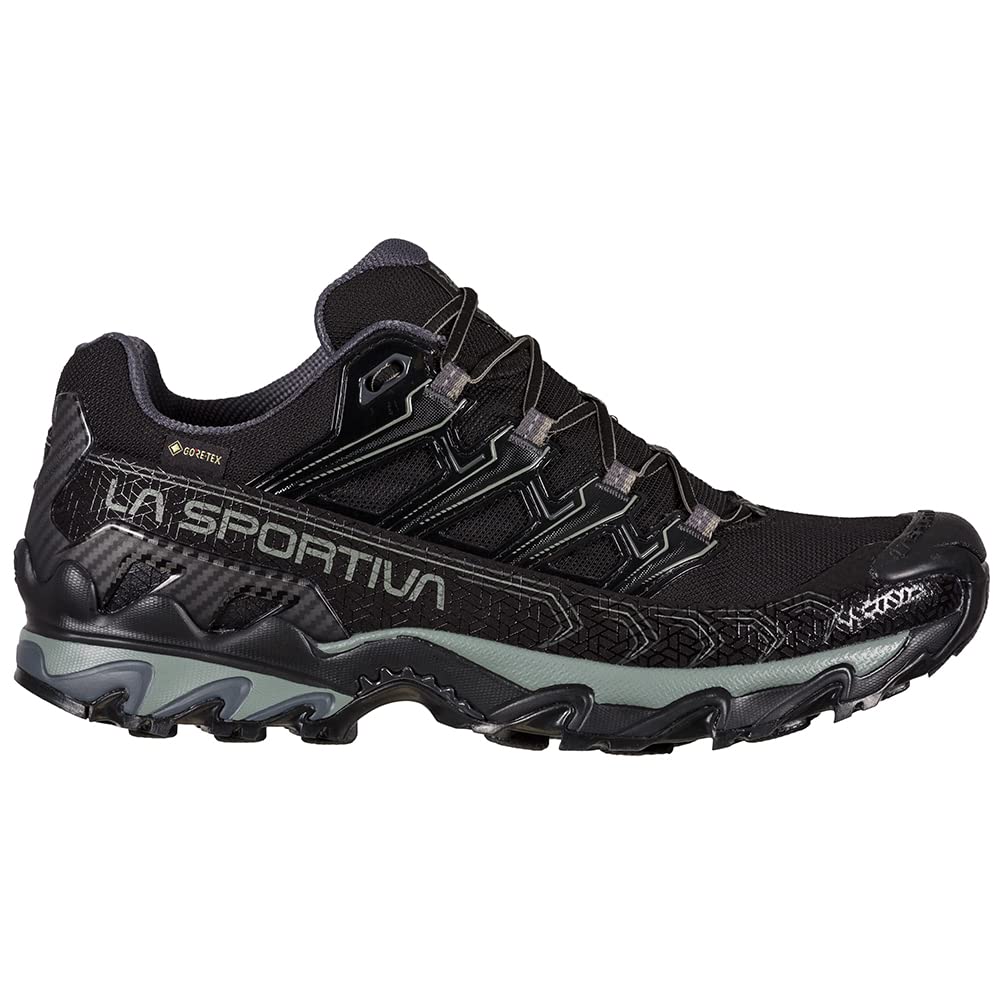
A winter-training trail shoe with a stabilising heel and a lacing system that wraps the whole foot.
La Sportiva built this one for long off-road distances and extended winter training, and it lines the shoe with the Gore-Tex Extended Comfort membrane. That lining lets perspiration out while keeping water from getting in, which is what makes a winter run bearable rather than a slow foot-soak. The lacing system runs through ties sewn onto the inner elastic fabric with high-frequency reinforcements on the outer mesh, so the lace tension spreads across the whole upper instead of pinching one spot.
Owners like the build. They call it well made and excellent in quality, and the grippy sole does the job on off-road terrain. A rear stabilising heel gives you control on steep descents. The fit is the real story, and it goes both ways — some find it great, while others report the wide sizes are not as wide as expected and the shoe runs a bit longer than usual. If you are between sizes or counting on the wide version to fix a broad forefoot, try before you commit.
Sole stiffness divides opinion as well. Some owners appreciate how grippy and planted the sole feels, while others describe it as on the stiff side. For a long winter run on cold ground that stiffness can read as support; for an easy recovery jog it can feel like more shoe than you want. Set your expectations toward training sessions rather than quick, light road miles and the trade-off makes sense.
Why winter runners pick it
- Gore-Tex Extended Comfort lining blocks water while letting sweat vapor out
- Lacing system spreads tension across the upper for a wrapped fit
- Rear stabilising heel holds the foot steady on steep descents
- A wide-fit comfort version exists for broader feet
The sizing caveat
- The wide sizes run narrower than some owners expect
- Fits a bit longer than usual, so sizing down may be needed
- The sole feels stiffer than a cushioned road-style shoe
Worth it if: you train through winter on off-road terrain and want a wrapped, stable fit with a waterproof lining.
Check a size chart first if: you are buying the wide version or wear a half size — the length and width run differently than expected.
6. Salomon XA PRO 3D Gore-Tex
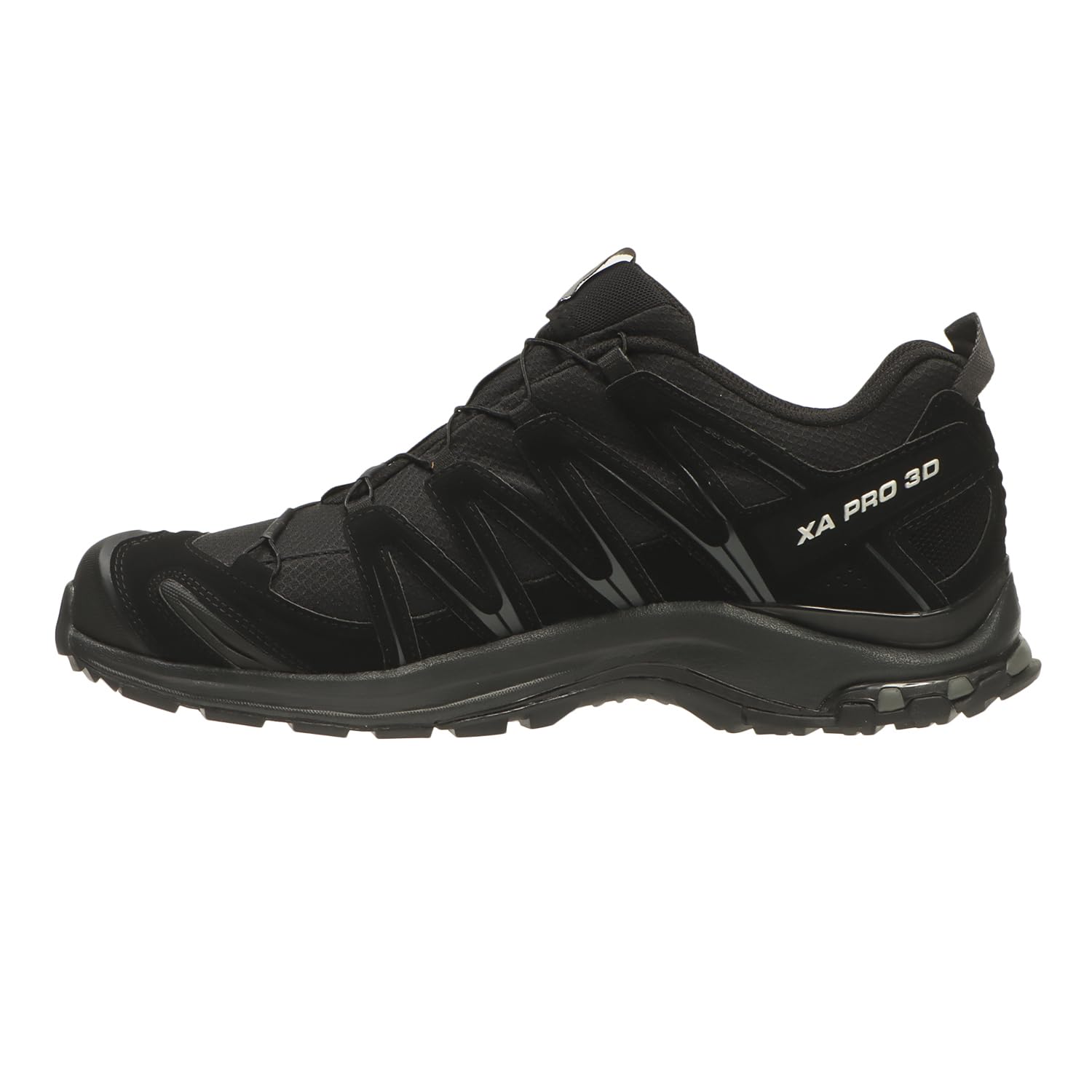
The proven all-rounder you can run in, hike in, and trust when the rain will not let up.
Start with the numbers that matter: the fit is the thing owners praise most here, by a wide margin, and it is the reason this shoe has stayed a staple for years. A waterproof Gore-Tex membrane covers the toughest terrain, and the Sensifit system surrounds the foot for a precise, secure fit. Weight sits at 350 to 400 g, which Salomon positions as light enough for a longer workout.
The wet-weather grip is what gives it range. The Wet Traction Contagrip outsole is made from soft, durable rubber that holds on wet surfaces, and the Advanced 3D chassis adds lateral stability when the ground rolls under you. Owners run these on trail, hike them on medium climbs in the rain, and wear them around town — the versatility is real, not marketing. Comfort and water resistance both hold up across that mix.
The Quicklace system pulls tight in one pull with no knots to tie, and owners like it. The catch worth knowing: the soles on some pairs separate, and durability splits sharply between owners who wear them for years and others who find them short-lived. Value is also debated at this tier. Plan for them to cover a lot of ground across trail and everyday use rather than survive as a rock-crusher, and they earn their place.
The main appeal: a fit owners rave about, one-pull Quicklace, and a Wet Traction Contagrip sole that grips wet surfaces through trail, hike, and town days alike.
The honest limit: sole separation shows up on some pairs, so treat it as a versatile daily shoe rather than an indestructible one.
Fits the runner who: wants one shoe for wet trail runs, rainy hikes, and the walk back home.
Not for the mileage-maximalist: if you expect a fresh pair to take years of hard abuse, the sole-separation reports are a fair warning.
7. Hoka Mens Challenger 7 Gore-tex®
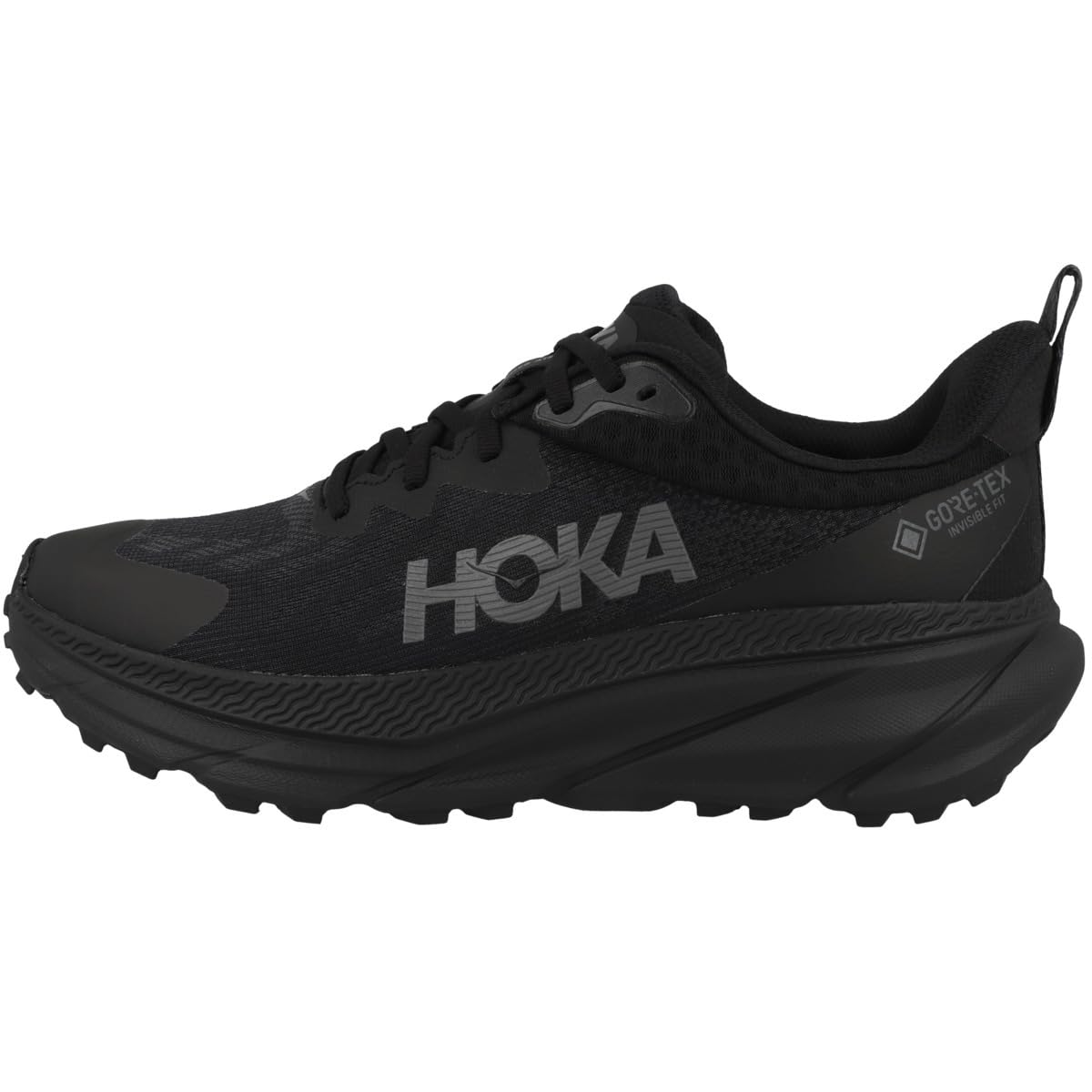
A plusher ride for the miles where pavement ends but the weather does not care.
Hoka rebuilt this shoe from the ground up around a soft new foam and raised the stack height — that is the thickness of cushioning between your foot and the ground — for a plusher feel. The GORE-TEX Invisible Fit layer, made with recycled content, adds protection when the sky opens up. If your runs live at the boundary between road and trail and you want the softer underfoot feel, this is the cushioned answer on the list.
The outsole is where the design gets specific. Hoka took a cue from gravel tires: smaller, tightly spaced lugs down the center and larger, more aggressive lugs around the perimeter. In practice that means a faster roll on smooth surfaces through the middle of the sole, with stronger bite at the edges when the ground gets uneven. A simplified mesh upper keeps it from feeling bulky.
Here is the part shoppers should weigh: this pick has a far smaller review base than the Salomon XA PRO 3D above, so there is less owner consensus to lean on when you are deciding. That is not a knock on the shoe — it is a plusher, gravel-oriented design for a different job than a mud-shedding specialist. Buy it for the cushioning and the road-to-trail crossover, and you get exactly what the build promises.
What it does best: increased stack height and soft new foam give a plusher feel, while the gravel-tire lug layout grips uneven terrain at the edges.
What to accept: less owner feedback to draw on than the established picks, so lean on the spec and the return window.
Real match for: the runner who wants maximum underfoot softness on mixed road-and-gravel terrain.
Less suitable if: you prize proven, long-run durability history — this pick is newer, with a thinner track record than the XA PRO 3D.
8. ALTRA Men’s TIMP 5 GTX Trail Running Shoe

Zero drop, a roomy toe box, and a sticky Vibram outsole for runners who want their toes free.
The defining spec here is the 0 mm drop — your heel and forefoot sit at the same height off the ground, so your foot lands flat rather than angled down at the heel. Pair that with the roomy toe box and a secure midfoot, and the shoe is built to let your toes move freely. The GORE-TEX upper is durably waterproof, windproof, and breathable, and it carries the GORE-TEX GUARANTEED TO KEEP YOU DRY promise.
Grip comes from Vibram Megagrip, which is designed to hold on both wet and dry surfaces — the kind of outsole that earns its reputation on slick roots and wet rock. The Altra EGO MAX midsole foam brings some bounce and added durability to the cushioning. At 11.7 oz with a 29 mm stack height, it is a substantial but cushioned ride. If you compare it to the ASICS Trabuco 14 GTX at 1.44 pounds, the Timp 5 GTX comes in noticeably heavier — a difference you feel most on long climbs.
Comfort and fit are where your decision should slow down. Owners split: some find the shoe great, while others call it very uncomfortable to walk in, and the usual size runs too small with a narrower fit than expected for some. Expect a break-in period and sizing up if you are on the fence.
Built for natural movement
- 0 mm drop puts heel and forefoot level, encouraging a flat landing
- Roomy toe box with a secure midfoot lets toes splay freely
- Vibram Megagrip outsole is designed for grip on wet and dry surfaces
- GORE-TEX upper carries the GUARANTEED TO KEEP YOU DRY promise
What to watch for
- Comfort feedback is mixed — some find it hard to walk in
- The usual size can run small and narrower than expected
- At 11.7 oz it is heavier than the lighter picks on this list
Made for: the runner already comfortable with zero drop who wants a roomy toe box and sticky Vibram grip on wet trail.
Skip if you are new to zero drop: the heel-to-forefoot shift takes adapting, and the mixed comfort feedback is a reason to try it on slowly.
Know the Specs
GORE-TEX membrane
GORE-TEX is a thin waterproof layer bonded into the shoe’s upper. It keeps rain and puddle water out while letting sweat vapor escape. The trade-off is airflow — a GORE-TEX shoe runs warmer than a plain mesh trail shoe, which matters on hot summer runs but is worth the warmth in wet, cold months. Variants like GORE-TEX Invisible Fit bond the layer more tightly to the upper, which can help the shoe dry out faster.
Outsole grip and lugs
The outsole is the rubber bottom; the lugs are the raised knobs on it. Wide, deep lugs clear mud and bite soft ground, while shallow, tightly spaced lugs grip hardpack and gravel. Rubber compounds like Vibram Megagrip or Salomon’s Wet Traction Contagrip are chosen for how they hold on wet surfaces. Match lug depth and spacing to your ground: deep and wide for mud, shallow and tight for hardpack.
Stack height and drop
Stack height is how much cushioning sits between your foot and the ground. Drop is the height difference between heel and toe. A 0 mm drop, like the ALTRA Timp 5 GTX, puts heel and forefoot level. A higher stack gives a plusher feel but adds bulk. Zero drop suits a flat landing; a heeled drop eases the calf and Achilles.
Weight and rock protection
Weight in pounds or grams tells you how much shoe you are hauling up a climb. A rock plate is a thin stiff layer under the forefoot that spreads the pressure of a sharp stone so it does not stab your sole. Lighter shoes tend to drop the plate; heavier trail shoes keep it. Pick the lighter shoe for smooth trail and accept the extra weight for rock protection on rough ground.
Common Questions
Do GORE-TEX trail shoes really stay dry in heavy rain?
Will these shoes make my feet too hot in summer?
Which shoe works best for soft mud?
Should I size up in a GORE-TEX trail shoe?
What is the difference between zero drop and a standard drop?
How long should a Gore-Tex trail shoe last?
Do I need a rock plate for trail running?
Which pick is best for wide feet?
Can I wear these on the road as well as the trail?
How should I care for a GORE-TEX trail shoe?
The Bottom Line
The strongest pick for most wet-trail runners is the Salomon Speedcross 6 GTX, because its GORE-TEX membrane and mud-evacuating outsole are built for the exact conditions that ruin a wet run, and the fit lands where most owners expect. If you want a lighter, cushioned ride for long wet miles, the ASICS Trabuco 14 GTX brings 2mm more foam and a rock plate at 1.44 pounds. And for one shoe that handles trail, rain, and the walk home, the Salomon XA PRO 3D GTX earns its keep — the fit is what owners rave about, and it has been holding that ground for years.
How we choose
We do not accept paid placement. Every pick is matched to a real buyer and a real use-case; we do not hands-on test units.
Sources
Specifications: manufacturer listings and product documentation. Review insights: verified customer reviews, as of November 2026. Pricing: not shown on this page (it changes often); check the current price via the retailer link.
As an Amazon Associate, Tactical Gear Guy earns from qualifying purchases. This does not affect which products we feature.