Specs are compiled from manufacturer listings and verified buyer reviews and can change over time — please confirm the key details on the product page before buying.
If you want one rain jacket that keeps a downpour off your back without turning your commute into a clammy sauna, start with a shell that has a real breathable membrane and actual pit zips. Below you get the nine shells that hold up to that standard, sorted by what each one is genuinely best at, from a packable hiking shell to a fully insulated foul-weather coat. The crowd favorite here is the Rab Kangri, a Gore-Tex storm shell with 2-way under-sleeve vents.
This guide is built by comparing the manufacturers’ published specifications and the patterns across verified customer reviews, so you get each pick’s real strengths and trade-offs instead of marketing spin.
You will see which shells use a true waterproof membrane, how packable and breathable each one is, and where a jacket runs small before you order. By the end you will know exactly which luxury rain jacket deserves your hard-earned money and the long walks in bad weather.
Top Picks
How To Choose The Best Luxury Rain Jacket
At this level, every jacket on the list will keep rain out. The differences that decide whether you actually enjoy wearing the thing are breathability, packability, hood design, and how honestly the sizing runs. Get those four right and the jacket becomes a grab-and-go shell. Ignore them and you end up with a shell that fogs from the inside or a coat that swallows your arms.
Waterproof membrane vs. coated fabric
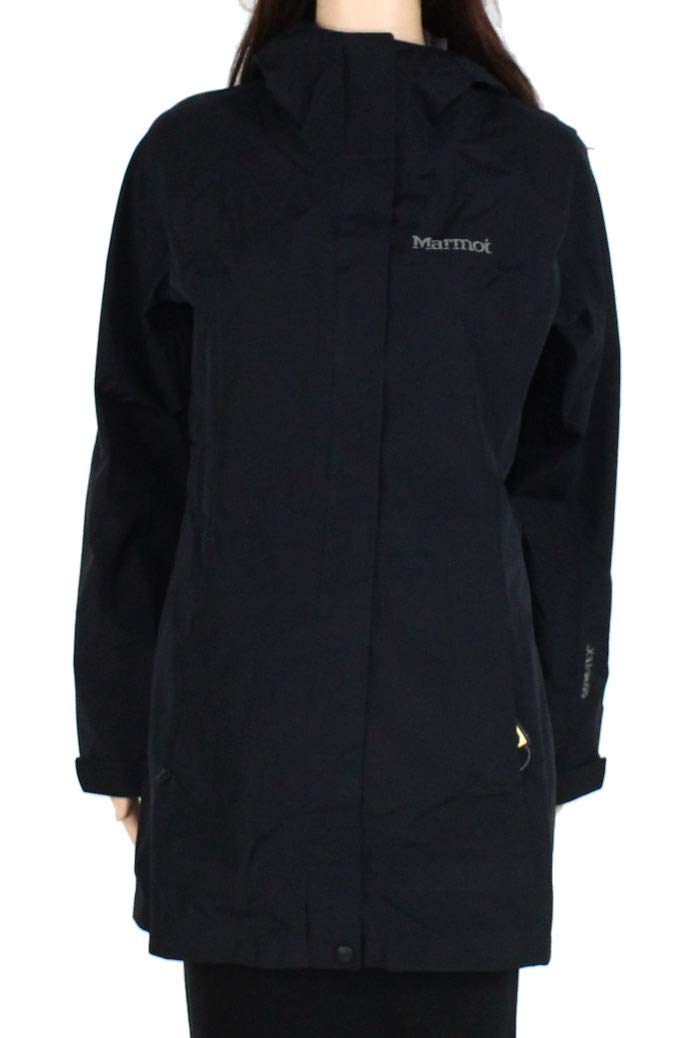
A waterproof jacket keeps rain out with a membrane or a coating, not just a thick outer fabric. A membrane like Gore-Tex or a 3-layer laminate lets vapor pass while blocking liquid water. Look for fully taped seams and a real waterproof claim — a jacket only rated “water-resistant” will soak through in sustained rain. The Marmot pairs Gore-Tex with Paclite Technology, a build that stays light while keeping the membrane intact.
Breathability and pit zips
Any shell traps some heat, so plan for how it vents. Pit zips are zippered openings under the arms that dump built-up heat fast, and they are the single most useful feature on a long climb or a fast walk to the train. The Mammut publishes a breathability rating, and the Rab Kangri runs 2-way vents under both sleeves. If you run hot, treat ventilation as a must.
Hood and coverage details
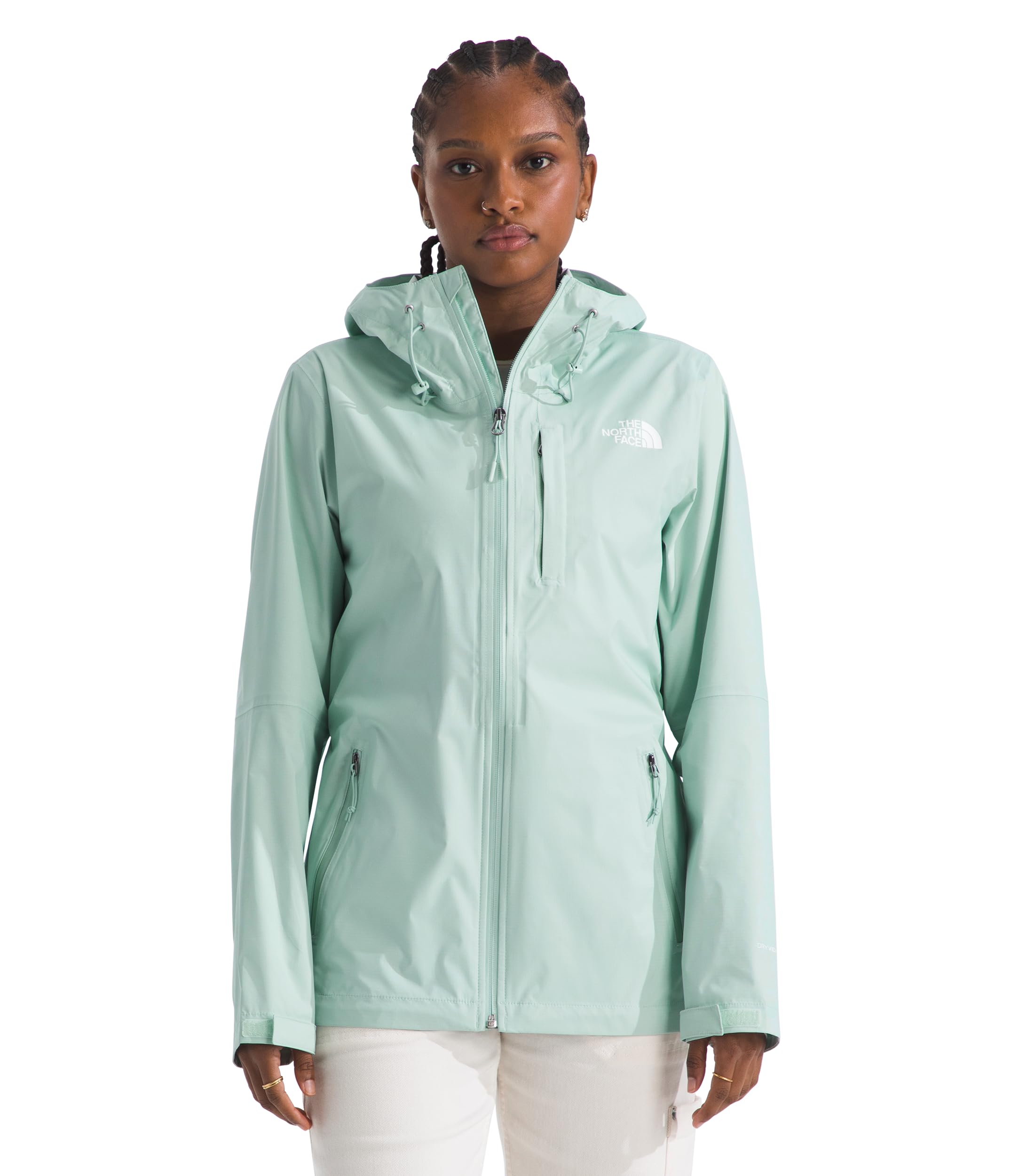
A hood that cinches down and keeps your peripheral vision intact separates a good shell from an annoying one. Look for adjustable cinch cords, a stiffened peak, or a three-piece construction that moves with your head. The Arc’teryx StormHood adjusts with a single pull, and the North Face uses a 3-piece hood with an adjustable cinch-cord.
Packability and weight
If the jacket lives in a daypack or a carry-on, weight and packed size decide whether you keep it. A packable shell folds into its own pocket and disappears until the sky turns. The Mammut weighs 190 g, and the Rab Kinetic 2.0 checks in at 11.85 ounces in its package. A heavier parka like the RAINS Fishtail at 630 g is built for everyday wear rather than stuffing into a bag.
Fit and sizing traps
Sizing is the most common source of returns in this category. A shell that runs very small will fight you every time you layer underneath, and a rigging coat cut tight through the arms restricts reach. Order your normal size for a regular fit, and size up if you plan to wear a mid-layer. Check the fit language on each pick below before you commit.
Side-by-Side Comparison
| Model | Best For | Waterproof Build | Weight / Packability | Venting | Amazon |
|---|---|---|---|---|---|
| Marmot Essential★ Best Overall | Everyday city wear with a longer cut | Gore-Tex with Paclite | Extremely packable | Pit zips | Amazon |
| The North Face Alta VistaCity Commuter Pick | Rainy commuting and light trails | Waterproof and breathable | Lightweight, packable | — | Amazon |
| RAINS Fishtail ParkaLong-Coverage Pick | Long everyday coverage, adjustable hem | Polyester with polyurethane coating | 630 g | Rear air openings | Amazon |
| Helly Hansen Crew | Versatile sailing and wet-weather shell | Helly Tech, fully seam sealed | 1 lb, packable hood | — | Amazon |
| Mammut Hardshell | Fast hiking, minimal carry weight | 3-layer Dry Active, 20,000mm | 190 g | — | Amazon |
| Rab Kinetic 2.0 | Mountain pursuits with layering | Hardshell/softshell hybrid | 11.85 oz | Under-arm mobility | Amazon |
| Helly Hansen Rigging | Cold, wet climates with an insulated layer | 100% waterproof outer, 3-in-1 | 3.65 lb, 28 x 20 x 6 inches | — | Amazon |
| Arc’teryx Beta | Maximum versatility, clean low-profile shell | 80D 3L Gore-Tex, FC0 DWR | Quiet C-Knit backer | — | Amazon |
| Rab Kangri GTX | Full storm days and long hours outside | Gore-Tex Performance | 7.8 oz | 2-way under-sleeve vents | Amazon |
Detailed Reviews
1. MARMOT Womens Essential Lightweight Waterproof Rain Jacket
Our pick — 4.5+★ from 400+ verified ratings; the strongest balance of quality and price.
The packable Gore-Tex shell that reaches to your thigh and vents under the arms.
This is the one to grab if you want a real waterproof membrane that folds into almost nothing. The Gore-Tex membrane’s pores let your body vapor escape while liquid rain stays out. Paclite Technology is the layer on top, and it keeps the whole jacket at a low weight while regulating temperature. In plain terms, you get a shell you can stuff in a tote and still trust in a downpour.
What wins people over is how well it is made and how reliably it sheds water, and the longer cut that lands mid to lower thigh keeps more of you dry. The pit zips matter on a humid walk — open the under-arm zip and trapped heat dumps fast. For a city commuter or a light hiker, that one feature makes the difference between comfortable and clammy.
Two things to know before you order. The fit runs inconsistent — some find it true to size, plenty say it runs very small and too tight, so check the size chart and lean up if you layer. The second is that at this level of waterproofing, an attached hood adjusts for facial coverage, and you will want to snug it down in crosswind. It holds up as the top pick because it combines a true Gore-Tex membrane, pit-zip venting, and a flattering long length in one light shell.
Why it earns the top spot
- Waterproof, windproof, and breathable Gore-Tex with Paclite Technology — stays light without losing protection.
- Pit zips under the arms dump heat fast on a climb or a brisk walk.
- Longer length reaching mid to lower thigh keeps your legs drier.
- Fully taped seams prevent leaks at the stitching.
What to watch for
- Sizing is inconsistent — some find it true, others say it runs very small.
- Tight fit through the shoulders if you layer a thick mid-layer.
Reach for this if: you want a genuinely waterproof, packable shell with pit-zip venting and a thigh-length cut for daily wear.
Size up if: you plan to wear anything more than a base layer underneath — the small-fit reports are the one repeat gripe.
2. The North Face Women’s Alta Vista Rain Jacket
A three-piece hood with a cinch-cord seals out sideways rain on the walk to work.
The Alta Vista is built for rain that hits at an angle. Its three-piece hood with an adjustable cinch-cord pulls in around your face, which is exactly what you want on a windy sidewalk. The fabric is waterproof and breathable, so it keeps rain off while letting sweat vapor move, and it packs small enough to live in a work backpack.
The people who own it single out the build quality and the color first — the fabric feels solid and the color reads clean in person. It stays dry through steady rain. Where opinion splits is value: some think it earns its keep, others feel it is not a great deal for what you get. That is a fair split for a jacket that leans on the North Face name for a chunk of its appeal.
Compared with the Marmot above, you give up the pit zips and a specific membrane name, but the cinch-cord hood is more dialed-in for windy commutes. If your priority is a hood that stays put and a color you actually like, this is a smart pick. If you run hot and want under-arm venting, the Marmot covers that better.
Best for windy wet walks: the adjustable three-piece hood and waterproof-breathable fabric handle sideways rain on a commute or a light trail.
The honest caveat: value is the one thing buyers disagree on, so weigh what you are paying for — the hood design and brand rather than a distinctive membrane tech.
Reach for this if: you want a color you love and a hood that cinches down tight on a windy, rainy walk.
Look elsewhere if: pit-zip venting is a deal for you — this shell does not list it.
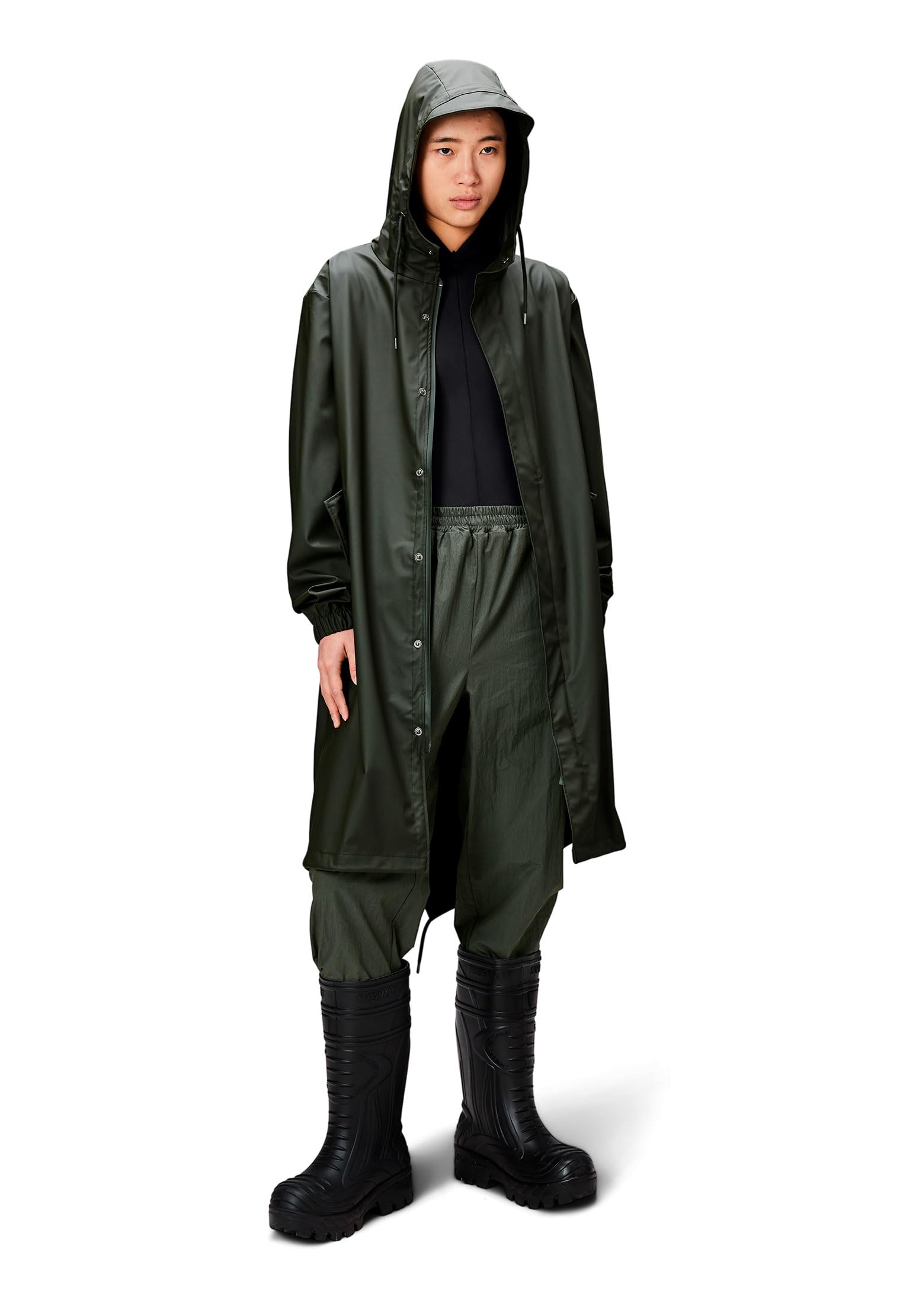
3. RAINS Fishtail Parka Rain Jacket
The adjustable fishtail hem lets you reshape the coat to suit the day.
Where most shells stop at the hood, this parka gets interesting at the bottom edge. A cord gathers the fishtail hem when you want a tighter shape, and releasing it leaves the base broader — a detail that is functional, not just visual. The front flap lies over the zip with press studs so the fastening stays hidden, and the hood edge carries an integrated peak for coverage.
The construction is a polyester base with a polyurethane coating and welded joins, which means no exposed stitching to let water in. Ventilation sits beneath the shoulder panel at the back, so you get airflow without a prominent vent opening spoiling the clean lines. Sizes run XS through XXL, and the coat is unisex in spirit with a color and size range kept simple.
Weigh it against the packable shells: at 630 g it is built to wear all day rather than stuff into a bag, and it is far heavier than the Mammut at 190 g. That 630 g buys a longer, more protective silhouette for errands and commutes. If you want a coat that looks considered and shrugs off city rain, the fishtail detail is the reason to pick it.
Reach for this if: you want an everyday coat with a distinctive adjustable hem and discreet back ventilation.
Look elsewhere if: you need a shell that folds into a pocket — this is a wear-all-day parka, not a packable.
4. Helly Hansen Men’s Crew Hooded Rain Coat

A classic sailing shell with a packable hood and a fleece-lined collar that blocks wind.
This is the shell boaters reach for, and the details explain why. Helly Tech Protection makes it waterproof, fully seam sealed, windproof, and breathable — the lining lets moisture out so you do not steam up on deck. The high fleece-lined collar is the quiet hero: it seals the neck against cold spray, and the mesh lining sits comfortably over a base layer. At 1 lb it stays light to wear, and its dimensions are a compact 9.84 x 7.87 x 6.69 inches — smaller in the box than the Rigging coat below, which measures 28 x 20 x 6 inches.
A packable hood stows away when the weather clears, and a drawcord adjusts the length at the hem. For sailing, coastal walks, or any wet-weather day where wind is half the problem, the windproof build matters as much as the waterproof claim. The Crew hits both without bulk.
The one thing to check is the fit through the shoulders if you layer a heavy fleece — a sailing shell is cut for movement, but the high collar leaves less room at the neck. Otherwise it is a versatile, well-sealed shell that earns its place for anyone spending real time near water.
The deck-ready detail: Helly Tech fabric with a full seam seal and a fleece-lined collar means cold wind and spray stay out while your own heat escapes.
The catch: a high, fleece-lined neck leaves less room if you like a thick scarf or a heavy layer up top.
Reach for this if: you want a proven windproof, waterproof shell for boating, coastal walks, or stormy streets.
Think twice if: you want a roomy neckline for bulky layering.
5. Mammut Mens Outdoor Hardshell Hooded Jacket
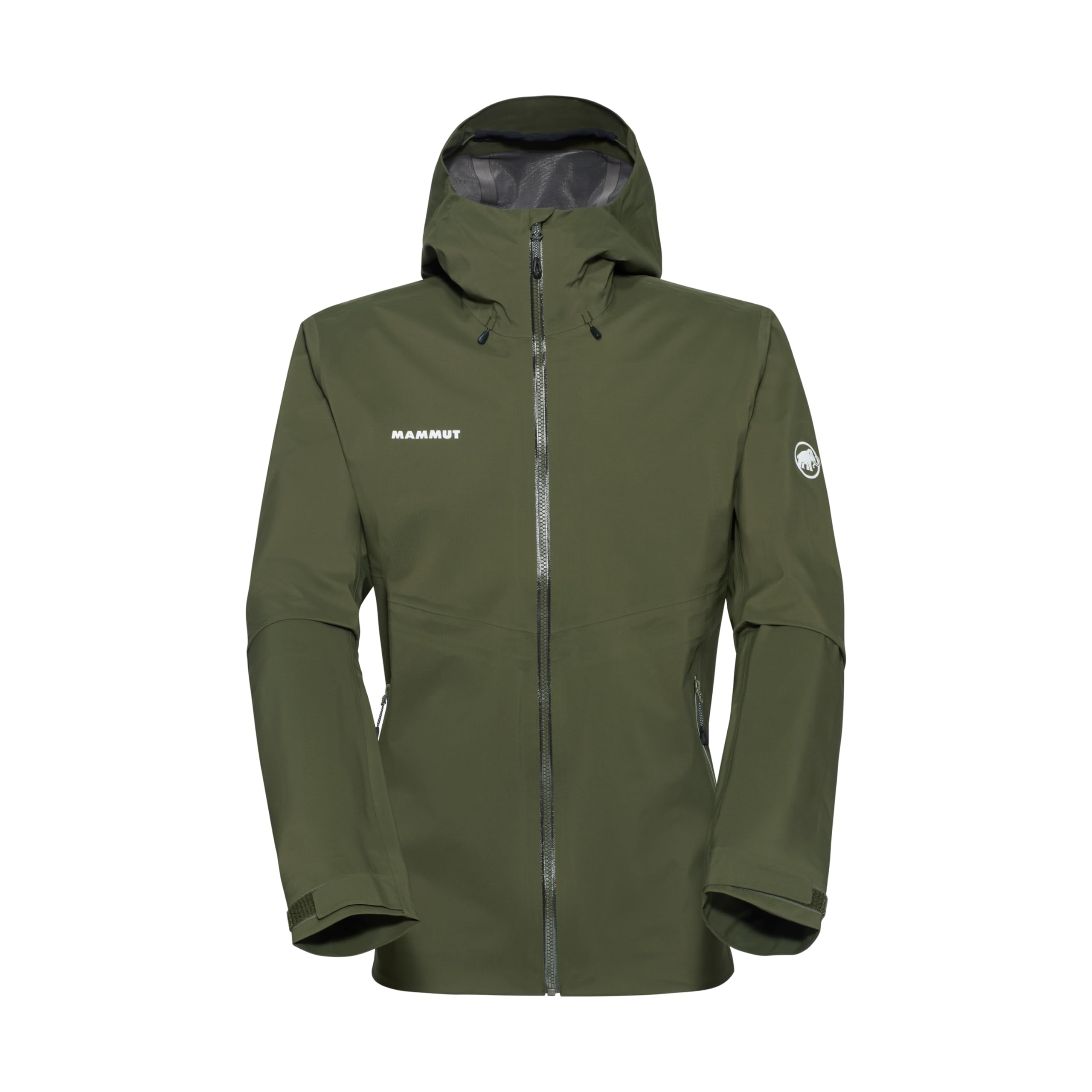
A 190 g shell that still delivers 20,000mm of waterproof protection.
Lightweight usually means a weak barrier, and this jacket refuses that trade. It weighs just 190 g yet carries a 20,000mm waterproof rating — a measure of how much water pressure the fabric holds back before it leaks, so steady rain and wet packs are no threat. Three-layer Dry Active technology does the work, and a breathability rating of 20/m≤/24h keeps moisture moving off your skin on a climb.
Set it beside the RAINS parka and the weight gap is the whole story: 190 g versus 630 g, which is the difference between a shell you forget you are carrying and one you feel on your back all day. It packs into its own large chest pocket, so it disappears into a daypack until the sky opens. The 100% recycled polyamide build uses no stretch, and the fit is a regular athletic cut.
For trail running, mountain walking, or a quick bike commute, that combination of feather weight and serious waterproofing is hard to argue with. The honest note: 190 g comes from a thin, packable fabric, so treat it as an active shell rather than a coat you beat through brush. For anyone who values low carry weight above all, the 190 g Mammut is the pick.
Reach for this if: you want a genuinely packable 190 g shell that still meets a 20,000mm waterproof bar for hiking and everyday rain.
Look elsewhere if: you want a burly everyday coat — this one is built thin to stay light.
6. Rab Men’s Kinetic 2.0 Waterproof Jacket
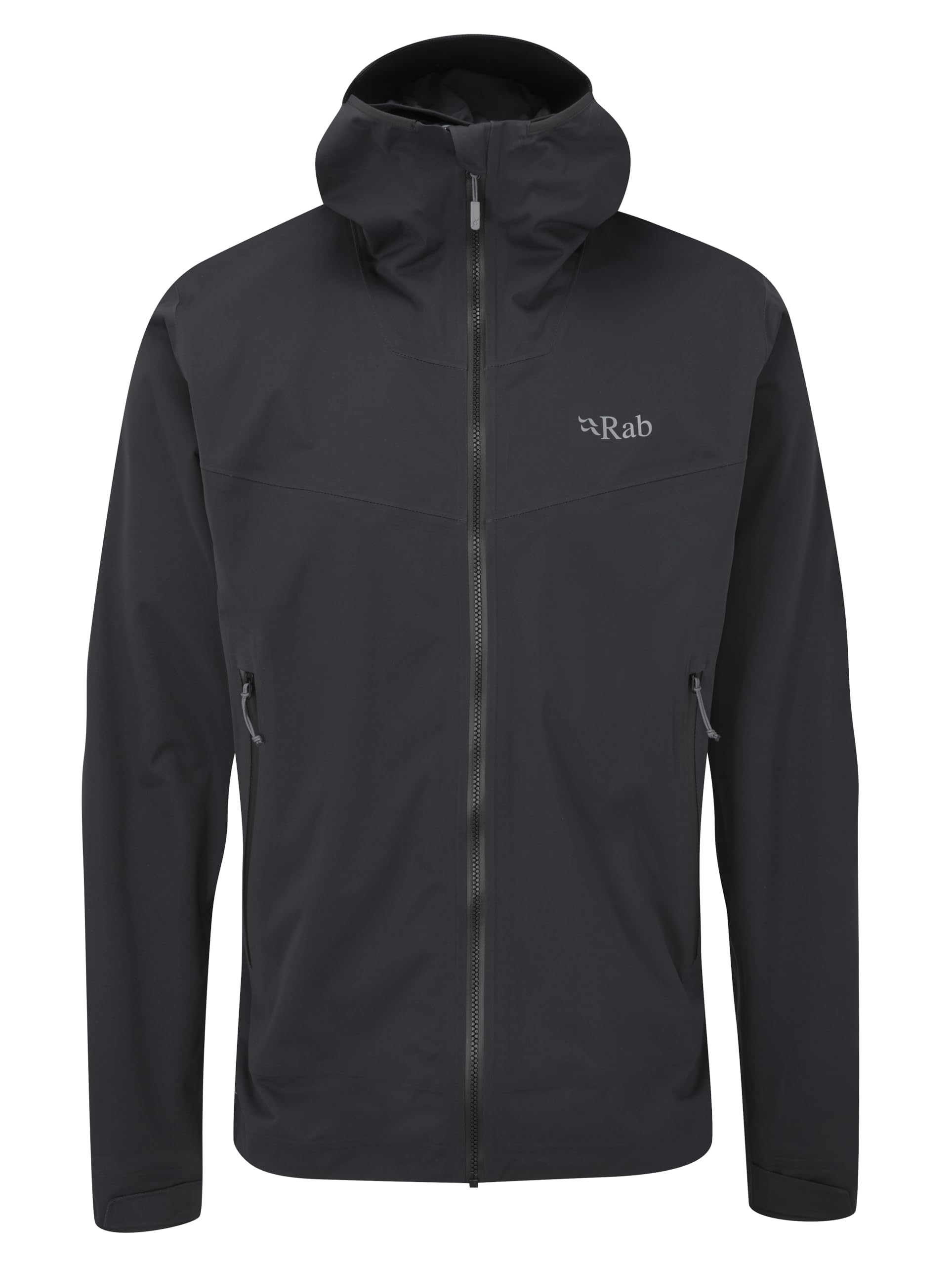
A hybrid shell that keeps you moving without stopping to change layers.
Some days the weather changes every hour, and this jacket is built for exactly that. It combines the waterproof protection of a hardshell with the flexibility and breathability of a softshell, so you get a full storm barrier that still moves with your body. When the weather keeps switching, you stop swapping layers and just keep moving.
Mountain-specific details give it away as a climber’s jacket. Harness-compatible pockets sit where a waist belt will not block them, and the adjustable hood fits under a helmet. The layer-friendly fit means a base and a light mid-layer slip underneath without fighting the shoulders. At 11.85 ounces in its package, it is light enough to carry and substantial enough to trust.
The trade-off is that a hybrid never gives you the paper-thin packability of a pure hardshell — it trades a little of that for the stretch and comfort of a softshell. If you rack up long days of hiking and climbing where mobility matters more than shaving grams, the Kinetic 2.0 is the natural fit. For pure city wear, the Marmot or North Face above will feel simpler.
Best for fast days out: harness-compatible pockets, an under-helmet hood, and a layer-friendly fit make it a genuine climbing and hiking shell.
The trade-off: the softshell flexibility costs you the ultra-thin packed size of a dedicated hardshell.
Reach for this if: your days involve ropes, helmets, and a weather window that keeps moving — and you want one jacket to ride it out.
Look elsewhere if: you want the smallest packed size possible in a daypack.
7. Helly Hansen Men’s Rigging Waterproof Rain Coat

A three-in-one foul-weather coat with an insulated inner that wears on its own.
When the forecast is rain turning to sleet, this is the jacket that earns its keep. The Rigging is a 3-in-1 coat: a 100% waterproof outer shell plus a light insulated inner jacket you can pull out and wear separately. That gives you three ways to wear it — shell only, liner only, or both zipped together — across a wider range of weather than a single shell covers. At 3.65 pounds with dimensions of 28 x 20 x 6 inches, it is a substantial cold-climate coat.
What you get in practice is warmth that holds up in rain and snow, with a windproof build that keeps the chill off, and a waterproof outer that keeps you dry. It fits well and flexes between seasons, which is why owners treat it as their go-to foul-weather piece. The outer shell handles the wet while the inner liner traps warmth — the split is what makes cold, wet weather tolerable.
The one point buyers split on is length, and some report the arms are cut small, so check the sleeve fit before you order. That is worth knowing, but for anyone facing a real cold-season downpour, the versatility of a removable insulated layer is the reason to choose it over a plain shell.
Why cold-weather buyers love it
- 3-in-1 design: a waterproof outer plus a removable insulated liner worn three ways.
- Warmth holds through rain and snow, with windproof protection.
- Fits well and shifts across seasons.
Fit note before ordering
- Length is a split point, and some find the arms cut small.
- A heavier, bulkier coat than a packable shell.
Reach for this if: you face cold, wet winters and want one coat that warms and waterproofs, with a liner you can wear alone.
Size carefully if: you have long arms — the sleeve cut runs small for some buyers.
8. Arc’teryx Beta Jacket
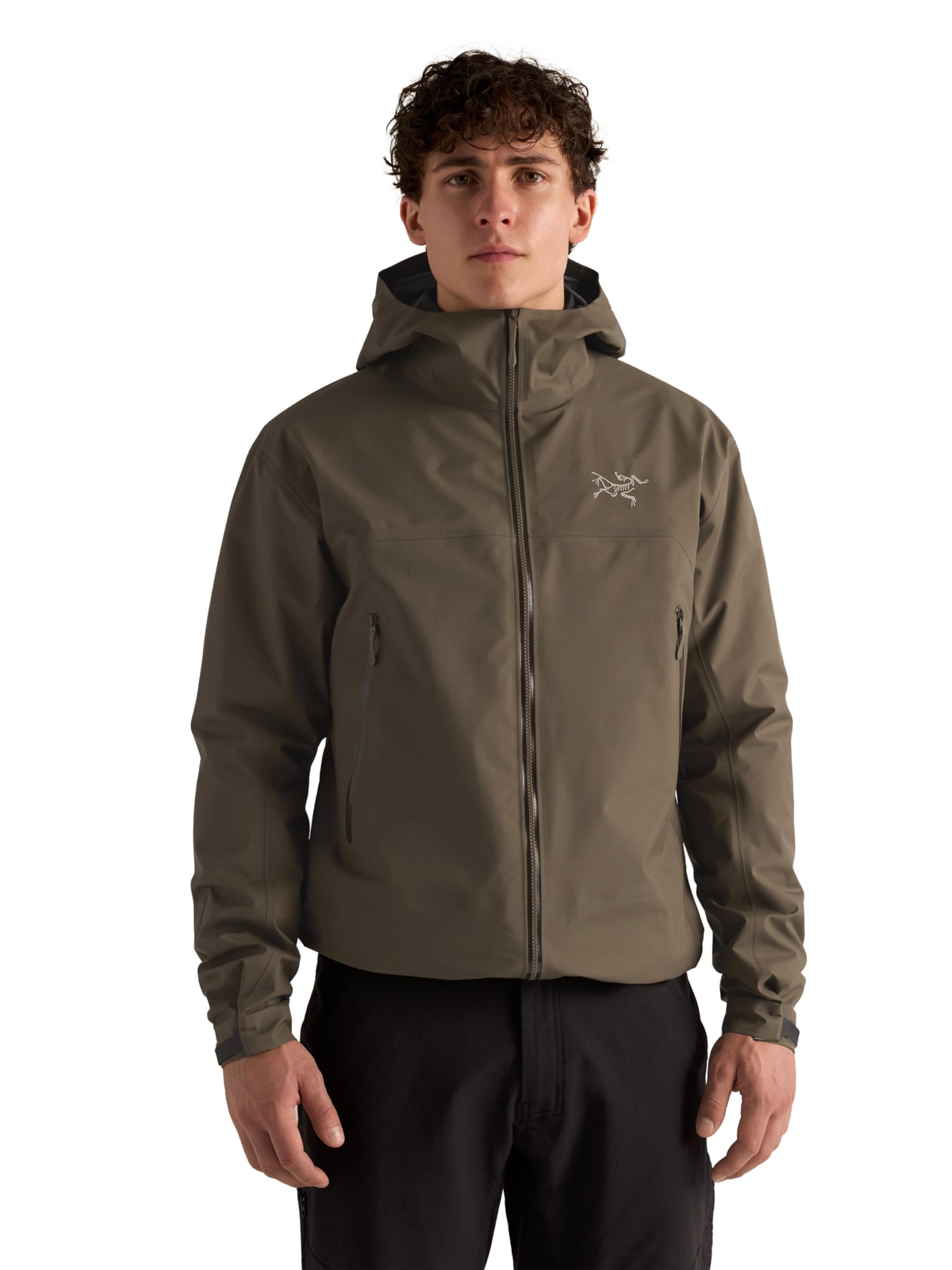
A quiet, low-profile Gore-Tex shell built to do everything well for years.
This is a buy-once shell you stop thinking about after the first season. It uses an 80D 3L Gore-Tex build — an 80-denier fabric in a three-layer stack, meaning a tougher face fabric bonded to the membrane and backer in one piece. That protects you with durable waterproof, windproof, breathable performance and a longer product life. An FC0 DWR treatment on the outside repels moisture before it can soak in, and the fabric is PFC free.
The detail that changes daily wear is the backer. The low-profile StormHood adjusts with a single pull and keeps your peripheral vision clear. Hand pockets and an internal laminated pocket hold your phone and keys, and a dual-point hem seals out drafts.
Two functional touches stand out: an embedded RECCO reflector that can aid search and rescue in an emergency, and articulated patterning for freedom of movement in a regular fit. Against the Mammut’s athletic cut, this leans roomier and more versatile. The honest limit is that a low-profile shell gives you no insulation — it is a barrier, not a warm coat, and it does not list pit zips. For someone who wants one refined, long-lasting Gore-Tex shell for hiking and the city, the Beta is the cleanest all-rounder here.
The every-day advantage: the quiet C-KNIT backer and single-pull StormHood make it the least fussy premium shell to actually wear.
What it will not do: no listed pit zips and no insulation — you add warmth with layers, not the jacket.
Reach for this if: you want a durable, quiet, PFC-free Gore-Tex shell for both trails and city streets.
Look elsewhere if: you want built-in venting or warmth from a single piece.
9. Rab Men’s Kangri Gore-Tex Jacket
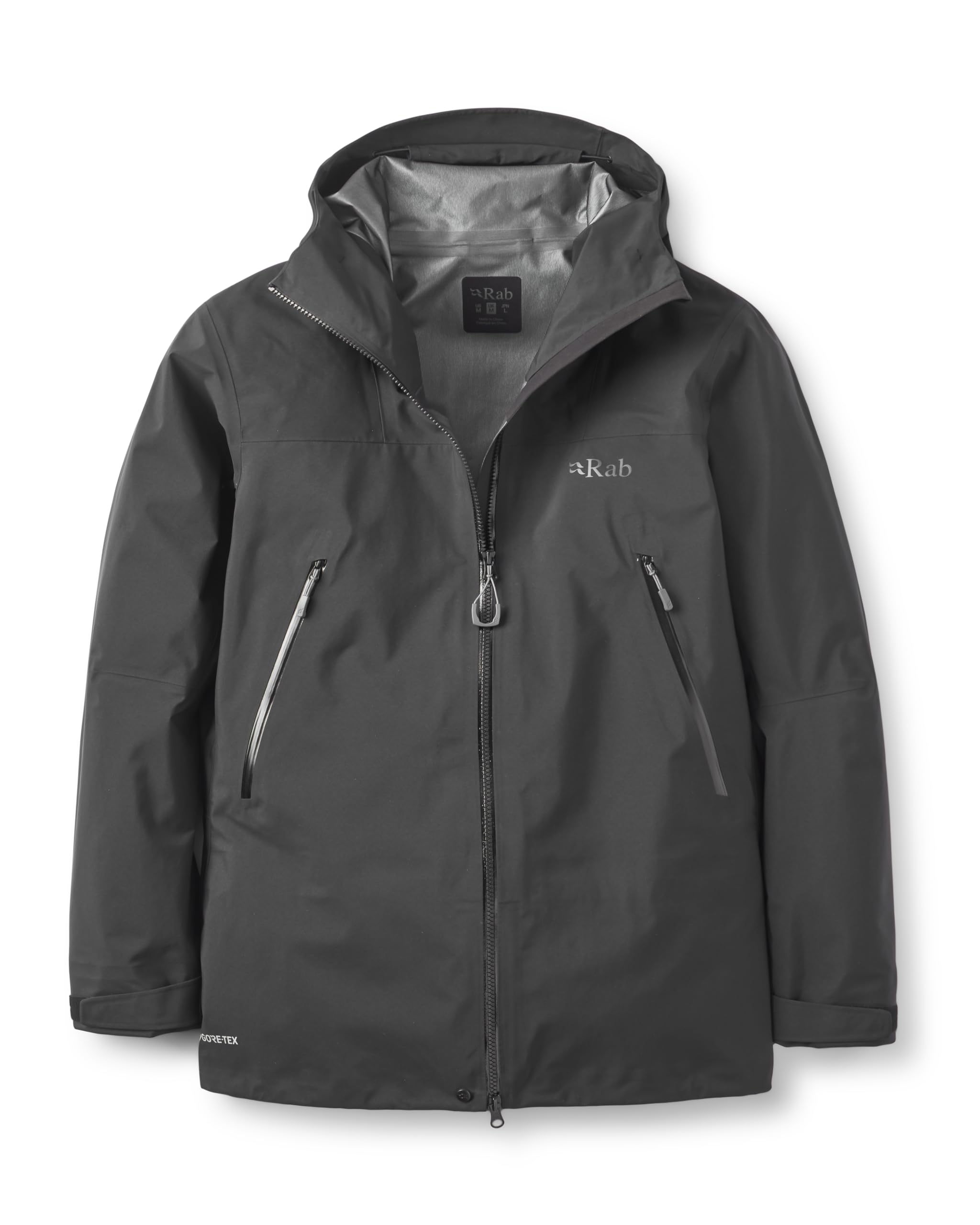
A full storm-day shell with two-way vents and a stiffened-peak hood.
This is the jacket for the day the sky stays open from morning to dusk. Gore-Tex Performance gives it high waterproof, breathable protection through full storm days — sustained rain that would soak a coated fabric. A thin three-layer construction keeps it packable whenever the sun finally wins, so a heavy day of protection does not weigh down your pack. At 7.8 ounces in its package, that balance of serious protection and light carry is the whole point.
Ventilation is where it pulls ahead. There are 2-way vents underneath both sleeves, so you can dump heat on a long climb and then seal back up when the weather turns. The fully adjustable hood has a flexible, stiffened peak, which keeps rain off your face while you still see the trail ahead. It works as a hiking, backpacking, or everyday-around-town shell without feeling overbuilt for either.
Compare it with the Arc’teryx Beta: the Kangri lists the under-sleeve vents the Beta does not, which matters if you run hot on the uphill. The honest note is that Gore-Tex Performance trades a little of the softest next-to-skin feel for a rugged barrier, and there is no insulation here. For long hours outside in real rain, though, the venting and stiffened-peak hood make it the strongest storm-day choice on this list.
Built for all-day rain
- Gore-Tex Performance shell handles sustained storm-day rain.
- 2-way vents under both sleeves dump heat on a climb.
- Adjustable hood with a stiffened peak keeps rain off your face.
- Thin 3-layer build stays packable when the sun returns.
Know before you buy
- No insulation — a barrier shell, not a warm coat.
- Gore-Tex Performance favors a rugged barrier over the softest feel.
Reach for this if: you spend full days in steady rain and want under-sleeve vents plus a stiffened-peak hood.
Look elsewhere if: you need a plush, soft-lined feel against the skin.
Know the Specs
Waterproof rating in millimeters (mm)
A waterproof rating like 20,000mm measures how tall a column of water the fabric can hold back before it leaks. Higher numbers resist heavier, longer rain. For a shell, look for a real waterproof membrane or coating plus taped seams, not just a “water-resistant” label.
Breathability rating
Breathability is often shown as grams of moisture vapor per square meter over 24 hours. A higher figure means more of your sweat vapor escapes, which keeps you from feeling clammy on a climb. Pair it with pit zips or under-sleeve vents for the fastest heat dump.
Membrane technology
Names like Gore-Tex, Helly Tech, and Dry Active are brand labels for the membrane — the thin layer that blocks liquid water but lets vapor pass. Three-layer (3L) builds bond that membrane to an outer face fabric and an inner backer for durability without extra bulk.
Weight and packability
Weight in grams or ounces tells you how much you carry, and packability tells you whether it fits in a daypack. A 190 g shell is a travel and hiking companion. A heavier coat like a 630 g parka or a 3.65 lb insulated rigging coat is built to wear all day rather than stuff away.
Common Questions
What is the difference between waterproof and water-resistant in a rain jacket?
Do I really need pit zips on a rain jacket?
Why does the Marmot Essential jacket run small?
Can a rain jacket be breathable and still keep rain out?
Is a 3-in-1 coat better than a single shell for cold rain?
How light can a waterproof hiking shell be?
What does the hood design actually change in real use?
Do these jackets come in both men’s and women’s fits?
Are these jackets machine washable without losing waterproofing?
What is the RECCO reflector on the Arc’teryx Beta for?
The Bottom Line
The luxury rain jacket to beat is the Marmot Essential, because it pairs a true Gore-Tex membrane with pit-zip venting and a thigh-length cut that keeps you dry on the commute and the trail. If your weather turns cold and wet, the Helly Hansen Rigging adds a removable insulated layer for winter rain. And for long storm days outdoors, the Rab Kangri leads on under-sleeve venting and a stiffened-peak hood. If you want the most versatile premium shell, the Arc’teryx Beta is the one to reach for — and its quiet C-KNIT backer is why it wears so easily.
How we choose
We do not accept paid placement. Every pick is matched to a real buyer and a real use-case; we do not hands-on test units.
Sources
Specifications: manufacturer listings and product documentation. Review insights: verified customer reviews, as of November 2026. Pricing: not shown on this page (it changes often); check the current price via the retailer link.
As an Amazon Associate, Tactical Gear Guy earns from qualifying purchases. This does not affect which products we feature.