Specs are compiled from manufacturer listings and verified buyer reviews and can change over time — please confirm the key details on the product page before buying.
A push-to-connect fitting will not let go until you press its release collar — the ring you push in to free the pipe — and doing that by hand or with slip-joint pliers usually ends in torn knuckles and a damaged fitting. A dedicated Sharkbite release tool clamps evenly around that collar so one squeeze frees the pipe. The GIANNEER three-size disconnect tong is the pick most buyers should reach for, and the guide below lines up seven of these tools so you can see the real differences before you buy.
This guide is built by comparing the manufacturers’ published specifications and the patterns across verified customer reviews, so you get each pick’s real strengths and trade-offs instead of marketing spin.
You will see which sizes each tool covers, how much room it needs behind the fitting, and which ones struggle in a tight cabinet corner. Here is the honest breakdown of the sharkbite release tool options that hold up once you are on your back under a sink.
Top Picks


How To Choose The Best Sharkbite Release Tool
The tool slides over the pipe and the fitting, then squeezes the release collar so the internal grab ring lets go. Once you know that, the choice is simple. The sizes, the steel, and the handle just decide how well it does that in the space you have.
Match the tool to the pipe sizes you actually own
A push-to-connect fitting comes in 1/2 in., 3/4 in., and 1 in. sizes around a typical house. A tool that handles all three saves you a second purchase the day a job throws a different size at you. Look at whether it uses three fixed cavities (cut-in pockets that each match one size), interchangeable plates (swap-in jaws), or adjustable jaws. All three work, but they behave differently in a tight corner. Plates and cavities give you a dedicated fit for each size. Adjustable jaws are quicker to switch but can drift out of alignment.
Check the jaw and handle for the space you work in
A release tool only helps if it physically reaches the fitting. Behind a wall, under a sink, or in a shallow cabinet, handle length and jaw profile matter as much as the size coverage. Shorter, compact tools slip into narrow gaps. Longer handles give you more lever force but crowd the space. If you do plumbing professionally, you want a tool that holds its alignment after a hundred jobs. If you are a homeowner, a mid-range carbon-steel tool usually does everything you need.
Look at the steel grade for long-term wear
Your release collar presses against the jaw teeth every time you use the tool. Soft steel rounds off and starts slipping. S50C and 40CR steel are hardened grades used in hand tools for exactly this reason, and a rust-resistant surface finish keeps them working in a damp basement. That wear only shows up after a year of squeezing collars, not on the packaging.
Side-by-Side Comparison
| Model | Best For | Fitting Sizes | Material | Tool Length | Amazon |
|---|---|---|---|---|---|
| GIANNEER Push to Connect Pex Removal Tool★ Best Overall | First tool for most homes | 1/2″, 3/4″, 1″ | S50C carbon steel | 8.46 in | Amazon |
| iCrimp CRQ01 Disconnect TongBest Value | Tight-space removal on a budget | 1/2″, 3/4″, 1″ | Brass | 7.4 in | Amazon |
| PLANEKO Disconnect Tongs | Swap-plate flexibility | 1″, 3/4″, 1/2″ (plates) | Heat-treated carbon steel | 8.46 in | Amazon |
| inbesk Push-Fit Disconnect Tong | Behind-wall and underground work | 1/2″, 3/4″, 1″ | Alloy steel | — | Amazon |
| TAVWILLANG Push Fit Disconnect Tong | Reaching under sinks | 1/2″, 3/4″, 1″ | — | — | Amazon |
| yaogohua Push-Fit Disconnect Tong | Budget DIY backup tool | 1/2″, 3/4″, 1″ | — | — | Amazon |
| iCrimp CRQ04 PEX Disconnect Tong | Confined corners and pro work | 1/2″, 3/4″, 1″ | 40CR steel, electrophoresis finish | — | Amazon |
Detailed Reviews
1. GIANNEER Pex Removal Tool
Our pick — 4.5+★ from 750+ verified ratings; the strongest balance of quality and price.
Three fitting sizes, one pair of jaws, and the crowd favorite across 700+ owners.
This one earns the top spot on coverage. One tool handles 1/2 in., 3/4 in., and 1 in. fittings — the three sizes on nearly every push-to-connect joint in a typical house. It works on copper, PEX (flexible plastic pipe), and CPVC (rigid plastic pipe), and it fits across the various brands of push fittings, not just one. If you own exactly one release tool, this is the one with the fewest gaps.
The build backs up the coverage. The jaws are cut from S50C steel — a hardened carbon-steel grade — so the teeth that press the release collar keep their shape instead of rounding over. GIANNEER calls this the “improved” version, with thicker and wider jaws than their earlier design. At 8.46 in long by 2 in wide, the tool gives you real handle length to squeeze with. The interchangeable plate (a swap-in jaw piece) lets you switch sizes without a second tool in your pouch.
The honest part is the grip. It is the single most-discussed trade-off here — buyers report the jaws sometimes slip off the collar instead of biting it, and a few find the pliers feel flimsy in the hand. When the tool seats squarely, it works. When it rocks out of alignment in a tight gap, you feel it. The slip comes from a stubborn collar and an off-angle seat, not a broken jaw. Want the fewest setups and the widest size coverage from one stored tool? This is your pick.
Where it earns its keep
- Covers 1/2 in., 3/4 in., and 1 in. fittings with interchangeable plates
- Hardened S50C steel jaws hold shape under repeat use
- Works on copper, PEX, and CPVC pipe across fitting brands
What to know before you buy
- Jaw grip can slip off the collar on an awkward, off-angle fitting
- At 11.29 oz it is heavier than a compact tong, so it fills a pouch pocket
Reach for this if: you want one tool that covers every push-fitting size in a normal house without hunting for a second.
Think twice if: most of your work is in tight recessed corners where a smaller-headed tong seats better.
2. iCrimp CRQ01 Disconnect Tong
The compact tong built to reach collars where a full-size tool cannot get leverage.
A 7.4 in body is what puts the CRQ01 on this list. It measures 7.4 in long and 2.28 in wide, against 8.46 in on the GIANNEER, so you get the same three sizes in a shorter tool that tucks into a pouch and slides into a tight bay. The compact head and wide grip handles let you slip it over a fitting deep under a sink and squeeze with one hand. That leaves your other hand free to steady the pipe and pull it clear. It fits 1/2 in., 3/4 in., and 1 in. fittings in one body, with three teeth matched to those sizes.
Owners mention the tool works exactly where a bigger plier cannot get room — functionality is the top-rated aspect by a wide margin. It releases the fitting intact instead of forcing you to cut the pipe loose.
The fair caveat is the squeeze. A portion of users report the handles take real hand strength to close on a stubborn collar, and the jaws can slip off an off-angle fitting. In a tight spot the tool makes it tricky — that is the trade for a compact body. For a homeowner with the occasional fitting to release, that is manageable. For someone with a grip limitation, a longer handle helps more.
Compact-body advantage: shorter than the GIANNEER — 7.4 in vs 8.46 in — which is what turns a corner job from impossible into doable, while still covering 1/2 in., 3/4 in., and 1 in.
The grip caveat: the squeeze pressure is real, so ease of use is a mixed bag here — expect a firm two-finger pull on a tight fitting.
Good for: cramped work under sinks and behind appliances where a shorter tool gets room to squeeze.
Better elsewhere: if you rarely work in tight spaces and want a longer lever, the longer tong in this list is the easier squeeze.
3. PLANEKO Disconnect Tongs Tool Sized 1”, 3/4”, 1/2”

A plate-swapping tong with a longer reach for collars buried where pliers cannot go.
At 8.46 in, this tong gives you a longer reach than the 7.4 in iCrimp — a 14% longer body overall — so you bend less over a fitting at the back of a cabinet. It bets on flexibility: swap in the plate for the size you need, and the jaw fits that fitting exactly. The bare pliers come set to 1 in. with 1/2 in. adapters installed, and the 3/4 in. plate ships separately in the box. Press the button on the tongs, slide the correct plate in, and it matches the size stamped on the plate.
It handles copper, PEX, and CPVC, and PLANEKO pitches it as a tool for awkward, hard-to-reach spots. Heat-treated carbon steel keeps the jaw smooth and wear-resistant, so it still seats cleanly after a run of jobs.
The thin review base is the caution. The quality conversation around this tool is genuinely split, and a handful find it is not the item for them. An unseated plate is exactly the slip that freezes the release and makes the tool feel wrong, so check it is fully seated before you squeeze. For the plate-swapping buyer who wants a longer reach, it works. For the buyer who wants a single-seat fit and does not care about plates, the cavity style is faster.
The plate idea, honestly: dedicated fit size-by-size is a plus for gritwork, but a plate that is not fully clicked in is the one way to make this tool feel bad — seat it, then squeeze.
Who it is for: the buyer who already owns a compact tong and wants a longer one for reaching deep fitting positions.
Right pick if: you want size-matched plates and a longer handle than a compact tong offers.
Look elsewhere if: you want zero setup and the confidence of a fixed cavity design over a swappable part.
4. inbesk Push-Fit Disconnect Tong Tool for 1/2in, 3/4in, 1in
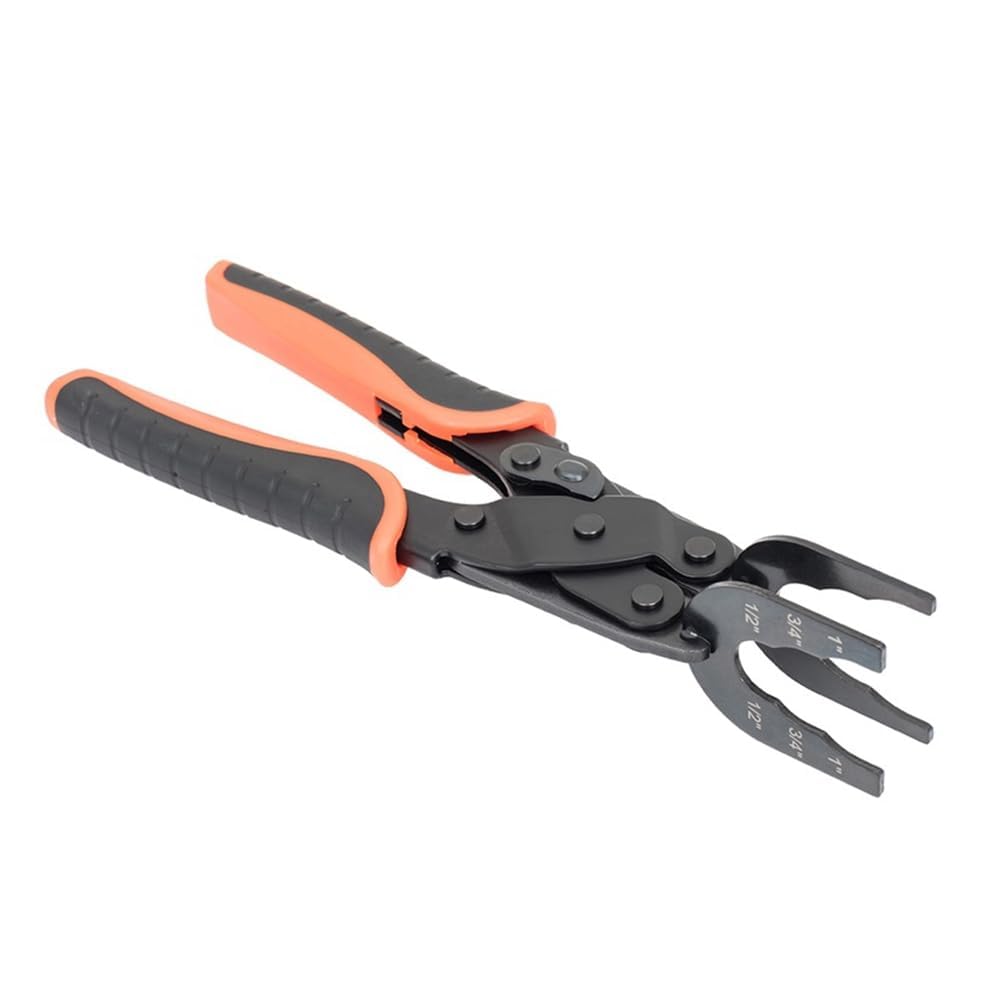
The tong pitched at rough handling and reduced spaces, with three sizes fused into one body.
Where the tool says you can use it is the selling point. The manufacturer lists it for underground and behind-wall installations — the concealed spots where other tools make you hope for the best. It combines 1/2 in., 3/4 in., and 1 in. into a single compact tool, so you do not swap a plate in the middle of a job. It handles copper, PEX, and CPVC in any combination — exactly what a multi-material job needs when the wall is already closed up.
The build is alloy steel with an ergonomic grip, designed for one-handed operation. That matters in a tight bay where your other hand holds the pipe or the flashlight. Its stated uses include hydronic heating (hot-water radiator and floor systems) and potable water systems, and it covers reduced spaces and rough handling — the conditions where a delicate tool snaps. That makes it a solid fit for a homeowner doing a few jobs and for the maintenance pro who works the same tool daily.
Installer-first trade-off: the tool is built around concealed and underground jobs — if you never work those spaces, the extra reach and rough-handling design are wasted on you.
Good match for: the homeowner who has a fitting behind a wall or under a slab and wants one tool to handle it.
Less necessary if: your plumbing is all in open, accessible runs where a standard tong covers it.
5. TAVWILLANG Push Fit Disconnect Tong Tool
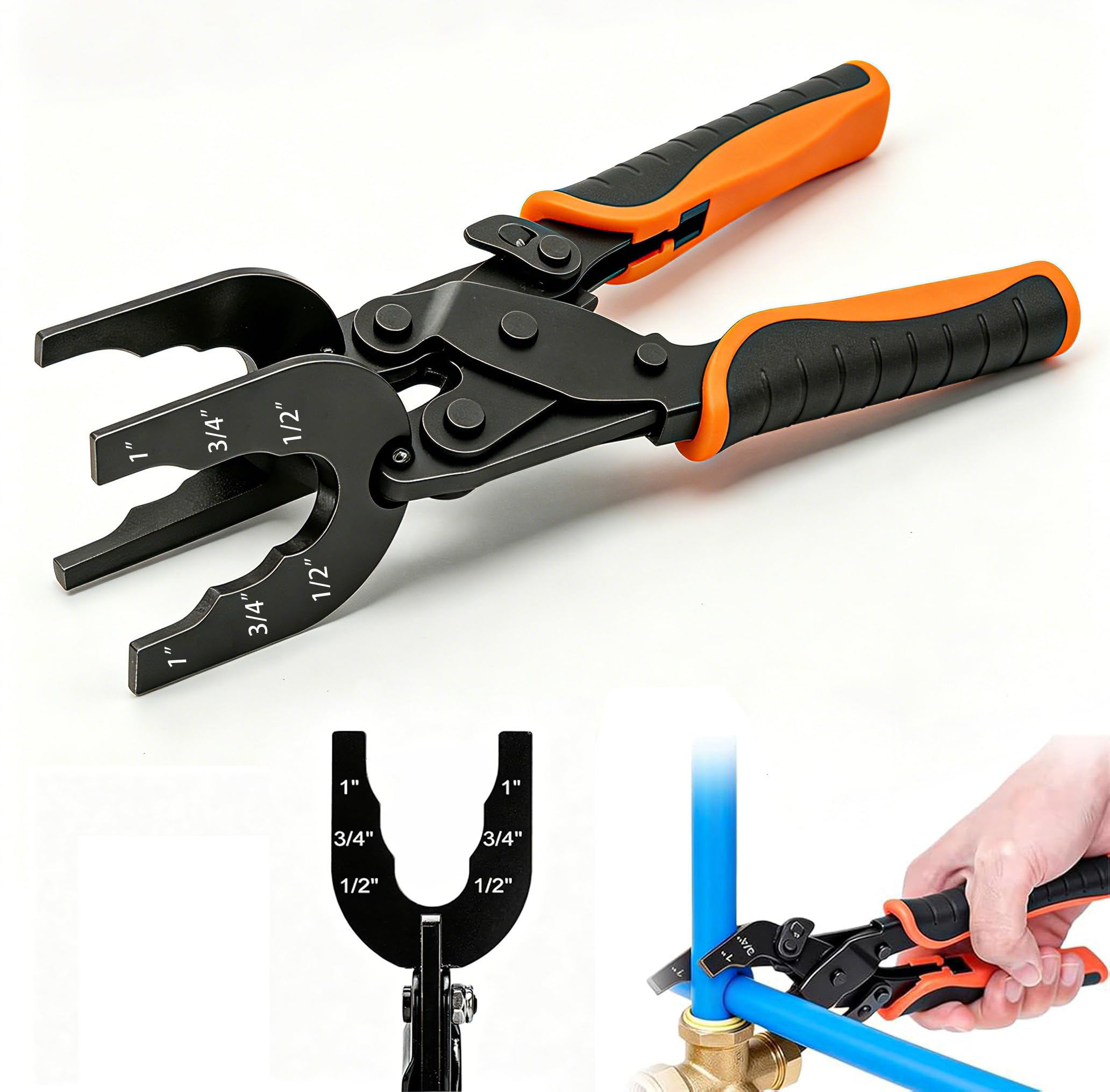
An ultra-thin body put together to slip behind the appliance where fat tools stop.
An ultra-thin streamlined frame is the whole idea here. It is shaped to squeeze into narrow gaps under sinks and behind appliances where a bulkier wrench cannot get started. The jaws are adjustable rather than fixed to one size, so the maker claims the same plier fits 1/2 in., 3/4 in., and 1 in. pipe across copper, PEX, and CPVC. One tool covers the size range with adjustable jaws instead of plates.
The jaw is polished, and the maker says the finish helps it avoid scratching, bending, or denting the pipe and connectors during removal. The handle is designed for one-hand control, which is what you need when the other hand holds the pipe steady. The listing also reminds you to put one end on the adapter ring and the other on the pipe, both ends roughly level. Take that seriously, because a mixed angle is what makes the tool slip on any brand.
The trade is real here, and the honest advice is to treat this one as a fit-dependent buy. Customers note fit complaints, with some saying the tool does not seat properly around their pipe sizes. The complaints trace to the adjustable jaw needing careful seating, not to a defective unit. Sold as one unit with no manufacturer warranty listed, it is a fair choice for the buyer whose only problem is access — and less appealing if you want a jaw guaranteed to clamp right without fussing.
The access argument: a slim frame is exactly what turns a buried fitting into a reachable one — that is the single reason to pick this tool.
The seating question: adjustable jaws reward a careful operator, and the wrong angle costs you the release. Seat the jaw square before you squeeze.
Choose this for: an awkward gap under a sink or behind an appliance that a normal plier cannot enter.
Choose something else for: routine work where you would rather have a fixed jaw seat correctly the first time.
6. yaogohua Push-Fit Disconnect Tong Tool, Sizes 1/2″, 3/4″, 1″
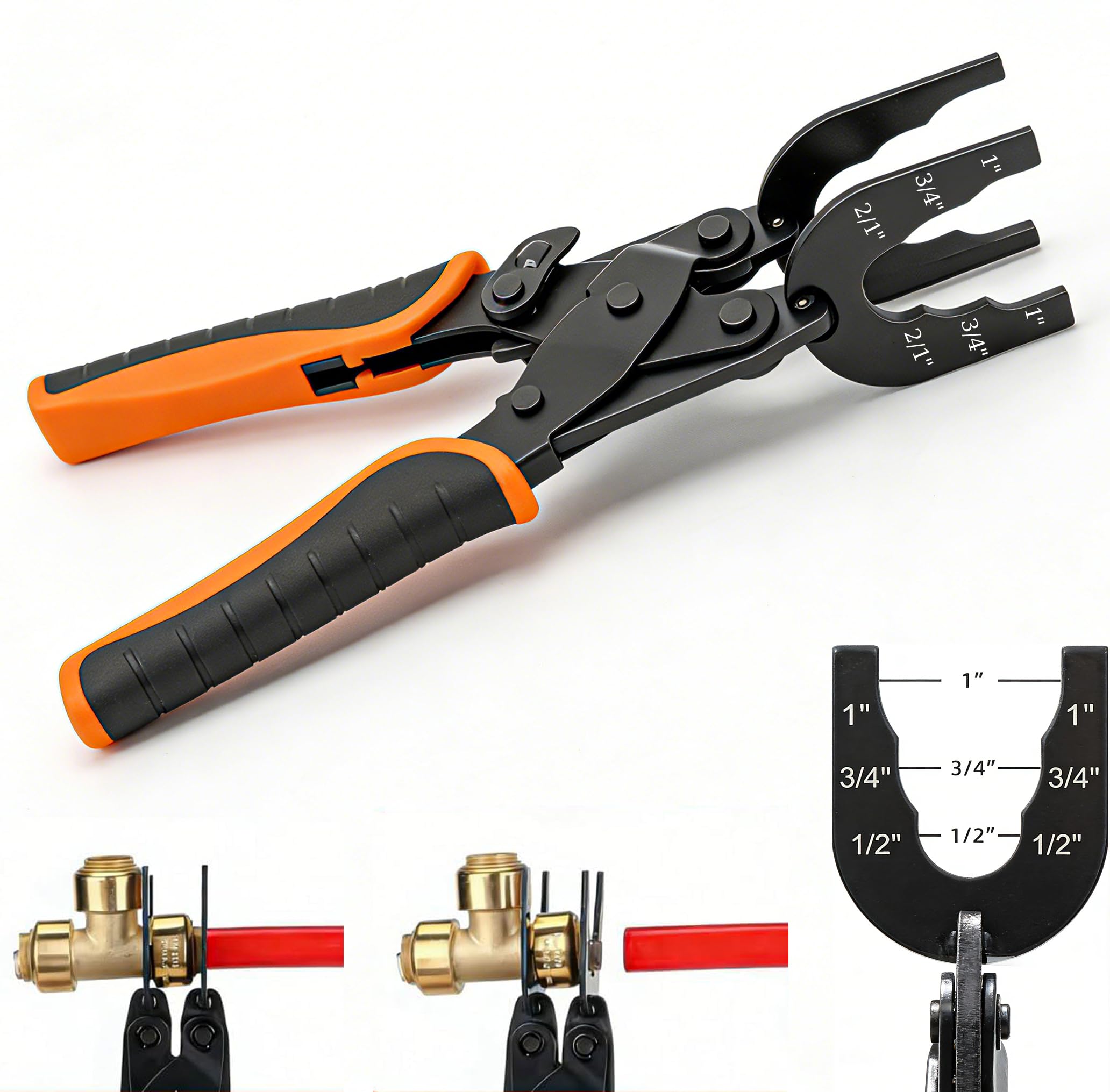
A one-size-fits-all jaw built to cover the whole range without swapping parts.
No plates to lose and no second tool to carry — that is the trade this tong makes. One adjustable jaw is sized for 1/2 in., 3/4 in., and 1 in. pipe. The maker says the jaw is precision-guided, so a single squeeze releases the fitting cleanly without scratching or bending the pipe, and it works with copper, PEX, and CPVC. For a homeowner with two or three fittings to release and no interest in learning a tool system, that single-jaw concept is exactly what they want.
The compact frame is the second part of the pitch: slim enough to slip behind an appliance or under a sink where a large wrench cannot go. The handle is ergonomic and built for one-hand operation, so you are not contorting your arm into a cabinet to reach the second handle. Keep it in the shed for the day the bathroom PEX line needs attention rather than treating it as a daily-use pro tool.
Go in with clear expectations. The review history is thin, the included components list is empty, and the tool has not been around long enough to prove itself. It has no fixed cavity to align, so it leans entirely on the jaw seating right, and how your specific fitting sits will decide the experience. Treat it as the low-cost spare for a single job, and treat a professional in the middle of a remodel as the buyer who should spend more on a tool with a proven jaw.
Simplest setup: nothing to swap and nothing to lose — press the jaw on, squeeze, done, on all three sizes.
Best for: a homeowner buying a spare tool for a single fitting job and keeping it in the garage afterward.
Not ideal for: a pro who needs a jaw that proves itself over hundreds of fittings.
7. iCrimp CRQ04 Disconnect Tong
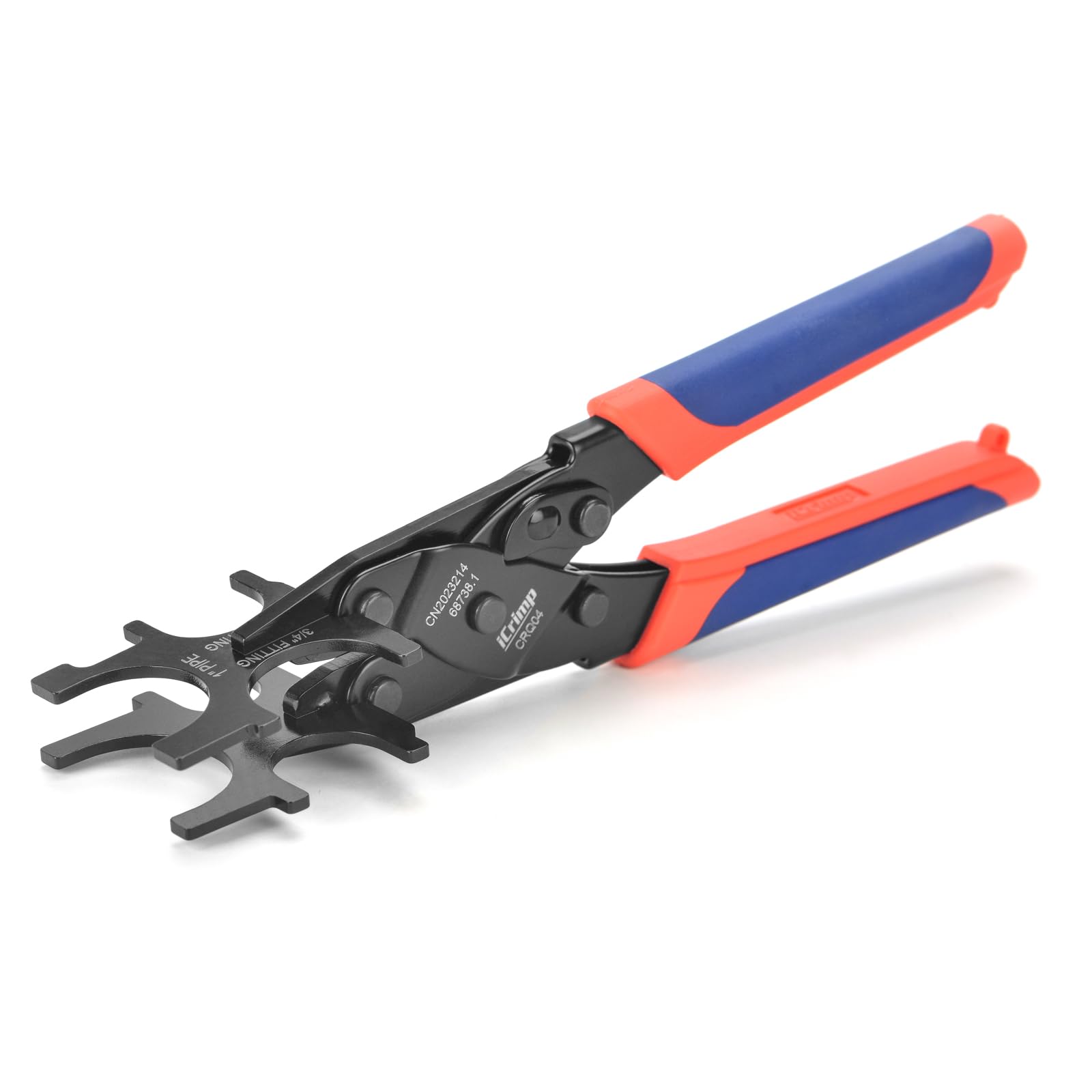
A compact-head tong hung on patent-pending cavities for confined corners.
A compact head is what lifts the CRQ04 above the rest for confined work. It is iCrimp’s improved take on their CRQ02, and the change is a compact tool head that fits into confined corners where a wider body will not seat. The jaws have three separate cavities — a dedicated pocket for each of 1/2 in., 3/4 in., and 1 in. — so the tool clicks onto the correct size rather than relying on one jaw to cover everything. That is a different approach from the iCrimp CRQ01 above, which uses three teeth on one head.
The cavities are not just an anti-slip detail: iCrimp calls them patented, and the point of the design is to let you disconnect push-fit fittings in a narrow space. The tool works on brass push-to-connect elbows, tees, couplers, end caps, and ball valves in copper, CPVC, and PEX. One-handed operation by design frees your other hand to hold the pipe. The body is 40CR steel, surface treated with an electrophoresis finish (an electrically applied rust-resistant coating), so the jaws stay solid and resist rust over years of jobs.
What the tool will not do, per its own listing, is handle SharkBite fittings — the listing warns against it. That matters because the search term for this tool category often includes SharkBite. Reviewers point out it seats well on the brands it targets, and compatibility is the theme that shows up most. The recurring friction is the squeeze: the compact head can make the collar harder to press in a very tight corner. For the buyer working in cupboards and close quarters on non-SharkBite push fittings, it is the strongest tool here.
Why the cavity head wins: dedicated pockets for each size keep the tool square on the collar, and a compact head reaches where a full-width jaw cannot — a real advantage over the one-jaw, three-tooth iCrimp CRQ01 above.
The user blame: the squeeze is the hard part on a tight fitting. On a tool this compact, that is a technique issue as much as a design one.
Top of the list if: your fittings are not SharkBite brand and you work in tight cabinets and corners where the compact head pays off.
skip it if: you need the tool for genuine SharkBite fittings — the maker warns against that use.
Know the Specs
Fitting Sizes
Push-to-connect fittings come in 1/2 in., 3/4 in., and 1 in. sizes, and a release tool needs to match the fitting you are working on. Some tools use three fixed cavities cut into one jaw, some switch between interchangeable plates, and some rely on adjustable jaws. Fixed cavities and plates line the tool up squarely on the collar. Adjustable jaws cover more ground but depend on a careful hand to seat right.
Steel Grade
The jaw presses the release collar every time you squeeze, so the steel grade decides how long it keeps a clean edge. S50C, 40CR, and heat-treated carbon steel are hardened grades used in hand tools because they resist rounding off under that pressure. A rust-resistant finish matters too when the tool lives in a damp basement or a watery cabinet.
Handle and Reach
A release tool is only as good as the space it can work in. Handle length gives you squeeze force, and a compact head or slim frame lets you reach a fitting behind a wall or under a sink. Longer handles suit open runs and tired hands. Shorter, compact tools suit tight corners. Many tools are built for one-hand use, so your free hand stays on the pipe.
Common Questions
Do I need a separate Sharkbite release tool or can I use pliers?
Will one disconnect tong work on 1/2 inch, 3/4 inch, and 1 inch fittings?
Can I use the iCrimp CRQ04 on SharkBite fittings?
What do PEX, CPVC, and copper mean for a release tool?
Will a release tong damage the push-to-connect fitting?
How do you use a push-fit disconnect tong step by step?
Which is better, interchangeable plates or three separate cavities?
Can these tools be used in tight spaces behind a wall?
Does the steel grade of the jaw make much difference?
How much hand strength does a release tong need?
The Bottom Line
The tool most people should buy is the GIANNEER Push to Connect Pex Removal Tool. It covers all three fitting sizes in one tool with hardened S50C steel jaws, which means the fewest gaps from a single stored tool. If your fittings sit in a tight corner and you want a shorter tool that gets room, grab the iCrimp CRQ01 Disconnect Tong. And if your job is genuinely behind a wall or under a slab, the inbesk Push-Fit Disconnect Tong is the one built for that.
One nudge from the data: the CRQ04 sits at the top of its price tier for a reason. The compact head and patented cavities are the two features that separate it from every other tool here, and if that matters to your job, it is the one to buy.
How we choose
We do not accept paid placement. Every pick is matched to a real buyer and a real use-case; we do not hands-on test units.
Sources
Specifications: manufacturer listings and product documentation. Review insights: verified customer reviews, as of November 2026. Pricing: not shown on this page (it changes often); check the current price via the retailer link.
As an Amazon Associate, Tactical Gear Guy earns from qualifying purchases. This does not affect which products we feature.