Specs are compiled from manufacturer listings and verified buyer reviews and can change over time — please confirm the key details on the product page before buying.
If you only remember one thing, make it this: match the waterproofing and the lug pattern to the mud you actually run in, not to the picture on the box. A shoe that keeps your feet bone dry but slides on wet roots is useless. A shoe that grips like a goat but soaks through in ten minutes has the same problem in reverse. This guide cuts straight to the five men’s waterproof trail runners worth your money and tells you, in plain terms, which one fits your terrain, your foot, and your weekly mileage.
This guide is built by comparing the manufacturers’ published specifications and the patterns across verified customer reviews, so you get each pick’s real strengths and trade-offs instead of marketing spin.
Some shoes here are built for boggy winter singletrack, others for rocky summer ridgelines, so the right pick depends on where you actually run. Below you’ll find the full breakdown of the waterproof trail running shoes for men worth lacing up this season.
Top Picks
How To Choose Waterproof Trail Running Shoes for Men
Most people buy a waterproof trail shoe for the wrong reason. They picture a monsoon, then buy the burliest, heaviest boot-like shoe they can find — and then overheat in it on a dry spring run. The smarter approach is to start with your terrain and your foot, then let the waterproofing and the grip follow.
Match the membrane to your wet, not your worst-case day
A waterproof membrane (a thin sealed layer built into the upper that blocks rain and puddles while letting sweat vapor pass out) is the whole point of this category. But a fully sealed shoe also runs warmer, because less air moves through. If you run in cold, wet coastal mud, a Gore-Tex build is worth it. If you run in hot, humid summer storms, a lighter waterproof treatment like Climaproof may keep you drier overall because your feet sweat less inside it.
Lugs decide whether the waterproofing even matters
Lugs are the rubber teeth on the outsole. Deep, aggressive lugs bite into soft mud and loose dirt; shallower, flatter lugs suit packed gravel and rock. A shoe with great waterproofing and shallow lugs will still send you sliding on a boggy climb. Look at the outsole pattern before you look at anything else — especially if your local trails turn to soup for half the year.
Expect a snugger, stiffer fit than your road shoes
Waterproof uppers are less stretchy than mesh road uppers, so the fit is less forgiving. Many buyers find they need to go up half a size, and wide-footed runners should check width options carefully. If a shoe runs small, it will pinch across the toes on long descents — that is a sizing problem, not a quality problem, so read the fit feedback for your exact model before you commit.
Side-by-Side Comparison
| Model | Best For | Waterproofing | Weight | Rated | Amazon |
|---|---|---|---|---|---|
| Salomon Speedcross 6 GTX★ Best Overall | Muddy, wet singletrack | Gore-Tex membrane | 3 lb | 4.5+/5 | Amazon |
| Adidas Terrex Tracefinder 2 ClimaproofBest Value | All-round trail value | Climaproof | 2.43 lb | 4.0+/5 | Amazon |
| New Balance Dynasoft Nitrel V6 Gore-Tex | Dry feet, light runs | Gore-Tex | — | 4.0+/5 | Amazon |
| Merrell Nova 4 Waterproof | Comfort on mixed terrain | Waterproof upper | — | 4.0+/5 | Amazon |
| Hoka Speedgoat 6 Mid GTX | Technical, sloppy descents | Gore-Tex membrane | 3 lb | 4.0+/5 | Amazon |
Detailed Reviews
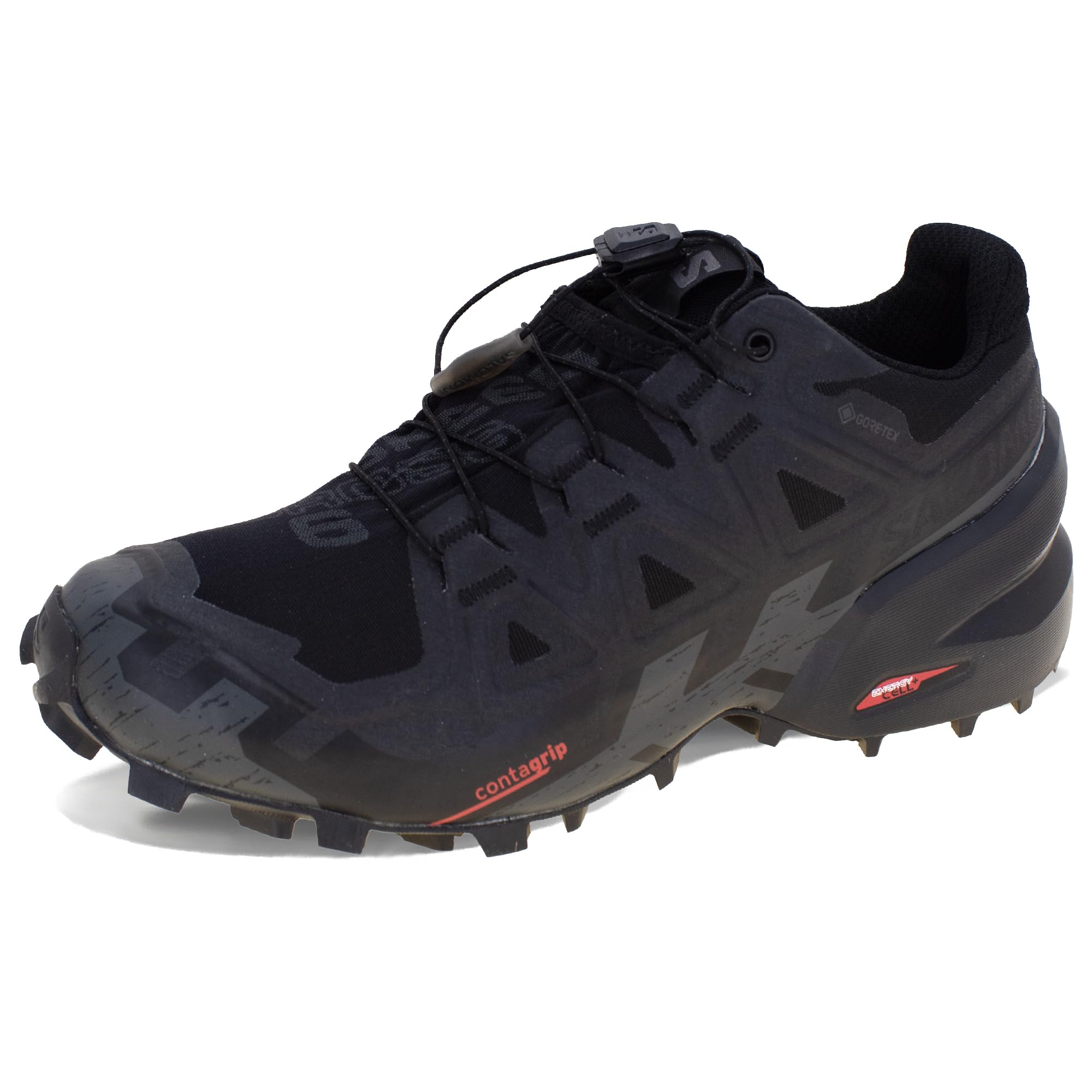
1. Salomon Mens Speedcross 6 GTX
Our pick — 4.5+★ from 200+ verified ratings; the strongest balance of quality and price.
The mud specialist that keeps a sealed foot dry while still clawing forward.
This is the shoe the crowd agrees on — 4.5+ stars across 200+ owners — and the reason is the waterproofing combined with grip. A Gore-Tex membrane (a sealed layer that blocks water while letting sweat vapor out) handles wet grass, puddles, and steady rain. The outsole is built to clear mud as you push off, so soft ground does not pack up underfoot and turn your stride into a slide.
You get a stiffer, more planted feel on technical ground from the 3 pounds for the pair. That extra mass is heavier than the Adidas Tracefinder 2 at 2.43 pounds — which matters if you care about a light, quick feel on long climbs. The Speedcross gives up some of that featherweight sensation and returns it as stability.
What wins people over is the overall build quality and the comfort on wet days. The honest caveat is wear life on hard surfaces: the soles hold up well on soft trail, but several owners note that soles wear faster when you mix in a lot of pavement. Treat these as trail-only shoes and they will treat you well.
What earns the top slot
- Gore-Tex membrane keeps feet dry in steady rain and mud
- Aggressive outsole clears mud and grips on wet, soft ground
- Planted, stable ride on technical descents
Where it gives ground
- At 3 pounds the pair, it is heavier than lighter options
- Soles wear faster if you log lots of road mileage
Made for: Runners whose local trails turn to deep mud and who want a sealed, grippy shoe that stays planted.
Think twice: If you want the lightest possible pair for long, dry, groomed paths, a lower-weight option may suit you better.
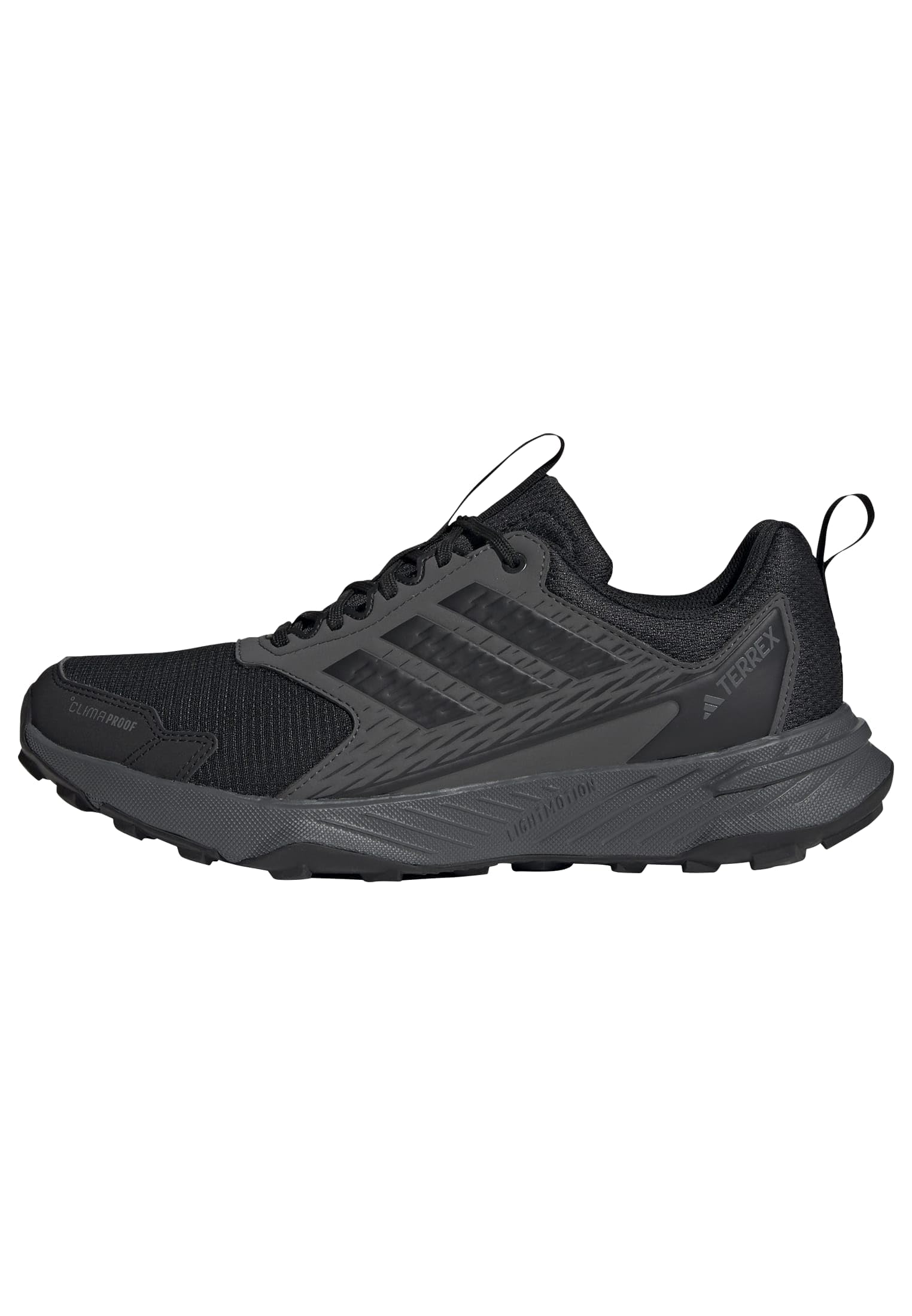
2. Adidas Mens Terrex Tracefinder 2 Climaproof Trail Running
The lighter, budget-friendly all-rounder that puts comfort first on mixed terrain.
Start with the weight, because it is the biggest gap between this shoe and the Speedcross above. The Tracefinder 2 comes in at 2.43 pounds for the pair versus the Salomon’s 3 pounds — noticeably lighter on your feet over a long run. The Climaproof shell (Adidas’s weatherproof, breathable upper treatment) locks out rain and wind while trying to let sweat escape, so you stay dry from outside and comfortable from within.
Cushioning comes from a Lightmotion midsole, which is the foam layer under your foot that softens impacts. The lugged outsole is shaped to grip in all directions, so you can push off and turn on loose gravel with a bit more confidence. Build quality is what buyers keep coming back to, and it is the shoe’s most-praised trait, closely followed by comfort.
The catch is fit and warmth. A portion of the fit feedback says this one runs tight all around, and a few note that it can run warm on hot days — both natural side effects of a sealed waterproof upper. If you have wide feet or run in high summer heat, size carefully and expect a snug, toasty feel.
Value read: For the money, you get a genuinely waterproof, all-direction-grip trail shoe that is lighter than its key rival here, which makes it a strong first trail pick.
The honest limit: A tight, sealed fit that some runners find warm — try your true size first, and consider going up if you are between sizes.
Reach for this if: You want a lighter, weatherproof trail shoe that handles varied ground without a heavy feel.
Look elsewhere if: You have wide feet and want room to spread your toes from the first mile.
3. New Balance Dynasoft Nitrel V6 Gore-Tex Trail Running Shoe

A lightweight Gore-Tex runner that keeps feet dry and grips when the trail gets loose.
If your priority is staying dry without feeling weighed down, this is the pair to look at. The Gore-Tex upper is the gold-standard name in waterproofing — a sealed layer that blocks water and lets sweat vapor out. What people praise most here is exactly that: the waterproofing keeps feet dry on wet runs, and the shoes are genuinely light on foot.
Traction is the other strong point — the outsole grips well when conditions turn loose and damp. The material itself is breathable yet sealed, so you are not trading ventilation for weather protection as much as you might expect. For a mix of wet pavement-to-trail transitions and damp singletrack, it does the core job well.
Sizing is where you need to pay attention. A share of the fit feedback says these run about half a size small, and a snug feel around the ankle is common, so many runners will want to size up. There is also the usual split on long-term durability — treat that as a sign to keep them off harsh concrete when you can.
Best at its job: When dry feet and a light, grippy ride on damp trails are your top two priorities, this one delivers on both.
Fit warning: Half-size-up sizing and a close ankle fit catch some buyers out — order accordingly.
Fits you if: Dry, light, and grippy top your list and you are happy to size up half a size.
Pass if: You want a roomy, cushioned cruiser and dislike a close-fitting ankle collar.
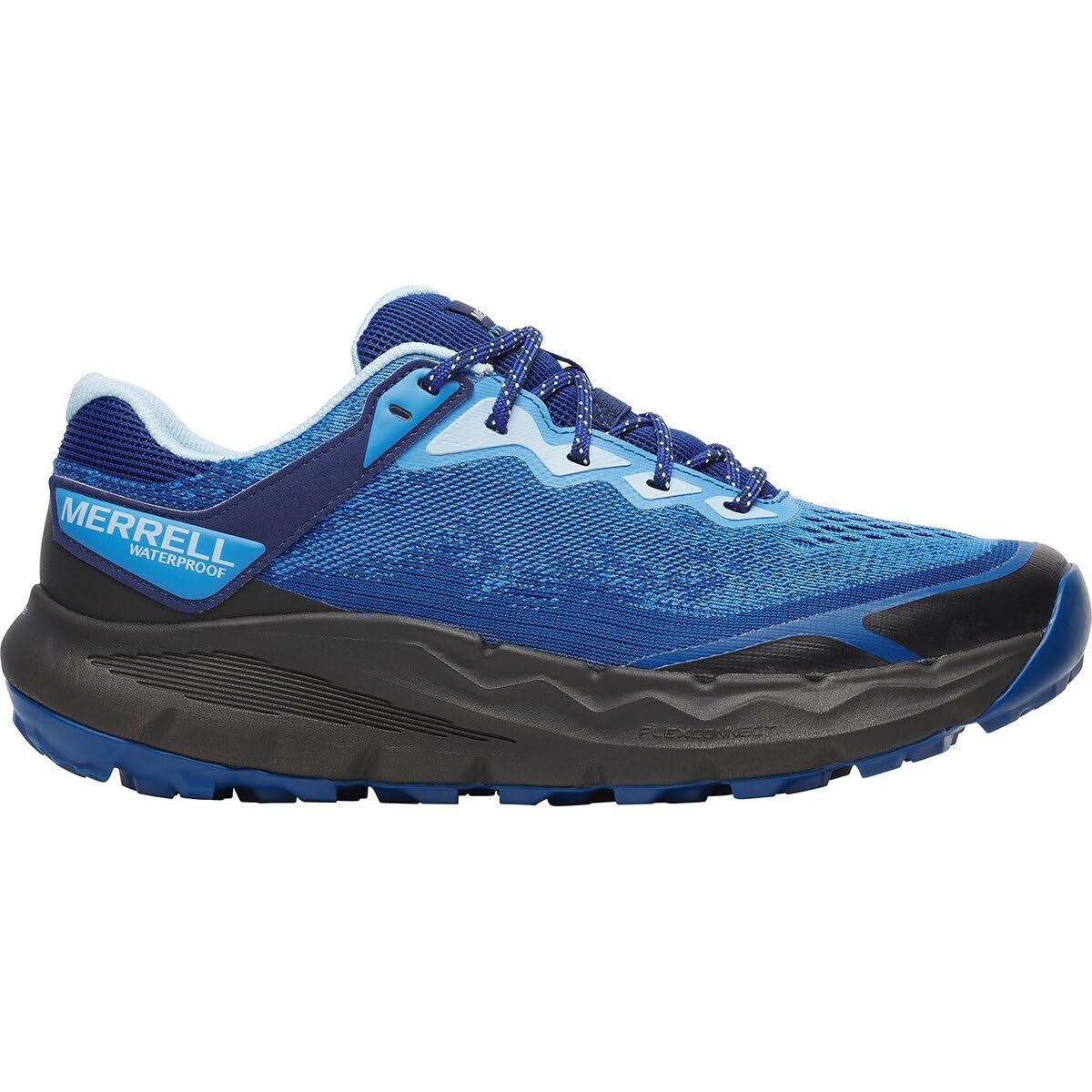
4. Merrell Men’s Nova 4 Waterproof
The cushioned comfort shoe for runners who log long, mixed-surface trail days.
The Nova 4 leads with comfort, and it is the clear strength here — the most-praised trait by a comfortable margin, with build quality right behind it. The shoe is designed to blend an athletic running shape with functional trail comfort across a range of uses, so it works as well on a mellow dirt path as it does on a long fire-road run.
The waterproof upper handles wet grass and light rain, and fit is generally well-regarded, so most runners find it sits comfortably right from the start. Cushioning underfoot keeps the ride soft on longer outings, which is why it earns its place for comfort-focused runners rather than pure mud specialists.
Two things to weigh first. A portion of buyers report that the shoe does not always seal out heavy water, so treat it as weatherproof for showers rather than a fully submerged day — and its sizing runs inconsistent for some, with a few finding it too wide. It is also a shoe you will hear coming, with several noting it makes noise on hard floors.
Reasons buyers keep it
- Comfort is the headline — a soft, cushioned ride for longer trail days
- Well-regarded fit that most runners find right from the start
- Waterproof upper shrugs off wet grass and light rain
What to keep in mind
- Some find the waterproofing uneven in heavy, sustained water
- Sizing runs inconsistent for a few, leaning wide
- Audible on hard floors, per several owners
Pick this for: Comfort-first trail days where a soft ride and a reliable fit matter more than deep mud grip.
Consider another if: You need proven sealing in sustained wet weather or a quiet shoe indoors.
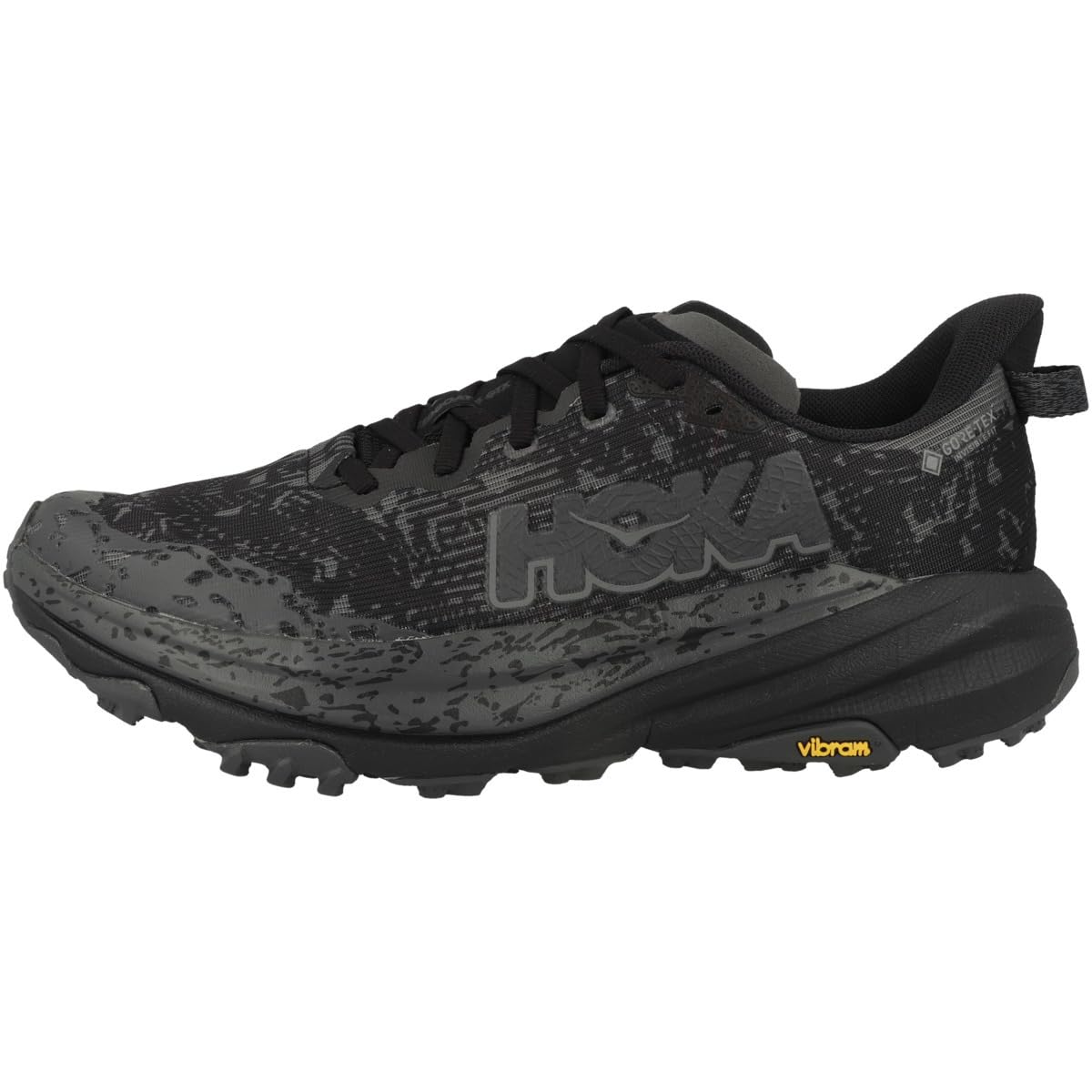
5. Hoka Mens Speedgoat 6 Mid GTX®
A waterproof trail workhorse with a grippy Vibram sole built for sloppy, technical ground.
This is the premium technical pick, and its defining feature is the outsole: Vibram Megagrip with Traction Lug, which is a rubber compound and lug pattern engineered to bite into loose soil and wet rock. Add a waterproof Gore-Tex membrane and a more flexible running-friendly collar, and you have a shoe made for charging through rough, wet ground.
The spec sheet is detailed — a protective toe rand guards against rock strikes, a foot-cradling heel bolster locks the back of your foot down, and the upper is a 100% recycled polyester mesh. The midsole runs on a late-stage MetaRocker geometry, which rolls your foot forward through each stride. The build quality is the standout, and it is what buyers praise most.
Here is the honest trade-off: comfort and fit split opinion, with a share of buyers finding them uncomfortable or reporting a small fit. Durability is the clearest concern, with several noting the upper separating from the sole over time. At 3 pounds for the pair, this is a heavier, more protective shoe — best suited to technical, wet terrain rather than fast groomed runs.
Where it shines: The Vibram Megagrip outsole and full Gore-Tex sealing make it a genuine wet-weather tool on rocky, loose descents.
Size and care: The shoe runs small for some and needs a careful look at fit, and the upper-to-sole bond is the point to watch over time.
Go here if: You run real technical terrain in the wet and want maximum grip and protection over light weight.
Skip here if: You want a simple, low-fuss shoe for dry, groomed paths and easy mileage.
Know the Specs
Waterproof Membranes: Gore-Tex vs Climaproof
A membrane is the sealed layer inside the upper that keeps water out while letting sweat vapor escape. Gore-Tex is the well-known standard and appears in the Salomon, New Balance, and Hoka picks here. Climaproof is Adidas’s own version, used on the Terrex Tracefinder 2. Both block rain and puddles; the practical difference is breathability and warmth. A fully sealed shoe runs warmer, so on hot, humid runs you will sweat more inside it — that sweat is what makes feet feel damp even when the membrane holds.
Lugs, Grip, and Trail Terrain
Lugs are the rubber teeth on the outsole. Deep, aggressive lugs bite into soft mud and loose dirt; the Salomon Speedcross and Hoka Speedgoat both lean this way for sloppy ground. A compound like Vibram Megagrip is a rubber blend built for wet-rock and loose-soil grip. Match the outsole to your terrain: mud and steep descents reward aggressive lugs, while packed gravel and fire roads suit a flatter, smoother outsole. Getting this wrong means the waterproofing protects a foot that is still sliding.
Common Questions
Are waterproof trail running shoes bad for hot weather?
Should I size up in a Gore-Tex trail shoe?
How do I keep my feet dry on a muddy run?
What is the difference between Gore-Tex and Climaproof?
Can I run on pavement in waterproof trail shoes?
Do waterproof trail shoes really keep feet completely dry?
How long should a waterproof trail running shoe last?
Are these shoes good for wide feet?
What does a rock plate or toe rand do on a trail shoe?
The Bottom Line
For most runners hunting the best waterproof trail running shoes for men, the Salomon Speedcross 6 GTX is the one to beat — a sealed Gore-Tex foot, a mud-clearing outsole, and the strongest overall standing here. If lighter weight and all-round value matter more to you, the Adidas Terrex Tracefinder 2 at 2.43 pounds undercuts the Salomon’s 3 pounds. And when technical, wet descents call for maximum grip, the Hoka Speedgoat 6 Mid GTX and its Vibram Megagrip sole is the tool for the job. The Salomon is the smart first move for most wet-trail runners, and it is the pair the widest spread of owners keeps pointing back to.
How we choose
We do not accept paid placement. Every pick is matched to a real buyer and a real use-case; we do not hands-on test units.
Sources
Specifications: manufacturer listings and product documentation. Review insights: verified customer reviews, as of November 2026. Pricing: not shown on this page (it changes often); check the current price via the retailer link.
As an Amazon Associate, Tactical Gear Guy earns from qualifying purchases. This does not affect which products we feature.