Specs are compiled from manufacturer listings and verified buyer reviews and can change over time — please confirm the key details on the product page before buying.
If you want bass that actually lands in your chest instead of just humming politely, the short answer is this: the Audio-Technica ATH-M50X is the safest pick for accurate low end, the Skullcandy Crusher Evo is the one to buy if you want to physically feel the bass, and the JBL Tune 730BT is the value standout for long wireless listening. Everything below explains how to tell those three apart, plus seven more over-ear sets worth your attention.
This guide is built by comparing the manufacturers’ published specifications and the patterns across verified customer reviews, so you get each pick’s real strengths and trade-offs instead of marketing spin.
Bass headphones live or die on three things: driver size in millimeters, how much low end that driver can actually move, and whether the cup seal keeps that bass against your ears. The picks below cover all three, and this breakdown of the top headphones with good bass separates the genuinely punchy sets from the ones that just boost the mids and call it bass.
Top Picks

How To Choose The Best Top Headphones with Good Bass
Bass is not one flavor. A studio monitor delivers deep, accurate low end that lets you hear the actual bassline. A consumer bass set pushes the sub-bass forward so the whole track thumps. Both count as good bass — they just serve different listening habits. Decide which of the two you want before you compare driver specs.
Driver size sets the ceiling on how much air moves
A driver is the round speaker inside each cup, measured across in millimeters. Bigger drivers generally move more air, and moving air is what you feel as bass. The Audio-Technica ATH-M50X runs 45-millimeter drivers, the Sony MDRXB800 runs 50-millimeter diaphragms, and the JBL Tune 730BT uses 40-millimeter drivers. That millimeter figure is a starting point, not the whole story — tuning and cup seal matter just as much.
Sealed cups keep the low end where it belongs
An over-ear (circumaural) design wraps around your ears rather than pressing on them. That creates a pocket of air the driver can pressurize, which is exactly how deep bass reaches your eardrum instead of leaking out the sides. If the cups sit loose, you lose the thump no matter how big the driver is. Fit complaints are the most common real-world issue in this category, so treat a snug-but-not-tight clamp as a feature.
Wired versus wireless changes what you can hear
Bluetooth compresses the audio before it reaches the headphones, and older Bluetooth versions compress more. Sets that support aptX Lossless, LDAC, or a wired USB-C or 3.5-millimeter connection can pass through more of the original detail. If you mostly stream from a phone on the move, wireless convenience wins. If you want the cleanest low end from a laptop or interface, a detachable cable is worth having.
Noise cancellation and battery pull against each other
Active noise cancellation uses microphones and processing to cancel outside sound, and it drains battery fast. The JBL Tune 780NC rates up to 76 hours with ANC off and up to 50 hours with it on. Plan for that gap whenever a listing quotes one big battery number. Also check whether the headphones can run wired with the power off — some need the battery alive even in AUX mode.
Side-by-Side Comparison
| Model | Best For | Driver Size | Connection | Stated Battery | Amazon |
|---|---|---|---|---|---|
| Audio-Technica ATH-M50X★ Best Overall | Clean, accurate low end | 45 millimeters | Wired, detachable cable | — | Amazon |
| JBL Tune 730BTBest Value | Long wireless sessions | 40 millimeters | Wireless, Bluetooth 6 | Up to 76 hours | Amazon |
| JBL Tune 780NCQuietest Ride | ANC plus huge runtime | 40 millimeters | Wireless, Bluetooth 6 | Up to 76 hours (50 with ANC) | Amazon |
| Skullcandy Crusher Evo | Bass you can feel | 40 millimeters plus dual bass drivers | Wireless, Bluetooth 5 | Up to 40 hours | Amazon |
| Sony MDRXB800 | Budget wired thump | 50 millimeters | Wired, 3.5 mm | — | Amazon |
| Skullcandy Crusher 540 Active | Gym and workout use | 40 millimeters plus dual bass drivers | Wireless, Bluetooth 5 | Up to 40 hours | Amazon |
| EarFun Wave Pro X | Hi-Res codecs on a budget | 40 mm DLC plus 10 mm LCP | Wireless, Bluetooth 6 | Up to 90 hours (50 with ANC) | Amazon |
| Marshall Monitor III ANC | Premium build and controls | 32 millimeters | Wireless, Bluetooth 5 | 70 hours (100 without ANC) | Amazon |
Detailed Reviews
1. Audio-Technica ATH-M50X Headphones
Our pick — 4.5+★ from 33,500+ verified ratings; the strongest balance of quality and price.
The studio workhorse that gives you real bass without smothering the rest of the track.
This is the set to buy if you want to hear the bassline itself — the actual notes, the texture of the strings, the kick drum’s attack — rather than a wall of low-end pressure. Each cup holds a 45-millimeter driver (the round speaker inside, measured across), built with rare earth magnets and copper-clad aluminum wire voice coils. In plain terms, that hardware is what lets the low end stay tight and controlled instead of turning to mush when a track gets busy. That 45-millimeter figure is the largest driver on this list apart from the Sony’s 50-millimeter diaphragms.
Sound quality is what wins people over here, by a wide margin — it is the most-discussed thing about this pair and lands positive in the overwhelming majority of conversations. Comfort follows close behind, and the soft on the ears description comes up constantly. The circumaural design (cups that sit around your ears rather than on them) creates a seal that blocks a fair amount of room noise and keeps the bass pressurized. Three detachable cables ship in the box, so you can swap to a shorter cord for phone use or a coiled one at a desk.
Here is the honest catch. Durability is the one genuinely split topic — plenty of long-term buyers report years of service, while others describe the plastic hinge area failing inside a month. Fit is similarly divided: some find the clamp ideal, others find it a little tight. Neither flaw is universal, and the 4.5+ star score across 33,000+ ratings suggests most owners never hit either one. Just treat the folding hinge gently and you sidestep the most common issue. It is also wired only — there is no Bluetooth here at all.
Where It Delivers
- 45-millimeter drivers with rare earth magnets keep deep bass accurate, not bloated
- Circumaural cups seal around the ear for real low-end isolation
- Three detachable cables included, so one set covers phone, laptop, and desk
- 90-degree swiveling earcups let you monitor with one ear off
What To Weigh
- Wired only — no wireless option anywhere in this model
- Hinge plastic is the weak point for a minority of long-term owners
- Clamp force splits opinion: some find it snug, others tight
Reach for this if: you want the most accurate bass on the list and do most of your listening tethered to a laptop, interface, or phone dongle.
Look elsewhere if: you need wireless freedom or you have a larger head and know you dislike firm clamp pressure.
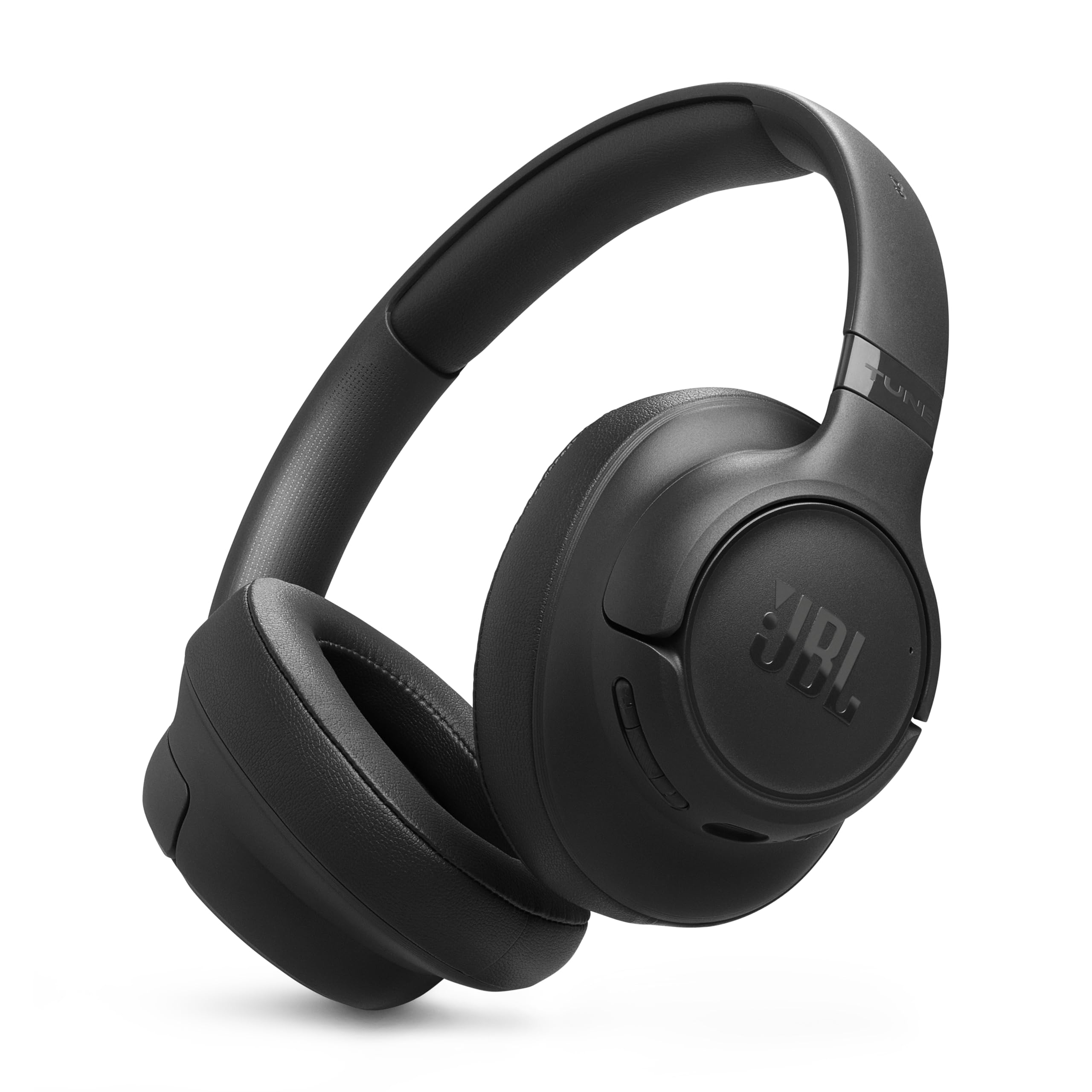
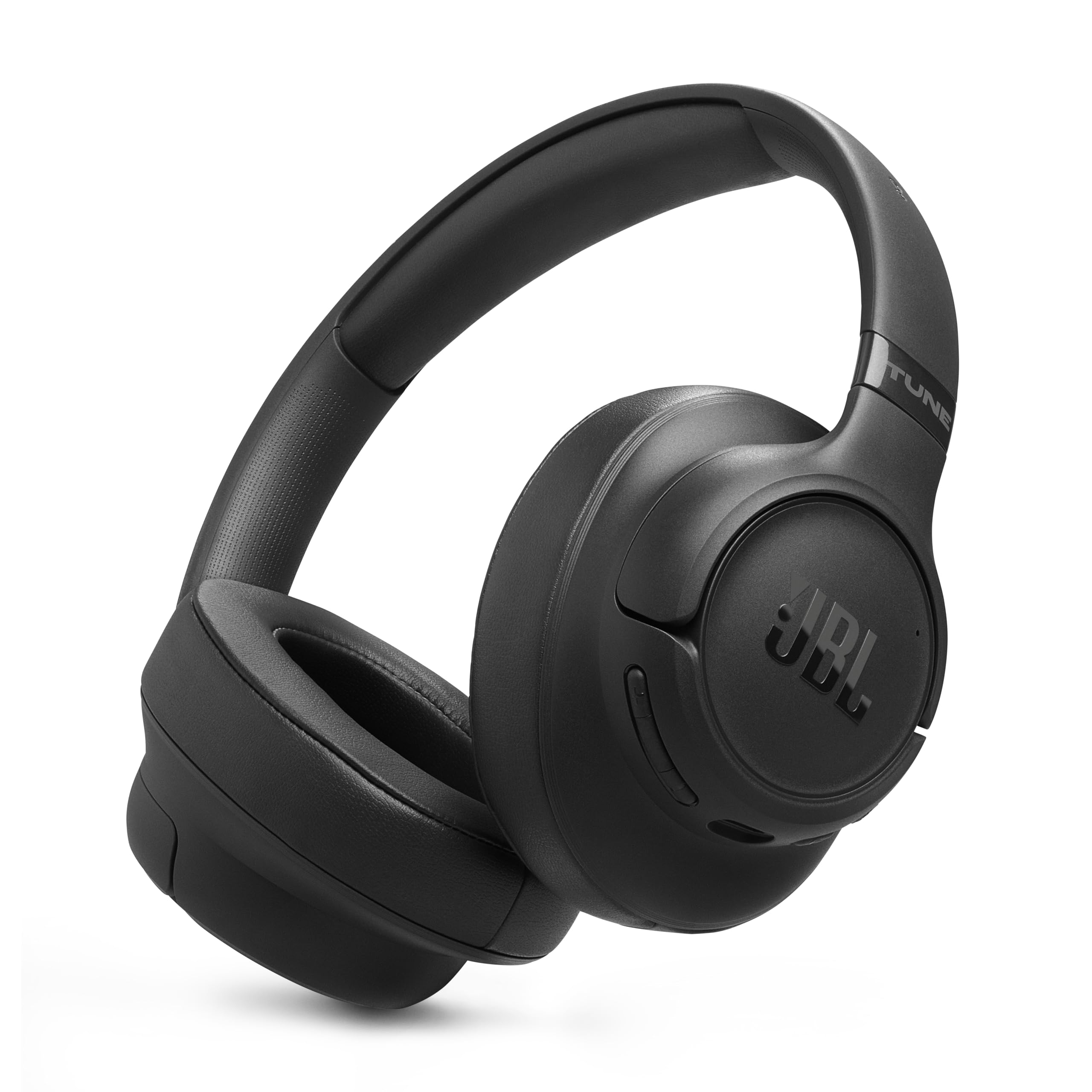
2. JBL Tune 730BT Wireless Over-Ear Headphones
Almost a full work week of playtime from a set you can fold flat into a bag.
Most wireless bass headphones ask you to charge them every few days. This one rates up to 76 hours of playback, and a 5-minute speed charge hands back another 5 hours — enough to rescue a dead commute before you leave the house. That battery figure is the same headline number the pricier JBL Tune 780NC quotes with noise cancellation switched off. The custom 40-millimeter drivers carry JBL’s Pure Bass tuning, which pushes depth and punch forward in the mix.
You also get a real EQ rather than a fixed curve. The JBL Headphones App offers three presets — Default for balanced listening, Bass for extra low-end punch, and Vocal to pull voices forward. Built-in voice prompts confirm which mode you landed on, so you are never guessing. Bluetooth 6.0 handles the connection, and multipoint pairing lets you hold two devices at once: stream a movie from a tablet while your phone still cuts in with calls. Pairing to Android or Windows 10/11 happens through Google Fast Pair or Swift Pair prompts, with no menu digging.
Owners consistently describe the build as good quality and the sound as clear and powerful, with calls coming through well thanks to two beamforming mics per earcup (mics that focus on the direction of your voice). The one area that splits opinion is noise cancellation — some find it excellent, others find it does almost nothing. Treat that as a bonus rather than the reason to buy. And note the box ships without a USB-C charging cable by design, so plan on using one you already own.
The runtime argument: 76 hours is the reason to pick this over the Skullcandy Crusher Evo, which quotes 40 hours — nearly double the listening between charges, in a set that folds flat for travel.
The case for it: casual listeners who want reliable wireless bass with almost no charging routine.
Know before you buy: no charging cable in the box, and the noise cancellation is inconsistent enough that you should not count on it.
3. JBL Tune 780NC Wireless Over-Ear Noise Cancelling Headphones
Bass with a mute button for the rest of the world.
Where the Tune 730BT spends its budget entirely on runtime, this one adds adaptive noise cancellation and still holds the same up-to-76-hours figure with ANC off — dropping to up to 50 hours with it on. That is the trade-off in one line: turn on the quiet and you give back a chunk of battery. The 40-millimeter drivers carry Hi-Res JBL Pure Bass Sound, and a USB-C to 3.5-millimeter cable ships in the box so you can run wired when you want more detail and clarity.
The noise cancellation is the part that earns its keep. It is adaptive, and Smart Ambient lets you dial in how much of the outside world leaks through. Owners are notably unified on this one — noise cancellation is the only aspect where every mention lands positive, with no dissenting voices in the mix. Two beamforming mics handle calls with noise reduction that filters ambient sound in busy places. JBL Spatial Sound widens the stage so audio seems to arrive from all around you, and the app’s Personi-Fi 3.0 shapes the EQ to a hearing profile you set up yourself.
If you are comparing this to the 730BT directly, the extra money buys you the ANC and the spatial processing, not more bass. Bass response is fundamentally the same JBL Pure Bass tuning from the same 40-millimeter driver size. The catch worth knowing: the USB-C charging cable is not included, and this model’s score sits at 4.0+ stars rather than the 730BT’s equal 4.4 — the difference is the feature set, not the reliability.
Why It Earns Its Place
- Adaptive noise cancellation with Smart Ambient control over outside sound
- Up to 76 hours with ANC off, still up to 50 hours with it engaged
- Wired USB-C to 3.5 mm cable included for lossless listening
- Spatial Sound widens the stage on any device
The Honest Fine Print
- No USB-C charging cable in the box
- ANC cuts the battery headline roughly in half
- Bass tuning is identical to the cheaper 730BT, so you pay for quiet and spatial audio, not more low end
Best matched to: commuters and open-office workers who want JBL bass with the world switched off.
Think twice if: you never use noise cancellation — the 730BT delivers the same bass tuning for less.
4. Skullcandy Crusher Evo Headphones
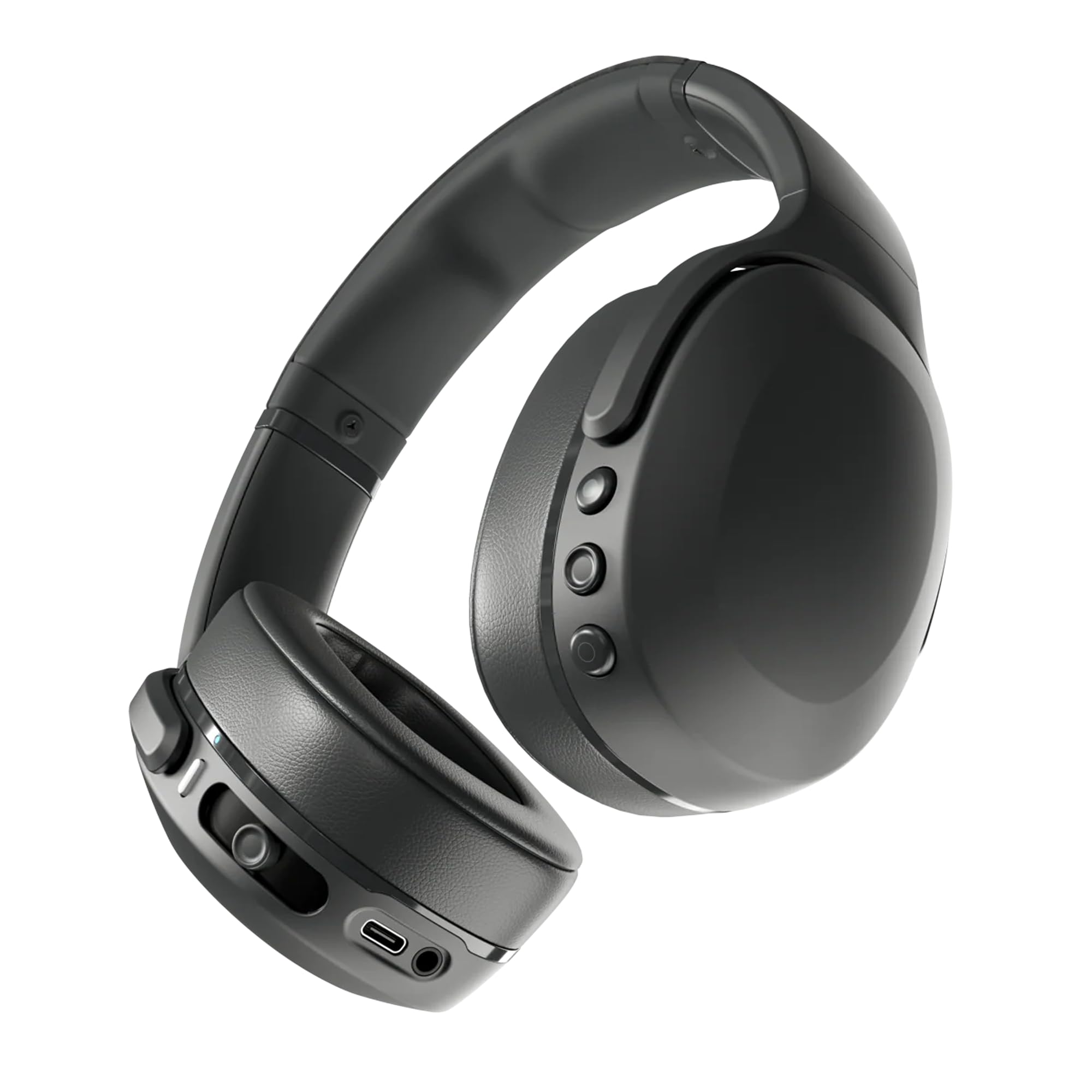
The one pair here that turns bass into something your skull can physically register.
Every other set on this list moves air with a standard driver. This one adds a second set of bass drivers alongside the two full-range 40-millimeter ones, then lets you control how hard they hit. That is the whole concept behind the multi-sensory bass technology, and it is why the set gets described as feeling like a concert or a club rather than a pair of headphones. Nothing else in this list offers a physical bass channel you can dial up and down.
A slider on the earcup controls the intensity, and that adjustability is a genuine highlight — the bass control ranks among the most-praised features after sound quality itself, and almost all feedback on it is positive. If a track is already bass-heavy, you can pull the slider back. If you want to feel a movie explosion, push it forward. The Skullcandy App adds a hearing analysis that tunes levels to your own ears. You also get up to 40 hours of battery with Rapid Charge adding 4 hours from a 10-minute top-up, plus call, track, and volume buttons on the cup.
Compare the runtime against the JBL Tune 780NC and this falls noticeably shorter — 40 hours against 76. What you trade away in endurance, you get back in that physical bass channel. The noise isolation is passive only (the cups block sound by sealing, not by processing), and it splits opinion. Fit is the other mixed note: some find it comfortable for hours, others find it a touch tight and prone to slipping during workouts. For desk and couch listening, neither is a problem.
What separates it: the adjustable bass slider is the single feature no other pick here matches, and it is the reason this set wins on pure sensation rather than accuracy.
One thing to know: the 40-hour battery and passive-only isolation mean this is a home-and-travel set more than a long-haul flight companion.
Pick this one if: you want to feel the low end, not just hear it, and you like being able to tame it track by track.
Pass if: you need active noise cancellation for flights or you expect earcups to stay locked during a run.
5. Sony MDRXB800 Extra Bass Over The Head Headphones

Fifty millimeters of diaphragm doing the heavy lifting for not much money.
If driver size is your measure of bass potential, this is the biggest on the list. Each cup runs a 50-millimeter diaphragm, which is larger than the Audio-Technica ATH-M50X’s 45 millimeters and larger than the JBL Tune 730BT’s 40 millimeters. Sony pairs that with a “direct vibe” structure built specifically for superior bass response, so the low end is the point rather than an afterthought. The stated frequency range runs 3-28Hz at the low end.
There is no battery, no app, and no Bluetooth — just a Y-type flat serrated cord measuring 1.2 meters that resists tangling. You plug it into anything with a 3.5-millimeter jack. Pressure-relieving foam pads line the cups for longer sessions, and the dual folding design collapses the set small enough for a bag. For a wired-only desk or practice setup, that simplicity is a strength: nothing to charge, nothing to pair.
The trade-off is build longevity. Durability is the one aspect that leans negative overall, with some owners reporting a year or so of use before failure and others getting several years out of theirs. Fit is similarly mixed, with a snugger squeeze on some heads. Neither is universal, and the sound quality feedback is strongly positive — people describe hearing detail they missed from laptop speakers. Just go in expecting a plastic build at this tier and handle the joints with care.
Worth grabbing for: a wired-only listener who wants maximum driver size and bass output without charging anything.
Skip if: you want wireless freedom or you expect a set to survive years of rough handling.
6. Skullcandy Crusher 540 Headphones
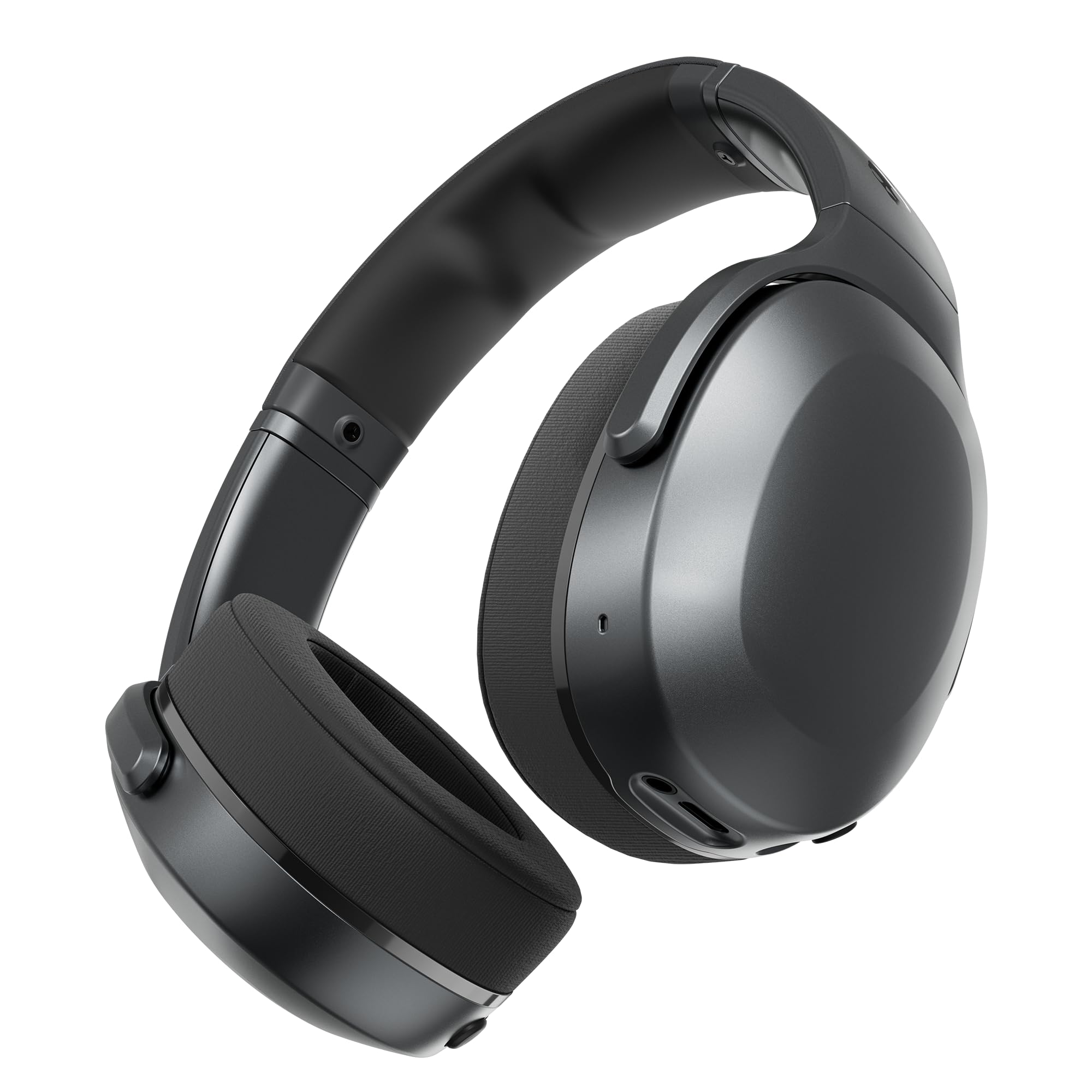
The Crusher formula rebuilt for sweaty sessions, with breathable cushions and a secure clamp.
Take the Crusher bass concept and add gym survival features. The same two full-range 40-millimeter drivers plus additional dual bass drivers deliver the sensory thump, and you still get the adjustable Crusher bass control. What changes is the exterior: breathable ear cushions, a sweat and water-resistant nano-coating, and a clamp force designed to keep the set anchored while you move. It was recognized in Men’s Journal’s 2026 Tech Awards as a best workout headphone, which tells you where the design intent sits.
Exercise suitability comes up as a distinct positive thread in the feedback, alongside comfort and overall sound quality — the bass-heavy output is what people call out first. Battery runs up to 40 hours, with Rapid Charge giving 4 hours from a 10-minute charge. The Skullcandy App adds a hearing analysis that adjusts levels to your ears. A protective case and both a USB-C charging cable and a 3.5-millimeter aux cable ship in the box.
The sticking point is fit, and it is the most-discussed weakness here. Some owners mention the set staying put through a session; others say it slides when they lean back or lie down for bench work. Noise cancellation is passive and mixed in feedback, so do not expect it to mute a loud gym floor. If you lift upright and mostly care about bass energy, the clamp does its job. If you spend time flat on a bench, keep expectations realistic.
Gym-first design: breathable cushions and a sweat-resistant coating are features the standard Crusher Evo does not list, and they are the reason to choose this version for training.
Built for: lifters and runners who want Crusher bass energy in a set that tolerates sweat.
Not your match if: you do a lot of lying-down work where the cups can shift, or you need real noise cancellation.
7. EarFun Wave Pro X Hybrid ANC Wireless Over Ear Headphones
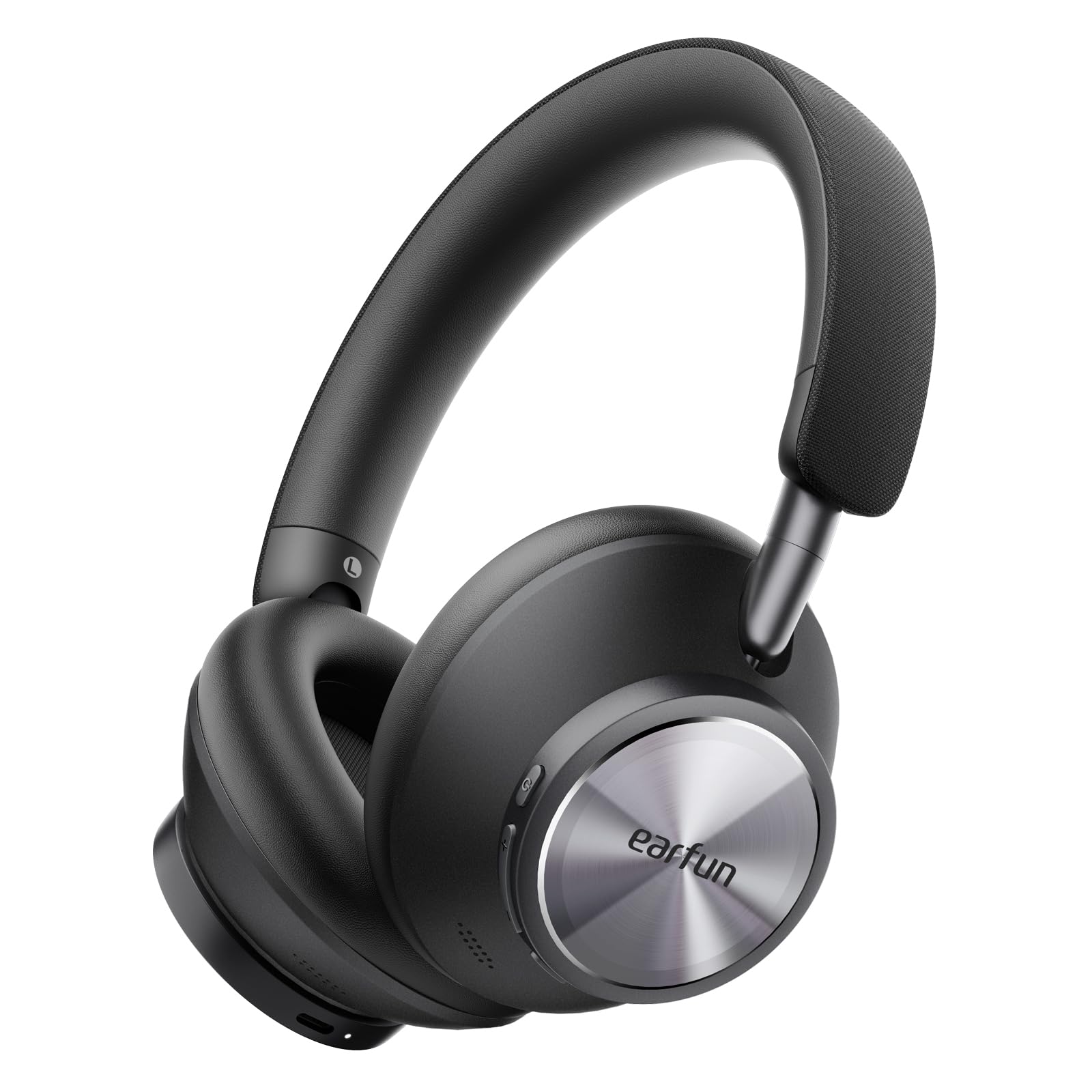
Two drivers per cup, lossless codecs, and a battery figure that reads like a typo.
Most headphones use one driver per ear. This one stacks two: a 40-millimeter DLC driver (DLC meaning diamond-like carbon, a stiff coating that keeps the cone from flexing out of shape) alongside a 10-millimeter LCP driver. That pairing is what produces the deep, controlled bass and the crisp vocal separation at the same time. On the codec side it supports aptX Adaptive, aptX Lossless, LDAC, and carries Hi-Res Audio certification — meaning it can receive more of the original file over Bluetooth than a standard connection allows.
Battery is the headline: up to 90 hours with ANC off, up to 50 hours with it on, and a 15-minute charge returns up to 10 hours of playback. Noise cancellation runs through a hybrid system with 8 microphones and Qualcomm’s QCC3095 chip, and it stays active even over the wired AUX connection — unusual, since most sets hand you passive-only listening once you plug in. Eight mics with AI processing handle calls, working to isolate your voice from wind and background chatter. Bluetooth 6.0 brings multipoint and Google Fast Pair, and Auracast support lets you share audio across a group.
What seals it is value. The people who own these describe the sound as competitive with far better-known brands, and every value-for-money comment lands positive. The honest limit: the battery in AUX mode requires the headphones to be powered on, so a dead battery means no wired fallback. If you plan to use the cable as a last-resort backup, know that going in.
The Strong Hand
- Dual drivers per cup — 40 mm DLC plus 10 mm LCP — for bass and vocals together
- aptX Lossless, aptX Adaptive, LDAC, and Hi-Res Audio certification
- Up to 90 hours with ANC off; 15-minute charge returns up to 10 hours
- ANC stays active even in the wired AUX connection
The Fine Print
- AUX mode needs the headphones powered on, so no listening on a dead battery
- Battery drops to up to 50 hours once ANC is engaged
- Less-known brand, so long-term support is the open question
The smart-buyer route: anyone chasing lossless codecs and dual-driver bass without paying flagship money.
Where it falls short: there is no true passive wired mode — the cable only works while the battery has charge.
8. Marshall Monitor III ANC Wireless Over-Ear Headphones

Seventy hours of quiet with the amp-stack looks nobody else offers.
The standout number here is 70 hours of wireless playtime with active noise cancellation switched on, rising to 100 hours without it. That is a marathon figure even by wireless standards — the Skullcandy Crusher Evo quotes 40 hours, and this beats it comfortably with ANC running the whole time. Marshall also upgraded the cancellation from the previous model, adding technology that continuously measures ambient noise and blocks it. Three adjustable levels let you dial the quiet in, and Transparency mode lets some outside sound back through when you need it.
Driver size is the smallest on this list at 32 millimeters, which does not stop Marshall’s Dynamic Loudness processing from adjusting treble, mids, and bass at every volume level. Design is where this set clearly separates itself — the classic amp-style look earns nothing but positive comments, with no dissenting voices on appearance in the feedback. Comfort lands strongly too, with the soft ear pads singled out repeatedly. Physical buttons control playback rather than touch surfaces, which owners treat as a practical relief. A premium hard case, USB-C charging cable, and USB-C to 3.5-millimeter detachable audio cord all ship in the box.
The catch to weigh: fit is genuinely mixed, with some buyers failing to find a decent seal at all. That matters here because a poor seal eats your bass — the very thing you came for. Charge time runs 2.5 hours, which is on the longer side. And at 32 millimeters, the driver is physically smaller than the Audio-Technica’s 45 millimeters, so the bass arrives through tuning and processing rather than raw cone area.
Looks and endurance: the retro design and 70-hour ANC battery are the two things no competitor here matches, and they are why this set stands out.
The seal question: try to confirm the fit suits your head, because a loose cup undercuts the bass you bought the set for.
Choose it if: you want a genuinely distinctive design, days between charges, and real buttons instead of touch panels.
Hold off if: you have had trouble getting a seal with compact cups before — try before committing.
Know the Specs
Driver Size in Millimeters
The driver is the speaker cone inside each cup, and the millimeter figure measures it across. A bigger cone moves more air, and moving air is what your ear reads as bass weight. That said, a 50-millimeter driver badly tuned can sound thinner than a well-tuned 40-millimeter one. Use driver size as a starting filter, then check tuning and cup seal. On this list the Sony MDRXB800 leads at 50 millimeters, the Audio-Technica ATH-M50X follows at 45, and the Marshall Monitor III ANC sits at 32.
Active Noise Cancellation and Battery Drain
ANC uses microphones to detect outside sound and processing to cancel it, and that processing costs battery. Every set here that lists both figures shows the gap: the JBL Tune 780NC goes from up to 76 hours to up to 50 with ANC on, the EarFun Wave Pro X from up to 90 to up to 50, the Marshall from 100 to 70, and the Skullcandy Crusher 1080 from up to 60 to up to 50. If a listing quotes one big number, ask which mode it applies to.
Bluetooth Versions and Audio Codecs
Bluetooth is the wireless link, and newer versions handle more data with less delay and lower power draw. Codecs are the compression methods layered on top — aptX Lossless, aptX Adaptive, and LDAC pass through more of the original file than a basic connection. If you want the cleanest bass detail over wireless, look for one of those names in the spec sheet. If you use a wired connection, the codec question disappears entirely.
Circumaural Fit and Bass Seal
Circumaural means the cups surround your ears rather than pressing on them, creating an enclosed pocket of air. That pocket is what lets low frequencies build pressure instead of escaping. A set that fits loosely loses bass no matter how large the driver is, which is why so many listings in this category carry mixed fit feedback. Snug cups and soft pads are functional requirements here, not just comfort extras.
Common Questions
Will a bigger driver in millimeters always give me more bass?
How much battery do I lose if I leave noise cancellation on?
Can I use bass headphones wired if the battery runs out?
What is a bass slider and do I actually need one?
Do these over-ear sets leak sound into a shared office?
Is Bluetooth 6.0 noticeably better than Bluetooth 5 for bass headphones?
My ears get hot after an hour. Which set handles long sessions best?
Can these headphones take calls, and do the microphones actually work?
Will the Skullcandy Crusher fit stay put during a workout?
Do I need a special codec for lossless bass?
The Bottom Line
For most listeners, the top headphones with good bass winner is the Audio-Technica ATH-M50X because its 45-millimeter drivers deliver deep, accurate low end you can actually pick apart, and the three detachable cables cover phone, laptop, and desk in one purchase. If you want to physically feel the bass and control it track by track, grab the Skullcandy Crusher Evo and its adjustable slider. And for long wireless sessions where charging is an afterthought, the JBL Tune 730BT is the one to reach for, with up to 76 hours from a single charge.
The Audio-Technica ATH-M50X backs that up with 4.5+ stars across 33,000+ ratings, the most consistent record of any set here. Start there unless you specifically need wireless freedom, active noise cancellation, or that physical Crusher thump.
How we choose
We do not accept paid placement. Every pick is matched to a real buyer and a real use-case; we do not hands-on test units.
Sources
Specifications: manufacturer listings and product documentation. Review insights: verified customer reviews, as of November 2026. Pricing: not shown on this page (it changes often); check the current price via the retailer link.
As an Amazon Associate, Tactical Gear Guy earns from qualifying purchases. This does not affect which products we feature.