Specs are compiled from manufacturer listings and verified buyer reviews and can change over time — please confirm the key details on the product page before buying.
If your feet get wet on a hike, the whole day turns into a countdown to the car. The fix is a real GORE-TEX membrane, not a vague “waterproof” label — that lining is what lets sweat vapor escape while keeping rain, puddles and stream splash out. This guide covers 11 shoes and boots that genuinely carry a GORE-TEX membrane, sorted by who each one actually suits on the trail.
This guide is built by comparing the manufacturers’ published specifications and the patterns across verified customer reviews, so you get each pick’s real strengths and trade-offs instead of marketing spin.
Some picks here are heavy leather boots built for a decade of stomping, others are light trail runners that barely register on your foot. Getting that weight question right matters more than most buyers expect. This breakdown of top gore-tex shoes focuses on which membrane, sole and fit actually survive a wet, rocky trail.
Top Picks
How To Choose The Best Top Gore-Tex Shoes
The single biggest mistake buyers make in this category is buying a shoe that says “waterproof” and assuming it breathes. A GORE-TEX membrane is a thin sheet with pores too small for liquid water to pass through but big enough for sweat vapor to escape. Check the listing says GORE-TEX by name, because plenty of wet-weather shoes use a generic coating that traps heat instead.
Match the shoe to the ground you walk on
A hiking boot with a deep lug pattern handles mud and loose scree. A trail runner with a lower, flatter tread is better for packed paths and road-to-trail transitions. If you plan long approaches with a heavy pack, the bulk and stiffness of a leather boot pays you back in support. If you move fast and light, a trail runner at 1.94 pounds like the Nike Pegasus Trail 5 saves your legs on climbs.
Get the fit right before anything else
Sizing is where most returns happen in this category. Leather boots often break in and stretch slightly, while synthetic trail shoes tend to hold their shape. Try on with the sock thickness you actually hike in, and leave a thumb’s width at the toe for downhill foot slide. A narrow toe box will bruise on descents no matter how good the membrane is.
Decide how much weight you tolerate
Boots range wildly — the adidas Terrex Trailmaker 2.0 tips the scale at 2.43 pounds while the ROCKY Outback comes in at 4.5 pounds. That gap is felt on every step of a long day. Heavy boots bring ankle protection and durability; light shoes bring speed and less fatigue.
Once you’ve settled the membrane, the terrain and the weight limit, the rest is trim detail. The picks below run through each one with its real specs so you can compare like for like.
Side-by-Side Comparison
| Model | Best For | Weight | Terrain | Key Feature | Amazon |
|---|---|---|---|---|---|
| ROCKY Outback GORE-TEX★ Best Overall | All-day rugged use | 4.5 lb | Rugged, wet or dry | Full-grain leather upper | Amazon |
| adidas Terrex Trailmaker 2.0Best Value | Beginner trails | 2.43 lb | Everyday trails to rugged | Continental Rubber outsole | Amazon |
| Nike Pegasus Trail 5Fastest Feel | Road-to-trail running | 1.94 lb | Wet weather paths | ReactX + Air Zoom midsole | Amazon |
| adidas Terrex Skychaser AX5 Mid | Ankle stability | — | Wet and dry rocky trails | Mid-height ankle support | Amazon |
| Salomon Speedcross GTX (Women’s) | Women’s trail grip | — | Loose and technical trails | Floating tongue build | Amazon |
| Salomon XA PRO 3D GORE-TEX | Versatile do-everything | 350–400 g | Any terrain | Quicklace + 3D chassis | Amazon |
| Merrell Moab 3 GTX | Out-of-box comfort | — | All-purpose hiking | Moab heritage fit | Amazon |
| Merrell Moab 3 Mid GORE-TEX | Higher ankle coverage | 1.5 lb | Day hikes to multi-day | Mid-cut collar | Amazon |
| The North Face Hedgehog GORE-TEX | Cushioned day hikes | — | Trail and path | Flexible heel | Amazon |
| Mammut Nova IV Mid GTX (Women’s) | Women’s day hikes | 2.8 lb | Alpine and approach | Vibram sole + 3D Memo Foam | Amazon |
Detailed Reviews
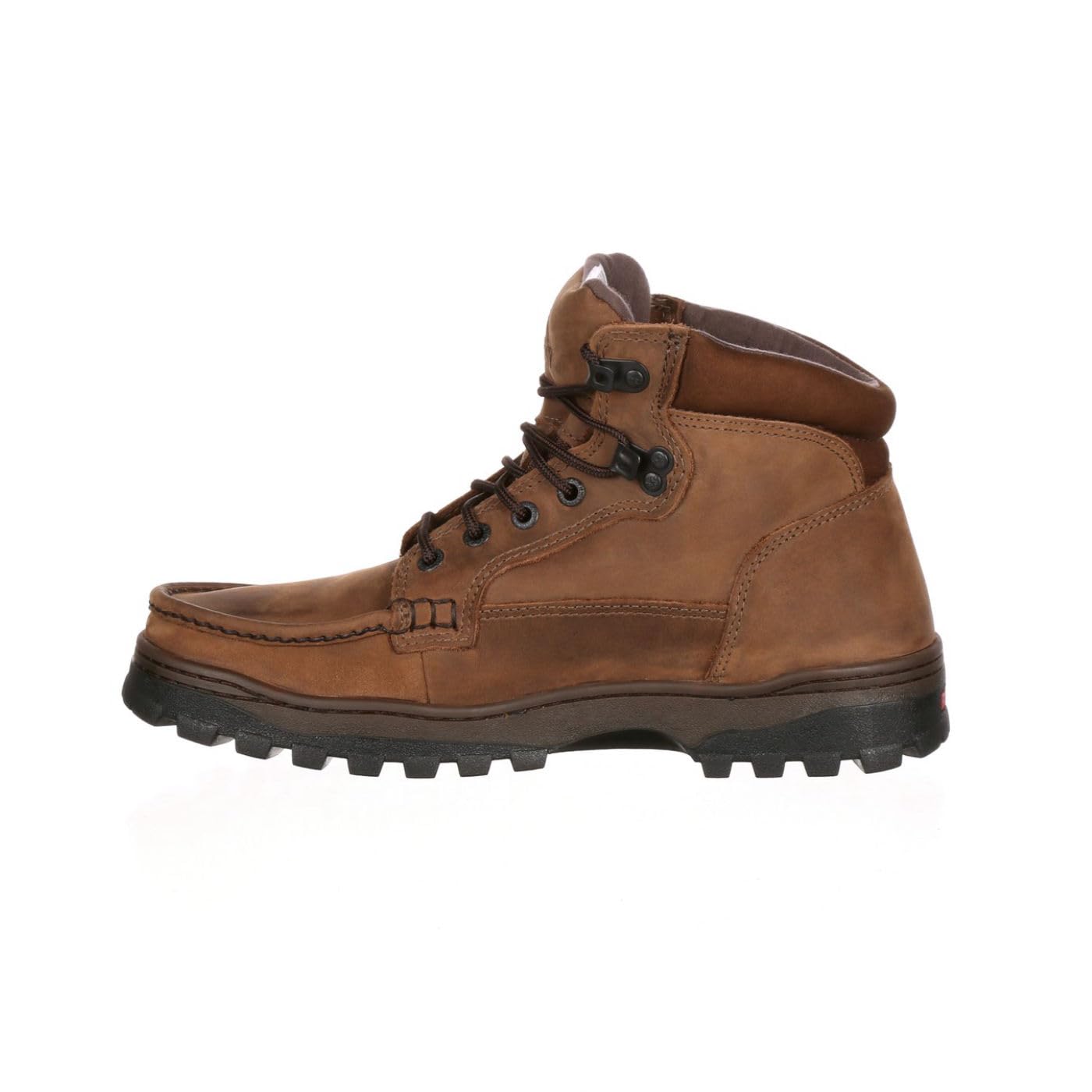
1. ROCKY Men’s Outback GORE-TEX Waterproof Hiking Boots
Our pick — 4.5+★ from 750+ verified ratings; the strongest balance of quality and price.
The leather tank that shrugs off brush, weather and years of abuse.
Here is the straightforward case for the ROCKY Outback: it’s a full-grain leather boot that keeps your feet dry and holds up for years, and that combination is exactly what most hikers with genuinely rough terrain need. The GORE-TEX lining keeps water out while letting heat escape, so a rainy logging road or a wet ridge walk ends with dry socks instead of a cold soaking. That’s the core job, done properly.
The build quality is what buyers talk about most, and the leather upper arrives already broken-in rather than needing weeks to soften. An anti-friction mesh interior pulls moisture away from the foot, while a perforated footbed lets air circulate underneath. The deep-tread rubber sole bites into wet and dry terrain alike, so slick tree roots and muddy banks aren’t a guessing game. Buyers report four to five years of daily use out of the full-grain leather before the sole wears through.
The honest trade-off is fit, not build. Landing somewhere between 4 to 5 pounds with dimensions of 5 x 5 x 0.7 inches, the ROCKY leans toward a wider, roomier last, and the toe box runs narrow for some foot shapes even so. An occasional review reports the boot runs a full size larger than expected, so measure your foot rather than trusting the number on your old boot. There’s also no getting around the weight — the ROCKY’s 4.5 pounds sits far above a 1.94-pound trail runner, and you’ll feel that extra heft on long ascents.
What earns its keep
- Full-grain leather upper takes years of abuse before showing wear
- GORE-TEX lining plus anti-friction mesh interior keeps sweat from pooling
- Deep-tread rubber sole bites on wet rock and mud alike
- Perforated footbed allows real air circulation under the foot
Where it pushes back
- At 4.5 pounds it’s a serious load on long climbs
- Toe box runs narrow for wider foot shapes
- Sizing can land a full size larger than expected
Reach for these: hunters, working hikers and anyone on genuinely rough ground who wants a boot that outlasts the season.
Look elsewhere: if you want featherweight speed on long runs — the 4.5-pound heft will remind you on every step.
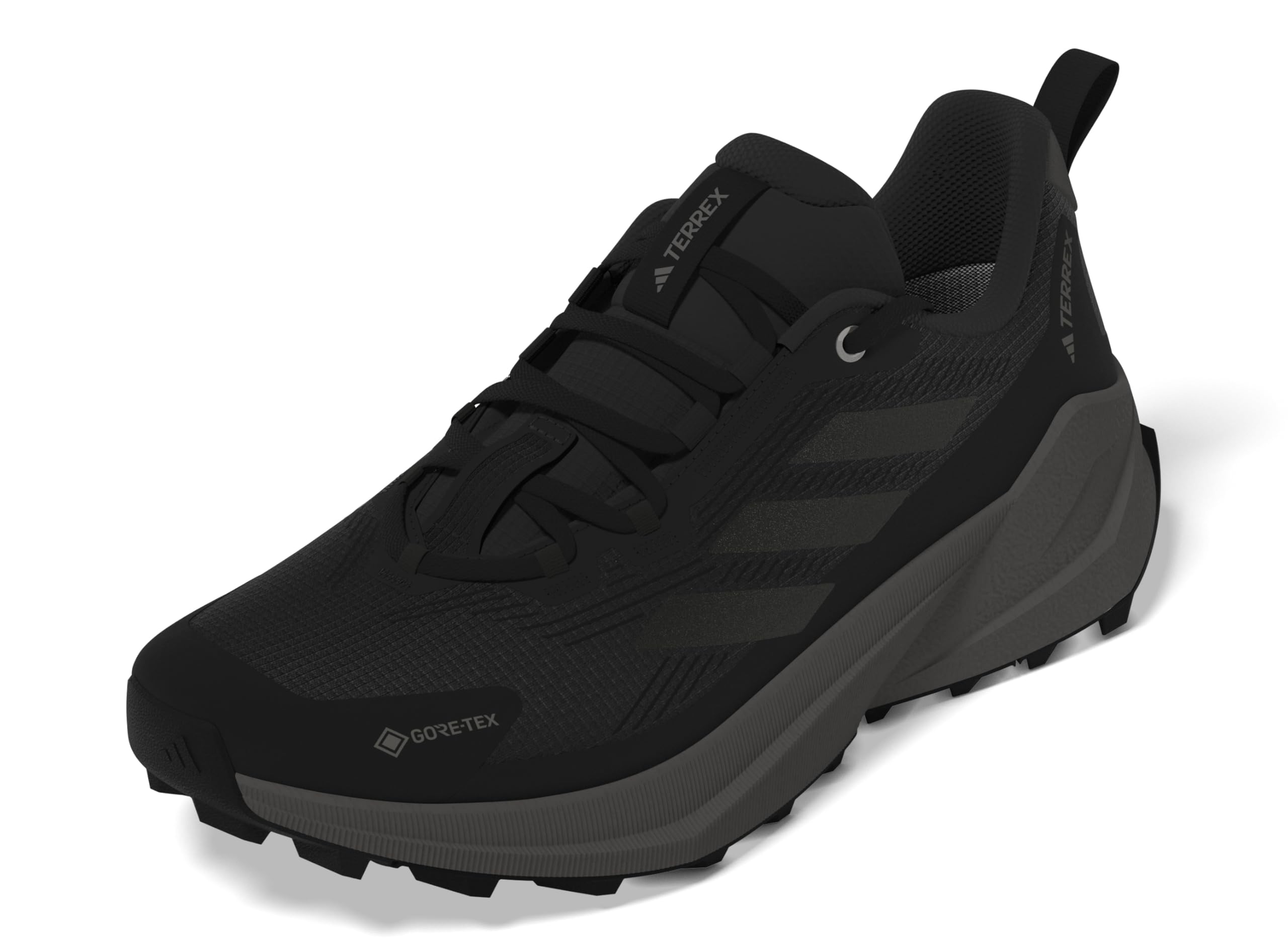
2. adidas Men’s Terrex Trailmaker 2.0 Gore-tex Hiking Shoes
The light-footed starter shoe that doesn’t skimp on the membrane.
If you’ve never owned a GORE-TEX shoe and you’re not sure whether the extra breathability and waterproofing is worth the step up, the Terrex Trailmaker 2.0 is the cheapest intelligent way to find out. The membrane is the real deal — it keeps rain out and lets your foot breathe instead of steaming. A Continental Rubber outsole, a sticky rubber compound that adidas co-develops with the tire maker, holds grip on everything from paved approach paths to loose gravel.
Weight is where this shoe shines at 2.43 pounds. Compare that to the ROCKY boot up above at 4.5 pounds, and you get a shoe that nearly halves the load on each foot. The EVA midsole is a soft foam layer that cushions the ride, so all-day wear doesn’t hammer your knees. It’s built for a day hike, a quick trail loop or a wet commute, and it handles all three without complaint.
The catch is durability on very rocky terrain. Some owners mention the bottom tread wearing down fast and the sole occasionally separating from the upper, which points to a shoe that’s better on packed dirt than on constant sharp rock. As a fit note, sizing tends to run true to adidas norms, so if you know your size in their running shoes, start there. It’s the cheapest way into a genuine membrane, and for light-trail use, it’s all most people will ever need.
Weight story: at 2.43 pounds, this shoe is barely a third of the ROCKY’s heft, which makes long approaches far less punishing.
The honest limit: if your local trail is lava-rock sharp, budget for a sooner-than-ideal tread wear and buy this shoe as an urban-entry piece.
Best for: beginners, commuters and casual trail walkers who want a real GORE-TEX membrane at entry-level cost.
Skip if: you hike over razor-sharp rock on a regular basis — the outsole is the weakest link.
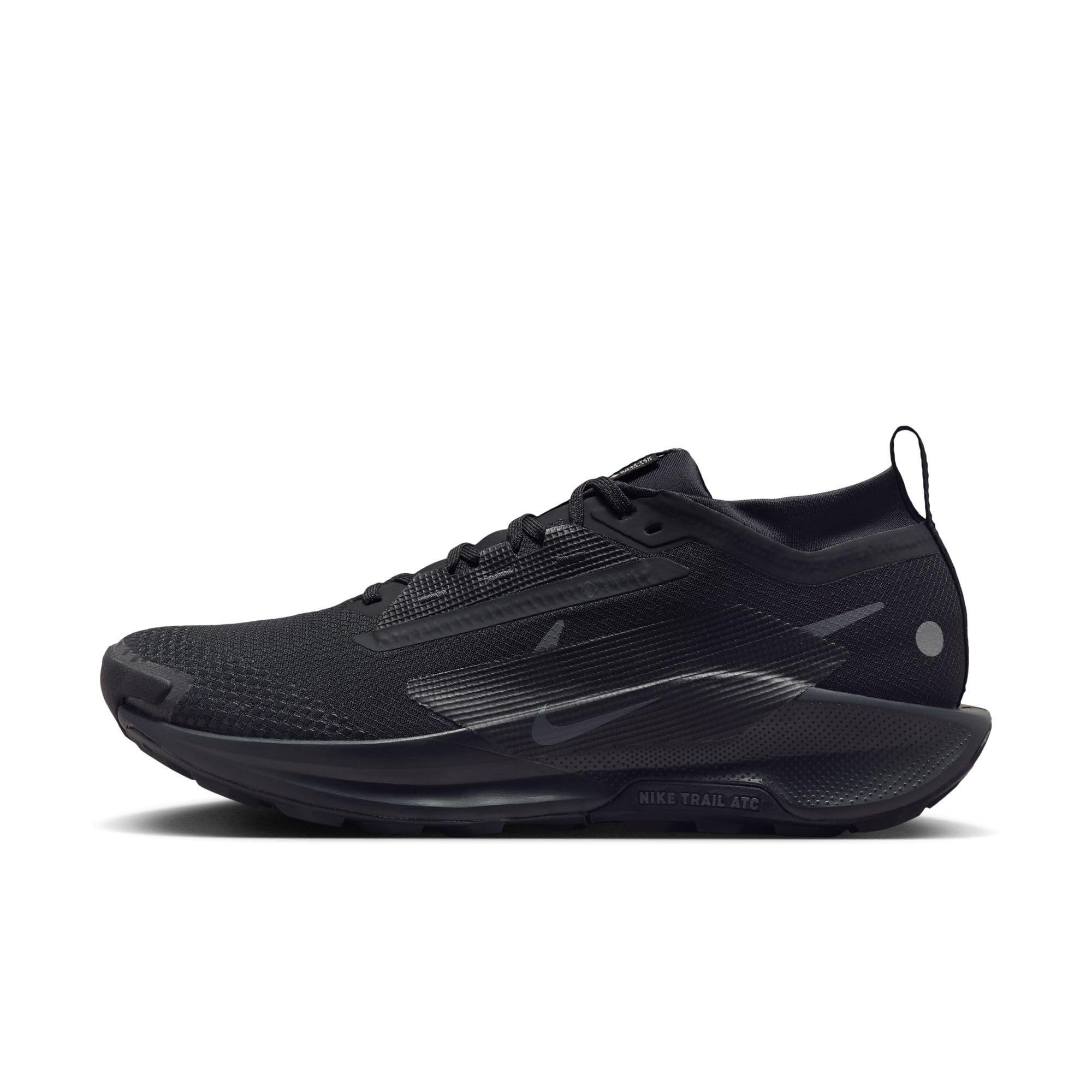
3. Nike Pegasus Trail 5 GORE-TEX
The trail runner that keeps its bounce even after the sky opens up.
Most waterproof trail shoes trade agility for dryness, but the Pegasus Trail 5 tries something harder: a real GORE-TEX upper with running-shoe bounce intact. The ReactX foam midsole is a compressible foam that springs back under each step, and Nike rates ReactX 13% more responsive than the previous React foam. There’s also an Air Zoom element in the forefoot, a small pressurized bag that adds a lighter, snappier feel when you push off.
At 1.94 pounds, this is the lightest pick in this whole guide — less than half the heft of the 4.5-pound ROCKY boot. That weight slashes fatigue in the final miles. The waterproof Gore-Tex upper pairs with a 3D print toe cap, a molded layer over the toe box that shrugs off rocks and roots. The NIKE Trail ATC outsole uses an all-terrain rubber blend, a compound tuned for grip on wet ground. A high ankle cuff keeps grit and debris from sneaking in through the collar.
Buyers love the quality and the actual grip without cleats, but fit is the recurring friction. Some foot widths find the shoe too tight across the forefoot, so try it with the sock you’d wear on race day rather than a thin liner. There’s also a fair amount of commentary about value. You’re paying for ReactX cushioning and a genuine GORE-TEX membrane in one shoe. If you want a single shoe for road-to-trail runs, this is the standout performer.
What sets the ride apart: ReactX foam plus an Air Zoom forefoot unit means real propulsive feel underfoot, not just a dry shell around a flat sole.
What to check before you buy: the forefoot runs narrow — go half a size up if your feet are wide, and plan on your thick hiking socks when trying.
Who this beats others for: runners and fast hikers who want cushioning and grip in the same GORE-TEX shoe.
The trade-off: a snug forefoot fit that some foot shapes will find too tight.
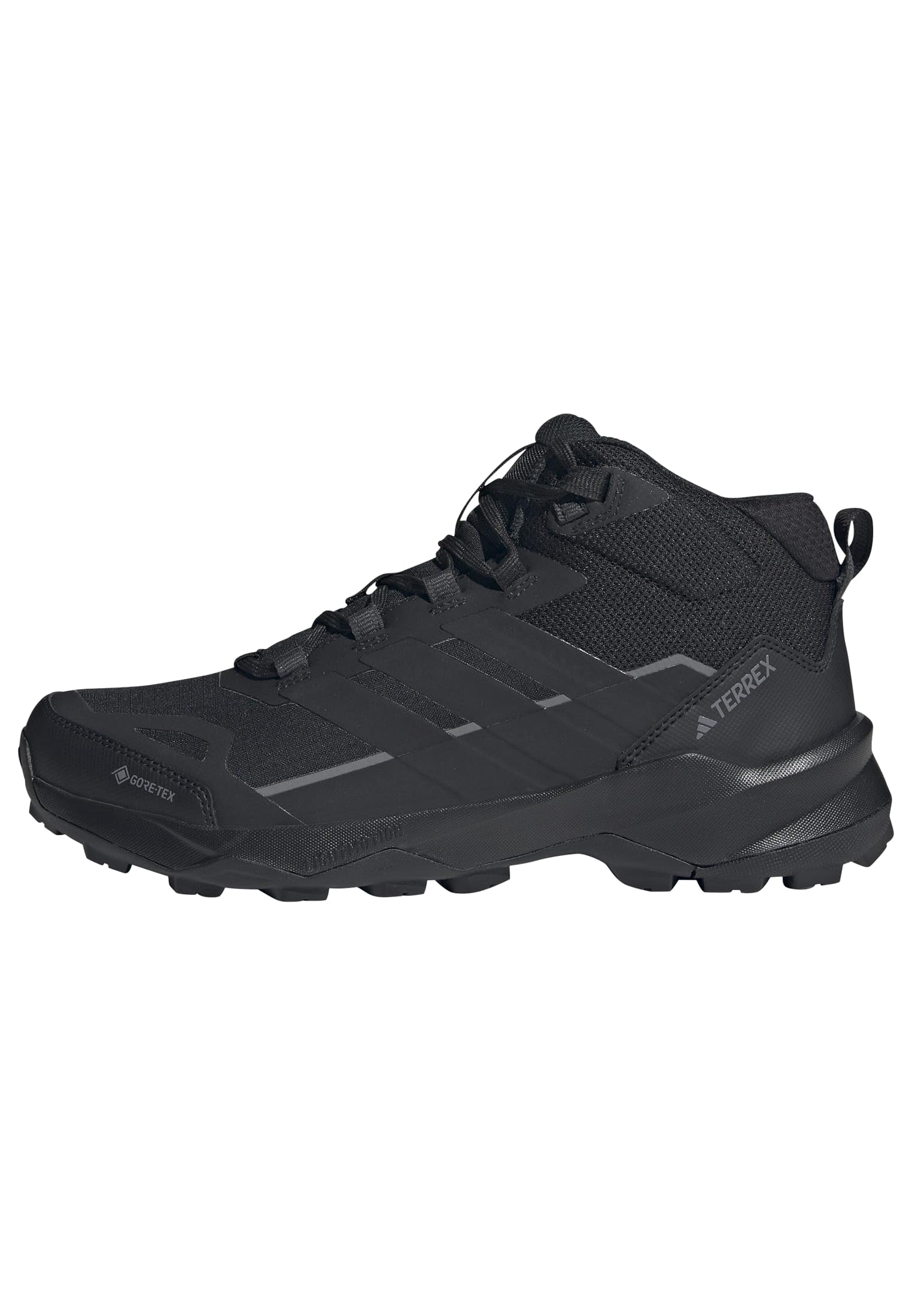
4. Adidas Mens Terrex Skychaser Ax5 Mid Top Gore-tex Hiking
The mid-cut that adds ankle support without turning into a heavy boot.
Rolled ankles on loose scree are a real risk, and the Terrex Skychaser AX5 Mid answers with a mid-height collar that rises above the ankle joint without the bulk of a full boot. The secure lace closure adjusts the fit around the ankle cleanly, giving you a locked-in feel on uneven ground. If your local trail has a lot of side-slope, this is the kind of shoe that helps you keep your footing.
Continental Rubber handles the outsole — the same sticky compound adidas puts on its trail line, gripping well on both wet and dry surfaces. The 3-Stripes branding and general build quality win consistent praise from owners, and the water resistance keeps feet dry through light rain and long grass. It’s a comfortable shoe that looks good enough to wear off the trail too.
The main caveat is sizing. Some customers note the shoe runs narrow and small, so if your feet are wide, consider going half a size up. Opinions on long-term durability are mixed, with some pairs lasting seasons and others showing wear sooner. For the mid-height support and Continental grip on wet ground, it’s a fair balance for regular trail use.
The ankle-saver angle: a mid-height build gives you over-the-ankle protection without the weight or heat of a tall leather boot.
Fit heads-up: if you wear a wide shoe, plan on sizing up — the reported narrow run is the most consistent pain point.
Best for: hikers on uneven ground who want ankle support in a shoe, not a boot.
The catch: a narrower-than-average fit that punishes wide feet.
5. Salomon Speedcross GTX

Built for women who want deep grip and a truly precise trail fit.
The Speedcross GTX earns its spot with a new GORE-TEX construction (a waterproof, breathable lining) and a floating tongue — a padded panel designed to sit comfortably against the top of your foot without digging in. That means you can splash through puddles and still stay dry. Owners describe it as their favorite trail shoe, and that loyalty tends to come from the combination of traction and support.
On the technical side, arch support is noted by long-distance wearers, and the grip holds on loose descents where lesser shoes slide. The membrane keeps water out on wet mornings, and the shoe is certified as suitable for hiking as well as running, so a fast-and-light overnight is genuinely on the cards. Sizing runs true to the chart, which saves the hassle of returning pairs.
This pick earns its place because women’s trail shoes are often just a shrunk men’s last, and the Speedcross GTX is cut specifically for a female foot. The fit and support together make a strong case, and the comfort holds up over long days. If you want a versatile women’s shoe for wet trail runs and light hiking, there’s little here to argue against.
Why it earns its spot
- New GORE-TEX build with a floating tongue improves on-foot comfort
- Arch support praised by long-distance trail wearers
- Grip holds on loose descents where flatter treads slide
- True-to-size fit per the size chart
The fine print
- Cut for women’s feet specifically, so not a unisex option
- Aggressive lug pattern isn’t ideal for pure road running
Grab these if: you’re a woman who wants a precise-fitting trail shoe with serious grip and real waterproofing.
Think again if: you mostly run on pavement — this shoe’s grip is built for dirt.
6. Salomon XA PRO 3D Gore-Tex
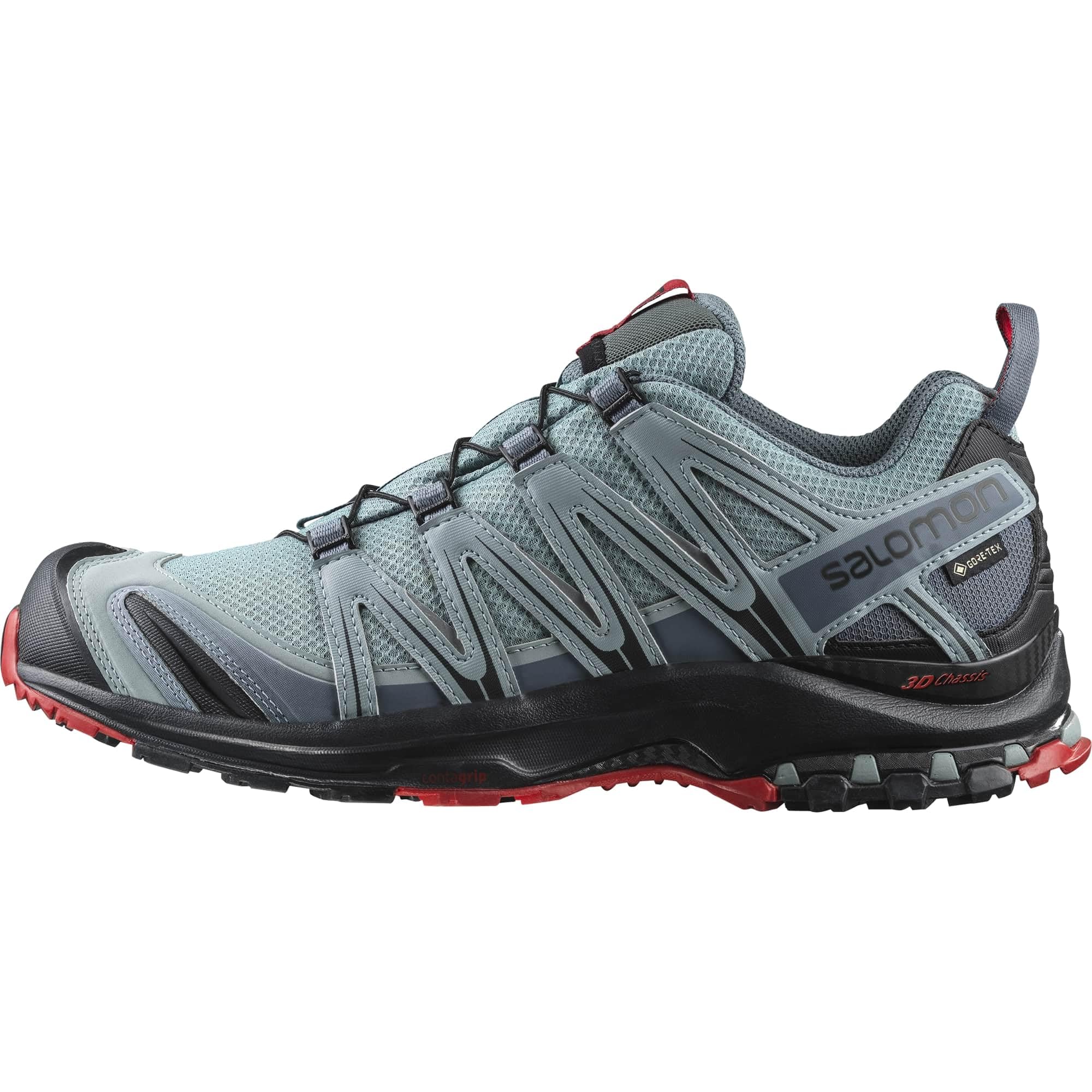
The do-everything trail shoe that has earned a loyal following for years.
The XA PRO 3D has stuck around so long because it’s among the most trusted trail shoes on the market, and the current version keeps the formula that made it a favorite. The waterproof GORE-TEX membrane (a waterproof, breathable lining) handles the hardest terrain, so your feet stay dry on wet, muddy trails. The Quicklace system lets you cinch the whole shoe with a single pull and no dangling loops to catch on brush. The Sensifit construction (a wrap that hugs your foot) gives a precise hold, and the Advanced 3D chassis (a stability frame) adds lateral stability so side-slopes don’t tip you off balance.
The Wet Traction Contagrip outsole is a soft rubber compound tuned for wet ground, gripping on slick rock and muddy trails. At 350 to 400 grams, this shoe sits in a light-enough range that a full day on the trail doesn’t wear you down. Owners who’ve trusted the shoe for years talk about the fit and comfort combination in a way that suggests they keep re-buying the same model.
The main honest caveat is durability over a long run. Some reviewers point out the sole separating or wearing through in a couple of months of hard use, and that’s the price of a soft, sticky rubber compound that grips wet rock as well as it does. If your trails are mainly rocky and you’re hard on soles, budget for replacement sooner than the more heavily-built boots in this list. For a shoe that can handle trail running, urban hiking and medium hikes in the rain, this is difficult to beat.
What makes it a keeper: Quicklace is a genuine one-pull system with no knot to untie, and the Advanced 3D chassis adds lateral stability — great on side-slopes.
One honest catch: a soft sticky outsole handles wet rock brilliantly but can wear faster for high-mileage hikers.
Pick this if: you want one shoe for trail running, day hiking and rainy-town walking.
skip it if: you need a decade-long sole and refuse to replace shoes often.
7. Merrell Mens Moab 3 GTX

The hiker that arrives comfortable on day one and stays that way for years.
Merrell’s Moab line has been the go-to for hikers who want to walk from the start without a break-in period. The Moab 3 GTX continues that with a GORE-TEX liner, a waterproof, breathable membrane that keeps rain out while letting your foot breathe. The shoe is famous for how quickly it becomes comfortable, so the first hike doesn’t turn into a blister-fest.
Owners tend to rate it highly across the board — comfortable, well-made, good fit, lasting years. Arch support gets specific mention, which is worth knowing if flat feet have given you trouble in other shoes. The general verdict from owners is that this is a solid all-purpose hiking shoe that holds up. The look is clean enough to wear in town, and the waterproofing holds up to wet trails.
Value is the one thing to note. Some owners consider this shoe pricey, but the build quality and lifespan tend to offset that over time. If you want a hiking shoe that’s comfortable from the first wearing and holds up for years of trail use, this is a safe bet. The main question is if you want the low-cut Moab 3 or the higher-cut Moab 3 Mid below — that’s the realistic decision point.
Why hikers keep coming back: the out-of-box comfort is the shoe’s signature, and the GORE-TEX lining means you’re not trading cosiness for wet-weather protection.
The honest math: it’s on the pricier side for a hiking shoe, but shoppers say years of use, which changes how you read the cost.
Choose it when: you want a no-break-in hiking shoe with a GORE-TEX membrane and dependable arch support.
Only pass on it if: your budget is tight — the price tag is the one thing that gives some buyers pause.
8. Merrell Men’s Moab 3 Mid Gore-tex®
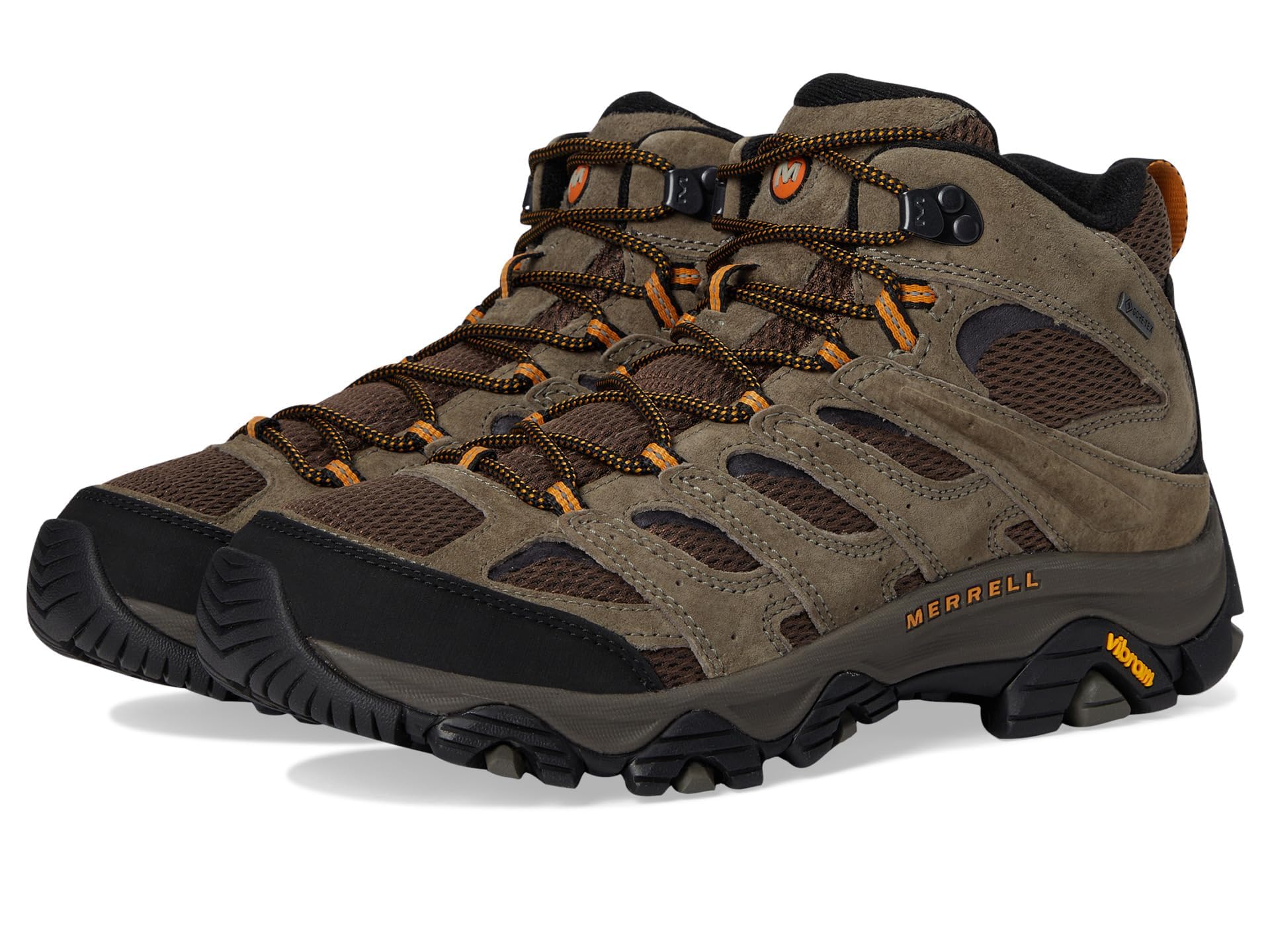
All the Moab comfort, now with extra ankle coverage for burlier trails.
If the standard Moab 3 felt a little too low-cut for the terrain you hike, the Mid version is the same shoe with a taller collar that wraps the ankle. The GORE-TEX lining is still there, keeping wet ground from soaking through, and the 1.5-pound weight is light for a mid-cut hiker — one of the things you notice on a long approach. That’s a weight you can wear all day without feeling it.
Comfort and quality are the two things owners talk about most, and the shoe earns praise for both. The durability lines up too, with most pairs lasting over a year of steady use, and the appearance holds up to daily wear. Fit is mostly spot-on, with most buyers finding it true to their usual size — but there’s a small group who find it runs a little small, so if you’re between sizes, size up.
The one genuine question with this shoe is if you need the mid-cut for the trails you actually walk. If your terrain is rocky with plenty of side-slope, the taller collar helps. If it’s mostly flat packed trail, the standard Moab 3 is lighter and just as capable. For confident hikers doing day trips and multi-day walks, this is the classic pick.
Right for: hikers who want the proven Moab comfort with an ankle collar for rocky, uneven ground.
Not for: backpackers looking for a tall, stiff mountaineering boot — this is a mid-cut hiker, not a full boot.
9. THE NORTH FACE Men’s Hedgehog Gore-tex Hiking Shoe
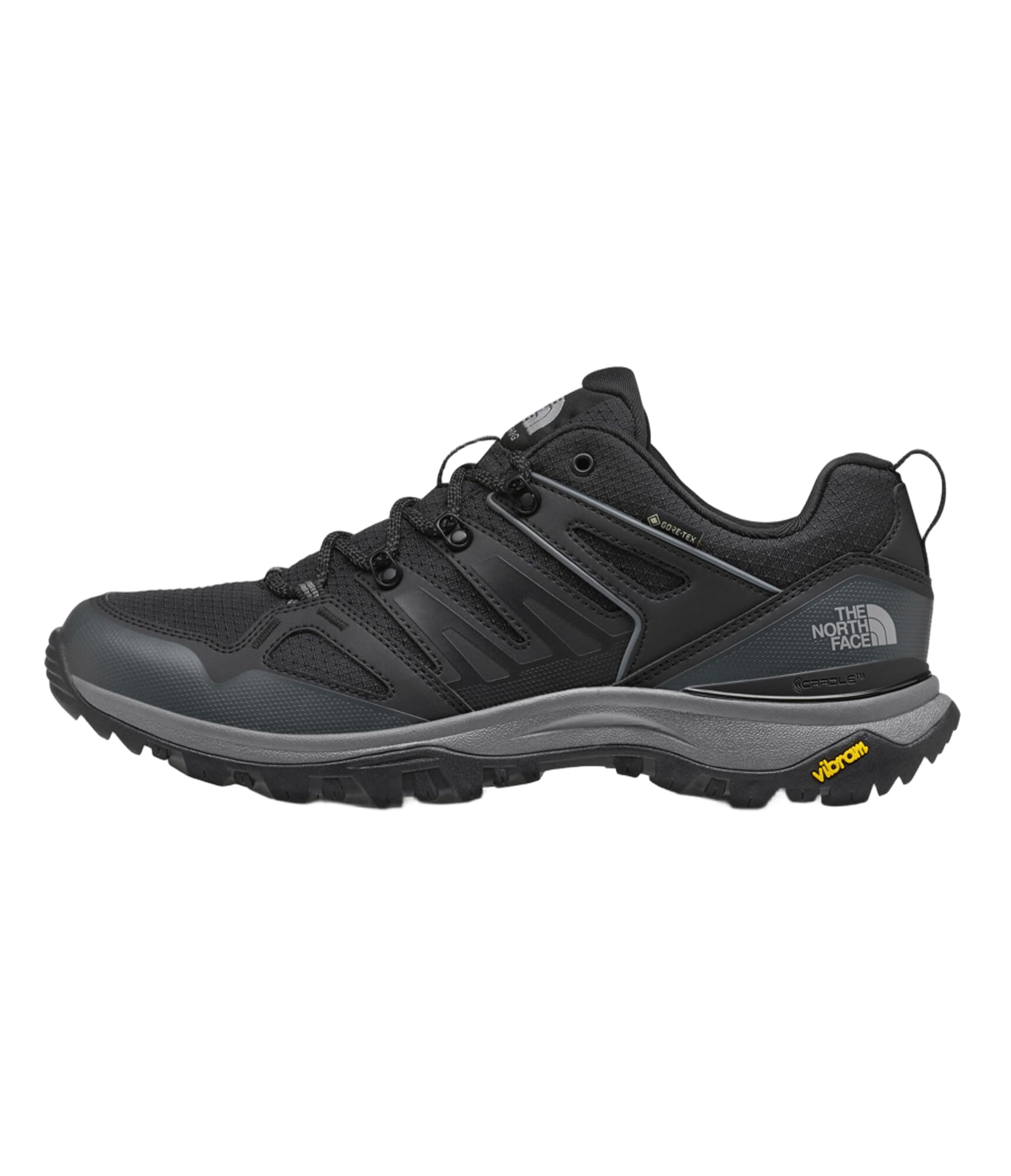
A cushioned trail shoe with a flexible heel that rolls with your stride.
The Hedgehog is The North Face’s take on an everyday trail shoe: a GORE-TEX membrane, a rubber outsole and a flexible heel tuned to roll naturally with your step. The North Face has been making outdoor gear since 1966, and the Hedgehog reflects that trail design heritage. It’s a comfortable shoe that most owners rate well for quality.
The flexible-heel build is the standout, letting the back of the shoe move with your foot rather than fighting it on descents. The rubber outsole grips well on the sort of packed paths and rolling trail this shoe is made for. It’s a good choice for a light day hike or a wet walk, and the waterproof membrane keeps the weather out.
Fit is the thing to know going in. Several owners note the shoe runs large and is wider than usual for a D width — that’s the standard medium width for men — so consider going half a size down if your foot is on the narrower side. That sizing quirk is the main reported issue, and once you’ve dialled it in, the comfort is well regarded. If it matches your foot shape, it’s a solid option for a cushioned day hiker.
What stands out: a flexible heel that moves with the foot, which makes long descents feel less jarring.
Fit reality check: the reported wide, generous cut means many buyers will do better half a size down.
Pick it for: cushioned day hikes on packed trail and a roll-with-your-step feel.
Look at other options if: your foot is narrow — the reported generous width can leave you swimming.
10. Mammut Women’s Nova IV Mid GTX Hiking Shoes

A women’s alpine hiker that grips rock and cushions the descent.
Mammut’s Nova IV Mid GTX is a women’s hiking and approach shoe built for mountain terrain, and the parts that matter are all there. A Vibram sole — a rubber outsole from a company that makes grip-specific compounds — handles rock, scree and wet stone. A 3D Memo Foam layer inside the shoe molds to the shape of your foot for cushioning, and the mid-height cut gives support around the ankle. At 2.8 pounds, it’s light enough for a day hike without feeling fragile.
This is a shoe for women heading up into real mountain terrain — approach paths, rocky trails and light scrambling. The mid-cut keeps the ankle protected without the bulk of a tall boot, and the Vibram outsole means the grip is a solved problem on stone. It’s the kind of shoe where the design decisions point at a target user: a hiker who wants a precise, technical feel on rough ground rather than a padded coddling experience.
The honest caveat is that this is a fit-sensitive shoe in a market where women’s hiking fits vary widely. If the last isn’t right for your foot, no membrane or outsole will save the day — so ordering with a return option is sensible. The Vibram sole and 3D Memo Foam are strong selling points, but the shoe has to fit. For a mountain hiker looking for a technical women’s shoe with real grip, it earns its place.
For the mountain hiker: a women’s-specific approach shoe with Vibram grip and mid-cut support for rocky ground.
Consider carefully if: you can’t return easily — fit is the deciding factor with this one.
Know the Specs
GORE-TEX Membrane
A GORE-TEX membrane is a thin inner layer with pores too small to let liquid water through but large enough for sweat vapor to escape. That means a wet trail doesn’t leave you with soaked socks, and a long climb doesn’t leave you with baked feet. It’s the reason a GORE-TEX shoe costs more than a plain “waterproof” shoe, and it’s why the membrane needs to be named specifically — a generic coating won’t breathe the same way. Every shoe on this list carries that membrane by name.
Outsole Compound and Lug Depth
The outsole is the rubber base under your foot, and it determines grip. A soft, sticky rubber compound grips wet rock well but wears faster, while a harder compound lasts longer but can slip on slick surfaces. Lug depth — the height of the bumps on the sole — matters too. Deep lugs dig into mud and loose dirt, while shallow lugs roll smoother on packed paths. A boot with a deep-tread sole is built for rough ground; a trail runner’s flatter tread is built for speed on smoother trail.
Weight
Shoe weight is measured in pounds or grams and has a direct effect on how tired your legs feel at the end of the day. A heavy boot stabilises and protects the foot, but each step lifts more mass. A light trail runner saves energy on climbs and descents but offers less cushioning against sharp rocks and root stubs. That’s why weight is one of the real decision points here — the difference between a 1.94-pound runner and a 4.5-pound boot is a very different day on the trail.
Mid-Cut vs Low-Cut
A mid-cut shoe rises above the ankle joint, giving extra support when you plant on uneven ground or carry a light pack over loose rock. The downside is added heat and a bit more weight around the ankle. A low-cut shoe is lighter and more flexible, which suits fast day hikes and mixed road-to-trail use. Choose mid-cut for side-slopes and rocky terrain; choose low-cut for speed and comfort on smoother ground.
Common Questions
Does GORE-TEX make a shoe too hot in summer?
How do I know a shoe really has a GORE-TEX membrane?
Should I size up or down in a GORE-TEX hiking shoe?
How long do GORE-TEX hiking shoes last?
Can I wear GORE-TEX trail runners for hiking instead of boots?
Is a mid-cut GORE-TEX shoe better than a low-cut one?
Do GORE-TEX shoes need special care to keep them waterproof?
What is the difference between Vibram and Continental rubber outsoles?
Are GORE-TEX shoes worth it for everyday wet-weather walking?
Why do some GORE-TEX shoes feel tight across the toes?
The Bottom Line
For most hikers, the top gore-tex shoes pick is the ROCKY Men’s Outback GORE-TEX Waterproof Hiking Boots because it pairs a full-grain leather upper with a genuine GORE-TEX lining (a waterproof, breathable membrane) and a deep-tread sole, and it holds up for years of hard daily use. If you want the lightest, most responsive ride for trail running, grab the Nike Pegasus Trail 5 GORE-TEX at 1.94 pounds. And for a women’s-specific shoe with serious grip on loose trail, the Salomon Women’s Speedcross GTX is the one to reach for. Runners who want one shoe for wet paths, urban streets and medium hikes will find the Salomon XA PRO 3D GORE-TEX hard to argue with, and it carries the most reviews here at 4.0+ stars across 11,000+ ratings. Pick the one that matches your terrain and your foot width, and you’ll get real GORE-TEX protection without the wet-sock regret.
How we choose
We do not accept paid placement. Every pick is matched to a real buyer and a real use-case; we do not hands-on test units.
Sources
Specifications: manufacturer listings and product documentation. Review insights: verified customer reviews, as of November 2026. Pricing: not shown on this page (it changes often); check the current price via the retailer link.
As an Amazon Associate, Tactical Gear Guy earns from qualifying purchases. This does not affect which products we feature.