Specs are compiled from manufacturer listings and verified buyer reviews and can change over time — please confirm the key details on the product page before buying.
Buying a professional video drone is really about one thing: whether the footage survives the edit. A drone that holds its position in wind, keeps the horizon flat, and holds a clean video feed at distance beats one with a bigger number on the box. The picks below are ranked by sensor size, gimbal behavior, transmission range, and flight time, with the trade-offs spelled out.
This guide is built by comparing the manufacturers’ published specifications and the patterns across verified customer reviews, so you get each pick’s real strengths and trade-offs instead of marketing spin.
You will see how sensor size, gimbal stability, and transmission range separate a hobby flyer from a working camera ship. Here is the honest breakdown of the best professional video drone if you want footage that holds up in the edit bay.
Top Picks

How To Choose The Best Professional Video Drone
Most buyers assume megapixels decide everything. They don’t. A drone that shoots 8K but drifts in a breeze gives you shaky footage no edit can rescue. Rank stability first, sensor second, range third.
Start with the sensor, not the resolution number
A 1-inch CMOS sensor (the light-catching chip behind the lens) gathers more light than the tiny 1/2-inch chips in cheaper drones. More light means cleaner shadows and less grain when the sun drops. If you shoot golden hour or city nights, this single spec decides whether your footage grades well or falls apart.
Gimbal travel decides your shot list
A 3-axis gimbal (a motorized mount that cancels out pitch, roll, and yaw) keeps the horizon flat while the drone moves. The travel range is what lets you shoot straight down or roll the camera sideways for vertical social cuts. A gimbal that only faces forward locks you into one style of shot.
Transmission range versus real flying distance
Published range figures like 10 km or 20 km assume a clean line of sight with no interference. In a city or a valley, expect less. Still, a longer-rated link generally holds a steadier live feed closer in, which is what actually helps you frame a shot.
Do you need to stay under 249 g?
Drones under 249 g often skip registration requirements, which makes them faster to deploy on a travel shoot. The trade-off is usually a smaller battery and less wind resistance. Weigh registration convenience against battery capacity and wind resistance before you compare specs.
Side-by-Side Comparison
| Model | Best For | Sensor / Stills | Max Flight Time | Max Range | Amazon |
|---|---|---|---|---|---|
| DJI Air 3S Fly More Combo★ Best Overall | All-round paid work | 1″ CMOS / 50 MP | 45 min | 20 km | Amazon |
| Potensic ATOM 2Best for Travel | Sub-249g travel | 1/2″ CMOS / 48 MP | 96 min (3 batteries) | 10 km | Amazon |
| Skyrover X1Top Value | Value 4K/60 capture | 1/1.32″ CMOS / 48 MP | 96 min (3 batteries) | 9.32 miles | Amazon |
| K600PRO GPS Drone | First-time pilots | 4K camera / 8 MP | 55 min | 15 km | Amazon |
| Bingchat Tablet Remote | Payload + tablet control | 3-axis gimbal / 48 MP | 84 min (2 batteries) | 5 miles | Amazon |
| DJI Mini 5 Pro Fly More | Light + long battery | 1″ CMOS / 50 MP | 36 min | — | Amazon |
| Antigravity A1 Explorer | 360 FPV footage | 8K 360 / — | 39 min | 10 km | Amazon |
Detailed Reviews
1. DJI Air 3S Fly More Combo
Our pick — 4.5+★ from 850+ verified ratings; the strongest balance of quality and price.
The camera-upgrade pick that treats night footage as the default, not an afterthought.
The 1″ CMOS sensor here is the reason this drone takes the top slot. A sensor that size catches far more light than the small chips in budget flyers, so sunsets keep their color and night streets stay usable instead of turning to mush. Video records at 4K/60fps HDR with up to 14 stops of dynamic range — meaning it can hold detail in both a bright sky and dark shadows in the same frame. That is the difference between a shot you can grade and one you have to throw away.
Flight time is rated at 45 minutes, and the video transmission reaches 20 km. Compare that to the K600PRO’s 15 km link and the gap is clear — a longer-rated link means a more stable live feed for framing, even when you never fly that far. The three intelligent flight batteries in this combo also mean you swap and keep shooting instead of waiting on a charge.
What wins people over is raw performance — it is the single most-praised thing about this drone. Buyers also consistently call it easy to fly, and the forward-facing LiDAR (a light-based sensor that measures distance) plus the extra sensors give nightscape omnidirectional obstacle sensing, so the drone can steer around buildings after dark. Stable, easy to fly, and good value for the class. The one catch: battery life draws mixed feedback, and the battery charger is sold separately, so budget for the DJI 65W Portable Charger up front.
Where the Air 3S earns its slot
- 1″ CMOS sensor holds detail in low light and high-contrast scenes
- 4K/60fps HDR with up to 14 stops of dynamic range
- 45-minute max flight time and 20 km video transmission
- Three batteries plus a charging hub in the box
- Nightscape omnidirectional obstacle sensing via LiDAR
What to plan around
- Battery charger sold separately
- Battery life is the most-debated aspect for this model
- Heavier and bulkier than the sub-249g options here
Buy it for: paid shoots where low-light image quality and flight time both matter.
Think twice if: you fly strictly carry-on and need a sub-249g body — the Potensic weighs far less.
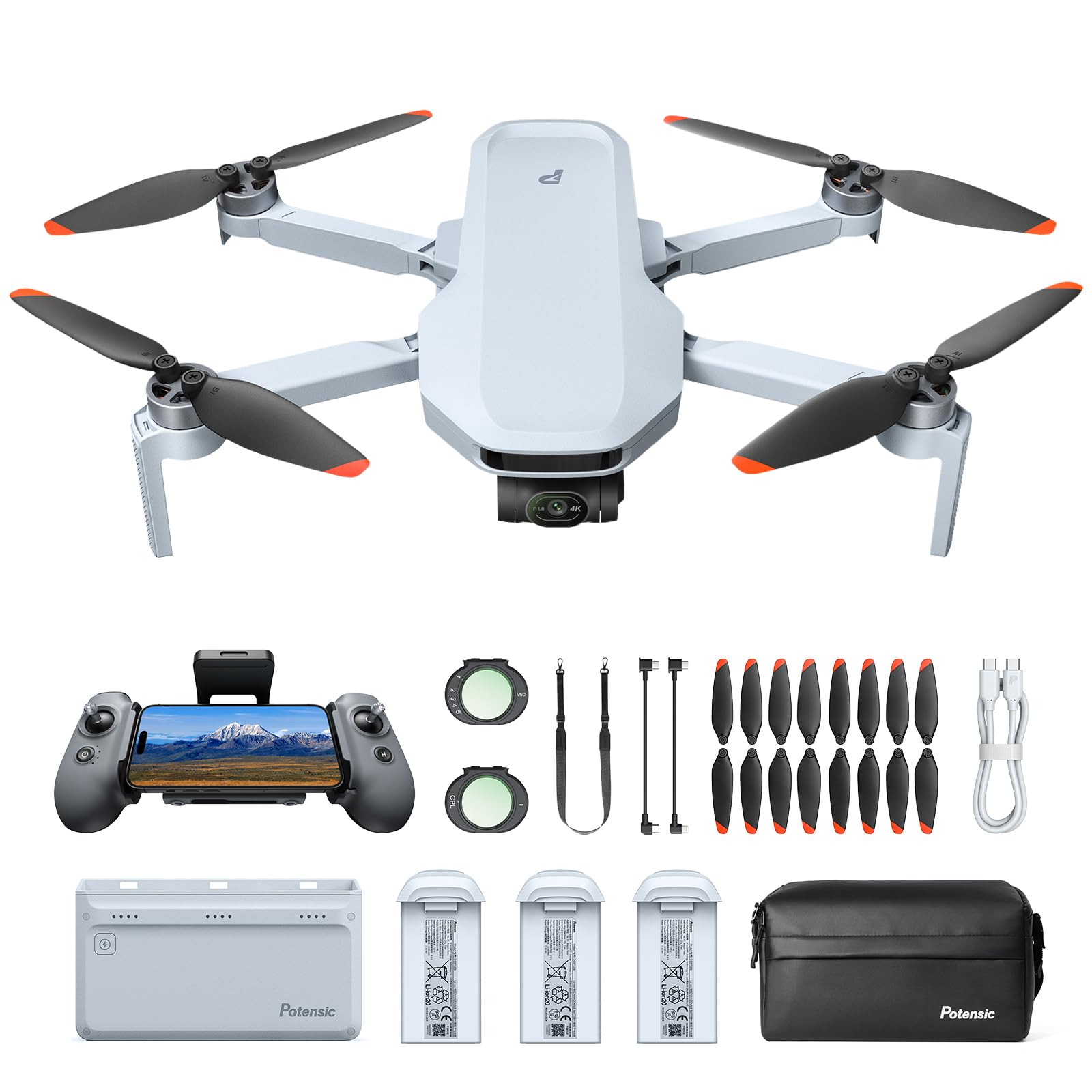
2. Potensic ATOM 2
A 245-gram camera ship that dodges the registration paperwork entirely.
At 245 g this drone sits under the 249 g line, so it does not need FAA and Remote ID registration. That is a real convenience on a travel shoot — you pull it out and fly. The comparison that frames it: the DJI Air 3S weighs 724 g against this 245 g, so you are carrying a fraction of the bulk in a daypack.
The camera side runs a 1/2″ Sony CMOS sensor recording 4K/30fps HDR video and 48MP stills through a 3-axis gimbal. The F1.8 aperture and 4-in-1 pixel binning help in low light, and there is AI night mode for after-dark shots. AI tracking offers Spotlight, Follow, and Parallel modes, and the 2.7K vertical shooting mode is built for social cuts. Transmission reaches 10 km with 1080p/30fps live view through PixSync 4.0.
What buyers praise most is overall quality, with functionality right behind it. The remote’s directional antenna holds a bright screen in direct sun, and there is a full quick-charge hub that tops three batteries at once in 1.3 hours — that is 96 minutes of combined flight across the kit. If there is a limit, it is that the 1/2″ sensor is smaller than the 1″ chips on the flagship picks, so extreme low light is not its strength. For travel footage in good-to-mixed light, it is a genuinely capable, featherweight option.
Registration relief: sub-249g build means fewer hurdles before you fly.
Night note: the smaller sensor is the honest ceiling here, so lean on daylight shots.
Reach for this if: portability and quick deployment beat maximum sensor size.
Look elsewhere if: your work is mostly after-dark cityscapes.
3. Skyrover X1 Drone
Full 4K/60 HDR recording and 360-degree obstacle sensing, all under the weight limit.
Here is a spec that punches above its tier: 4K/60fps HDR video and 48MP stills from a 1/1.32″ CMOS sensor with an f/1.7 aperture. That wide aperture (a bigger lens opening that lets in more light) means brighter footage at dusk without cranking the ISO. And at 249 g it stays in the no-registration class, so you can travel with it easily.
The 96-minute figure in the name comes from a three-battery kit, and 360-degree obstacle sensing with Smart Return to Home makes it more forgiving when a shot takes you near trees or buildings. The live view runs 1080p/60fps over SkyBridge transmission rated to 9.32 miles. On the comparison front, that is a longer-rated link than the Potensic’s 10 km on paper.
What the review pages show most is that performance is the draw — buyers consistently call the footage smooth and the camera impressive. Camera quality is a close second, and the footage handling in wind gets specific mention. The recurring gripe is battery behavior: it is the one mixed aspect, with some flights draining far faster than the rating suggests. Treat the 96 minutes as three separate sessions rather than one long sortie and you will get on with it fine.
Why it holds a value slot
- 4K/60fps HDR video and 48MP stills
- 360° obstacle avoidance with Smart Return to Home
- 1080p/60fps live view up to 9.32 miles
- 249 g, no registration required
Where it calls for care
- Battery life is the most-discussed weak point
- The three-battery total is not one continuous flight
The fit: creators who want smooth, sharp daytime aerials from a travel-friendly body.
The skip: pilots who need predictable long single-battery endurance.
4. K600PRO GPS Drone
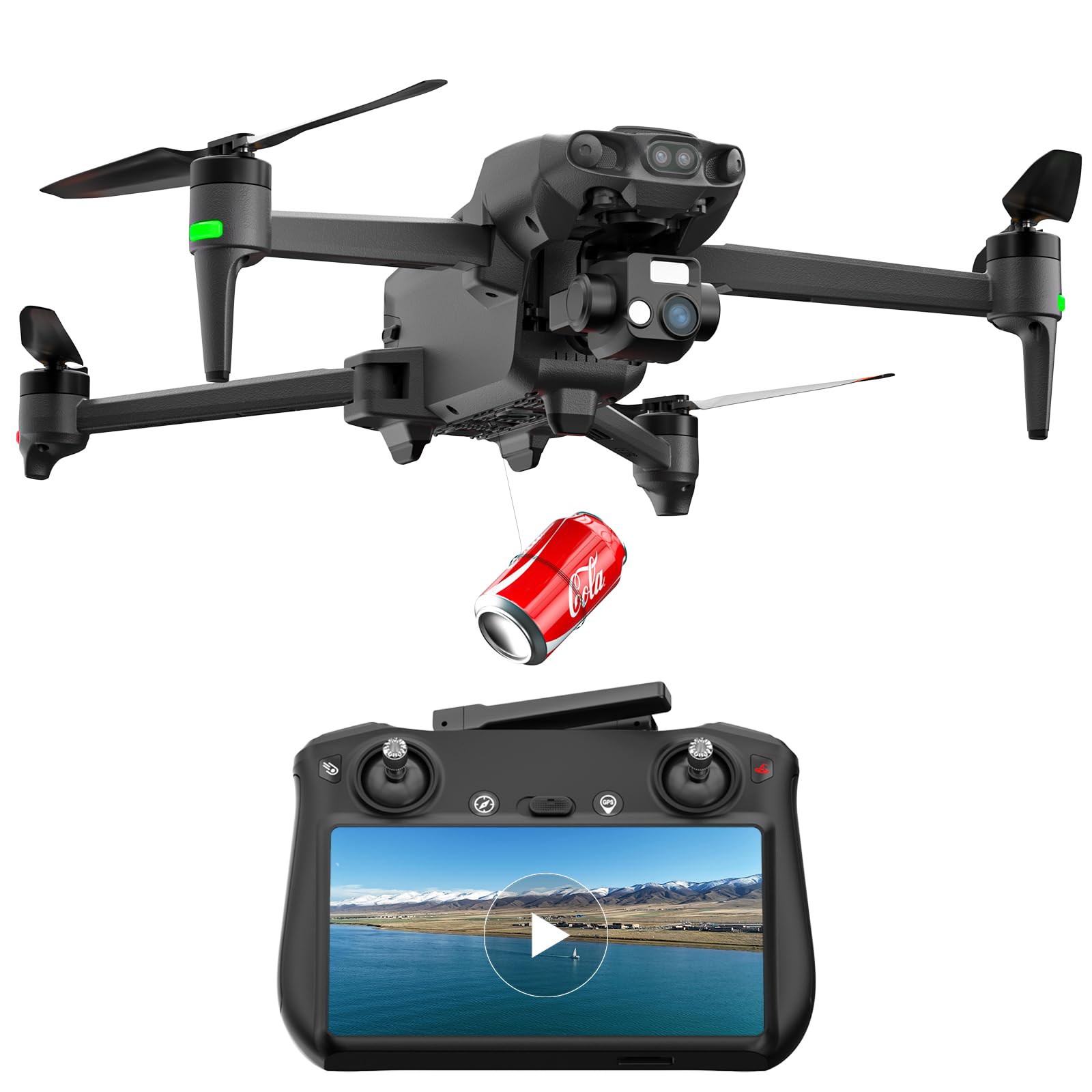
The one with the screen built into the remote, so no phone gets clipped on.
A 5.5-inch touchscreen on the controller is the standout here — you get a live FPV view without bolting your phone to the sticks. As a GPS drone it adds auto-return, follow-me, orbit, and point-flight modes, plus a height lock for steadier low passes. The 3-axis gimbal with EIS (electronic image stabilization, a software layer that smooths shakes on top of the gimbal) records 4K video and night clips with 50x zoom.
Built around a brushless motor and an 11.1V 3500mAh battery, it claims 55 minutes of runtime and Type-C charging. The 15 km HD transmission is shorter than the DJI Air 3S’s 20 km, so the live feed margin for framing at distance is a bit tighter. Six high-precision GPS sensors and a TOF (time-of-flight) sensor back up the GPS return system.
Suitability for beginners is the most-mentioned winning trait, which fits the spec sheet — one-key takeoff, an auto-return button, and a dedicated beginner flight mode. What a buyer should know: value is genuinely mixed here, so check what it actually delivers against the flagships before you commit. Spend the extra only if the touchscreen and beginner assists are what you are after.
The honest read: a beginner-friendly GPS ship where the built-in screen does the heavy lifting.
Go for it when: you want a self-contained remote and gentle learning curve.
Pass when: image quality is the deciding factor — its stills sit at 8 MP.
5. Tablet Remote Professional Drones
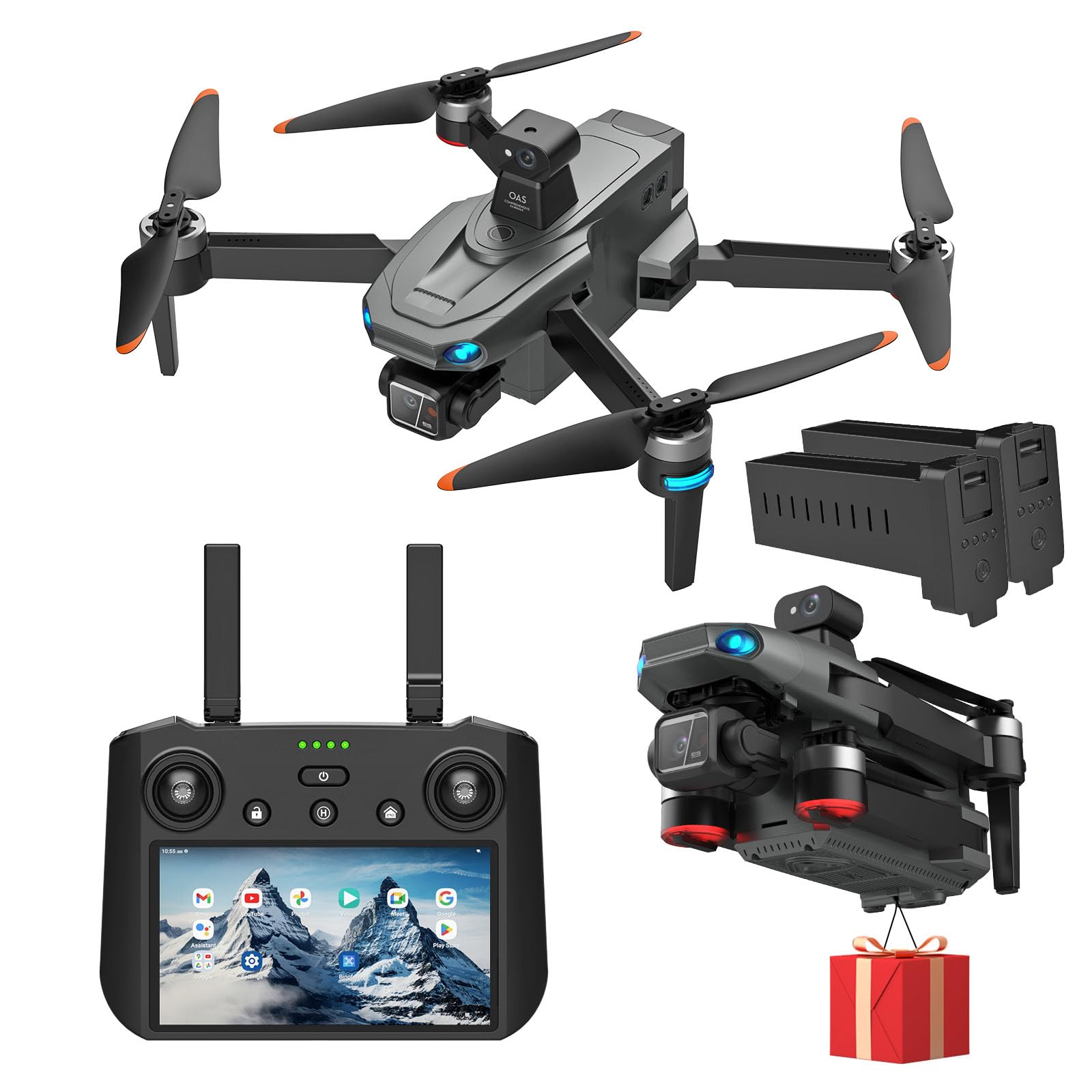
A controller that doubles as an Android tablet, plus a release hook for fishing or drops.
The gimmick that defines this pick is the touchscreen controller: an Android system with Google support that acts as a tablet for apps, media, and games, not just flight control. Then there is the payload release function, which is aimed at bait drops and light deliveries — genuinely unusual at this level. It also runs 360-degree laser obstacle avoidance, a 3-axis gimbal, and EIS stabilization on a 130-degree FOV lens with 50x digital zoom.
Flight time is quoted at 84 minutes using two 11.1V batteries, and the feature list names Level 7 wind resistance, a rainproof body, night vision mode, and time-lapse shooting. It records 48MP stills onto an included 32GB SD card. Build quality is the most-praised thing about it, and the 4K camera pulls clear praise for the footage it turns in.
The honest trade-off: 20+ ratings is a thin body of evidence next to the older flagships here, so you are buying partly on faith. Also note the relatively short 5-mile max range — fine for close-in work, not a long-range scouting ship. If the tablet control and payload hook are the features you need, this is a genuinely distinct option.
Right for: fishing, drop work, and pilots who prefer a tablet in their hands.
Not for: anyone who needs long-range transmission — it tops out at 5 miles.
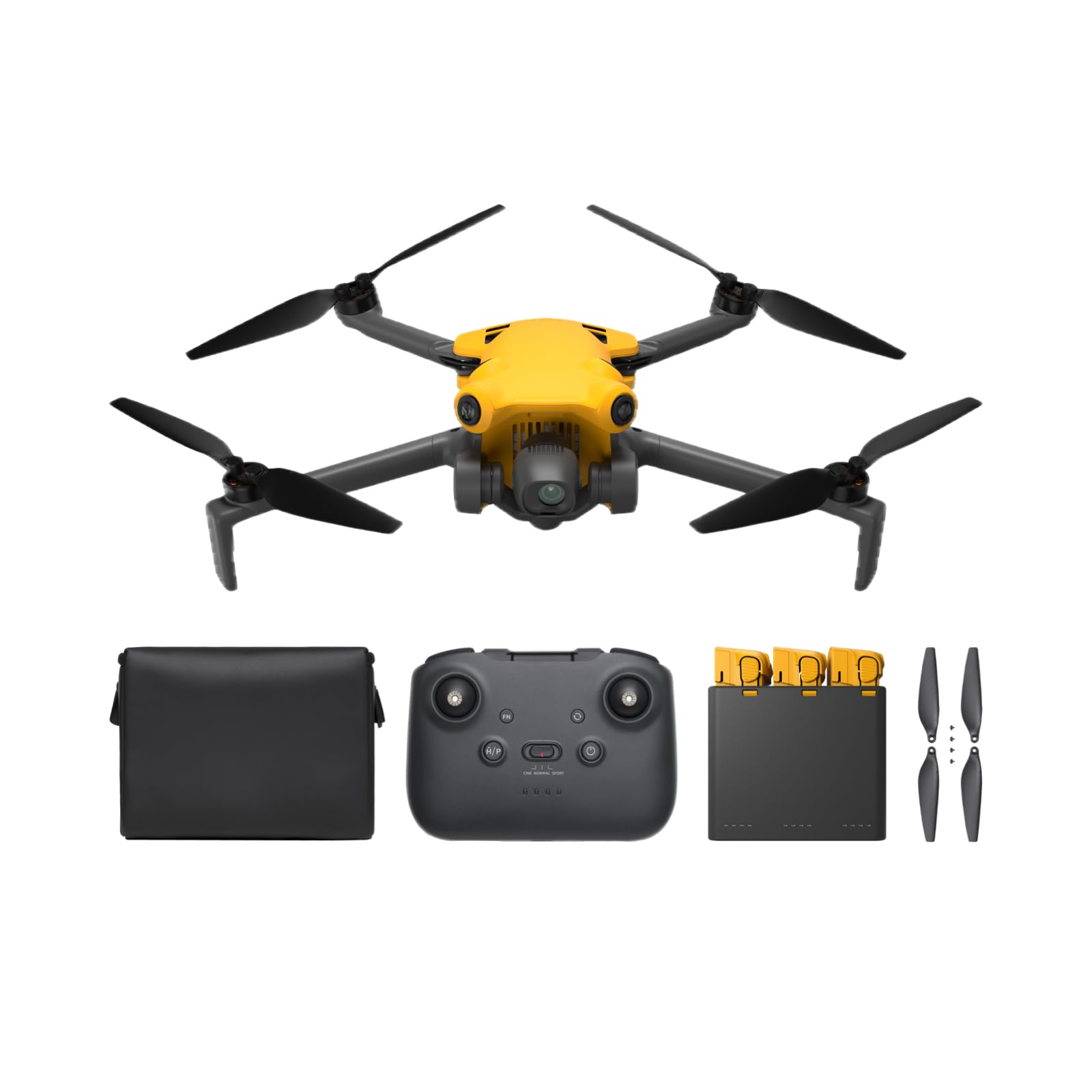
6. DJI Mini 5 Pro Fly More Combo With DJI RC 2, 1-Inch CMOS
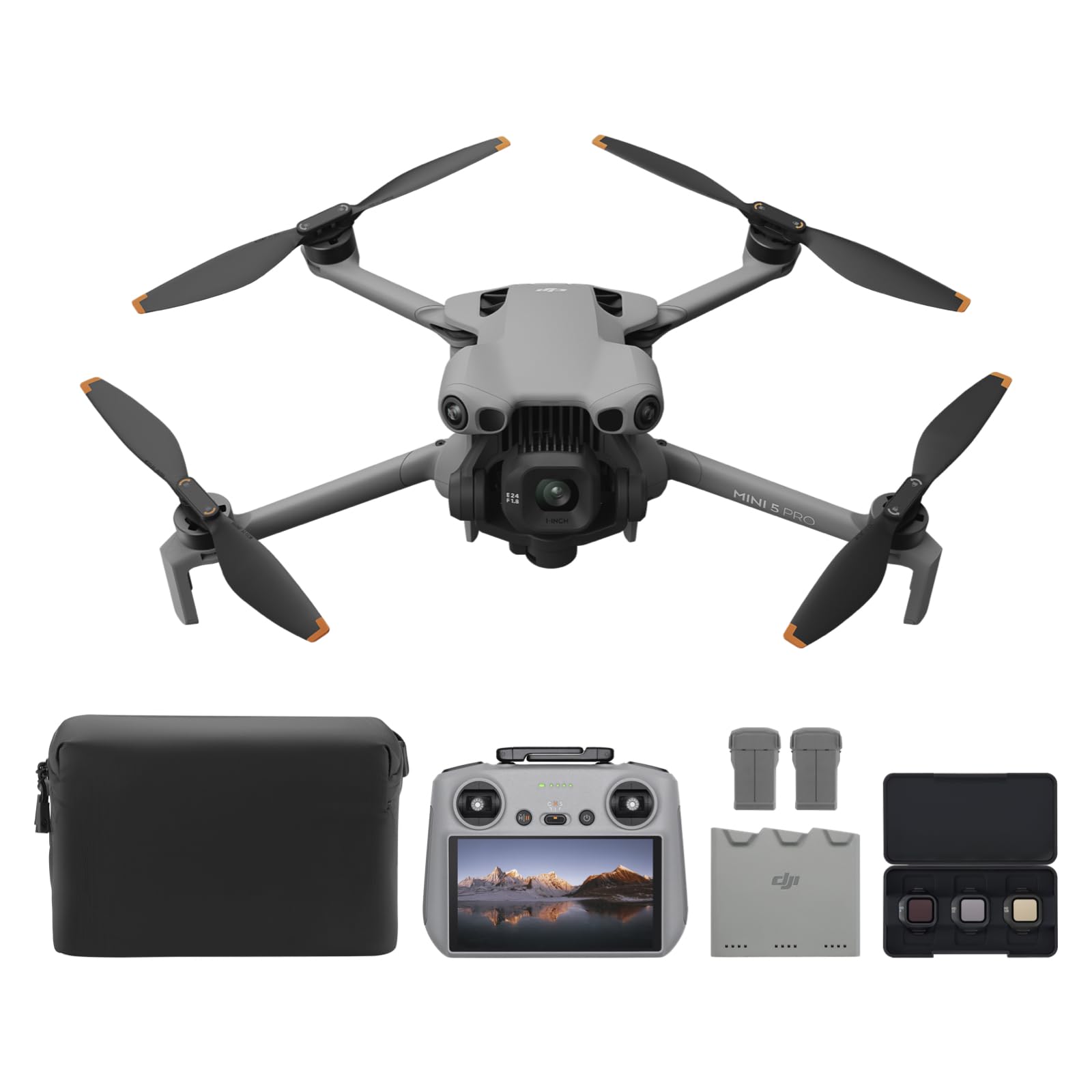
A palm-sized foldable that still fits a 1-inch sensor and a 249-gram body.
The trick with this one is fitting a 1-inch CMOS sensor into a body that folds down to pocket size and weighs about 249 g. That still means 4K/60fps HDR video and 50MP stills from a light drone, and 42GB of built-in storage means you can shoot a whole session without swapping cards. The gimbal adds true vertical filming with 225 degrees of roll rotation, so tilting straight down and rolling sideways for vertical edits is on the menu.
Battery life is rated up to 36 minutes, and fast charging tops three batteries in roughly 115 minutes — the Fly More kit includes all three plus the charging hub and ND filters. Nightscape omnidirectional obstacle sensing uses a forward-facing LiDAR and vision sensors, and ActiveTrack 360 keeps a moving subject framed. One note from the spec sheet straight up: the charging feature is real, but on longer shoots the 36-minute figure means planning your shots in tight takes.
The quality of the build and camera is what buyers praise most, with the camera’s 50MP output named specifically. Ease of use and reliability also stack up strongly. If there is a knock, battery life is the one to watch — it is the aspect most often flagged as worth more. For a lightweight travel camera with flagship-grade optics, this is one of the sharpest tools on the list.
Weight-to-performance ratio: hard to argue with a 1″ sensor at roughly 249 g.
The trade-off: 36 minutes per battery means fewer long continuous takes.
Pick this for: travel and run-and-gun shoots where a pocketable body matters.
Not this one for: all-day single-battery flights at the highest resolution.
7. Antigravity A1 Explorer Bundle
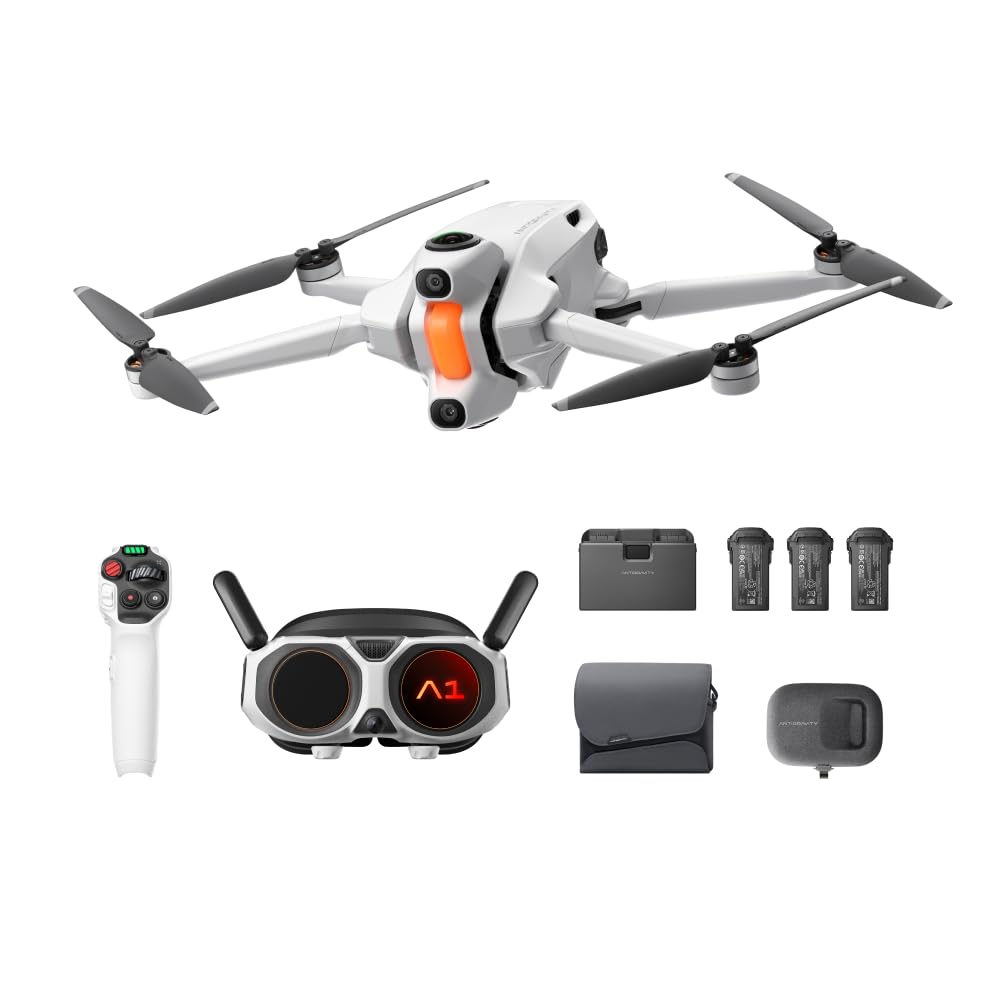
Capture every angle in one pass, then reframe in the edit — no missed shot panic.
This is the outlier on the list: an 8K 360 camera in the air. It records the whole sphere in a single flight, so you pick the framing afterward instead of nailing it mid-flight. If you ever fly past a subject with no usable angle, this changes the workflow. The Vision Goggles deliver a 90-degree FOV (66% wider than standard goggles, per the maker) through dual 1-inch Micro-OLEDs, so the FPV view feels like you are inside the shot.
Weight is a choose-your-own situation: with the standard battery it stays under 249 g, and with the high-capacity battery it flies 39 minutes. Range is 10 km, and omnidirectional obstacle avoidance fuses 360 sensing with front and downward binocular vision to guard against collisions. Auto Editing 2.0 reframes raw 360 footage with synced music, and Deep Track keeps a subject centered. Sky Path lets you build an automatic flight path.
Buyers praise functionality most — it does things other camera drones cannot. Value and ease of use come next in the reviews, and buyers name shot brightness and crispness specifically. The catch: this is a niche tool. If you need traditional telephoto long-lens framing, the Antigravity’s wide 360 capture is a different job, not the same one. For rich footage you reframe later, it stands alone.
Why it stands out
- 8K 360 capture — shoot once, reframe later
- Sub-249g with the standard battery
- 39-minute flight with the high-capacity battery
- Vision Goggles with 90-degree FOV
Where it does not fit
- 360-first workflow is not a substitute for telephoto shots
- Total weight with the full bundle sits around 2.27 kg in the case
Choose it if: your style is rich FPV (first-person view, flying as if you are in the cockpit) and you love reframing in post.
Choose something else if: you need long-range telephoto compressions.
8. DJI Mavic 2 Pro

Six-K footage from a 1-inch sensor with an adjustable aperture and 12-bit color depth.
The image chain is the whole story: a 1-inch CMOS sensor recording 6K HDR video, an F/2.8–F/11 adjustable aperture, and 3x optical plus 16x digital zoom. The 12-bit DNG photos capture up to 68.6 billion colors, which gives you serious grading headroom in post. Max ISO hits 44000, and the Moonlight Algorithm 2.0 is tuned specifically for night photography.
Flight is rated at 40 minutes, and the SkyLink 2.0 system reaches 15 km with 2.7K feed over 2.4GHz, 5.8GHz, and 900MHz tri-band — automatic frequency hopping helps hold the signal in busy airspace. Twelve visual sensors across 19 groups give 360-degree obstacle avoidance, and wind resistance is rated at 27 mph. The Smart Controller SE has a 6.4-inch OLED touchscreen with an 8-core processor and an IP43 rating (a weather-resistance rating for dust and splashing water).
Quality and stability are what buyers praise most, and the 6K picture quality is singled out specifically. Battery life comfortably clears the 35-minute mark per charge in practice, and setup is quick. The trade-off worth flagging: some buyers push back on price, so this is a buy for the adjustable aperture and 12-bit workflow, not for a bargain.
The camera argument: 6K HDR with a manual aperture range — rare at this price tier.
What to weigh: value is debated, so buy for the grading flexibility, not the deal.
Best fit: colorists and night shooters who want aperture control and 12-bit latitude.
Poor fit: buyers shopping purely on lowest outlay.
Know the Specs
Sensor size (1″, 4/3, 1/2″)
The sensor is the chip that turns light into pixels, and its physical size matters more than its resolution. A 1-inch CMOS sensor collects more light than a 1/2-inch one, so night footage and high-contrast sunsets keep their detail. A 4/3 sensor is larger again, which is why the Mavic 4 Pro’s 100MP camera handles dynamic scenes so comfortably.
Gimbal and stabilization
A 3-axis gimbal cancels out pitch, roll, and yaw so the camera stays level while the drone moves. EIS adds electronic smoothing on top, which helps with small shake that slips past the motors. More gimbal travel — like the 225-degree roll on the Mini 5 Pro or the 360-degree Infinity Gimbal on the Mavic 4 Pro — means more shot angles available before you even take off.
Max flight time
Published flight time assumes ideal conditions with no wind. A 45-minute rating, like the Air 3S, gives you real-world headroom for scouting and framing. A 31-minute rating, like the Mavic 2 Pro, means fewer long passes before you land. For kit drones, check whether the quoted total is one continuous flight or the sum of several batteries.
Video transmission range
The range figure describes link distance to the controller, not how far you should legally fly. A 20 km-rated link (Air 3S) generally holds a steadier live feed than a 10 km one (Potensic) even at closer distances, because it has more headroom before the signal degrades under interference.
Effective still resolution
Still resolution (measured in megapixels) tells you how much detail a photo holds for cropping and print. A 100MP sensor on a 4/3 chip, like the Mavic 4 Pro, gives massive crop latitude. A 20MP still from a 1-inch sensor, like the Mavic 2 Pro, is still plenty for most deliverables.
The 249 g rule
Drones that stay under 249 grams often skip registration requirements. The Potensic ATOM 2 (245 g), Skyrover X1 (249 g), and DJI Mini 5 Pro (about 249 g) all sit in this class. The trade-off is usually a smaller battery and less wind tolerance, so weigh that against the convenience of flying without paperwork.
Common Questions
Do I need to register a drone under 249 grams?
Is a 1-inch sensor enough for night video?
What does 3-axis gimbal actually do for video?
How far can I really fly before the video feed drops?
Are the quoted flight times per battery or for the whole kit?
Can I shoot vertical video for social media?
Do these drones come with a controller screen or do I need a phone?
Is a higher megapixel count always better for stills?
What is the difference between a drone with GPS and one without?
Can I fly these in windy conditions?
Will a 1-inch sensor drone fit in a carry-on bag?
The Bottom Line
For most paid video work, the professional video drone winner is the DJI Air 3S Fly More Combo. Its 1-inch CMOS sensor (a large image sensor that gathers more light), 4K/60fps HDR (sharp 4K video at 60 frames per second with high dynamic range) with 14 stops of dynamic range (it holds detail in both bright and dark areas), and 45-minute flight time cover the widest range of real shoots. If you want an 8K 360 workflow that lets you reframe after the fact, reach for the Antigravity A1 Explorer. And if your shot list demands a 100MP 4/3 sensor with a 360-degree gimbal, the DJI Mavic 4 Pro delivers.
One thing to know before you decide: the Air 3S does not carry the largest ratings base on this page, but it holds one of the highest scores. Buyers give it 4.5+ stars across 800+ owners, a fair summary of a drone that rarely disappoints. Whichever way you go, match the drone to the shots you actually fly, not to the biggest number on the box.
How we choose
We do not accept paid placement. Every pick is matched to a real buyer and a real use-case; we do not hands-on test units.
Sources
Specifications: manufacturer listings and product documentation. Review insights: verified customer reviews, as of November 2026. Pricing: not shown on this page (it changes often); check the current price via the retailer link.
As an Amazon Associate, Tactical Gear Guy earns from qualifying purchases. This does not affect which products we feature.