Specs are compiled from manufacturer listings and verified buyer reviews and can change over time — please confirm the key details on the product page before buying.
If you are carrying a two-person tent on your back, the weight number on the box is the one that decides whether the trip feels like freedom or a slow grind. The right freestanding two-person shelter stands on its poles without stakes, holds its shape in wind, and still packs down small enough to disappear into a 50-liter pack. This guide covers nine that do exactly that, sorted by what each one is genuinely best at.
This guide is built by comparing the manufacturers’ published specifications and the patterns across verified customer reviews, so you get each pick’s real strengths and trade-offs instead of marketing spin.
You will see where each tent saves weight and where it spends it, so the pick you carry home actually fits your trip. Use this breakdown of the lightest freestanding 2 person tent options to match a shelter to your own pack and body.
Top Picks

How To Choose The Lightest Freestanding 2 Person Tent
The single biggest mistake first-time buyers make is reaching for the lowest weight number on the listing and ignoring everything else. A tent that saves you a few ounces but leaves you bailing water at 2 a.m. is not a light tent — it is a leaky one. The better approach is to weigh four things against each other: packed weight, floor space, waterproofing, and how fast the thing goes up in the dark.
Trail weight vs packaged weight
Trail weight is the tent body, rainfly, and poles — the parts you actually pitch. Packaged weight adds the stuff sack, stakes, and any footprint, so it always reads heavier. Compare tents on the same number. If one brand quotes trail weight and another quotes packaged weight, you are not comparing like with like, and the “lighter” tent may not be lighter at all.
Freestanding does not mean stake-free forever
A freestanding tent holds its own shape through its pole frame, so you can pick it up and move it to a flatter patch before you commit. That is the real luxury on rocky ground. But in strong wind you still tie it down with guylines, and most designs ship with stakes for that reason. Freestanding buys you flexibility in where you pitch, not a permanent pass on stakes.
Waterproofing numbers in plain terms
Fabric waterproofing is rated in millimetres of hydrostatic head — the column of water a fabric holds before it starts to pass moisture. A 2,000mm fly sheds steady rain; a 3,000mm fly handles heavier weather; a 4,000mm floor gives you more margin when you pitch on damp ground. Higher is better for wet climates, but every gram of extra coating adds weight, so match the rating to the trips you actually take.
Floor space for two real people
Two-person tents vary a lot inside. Some give a genuinely rectangular floor that fits two wide sleeping pads side by side; others taper so the second person sleeps against a wall. Check floor width alongside floor length. A narrow floor means you and your partner are touching all night, which is fine for a couple and miserable for two friends.
Side-by-Side Comparison
| Model | Best For | Stated Weight | Floor Area | Waterproofing | Amazon |
|---|---|---|---|---|---|
| Naturehike Mongar 2★ Best Overall | All-round value | 5.3 lb full set | 438.44 sq in | 3000mm fly and floor | Amazon |
| MOBI GARDEN Talo 2Fastest Pitch | Fast pitching in rain | 3 lb | — | 2000mm fly / 4000mm floor | Amazon |
| Kelty Late Start 2PEasiest Setup | First-timers and car camping | 3 lb 9 oz minimum | 19.7 sq ft | Waterproof rainfly | Amazon |
| Kelty Grand Mesa 2 | Living space on a budget | 4 lb 7 oz packed | 30 sq ft | Fully seam-taped | Amazon |
| Naturehike Star River UL 2 | Sharing the load | 4.07 lb | 4229.24 sq in | 15D nylon waterproof | Amazon |
| Wander Hawk 1-2P | Bikepacking solo | 3 lb 4.9 oz trail | 88.2 in floor length | PU2000mm fly / PU3000mm floor | Amazon |
| The North Face Stormbreak 2 | Group backpacking | 5 lb 5 oz trail | 30.56 sq ft | Seam-taped floor | Amazon |
| NEMO Hornet OSMO | Ultralight purists | — | 27.7 sq ft | OSMO fabric | Amazon |
| MSR Elixir 2 | Living with room to sit | — | 30 sq ft | PFAS-free waterproofing | Amazon |
Detailed Reviews
1. Naturehike Mongar 2 Person Backpacking Tent
Our pick — 4.5+★ from 700+ verified ratings; the strongest balance of quality and price.
The two-door, two-vestibule shelter that keeps the weights off your back and the rain off your bag.
For a two-person backpacking tent, the Mongar makes its case with a floorplan first. Its 53.2-inch floor width beats the Kelty Late Start 2P’s 38.5 inches by a wide margin, so two rectangular pads sit side by side without a nightly elbow war. The 82.7-inch floor length means even a taller sleeper can stretch out flat. That interior is roughly 30 square feet of sleeping space, which is real room for two adults rather than two sardines.
Where it justifies the top slot is the setup and the waterproofing together. A Y-frame freestanding structure pitches in about 3 minutes, and the manufacturer says the instructions are sewn right into the stuff sack, so a first-time user is not hunting for a manual in the dark. The fly and the floor both carry a 3000mm waterproof rating (a measure of how much water pressure the fabric holds before it leaks), so a steady rain should roll off rather than soak through. The B3 mesh inner keeps bugs out while letting air move, and the double doors plus double vestibules give each person their own exit and gear nook.
The honest catch is durability — that is the one trait owners describe inconsistently, and it is worth treating the poles and zippers with some care. The tent also weighs 5.3 pounds as a full set including the free groundsheet, so it is the heaviest pick here rather than the lightest. That said, the 210T polyester fabric and 7001 aluminium poles feel like a sensible trade for a shelter this roomy.
Durable double-wall build
- 53.2-inch floor width and 82.7-inch length give two adults genuine elbow room
- 3000mm fly and floor waterproofing handles sustained rain
- Two doors and two vestibules mean no climbing over your partner at night
- Y-frame freestanding setup in about 3 minutes, with instructions in the sack
Packed weight adds up
- 5.3 lb full-set weight is the heaviest of the group
- Durability is the one area owners describe with less certainty
Pick for durability: you backpack with a partner and want real interior space without paying premium prices.
Skip for ultralight: every ounce counts and you are chasing the absolute lightest shelter.
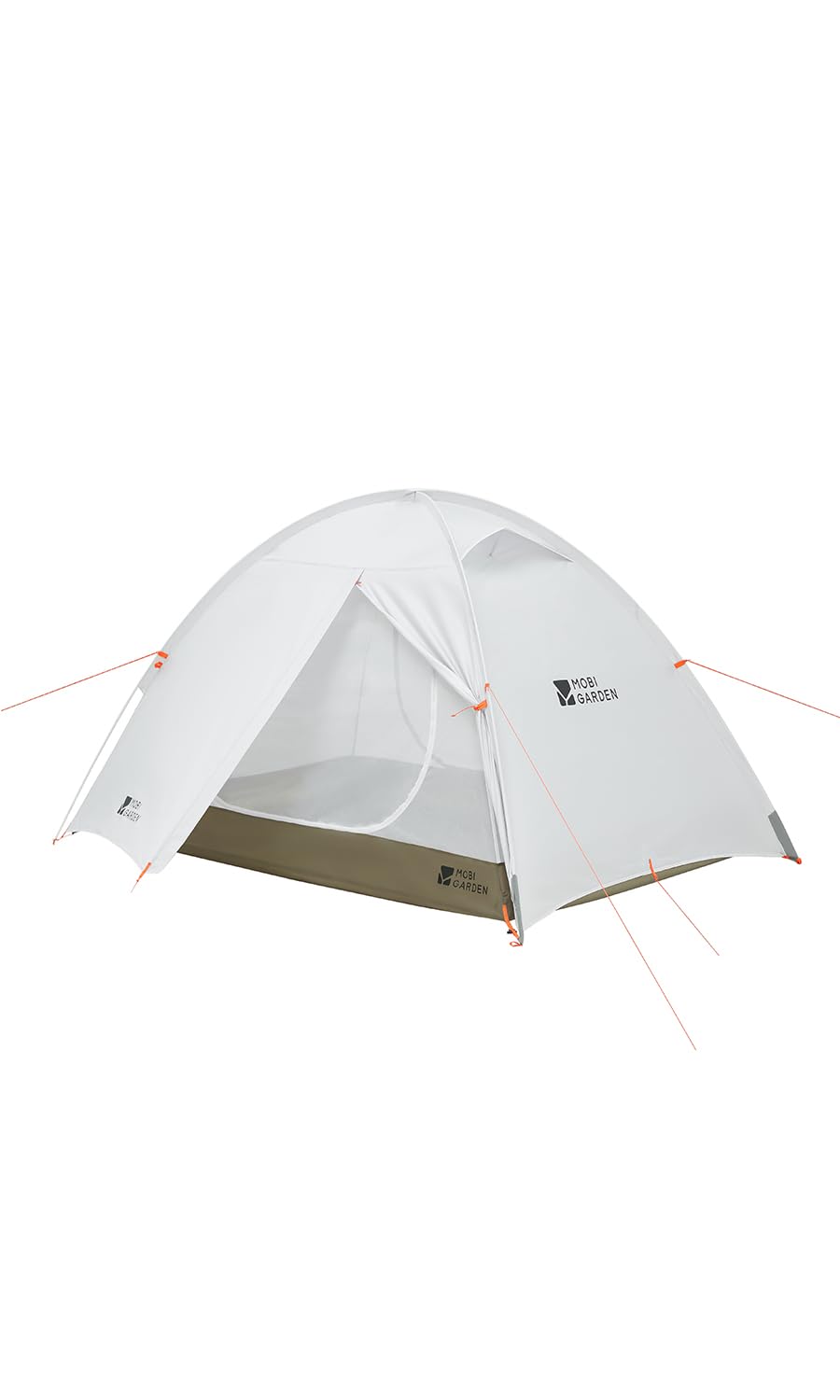
2. MOBI GARDEN Talo 2 Person Backpacking Tent
Three pounds that go up in two moves, so the tent is dry before the rain finds your sleeping bag.
When the clouds open, the Talo’s pitch matters more than any other number. Its fly and inner go up together as one assembly, so the sleeping area stays covered the whole time you are doing it. That is a plain but huge advantage over designs where you have to pitch the inner first and fight a rainfly onto a wet tent.
The pole frame deserves its own mention. The X-cross sleeve geometry has been tested in winds up to 30 mph, so the poles stay put on an exposed ridge or in a valley that funnels wind. The 2,000mm head-rated fly is a hybrid nylon-polyester ripstop, and the floor carries a 4,000mm rating, so the base is the tougher half. A single asymmetric fly leafs out over one side to build a covered vestibule you can cook in or stash a pack under.
At 3 pounds it is one of the lightest full shelters here. It also carries a 4.5+ rating and a single door — the one point to check if two of you will share it, since a lone door means one person has to climb past the other in the night. People who have used it call it a solid, quick pitch, with the shared space the only mixed note.
Room for two sleepers: a tent that keeps its interior dry during setup is the difference between a calm camp and a soggy start.
Single door access: sharing a single entry between two people gets old on wet nights — a couples’ tent more than a strangers’ one.
Choose for space: solo backpackers who occasionally share, and anyone who camps in weather that turns fast.
Avoid for easy entry: you need two separate doors and full independence for two sleepers.
3. Kelty Late Start 2P Backpacking Tent
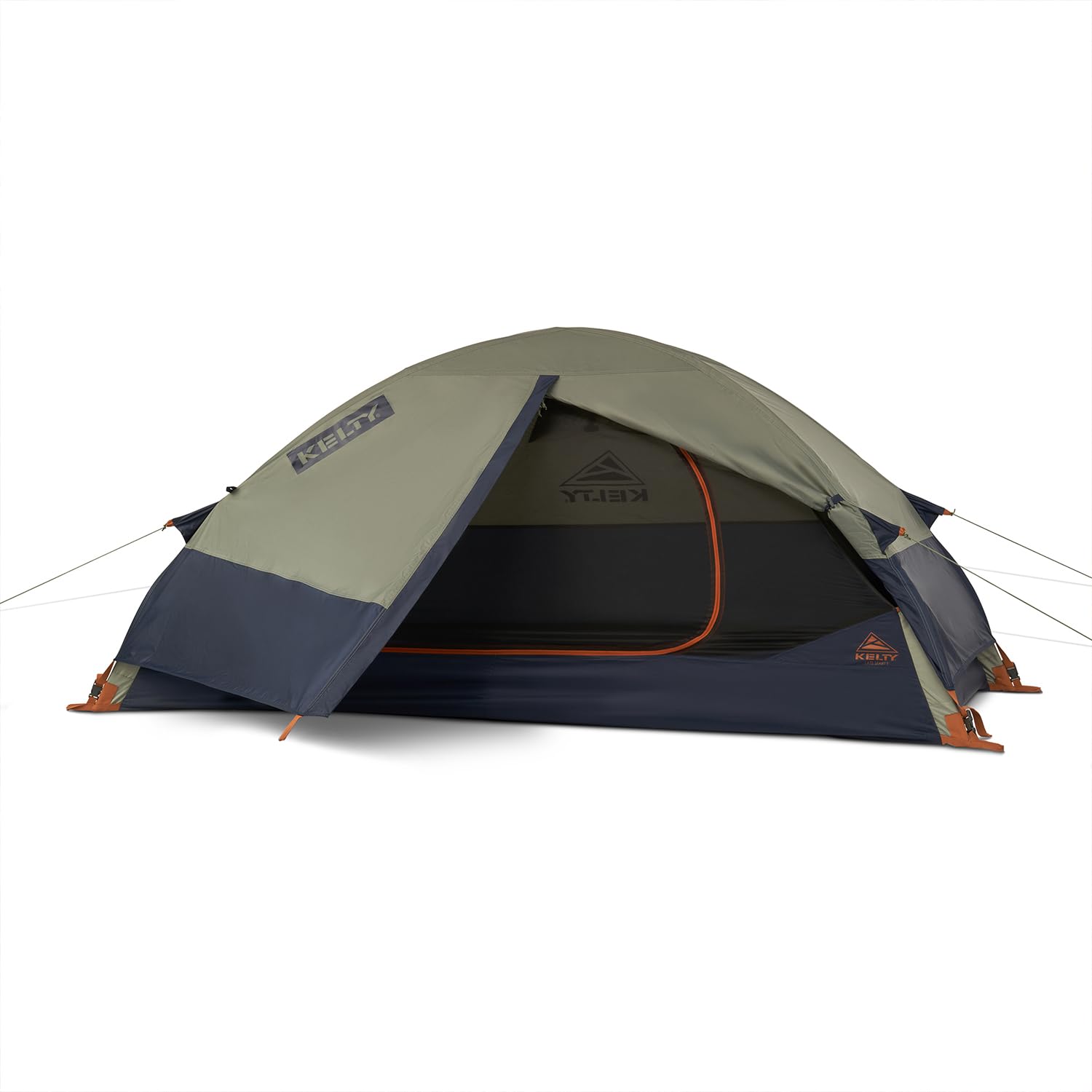
Built for the camper who arrives at dusk and wants the tent standing before the last light goes.
Kelty designed this one around a single, practical fear — pulling into camp after dark. Quick Corners hold the pole ends in place while you thread the rest, and colour-coded clips and fly attachments remove most of the guesswork. The manufacturer sets assembly at 3 minutes, and the wide-opening Shark Mouth carry bag makes packing up less of a wrestling match when your folding skills are questionable.
The pre-bent aluminium poles do two jobs: they add interior living space without a complicated frame, and their short segments pack neatly for bike trips and motorcycle camping. The colour-coded full-coverage rainfly has a built-in vent to move moisture, and No-See-Um mesh (a fine mesh that blocks tiny biting insects) keeps air flowing on dry nights. The 84-inch floor length is the longest in this group, giving tall sleepers room to stretch.
The 19.7 square feet of floor area is the smallest here, which is plenty for a pair of close friends but tight for two adults who want their own space. The Sea Spray colour and no-see-um mesh keep airflow strong, but the footprint is sized for a snug two. First-timers consistently describe this as the tent that taught them how to pitch; with a 4.5+ rating and a 3 lb 9 oz minimum weight, it is a patient, forgiving starter.
Go for speed: you are new to pitching tents and want one that forgives a late arrival.
Pass for gear storage: two broad-shouldered adults will share that 19.7 sq ft floor.
4. Kelty Grand Mesa Backpacking Tent, 2 Person

The shelter that trades a little pack weight for the most liveable floor on a budget.
Two adults who want space to sit up and spread out get it here. On a rainy rest day stuck inside, that extra headroom and floor space is what keeps tempers even.
The frame is a simple two-pole aluminium design with Kelty Quick Corners and colour-coded clips. The manufacturer puts setup at 5 minutes, and the buyers who live with it report it goes up and down in about 6½ minutes for a full cycle — an honest, real-world number for a two-pole dome. A durable 68D polyester floor and rainfly, both fully seam-taped, are built to keep changing weather outside, and the EZ-Zip vestibule adds a covered storage porch outside the sleeping area.
The trade is compactness — at 4 lbs 7 oz packed and 16 x 7 x 7 inches packed away, it is not the lightest tent in this lineup, and it takes longer to pitch than the quickest shelters here. That said, a massive rainstorm is the event repeat buyers point to when they say it held up; the seam-taped build and sturdier poles are what earns that confidence.
Generous interior height: 30 sq ft of interior at a low price point, with a full vestibule for wet boots.
Heavier than rivals: the packed weight is the second-heaviest here, so this is a shelter to share between two packs.
Opt for comfort: you camp as a pair, want to sit up inside, and value a roomy dome over a lighter sack.
Skip for weight savings: you hike solo most weekends and carry everything yourself.
5. Naturehike Star River UL 2 Person Backpacking Tent

Every piece has its own bag, so the tent can be split between two backs on the climb.
The Star River’s big idea is not the fabric — it is the bags. Each part of the tent packs into its own stuff sack, the poles slot into a side pocket or clip onto a pack with a hiking buckle, and the Separated compression design lets you divide the weight with your partner. That split-bag design turns a 4.07-pound shelter into two lighter loads, one per pack.
Around the fabric, the numbers back up the weight claim. The body is 15D nylon, a thin, light weave, and the total package measures 15.7 x 5.1 inches. The inner measures 82.7 x 51.2 x 41.3 inches for sleeping two, and the outer stretches to 86.6 x 57.1 x 43.3 inches with a large vestibule for gear. A triangle storage bag hangs between inner and fly for extra gear, and large interior pockets hold a phone or headlamp within reach.
The awning-style vestibules open with double zippers in several configurations, so you can crack them for airflow or shut them against weather. Access is the part buyers rave about — two large doors with two-way zippers make night exits easy. The honest note is water resistance, which owners describe with less consistency, so seam-sealing and a footprint (included) are worth using on wet ground.
Choose for lightness: two hikers who want to divide the pack weight and still carry a roomy shelter.
Avoid for rough ground: you camp in heavy rain, where you will want to double-check the waterproofing setup.
6. Wander Hawk 1-2 Person Backpacking Tent
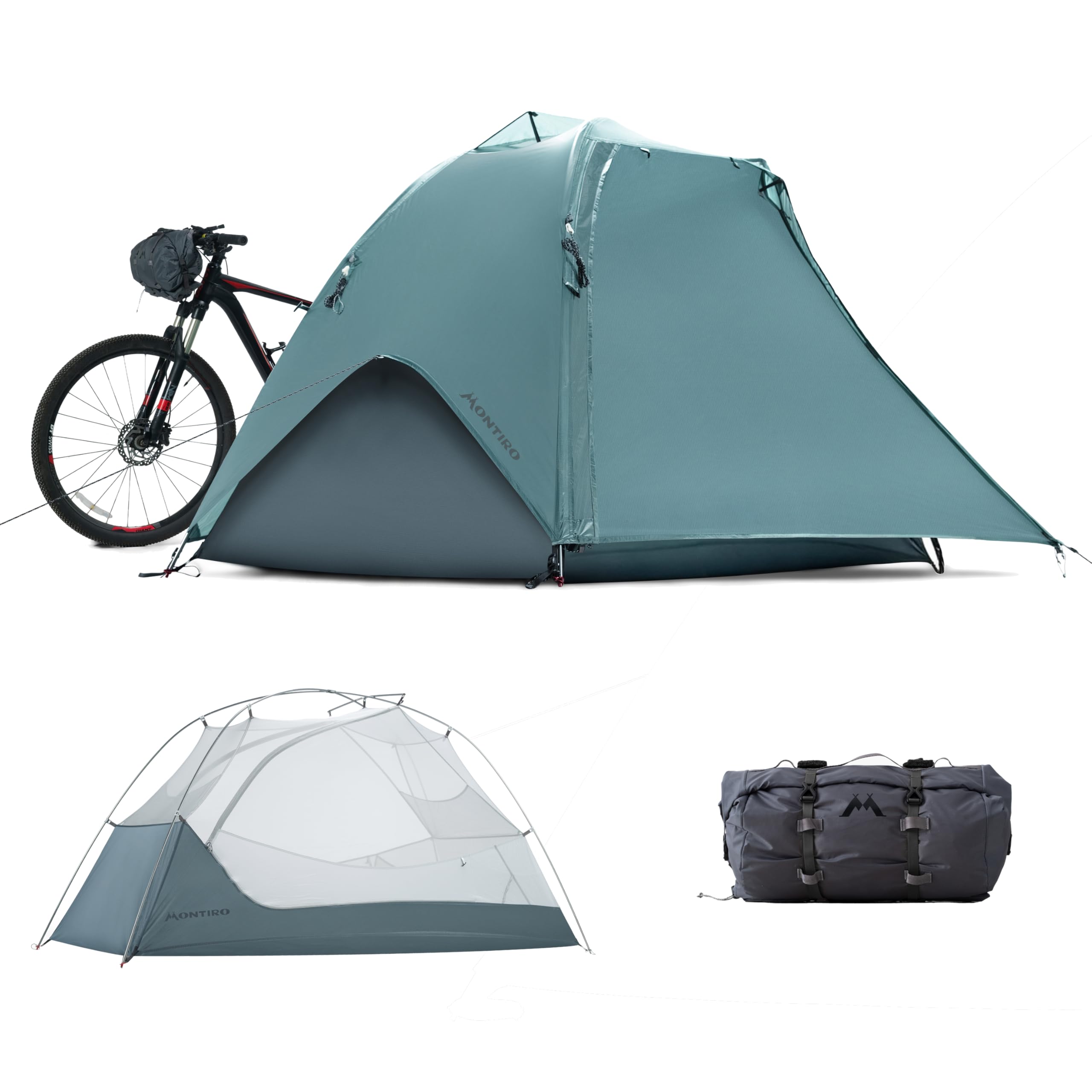
A bike-focused shell that treats your handlebars as part of the tent’s storage system.
For bikepackers, this one solves a problem the others ignore. A handlebar bag mounts to your bike and keeps essentials in reach during the ride, and the tent includes dedicated compartments for a cycling helmet. The footprint tarp weighs 167 g, so it adds floor protection without adding meaningful pack weight.
The trail weight is 3 lb 4.9 oz, and the package—with footprint and bike bag—weighs 4 lb 4.7 oz. The outer fabric is 20D ripstop nylon with a silicone coating and a PU2000mm rating, and the floor uses the same 20D ripstop with a PU3000mm rating, so it holds up to wet ground. It stands on its own without stakes or guylines, which matters when you are pitching on rocky trail. The floor measures 88.2 x 35.4 inches with 43 inches of headroom.
A smart airflow system with two side vents and one top vent pulls air through to cut condensation. The asymmetric rainfly opens on one side with a single zip and on the other with a dual-zip awning, so entry works from both sides. The 1-2 person sizing is honest: it is a generous solo shelter, or a snug tent for a close pair. Compactness is what owners praise most alongside the easy setup — it packs small enough for a backpack.
Compact packed size: 3 lb 4.9 oz trail weight in a freestanding frame that needs no stakes.
Narrow interior width: a 35.4-inch floor is a solo dream and a two-person squeeze.
Buy for packing: bikepacking trips where the handlebar bag and freestanding frame earn their keep.
Skip for wide sleepers: you plan to sleep two adults inside regularly.
7. The North Face Stormbreak 2 Two-Person Camping Tent

Two big doors and a breathable wall that fights the morning condensation fog.
Condensation is the silent comfort-killer in any two-person tent, and the Stormbreak attacks it head on. Breathable mesh walls deliver high-low ventilation, meaning air enters low and exits high even with the fly on, which keeps the inside drier on a cold night. The two large doors stuff into adjacent mesh pockets so you never have to roll them up, and two twin-zip vestibules give each sleeper a covered place to kick off muddy boots.
The trail weight is 5 lbs 5 oz, manageable for group backpacking where the load gets split. A fastpack weight of 3 lbs 14.1 oz lets you leave the inner behind for a lighter fly-and-floor setup. The waterproof rainfly and seam-taped floor work together against stormy weather, and the 30.56 square feet of floor area with 43 inches of headroom lets you sit up comfortably. The 87-inch floor length is generous for taller campers.
The size note is worth taking seriously — a few owners find it a bit small for two large adults, so it fits a couple or a parent and child better than two broad-shouldered friends. It is also not the lightest here, and the footprint is sold separately. But the ventilation, the easy pitch, and the waterproof construction are what keep a 4.5+ rating behind it.
Pick for reliability: humid climates and campers who hate waking up to a wet inner wall.
Skip for extras: two big adults plan to share the 30.56 sq ft floor.
8. NEMO Equipment Hornet OSMO Backpacking Tent
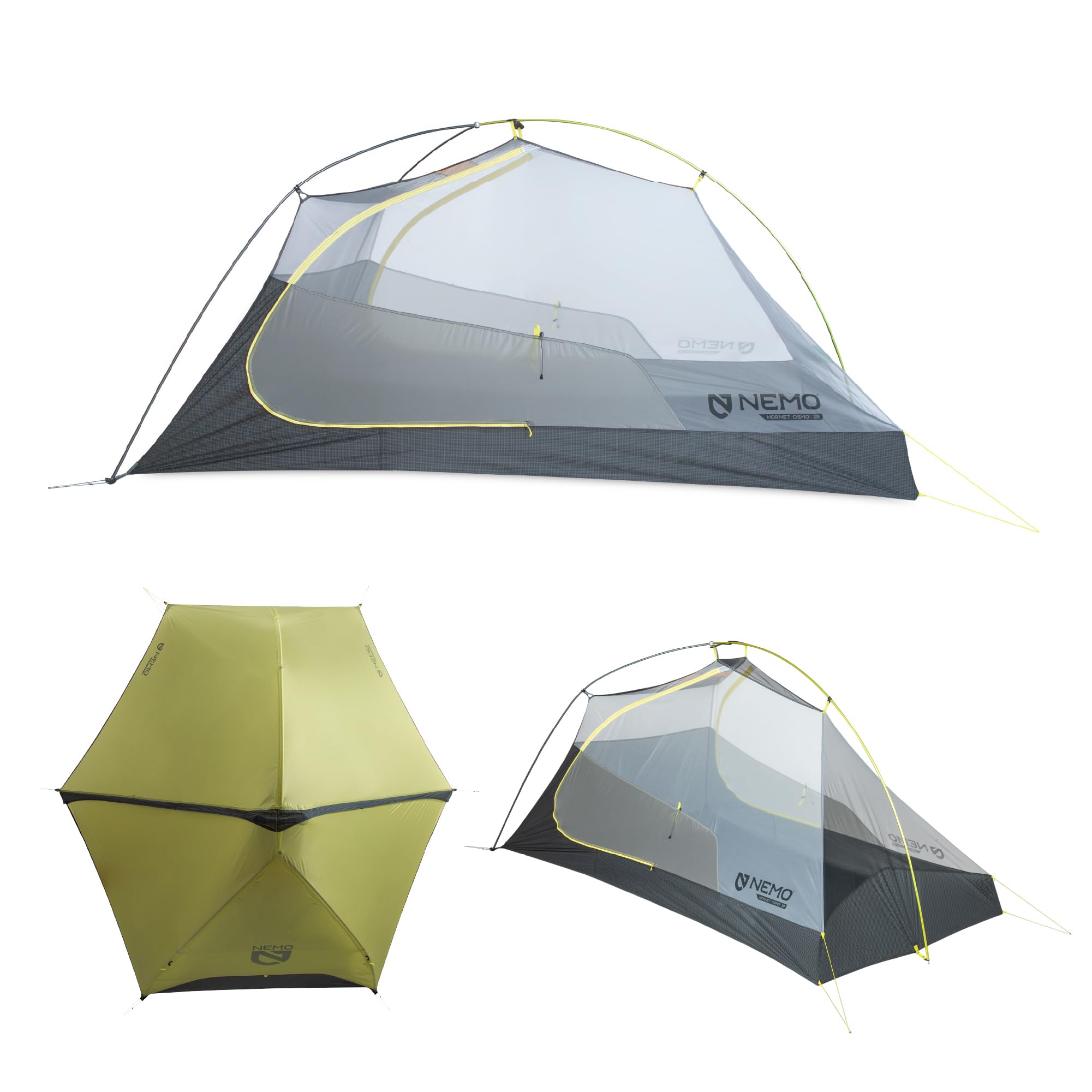
The specialist’s shell: proprietary fabric that stays stiff and dry when everything else sags.
The Hornet OSMO is aimed at the camper who weighs every ounce and forgives a tight floor for a drier night. Its OSMO poly-nylon ripstop fabric has 4x better water repellency and 3x less stretch when wet, so the fly stays taut instead of sagging onto your sleeping bag in a downpour. The yarns are 100% recycled and PFAS-free, and the flame retardancy is met without added chemicals.
Inside, the patent-pending Flybar pole clip adds headroom at the crown and spreads fly tension evenly, while volumizing guy-outs pull the sidewalls of the inner tent outward for more livable space. Large doors and vestibules give each person their own gear coverage, and integrated Gatekeeper clips let you tie the door back one-handed — useful when you are carrying something in.
The floor area is 27.7 square feet with a 215 cm width, and that compactness is also the honest downside. The size is the most-debated trait, with some buyers feeling it is too small, so treat this as a snug shelter for two friendly campers or a luxurious solo. Weight comfort is likewise mixed — light, but not the lightest. Its 3.5+ rating reflects that fit-first character rather than a flaw in the build.
Strong OSMO fabric: OSMO’s less-stretch, high-repellency weave is the real reason someone pays premium money here.
Tight interior fit: 27.7 sq ft is snug for two, so measure your sleeping pads before committing.
Go for fabric: gram-counting soloists and couples who prioritize dry fabric over elbow room.
Pass for roominess: you want two kingsize pads to fit with space to spare.
9. MSR Tents Elixir 2
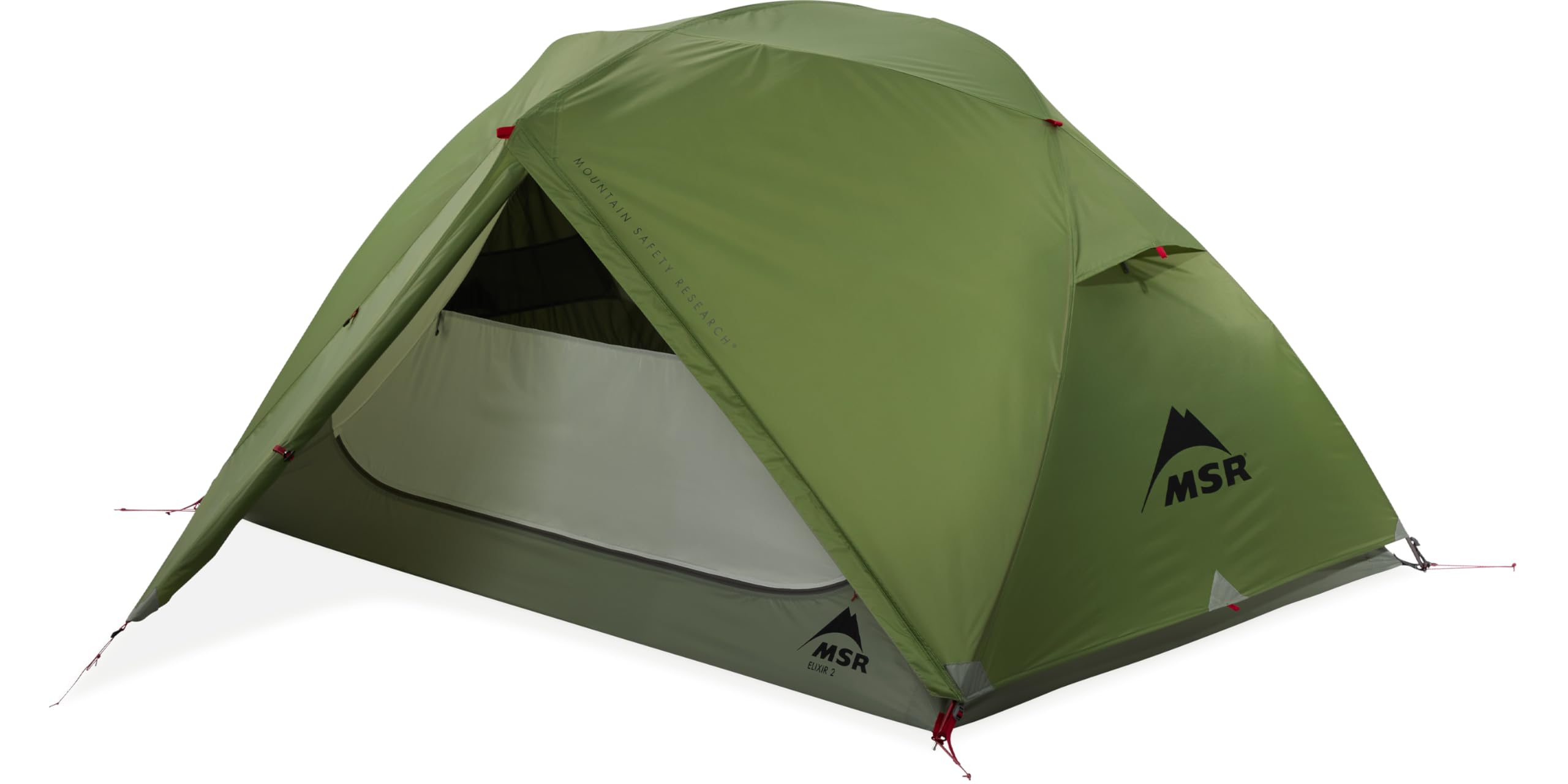
A true rectangle with straight-up walls, so two wide pads finally fit without a shoving match.
The Elixir’s floorplan is the point. A true rectangular shape with nearly vertical walls fits two wide, thick, rectangular sleeping pads side by side, which is exactly what curved tunnel designs cannot do. The floor is 84 inches long and 52 inches wide at 30 square feet, so it lives larger than its footprint suggests. Tall campers and side-sleepers get their space back.
Airflow is handled by strategically placed mesh panels that push out condensation while holding in warmth, plus a gear loft and end pockets with cable ports for routing a headlamp cord. All-metal corner hardware and straight-pull zippers are built for longer life than curves, and they are easy to grab at night by feel. The fabrics use PFAS-free waterproofing, and the body mixes 75% polyester with 25% nylon. A dedicated footprint is included, and the Elixir fits the MSR Gear Shed for extra storage.
Freestanding setup is straightforward — poles into the corner hardware, clips onto the body, a secondary pole above the doors, then the fly. The trade is that this is a livable shelter, not the lightest one; it sits in the premium tier for good reason. With a 4.5+ rating, it is the pick for campers who would rather carry a little more and sleep with room to stretch.
Choose for balance: you and your partner both use wide rectangular pads and want them to actually fit.
Skip for extremes: you are chasing trail weight and don’t need the living-space boost.
Know the Specs
Packed Weight vs Trail Weight
Trail weight is the tent body, rainfly, and poles — the parts you pitch. Packaged weight adds stuff sack, stakes, and footprint. Always compare tents on the same number; a brand quoting trail weight can look lighter than one quoting the full package even when the pitchable parts are equal.
Hydrostatic Head
This is the water pressure a fabric holds before it lets moisture through, measured in millimetres. A 2,000mm fly sheds steady rain; a 3,000mm fly handles heavier weather; a 4,000mm floor gives margin on damp ground. Higher ratings add a little weight, so match the number to your climate rather than maxing it out.
Floor Area and Shape
Floor area measured in square feet tells you how much ground two sleepers get. A true rectangular floor fits two wide pads side by side; a tapered or tunnel shape squeezes the second person against a wall. Check floor width alongside area — that is where two-person comfort is actually won or lost.
Freestanding Frame
A freestanding tent holds its shape through its pole frame, so you can pitch it, pick it up, and shift it to a flatter patch before staking. That flexibility is the real value on rocky or uneven ground. In strong wind you still tie out with guylines; freestanding means flexible, not permanently unstaked.
Common Questions
What does freestanding actually mean in a two-person tent?
How heavy is too heavy for a backpacking two-person tent?
What waterproof rating do I need for a two-person tent?
Can two adults actually fit in a 2 person backpacking tent?
Is a freestanding tent better than a trekking-pole tent?
How long should pitching a two-person tent take?
What is the difference between trail weight and packaged weight?
Do I need a footprint under a freestanding tent?
The Bottom Line
For most people, the lightest freestanding 2 person tent that balances space, weight, and price is the Naturehike Mongar 2 — it pairs a 53.2-inch floor width and two doors with 3000mm waterproofing on the fly and floor, which is a lot of real shelter for the money. If you pitch in rain that arrives fast, the MOBI GARDEN Talo 2 gets its dry interior up in two steps. And for bikepackers who want the tent to live on their handlebars, the Wander Hawk is the one that fits the ride.
How we choose
We do not accept paid placement. Every pick is matched to a real buyer and a real use-case; we do not hands-on test units.
Sources
Specifications: manufacturer listings and product documentation. Review insights: verified customer reviews, as of November 2026. Pricing: not shown on this page (it changes often); check the current price via the retailer link.
As an Amazon Associate, Tactical Gear Guy earns from qualifying purchases. This does not affect which products we feature.