Specs are compiled from manufacturer listings and verified buyer reviews and can change over time — please confirm the key details on the product page before buying.
If you are folding ductwork, reinforcement channels, or patch panels in a home shop, the thing that decides whether you love or hate your metal bending brake is simple: how much metal it can grab without moving. A brake that clamps firmly across its full length gives you a crisp, straight fold in seconds. One that lifts its center or slips a wing nut turns a five-minute job into a fight. This guide sorts nine real brakes by bending width, metal thickness capacity, and how they mount, so you can pick the one that matches the panels you actually fold.
This guide is built by comparing the manufacturers’ published specifications and the patterns across verified customer reviews, so you get each pick’s real strengths and trade-offs instead of marketing spin.
The short version is that a vise-mounted attachment is the smart starting point for brackets and small pans, while a bench-mounted box and pan brake earns its space once you are folding long panels. Here is the honest breakdown of every metal bending brake worth considering right now.
Top Picks

How To Choose The Best Metal Bending Brake
A metal bending brake is a hand-powered folder: you trap a flat sheet between a clamping bar and a bed, then swing a leaf up to fold the metal along a straight line. Nothing here plugs in. Your decision depends on three numbers — bending width (the longest straight fold it can make), metal thickness capacity (the thickest sheet it can handle), and angle range (how far it can bend) — plus how the tool attaches to your bench or vise.
Match the bending width to the longest panel you fold
Bending width is the longest straight fold the brake can make in one pass, measured in inches. A 6 in or 8 in vise brake is fine for brackets, ribs, and small pans. Once you are folding full-length ductwork or truck bed panels, you want a 24 in or 30 in bed so the fold runs in a single pull rather than two overlapping passes. Measure your widest planned panel before you buy, because a brake cannot fold wider than its bed.
Read gauge capacity as a limit, not a target
Gauge is how thick the sheet is, and — this trips up beginners — a LOWER gauge number means THICKER metal. A brake rated for 18 gauge mild steel handles that thickness with ease, but pushing it to a heavier sheet flexes the leaf and gives you a soft, rounded fold instead of a sharp one. Aluminum and stainless behave differently too: a brake that folds 14 gauge mild steel usually tops out thinner on stainless. Stay at or under the rated thickness and the fold stays crisp.
Decide between a vise attachment and a bench-mounted brake
A vise-mounted brake is a small attachment that clamps into a bench vise you already own, and it costs a fraction of a full brake. It is the right call for small runs, reinforcement ribs, and anyone short on floor space. A bench-mounted box and pan brake bolts to a workbench and carries its own bed and leaf, which makes it steadier for long panels — but it needs dedicated bench space and enough weight to stay put. Neither is better; they answer different jobs.
Look at the fingers and the clamping bar
Segmented fingers — the removable plates that press the sheet down — let you leave gaps so a folded side can clear the tool while you bend the next edge. That is how you make a three-dimensional pan instead of a flat channel. The clamping bar is the other half of the story: a bar that grabs firmly across the full width keeps the fold straight, while a bar that only bites near the edges lets the middle curl upward.
Side-by-Side Comparison
| Model | Best For | Bending Width | Max Mild Steel Capacity | Angle Range | Amazon |
|---|---|---|---|---|---|
| KAKA INDUSTRIAL BDS-8 Vise Mount★ Best Overall | Small brackets and ribs in a vise | 8 in / 200 mm | 14 gauge | — | Amazon |
| VEVOR Box and Pan Brake 30 inWidest Bed | Long panels on a bolted-down bench | 30 in | 18 gauge (1.2 mm) | 0–135 degrees | Amazon |
| Eastwood 6 in. Vise Mount Press BrakeVise Companion | Compact vise work and reinforcement channels | 6 in | 14 gauge (18 gauge stainless) | Up to 90 degrees | Amazon |
| KASTFORCE KF5002 | Mid-size shop brake with angle control | 28 in / 730 mm | 18 gauge (1.2 mm) | 0–135 degrees | Amazon |
| VEVOR Box and Pan Brake 24 in | Modular fingers for complex box work | 24 in / 610 mm | 20 gauge low carbon steel | 0–135 degrees | Amazon |
| Grizzly Industrial T10726 Mini Pan and Box | Small benchtop box and pan work | 12 in | 20 gauge | — | Amazon |
| KASTFORCE KF5006 | Five-finger box and pan folding | 24 in / 610 mm | 20 gauge (1.0 mm) | 0–135 degrees | Amazon |
| Shop Fox M1011 24-Inch | Serious home shop with long runs | 24 in | 20 gauge | 0–135 degrees | Amazon |
| Eastwood 12 Inch Precision Box and Pan | Precision small-shop work | 12 in | 20 gauge (24 gauge stainless) | 0–135 degrees | Amazon |
Detailed Reviews
1. KAKA INDUSTRIAL BDS-8 Vise Mount Metal Brake, 8 in
Our pick — 4.5+★ from 300+ verified ratings; the strongest balance of quality and price.
The bench-vise attachment that folds 14 gauge without asking for more floor space.
Here is the number that makes this the top pick: an 8 in bending width that clamps into the vise you already own. That means small brackets, pan edges, and reinforcement ribs get folded right at the bench, with no dedicated tool stand to buy or store. At 2.8 pounds it lifts off the vise in one hand, which keeps a crowded shop floor clear.
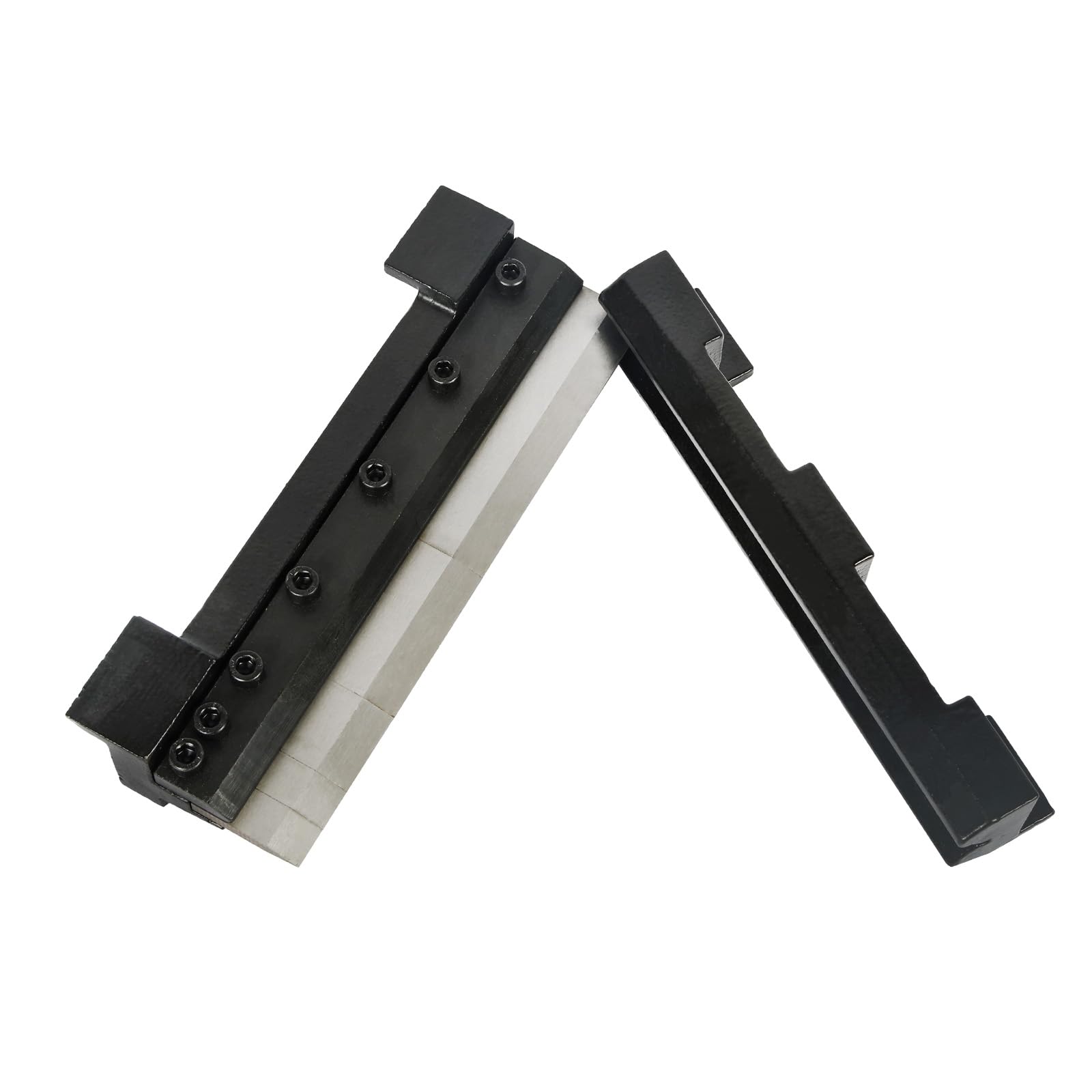
What genuinely earns it the spot is the finger set. Five removable fingers — 4 in, 2 in, 1 in, 1/2 in, and 1/2 in — let you leave gaps so a finished side clears the tool while you fold the next edge. That is what turns a straight channel into a three-dimensional pan. The listed capacity is 14 gauge / 2 mm mild steel, with 1/8 in aluminum also listed for compatible setups, so it takes real sheet rather than foil-thin flashing. Owners bend past 90 degrees with it comfortably, and a magnetic back seats the tool on the vise jaw before you tighten down.
The honest catch is stability. Some buyers find it takes a fair bit of force to work, and the magnet grip divides opinion — some vise jaws hold it firmly, others do not. The vise is required and sold separately, so factor that in if you do not already own a solid one.
Where it earns its keep
- 8 in bending width and 2.8 pounds — folds small parts at the bench with no floor space claimed
- Five removable fingers in 4 in, 2 in, 1 in, 1/2 in, and 1/2 in let you build pans with sides, not just channels
- 14 gauge / 2 mm mild steel capacity, with 1/8 in aluminum listed for compatible setups
What to plan around
- Needs a stout vise — a light or loose vise lets the attachment shift under force
- The magnetic grip is not consistent across every vise jaw
- 8 in width is for small work only; long panels need a bench-mounted brake
Reach for this if: your work is brackets, ribs, and small pans and you already own a solid bench vise.
Look elsewhere if: you need to fold full-length duct or bed panels wider than 8 in.
2. VEVOR Box and Pan Brake, 30 inches Sheet Metal Bending Brake
Thirty inches of straight fold in a single pull — the width leader of the bench-mounted group.
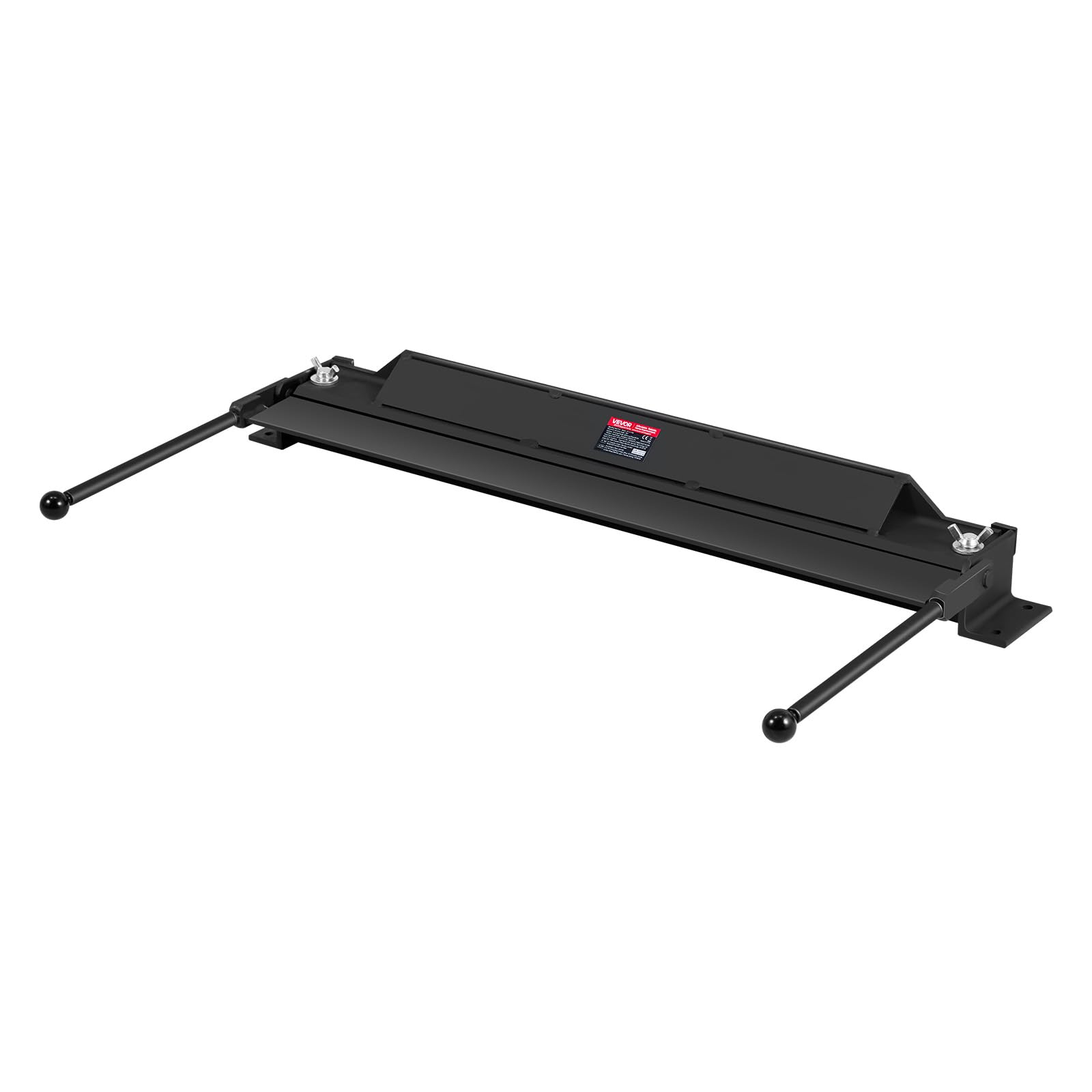
Thirty inches is a lot of brake. Set the 30 in bed of this VEVOR against the 6 in Eastwood vise attachment and the difference in one-pass fold length is plain: the VEVOR runs 30 in where the Eastwood stops at 6 in. For ductwork, shutters, or a full-length channel, that is the spec that decides whether the job is one clean pull or a pair of mismatched passes you have to blend.
The blade is listed at 0.3 in thick and folds 18-gauge (1.2 mm) mild steel, with compatibility listed for mild steel, stainless, copper, and aluminum. Angle control runs 0° to 135°, so you can dial a hemmed edge or a near-full fold rather than defaulting to 90°. Pre-drilled holes let you bolt it to the bench, and the clamping bar is built in rather than a separate piece you have to chase around the shop. At 45.9 pounds it stays put once fastened down.
The trade-off worth knowing is the clamp. It bites firmly near the edges but some buyers find it only holds about 6–8 inches in from each side, which lets the center of a long sheet lift and the fold drift. Pushing 14-gauge aluminum is where buyers report the roughest results — stay within the 18-gauge mild steel rating and the bends come out much cleaner. This is a brake that rewards reading its limits before you feed it metal.
Where the value sits: a 30 in bed with 18-gauge mild steel capacity and a full 0–135° range is a serious amount of folder for a bench-mounted tool, and the built-in clamp bar spares you a loose-clamp search. Owners largely find it works well once bolted down.
Give the clamp a look: the center-hold weakness on long sheets is the recurring gripe — either work in from the edges or keep sheets nearer the rated thickness so the leaf does not fight you.
Best suited to: anyone folding long, wide panels who can bolt a brake down to a solid bench.
Think twice if: you plan to feed it heavier aluminum than the 18-gauge mild steel rating suggests.
3. Eastwood 6 in. Vise Mount Press Metal Brake
A 4.63-pound press brake that folds crisp 90-degree ribs without owning the bench.
This Eastwood is for the shop that needs reinforcement ribs and channels, not full panels. The 6 in width clamps onto a vise 6 in or wider, and the whole attachment weighs 4.63 pounds — light enough to hang on a peg when you are done. The cross-slide design is what lets you set a sheet, press a clean bend up to 90 degrees, and move on to the next rib.
Capacity is where it separates itself from the KAKA BDS-8 on paper. Both are pressed to a 14-gauge steel ceiling, but the Eastwood adds a listed 18-gauge stainless limit, so you know exactly where stainless tops out rather than guessing. The iron build and crisp 90-degree stop make it a favorite for producing matching ribs in a batch.
The obvious limit is the angle range. This brake stops at 90 degrees, so a hem or a 135-degree fold is not on the menu — for that you step up to a bench-mounted box and pan model like the VEVOR or KASTFORCE. Buyers who want only sharp right angles in small steel will find it does that one job very well. Buyers chasing acute or obtuse folds should look past it.
The one-job specialist: 6 in wide, 14 gauge on steel, 18 gauge on stainless, capped at 90 degrees — it does ribs and channels cleanly and asks for nothing but a vise.
What it will not do: anything past a right angle, or a panel wider than 6 in. Match it to straight 90-degree work and it fits; stretch it and you will want a bench brake.
Pick this when: your folding is all 90-degree ribs and channels in small steel and stainless.
Pass if: you need hemmed or open-angle folds, which this tool does not reach.
4. KASTFORCE KF5002 28 Inch Sheet Metal Brake

A steel-framed mid-size brake that pairs a wide 28-inch bed with full angle control.
The spec to lead with on the KF5002 is the 28 in / 730 mm bed combined with a 0–135° range. Set it against the Grizzly T10726 at 12 in and the width gap is the story: you get well over twice the fold length for ductwork and auto body panels. The 1.2 mm (18 gauge) mild steel and 1.5 mm (16 gauge) aluminum capacity cover the everyday sheet most home fabricators run.
It also scales up over a vise attachment. Where the KAKA BDS-8 tops out at 8 in, this brake’s 36.4 x 8.6 x 6.8 in frame and rugged steel construction carry a wide sheet without the panel overhanging the bed. That matters when you fold a shutter or a duct section and want both edges to reach the tool.
What holds it back is the leaf assist. Some owners mention the lift-assist springs feel weak and the center of the brake wants to curve up under load — a sign the clamp is not fully gripping the middle on long sheets. Used at its rated 18-gauge mild steel on steady, even pressure, most of that fades. Go heavier or rush the pull and you will feel the center lift.
Why it fits a home shop
- 28 in / 730 mm bed folds long panels the small vise brakes cannot reach
- 0–135° range with 18 gauge mild steel and 16 gauge aluminum capacity
- Rugged steel frame and 44-pound weight hold steady on the bench
Where it needs care
- Lift-assist springs can feel weak, so the center curls if you rush a long fold
- Best results stay within the 18-gauge mild steel rating rather than pushing heavier sheet
Good match for: a home fabricator folding ductwork and auto panels who wants angle freedom on a 28 in bed.
Might not suit: anyone who plans to push past 18 gauge mild steel and expects the center to stay flat.
5. VEVOR Box and Pan Brake 24 in with 0–135° Bending Angle
Ten modular segments turn one 24-inch bed into a box-and-pan folding station.
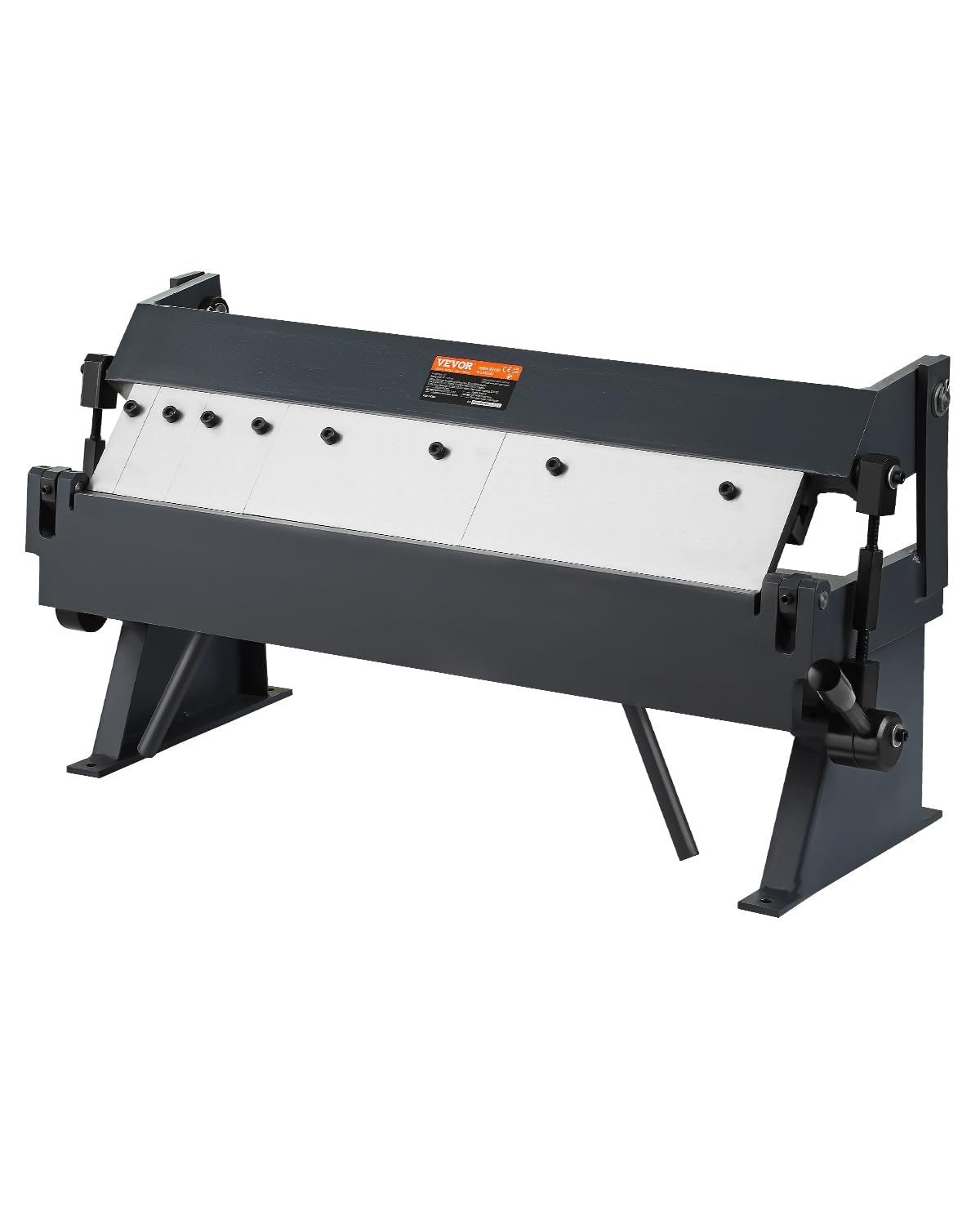
Ten modular components — 2 x 1-inch, 4 x 2-inch, 2 x 3-inch, 2 x 4-inch — are the reason to consider this 24-inch VEVOR over a fixed-finger brake. That spread of segment widths lets you assemble the finger layout your job needs, whether you are folding a floor reinforcement channel, a truck bed section, or a mudguard with multiple sides. It is the most flexible finger arrangement in this group.
The bed itself runs 24 in / 610 mm with a modular structure of 0.39-inch thick metal at 21 HRC hardness — a hardness measure of how well the steel resists wear — which is built to hold up to repeated folding. It handles 20-gauge low carbon steel and 16-gauge aluminum, so you can fold typical ductwork and brackets without the bed flexing. The Q235 steel frame carries a 103.2-pound mass that keeps it planted once bolted down, so a long pull does not walk the tool across the bench. Angle control spans the full 0° to 135°, letting you make everything from a slight lip to a full hem.
That 103.2 pounds is worth weighing seriously. Compare it to the 2.8-pound KAKA vise attachment and you see the scale of the decision: this is bench-mounted equipment, not a tool you tuck in a drawer. It mounts with screws to a workbench and stays there. The adjustability is where owners get frustrated: setting the leaf and fingers takes patience, and a poor setup shows up fast in the fold. Heavy sheet and complex box work are where it shines; quick one-off jobs are not its strength.
Made for boxes and pans: 20-gauge carbon steel and 16-gauge aluminum capacity, a 24 in bed, and ten modular fingers give you the layouts a straight brake cannot build.
Respect the setup: at 103.2 pounds it wants a fixed bench, and the adjustability takes care — get the fingers and leaf dialed and the folds come clean.
Fits the fabricator: who folds multi-sided pans and channels and wants the finger flexibility to match each job.
Not for: someone who wants a grab-and-go tool or a fold that sets up without fussing over the leaf.
6. Grizzly Industrial T10726 12″ Mini Pan and Box Brake
The 23-pound mini box and pan brake that proves a small bench still folds pans.
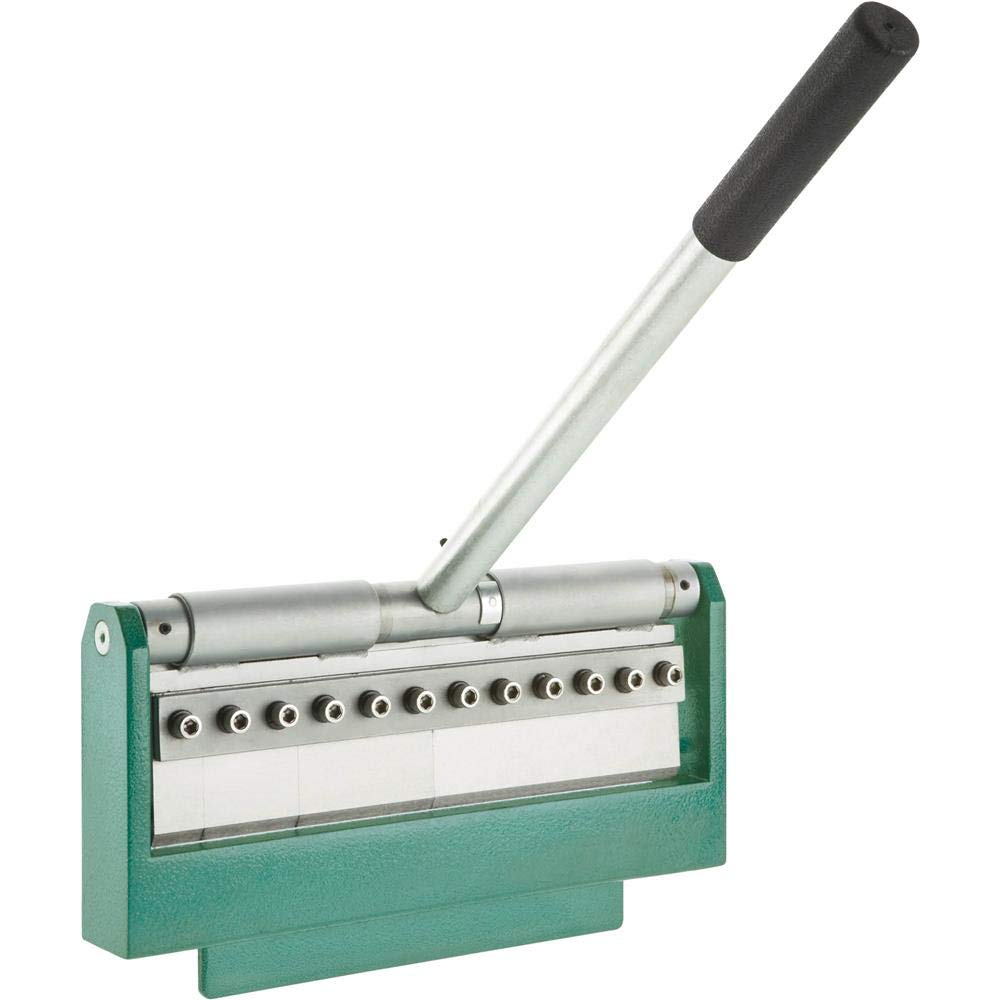
A 12 in bed and a 23.1-pound body — the Grizzly T10726 is the answer for a workbench that already has no spare room. It folds up to 20 gauge mild steel, so light-gauge duct, small pans, and model-shop brackets are its territory. Bending width and thickness both sit at the modest end, which is exactly the point: it disappears into a shelf when the job is done.
What separates it from the vise brakes is the pan-and-box format. Instead of a clamped attachment, you get the full bed-and-leaf arrangement of a larger brake, scaled down to a 12 in fold. That means a small shop gets the real folding action on a compact footprint rather than a vise add-on. For anyone stepping up from folding over a bench edge by hand, it is a clean first proper brake.
The 20-gauge ceiling is the number to respect. It is lighter than the KASTFORCE KF5002’s 18-gauge rating, so a bracket cut from heavier stock will want a different tool. Fold within the rating and the mini brake does its job without complaint.
The small-bench play: 12 in of folding width and 20-gauge mild steel in a 23.1-pound package — real box-and-pan folding for a bench that has no room for the big machines.
Know the ceiling: at 20-gauge capacity it is for light sheet only; heavier brackets need a brake rated higher.
Ideal for: a small home shop folding light-gauge pans and brackets with limited bench room.
Choose a step up if: your sheet runs heavier than 20 gauge or wider than 12 in.
7. KASTFORCE KF5006 24 Inch Box and Pan Brake
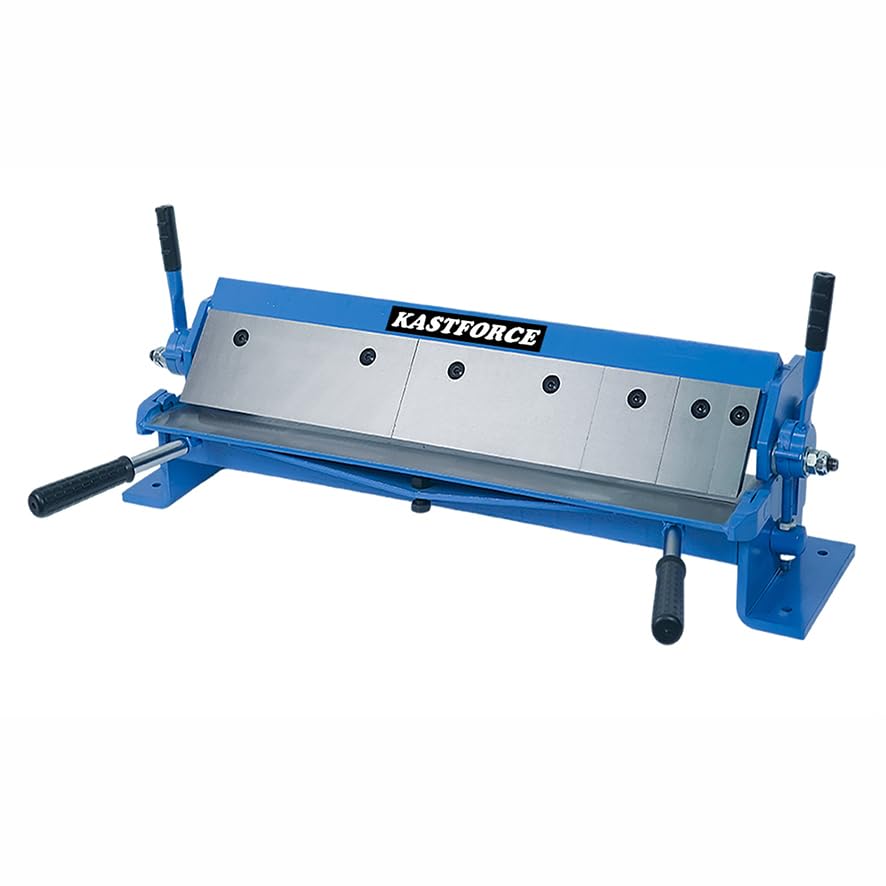
A 24-inch box and pan machine built around a five-finger layout and a defined box depth.
The clearest difference between this KF5006 and the KF5002 above is what the fingers let you build. Where the KF5002 is a straight-line folder, the KF5006 carries 5 fingers and a listed 1.6 in (40 mm) maximum box depth — that box-depth figure is the depth of the return you can fold before the sides clash with the tool. If your pans or trays need sides, that number is what tells you they will fit. So if you need to make boxes or trays with sides, the KF5006 is the one to pick; if you only need straight folds, the KF5002 is simpler.
It folds 24 in / 610 mm wide at a 20-gauge (1.0 mm) mild steel capacity, with the full 0–135° angle range. At 68.1 pounds it sits between the big 103-pound VEVOR and the little 23-pound Grizzly on the weight scale — heavy enough to stay settled, light enough to move with effort rather than equipment. Buyers tend to notice the steel construction first.
The bendability is where opinions split. Some owners bend sheet cleanly, others run into limits, largely when pushing the capacity or setting the fingers poorly. The 20-gauge rating keeps it a light-sheet machine, so a heavier bracket will fight it. Set it up carefully and it folds a defined box depth well; treat it as a general-purpose heavy folder and it will disappoint.
What it brings
- 5 fingers with a 1.6 in (40 mm) max box depth let you fold pans with return sides
- 24 in / 610 mm bed with a full 0–135° range
- 68.1 pounds plants solidly while staying movable
Where it asks patience
- 20-gauge mild steel capacity means heavier sheet is out of scope
- Bend quality depends on careful finger and leaf setup
Reach for it: when your projects are light-gauge pans and trays with folded return sides up to 1.6 in deep.
Skip the fuss: if you want a straight folder for heavier sheet — the KF5002 or the 30 in VEVOR suit that better.
8. Shop Fox M1011 24-Inch Box and Pan Brake

The heavyweight bench brake that folds a 24-inch sheet at a 20-gauge rating with room to spare.
Start with the finger layout, because it is why this brake earns shop-floor trust. The M1011 ships with box fingers arranged as 1″ (x2), 2″ (x4), 3″ (x2), and 4″ (x2) — a spread wide enough to leave the right gaps for folding a box with sides. It folds 24 in of 20-gauge mild steel across a full 0–135° range, and the 1-3/4 in maximum box depth is deeper than the 1.6 in the KF5006 offers, so a slightly taller return clears the tool.
It is built to stay. The frame spans a 10-1/2 in by 26-1/4 in footprint and the listed shipping weight runs 91 pounds, which is the mass a serious home shop wants in a bench brake — enough that a long pull does not walk the tool across the bench. Owners describe it as well-made and solidly constructed, with no fiddling needed to get the first fold. The larger 24 in bed also steps up from the 12 in Grizzly mini brake for anyone ready to fold longer panels. If you need to fold panels longer than 24 inches, you should skip this one and look at the 30 in VEVOR instead.
The honest gap is a bend-angle gauge, which some owners note is absent — you set angles by eye against the leaf, not against a dial. The durability discussion also centers on the cast-iron T-slot, which some report breaking; treat the slot with respect and do not over-torque it. For most buyers those are management points, not reasons to look away.
Why shops trust it: a 24 in, 20-gauge, 0–135° folder with a nine-finger layout and a 1-3/4 in box depth — the build is solid and the fingers cover real box work.
What to watch: there is no bend-angle gauge, so you set the angle yourself, and the cast-iron T-slot deserves gentle handling.
The right desk for: a home shop that wants a stable 24 in box and pan brake and does not mind setting angles by eye.
Pass it over if: you fold heavier than 20 gauge or need precise dialed-in angles every pass.
9. Eastwood 12 Inch Precision Box and Pan Sheet Metal Brake
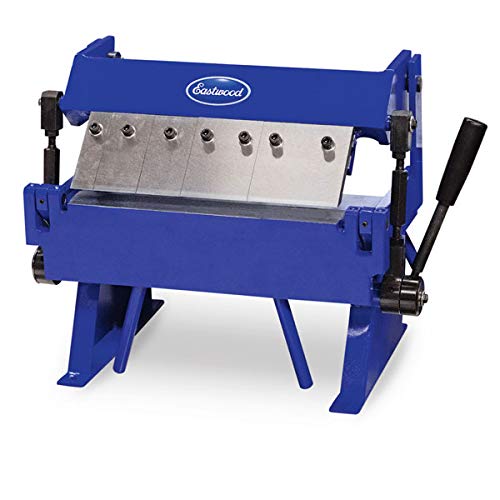
A 12-inch precision brake that treats a small shop to full-angle, five-finger folding.
For the buyer who wants accuracy over width, the Eastwood 12 Inch brings a 12 in bed, five adjustable fingers, and a full 0–135° range into a package sized at 16.5″ wide x 10.75″ deep x 14.25″. That compact frame is built for a home workshop or small shop bench, and bench mounts at each corner let you fix it down so a fold does not shift the tool.
What sets it above the Grizzly 12 in mini brake is the range of material and finger flexibility. It folds up to 20-gauge mild steel, 16-gauge aluminum, and 24-gauge stainless steel, and the five adjustable fingers let you arrange gaps for box and pan work. The thinner stainless capacity is note — 24 gauge is fine for light trim but not structural stainless. At 66 pounds it holds its place while you work.
Where this one earns the precision label is the finger adjustment and the defineable angle stop. Owners praise the build, and the bench-corner mounts keep the tool square once bolted. The limit is the 12 in width: it will not fold a wide panel, so this is a precision small-parts machine, not a duct folder. Match it to detailed trim and small pans and it delivers.
Built for detail: five adjustable fingers, a 0–135° range, and 20-gauge mild steel / 16-gauge aluminum / 24-gauge stainless capacity make small precision pans repeatable.
The width ceiling: 12 in is the hard limit — long duct panels need a 24 in or 30 in bench brake instead.
The pick for: detailed small-shop work where finger flexibility and angle range matter more than fold width.
Not your tool if: you need to fold full-length panels — this brake stops at 12 in wide.
Know the Specs
Bending Width
Bending width is the longest straight fold the brake can make, measured in inches or millimeters, and it sets the maximum panel width you can work. A 6 in vise attachment and a 30 in bench brake are separated by exactly what fits on the bed: the 30 in VEVOR folds 30 in in a single pass where the 6 in Eastwood stops at 6 in. Pick a width at least as long as the widest panel you plan to fold, or you will be making overlapping passes and blending the seam.
Gauge and Material Capacity
Gauge is sheet thickness, and the number runs backward — 14 gauge is thicker than 18 gauge, which is thicker than 20 gauge. That is why a brake rated for 14 gauge mild steel handles lighter stock with ease while a 20-gauge brake tops out on thinner sheet. Material matters too: aluminum and stainless behave differently, and a brake listed for 18-gauge mild steel often handles less on stainless. Stay at or under the rated thickness and metal type for a clean, sharp fold rather than a rounded one.
Angle Range
Angle range is how far the leaf swings, and it decides the folds you can make. A 0–135° brake covers everything from a near-flat hem to a sharp right-angle to an open fold, which is why most bench-mounted box and pan brakes list that full range. A vise attachment capped at 90 degrees does one sharp angle well and cannot hem or open-fold. Match the range to your work — sharp ribs only, or hems and open angles too.
Fingers and Clamping
Box fingers are the removable plates that press the sheet down, and segmented sets let you leave gaps so a folded side clears the tool while you bend the next edge. The clamping bar holds the sheet across the full bed width; a bar that grips only near the edges lets the center lift and the fold curve. Together, a well-fingered brake with a firm clamp folds three-dimensional pans, while a weak clamp spoils even a straight channel.
Common Questions
What does the gauge rating on a metal bending brake actually mean?
Can I fold stainless steel in a brake rated for mild steel?
What are box fingers and why do they matter?
Will a vise-mounted brake work for long panels?
Why does the middle of a long fold curve up?
Do I need to bolt a box and pan brake to the bench?
What is the difference between a straight brake and a box and pan brake?
How much space does a 24-inch or 30-inch brake take up?
Is a vise-mounted brake strong enough for brackets and ribs?
Can a brake fold a 135-degree angle or a hem?
The Bottom Line
The metal bending brake to beat for most home shops is the KAKA INDUSTRIAL BDS-8, because its 8 in width, 14-gauge capacity, and five removable fingers fold real brackets and pans right in the vise you already own — rated 4.5+ stars across 300+ ratings. If your folding runs long and wide, the VEVOR 30 in Box and Pan Brake gives you the widest single-pass fold of the bunch at 30 in. And for a 24-inch box-and-pan machine with a defined 1.6 in box depth, the KASTFORCE KF5006 is a steady choice for light-gauge pan work.
How we choose
We do not accept paid placement. Every pick is matched to a real buyer and a real use-case; we do not hands-on test units.
Sources
Specifications: manufacturer listings and product documentation. Review insights: verified customer reviews, as of November 2026. Pricing: not shown on this page (it changes often); check the current price via the retailer link.
As an Amazon Associate, Tactical Gear Guy earns from qualifying purchases. This does not affect which products we feature.