Specs are compiled from manufacturer listings and verified buyer reviews and can change over time — please confirm the key details on the product page before buying.
You swing the pack off one shoulder to swap a lens, the whole rig tips, the dividers shift, and your second body slides into a pile with your cards and filters. Nine mirrorless camera backpacks are ranked here on the three things that decide whether you enjoy a shoot. First, how fast you can reach your body and glass without fully unloading. Second, how well the interior divider layout holds its shape after weeks of packing. Third, whether the bag stays close enough to your back on a long walk that your neck isn’t wrecked by lunchtime.
This guide is built by comparing the manufacturers’ published specifications and the patterns across verified customer reviews, so you get each pick’s real strengths and trade-offs instead of marketing spin.
A mirrorless body punishes a badly shaped pack faster than a DSLR did. The glass now sits close to the sensor, and every lens is compact enough to rattle around if the dividers are too loose. That is why the picks below spread across very different designs. The pack that suits a two-body wedding shooter is rarely the one that suits a solo hiker, and that range is the whole point of this list of mirrorless camera backpack options worth packing.
Top Picks


How To Choose The Best Mirrorless Camera Backpack
Start with the body count, not the liter count. A mirrorless rig with two bodies, three primes and a charger needs a different shell than a single body and one zoom. The liter figure on the listing tells you very little about whether your specific glass will fit. Measure your longest lens with the hood on, then look for a pack that states an interior depth you can actually clear.
Dividers and the interior wall grip decide your shooting speed
Padded dividers are what stop a lens rolling into a body during a walk, and the walls they stick to matter as much as the dividers themselves. A quilted hook-and-loop wall (the fuzzy surface that lets a divider stick anywhere) holds a layout firm after dozens of repacks. Count the dividers — a pack that ships with seven or nine gives you more layout options than one with four, and you can pull them out to convert the bay for a drone or a second body. If a listing only says “customizable interior” without a number, assume a basic layout.
Top, side or rear access — pick your direction before you pack
Side access lets you pull a body without swinging the pack off, which is the difference between catching a shot and missing it. Rear-panel access opens the whole back so you can lay the pack face down in mud and still work out of it without getting the shoulder straps wet. Top access suits a quick lens change while the pack sits on a table. Decide which of those three matches how you actually shoot, because no single pack does all of them well.
Laptop sleeve sizing and weather protection
A dedicated, padded laptop sleeve that sits away from the camera bay keeps a 15.6-inch or 16-inch machine from taking the impact of a lens. Check the stated maximum device size rather than guessing from the exterior dimensions. For weather, a water-resistant shell and a rain cover handle a drizzle and a downpour differently. The cover is the piece that saves an uncovered camera bay in sustained rain, so a pack that includes one has a real edge on a wet trip.
Side-by-Side Comparison
| Model | Best For | Capacity | Weight | Laptop Max | Amazon |
|---|---|---|---|---|---|
| NOMATIC McKinnon 35L V2★ Best Overall | Multi-day trips with two bodies | 35 L (expands to 42L) | 5.8 pounds | 16 inches | Amazon |
| MOSISO Camera BackpackBest Value | Big-laptop travel on a budget | — | 3.2 pounds | 17.3 inches | Amazon |
| K&F CONCEPT 22L ExpandableMost Versatile | Adaptable everyday hauling | 22 L (+4L front pouch) | — | 15.6 inches | Amazon |
| Besnfoto Rolltop | Wet-weather hiking | +5L–7L rolltop expansion | 1.3 kg | 15.6 inches | Amazon |
| ULANZI 22L BP09 | Long-lens urban carry | 22 L | 3.8 pounds | 15.6 inches | Amazon |
| PGYTECH OneMo Lite 22L | Drone and camera together | 22 L | 1.6 kg | 15 inches | Amazon |
| Think Tank Backlight Sprint | Minimalist single-body hikes | 2 L front pocket | 1 kg | — | Amazon |
| VANGUARD Alta Sky 42 | Long telephoto shooters | 16.6 L | 4.1 pounds | 12.9-inch tablet | Amazon |
| Lowepro Fastpack BP250AW III | Travel with two bodies | 25 L | — | 15 inches | Amazon |
Detailed Reviews
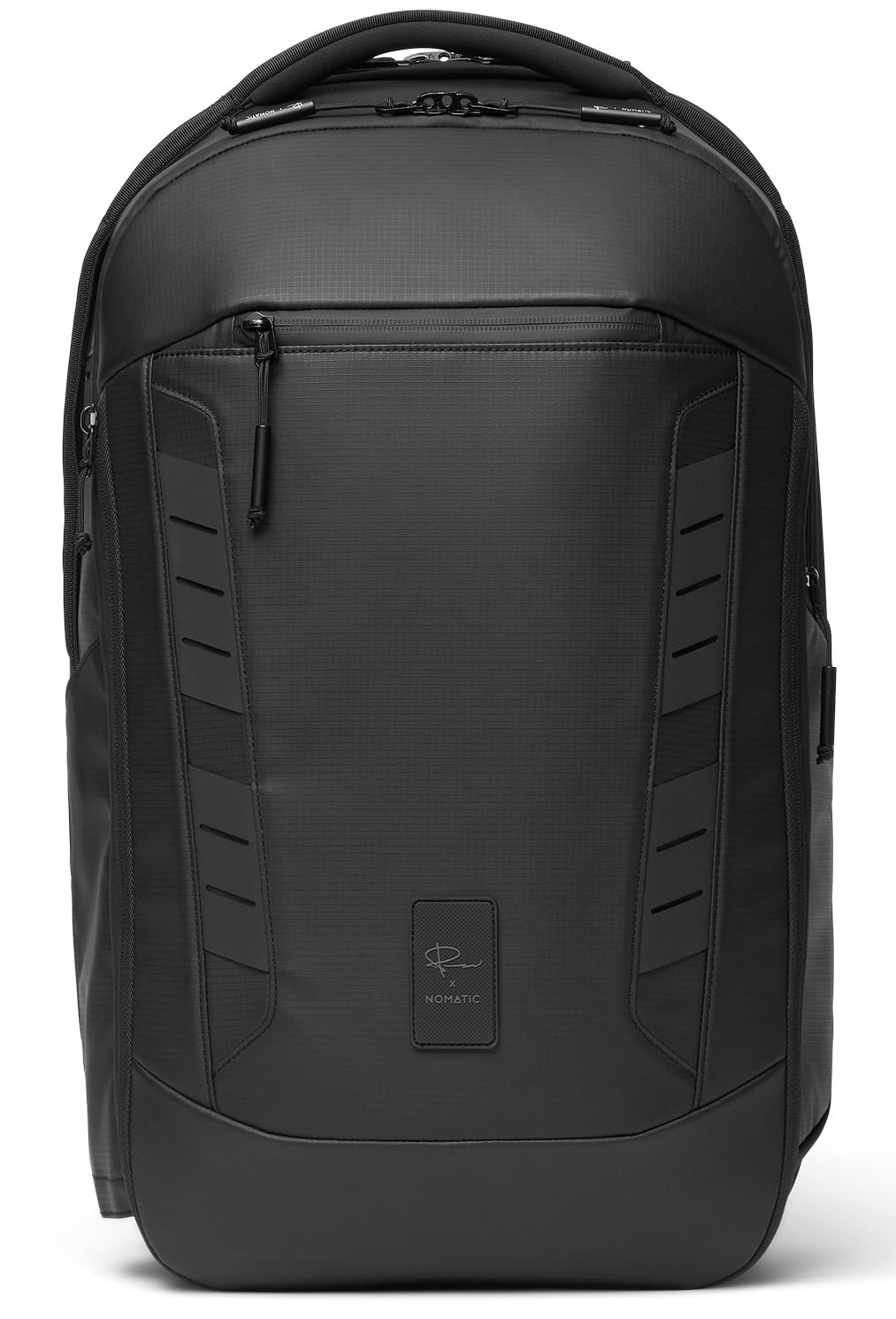
1. NOMATIC McKinnon Camera Backpack 35L V2
Our pick — 4.5+★ from 450+ verified ratings; the strongest balance of quality and price.
Nine dividers and a 42-liter expanded bay — this is the two-body travel pack that refuses to run out of room.
If you fly to a shoot with two caged bodies, three L-series lenses and four days of clothes, the McKinnon’s 35L body is the one that swallows it. The clothing compartment was reconfigured and grew an inch in each direction, which is what turns a four-day trip from a game of tetris into a simple pack-and-go. Nine dividers with a Velux-padded interior and quilted hook-and-loop walls let you carve a firm, repeatable layout — pull the padding out and you have a clean travel bay underneath.
The shell is a higher-tenacity ripstop with a water-resistant coating, and the update dropped the overall weight by 0.25 lbs over the previous version. Two laptop slots handle most 14-inch and 16-inch machines, and there is an RFID-safe pocket plus a hidden tripod holder for the days you are dragging a stick along. What wins people over is the build — the straps and frame read as sturdy and well-made — and the capacity to fit two cameras in cages with three L-series lenses behind them. It sits at 4.5+ stars across 450+ owners, and it earned that score on construction rather than on price.
Here is the honest catch: at 5.8 pounds empty, this is 2.6 pounds heavier than the MOSISO below. That 5.8 pounds versus the Think Tank’s 2.2 pounds is a gap no amount of padding hides on a long airport walk. Value splits owners down the middle. Plenty call it worth the money and say they would buy it again, while others find it overpriced for what is essentially a nylon shell. Compared with the K&F CONCEPT’s 22L, the 35L body holds 13 more liters, which is the difference between a day bag and a trip bag.
Where it pulls ahead
- 35L that expands to 42L means one pack covers a day shoot and a four-day trip.
- Nine dividers give more layout options than the seven in the Besnfoto rolltop.
- Two laptop slots for 14-inch and 16-inch machines, plus an RFID-safe pocket.
- Reinforced straps and frame hold their shape when the bay is full.
Where it costs you
- 5.8 pounds empty is the heaviest shell on this list by a wide margin.
- The premium build is a hard sell for anyone who packs light and packs rarely.
Reach for this if: you shoot two bodies and want one bag that covers the flight, the hotel and the location without repacking.
Look elsewhere if: you walk long distances with the bag on and want the scale to stay near 3 pounds.
2. MOSISO Camera Backpack, DSLR/SLR/Mirrorless
A 17.3-inch laptop bay and a hard-shell flap at a price that undercuts every other pack here.
The number that sets this apart is the back storage bag: 17.3 x 10.9 x 1.2 inches, sized for a 17.3-inch machine. That is a full 1.7 inches more laptop than the K&F CONCEPT takes, and it is the widest laptop sleeve on this list. The front flap is PU hardshell, which is a rigid plastic layer across the face, so a knock against a car door lands on the shell rather than on your camera.
The lower section opens from the front and the side, and it runs removable modular inserts you can rearrange for different bodies, flashes and lenses. That lower bay measures 11.5 x 8.8 x 5.9 inches. Up top, a 10.2 x 6.3 x 5.2 inch pouch with the same PU hardshell keeps a flash, cards and cables separate from the camera bay and stays dry in rain. Shoulder straps adjust from 19.4 to 36.5 inches, and a breathable mesh back panel pushes heat away instead of collecting it. Trolley belt, D-rings and a zippered side pocket for a monopod or tripod round it out.
At 3.2 pounds it is one of the lightest packs here, and the design is the thing that carries it. Owners describe it as a well-designed bag that holds wallets, passports, chargers and keys without crowding the camera bay. The zippers are the recurring wobble, with some reporting they stay intact and others noting they have broken. If you travel with a large laptop and want protection over premium materials, this is the sensible pick. If you change lenses constantly on a shoot, the modular inserts are slower to rearrange than a quilted-wall bay.
The real trade-off: you get a hard-shell front and a huge laptop sleeve, but the zipper hardware is the piece to handle gently — treat the pulls with care and it holds.
The math says yes: a 17.3-inch laptop and a hard-faced camera bay for a budget-tier spend is the best laptop-to-protection ratio on this list.
The one caution: if the camera bay will be open and reorganized several times a day, a quilted-wall design packs faster.
3. K&F CONCEPT Camera Backpack 22L Expandable
One push-pull movement shifts the bay from an even split to a camera-heavy 20:80 layout.
Most packs lock you into a fixed camera-to-gear ratio. This one converts from a 50:50 split to 20:80 via a push-pull design, which means the same shell can carry a body, two lenses and a jacket one day and a camera-heavy load the next. The front pouch expands to roughly 4 liters as an independent compartment, so filters, spare batteries or a small drone sit in their own space rather than pressing against your glass.
Hidden support fibers in the structure resist external compression, which is the layer that keeps equipment stable when the pack is set down or shoved into an overhead bin. Top and side openings both work without taking the pack off, so you can grab a body from the side and a lens from the top in the same motion. The laptop compartment is independent at 14.2 x 10.2 x 0.8 inches, which fully separates a 15.6-inch machine from the camera bay — 1.7 inches less laptop than the MOSISO handles, so plan accordingly.
Build quality is what carries this pack for owners, and the storage capacity that fits a full spread of cameras, lenses and accessories keeps coming up in the same breath. The honest limit is physical: the shell is compact, and the 22L body with a 4L pouch reads small to anyone used to a 35L travel pack. The interior is fully configurable, though more dividers would make the layout more flexible. It is a strong fit for a mirrorless shooter who packs tight and wants the bag to adapt week to week.
What it gets right
- Push-pull chamber shifts from 50:50 to 20:80 without repacking.
- Independent 4L front pouch isolates filters, batteries or a small drone.
- Dual top and side access means fewer full unloads.
- Separate 15.6-inch laptop sleeve protects the computer from the bay.
What to weigh up
- Compact 22L shell feels small next to a full travel pack.
- Some owners would trade a little capacity for more dividers.
Suits the gear-shifter: you change your loadout often and want the bay to follow you instead of fighting you.
Not the pack for: a trip where the camera bay has to double as a suitcase.
4. Besnfoto Camera Backpack Rolltop
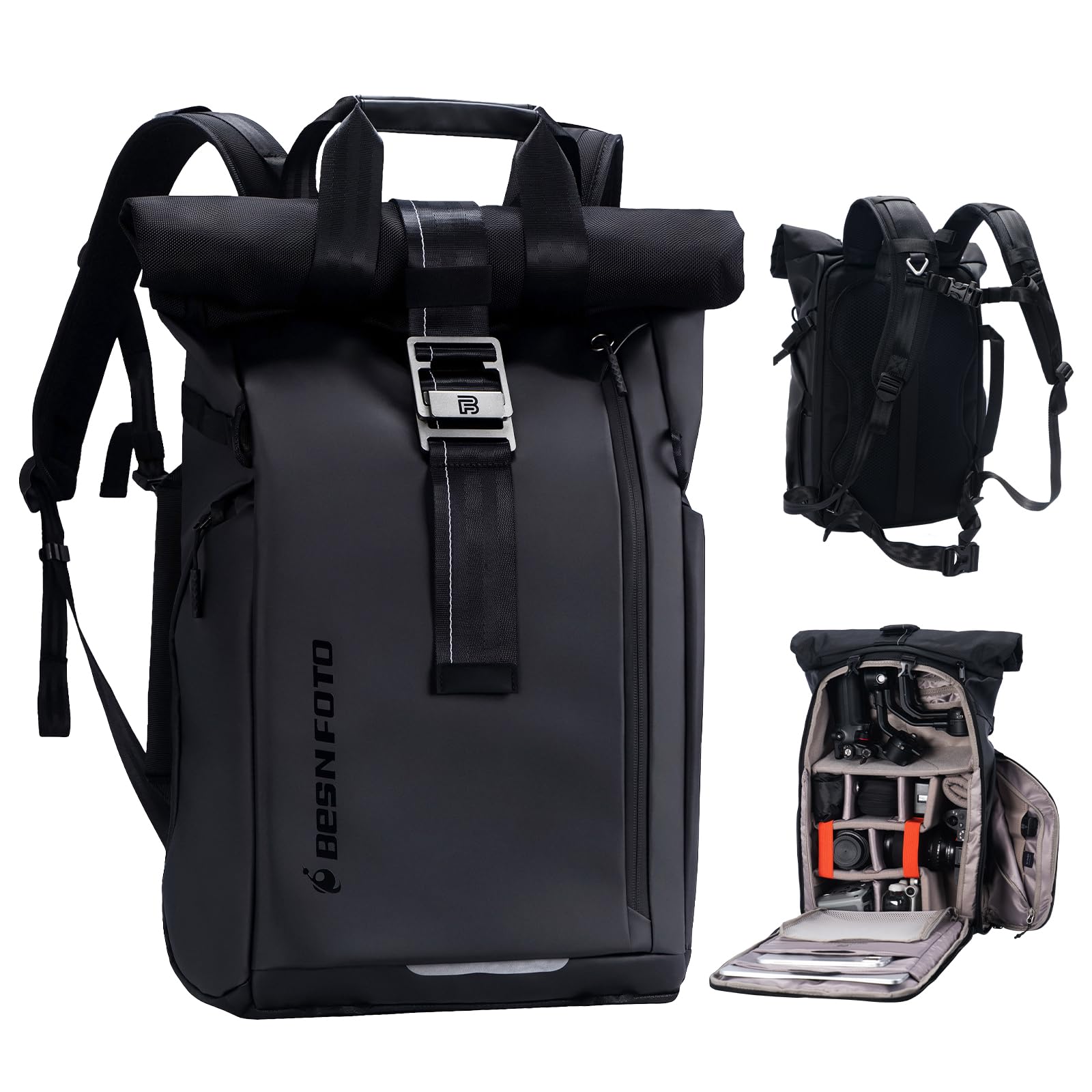
Tarpaulin, water-resistant YKK zips and a bonus rain cover — built for rain that soaks everything else.
High-density waterproof tarpaulin with YKK water-resistant zippers is the shell that matters here, and the included rain cover is the second line for a downpour. That combination is the reason this pack handles weather the lighter, softer shells cannot — the tarpaulin face does not soak through the way fabric does. Seven padded dividers inside hold two DSLR or mirrorless bodies, four to five lenses, a DJI drone and accessories, and the rolltop adds another 5L to 7L on top for clothes, snacks or a gimbal.
A side access door lets you grab a camera in seconds, while the fully opening back panel gives a clear view of everything and keeps the bay hidden from anyone behind you on a crowded train. The laptop sleeve is thick and padded up to a 16-inch MacBook Pro or gaming laptop. The side pocket and reinforced straps carry a full-size tripod or a bottle, two front straps take a longboard, chair or yoga mat, and there is a waistband strap plus breathable air-mesh shoulder straps to spread the load.
Where this rolltop wins is outright value — 124 mentions of quality land positive, and the storage capacity that fits a lot of gear once the top is unrolled is the second thing buyers notice. The catch is the fit: 52 size-related comments split mixed, with some finding it perfect for their main gear and others finding it too small and not suitable for overhead compartments. Durability also splits — some report it holds up well, others mention fraying. Check the 16-inch laptop cue before you commit.
What you are really buying: weather protection first, organization second — the tarpaulin shell and rain cover are the story, and a 5L to 7L rolltop extension is the bonus.
Where it stands apart: with seven dividers it carries fewer layout options than the NOMATIC’s nine, but its tarpaulin and rain cover give it a weather edge the ripstop NOMATIC does not match from the start.
Go wet or go elsewhere: hiking, coastal shooting or any trip where the forecast is grim is exactly what this rolltop was shaped for.
Second thought if: you need it to slide into a small overhead bin — the rolltop adds bulk as it fills.
5. ULANZI 22L Camera Backpack BP09

A 22L shell that takes two long-lens bodies and four more lenses — with the tripod slung underneath.
Two camera bodies with long lenses mounted and four extra long lenses still inside a 22L pack is the load this bay was drawn for. Seven compartments can be recombined by pulling the thick dividers, and a dedicated inner bag plus multiple mesh pockets handle the odds and ends. The 15.6-inch laptop or tablet sleeve keeps a machine off the camera bay, and a zippered front pocket takes accessories.
The bottom strap is the smart detail: a tripod or monopod mounts underneath, and because the weight hangs low and central rather than off one side, the pack does not pull your shoulders unevenly. That bottom carry is also why the pack works on a portrait walk — the stick stays out of the way until you need it. The back is ventilated and the shoulder straps adjust easily for a loaded carry. The surface is water-resistant and rainproof, so a passing shower rolls off instead of soaking in.
Owners point to quality more than anything else, and capacity that fits a Sony full-frame body with four to five primes is the second thing they notice. The catch is size — some find it perfect and compact at 22L, others find it slightly too large for what they expected. Zippers are the other wobble, with some finding them smooth and others reporting they catch against the straps. At 3.8 pounds it is lighter than the NOMATIC’s 5.8 pounds, which makes it easier to carry fully loaded on a city walk.
Why photographers reach for it: the bottom tripod strap plus a 22L bay that takes two long-lens bodies gives you a hands-free walk with the stick slung where it balances.
Where others win: the K&F CONCEPT expands its bay from 50:50 to 20:80 and adds a 4L front pouch, which gives more weekday-to-weekend flexibility than this one fixed 22L layout.
Built for the telephoto body: a portrait or event shooter who always carries two mounted bodies and a tripod will find the layout natural.
Try before you commit if: you want a slim, strictly one-body bag — this one runs on the large side in the 22L class.
6. PGYTECH OneMo Lite Camera Backpack 22L

A drone-first 22L bay with a battery pocket that tells you how much charge is left.
If your shoot involves a mirrorless body and a DJI Mini 4 Pro, Mini 3 Pro, AVATA, Air 2S, FPV or Mavic in the same trip, this is the pack that plans for both. The Module Pro divider system lets you carve out a drone bay and a camera bay together, and the large front opening makes packing the whole thing faster than reaching through the top. Front, rear and side pockets take the rest — clothes, tripod, laptop, travel goods.
The battery pocket carries a magnetic battery power indicator, which is the small detail that saves a pre-flight check. A hidden pocket keeps valuables out of reach, YKK zippers keep the compartments secure, and the loop and accessory straps on the bottom mean a tripod rides along. The AirFiber back panel is built for ventilation, and the high-performance PU coating makes the shell wear- and dust-resistant.
That PU shell is genuinely protective against a splash and a shower, but it is not the pack to leave exposed to a wet environment for extended periods or to take into extreme weather. That is the honest limit, and it matches the covered-but-not-submersible reality of most camera bags. Owners are clear on quality and durability, and the organization with its dividers and quick-access pocket is what most people praise. The 22L shell is compact — 9.25 x 13 x 18.11 inches — so it fits into a laptop-and-personal-item setup well. Some find it does not look as large as expected.
What makes it the drone pick
- Module Pro dividers plan a drone and a camera bay together.
- Battery pocket with a magnetic power indicator for pre-flight checks.
- Large front opening for faster packing than a top-load design.
- Two-way entry, YKK zippers and a hidden valuables pocket.
The candid limits
- The PU shell is splash- and rain-proof but not for extended wet exposure or extreme weather.
- The compact 22L shell does not look as large as expected when first opened.
For the pilot-photographer: one body and one drone on the same shoot is the load this pack was built around.
Only if it stays dry: you shoot in sustained rain and want the shell rather than the liner to do the work.
7. Think Tank Backlight Sprint
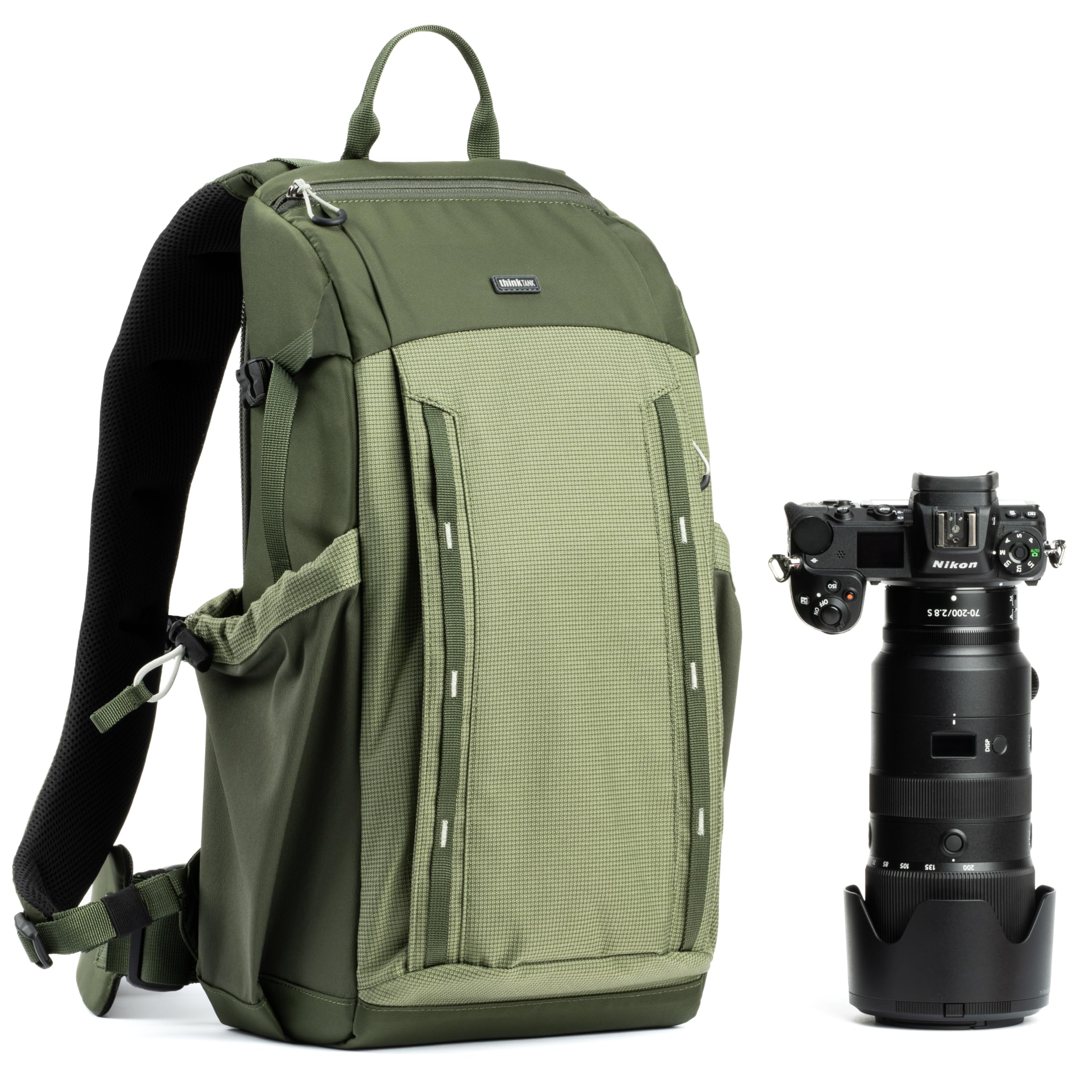
Lay it face down in mud and your harness never touches the ground — the back opens, the straps stay clean.
Back-panel access to your camera gear without taking the pack off is the whole reason this pack exists. You swing it around, open the back, and work out of the bay while the shoulder straps stay dry and clean and away from the mud, wet, mud or ice. For a minimalist photographer walking a trail in bad conditions, that one design decision does more than any extra pocket ever will.
At 1 kg, which is about 2.2 pounds, this is the lightest full pack on the list — noticeably lighter than the 5.8-pound NOMATIC and the 4.1-pound VANGUARD. A slim, lightweight shell for a single body and a lens or two is the point, not a compromise. The front pocket adds 2 liters for personal gear and opens vertically on the right side without taking the pack off, and a simplified tripod carry on either side uses a pocket plus upper compression straps.
Build quality is the thing people come back to praise, and a padded shoulder-strap harness keeps a full load comfortable. The trade-off is capacity, sized honestly: some find it fits a lot for its size and holds a 14-inch laptop plus a tablet, while others find it too big for their needs. That split is a clue about the right buyer — this is a pack for a single-body, few-lens hike, not for a two-body shoot. If your week involves hiking to a location with one camera and one or two lenses, this 1 kg back-panel pack carries least and hurts least.
The one spec that matters: back-panel access on a 1 kg shell means you carry less and still protect the harness on wet ground.
Where it falls short of the bigger picks: the NOMATIC’s 35L to 42L bay and nine dividers dwarf this slim daypack, so choose it for discipline rather than for hauling.
Pick it for the trail: a solo hike with one body and a sparing kit is where the back-panel design pays off.
Turn away if: you need a second body or a long lens in the bag — the slim shell does not have the room.
8. VANGUARD Alta Sky 42

A 200-600mm stays mounted on the body inside this bay — smallest shell in the Alta Sky line.
Leaving a long telephoto mounted on the body and still carrying four more lenses is the load the Alta Sky 42 was shaped for. It is the smallest pack in the Alta Sky series, with a full rear opening that can be set up for fast top access when you are in a hide or on a bank. A full-sized tripod carrying system rides outside, and a 12.9-inch tablet slides into its own sleeve.
The carry system is engineered for weight: a well-padded breathable back, easy-adjust shoulder straps that contour to your back and torso, and an adjustable sternum strap plus a waist belt that folds away when the load is light. Interior dimensions of 9.3 x 5.9 x 18.5 inches and a 16.6-liter capacity put it in a different size class from the 35L NOMATIC, but it carries a heavier class of lens. Max load is 26.5 lbs, and the pack weighs 4.1 lbs empty. A bright interior makes finding a small item quick, and the included rain cover keeps the bay dry.
Construction is what owners keep coming back to — the packet stands on its own and reads as solid, with attention to detail in the stitching and the harness. With 103 quality comments landing positive and storage capacity as the next big strength, the Alta Sky 42 reads as a well-built long-lens hauler. The catch is fit: getting a specific body-lens pairing to sit right takes some adjustment, and some find the pack large for their needs. If your kit is a long prime or zoom, that is the price of the protected mount.
Its single advantage: a mounted 200-600mm plus four more lenses and a 26.5 lb max load make this the long-glass specialist on the list.
The honest catch: the fit needs dialing in for a specific body and lens, and the shell runs large — plan one evening to set the dividers right.
The long-lens answer: wildlife and sports shooters who keep a telephoto mounted will find the rear-opening bay the easiest to work out of.
Not for the light kit: a single wide lens and a compact body will rattle around in this much space.
9. Lowepro Fastpack BP250AW III

25 liters split into a camera bay and a personal gear bay — two days of travel in one soft shell.
The Fastpack BP250AW III is a 25-liter soft, grey pack with a casual, sporty shape that does not scream camera bag. Separate compartments for equipment and personal gear are the feature that makes it a travel pick: your clothes and your two camera bodies do not share the same zone. A dedicated laptop compartment takes devices up to 15 inches, and the zippers are the part owners call faster and easier to access than the older style.
Capacity is the reason to choose this one. Owners describe it fitting two camera bodies and multiple lenses with plenty of pockets left over, or a pair of cameras plus a drone and a GoPro on a bigger trip. The adjustable shoulder strap spreads the load on a full travel day. At roughly 19.7 x 13.8 x 9.8 inches exterior, it sits between the compact 22L packs and the 35L trip bags. A damp cloth is all the care it wants.
The size is the one honest fork in the road: some find it ideal for a mirrorless kit, others find it bigger than they wanted. Durability draws the same split, with some saying it handles frequent use and others finding it flimsy. Portability is the strongest of the travel strengths — it is built to be carried through an airport, not just into a studio. If your trips involve two bodies, a drone and a week of clothes, this 25L split-bay pack fits the whole shoot. If your kit is one body and one lens, the 25L shell will feel roomier than you need.
Where it earns the trip
- 25L split into camera and personal zones keeps clothes off the gear.
- Dedicated 15-inch laptop compartment and easy-clean shell.
- Zippers owners describe as faster and easier to access.
- Fits two bodies, a drone and a GoPro on a single trip.
Where it gives ground
- Some find the shell larger than they wanted for a mirrorless kit.
- A handful question how it holds up to heavy everyday use.
Made for the long trip: two bodies, a drone and a week of clothes is exactly the load this 25L shape is sized to swallow.
skip it if: your bag needs to stay under a daypack footprint for a single body and lens.
Know the Specs
Liter capacity and interior depth
The liter figure is a rough guide to volume, not a promise about your glass. A 22L pack with a deep bay can hold more usable lens than a 35L pack with a shallow one, so check the stated interior depth against your longest lens with the hood on. An expandable shell — a 35L body that goes to 42L, or a 22L with a 4L front pouch — offers a middle path for a trip that mixes shooting and clothing.
Divider count and the interior wall
Dividers are the padded walls that keep a lens from knocking a body, and the count tells you how many layouts you have to work with. Seven dividers hold a two-body kit comfortably; nine gives you the flexibility to separate a drone or a second body. The quilted hook-and-loop wall is what makes those dividers stick where you put them, so a pack with a firm wall holds its layout after dozens of repacks instead of sliding loose.
Access direction: top, side or rear
Side access is faster — you pull a body without swinging the pack off your shoulder. Rear access is cleaner for wet or muddy ground, since the back panel opens while the harness stays off the ground. Top access suits a quick lens change with the pack set on a table. A pack that combines two of those, like a top and side opening, saves full unloads on a busy shoot.
Laptop sleeve maximum and weather cover
A dedicated laptop sleeve that is separate from the camera bay is the best protection for a machine that shares the trip. Check the stated maximum device size — a 15.6-inch sleeve will not take a 17.3-inch machine, and a small tablet sleeve is a different thing entirely. For weather, a water-resistant shell handles a drizzle, while an included rain cover is what saves the bay through sustained rain. Treat both as separate features, because they are.
Common Questions
Will a mirrorless camera body fit in a pack designed for a DSLR?
How many dividers do I need for two mirrorless bodies and three lenses?
Does a 22L pack hold a full-frame mirrorless and four lenses?
Is a rolltop or a zip-open pack better for a mirrorless kit?
Can I carry a tripod on these mirrorless camera backpacks?
What size laptop fits in a camera backpack with a camera bay?
Is a water-resistant shell enough, or should I buy one with a rain cover?
Which access style is fastest for changing a lens on the move?
Will a mirrorless camera backpack fit in an overhead bin?Not always, and the liter count is a poor guide on its own. The Besnfoto rolltop packs too large for some overhead compartments once the top is rolled and filled, which is one reason some buyers find it too big. A compact 22L shell like the PGYTECH or the K&F CONCEPT is easier to slide into a bin. Check the exterior dimensions against your airline’s carry-on limit and remember that a rolltop grows taller as you pack it.?
How much does an empty camera backpack weigh, and does it matter?
The Bottom Line
For most shooters, the winner among these mirrorless camera backpack picks is the NOMATIC McKinnon 35L V2. Its 35L body expands to 42L, its nine dividers hold a two-body layout, and its ripstop shell takes a four-day trip without a second bag. If you travel with a large laptop and want protection over premium materials, grab the MOSISO — its 17.3-inch sleeve is the widest here. And for a wet-weather hike, the Besnfoto Rolltop is the one to reach for, with its tarpaulin shell, YKK water-resistant zippers and included rain cover.
One honest nudge before you check out: the ratings here cluster tightly in the 4.4 to 4.7 range, so the deciding factor is not the score but the access direction and the bay shape. Pick the pack whose access direction and bay shape match how you actually shoot, and you will stop fighting your bag on every location.
How we choose
We do not accept paid placement. Every pick is matched to a real buyer and a real use-case; we do not hands-on test units.
Sources
Specifications: manufacturer listings and product documentation. Review insights: verified customer reviews, as of November 2026. Pricing: not shown on this page (it changes often); check the current price via the retailer link.
As an Amazon Associate, Tactical Gear Guy earns from qualifying purchases. This does not affect which products we feature.