Specs are compiled from manufacturer listings and verified buyer reviews and can change over time — please confirm the key details on the product page before buying.
Most scooters disappoint for one boring reason: the range on the box is not the range you get. A 15-mile claim shrinks fast once you add a 200-pound rider, a hill, and a cold morning. So the real question is not which scooter is fastest. It is which one still has battery left when you need it, and which one has brakes and a battery that hold up after months of commuting. This guide separates the nine strongest candidates on paper and in owner experience, so you can match a scooter to your actual daily trip rather than a marketing number.
This guide is built by comparing the manufacturers’ published specifications and the patterns across verified customer reviews, so you get each pick’s real strengths and trade-offs instead of marketing spin.
Range, motor watts, tire size, brake type, and UL certification are the five numbers that decide whether a scooter is a daily tool or an expensive toy, and every pick below is sorted on those. That is the whole framework behind this shortlist of top rated electric scooters.
Top Picks

How To Choose The Best Top Rated Electric Scooters
Start with your real trip, not the spec sheet. Measure the one-way distance you will actually ride, then assume you get roughly two-thirds of the advertised range in normal conditions. A scooter rated for 20 miles is a comfortable 13-mile commuter with buffer left over. A scooter rated for 15 miles is really a short-hop machine for campus loops and errands.
Range and battery capacity are the first filter
The range figure comes from the battery pack, usually described in volts and amp-hours (for example a 36V 9Ah pack). Bigger packs mean more miles but also more weight. If you carry the scooter up stairs or onto a train, that trade-off matters as much as the range number itself.
Motor watts tell you about hills, not just top speed
Look for two figures: rated watts and peak watts. A 350W rated motor with 460W peak handles gentle grades and flat city riding. Step up to a 700W motor and steep inclines stop being a problem. If your route has a serious hill on the way home, motor power is where you spend more.
Tires and suspension decide how beat-up you feel
Air-filled (pneumatic) tires soak up cracks and potholes. Solid tires never go flat but ride harsher. Suspension — the shock absorbers at the front or rear — works with the tires to smooth the ride. Bigger wheels, like 10-inch or 12-inch tires, roll over rough pavement with less drama than 8.5-inch ones.
Brakes and UL certification are non-negotiable
You want two independent brakes so a single failure does not leave you without stopping power. Drum brakes, disc brakes, and electronic brakes are the common types, and dual setups are the standard on good scooters. Check for UL 2272 certification on the electrical system — it is an independent safety test of the battery and electronics, not a marketing badge.
Side-by-Side Comparison
| Model | Best For | Max Range | Top Speed | Weight | Amazon |
|---|---|---|---|---|---|
| Hiboy Electric Scooter (Dual Rear Suspension)★ Best Overall | Comfortable last-mile commutes | 17 miles | 19 mph | 34.4 lb | Amazon |
| iScooter Electric Scooter for AdultsBest Value | First-time and younger riders | 15 miles | 19 mph | 27.7 lb | Amazon |
| Hiboy S2 NOVACommuter Favorite | Long daily commutes | 20 miles | 19 mph | 34.5 lb | Amazon |
| NAVEE GT3 Series | Hill climbing and mixed terrain | 31 miles | 19.9 mph | 46 lb | Amazon |
| URBANMAX C1S Seated | Seated errands and groceries | 20 miles | 18.6 mph | 50 lb | Amazon |
| Segway Ninebot E2 Pro | Trackable urban commuting | 25 miles (Eco) | 15.5 mph | 18.8 kg | Amazon |
| AOTOS E3 | Big wheels, long range | 28 miles | 20 mph | — | Amazon |
| Segway Ninebot E3 Pro | All-weather daily rider | 34 miles | 20 mph | 40.1 lb | Amazon |
Detailed Reviews
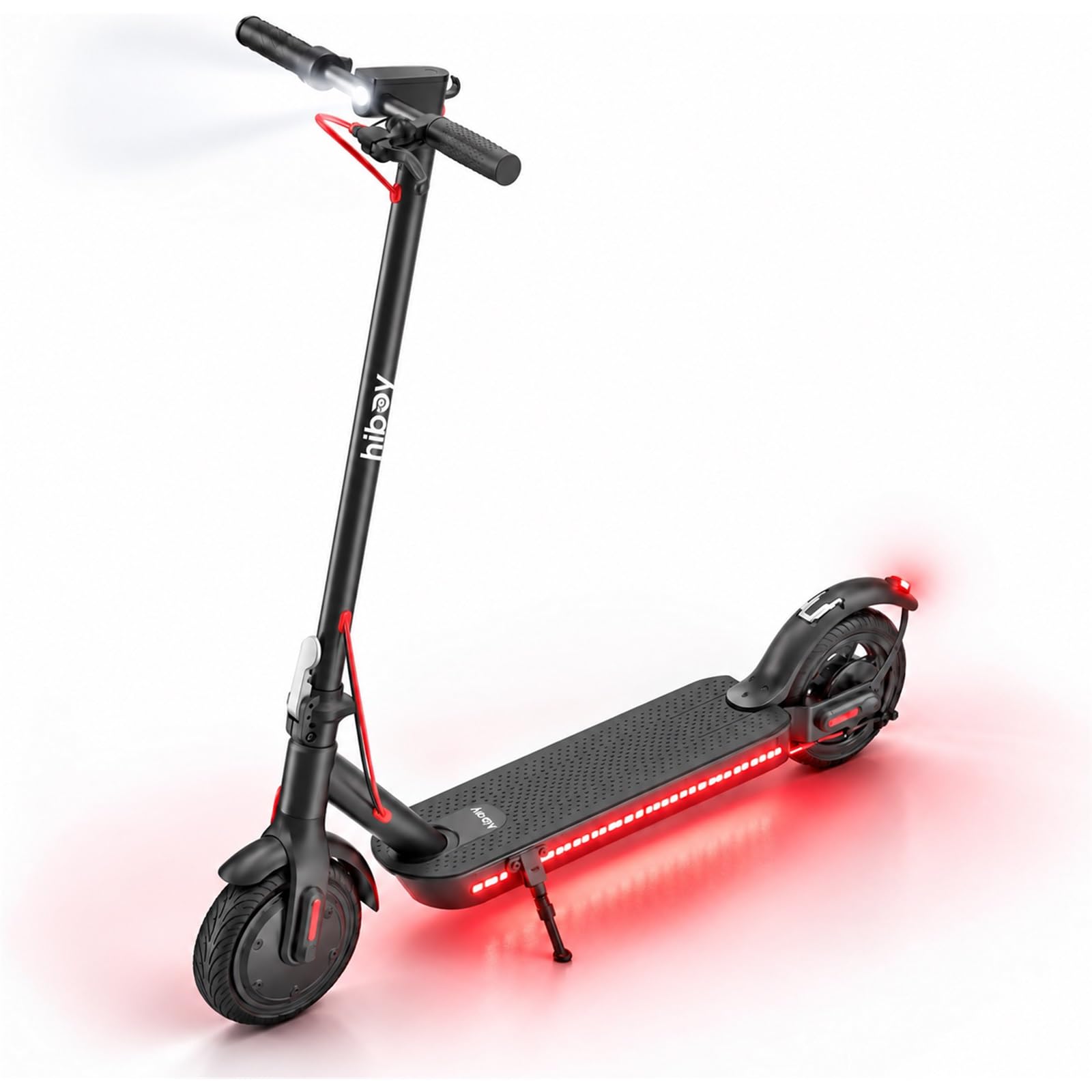
1. Hiboy Electric Scooter
Our pick — 4.5+★ from 100+ verified ratings; the strongest balance of quality and price.
Two rear shock absorbers and an air-filled tire turn cracked pavement into a commuter you can live with.
If your ride is a mile to the station and a mile from the station to the office, this is the scooter to buy. The 8.5-inch air-filled rear tire and dual rear shock absorbers work as a pair to soak up broken pavement, which is the single biggest comfort upgrade over a scooter with solid tires all around. The front tire is solid and needs no inflation, so you get flat-proofing where it matters least and cushioning where you feel it most.
Power is honest for the job: a 350W motor with 460W peak output, 19 mph top speed, and up to 17 miles of range under the conditions Hiboy specifies. That 350W rated figure is the same tier as the iScooter below but well under the 700W NAVEE, so treat this as a city-runabout, not a hill climber. Front and rear brakes handle stopping, and the electronics have passed UL 2272 testing — an independent check of the battery and electrical system rather than the maker’s own say-so.
What wins owners over is how solid it feels underneath you; build quality is the thing they bring up again and again, and the general read is a well-made machine rather than a plastic toy. The recurring gripe is that what you get for the money feels uneven — some riders call it a bargain, others expected more for the same outlay. Neither complaint touches the ride itself.
Where it earns the crown
- Dual rear shock absorbers plus an air-filled rear tire for genuine bump absorption
- Front and rear brakes with UL 2272-tested electrics
- App connectivity for ride settings and live ride info
- Solid aluminum frame that owners describe as properly built
What to weigh first
- 17-mile range ceiling means it is a short-hop commuter, not a distance rider
- The 350W motor will feel slow on serious inclines
- Value is the most debated point among owners, not the ride
The right buy for: station runs, campus loops, and grocery hops where comfort on rough pavement matters more than top speed.
Think again if: your route includes a long steep climb — the 350W motor is the limit here, not the suspension.
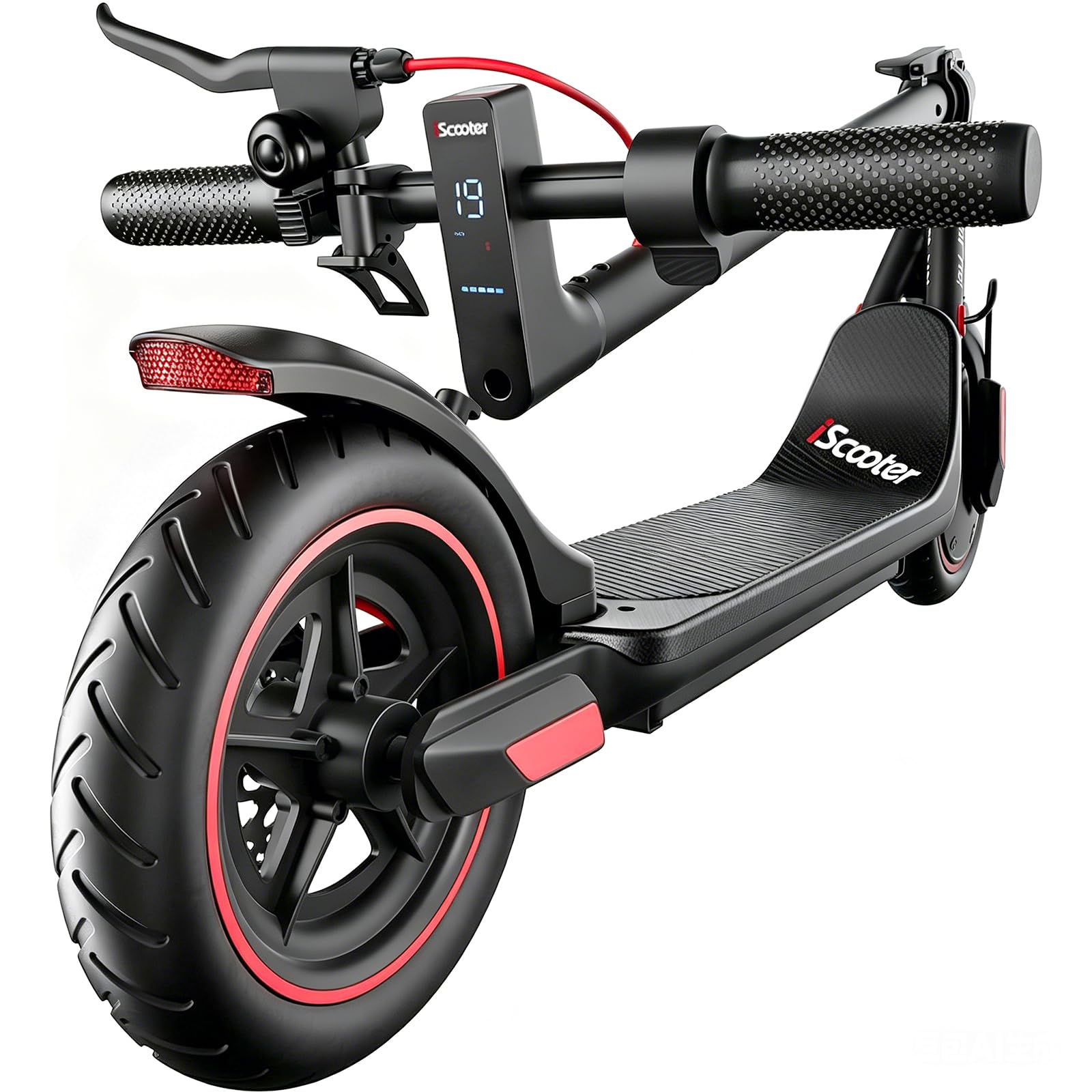
2. iScooter Electric Scooter
The light carry that folds in three seconds and still hits 19 mph with a 500W peak motor.
The number that matters here is 27.7 pounds. That is 6.8 pounds lighter than the Hiboy S2 NOVA above and the reason you can lug this one up a flight of stairs or into a car trunk without swearing. It folds in a claimed 3 seconds, so the whole routine of folding and stashing takes less time than locking a bike. If you combine scooter and train or scooter and bus, this is the format that makes multi-mode commuting work.
Range is 15 miles on a charge with a 350W rated motor that peaks at 500W — a little more peak grunt than the Hiboy above, though a shorter range than both the S2 NOVA and the NAVEE. The charge takes 4.5 hours, which is the quickest full recharge in this group compared with the S2 NOVA’s 6 hours, so a workday at your desk covers a full top-up. The dual braking setup pairs an electronic brake with a disc brake, there is a headlight and taillight for dark rides, and an app handles locking and live speed readouts.
The experience owners describe is a smooth, steady ride that is neither too fast nor too slow, which is exactly why it lands well with first-time riders and younger kids around ten. Two honest notes: durability is the most debated topic in the reviews, with some riders reporting trouble after a few weeks, and battery life gets split feedback. Both are worth knowing, neither is universal — build quality is what people praise most, and the overall satisfaction level is high.
Light-carry advantage: at 27.7 pounds it is the easiest scooter here to physically move, and the fastest to recharge at 4.5 hours.
The fair caveat: 15 miles is the shortest range in this lineup, so plan it around short trips rather than long-distance days.
Take this one home if: you need to carry the scooter as often as you ride it, or you are buying for a first-timer.
Pass it over if: you want a long single-charge commute or heavy-duty build — the range and durability record do not stretch that far.
3. Hiboy S2 NOVA Electric Scooter
Twenty miles per charge with a suspension that takes the sting out of the sidewalk seams.
A 36V 9Ah battery with BMS protection carries this one for 20 miles per charge, and the battery management system is the circuit that watches cell voltage and stops the pack from cooking itself. That is five more miles than the Hiboy dual-suspension pick above and the same figure as the seated URBANMAX, but you get it in a stand-up format you can fold. The 430W motor pushes to 19 mph and handles slopes up to 15%, which covers most urban overpasses and gentle bridges.
The comfort recipe is a front solid tire paired with a rear air-filled tire and 35mm of suspension travel. A 26ft front light beam plus side markers and a taillight keep you visible after dark, and the combined front eABS and rear drum brake work off one lever so stopping feels balanced instead of nose-diving. IPX5 water resistance means drizzle will not stop the ride; that is splash protection, not a licence to ride through standing water.
Buyers report a butter-smooth glide and genuinely easy assembly, and sturdiness is among the most consistently praised traits. The recurring friction point is durability — some riders report failure, and a handful note the handlebar and front wheel losing alignment, so treat the folding joint well on any scooter of this weight. A full charge takes 6 hours, longer than the iScooter’s 4.5 hours, so plan on an overnight plug-in rather than a midday top-up.
Why commuters rate it
- 20 miles of range from a 36V 9Ah battery with BMS protection
- 430W motor climbs 15% grades and reaches 19 mph
- Rear air tire plus 35mm suspension for a composed ride
- 26ft headlight beam, side markers, taillights, and IPX5 water resistance
Where it asks more of you
- 6 hours to a full charge — plan on plugging in overnight
- Alignment of the handlebars and front wheel comes up as a durability complaint
- 34.5 pounds is a two-hands carry, not a one-hand lift
Built for: the rider who wants five extra miles and a softer ride than the entry picks without jumping to a big-wheel scooter.
Look elsewhere if: you need a fast recharge turnaround or you plan to fold and unfold constantly — the joint needs care.
4. NAVEE GT3/ST3/GT5 Series Electric Scooter
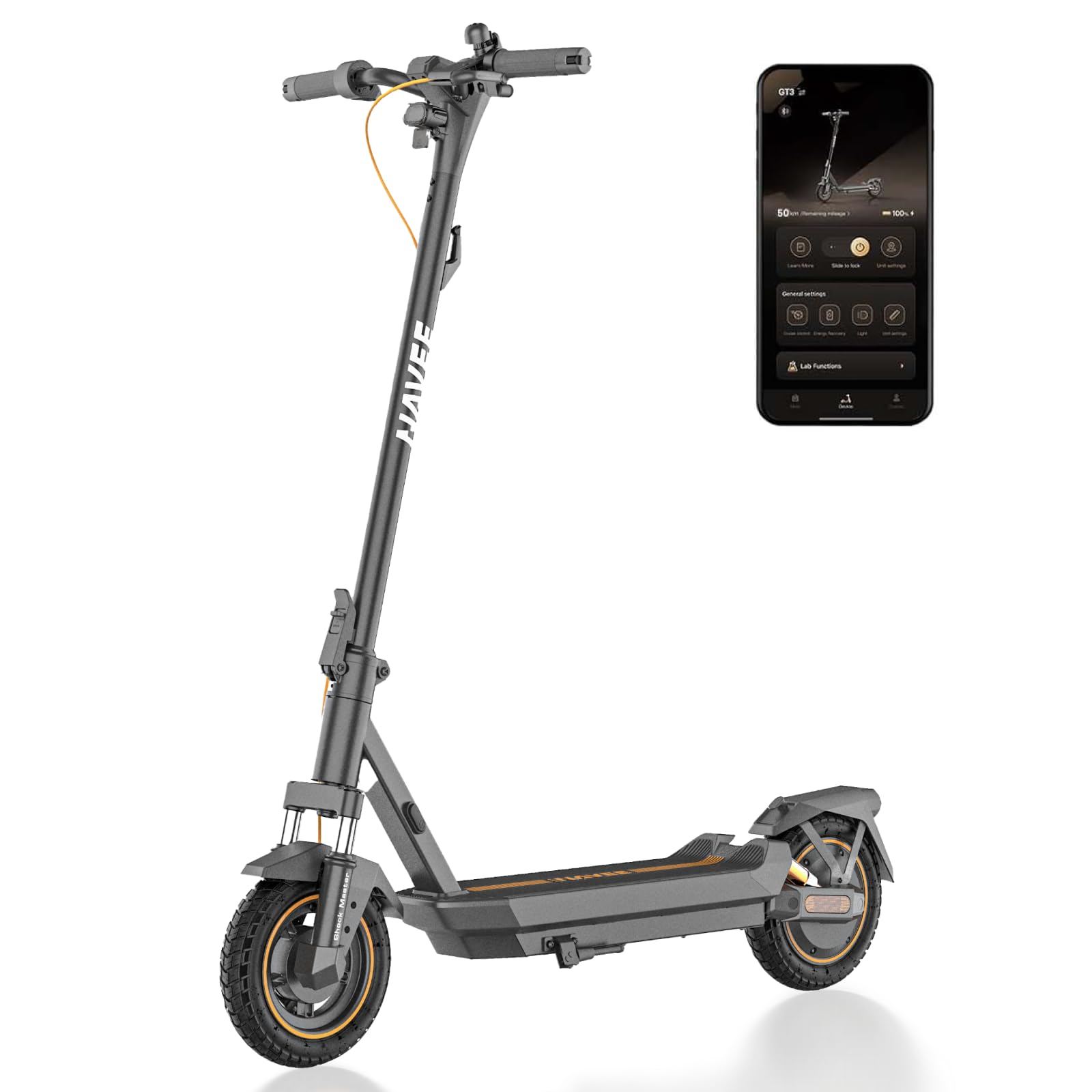
Seven hundred watts and 31 miles of range turn a steep commute into a flat one.
This is the power jump. The 700W high-torque motor doubles the 350W motor in the dual-suspension Hiboy above, and it shows up where it counts: a claimed 20% incline capability and 10-inch tubeless fat tires that keep their composure on loose surfaces. A 357Wh battery backs 31 miles of maximum range, which is double the iScooter’s 15 miles. Three ride modes — Walking for slow safety, Drive for daily runs, Sport for speed and hills — let you dial the scooter to the street instead of the other way round.
Stopping is handled by three systems instead of two: a front drum brake, a rear disc brake, and EBAS electronic braking. A traction control system watches for wheel slip on wet pavement, and the whole thing wears an aerospace-grade aluminium frame with an IPX5 rating and a 265 lb load ceiling. The 3.6-inch display tracks speed, battery, and ride history, the app adds an electronic lock, and Apple Find My means you can locate the scooter if it walks off.
Performance is what wins owners over — acceleration is the recurring theme, and riders note it handles both road and off-road stretches without complaint. The honest catch is at the other end of the ownership curve: reliability and battery life both split opinion, with some units needing attention within the first weeks while others run clean. At 46 pounds it also takes real effort to fold and haul onto transit, and the 6-hour charge is not quick. Neither is a reason to skip it — it is a reason to buy from a seller you can reach.
The head-to-head that matters: 700W against the 350W Hiboy is a genuine two-tier gap in climbing ability, and 31 miles of range versus 15 on the iScooter is the difference between a work-week scooter and a weekend toy.
What you give up: At 46 pounds, this is the heaviest stand-up scooter in this guide, so carrying it up stairs or onto train platforms stops being casual.
Made for: riders with real hills, mixed pavement, and a 25-plus-mile daily loop who want one scooter to do it all.
Not your machine if: you carry your scooter up stairs daily or want a quick midday recharge.
5. URBANMAX C1S Seated Electric Scooter
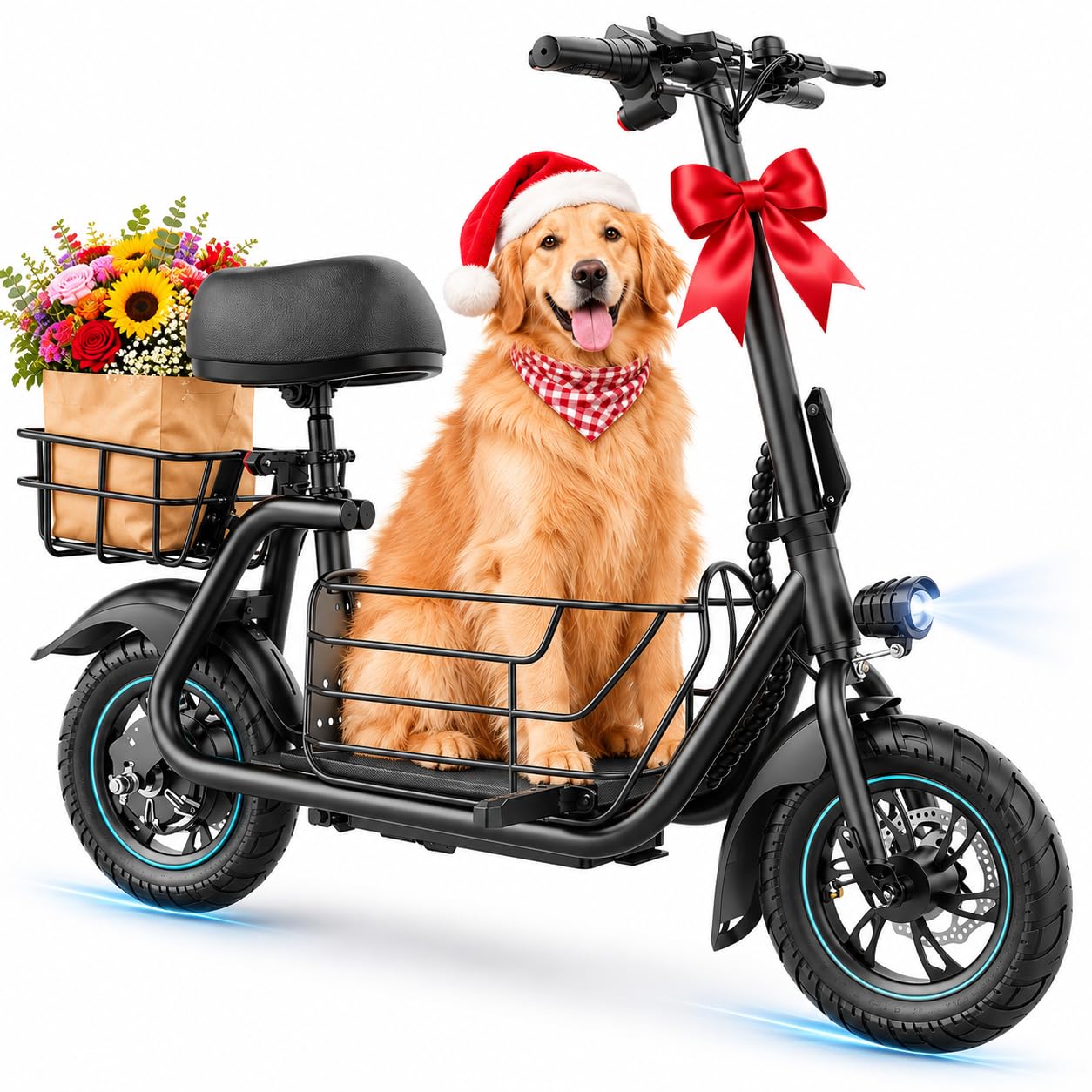
You sit down, you carry groceries in two baskets, and you never balance on one leg at a light.
Nobody else in this lineup gives you a padded seat. That single design choice changes who the scooter is for: riders with knee or balance concerns, older riders, and anyone running errands rather than commuting fast. The 12-inch pneumatic tire paired with a single shock absorber takes city bumps, and two removable baskets mean the grocery run replaces a car trip instead of supplementing it. A 550W motor drives to 18.6 mph with 20 miles of real-world range that varies with rider weight, load, grade, and temperature.
Stopping comes from front and rear mechanical disc brakes — a different setup from the electronic brakes on the stand-up picks above — with a headlight and rear brake light for evening trips. The aluminium frame carries up to 265 lb, the LCD dashboard shows live battery level so you can plan the trip, and the electronics carry UL 2272 certification. It folds for storage, though the 50-pound weight means this is a garage-and-sidewalk scooter rather than a carry-it-onto-the-train scooter.
What people respond to is how it looks — the appearance of this scooter draws more comment than anything else, and it reads as a well-made little machine rather than a bare frame with a motor. Assembly earns the second-biggest share of praise, so the box-to-rideable gap is short. Battery life is the one split topic, with some riders reporting it holds charge well and others finding it drops off. Give the seat cushion thought if you plan long sessions — URBANMAX itself recommends extra padding for hours in the saddle.
The fit for you: errands, grocery runs, and anyone who wants both feet on a deck and a backrest behind them.
Keep looking if: you need to lift the scooter regularly or want the fastest, most agile ride — 50 pounds and 18.6 mph set the ceiling.
6. Segway Ninebot E2 Pro Electric Scooter
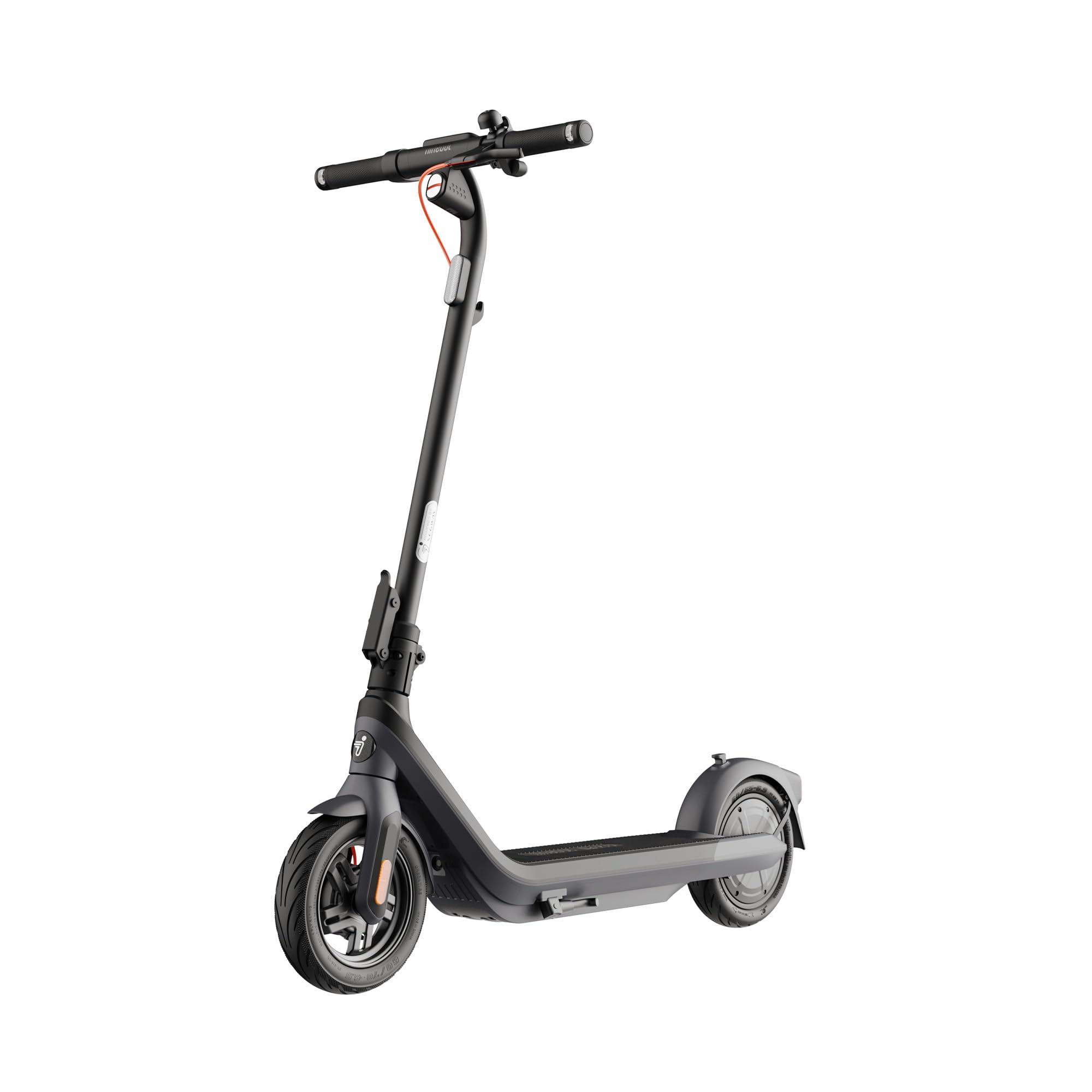
Twenty-five miles of Eco-mode range and Apple Find My built in, at a gentler 15.5 mph pace.
Two things make this Segway worth a look, and neither is speed. First, the range: 25 miles in Eco mode at 9.3 mph, which is the longest range in this lineup short of the S2 MAX and the E3 Pro. Second, Apple Find My integration, which puts the scooter on the same tracking network as your keys and bag — useful in a city where scooters get lifted. The 350W rear-wheel motor is modest, a 15.5 mph ceiling is deliberate, and the 2.8-inch dashboard is the biggest display in this group after the NAVEE’s 3.6-inch screen.
This scooter is tuned for stability rather than thrills. A traction control system (electronics that stop the front wheel from slipping on loose surfaces) keeps you steady, a front drum brake pairs with a rear electronic brake for a two-brake stop, and it climbs inclines up to 18% — steeper than the S2 NOVA’s 15% figure. The brand claims its RideyLONG system adds 20% range, and the electrical system is UL 2272 certified. At 18.8 kg it sits between the light iScooter and the heavier NAVEE.
Comfort is where this scooter earns its keep; owners describe a smooth, comfortable ride on smooth pavement and rate the build as sturdy. The concern is durability — handlebars coming loose from the base, neck wiring and front axle failures show up often enough in the reviews to be worth mentioning, and reliability is the most debated topic overall. Value also splits opinion. That is a real consideration, but it is not universal: plenty of riders report months of trouble-free commuting.
Range and tracking, not speed: 25 miles in Eco mode beats the 17-mile Hiboy above by a comfortable margin, and Find My is a feature no other scooter here has matched.
The trade-off: At 15.5 mph, this is the slowest top speed in this guide, and durability is the point of caution.
Worth it for: commuters who value range and theft tracking over outright speed and want a name-brand scooter.
skip it if: you want 19-plus mph or you are rough on your gear — the build quality is the risk here, not the ride.
7. AOTOS Electric Scooter
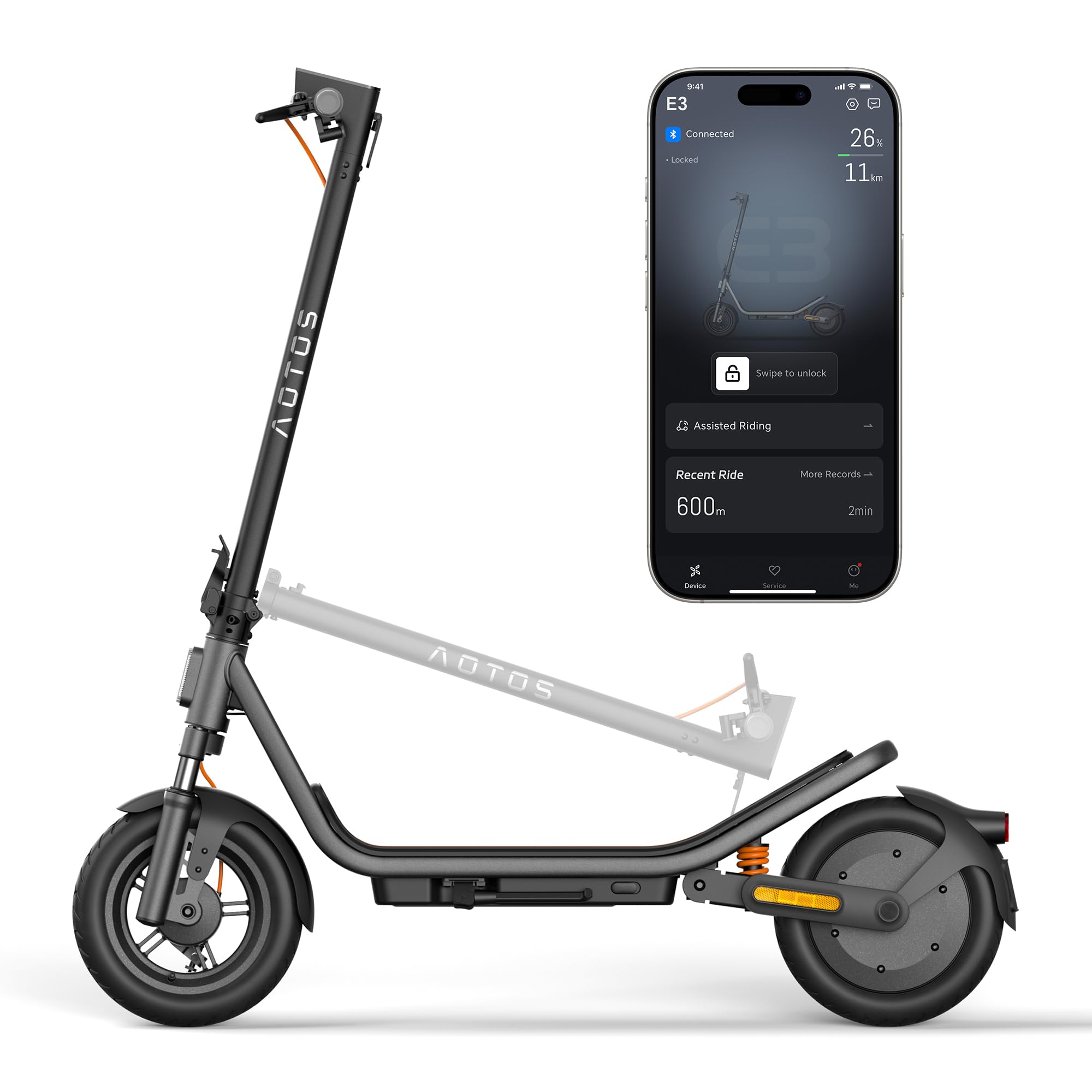
Twelve-inch tubeless tires roll over curbs that stop everything else in this lineup.
Tire size quietly separates a comfortable scooter from a rattling one, and the AOTOS runs the largest rubber in this guide: 12-inch tubeless tires against the 8.5-inch tires on the Hiboy picks and the 10-inch pair on the NAVEE. Bigger wheels roll over cracks instead of dipping into them, so bad pavement feels smooth rather than jarring. Pair that with front dual-spring and rear suspension, and the ride smooths out in a way small-wheel scooters cannot match.
A 36V 10Ah battery delivers up to 28 miles per charge — nearly double the iScooter’s 15 miles. That 28 miles covers a week of short daily commutes for many riders. The 400W nominal motor (400 watts of continuous power) peaks at 650W, pushes to 20 mph, and handles 18% inclines. A front mechanical drum brake pairs with a rear electronic brake, while a headlight, taillight, integrated turn signals, and reflectors keep you visible — turn signals are a feature the cheaper Hiboy and iScooter picks do not list.
For a scooter with this much on the spec sheet, the reviews are unusually clean: quality, speed, and value all draw consistent praise, and buyers call out the 20 mph top end as the reason they recommend it. The one thing owners flag is the weight — it is heavy, and they say so. That is the honest trade-off of a 12-inch-tire, long-range build. With a 265 lb rider capacity and UL 2272 plus UL 2271 certification (safety standards for the electrical system and battery) plus an intelligent BMS (battery management system that guards against overheating and overcurrent), this is a lot of scooter for its slot in the lineup.
Grab this when: you ride rough city streets daily and want the comfort of big tubeless wheels with range to spare.
Be honest with yourself if: you need to carry it up stairs — the weight is the one thing buyers consistently bring up.
8. Segway Ninebot E3 Pro Electric Scooter
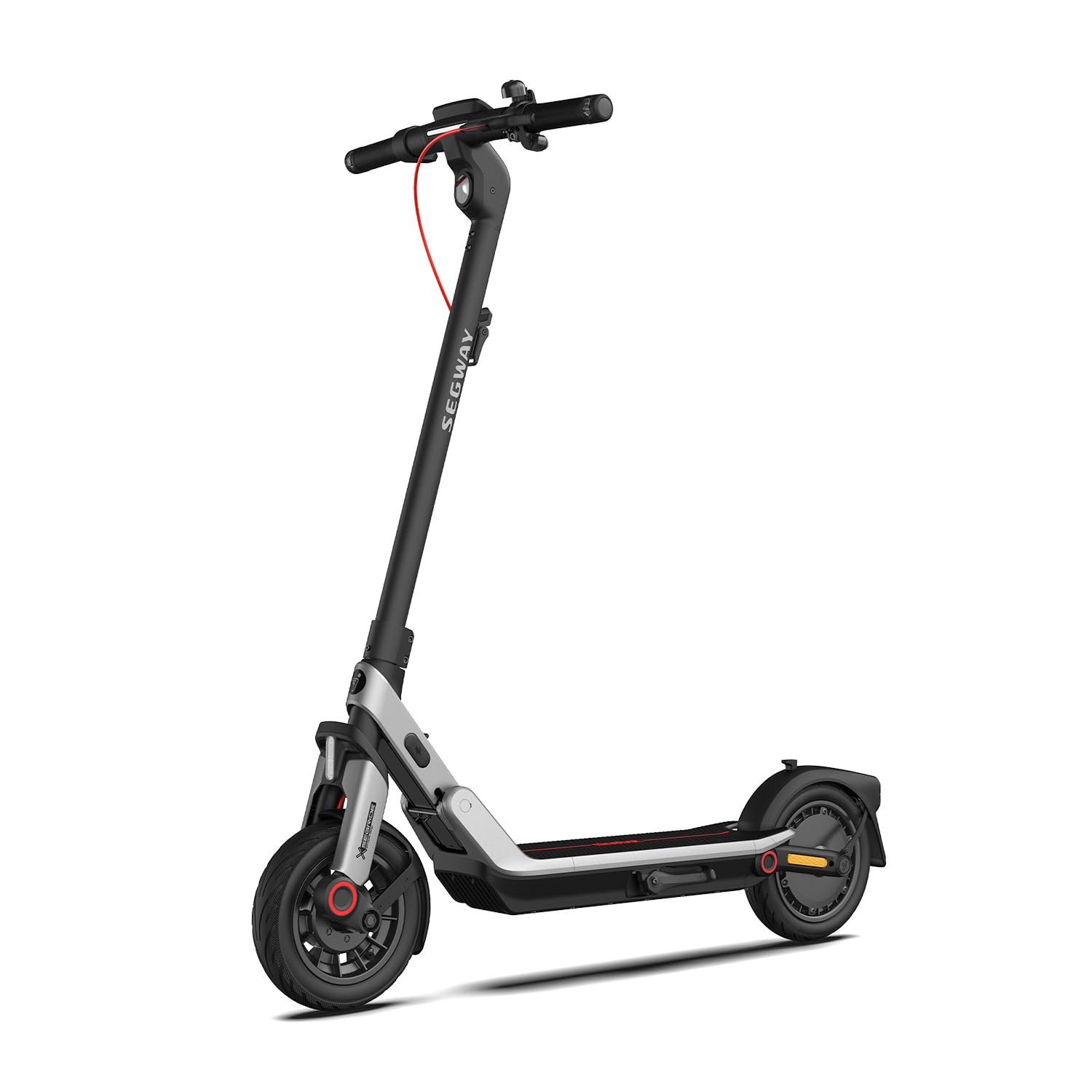
A 34-mile SegRang ride, an IPX5 alloy frame, and turn signals for the commute that happens in the rain.
This is the one you buy if the commute does not take bad-weather days off. SegRang technology carries the built-in battery for up to 34 miles, and an optional 184Wh external battery extends that figure to 49 miles if you need it. An IPX5 water-resistance rating on an alloy frame means splashes and drizzle are not the end of the ride. The 400W motor keeps a 20 mph top speed and a 3-inch display shows your ride data, while front and rear elastomer suspension plus a Stability Enhancement System keep the deck composed.
Safety hardware is where this scooter separates itself from the cheaper end of the list. You get a 4W headlight (4 watts of brightness), turn signals, and a brake light — full road lighting rather than a single torch on the stem — plus UL 2271 and UL 2272 certification (safety standards covering both the battery and the electrical system). A front drum brake pairs with a rear electronic brake, and the tubeless tires are sized for traction and shock absorption rather than just rolling. The 18.2 kg foldable design with dual open up is manageable for a two-hands carry, and a 7-hour full charge means overnight plug-ins.
Buyers describe this scooter as a blast to ride — smooth suspension, solid construction, and reliable daily performance are the recurring themes, with speed getting its share of praise. The one number worth flagging is the charge time: 7 hours is the longest in this guide, a full hour beyond the S2 MAX’s 6-hour cycle and well over the iScooter’s 4.5 hours. If you can live with overnight charging and you want a scooter built for wet roads, this is an easy one to say yes to.
Weather readiness: IPX5 on an alloy frame plus turn signals and a 4W headlight is a genuine all-season package, not a fair-weather build.
One number to plan around: 7 hours to full charge is the slowest in this group, so treat it as a nightly plug-in rather than a top-up-anytime scooter.
Your scooter if: you ride year-round on wet streets and want full lighting and dual UL certification underneath you.
Think twice if: you need fast recharge turnaround — the 7-hour cycle is the trade-off here.
Know the Specs
Motor Watts: Rated vs. Peak
The motor figure comes in two flavors, and they are not interchangeable. Rated watts is what the motor can sustain continuously — the 350W figure you see on many scooters here. Peak watts is a short burst of extra power for acceleration or a hill. A scooter with 350W rated and 460W peak is a steady city rider; one with a 700W motor handles steep climbs with far less effort. Match the figure to your terrain, not to a thrill you will use twice.
Battery Capacity and Range
Battery capacity shows up as voltage and amp-hours — a 36V 9Ah pack or a 48V 11.6Ah pack are typical here. Higher capacity generally means more miles, but the advertised range assumes ideal conditions. Rider weight, hills, temperature, and speed all eat into it. Use the range figure as a ceiling, and size your daily trip to roughly two-thirds of it if you want buffer left for detours and cold mornings.
Tire Size and Suspension
Air-filled pneumatic tires absorb shock; solid tires never go flat but ride harsher. Wheel diameter matters just as much — 8.5-inch, 10-inch, and 12-inch tires all roll differently over cracks and curbs, with the larger sizes smoothing out the rough stuff. Suspension adds to that. A dual rear shock setup or a front fork and rear damping cylinder system works with the tires to keep your knees and hands comfortable over distance.
Brakes and UL Certification
Two independent brake systems — a drum or disc mechanical brake plus an electronic brake — is the reliable standard. A single brake leaves you exposed if it fails. UL 2272 is a certification for the battery and electrical system, and UL 2271 covers the battery pack itself. Both exist because scooter batteries carry real energy density. When a listing names a certification, you know an outside lab tested the electronics rather than the maker self-certifying.
Common Questions
How much of the advertised range will I actually get on an electric scooter?
Do I need UL 2272 certification on an electric scooter?
Is a 350W motor enough for hills on a scooter?
Can I ride an electric scooter in the rain?
How heavy is too heavy for a folding electric scooter?
What is the difference between air-filled and solid tires on a scooter?
Should I choose a seated scooter or a standing scooter?
How long does it take to charge an electric scooter battery?
Are electric scooters safe for a first-time adult rider?
Does an electric scooter app actually add anything useful?
<
The Bottom Line
For most riders, the top rated electric scooters winner is the Hiboy dual-suspension scooter, because it pairs real bump absorption with front and rear brakes and UL 2272-tested electrics at a price that keeps it a sensible daily commuter rather than a garage ornament. If your route has hills worth worrying about, the NAVEE GT3 doubles the motor to 700W and doubles the range to 31 miles — a genuinely different class of machine. And for riders who want to sit rather than stand, the URBANMAX C1S is the only seated option here, with dual removable baskets that turn the grocery run into a scooter trip. Match the scooter to your most common trip and the choice gets simple.
How we choose
We do not accept paid placement. Every pick is matched to a real buyer and a real use-case; we do not hands-on test units.
Sources
Specifications: manufacturer listings and product documentation. Review insights: verified customer reviews, as of November 2026. Pricing: not shown on this page (it changes often); check the current price via the retailer link.
As an Amazon Associate, Tactical Gear Guy earns from qualifying purchases. This does not affect which products we feature.