Specs are compiled from manufacturer listings and verified buyer reviews and can change over time — please confirm the key details on the product page before buying.
Buying venting for a wood stove is where most projects quietly go wrong. The stove gets all the attention, but the pipe and liner decide whether smoke goes up the flue or into your living room. Match the diameter, wall type, and clearance and the whole system draws cleanly for years. Get them wrong and you are fighting backdraft, creosote, and a cold house all winter.
This guide is built by comparing the manufacturers’ published specifications and the patterns across verified customer reviews, so you get each pick’s real strengths and trade-offs instead of marketing spin.
Chimney parts are not interchangeable, so a length of pipe only works if it matches your appliance, your flue opening, and the system already on your wall. Below you will find the models that fit most wood setups, sorted by the job they actually do — and the full breakdown of the best wood burning chimney options sits right here.
Top Picks

How To Choose The Best Wood Burning Chimney
Start with the appliance, not the pipe. A wood stove collar is usually 6 inches across, and most of the sections below are built around that opening. If your stove or fireplace has an 8-inch outlet, you need the wider pipe and you need to plan the whole run around it.
Match the wall type to where the pipe sits
Single-wall pipe is bare metal with no insulation, so it throws heat into the room but demands a generous gap to anything combustible — several of the sections here specify a strict 18-inch clearance. Double-wall or Class-A pipe wraps a stainless inner liner in an insulated jacket, which lets it run closer to walls and keeps flue gases hotter for a stronger draft. If the pipe travels outside or through a wall, you want the insulated type.
Check the installed length, not the box length
A pipe’s installed length is shorter than its physical length once one end slips inside the next. Telescoping sections buy you overlap to play with, which is why an adjustable run saves you from cutting metal on site. Measure the gap you need to fill, then leave room for the overlap.
Never mix brands in a Class-A run
Twist-lock connections are brand-specific. An AllFuel HST section twists onto AllFuel HST pipe and nothing else, and the same caution applies to any manufacturer’s locking system. Buy the whole Class-A stack from one maker so the joints seat properly and the assembly stays sealed.
Decide if you need a liner or a full flue
A flexible liner kit drops inside an existing masonry chimney to reline it, and those kits are only built for masonry — not for chasing through a wooden wall. A full Class-A chimney system is the outdoor or through-the-wall route. Two very different jobs, and buying the wrong one means a return.
Side-by-Side Comparison
| Model | Best For | Inside Diameter | Length | Wall Type | Amazon |
|---|---|---|---|---|---|
| Duravent DuraBlack 8″ x 24″ Stovepipe★ Best Overall | Wide-collar stoves and interior runs | 8 inches | 24 inches | Single wall | Amazon |
| Selkirk Metalbestos 266036Sleek Connector | Black double-wall connector | 6 inches | 36 inches | Double wall | Amazon |
| DuraVent DuraBlack 6DBK-TL TelescopingSlide-To-Fit | Filling an odd gap without cutting | 6 inches | 44 to 68 inches | Single wall | Amazon |
| Shasta Vent 6″ x 24″ Class-A | Through-wall and outdoor runs | 6 inches | 24 inches | Double wall, insulated | Amazon |
| Selkirk SureTemp 206148 | Long insulated reaches | 6 inches | 48 inches | Double wall, insulated | Amazon |
| AllFuel HST 6″ x 48″ Class-A | Sealed 6-inch Class-A stacks | 6 inches | 48 inches | Double wall, insulated | Amazon |
| AllFuel HST 8″ x 48″ Class-A | 8-inch appliances and big fireboxes | 8 inches | 48 inches | Double wall, insulated | Amazon |
| FireSafe Flexible Liner Kit, Vertical | Reline a masonry fireplace | 6 inches | 15 feet | Flexible liner | Amazon |
| FireSafe Flexible Liner Kit, Tee | Masonry chimneys with a side hookup | 6 inches | 15 feet | Flexible liner | Amazon |
| DuraVent DuraPlus Through-The-Wall Kit | Full through-wall install in one box | 6 inches | Kit | Triple wall | Amazon |
| Rockford 316 Flexible Liner, 25 Ft | Tall masonry chimneys | 6 inches | 25 feet | Flexible liner | Amazon |
Detailed Reviews
1. Duravent DuraBlack 8″ 24″ Stovepipe
Our pick — 4.5+★ from 200+ verified ratings; the strongest balance of quality and price.
The 8-inch connector that finally fits the wide stove collar nobody else makes pipe for.
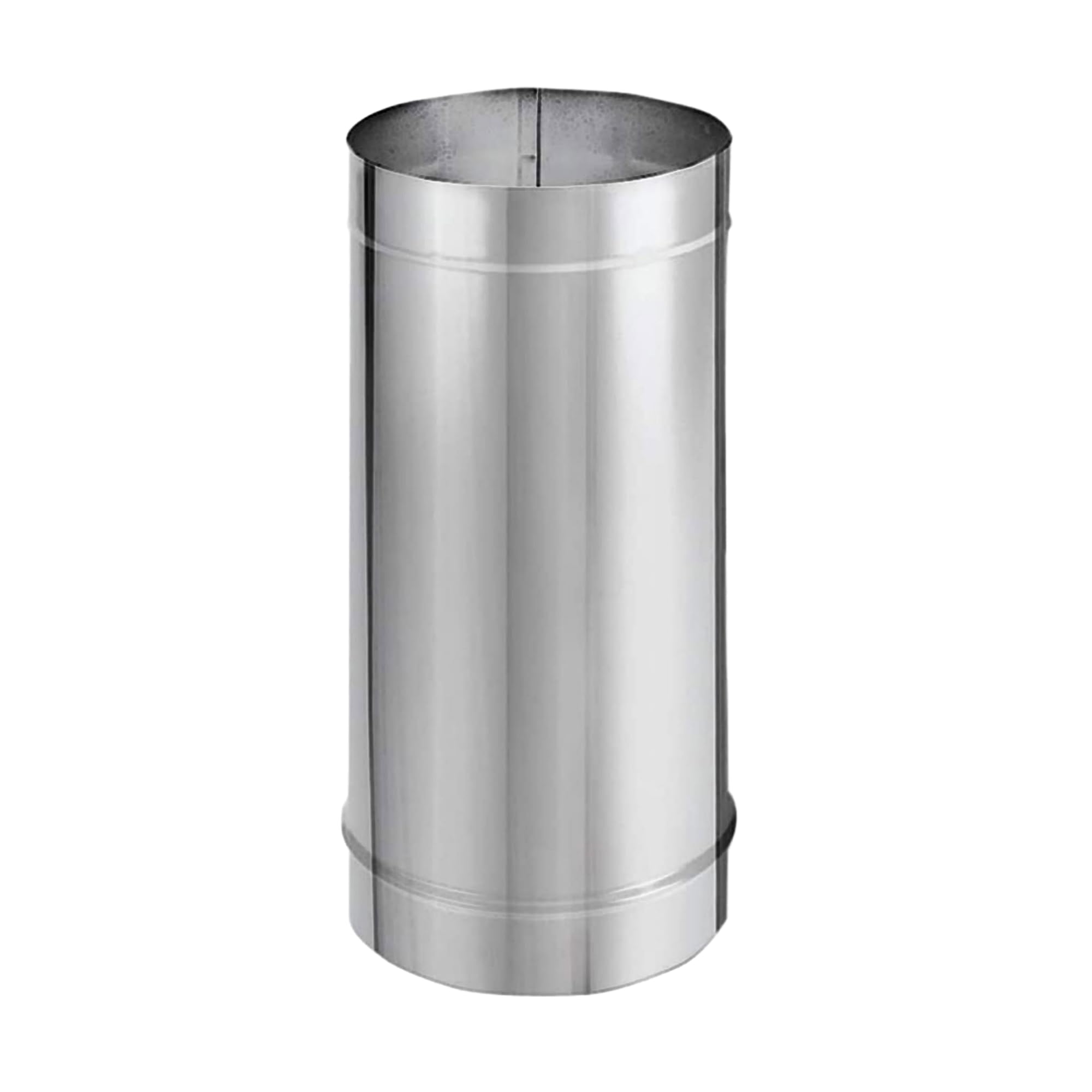
An 8-inch inside diameter is the number that earns this pipe its spot. Most stovepipe is built at 6 inches, so if your stove or furnace has a wider outlet, your options shrink fast — this DuraVent section fills that gap at 24 inches of physical length. The overlap of the die-formed ends brings the installed length to 22.75 inches, so plan for slightly less reach than the box suggests.
What wins people over is plainly the build. The stainless surface reads as heavy-duty welded steel rather than thin sheet, and it wipes clean beside a hot firebox. The die-formed fittings and twist-lock joints mean no cutting or crimping on site.
The honest catch is the clearance. This is single-wall pipe with nothing wrapped around it, so it demands a strict 18-inch gap to any combustible surface — more breathing room than an insulated flue asks for. The manufacturer’s own material claim draws mixed reaction from the review pages, too, with some buyers convinced the metal is the stainless listed and a few unconvinced. Neither issue changes how it vents; both change how carefully you set the run.
Where this pipe shines
- 8-inch inside and 8.04-inch outside diameter matches wide stove and furnace collars
- Welded stainless construction in a 3.6-pound section
- Twist-lock and die-formed ends give a drip-free, no-cut install
- Rated to vent wood, oil, coal, and gas exhaust
- Limited lifetime warranty from the maker
The fine print worth knowing
- 18-inch clearance to combustibles is a strict requirement
- Installed length runs 22.75 inches once ends overlap
- Material claims on the listing draw split opinions on the review pages
Reach for this if: your stove or furnace collar measures 8 inches and you want a bolt-together interior connector.
Look elsewhere if: you are chasing an outdoor run — you need the insulated wall of a Class-A section instead.
2. Selkirk Metalbestos 266036 6-Inch X 36-Inch Smoke Pipe
A black double-wall connector that dresses up the run between stove and insulated flue.
Three feet of pipe, black matte from end to end, wrapping a stainless inner liner inside a black aluminized steel casing. That double wall is the point of difference from the bare-metal sections here — the outer skin stays cooler to the touch and the flue gases stay hotter on the way up. At 6 inches inside and 6.5 inches outside, it slips onto a standard stove collar and covers 36 inches of run in one piece.
The quality is what buyers come back to talk about — it meets expectations and arrives exactly as described, with 21 mentions of quality sitting at the top of the pile and functionality close behind. Three metal screws come in the box for locking the joint. It connects a wood stove to an insulated chimney, and that is the whole job.
Word on the price side splits down the middle, with some finding it a good deal and others feeling short-changed for the footage they get. That is a value question, not a build question. Also note the 7.6-pound weight — the section is heavier than the bare-metal connectors, but still far lighter than the 12-pound insulated Class-A section above.
Finish that works twice: the matte black outer casing blends into a stove corner far better than bright steel, and it hides the odd smudge.
Cost per foot: priced toward the premium end for a connector, so budget for a couple of sections rather than one.
The fit: a 6-inch stove collar heading into an insulated chimney, where you want a black, double-wall finish.
The trade-off: the price-per-length math feels steep to some buyers — measure how many sections you actually need first.
3. DuraVent DuraBlack 6DBK-TL Single Wall Telescoping Pipe
It stretches from 44 to 68 inches, so the gap you measure is the gap it fills.
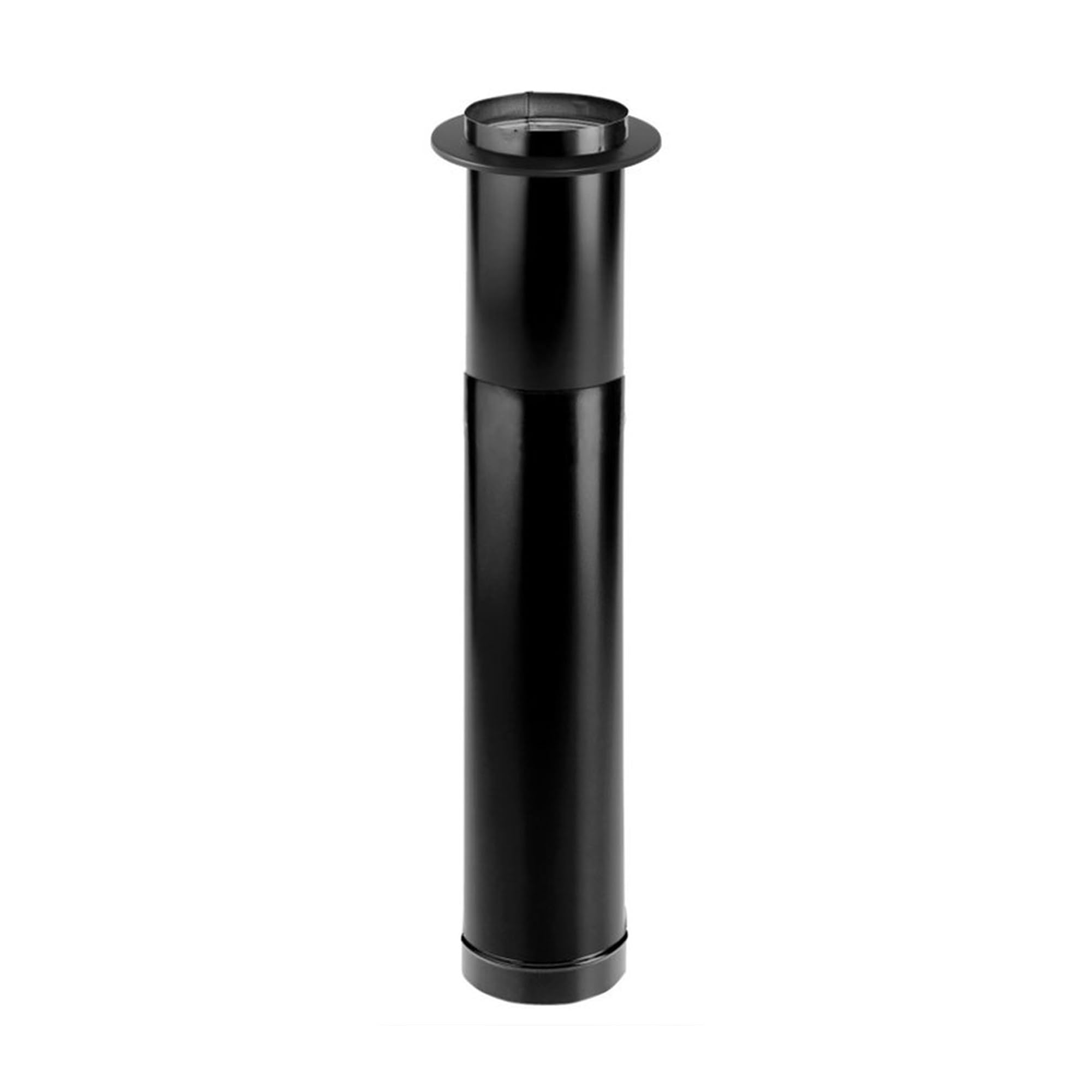
Here is the longest reach on the page — 68 inches versus the 24 inches the Duravent 8-inch stovepipe above covers, a difference that matters when you are bridging a tall stack without splices. It adjusts anywhere from 44 to 68 inches, so you slide it open to your measured gap instead of cutting or crimping a fixed section. The 6-inch interior diameter seats onto a standard stove collar.
The steel is 0.02-inch thick with a lock-seamed design that keeps the joint firm and the drip off your hearth. Quality is the clear headline across the reviews, with ease of installation trailing not far behind and buyers describing it as arriving exactly as advertised. It vents wood, oil, coal, or gas exhaust, and it needs the same 18-inch clearance to combustibles that naked single-wall pipe always does.
Two things surface again and again. Fit is genuinely a coin-flip — some runs align perfectly with the other sections, others sit slightly off and need persuasion. And on the first few firings, a strong burning smell comes off the metal while the oils cook away. That odor fades, but it is common enough in the reviews that you should plan the first burn with the windows cracked.
Why the adjustable reach wins: a 24-inch telescoping range means you can absorb a mismeasured gap without ordering another section.
What to expect on day one: the burning smell on first burns is normal break-in, not a defect — vent the room and it settles.
Pick this one when: your run gap is awkward and you would rather slide a section open than cut one to length.
Think twice if: your existing stack uses another brand’s locking profile — the seam alignment will fight you.
4. 6″ X 24″ Class-A Chimney Pipe
Two steel skins, a ceramic blanket between them, and a burn test built to survive a chimney fire.
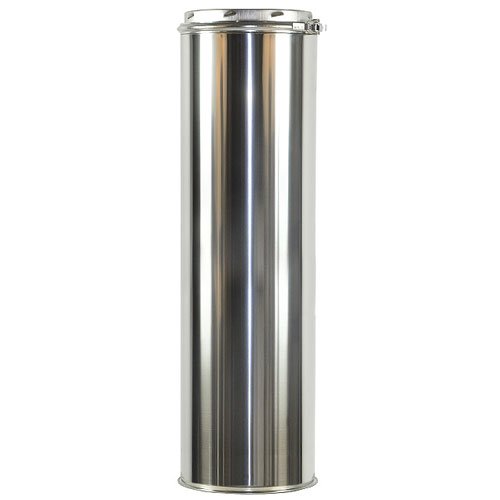
This is where the vocabulary changes. Class-A means the section is rated for the full chimney stack, and here it earns that by encasing a high-temperature ceramic fiber blanket between 304 stainless walls that total 1 inch thick. The claim is ETL listed to the UL 103 HT standard, a test that includes a 2100-degree burn as might happen in a creosote fire. It vents wood, oil, coal, natural gas, and propane appliances.
The build detail is unusual and worth knowing: both the inner and outer walls are 304 stainless, laser welded at the seams, at 0.020 inches of wall thickness. The maker points out that some competitors use 430 stainless, thinner walls, or lock-seamed construction instead. That is a fair deal of metal — the section lands at 12 pounds for 24 inches, against the 3.6 pounds a bare single-wall 24-inch connector carries above. Twist-lock connections plus the included locking band hold each joint sealed.
Two honest notes. Some buyers feel the cost per section runs high against alternatives, and the closure hardware draws mixed reaction — a few joints need coaxing to latch fully. Neither undercuts the point of buying Class-A, which is the insulated wall and the fire rating, but check your connection type before you stack a whole run.
The spec that justifies it: a 1-inch insulated wall with 304 stainless on both faces — that is what lets the pipe run through a wall or chase.
Small hardware gripe: locking bands seat well on most runs, though the closure takes a firm hand to click home.
Built for: wood stoves and factory-built or zero-clearance fireplaces that need a real UL 103 HT Class-A stack.
Not the pick for: a bare interior connector job — single-wall pipe is cheaper and simpler there.
5. Selkirk SureTemp 6″ 48″ Chimney Pipe
One 48-inch section that covers twice the run of a 24-inch piece, tested to 2,100°F.
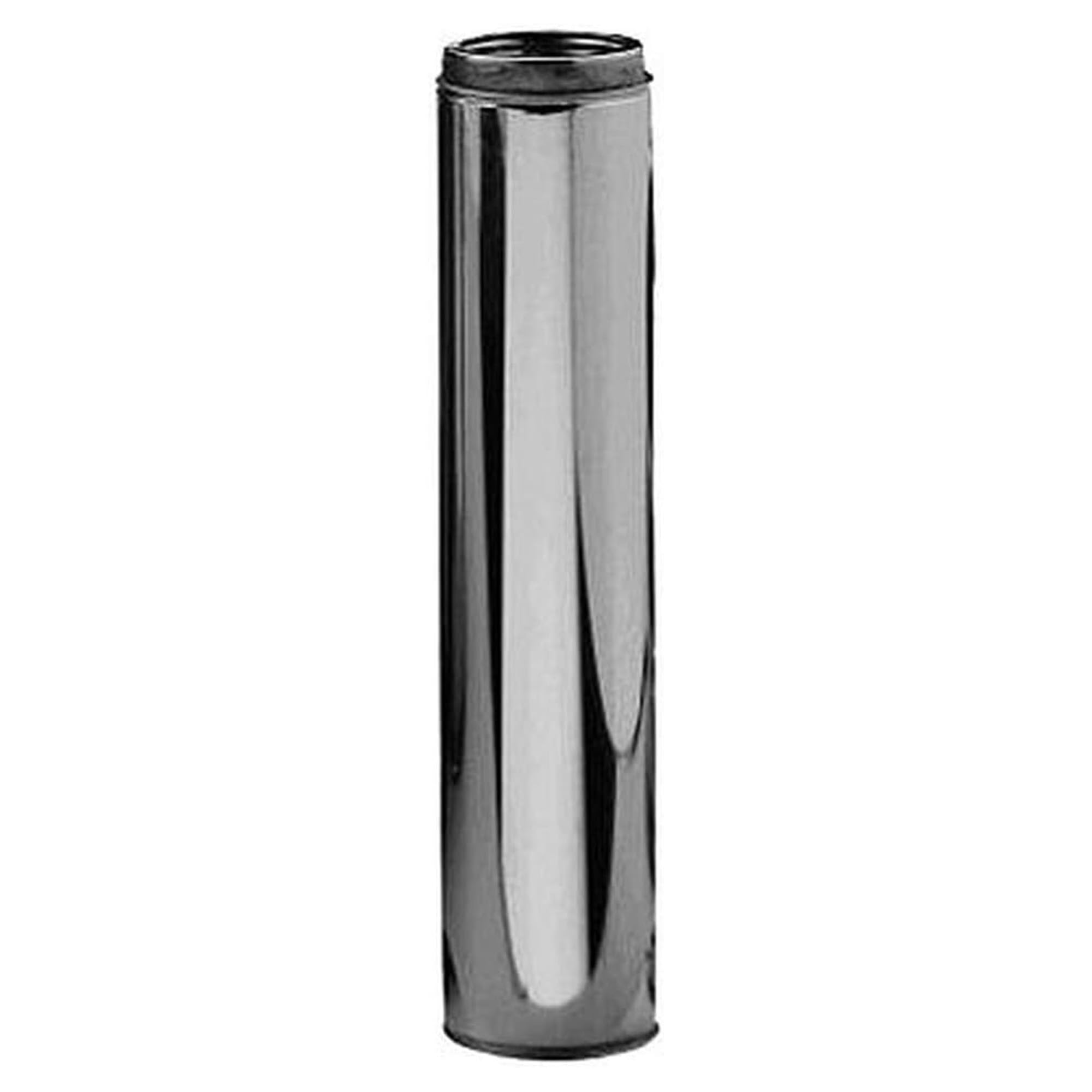
Length is the headline here: 48 inches per section against the 24 inches the Shasta Vent above offers, so a tall stack needs half the joints. The double-wall stainless build wraps an inner liner in a tough casing, and Selkirk rates it UL listed and tested to withstand surges up to 2,100 degrees Fahrenheit. It supports venting for wood, coal, oil, or gas appliances, and the locking band keeps each joint tight.
You get a fast install: buyers report attaching a section to the existing stack in about five minutes. The review pages sum it up: Customers find the chimney pipe to be of good quality and easy to install, taking about 5 minutes to attach to existing sections. Functionality draws nothing but positive notes, and it genuinely looks the part on the wall.
The honest caveat is durability, and it is the one thing to weigh before ordering. Some sections arrive with dents on the outer casing, and a few owners mention the inner liner bending badly — the 22 durability mentions lean toward the unhappy side, which is unusual for a page this well rated. Inspect the box before you sign for it. The value question also splits, with some finding it reasonable and others seeing a high cost for the footage.
Why the long section pays off
- 48 inches per piece means fewer joints to seal on a tall stack
- Tested to withstand surges up to 2,100 degrees Fahrenheit
- Double-wall stainless inner liner inside a tough outer casing
- Goes onto an existing section in about five minutes
Inspect the box on arrival
- Some sections land dented on the outside casing
- A few report the inner liner bending on install
- The cost per section feels high to part of the buyer pool
Go with this when: you need to cover a long insulated run and want to cut the number of joints.
Handle with care: open and check the section the day it arrives — dents and a bent inner liner are the recurring gripe.
6. 6″ x 48″ Class-A Chimney Pipe

Insulation that buys you a 2-inch gap to combustibles instead of an 18-inch one.
You save space: single-wall connectors in this guide ask for 18 inches of breathing room, but this Class-A section only needs 2 inches. That is because it is packed with a ceramic fiber blanket (a heat-insulating layer) between 304 stainless walls. The ceramic fiber blanket keeps flue gases hot for a stronger draft while letting the run hug a wall. It is certified to UL103HT (a safety standard for chimney products) and suits wood stoves, fireplaces, fireboxes, furnaces, boilers, and outdoor wood furnaces fueled by wood, gas, coal, or oil.
The metal itself is the selling story: 304 stainless on the inner and outer walls with laser welded seams, a smarter corrosion defense than the galvanized steel or 430 stainless some makers use. Twist-lock connections plus the included locking band make assembly quick and keep the stack sealed. Buyers are very impressed with the quality, and the fit between pieces lands right almost every time. It comes in a 48-inch section with a 7-inch outside diameter.
One rule before you buy: this pipe connects only to AllFuel HST’s own Class-A system and cannot join other brands. That is not a flaw, it is how twist-lock Class-A works — but it means you buy the whole stack from one maker. The 6-inch bore also rules it out for a stove with an 8-inch collar; the AllFuel HST 8-inch sibling above is the answer there.
The clearance win: a 2-inch gap to combustibles is the number that makes an outdoor or wall-hugging run practical.
One-brand rule: it twists onto AllFuel HST pipe only — plan the entire stack from this one system.
Your match if: you are building a fresh AllFuel HST Class-A run and want tight clearances and strong corrosion resistance.
Don’t mix it with: another brand’s Class-A pipe — the joint simply will not seat.
7. 8″ x 48″ Class-A Chimney Pipe

The 8-inch Class-A section for fireboxes too wide for a 6-inch flue.
Finding a Class-A section in 8-inch is harder than it should be, and this is one. The 8-inch bore and 8-inch outside diameter match large fireboxes and appliances that a 6-inch flue would choke, and the 48-inch length covers a good stretch in one piece. The build matches its 6-inch sibling above — 304 stainless inner and outer walls, laser welded seams, a ceramic fiber blanket for a 2-inch clearance to combustibles, and twist-lock joints with an included locking band.
It carries certification to UL103HT and handles wood stoves, fireplaces, furnaces, boilers, water heaters, and outdoor wood furnaces on wood, gas, coal, or oil. 304 stainless resists corrosion better than galvanized steel or 430 stainless, which matters on an outdoor run that faces weather year after year.
Two things to flag. It connects only to AllFuel HST Class-A pipe and nothing else, so this is a whole-system decision, not a spare part. And this is the lesser-reviewed of the two AllFuel sections — a smaller pool of feedback than its 6-inch twin enjoys — so lean on the shared construction specs rather than a long track record.
Rare 8-inch Class-A: the size alone carries this pick — wide-bore appliances have few insulated options.
Shared build: same 304 stainless, welded seams, and 2-inch clearance as the 6-inch AllFuel above.
Sized for: 8-inch appliances and big fireboxes that need an insulated Class-A flue in that bore.
Check first: that the rest of your stack is AllFuel HST — this piece will not connect to another brand.
8. FireSafe Flexible Chimney Liner Kit 6 Inch x 15 Feet
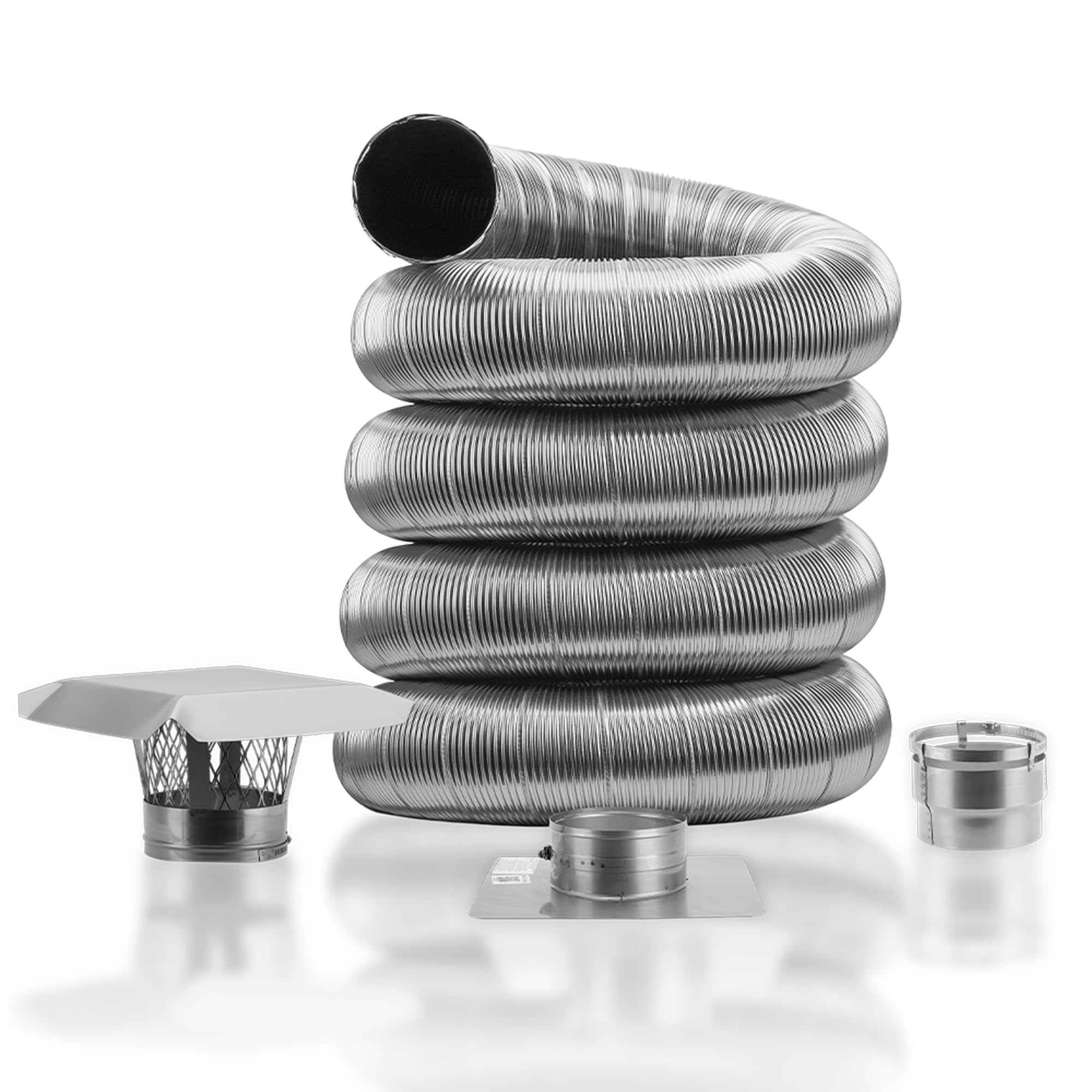
A complete reline kit that drops 15 feet of flexible steel down a masonry chimney.
This is not stovepipe or Class-A — it is a reline kit, built to slide inside an existing masonry chimney and restore a safe flue. You get 15 feet of 6-inch 316 stainless liner with 7-ply seams and 10 corrugations, a 13″ x 13″ top plate with a rain cap, and an appliance connector for a vertical hookup. The.006-inch-thick liner bends to follow the flue and the top plate seals the weather out.
Quality is what buyers talk about most — the liner holds up, and the pipe-to-liner adapter in particular draws praise. Installation runs a close second, with the liner simple to cut and assemble. It handles wood, gas, oil, and pellet appliances and is made in the USA from mill-certified stainless. At 23 pounds for the whole kit, it is a one-person carry up a ladder, though feeding 15 feet of stiff steel down a flue is a two-hand job.
The mixed note is ease of use. Some find it straightforward, others say it fights back more than expected — a long flexible liner in an old flue tends to snag on rough mortar. There are also a few reports of it tearing on old mortar joints, so a smooth, swept flue makes the install easier. The payoff is a sealed, draft-ready flue for a wood insert or stove.
What you get in the box: liner, top plate, rain cap, and connector — enough to complete a vertical masonry reline.
The wrestling match: rough mortar joints can snag or tear the liner, so sweep and inspect the flue before you feed it down.
Made for: relining a masonry chimney behind a wood insert, stove, or pellet appliance on a vertical hookup.
Wrong job for: an outdoor run or a through-wall chase — flexible liners go inside masonry only.
9. Stainless Steel Chimney Liner Kit 6 Inch x 15 Feet
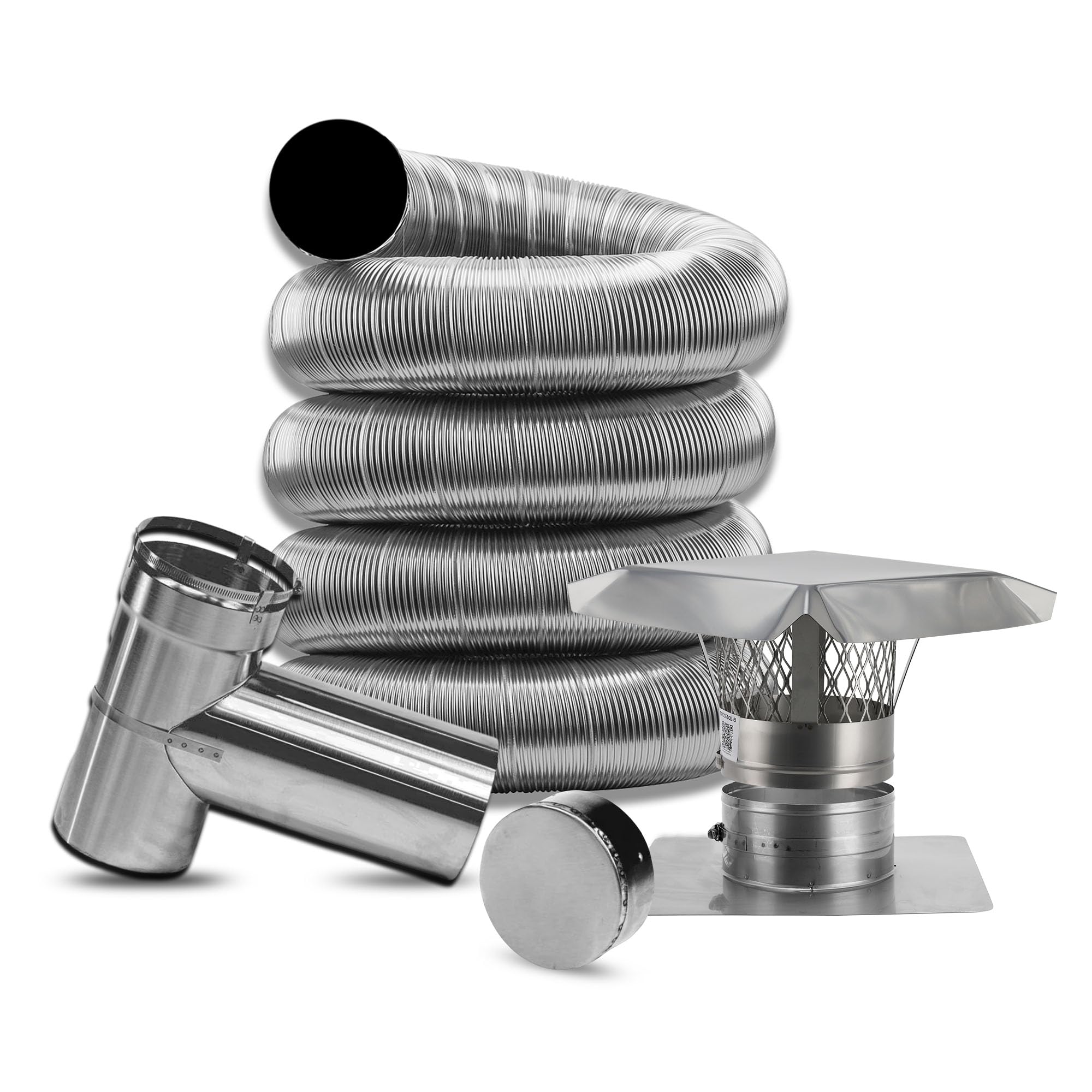
Same 15-foot liner, but with a tee for stoves that hook up through the side.
The tee connector is the whole story here. The FireSafe kit above ends in an appliance connector for a straight vertical drop, but this one finishes in a tee — the piece you need when the stove pipe enters the chimney from the side rather than the top. Everything else carries over: 15 feet of 6-inch 316L stainless liner, 7-ply seams, 10 corrugations, a 13″ x 13″ top plate, and a rain cap. The liner thickness is.006 inches.
Quality is the clear standout across the reviews, with functionality right behind it — buyers lean on it for wood stoves and find it works as advertised. Installation draws praise too, and it carries a UL1777 listing in the USA plus a ULCS635 listing in Canada. The 20-pound kit is light enough to manage alone on a ladder. Like its sibling, it is built for masonry chimneys only, and 316L stainless resists the moisture and creosote a wood flue throws at it.
The honest limit is the same one that comes with any flexible reline: it is a wrestling match to feed down a rough flue, and the top plate meets some 13-inch chimneys with a cap that runs slightly small. Measure your flue opening and crown before ordering so the plate seats properly. Beyond that, this is a complete, code-minded kit for a side-entry stove.
Why the tee matters: a side-entry stove pipe needs this connector — a straight vertical liner will not hook up to it.
Measure the crown: the 13″ x 13″ top plate is the piece to check against your chimney opening, since a few find the cap snug.
Choose it for: a masonry chimney where the stove pipe enters from the side and you need a tee to make the turn.
Skip if: your stove connects straight down from the top — the vertical kit above is the better fit.
10. DuraVent DuraPlus Through-The-Wall Chimney Kit
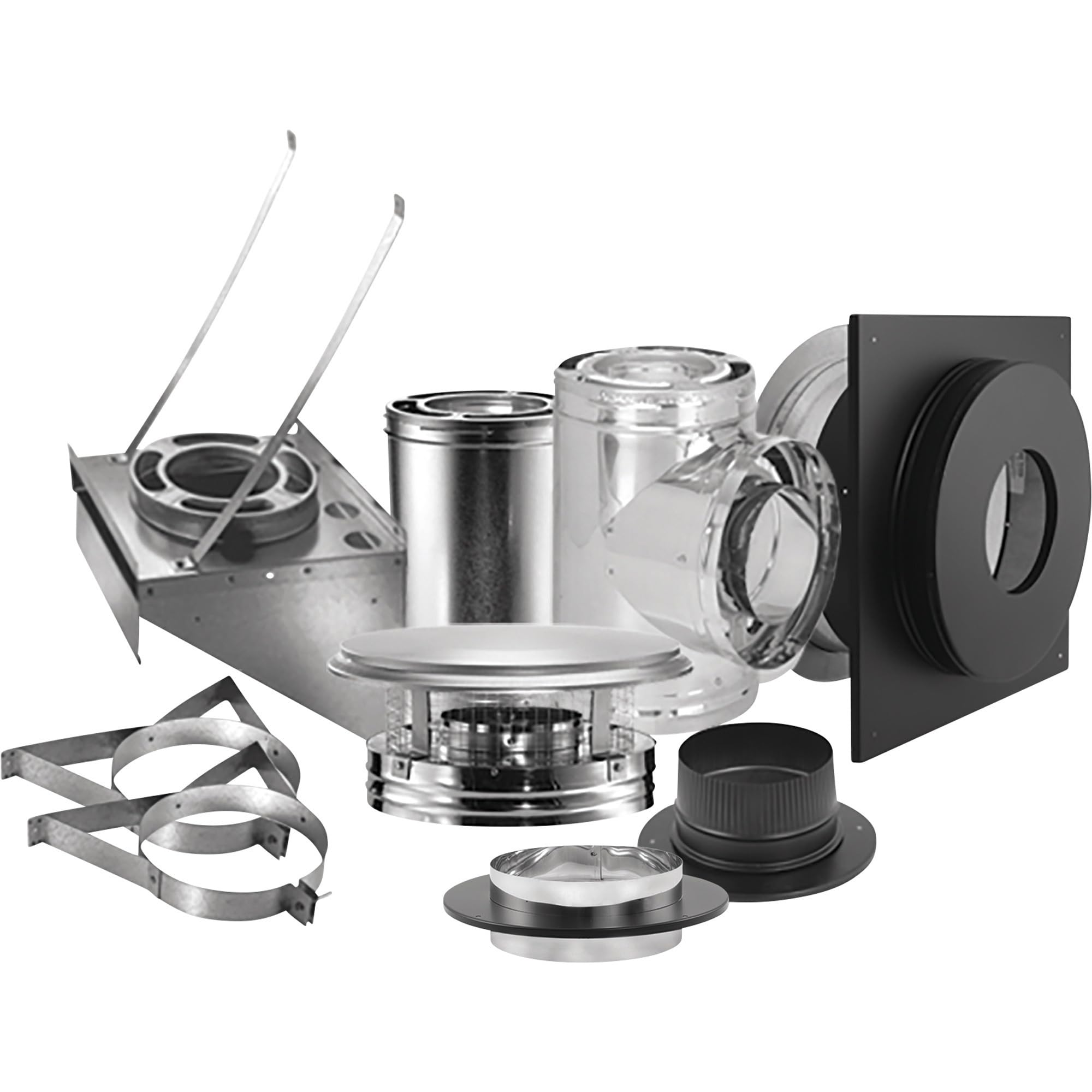
One box with the wall thimble, tee, straps, and cap — the whole through-wall turn.
Most chimney jobs mean assembling a dozen parts one at a time. This kit skips that scavenger hunt: it ships with a wall thimble, one 9-inch by 6-inch horizontal chimney pipe, a tee with a clean-out cap, a tee support, two wall straps, and a chimney cap. It is built for a 6-inch DuraPlus chimney pipe system and supports up to 40 feet of chimney pipe, which is not included. The triple-wall design carries the heat and a secure twist-lock joint holds the run together.
The quality gets top marks — buyers call it A+ and hand out five stars for the construction. When everything is there and the wall is prepped, the install moves quickly and the parts lock together as intended. The 38.4-pound kit is substantial, and it earns that weight with the tee support and straps that hold a heavy stack steady.
Two honest caveats decide who this suits. Installation splits hard — some find it clear, others confusing and hard to manage alone, so plan for a second pair of hands. And completeness divides buyers, with some saying the box has everything and others finding a part missing. Check the parts list against the box before you start, and confirm what your specific wall needs on top of the core kit.
The time-saver: thimble, tee, cap, straps, and support in one shot — no chasing down the small parts individually.
Plan the labor: installation confuses some buyers and calls for two people — line up help before the kit lands.
Ideal for: a through-the-wall wood stove install where you want the core components bundled together.
Budget for more: the chimney pipe itself is separate, and some boxes run short on a part — check the contents early.
11. 316 Stainless Steel Flexible Chimney Liner Kit 6 Inch x 25 Feet

Twenty-five feet of 316 stainless for the tall masonry chimney the 15-foot kits cannot reach.
Length separates this from the two FireSafe kits above. At 25 feet it reaches a tall masonry chimney that the 15-foot liners would leave short, and it is built from 316 stainless to take the creosote and moisture a wood flue produces. A quick-connect system means you tighten the clamps and the UL listed liner is set. It carries a UL1777 listing in the USA and a ULCS635 listing in Canada, and it is meant for masonry chimneys only.
The craftsmanship is what earns the trust here — this is a great quality liner that works well and installs more easily than you would expect for how stiff the steel is. Sturdiness and value both read strong. There is also a warranty detail that stands out: Rockford’s coverage is transferable to the next homeowner, which is rare for chimney parts. Complete do-it-yourself instructions come in the box, and the maker offers support before and after the sale.
Two fit points to weigh. Some buyers find the liner will not stretch at all and is hard to manipulate — flexible steel this long has a mind of its own going down a flue. And the top cap runs small on a 13-inch chimney, so a few need to adjust the plate. Both are sizing issues more than build issues, and measuring your crown before ordering settles most of it.
Reach for the tall flue: 25 feet covers chimneys the shorter kits fall short on, with 316 stainless throughout.
Stubborn to straighten: the liner does not stretch in the flue, so expect to work it down by hand.
Made for: a tall masonry chimney that needs 25 feet of reline and a warranty that follows the house.
Check the cap: the top plate is snug on a 13-inch chimney — measure before you commit.
Know the Specs
Inside diameter and clearance
The inside diameter — how wide the opening is where the pipe slides onto your stove collar — must match your appliance outlet. A 6-inch bore fits the common wood stove; an 8-inch bore fits wider furnaces and fireboxes. Clearance is the gap you must keep between hot metal and anything combustible. Single-wall pipe typically asks for 18 inches; an insulated double-wall or Class-A section drops that to as little as 2 inches because the jacket holds the heat in.
Wall type: single, double, and Class-A
Single-wall is a naked steel tube — strong on radiant heat, heavy on clearance. Double-wall wraps an inner liner in an outer casing to keep flue gases hotter for a better draft. Class-A is the full through-wall or outdoor system, often with an insulation blanket, certified to a fire standard like UL 103 HT. A flexible liner is a different animal again: it relines an existing masonry chimney and is not for a wooden wall or an open chase.
Installed length and overlap
The physical length on the box is longer than what you get once one end overlaps the next. Telescoping sections let you adjust on site to cover a gap without cutting metal. Plan the run in sections and leave room for the overlap so the finished stack reaches its height with a firm joint at each connection.
Stainless grade and seams
Look at the steel grade as well as the thickness. 304 and 316 stainless resist corrosion better than galvanized steel or 430 stainless, which matters on an outdoor stack facing weather. Seam construction — laser welded versus lock-seamed — affects how well the joint holds and how long the wall lasts. A 7-ply seam on a flexible liner, or a welded seam on Class-A pipe, keeps the assembly gas- and watertight.
Common Questions
Can I connect an 8-inch stove pipe to a 6-inch chimney?
What does an 18-inch clearance to combustibles actually mean?
Can I use any brand of Class-A pipe together in one run?
What is the difference between single-wall and double-wall stove pipe?
Is a flexible chimney liner kit the same as Class-A chimney pipe?
Why does my new stove pipe give off a burning smell on the first fires?
How do I know how many feet of liner I need for my chimney?
Can I install a through-the-wall chimney kit by myself?
What does a Class-A UL 103 HT rating tell me?
Why is the installed length shorter than the length on the box?
The Bottom Line
For most wood setups, the wood burning chimney winner is the Duravent DuraBlack 8″ Stovepipe because it solves the size problem so many stoves share — a wide 8-inch collar that 6-inch pipe simply cannot serve — in a welded stainless section with twist-lock ends and no on-site cutting. The caveat is the strict 18-inch clearance it asks for. If you would rather slide a section open to fill an awkward gap, grab the DuraVent DuraBlack 6DBK-TL Telescoping Pipe, which adjusts from 44 to 68 inches. And for an insulated run that hugs a wall, the AllFuel HST 6″ x 48″ Class-A is the one to reach for, with its 2-inch clearance and ceramic fiber blanket. Keep every Class-A section from one maker and the twist-lock joints seat and stay sealed.
How we choose
We do not accept paid placement. Every pick is matched to a real buyer and a real use-case; we do not hands-on test units.
Sources
Specifications: manufacturer listings and product documentation. Review insights: verified customer reviews, as of November 2026. Pricing: not shown on this page (it changes often); check the current price via the retailer link.
As an Amazon Associate, Tactical Gear Guy earns from qualifying purchases. This does not affect which products we feature.