Specs are compiled from manufacturer listings and verified buyer reviews and can change over time — please confirm the key details on the product page before buying.
Your Starlink Mini drops offline mid-drive, and nine times out of ten the dish is fine — the power going into it is not. A 12V socket sags and spikes under load, the dish browns out, and you get a reboot instead of a route. The fix is a boost converter that regulates a steady 30V output through those dips, and that is the split between the six picks below. The 105W car adapter solves the reboot problem outright for road trippers, so start there.
This guide is built by comparing the manufacturers’ published specifications and the patterns across verified customer reviews, so you get each pick’s real strengths and trade-offs instead of marketing spin.
Some of these units are AC wall adapters that replace the brick in your bag, and some are DC boost converters that turn a truck battery into dish-ready power. A 30V AC brick and a 12V-to-30V boost converter are not interchangeable, so pick by your power source first. Here is the honest read on every starlink power supply worth putting in your kit.
Top Picks

How To Choose The Best Starlink Power Supply
Start by asking one question: where will this thing live? If it stays in a vehicle, you need a DC converter that takes a sagging 12V socket and lifts it to the voltage the dish demands. If it lives in a bag or on a desk, you want an AC wall adapter that plugs into mains and outputs a clean 30V. Mixing the two is the most common mistake here — a wall brick cannot run off a truck battery, and a boost converter has no plug for a wall outlet.
Match the output to your dish, not to the marketing
The Starlink Mini wants a 30V 2A feed, which works out to 60W of power. Several units here hit that number exactly, and the Mini runs happily on them. The Gen 3 Standard dish is a different animal — it needs a 57V output, so a Mini adapter will not drive it. Check the output voltage on the label before anything else, because a mismatch here means the dish simply will not boot.
Protection is the whole point of a travel converter
A built-in fuse and heat-dissipating body are what stop a 12V spike from cooking your dish or your vehicle wiring. Look for short-circuit, overload and thermal cut-off in the listing. Units with a sealed aluminum shell or reinforced connectors handle the vibration and dust of a truck console or boat locker far better than an exposed plastic brick.
How the dish is wired changes your cable math
Starlink Mini typically runs off a barrel connector, so the adapter has to match that plug or supply a compatible DC cable. If you plan to mount the dish well away from the vehicle — on a mast, a roof rack, or across a campsite — the maximum supported cable run matters. One pick here supports a 300ft DC run, which changes what kind of install is possible for you.
Side-by-Side Comparison
| Model | Best For | Output | Input Range | Power Path | Amazon |
|---|---|---|---|---|---|
| 105W Boost Starlink Mini Car Adapter★ Best Overall | Vehicles and RVs | 105W DC + 30W USB | 12V–24V | DC boost with fuse | Amazon |
| UL Listed 30V 2A Power Supply AdapterThe Safety Pick | Mains replacement | 30V 2A, 60W | AC 100–240V | AC to DC, UL listed | Amazon |
| Starlink Mini Power Supply 30V 2A 60W | Travel spare | 30V 2A, 60W | AC 100–240V | AC to DC aluminum body | Amazon |
| 12V Battery Adapter with Step Up Converter | Extended cable runs | 30V DC output | 12V–24V | DC step-up with O-ring | Amazon |
| Starlink Standard 4X Gen 3 Power Adapter | Gen 3 Standard dish | 57V DC, 4.5A | 10V–36V | DC boost, aluminum shell | Amazon |
| DAIERTEK Power Supply AC Adapter 60W | Home and outdoor mains | 30V 2A, 60W | AC 100–240V | AC to DC, compact body | Amazon |
Detailed Reviews
1. 105W Boost Starlink Mini Car Adapter
Our pick — 4.5+★ from 200+ verified ratings; the strongest balance of quality and price.
The one that fixes the reboot before it happens, straight off your truck socket.
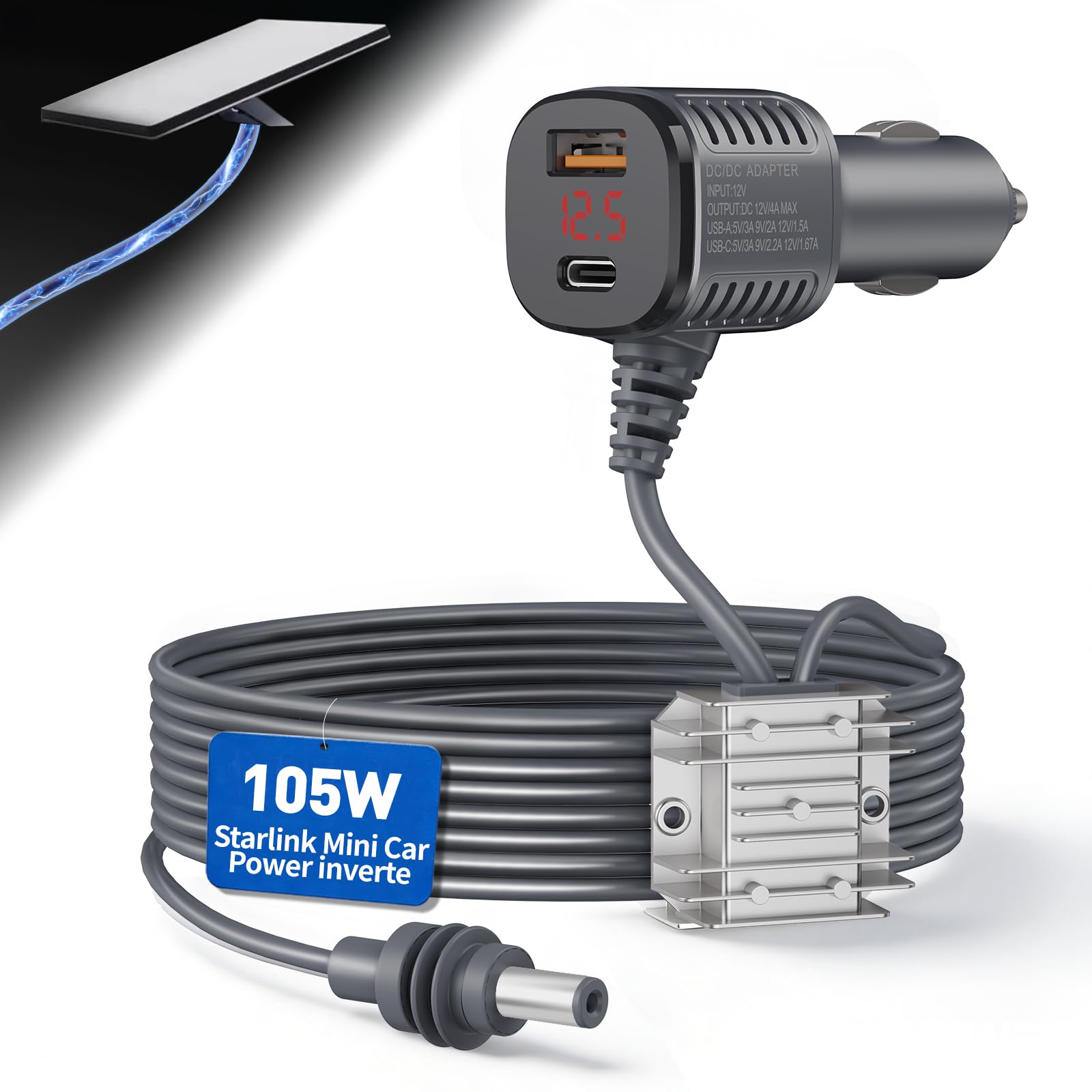
If you have ever watched your dish vanish mid-route and then crawl back to life, this adapter is aimed squarely at that. It takes whatever your 12V–24V socket is actually giving and boosts it to a 105W DC output that a Starlink Mini can hold onto. Unlike a basic pass-through cable, it regulates instead of trusting the vehicle. That single design choice is why it sits at the top of this list.
The number that matters is 105W. Against the 60W class of replacement adapters in this lineup, that headroom is the buffer that keeps the dish fed when the socket dips under load. There is also a 30W USB port on the same body, so a phone or a small device charges on the same run. A built-in digital display shows you the vehicle voltage before you switch the dish on, which turns a guessing game into a glance.
This travel pick earns its spot on build. A 6.5FT DC cable (the low-voltage power cord) gives you real slack between console and dish, so the cable reaches without stretching. The body runs heat dissipation plus a built-in fuse (a safety part that cuts power on a fault) against overheating, short circuits and overloads. Reinforced connectors take the flexing a drawer or console throws at a cable. What wins people over is that it just works in the vehicle — buyers report the restarts simply stop, and build quality comes up close behind.
The honest catch is weight and bulk: at 9.5 ounces it is a chunkier piece of kit than a bare cable, and it wants to live permanently in the vehicle rather than travel in a jacket pocket. A handful of buyers hit reliability snags, so buy from a seller with a clear return path. It also does nothing for you at home — it is a vehicle tool, not a wall adapter.
Where it pulls ahead
- 105W DC output holds the dish through a sagging 12V–24V socket
- Digital display lets you read vehicle voltage before powering up
- Built-in fuse plus heat dissipation guard against overloads
- 6.5FT cable and reinforced connectors suit permanent vehicle mounting
- Extra 30W USB port charges a phone on the same run
What to weigh up
- 9.5 ounces makes it a vehicle fixture, not a pocket spare
- No wall plug, so it is useless for indoor mains power
- A few units have needed a return, so buy where returns are easy
Reach for this if: your dish lives in an RV, truck, boat or overland rig and you are tired of dropouts mid-journey.
Look elsewhere if: you need a replacement brick for a wall outlet at home — this one has no mains plug at all.
2. UL Listed 30V 2A Power Supply Adapter for Starlink Mini
Third-party certification on a spare brick, which is not something you can say about most of this shelf.
Replacing a lost or failed wall adapter sounds simple until you realize how many cheap bricks are unlisted and untested. This one carries UL certification, which means a third party has checked the insulation and the failure modes rather than the seller self-declaring it. For a device that sits plugged in for hours, that is the spec worth paying attention to.
It outputs 30V 2A at 60W into a 4.6FT cable, which is the exact feed a Starlink Mini expects. The DC plug has been upgraded with a multi-layer waterproof silicone gasket, so dust and moisture stay out of the port and short circuits get harder to cause. The cable itself is 18AWG with a multi-layer winding structure for better electromagnetic shielding — in plain terms, less interference on the power line and a steadier signal. On the comparison front, it draws from a 120V AC input and delivers 2A, where the Gen 3 converter further down pushes 4.5A at 57V for a completely different dish.
Inside there is a smart IC chip handling overload cut-off, over voltage cut-off, thermal cut-off and short circuit protection, plus an Energy Efficiency VI rating the maker says saves 10%–20% over a Level V unit. What buyers keep coming back to is fit and function: it slots in as an original replacement and the dish behaves exactly as it did on the factory brick. That is about the highest praise a spare can earn.
The trade-off to know: this is an indoor wall adapter, so it does nothing for a 12V vehicle socket, and the 4.6FT cable is shorter than the 6.5FT run on the top pick. Buy it as a desk or cabin spare, not as your on-the-road power plan.
Worth it if: you want a certified, weather-sealed brick to replace a dead factory adapter or keep as a backup at the cabin.
Not your unit if: your power source is a truck battery rather than a wall outlet.
3. Starlink Mini Power Supply

Built to hop between wall outlets, UPS backups and solar setups without complaint.
Here is the pick for the person whose dish moves between a house, a camper and a friend’s cabin. The 100–240V input range means it tolerates different mains supplies, and it holds a steady 30V 2A output at 60W so the Mini never notices the change of scenery. It is also the pick that lists compatibility with Starlink Mini DC to DC cables across 2M, 3M, 5M, 10M, 15M and 46M lengths, which gives you real flexibility on how far the dish sits from the outlet.
The enclosure is aluminum rather than plastic, which matters for heat when the brick is running for hours on end. A reinforced anti-slip plug keeps the connection seated, and the body is described as compact and travel-ready for RV trips, camping and emergency backup. Against the UL-listed adapter above, this one takes a wider input range — 100–240V versus a 120V listing — which is the difference for anyone taking it abroad or running it off an inverter.
Smart voltage regulation is the claim that holds the experience together: it is there to smooth out the low-power hiccups that cause the Mini to shut down mid-session. Multi-layer protection covers over-voltage, over-current, over-heat and short circuit. There is no review history published for this listing, so judge it on the published spec sheet and the return policy rather than on testimonials.
Who it wins for: travellers who need one brick that works on several continents and off a solar or UPS feed, with cable runs up to 46M supported.
The gap to note: it will not power a Gen 3 Standard dish, and with no published owner feedback you are buying on spec alone — read the listing’s return terms before you commit.
Pick this one if: the outlet moves around and you want a single 60W aluminum brick to follow you.
Keep looking if: you need documented owner experience or a DC vehicle feed instead of a mains plug.
4. 12V Battery Adapter with Step Up Converter for Starlink Mini
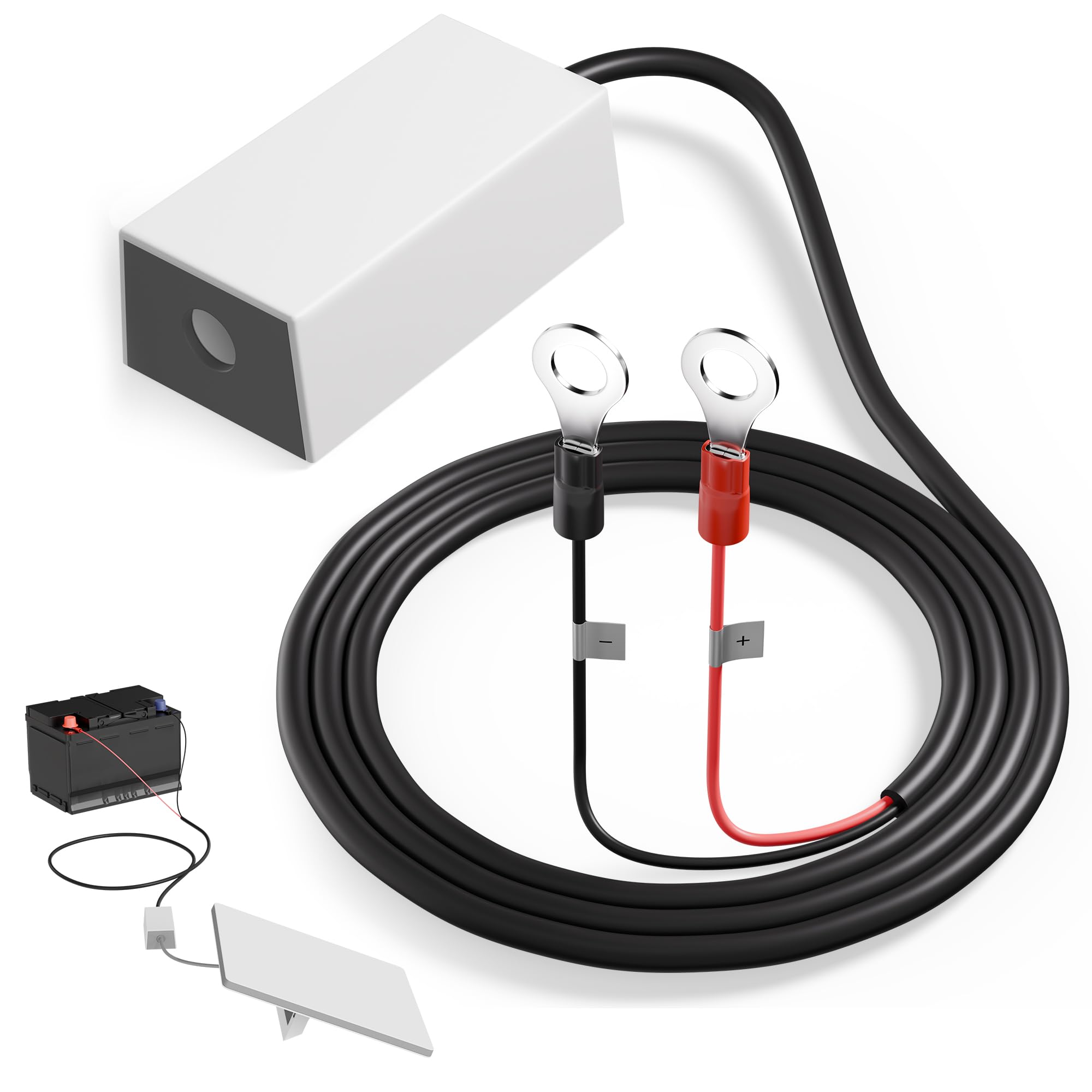
Runs the dish from a car battery and lets you pull the cable 300ft away from it.
Mounting the dish far from the vehicle is the problem this solves. The female DC plug on its step-up converter supports a 300ft maximum DC cable run, so a mast, a roof rack or a spot across the campsite is suddenly in reach. The converter takes 12V–24V in from the battery and lifts it to a 30V DC output, so a drop in battery voltage does not turn into a dish dropout.
An O-ring on the battery end keeps the connection clamped, which is the small detail that stops a cable wiggling loose on a rough road. It covers cars, trucks, buses, lorries and boats, and the build is aimed at protecting the dish from the voltage swings a vehicle electrical system produces. In this lineup it is the only unit that pairs a 30V output with that long-run cable ceiling, where the top pick caps its included run at 6.5FT.
Owners consistently describe the hookup as straightforward — compatibility and ease of use are the themes, with the connections described as secure once seated. There is a one-year warranty on the unit, which takes some of the risk out of a battery-side install. Functionality is the strongest thing about it in the field: it does the job of feeding the dish from the vehicle battery without fuss.
Why it earns a slot: 300ft of supported cable run plus a 12V–24V to 30V step-up makes long-distance dish placement practical, and the O-ring battery clamp survives vibration.
What you give up: it needs a battery to draw from and will not run off a wall outlet, so it is a vehicle-only solution — and you supply the long cable yourself.
Best matched to: overlanders and boaters who want the dish parked well away from the power source.
Not the one for you if: your install is a short hop from socket to dish with no long cable in the plan.
5. Starlink Standard 4X Gen 3 Power Adapter
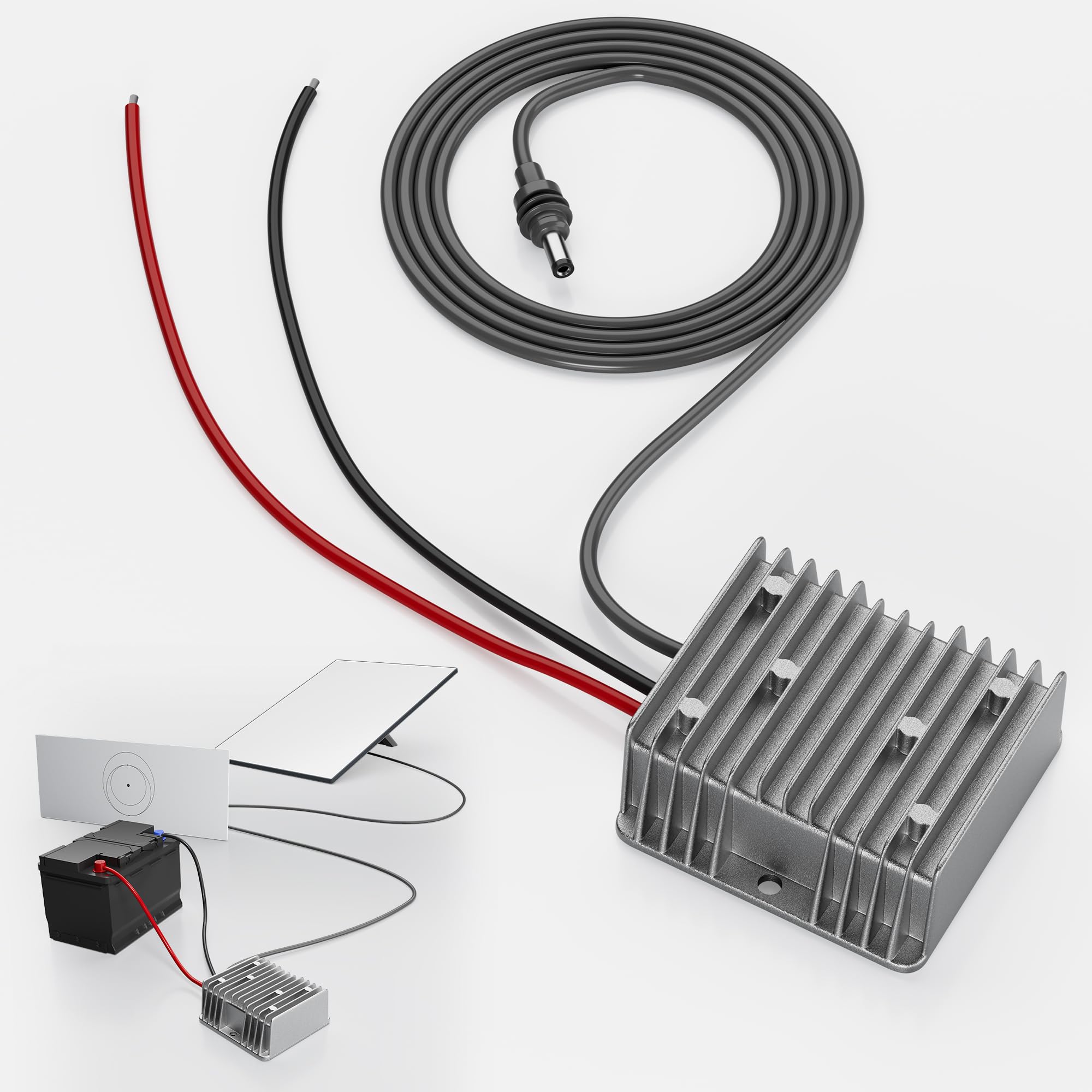
The odd one out here, because it feeds the bigger Standard dish rather than the Mini.
Every other unit on this list is built around the Mini’s 30V appetite. This one is for the Standard 4X, V3 or REV 4 Gen 3 dish and router, and it boosts from a 10V–36V vehicle input up to 57V DC at 4.5A. Against the Mini adapters putting out 30V, the 57V figure here is what the larger dish actually demands — plug the wrong one in and it will not boot at all. That makes it the correct choice for Gen 3 owners and the wrong one for Mini owners.
The construction is the interesting part. It is encased in an aluminum shell sealed with silica gel, and the input-side wiring is 14AWG to carry the current safely when the V3 hardware is drawing hard. The cable is made as one piece with no connector between plug and adapter, which removes a failure point that a two-piece design introduces. Protection covers overload, over-current, over-heating and short circuits.
Here is where honesty matters. Compatibility is what it does best, and owners mention it working with their Starlink gear and installing without drama. But the durability record is the weak spot, and it is not a stray complaint — repeated failures and units that stop delivering enough power show up often enough that a one-year warranty is worth leaning on. Some owners also find it runs warm in use.
Why Gen 3 owners pick it
- 57V DC at 4.5A is the output the Standard Gen 3 dish needs
- 10V–36V input range tolerates a sagging vehicle supply
- One-piece cable removes a connector failure point
- Sealed aluminum shell with 14AWG input wiring
The genuine risks
- The most-documented downside is durability — units failing short of expectation
- Some owners find it does not carry enough power for their setup
- Runs warm during operation, which is a known mixed point
Choose it when: you run the Standard Gen 3 dish off a truck or RV and need the 57V feed nothing else here provides.
Think twice if: you are powering a Mini, which needs 30V — this converter is the wrong tool entirely.
6. DAIERTEK Power Supply AC Adapter
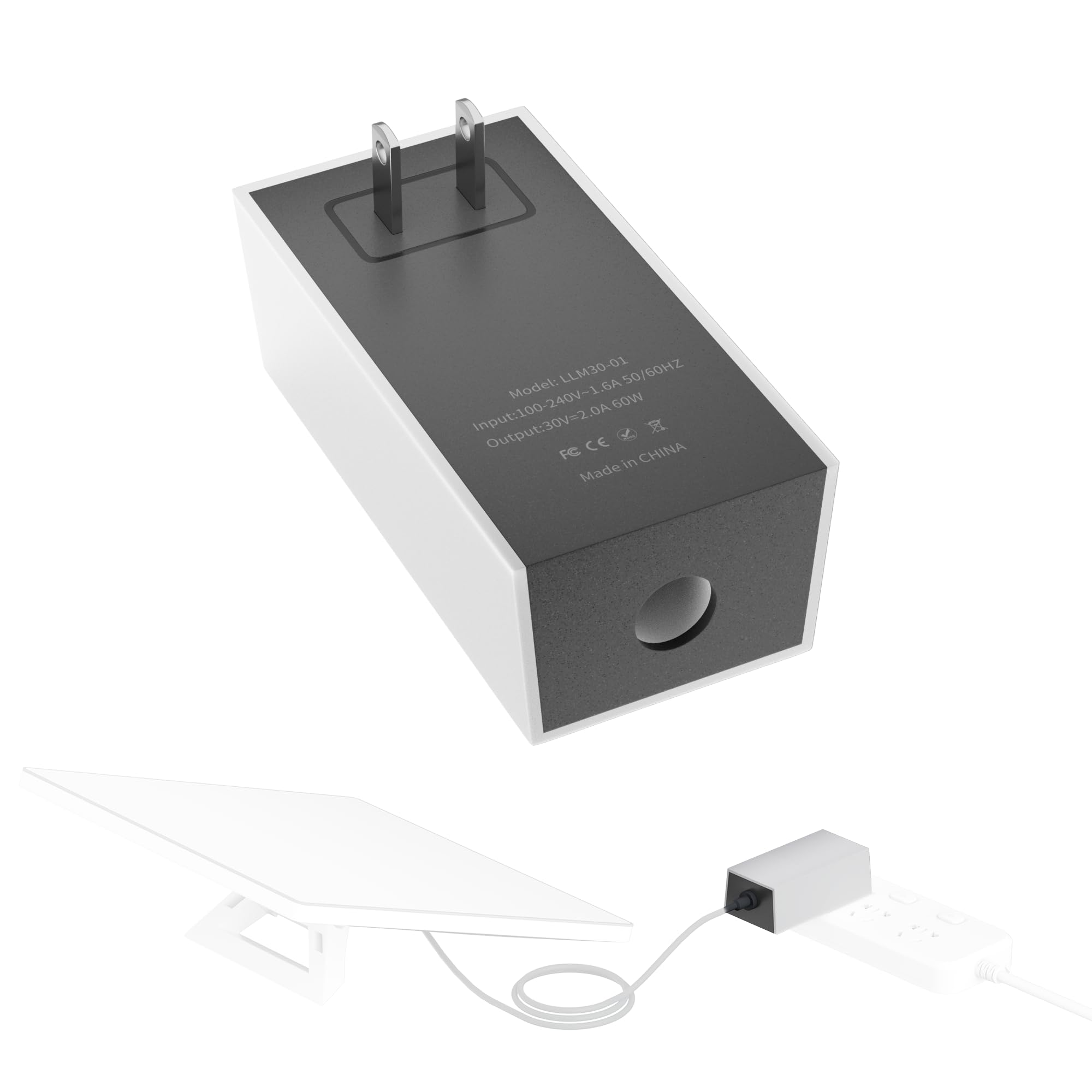
A spare brick small enough to live in the dish bag and forget about until you need it.
If you want a backup that simply sits quietly in the case, this is the shape to look for. It delivers 60W with a stable 30V 2A output to a Starlink Mini, and the body is built compact and light so it does not add a lump to your kit. The main draw here is the input flexibility: it takes 100–240V at 50/60Hz and 1.6A, which covers both home and outdoor use on standard mains. The plug arrangement supports both Type A and Type B North American outlets.
Safety layers run to anti-short circuit, anti-overload, anti-overheating and anti-overvoltage, which is the protection set you want when a device stays plugged in for hours. Function and quality are what buyers focus on, and the adapter is described as working well with the Mini without any surprises. It is listed as compatible with the Mini and Mini X, so it covers the current Mini hardware.
The straightforward read: 60W at 30V 2A with wide 100–240V mains input, in a compact body that suits a spare-charger role.
Where it stops: it is a wall adapter, so it needs mains power, and it will not feed a Gen 3 Standard dish that wants 57V.
Grab it for: a plug-and-go backup to leave in the bag for the Mini, at home or off a standard outdoor outlet.
Skip it for: vehicle-only use, where you need the DC boost a car socket requires.
Know the Specs
Output Voltage and Amperage
Output voltage is what the adapter feeds the dish, and it has to match the dish’s own demand. Starlink Mini runs on a 30V 2A feed — 60W of power — and most of the options here hit exactly that. The Standard Gen 3 dish is different and needs 57V at 4.5A, which is why that converter cannot substitute for a Mini adapter. Amperage is the current the unit can deliver; too little and the dish browns out under load. Check both numbers on the label before you buy, because a voltage mismatch means a dish that simply refuses to start.
Boost vs AC Adapter
A boost converter takes the lower, wobbling voltage from a vehicle socket or battery and lifts it to a steady output — this is what stops a sagging 12V supply from rebooting your dish. An AC adapter plugs into a wall and outputs a clean regulated feed, which suits a desk, cabin or RV with mains power but does nothing for a bare battery. Neither type is better — a boost converter fixes vehicle dropouts, an AC adapter replaces a dead wall brick. Match the type to your power source first, then compare wattage and protection.
Protection and Shielding
Cut-off circuits for over-voltage, over-current, over-heat and short circuits are what keep a spike from reaching your dish or your wiring. A built-in fuse is the physical backstop for the same job. Shielding matters too: an 18AWG cable with multi-layer winding, or a thicker 14AWG input wire, keeps current clean and interference low. On a moving vehicle, sealed aluminum bodies and reinforced connectors resist vibration and moisture better than exposed plastic.
Common Questions
Will a Starlink Mini power supply work with the Standard Gen 3 dish?
Why does my Starlink Mini keep rebooting while I drive?
Can I run a Starlink Mini off my car battery directly?
What is the maximum cable length I can run to the dish?
Does a UL listing on a power adapter actually matter?
How much power does a Starlink Mini need from an adapter?
Will these adapters work overseas on different mains voltage?
Can I power a Starlink Mini from a solar setup or UPS?
What protection should a travel power supply have?
Do I need a digital voltage display on a vehicle adapter?
The Bottom Line
Which starlink power supply you need depends on where the dish lives. For a vehicle, pick the 105W Boost Starlink Mini Car Adapter: its regulated 105W DC output (steady low-voltage power) and fused, heat-dissipating body target mid-route dropouts, so your connection holds while you drive. It is the strongest overall pick in this lineup. Need certified mains power for a spare at home? The UL Listed 30V 2A adapter carries third-party safety certification (UL Listed means an independent lab tested it). Running the larger Standard Gen 3 hardware? Reach for the 57V Gen 3 converter — nothing else here outputs the 57V that dish needs, so buy that one deliberately and keep the receipt.
How we choose
We do not accept paid placement. Every pick is matched to a real buyer and a real use-case; we do not hands-on test units.
Sources
Specifications: manufacturer listings and product documentation. Review insights: verified customer reviews, as of November 2026. Pricing: not shown on this page (it changes often); check the current price via the retailer link.
As an Amazon Associate, Tactical Gear Guy earns from qualifying purchases. This does not affect which products we feature.