Specs are compiled from manufacturer listings and verified buyer reviews and can change over time — please confirm the key details on the product page before buying.
Each of the four picks below builds real arch support into the footbed itself, so you don’t have to slide a separate insole on top. Each one solves a different problem: one handles wide feet and flat arches, another wins on waterproofing, another on weight. Decide if you need width, cushioning, or a low, planted ride, then match it to the shoe that delivers it.
This guide is built by comparing the manufacturers’ published specifications and the patterns across verified customer reviews, so you get each pick’s real strengths and trade-offs instead of marketing spin.
Support, width, and heel drop decide whether a hiking shoe helps your feet or fights them. The four picks below cover every one of those angles, and this breakdown of the best ortho hiking shoes keeps each claim tied to a spec you can check before you buy.
Top Picks
How To Choose The Best Ortho Hiking Shoes
Supportive hiking footwear is not a single product type. Some pairs build the arch into a molded insole shaped to the shoe. Others rely on a firmer midsole and a shank (a stiff plate under the foot) to stop your arch from collapsing on rocky ground. Knowing which of those you actually need is the whole decision.
Start with the insole, not the upper
The insole is the removable bed your foot sits on, and it is where support is either built in or missing. Oboz molds its O FIT insole to each shoe, which is why the arch contact feels continuous rather than like a bump under your midfoot. If a listing does not tell you what the insole is made of or how it is shaped, treat the arch support claim as unproven.
Heel drop changes how your calf works
Heel drop is the height gap between the heel and the toe, measured in millimeters. A 15 mm drop sits your heel noticeably higher, which many walkers find familiar and forgiving; an 8 mm drop sits flatter and asks more of your calf and ankle. Neither is better on its own — it is about what your legs are used to.
Waterproofing and breathability pull against each other
A waterproof membrane blocks rain and puddles, but it also traps heat unless it is designed to vent sweat. B-DRY is Oboz’s own membrane, built to keep water out while letting sweat escape. On a hot climb, a shoe with no membrane at all will always breathe better — so decide whether you hike wet ground more often than you hike hot ground.
Weigh the ounces before the last mile
A hiking shoe in the low 13 oz range disappears on your foot. Past 18 oz, you feel it lift with every step. For flat, well-groomed trails that extra weight buys you protection and structure; for long days with a lot of climbing, lighter wins. Be honest about which hike you actually do most.
Side-by-Side Comparison
| Model | Best For | Weight | Heel Drop | Waterproofing | Amazon |
|---|---|---|---|---|---|
| OrthoComfoot Men’s Wide Orthopedic★ Best Overall | Wide feet and flat arches | — | — | — | Amazon |
| Oboz Women’s Sawtooth II Low B-Dry | All-day trail comfort | 13.8 oz | 15 mm | B-DRY membrane | Amazon |
| Oboz Women’s Firebrand II Low B-DRY | Rough terrain protection | 18.3 oz | 15 mm | B-DRY membrane | Amazon |
Detailed Reviews
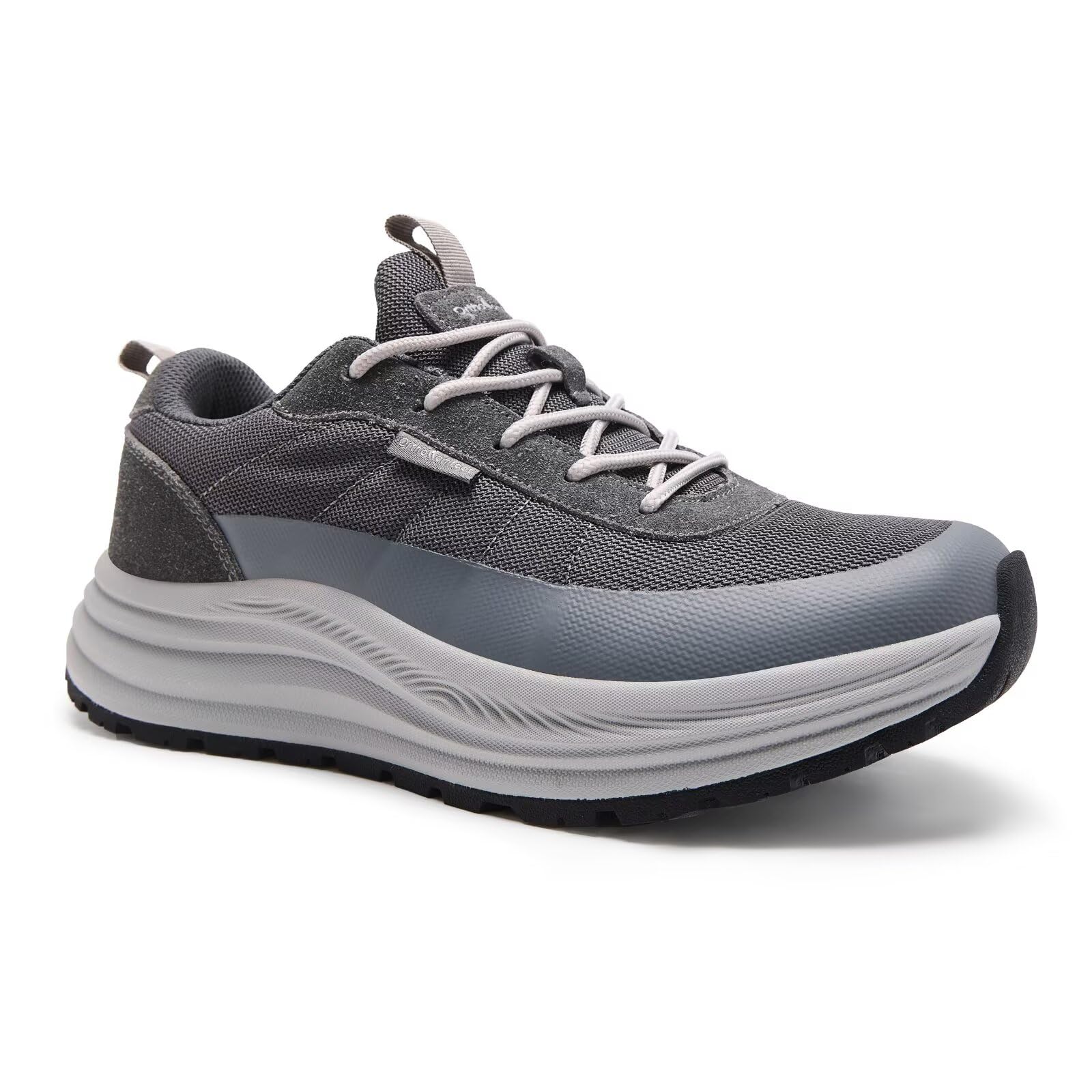
1. OrthoComfoot Men’s Wide Orthopedic Plantar Fasciitis Shoes
Our pick — 4.0+★ from 200+ verified ratings; the strongest balance of quality and price.
Built wide and built high, this is the pair you buy when every other trail shoe pinches your midfoot.
This is the pick for a man who has tried a standard-width hiking shoe and found his arch floating with nothing under it. The OrthoComfoot puts a pronounced, high arch support directly into the shoe’s own insole, so the support is there the moment you lace up — no extra insert, no trimming, no re-shaping. It is also cut wide, which is the spec that matters most if your last few pairs have left red marks across the ball of your foot.
What wins people over is comfort — it is the thing owners bring up more than anything else, and quality sits right behind it. Owners with plantar fasciitis are the most vocal group in the reviews, and they consistently report that feet sore after a shift on concrete no longer hurt. On the trail side, that same cushioning makes it a friendly shoe for long walks on packed dirt and gravel rather than technical rock.
The honest catch is sizing and wear. Fit comes in mixed — some buyers find it comfortably roomy, others find it runs large, so measure your foot rather than trusting your usual number. And while the uppers and cushioning hold up for most, a handful of owners have hit peeling vinyl on the sides, separation at the front tip of the sole, and early wear along the edges. That is a size-of-the-picture caveat, not a recall: this is an entry-level orthopedic shoe, and treating it as a dedicated walking and light-trail pair rather than a scree-field bruiser is the fair way to judge it.
Where this pair earns its keep
- High arch support is molded into the shoe’s own insole, so it is there from the first step
- Wide cut gives high-volume feet room across the ball instead of pinching
- Comfort is the single most praised trait, with quality close behind
- Owners with plantar fasciitis report their feet no longer ache after a work shift
What to know before you order
- Fit splits opinion — some find it roomy, others say it runs large, so check the size chart
- A small share of buyers report early wear at the sole tip and side panels
- Better suited to walking and packed trails than to rocky, technical ground
Buy it for: wide feet and high arches that need support built in, not bolted on.
Measure first: the fit runs generous enough that your usual size may swim.
2. Oboz Women’s Sawtooth II Low B-Dry

No blisters, no sore arches, no break-in week — the shoe that behaves from the first mile.
Oboz molds its O FIT insole to each specific shoe rather than dropping a generic bed inside, and that is the whole reason the arch contact here feels continuous. Owners back it up: comfort is the second most-praised trait and the recurring theme is feet that simply do not hurt afterward. The fit is generous through the toe as well, which is the number one complaint-killer for women with wide forefeet who normally size up just to get room.
Quality is the trait owners bring up most often, and durability and stability follow close behind. Traction is close to unanimous — the Sawtooth outsole grips well enough on mixed surfaces that slipping barely registers as a worry. Add the B-DRY membrane, which blocks outside moisture while letting sweat escape, and you have a low hiker that handles a muddy morning without turning into a swamp by lunch.
Here is the number that makes it a distinct choice rather than a duplicate of the Sypes below: its heel drop is 15 mm, against the Sypes’ 8 mm, and it weighs 13.8 oz against the Sypes’ 13 oz. That 15 mm drop sets your heel higher, and many walkers find it the more forgiving stance on long descents. It is the heavier of the two, but only just, and the extra structure is what pays you back on a full day out. Value is the one soft spot — a slice of owners feel the shoe is a letdown for what it costs.
The daily-hike read: a waterproof low hiker with a molded arch and a 15 mm drop that suits walkers who like their heel planted and their toes free.
Fair warning: a smaller group of owners find the price hard to justify once the miles add up.
Reach for this if: you want one waterproof pair for daily hikes and errands and you value cushioning over saving ounces.
Look elsewhere if: you want the flattest, lightest ride in this lineup — the Sypes below sits lower.
3. Oboz Women’s Firebrand II Low B-DRY
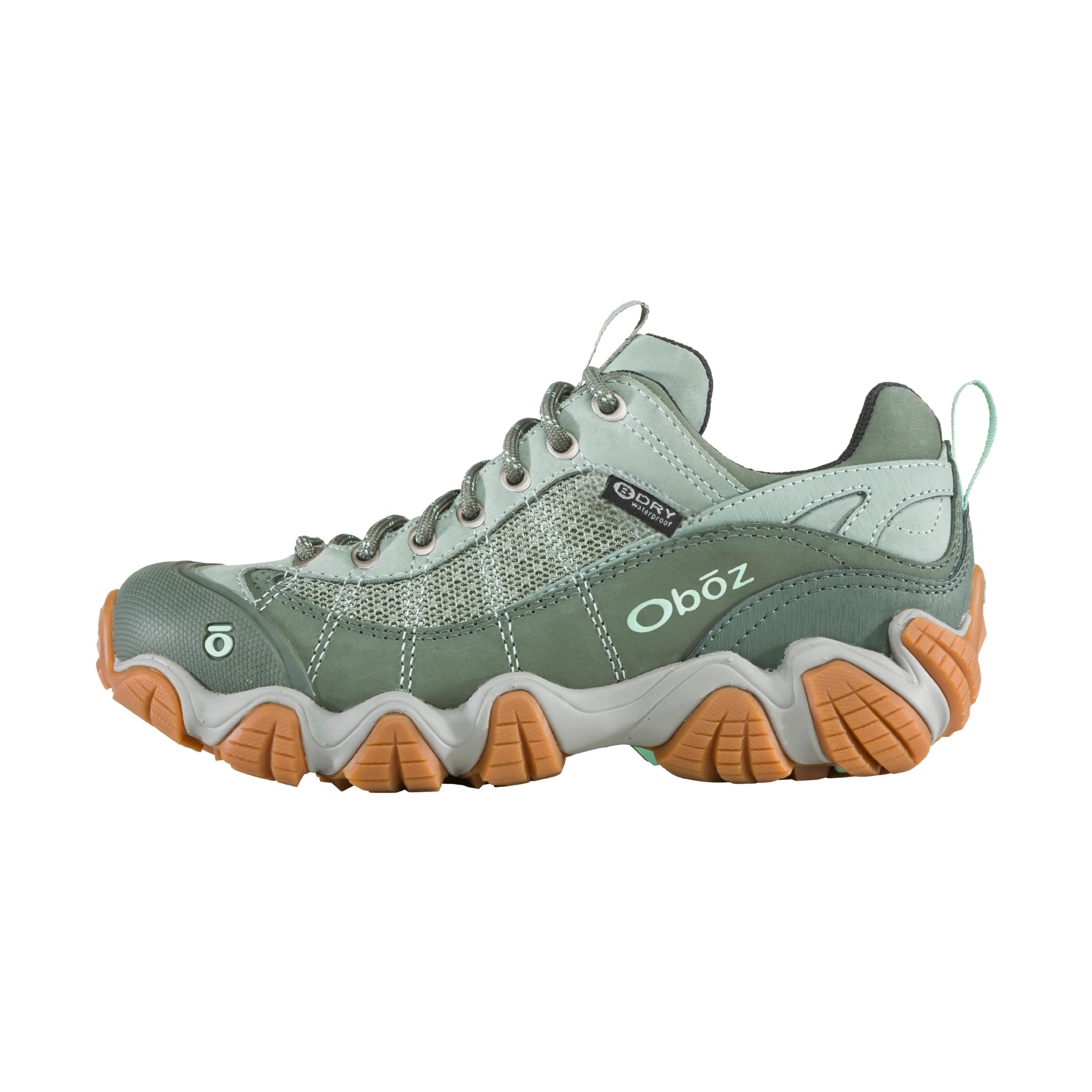
The armored one — a rubber toe cap and 18.3 oz of shoe for ground that bites back.
If the trail has loose rock and roots, this is the build that shrugs it off. A molded rubber toe cap guards the front of your foot from stubbed toes, the upper pairs waterproof nubuck leather with abrasion-resistant textile, and the same Sawtooth midsole and outsole from the Sawtooth II sits underneath. Width and volume both run standard-to-wide, which suits a higher-volume foot far better than the narrow Sypes above.
Owners rate fit as its strongest trait after quality, and narrow-footed wearers report it stays comfortable for miles. Fit is the trait they praise most after quality, and the recurring picture is a shoe that suits narrow feet well and stays comfortable for miles. Arch support, durability, and grip on rough terrain all come up as strengths, and the looks earn their own compliments. The combination of Sawtooth cushioning and that protective cap makes it the most confidence-inspiring pair on broken ground.
That protection has a cost, measured in ounces. At 18.3 oz the Firebrand II is 4.5 oz heavier than the Sawtooth II’s 13.8 oz and 5.3 oz heavier than the Sypes’ 13 oz — and its 15 mm heel drop matches the Sawtooth II rather than the flatter Sypes. Comfort itself gets mixed marks: plenty of women find it superb, and a share find it uncomfortable enough to mention. It is also the most expensive pick in this group. If your hikes are short and paved, the weight and the extra outlay are hard to justify — but for rough terrain, they buy you real protection.
Where it wins: a molded rubber toe cap, standard-to-wide volume, and Sawtooth traction add up to a shoe that handles rough terrain without flinching.
Where it costs you: 18.3 oz on each foot plus the highest price in the lineup, and a minority of owners never find it comfortable.
Pick it when: rocky, rooty trails are your regular ground and you want toe protection and volume.
Pass when: you hike flat paths and would resent carrying 18.3 oz per foot for protection you never use.
Know the Specs
Heel Drop (Why 8 mm and 15 mm Feel Different)
Heel drop measures how much higher the heel sits than the toe, in millimeters. An 8 mm drop like the Sypes puts you nearly flat, so your calf and ankle do more of the work — familiar if you walk in low trainers. A 15 mm drop like the Sawtooth II and Firebrand II lifts the heel, which takes load off a tight calf and often feels steadier on long descents. Neither is a fault; the right number is the one closest to what your legs already know.
Molded Insoles and Where Support Comes From
Arch support only works when it sits under your arch continuously. Oboz molds its O FIT insole to each shoe model, so the curve under the midfoot follows the shoe’s own shape rather than a generic template. That is why these picks feel supported from the start instead of needing a separate insert. When you shop around, look for a listing that names the insole material or construction — if it does not, you cannot tell whether the support is real or just marketing.
Waterproof Membranes and Sweat
A waterproof membrane is a thin layer that stops liquid water but still lets vapor pass. Oboz’s B-DRY layer does both jobs, so a puddle does not soak your sock and a climb does not leave you stewing. The trade-off is breathability: any membrane reduces airflow compared with an open mesh upper, which is why the mildest, driest hikes are where a non-waterproof shoe still makes sense.
Weight in Ounces and How It Compounds
A shoe’s weight is quoted per shoe, and every extra ounce is lifted with every step. The gap between 13 oz and 18.3 oz is more than 5 oz — on a long climb, that difference shows up in your quads before it shows up on the scale. Lighter pairs suit fast, flat days; heavier pairs buy protection and structure for rough ground. Match the number to the hike you actually walk.
Common Questions
Do orthopedic hiking shoes need a separate arch-support insert?
Is a 15 mm heel drop better than 8 mm for sore arches?
Will the Oboz B-DRY membrane make my feet sweat?
How do I know if I need a wide-width hiking shoe?
Which is lighter, the Sawtooth II or the Sypes Low Leather?
Are these shoes stiff when they arrive?
Can I wear orthopedic hiking shoes for everyday walking and work?
How long should a waterproof hiking shoe last?
Do these hiking shoes actually help plantar fasciitis?
What is the difference between the Sawtooth II and the Firebrand II?
The Bottom Line
For most people, the ortho hiking shoes answer is the OrthoComfoot Men’s Wide Orthopedic, because it puts high arch support in the shoe’s own insole and cuts wide for feet that other trail shoes squeeze. If you want a waterproof daily hiker with a molded insole and a heel-friendly 15 mm drop, the Oboz Women’s Sawtooth II Low B-Dry is the one to take. A narrower foot that prefers a flatter, lighter ride belongs in the Sypes Low Leather, and rocky ground with roots and stubs calls for the toe-capped Firebrand II. Start with the fit that matches your foot’s width — every other advantage disappears if the shoe pinches.
How we choose
We do not accept paid placement. Every pick is matched to a real buyer and a real use-case; we do not hands-on test units.
Sources
Specifications: manufacturer listings and product documentation. Review insights: verified customer reviews, as of November 2026. Pricing: not shown on this page (it changes often); check the current price via the retailer link.
As an Amazon Associate, Tactical Gear Guy earns from qualifying purchases. This does not affect which products we feature.