Specs are compiled from manufacturer listings and verified buyer reviews and can change over time — please confirm the key details on the product page before buying.
In cold plunge water, your toes go numb first. A proper neoprene sock puts a thin layer of insulating foam between your skin and the icy water, so you can stay in longer and get the recovery benefit instead of white-knuckling through thirty seconds. The lists below cover nine real options — from a slim 1.5mm dive sock to a thick 3mm wading sock — with the thickness, sole design, and fit notes that matter when your feet hit 40-degree water.
This guide is built by comparing the manufacturers’ published specifications and the patterns across verified customer reviews, so you get each pick’s real strengths and trade-offs instead of marketing spin.
Thickness is the spec worth checking first, because a 1.5mm sock and a 3mm sock feel completely different in the plunge. The picks below spell out each sock’s thickness, sole, and fit so you can choose without guessing.
Top Picks


How To Choose Neoprene Socks for Cold Plunge
Cold plunge socks are not the same as a pair of swim socks for fins or beach volleyball. The water is cold enough that insulation and a snug seal do most of the work, and a loose sock that fills with water defeats the whole point. Here is what to check before you buy.
Thickness in millimeters is the first decision
Neoprene thickness in millimeters (the foam layer between your skin and the water) is the single biggest factor in warmth. A 1.5mm sock is thin enough that you still feel the cold but it fits easily inside a fin or a snug plunge boot. A 3mm sock blocks noticeably more cold but takes up more room and can feel bulky if your plunge footwear is tight. For straight cold plunge without fins, 2.5mm to 3mm is the range most people land on.
Seams and stitching decide how much water gets in
Neoprene itself does not absorb water, but the seams are where water sneaks in. Look for flatlock seams, blind stitching, or glued-and-blind-stitched construction — all of which keep the join flat against your foot and cut down on flow inside the sock. A sock with open or poorly finished seams will fill up the moment you step in.
Fit has to be snug, not tight
A neoprene sock works by trapping a thin layer of water against your skin and letting your body warm it. That only happens if the sock sits close to your foot. Too loose and the water keeps flushing through; too tight and your toes go numb from pressure rather than cold. Anatomically shaped socks with distinct left and right patterning tend to fit better than one-shape-fits-both designs, especially inside a boot or fin.
Anti-slip soles for the wet deck
A dotted or coated sole gives real grip on wet tile, a boat deck, or a pool surround. Smooth-bottom neoprene socks slide. Smooth-bottom neoprene socks slide on a wet exit.
Side-by-Side Comparison
| Model | Best For | Neoprene Thickness | Construction | Weight | Amazon |
|---|---|---|---|---|---|
| Simms Neoprene Wading Socks★ Best Overall | Cold plunge with wading boots | 2.5mm | Perforated drainage underfoot | — | Amazon |
| Sporti Neoprene Swim Fin SocksBudget Champion | Budget fin socks | Mid-weight | Soft cushioned neoprene | — | Amazon |
| ZCCO 1.5/3mm Neoprene Diving SocksMost Versatile | Best value all-rounder | 1.5mm / 3mm | Four-needle six-thread stitching | 7.05 oz | Amazon |
| XUKER 3mm Neoprene Water Socks | Beach and sand use | 3mm | Glue blind stitch | — | Amazon |
| Tilos 3mm Ankle Neoprene Socks | Most comfortable fit | 3mm | Flatlock bound seams | 6 oz | Amazon |
| Zone3 Neoprene Swim Socks | Triathlon swims | — | Thermal swim sock | 11 oz | Amazon |
| Synergy Swim Socks Neoprene Swim Booties | Open-water swimming | 2.5mm | Smoothskin lining, silicone thread | — | Amazon |
| Canarie ST Anatomically Shaped Neoprene Thermal Socks | Spearfishing and freediving | 2mm | Blind and glued stitches | 5.76 oz | Amazon |
| CRESSI Adult 3mm Neoprene Camouflage Socks | Grip on wet decks | 3.0mm | Anti-slip speckled coating | 5.6 oz | Amazon |
Detailed Reviews
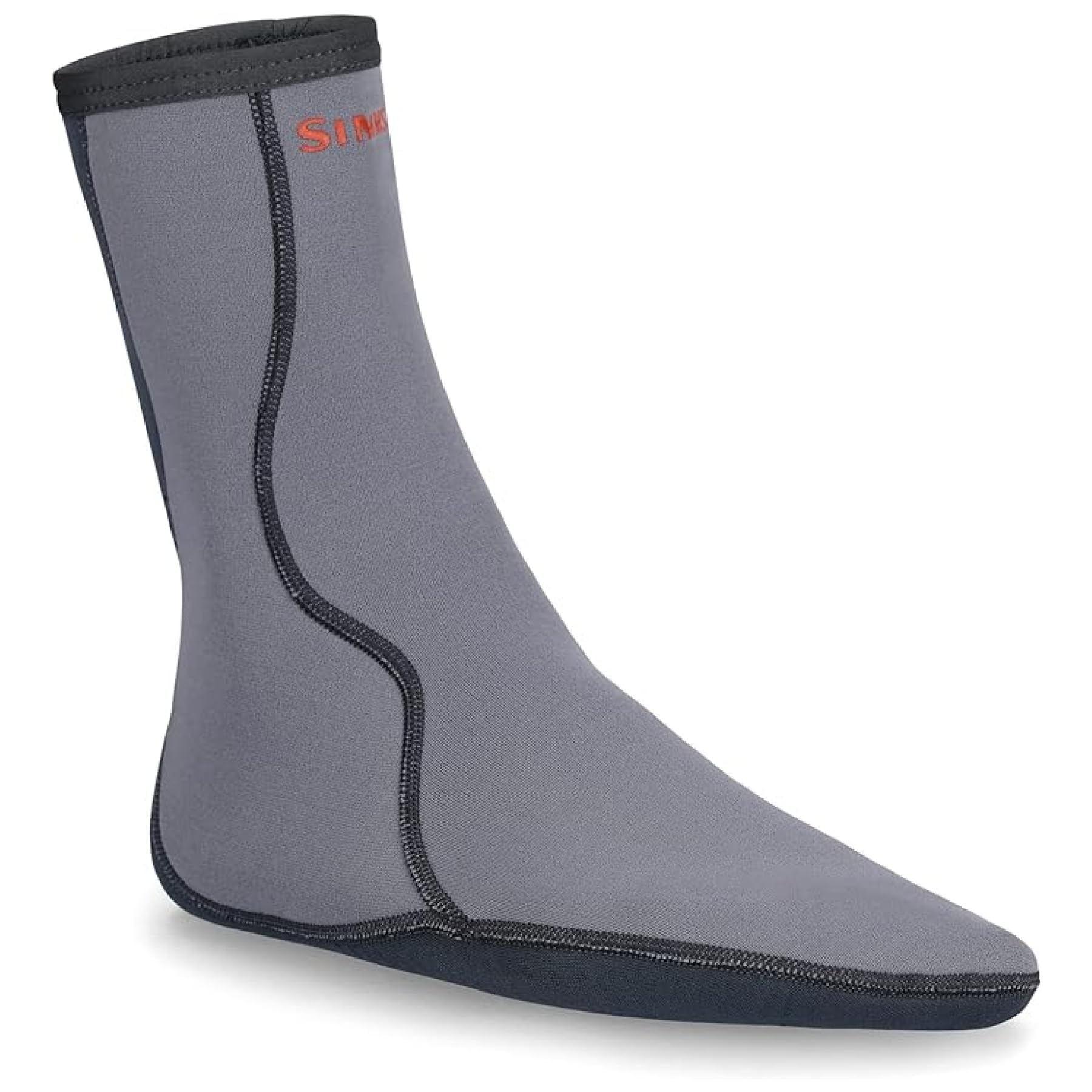
1. Simms Neoprene Wading Socks
Our pick — 4.5+★ from 80+ verified ratings; the strongest balance of quality and price.
A wading sock that drains water instead of holding it against your toes.
The 2.5mm abrasion-resistant neoprene is the headline here, and it is a smart middle ground for cold plunge work. It is thick enough to blunt the shock of icy water on your skin, but still low-profile enough that the sock slides into a wading boot or a snug plunge shoe without bunching. Simms built these for anglers who spend long days wet wading, so the sock is designed to take a beating on rock and riverbed rather than just look the part.
What really earns the spot is the perforated neoprene underfoot. Most neoprene socks trap water in the sole, so every step squelches. The perforations give that water somewhere to drain, which keeps your feet drier and cuts down on the clammy feeling after you climb out. The anatomically correct left and right patterning is the other thing that matters — each sock is shaped for the correct foot, so you get a contoured fit instead of a tube that bunches at the arch.
The honest catch is sizing. The sock is available in unisex XS through XL with men’s and women’s conversions, and the fit runs true for some buyers but small for others. Order based on the size chart rather than your usual shoe size, and leave a little room rather than sizing up hard. It is also a low-profile sock, so if you want maximum insulation for very cold water, a thicker 3mm option will feel warmer.
What works in the water
- 2.5mm neoprene balances warmth with a low-profile fit inside boots
- Perforated underfoot lets water drain rather than pooling in the sole
- Anatomically correct left and right shaping for a contoured fit
- Abrasion-resistant construction built for rock and riverbed
- Unisex XS–XL sizing with clear men’s and women’s conversions
Where it asks a little patience
- Sizing runs small for some buyers — check the chart carefully
- 2.5mm is thinner than a full 3mm sock, so less insulating in the coldest water
- No advertised anti-slip sole for wet deck traction
Go for it if: you want a durable, drainage-friendly sock that disappears into a wading boot or plunge shoe without bulk.
Think twice if: you need the maximum insulation of a 3mm sock or you want a grippy dotted sole underfoot.
2. Sporti Neoprene Swim Fin Socks
The entry-level pick that keeps your feet out of direct contact with the cold.
These are mid-weight neoprene (thick enough for comfort, thin enough to slide inside a fin) and they are the cheapest way onto this list. If you are just starting cold plunge and want to test whether a sock helps before spending up, this is the sensible first pair. They fit inside most swim and snorkeling fins and the material is soft and cushioned against the skin.
The real weakness here is durability. A chunk of the negative feedback centers on the soles wearing through and developing holes after repeated use, which is a fair warning for anyone planning daily plunge sessions. The fit also runs big for some buyers, and the socks do not conform well to narrower feet. If your feet are narrow or you are between sizes, this is the pair to skip.
The value read: for a low-cost test pair to wear inside plunge shoes or fins, the cushioning and warmth are solid for the tier.
The honest limit: thin soles wear through with heavy use, and the fit skews large — plan on a snugger size or a different pair if your feet are narrow.
Solid starter pair: for trying neoprene in the plunge for the first time without a big outlay.
Look elsewhere if: you have narrow feet or plan on using them every single day.
3. ZCCO 1.5/3mm Neoprene Diving Socks
Half the thickness of the Tilos sock — 1.5mm versus 3mm — so it slides into fins without crowding your toes.
The thinner foam is the point here. At 1.5mm, this sock is half as thick as the Tilos 3mm Ankle Neoprene Socks, which means your foot still feels the cold more but you gain room inside a snug plunge shoe or fin pocket. For cold plunge, a 1.5mm sock is a light layer rather than a deep-winter insulator, so it suits shorter plunges or buyers who run warm. ZCCO builds it from 90% neoprene and 10% nylon, which keeps it soft and stretchy against the skin.
The construction is what holds up: four-needle, six-thread stitching gives the seams real strength, and the staircloth sole is non-slip and wear-resistant, so stepping onto a wet deck is less of a gamble. The sock weighs 7.05 ounces, light enough to forget you are wearing it. It also packs flat for travel, which is handy if you plunge away from home.
Be honest about the trade-off: at 1.5mm this is not a heavy insulator, so in genuinely cold water your toes will still know it. The durability is also a mixed bag — some buyers report seams separating and elastic bands splitting over time. If you want a warmer sock for very cold water, the 3mm Cressi below will hold heat better. There is also a smell when you open the bag, which the brand itself says fades after a cold-water hand wash and air dry.
Why it earns the versatile tag
- 1.5mm neoprene fits into fins and snug plunge boots without crowding
- Four-needle, six-thread stitching for strong seams
- Non-slip, wear-resistant staircloth sole grips wet surfaces
- Only 7.05 oz and packs flat for travel
- Soft 90% neoprene / 10% nylon mix against the skin
Sizing and honesty notes
- 1.5mm is a light layer — not enough insulation for the coldest water
- Seams and elastic bands have been reported to separate over time
- Needs a cold-water hand wash and air dry to clear the new-neoprene smell
Made for fin wearers: buy this if you want a thin, grippy sock that fits inside plunge footwear without bulk.
Not the cold-weather pick: if you plunge in genuinely frigid water, step up to a 3mm sock for more insulation.
4. XUKER 3mm Neoprene Water Socks
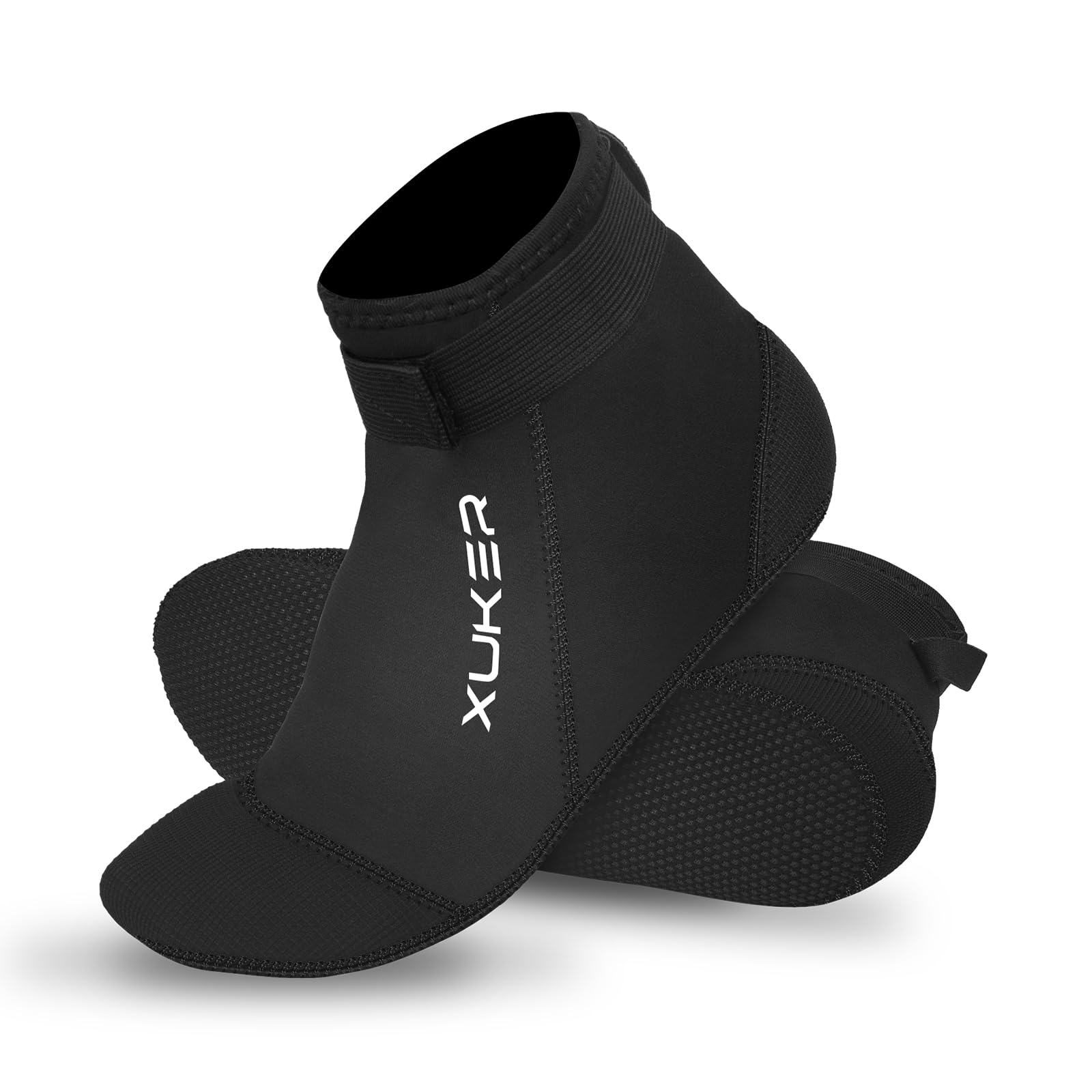
A 3mm sock that keeps sand and small rocks out — and heat in.
Three millimeters of neoprene puts this in the warmer half of the list, which makes it a reasonable cold plunge choice when you want your toes to stay comfortable rather than merely protected. The ergonomic design keeps the fabric from wrinkling across the top of your foot, so walking barefoot on the beach or the deck feels close to normal. The glue-blind-stitch construction with smooth-skin openings limits how much water flows in, which is exactly the detail that keeps the trapped water layer warm.
What stands out in the product details is the coating on the bottom — a tougher-than-standard anti-slip sole that handles sand, wet rock, and the walk back from the plunge. It is 90% neoprene and 10% nylon, which gives it the stretch to pull on without fighting. The XUKER also works as a sand sock for volleyball or beach soccer, so it earns its keep beyond the plunge tub.
Here is the real limitation: XUKER says plainly these are not 100% waterproof, because glue blind stitching minimizes water coming in rather than blocking it entirely. That is fine for keeping feet warm in a plunge, but do not expect a dry-foot seal like a boot. Durability is also a mixed note — some buyers find them tough, others say they wear out before a full season. Treat them gently and they will serve you well.
The fit-and-function read: the 3mm neoprene and coated sole make it a strong all-rounder for plunge, beach, and sand sports, and the glue-blind-stitch openings help retain warmth.
The careful note: they are not fully waterproof, and the sole can wear through with hard use — not a daily-use tank.
Great crossover sock: choose this if you want warmth plus anti-slip grip for plunge, beach, and sand sports.
Not for dry feet: if you need a fully waterproof seal, this one will let a little water through by design.
5. Tilos 3mm Ankle Neoprene Socks

Three millimeters of comfort-first neoprene that keeps your feet happy in cold water.
If comfort is your main concern, this is the sock that gets mentioned for it more than anything else on the list. The 3mm limestone neoprene is blown from limestone rather than oil — the brand markets it as X-Foam — and it holds the shape of your foot with four-way stretch instead of bunching at the arch. That shaping matters when you are standing in cold water for minutes at a time: a sock that bunches creates pressure points, and this one does not. It is also hypoallergenic, which matters for anyone who reacts to older neoprene.
At 6 ounces it is light enough to forget, and it packs down smaller than a water shoe, so it travels well. The flatlock seams are bound and lie flat against the foot, so there is no ridge digging into your instep inside a boot. The dotted sole grips wet pool deck and hot sand, which makes the exit from the plunge safer than a smooth-bottom sock. It comes in plain and digital camo, and the size range runs X-Small through 3X-Large on the plain sock — one of the widest on the list.
The recurring gripe is durability. Some owners mention the sock coming apart at the seam after as little as one use, and the bottom wearing out quickly. It is not universal — plenty of owners find them very durable — but it is the risk you accept for the comfort. Size runs true for most, though a few buyers find the fit off. If you want a sock that will take years of hard daily use, a heavier-built option may last longer.
Why buyers keep coming back
- 3mm limestone neoprene for real warmth in cold water
- Four-way stretch holds shape and avoids bunching at the arch
- Hypoallergenic foam suits sensitive skin
- Dotted sole grips wet tile and sand on the exit
- Wide X-Small to 3X-Large size range on the plain sock
What to watch for
- Seam separation has been reported after as little as one use
- The bottom can wear out quickly with heavy use
- Fit is off for a few buyers — check the chart before ordering
Pick for comfort: buy this if a soft, shaped fit and a grippy sole matter more to you than maximum lifespan.
Pick for longevity: if you plunge daily and want a sock that lasts for years, a heavier construction will serve you better.
6. Zone3 Neoprene Swim Socks

A thermal swim sock built for the triathlon crowd, with one big sizing caveat.
Zone3 makes gear specifically for triathletes, and these socks are in that same lane: a thermal layer you wear under a wetsuit for cold open-water swims. The 11-ounce weight is the heaviest on the list, which reflects the thicker thermal construction. If you are a triathlete who wants warm feet on race morning, this is on-brand gear from a company that equips swimmers.
The real issue is sizing. The fit gets the most mentions of any aspect here, and it leans small — a lot of customers note they run tight and small. If your feet are wide or you are between sizes, order up a size or more. At 3.5+ out of 5 stars, this is the lowest-rated option on the list, and the reason is almost entirely sizing, not the neoprene itself. The quality itself gets positive nods from the buyers who get the fit right.
For cold plunge use specifically, these work fine if you get the size right: the thermal construction is warm, and the sock fits under a wetsuit without bunching. But because the fit is the recurring issue, this is the pick to avoid if you cannot return easily. If you can try it and size up, it delivers.
The triathlon angle: thermal construction from a race-focused brand, with a weight of 11 ounces that reflects real insulation.
The fit warning: sizing runs small for many buyers, so order up and buy where you can return.
For triathletes who can size up: a thermal swim sock from a brand that knows race day.
Not the easy pick: if you want true-to-size fit from the start, this one will need some trial and error.
7. Synergy Swim Socks Neoprene Swim Booties

Warmth is the whole story here — 2.5mm neoprene with a smoothskin lining that holds heat in.
The 2.5mm insulating neoprene is the core of this sock, and warmth is what it does best. Owners consistently note the heat retention. The smoothskin lining and long hose design cut down on water entry, which is what keeps that heat trapped against your skin rather than flushing out. The silicone thread helps hold the bootie in place, so it does not rotate or slip while you are moving.
Because it is a 2.5mm sock, it fits comfortably between the thin 1.5mm ZCCO and a full 3mm diving sock — good insulation without the bulk of the thickest options. It is 100% nylon bonded to neoprene, with medium stretch and a slim fit type. For cold plunge, that slim fit is what you want, because a loose bootie fills with water and defeats the insulation.
The honest catch is fit and water resistance. The fit is the most-discussed aspect here, and it is mixed — some owners rave about the fit, others say the booties are too loose and slip down. Water resistance is also a mixed report: some say water runs right through. The 30-day guarantee softens the risk, so you can try them and return if the fit is wrong. Buy true to size and expect a snug fit, not a loose one.
Why it holds heat: 2.5mm neoprene, a smoothskin lining, and a long hose to limit water entry make this one of the warmest the list has to offer.
The fit gamble: booties can run loose and slip, and water resistance is inconsistent — buy where you can use the 30-day guarantee.
Warm feet over all else: grab these if warmth is your top priority and you want the security of a 30-day guarantee.
Skip if you need a locked-in fit: loose booties and inconsistent water resistance mean this is not the safest one-size pick.
8. Canarie ST Anatomically Shaped Neoprene Thermal Socks
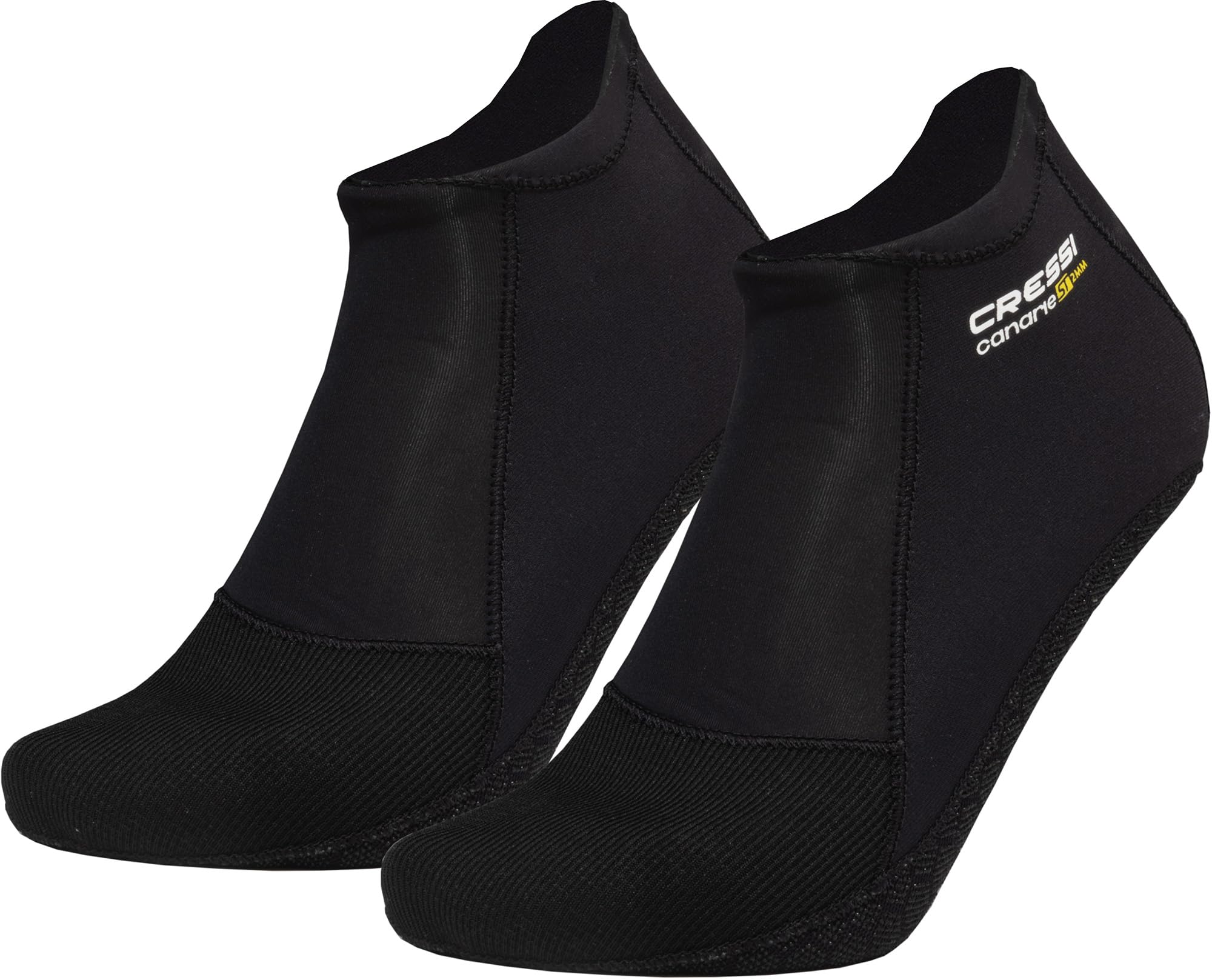
Designed in Italy with a left and right foot shape, not a tube that fits both.
An anatomically shaped sock is built to match the actual shape of each foot, and that is what the Canarie ST delivers with its 2mm ultra-stretch neoprene and soft elastic nylon lining. The sock conforms to the left and right foot separately, which means less loose fabric, fewer pressure points, and a better seal at the ankle. At 5.76 ounces it is among the lightest on the list, so it disappears on your foot. The Waterleg-seal at the cuff is designed to keep water out and heat in — exactly the detail that matters for keeping your toes warm through a plunge.
The construction is where it shines: blind and glued stitches improve durability, and the abrasion-resistant toe guard with a strong bottom adds protection where a cold plunge sock takes the most wear. Cressi designs this in Italy, and the build quality reflects that. It is sized as unisex and works across spearfishing, freediving, surfing, and canyoneering, so it holds up to more than just a plunge tub.
The honest limitation is lack of feedback depth. There are no individual reviews to draw on here, so the real-world wear pattern is less documented than the other picks. At 2mm, it is also thinner than the 3mm options on this list, so it will not be the warmest for the very coldest water. But the anatomic shaping and sealed cuff are real advantages for fit-sensitive buyers.
The shaping advantage
- 2mm ultra-stretch neoprene conforms to a distinct left and right foot shape
- Waterleg-seal at the cuff keeps water out and heat in
- Blind and glued stitches for durability
- Abrasion-resistant toe guard and strong bottom for extra protection
- 5.76 oz, one of the lightest on the list
What to weigh first
- 2mm foam is thinner than the 3mm picks — less warmth in very cold water
- No individual review data to gauge long-term wear
For the fit-sensitive buyer: pick this if off-the-shelf tubes never fit and you want shaped left-right construction with a sealed cuff.
Look at a 3mm if: your priority is maximum warmth in the coldest water rather than anatomic fit.
9. CRESSI Adult 3mm Neoprene Camouflage Socks
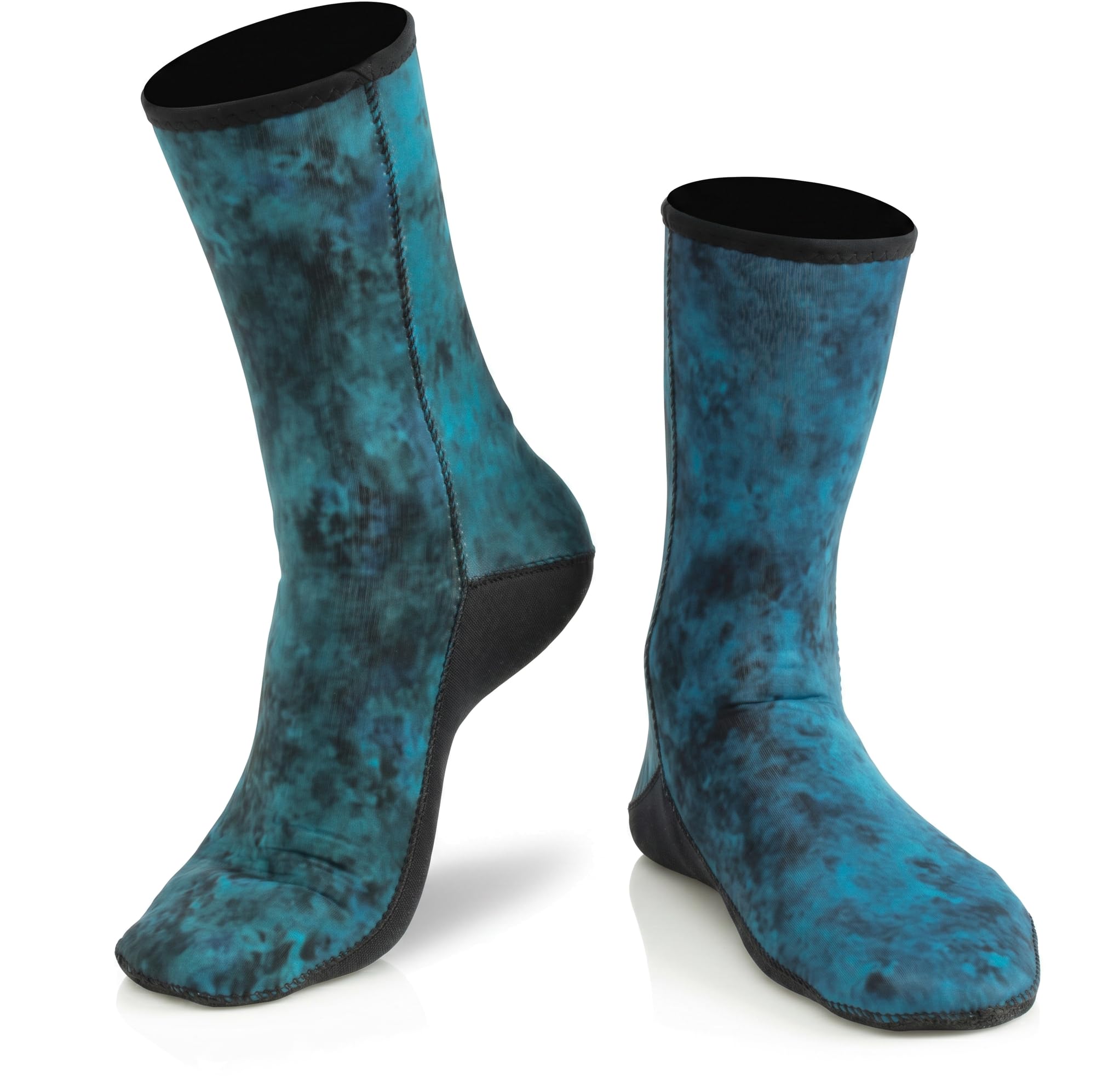
A grippy 3mm sock from an Italian dive brand that knows wet boat decks.
Soft and supple 3.0mm Elastic-Span neoprene puts this in the warmest tier on the list, which makes it a strong match for genuinely cold plunge water. The real differentiator is the speckled anti-slip reinforcing coating on the surface, which gives grip on wet surfaces like boat decks and slipper ladders. If you are stepping out of a plunge onto a slick deck and you do not want to slip, this is the grip pick. It also works in both full-foot pocket fins and open-heel fins, so it protects your skin from scratches and chafing under either setup.
The black Metallite inner lining makes these significantly easier to pull on than bare neoprene, which is a small detail you appreciate at five in the morning when your hands are cold. The 5.6-ounce weight is the lightest on the list, so the sock does not add drag or bulk. Fit runs regular and the neoprene is high-stretch, so it hugs the foot without cinching. Cressi has been an Italian diving, snorkeling, and swimming brand since 1946, and the build here reflects that legacy.
What keeps this from climbing the list is durability. A significant number of reviewers point out the neoprene breaking down and disintegrating after just a few weeks of use, which is a real concern if you plan on daily plunges. The camouflage pattern also does not always match the product pictures for some buyers, which is cosmetic but worth knowing. If you use it a few times per week and treat it carefully, it will hold up better than daily abuse suggests.
The grip and fit read: 3.0mm stretch neoprene, an anti-slip coated sole, and a Metallite lining make it easy to pull on and stable underfoot on wet decks.
The durability note: neoprene breakdown after weeks of use is a reported issue — this is a sock to use carefully rather than abuse daily.
Best on a wet deck: choose this if anti-slip grip and a warm 3mm layer are your top priorities for the plunge.
Not for daily heavy use: if you plunge multiple times a day and want long service life, a burlier sock will last longer.
Know the Specs
Neoprene Thickness in Millimeters
Thickness is measured in millimeters, and it is the clearest guide to warmth. A 1.5mm sock is a light layer that fits easily inside a fin or a snug plunge shoe but lets more cold through. A 2mm or 2.5mm sock adds insulation without much bulk. A 3mm sock is the warmest tier on this list, but it takes up more room inside footwear. Pick the thickness that matches your water temperature and how much room your plunge footwear has.
Seam Construction
Seams are the weak point of any neoprene sock. Blind stitching, glued seams, and flatlock binding all serve the same purpose: keeping the join flat and limiting how much water flows inside the sock. Four-needle, six-thread stitching is the heavy-duty option for seam strength. A sock with sloppy seams will fill up in seconds, so check this detail before you buy.
Anti-Slip Sole Coating
A dotted, speckled, or coated sole gives grip on wet tile, boat decks, and pool surrounds. Neoprene on its own is slippery when wet. On a hard wet surface, a grippy sole is what keeps you upright. Smooth-bottom socks are fine inside a fin, but for the exit, a coating earns its keep.
Fit and Anatomical Shaping
A neoprene sock relies on a snug, close-to-skin fit to trap a thin layer of water and warm it. One-shape-fits-both socks work, but anatomically shaped socks with distinct left and right patterning tend to sit better and avoid bunching at the arch. If you have wide or narrow feet, fit is the detail to check hardest — too loose and water keeps flushing through, too tight and your toes go numb from pressure.
Common Questions
Will neoprene socks actually keep my feet warm in cold plunge water?
Should I size up or true to size on neoprene plunge socks?
What is the difference between 1.5mm and 3mm neoprene for cold plunge?
Can I wear neoprene socks inside plunge boots or fins?
How do I wash neoprene socks after a cold plunge?
Are neoprene socks safe if I have sensitive skin or a rubber allergy?
Do I need an anti-slip sole for stepping out of a plunge tub?
How long should a pair of neoprene socks last with regular cold plunge use?
Can I use swim fins socks as cold plunge socks?
Is thicker neoprene always better for cold plunge?
The Bottom Line
For most cold plungers, the neoprene socks for cold plunge winner is the Simms Neoprene Wading Socks because its 2.5mm abrasion-resistant neoprene plus perforated underfoot drainage keeps your feet warm without the clammy squelch of trapped water. If you want the warmest, most comfortable fit available, the Tilos 3mm Ankle Socks deliver 3mm limestone foam with a shaped, hypoallergenic build. And for pure grip on a wet deck, the CRESSI 3mmCamouflage Socks is the one to reach for, thanks to its speckled anti-slip coating. Whichever you choose, match the millimeter thickness to your water temperature first.
How we choose
We do not accept paid placement. Every pick is matched to a real buyer and a real use-case; we do not hands-on test units.
Sources
Specifications: manufacturer listings and product documentation. Review insights: verified customer reviews, as of November 2026. Pricing: not shown on this page (it changes often); check the current price via the retailer link.
As an Amazon Associate, Tactical Gear Guy earns from qualifying purchases. This does not affect which products we feature.