Specs are compiled from manufacturer listings and verified buyer reviews and can change over time — please confirm the key details on the product page before buying.
If you cook brown rice, chickpeas, steel-cut oats or mixed grains more than twice a week, you already know the problem: they need different times, different water, and one wrong button turns the whole pot to paste. The four cookers below all carry a dedicated multigrain or grain setting, which is the single feature that decides whether your barley comes out tender or crunchy. Pick the one that matches your batch size and your appetite for dialing in settings, and you can stop babysitting a pot on the stove.
This guide is built by comparing the manufacturers’ published specifications and the patterns across verified customer reviews, so you get each pick’s real strengths and trade-offs instead of marketing spin.
A grain-heavy kitchen needs a cooker with a dedicated bean/grain program, not just a white-rice button. Below are four cookers with named multigrain or grain programs, matched to how much you cook and how much control you want.
Top Picks
How To Choose The Best Instant Multigrain Cooker
Grains are the fussiest thing you will ever put in a cooker. Brown rice, wild rice, barley, chickpeas and steel-cut oats each want their own time under pressure, and they all swell as they absorb water. To choose well, answer three questions: how much you cook at once, if you want pressure or gentle heat, and how much cleanup you can stomach.
Match the quart capacity to the pot you actually fill
A 6-quart cooker is the family-sized default, and it is the right size when you cook grains in batches for the week. A smaller 3-quart pot is better for a single person or a couple who only makes rice two or three times a week. Remember that dry beans and grains roughly double or triple in volume as they cook, so a full pot of dry chickpeas is far more than a full pot of finished ones. Leave headroom or you will be scraping foam off the lid.
Look for a named grain program, not a generic timer
A multigrain setting does the water-and-time math for you, and it is what separates a cooker that handles mixed rice from one that only knows white rice. Some cookers go further with a bean/grain program, a porridge program, or a customizable DIY mode where you dial in pressure and time yourself. If you regularly cook farro, millet or sorghum, that DIY control matters more than any preset count.
Decide between twin pressure and single pressure
A twin-pressure cooker lets you switch between high-pressure and non-pressure cooking in the same machine, which is genuinely useful for grains that split under pressure, like GABA rice or delicate porridge. A single-pressure electric cooker is simpler to run and usually covers the everyday beans-and-rice job well. Twin pressure suits GABA rice and delicate porridge; single pressure suits beans-and-rice cooking you want to start and forget.
Side-by-Side Comparison
| Model | Best For | Capacity | Grain Settings | Weight | Amazon |
|---|---|---|---|---|---|
| Cosori Pressure Cooker 6QT★ Best Overall | Everyday multigrain cooking | 6 quarts | Oatmeal/Porridge, Bean/Grain | 11.9 pounds | Amazon |
| KINGBULL 14-in-1 6 Quart | Customizable DIY control | 6 quarts | Multigrain, Porridge, DIY | 11.2 pounds | Amazon |
| Instant Pot Pro 6 Qt 10-in-1 | One-touch smart programs | 6 quarts | Rice and grains programs | 6 kg | Amazon |
| CUCKOO Twin Pressure CRP-RT0609FB | Rice and GABA grain quality | 3 quarts | GABA, Mixed Rice, Glutinous | 13 pounds | Amazon |
Detailed Reviews
1. Cosori Pressure Cooker 6QT, 9-in-1, Ceramic Coating Pot
Our pick — 4.5+★ from 7,500+ verified ratings; the strongest balance of quality and price.
A ceramic-lined pot that handles chickpeas and porridge without you standing guard.
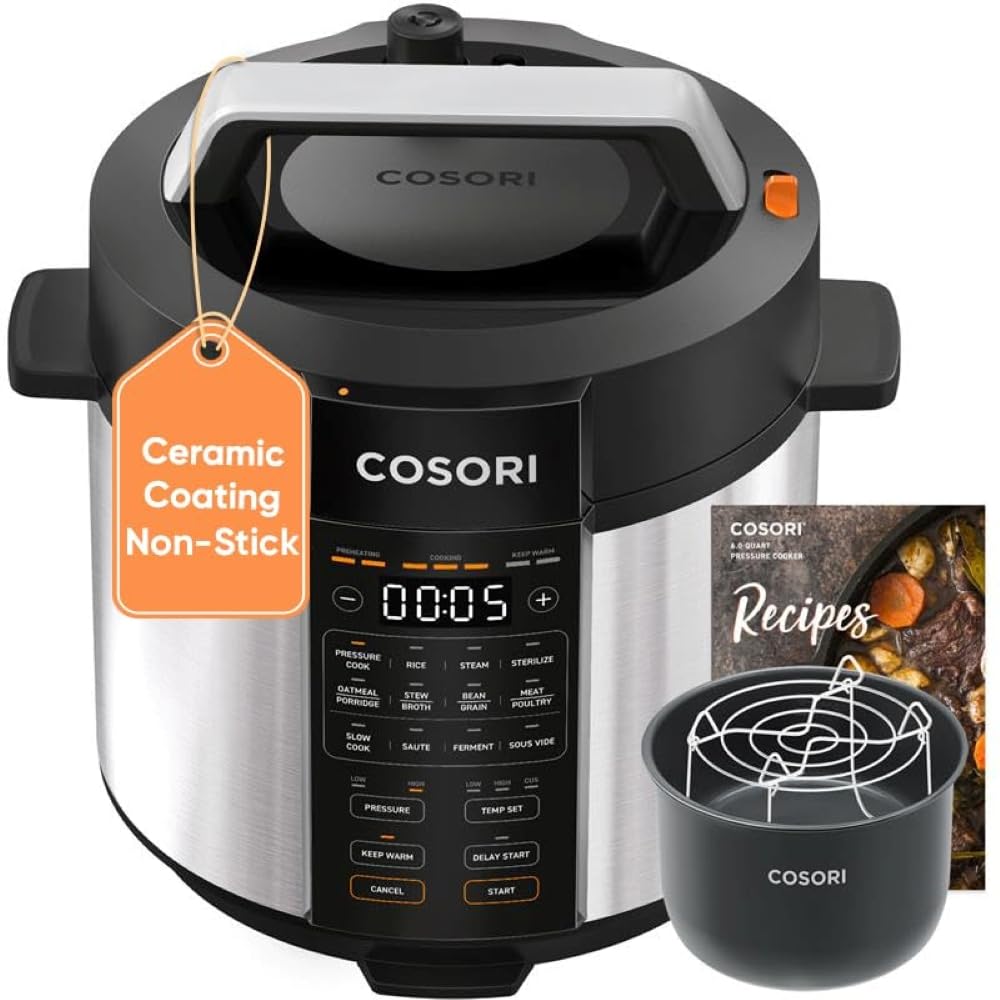
Here is the pick that makes the most sense for most kitchens: a 6-quart cooker with a dedicated Bean/Grain program and a separate Oatmeal/Porridge setting. Those two buttons are the whole reason to buy it for multigrain cooking. You load dry beans or mixed grains, pick the program, and the machine runs the pressure-and-time cycle rather than making you guess.
The pot itself is the detail that wins people over. It has a ceramic coating instead of bare stainless, which means sticky grains release instead of cementing to the bottom, and the lid, inner pot and accessories are all dishwasher-safe. The housing is stainless steel and fingerprint-resistant, and Cosori widened the gap around the pot to 0.5 inches so spilled grain does not wedge itself into a seam you cannot reach. What buyers praise most is the build quality — well over 600 of the 7,500+ ratings single it out — and that is why it holds 4.5+ stars, the highest score on this list.
Venting is the other thoughtful part. The Seal/Vent button sits away from the steam release valve, and the steam release angles 30 degrees backward, so you are not reaching across a jet of hot steam to depressurize. Cosori lists 12 safety features, including a double-layer anti-scalding lid and overheat protection. The catch is honest and small: the control panel is a physical button layout rather than a touchscreen, so you press real buttons instead of tapping glass. Some cooks love that; if you want a slick touch panel, this is not the one.
Where it earns its keep
- Ceramic-coated inner pot releases sticky grains and wipes clean
- Separate Bean/Grain and Oatmeal/Porridge programs for mixed-grain cooking
- Dishwasher-safe lid, pot and accessories cut cleanup time
- 30-degree angled steam release and offset vent button keep your hands clear
The honest trade-off
- Physical button panel, not a touchscreen — a preference thing, not a flaw
- No dedicated yogurt or sous-vide button locked in the headline functions, so you rely on the broader 9-in-1 set
Reach for this if: you want one 6-quart machine that cooks beans, grains and porridge on named programs and cleans up without scrubbing.
Think twice if: a glass touch panel is a must for you — the physical buttons here are deliberate, not dated.
2. KINGBULL 14-in-1 Electric Pressure Cooker 6 Quart
Fourteen buttons, one dial, and a DIY mode for the grain nobody else plans for.
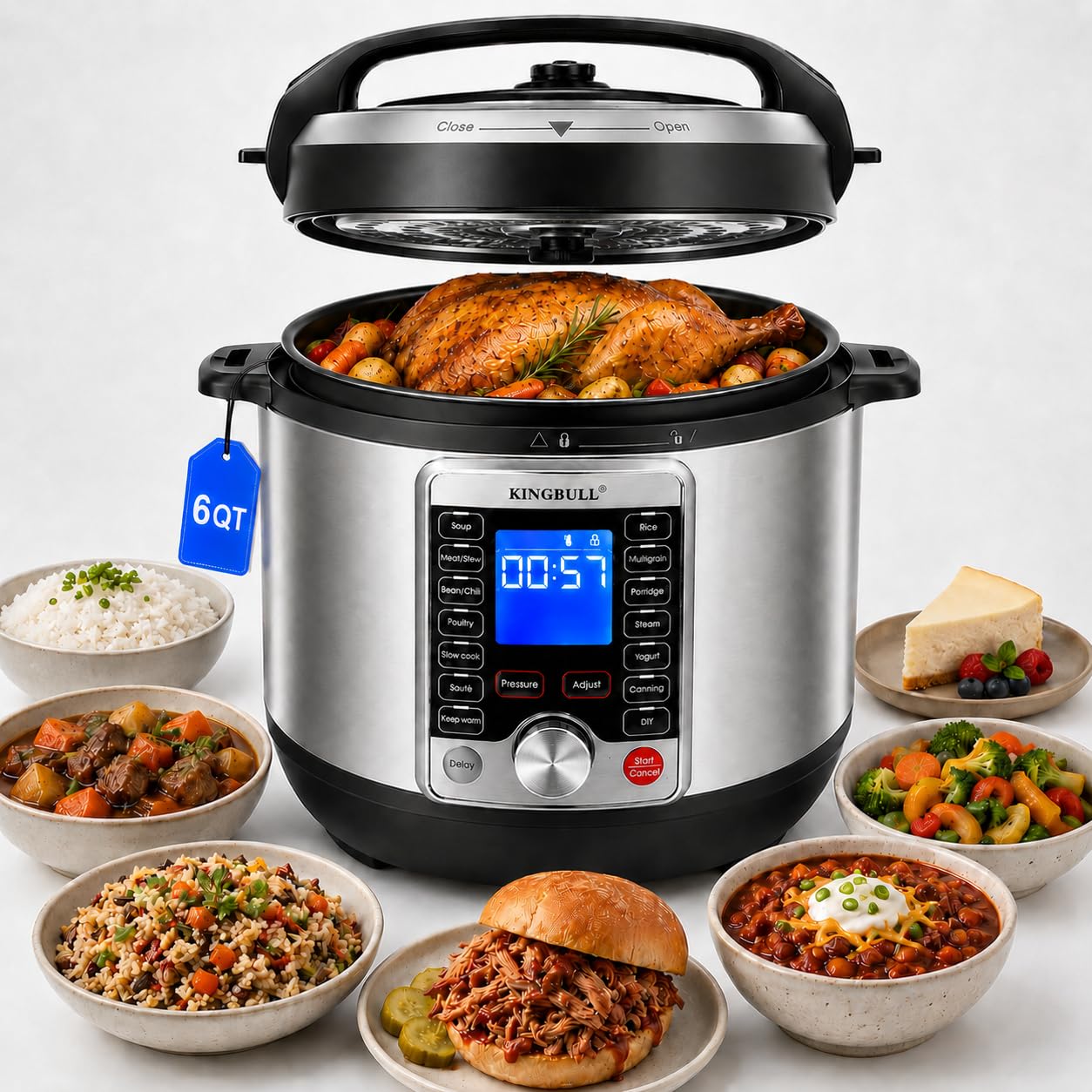
If you cook farro one week and millet the next, the KINGBULL is the most flexible tool here. It carries 14 preset cooking programs, and among them are a named multigrain program, a porridge program, and a DIY mode. That DIY option is the real draw: it lets you set pressure and time yourself, so unusual grains are not off the menu.
The 6-quart capacity lines it up directly against the Cosori and the Instant Pot Pro, and at 11.2 pounds it is lighter than the 13-pound CUCKOO on this list. You select programs on an LCD display with a control knob and function buttons, and Pressure and Adjust functions let you fine-tune rice, soup and steamed dishes. The removable nonstick inner pot lifts out for serving and washing, and the included rice paddle, measuring cup and condensation collector mean you can cook the day it arrives.
Performance is what this cooker is known for, and it delivers reliable results across rice, soups and stews. Two honest notes belong here. The cooking-time experience splits both ways — some cooks find it quick, others find a cycle runs longer than expected, so plan a little slack on the first batch. And this model has far fewer ratings behind it than the Cosori or the Instant Pot Pro, so the track record is shorter even though the score sits at a healthy 4.5. Treat it as the tinkerer’s pick rather than the crowd-proven one.
Where the value sits: 14 programs plus a DIY mode on a 6-quart body gives you more ways to dial in a grain than the Cosori or the Instant Pot Pro, which run fixed smart programs. If you like setting your own pressure and time, that control is the reason to choose it.
The part to know going in: cycle length varies more than you might expect, and the smaller ratings base means less real-world history to lean on. Neither is a dealbreaker, but both reward a patient first cook.
Pick this one for: a cook who wants to program pressure and time by hand and cooks a rotating cast of grains.
Skip the tinkering if: you would rather press one multigrain button and walk away — the Cosori above is the simpler path.
3. Instant Pot Pro 6 Qt 10-in-1 Electric Pressure Cooker
The brand-name pick, with 28 one-touch programs and a gentler steam release.
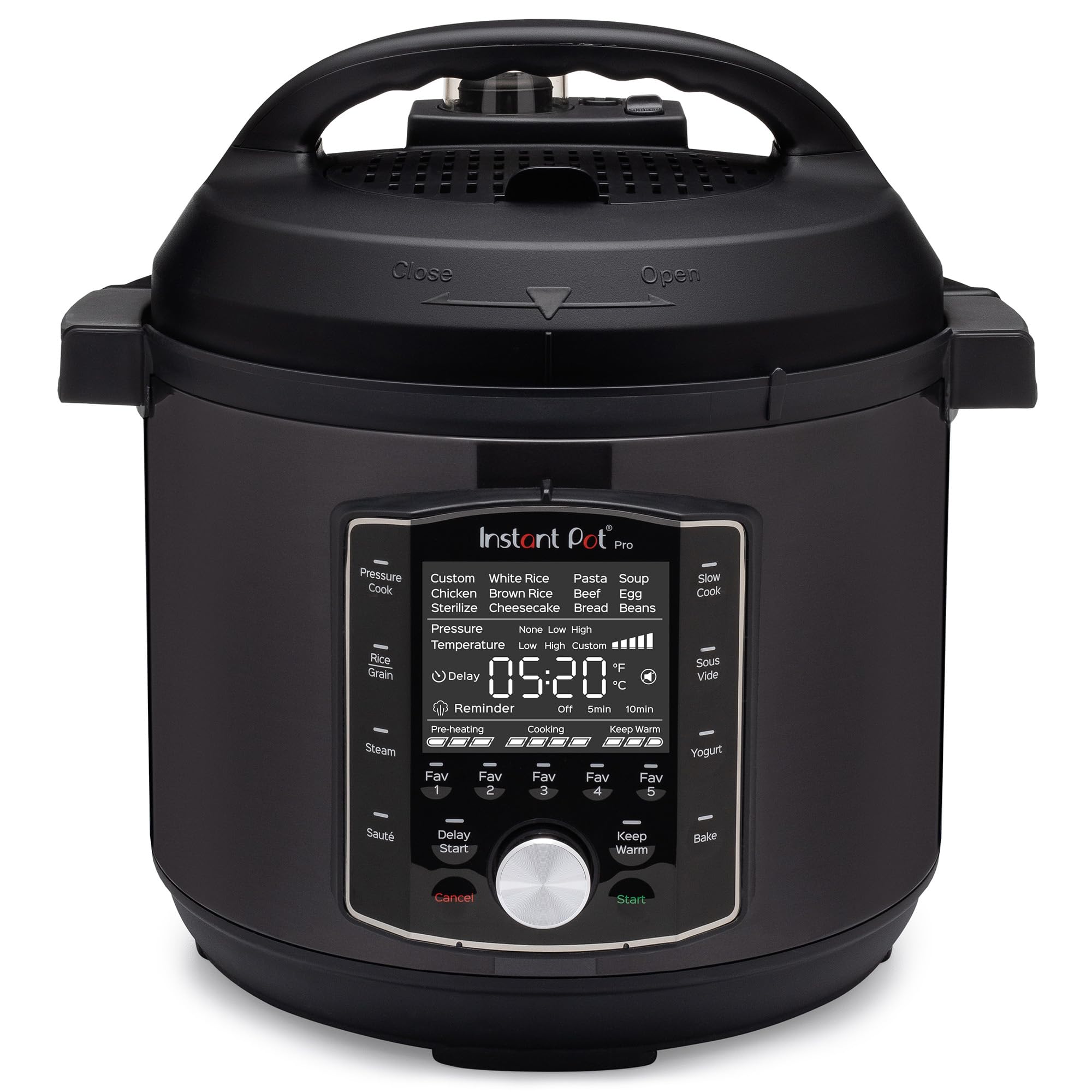
The Instant Pot Pro is the one most people already recognize, and the 6-quart capacity here matches the Cosori and the KINGBULL quart for quart. Where it separates itself is sheer program count: 28 one-touch options sit behind 10 cooking functions, and its rice-and-grains work is one of the things buyers like most about it. If you want to press a labeled button for brown rice or grains rather than reason through pressure manually, this is built for that.
The hardware is solid in the ways that matter for grain cooking. It runs at 1200 watts on 120 V at 60 Hz and is UL and ULC listed, and the body is stainless steel with a matte finish. The steam release uses a switch and a diffusing cover, so you can vent without the loud hiss and the reaching. Grip handles on the inner pot make it easier to lift a full, heavy pot of cooked beans out without juggling oven mitts. You also get an extra sealing ring and a handled steamer rack in the box.
Two things deserve an honest heads-up before you commit. The functionality and speed topics split both directions across the review pages — plenty of cooks love how fast it takes food from frozen to tender, and some report problems with the slow-cook setting specifically. Durability is the recurring gripe, with mentions of cracked pots and cracked plastic, so treat the lid and pot gently and store it without stacking weight on top. That is the trade-off for a machine this well-known.
The case for it: 28 one-touch programs, a diffusing steam cover and a stainless inner pot make this the most familiar, easiest-to-operate option here for everyday rice and grains.
What to watch: slow-cook performance and long-term durability draw more mixed feedback than the core pressure-cooking job, so buy it for pressure cooking grains and rice first and treats the slow-cook mode as a bonus.
Best for: the cook who wants the widely known name and a labeled button for almost every grain and meal.
Weigh the caveat: repeated mentions of cracked pots and plastic parts mean storing it carefully matters more than you would hope.
4. CUCKOO Twin Pressure Rice Cooker CRP-RT0609FB
A dedicated rice machine that flips between high pressure and none at all.
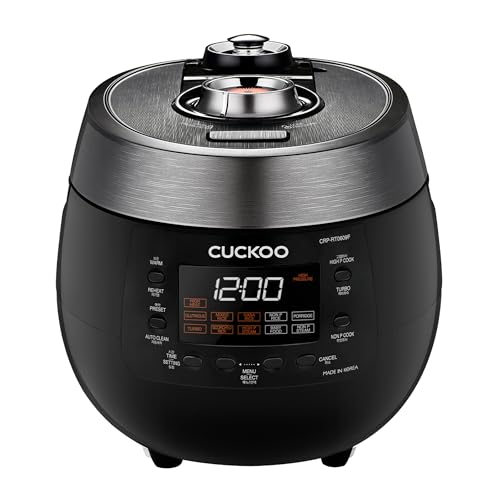
This one is a different animal from the pressure cookers above, and that is the point. The CUCKOO is built first for rice and grain quality, with a twin-pressure function that lets you choose high pressure or non-pressure depending on the dish. Non-pressure is the setting for grains and porridges that you do not want flattened, and high pressure is for the fast, fluffy result. Its menu includes GABA, mixed rice, glutinous and porridge alongside scorched rice and baby food.
Capacity is where it makes you think hardest. This is a 3-quart, 6-cup-uncooked / 12-cup-cooked machine, and that 3 quarts compares against the 6 quarts of the Instant Pot Pro, the Cosori and the KINGBULL — exactly half the volume. If you feed a family and cook grains in bulk, you will refill it more often. If you live alone or cook rice for two or three, the smaller footprint is a genuine advantage rather than a limitation.
What it does superbly is the rice itself. The X-wall diamond-coated inner bowl spreads heat evenly, and the fuzzy-logic algorithm reads the grain and adjusts temperature and cook time. Auto-clean, adjustable keep-warm temperatures and a stainless steel lid make day-to-day use easy. Value is the split opinion here, and the rice-focused buyer is the one who comes out ahead.
What it nails
- Twin pressure lets you switch between high pressure and non-pressure per dish
- Diamond-coated X-wall bowl for even heat and flavorful rice
- GABA, mixed rice, glutinous and porridge menus on the 12-option display
- Auto-clean plus adjustable keep-warm for everyday convenience
What to weigh
- At 3 quarts it is half the capacity of the other three picks
- Heavy at 13 pounds, and value draws mixed opinions at the premium end
The standout spec: twin pressure in one machine, so delicate grains cook without the flattening that pressure alone can cause.
Know the fit: built for rice lovers cooking for one to three people — bulk grain cooks will want the 6-quart picks instead.
Know the Specs
Capacity in quarts
Capacity tells you how much finished food fits in the pot, and for grain cooking the useful number is smaller than the label suggests. A 6-quart cooker suits batch cooking for a family, while a 3-quart machine is a rice-for-two size. Dry grains and beans swell as they absorb water, so never fill a pot to the top before cooking — leave room for expansion or the lid will be a mess.
Pressure type
A single-pressure cooker runs everything at one set pressure, which is fine for beans, stews and most rice. A twin-pressure cooker lets you choose high pressure or non-pressure, and that switch matters for grains that split or turn gummy under pressure, like GABA rice and delicate porridge. Barley and chickpeas want high pressure; GABA rice and thin porridge want none, so match the setting to the grain.
Named grain programs
A preset like Bean/Grain, Multigrain, Porridge or GABA does the water-and-time math for you, so you do not need to memorize a chart. A DIY or adjustable mode goes further and lets you set pressure and time by hand. If you stick to brown rice and chickpeas, a Bean/Grain preset is plenty; if you cook farro or millet, the DIY control earns its place.
Inner pot coating
The coating is what decides cleanup. A ceramic or diamond-coated nonstick pot releases sticky grains and wipes out with less soaking than bare stainless, and the CUCKOO’s X-wall bowl and the Cosori’s ceramic lining both aim for that. Stainless pots are tougher against scratches but need more scouring after a starchy cook.
Common Questions
Is a pressure cooker the same as a multigrain cooker?
What size cooker do I need for brown rice and beans?
Can I cook chickpeas and mixed grains in the same pot?
What does a twin-pressure function actually do?
Is the Instant Pot Pro better than the Cosori for grains?
Do I need a DIY mode on a multigrain cooker?
How do I keep grains from sticking to the bottom of the pot?
Can these cookers handle GABA rice and porridge?
How long do these cookers last and how should I store them?
Is a premium rice cooker worth it over a budget electric pressure cooker?
The Bottom Line
For most kitchens, the instant multigrain cooker winner is the Cosori Pressure Cooker 6QT because it pairs a 6-quart family size with dedicated Bean/Grain and Oatmeal/Porridge programs, a ceramic nonstick pot, and a 4.5+ star record that backs it up. If you want to set pressure and time by hand for whatever grain you bring home, the KINGBULL 14-in-1 gives you the DIY control. And for rice-first cooks who want twin pressure and GABA menus, the CUCKOO Twin Pressure is the specialist to reach for.
That 4.5+ star showing on the Cosori is the one number worth remembering when you decide — it is the highest score in this group, and it is earned on the everyday job of cooking grains and beans well.
How we choose
We do not accept paid placement. Every pick is matched to a real buyer and a real use-case; we do not hands-on test units.
Sources
Specifications: manufacturer listings and product documentation. Review insights: verified customer reviews, as of November 2026. Pricing: not shown on this page (it changes often); check the current price via the retailer link.
As an Amazon Associate, Tactical Gear Guy earns from qualifying purchases. This does not affect which products we feature.