Specs are compiled from manufacturer listings and verified buyer reviews and can change over time — please confirm the key details on the product page before buying.
If you sweat on the climb and then freeze at the summit, your base layer is the problem. A merino wool base layer for hiking fixes that swing for you — it moves sweat off your skin, keeps warming you even when the fabric is damp, and resists the smell that builds up over back-to-back trail days. The picks below run from featherweight 16.5 micron knits (micron = fiber thickness, so a lower number means softer against your skin) for hot-weather hikes to 250g midweights (250 grams per square meter, a thicker knit for deep winter). Every one is a genuine merino or merino-blend layer. The crowd favorite here is the Minus33 Chocorua Midweight Crew, a 235 g/m2 midweight that holds warmth from 0°F to 30°F on high-output hikes.
This guide is built by comparing the manufacturers’ published specifications and the patterns across verified customer reviews, so you get each pick’s real strengths and trade-offs instead of marketing spin.
You will see how fiber micron, fabric weight in grams per square meter, and cut all change what a layer feels like on the move. By the end you will know which one belongs in your pack for your next trip: the best Merino Wool Base Layer for Hiking is the one that matches your output, not the one with the biggest logo.
Top Picks


How To Choose The Best Merino Wool Base Layer for Hiking
Start with the hike, not the fabric. A summer ridge walk and a winter summit push want completely different layers, and buying one shirt for both usually means being cold on one and soaked on the other. Three numbers do most of the deciding: fiber micron, fabric weight in gsm, and how much room you need under a shell.
Match fabric weight to the temperature you actually hike in
Weight is listed in gsm, or grams per square meter — literally how much wool sits in a square meter of cloth. A 165gsm knit is a light, breathable layer for hard climbing in mild cold. A 235 or 250gsm knit is a midweight for sustained cold and slower days, where holding warmth matters more than dumping heat. Pick the weight for the coldest part of your day, because that is when a thin layer stops being enough.
Understand micron before you judge softness
Micron measures the diameter of a single wool fiber, and smaller is softer. Anything around 16.5 to 18.5 micron sits in the fine range, which is why these shirts are described as non-itchy rather than scratchy like a coarse sweater. If you have avoided wool because it made you itch, micron is the number to check first.
Decide between crew, quarter-zip, and a full set
A crew neck is the simplest layer under a shell. A quarter-zip lets you dump heat on a climb without stripping off your pack and outer layer, which is why it shows up on midweight hiking tops. A full top-and-bottom set suits multi-day trips and cold-weather sleepwear, where you want the same fabric against your legs.
Check the cut for layering, not for looks
A hiking base layer should sit close to your skin so it can move sweat, but still leave room for a fleece or puffy over the top. Read the fit notes carefully — some of these run long in the sleeve or big through the body, and a baggy base layer is a cold base layer.
Side-by-Side Comparison
| Model | Best For | Fabric | Weight / Micron | Style | Amazon |
|---|---|---|---|---|---|
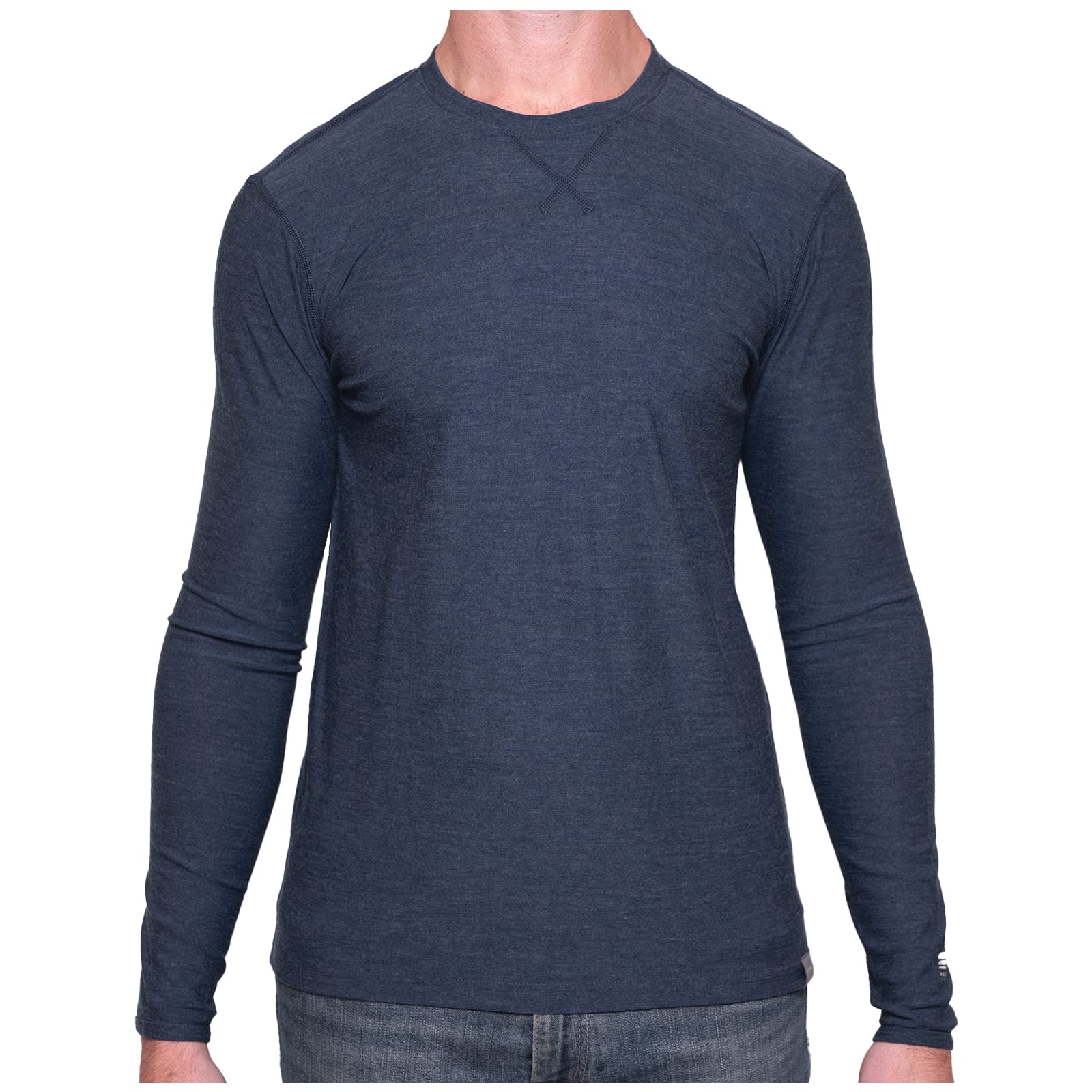
| Minus33 Chocorua Midweight Crew★ Best Overall | Cold-weather hiking and winter layering | 100% Merino Wool | 235 g/m2, 18.5 Micron | Men’s long sleeve crew | Amazon |
| Merino Protect V NeckBest for Hot Hikes | Hot-weather hiking and travel | 100% Merino Wool | — | Women’s short sleeve V-neck | Amazon |
| MERIWOOL Lightweight Long SleeveFinest Fiber | Three-season hiking base layer | 100% Merino Wool | 16.5 micron | Men’s lightweight crew | Amazon |
| LAPASA Merino Thermal Shirt | Budget-friendly cold-weather layering | 100% Merino Wool | Lightweight | Men’s long sleeve | Amazon |
| Merino.tech Quarter Zip | Travel and four-season wear | 100% Merino Wool | Midweight | Women’s quarter zip | Amazon |
| MERIWOOL Midweight 250 Half Zip | Cold-weather hiking with venting | 100% Merino Wool | 250 g Midweight | Men’s half zip | Amazon |
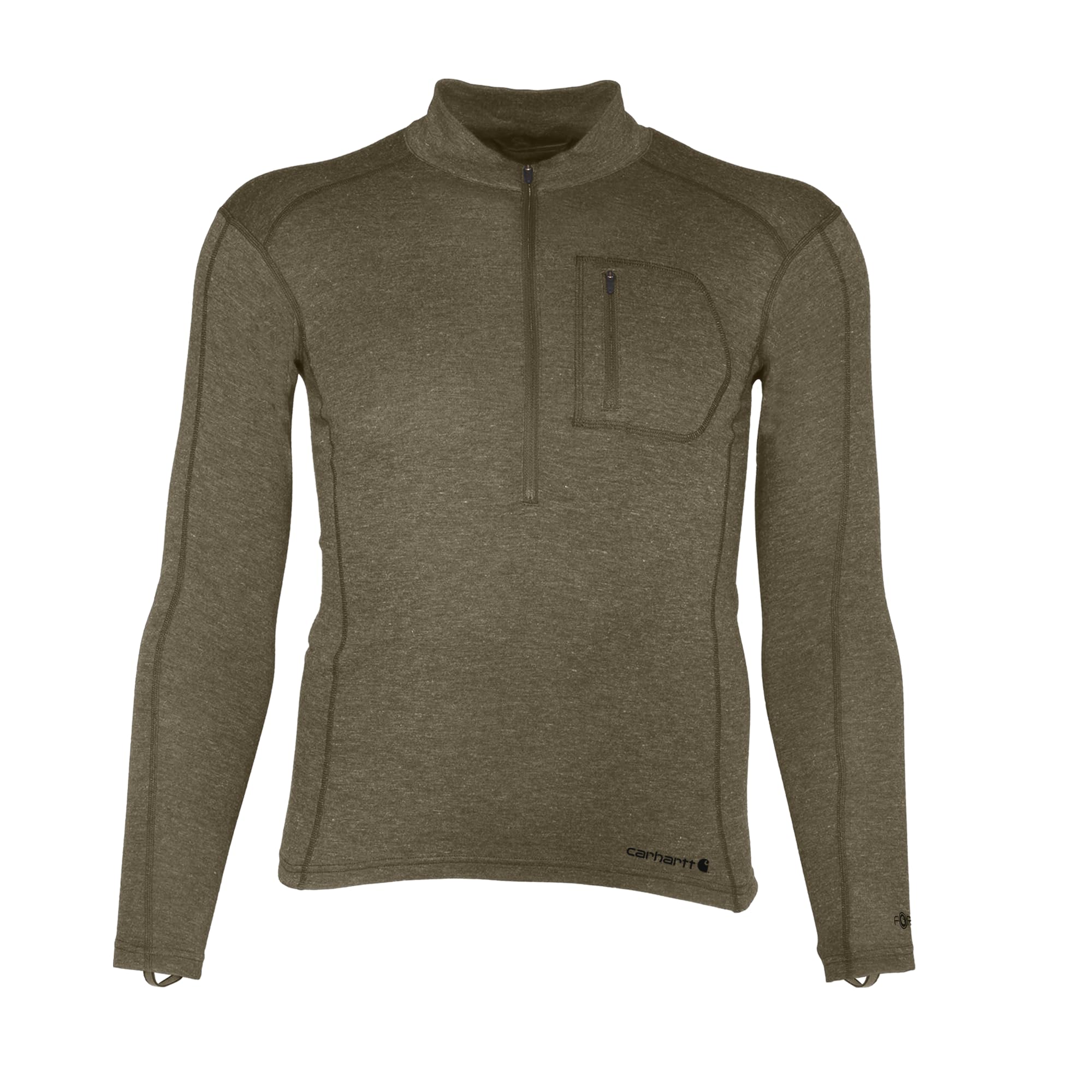
| Carhartt Force Quarter-Zip | Workwear and cold-weather layering | Merino wool blend | Midweight | Men’s quarter zip with pocket | Amazon |
| MERINNOVATION Base Layer Set | Multi-day trips and cold-weather sleep | 100% Merino Wool | 165gsm or 250gsm | Men’s top and bottom set | Amazon |
| Icebreaker 175 Everyday Crewe | Year-round women’s layering | 100% Merino Wool | 175 gsm | Women’s long sleeve crew | Amazon |
Detailed Reviews
1. Minus33 Chocorua Midweight Crew
Our pick — 4.5+★ from 700+ verified ratings; the strongest balance of quality and price.
The midweight that holds warmth on a cold summit without cooking you on the climb.
For a hike that starts in frost and ends in sun, this is the layer to build around. Minus33 rates the Chocorua at 235 g/m2 in an interlock knit — a midweight fabric with more insulation packed in than a light summer shirt. The brand lists a comfortable range of 0°F to 30°F for high-output activity and 30°F to 60°F when you are moving less, which covers most cold-weather trail days in one garment.
The fiber is 18.5 micron, which is fine enough to sit soft against skin rather than prickle. That fine wool also brings a real practical edge: the fabric is rated UPF 50+ for sun protection on open ridges. Wool absorbs moisture and lets it evaporate, and the brand states it will take on up to 30% of its own weight in moisture without feeling wet — the reason it keeps working after a sweaty climb.
What wins people over is the quality of the knit — it is the most praised trait by a wide margin, with warmth right behind it. The main honest caveat is durability: some long-term wearers report the fabric developing small holes over time, so treat it as a garment to rotate rather than a single shirt to live in. The cut runs long in the sleeves, which most hikers like for tucking into gloves and some find a touch generous. At 4.5+ stars across 700+ ratings, buyers consistently rank its knit quality and warmth above everything else.
Where the Chocorua earns its place
- 235 g/m2 interlock knit keeps you warm in the 0°F to 30°F high-activity range
- 18.5 micron merino feels soft, not itchy, against bare skin
- Rated UPF 50+ for exposed ridge lines and sunny summits
- Handles a range of output, from hard climbing to slow camp time
What to weigh before you buy
- Holes can develop with heavy long-term use — rotate it
- Sleeves run long, so check the size chart if you like a snug cuff
- It is warmer and heavier than a summer-only hiking layer
Reach for this if: you hike in genuine cold and want one merino layer to carry most of the season.
Look elsewhere if: you hike hot and want something featherweight for summer ridges.
2. Merino Protect V Neck Short Sleeve Base Layer
A short-sleeve merino tee for the summer week where nothing else survives the heat.
Short sleeves and a V neck make this the odd one out in a list of long-sleeve winter layers, and that is exactly the point. It is a lightweight merino tee for hot-weather hiking and travel, where a full sleeve would be overkill. The shirt is built from soft merino and is described as breathable and comfortable for running and indoors use, so it wears well beyond the trail.
What wins people over is the quality of the merino itself, and the flattering women’s cut comes a close second. Buyers describe it as loose and comfortable, and the comfort holds up in hot weather — no itchy, clingy feel. Odor resistance gets called out too, the trait that makes merino worth carrying on a multi-day trip. Color options earn their own praise, particularly the orchid pink shade.
The honest trade-off is durability: some buyers report holes developing, especially at the V-neck area, over longer use. That is worth knowing if you plan to wear it hard every day rather than pack it for trips. The sizing runs loose, which some love for airflow and others find generous. It sits at 4.0+ stars across 800+ ratings, with buyers praising the merino quality and the loose, breathable cut.
Where it shines: hot-weather hiking and travel where a short-sleeve, breathable merino tee beats a long sleeve. The odor resistance lets you wear it more than once between washes.
The honest caveat: the V-neck area is where wear shows first for some buyers, so treat it as a trip shirt rather than a daily driver.
Best for: warm-weather hikers who want merino next to skin without a heavy sleeve.
Skip if: you need a cold-weather layer for a winter summit push.
3. MERIWOOL Lightweight Long Sleeve Base Layer
The thinnest fiber on the list, or so the spec sheet says.
Here is the head-to-head that matters: the MERIWOOL lightweight is built from 16.5 micron merino, against 18.5 micron on the Minus33 midweight. That two-micron gap is a 12% finer fiber, and finer fiber is what makes wool feel silky rather than scratchy. For anyone who has worn a wool sweater and itched for the rest of the day, that number is the reason to try this one.
The fabric earns praise first for its quality, then for comfort, and it does so as a lightweight rather than a midweight. It is the kind of layer you wear from a mild morning into a brisk evening without changing what is on your skin. Breathability is a stated feature, which is the trait that matters most when the hike climbs and your output goes up. The crew neck keeps things simple under a shell.
The trade-off is sizing clarity: some buyers find it sized right, others report it comes up big or that the neck opening is small. Read the size guide rather than ordering blind, and you avoid the only real complaint. Like most lightweight merino, it favors warmer days and layering more than standing still in the cold. A 4.5+ star pick across 150+ ratings, with comfort and fabric quality the most-cited strengths.
The fine-fiber edge: 16.5 micron merino against the 18.5 micron of the Minus33 midweight — the finer fiber is the reason it feels soft against skin.
Watch the fit: sizing runs both ways for different buyers, so order from the size chart. Some find the neck a touch small.
Pick this if: you hike in three seasons and want the softest-feeling wool on the list.
Think twice if: you need real bulk for sub-freezing days — this is a lightweight.
4. LAPASA Men’s 100% Merino Wool Base Layer Thermal Shirt

Entry-level merino that covers the basics without the premium markup.
If you are testing merino for the first time and do not want to commit to a top-tier pick, this is the one to start with. LAPASA builds it as a lightweight layer for cool and brisk weather, and lists it for skiing, running, cycling, and general base-layer wear. The 100% merino construction keeps the fiber story clean — no blend to read around.
The fabric quality is what buyers like best, with warmth right behind it. The shirt gets comfortable across a wide band of temperatures, and it is described as barely itchy at all, which is the bar a first merino layer needs to clear. It also doubles as pajama or home-wear, so a cold-weather shirt you are unsure about still earns its keep on the couch.
The two things to know before you order: the fabric runs thin, so it is a fine layer rather than a midweight warm-up, and the fit reads small to some buyers while the neck reads large to others. Neither is fatal for a lightweight base layer, but it means your normal size is not a given. It carries 4.0+ stars across 300+ ratings, with buyers ranking fabric quality and warmth as its best traits.
What works in the pack
- 100% merino at an entry-level tier — the cheapest merino here
- Lightweight enough for brisk-weather hiking and cool starts
- Doubles as sleepwear and loungewear on cold nights
- Barely itchy for first-time wool wearers
Where it falls short
- Fabric runs thin for a deep-winter layer
- Fit reads inconsistent, so check the size chart
- Not built for a hard, long-term rotation
Good first buy: for the hiker dipping a toe into merino on cool-weather trips and cold nights at home.
Not the one: if you want a thick midweight for winter summits or a single shirt to wear for years.
5. Merino.tech Women’s 100% Merino Wool Quarter Zip Base Layer
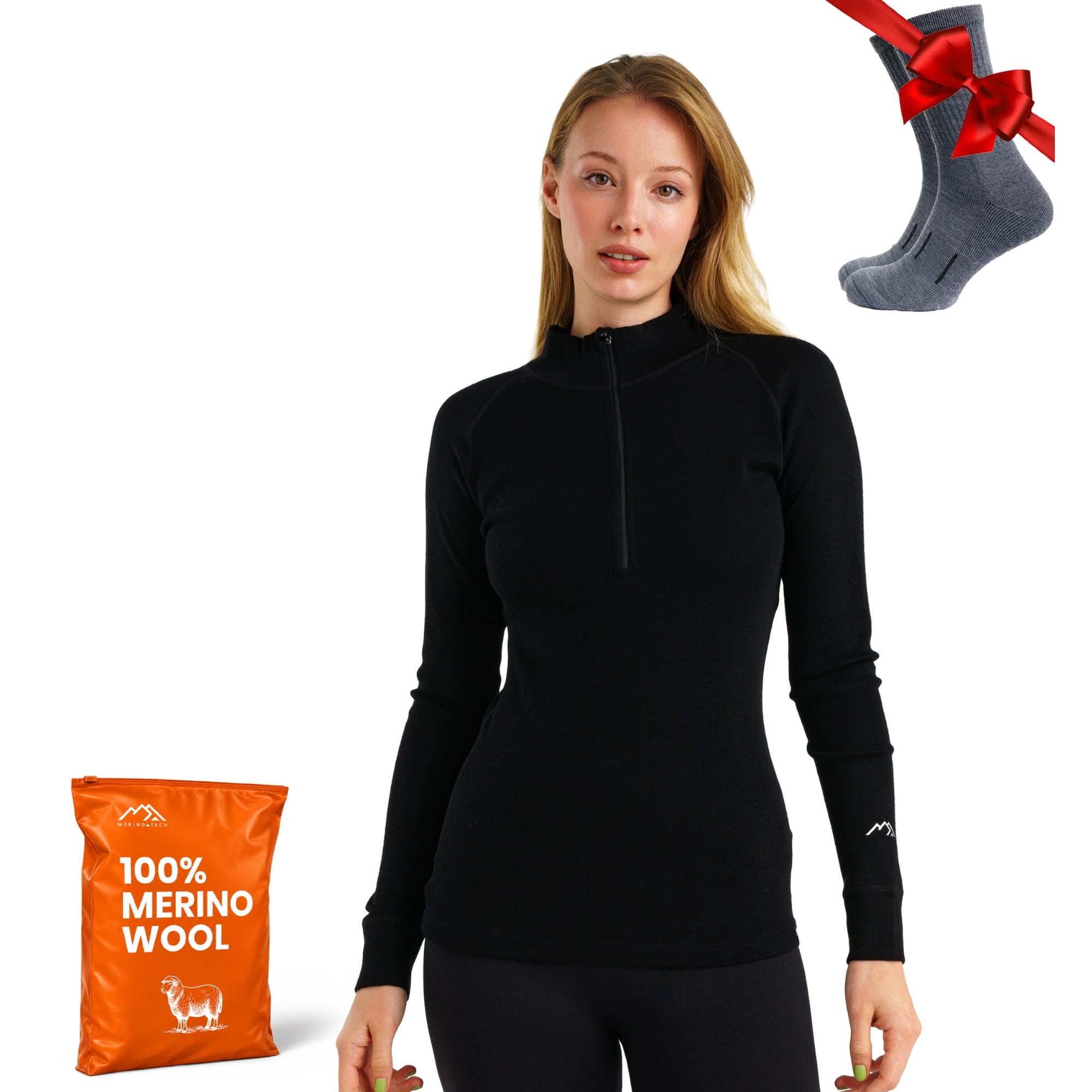
A midweight quarter zip built for a week of hiking out of a single carry-on.
The quality of the merino is the first thing owners talk about, and it is the trait praised most, with warmth close behind. The fabric is midweight and described as wrinkle resistant for travel, so it comes out of a stuffed pack ready to wear. It also carries a UPF 50 rating for protection from the sun on exposed sections of trail.
The zip is the practical detail. A quarter zip lets you open the neck on a climb without taking off your shell and pack, which is why multi-day hikers reach for one. The cut is built to layer without bulk, and it sits close to the perfect length under other layers. Softness is a theme too — the wool is described as feeling like a second skin.
The honest caveat is sizing: some owners mention the top runs big, and the wool socks included with the order can be too large. That is fixable by ordering from the size guide. It is a midweight for cool mornings rather than a deep-winter layer, and it handles both warm and cool climates in one garment. Well-regarded at 4.5+ stars across 900+ ratings, with merino quality and warmth the most-praised traits.
What makes it a travel shirt: midweight merino plus UPF 50 and a quarter zip that vents on the climb — the combination that keeps you comfortable from a cold start to a warm afternoon.
The sizing catch: some buyers find it runs big, and the included socks can be oversized. Order from the size chart, not your usual guess.
Built for: women who want a single midweight merino layer for travel, trail, and chilly runs.
Not your pick if: you want a snug, precise fit straight out of the bag — this one runs generous.
6. MERIWOOL Men’s Midweight 250 Half Zip Merino Base Layer

The 250g half zip that transitions from fall hikes to winter slopes.
This is the heaviest knit on the list at 250g, and that extra fabric shows up exactly where you want it on a cold day. The half zip gives you an adjustable neck for dumping heat on the climb, and the crew keeps warmth in once you stop. It works as a base layer under a shell, or as a mid layer on its own on milder days.
Quality is the most praised trait, with warmth close behind. Owners describe it as cozy and comfortable, and it comes up warm in cold or cool weather. The merino is naturally odor resistant, which is the trait that makes a single shirt survive a long trip. It feels soft against skin, not scratchy, and buyers largely think it is good value.
Size is where the honest caveat sits: the shirt runs small for a fair number of buyers, so consider sizing up or reading the fit notes carefully. That is the main thing standing between this and a five-star first order. If you hike cold and want one layer that takes you from autumn into winter, it is a strong fit. It sits at 4.5+ stars across 600+ ratings, with quality and warmth the traits owners praise most.
Where the 250g weight pays off: sustained cold, lower-movement days, and winter slopes where retained warmth matters more than dumping heat.
Order up: the cut runs small, so a size larger is the safer call if you are between sizes.
The one to grab: if your hiking season runs into real cold and you want a half zip you can vent.
Look past it if: you hike in warm conditions and want a featherweight layer.
7. Carhartt Force Quarter-Zip Pocket Top
The base layer you wear to work in the cold, not just to hike in it.
Carhartt builds this one for cold work rather than pure hiking, and the features show it. Force and FastDry technology (Carhartt’s name for its sweat-wicking, quick-drying fabric treatment) moves sweat and dries it fast, while the merino wool blend regulates temperature. A zip chest pocket holds keys or a phone, thumb loops keep the sleeves in place under a jacket, and flatlock seams (flat stitched joins that sit smooth against skin) cut down on chafing — the details that matter when you are moving all day in a heavy coat.
The quality is what buyers like best, and warmth comes next. A mock-neck collar with the quarter zip and a tagless label keep it comfortable under a work layer. The merino blend is not the 100% construction of the others here, which is the honest difference to know: you trade some of the pure-wool feel for the synthetic blend’s fast-drying performance.
Fit is the recurring note. Some buyers find it true to size, others find it snug at first or running small, and a few say it is not as thick as they expected. It is a midweight for work and layering, not a deep-winter summit layer. The mix of opinions is the thing to weigh, and the best move is to order on the size chart and expect a close fit. It lands at 4.5+ stars across 300+ ratings, with quality and warmth the most-praised traits.
The work-day advantages
- Force and FastDry technology wicks sweat and dries fast
- Zip chest pocket, thumb loops, and a mock neck with quarter zip
- Flatlock seams and a tagless label reduce chafing
- Merino blend regulates temperature under a heavy coat
The honest trade-offs
- Merino blend, not 100% merino like most picks here
- Fit runs snug or small for a share of buyers
- Not as thick as some expect from a midweight
Meant for: cold-weather workdays and layering under a heavy jacket where a fast-drying blend beats pure wool.
Not quite it if: you want the pure merino feel and a roomy fit.
8. MERINNOVATION Merino Wool Base Layer Set
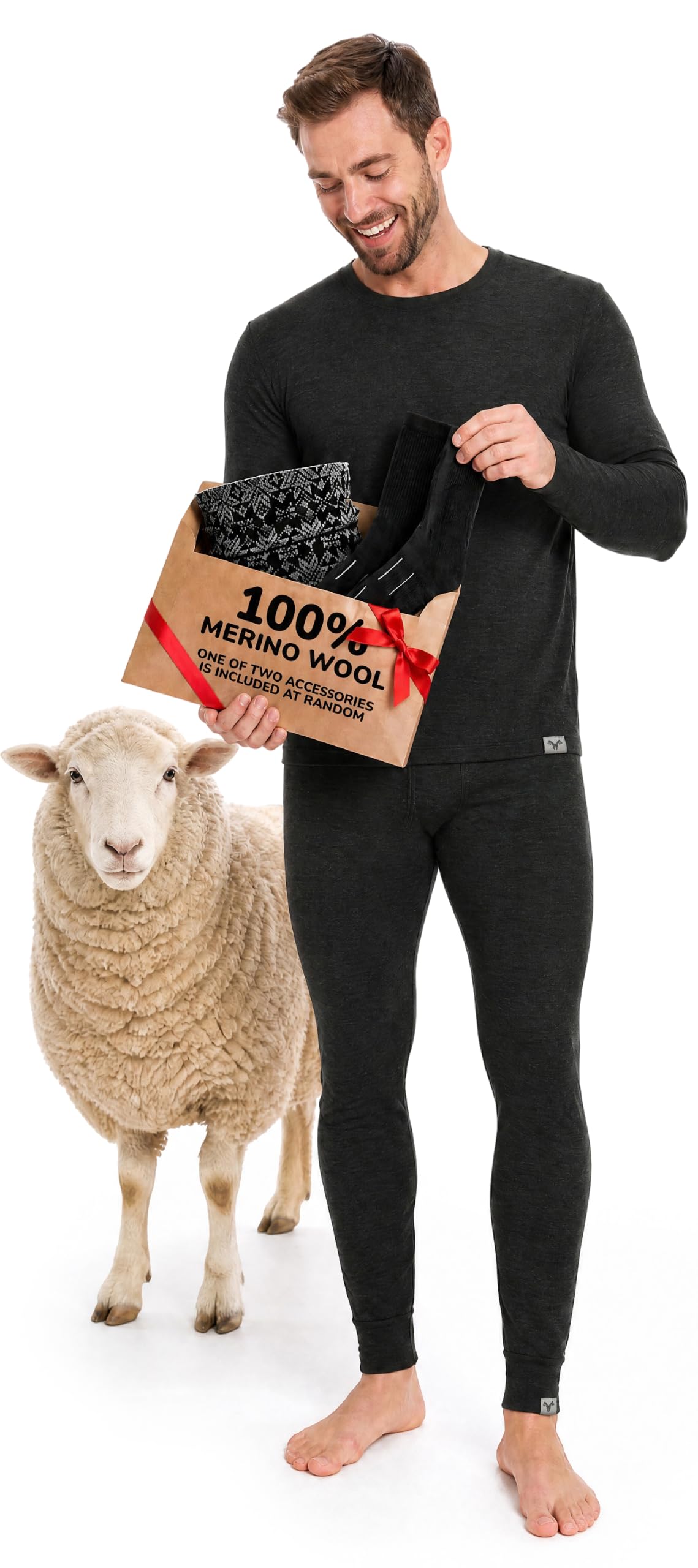
One set that covers your legs as well as your top on a cold trip.
Most base layers here cover your upper body. This one pairs a long sleeve top with a thermal bottom, in two fabric weights. The 165gsm option is for higher-output activity and milder cold — running, skiing, and active hiking where you want warmth without bulk. The 250gsm option handles sustained cold and low-movement days. Both weights use the same 100% merino construction, so only the warmth level changes.
Quality is the trait praised most, with warmth close behind. The set comes up warm, comfortable, and soft, and the merino resists odor across multiple days of wear — the point of a set like this on a multi-day hike where laundry is not an option. It works as loungewear and sleepwear too, so the bottom earns its keep on cold nights in a tent or cabin.
Durability is the mixed part: some report it lasts when washed by hand, others report it wearing quickly. Hand washing is the safer habit. Sizing runs small for some buyers, so size up if you are between sizes. This is the pick for someone who wants a full merino system rather than a single shirt. It holds 4.5+ stars across 300+ ratings.
Why choose a set: a matching top and bottom in two weights, from 165gsm for active days to 250gsm for deep cold — one purchase covers your whole layering base.
Care matters: durability is mixed, with hand washing the recommended habit. Sizing runs small for some, so consider a size up.
Choose this if: you are packing for a multi-day cold trip and want top and bottom in one merino system.
Pass if: you only need one hiking top and would rather not maintain a full set.
9. Icebreaker 175 Everyday Long Sleeve Crewneck

A featherweight 175gsm layer that works as hard under a ski shell as it does on its own.
Icebreaker builds this at 175 gsm in a 100% merino rib-knit, which makes it a light, year-round layer rather than a single-season one. It wears alone on warm-weather hikes and layers next to skin on frigid days at the resort. The rib-knit construction is part of why it has that smooth, close feel against skin — the shirt is described as light as a feather.
The quality of the fabric gets the most praise, with fit right behind it. Owners describe the fit as not oversized and not tight or loose, which for a layering piece is exactly the goal. It is completely non-itchy, warm in very cold temperatures, and temperature regulating enough that it avoids overheating on the climb. Versatility is the other winning trait: cute enough to wear on its own, and a clean layer under a sweater.
The honest limit is warmth. At 175gsm this is a light layer, so on a deep-winter summit it is a foundation rather than the whole answer. The slim fit also runs true to the stated cut, so check the size chart if you want room for a heavier mid layer. For a shirt that works from spring hikes through ski season, though, it is a strong all-rounder. It carries 4.5+ stars across 700+ ratings.
The all-season argument: 175gsm 100% merino rib-knit covers warm-weather hikes and cold-weather ski layering with one shirt, and the fit reads neither tight nor loose.
Know the limit: it is a lightweight, so on a genuinely frigid summit it needs a midweight over it.
The match for: women who want one versatile merino layer for hikes, ski days, and everyday wear.
Look elsewhere if: you need a single midweight for sub-freezing trips.
Know the Specs
Fiber micron — how thick each wool fiber is
Micron is the diameter of a single wool fiber, and a smaller number means a finer, softer fiber. The layers here run from 16.5 micron on the MERIWOOL lightweight to 18.5 micron on the Minus33 midweight. Finer fiber bends more easily against skin, which is why these shirts feel silky rather than scratchy. If you have avoided wool in the past, look for a low micron number first.
Fabric weight — the number that sets your hiking season
Weight is shown in gsm, or grams per square meter, and it tells you how much wool is packed into the cloth. A 165gsm or 175gsm knit is a light layer for warm-weather hikes and hard climbs. A 235 or 250gsm knit is a midweight for real cold and slower days. Choose for the coldest part of your day, because a thin layer stops keeping you warm once the temperature drops.
Merino versus a merino blend
A 100% merino layer gives you the full natural fiber feel, plus odor resistance and warmth even when damp. A blend mixes in synthetic fibers, which can dry faster and add durability. The Carhartt top here is a merino blend with FastDry technology, so it trades pure-wool feel for fast-drying performance. Neither is wrong — the question is if you want natural fiber or blended performance.
Odor resistance — why one shirt can last a whole trip
Merino resists the odor that builds up in synthetic fabrics, which is why a single shirt can survive several days of hiking between washes. Every layer in this list is merino, so this is a shared strength rather than a differentiator. It is the reason merino is worth packing for a multi-day trip where laundry access is limited.
Common Questions
Is a merino wool base layer warm enough on its own for hiking?
Will merino wool make me itch on the trail?
How many days can I wear a merino base layer before it smells?
Should I choose a quarter zip or a crew neck for hiking?
Does merino wool still keep you warm when it gets wet?
How should I wash a merino wool base layer?
Is a merino blend as good as 100% merino for hiking?
What is the difference between 165gsm and 250gsm merino base layers?
Do these merino base layers run true to size?
Can I wear a merino base layer for skiing as well as hiking?
The Bottom Line
If you hike in real cold and want one merino layer to carry the season, the Minus33 Chocorua Midweight Crew is the pick — 235 g/m2 of 18.5 micron merino that holds warmth on a cold summit and still breathes on the climb. For three-season hiking in the softest fiber on the list, the MERIWOOL Lightweight at 16.5 micron is the one. And if you are packing for a multi-day trip, the MERINNOVATION Set gives you a matching top and bottom in one order. Buy for the coldest part of your hike and the rest of the day takes care of itself.
How we choose
We do not accept paid placement. Every pick is matched to a real buyer and a real use-case; we do not hands-on test units.
Sources
Specifications: manufacturer listings and product documentation. Review insights: verified customer reviews, as of November 2026. Pricing: not shown on this page (it changes often); check the current price via the retailer link.
As an Amazon Associate, Tactical Gear Guy earns from qualifying purchases. This does not affect which products we feature.