Specs are compiled from manufacturer listings and verified buyer reviews and can change over time — please confirm the key details on the product page before buying.
Most gas trimmers die the same way: the engine floods, the pull cord fights back, and the shaft flexes until the head wobbles. If you want a machine that fires up, holds its speed through thick grass, and keeps a solid steel shaft between the engine and the cutting head, the ECHO SRM-225 is the safest place to start — it pairs a 21.2 cc 2-stroke engine with a 74-inch straight shaft and a 12.5-pound build that working homeowners keep coming back to. Below you’ll find nine more gas trimmers, sorted by what they actually do well, so you can match one to your yard instead of guessing.
This guide is built by comparing the manufacturers’ published specifications and the patterns across verified customer reviews, so you get each pick’s real strengths and trade-offs instead of marketing spin.
Some trimmers here are built for fence lines and light edging, others for blackberry thickets and roadside brush. The trick is matching engine size and shaft length to the job, then checking how the head reloads and how much the whole machine weighs. Here is a straight, spec-first look at the steel gas weed whackers worth your money this season.
Top Picks

How To Choose The Best Steel Gas Weed Whackers
A steel gas weed whacker is a gas-powered string trimmer with a rigid metal drive shaft instead of a flexible cable. The steel shaft is what keeps the cutting head spinning true when you lean into tall grass, and it is the single part that separates a tool you keep for a decade from one that wobbles by August. Everything else — engine size, cutting width, head design — you tune to your yard.
Match engine displacement to the vegetation, not the brochure
Engine size is measured in cc (cubic centimeters of cylinder volume), and it is the clearest signal of what a trimmer can chew through. A 21.2 cc engine like the ECHO SRM-225 handles routine grass trimming and light edging around a suburban lot. Step up toward 30 cc or more when you are clearing brush, saplings, and overgrown fence rows, because a small engine bogs down and stalls in that work no matter how sharp the line is.
Decide between 2-cycle and 4-cycle before you buy
A 2-cycle engine burns a mix of gas and oil that you blend yourself, and it delivers strong power for its size. A 4-cycle engine, like the one in the Troy-Bilt TB304S, runs on straight gasoline with no mixing, which some owners prefer for the simpler fuel routine. The trade-off is that 2-cycle engines generally want that pre-mixed can on hand, while 4-cycle machines skip the oil bottle entirely.
Cutting width and head design decide your finish time
Cutting width is the swath the spinning line clears in one pass, listed in inches. A wider swath covers more ground per sweep, but a narrower head concentrates power into thick stems. Head design matters just as much: a bump-feed head lets you tap the ground to advance line, while a rapid-reload spool cuts down the time you spend restringing. Look for whichever reload style you will actually put up with, because restringing is the chore that makes people leave a trimmer in the shed.
Side-by-Side Comparison
These are the three specs that decide how a steel gas trimmer behaves on your property: engine size, cutting width, and machine weight. Read across a row to see what you are trading.
| Model | Best For | Engine | Cutting Width | Weight | Amazon |
|---|---|---|---|---|---|
| ECHO SRM-225★ Best Overall | Everyday yard trimming | 21.2 cc 2-stroke | — | 12.5 lb | Amazon |
| LawnMaster NPTGSP2617ANo-Pull Start | No-pull push-button starting | 26 cc 2-cycle | 17 in | 18.9 lb | Amazon |
| NEO-TEC BC260EPA-X3-In-1 Kit | Three tools in one | 26 cc 2-cycle | 16 in | — | Amazon |
| Husqvarna 122LK | Light occasional trimming | 22 cc 2-cycle | 17 in | 10.6 lb | Amazon |
| PROYAMA PBC52 | Heavy brush and overgrowth | 51.7 cc 2-cycle | 18 in | 19 lb | Amazon |
| Troy-Bilt TB304S | No fuel mixing required | 4-cycle | 17 in | 15 lb | Amazon |
| Husqvarna 330LK | Wide-swath large-lot work | — | 20 in | 12.9 lb | Amazon |
| Echo SRM-2620 | Pro-grade all-day trimming | 25.4 cc | — | 13 lb | Amazon |
| Shindaiwa T262 | Compact 25.4 cc footprint | 25.4 cc 2-cycle | 20 in | — | Amazon |
| ECHO SRM-3020T | Professional landscaping crews | 30.5 cc | 12 in | — | Amazon |
Detailed Reviews
1. ECHO SRM-225 String Trimmer
Our pick — 4.5+★ from 250+ verified ratings; the strongest balance of quality and price.
The 74-inch straight shaft that reaches under the fence line without flexing.
Start with the number that explains why this one sits at the top: 74 inches of straight shaft. That length lets you slide the cutting head beneath shrubs and behind fence posts without crouching, and the rigid steel drive inside it keeps the head turning true instead of whipping. At 12.5 pounds it is light enough to carry through a full trimming session, and it is the trimmer the crowd trusts most here — 4.5+ stars across 250+ ratings, with a limited 5-year consumer warranty standing behind it.
What wins people over is simple function. The 21.2 cc 2-stroke engine starts, runs, and cuts grass and weeds the way a working homeowner needs it to, and that reliability is the pattern through the reviews rather than an occasional lucky unit. There is no fancy push-button start and no battery to charge — you mix your fuel, pull the cord, and go. No push-button start, no battery to charge — just mix, pull, and cut.
The honest catch is that 21.2 cc has limits. It is a comfortable fit for routine grass and light weeds on a suburban lot, but push it into saplings or dense brush and a bigger engine is the answer. For the mowing-and-edging routine most yards actually need, this is the machine that keeps showing up to work.
Proven straight-shaft workhorse
- 74-inch straight shaft reaches under shrubs and around posts
- 12.5 pounds stays manageable through a long session
- Limited 5-year consumer warranty backs the build
- Function and reliability are the standout themes in owner feedback
Two-stroke mixing hassle
- 21.2 cc is a grass-and-light-weed engine, not a brush-clearing one
- Requires pre-mixed 2-cycle fuel — no straight-gas option
- Solid black finish shows scuffs and grass stain quickly
Buy for reliability: you want one dependable gas trimmer for weekly grass and edging work around a normal-size yard.
Skip for easy start: your property is mostly thick brush and saplings, where you want far more displacement than 21.2 cc.
2. LawnMaster NPTGSP2617A Grass Trimmer
A push button instead of a pull cord — up to 250 starts from a single charge.
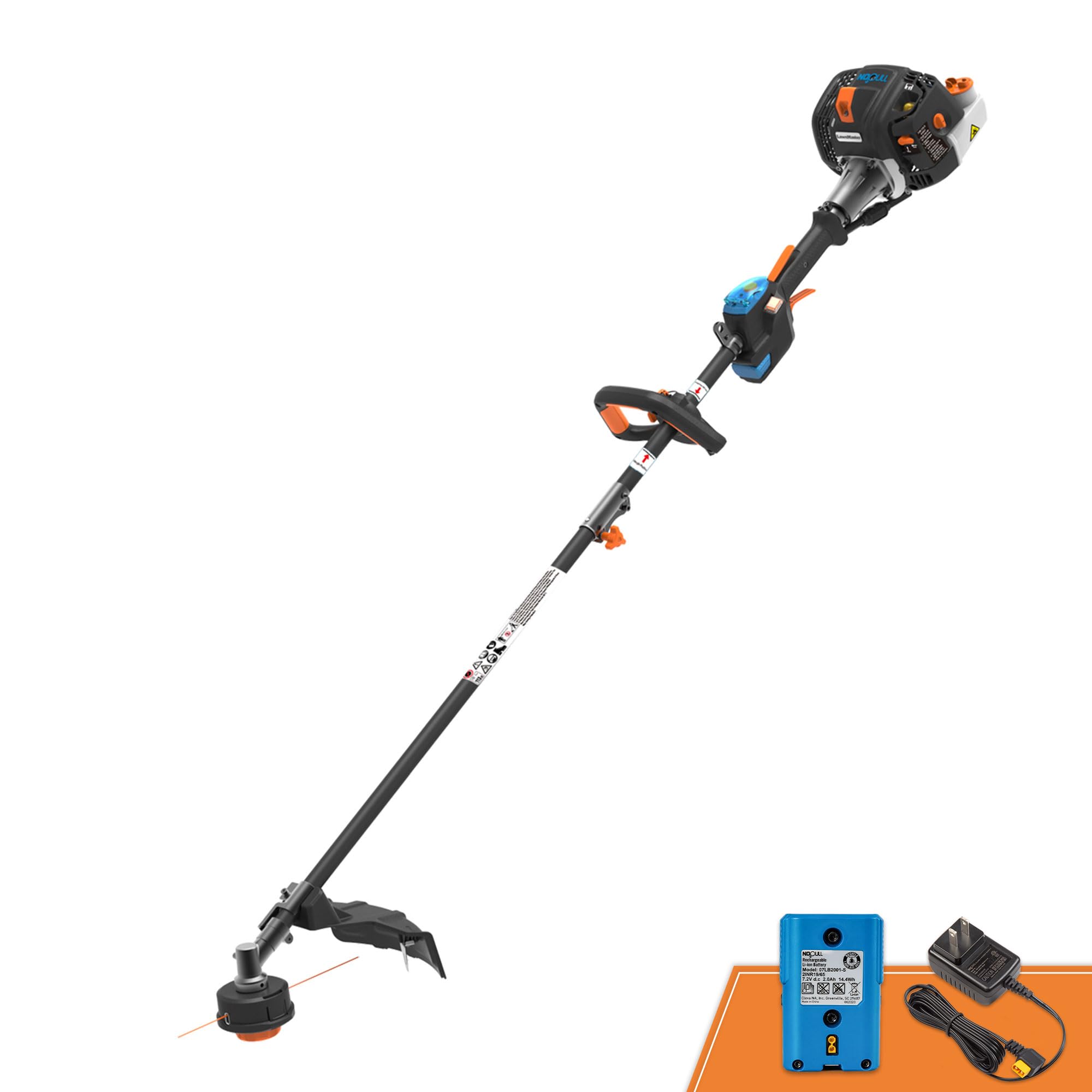
If the pull cord is the part of gas trimming you dread, this is the one to look at. LawnMaster puts an electric push-start button on a 26 cc 2-cycle engine, rated for up to 250 starts on a single charge of its included lithium-ion battery. That means you press a button, the engine catches, and you are cutting — no yanking, no flooding the carburetor on a cold morning.
The rest of the package is built for comfort and speed. An anti-vibration assist handle slides forward and back with 360° rotation so you can find a grip that does not fight your arms, and the dual-line bump feed runs 0.095-inch line across a 17-inch cutting width. Restringing goes faster thanks to a rapid reload spool, and the split shaft accepts multi-tool attachments when you want to expand past trimming.
Be realistic about the trade-off: this is the heaviest trimmer in this group at 18.9 pounds, and a fair share of long-term feedback flags durability as a concern — some machines cut out or break down earlier than you would hope. Treat it as the easy-start pick for a moderate lawn, not a commercial brush-clearing machine you abuse daily.
Push-button electric start: the push-button ignition genuinely changes the morning routine, and a lot of the feedback centers on how much easier it makes the job for people who dislike yanking a cord.
Heavier than claimed: at 18.9 pounds, this is a machine you set down between passes — the trade for that easy start is real mass in your hands.
Buy for no pull: anyone with shoulder or arm issues who wants gas power without fighting a pull cord every time.
Skip for light weight: if you plan to carry a trimmer for hours across rough ground, the 18.9-pound build will wear on you.
3. NEO-TEC BC260EPA-X 26cc 2-Cycle 3-in-1 Gas String Trimmer
One 26 cc engine, three heads, and a shoulder strap to keep it planted.
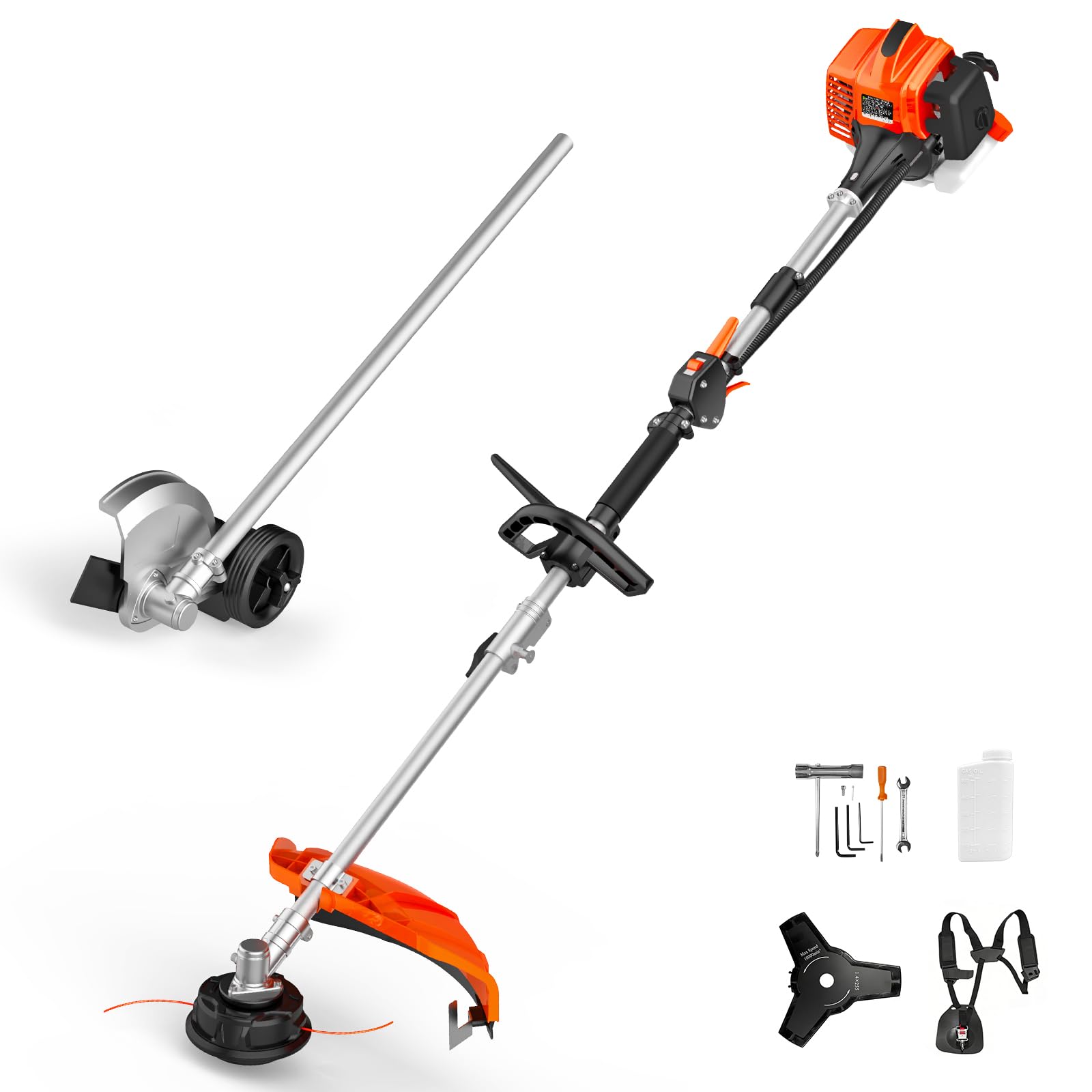
Buy this when you want a single tool that changes jobs instead of a shed full of single-purpose machines. NEO-TEC ships a 16-inch string trimmer head, a 9-inch edger blade, and a 10-inch 3-tooth brush cutter blade in one box, and the split shaft lets you swap between them in seconds. The 26 cc 2-stroke engine is EPA-certified and designed to fire up in just a few pulls.
Value is the thing that drives this pick. For a three-tool kit it comes in well under what a Husqvarna or ECHO costs on its own, and cutting performance is the aspect buyers are happiest with — the blades arrive sharp and cut cleanly. An adjustable shoulder strap and ergonomic handle help offset the engine weight on longer sessions, and the whole thing stores compact once you split the shaft.
The named limit is geography and coverage. This model is not CARB certified, so it cannot be sold or shipped to California, and 16 inches of cutting width is narrower than the 18-inch PROYAMA for wide-open mowing. Outside California, this kit gets you a trimmer, edger, and brush cutter for less than one Husqvarna or ECHO.
Buy for versatility: homeowners who want to trim, edge, and clear brush with one engine and one fuel can.
Skip for simplicity: California buyers are shut out entirely, and the 16-inch swath means more passes than wider heads.
4. Husqvarna 122LK Straight Shaft Gas Trimmer

At 10.6 pounds, it is the lightest trimmer here — and it swings like it.
Pick this up after a PROYAMA and the difference is immediate. The Husqvarna 122LK weighs 10.6 pounds against the PROYAMA’s 19 pounds, so it is a machine you can carry one-handed along a long fence line without your arm giving out. The 22 cc 2-cycle engine and 17-inch cutting width cover routine trimming, and the straight shaft reaches under low bushes just like the bigger machines do.
Husqvarna’s SmartStart system is the other reason to choose it — the design is meant to cut the pull effort on a cold start, so getting it running takes less fight. The shaft detaches so you can click on other attachments, and the T25 heavy-duty head is compatible with this model. For occasional homeowner trimming, the light weight and easy starting are the two things owners appreciate most.
Set expectations on the engine, though. A 22 cc powerplant is not built to clear heavy brush, and long-term feedback on reliability is genuinely mixed — some machines run for seasons, others come up short. Judge it as a light occasional-use trimmer for grass and weeds, not a brush machine.
Featherweight straight shaft: 10.6 pounds is a real difference on a big-yard day, and it lets you work longer without fatigue.
Small cutting swath: keep it to grass and weeds — 22 cc and a mixed long-term track record are a poor fit for thick brush.
Buy for trimming ease: older homeowners or anyone with a modest yard who wants a light, easily started gas trimmer.
Skip for big jobs: heavy brush clearing or commercial use, where the 22 cc engine and reliability record fall short.
5. PROYAMA PBC52 51.7cc Gas Powered Weed Eater and Brush Cutter
A 51.7 cc engine that turns overgrown fence rows into mowed ground.
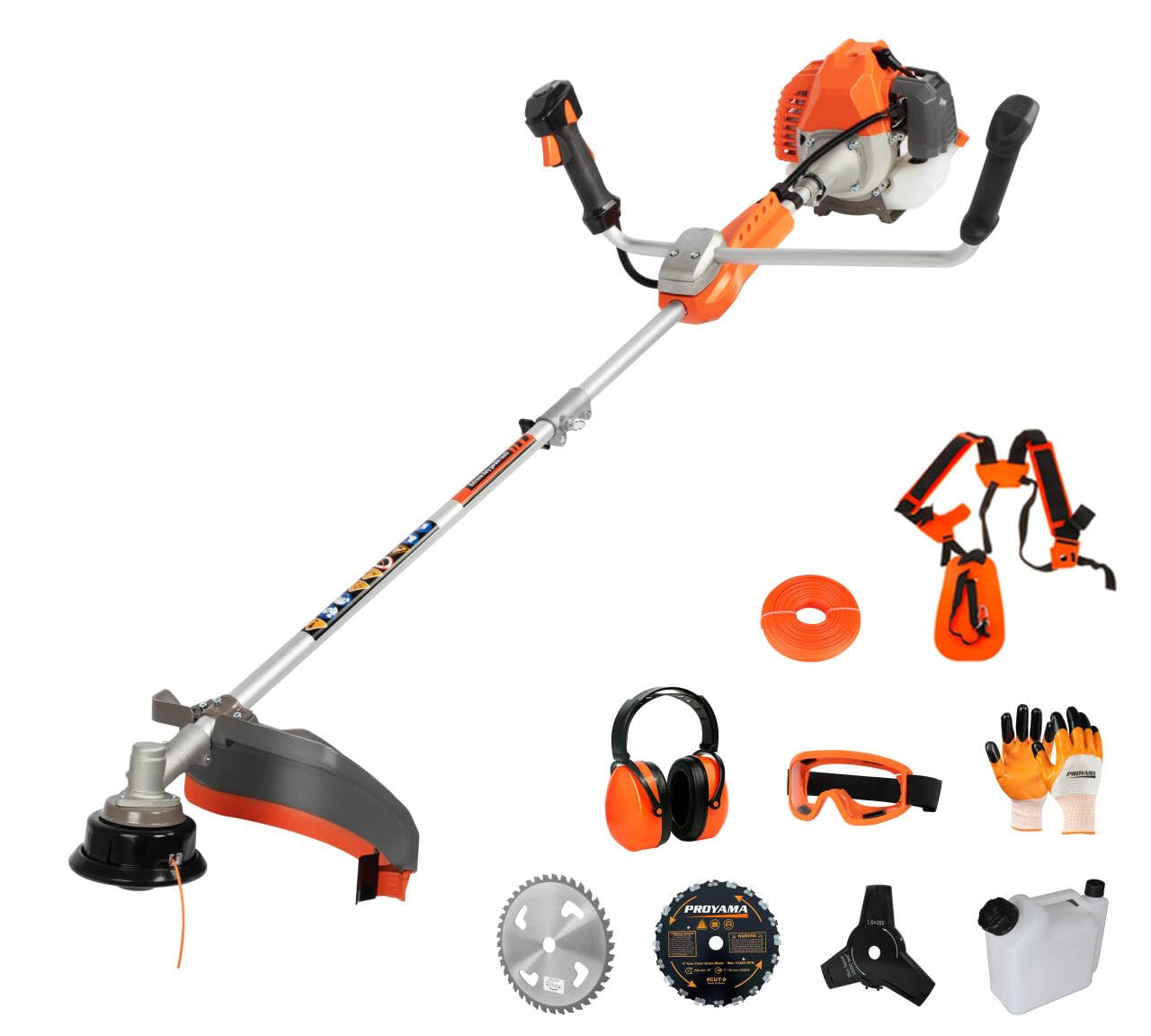
Engine displacement tells the story here, and it is not close. The PROYAMA carries a 51.7 cc 2-cycle engine against the 21.2 cc ECHO SRM-225 — more than double the cylinder volume, which is why it can chew through tall grass, weeds, bushes, and dense brush that would stall a lightweight trimmer. It also cuts an 18-inch swath, wider than the NEO-TEC’s 16 inches, so you clear more ground per sweep.
Raw power meets comfort engineering, too. An integrated anti-vibration system absorbs the shock before it reaches your hands, so long clearing sessions cost you less in fatigue, and it comes set up for grass trimming, weed removal, and brush cutting with swappable attachments. Owners describe it in the language of serious equipment — a monster that starts right up and works from the start.
Two realities to weigh. This machine weighs 19 pounds, so it is a two-handed tool and the reviews say so plainly; and the 51.7 cc engine earns its power by burning fuel, so plan for more frequent refills. For real overgrowth rather than lawn touch-ups, the 51.7 cc engine justifies the 19 pounds.
Big bore brush cutter
- 51.7 cc 2-cycle engine clears brush and dense vegetation
- 18-inch cutting width covers more ground per pass
- Anti-vibration system eases fatigue on long jobs
- Starts and runs well right from the start, by owner account
Heavy and thirsty
- 19 pounds demands two-handed use and steady grip
- The big engine drinks fuel faster than a 21–26 cc machine
- Assembly instructions are hit-or-miss for some buyers
- One-year warranty is shorter than the ECHO’s five-year consumer cover
Buy for thick brush: your property has real brush, saplings, and roadside overgrowth that lighter trimmers balk at.
Skip for lawn edges: your trimming is a quick pass around a small lawn and 19 pounds feels like overkill.
6. Troy-Bilt TB304S Gas String Trimmer, 4-Cycle 17-Inch

Straight gasoline, no mixing — the fuel routine that wins people over.
If the gas-and-oil blend is what keeps you from buying a 2-cycle trimmer, the Troy-Bilt TB304S solves it with a 4-cycle engine. You fill the tank with plain gasoline and skip the measuring cup entirely. A 17-inch cutting swath covers a normal yard in reasonable passes, and a straight shaft reaches under fence posts and shrubs for cleanup work.
SpringAssist technology is meant to lighten the pull start, so cold mornings take less effort than a stubborn 2-stroke. The 15-pound build sits in the middle of this group — no featherweight, not a burden either — and the four-cycle design runs cleaner and quieter than a 2-cycle engine of the same class.
The honest note is consistency. Long-term feedback splits on quality and reliability: plenty of machines run fine season after season, and a real slice of buyers report trouble keeping theirs running. Buy it for the no-mix convenience and light-to-moderate trimming, and give the fuel system a little care between uses.
Buy for fuel ease: anyone who wants gas power without buying and mixing 2-cycle oil every time.
Skip for fast revs: the reliability picture is a coin flip, so set expectations for occasional-use trimming rather than heavy seasonal abuse.
7. Husqvarna 330LK Gas String Trimmer, 970545002

One trimmer, two swaths — go wide for open grass or narrow for power.
Cutting width is the differentiator on the 330LK. You can set it to 20 inches for covering large areas quickly or drop to 18 inches when you want concentrated power in thicker vegetation, which makes it more adaptable than a fixed-width head. At 12.9 pounds it is genuinely light for its job, and the straight shaft and detachable design accept Husqvarna’s click-on attachments, sold separately.
The Rapid Replace head is a real time-saver — line reloads with an align, load, and twist motion rather than a full re-spool battle. Starting is eased by a spring-assisted system and an air purge that clears the carburetor, and LowVib technology dampens vibration through the handle so long sessions wear on you less. Power and ease of use are what the reviews praise most.
The catch is real durability data. A full 26 pieces of negative feedback on durability say this trimmer breaks early, and reliability and value are both mixed in the long run. Treat it as a 12.9-pound residential trimmer for large lots, not a commercial workhorse. The 18–20 inch adjustable cut is worth it if you accept the mixed durability record.
Adjustable handle width: switching between 20 and 18 inches lets one machine cover both open lawn and thicker stems without buying a second trimmer.
Fragile guard parts: the reliability record is mixed and durability feedback is notably negative, so treat it as a residential tool and maintain it carefully.
Buy for comfort fit: you manage a large lot and value a wide, light, easy-to-reload trimmer that adapts to different vegetation.
Skip for rough use: you need commercial-grade longevity and cannot accept the spotty long-term reliability record.
8. Echo SRM-2620 ProXtreme Straight Shaft Trimmer
Professional-grade build, a 25.4 cc engine, and an 8500 rpm head speed.
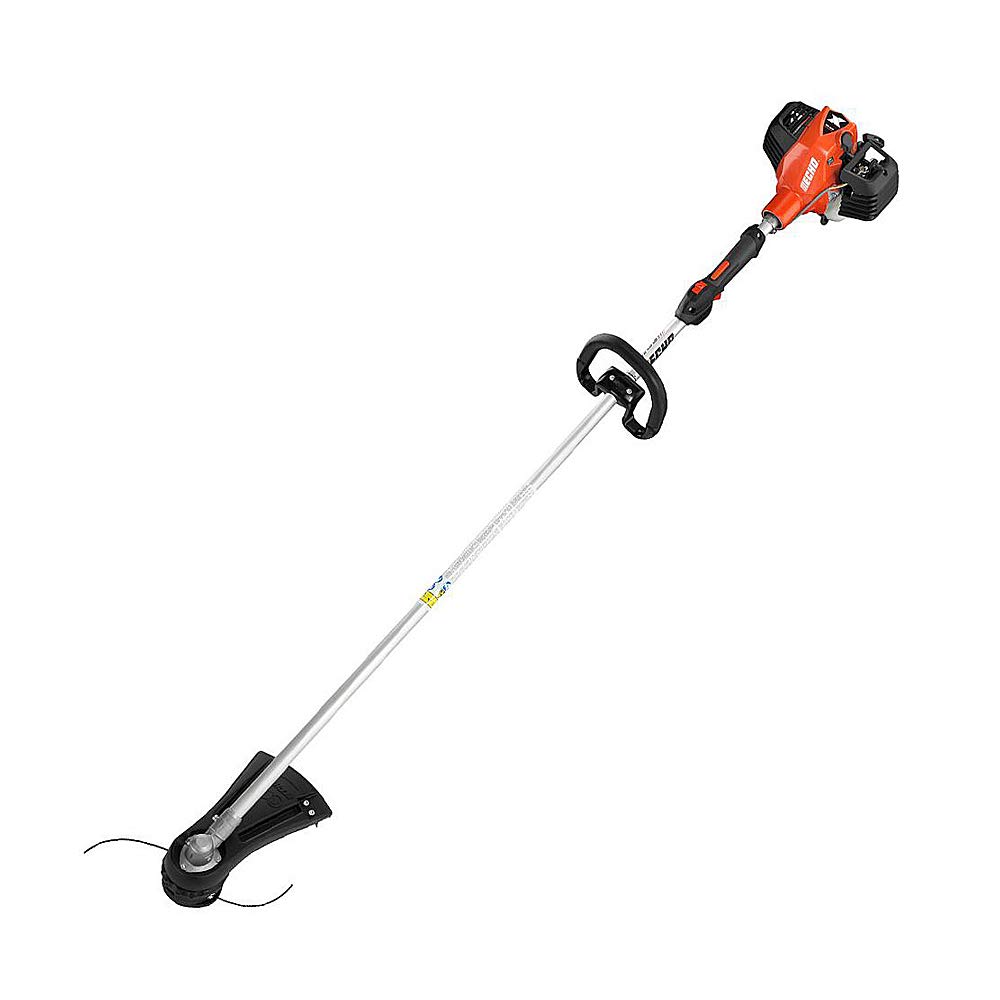
This is the trimmer you buy when trimming is not a weekend chore but a standing commitment. The X Series engine displaces 25.4 cc and drives the head at 8500 rpm, which translates to clean, fast line speed rather than bogging down in thick stems. At 13 pounds it stays portable, and the straight shaft gives the reach that fence lines and shrub beds demand.
ECHO backs it like professional equipment — one year of commercial coverage and five years for consumer use. Owners describe the performance as excellent, with quick startup and workmanship that holds up season after season; durability is consistently praised rather than grudgingly mentioned. It is the trimmer professionals and dedicated homeowners reach for when they are done buying replacements.
Weight is the mild caveat. Some owners find it light and others find it a touch heavier than expected, so if arm fatigue is a real concern, the 12.5-pound SRM-225 above is the gentler carry. For anyone who wants an engine that will not tire before your arm does, this is the pick.
Buy for daily duty: anyone who treats lawn care as ongoing upkeep and wants a trimmer that keeps earning its keep.
Skip for casual yard: if a few extra pounds of carry matters more than head speed, the lighter SRM-225 above is friendlier on the arms.
9. Shindaiwa T262 25.4cc 2-Cycle Trimmer
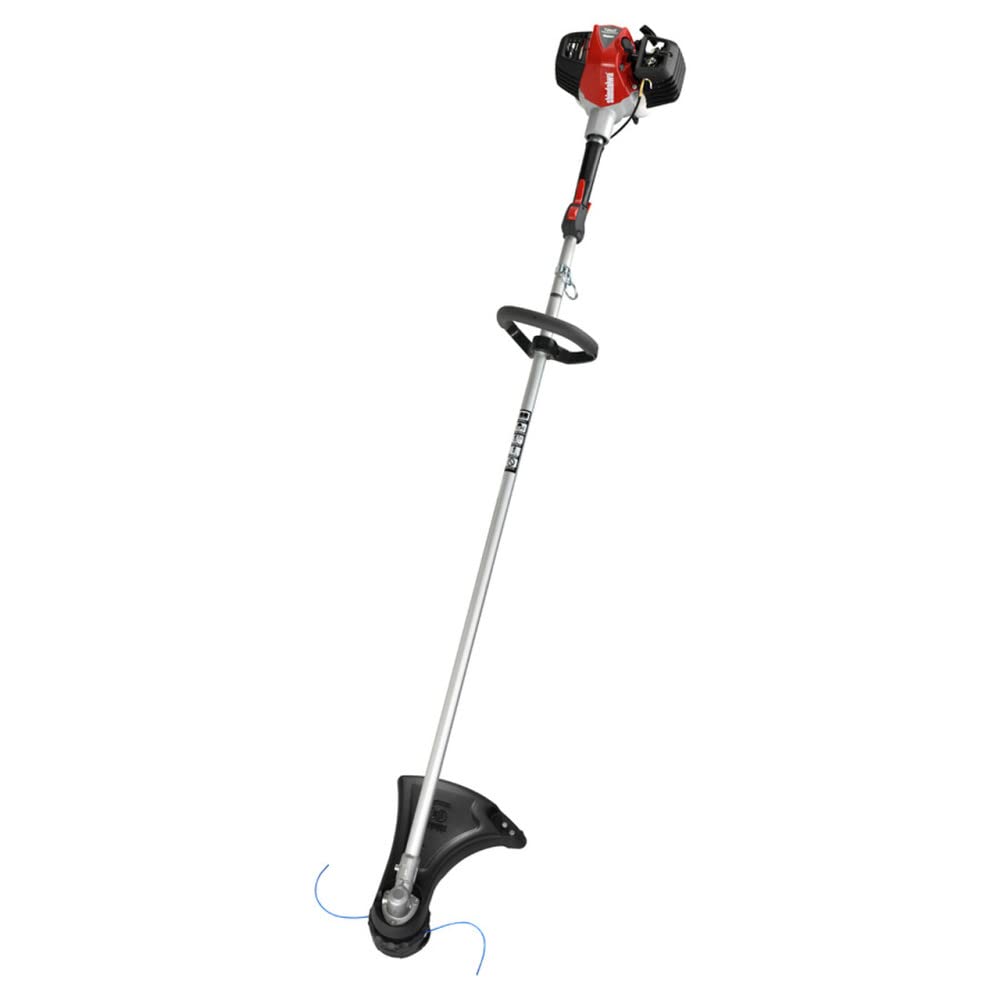
A 25.4 cc professional-class engine in a compact 20-inch package.
Shindaiwa is the quiet branch of the pro trimmer world, and the T262 matches Echo’s power spec exactly — 25.4 cc of 2-cycle engine — in a body that runs a 20-inch cutting width. For a compact professional unit that means real cutting capability without the bulk of a 30 cc monster. It is a straight-shaft gas machine aimed at people who already know what they want from a trimmer.
The listing is thin on extras and does not include a review summary, so the choice rests on the spec sheet and the brand’s reputation among crews rather than on a long record of owner feedback. What you get is a genuine professional-grade engine at a compact footprint, with less frill and less explanation than the big-box brands give you.
The real caution is commitment. Shindaiwa is a specialist line, so parts and service can be trickier to find than for Husqvarna or ECHO, and there is no documented review pool to lean on. If you want pro capability in a compact trimmer and can source service locally, this delivers it; if you want a long track record of owner experience to examine, look at the ECHO X Series instead.
Buy for pro balance: an experienced trimmer looking for a compact 25.4 cc professional machine and comfortable sourcing parts locally.
Skip for budget buy: the listing is sparse on extras and reviews, so you are buying on reputation rather than a documented owner track record.
10. ECHO SRM-3020T String Trimmer
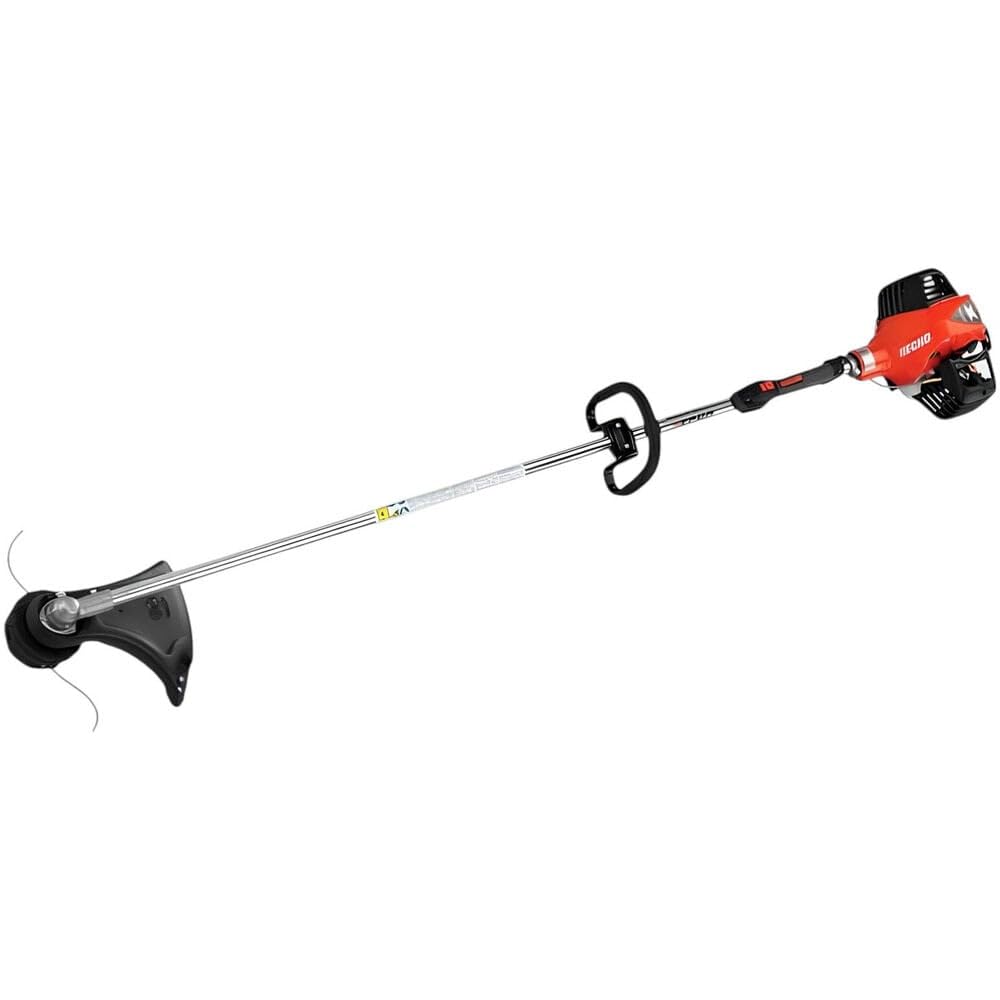
A 30.5 cc pro engine spinning at 10,000 rpm — this is the crew-grade tool.
This is the biggest-displacement ECHO here and it acts like it. The 30.5 cc engine revs to a listed 10,000 rpm head speed, and a 1.62:1 gear-reduction setup concentrates that rotation for fast, efficient cutting through tough growth. It is aimed squarely at professional landscaping, large-scale gardening, and high-demand trimming — not a weekend grass patch.
The X Series build is the reason to spend here: this is the tier that turns up on trailer racks day after day. Owners talk about it as super powerful and fantastic, strong and reliable, which is the language of a machine doing real work. On a big job where a smaller engine would bog and wear you out, the extra displacement and head speed keep the pace up.
Bear in mind the trade-offs before committing. A 12-inch cutting width is intentionally narrow — this head concentrates force rather than covering ground wide, so it is a force tool, not a fast sweep. It is also a professional-class machine, and the extra capacity is not needed if your yard is a modest suburban lot.
Buy for heavy work: landscaping crews and large-property owners who need pro-grade power and 10,000 rpm head speed in one trimmer.
Skip for light trimming: small suburban lots where the 12-inch cut and heavy-duty build are more capacity than the grass demands.
Know the Specs
Four numbers decide how a steel gas trimmer behaves. Learn to read them and the spec sheet stops being a mystery.
Engine Displacement (cc)
Displacement is the volume the piston sweeps, given in cubic centimeters. Bigger cc means more cutting force for thick vegetation, which is why a 51.7 cc engine handles brush a 21.2 cc machine will stall on. Buy the displacement your vegetation demands, not the biggest badge on the shelf — extra cc adds weight and fuel burn you may not need for lawn touch-ups.
Cutting Width (inches)
Cutting width is the swath the spinning line clears in one pass. A wider swath like 18 or 20 inches finishes open lawns faster, while a narrow 12 or 16-inch head concentrates power into thick stems for brush work. Match it to the ground: open grass wants width, heavy growth wants concentrated force.
2-Cycle vs 4-Cycle
A 2-cycle engine runs on a pre-mixed blend of gas and oil and delivers strong power from a small package. A 4-cycle engine runs on straight gasoline with no mixing, which some buyers prefer for the simpler fuel routine. Choose 2-cycle for maximum power-to-weight and 4-cycle for no-mix convenience.
Weight and Shaft Type
Weight in pounds decides how long you can carry the machine comfortably. A 10.6-pound trimmer swings easily along a long run; a 19-pound brush cutter needs two hands and breaks. A straight steel shaft adds reach beneath shrubs and fence posts and holds the head steadier than a flex design, which is why it is the standard on serious gas trimmers.
Common Questions
Will a steel shaft gas trimmer cut through thick brush or just grass?
Do I have to mix oil into the gas on all of these trimmers?
How long can a gas string trimmer run on a full tank?
Can I use attachments and other tools on these trimmers?
Will a gas trimmer start easier with a push button or a pull cord?
Can I buy a gas trimmer in California from this list?
What is the difference between a bump-feed and a rapid-replace trimmer head?
How much does trimmer weight matter on a long job?
What warranty should I expect on a professional gas trimmer?
The Bottom Line
The safest purchase in this group is the ECHO SRM-225, because it pairs a 21.2 cc 2-stroke engine with a 74-inch straight steel shaft, a manageable 12.5-pound build, and a limited 5-year consumer warranty — the balance of reliability, reach, and weight that most lawns actually need. If your property is brush and overgrowth rather than grass, the PROYAMA PBC52 and its 51.7 cc engine is the force tool you want. And for anyone who wants three attachments — trimmer, edger, brush cutter — from one engine and one fuel can, the NEO-TEC BC260EPA-X is the versatile pick, as long as you are not shopping from California. Match displacement and cutting width to your vegetation, and the shortlist narrows fast.
How we choose
We do not accept paid placement. Every pick is matched to a real buyer and a real use-case; we do not hands-on test units.
Sources
Specifications: manufacturer listings and product documentation. Review insights: verified customer reviews, as of November 2026. Pricing: not shown on this page (it changes often); check the current price via the retailer link.
As an Amazon Associate, Tactical Gear Guy earns from qualifying purchases. This does not affect which products we feature.