Specs are compiled from manufacturer listings and verified buyer reviews and can change over time — please confirm the key details on the product page before buying.
Buying a multi room speaker is really about one thing: whether the music keeps playing cleanly when you walk from the kitchen to the bedroom. The picks below all handle that job, but they do it in different ways. Some lean on a mature app and a deep ecosystem. Others win on pure sound for the money, or on a touchscreen you can actually see from across the room. What matters most is matching the speaker to how you listen — one room or five, phone control or voice, budget or premium wood finish.
This guide is built by comparing the manufacturers’ published specifications and the patterns across verified customer reviews, so you get each pick’s real strengths and trade-offs instead of marketing spin.
Below you’ll find the specs that actually change the experience — driver size, wireless standards, sync behavior — plus the honest gripes that show up again and again in owner feedback. By the end you’ll know exactly which multi room speaker fits your home and how you listen.
Top Picks
How To Choose The Best Multi Room Speaker
Your second speaker is where whole-home audio gets hard, not your first. One speaker sounds fine in any room. Add a second and the system either syncs perfectly or it doesn’t. Two things decide that: whether both speakers run on the same Wi-Fi ecosystem (the shared wireless system that lets them talk to each other), and whether the app that controls them is any good. Get those two right and the rest is detail.
Wi-Fi sync versus Bluetooth range
Wi-Fi is what makes true multi room audio possible. A Wi-Fi speaker connects to your home network and joins a group, so every room plays the same track at the same moment — no lag, no dropouts when you walk out of range. Bluetooth is the fallback: convenient for one room, but its range is finite. The Bose Lifestyle Ultra, for example, lists a Bluetooth range of 30 feet, which is roughly one room plus a hallway. If you plan to group speakers across floors, lean on Wi-Fi and treat Bluetooth as a bonus for phone-pairing in the same room.
Driver size and what it means for your room
Driver size is the diameter of the speaker cone that actually moves air. A bigger woofer generally moves more air, which translates to deeper bass. The WiiM Sound uses a 4-inch paper-cone woofer paired with dual 1-inch silk-dome tweeters — that combo is designed to give you bass you can feel plus clear vocals on top. The Denon Home 150 runs a smaller 3.5-inch woofer with a 1-inch tweeter, which suits a bedroom or den. In a large open-plan space, the bigger driver has an easier time filling the room without straining.
Ecosystem: the decision you can’t undo
Once you buy into Sonos, WiiM, Google, or HEOS, adding a speaker from a different brand usually means running two separate apps and two separate groups. That’s not the end of the world, but it’s friction. If you’re starting fresh, pick the ecosystem whose app you actually enjoy using, because you’ll open it every day. If you already own a Sonos or Google speaker, staying in that family is usually worth it — the sync is tighter and the setup is faster.
Side-by-Side Comparison
| Model | Best For | Wireless | Key Driver | Notable Spec | Amazon |
|---|---|---|---|---|---|
| WiiM Sound Lite (2 Pack)★ Best Overall | Whole-home on a budget | Wi-Fi, Bluetooth, Ethernet, Aux | 4″ woofer + dual 1″ tweeters | 24-bit/192 kHz, 100W peak | Amazon |
| Sonos Era 100 SLFirst Sonos | First Sonos speaker | Wi-Fi, Bluetooth | Midwoofer + dual angled tweeters | No microphone, Trueplay tuning | Amazon |
| Sonos Play PortableTake It Outside | Indoor-outdoor Sonos | Wi-Fi, Bluetooth | Dynamic driver, stereo | IP67, up to 24 hours playback | Amazon |
| WiiM Sound | Touchscreen control | Aux, Bluetooth, Ethernet, Wi-Fi | 4″ woofer + dual tweeters | 1.8″ color touchscreen, 24-bit/192 kHz | Amazon |
| Denon Home 150 | HEOS households | Bluetooth, Wi-Fi | 3.5″ woofer + 1″ tweeter | AirPlay 2, Alexa built-in | Amazon |
| Bose Lifestyle Ultra | rich single-room sound | AirPlay, Bluetooth, Google Cast, Wi-Fi | Dynamic driver, surround output | TrueSpatial Audio, Alexa+ ready | Amazon |
| Google Nest Audio (3-Pack) | Google homes, three rooms | Bluetooth, Wi-Fi | 7.5 cm driver | Three speakers, stereo pairing | Amazon |
| Bang & Olufsen Beosound Emerge | Design-first listeners | Bluetooth, Wi-Fi | 10 cm driver | Gold tone, light oak accents | Amazon |
Detailed Reviews
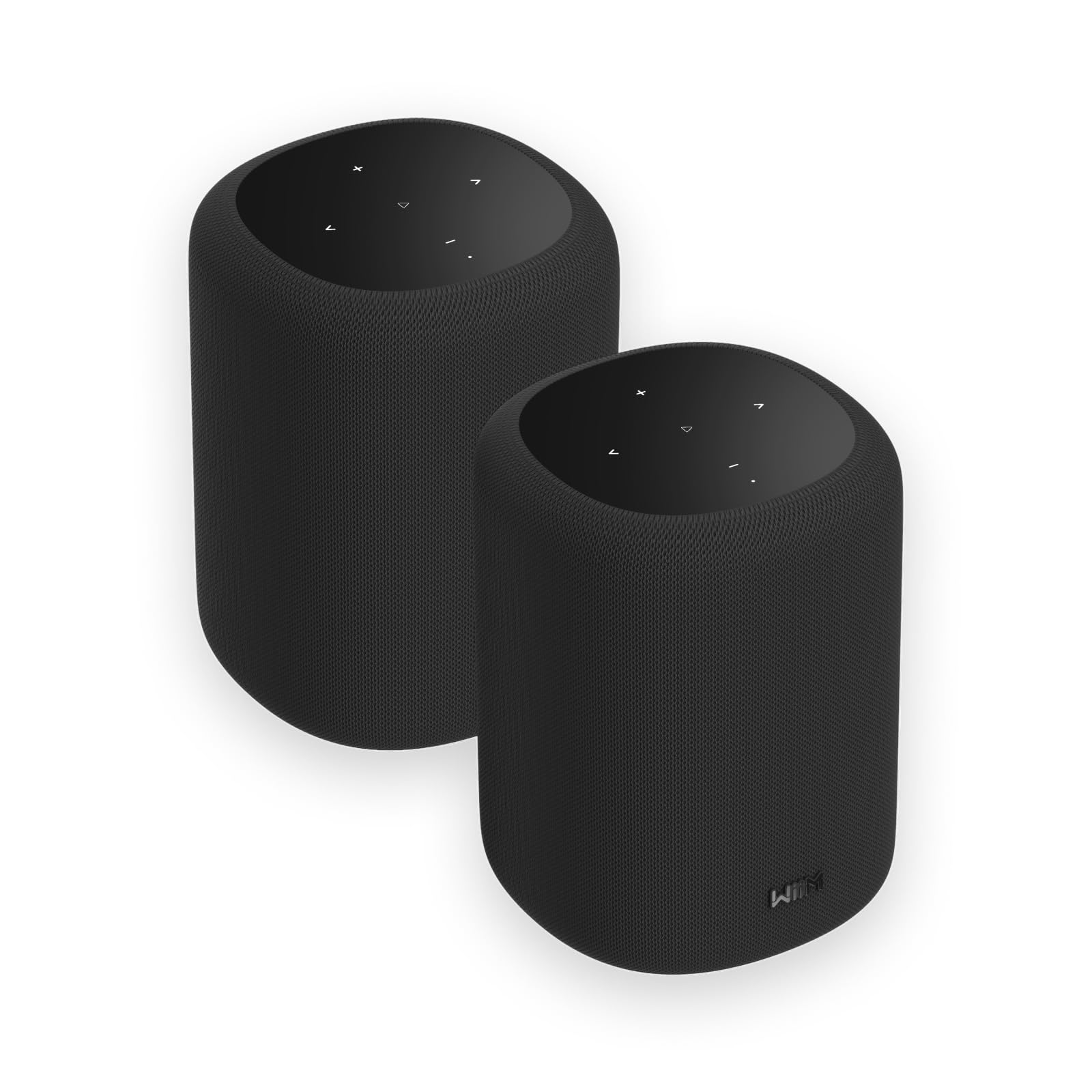
1. WiiM Sound Lite Smart Speaker (2 Pack)
Our pick — 4.5+★ from 200+ verified ratings; the strongest balance of quality and price.
Two speakers, one box, and the easiest path into real whole-home audio.
Two WiiM Sound Lites arrive together, which means you can run a proper stereo pair or split them across two rooms on day one. The stereo math is right in front of you: a 4-inch paper-cone woofer and dual 1-inch silk-dome tweeters per speaker, driven by a 100W peak amplifier. In plain terms, one unit has enough push to fill a kitchen or den, and two of them give you a left/right image that a single speaker can’t produce. That’s the whole reason the two-pack exists.
The streaming side is unusually open for this category. WiiM’s Home App handles Spotify, TIDAL, and Qobuz Connect along with Alexa Cast, DLNA, and Roon, and the speakers join WiiM, Google Cast, or Alexa multi-room groups. If you and your partner use different services, this is one of the few setups where neither of you has to switch. The 24-bit/192 kHz Hi-Res support is the spec that matters if you subscribe to a lossless tier — otherwise you’re paying for headroom you won’t hear.
What wins people over is the sound itself, especially in the mids and highs, where vocal clarity is the recurring praise across review pages. Setup is fast too — a smart move for anyone nervous about networking a whole house. The trade-off is software maturity: WiiM’s app does real work, but it isn’t as slick as Sonos, and Wi-Fi grouping occasionally asks for a restart. That’s a minor tax for the flexibility you get.
What earns the top spot
- Two matched speakers in one box — stereo pair or two rooms straight away
- 100W peak amp with a 4″ woofer and dual 1″ tweeters per unit
- Plays nice with WiiM, Google Cast, and Alexa multi-room groups
- 24-bit/192 kHz Hi-Res streaming for lossless subscribers
- AI RoomFit adapts the sound to where you actually put the speaker
Where it asks for patience
- The WiiM app is functional but not as polished as Sonos
- No screen or remote in the box — everything runs through the app or voice
Start here if: you want two speakers, real stereo, and multi-room flexibility without locking into a closed ecosystem.
Pass for now if: you want a single-unit purchase or insist on the most refined app experience in the room.
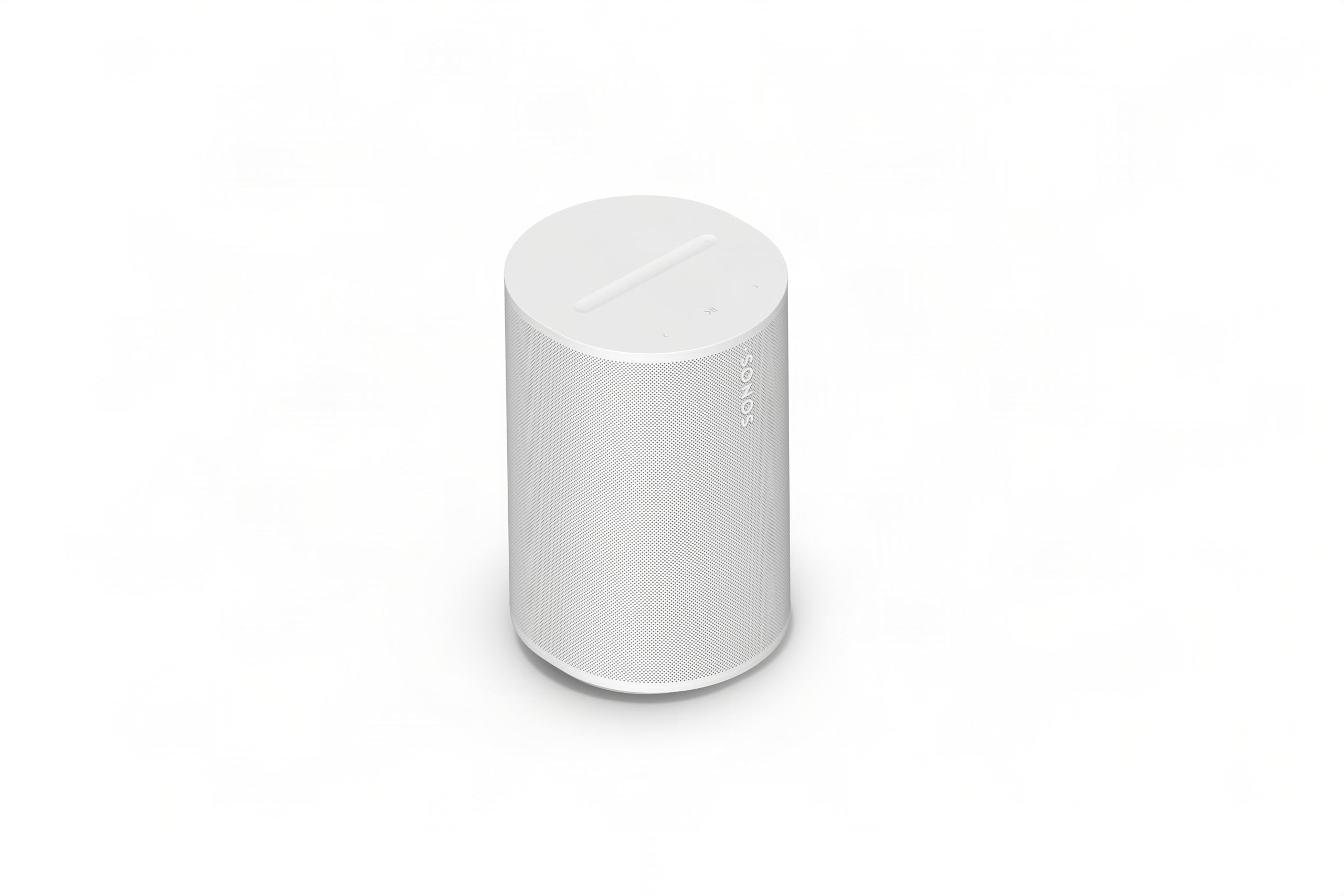
2. Sonos Era 100 SL Compact, Microphone-Free Speaker – White
The cheapest honest way into Sonos, and it happens to sound genuinely big for the size.
If you’ve been circling Sonos for years but never pulled the trigger, the Era 100 SL is the door. Inside it runs a powerful midwoofer plus two angled tweeters — the angling is what creates a wider stereo image than a single forward-firing driver can manage. Trueplay tuning then measures your room and adjusts the output, so a corner placement doesn’t turn the bass into mud. Setup is a plug-in and an app, measured in minutes rather than afternoons.
The “SL” in the name means no microphone. If the idea of an always-listening speaker in a bedroom bothers you, this model removes that entirely — you control it through the Sonos app and nothing else. For a lot of buyers that’s the deciding factor over the standard version. The trade-off is obvious: no voice assistant here, so if “Hey Sonos” or Alexa control matters to you, you’d want the standard model.
The honest friction: the Sonos app is the most-discussed sticking point. Some find it clean, others find it pushy and cluttered. The Wi-Fi path is solid, but Bluetooth pairing gets mentioned as the weaker link — if Bluetooth is your main use, know that going in.
Room-filling without the footprint: it’s a compact box that fills like something twice its size, so it fits a bookshelf or kitchen counter without eating the surface.
Reach for this if: you want Sonos sound, no microphone, and the simplest possible path into a system you can grow.
Look elsewhere if: voice control is a must, or Bluetooth is how you plan to stream most days.
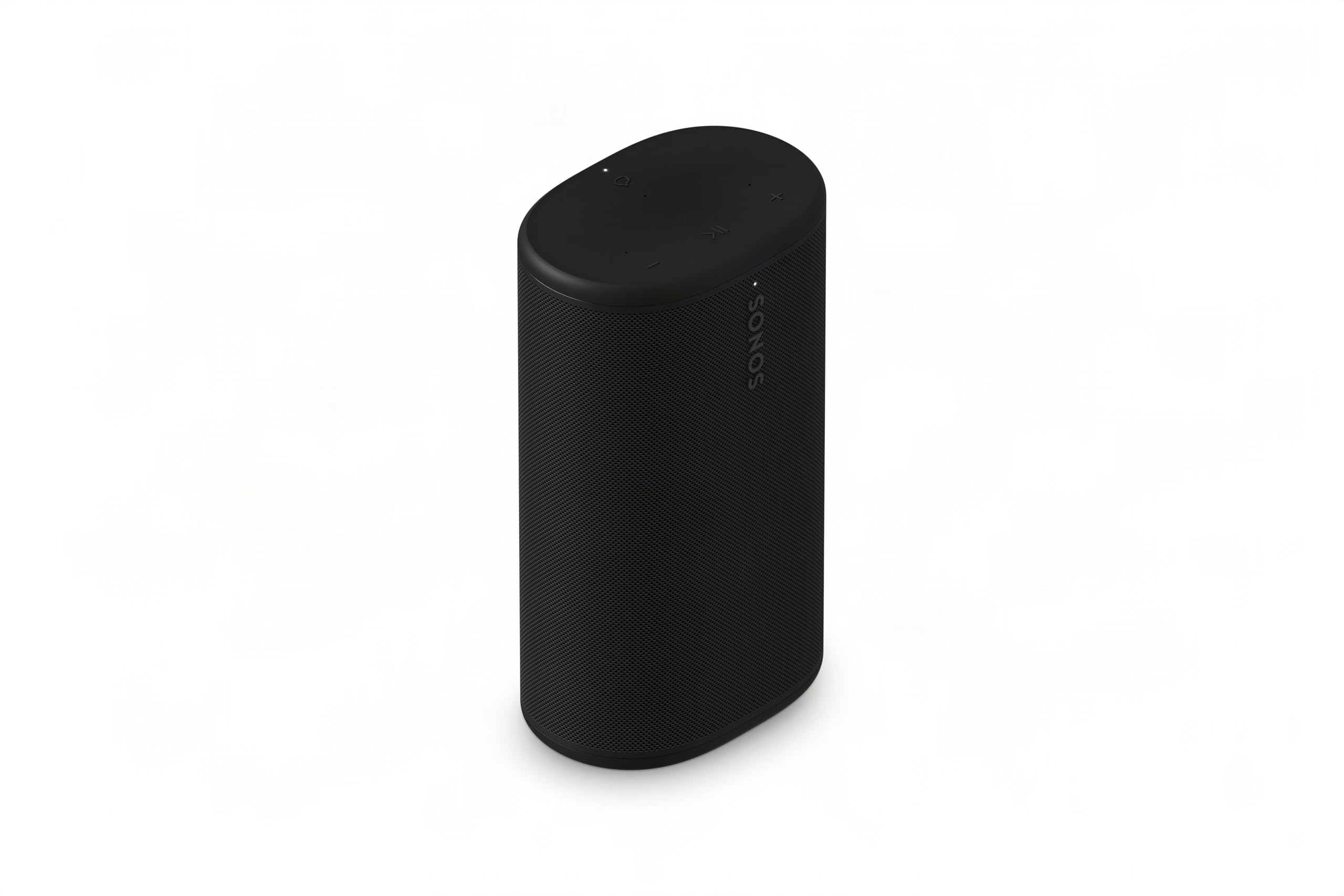
3. Sonos Play Portable WiFi and Bluetooth Speaker – Black
A Sonos that leaves the house with you and survives the trip.
Most multi room speakers are furniture — they live on a shelf and stay put. Sonos Play Portable breaks that rule. It’s built to be carried, with drop-resistant construction and an IP67 rating (that’s full dust protection plus the ability to survive a dunk in water up to the spec’s depth for a short window). Up to 24 hours of playback on the included Wireless Charging Base covers a whole weekend of patio time, and the battery is designed to be swapped easily when it eventually ages out.
At home it’s a full Sonos citizen — it groups into your Wi-Fi system and plays in sync with the rest of the house. Outside, you switch it to Bluetooth and it still works with your phone at 30 feet of range. The dual-mode approach is the real selling point: one speaker that belongs in the den and also on the campsite table. Stereo output and deep bass from a carryable body is the draw.
Where owners push back: the app and the wireless connection are the two spots that get the most debate. Some buyers sail through setup, others hit walls and describe the pairing process as one of the more frustrating ones. The reliability picture is split too — plenty of units perform exactly as advertised, and a smaller group runs into trouble. Worth knowing if you expect plug-and-play with zero fiddling.
Best fit: a Sonos household that wants music on the deck, in the yard, or on the road without a second system.
Think twice if: you want a fixed indoor speaker only, or you’d rather not deal with app-based pairing at all.
4. WiiM Sound Smart Speaker
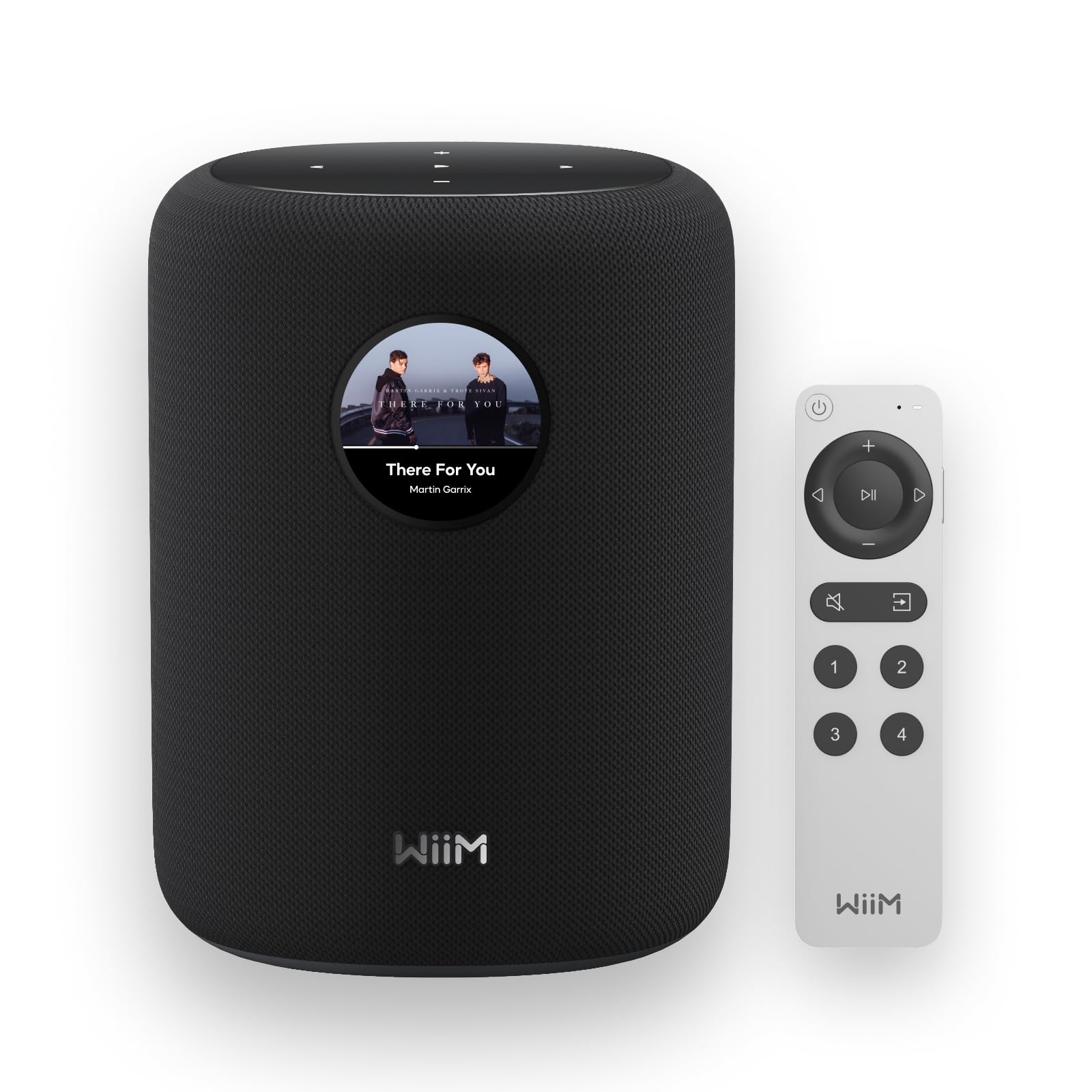
It has a screen — and that single fact changes how you live with it.
Most multi room speakers make you open an app to skip a track. The WiiM Sound puts a 1.8-inch color touchscreen on the front, so album art, track info, playback controls, EQ settings, and presets are all visible and tappable from across the room. From the couch, that means no phone open up, no app, no waiting. Add the bundled WiiM Voice Remote 2 Lite and you have three ways to steer it: app, remote, or touch.
Under the panel sits a 2.1 stereo system with a dedicated 4-inch woofer and dual tweeters, tuned for Hi-Res Audio up to 24-bit/192 kHz. The 4-inch woofer does the low-end work itself rather than faking bass through EQ. AI RoomFit corrects for where you put it, and a 10-band graphic and parametric EQ lets you shape the tone by hand. For a single living-room speaker, that combination is unusually deep.
Compared with the WiiM Sound Lite two-pack, this is the one-speaker, one-screen pick: you trade the second unit and true stereo separation for the touchscreen and the remote. The connectivity is the weak seam. AirPlay isn’t supported, which will frustrate Apple-first households, and a few buyers find Bluetooth weaker than expected. The WiiM ecosystem syncs well with other WiiM gear, so treating this as a hub rather than a standalone is the smarter read.
Made for: someone who wants to see what’s playing and control it without reaching for a phone.
Skip the screen if: you’re an AirPlay household — this speaker won’t join that party.
5. Denon Home 150 Wireless Smart Speaker
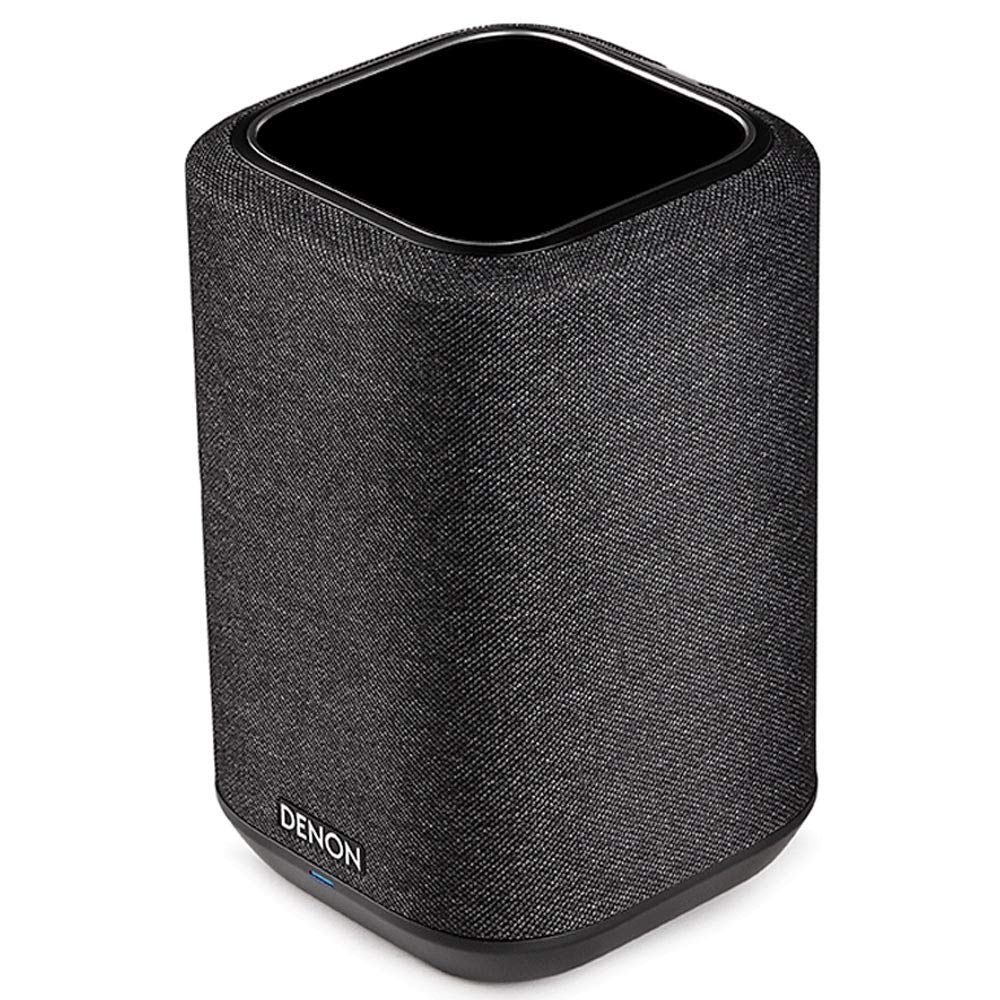
Small box, full Denon sound — as long as you can live with HEOS.
Denon packed a 1-inch tweeter and a 3.5-inch woofer into a compact body, each powered by its own efficient Class D amplifier. Two amps instead of one means the tweeter and woofer aren’t fighting each other for power, which is why vocals stay clean when the bass hits. It fills a medium-sized room comfortably, and the physical build and finish are the two things owners notice right away. Setup takes about five minutes in the HEOS app.
Where the Denon Home 150 earns its keep is in a Denon or HEOS home. It joins AirPlay 2 for Apple devices, plays Spotify Connect and TIDAL natively, and groups with other Denon Home speakers, soundbars, or AVRs so the whole house shares one playlist. Pair two for stereo, or use a pair as rear surrounds alongside the Denon Home Soundbar 550 and Subwoofer — if you already have that soundbar, this is the most natural rear-speaker upgrade.
What deserves a warning: the HEOS app is the recurring sore point — configuring it is described as a mess by a notable share of owners. Connectivity over Bluetooth also draws complaints, and a handful of units stop working after several months of use. Not universal, but frequent enough that you should know before committing to a whole-house build around it.
Sound you can count on: medium rooms fill easily, and the clarity across the range is why this one keeps winning people over despite the software friction.
Worth it if: you own Denon or HEOS gear and want a compact room-filler that slots into that system.
Look elsewhere if: you’re starting from zero — the app burden and mixed long-term reliability make a fresh ecosystem a harder sell.
6. Bose Lifestyle Ultra Speaker
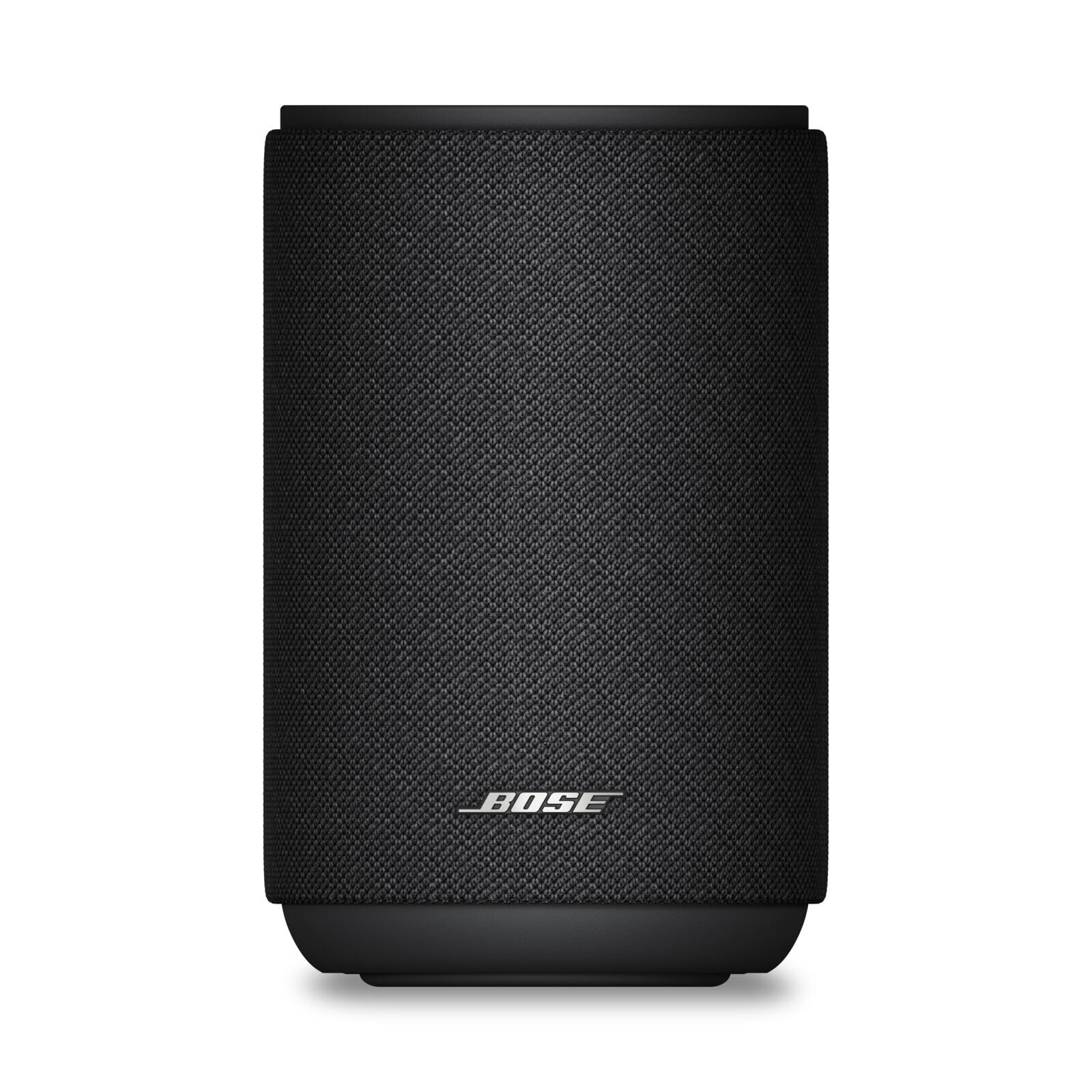
Bose’s most flexible home speaker, built to sound enormous in one room at a time.
You get a lot of sound from a small box here. Bose calls it their most flexible home speaker, and the features back that up. TrueSpatial Audio (a mode that spreads sound around the room) gives you a wrap-around feel. CleanBass adds low-end depth without the boom. An adjustable EQ (an equalizer, which lets you shape the tone) can be tuned by genre or mood — crisp highs and clear vocals at one end, full-bodied bass at the other. So it handles a podcast in the kitchen and a movie in the den without complaint.
Multi room works the Bose way. You pair two for stereo, or group multiple across the house for synchronized playback. AirPlay and Google Cast are both on board, so iPhone and Android users are equally covered, and AUX inputs let you plug in a turntable or CD player for a throwback listening setup. Voice control arrives via the all-new Alexa+ for entertainment and smart home commands.
What people notice first: the sound is the reason to buy. Owners agree it fills a room and stays clear at volume, delivering more than its cabinet size suggests.
The catch worth planning around: Bluetooth stays connected during casual use, but staying linked to Amazon Music is where some users run into trouble, and setting the speaker up reads as easy for some and fiddly for others. No IP rating here either — keep it indoors.
Picture this in: a living room or den where one speaker needs to cover movies, music, and podcasts without a second box.
Don’t pick it for: outdoor duty or a Bluetooth-only streaming habit — Wi-Fi and cast are the stronger paths.
7. Google Nest Audio (3-Pack)

Three speakers, three rooms, one voice command — the fastest route to a talking house.
Buying the Nest Audio as a three-pack changes the calculus entirely. You’re not buying one speaker and wondering about a second — you’re outfitting three rooms on day one. Group all three for synchronized playback throughout the house, or split them (kitchen, living room, bedroom) so each room has its own source. Pair two for stereo in the main room and use the third somewhere else — the flexibility is the point.
The 7.5 cm driver pushes more bass than its size suggests. Google Assistant handles music, timers, weather, and smart home commands, and the Nest ecosystem ties into thousands of compatible devices — so “dim the lights” is one sentence away. Wi-Fi or Bluetooth for streaming, and Chromecast-enabled apps work as expected.
The real-world edge: setup is close to easy with the Google Home app — it’s the ease of use that makes this pack so appealing to non-technical households.
Where it wobbles: reliability and connectivity are the recurring split. Some units run for years without a blink; others go dark entirely. Pairing with Google Home is smooth for many, yet connection drops get flagged too. Sizing matters — a three-pack is a commitment to Google’s ecosystem, and switching later means a fresh start.
Best for: an Android or Google household that wants voice-controlled music in three rooms without a big install.
Think again if: you’re deeply Apple-based, or you’d rather build one premium room than three modest ones.
8. Bang & Olufsen Beosound Emerge Wi-Fi Multiroom Speaker

A speaker you buy partly for the way it looks on the shelf.
The Beosound Emerge is a book-shaped speaker in gold tone with light oak accents, and it takes up very little space. It sits on a shelf or side table and blends into a styled room instead of dominating it. Inside is a 10 cm driver (the cone that actually makes the sound), backed by Active Room Compensation — a feature that adjusts the output to the acoustics of the room it’s in, so it sounds right wherever you place it. The sound is the second reason to buy: clear and resonant in the midrange, and buyers repeatedly call out the craftsmanship as a strength.
On the multi room side, it joins a Wi-Fi network for synchronized playback and supports stereo pairing with a second unit. It’s a streamlined box with few visible controls, so everything runs through the B&O app. That suits a household that already appreciates design and doesn’t want a screen on the front.
What justifies the tier: the materials and finish are the differentiator. Light oak and gold tone aren’t common at any tier, and the room compensation keeps the compact build sounding bigger than it looks.
If Wi-Fi stability is your top priority, audition carefully.
Suit it to: a design-led living room where the speaker is part of the decor and sound quality needs to be excellent but not room-shaking.
Hard pass if: you prioritize bulletproof Wi-Fi and value-per-feature over finish — this is a premium decor purchase as much as an audio one.
Know the Specs
Wi-Fi, Bluetooth, and multi room sync
Multi room audio runs on Wi-Fi, not Bluetooth. A Wi-Fi speaker connects to your router and joins a group, so all grouped speakers play in sync across the house. Bluetooth is a direct speaker-to-phone link with finite range — the Bose Lifestyle Ultra lists 30 feet, the Sonos Era 100 SL lists 30 feet, and WiiM’s speakers list 10 meters. Bluetooth is perfect for one room. Wi-Fi is what makes the whole house work.
Amplifier power and driver size
Amplifier power (in watts) determines how hard the speaker can push before it distorts. The WiiM Sound Lite reaches a 100W peak, paired with a 4-inch woofer and dual 1-inch silk-dome tweeters. The Denon Home 150 uses two Class D amplifiers to drive a 1-inch tweeter and 3.5-inch woofer separately. Separate amps for each driver usually mean cleaner vocals when the bass kicks in.
Hi-Res Audio and streaming quality
Hi-Res Audio refers to lossless files decoded at a higher resolution than CD. The WiiM Sound and Sound Lite both support up to 24-bit/192 kHz, the format lossless services like TIDAL and Qobuz use. If you’re on a standard Spotify tier, you won’t hear the difference. If you subscribe to a lossless tier and care about detail, this spec is worth checking.
Room correction and EQ
Room correction uses a microphone or measurement to adjust the speaker’s output for the space it’s in — corners make bass boomy, and correction dials it back. WiiM’s AI RoomFit and Sonos’s Trueplay both do this automatically. The WiiM Sound adds a 10-band graphic and parametric EQ, so you can shape the sound by hand on top of the automatic correction.
Common Questions
Do multi room speakers need Wi-Fi or can they run on Bluetooth only?
Will a WiiM speaker work with my existing Sonos system?
What does IP67 mean on the Sonos Play Portable?
How long does a multi room speaker usually last?
Can I use a multi room speaker as a TV speaker?
Is AirPlay 2 important for a multi room speaker?
Do I need a microphone in a multi room speaker?
How many speakers do I need for good stereo in one room?
Can I mix brands in a multi room system?
What is room correction and does it matter?
The Bottom Line
For most people building a whole-home setup, the multi room speaker winner is the WiiM Sound Lite two-pack. You get two matched speakers in one box, so you get real stereo right away. They stream openly across WiiM, Google Cast and Alexa groups (three different systems that let speakers play together), and AI RoomFit tuning adjusts the sound to your room. If you’re starting with one speaker and want the Sonos polish, grab the Sonos Era 100 SL — fewer features, but no microphone and rock-solid sound. And for the Google household that wants three rooms talking from the start, the Google Nest Audio three-pack is the fastest route. One honest nudge: the WiiM Sound Lite two-pack holds a 4.5+ star score across 200+ owners, a crowd favorite at the mid-range price.
How we choose
We do not accept paid placement. Every pick is matched to a real buyer and a real use-case; we do not hands-on test units.
Sources
Specifications: manufacturer listings and product documentation. Review insights: verified customer reviews, as of November 2026. Pricing: not shown on this page (it changes often); check the current price via the retailer link.
As an Amazon Associate, Tactical Gear Guy earns from qualifying purchases. This does not affect which products we feature.