Specs are compiled from manufacturer listings and verified buyer reviews and can change over time — please confirm the key details on the product page before buying.
Your phone’s built-in mic picks up every echo in the room, which is why your videos sound distant. A tiny clip-on wireless mic fixes that in one step — and the crowd favorite here, the DJI Mic Mini, holds 4.5+ stars across 27,000+ owners. The right pick depends on three things: your phone’s port, your longest shoot, and how far you roam from the camera. That’s what this guide settles for you.
This guide is built by comparing the manufacturers’ published specifications and the patterns across verified customer reviews, so you get each pick’s real strengths and trade-offs instead of marketing spin.
You’ll see how connector type, noise cancellation, and runtime shape what actually works in the field. The picks below are sorted by connector, runtime, and range, so you can match one to your phone without guessing.
Top Picks
How To Choose The Best Mini Microphone for Phone
Most people buy a mini microphone expecting better audio and end up with a dead receiver because they matched the wrong plug. Start with your phone’s charging port, then work backwards through battery and mounting. Those three choices decide almost everything.
Match the connector to your phone first
A mini microphone talks to your phone through a receiver that plugs into the charging port. If your phone has a USB-C port, you need a USB-C receiver — that’s what the Hollyland Lark M2 and Insta360 Mic Air ship with. Older iPhones use Lightning, so check which version you’re buying before you order. Some kits, like the Leettus J6, include both receivers in the box, which removes the guesswork entirely.
Weigh runtime against how long you really shoot
Transmitter batteries range from about 6 hours up to 10 hours per charge in this group. Charging cases then stack extra cycles on top — the Hollyland case extends total runtime to 30 hours, while the TXTUNE case takes you to 24 hours. If you film short clips a few times a week, a 6-hour transmitter is plenty. If you run long interviews or live events, a case-backed set saves you from a mid-session scramble.
Understand noise cancellation before you trust it
Noise cancellation here means a chip or algorithm reduces background sound before it hits your recording. Some systems filter heavily and some barely touch it, and a few models split the difference with a Basic and Strong setting. A furry windscreen is a different tool — it blocks wind from hitting the mic element, not the crowd behind you. For street shooting, you want both.
Side-by-Side Comparison
| Model | Best For | Connector | Battery (per TX) | Transmission Range | Amazon |
|---|---|---|---|---|---|
| DJI Mic Mini★ Best Overall | Overall creator kit | USB-C | 10 hours | 400 m | Amazon |
| Leettus J6Dual-Port Kit | Both-port flexibility | Lightning + USB-C | 9 hours | — | Amazon |
| Mini Mic ProBudget Starter | Budget plug-and-play | USB-C | 6 hours | — | Amazon |
| NEEWER KM20 | Multi-device streaming | USB-C | 4 hours (10 h with case) | 656 ft / 200 m | Amazon |
| Sony ECMLV1 | Wired stereo capture | 3.5 mm jack | No battery needed | — | Amazon |
| TXTUNE Mini Clip-On | Long-day battery with case | USB-C + Lightning adapter | 6 hours (24 h with case) | 70 ft | Amazon |
| Insta360 Mic Air | Featherweight travel mic | USB-C | 10 hours | 300 m | Amazon |
| Hollyland Lark M2 | Pro-grade Hi-Fi sound | USB-C | 10 hours (30 h with case) | 1,000 ft | Amazon |
Detailed Reviews
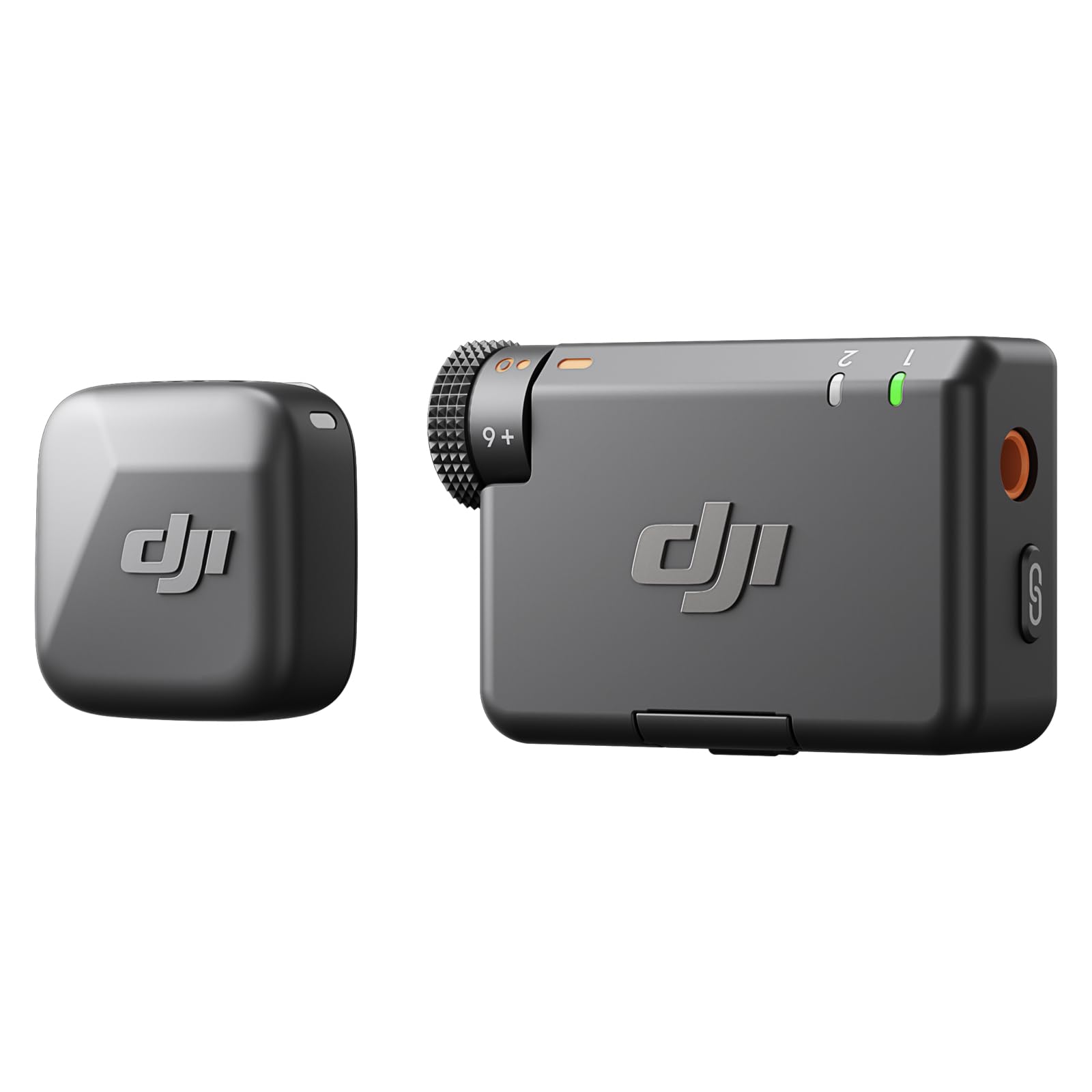
1. DJI Mic Mini (1 TX + 1 RX)
Our pick — 4.5+★ from 27,000+ verified ratings; the strongest balance of quality and price.
The pocket mic that vanishes on a collar but still reaches 400 metres down a busy street.
A 10 g transmitter is the number that decides this pick for most people — light enough that you forget it’s clipped on, and small enough to stay out of frame. Audio arrives at 48kHz sampling with a 120 dB SPL ceiling, which is the limit of loudness the mic can handle before it distorts. In practice, a shouted line or a live band behind you won’t crackle into the recording.
The receiver plugs straight into a USB-C phone, and DJI’s own OsmoAudio ecosystem means the transmitter can talk directly to Osmo cameras and gimbals without a receiver at all. Two noise-cancellation levels let you pick Basic indoors or Strong on a crowded pavement. The catch sits in the compatibility column: DJI owners who connect within the Osmo family report it pairs instantly, but some iPhone users outside that chain have run into connection trouble. Check your exact phone model against the listing before you commit.
Runtime is rated at roughly 10 hours per transmitter, enough for a full day of interviews without a top-up. That combination — a 10 g body, 10 hours per charge, and 400 m of range — is why it tops this list.
What earns it the crown
- 10 g body disappears on a collar and stays out of the shot
- 400 m transmission range holds up in loud outdoor spaces
- 48kHz / 120 dB SPL captures loud audio without clipping
- Automatic limiting drops the volume when input spikes so nothing distorts
- Direct wireless link to Osmo cameras and gimbals, no receiver required
Where it asks you to check first
- Compatibility is the most split topic in owner feedback — some iPhone users report pairing trouble
- Two noise-cancellation levels, but no app to fine-tune them
Built for: creators who shoot phone video alongside DJI cameras and want one transmitter that covers both.
Worth verifying: confirm your phone model is on the supported list before ordering, especially if you’re outside the DJI ecosystem.
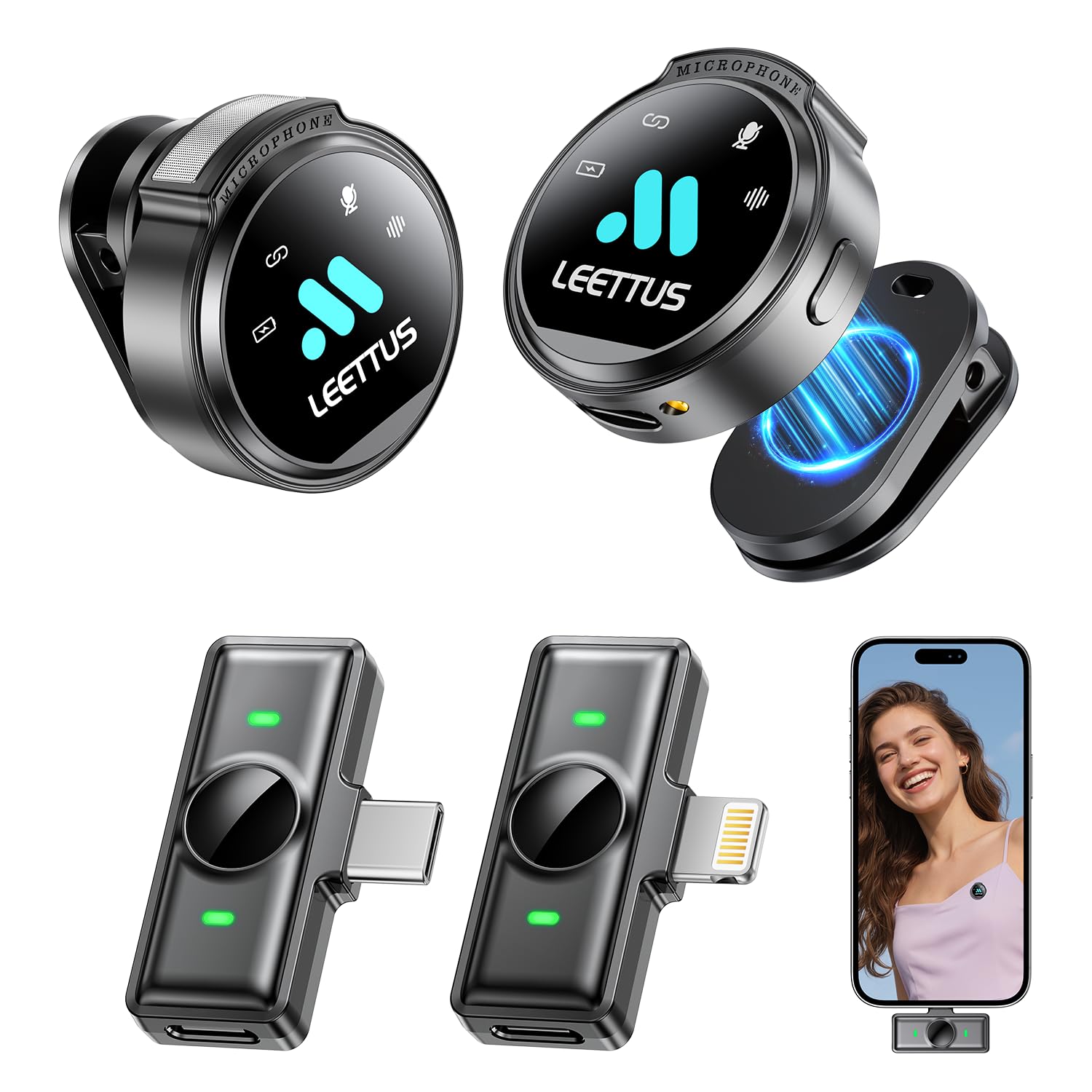
2. Leettus J6 Mini Microphone (Lightning + USB-C)
Two receivers, one Lightning and one USB-C, so nobody in the house has to check their port twice.
If you shoot on a mixed household of phones — an older Lightning iPhone and a newer USB-C Android — this bundle ends the adapter drama. Both receivers live in the box, and neither needs a separate dongle to work. The transmitter clips on or snaps to clothing via magnetic adsorption, and each one runs 9 hours, with the full two-transmitter system rated at 18+ hours.
DSP noise cancellation is the headline claim: the maker says it eliminates 90% of background noise, covering wind, crowds, and keyboard clicks. Owner experience backs up the convenience side strongly — setup is described as plug-in, power-on, record, and the workload stays simple enough that people keep using it. Sound quality is the honest split point, though. Some recordings come out clear and voice-accurate, while others land thin or quiet on quiet passages.
That mixed audio performance is the trade-off you accept for the dual-port convenience. It’s an entry-level set that covers both phone generations in one purchase, and it does the basic job without software, apps, or Bluetooth pairing steps.
What it gets right: the dual-native receiver design is the real feature here — no swapping adapters between an iPhone and an Android tablet on the same shoot.
What to expect: noise cancellation is present but not a magic eraser, and quiet voices can come through faint on some recordings.
Reach for it if: you need one kit that handles both Lightning and USB-C phones without buying two separate systems.
Look elsewhere if: your work is quiet-spoken interviews where every decibel of vocal clarity matters.
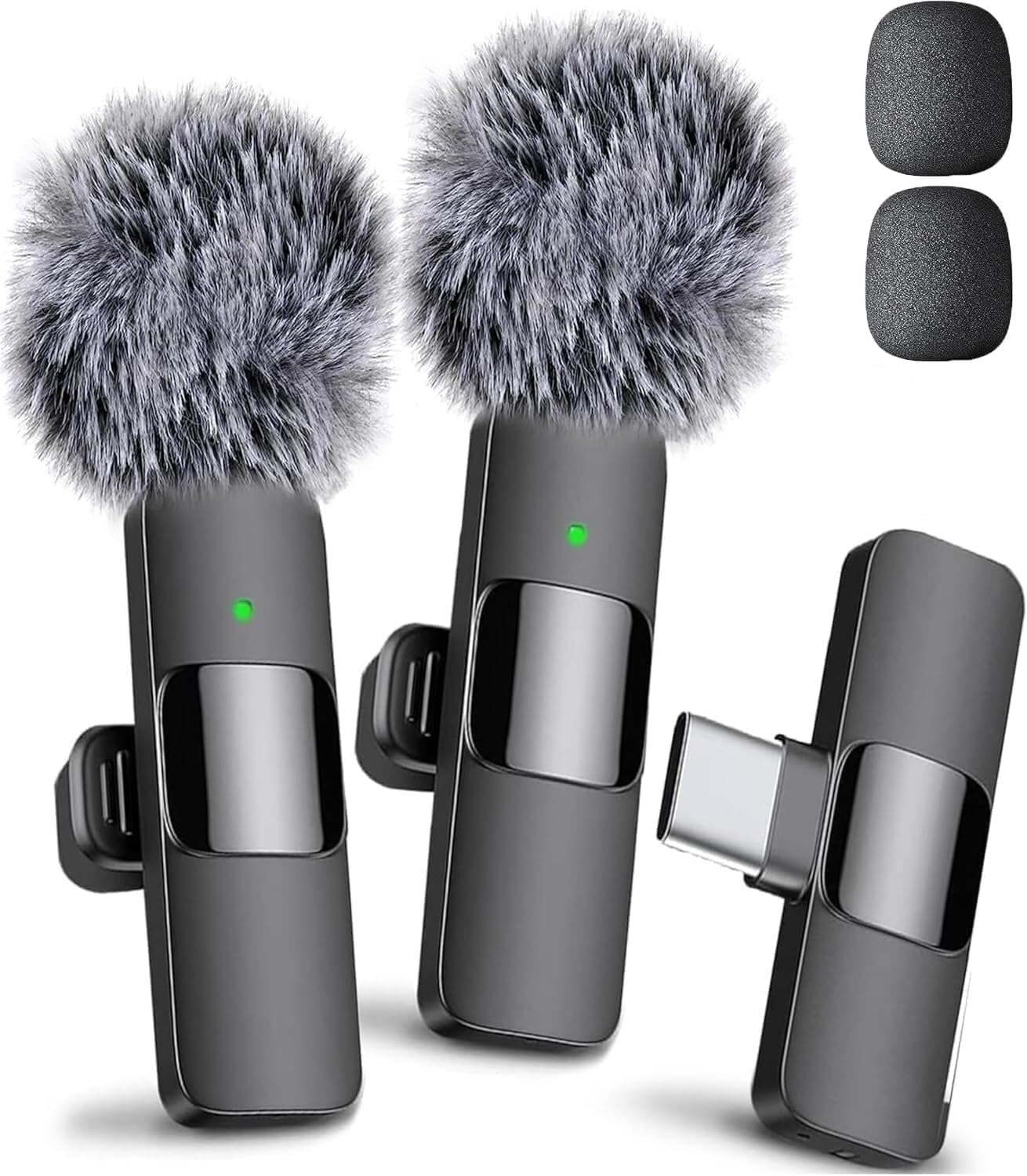
3. Mini Mic Pro (USB-C)
The simplest plug-and-play starter for a first TikTok or YouTube upload.
Six hours of continuous recording per charge is the honest ceiling here — compare that to the DJI Mic Mini’s 10 hours and the gap is real if you shoot long sessions. For short clips, though, six hours covers a lot of takes. The kit ships with two lavalier microphones, a receiver, clips, a USB-C cable, foam windscreens, and dead cat covers, which is a complete first setup out of one box.
Where this one earns its keep is ease. Plug the USB-C receiver into your phone, and it works — no app, no Bluetooth pairing, no menu diving. Owners consistently find setup trivial and the wind protection genuinely helpful outdoors. The split point is reliability: some units work flawlessly through a full recording while others cut out partway through a session, and a few report the mic not working with certain newer iPhone models.
That inconsistency is why this sits below the top picks despite its friendly setup. It suits casual creators testing the waters, not a client shoot you can’t afford to re-record.
The case for starting here
- True plug-and-play — no apps and no Bluetooth pairing
- Two microphones, clips, cable, and windscreens in one box
- 6 hours per charge is plenty for short-form clip shooting
What a buyer should know
- Some units stop working partway through a session
- A handful of newer iPhone models report compatibility problems
- 6 hours falls short of the 10-hour transmitters further up this list
Suits: a first-time creator who wants a complete, no-fuss lavalier kit for short videos.
Consider longer runtime if: you record interviews over several hours — this one asks for a recharge sooner.
4. NEEWER KM20 Wireless Lavalier System
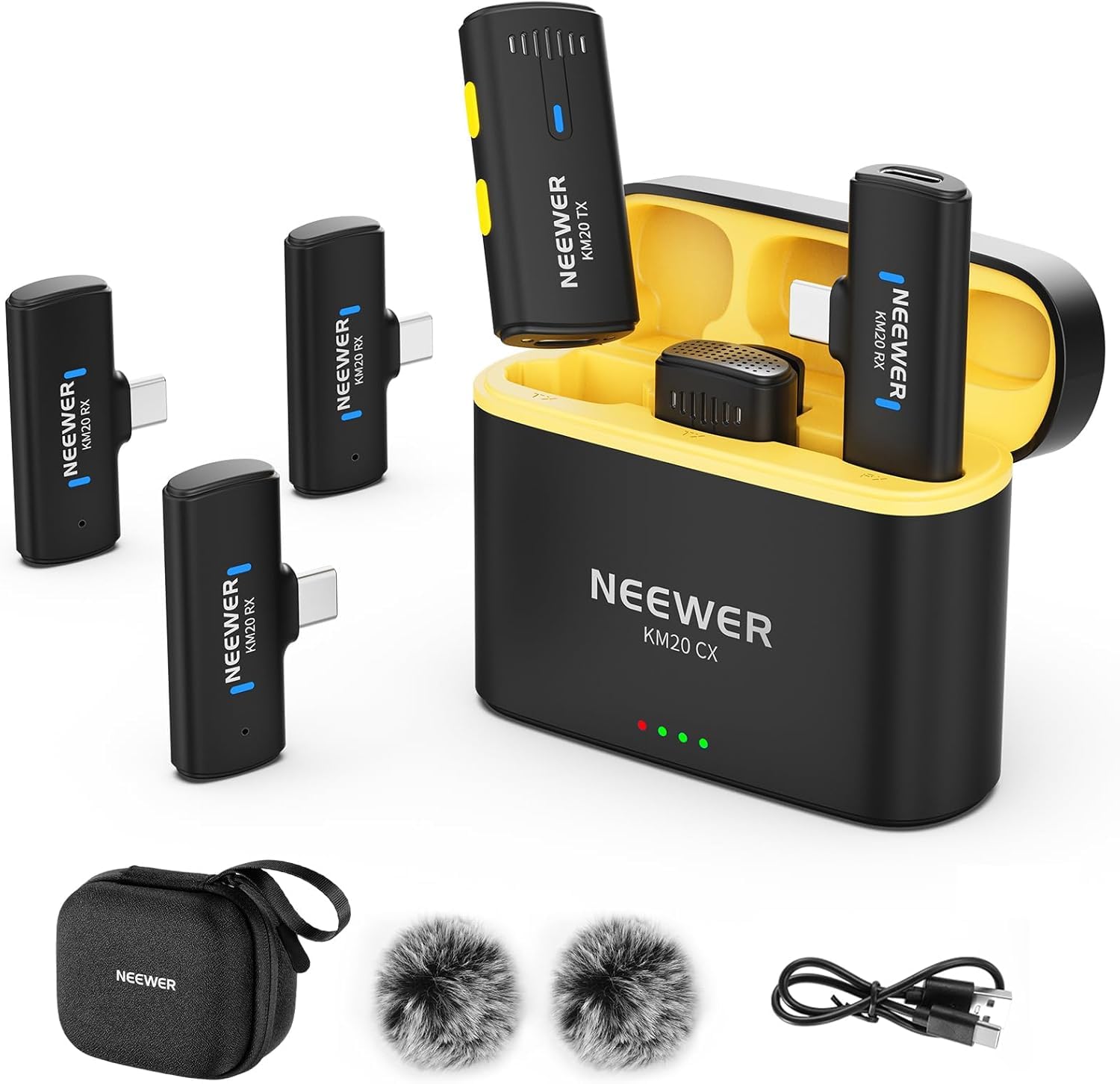
Two transmitters feeding four receivers at once — a small studio in a storage bag.
Four receivers is a genuinely unusual spec for this category, and it’s the whole reason the KM20 exists. You can run live streaming or recording on four devices at the same time from the same pair of transmitters, which suits a streamer shooting to phone, laptop, and tablet together. Each transmitter weighs 10.7 g and clips to a shirt or runs handheld.
The audio side is well specified: 360° surrounding pickup, 48kHz / 24-bit sampling, a 70dB signal-to-noise ratio, and a 120 dB SPL ceiling for loud environments. Transmission runs up to 656 ft / 200 m forward with 20 m / 65 ft of back transmission — enough range to roam a stage without dropping out. Five levels of volume adjustment, plus noise-cancelling and mute modes, live on the transmitter itself.
Battery is where you need to plan. A single transmitter lasts up to 4 hours on a full charge, and the charging case adds 1.5 recharges for up to 10 hours total. That’s the shortest per-charge window in this group, so a long day needs a top-up from the case or a cable. The receiver also passes charge through to your phone so you can record while topping up.
The standout: four receivers and 200 m forward transmission make this the pick for anyone streaming to several devices at once.
The catch: 4 hours per transmitter charge is short — budget for the case or a power bank on full-day shoots.
Best for: streamers and multi-platform creators who need one mic set feeding several devices simultaneously.
Skip if: you only ever record to one phone — you’d be paying for receivers you never plug in.
5. Sony ECMLV1 Compact Stereo Lavalier

No battery, no charging, no wireless dropout — a cable and a plug is the whole system.
The ECMLV1 takes a different route entirely: it runs on plug-in power from your device, so there’s no battery to charge and no transmitter to pair. It plugs into any 3.5 mm jack on a camera, recorder, smartphone, or PC. If your phone has dropped the headphone jack, you’ll need an adapter — a USB-C to 3.5 mm dongle — and that’s the single compatibility question to settle before you buy.
Sound is omni-directional for stereo pickup, and a 360-degree rotation clip lets you angle the capsule freely. A windscreen is included to cut wind noise. The mic records clear, natural voice — the kind of sound where you play the file back and hear yourself exactly as you spoke, which is the strength people keep coming back to.
Two honest notes. First, it’s wired, so your movement stops at the cable length — no roaming a room. Second, the foam windscreen is the weak point: the material can work loose over time with heavy handling. Neither undermines the core job, but both are worth knowing for a mic you’ll clip on daily.
Why it still earns a spot: no power management at all — pick it up, plug it in, record. Nothing to charge, nothing to pair, nothing to fail wirelessly.
The honest note: the windscreen material is the first thing to wear, and the cable ties you to your device.
Choose this if: you want zero charging and zero pairing, and you’re recording to a camera, recorder, or a phone with an adapter handy.
Think twice if: you need to move freely away from your phone while shooting.
6. TXTUNE Wireless Mini Clip-On Mic
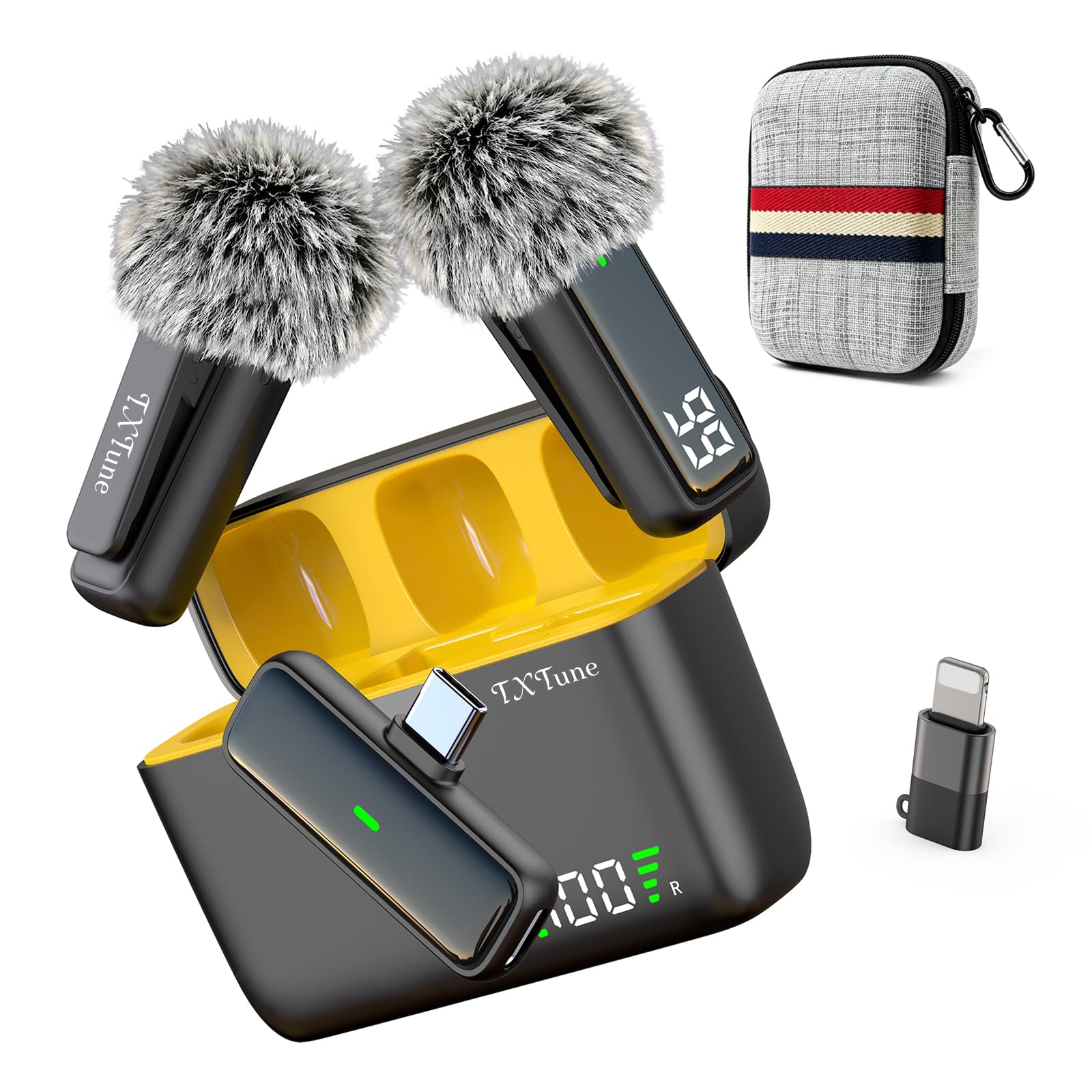
A charging case that turns two 6-hour mics into a full 24 hours of shooting.
Twenty-four hours of total runtime from the charging case is the reason to pick this one. Each mic lasts up to 6 hours on its own, and the case resets them again and again. That covers a wedding day or a back-to-back interview schedule without hunting for a socket. The transmitter itself weighs 9 grams and clips on without fuss.
A built-in DSP noise-reduction chip handles background noise, and the included furry windshields give you a second layer outdoors. Setup is plug-in, press the mic button, record — no app, no Bluetooth. The receiver also passes power through to your phone so you can charge while filming, which matters on long days away from an outlet.
The transmission spec is 70 feet with low latency — well short of the 1,000 ft the Hollyland Lark M2 claims, but more than enough for a talking-head video where you’re a few paces from the phone. Connectivity is the honest split point: most pairings happen instantly, while a few users report the device stopping its connection mid-session.
Where it delivers
- 24 hours total runtime from the charging case
- 9 g clip-on transmitter with a digital power indicator
- Works with USB-C phones and older iPhones via the included adapter
- Receiver passes charge to your phone while you record
Where to set expectations
- 70 ft range is the shortest wireless reach in this group
- Some sessions drop the connection mid-record
Built for: all-day shooters who need runtime over range, and who keep their subject close to the camera.
Not the pick if: you roam far from your phone on stage — 70 ft will cut you off sooner than a long-range system.
7. Insta360 Mic Air (1 TX + 1 RX)

At 7.9 g it is the lightest transmitter here — a coin on your collar with a 300 m reach.
For comparison, the NEEWER KM20 transmitter weighs 10.7 g, so this one shaves weight you’d notice on a thin shirt over a long day. Audio runs at 48kHz sampling with noise cancelling and a windshield included for outdoor work. The transmitter also gives you simple remote control — trigger video, toggle noise cancelling, or mute right from the unit, so you’re not reaching for your phone mid-shot.
You can wear it three ways: magnetic, clip-on, or pendant. Battery is listed at 10 hours with a 300 m stable wireless range. One thing to know: Mic Air records in Mono mode only, so audio from two transmitters lands on one channel — fine for a single presenter, not for a two-person podcast you want split into left and right.
Compatibility is where the split lives. It pairs cleanly with some Insta360 camera bodies and stumbles on others, and the listing notes it is not compatible with the X3 or X2. The magnetic mount is also a mixed bag for a few users. Check your specific camera and phone against the supported list before ordering.
The lead advantage: 7.9 g is the lightest transmitter in this round-up, and 300 m of range covers a whole street or venue.
The caveat: Mono-only recording and a compatibility list you must check against your own gear.
Pick this when: you want the lightest possible clip-on and you’re shooting solo to a USB-C phone or a supported Insta360 camera.
Pass if: you need two presenters on separate stereo channels, or you own an older X3/X2.
8. Hollyland Lark M2 Wireless Lavalier

Studio-grade Hi-Fi audio with a 1,000 ft reach and a 30-hour charging case.
A 1,000 ft line-of-sight transmission range and 48kHz / 24-bit audio make this the most capable wireless set on the list. The 9 g transmitter pairs with a 70dB signal-to-noise ratio and a 115 dB SPL ceiling — clean vocals, minimal background hiss, and headroom for loud rooms. That’s noticeably more range than the Insta360 Mic Air’s 300 m, and it opens up rooftop, stage, and large-venue work.
Battery is just as generous: 10 hours of continuous use with noise cancelling off, and the charging case adds two full recharges in under 1.5 hours per cycle, pushing total runtime to 30 hours. One click of the yellow button toggles noise cancellation on both ends, and the HollyAudio app lets you dial the strength between Strong and Low to suit the room.
The TX also doubles as a remote — press the noise button twice to start or stop video recording on your phone, or snap a photo, without touching the screen. The setup relies on a factory pre-paired transmitter and receiver, so unboxing is genuinely instant. A Lightning variant exists for older iPhones, so match that version to your port when you order.
The pro-grade case
- 1,000 ft line-of-sight range for large venues and rooftops
- 48kHz / 24-bit audio with a 70dB signal-to-noise ratio
- 30 hours total via the charging case
- App control for Strong/Low noise-cancellation levels
- Remote video start/stop right from the transmitter
The fair caveats
- USB-C base version — older iPhones need the separate Lightning variant
- Remote shutter relies on your phone allowing volume-button capture
Top choice if: you shoot professionally and want the longest range, cleanest Hi-Fi audio, and a 30-hour case in one kit.
Worth matching: confirm you order the USB-C or Lightning version that fits your phone — they are separate models.
Know the Specs
Connector Type and Phone Compatibility
The receiver plugs into your phone’s charging port, so the port type is non-negotiable. USB-C covers most newer iPhones and Androids; Lightning covers older iPhones. A dual-receiver kit like the Leettus J6 handles both in one purchase. Never assume a USB-C mic works on a Lightning phone without an adapter — the listing will tell you what’s in the box.
Sampling Rate and Signal-to-Noise
48kHz sampling means the mic captures 48,000 audio samples every second, which is the standard for clean voice recording. A higher signal-to-noise number (measured in dB) means your voice stands further above the background hiss. The Hollyland Lark M2 lists 70dB, and the NEEWER KM20 also lists 70dB — both are strong figures for this category.
Noise Cancellation and Wind Protection
Noise cancellation filters background sound before it reaches the recording; a windscreen blocks physical wind from hitting the mic element. They solve different problems, so the best outdoor kits include both. Some systems let you pick cancellation strength, while others apply a fixed level. Check which before you shoot in a busy street.
Battery and Charging Cases
Transmitter runtime is the figure that decides how long you can shoot before recharging. Per-charge windows in this group range from about 4 hours up to 10 hours. Charging cases stack extra cycles — the Hollyland case stretches total runtime to 30 hours, the TXTUNE case to 24 hours. Size the battery to your longest single session, not your average one.
Common Questions
Will a USB-C mini microphone work with my iPhone?
Do I need to install an app to use these mini microphones?
How far can I walk from my phone before the audio drops?
Can I record two people at once with these kits?
How long does a mini microphone battery last on a single charge?
Is a wired lavalier better than a wireless mini mic?
Do these mics actually cancel background noise outdoors?
What does 48kHz sampling actually mean for my voice?
Can I charge my phone while the receiver is plugged in?
Which kit is best for a two-person podcast?
The Bottom Line
For most people, the mini microphone for phone winner is the DJI Mic Mini — a 10 g transmitter, 400 m of range, and 10 hours per charge make it the best all-rounder in this group, and 4.5+ stars across 27,000+ owners backs that up. If you shoot professionally and want the longest reach plus a 30-hour case, the Hollyland Lark M2 leads on range and audio depth. And if you need one kit that handles both Lightning and USB-C phones, the Leettus J6 ships both receivers in the box without a dongle in sight.
How we choose
We do not accept paid placement. Every pick is matched to a real buyer and a real use-case; we do not hands-on test units.
Sources
Specifications: manufacturer listings and product documentation. Review insights: verified customer reviews, as of November 2026. Pricing: not shown on this page (it changes often); check the current price via the retailer link.
As an Amazon Associate, Tactical Gear Guy earns from qualifying purchases. This does not affect which products we feature.