Specs are compiled from manufacturer listings and verified buyer reviews and can change over time — please confirm the key details on the product page before buying.
Buying photochromic eyewear is really a bet on one thing: that the lens actually darkens when the sun hits it. That is where most of these pairs are won or lost. Every pick below uses a lens that shifts from clear toward dark as UV rises and clears again when you step inside, and each one has a different set of strengths beyond that core trick. The KAPVOE K9023 takes the top spot on the strength of its fit and how well it handles mixed light on the trail.
This guide is built by comparing the manufacturers’ published specifications and the patterns across verified customer reviews, so you get each pick’s real strengths and trade-offs instead of marketing spin.
You will see the same honest caveat repeated across this whole category: transition lenses rarely go as dark as a fixed sunglass lens, and how dark they get varies from pair to pair. That single fact decides which of these you should buy, so the guide ranks each pick on how much tint you actually get. Here is the breakdown of the photochromic transition sunglasses worth your money.
Top Picks

How To Choose The Best Photochromic Transition Sunglasses
Start with the honest truth about this category. A transition lens changes how much light it lets through, but it does not replace a pair of dedicated dark sunglasses for a full day of direct summer sun. Your job is to match the lens range to the light you actually ride, run, or drive in.
Check the light transmission range before anything else
The single most useful number on a photochromic spec sheet is the percentage of light the lens lets through in its clear state versus its dark state. The ROCKBROS pair publishes its range at 21% to 83%, which tells you exactly how much contrast you get between shade and full sun. A lens that only drops to 40% will feel weak on a bright road. A lens that drops lower gives you real relief at noon. If a listing gives you no range at all, treat the darkness claim with caution.
Know that photochromic lenses need UV to darken
These lenses activate on ultraviolet light, not visible brightness. That means they will not darken behind a car windshield, because the glass filters out most UV before it reaches the lens. If you want transition coverage while driving, expect the lens to stay close to clear. This is normal behavior, not a defect, and it is the most common misunderstanding buyers bring into the category.
Match the frame and nose pads to your activity
A TR90 frame is a flexible, lightweight plastic that bounces back instead of cracking — good for a mountain bike crash or a bag tossed in a truck. Rubber nose pads and non-slip temples matter just as much, because a lens that slides down your nose changes the tint you see through. If you wear prescription glasses, look for a built-in myopia frame so you can clip your correction inside the sport frame.
Side-by-Side Comparison
| Model | Best For | Lens Type | UV Rating | Frame | Amazon |
|---|---|---|---|---|---|
| KAPVOE K9023★ Best Overall | Mixed-light trail riding | Photochromic PC | UV protection | TR90 | Amazon |
| MIRYEA Photochromic PolarizedMost Versatile | Screen time plus daytime driving | Photochromic + polarized TAC | UV400 | Spring hinge | Amazon |
| Bircen Cycling GlassesBest Value | All-day sport on a tight budget | Photochromic | UV400 | — | Amazon |
| VICTGOAL Photochromic | Glasses-wearers who cycle | Photochromic PC | UV400 | TR90 | Amazon |
| Photochromic Safety Shield | Shop and site eye protection | Photochromic shield | UV400 | Wraparound | Amazon |
| ROCKBROS Two-Lens | Bight sun and changing light in one | Photochromic + polarized (2 lenses) | UV400 | TR90 | Amazon |
| KAPVOE K9022 | Dawn-to-dusk road riding | Photochromic | UV400 | TR90 | Amazon |
| KAPVOE K63 | Premium fit and finish | Photochromic PC | UV400 | TR90 | Amazon |
| EYEGLAD REV | Motorcycle and extreme sport | Photochromic | UV400 | Wraparound | Amazon |
Detailed Reviews
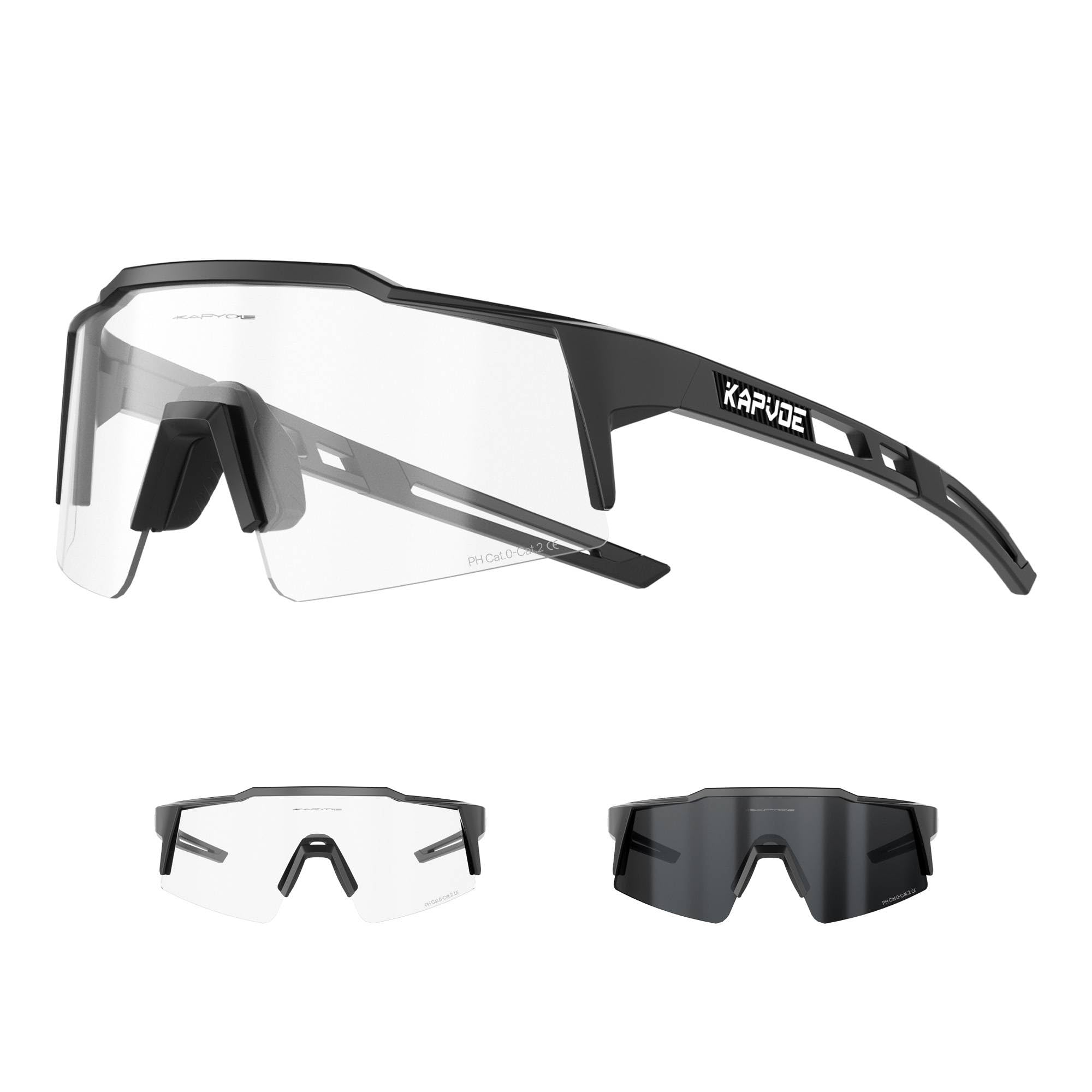
1. KAPVOE Photochromic Cycling Glasses K9023
Our pick — 4.5+★ from 200+ verified ratings; the strongest balance of quality and price.
Rubber nose pads hold the frame steady, so the tint stays put over your eye all ride.
The K9023 is the easiest recommendation here because it gets the fit right, and fit is what makes or breaks a transition lens. A lens only does its job if it sits in the same place over your eye all ride. The soft rubber nose pads hold the frame steady, and the full-frame shape wraps enough to keep your view consistent. What wins people over most is the grip — it is far and away the thing this pair is known for — followed by how well it just works in changing weather.
The frame is TR90, a flexible lightweight plastic that bends under impact rather than snapping, which is what you want on rocky singletrack. The lens itself is a photochromic PC lens that shifts down in glare and back up when the tree cover closes in. Buyers describe clear vision in different weather conditions rather than a grey wash when the clouds roll over. It is the most balanced package in this list, and the rating backs it as the crowd favorite.
Here is the catch, and it is the same one the whole category shares. The transition effect draws mixed feelings — some riders say it darkens nicely, others find it never gets properly dark in direct sun. And the lenses are soft enough to mark, so clean them with the cloth, not your jersey. Neither issue is a reason to walk away; both are reasons to know what you are buying.
What earns it the crown
- Rubber nose pads lock the frame in place so the tint stays consistent over your eye
- TR90 frame flexes under impact instead of cracking
- Full-frame coverage keeps sun and debris out of the corners of your vision
- Clear-to-tinted shift handles shadow and open trail in the same ride
Where it holds back
- Tint tops out short of a true dark sunglass lens in direct sun
- Lens surface picks up scratches if you wipe it dry
- Photochromic response varies with UV strength, so deep shade stays clear
Buy this if: you ride mixed sun and shade and want a frame that will not budge.
Think again if: you want a deep, dark lens for a full day on open road.
2. MIRYEA Photochromic Polarized Blue Light Blocking Glasses
One frame for the desk, the commute, and the afternoon drive.
This is the only pair in the lineup that tries to do two jobs at once. The lens combines a photochromic layer with a polarized TAC filter, and TAC is a layered plastic lens material known for staying light and resisting knocks. Polarized means the lens filters horizontal glare patterns, so reflected light off wet asphalt or a car hood stops bouncing straight into your eye. Add the blue-light blocking layer and you get something you can keep on at your monitor and wear straight out to the parking lot.
The flexibility is what owners rate highest — the spring hinges open wider than a standard frame, which takes pressure off the sides of your head across a long shift. The unisex pilot shape works on both wide and narrow faces, and the pair weighs very little on the bridge. Daylight brings the tint down and low light brings it back up, so one pair covers the walk to the car and the drive home.
Be clear-eyed about the blue-light side. The glare reduction is the most debated part of this pair, with a real split — some buyers get on with the blue-light benefit, others find that blocking is minimal. If your main reason to buy is heavy screen work, treat that as a bonus rather than a promise. The transition and the comfort are the solid parts.
Where the value sits: a polarized photochromic lens with spring hinges in one frame is a lot of function for an entry-level price, and the fit works across different head widths.
The honest limit: the blue-light claim is the weak link — expect the photochromic dimming to do far more for your eyes than the screen filter.
Reach for this if: you want one pair that lives on your face from desk to driver’s seat.
Look elsewhere if: you need certified heavy-duty blue-light filtering for long screen sessions.
3. Bircen Photochromic Cycling Glasses
Owners say the build feels sturdier than the price suggests.
The Bircen pair wins on craftsmanship. Owners regularly say they were surprised by how well made these feel when they opened the box, which is the highest compliment a budget sport frame can earn. The UV400 coating blocks UVA and UVB rays, and the frame stays comfortable through a full run or ride. Value and fit are the other two things this pair does consistently well.
It is sold as a multi-sport frame — baseball, running, mountain biking, golf — so the shape is more general-purpose than the dedicated cycling picks above. That makes it a smart single-pair buy if you switch sports through the week. The photochromic lens works as advertised and the tint responds to the light around you.
Now the visibility question. Some buyers find the tint does not go dark enough in strong sun, which is the recurring view on this pair. It is the same trade-off the whole category runs into, just slightly more pronounced here. If your riding is mostly shaded trail or early-morning road, you will never notice.
The case for it
- Build quality reads above its price tier — that is what buyers comment on most
- One frame covers baseball, running, MTB and golf
- UV400 coating shields against UVA and UVB rays
- Comfortable enough not to notice through a long session
What to expect
- Tint stops short of full dark in direct midday sun
- General-purpose shape gives less wrap than a dedicated cycling frame
Solid pick for: the one-pair athlete who plays three sports and wants to buy once.
Less suited to: open-road riders chasing maximum tint at noon.
4. VICTGOAL Photochromic Sunglasses with Myopia Frame

A tool-free myopia insert lets prescription wearers ride in a sport shield.
If you are nearsighted, most cycling glasses are simply closed to you. This one ships with a myopia frame that presses into the frame near the nose clip with no tools at all, so you can mount your correction inside the shield and ride without stacking a second pair on top. That single included component is the reason to pick it over anything else here.
The frame is TR90 and weighs just 30g, so it disappears on your face over a long ride. Adjustable nose pads and non-slip rubber temples do the holding, which matters more when there is extra hardware on the bridge. The photochromic PC lens carries a UV400 coating to block UVA and UVB rays, and it shifts from clear toward deep as the ultraviolet gets stronger — the darker it goes, the more UV it is reading.
The catch lands on tint again. Buyers report the lens works well and adapts to changing light, but some find the shade it reaches is not as deep as they hoped. Wind handling is the other split point, with glare off headlights and street lamps dividing opinion. For daylight trail riding, neither is a problem.
The standout feature: a tool-free myopia frame turns a sport shield into prescription-compatible eyewear, which almost nothing else in this lineup offers.
The trade-off: the tint is a middle ground — enough to cut glare, not enough to feel like a dark sunglass on a summer road.
The obvious buy if: you wear prescription glasses and want the sport frame to fit over your correction.
Not the one if: you want the deepest available tint — several picks here go darker.
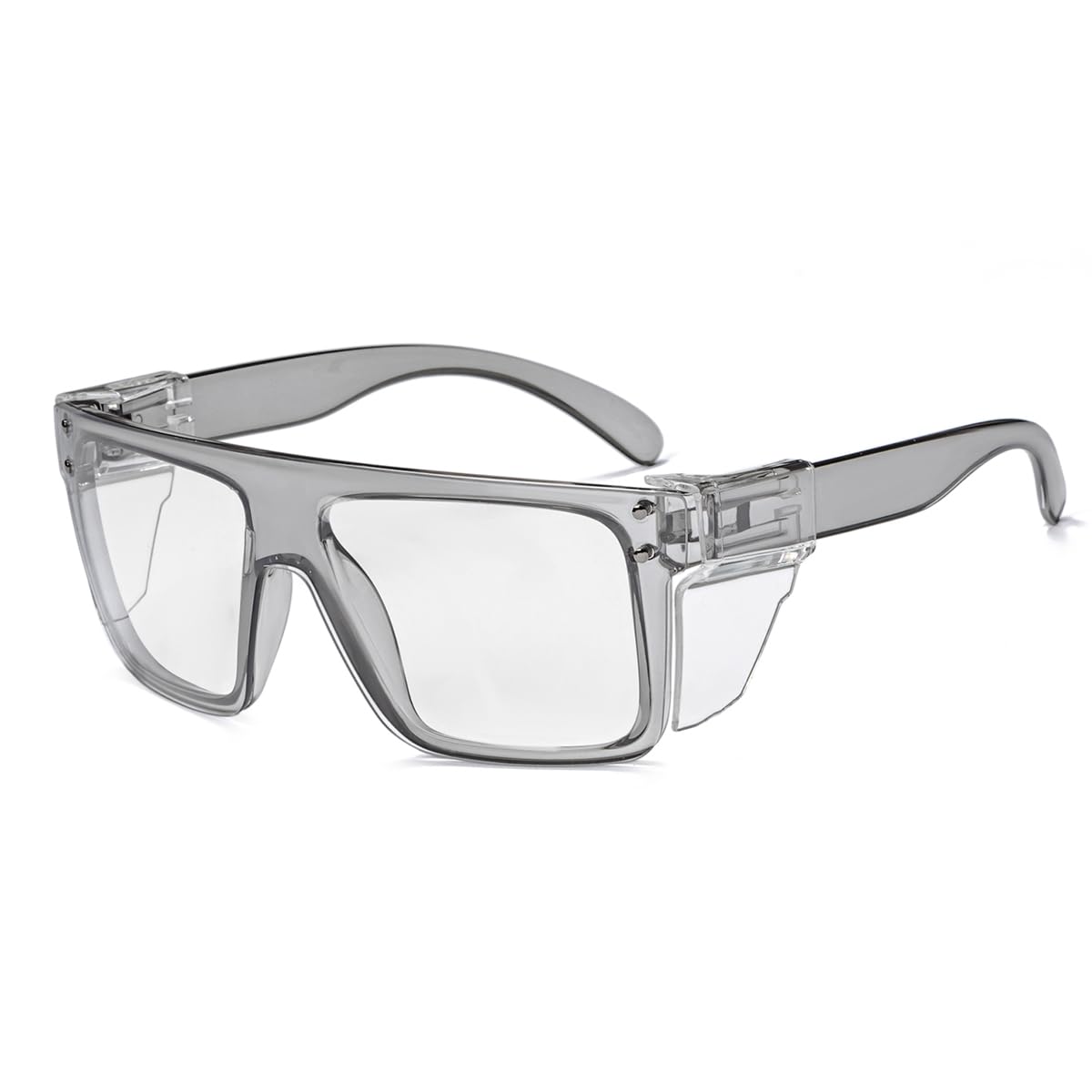
5. Photochromic Safety Glasses, ANSI Z87.1 Shield
An ANSI Z87.1 wraparound shield built for grinding and cutting, not group rides.
ANSI Z87.1 is the recognized US safety standard for eye protection, and it is the reason this pair exists. If you are grinding, cutting, or working around flying debris, that rating is the spec that matters, not the tint. The wraparound shield design gives you side coverage a sport frame leaves open, and it weighs 3.35 ounces, so it stays on through a long shift without pressing on your temples.
The lens does triple duty: UV400 protection against UVA and UVB, a blue-light blocking layer for time at a screen, and the photochromic shift that moves it from clear toward smoke. Owners rate the overall quality highest, then the fit, and the appearance draws no complaints at all. It is a unisex frame, so it works across a mixed crew.
Set your expectations on the transition, though. The tint is the most argued-about part of this shield, with roughly half finding it goes dark enough and the rest reporting it stays light in the sun or does not shift at all. Sun protection and the transition itself split the same way. Buy it for the Z87.1 coverage first.
What it is built to do: meet ANSI Z87.1 while wrapping your full field of view, with UV400 protection and a blue-light layer on top.
Where it can disappoint: the photochromic darkening is inconsistent — some shields change well, some barely shift, so judge it on the safety rating.
Pick it for: workshop and site work where an ANSI Z87.1 shield is the requirement.
Pass if: a reliably dark transition tint is the main thing you are buying.
6. ROCKBROS Cycling Glasses

A second polarized lens adds the dark tint a photochromic lens cannot reach.
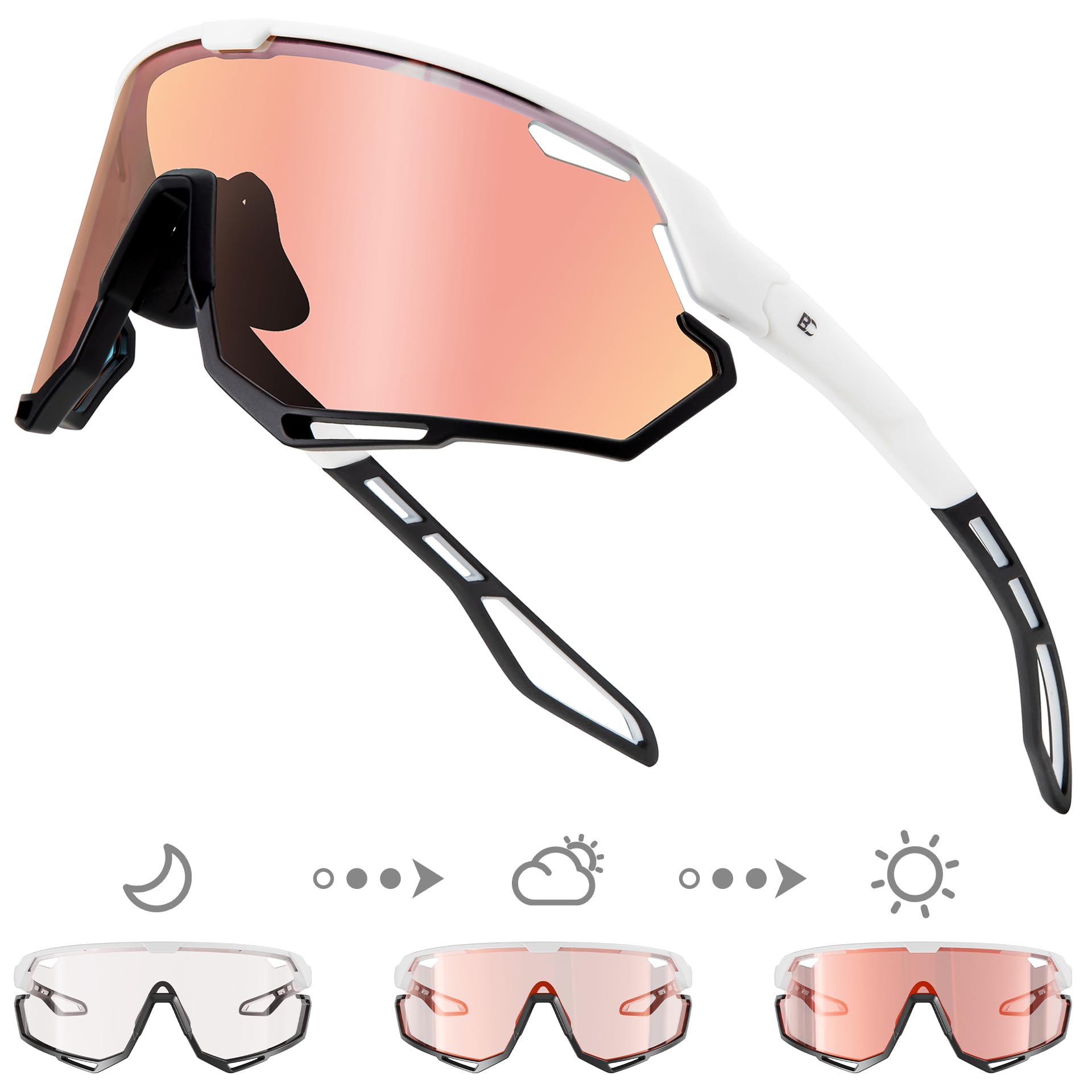
This is the answer to the complaint that runs through every review of this category. Instead of one lens that tries to cover everything, ROCKBROS ships two: a polarized lens rated at 15% light transmission for bright sun, and a photochromic lens that runs from 21% to 83% light transmission as the UV shifts. Swap them when you know the day is flat-out sunny and you get genuine dark-lens performance that a transition lens cannot reach.
The numbers make the choice simple. Fifteen percent transmission means only a small slice of light reaches your eye, so glare off wet road and water is cut hard. The photochromic lens at its 83% clear end is bright enough for shade and dusk, and it drifts down as the sun climbs. Both lenses carry UV400 protection. The lower frame pops off too, so you get two looks out of one pair.
The fit is what people value most about this frame, and it adjusts through the nose pads to sit where you want it. Comfort is the split point — a share of riders find the arms press too hard on the sides of the head over long hours. Vents in the lens move air through to cut fogging, which holds up in cold morning starts.
Why riders keep it
- Two lenses mean true dark performance when you need it and a transition lens when you do not
- Polarized lens at 15% light transmission cuts hard glare off road and water
- Photochromic lens spans 21% to 83% light transmission across the day
- Lens vents push air through to keep fog from building
- Removable lower frame gives two styling options
The quirks
- Arm pressure on the sides of the head bothers some riders
- Swapping lenses means stopping to do it — not an on-the-fly change
The smart buy for: riders who want one frame that handles a blazing noon and a shaded evening.
Less ideal if: you want to pull on one pair and never think about it again.
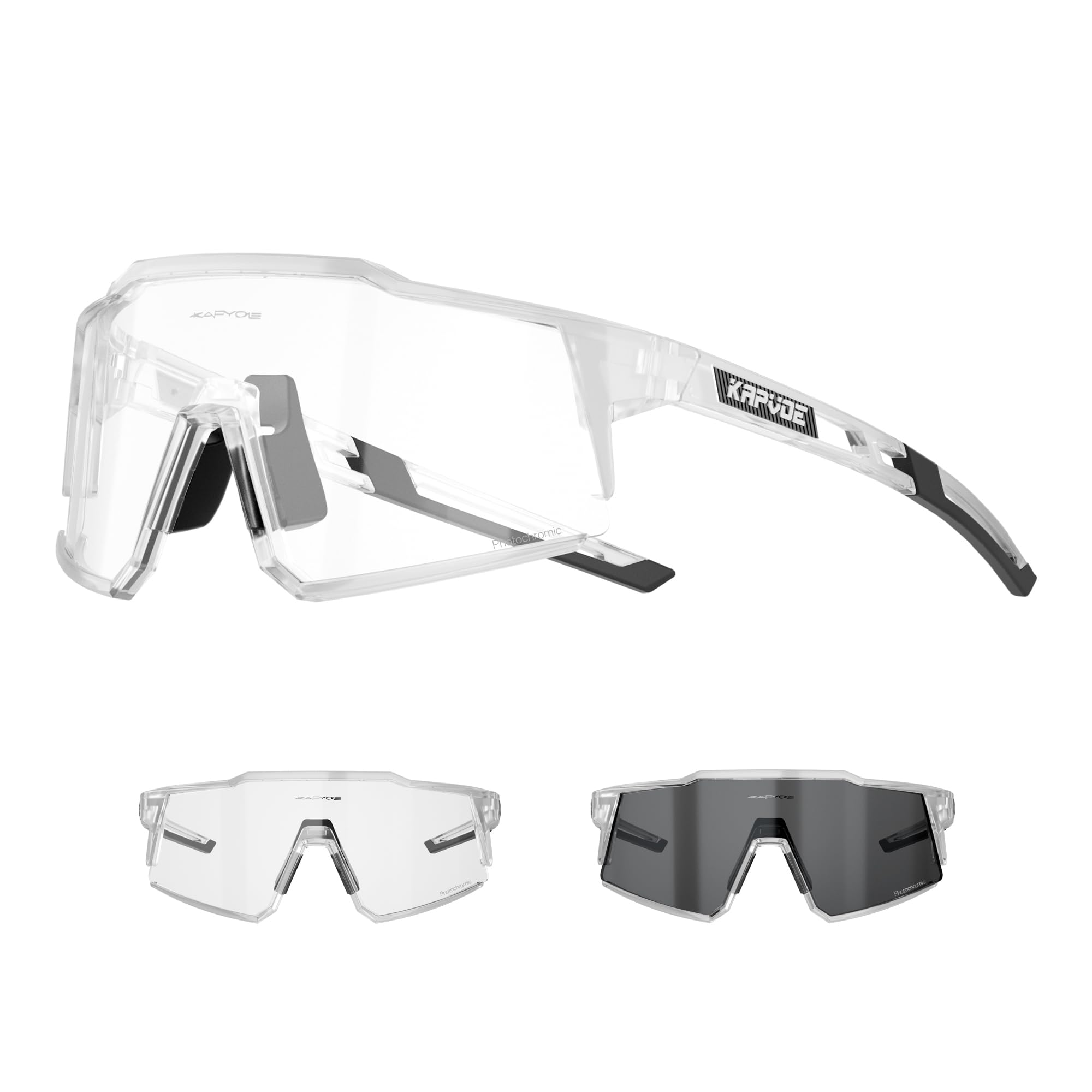
7. KAPVOE Photochromic Cycling Glasses K9022
One lens covers a pre-dawn roll-out and a sunset finish.
The K9022 is aimed squarely at day-and-night riding, and that is where it earns its place. The photochromic dark grey lens carries UV400 protection and shifts with the light through sunny, cloudy, and rainy conditions, so a pre-dawn roll-out and a sunset finish do not need two pairs. Eye protection is the second thing this frame is known for — it blocks bright sunrays and keeps wind out of your eyes, which on a fast descent is worth as much as the tint.
Owners describe the pair as exceeding expectations, and durability holds up as one of the stronger points rather than a worry. The frame handles regular use without drama, which is why it stays in the bag trip after trip. Functionality scores well, with the photochromic shift doing its job for most buyers.
The honest note is on the nose piece. The fit is the most divided part of this frame — a share of buyers find the nose piece too big and say the glasses do not sit naturally on the face. The lens tint also splits opinion, with some finding it just right for cutting glare and others wanting it darker. If you have a narrow bridge, check the fit first.
The strong side: a durable frame with UV400 coverage that handles sun, cloud and rain in one pair — ideal for the long-distance rider.
The snag: the nose piece runs large for some faces, so the fit is the thing to verify before you commit.
Best matched to: riders logging long days across every kind of weather.
Check the fit first if: you have a narrow bridge and need a snug nose piece.
8. KAPVOE Photochromic Cycling Sunglasses K63
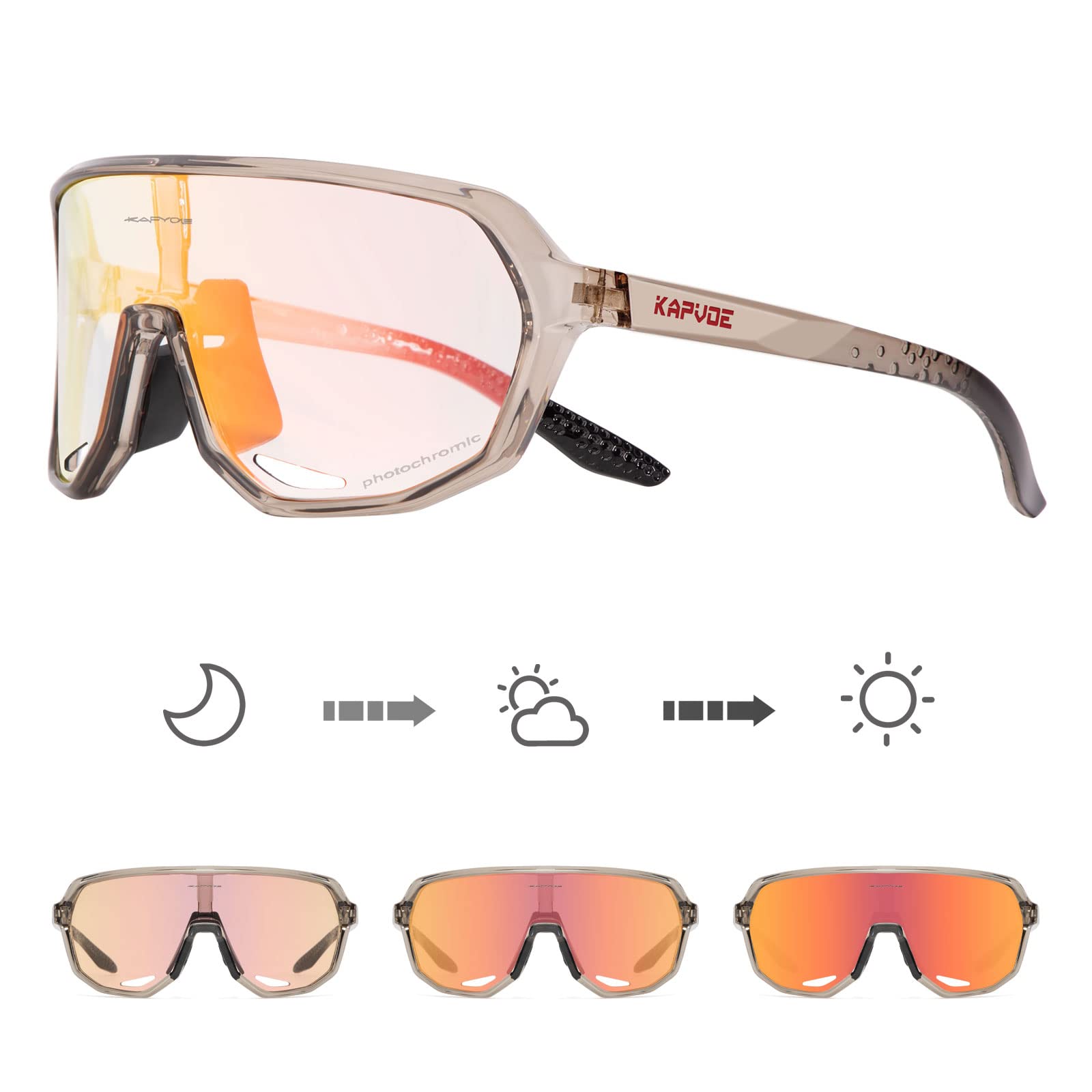
The only pair here that states its CAT.0–CAT.2 range, so you know the tint ceiling.
CAT.0 to CAT.2 is a lens category range, and it tells you exactly what this lens can and cannot do. CAT.0 is essentially clear and CAT.2 is a moderate tint — enough to cut glare, not enough to be a dark sunglass. KAPVOE states that range openly, which is rare in this category, and it lets you buy with your eyes open. The UV400 lens filters 99.99% of UVA and UVB rays for daytime outdoor use, and the transition continues into dusk, low light, and night riding.
The lens is fixed, not interchangeable, which keeps the frame lighter and simpler. Vent openings in the lens move air through to fight fog during hard efforts or a sudden temperature drop. A flexible TR90 frame and a soft rubber nose pad keep contact comfortable as you move around. Owners rate the lens quality highest of all, then the eye protection, and the look draws compliments — this frame gets noticed for its style as much as its function.
Where this one falls short is sizing consistency. Fit is the most contested point, with a share of buyers finding the frame either too small or too large, and the tint transition splits similar to the category norm — some get strong daytime color, others say it never darkens as promised. So the CAT.0–CAT.2 limit is real: do not expect a full dark sunglass.
What justifies the premium
- Publishes its CAT.0–CAT.2 range, so you know the tint ceiling before you buy
- Filters 99.99% of UVA and UVB rays for daytime protection
- Vent openings reduce fog during hard efforts
- Fixed lens keeps the frame lighter and simpler than interchangeable setups
- Style draws compliments — it looks as good as it works
Weigh before buying
- Sizing runs inconsistent between too small and too large
- No interchangeable lens option
- Tint tops out at CAT.2 — not a deep sunglass
Worth it for: the buyer who wants a documented tint range and premium build over the cheapest option.
Look elsewhere if: you need one frame size that always fits — the sizing here varies.
9. EYEGLAD REV ANSI Z87+ Photochromic Motorcycle Safety Glasses
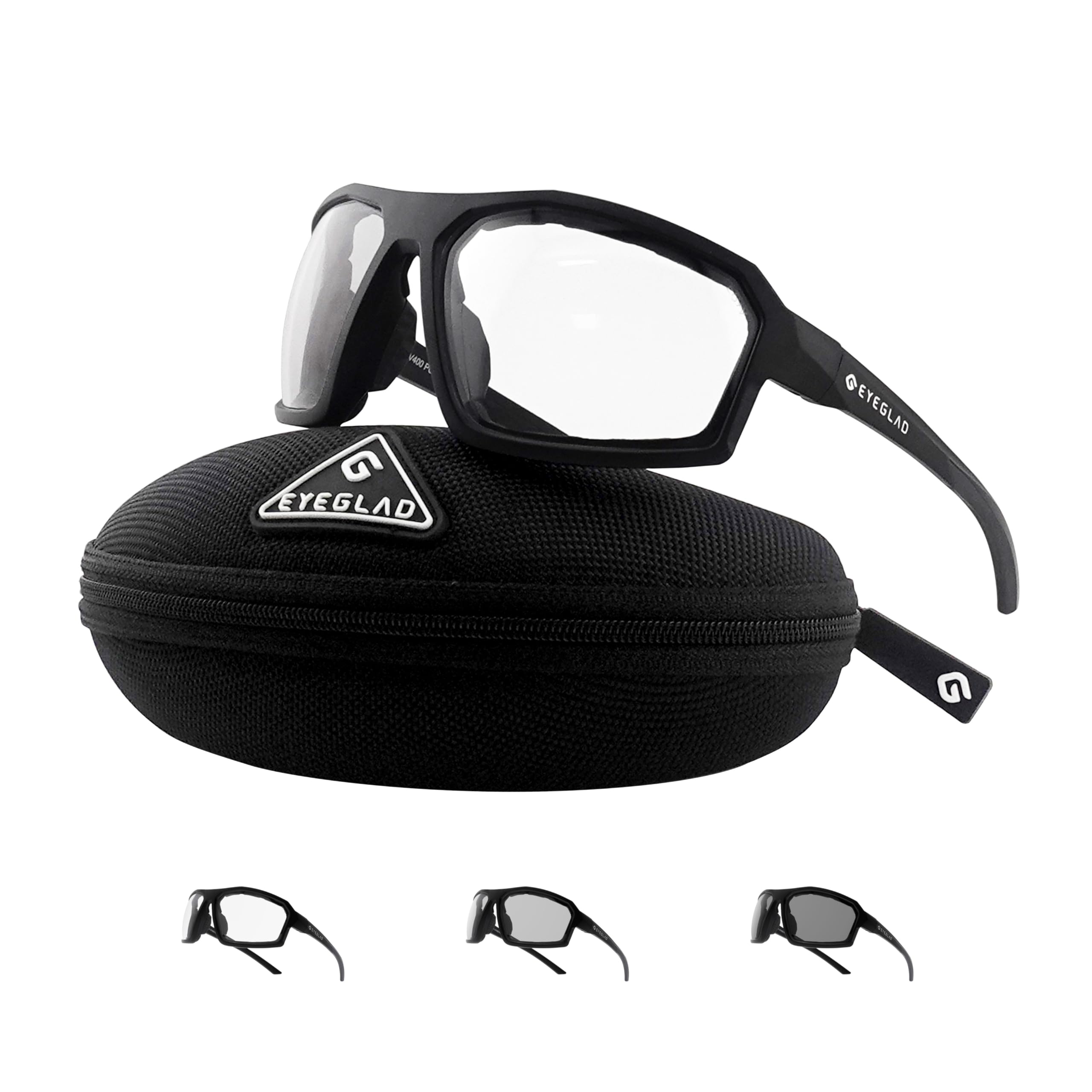
A wraparound shield that shifts from late sun to headlights without a lens change.
For riders who do not want to stop and change lenses at dusk, this is the most direct answer in the lineup. The photochromic lens adjusts its tint to the light it reads and carries UV400 protection against harmful rays, so a ride that starts in late sun and ends after dark uses the same pair. The wraparound shape gives you peripheral vision and a secure hold, and at 1.06 ounces it disappears under a helmet. It is rated ANSI Z87+, the impact-protection standard for eye wear.
Owners praise the quality most — the lenses are singled out for how they hold up, and the build suits motorcycle riding rather than being adapted to it. Comfort and the quick lens transition are the two other things riders get on with, and it is the lightest frame in this whole list on the bridge. Value gets solid marks as well, which is not always true at the premium end.
The darkness question comes up hard here. How dark the lens actually gets is the most-discussed part of these glasses, and opinion splits right down the middle — some find it tints well, others say it barely darkens in direct sun. Fit and wind protection split the same way, with a share of riders finding them not suitable for riding. Test the fit against your helmet before a long trip.
Built for the ride: an ANSI Z87+ wraparound at 1.06 ounces with UV400 coverage and a lens that shifts from daylight into headlight conditions.
Fair warning: the darkness of the tint and the fit under a helmet are both inconsistent across buyers — try before a long trip.
Grab this if: you ride a motorcycle from afternoon into night and want one shield that adapts.
Reconsider if: you need a deep dark lens in full sun or a guaranteed seal against wind.
Know the Specs
Photochromic Response and Light Transmission
A photochromic lens darkens by reacting to ultraviolet light, not just visible brightness. That is why it stays clear indoors and under a car windshield — the glass blocks the UV the lens needs. Light transmission is the percentage of visible light the lens lets through: lower numbers mean a darker lens. The ROCKBROS pair publishes a photochromic range of 21% to 83%, and a polarized lens at 15%. Those numbers tell you more about real-world darkness than any marketing phrase, so check them first.
UV400 Protection
UV400 means the lens blocks light wavelengths up to 400 nanometers, covering the full UVA and UVB range that damages eyes over time. Every pick here carries UV protection, and the KAPVOE K63 states 99.99% UVA/UVB filtering. Note that UV protection and tint are different things — a near-clear photochromic lens can still block UV fully while letting plenty of visible light through. Never assume a lighter lens means less protection.
Frame Material and Fit
TR90 is a flexible thermoplastic that bends under pressure and springs back, which is why sport frames favor it. It keeps the frame light and stops it snapping in a fall. Rubber nose pads and spring hinges matter just as much: a photochromic lens only delivers the tint you expect if the lens stays positioned over your pupil, so a slip-prone frame undermines the whole feature. If you wear prescription glasses, a built-in myopia frame lets you clip correction inside the shield.
ANSI Z87.1 Ratings and Polarized Lenses
ANSI Z87.1 is the recognized US safety standard for eye wear, and Z87+ adds a high-impact rating. If your work involves debris, that rating matters more than any tint. Polarized means the lens filters horizontal light waves to kill glare bouncing off water, wet roads, and car hoods — useful for driving and water sports, but the effect can make LCD dash displays look odd. Both features stack with photochromic lenses, but check the listing for each one separately.
Common Questions
Will photochromic sunglasses darken while I am driving?
How dark do transition lenses actually get in bright sun?
Do photochromic lenses work indoors under artificial light?
Can I wear photochromic cycling glasses over prescription glasses?
What does CAT.0 to CAT.2 mean on a photochromic lens?
Are polarized and photochromic lenses the same thing?
Do photochromic lenses lose their ability to change over time?
Is ANSI Z87.1 better than a normal sport frame for eye protection?
Why do some owners mention their transition lens never changes color?
Can I swap the lenses on these photochromic cycling glasses?
The Bottom Line
The strongest pick in this lineup stays the KAPVOE K9023, because it solves the one thing that matters most in this category — the frame stays exactly where you put it, so the photochromic lens does its job consistently all ride. If you need two lenses so you get back the darkness a transition lens cannot reach, the ROCKBROS pair is the one to reach for. And if you wear prescription glasses and want to ride in a sport shield, the VICTGOAL with its myopia frame is the pick that fits your correction.
One last nudge before you commit: pay attention to the published light transmission figures and to whether a frame documents its tint range at all. A transition lens that tops out at CAT.2 will never feel like a dark sunglass no matter how good the marketing sounds. Buy for the light you actually ride in, and check the frame fit against your face before you rely on it for a long day out.
How we choose
We do not accept paid placement. Every pick is matched to a real buyer and a real use-case; we do not hands-on test units.
Sources
Specifications: manufacturer listings and product documentation. Review insights: verified customer reviews, as of November 2026. Pricing: not shown on this page (it changes often); check the current price via the retailer link.
As an Amazon Associate, Tactical Gear Guy earns from qualifying purchases. This does not affect which products we feature.