Specs are compiled from manufacturer listings and verified buyer reviews and can change over time — please confirm the key details on the product page before buying.
Wet feet at 6 a.m. ruin an eight-hour shift faster than any heavy load. That is the whole problem with buying an outdoor work boot: the pair that keeps you dry on a muddy site is often the pair that leaves your heels raw by lunch. The right boot keeps you dry through the mud and still leaves your feet intact at quitting time. Below you will find nine pairs that get the balance mostly right, sorted by what each one actually does best.
This guide is built by comparing the manufacturers’ published specifications and the patterns across verified customer reviews, so you get each pick’s real strengths and trade-offs instead of marketing spin.
Rubber, leather and composite toes each solve a different problem, and the shaft height changes how much ankle support you get in deep mud. What follows is a straightforward breakdown of the best outdoor work boot so you can pick the right pair once.
Top Picks


How To Choose The Best Outdoor Work Boot
An outdoor work boot has to handle two jobs at once. It protects your foot from things that fall, roll and stab, and it keeps that foot dry when the ground turns to slop. The pair that does both without wrecking your arches over a long day is the pair worth owning.
Start with the toe and the shank
A steel toe is a metal cap over your toes that resists impact from dropping or rolling objects. A composite toe does the same protective job with a non-metal material, which is lighter and does not set off metal detectors. Underneath, a steel shank is a plate between the insole and outsole that guards against nails and sharp debris pushing up through the sole. On a demolition site or a yard full of scrap, that plate matters as much as the toe cap.
Decide between a rubber shell and a leather upper
A rubber boot like the TIDEWE sheds water from every direction, including standing puddles and hosed-down concrete, so it suits farm, garden and fishery work. A leather upper with a waterproof membrane breathes better and looks sharper for site and warehouse wear. The trade-off is honest: leather needs care and can soak through at a worn seam, while rubber can crack at a flex point if you ignore it.
Pick the shaft height for your ground
Shaft height is the collar measurement around your ankle and lower leg. A 6-inch boot gives solid ankle protection while staying easy to walk in, which is why it suits most site work. An 8-inch boot adds more lower-leg coverage for deeper mud and brush, but it feels heavier and warmer over a long shift.
Check the fit rule before you order
Measure your foot first and compare against the brand’s insole or size chart. TIDEWE asks you to pick a size about 0.16 inches longer than your actual foot measurement, which is a concrete guideline most buyers ignore until the boot arrives too tight. BOIWANMA tells buyers who land between two sizes to move up, and it says to choose the width you are closer to.
Side-by-Side Comparison
| Model | Best For | Toe & Shank | Waterproof Build | Shaft / Height | Amazon |
|---|---|---|---|---|---|
| TIDEWE Rubber Work Boots★ Best Overall | Wet farm and fishery ground | Steel toe + steel shank | 100% rubber and neoprene | Ankle-high | Amazon |
| BOIWANMA Steel Toe Leather Work BootsMost Versatile | Mixed site and trail days | Steel toe + rubber toe reinforcement | Leather upper (not rated waterproof) | Ankle-high | Amazon |
| Wolverine Floorhand 6” Steel-ToeSite Standard | General site work | Steel toe | Waterproof, moisture-wicking lining | 6 inch | Amazon |
| Timberland PRO Pit Boss 6 Inch | All-day civil and field work | Steel toe + nylon shock-diffusion plate | Waterproof leather | 6 inch | Amazon |
| Carhartt Rugged Flex FF6213-M | Jobsite traction | Steel toe (ASTM 2413 21) | Storm Defender membrane | 6 inch | Amazon |
| KEEN Utility Evanston 6” | Medium-duty and landscaping | Carbon (composite) toe + internal shank | Barnyard-resistant waterproof leather | 6 inch | Amazon |
| Wolverine I-90 Durashocks 6” Insulated | Cold-weather shifts | Insulated construction | Waterproof | 6 inch | Amazon |
| ARIAT Work Treadfast 8” | Deep mud and farm work | Steel toe (ASTM F2413 / F3445) | DRYShield waterproof | 8 inch | Amazon |
| Ariat Rebar Lift 6” Composite Toe | Long days on your feet | Composite toe | Waterproof | 6 inch | Amazon |
Detailed Reviews
1. TIDEWE Rubber Work Boots
Our pick — 4.5+★ from 750+ verified ratings; the strongest balance of quality and price.
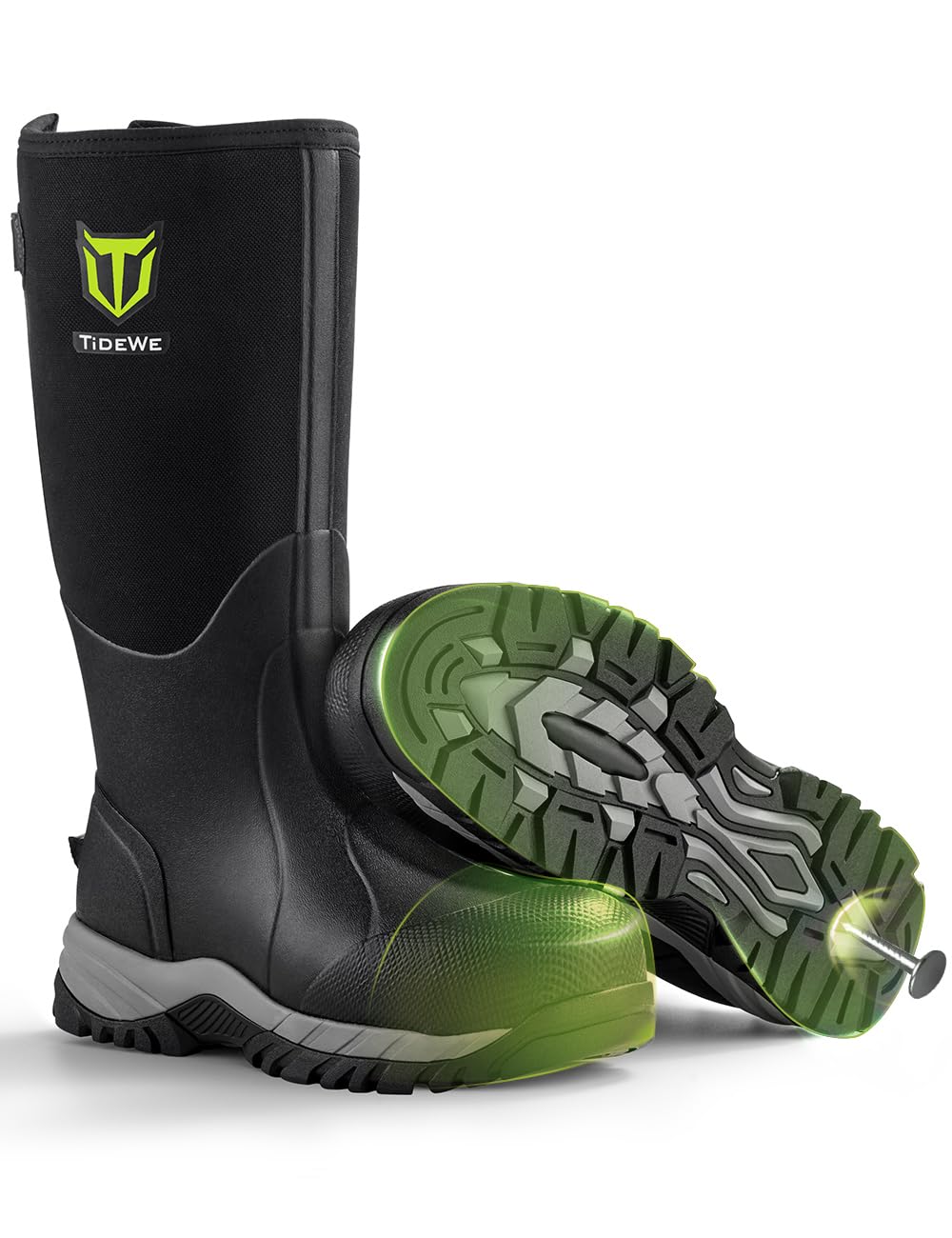
A rubber shell with a steel toe and a steel plate under your arch — for the wet, debris-strewn ground that destroys ordinary boots.
If you work on a farm, in a fishery, in a garden or on a site that gets hosed down, this is the pair to start with. The build is 100% waterproof rubber and neoprene, so water does not creep in through a stitched seam the way it can on a leather boot. That shell covers the whole foot, which is the point when you are standing in puddles rather than stepping around them.
The protection is not decoration. A steel toe takes impact from falling or rolling objects, and a steel shank sits between the insole and outsole to guard against anything sharp pushing up from below — the puncture proof layer that matters on a yard full of scrap and nails. TIDEWE also adds 6mm of neoprene inside for warmth when the temperature drops, plus a breathable inner lining so air still moves around your foot when it is warm. The pull-on and kick tab means you are out the door faster, and the ergonomic arch at the top of the boot is shaped to sit comfortably against your foot.
What wins people over here is the overall build — quality is the most-praised thing about this boot by a wide margin, with buyers calling out the insoles and the general workmanship. The honest catch is longevity on the waterproof side: some buyers report the rubber splitting in the middle over time, and a few find water gets in once that happens. Check the rubber at the flex point every few months, because that is where owners mention it splitting.
Where it earns its place
- 100% waterproof rubber and neoprene construction sheds water from every side, not just the top
- Steel toe plus steel shank gives both impact protection up top and puncture protection underfoot
- 6mm neoprene lining adds warmth for cold, wet mornings without turning the boot into a sauna
- Rubber soles with deep tread for uneven, muddy workplace terrain
What to know before you buy
- Some owners find the rubber splits over time, and water resistance can fade with it
- TIDEWE’s own sizing note asks you to order roughly 0.16 inches longer than your measured foot, so measure carefully
- Ankle-high rubber shell is warmer and less breathable than a leather upper on hot days
The verdict: Standout pick if your work involves standing water, mud or hosed-down ground and you want impact plus puncture protection in one boot.
Think twice if: You want a ventilated leather boot for hot indoor work — a rubber shell runs warmer, and this one is built for wet outdoors.
2. Work Boots for Men Steel Toe
One boot that clocks in at the site and still works for a weekend hike — as long as you size it right.
The BOIWANMA runs a crazy horse leather and nylon cordura upper, which is a tough, textured leather that takes a beating and shows less scuffing than a smooth finish. The outsole is EVA and rubber, and the toe carries rubber reinforcement on top of the steel cap. It is listed for daily walking, working and outdoor sports like hiking, camping, climbing, fishing, backpacking and mountaineering, which tells you the maker is aiming at a crossover buyer rather than a single-purpose site boot.
Owners like the look — appearance is the cleanest positive in the whole review record for this boot, with nothing negative attached to it. Quality and comfort both draw steady praise, and the value read is friendly for what you get. The design sits in a useful middle ground: not so heavy that a trail walk is miserable, not so soft that a construction floor chews it up in a week.
Now the sizing warning. The toe box runs narrow for some buyers, and a few find the boot runs a full size large, so the maker’s own advice is worth following: if you are between two sizes, go up, and pick the width you are closer to. Traction is the other split point, with some finding the sole not slip resistant on wet surfaces — so treat this as a solid dry-ground boot rather than a wet-deck specialist. The upper is leather, not a waterproof membrane, so standing water is not its job.
Cross-over build: A leather and cordura upper with a rubber-reinforced toe suits buyers who split their week between a job site and the outdoors, and the appearance is the strongest unqualified positive in this boot’s record.
Fit before anything: The narrow toe box and the run-large sizing mean the size chart is not optional — get the length and width right and this boot does its job.
Reach for this if: You want one leather boot for site days and trail days and you are willing to follow the sizing rule.
Look elsewhere if: You work on wet, oily floors and need slip resistance you can count on — the traction is the weak note here.
3. Wolverine Men’s Floorhand Waterproof 6” Steel-Toe Work Boot
The six-inch steel-toe that has been on job sites long enough to earn a reputation, at 4 pounds a pair.
This is the heavy-leather answer to the same problem the TIDEWE solves with rubber. A steel toe takes the impact, and a moisture-wicking mesh lining pulls sweat away from your foot so the boot does not turn clammy by mid-afternoon. Waterproofing is built into the upper, which suits wet grass, rain and shallow puddles rather than standing water.
Weight is where this one separates from the pack — at 4 pounds it is more than double the 1.83 pounds of the Timberland PRO Pit Boss. If you are on your feet for the whole shift, that gap shows up in your legs by the end of the day. The Floorhand’s footprint measures 12 x 8 x 4.5 inches against the Pit Boss at 10 x 15 x 6 inches, and the two boots sit at the same 4.0+ rating, so the real decision is fit and feel rather than score.
Quality is the thing buyers talk about most and it is almost entirely positive, with fit and comfort close behind. Reliability gets a clean run too. The catch is durability: a chunk of customers note the boots falling apart inside six months, and a smaller group finds they are not truly waterproof once the upper wears. Wolverine’s own listing points to its Contour Welt, MultiShox and DuraShocks technologies, so the construction story is there — but treat the boot as a solid mid-range workhorse rather than a lifetime purchase.
Straight answer: A proven six-inch steel-toe for buyers who want a known brand and a waterproof leather upper for everyday site work.
The trade-off: At 4 pounds it is the heavier of the two Wolverine-style options here, and a portion of owners see the sole give out within six months.
4. Timberland PRO Pit Boss 6 Inch

The work boot the crowd has already voted on — and the lightest heavy-duty option in this lineup at 1.83 pounds.
Start with the number that changes the day: 1.83 pounds. That is less than half the 4-pound Floorhand above, and it is the reason this boot suits long shifts where you are walking rather than standing at one bench. Under the foot, nylon shock-diffusion plates add support and torsional rigidity, which is the resistance to twisting that keeps your foot stable when you pivot on uneven ground. The steel toe is built to ANSI safety standards, and the maker notes it leaves a roomier toe box than other boots.
Traction is a big part of the pitch here — the outsole is designed for wet or slippery surfaces, and there is electronic hazard protection for working around open circuits. A removable sock liner means you can swap in your own insole. The boot also carries a waterproof leather upper, which keeps rain and wet grass out without the bulk of a rubber shell.
What buyers keep coming back to is the quality of the thing — it is the most-praised aspect by a wide margin, with appearance and value close behind and work-friendly use called out specifically for civil engineering field work. The honest split is comfort and fit: some find it comfortable and true to size, while a share of owners find it narrow at the back of the heel and painful over long hours. Break-in time is real here. Try it on before a full shift, not the morning of one.
The weight argument: At 1.83 pounds against the Floorhand’s 4 pounds, this is the boot for buyers whose day is mostly on their feet — the difference is measurable, not marketing.
The heel question: The roomy toe box helps, but the back of the heel is where fit complaints cluster, so give the boot a proper break-in before you trust it for a ten-hour day.
Best matched to: Field engineers, site walkers and anyone who needs a light steel-toe with real traction on wet ground.
Not the one for: Buyers with a wide heel who need a generous fit from the start — this boot asks for break-in time.
5. Carhartt Rugged FF6213-M Flex WP
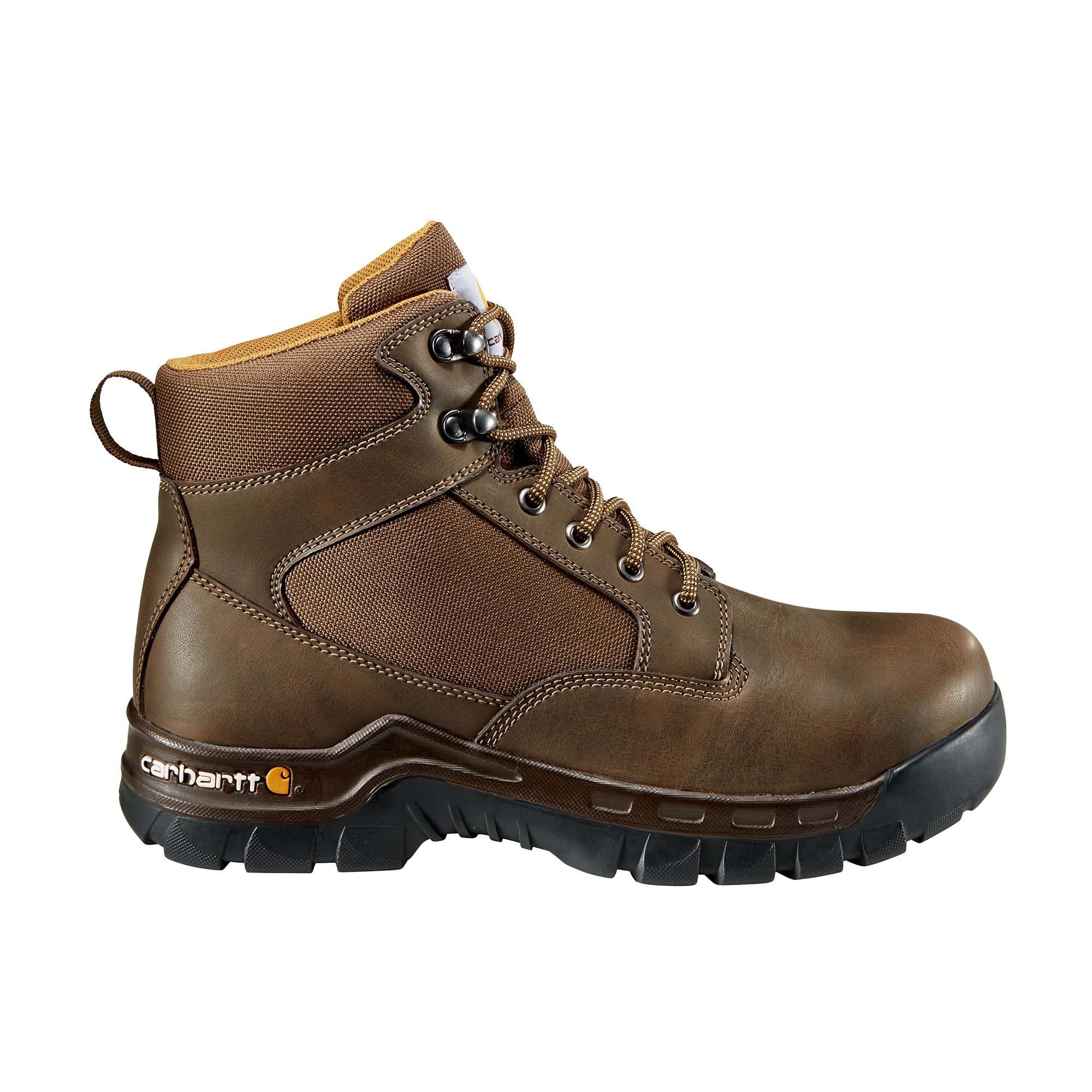
A jobsite boot that puts the grip first — a slip-resistant rubber lug outsole built for wet, uneven ground.
Carhartt’s approach here is to build the sole for the surfaces that actually cause falls. The Rugged Flex rubber lug outsole is listed as slip resistant, and the boot stacks a cushioned polyurethane insole, a PU Strobel pad and EVA filler to cut fatigue over a long day. Premium brown leather and Carstrong fabric make up the upper, and the Storm Defender waterproof membrane keeps water out while letting the boot breathe.
Protection is spelled out in the standards: the steel toe meets ASTM 2413 21, which is a recognized safety-toe standard for protective footwear. That matters if your site or employer requires certified toe protection, because it is a checkable claim rather than a marketing line. At 4.5 pounds it sits on the heavier side, which is the price of that leather-and-membrane build.
Quality earns the most praise, and buyers specifically call it out for work use — that work-friendly read is the cleanest positive in the record, with nothing negative attached. Durability is where opinions divide, with a share of owners reporting the boot falls apart sooner than they would like. Fit runs a little generous for some, so check the size chart rather than assuming your usual number. It is a boot for the buyer who wants certified protection and a confident grip over featherlight weight.
What makes it a site boot
- Slip-resistant Rugged Flex rubber lug outsole built for wet, slippery surfaces
- Steel toe meets ASTM 2413 21 — a certifiable safety-toe standard, not a vague claim
- Storm Defender waterproof membrane keeps feet dry while allowing breathability
- Layered cushioning (polyurethane insole, PU Strobel pad, EVA filler) to reduce fatigue
The honest limits
- At 4.5 pounds it is one of the heavier builds here, so expect a break-in period
- Durability divides owners — a portion see the boot wear out sooner than expected
- Runs a little big for some feet, so measure against the size chart first
If grip is your priority: This is the boot for wet decks, oily shop floors and uneven site ground where a slip costs you.
The weight tax: That leather-and-membrane build runs 4.5 pounds, so it rewards buyers who stand and grip more than those who sprint all day.
6. KEEN Utility Evanston 6″
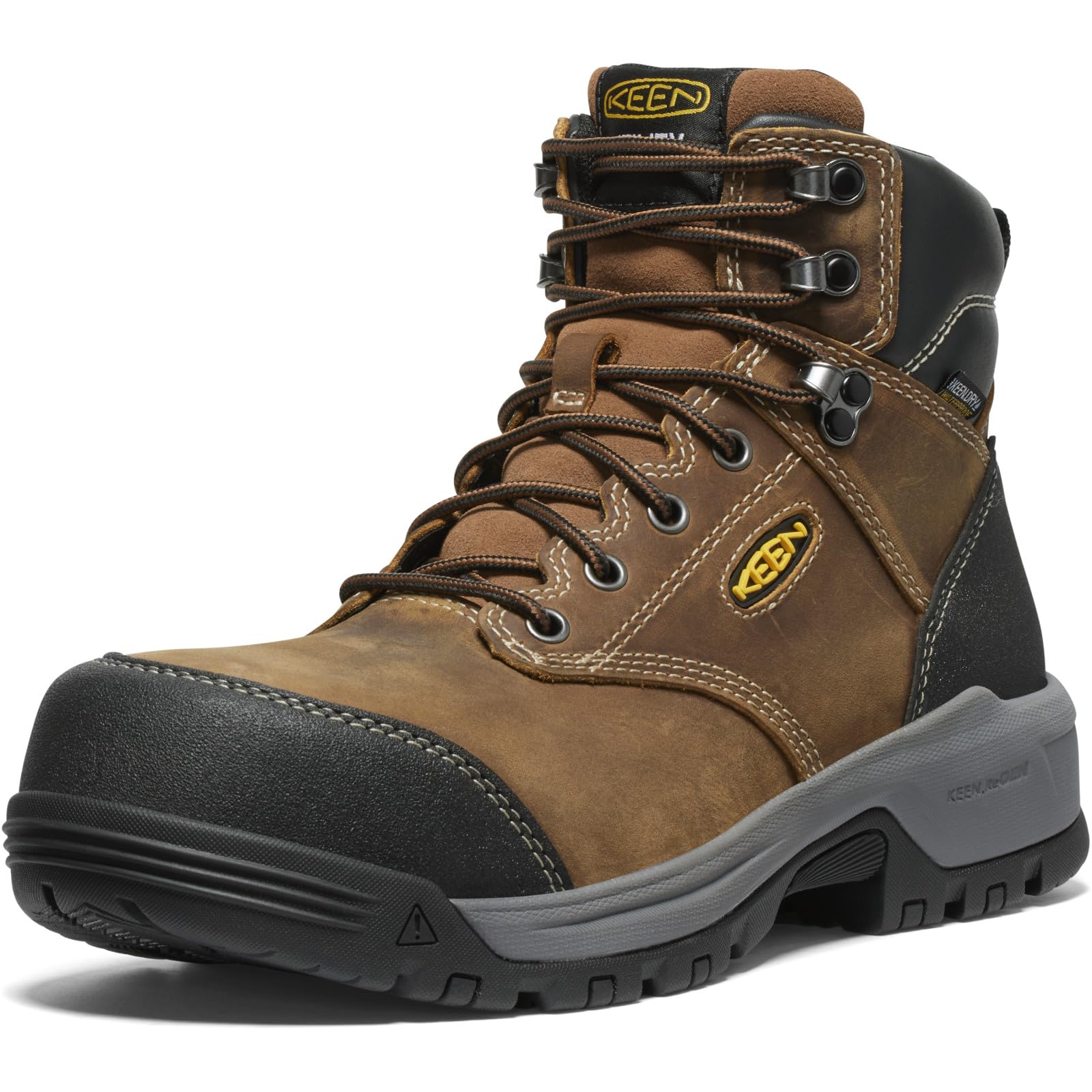
A carbon-toe boot at 25.3 oz per boot, built for the buyer who walks miles of landscaping or utility work.
The defining spec here is the toe. A carbon toe does the protective job without metal, which is why KEEN can keep the boot at 25.3 oz (720 g) per boot and still call it a safety boot. The KEEN.ReGEN midsole is designed to return energy with each step, and the barnyard-resistant waterproof leather upper is built to handle the muck that comes with farm, ranch and landscaping work without soaking through.
A 90-degree heel and an internal shank add stability, which is the resistance to rolling your ankle on uneven ground. KEEN builds this on its traditional wider form, so buyers with wider feet get more room than a standard last. Insoles are removable, and the leather comes from tanneries certified by the Leather Working Group. The boot is aimed at medium-duty work in construction, utilities, landscaping, transportation, maintenance and manufacturing.
What owners consistently appreciate is the weight — it is light enough that it does not tire you out over a long day — and the water resistance holds up for most. The honest wrinkle is comfort, which is the most-discussed topic and the most divided: some find the Evanston very comfortable, others call it the most uncomfortable boot they have worn. Some report it runs smaller than expected and feels tight at first. Give it a break-in window before you judge it.
The composite advantage: At 25.3 oz per boot with a carbon toe, this is the pick for buyers who want safety protection without the metal weight dragging on every step.
Fit is the wildcard: The wider form helps wide feet, but the boot runs tight for some and the comfort verdicts are split — order with room to spare.
You’ll like this if: You want a light composite-toe boot for medium-duty site, utility or landscaping work and you have wider feet.
You won’t if: You need a boot that feels broken-in on day one — this one asks for a short break-in and runs snug for some.
7. Wolverine Men’s I-90 Durashocks 6″ Insulated

The insulated six-inch Wolverine that owners describe as feeling like a sneaker on a work site.
Insulation and waterproofing are the two features that decide whether a winter shift is tolerable, and this boot carries both. The Durashocks build is the brand’s cushioning system, and the I-90 is the version for buyers working through cold, wet weather rather than dry summer dirt. The six-inch shaft gives ankle coverage without the bulk of an eight-inch boot.
Here is the standout: comfort. Owners say it feels like a sneaker and does not hurt their feet anywhere — a claim you rarely hear about a work boot. Quality is the most-praised aspect by a wide margin, and durability holds up too, with buyers reporting roughly a year and a half of use. Water resistance draws steady approval, and the boot is repeatedly called very light.
The one thing to sort out is fit. It runs large for some buyers and loose for others, so if you are between sizes, the smaller number is the safer call. Value splits along the same line — some feel it is well worth the cost and would buy again, others do not. Wolverine’s listing points to its Contour Welt, MultiShox and DuraShocks technologies, and this boot is the insulated expression of that construction. For cold-weather buyers who want sneaker-level comfort, this is a strong fit.
Who it fits: Cold-weather site workers who want a waterproof, insulated six-inch boot that feels light and sneaker-comfortable on their feet.
Who it doesn’t: Buyers who run on the larger side of their usual size — this boot already runs large for a portion of owners.
8. ARIAT Work Treadfast 8″ Waterproof Steel Toe Work Boots
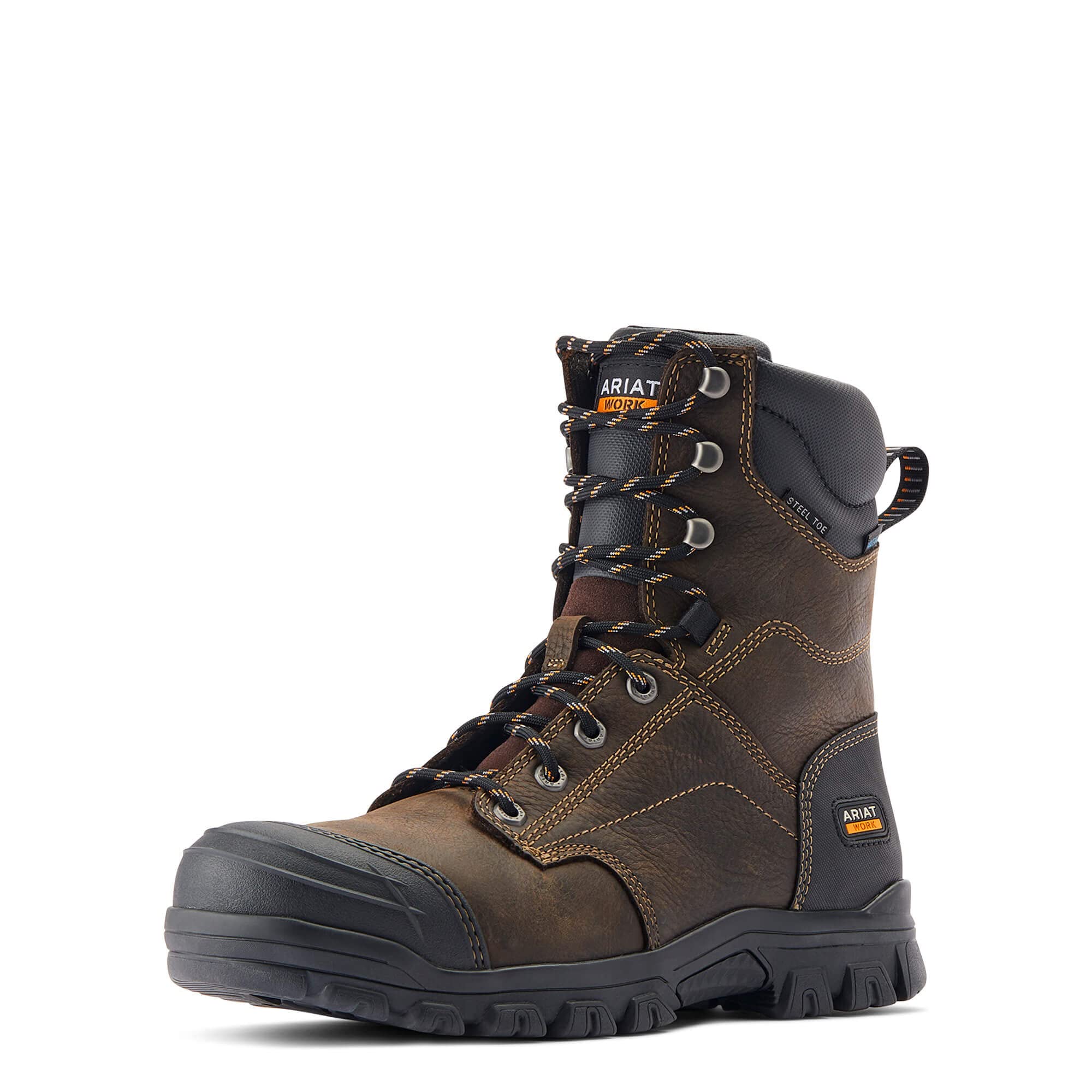
Eight inches of shaft for buyers who work in mud and brush, with a steel toe and reinforced toe and heel guards.
The eight-inch shaft is the whole reason to pick this one. It gives more lower-leg coverage than the six-inch boots here, which matters when you are standing in deep mud or walking through brush on a farm or ranch. The DRYShield construction pairs full-grain leather with an impermeable barrier, and the Duratread outsole is oil- and slip-resistant. Reinforced ExGuards on the toe and heel reduce wear at the two spots that take the most abuse.
Support is where this boot earns trust. The 4LR technology adds lightweight support and stability, and the All-Day Cushioning insole is built for long hours. Owners call the fit accurate and note that it grips perfectly at the ankle — that ankle support is one of the cleaner positives in this boot’s record. It is listed for construction, factory, warehouse, farm and ranch work, and it meets ASTM F2413 and F3445 for safety-toe protection plus electrical hazard and slip resistance. Those are checkable standards, not just copy.
Durability is the honest split. Some reviewers point out the boot holds up well, while others see it split at the heel after six to eight months. Water resistance is mixed along the same lines, with some finding it reliably waterproof and others getting soaked. Comfort and fit both draw solid approval overall, so the boot’s comfort story is stronger than its long-term story. Check the heel seam periodically if you put in heavy miles.
Built for the muck: The 8-inch shaft, full-grain leather, DRYShield barrier and reinforced ExGuards make this the pick for farm, ranch and deep-mud work.
The heel watch: A portion of shoppers say heel splitting within six to eight months, so this is a boot to inspect at the seam rather than replace blindly.
Choose it for: Farm, ranch and construction work where you need ankle coverage and a certified safety toe on muddy, uneven ground.
Pass if: You want the longest-lasting sole in the lineup — durability is the most divided part of this boot’s story.
9. Ariat Men’s Rebar Lift 6″ Waterproof Composite Toe Work Boot
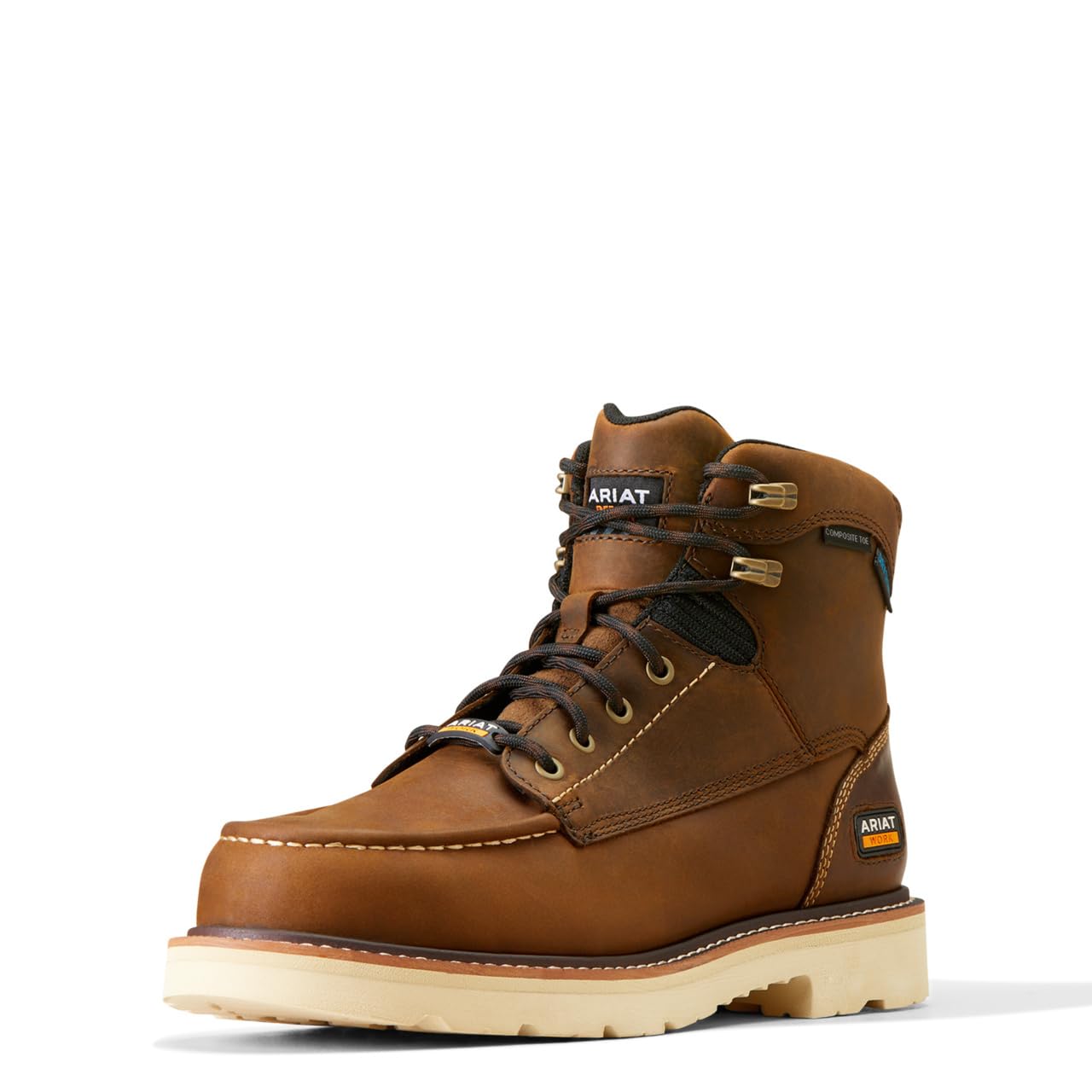
The composite-toe Ariat that pairs waterproofing with cushioning for the long shift that never seems to end.
This boot is built around two ideas: cushioning and stability over a long workday, with a composite toe instead of a steel one. A composite toe means no metal in the toe box, which keeps the boot lighter and quieter on your foot. The Rebar Lift is also listed as lightweight yet durable and versatile enough to wear anywhere, which fits the buyer who wants one boot for site and off-site days alike.
Comfort is the strongest pillar here. Owners find the Rebar Lift comfortable, and foot support draws approval too. Quality earns the most praise of any trait, with comfort close behind and appearance and light weight both called out positively. This boot is the most expensive pick in the lineup, so the question is whether that comfort and support is worth paying up for — for buyers on their feet for ten hours a day, it tends to be.
The honest catch is durability, which is the most divided topic. Some owners find it holds up better than expected and needs no break-in period, while others report the sole peeling apart or the boot falling apart within a couple of months. Fit splits as well, with some finding it great and others finding it too narrow. Treat it as a comfort-first boot for buyers who rotate pairs and inspect their soles, and check the width against your usual fit before ordering.
Value read: The premium pick here — you are paying for composite-toe comfort and foot support that hold up over the longest shifts.
The caveat: Durability and width both divide owners, so inspect the sole and check the width before you commit to it as your only pair.
Know the Specs
Steel Toe vs Composite Toe
A steel toe is a metal cap over the toes that resists impact from falling or rolling objects. A composite toe does the same protective job with a non-metal material, which is why KEEN can list its Evanston at 25.3 oz per boot while a steel model runs heavier. Composite toes also do not set off metal detectors, which matters in some industrial settings. Steel toes are the older, more common standard, and most of the boots here carry one.
Shank and Puncture Protection
A steel shank is a plate between the insole and outsole that guards the bottom of your foot against nails, scrap, and other sharp debris pushing up from below. It is separate from the toe cap and does a different job. On a demolition site or a yard full of scrap, the shank matters as much as the toe. Rubber boots like the TIDEWE build a shank in alongside the steel toe; leather boots vary, so check the listing before you assume. The KEEN Evanston uses an internal shank for stability instead of full puncture protection, which is a different role.
Waterproof Membrane vs Rubber Shell
A waterproof membrane is a layer inside a leather upper that keeps water out while letting vapor pass so your foot does not overheat. A rubber shell like the TIDEWE covers the whole foot and sheds water from every side, including standing water. The trade-off is breathability: rubber runs warmer, which is why it suits wet outdoors work rather than hot indoor work.
What the Safety Standards Mean
ASTM F2413 and ASTM 2413 21 are recognized standards for protective footwear that cover impact and compression resistance on the toe cap. ASTM F3445 covers slip resistance. A boot that lists these standards has been checked against a defined bar, which is different from a boot that simply says “steel toe.” When a listing names a standard, you can verify the protection. When it does not, the claim is softer.
Common Questions
Will a steel toe boot set off a metal detector at a job site?
How do I size an outdoor work boot if I am between two sizes?
Is a rubber boot better than a leather boot for wet ground?
What is the difference between a 6-inch and an 8-inch work boot?
Do I need puncture-resistant work boots on a construction site?
How long should I expect a work boot to last?
Can I replace the insole in these work boots?
What does ASTM F2413 mean on a work boot?
Are composite toe boots as protective as steel toe boots?
Should I break in work boots before wearing them for a full shift?
The Bottom Line
For most buyers, the best outdoor work boot is the TIDEWE Rubber Work Boots because it solves the two problems that end a shift early — it sheds water from every side and it puts steel both over the toe and under the arch. If you want a lighter steel that suits walking rather than standing, the Timberland PRO Pit Boss at 1.83 pounds is the one that removes the weight drag. And for buyers who work through cold, wet weather and want a boot that feels like a sneaker, the Wolverine I-90 Durashocks Insulated earns its place at the top of that short list.
The one honest nudge: the TIDEWE is the crowd favorite of this lineup, and it holds the highest rating here at 4.5+ stars across 700+ owners — a strong signal that the rubber-shell approach is the right first pick if your ground is wet and littered with debris.
How we choose
We do not accept paid placement. Every pick is matched to a real buyer and a real use-case; we do not hands-on test units.
Sources
Specifications: manufacturer listings and product documentation. Review insights: verified customer reviews, as of November 2026. Pricing: not shown on this page (it changes often); check the current price via the retailer link.
As an Amazon Associate, Tactical Gear Guy earns from qualifying purchases. This does not affect which products we feature.