Specs are compiled from manufacturer listings and verified buyer reviews and can change over time — please confirm the key details on the product page before buying.
If your machine is losing position mid-cut or your prints come out shifted, the belt is usually the first suspect. A polyurethane timing belt with a steel core holds its length under load, which is exactly what keeps a laser carriage or a printer gantry tracking where you told it to go. The four belts below cover the two jobs most people actually buy them for: open-ended stock for CNC and laser machines, and closed-loop belts for 3D printers and small precision gear.
This guide is built by comparing the manufacturers’ published specifications and the patterns across verified customer reviews, so you get each pick’s real strengths and trade-offs instead of marketing spin.
Get the pitch (the spacing between belt teeth) and the width to match your pulleys first, then decide if you need an open end you can cut to length. The leading polyurethane timing belts below differ on pitch, width, and cord material.
Top Picks
How To Choose The Best Polyurethane Timing Belts
Most belt failures are not material failures. They are mismatch failures — the wrong pitch on the right pulley, or a width too narrow for the load the carriage puts on it. Get those two right and a steel-cored polyurethane belt will run to its wear limit instead of failing early.
Start With Pitch, Not Length
Pitch is the distance from one tooth center to the next, measured in millimeters. A 3M belt has 3mm between teeth; a 2mm pitch belt has 2mm. The teeth have to drop into the grooves of your pulley with no slop. If the pitch is off, the belt will climb the flanges and eat itself within a few hours of running.
Length is the easy part when the belt is open-ended — you cut it to whatever your machine needs and clamp or join the ends. Closed-loop belts have to be bought at the exact length your gantry geometry requires, so measure the old one before you order.
Steel Core vs Glass Fiber
The cord inside the belt is what carries the tension. A steel core resists stretching better than a glass fiber core, which matters most on long runs and high-torque moves. That is the reason almost every belt here uses steel wire rather than glass.
Polyurethane as the outer material gives you oil resistance, abrasion resistance, and a quiet run compared with chain or gear drive. It also tolerates a wide temperature band, so a cold shop or a hot enclosure is not a problem.
Pick Width By Load
A wider belt spreads the load across more teeth in mesh at any moment. A 15mm belt is built for a heavier carriage and higher torque; a 6mm belt suits a light print head or a plotter pen. A wider belt than you need only adds a little weight and cost, but a belt narrower than the load demands will strip teeth under torque.
Side-by-Side Comparison
| Model | Best For | Pitch / Profile | Width | Cord / Material | Amazon |
|---|---|---|---|---|---|
| Bemonoc HTD3M Open Ended PU Belt★ Best Overall | CNC and laser carriages | HTD 3M | 0.59 in (15mm) | Steel core / Polyurethane | Amazon |
| Gates T329 Premium Automotive Timing Belt | Engine timing replacement | — | — | Polyurethane (PU) | Amazon |
| Hilitand GT2 Open Synchronous Belt 10M | 3D printer replacement | GT2 | 0.23 in (6mm) | Steel core / PU | Amazon |
| Walfront 2mm Pitch PU Steel Core Belt | Custom builds and repairs | 2mm | 6mm | Steel core / PU | Amazon |
Detailed Reviews
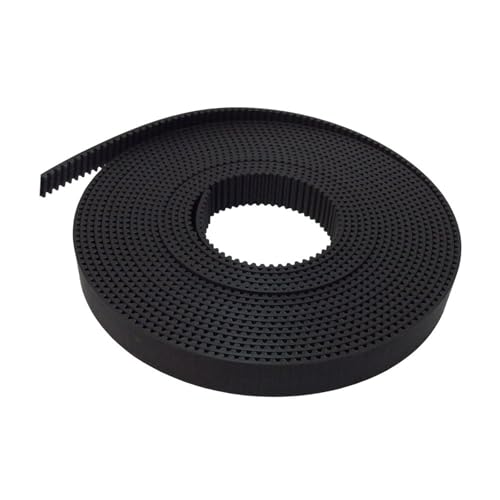
1. Bemonoc HTD3M Open Ended PU Timing Belt, 15mm Width
Our pick — 4.5+★ from 100+ verified ratings; the strongest balance of quality and price.
A 15mm-wide HTD 3M belt that runs long enough to re-belt a whole laser table in one pass.
Start with the roll length, because it is the number that decides whether this belt can finish your job. You get 196.85 inches — about five meters — of open-ended HTD 3M stock. That is six times the length of the Hilitand GT2 roll below, at 32.81 inches, so a single purchase here can re-belt a large CNC table or a laser gantry and still leave you spare. One roll covers a full re-belt of a large table with spare left over.
Width is the second number that matters. At 0.59 inches (15mm), this belt is 2.6 times the width of the 6mm GT2 roll, and that extra face carries far more torque before the teeth let go. The construction is polyurethane over a steel core — the steel wire is what stops the belt from creeping longer under tension, so your X and Y stay calibrated through a long cutting session. It is rated for a temperature range of -30°C to 85°C, which covers an unheated garage shop just as well as a hot enclosure.
What wins people over is the material quality itself, and the compatibility reports back that up — buyers put it straight onto engraving machines and it tracks true. The honest trade-off is that this is an open-ended roll with no join kit or instructions in the box, so you need to know how to terminate and tension it yourself. It is also a heavy, stiff belt at 6.24 ounces on the spool, which is normal for a 15mm steel-core section but worth knowing before you try to route it around tight idler turns. 4.5+ stars across 100+ owners says most people get it running without drama.
Where It Earns Its Place
- 196.85 inches of stock — enough for a large table with leftover to spare
- 15mm width handles heavy carriage loads and high torque
- Steel core resists stretch so position stays calibrated
- -30°C to 85°C range suits cold shops and hot enclosures
What To Plan Around
- Open end means you join and tension it yourself — no kit included
- Stiff 15mm section does not like tight idler routing
Reach for this if: you are re-belting a CNC router, laser engraver, or packaging machine and want one roll that covers the whole job.
Look elsewhere if: you need a pre-joined loop for a small printer gantry — this roll expects you to terminate it.
2. Gates T329 Premium Automotive Timing Belt
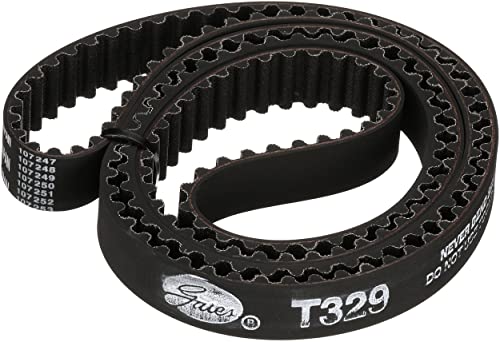
The only belt here built for an engine bay instead of a gantry — a direct OE-style replacement.
This one is a different animal from the hobby rolls above. It is a Gates T329 automotive timing belt made of polyurethane, sized to replace a specific factory part rather than to be cut to length. The part number to check against your engine is the whole story: it cross-references TB329, 12581899, 14400R9PA01, 14400RCAA01, 95329, 95329FN, B329, 40329, CD329, 250329, and HS620YU20. If your vehicle’s book lists one of those, this is the belt that goes back in.
Buyers are consistently happy with the quality — several hand out five stars without qualification — and value comes up just as often as a reason they chose it over a dealer part. Gates has the belt-building history to make an OE-grade claim stick, and that is what you are paying the premium tier for: a belt specified for street and track engine timing rather than a general-purpose drive.
Here is the catch, and it is a real one. This belt is not interchangeable with the CNC and 3D printer rolls in this list, and it cannot be shortened or adapted — it goes on the engine it was designed for or nowhere. There are also no usable length or width figures published in the listing data, so you are verifying fit by part number, not by tape measure. That is standard practice for automotive timing belts, but it means you should confirm the cross-reference against your service manual before ordering.
Why it justifies the premium tier: a genuine OE-grade replacement with a full cross-reference list, from a brand that builds belts for engine timing duty. For a job where a snapped belt bends valves, buying the specified part is the cheaper decision.
The compatibility catch: fit is confirmed only by matching the part number, so a wrong-engine order is the failure mode here, not a quality issue.
Who it beats: any generic belt for a vehicle timing job — the cross-reference list takes the guesswork out of matching your engine.
Who it does not fit: anyone shopping for cut-to-length CNC or printer belt stock.
3. Hilitand GT2 Open Synchronous Belt, 6mm x 10M, White PU
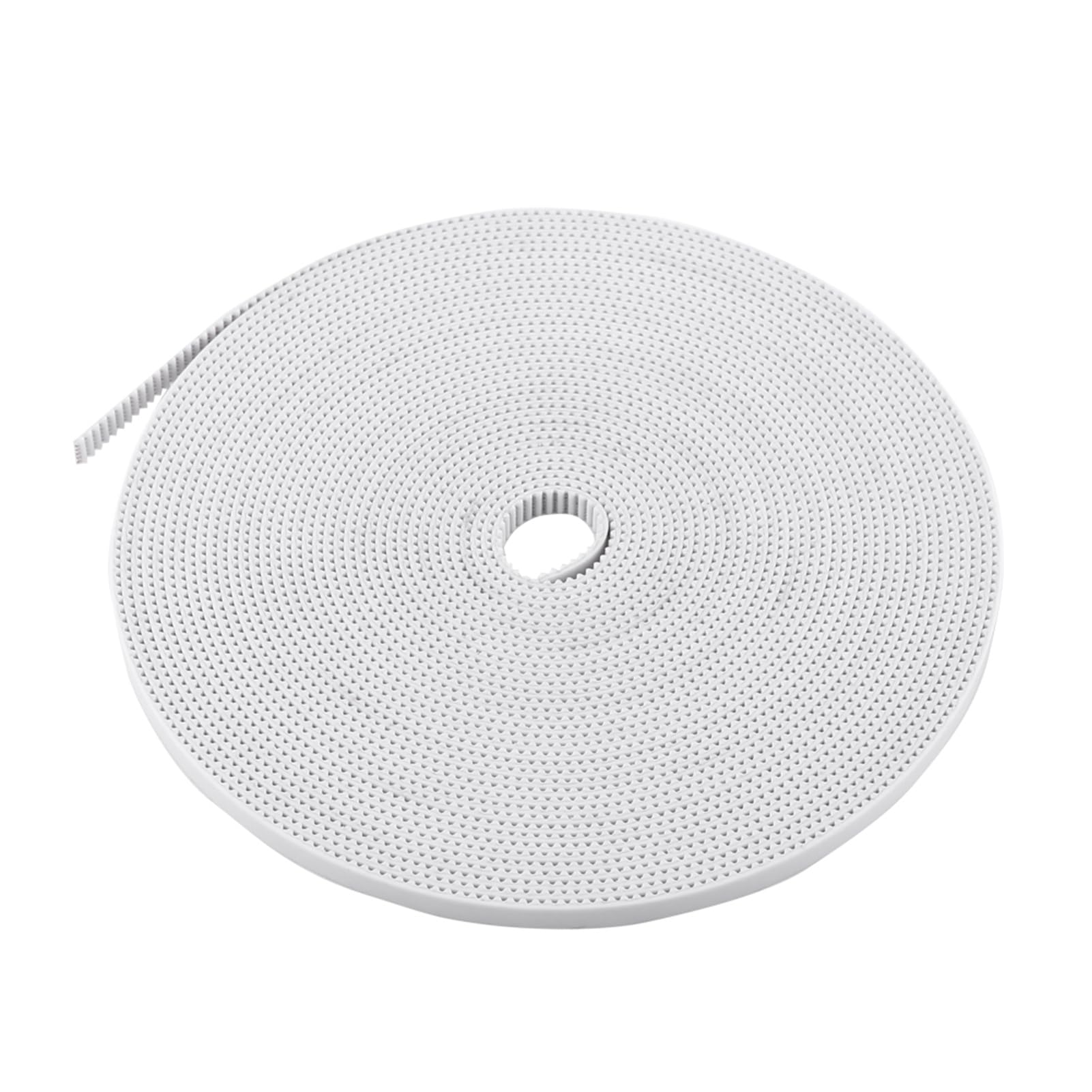
Ten meters of GT2 stock for a printer rebuild — with a steel core where most GT2 belts run glass fiber.
GT2 is the tooth profile most desktop 3D printers are built around, and this is a ten-meter roll of it in white polyurethane at 6mm wide. The steel core is the detail that separates it from the cheaper GT2 belts on the shelf. Glass fiber is the usual cord, and steel wire takes more pull before it starts to creep — which is why buyers talk about the belt holding its length instead of sagging after a few weeks of printing.
The production tolerances are described as small, and in practice that shows up as smooth travel with no visible stretch or wear after long print runs. For a plotter or a small precision machine, that accuracy is the point. Width sits at 0.23 inches, matching the 6mm print head load these belts are sized for.
Reliability and general quality draw praise, but the fit is where it falls short — a number of buyers report the belt slipping and failing to line up cleanly with the slots and knobs on their particular machine. Durability is genuinely mixed, with some belts running strong thanks to that steel core while others give out early. If your printer was designed for a different tooth profile or a tensioner that expects a specific belt height, this roll may fight you. Match the profile and belt height to your machine’s spec sheet first, and treat the price question the same way — some buyers feel the value is there, others do not.
The real draw: steel core in a GT2 profile, ten meters of it, and tolerances tight enough that print quality does not suffer from belt slop.
Where it gets fussy: alignment and durability are the two things buyers disagree on, so confirm the belt spec against your printer’s requirements before you commit.
Suits you if: your printer is specced for GT2 and you want a steel-core roll long enough for both axes plus spares.
Caveat to weigh: if your machine has a picky tensioner or a non-standard profile, the fit reports say this belt can slip.
4. Walfront Timing Belt, 6mm x 10M, Steel Core PU, 2mm Pitch

White PU, steel cord, ten meters of 2mm pitch stock for building or repairing a small machine.
If you are assembling a printer or plotter from scratch rather than replacing a factory belt, this roll is aimed at you. It runs 10 meters of white polyurethane at 6mm wide on a 2mm pitch — the molded teeth mesh with matching 2mm pulleys to cut slip and keep noise low. The steel core wires do the tension work, giving it more tensile support than a common glass fiber belt while the PU surface shrugs off abrasion.
The open end is the feature that makes it useful for custom setups. Cut it to the length your own geometry needs, then route it through your idlers however your design demands. That flexibility is why this style of belt shows up in small machinery builds — you are not locked into a factory length.
One thing to be clear-eyed about: the listing carries no customer review data, so there is no owner feedback to lean on here the way there is with the GT2 and HTD 3M belts above. What you have is the specification — 2mm pitch, 6mm width, 10M length, steel core, PU — and that is a straightforward, well-understood combination for small precision equipment. Check the pitch against your pulleys before ordering, because 2mm is a finer tooth than the GT2 profile and the two do not interchange. The item weight on the spool runs heavier than the GT2 roll, consistent with a longer length in the same width.
What the spec buys you: 10 meters of steel-cored 2mm pitch PU belt at a budget price, ready to cut for a custom build or a repair you already know the length of.
What you give up: no owner reviews to cross-check, so your pulley pitch measurement is the only quality assurance you get.
Pick it when: you are building or repairing a small machine to your own dimensions and need cut-to-length 2mm pitch stock.
Verify first: 2mm pitch is not GT2 — confirm your pulleys are 2mm before you order.
Know the Specs
Pitch: The Number That Decides Fit
Pitch is the center-to-center distance between teeth, usually given in millimeters. A 3M belt has 3mm spacing, a 2mm belt has 2mm. This is the one spec that will ruin your day if it is wrong: the belt teeth have to seat in the pulley grooves with zero slop. A 2mm belt and a GT2 belt look similar but do not interchange. Measure your pulley or read your machine’s spec before you order anything.
Width: How Much Load You Can Pull
A wider belt puts more teeth in mesh at once and spreads the torque across more material. A 15mm belt is built for a heavy carriage on a CNC or laser table; a 6mm belt suits a print head or a pen plotter. Going wider than you need only adds a little weight and cost, but a belt too narrow for the load will strip teeth mid-job.
Steel Core vs Glass Fiber Cord
The cord inside the belt takes the tension, and it decides how much the belt stretches over time. Steel wire holds its length better than glass fiber, which is why the belts here that emphasize stability all use a steel core. Minimal stretch means your machine stays in calibration longer instead of drifting a fraction of a millimeter per pass.
Open End vs Closed Loop
An open-ended belt comes as a straight roll you cut to length and join — right for custom builds, repairs, and any machine where you choose the geometry. A closed-loop belt comes pre-joined at a factory length, which suits a printer gantry or an engine where the length is fixed. Open end lets you cut any length and join it yourself; closed loop arrives pre-joined at a fixed length, so you order by exact measurement.
Common Questions
Will a 2mm pitch belt work on GT2 pulleys?
How do I join an open-ended polyurethane belt?
Is a steel core really better than glass fiber?
What width do I need for a CNC or laser carriage?
Can I use an automotive timing belt on a CNC machine?
How do I confirm the Gates T329 fits my engine?
Will polyurethane hold up in a cold workshop?
How much belt length should I buy for one machine?
Why does my new belt slip on the pulley?
Is polyurethane better than neoprene for a timing belt?
The Bottom Line
One roll can re-belt a whole CNC or laser machine, and that makes the Bemonoc HTD 3M Open Ended PU Belt the polyurethane timing belts pick for most buyers. It measures 196.85 inches long and 15mm wide, with a steel core (steel cords inside the belt that stop it stretching). Customers note it drops straight onto engraving machines and tracks true. If your machine is an engine rather than a gantry, the Gates T329 is the OE-grade part (original-equipment grade, built to the maker’s factory spec), confirmed by its long cross-reference list. For a desktop printer rebuild, the Hilitand GT2 roll gives you ten meters of steel-cored stock in the profile most printers run.
The one habit that pays off across all four: measure your pulley pitch and your machine load before you order, not after. The belt is the cheapest part in the drive train and the easiest to order wrong — match pitch and width to your pulleys and load, and the rest follows.
How we choose
We do not accept paid placement. Every pick is matched to a real buyer and a real use-case; we do not hands-on test units.
Sources
Specifications: manufacturer listings and product documentation. Review insights: verified customer reviews, as of November 2026. Pricing: not shown on this page (it changes often); check the current price via the retailer link.
As an Amazon Associate, Tactical Gear Guy earns from qualifying purchases. This does not affect which products we feature.