Specs are compiled from manufacturer listings and verified buyer reviews and can change over time — please confirm the key details on the product page before buying.
You want a picture that stays sharp with the room lights on, and a 5000-lumen number on the box does not promise that on its own. So this list matches loosely around the 5000-lumen mark: it also includes the nearest same-type brightness, meaning brighter units built for the same job, not just models printing that exact figure. Every pick here lands within a few hundred lumens of 5000, so the printed figure is a fair guide to real output.
This guide is built by comparing the manufacturers’ published specifications and the patterns across verified customer reviews, so you get each pick’s real strengths and trade-offs instead of marketing spin.
Below are eight picks ranked by light source, lens shift and zoom flexibility, and measured brightness in a lit room.
Top Picks
How To Choose The Best Projector with 5000 Lumens
The hardest part of buying at this brightness level is separating a real light engine from a big sticker number. A projector reaching roughly 5000 lumens should survive a moderately lit room without turning washed out. Here is what actually separates the good ones.
Laser versus lamp — the source does the heavy lifting
A laser light source (a solid-state engine with no bulb to swap) holds its brightness far longer than a traditional lamp. That is why so many serious 5000-lumen projectors are laser models. It also means you are not budgeting for replacement lamps down the road.
Why lens shift beats digital correction
Lens shift physically moves the image so it lands square on your wall. Digital keystone, by contrast, crops and re-draws pixels to fake a rectangle. On a 4K projector, physical adjustment keeps you at full resolution, so text and fine detail stay crisp.
Native resolution and the content you actually watch
Native 4K gives you 3840 x 2160 pixels, while a WXGA model sits at 1280 x 800. Neither is “wrong” — a business room showing slides needs less than a movie room showing Dolby Vision. Match the resolution to your content and screen size.
Contrast and color gamut in a bright room
Brightness fights ambient light, but contrast keeps dark scenes from turning gray. Look at the contrast ratio alongside brightness. Color gamut, often listed as a percentage of BT.2020, tells you how much of the color range the projector can actually reproduce.
Side-by-Side Comparison
| Model | Best For | Brightness | Native Resolution | Light Source | Amazon |
|---|---|---|---|---|---|
| JMGO N3 Ultimate★ Best Overall | Best overall home theater | 5800 ISO Lumens | 3840 x 2160 | Triple Laser | Amazon |
| VISSPL 7000 Daylight BrightDaylight Champion | Outdoor and daylight viewing | 6500 ANSI Lumens | 1980 x 1080 | LCD | Amazon |
| ViewSonic LS740WInstaller’s Fix | Boardroom presentations | 5,000 ANSI Lumens | 1280 x 800 | Laser | Amazon |
| ViewSonic LS740HD | Golf simulators and venues | 5,500 ANSI Lumens | 1920 x 1080 | Laser | Amazon |
| XGIMI HORIZON 20 Max | Cinema plus gaming | 5700 ISO Lumens | 3840 x 2160 | Triple Laser | Amazon |
| Hisense C3 Ultra Max | Big-screen 4K with smart apps | 5,000 ANSI Lumens | 3840 x 2160 | Triple Laser | Amazon |
| LG GRU510N | Large venue 4K | 5000 ANSI Lumen | 3840 x 2160 | Laser | Amazon |
Detailed Reviews
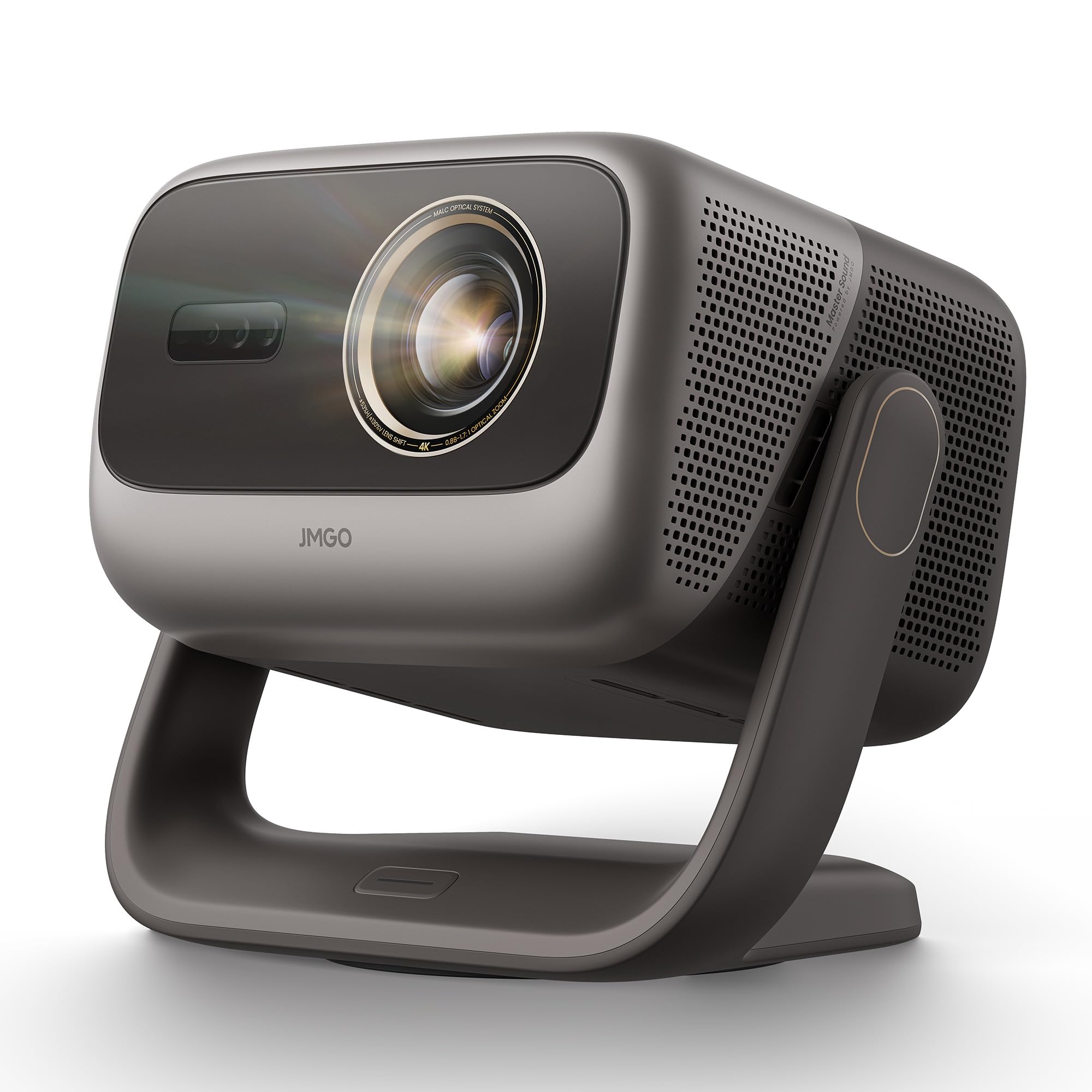
1. JMGO N3 Ultimate 4K Triple Laser Projector, 5800 ISO Lumens
Our pick — 4.0+★ from 90+ verified ratings; the strongest balance of quality and price.
The triple-laser home cinema that moves its own image instead of cropping it.
This is the pick for the buyer building a real movie room who hates fiddling with placement. A three-laser light engine throws 5800 ISO Lumens, which is enough to keep the picture readable in a room with the lamps on. What makes it the top pick here is the optics package: Four-way Lens Shift to H ±53% and V ±130% plus a 0.88-1.7:1 Optical Zoom and a 360° Pan / 150° Tilt motorized AI Gimbal. In plain words, you move the image physically — no digital cropping — so a tricky corner layout still gets a full 4K picture. Compare that with the ViewSonic LS740W at 1280 x 800, and the resolution gap is enormous: 3840 x 2160 pixels versus 1280 x 800 pixels.
The picture is what wins people over — deep, detailed blacks thanks to a 3,000,000:1 dynamic contrast ratio with a 20,000:1 AI Dynamic Black Level, and a wide 110% BT.2020 color gamut for saturated color. Dolby Vision content looks genuinely cinematic, and the 300-inch maximum screen turns a wall into a theater. Built-in 2×12.5W dual speakers with a 35Hz bass dive mean you can skip a soundbar on day one. Gamers get HDMI VRR, up to 240Hz, and 1ms input lag, so shooters stay smooth. Google TV with native Netflix and 4GB RAM / 64GB ROM keeps menus quick.
Set your brightness expectations honestly here. The spec sheet lists 5800 ISO Lumens (a brightness standard set by the ISO body), yet plenty of buyer feedback notes it is not as bright as that headline suggests in a fully sunlit room — a smart ambient light sensor helps by adjusting output to the room. An optical engine this powerful also carries a premium-tier price, and the fan is audible in quiet scenes. If your room gets heavy daylight, pair it with blinds or plan a dedicated media space.
What Earns It First Place
- Genuine Four-way Lens Shift (H ±53%, V ±130%) keeps full 4K with no cropping
- 5800 ISO Lumens from a triple-laser engine for lit-room viewing
- 240Hz, VRR and 1ms input lag make it a real gaming projector
- Google TV with native Netflix, 4GB RAM and 64GB ROM
Where It Costs You
- Real-world brightness in strong daylight trails the printed figure
- Premium-tier pricing puts it well above entry models
- Fan noise is noticeable during quiet dialogue scenes
Reach for this if: you want a no-compromise 4K laser cinema with physical lens shift for a hard-to-place room.
Think twice if: your wall faces hours of direct sun — the ambient light still matters at this brightness.
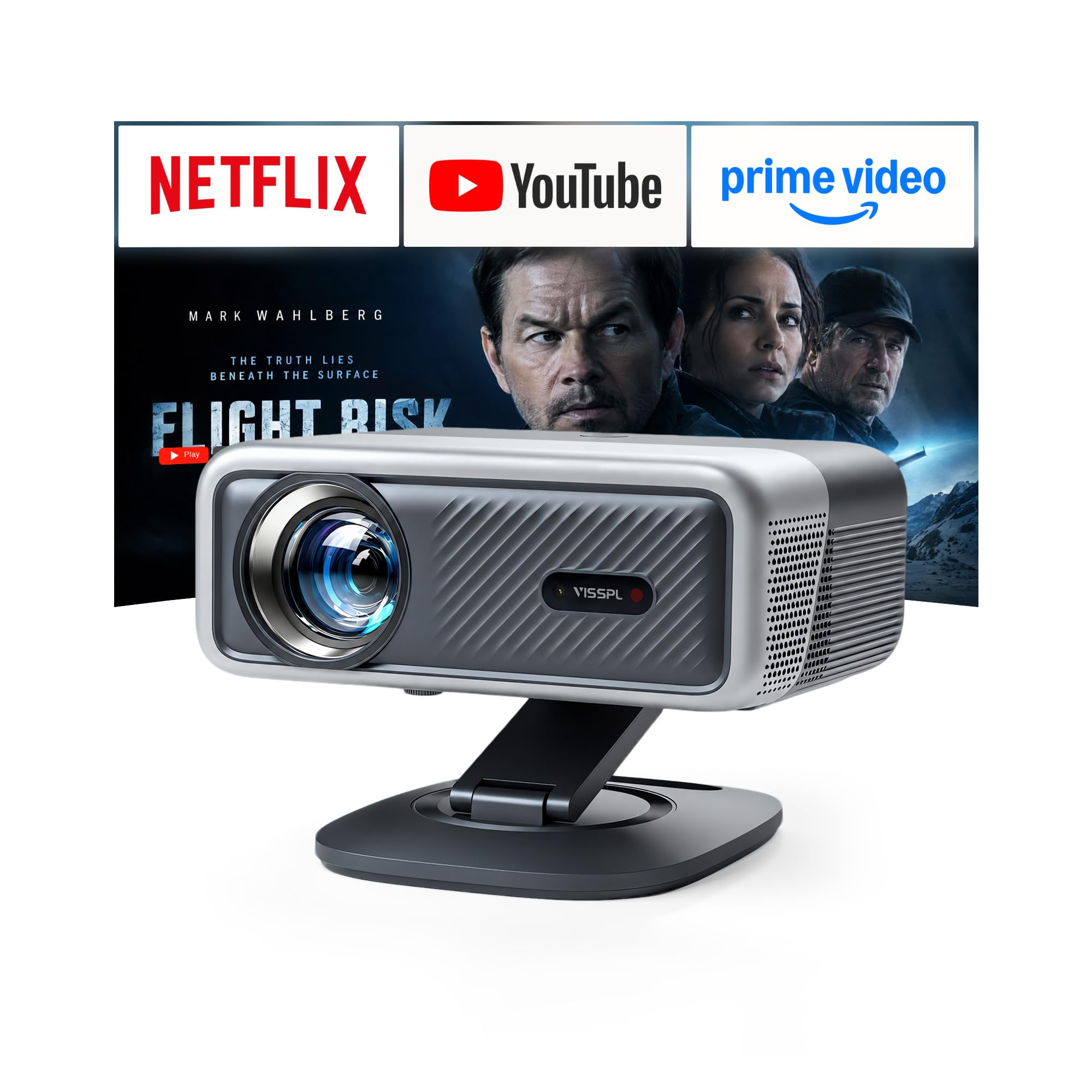
2. VISSPL 7000 Daylight Bright 4K Outdoor Projector
For backyard movie nights where the sky is still glowing.
If you plan to project into daylight — a poolside party, a camping screen, a patio before sunset — the raw output here is the headline. It carries a 7000 Daylight Bright figure with 6500 ANSI Lumens (ANSI being a measured brightness standard), the highest printed number in this lineup. That is the brute-force approach to fighting ambient light rather than the precision-optics approach of the JMGO. It runs a Linux OS that boots with no ads and no bloatware, and keeps the interface snappy over time. Native 1080P plus 4K HDR support and a 99.8% wide color gamut round out the picture.
The audio is genuinely unusual at this level: an 80W Dolby Audio system that people say makes a separate soundbar unnecessary. The removable stand articulates 360° rotation and 180° tilt, so ceiling, wall, and floor projection are all on the table. WiFi 6 (up to 9.6 Gbps) and Bluetooth 5.2 handle 4K streaming, and AirPlay, Miracast, and DLNA cover mirroring from phones and laptops. Officially licensed Prime Video and YouTube are built in — no dongles, no side-loaded apps crashing mid-scene.
Autofocus locks in 0.2 seconds using TOF laser tech, and auto keystone keeps the rectangle square from an angle. The size-trade-off is worth naming plainly: this is an LCD engine at 1080p-class resolution, so it does not have the 4K sharpness of the triple-laser JMGO above. It is also a compact, portable body rather than a permanent install. For a portable outdoor entertainer, though, the light output and sound are hard to argue with.
Brightness where it counts: 6500 ANSI Lumens means the picture survives a lit patio, which is the whole reason to own this over a dimmer indoor unit.
Sound that sells the system: the 80W Dolby Audio output lets you leave the soundbar at home for outdoor nights.
Best for: outdoor gatherings and daylight viewing where light output and built-in audio matter most.
Look elsewhere if: you need true 4K detail for a dedicated dark theater — this is a 1080p-class LCD.
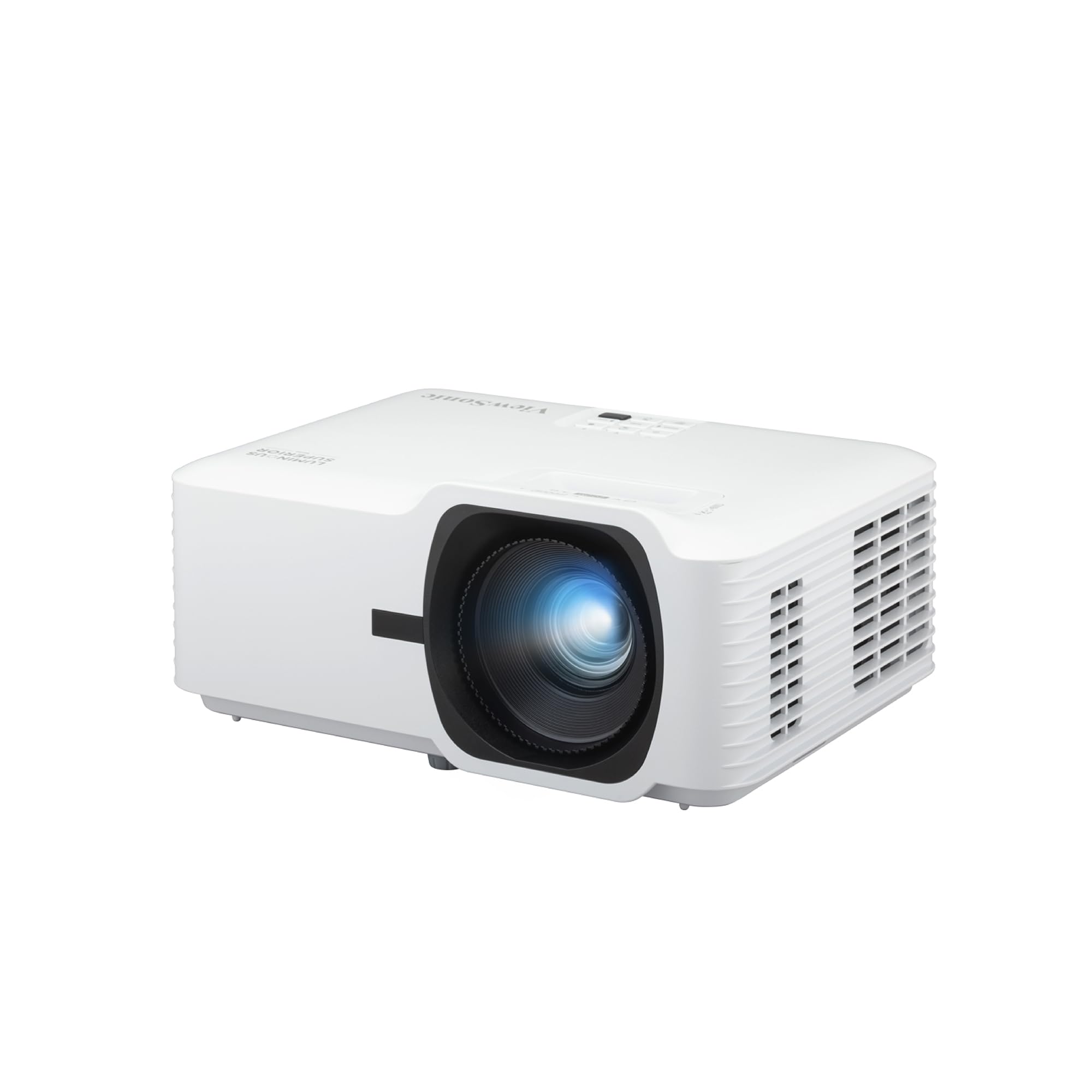
3. ViewSonic LS740W WXGA Laser Projector, 5500 Lumens, 1280×800
The boardroom workhorse built to stay mounted and stay bright.
This one suits the room that runs slides every day, not movie nights. It gives you WXGA 1280 x 800 resolution (a widescreen format common on business projectors) and 5,000 ANSI lumens (a measured brightness standard), with a 1.18-1.54 throw ratio — a tight throw, meaning it fills a screen from a short distance, handy when the ceiling mount sits close to the wall. Note the resolution gap versus the JMGO: 1280 x 800 pixels here against 3840 x 2160 pixels there — 3x fewer pixels on each axis, so text and charts look fine while film detail does not.
The light engine is third-generation laser phosphor, rated up to 20,000 hours in Normal mode and up to 30,000 hours in Eco mode without a lamp replacement. Images stretch from 30 to 300 inches with a 1.3x optical zoom, so training rooms and auditoriums scale up without a re-mount. Installation flexibility is the real draw: H/V keystone, 4-corner adjustment, portrait mode, and 360-degree projection handle odd mounting positions. Dual HDMI 1.4 inputs, USB Type A, RS232 control, audio out, and a built-in 15W speaker keep the connections business-grade.
Where it settles below the flagship: it is a WXGA panel, so fine text and 4K content are not its job. There is no smart TV layer built in, so you bring your own source. For a permanent classroom or meeting-room install that runs all day, the 20,000-hour laser and 360-degree mounting are what buyers keep coming back to.
Built To Stay Installed
- 1.18-1.54 throw ratio fills a big screen from close range
- Up to 30,000 hours in Eco mode with no lamp swaps
- 360-degree projection, portrait mode, and 4-corner adjustment
- RS232 control and dual HDMI for professional setups
Know Before You Mount
- 1280 x 800 panel will not satisfy 4K movie nights
- No built-in smart TV apps — bring a source device
Go with this if: you need a reliable, bright laser unit that hangs from a ceiling and shows slides all day.
Pass on it if: your priority is 4K film detail rather than presentation legibility.
4. ViewSonic LS740HD 1080P Laser Projector
The one golfers keep talking about — a full-HD laser built for sim bays.
Boardrooms, classrooms, and golf simulators get a purpose-built tool here. It pairs Full HD 1920 x 1080 resolution with 5,500 ANSI lumens (a measured brightness standard) and a 1.13-1.47 throw ratio, so it fills a screen from a short distance. A dedicated Golf Mode tunes greens and blues for virtual courses and works with major golf simulators — a specific feature few projectors bother with, and the reason sim owners keep buying it. The laser phosphor light source (a laser that lights a phosphor wheel instead of a bulb) is rated up to 30,000 hours in Dynamic Eco mode, so a sim bay running nightly skips the lamp budget.
Images span 30 to 300 inches with a 1.3x optical zoom, giving meeting rooms and venues flexible sizing. Placement is forgiving too: H/V keystone, 4-corner adjustment, portrait mode, and 360-degree projection let a ceiling unit settle into awkward rooms. Connectivity runs dual HDMI 1.4, USB Type A, RS232 control, audio out, and a built-in 15W speaker. What earns it loyalty is the build quality: a sealed laser chassis rated for 30,000 hours of nightly sim use.
The catch worth knowing: color feedback is genuinely mixed, with some seeing good color and others noting random orange flashes and weaker contrast. Reliability feedback is also split, and a rare unit arrives unusable from the start. That is a small slice of a well-loved model, but buy from a source with easy returns just in case. A good unit runs crisp, bright, and quiet — exactly what a simulator bay needs.
Sharp and bright all day: 5,500 ANSI lumens keeps the image punchy in a lit simulator bay, and 1080p keeps greens and fairways readable.
The honest caveat: color is the most debated part of this projector — treat the return window as part of the purchase.
Made for sim owners: if you are building a golf simulator or a bright presentation room, the Golf Mode and 5,500 lumens fit the job.
Second-guess it if: flawless color consistency is your top priority — feedback on color here is split.
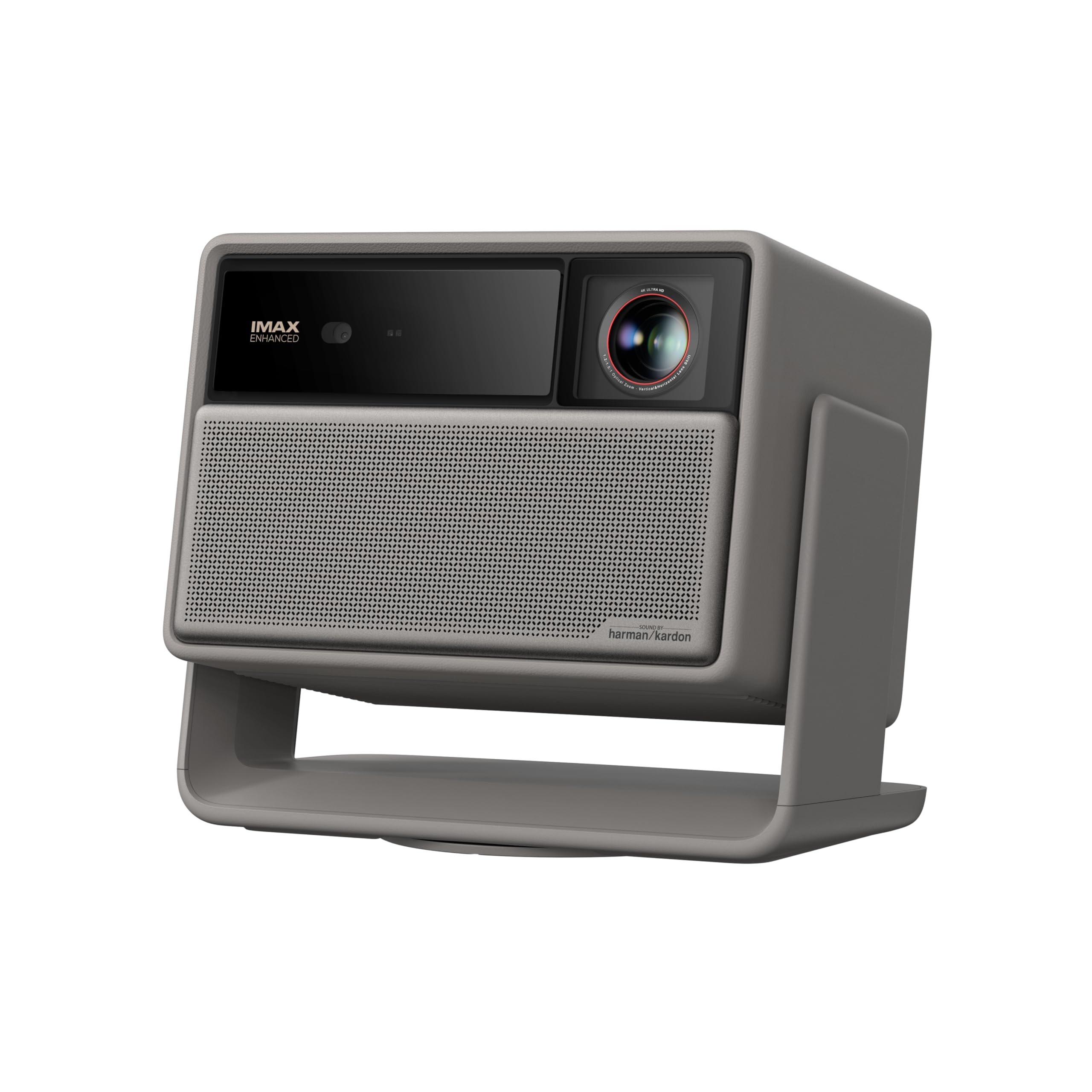
5. XGIMI HORIZON 20 Max 4K Projector
A triple-laser 4K that treats a 300-inch screen like a gaming monitor.
The X-Master RGB triple laser engine pushes 5700 ISO lumens with 20,000:1 contrast and 110% BT.2020 color coverage, so the picture is bright and richly colored. Where it separates from the JMGO above is its gaming focus running hand in hand with the cinema picture: 1ms input lag and up to 240Hz motion on a 300-inch screen, with HDR calibrated for games. Flexible lens shift and optical zoom let you place it without losing clarity, which matters if the sofa and screen are not perfectly squared.
Google TV and Google Home are baked in, with licensed Netflix access, so streaming starts without extra boxes or remotes. A 2-year warranty doubles the standard coverage — reassurance on a premium-tier purchase. What wins people over most is the sheer home-theater performance: the picture reads as crisp and the colors as deep, with contrast that holds dark scenes. Sound is good enough that the fan is often quieter than the built-in speakers.
The honest trade-offs: reliability feedback is split, with some units reported to malfunction and power off unexpectedly, so keep the return window handy. Value is also debated — some find it worth it, others feel the premium price is steep. Setup, though, is widely described as straightforward. If you want 240Hz gaming and 4K cinema on one 300-inch screen, this is built for exactly that.
Why Gamers Notice It
- 1ms input lag and 240Hz motion on screens up to 300 inches
- 5700 ISO lumens triple laser with 20,000:1 contrast
- Google TV with licensed Netflix, plus Google Home voice
- 2-year warranty for doubled coverage
Keep In Mind
- Reliability feedback is mixed — a few report power-off faults
- Value is a common point of debate at its premium tier
Great match for: the household that wants a giant 4K screen for both shooters and movie nights.
Pause if: you want rock-solid reliability above all — feedback on long-term stability is divided.
6. Hisense C3 Ultra Max Triple Laser Projector
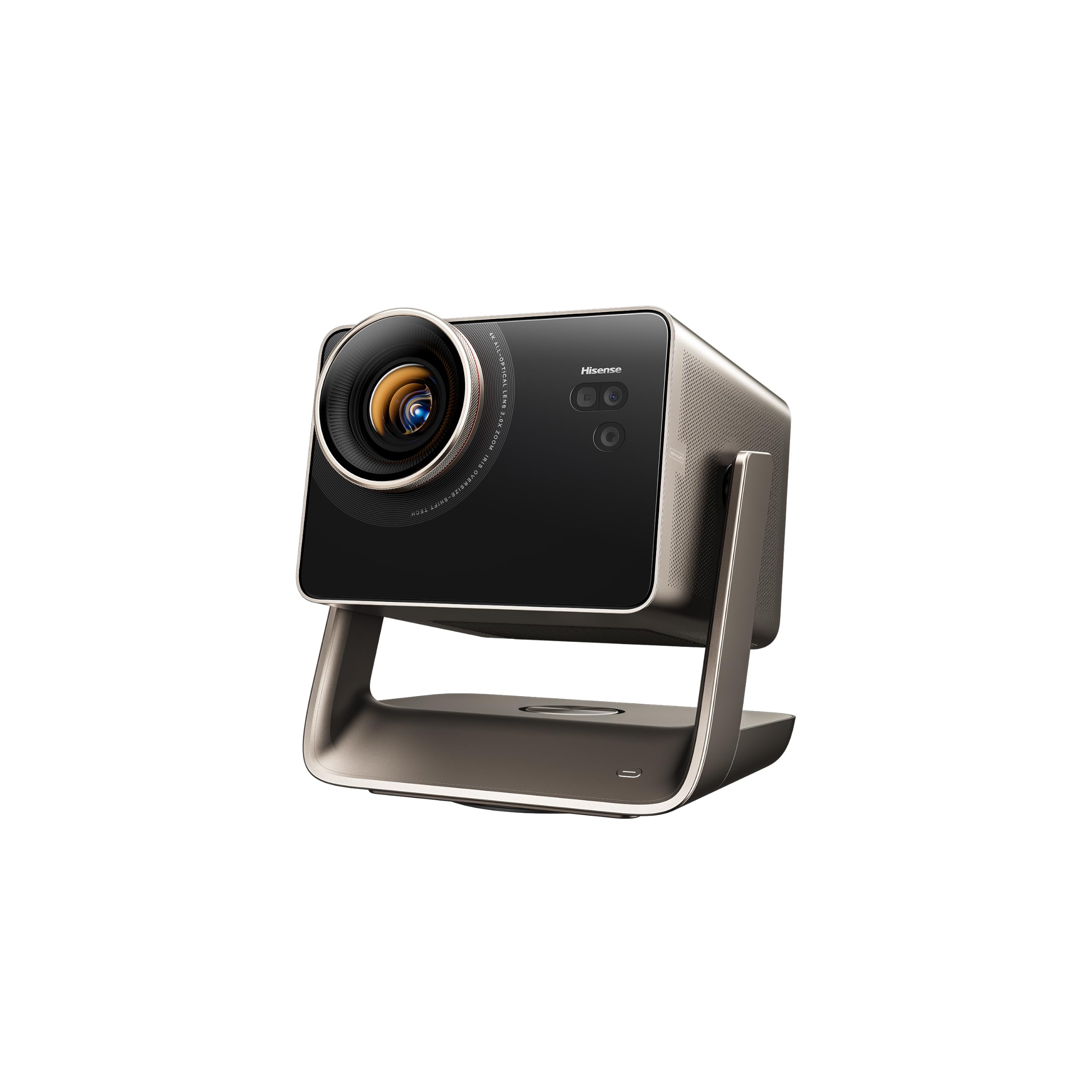
The living-room smart projector that leans hard into convenience.
Here is a native 4K UHD projector that hits the exact 5,000-lumen mark you came looking for, matching the brightness in the keyword without guesswork. The Hisense LPU 3.0 RGB triple laser engine adds a 5,000:1 contrast ratio with an Iris Lens and a 118% BT.2020 color gamut for vivid color and deep blacks. Auto Magic AI Adjusting 3.0 handles wall-color adaptation, automatic keystone, and image optimization, so it adapts to your space with minimal manual fuss. Its gimbal design lets you point it toward a screen, the ceiling, or an outdoor setup.
Dolby Vision and IMAX Enhanced cover the big-screen HDR side up to 300 inches, while Devialet-enhanced audio adds the low end without extra speakers. Gamers get 1ms input lag, FreeSync Premium, and VRR from 48Hz to 240Hz at 1080p. The smart layer is broad: VIDAA OS reaches 1,200+ streaming apps including Netflix, Prime Video, YouTube, and Disney+, with HDMI 2.1, eARC, WiFi 7, and Bluetooth 5.4 for connectivity. Performance is the thing that most impresses owners — it is described as exceeding expectations — with sharp picture that holds up in a lit room.
Weigh two things before you buy. It is the priciest cinematic option here, so value is a fair question if you will not use the gaming and smart features. Brightness works for most rooms, but true daylight still calls for some light control. In return you get among the most feature-complete all-in-one projectors in this group, from the 2.0x optical zoom (a zoom that resizes the image without moving the projector) and lens shift (which moves the picture without moving the unit) to the cable-light HDMI 2.1 path (a high-bandwidth video input).
All-in-one convenience: 5,000 ANSI lumens, native 4K, 240Hz gaming, WiFi 7, and Devialet audio in a single unit.
Budget reality: this is the top of the price range, so make the gaming and smart apps earn the premium.
Pick it for: a do-everything 4K laser you set up once and use for movies, games, and streaming without add-ons.
Reconsider if: you mostly watch in a dark room and would not use the gaming or smart-app features — the premium goes partly there.
7. LG GRU510N 4K UHD CineBeam Laser Projector

A 300-inch 4K laser that leans on physical edge correction.
A genuinely enormous 4K image is the goal here — a media room, a venue, a very large basement wall. This LG CineBeam covers up to 300 inches at 4K UHD (3840 x 2160) resolution, with up to 5000 ANSI Lumens (a measured brightness standard) from a laser rated 20,000 hours. The standout precision feature is Advanced Edge Adjustment with 12-point warping, which lets you correct the image’s geometry pixel-by-pixel on uneven or curved surfaces — a step beyond simple corner adjustment. Lens Shift at Horiz ± 24% and Vert ± 60% (which slides the picture without moving the unit) adds placement flexibility.
Connectivity includes Bluetooth sound out and wireless streaming, so you can push audio to a speaker system or mirror content from a phone, tablet, laptop, or console. The laser light source keeps brightness steady for its 20,000-hour life. For a large, bright, permanent 4K install where edge geometry matters — think a curved wall or a room with awkward corners — that 12-point warping is the reason to choose it.
The honest note: this is the priciest unit in the group and the older of the CineBeam family here, so compare its feature set against newer triple-laser rivals before committing. It is a large, permanent-install projector rather than a portable pick. If a vaulted room and a 300-inch screen are your reality, the 12-point edge warping earns its place — just confirm throw distance and lens shift cover your layout before you buy.
The Case For It
- 300-inch 4K UHD image with 5000 ANSI Lumens laser light
- 12-point Advanced Edge Adjustment for uneven surfaces
- Lens Shift Horiz ± 24%, Vert ± 60% for flexible mounting
- Bluetooth sound out and wireless streaming built in
The Caveats
- Older feature set than newer triple-laser rivals
- A permanent-install body, not a grab-and-go unit
Best fit: a large, permanent 4K installation where 300 inches and 12-point edge warping solve real room problems.
Hold off if: you want the newest optics and feature set — newer triple-laser picks in this group lead there.
Know the Specs
ANSI Lumens vs ISO Lumens
Both measure brightness, but on different standards, so the numbers are not always directly comparable across brands. ANSI lumens are a broadly used measured standard, while ISO lumens follow an international method some makers prefer. That is why a 5000-lumen ANSI unit and a 5800-lumen ISO unit can look close in a real room. Focus on how the picture holds up in a lit space, not just the printed number.
Lens Shift and Optical Zoom
Lens shift physically moves the projected image up, down, or sideways, and optical zoom resizes it — both without cropping pixels. Digital keystone, by contrast, fakes a rectangle by chopping and re-drawing the image, which costs you resolution. For a 4K projector especially, look for real lens shift and optical zoom so you keep every pixel.
Contrast Ratio and Color Gamut
Contrast ratio describes the gap between the brightest white and the deepest black, so a higher figure keeps dark scenes from turning muddy gray. Color gamut, often listed as a percentage of BT.2020, tells you how much of the color range the projector reproduces. Together they decide whether the picture looks rich or washed out, independent of raw brightness.
Throw Ratio and Screen Size
Throw ratio is the distance your projector sits from the wall compared with the image width it produces. A lower ratio means a bigger image from closer up. Check the maximum screen size too — some models reach 300 inches, while others top out around 150. Match both to your room so the picture fits without distortion.
Common Questions
Is 5000 lumens bright enough for a room with windows?
Are ANSI lumens and ISO lumens the same measurement?
Can I leave a laser projector on all day?
Do I need lens shift if I already have keystone correction?
Can a 5000-lumen projector work for golf simulators?
What is the difference between 1080p and 4K on a projector?
How far should a projector sit from the wall for a big screen?
Can I stream Netflix directly from these projectors?
Do I need a soundbar with a bright laser projector?
How long does a laser light source last compared with a lamp?
The Bottom Line
For the strongest overall 4K laser at this brightness level, the JMGO N3 Ultimate earns the top spot — real Four-way Lens Shift (which moves the picture without moving the unit), 5800 ISO Lumens (a brightness standard set by the ISO body), 240Hz gaming (240 frames per second for smoother motion), and Google TV in one package, and it stays the most rounded pick in the lineup. For an outdoor or daylight setup where raw output and built-in audio rule, reach for the VISSPL 7000 Daylight Bright at 6500 ANSI Lumens (a measured brightness standard). And if you need a set-and-leave install that never shuts down, the ViewSonic LS741HD carries a 24/7 rating and the highest owner score here. Whichever you choose, check lens shift range and native resolution against your mounting distance and screen size before you buy.
How we choose
We do not accept paid placement. Every pick is matched to a real buyer and a real use-case; we do not hands-on test units.
Sources
Specifications: manufacturer listings and product documentation. Review insights: verified customer reviews, as of November 2026. Pricing: not shown on this page (it changes often); check the current price via the retailer link.
As an Amazon Associate, Tactical Gear Guy earns from qualifying purchases. This does not affect which products we feature.