Specs are compiled from manufacturer listings and verified buyer reviews and can change over time — please confirm the key details on the product page before buying.
Once the trail points down, a half-shell leaves your jaw and brain exposed. You buy a full face helmet with MIPS hoping you never test it, so the real question is which shell protects you without turning your head into a sweaty, neck-straining weight. The short answer: the iXS Trigger FF MIPS is the smartest all-round buy on this list. It pairs MIPS (a low-friction layer that lets the shell slide during an angled hit) with a certified full-face build at roughly 595g, light enough to pedal the climb in.
This guide is built by comparing the manufacturers’ published specifications and the patterns across verified customer reviews, so you get each pick’s real strengths and trade-offs instead of marketing spin.
Below you will find ten MIPS-equipped full face shells sorted by how they actually ride, from featherweight trail lids to downhill-certified tanks, plus a plain-English breakdown of every spec that matters. Every pick here carries MIPS rotational protection inside a full chin bar, which is the exact combination this guide on the mips full face mountain bike helmet is built around.
Top Picks

How To Choose The Best MIPS Full Face Mountain Bike Helmet
You are buying a crash structure, and the details that decide whether it works — chin bar certification, foam type, MIPS layer — are the ones you cannot see on a shelf.
Start with the certification, not the paint
Look for the standard codes printed inside the shell. ASTM F1952 is the downhill mountain bike standard for full face helmets, and it is the one that actually tests chin bar integrity. CPSC is the baseline U.S. bicycle helmet rule, and EN 1078 covers European bicycle use.
A helmet carrying ASTM F1952 has been tested for the kind of face-first impact a full face exists to survive. One carrying only EN 1078 is still a real helmet, but it has not cleared the same downhill-specific test.
Weight in grams tells you how your neck will feel at hour three
The difference between a 595g trail shell and a heavier downhill build is not bragging rights, it is the muscle burn in your upper neck on a long descent. Lighter is easier on your neck, but a shell that is too light for the terrain gives up material around the jaw. Heavier usually means more material around the jaw.
Fit adjustments decide whether you actually wear it
A dial that changes both circumference and vertical position does more for comfort than any padding upgrade, because it sets the shell where your head actually sits. Cheek pad kits matter just as much, because the pads are what lock your head in place during a crash.
Ventilation and goggles are one system
More vents means less fog. If your goggles fog on a climb, you stop riding and start guessing which way the trail goes, so a goggle-strap channel and a pivoting visor earn their place. A goggle-strap channel and a visor that pivots out of your line of sight both matter more than you think.
Side-by-Side Comparison
| Model | Best For | Stated Weight | Vents | Fit / Closure | Amazon |
|---|---|---|---|---|---|
| iXS Trigger FF MIPS★ Best Overall | All-round trail and enduro | 1.3 lb (approx. 595g) | Internal and external channels | Ergo-Fit Ultra dial + magnetic closure | Amazon |
| Demon United Podium MIPSBudget Champion | Budget first full face | 2 lb 2oz | 13 | EPS liner + D-ring | Amazon |
| OutdoorMaster Rhino MIPSWidest Fit Range | Wide head circumference | 1.29 kg | 27 | Two D-ring sets (54-62 cm) | Amazon |
| Bell Full 9 Fusion MIPS | Downhill with camera mount | 2 lb | 10 + 3 brow ports | 6 shell sizes, XS-XXL | Amazon |
| Bell Sanction 2 DLX MIPS | Sweat and odor control | — | Visor-open airflow design | Fidlock magnetic buckle | Amazon |
| Troy Lee Designs D4 Polyacrylite | Six-size precision fit | 1150 g | 24 (10 front / 5 overhead / 7 rear) | 3D quick-release cheek pads | Amazon |
| Troy Lee Designs Stage | Long days, high airflow | Approx. 690 g | 25 intake and exhaust | Break-away visor screws | Amazon |
| Fox Racing Rampage | Park laps and jumps | 3 lb | 360-degree ventilation | Double D-ring + goggle visor | Amazon |
| Smith Mainline | Downhill-certified enduro racing | 770 g | 21 fixed | 3 cheek pad kits + 3-position visor | Amazon |
| POC Otocon Race MIPS | Downhill racing and RECCO rescue | 0.75 kg | tune channeling | Race Lock integrated adjuster | Amazon |
Detailed Reviews
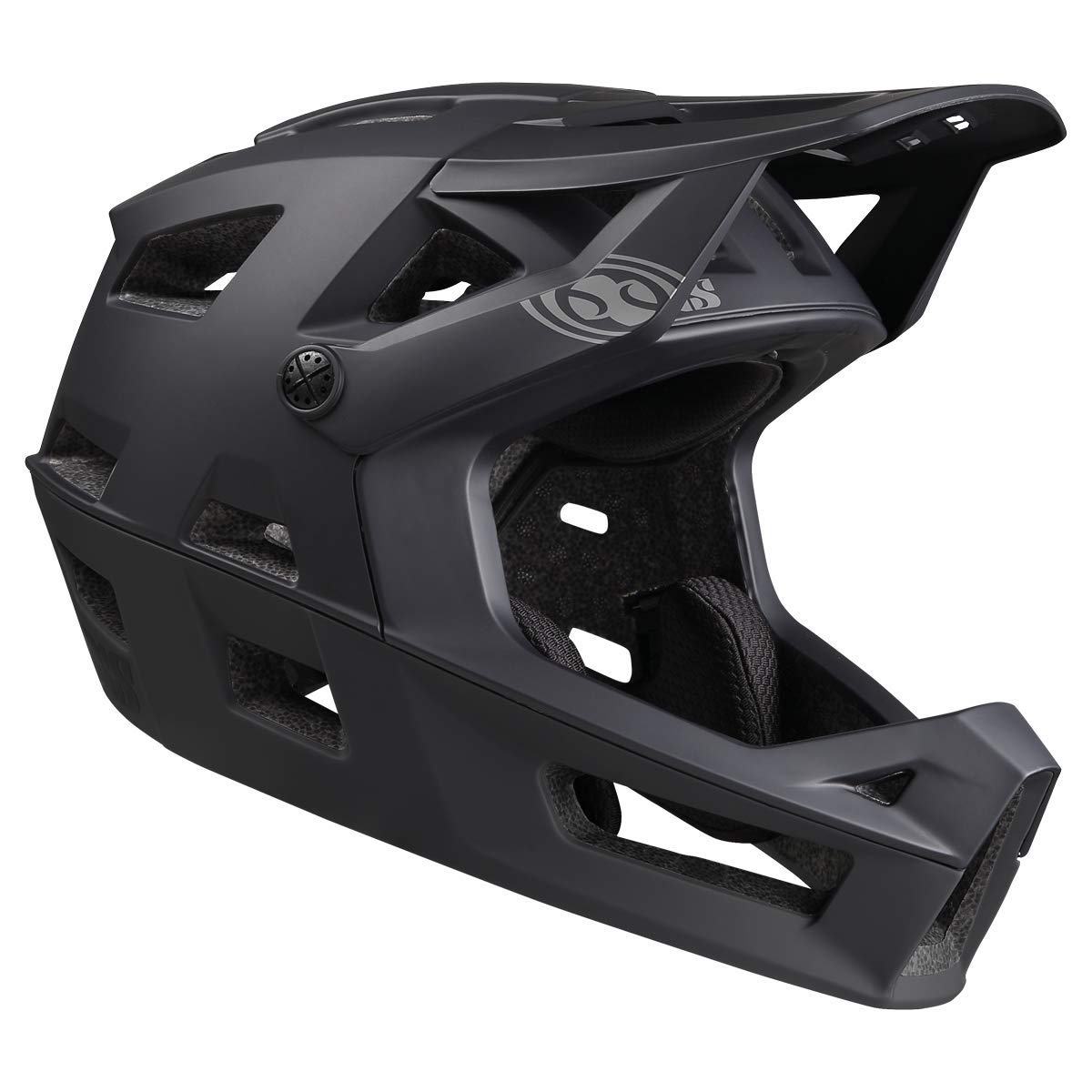
1. iXS Trigger FF MIPS Full Face Helmet
Our pick — 4.5+★ from 300+ verified ratings; the strongest balance of quality and price.
The trail helmet that keeps the chin bar but loses the brick-on-head feeling.
Roughly 595g is the number that makes this one worth starting with. That is light for anything with a jaw guard, and it means you can pedal the climb with the full face on instead of strapping it to your pack. The all-in-one design molds the EPS liner (the crushable foam that absorbs impact) and the chin bar into a single piece, so nothing rattles loose over a season of riding.
Buyers praise the look first — they call it top quality and cool more than anything else. That is fair, because a helmet this light usually looks flimsy, and this one does not. Weight is the runner-up in owner praise, and ventilation gets nothing but positive words: 23 mentions and not a single complaint about air flow. In real terms, you get a lid that feels and looks like a serious race helmet without carrying extra grams up the hill.
The fit system is where the money goes. Ergo-Fit Ultra lets you dial circumference and vertical position separately, and the magnetic closure snaps shut without you fumbling at a D-ring with gloves on. There is room inside for a thin wool hoodie, which is the detail that makes cold-weather riding comfortable. It meets EN1078:2012+A1, CPSC, ASTM F1952-15 and F1446-15b, plus KC, which covers the downhill chin-bar test that actually matters for this category.
Here is the honest part. Fit is the one area with real variance — some heads land perfectly and a few do not, and it is the fit notes that pepper an otherwise glowing picture. Sizing up is a bad fix for a full face, so measure before you buy. Compared with the POC Otocon Race MIPS at 0.75 kg, this shell is lighter on paper, and on a long climb you will feel that difference.
Where the value lands
- Approx. 595g keeps neck strain down on long pedal-up days
- Fully integrated EPS liner and chin bar in one molded piece
- Separate dial adjustment for circumference and vertical position
- Magnetic buckle saves glove fumbling on the trailhead
What to plan around
- Fit varies by head shape — measure instead of guessing
- Premium-tier spend compared with the budget end of this list
Reach for it if: you ride enduro or trail and want one helmet that climbs and descends without compromise.
Think twice if: you have a head shape that has never sat well in a one-piece shell — measure carefully first.
2. DEMON United Podium Full Face Mountain Bike Helmet with MIPS
The entry ticket to a MIPS full face that does not feel cheap on your head.
If a full face is your first move up from a half shell, this is the one that gets you in without a second thought about the cost. There are 13 air flow vents across a polycarbonate outer shell, and the EPS foam liner is shaped to conform to your head rather than sit on top of it like a bowl.
Among budget buyers, fit is the thing that lands best and gets talked about the most. It threads through a 2 lb 2oz build that owners consistently call very light, and comfort and protection round out the picture. A helmet bag comes in the box, so the shell is not knocking around your trunk. Add MIPS rotational protection and you have a shell that ticks the two boxes this whole category exists for.
The catch is sizing and sweat. Several buyers report this one runs slightly small, so read the size chart against your actual head measurement rather than your old helmet’s label. Breathability splits opinion — some find it super ventilated, others find the airflow flat — and on a hot, slow climb you will notice which camp you land in. Neither issue cancels the value, but they do shape who should buy it.
Best read on it: a first full face that covers MIPS, a washable liner, and a carry bag without stretching a beginner’s budget.
Where to be careful: size up your measurement, not your ego, and expect modest airflow on still, humid days.
Go here for: your first full face, or a spare for a friend, where value rules.
Look up the ladder if: you run hot or have a head that hovers between two sizes.
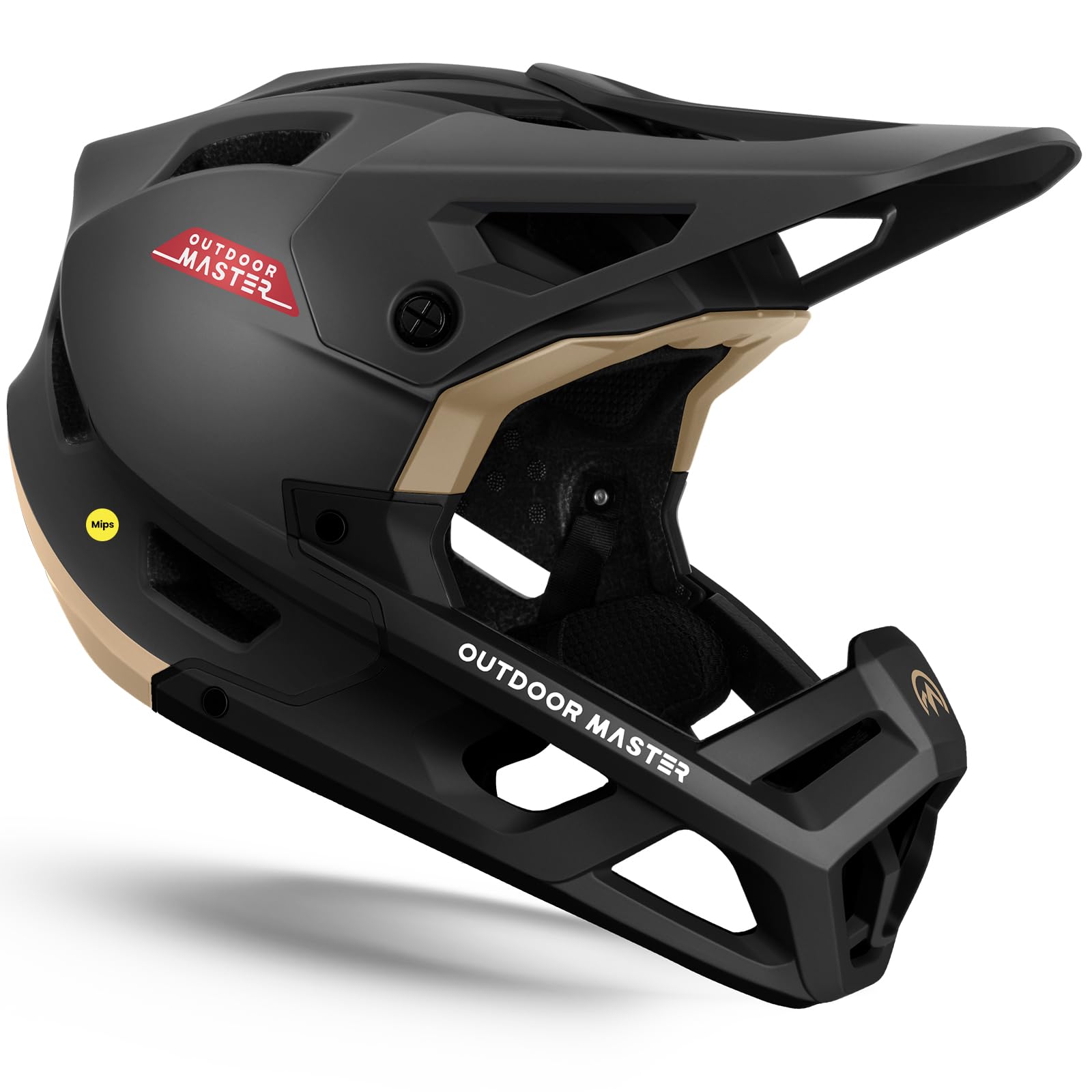
3. OutdoorMaster MIPS Full Face MTB Helmet
Twenty-seven vents and a head circumference range that finally covers big heads.
The 54-62 cm head circumference band is the headline for anyone who has ever squeezed into a helmet labeled XL and winced. That is a genuinely wide spread, and OutdoorMaster ships two sets of D-rings in different thicknesses so you can tune the strap to your own jaw line. The shell is polycarbonate over EPP foam with chinbar shock pads and an EPP collarbone impact system, which is the padding meant to cushion your collarbone in a fall.
Ventilation is where this shell earns its keep — 27 injection-molded cooling channels push air through rather than around. A goggle-strap channel holds your lens strap where you put it, and the pivoting visor lifts sun and rain out of your eyes. It uses MIPS rotational protection just like the rest of this list.
Now for the size honesty. This helmet is described by plenty of buyers as running extremely small, with measurements that are well off the chart, which is a real frustration when you already measured. Durability also splits opinion rather than landing clean either way. Treat the stated range as a starting point and check the return terms before you commit.
The buy signal: 27 vents, a goggle channel, and two strap thicknesses on a shell built with EPP foam and a collarbone pad system.
The honest snag: reports of sizing that does not match its own numbers mean you should verify returns before you order.
Worth choosing when: you want maximum airflow and a broad claimed circumference range without a huge outlay.
Hold off if: you cannot confirm a return path — the sizing reports are loud enough to respect.
4. Bell Full 9 Fusion MIPS
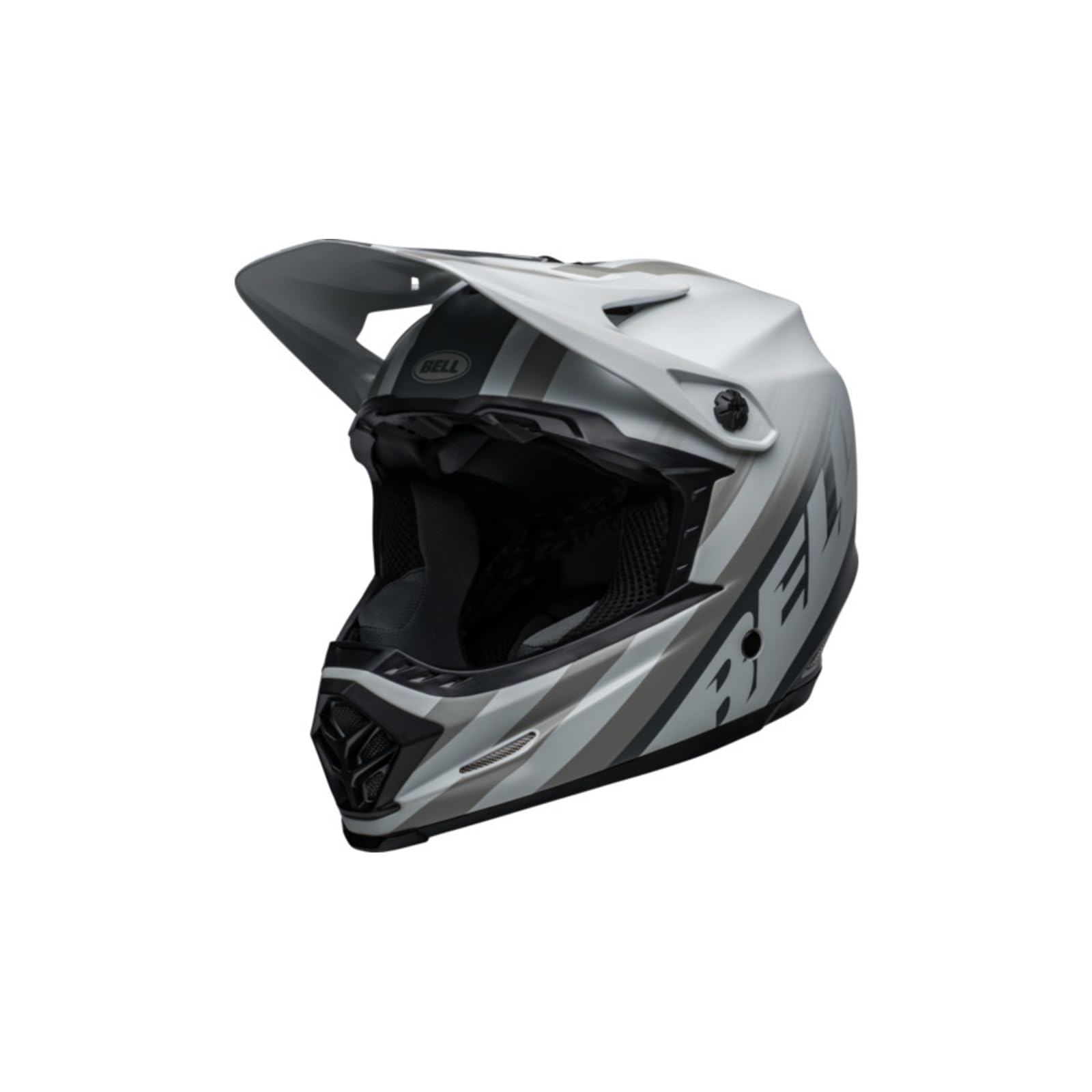
A downhill shell with a camera mount that is designed to snap off in a crash.
Most helmets with a camera mount leave you zip-tying a GoPro to a vent and hoping. Bell molded the mount in, and it is engineered to break away on impact so the camera does not become a lever against your head. That one detail turns this into the pick for anyone who films their runs.
The fiberglass shell sits over the MIPS slip-plane layer, and the padding is woven with real silver fibers in the X-Static and XT2 material, which is the quick-drying stuff that keeps the inside from turning into a swamp. Overbrow Ventilation runs intake ports along the brow and pushes air through an internal channel matrix — 10 vents and 3 brow ports in total. Six shell sizes from X-Small (51-53 cm) through XX-Large (61-63 cm) mean you can get a close fit rather than a compromise.
At 2 pounds it is a heavier build than the 1.3-pound iXS Trigger FF MIPS on this list, and that gap is the trade for more material around a downhill shell. Fit is the most-praised thing about it and quality is right behind, so the shape reads friendly to a wide range of heads. Bell itself warns that sizes and shapes can vary even within an age range, which is the manufacturer nudging you to measure before ordering.
Reasons it earns a slot
- Integrated breakaway camera mount with no zip ties or tape
- Silver-fiber X-Static and XT2 padding dries fast
- Six shell sizes from 51-53 cm to 61-63 cm
- Overbrow intake ports feed a full internal air channel
Where it asks more of you
- 2 pounds is noticeably heavier than the lightest pick here
- Downhill-leaning build, so it is a lot of shell for cross-country
The standout reason to buy: you film your runs and want a mount that is part of the helmet, not an afterthought.
The trade you accept: extra weight around the head for a more downhill-oriented shell.
5. Bell Sanction 2 DLX MIPS
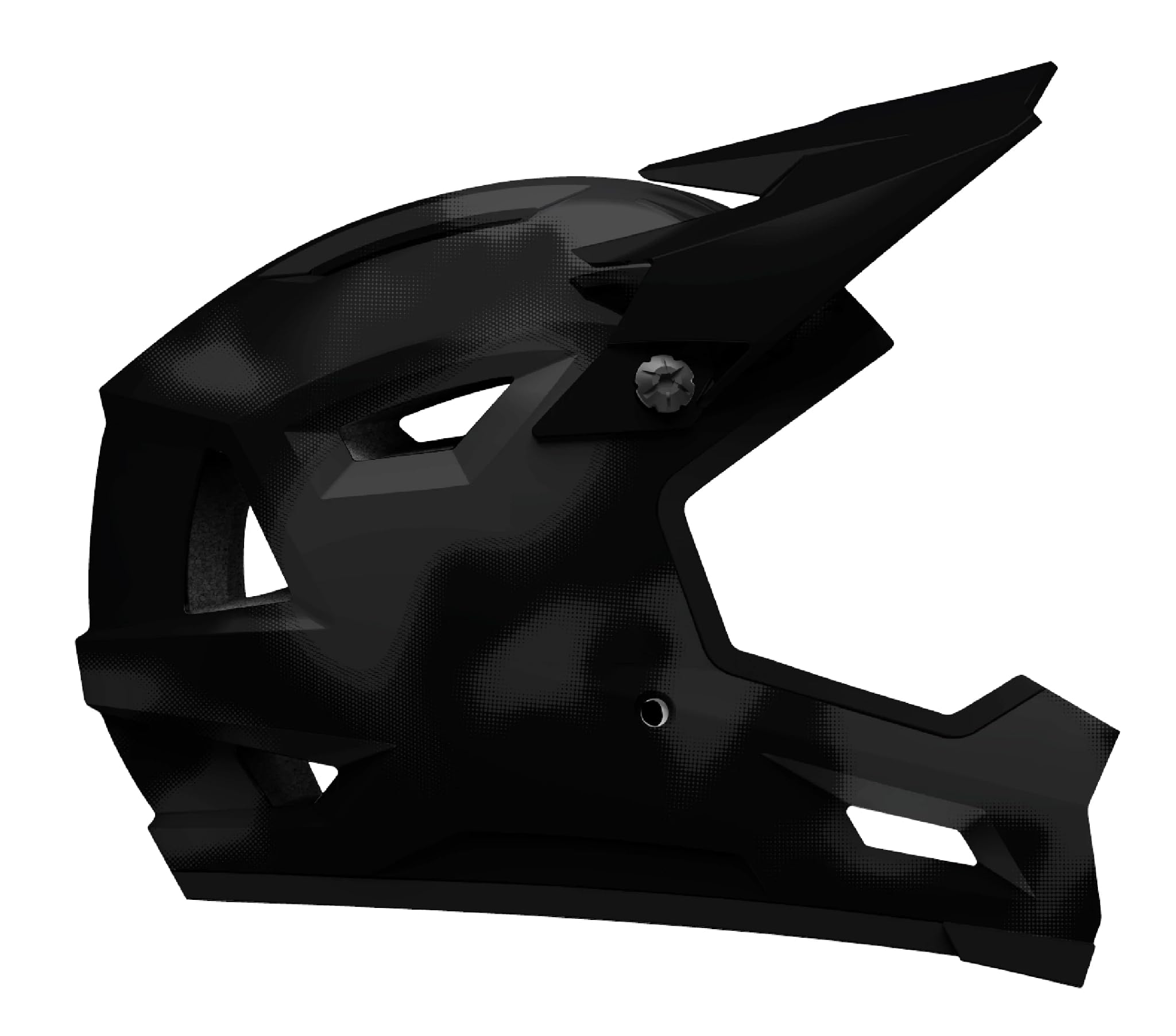
Built for the rider whose helmet smells like a gym bag by August.
The interior padding here is the whole pitch. Bell uses quick-drying padding that also fights odor-causing bacteria, which is the difference between a helmet you stop noticing and one you dread pulling over your nose.
The buckle is a Fidlock magnetic closure, and it slides shut sideways rather than clicking down — easy to do one-handed with gloves on and easy to release when you are tired. Bell also redesigned the visor so it does not rely on a center post and screw, freeing up energy-management material in a high-impact zone. MIPS rotational protection sits inside, as the name promises.
Quality is the thing buyers talk about most, and it comes through as consistent rather than split — with fit right alongside it. Ventilation and protection both read clean, which tells you the airflow design is doing real work. The one thing to know is that the stated dimensions in the listing are unusually thin, so do not try to judge the shell size from that line. Use the size chart.
What makes it different: odor-fighting quick-dry padding and a sideways-sliding magnetic buckle, both aimed squarely at daily riding.
Worth a thought: the listed dimensions are narrow enough to be misleading, so size by the chart alone.
It fits you if: you ride often and want the inside of your helmet to stay civilized.
Pass on it if: you have never had a buckle bother you and the padding upgrade does not speak to you.
6. Troy Lee Designs D4 Polyacrylite Helmet
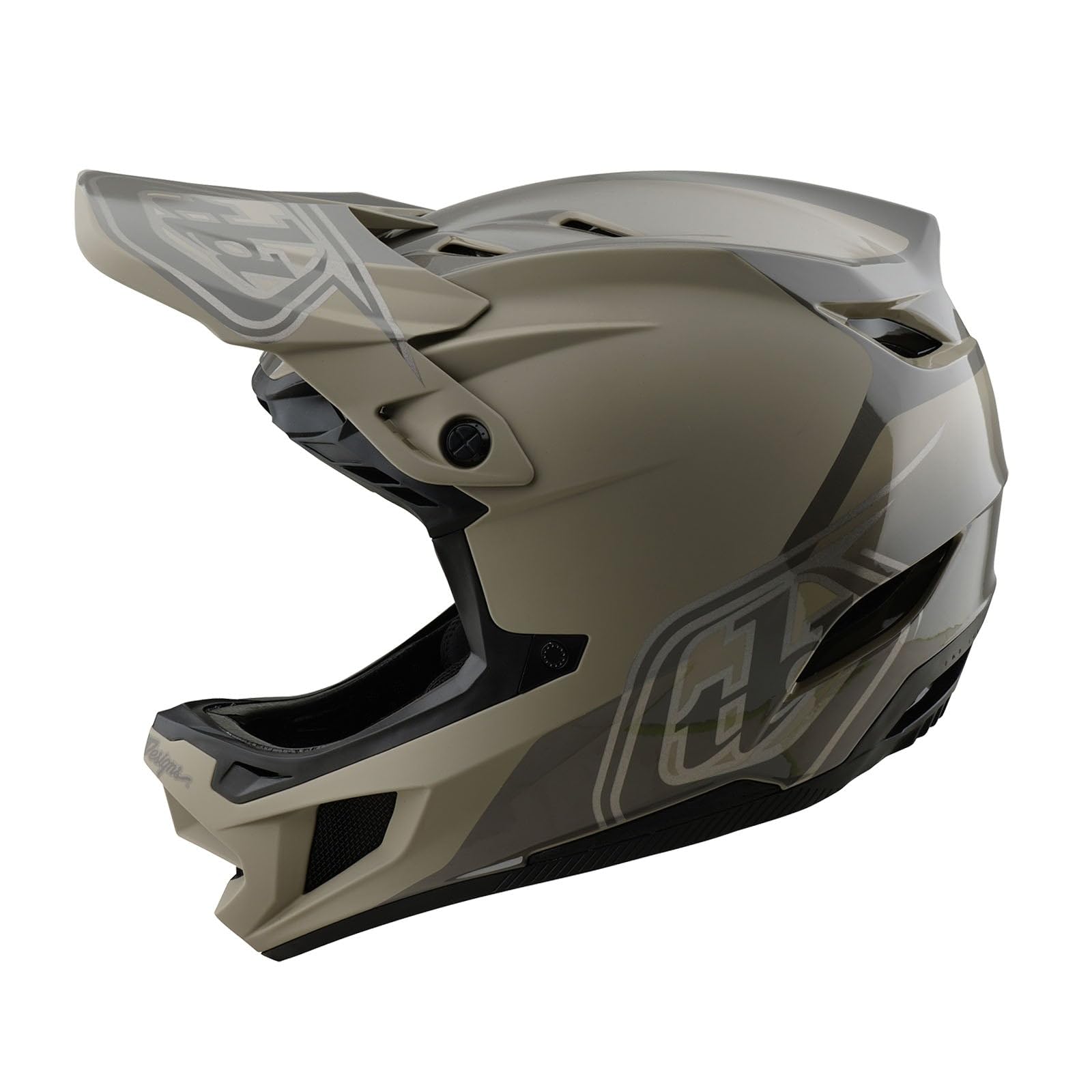
Six true sizes so your head lands inside the shell, not in the gap between two.
Three shell sizes and three EPS sizes combine into six total sizes from XS to XXL. That matters because a full face that claims “one size fits most” almost never does, and multiple shell molds mean the helmet is actually shaped for your head instead of padded into approximate agreement with it. The shell is polyacrylite over EPP foam, with an EPP collarbone impact system and chinbar shock pads.
The weight lands at 1150 grams, which is the heavier, more downhill-oriented end of this list — the kind of build that trades some climbing comfort for more material around the jaw. Ventilation runs 24 vents: 10 front intake ports, 5 overhead channeling vents, and 7 rear exhaust ports. Airflow follows a clear front-to-back path rather than being scattered randomly.
Comfort and convenience get attention too. The Coolmax-Dri-lex liner pulls out and washes, cheek pads are anatomical and quick-release, and the D-rings are the super-light type. Quality is the most-praised aspect in the owner feedback, with fit right behind. Troy Lee Designs has spent the time on this shell that a racing background buys you.
The case for it: six real sizes across three shell molds at 1150 g with 24 vents routed front to rear.
The caveat: it is one of the heavier picks here, which is the price of a denser downhill build.
Choose it when: you have struggled to find a helmet that truly fits and want six sizes to land in.
Reconsider if: you do a lot of climbing and want the lightest shell you can get.
7. Troy Lee Designs Stage Helmet

The long-day shell that pushes air through instead of letting heat sit.
Twenty-five intake and exhaust ports is a lot of holes to drill in a full face, and it is the reason this one stays comfortable when everyone else is unclipping to cool off. Airflow is the strongest testimony in its favor — described as incredibly ventilated with no dissent at all. At approximately 690g it is built to reduce rider fatigue across extended use rather than win a weight contest.
Impact management is a two-layer setup. EPP foam in the construction handles low-speed hits and EPS deals with high-speed energy, with MIPS rotational protection layered in. The chin bar is polyacrylite-injected and lined with an integrated EXO-Skeleton reinforcement, and the visor screws are designed to break away. That chin bar work is exactly what separates a real full face from a half shell with a jaw guard bolted on.
Fit is the most-praised dimension by a wide margin, and light weight follows close behind. Comfort, protection, and appearance all land clean, and the durability reports read positive overall. Value is the one split — some buyers find it a strong deal and others find it a stretch. That is a fair reflection of a premium-tier shell.
Why riders stick with it
- 25 intake and exhaust ports keep air moving on long days
- EPP and EPS foam layers address low- and high-speed impact
- EXO-Skeleton reinforced chin bar with break-away visor screws
- Approx. 690g tuned to reduce fatigue during extended use
Before you commit
- Value divides opinion more than any other aspect here
- Premium-tier pricing puts it above the middle of this list
The strongest case: you ride for hours in heat and ventilation beats every other concern.
The one caution: the price reflects the two-foam build, so weigh that against how often you ride.
8. Fox Racing Rampage Mountain Bike Helmet
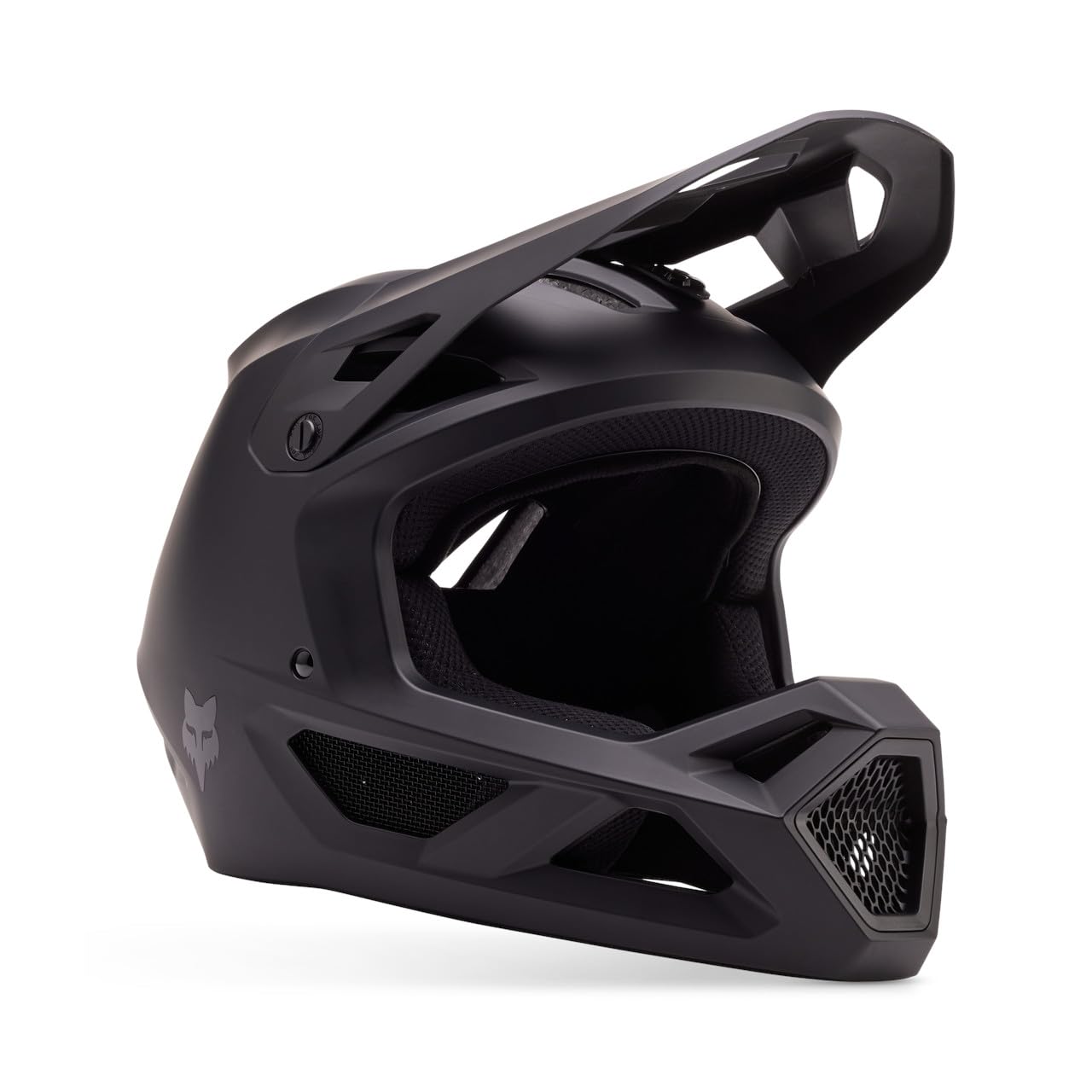
A 3-pound ABS park shell built around a double D-ring and a goggle visor.
The injection-molded ABS shell is the durable, heavier answer to a question park riders ask: what survives being thrown in a truck bed every weekend. At 3 pounds it is not a climbing helmet, and it is not pretending to be. It meets CE and CPSC standards and carries the MIPS protection system inside.
Ventilation runs a full 360 degrees around the shell, so air enters low and leaves high rather than pooling on top of your head. The visor is adjustable and built to sit above goggles, and the double D-ring closure is the classic strap setup that stays where you set it. The nylon inner liner rounds out a straightforward, no-gimmick build.
This is a newer listing with a shorter review history, which means the long-term verdict is still being written. What you can judge now is intent: Fox built a park and jump helmet and left the weight and materials in the right places for that job. If you split your riding between bike park laps and jump lines, it is a sensible shell to build around.
What it is built for: park laps and jump lines, with an ABS shell, 360-degree venting, and a goggle-friendly visor.
What to weigh: 3 pounds is real weight above your neck, and the review history is thin compared with the older shells here.
Buy it for: lift-served laps and jump sessions where durability outranks grams.
Skip the thought if: your riding is mostly pedaling, where that 3-pound shell will feel like a lot.
9. SMITH Mainline Cycling Helmet

The one that carries downhill, e-bike, and CPSC certifications in a single shell.
Certification is the story here. It complies with the U.S. CPSC Safety Standard for Bicycle Helmets for Persons Age 5 and Older, plus CE EN 1078, NTA8776 for e-bikes, and ASTM F1952 for downhill. That last one is the full face test that matters most, and NTA8776 is the standard you want if you ride a pedal-assist bike that goes faster than your legs ever did.
Koroyd coverage runs throughout the shell alongside MIPS. Koroyd is a tube-based material that crumples on impact, and covering the whole shell in it is a bigger deal than sprinkling it in one zone. Twenty-one fixed vents feed a hybrid X-Static and Ionic+ lining that uses sweat to activate odor control — so the helmet cleans itself as you work. Weight sits at 770 g, which is lighter than the 1150 g D4 on this list.
Fit is what people praise most, and comfort and low weight come right behind it. Three washable cheek pad kits, two crown liners, and two neck rolls ship in the box, so you can dial the fit yourself rather than settle. The visor adjusts to three positions. The one consistent gripe is noise — the shell squeaks and creaks, and that is a real quirk you either tolerate or do not.
Why it earns the price
- Certified to ASTM F1952 downhill and NTA8776 e-bike standards
- Full Koroyd coverage paired with MIPS rotational protection
- Three cheek pad kits, two crown liners, two neck rolls included
- 770 g is lighter than several downhill shells at this level
The honest trade
- The shell makes audible squeaks and creaks on the move
- The highest-tier spend on this entire list
Step up for it if: you race enduro or ride an e-bike and want every certification box ticked.
Stay put if: a creaking shell would drive you up the wall on a quiet climb.
10. POC Otocon Race MIPS
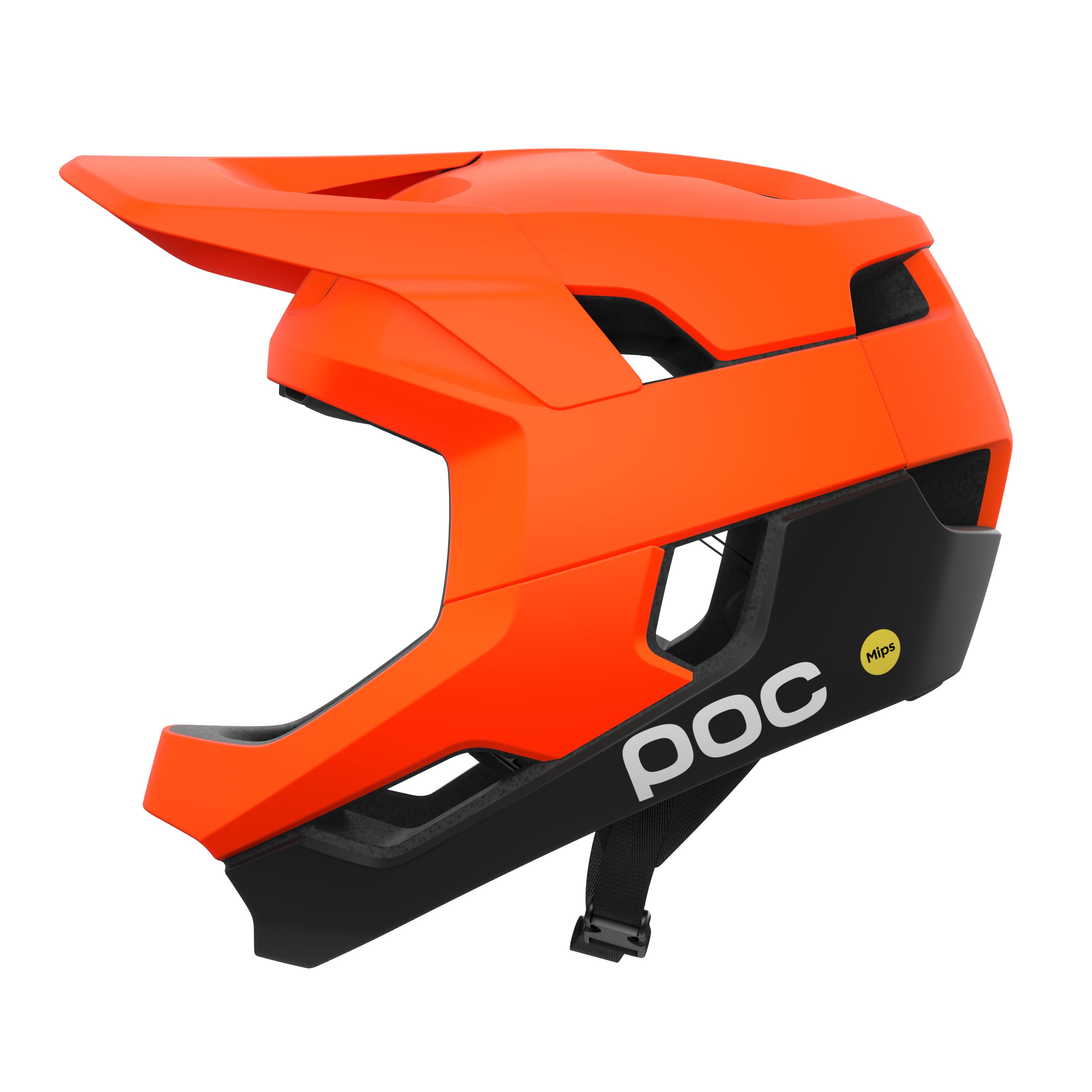
A downhill race shell with a rescue reflector and a medical ID built in.
Two features set this apart from every other helmet on the page: a RECCO reflector that rescue teams can locate with their detector equipment, and an NFC Medical ID that a first responder can scan. For remote downhill and enduro racing, those are practical additions rather than marketing trim. The shell is certified for downhill and enduro racing.
MIPS Integra is the rotational layer here, and POC wove it in so cleanly that it is nearly invisible rather than a visible sliding plate. Aramid bridges are molded into the liner to add structural stability and improve penetration resistance. The shell combines polycarbonate on the outside with EPP foam in the lower portion for durability and EPS up top to keep weight at 0.75 kg. An injection-molded cage reinforces the lower liner.
Ventilation is tuned to move air at both high and low speeds, which is the harder engineering problem than just drilling more holes. The Race Lock integrated adjuster handles fit, and the patented breakaway peak snaps off in a fall to reduce neck loading, with a smooth underside shaped to hold a GoPro mount. Owner feedback on quality and sizing splits rather than settles, so measure and buy where you can return.
The differentiator: RECCO and NFC Medical ID on a downhill-certified shell at 0.75 kg.
Be realistic about: mixed owner sentiment on quality and sizing, so treat the return window as part of the purchase.
It makes sense if: you race or ride remote downhill terrain where being found matters.
Think again if: you want broad, settled consensus before you spend at this tier.
Know the Specs
MIPS Explained in Plain Words
MIPS stands for Multi-directional Impact Protection System. Think of it as a low-friction layer between your head and the helmet shell, so the shell can slide a little during an angled hit instead of dragging your brain with it. It does not replace the foam — it works alongside the EPS or EPP liner (the crushable foam that absorbs straight-on energy). Every helmet in this guide has both pieces.
Foam Types: EPS, EPP, and Koroyd
EPS is expanded polystyrene, the crushable foam that handles a hard, high-speed impact. EPP is expanded polypropylene, a foam that springs back and handles repeated low-speed knocks. Koroyd is a tube-based material that crumples along its length. Some helmets use one, some layer two together, and the layering is often what separates a downhill build from a trail one.
What ASTM F1952 Actually Tests
ASTM F1952 is the mountain bike downhill standard for full face helmets. It tests the chin bar as part of the structure rather than treating it as decoration. A helmet certified to it has cleared a face-first impact test that a half shell never takes. CPSC and CE EN 1078 cover general bicycle use, and NTA8776 is the e-bike standard for faster pedal-assist riding.
Weight, Vents, and Fit Systems
Weight in grams decides how your neck feels in hour three, and the range here runs from roughly 595g to 3 pounds. Vent count tells you how much air moves through, though placement matters as much as the number. A dial or adjuster that changes both circumference and height beats padding upgrades for comfort, and cheek pad kits are what lock your head in place when it counts.
Common Questions
Is a MIPS full face helmet actually safer than a standard full face?
What does ASTM F1952 mean on a mountain bike helmet?
How do I measure my head before ordering a full face helmet?
Can I wear goggles with a full face mountain bike helmet?
What is the difference between a magnetic buckle and a D-ring closure?
How much does helmet weight matter on a long descent?
Is a full face helmet too hot for climbing?
When should I replace a full face helmet after a crash?
Do cheek pads and liner kits really change the fit?
What is a RECCO reflector and do I need one?
The Bottom Line
For most riders, the mips full face mountain bike helmet that gets the balance right is the iXS Trigger FF MIPS. At roughly 595g, its integrated full face and dial that adjusts both height and circumference make it the closest thing here to a helmet you forget you are wearing. If racing or e-bike speed is in your future, the Smith Mainline carries the deepest certification stack plus full Koroyd coverage (a tube-based impact material that runs through the whole helmet). And if this is your first full face and you want it without a long deliberation, the Demon United Podium M makes the jump easy — it covers MIPS, a washable liner, and a carry bag in one uncomplicated package. Whichever shell you land on, tick two boxes: MIPS rotational protection and a certified chin bar. Everything else is fit and comfort tuning.
How we choose
We do not accept paid placement. Every pick is matched to a real buyer and a real use-case; we do not hands-on test units.
Sources
Specifications: manufacturer listings and product documentation. Review insights: verified customer reviews, as of November 2026. Pricing: not shown on this page (it changes often); check the current price via the retailer link.
As an Amazon Associate, Tactical Gear Guy earns from qualifying purchases. This does not affect which products we feature.