Specs are compiled from manufacturer listings and verified buyer reviews and can change over time — please confirm the key details on the product page before buying.
For most Xbox owners, the Samsung T7 Shield 2TB is the sensible default for the Series X and Series S. It plugs into a USB port, holds your game library, and cuts the wait on loading screens. If you want the fastest possible internal-style storage, the decision changes: only an official expansion card lets you play Series X|S games straight from the drive. Below, every pick is sorted by which one actually fits your console and how you play.
This guide is built by comparing the manufacturers’ published specifications and the patterns across verified customer reviews, so you get each pick’s real strengths and trade-offs instead of marketing spin.
Start with one fact that shapes everything: a USB SSD stores and runs back-compat titles instantly, while newer games often need a shuffle back to the console’s internal drive. That single rule is why the picks split into USB drives and expansion cards. Use this list to match the right SSD for Xbox to your console model, your library, and your tolerance for juggling files.
Top Picks


How To Choose The Best SSD for Xbox
Before you compare speeds, decide if you want to play games directly from the drive or just store them there. An expansion card slots into the back of the console and behaves like internal storage. A USB SSD connects through a cable and is brilliant for back-compat games, archiving, and moving files — but many current-gen titles must be transferred to the console before they launch.
Expansion card or USB drive?
Pick the expansion card if your library is mostly Series X|S titles and you hate waiting on a file shuffle. Go USB if you replay older Xbox One and 360 games, keep a big archive, or want one drive that also works with a laptop and a phone. The USB route also tends to give you more capacity for the same tier, and you can move the drive between devices.
Speed that actually reaches your console
A drive rated at 2,000 MB/s (megabytes per second — the rate data moves) only runs that fast if your cable and port support it. Xbox consoles use USB 3.2 Gen 2, so a Gen 2×2 drive will often fall back to the slower rate. That does not make it a bad buy — it means the headline number is a ceiling, not a promise. Match the drive to the port you actually plug it into.
Capacity and heat
Modern games are large, so 1TB is a working minimum for most players and 2TB relieves the delete-something feeling. Also think about heat: a metal or aluminum body helps shed warmth during long sessions, which keeps speeds steady. A rubberized shell resists knocks if the drive travels between rooms or consoles.
Side-by-Side Comparison
| Model | Best For | Capacity | Rated Read Speed | Xbox Fit | Amazon |
|---|---|---|---|---|---|
| Samsung T7 Shield 2TB★ Best Overall | Everyday library storage | 2 TB | Up to 1,050 MB/s | USB-C, Series X listed | Amazon |
| DIGIERA 1TB Magnetic SSDBest for Phones | Phone and console crossover | 1 TB | 2000 MB/s | Series S and X listed | Amazon |
| Lexar SL500 1TBFastest Transfers | Fast USB transfers | 1 TB | 2000 MB/s | Xbox Series X listed | Amazon |
| Samsung T9 1TB | Sustained speed for big files | 1 TB | Up to 2,000 MB/s | Series S and X listed | Amazon |
| DATO ARES Amber Shield 2TB | Rough handling and travel | 2 TB | 1600 MB/s | Series S and X listed | Amazon |
| KIOXIA EXCERIA PLUS G2 1TB | Plug-and-play simplicity | 1 TB | up to 1050MB/s | Series X listed | Amazon |
| WD_BLACK D30 1TB | Xbox-themed desk setup | 1 TB | Up to 900MB/s | Series X|S listed | Amazon |
| Tianken Expansion Card 1TB | Playing Series X|S games direct | 1 TB | 3500 MB/s | Series X listed | Amazon |
| WD_BLACK P50 4TB | Huge single-drive library | 4 TB | Up to 2,000 MB/s | Series X listed | Amazon |
Detailed Reviews
1. Samsung T7 Shield Portable SSD 2TB
Our pick — 4.5+★ from 16,000+ verified ratings; the strongest balance of quality and price.
A card-sized 2TB USB-C drive with an IP65 dust-and-water rating and 9.8-foot drop protection.
Picture a drive you can toss in a backpack next to the console and forget about. The T7 Shield holds 2 TB of games in a body the size of a bank card, and owners describe it as small enough to fit in a pants pocket. It ships with USB-C to C and USB-C to A cables, so it reaches both modern and older ports on the Xbox. The transfer numbers are up to 1,050 MB/s read and 1,000 MB/s write — the read figure is what shrinks your load-screen wait when you move a game across.
The ruggedness is the real story here. It carries an IP65 rating (a standard score for dust and water resistance — the 6 means dust-tight and the 5 means it survives a water jet) plus drop protection up to 9.8 feet. That matters if the drive lives on a messy shelf or travels to a friend’s place. Samsung’s Magician software lets you monitor drive health and set the LED color, which is a small touch but handy for spotting a drive that is filling up.
What wins people over is raw performance across the board — the review pages are full of people praising exactly that. The honest caveat is a mixed record on long-term reliability, since a share of buyers report a unit quitting after about eighteen months; extra capacity over the DIGIERA’s 1 TB (a 2.0x gap) makes the T7 Shield the roomier pick here, but it is not a lifetime-guaranteed vault. Back up the irreplaceable stuff elsewhere.
What earns it the top spot
- 2 TB holds a large library without constant deleting
- IP65 dust and water rating plus 9.8-foot drop protection
- Card-sized body slips into a pocket or console case
- Up to 1,050 MB/s read keeps file moves quick
Where it gives ground
- Runs on USB 3.2 Gen 2, so it trails the Lexar and Samsung T9 on paper
- Some units have failed after roughly a year and a half
Reach for this if: you want one tough, roomy drive that stores back-compat games and doubles as a laptop backup.
Look elsewhere if: you need to play Series X|S games directly from the drive — that job belongs to an expansion card.
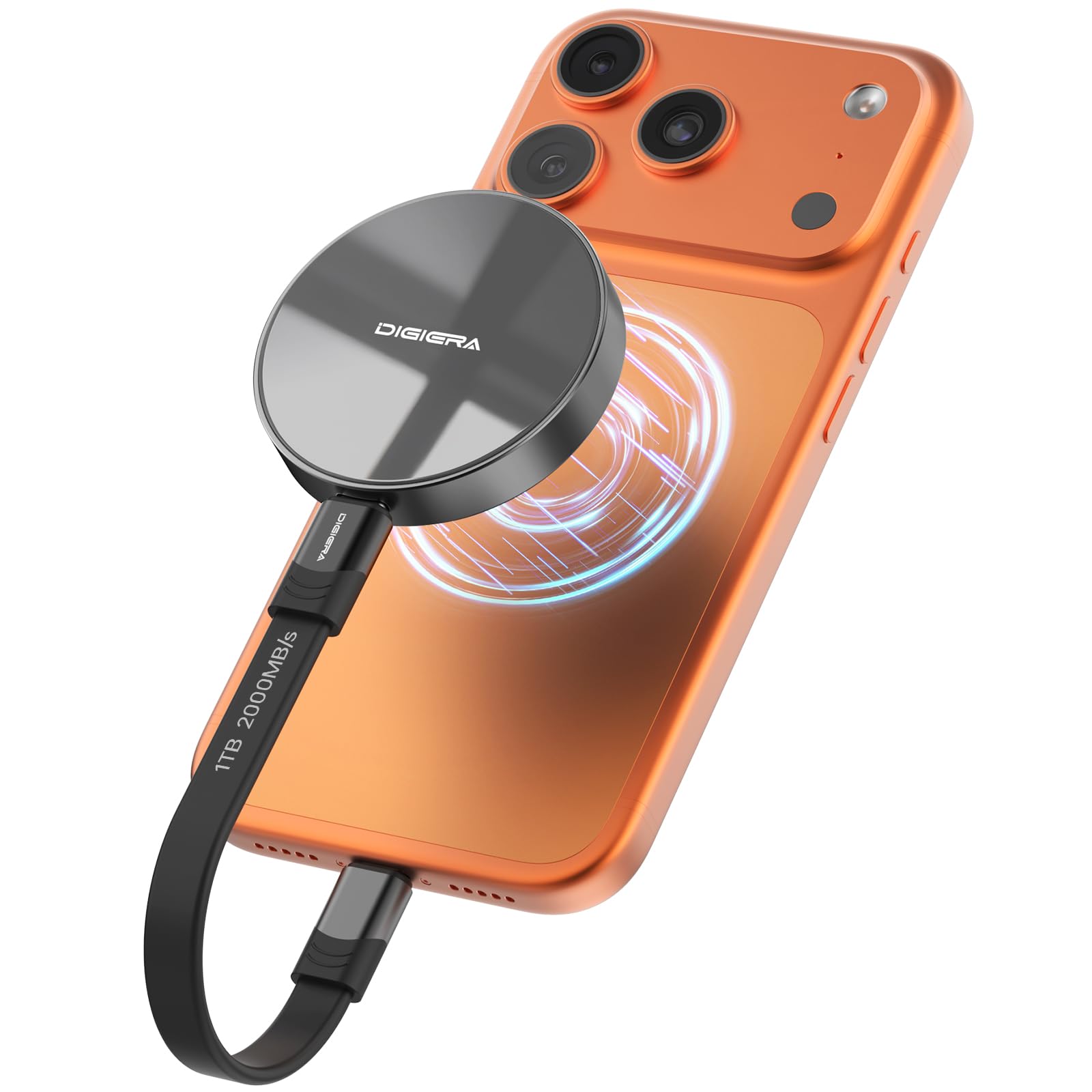
2. DIGIERA 1TB Magnetic External Hard Drive
A 1TB USB-C drive with a magnetic mount for your phone that also lists Series S and Series X.
The magnet is the hook here. The DIGIERA sticks to the back of a phone or a metal surface so it will not slip while you shoot, which is why it reads more like a phone accessory than a shelf drive. It carries a 1 TB capacity and a rating of up to 2000MB/s read and 1800MB/s write over USB 3.2 Gen 2×2. It lists both the Xbox Series S and Series X as compatible, and the aluminum shell keeps it light at 1.58 oz.
Where it earns its keep is portability and price-to-capacity. The aluminum casing is rated to withstand shocks up to 1500G, vibrations from 10-2000Hz, and drops up to 3.94 feet, so a knock is not fatal. For a phone-first creator who records ProRes video and also wants a pocket drive for the Xbox, it covers both jobs. Just note the drive is only compatible with iPhone 15 and newer — not older iPhones.
The catch worth knowing: the reported speeds are a best case that needs a Gen 2×2 host, and this drive’s own reviews trend mixed on speed and connectivity, with some buyers reporting slow transfers. An occasional owner says it does not connect cleanly to every device, so test it early.
Suits you if: you want one compact drive that magnet-mounts to a phone and pulls double duty for console storage.
Skip the gamble if: you need rock-solid PC-grade speed every single time — the speed reports here vary by device.
3. Lexar 1TB SL500 External SSD
A slim metal 1TB drive rated at 2000MB/s read over USB 3.2 Gen 2×2, roughly twice the T7 Shield’s 1,050 MB/s on paper.
The Lexar SL500 is all about that headline read figure. It is rated at 2000MB/s read and 1800MB/s write over USB 3.2 Gen 2×2, which on paper is roughly twice the Samsung T7 Shield’s 1,050 MB/s — a 1.9x gap. That matters when you are shuttling a big game or a pile of 4K clips rather than a few save files. The slim metal body is light enough to carry daily, and it lists Xbox Series X and PS5 among compatible consoles.
Heat management is built in. A thermal control design is meant to hold peak speed even through longer transfers, so a big move does not thump the brakes halfway. It also supports ProRes recording up to 4K 60FPS on newer iPhones, which helps if the drive moonlights for video work.
The thing to weigh is the port. The 2,000 MB/s ceiling needs USB 3.2 Gen 2×2 on both ends, and the console itself uses Gen 2, so you will not see the full number there. It also sits at 1 TB, half the T7 Shield’s 2 TB (a 2.0x gap), and its metal body is 2.5-inch in form versus the DIGIERA’s more compact 2.28 inches — a 10% larger footprint on paper. Reliability is where it shines; owners consistently describe the drive as dependable with off-the-chart transfer rates.
The driving trade-off: you are buying a fast, tough-feeling metal drive, but the console caps the speed it can use and the capacity stops at 1 TB. Think of it as a fast everyday mover rather than a giant storage vault.
The fast mover is for: buyers who shuttle big files between PC, console, and phone and value snappy transfers.
A different drive fits better if: you want maximum capacity for a big game backlog, where 1 TB fills up quickly.
4. Samsung T9 Portable SSD 1TB

A 1TB drive rated at up to 2,000 MB/s sustained read and write, with Dynamic Thermal Guard to hold that speed through long transfers.
Here is the difference that matters for a gamer who moves enormous installs. The T9 is rated at up to 2,000 MB/s sustained read and write, and Samsung’s Dynamic Thermal Guard is there to control heat so the speed holds during longer processes. That is the pitch: not a burst number, but a steady one. It carries 1 TB and lists the Series S, Series X, PS4, and PS5 as compatible consoles.
The durability and security details are strong too. It shrugs off drops up to 9.8 feet and includes AES 256-bit hardware encryption, which locks the drive’s contents in hardware so a stolen drive is not a data leak. Magician software handles firmware updates, encryption, and health monitoring, and owners describe it as reliable and lightning quick, with spacious room for large files and high-res photos.
Two honest notes. Compatibility is mixed — it works with some Apple devices and not others — and value is debated by owners, some of whom consider it overpriced for the capacity. At 1 TB it also trails the T7 Shield’s 2 TB, though compared to the Lexar SL500 at the same 1 TB, the T9 sells itself on sustained speed and hardware encryption rather than a bigger plate.
Reasons it stands tall
- Sustained up to 2,000 MB/s through long transfers
- AES 256-bit hardware encryption built in
- 9.8-foot drop rating for real portability
- Works across Series S, Series X, and PlayStation
Reasons to pause
- 1 TB fills fast with big modern games
- Device compatibility reports are split
Pick it when: you move huge files often and want steady speed plus hardware encryption.
Keep looking when: you want the most storage in a single drive — 1 TB is the ceiling here.
5. DATO External SSD 2TB ARES
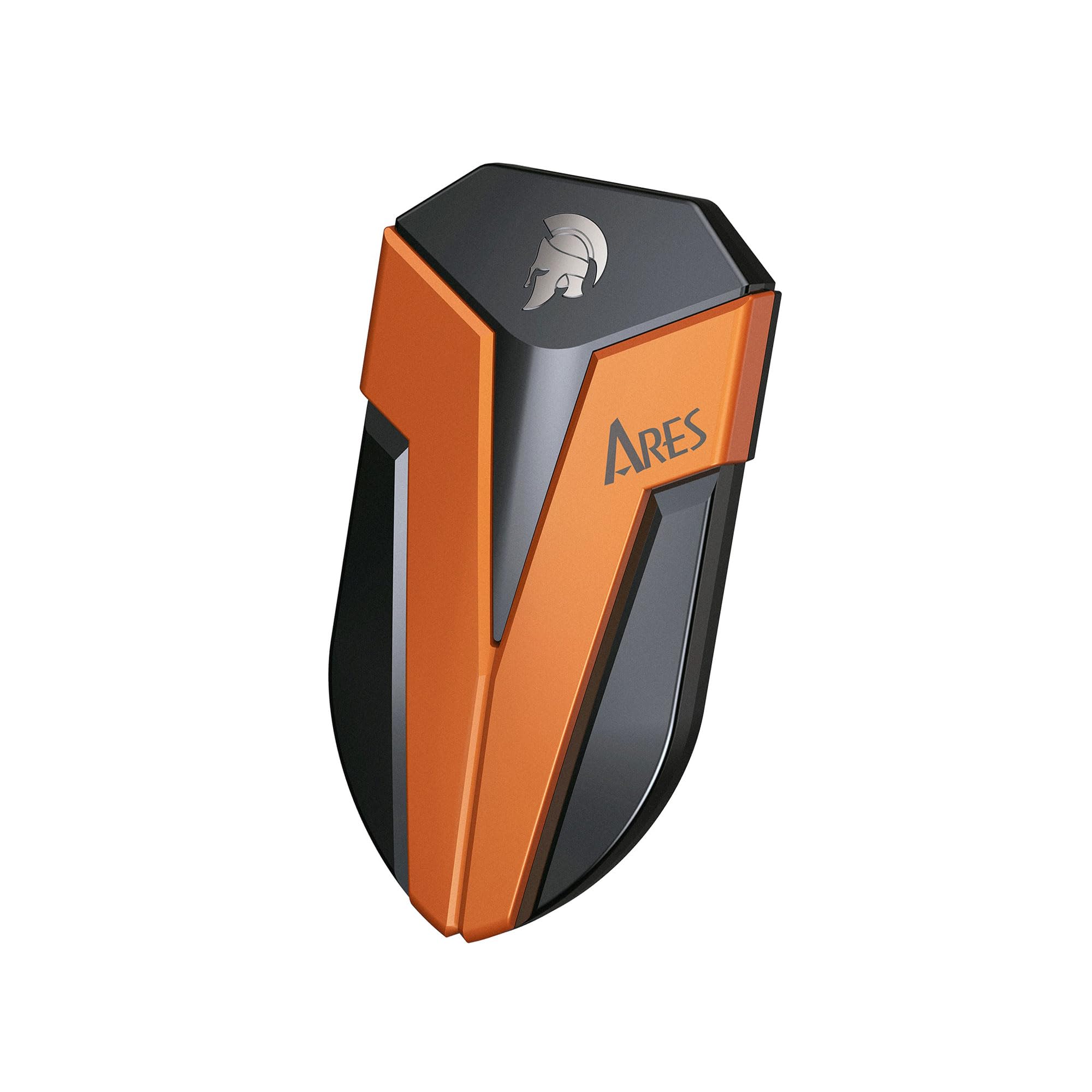
A 2TB drive with an IP67 rating, tested to 1 meter for 30 minutes, in a palm-sized body.
If the drive lives in a bag that gets knocked around, the DATO leads with toughness. It carries an IP67 rating (a water-and-dust score where 6 means dust-tight and 7 means it survives being submerged), and the maker states it tests to 1 meter for 30 minutes. It holds 2 TB and is rated at up to 1600/1500 MB/s read and write. It lists Series S, Series X, and PS5 as compatible consoles, and it comes with both a 20Gb/s Type-C to C and a 10Gb/s Type-C to A cable so it reaches older ports.
The thermal story is neat: a graphene interior is used to spread heat, which helps keep speeds steady. It is small enough to sit in the palm and is rated to endure a 4-foot free drop. Owners describe the speed warmly — the review pages call it fast with quick data transfers, and the performance read is the most-praised part.
The caveat is fit, not failure. Some owners mention trouble with Windows 11, and a few feel the price runs high for the capacity. It is a strong pick if rugged portability is your priority and a weaker one if you need guaranteed broad PC compatibility.
What this rugged pick is really for: a 2 TB drive you can carry to a friend’s place or stash in a bag without babying it. The IP67 body and graphene heat spread are the reasons it earns its place.
Go with it for: rough handling, travel, and a roomy 2 TB library.
Hold off on it if: you need plug-and-play certainty on a Windows 11 PC.
6. KIOXIA EXCERIA PLUS G2 Portable SSD 1TB
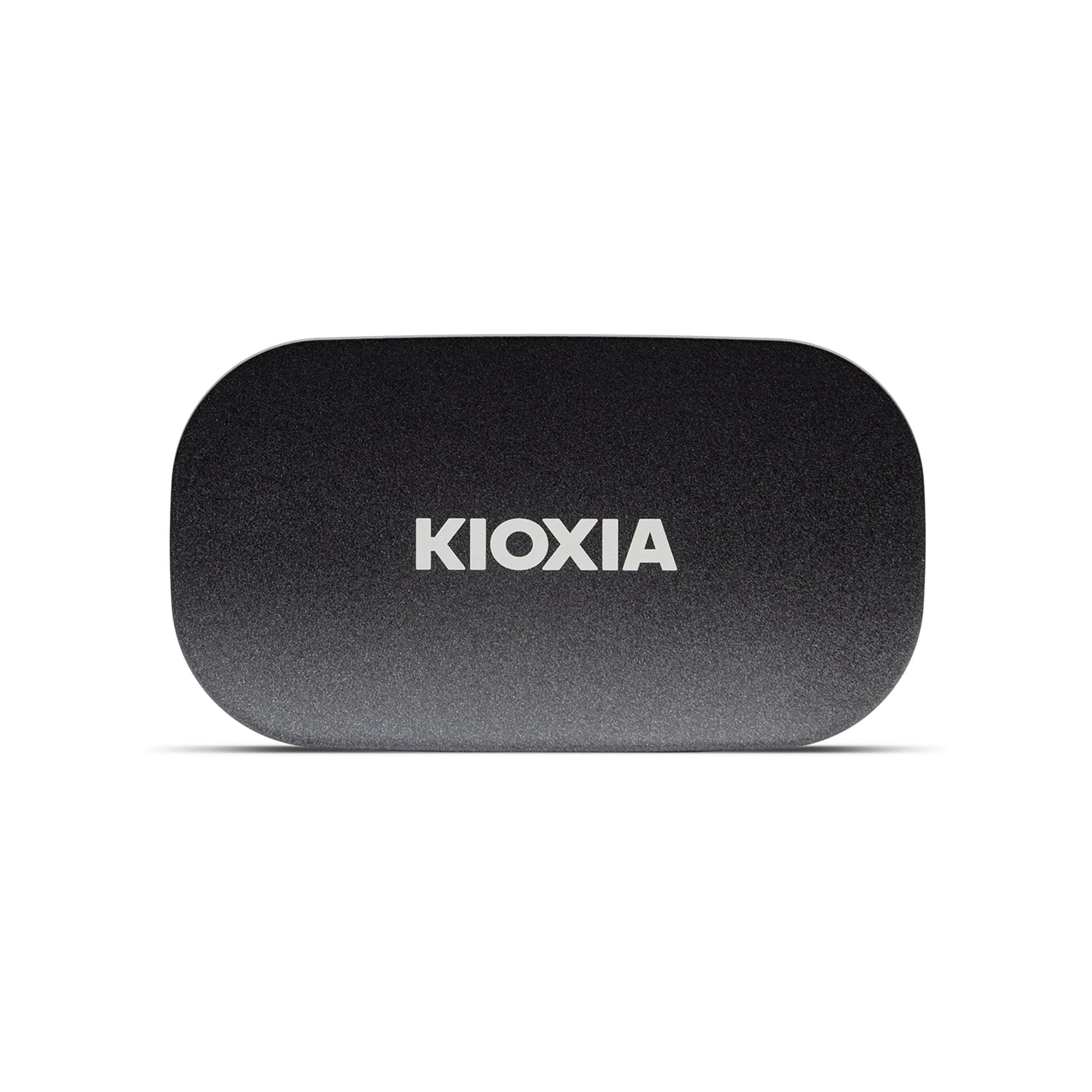
A 1TB USB 3.2 Gen 2 drive rated at up to 1,050MB/s read, with a MIL-STD drop-tested aluminum body and AES 256-bit encryption.
The KIOXIA is the no-nonsense option. It is rated at up to 1,050MB/s read and 1,000MB/s write over USB 3.2 Gen 2 — the same speed class as the Samsung T7 Shield — and holds 1 TB. It ships with both USB-C to C and USB-C to A cables, so it reaches modern and legacy ports. It lists the Xbox Series X and PS5 among compatible consoles, and the aluminum housing doubles as a heat spreader.
The physical package is the bonus. It is shockproof and compliant with the MIL-STD drop test (a ruggedness standard for surviving falls), and the metal casing helps shed heat during heavy workloads. For security it offers password protection and 256-bit AES hardware encryption, so the drive’s contents stay locked. Built with KIOXIA’s BiCS FLASH 3D memory made in Japan, it leans on its reputation for reliability rather than flashy speed.
The trade-off here is capacity and pace. At 1 TB and a 1,050 MB/s ceiling, it is well behind the Lexar SL500’s 2000MB/s read on paper — the same 1.9x gap — so buyers chasing the fastest file moves should look at the faster drives above. But if you want a rugged, simple, secure drive that just works, this is quiet competence. It is a strong pick for someone setting up their first console SSD and not wanting to fuss.
The reliable-simplicity angle: nothing dramatic, but a metal body, hardware encryption, and a straightforward plug-and-play setup. That is exactly what a first-time buyer wants from a drive.
Made for: the buyer who wants a rugged, encrypted drive with zero fuss.
Not the one if: you need the very fastest transfer speeds or a bigger plate than 1 TB.
7. WD_BLACK 1TB D30 Game Drive SSD

A 1TB Xbox-styled drive rated at up to 900MB/s, with a 1-month Xbox Game Pass Ultimate membership for new members.
The D30 is aimed squarely at Xbox owners, down to the styling designed to sit alongside the console. It holds 1 TB and is rated at up to 900MB/s read speed over USB 3.2 Gen 2, which is enough to cut down on load screens. It lists the entire Xbox family, from 360 through Series X|S, among compatible consoles. The maker notes it is designed to play and store Xbox One games and archive Series X|S games, which you then transfer back to the console to launch.
A small extra that can tip the decision: it includes a 1-month membership of Xbox Game Pass Ultimate for new members, which is a genuine perk if you are setting up a fresh console. The 900 MB/s figure trails the 2,000 MB/s drives, but for back-compat games and archiving it is plenty and the setup is simple.
The practical read: a tidy, console-styled drive with a Game Pass bonus baked in. The thing to keep straight is the archive rule — Series X|S games stored here need a transfer to the console before they play, same as any USB drive.
A good match if: you want a drive that looks the part and bundles a Game Pass month.
The better call if: you need top speeds or a bigger plate than 1 TB — look further up this list.
8. Storage Expansion Card for Xbox Series X|S 1TB

An NVMe expansion card rated at 3,500 MB/s that plays Series X|S games directly, with no transfer step.
An expansion card is the only option that plays Series X|S games directly without a transfer, and this one arrives with an NVMe interface (a fast internal-style storage standard) rated at 3,500 MB/s. It holds 1 TB. The claim is that games play straight from the card without sacrificing graphics, latency, framerates, or load times, and the maker sells it as plug-and-play with no software installation. It is just 0.3 inch thick, with an aluminum body for heat dissipation.
Here is the honest part. Reliability is the most-discussed topic in this drive’s own reviews, and the feedback is split — some cards work flawlessly, others quit within a month, and some customers note compatibility trouble after Xbox system updates. Value is debated too. That does not make it a bad pick; it means you should buy it knowing the card route carries more variability than a name-brand USB drive.
Why the card route tempts
- Plays Series X|S games directly, no transfer step
- 3,500 MB/s NVMe rating for fast load times
- 0.3-inch aluminum body for heat and durability
- Plug and play, no software install
Why buyers hesitate
- Split reliability reports, including some short-lived cards
- Compatibility hiccups reported around system updates
Only pick it if: playing current-gen games directly from the drive is worth the extra risk to you.
Better to store-and-transfer if: you want a long track record — a USB SSD is the safer bet for back-compat and archiving.
9. Western Digital 4TB P50 Game Drive SSD, Up to 2,000 MB/s

Four terabytes on one cable, for the player who never wants to delete a game.
Capacity is the whole reason this drive exists. The P50 holds 4 TB — twice the Samsung T7 Shield’s 2 TB — and is rated at up to 2,000 MB/s read speed over its USB interface. It ships with both USB-C to A and USB-C to C cables, plus an 18-inch USB Type-A to Micro-B cable with a SuperSpeed interface up to 5Gbps. It lists the Xbox Series X among compatible consoles, and it is shock-resistant and portable for carrying your library around.
Owners describe it as one of the best external drives going, running games about as fast as internal SSDs and easy to use with no setup. The build is purpose-made for gamers on WD_BLACK quality and reliability. For a household with one Xbox and a sprawling library, it is the single-drive answer.
The trade-off is heat and cost. The drive gets hot during long sessions, which is normal for this speed class but worth knowing — leave it some airflow. And value is debated, with some buyers feeling the cost runs high. If you have a huge library and want one drive to hold it all, the P50 delivers the space.
The library-on-one-drive argument: 4 TB holds a sprawling collection, and up to 2,000 MB/s keeps transfers brisk. It is the answer for players who hate the delete-to-make-room routine.
Best for: the collector with a sprawling library who wants one big drive.
Think twice if: you want a small, cool-running drive or you are sensitive to running heat.
Know the Specs
Read Speed in MB/s
Read speed in MB/s (megabytes per second) is how fast the drive hands data to your console — the number that drives load-screen waits and file moves. A drive rated at 2,000 MB/s is the upper end, while 900–1,050 MB/s covers everyday storage and archiving fine. The catch: your console’s USB port sets the real ceiling, so a Gen 2×2 drive often runs at the Gen 2 rate on an Xbox.
Expansion Card vs USB SSD
An expansion card slots into the console and plays Series X|S games directly, with no transfer step. A USB SSD connects by cable and is ideal for back-compat titles, archiving, and moving files — but current-gen games stored there often must be transferred to the console before they launch. If playing directly from the drive matters most, the card is the only route.
IP and Drop Ratings
An IP rating is a standard score for dust and water resistance — the first digit covers dust (6 means dust-tight) and the second covers water (5 means a jet, 7 means brief submersion). A drop rating tells you how far the drive is built to fall and survive, quoted here in feet. If the drive travels or sits on a messy shelf, these numbers are worth checking.
Hardware Encryption
AES 256-bit hardware encryption locks the drive’s contents in hardware, so the data is protected even if the drive is lost or stolen. It is set up through software like Samsung Magician or KIOXIA’s SSD Utility. If you carry the drive around or store personal files on it, hardware encryption adds a layer a plain USB stick cannot match.
Common Questions
Can I play Xbox Series X|S games directly from an external SSD?
Will a USB SSD work on both the Xbox Series X and Series S?
Does the drive’s 2,000 MB/s speed actually reach my console?
How much capacity do I need for a modern game library?
Is an expansion card better than a USB SSD for Xbox?
What does an IP67 rating mean for a game drive?
Do I need to format a new SSD before using it with my Xbox?
Will a metal SSD run too hot during long sessions?
Can I use one SSD for both my Xbox and my PC?
The Bottom Line
For most players, the ssd for xbox winner is the Samsung T7 Shield 2TB — the crowd favorite, holding 4.5+ stars across 16,000+ ratings, with 2 TB of space and an IP65 rugged body that survives real life. If you want the very fastest transfers and a slim metal build, grab the Lexar SL500 1TB. For playing current-gen games directly, the Tianken Expansion Card is the one to weigh, flaws and all. And if you refuse to delete a single game, the WD_BLACK P50 4TB holds the whole collection.
How we choose
We do not accept paid placement. Every pick is matched to a real buyer and a real use-case; we do not hands-on test units.
Sources
Specifications: manufacturer listings and product documentation. Review insights: verified customer reviews, as of November 2026. Pricing: not shown on this page (it changes often); check the current price via the retailer link.
As an Amazon Associate, Tactical Gear Guy earns from qualifying purchases. This does not affect which products we feature.