Specs are compiled from manufacturer listings and verified buyer reviews and can change over time — please confirm the key details on the product page before buying.
A dead Wii is almost always a dead power brick. Nine times out of ten the console is fine and the black brick on the floor has quietly given up. Replacing that brick is the cheapest fix in retro gaming, but only if you buy the right one — the wrong adapter outputs the wrong current and your console just sits there dark. Below are the seven adapters that actually power a Wii properly, sorted by what they do best.
This guide is built by comparing the manufacturers’ published specifications and the patterns across verified customer reviews, so you get each pick’s real strengths and trade-offs instead of marketing spin.
Every pick here is confirmed to fit the original Wii console and not the Wii U, and each one lists its exact voltage and amp output so you can match it to your console before you buy. These are the replacement cords worth plugging into your wii console power cable setup.
Top Picks

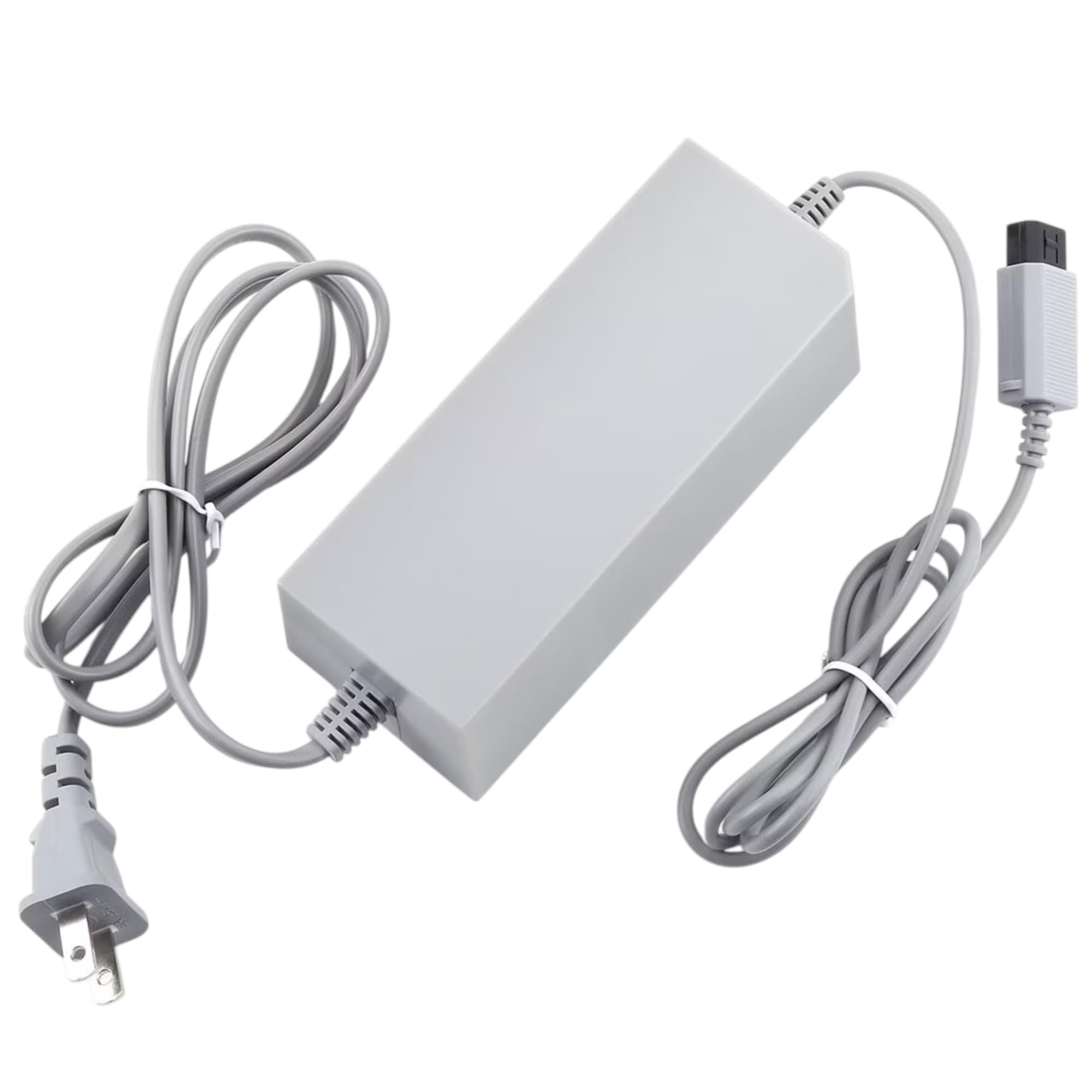
How To Choose The Best Wii Console Power Cable
Your Wii needs one specific thing from a power cable: a steady 12V DC output at 3.7A. That is the number the original Nintendo brick was built around. An adapter that matches it will boot your console and keep it stable through a four-hour Mario Kart session. An adapter that falls short will either fail to power on or brown out mid-race.
Match the output, not the brand name
The output line printed on the adapter is the whole ballgame. Look for 12V DC and 3.7A. A 12V 2A unit like the combo adapter in this list delivers less current than the console expects, which is why it sits at the bottom of the performance ladder.
Check the input range before you plug in
Most of these adapters accept 100V to 240V AC, which means a US wall outlet is comfortably inside the safe zone. Some list only a 100V input, and some list 240V. If you ever travel with a retro console, the wider 100V-240V window is the one you want because it works on either side of the Atlantic without a step-down converter.
Decide how much cable you need
The standard Wii adapter runs 8.3ft (2.5m) from brick to console plug. That length decides whether you can tuck the brick behind the TV stand or whether it dangles in the middle of the floor. If your entertainment center is deep, favor the longer cords. Shorter units push the brick closer to the console itself.
Understand what “Wii only” really means
Not one adapter on this list works with a Wii U. The Wii U uses a completely different connector and power draw. Every product here is explicitly built for the original Wii console, and several listings say “not for Wii U” in the title for exactly that reason. If you own a Wii U, none of these will help you.
Side-by-Side Comparison
| Model | Best For | Output | Cable Length | Input Range | Amazon |
|---|---|---|---|---|---|
| Console Charger for Nintendo Wii (Xahpower)★ Best Overall | All-round daily driver | 12V 3.7A | 8.3ft (2.5m) | 100V–240V | Amazon |
| Wii AC Adapter Power Supply (PEGLY)Best Backup Buy | Unopened-system owners who want a backup | 12V 3.7A | — | 100V | Amazon |
| TNP Wii Power Cord | Travelling with the console | 12V 3.7A | — | 100V–245V | Amazon |
| AC Wall Power Supply Cable Cord (KazeBloom) | Long cord runs and spare-room setups | 12V 3.7A | 8.3ft (2.5m) | 120V US outlet | Amazon |
| AC Power Adaptor for Nintendo Wii (CableWholesale) | First-gen Wii consoles | 12V 3.7A | 8.3ft (2.5m) | 110V–240V | Amazon |
| Nintendo Official Genuine Wii AC Adapter | Purists who want the OEM brick | — | — | — | Amazon |
| Power Supply Adapter with AV RCA Cable (WICAREYO) | Bundling power and video in one buy | 12V 2A | — | 110V–240V | Amazon |
Detailed Reviews
1. Console Charger for Nintendo Wii
Our pick — 4.5+★ from 2,000+ verified ratings; the strongest balance of quality and price.
The adapter that finally ends the search-and-test loop most dead Wii consoles get stuck in.
What you get is a full 12V DC, 3.7A output over an 8.3ft (2.5m) cord — the exact current the original Wii brick was built to deliver. That means the console boots properly and stays stable rather than flickering out mid-game. The 100V–240V input window (the range of wall voltages it accepts worldwide) also means it works on a US outlet and on European mains without a converter.
The cord itself is wrapped in a flame-resistant shell over a metal-and-plastic body, which is note because these adapters sit on the floor behind furniture where heat builds up. Owners treat it as a permanent replacement brick, not a stopgap. Its 4.5+ star rating across 2,000+ owners is the deepest review base of any adapter here.
One honest note on size: at 1.92 ounces and 5.1 x 5.3 x 0.65 inches, this is one of the lighter bricks here, so it tucks behind a stand without much fuss. It will not win a beauty contest — the glossy finish on a black brick shows every fingerprint. But you are not looking at it.
Why This Brick Wins The Slot
- Full 12V 3.7A output matches what the Wii console expects to draw
- 100V–240V input (works on either continent’s wall voltage) with no converter needed
- 8.3ft (2.5m) cord gives real slack between the console and the outlet
- Lighter than the TNP unit above — 1.92 ounces versus 7.52 ounces — so it hides easily
Where It Gives Ground
- Glossy black shell picks up dust and smudges fast
- It is a third-party brick, not an official Nintendo part
Grab this one: it is the safest all-round replacement for a Wii that has gone dark.
Think again if: you specifically want the Nintendo-branded brick in the box — that is the OEM option further down.
2. Wii AC Adapter Power Supply
A steady-handed brick for the player whose Wii still works and who just wants a spare in the drawer.
Start with the number that matters: 12V at 3.7A, the same output line as the top pick, delivered through a matte gray shell that hides dust far better than gloss. At 45 watts nominal it sits right where the original spec expects it. There is one port and one package — no adapters, no splitter, just the cord you plug in.
Where it separates from the KazeBloom unit in this list is the input rating. This one is listed at a 100V input, so it is squarely aimed at US outlets — compare that to the KazeBloom at a 240V listing and the 2.4x gap in input headroom is the real story between them. If you never move your console, that difference never shows up.
Two things to know before you click. First, at 5 ounces it has more heft than the leader, which sits flat and does not slide around as easily. Second, this is a young listing — a handful of buyers so far — so you are buying on the strength of the specification sheet rather than a long track record. That is the honest trade-off: proven specs, thin history.
Right call for: a second adapter so you can leave one console in the living room and one brick packed away.
Look elsewhere if: you want a brand-new adapter with a deep pool of owner reports behind it.
3. TNP Wii Power Cord
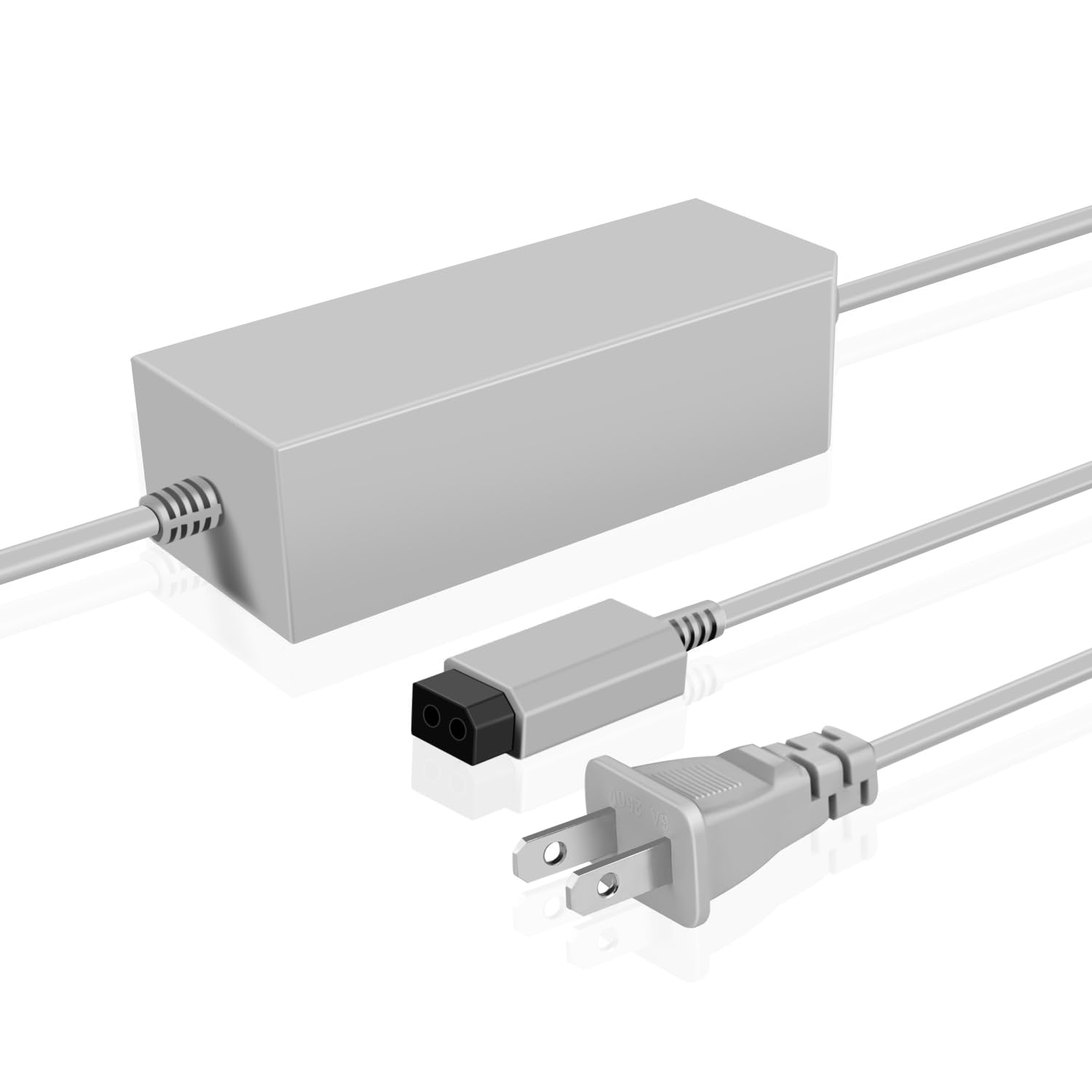
Built for the console that gets packed into a bag, not parked under a TV for a decade.
The spec that sells it is the input window: AC 100–245V. That is a wider band than most bricks here advertise, and it means the same adapter powers your Wii on a US outlet and a European one without you buying anything else. Output is the expected DC 12V 3.7A, so the console gets its correct power and functions normally.
It also carries an auto voltage function — the adapter adjusts its own input handling — along with protection against over-heating, over-voltage, short circuits, and voltage spikes. In a travel bag that protection list is the thing you quietly rely on. Quality ranks second in buyer feedback, behind the fact that it simply works.
The catch is weight and footprint. At 7.52 ounces and 9 x 4 x 2 inches it is noticeably heavier than the top pick’s 1.92 ounces, so it is better suited to a stay-put setup than a crowded carry-on. It is a utility brick, not a featherweight.
The takeaway: a wide-voltage brick with a full protection suite, best for a two-console household or a Wii that travels between rooms.
Fair warning: the bulk and the 7.52-ounce weight mean it will not disappear behind a slim TV stand the way lighter units do.
Reach for it when: the console moves rooms and you want one brick that handles any outlet.
Skip it when: space behind the TV is tight and a lighter brick would fit better.
4. AC Wall Power Supply Cable Cord for Nintendo Wii
An 8.3ft run of white cable that solves the real problem most Wii owners have: the outlet is nowhere near the console.
This one is intended for 120V AC US outlets and puts out 12V DC at 3.7A over an 8.3ft (2.5m) cord. The white jacket matches the original Wii color scheme, so it disappears against the console and the shelf instead of standing out like a black brick. It is sold as a spare for using the console in multiple rooms, which is exactly how most of these get bought.
Owner reviews praise its functionality above all, with buyers repeatedly using it to revive old consoles. Quality runs a close second. The mixed signal worth naming honestly is reliability — some units run for weeks without a hiccup while a few have failed within days. Treat that as a manufacturing-spread note rather than a guarantee of failure; the bulk of these simply work.
One listing detail to read carefully: the current rating field says 1.5 A while the product description says 3.7A output. If you are unsure which applies to the unit you receive, check the label on the brick itself before you trust it with your console.
What you actually get: a white 8.3ft replacement cord rated for US 120V outlets with the correct 12V DC 3.7A output line.
The honest snag: the reliability picture is uneven across units, and the listing carries two different current figures — verify the printed spec on arrival.
Suits you if: your console and outlet are far apart and you want a white cord that blends with the Wii.
Hold off if: you want a listing with a single, unambiguous spec sheet.
5. AC Power Adaptor for Nintendo Wii Console

The heavy, plain brick that first-generation Wii owners keep coming back to.
Input 110–240V AC, output 12V DC at 3.7A, total length 2.5m or 8.3ft. It is intended for US outlets and it replaces a lost, damaged, or broken cable without any drama. The interesting number is the input ceiling: at 240 volts it is the same headroom tier as the top pick and the KazeBloom cord, so voltage range is not the differentiator here.
What is different is heft. At 8.8 ounces this is the heaviest adapter on the list — well over four times the weight of the top pick’s 1.92 ounces. That weight sits flat and does not skate across a shelf, which some owners prefer. It also means the brick makes itself known in a backpack. Owner feedback rates functionality, quality, and value highly, and repeatedly notes it powers both first and second generation Wii consoles.
The uneven part is the compatibility field. It is listed as a mini USB connector type by the data on file, which does not match the Wii’s proprietary console plug — so check the physical connector in the photos before you commit. Everything else about the specification lines up.
What Earns Its Place
- 110V–240V wide-range input with the correct 12V DC 3.7A output
- Full 8.3ft (2.5m) length for reaching a distant outlet
- Heavy 8.8-ounce body sits flat and stays where you put it
- Powers both first and second generation Wii consoles, per owner reports
What To Check First
- The listed connector type reads mini USB, which does not match the Wii plug — confirm from photos
- Much heavier than most alternatives, so it travels poorly
Pick it if: you own a first-generation Wii and want a substantial brick with wide voltage tolerance.
Look past it if: portability matters or an unclear connector listing makes you uneasy.
6. Nintendo Official Genuine Wii AC Adapter Power Cable Cord

The real Nintendo brick, cleaned up, tested, and sold with a warranty card attached.
This is an official genuine Nintendo OEM adapter — the same part the console shipped with — sold as a Certified Refurbished unit. That means it has been functionality tested, given a basic cleaning, inspected, and repackaged. It ships with all relevant accessories and a minimum 90-day warranty, and it may arrive in a generic box rather than Nintendo retail packaging.
For purists this is the correct answer. There is no guessing whether a third-party brick matches Nintendo’s original spec because this is that spec, in the original housing. It is the only adapter on this list you can point at and say it is the genuine article.
Here is the catch, and it is worth reading twice. The data on this listing does not publish a voltage or current output figure, so you are buying on the strength of the Nintendo name and the refurbishment process rather than a printed 12V 3.7A line. That is normally fine for an OEM part. It just means you cannot cross-check the electrical spec the way you can with the third-party options here.
Where it clearly leads: genuine Nintendo build and a 90-day limited warranty, which no third-party adapter on this page offers.
What you give up: no published output spec to verify, and a generic box rather than retail packaging.
This is your adapter if: nothing but the official Nintendo part will do and you want a warranty behind it.
Not for you if: you need to see the exact output numbers printed on the listing before buying.
7. Power Supply Adapter US Plug
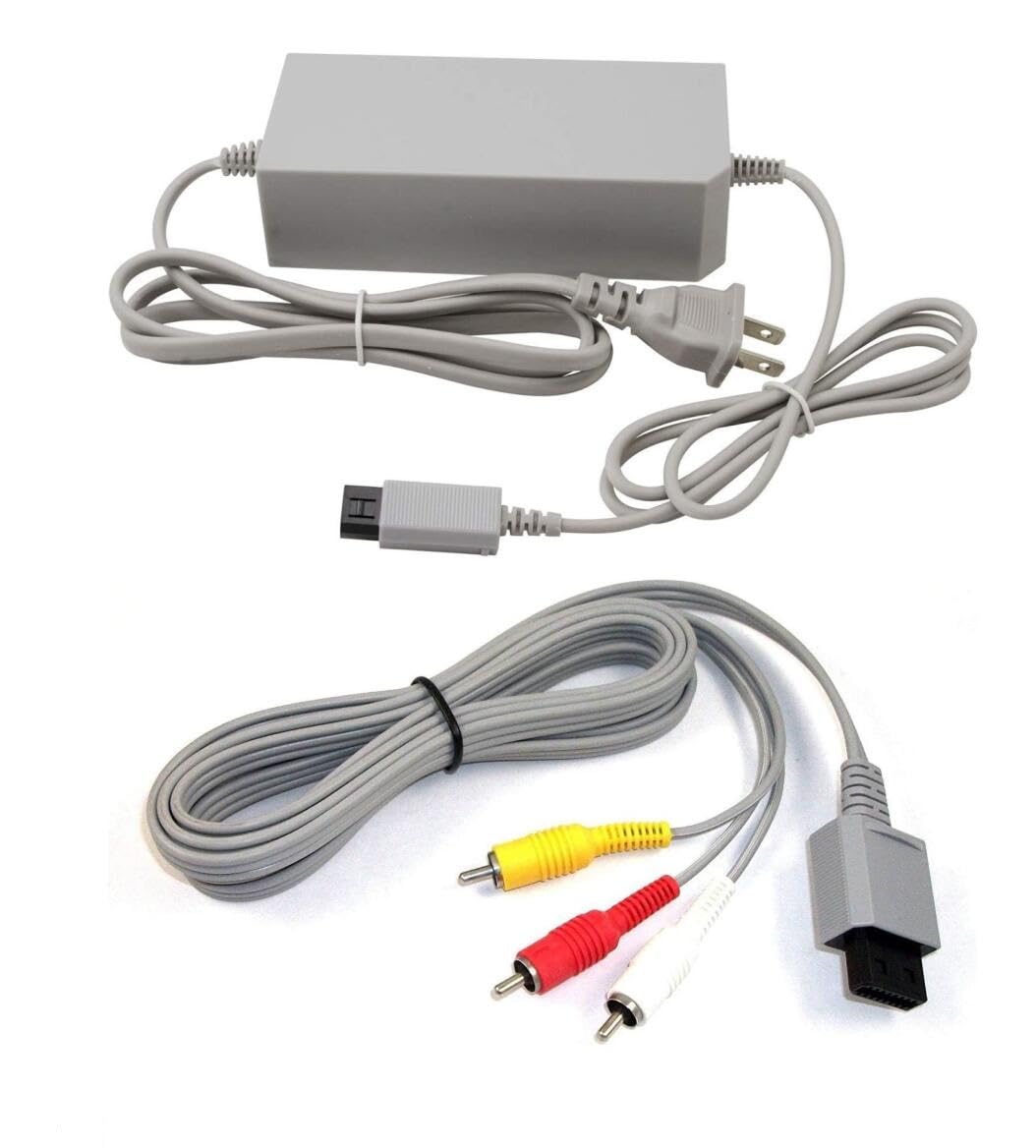
Two problems solved in one box — but the smaller power output is the trade you make for it.
Most adapters here only fix the power. This one also includes an AV RCA composite cable, the three-plug lead that carries video and audio to your TV. If your Wii is missing both the brick and the video lead, that pairing saves you a second purchase. The adapter itself lists a 110–240V input range and a lighter, less bulky body than the older bricks.
Here is where it loses ground against every other pick. Output is DC 12V at 2A, not the 3.7A the rest of this list delivers. Compare that to the top pick’s 3.7A and the current gap is real — this is a 24-watt adapter where the others sit around 44 to 45 watts. For basic gameplay it may be enough; for anything drawing harder, it is the weakest power supply here.
It is also explicitly a third-party product, not original, and it will not work with a Wii U console or gamepad. Two things to weigh together: the bundled video cable is genuine value if you need one, but you are pairing it with the least powerful brick on the page.
What Makes It Different
- Bundles an AV RCA composite video cable so you get picture and power together
- 110V–240V input range on a lighter, less chunky body
- Short-circuit protection built in
What The Numbers Show
- 12V 2A output is below the 3.7A the other adapters deliver
- Explicitly a third-party part, not an original Nintendo product
- No Wii U compatibility at all
Consider it when: you need a video cable and a power brick in a single order and your console is a light-use machine.
Pass if: you want maximum current headroom — the higher-amp bricks above are the safer bet.
Know the Specs
Output Voltage and Current (12V DC, 3.7A)
The Wii console expects 12 volts of direct current at 3.7 amps. Volts are the push; amps are the volume of current flowing. If an adapter delivers fewer amps than the console draws, the console either refuses to start or cuts out when the load rises. This is the single line to check on any replacement brick: 12V DC, 3.7A. Anything less, like the 2A unit in this list, is a lower-current adapter by design.
Input Range (100V–240V AC)
Input voltage is what the adapter expects from your wall outlet. A US outlet provides around 120V; many other countries run at 220V to 240V. An adapter rated 100V–240V handles all of them, which matters if the console travels. A unit listed at only 100V is built for US use only, and one at 240V is aimed at higher-voltage mains. Always match the adapter’s input range to the outlet you will actually use.
Nominal Power in Watts
Watts are volts multiplied by amps — the total work the adapter can do. The adapters in this list that run 12V at 3.7A land around 44 to 45 watts nominal. The 2A combo adapter lands at 24 watts. The higher wattage gives the console more headroom when it draws a burst of current during disc reads and boot-up.
Cable Length and Gauge
The standard replacement cord is 8.3ft (2.5m). That length is about reach, not performance: it determines whether the brick can sit behind the TV stand while the console sits on the shelf. Shorter or unspecified cables push the brick closer to the console. None of these listed lengths affect output, they just affect how neatly you can arrange the setup.
Common Questions
Will a third-party Wii power adapter damage my console?
Do these adapters work with the Wii U?
What happens if I use a 12V 2A adapter instead of 12V 3.7A?
Is a refurbished genuine Nintendo adapter better than a new third-party one?
Can I use these adapters overseas on 220V or 240V mains?
How long is the cable on these Wii power adapters?
Does the adapter warm up during use?
Can I keep one adapter for two consoles in different rooms?
What is “auto voltage” on a Wii adapter?
Does a replacement adapter include the AV cable too?
The Bottom Line
For most people bringing a dark Wii back to life, the Console Charger for Nintendo Wii by Xahpower is the right answer — a verified 12V 3.7A output, an 8.3ft cord, and a wide 100V–240V input that works on any outlet you meet. It also carries 4.5+ stars across 2,000+ owners, the largest owner base on this page.
If a spare brick for a second room is what you are after, the PEGLY Wii AC Adapter delivers the same 12V 3.7A output in a matte shell for a backup. And if nothing but the genuine Nintendo part will do, the Official Genuine Nintendo refurbished adapter carries a 90-day warranty and the OEM label. The one to avoid for a daily console is the lowest-current unit — a 2A output when the console wants 3.7A is a compromise you feel in gameplay.
How we choose
We do not accept paid placement. Every pick is matched to a real buyer and a real use-case; we do not hands-on test units.
Sources
Specifications: manufacturer listings and product documentation. Review insights: verified customer reviews, as of November 2026. Pricing: not shown on this page (it changes often); check the current price via the retailer link.
As an Amazon Associate, Tactical Gear Guy earns from qualifying purchases. This does not affect which products we feature.