Specs are compiled from manufacturer listings and verified buyer reviews and can change over time — please confirm the key details on the product page before buying.
You want sound that moves around the room instead of blaring at the screen — and the plain truth is that most of what sells as a wireless home theater still hides a cable somewhere. The picks below separate cleanly into two jobs: soundbars that build a full surround field around your TV, and standalone wireless speakers for music anywhere in the house. Start with the system that matches the room you actually own, not the one in the product photos.
This guide is built by comparing the manufacturers’ published specifications and the patterns across verified customer reviews, so you get each pick’s real strengths and trade-offs instead of marketing spin.
The difference that matters most is channel count: a 5.1 system puts sound around you, while a 5.1.2 adds overhead height drivers that place rain and helicopters above your head. Every pick below is checked on that scale, so you can buy the right wireless speaker system on the first try.
Top Picks

How To Choose The Best Wireless Speaker System
Almost everyone buys the wrong thing here for the same reason: they read “wireless” and assume no cables at all. In a surround system, wireless usually means the rear speakers and the subwoofer receive their audio over a radio link instead of a speaker wire — each box still needs its own wall power. Judge a system by where the audio signal travels, and by which boxes need a plug near them.
Read the channel count as a map of your room
A 5.1 system means five speakers plus one subwoofer: three across the front (left, center, right), two behind you, and the bass box. Add a third number — 5.1.2 or 7.1.2 — and those extra channels are height drivers aimed at the ceiling, which is what makes a helicopter feel like it is directly above you. If your room has a low, flat ceiling, those up-firing drivers have something to bounce off. Behind a sloped attic ceiling, they lose that surface and the overhead effect fades.
HDMI eARC versus optical, in plain terms
HDMI eARC is the connection that lets your TV hand the soundbar a full, uncompressed surround track on a single cable. Optical is the older slot and it cannot carry the height channels of a Dolby Atmos mix, so the system has to fold that overhead sound back down into the regular speakers. If you are buying an Atmos system, plug it into eARC and let optical be the backup for an older TV.
Match the subwoofer to the room, not the spec sheet
The subwoofer number in inches measures the cone that moves air. A 10-inch driver moves more air and reaches lower than a 5.25-inch one, but a bigger box also needs floor space and delivers bass your neighbours will hear through a shared wall. In a small apartment, a compact sub tuned well often sounds cleaner than a huge one turned down.
Decide if you want a movie system or a music speaker
A soundbar package is built around a screen: it decodes surround tracks and places dialogue in the center channel. A standalone wireless speaker is built around a room, with Wi-Fi streaming, multiroom grouping, and app equalizers. The two overlap less than the marketing suggests, so pick the job first and the product second.
Side-by-Side Comparison
| Model | Best For | Channels | Subwoofer | Connectivity | Amazon |
|---|---|---|---|---|---|
| ULTIMEA Skywave X40★ Best Overall | Full Atmos room on a mid-range budget | 5.1.2 | 6.5 in | HDMI eARC, Optical, Bluetooth, USB | Amazon |
| Inwa MZ-621 Outdoor 2-PackBest Outdoor Pick | Patio and gazebo sound, synced across many speakers | Stereo pair | — | Bluetooth | Amazon |
| ULTIMEA Aura A60 ProBig-Room Surround | Big living rooms that want four surround boxes | 7.1 | 5.25 in | HDMI eARC, Optical, AUX, Bluetooth 5.4 | Amazon |
| TCL S65K S Series | Self-calibrating Atmos for mixed-room furniture | 5.1 | 6.5 in | Bluetooth, Wi-Fi, HDMI, USB | Amazon |
| Bose Lifestyle Ultra | One-room music speaker with AirPlay and Cast | Single speaker | — | Wi-Fi, Bluetooth, AirPlay, AUX | Amazon |
| Amazon Fire TV Soundbar Plus | Fire TV households chasing budget Atmos | 5.1 | Included | Bluetooth | Amazon |
| Sony BRAVIA Theater System 6 | Pairing with a BRAVIA TV for voice clarity | 5.1 | Wired, included | Bluetooth | Amazon |
| JBL Bar 700MK2 | Detachable rears with no wires in the back | 7.1 | 10 in wireless | Wi-Fi, Bluetooth, HDMI, Optical, USB | Amazon |
| Polk MagniFi Max AX SR | Overhead Atmos plus music streaming in one bar | 7.1.2 | 10 in wireless | HDMI eARC, Optical, USB, Wi-Fi, Bluetooth | Amazon |
| Nakamichi Shockwafe 9.2.4 | Maximum bass and channel count in a large room | 9.2.4 | Dual 10 in wireless | HDMI eARC, Optical, Coaxial, Aux, Bluetooth | Amazon |
Detailed Reviews
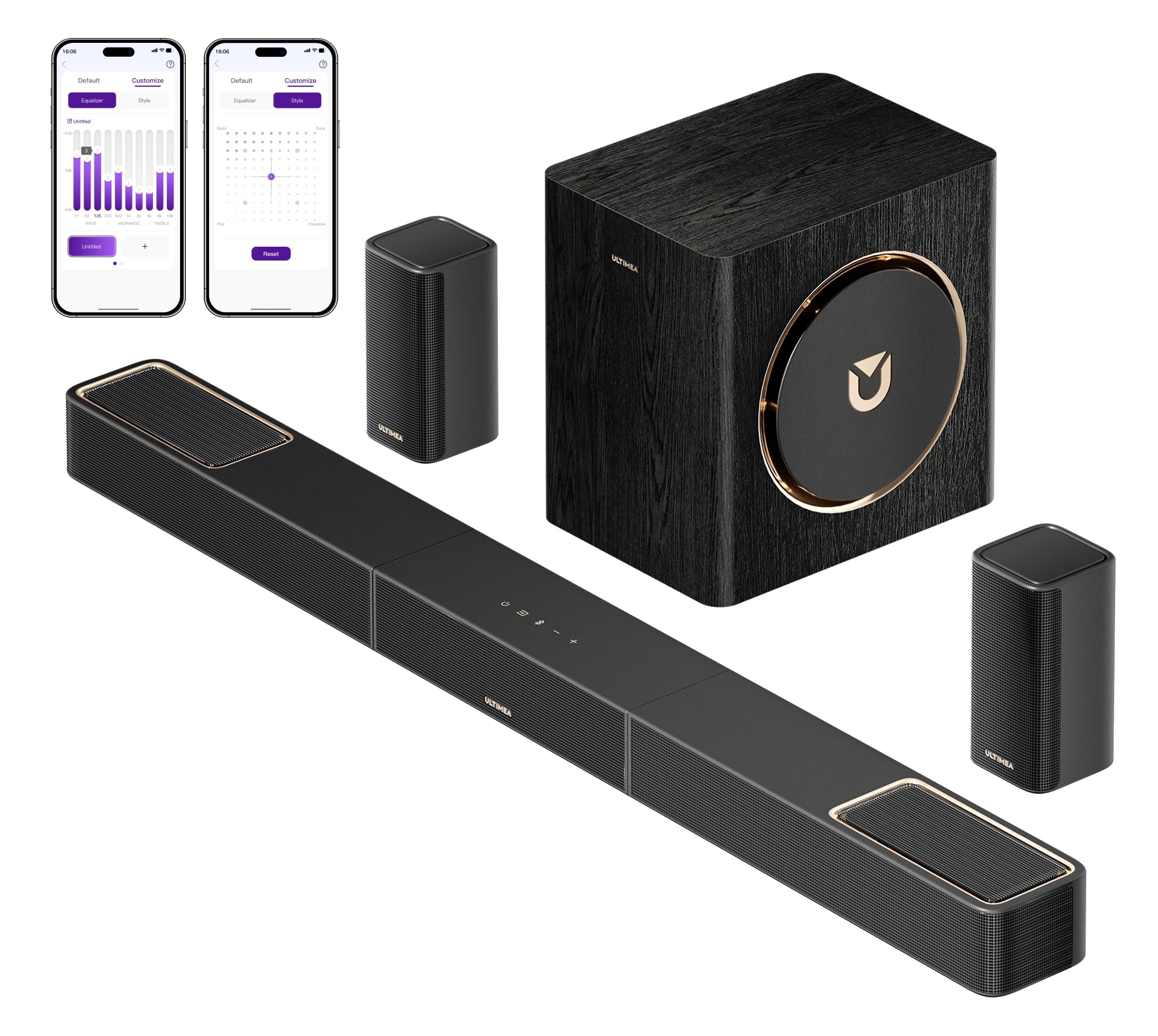
1. ULTIMEA Skywave X40 5.1.2ch Sound Bar for Smart TV
Our pick — 4.5+★ from 250+ verified ratings; the strongest balance of quality and price.
A true 5.1.2 Atmos room where the only cable you route is power.
You get overhead sound without drilling holes for ceiling speakers. This system makes that case loudest. It carries 530W of peak power across a 6.5-inch subwoofer and two rear surrounds. Those rears talk to the bar over dual 5GHz wireless links — the same crowded frequency band your home Wi-Fi uses. RF (radio frequency) and networking protocols are meant to hold the connection and stop dropouts. The result: overhead effects come from the ceiling plane instead of the left front speaker.
That power figure is why it leads this list. It is 530W against the 400W of the Inwa outdoor pair. Its 6.5-inch driver is also the bigger cone next to the 5.25-inch sub in the ULTIMEA 5.1.2ch below. The larger cone moves more air, which is what produces the deep rumble in an action scene. Bass reaches down to 35Hz (low, room-shaking notes) through what the maker calls Gravus Ultra-Linear Bass Technology. That is their oversized waveguide and acoustic chamber, designed to keep the low end full even when you turn it up.
Sound wins people over first — it is far and away the most-praised quality in this system’s reviews, with setup a distant second. Owners describe it as theater-like and genuinely loud. A good share of that goodwill lands on the subwoofer, which surprises people at this size. Setup is close to simple to use: connect it to the TV and the wireless surrounds find the bar on their own. The amp uses a GaN (gallium nitride) design the maker rates at up to 98% efficiency. That means less energy lost as heat, so the amplifier runs cooler through a long film. A triple-core DSP (a dedicated audio processor) handles 24-bit/192kHz conversion with under 0.5% distortion. 4K HDR pass-through keeps your picture intact through the bar.
The honest catch is wireless, not cordless. Each of the two surrounds and the subwoofer still wants its own wall outlet, so plan where those three plugs live before the box arrives. The connection side draws more mixed notes than the sound does, and the adjustability (24 mentions) gets its share of grumbles — the tuning takes some fiddling to land on your room. Sound quality carries 165 mentions here, and the vast majority are positive; the 4.5+ star score across 250+ ratings backs that up.
What earns it the crown
- 5.1.2 layout with up-firing height channels for true overhead Atmos
- Dual 5GHz wireless rear speakers — no speaker wire crossing the floor
- 530W peak power and a 6.5-inch subwoofer that reaches down to 35Hz
- 4K HDR pass-through keeps picture quality with a single HDMI eARC run
- GaN amplifier rated at up to 98% efficiency for cooler running
What to plan around
- Each surround and the sub still need their own power outlet
- The app-style tuning takes patience to dial in for your room
- Music-first listening is not its strongest suit — it is built for the screen
Reach for it when: you have a flat ceiling, a spot to wall-mount two rears, and you want Atmos overhead effects without an installer.
Think twice if: your seating area has no outlet near the rear corners — those three plugs are non-negotiable.
2. Inwa MZ-621 400W Wall Mount Outdoor Bluetooth Speaker 2-Pack
Mount two boxes under the porch roof and the whole backyard fills with sound.
This is the pick for the covered patio, the gazebo, the garage bar — places where a soundbar has no wall to live on. Each box carries a 1-inch tweeter and a 4-inch woofer, runs 400W of peak power (40W RMS per speaker at continuous power), and takes its juice from an included corded adapter rather than a battery. The networking trick is the real draw: it supports up to 100 speakers chained over Bluetooth, so you can start with the pair and keep adding boxes around the property as the yard grows.
It also mounts fast. At 9.4 inches long and 5.3 inches tall, each box tucks under a porch roof or patio cover, and every bracket and screw arrives in the box. The Bluetooth name to look for is “Sync Speaker,” and it only syncs with other Inwa outdoor speakers under that name — a genuine limit if you were hoping to add a different brand later.
What buyers respond to is the output for the size: sound quality is the top praise by a wide margin, with value-for-money second, and owners describe them as louder and better than the price implies. The Bluetooth link is the split opinion — pairing to a phone is simple for most, but a fair share hit trouble keeping the two speakers talking to each other. Reliability sits in the same mixed territory, mostly around a second speaker that will not wake up. The remote draws the sharpest criticism of all; some units simply do not respond to it. At 4.0+ stars across 500+ ratings, the overwhelming majority are still happy campers.
The weather rule: “splash-resistant” means exactly that and no more. These mount under a roof, handle a stray spray, and must not sit in direct rain or take a dunking — the ABS mesh grille protects the driver but the housing is not sealed for immersion.
Suits: covered outdoor spaces and anyone who wants the option to scale up to a property-wide sound chain.
Less suited to: exposed decks with no overhead cover, or anyone who needs a battery-powered box they can carry to the beach.
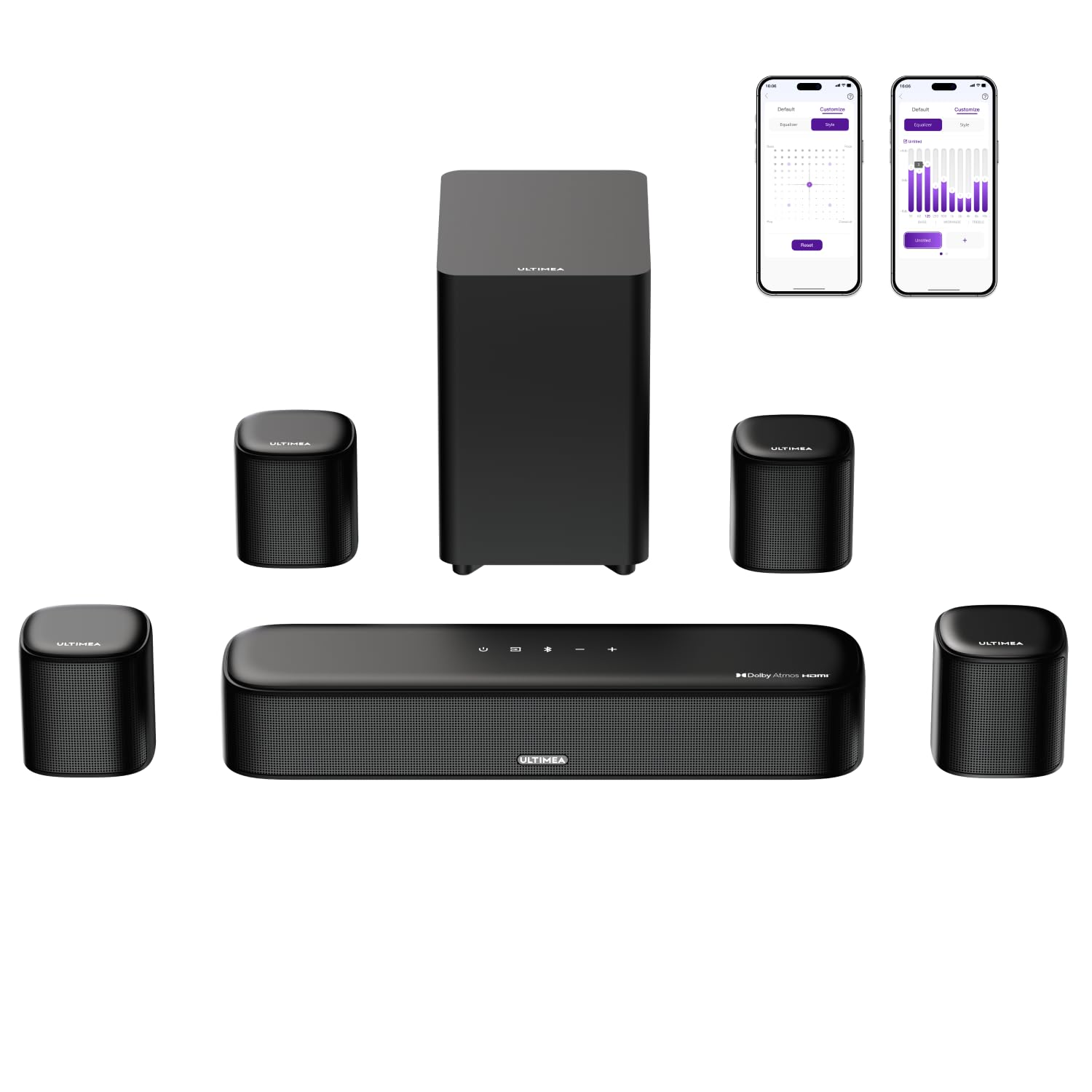
3. ULTIMEA Aura A60 Pro 7.1ch Dolby Atmos Surround Sound System
Four surround boxes and a wired sub fill the room a single bar cannot reach.
Rooms between 108 and 270 square feet are where this system earns its keep. It runs a 7.1-channel layout with three front channels for dialogue and four surround speakers — two front and two rear — spreading the field wider than the 5.1.2 bars above. The two rear surrounds pair wirelessly with the bar, which trims the cable run across the floor without cutting the audio link. A 5.25-inch wired subwoofer with BassMX technology supplies the low end through an tune magnet structure and diaphragm.
If you like tuning by phone, the Ultimea App is the standout. It offers 121 professionally tuned EQ presets, a 10-band control, and six tailored modes — Movie, Music, Voice, Sport, Game, and Night. So Night mode can tame a late-night film and Game mode can push effects forward. This is a 7.1 layout rather than 7.1.2, so the height effects come from Dolby Atmos processing rather than dedicated up-firing drivers. If true overhead channels are your goal, the Polk or the JBL below are the cleaner route.
Why it suits a large lounge
- Three front channels plus four surround speakers widen the stage
- Recommended footprint of 108 to 270 square feet matches a big living room
- 121 EQ presets with six listening modes for film, sport, and gaming
- Rear surrounds link to the bar wirelessly
The honest limit
- The subwoofer is a wired 5.25-inch box, so it needs to sit near the bar
- No dedicated up-firing height drivers — it is a 7.1 layout, not 7.1.2
- A four-speaker surround arrangement takes real placement planning
Good match for: a mid-to-large living room where you want surround spread across four boxes and app tuning to fit the furniture.
Not the fit for: a small bedroom or a setup where you want the subwoofer across the room from the bar — its cable decides that for you.
4. TCL S65K S Series 5.1 Channel Soundbar System
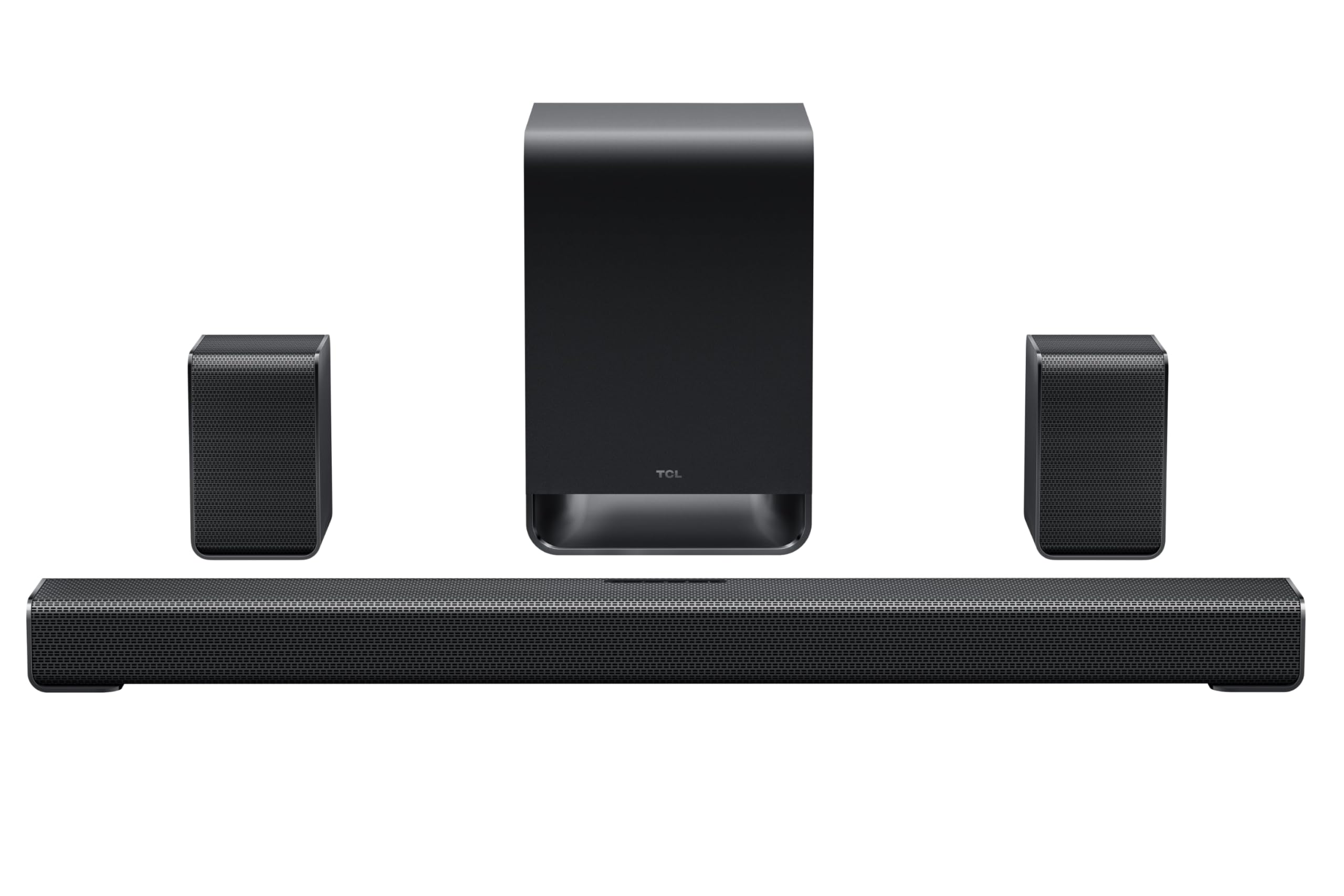
The bar that measures your room and retunes itself before you touch a setting.
Ai Sonic auto room calibration is the reason to put this one on your shortlist. The system samples the space and tailors its output to it. That matters in a lounge with an odd sofa layout or a big rug. It is a 5.1 layout with a 6.5-inch wireless subwoofer and Bass Boost, plus wireless surround speakers, so the rear boxes call in without speaker wire. Dolby Atmos and DTS:X (two surround-sound formats) both decode here. That is a real advantage over bars that handle Atmos only.
Connectivity is a genuine strength: Bluetooth, Wi-Fi, HDMI, and USB are all on the spec sheet, so streaming from a phone and wiring to a TV are both covered. A single HDMI cable handles the TV link. There is also a built-in center channel tweeter and a dedicated center speaker, which keeps dialogue clear when the soundtrack gets loud, and ChoruSound lets the TV’s own speakers work alongside the bar for a wider front stage. Ray Danz technology expands the soundstage further.
Owners describe punchy bass and a setup that runs straight from the start. Sound quality is the most-discussed topic by a wide margin, with setup second, and the immersion theme comes up on its own — the system makes a movie feel bigger than a flat-panel TV ever does. The 4.5+ star score across 100+ ratings is the highest on this list alongside the JBL and the Best Overall pick. If you want the fewest knobs to turn, this is the friendliest path.
One thing to size up: the bar measures 33.46 inches wide, so check the span of your TV stand or the space in front of the screen before it ships.
Made for: the listener who would rather the system tune itself than learn a 10-band equalizer.
Look elsewhere if: you crave the overhead height drivers of a 5.1.2 layout — this one is a 5.1 system with both major surround formats instead.
5. Bose Lifestyle Ultra Wireless Home Speaker
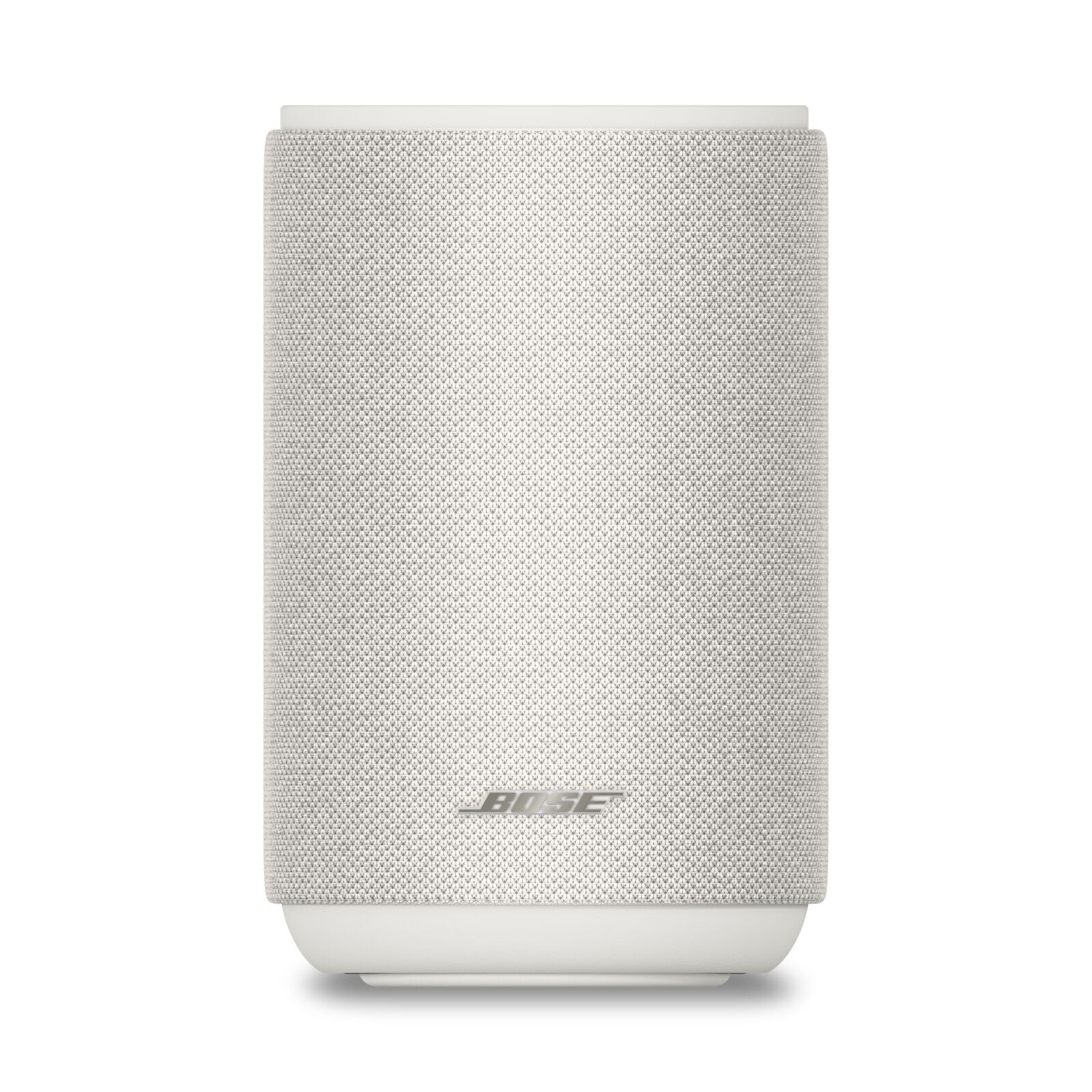
One compact box, every streaming route, and a room that sounds bigger than it is.
The Bose entry is not a home theater kit and does not pretend to be — it is a single wireless speaker that builds its stage from TrueSpatial Audio and CleanBass. The compact design drops easily into a kitchen, den, or bedroom, and the adjustable EQ inside the Bose app lets you shift from crisp highs to full low end on the fly. Play it by touch, by app, or by voice; Alexa+ is built in, so you can manage playback and smart-home routines by speaking. Bluetooth reaches 30 feet, and Wi-Fi, AirPlay, Spotify, and Google Cast all connect, so whatever app you stream from has a route in. An AUX input lets you plug a turntable or CD player straight into it.
Where it wins is sound, and that is what the reviews center on. People expect a small speaker to sound small, and this one fills a room instead. Value also gets steady praise, framed relative to its size rather than its spec sheet. The multiroom trick is the quiet advantage: pair two for stereo or group several across rooms for music that follows you through the house, all controlled from one app.
The trade-off is the wireless reliability of its own ecosystem. Bluetooth is the split opinion — pairing is simple, but keeping a steady link to Amazon Music proves fussy for some. Setup itself divides listeners too, with some sailing through and others finding the app steps fussy. This one is a music companion; if what you want is surround behind the TV, the soundbars on this list do that job.
Worth knowing: the speaker is not waterproof, so a bathroom shelf or a covered kitchen counter is fine, a shower or patio in the rain is not.
Best fit: a music lover who wants one great-sounding box that moves between rooms and takes every streaming service.
The wrong tool for: a movie-first setup that needs a center channel and rear speakers — this is a single speaker by design.
6. Amazon Fire TV Soundbar Plus

A five-channel surround kit that plugs in, pairs up, and stays out of your way.
For a Fire TV household, this is the path of least friction: a 5.1 setup with a subwoofer and two surround speakers, Dolby Atmos and DTS:X both on board, and one remote handling the TV and the bar. The rear speakers and sub connect to the bar once each gets power, so the wiring stops at the wall outlet instead of crossing your rug. A dedicated center dialogue channel sharpens voices, and Movie, Music, Sports, and Night modes reshape the sound to whatever is on. Your own headphones go on over Bluetooth.
The experience people describe is a smooth one — set it up, connect to the TV, and it just works from the first session. Setup is overwhelmingly praised, with buyers calling it plug-and-play. Dialogue clarity comes up on its own as a bright spot thanks to that center channel. The adjustability is better than the tier suggests, too: you can trim each speaker and control the subwoofer and the rear speakers separately rather than living with one master volume.
Reliability is the one mixed signal. Working units are common, but a share of buyers report the system going quiet after a stretch of use. Sound quality is the most-discussed topic by far and the majority of that conversation is positive. At 4.0+ stars across 500+ ratings, it is a sensible pick if you already live inside the Fire TV world and want Atmos without adding another remote.
The right call if: you are already in the Fire TV ecosystem and want one remote, Atmos decoding, and a rear-surround kit that sets up in minutes.
Weigh the alternative if: you want the strongest long-term reliability record — the higher-rated systems here edge it out on that front.
7. Sony BRAVIA Theater System 6

Pair it with a BRAVIA TV and whispered dialogue stops being a rewind problem.
This one has a specific buyer: someone who already owns a compatible BRAVIA TV. Pair the two and the soundbar menu lives inside the TV’s own interface, and Voice Zoom 3 lets you lift dialogue above the soundtrack without touching the rest of the mix. The hardware is a 5.1 layout — three front-firing speakers, two rear speakers, and a wired subwoofer — with Dolby Atmos and DTS:X decoding, plus a dedicated center channel speaker where dialogue actually lives. Multi Stereo can push the same sound through every speaker for a room-filling boost.
Downrange, the frequency response starts at 20Hz, which is where the deep rumble begins to register on paper. The DSEE processing up-mixes your music to restore acoustic detail, so streaming from your phone over Bluetooth sounds richer than the source. The BRAVIA Connect app handles volume, sound profiles, and the advanced settings without digging through on-screen menus.
Where it delivers is sound that makes a room feel like a theater, and the subwoofer gets credit for the extra bass. Value holds up, and setup is generally called plug-and-play. Reviews do flag the rear speakers popping or crackling for some listeners, and the HDMI cable connection is the other contested point — cable compatibility trips some setups. The rear amp still needs to plug in, so “wireless” here means a rear amp box, not zero cables. The 4.0+ star score across 500+ ratings reflects a system most owners are glad they bought.
The pairing dividend: Sony reserves its fullest dialogue control for compatible BRAVIA TVs. On another brand’s screen, you get a capable 5.1 system but not the deep menu integration.
Built for: current BRAVIA owners who want cleaner dialogue and full Atmos without another brand’s soundbar fighting the TV.
Less compelling for: non-BRAVIA households — you would be paying for integration you cannot use.
8. JBL Bar 700MK2 Soundbar with Detachable Wireless Surround

Lift two speakers off the bar, set them behind you, and surround is done.
The design trick here is one of the cleverest in the whole category: the two surround speakers are detachable ends of the bar itself. Lift them off, set them behind the couch, and you get a true 7.1-channel surround without running a wire or hunting for an outlet at the back of the room. The bar pumps 780W max, and a 10-inch wireless subwoofer puts the low end into your chest. Dolby Atmos and DTS Virtual:X create the 3D field, and MultiBeam 3.0 projects the soundstage across the whole room so a corner seat still gets a good listen.
Dialogue gets its own fix. PureVoice 2.0 automatically tune voices based on the scene and the volume, so a whispered line cuts through a loud action sequence — exactly where plain bars lose the plot. The 20Hz-low frequency response means the sub genuinely reaches the bottom of the range. The built-in microphone and stereo pairing round it out, and the maker’s own spec frames the detachable design as the headline: true surround in seconds, no wires.
Owners consistently report better than expected sound, and you can feel the bass where you are sitting. Setup is praised without a single sour note, and connectivity earns equally clean marks. The interesting split is battery life. The detachable rears run on their own charge, and some listeners find they need a top-up more often than expected. Others say a rear does not seat and charge cleanly in its dock. It is a small queue of complaints against a lot of happy owners. 4.5+ stars across 100+ ratings puts it near the top of this list.
The pick if: you want real rear speakers with zero cable runs and a subwoofer that reaches deep at a mid-premium tier.
The compromise: the detachable rears need dock charging, so leave a habit plan for re-seating them on the bar after a film.
9. Polk Audio MagniFi Max AX SR 7.1.2 Soundbar System
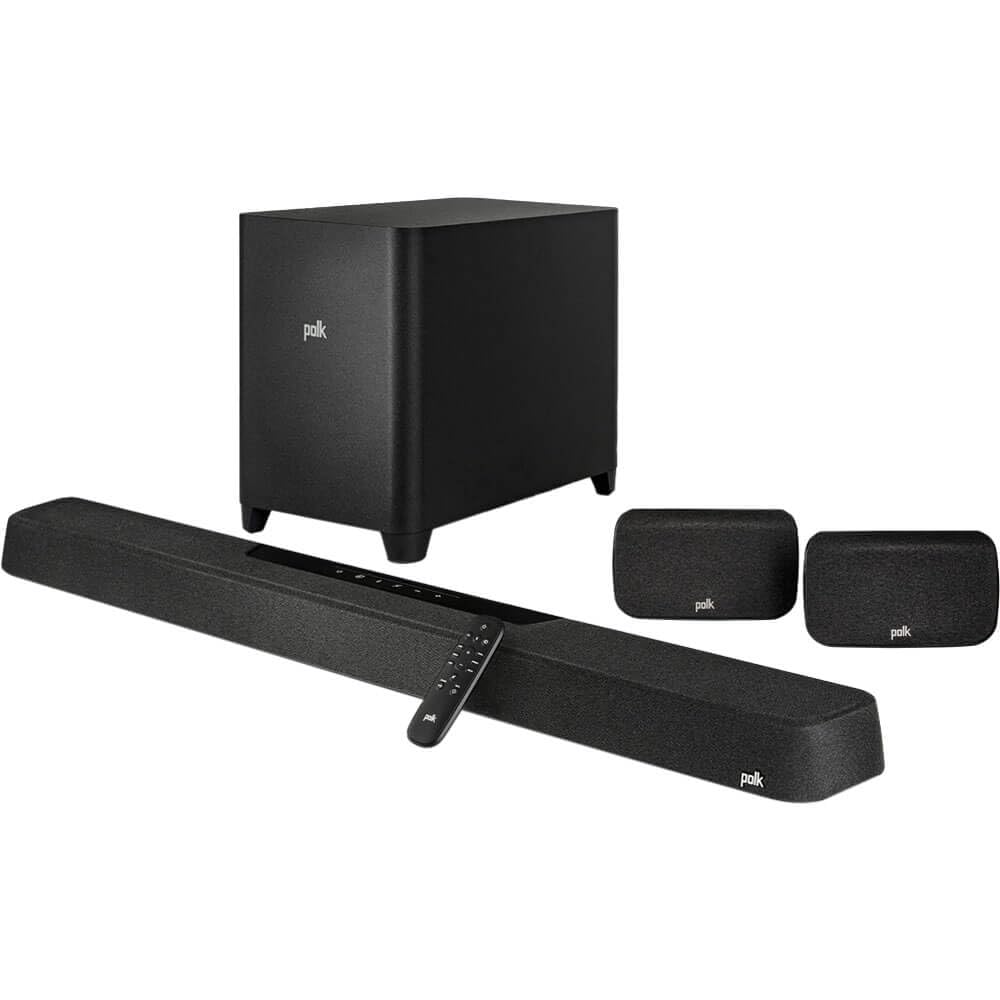
Overhead Atmos effects, a 10-inch wireless sub, and a Wi-Fi streaming system in one bundle.
Two up-firing speakers give this system genuine 7.1.2 overhead placement, certified for Dolby Atmos and DTS:X, and Polk’s SDA 3D technology drives the spatial spread. The bundle includes a 10-inch wireless subwoofer that connects the moment it powers on, plus SR2 surround speakers, so the back of the room is covered without speaker wire. VoiceAdjust technology works with the integrated center channel to lift dialogue without disturbing the rest of the soundtrack — a real win for anyone who watches with subtitles for reasons other than language.
It is also the media hub of this group. Wi-Fi, Bluetooth, Apple AirPlay 2, Chromecast, Spotify Connect, and AlexaMRM are all on board, so a phone, tablet, or computer can stream straight into the system. Three 4K HDMI-in ports and one HDMI eARC handle your sources and pass-through, and the connectivity list includes optical and USB-A for firmware updates. In practice that turns the soundbar into a switch box for a console, a streaming stick, and a disc player.
Sound quality carries the reviews, and quality lands right behind it. Value is framed as a bargain among premium soundbars, and setup is praised for being straightforward. The honest edges: automatic pairing and Bluetooth stability get mixed reports, and there is a thread of reliability commentary about crackling from one speaker or a subwoofer that acts up. With 4.0+ stars across 300+ ratings, the balance still favours a purchase — especially for a household that wants streaming and surround in a single system.
Room-shaping win: the 10-inch sub is the same cone size as the JBL’s, but here you also get onboard Wi-Fi streaming and three HDMI inputs, which makes it the more connected system of the two.
Go for it when: you want one box to handle overhead Atmos, phone and AirPlay streaming, and three HDMI sources at once.
Before you commit: plan the sub’s placement and network setup — auto pairing can take a little coaxing.
10. Nakamichi Shockwafe 9.2.4 Dolby Atmos Soundbar System
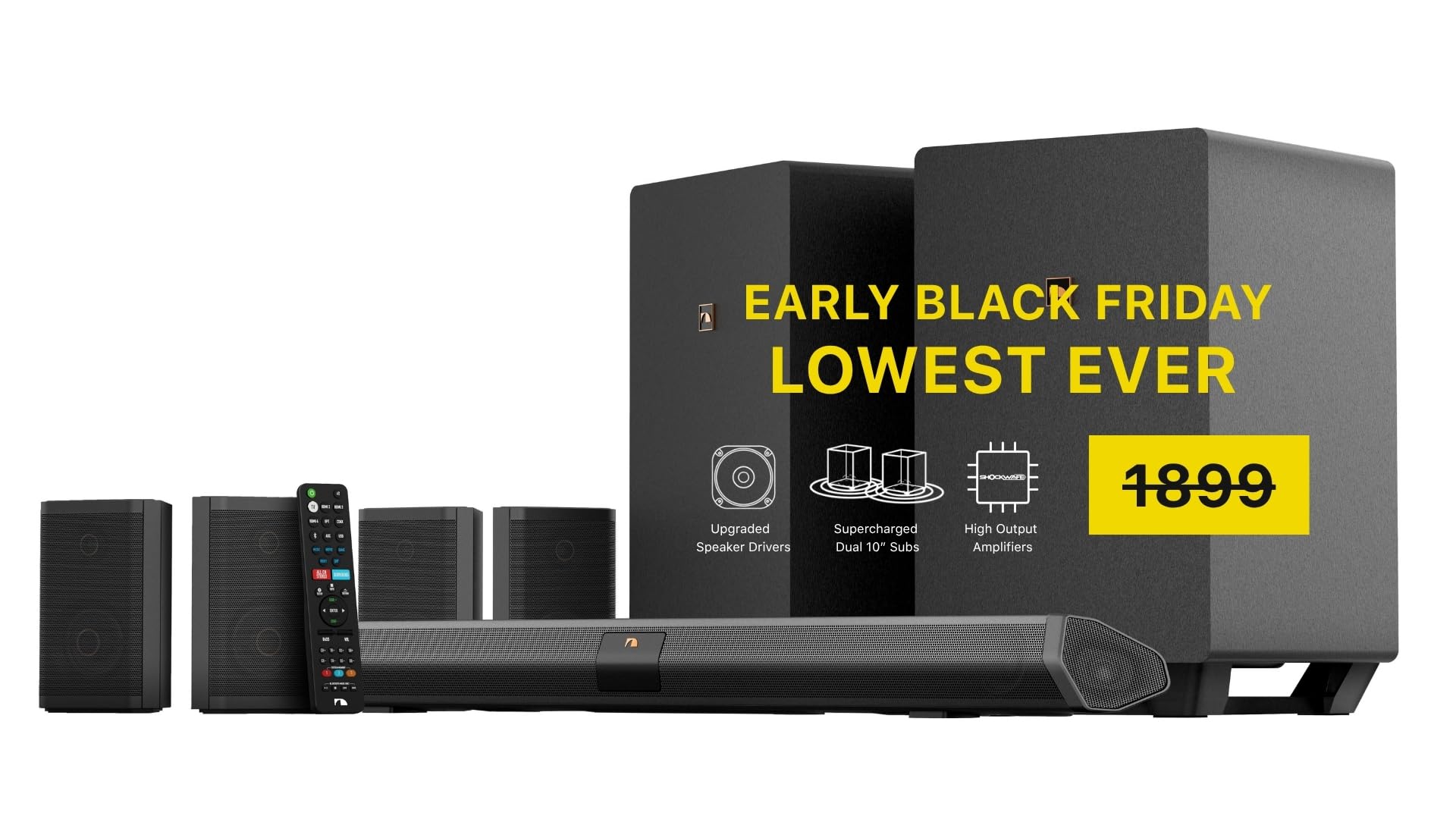
Twin 10-inch subs and nine channels of surround for a room you want to feel.
This is the biggest system on the list, and it behaves like it. The 9.2.4 layout pairs a soundbar with two 10-inch wireless subwoofers — an industry-exclusive dual-sub arrangement the maker rates at up to 600W of high-output amplification — and four modular surround speakers. Run both subs and the low end spreads evenly around the room instead of concentrating in one corner, which keeps the bass from sounding like it is coming from a single spot. That is the engineering argument for two boxes rather than one bigger one.
The connections are just as complete: HDMI eARC with three HDMI inputs, Dolby Vision and 4K HDR pass-through, and 24-bit Bluetooth aptX HD streaming. Optical, coaxial, and 3.5mm aux round out the inputs. Dolby Atmos and DTS:X both decode through the maker’s SSE MAX engine, and the backlit remote helps when the lights are down.
What people describe is scale — the whole room moving with the soundtrack. Sound quality carries the reviews by a wide margin, and a recurring theme is that the bass shakes the room rather than just filling it. Movie-night impact is the other recurring win. The genuine caveats: the four surround speakers actually wire back to the subwoofers with RCA cables rather than flying free, so “wireless” here is about the subs, not the rears. Interference notes about audio dropping out also appear. And the physical footprint is real — each sub measures 20.2 inches tall and weighs 23.8 pounds, so floor space and placement matter. At 4.0+ stars across 500+ ratings, it rewards the buyer with the room for it.
Why it belongs up here
- Dual 10-inch wireless subwoofers spread bass evenly around the room
- 9.2.4 channel layout with four modular surround speakers
- HDMI eARC plus three HDMI inputs with Dolby Vision and 4K HDR pass-through
- 24-bit aptX HD Bluetooth for high-resolution music streams
Space and setup realities
- Each surround speaker runs an RCA cable back to a subwoofer
- Each sub stands 20.2 inches tall and weighs 23.8 pounds — plan floor space
- Some listeners report audio dropouts tied to wireless interference
Designed for: a dedicated media room where two subs and four surround boxes have room to breathe.
Not for: a compact apartment or anyone expecting all four rears to be truly cordless.
Know the Specs
Channel counts like 5.1 and 5.1.2
The first number is how many ear-level speakers the system drives, the second is the subwoofer count, and the third tells you how many height channels fire at the ceiling. A 5.1.2 system like the Best Overall pick runs three front speakers, two surrounds, one sub, and two up-firing height drivers — which is why rain and helicopters land overhead. A 7.1.2 adds extra side surrounds, and a 9.2.4 doubles the subs and surrounds for a larger room. Fewer channels is not a flaw; it just means the sound field is smaller. Match the number to your seating distances: a 5.1.2 fills a normal lounge, a 7.1.2 or 9.2.4 needs a wider room to spread out.
Wireless means signal, not zero cables
Every surround system here still needs power at each box. The wireless part is the audio signal — the rears and sub receive it over a radio link instead of a speaker cable. On the JBL the rears are detachable speakers that run on their own battery and dock into the bar to charge. On the Nakamichi the subs are wireless but each surround speaker still runs an RCA cable back to a sub. On the outdoor Inwa pair, the boxes are wireless for audio but take power from a corded adapter. Read the cable note on each pick, not the headline.
Subwoofer size and the bass you feel
The inch figure is the cone diameter. A 5.25-inch cone moves less air than a 6.5-inch, and a 10-inch cone moves the most of the sizes on this list. Bigger cones and bigger boxes reach lower frequencies, which is what you feel in your chest during an explosion. Two 10-inch subs, as on the Nakamichi, fill a room more evenly than one, because the low end comes from two points instead of a single one. In a small space, a smaller sub turned up can sound tighter than a huge one held back.
Peak power, RMS, and what the watt number means
Peak power is the most a system can push in a short burst; RMS is the continuous power it can sustain. The Inwa pair quotes both — 400W peak and 40W RMS per speaker — and that gap shows how much the two figures differ. The ULTIMEA Skywave X40 quotes 530W peak, compared with the Inwa’s 400W, and the JBL Bar 700MK2 quotes 780W max. Watts are a rough guide to headroom, not a promise of quality: a well-tuned system at lower power often sounds cleaner than a loud one that distorts.
Dolby Atmos, DTS:X, and why formats matter
Dolby Atmos and DTS:X are the two main surround formats, and they decide how a film’s sound is placed in the room. Some systems decode both — the TCL S65K, the Fire TV Soundbar Plus, the Sony BRAVIA Theater 6, the Polk MagniFi, and the Nakamichi all list both. The ULTIMEA 5.1.2ch handles Dolby Atmos but is not compatible with DTS, which is worth checking if your disc library leans on DTS soundtracks. A system that lists only one format will not decode the other; it either falls back or skips the extra channels.
HDMI eARC versus optical, and the bandwidth question
HDMI eARC is the newer connection and carries more data at once, which it needs for lossless surround and height channels. The ULTIMEA 5.1.2ch quotes up to 37Mbps over eARC — a measure of how much audio data moves per second — against the compressed, limited bandwidth of the older optical connection. The Polk adds three 4K HDMI-in ports on top of eARC so you can plug in a console, streaming stick, and disc player. Optical is a fine fallback for an older TV that lacks eARC, but it strips the height channels from an Atmos mix.
Common Questions
Do I need a ceiling to get the overhead Atmos effect?
Will a wireless speaker system work with my older TV that has no HDMI eARC?
How many speakers can I link for a bigger outdoor space?
Do the rear speakers need a wall outlet if they are wireless?
Is a 5.1.2 system better than a 7.1 soundbar for movies?
Can I add a second subwoofer to a soundbar system?
How large a room does a premium 9.2.4 system actually need?
What is the difference between peak and RMS power?
Will these systems work with a turntable or an older CD player?
Can I use a surround system for outdoor music too?
The Bottom Line
For most people, the wireless speaker system winner is the ULTIMEA Skywave X40. It pairs a full 5.1.2 Atmos layout with dual 5GHz wireless rears, a 6.5-inch sub hitting 35Hz, and 530W of peak power at the middle tier. If overhead effects and app tuning on a tighter layer of the market suit you better, grab the ULTIMEA 5.1.2ch Dolby Atmos. For a covered patio or gazebo, the Inwa MZ-621 Outdoor 2-Pack is the one to reach for. Buyers who want real rear speakers with zero wire runs should look at the JBL Bar 700MK2. Anyone with a dedicated media room gets the most scale from the Nakamichi Shockwafe 9.2.4. Its 4.5+ star average across 250+ ratings comes from owners who single out the theater-like sound and the subwoofer’s output for its size.
How we choose
We do not accept paid placement. Every pick is matched to a real buyer and a real use-case; we do not hands-on test units.
Sources
Specifications: manufacturer listings and product documentation. Review insights: verified customer reviews, as of November 2026. Pricing: not shown on this page (it changes often); check the current price via the retailer link.
As an Amazon Associate, Tactical Gear Guy earns from qualifying purchases. This does not affect which products we feature.