Specs are compiled from manufacturer listings and verified buyer reviews and can change over time — please confirm the key details on the product page before buying.
Skates are not one product. A quad boot with a toe stop behaves nothing like an inline fitness skate, and a hockey chassis is a different animal again. That is why the first buying decision is not brand or color — it is the discipline you actually plan to skate. This guide breaks down the real categories, then names the specific skate worth owning in each one.
This guide is built by comparing the manufacturers’ published specifications and the patterns across verified customer reviews, so you get each pick’s real strengths and trade-offs instead of marketing spin.
You will see wheel hardness, boot material, frame design and bearing grade translated into what they mean on pavement, rink floor or roller-hockey court. By the end you will know which of the best Types of Skates fits the way you actually roll.
Top Picks


How To Choose The Best Types of Skates
Start with the surface, not the styling. Where you skate decides your wheel hardness, and your wheel hardness decides almost everything else about how the skate feels under you.
Quad or inline: pick the discipline first
A quad skate carries four wheels in a two-by-two block under the boot, with a toe stop at the front for braking and pivoting. That layout turns tightly and stops on command, which is why rink and park skaters favor it. An inline skate runs its wheels in a single line like a blade, which rolls faster over distance and handles rougher outdoor pavement with less chatter. Choose the layout that matches the way you intend to move, because swapping later means buying a whole second pair.
Read the wheel hardness number
Wheel hardness is printed as a number with an A after it. A lower figure like 82A grips more and absorbs bumps; a higher figure like 95A slides more freely and suits smooth indoor floors. An 82A wheel on a rink feels sticky and slow. A 95A wheel on cracked sidewalk feels harsh and skittish. Match the number to the ground you ride most.
Bearing grade changes your roll, not your safety
Bearings are the small steel rings inside each wheel, and their ABEC rating describes how precisely they are machined. Higher grades spin with less friction, so less of your push is wasted. They do not make you stop better or fall less. A casual outdoor skater gets plenty from a mid-grade bearing, while a rink regular chasing a faster roll will feel the difference.
Boot fit is the spec buyers underestimate
Skate boots are meant to hold the foot firmly, so several models here are deliberately sized smaller than your street shoe. A loose boot lets your ankle shift inside the shell, and that is where blisters and instability come from. Check the manufacturer’s own sizing note before you order, and treat any model that tells you to size down as a firm instruction rather than a suggestion.
Side-by-Side Comparison
| Model | Best For | Wheel Spec | Boot / Frame Material | Bearing Grade | Amazon |
|---|---|---|---|---|---|
| Rollerblade Microblade Kid’s Adjustable Inline Skate★ Best Overall | Growing kids starting out | 72mm / 80A | Plastic shell, integrated frame | SG3 | Amazon |
| Roller Derby STR Seven Men’s Quad Speed SkatesBest Value | Rink speed on a budget | 58mm x 40mm urethane | PU foam speed boot, Amq Pro chassis | Bevo Silver-5 race rated | Amazon |
| TUOSAMTIN Retro Quad Roller SkatesBest Style Pick | Indoor and outdoor cruising | 58mm x 32mm / 82A | Aluminum alloy baseplate and trucks | ABEC-7 | Amazon |
| Pacer GTX 500 Speed Skates | Taller skaters wanting speed | 60mm x 40mm | RTX 295 chassis, polyurethane boot | Silver-5 speed rated | Amazon |
| Alkali Cele III Inline Hockey Skates | Recreational roller hockey | 82A Loki, size-scaled Hi-Lo | Injected comp weave quarter, aluminum 6000 CNC frame | ABEC-9 carbon | Amazon |
| Rollerblade Macroblade 80 Women’s Inline Skate | Fitness distance skating | 80mm / 82A | Twinblade aluminum frame, engineered mesh liner | SG5 | Amazon |
| Riedell R3 Indoor Quad Skates | Rink sessions and derby practice | 62mm x 43mm / 95A | Vinyl boot, PowerDyne Thrust nylon plate | ABEC-5 | Amazon |
| Sure-Grip Fame Indoor Rollerskates | First-time rink skaters | Double-row quad setup | Leatherette boot, nylon sole | — | Amazon |
| Sure-Grip Boardwalk Outdoor Roller Skates | Outdoor trail and street skating | 57mm outdoor (65mm on black and tan) | Suede leather boot, ROCK plate, aluminum trucks | ABEC-3 | Amazon |
Detailed Reviews
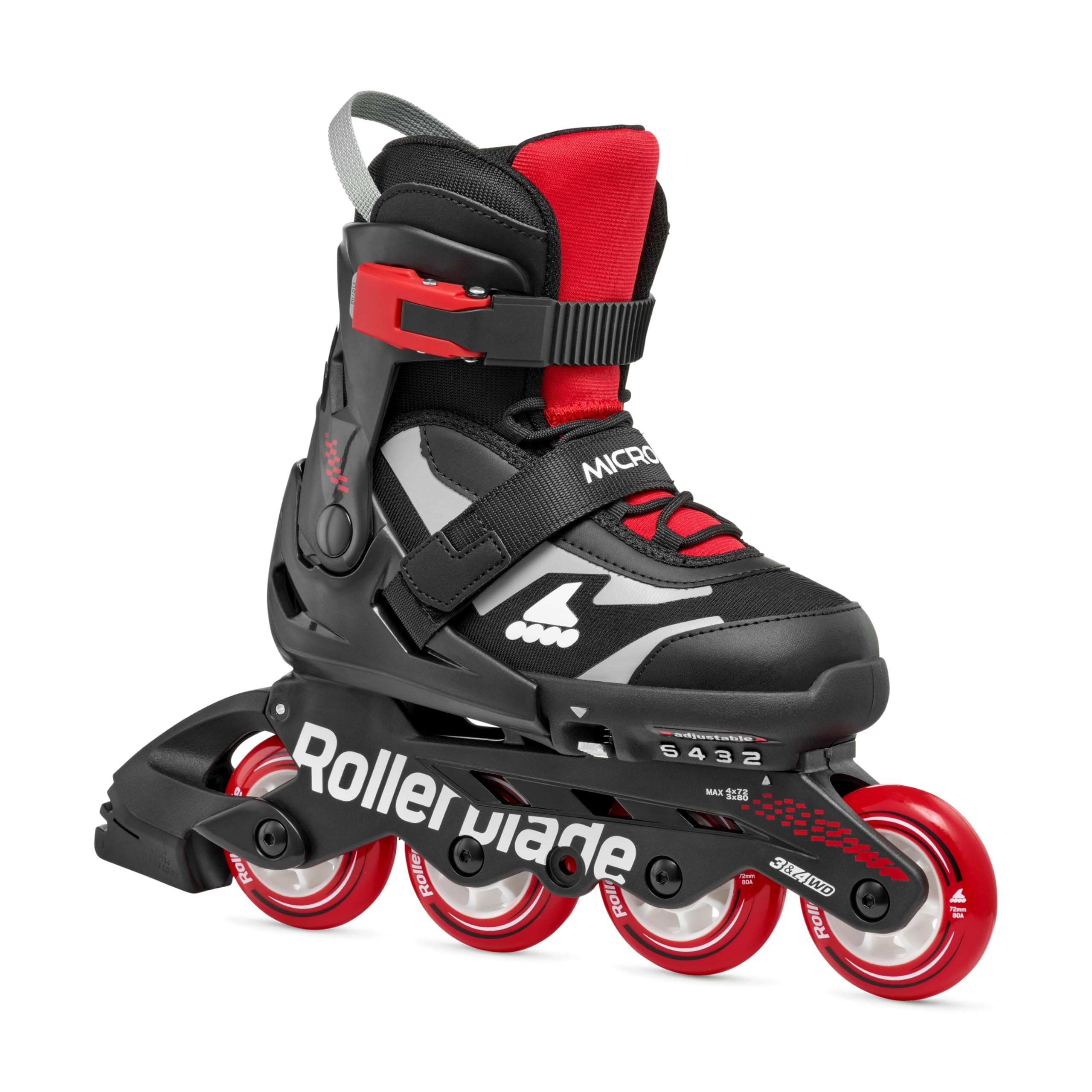
1. Rollerblade Microblade Kid’s Adjustable Fitness Inline Skate
Our pick — 4.5+★ from 450+ verified ratings; the strongest balance of quality and price.
An adjustable kids’ inline that expands across four sizes, so one purchase covers a growth window a fixed-size skate can’t.
The Microblade’s headline is adjustability: the shell expands across four sizes in the 2-5 range, so one purchase covers a growth window a fixed-size skate cannot. That is the single most useful feature in kids’ skates, because the boot outlasts the foot inside it. Rollerblade built the shell sleek and streamlined to hold a child’s foot in a balanced position, and the result is that strides feel controlled rather than loose and wobbly.
There is real growth built in beyond the four-size shell, too. The frame carries a 3WD system, so it can be swapped to a 3x80mm wheel arrangement as the skater advances. That means the same boot can carry a beginner and then a more confident kid without a second purchase. Worth knowing: the plastic shell weighs about 6 pounds, so this is not the featherweight choice for a small child, and the adjustability has a few detractors who found it finicky to set right the first time.
What earns the top spot
- Four-size adjustable shell covers a kid’s growth window
- Low integrated frame for a lower center of gravity and steadier balance
- 72mm/80A wheels with SG3 bearings keep speed safe but still fun
- 3WD system allows an upgrade to a 3x80mm wheel setup later
Where it asks a little patience
- At 6 pounds the plastic shell is not the lightest kids’ skate around
- Resizing takes some fiddling to get the fit right the first time
Buy this if: you have a child in the 2-5 size range who is just starting or stepping up, and you want one skate that survives the growth spurt.
Set expectations on: the weight — a very small skater may find the 6-pound plastic shell noticeable at first.
2. Roller Derby STR Seven Men’s Quad Roller Speed Skates
A rink speed quad that asks for very little money and gives back a genuinely fast roll.
Quad speed skaters chase a specific feeling: the moment the wheels stop dragging and start carrying you. The STR Seven is built for exactly that, with 58mm x 40mm urethane wheels and Bevo Silver-5 race rated chrome speed bearings. Compare that to the Pacer GTX 500 at 60mm x 40mm and you get a slightly smaller wheel here, which means quicker spin-up and a touch less top-end roll-away. For rink laps that trade is usually the right one.
The boot is where the money went. Roller Derby uses a deluxe speed profile with PU foam inside, so the fit runs snug and cushioned rather than loose. The Amq Pro frame chassis adds strength underfoot, and the Quick Dry lining is there for longer sessions when heat builds up. A fixed 5/8 rubber toe stop rounds it out, gripping hard enough to stop with confidence. What owners praise most is simply the quality of the build, and the value angle lands hard: this is a lot of speed skate for the money.
The catch is sizing and lifespan, and both are worth hearing honestly. Fit and durability both split opinion — some find the boot snug and stable for a long run, others find it less snug than expected and question how long it will hold up. The practical move is to treat the listed size and the actual fit as two different things and check the chart carefully. Bearings breaking in early is the kind of thing a careful owner avoids by not abusing the skate, but if you plan to skate hard five nights a week, budget for eventual replacement.
The honest read: a speed-profile quad with race rated bearings at an entry-level outlay, best suited to a skater who wants to test rink speed before committing to a serious setup.
Second thought to have: the boot runs snug by design, so anyone between sizes should size up rather than hope it stretches.
Reach for this if: you want to try rink speed skating without a serious spend, and you are comfortable checking a size chart before ordering.
Look elsewhere if: you need a boot with generous room through the toe box or you expect a decade of hard use from one pair.
3. TUOSAMTIN Retro Quad Roller Skates for Women and Youth
The retro quad that moves between rink floor and sidewalk without changing a thing.
Most quads pick a side. The TUOSAMTIN is the rare setup built for both, and the wheel spec proves it: 58 x 32-mm urethane at 82A hardness. That 82A figure is soft enough to soak up pavement seams and still hold a line on a smooth rink floor. Pair it with ABEC-7 bearings and metal spacers, and the roll stays free and steady across either surface. The aluminum alloy baseplate and trucks add the resistance you want when the ground gets uneven.
The look is the draw here: the soft pink finish gets noticed, and buyers call it a genuinely pretty skate. The plush interior cradles the ankle and gives the strong support a newer skater leans on. Owner feedback ranks quality first and appearance second, and the skate holds 4.5+ stars across 350+ ratings.
The honest trade-off is that nothing about this skate is tuned for a single surface at the highest level. A dedicated rink wheel will still slide better on polished wood, and a dedicated outdoor wheel will still eat rough asphalt more comfortably. The 82A compound is the compromise that makes both work well enough. A handful of buyers found the rolling less smooth than expected and the fit tighter than they wanted, so check the size before committing.
Matches you if: you want one attractive quad for casual rink nights and neighborhood cruising, and the retro look genuinely matters to you.
Worth a second look if: you skate one surface exclusively and want a wheel compound tune for nothing else.
4. Pacer GTX 500 Performance Speed Roller Skates

A speed quad built around a bigger wheel, aimed at the skater who already knows how to push.
Here is a direct number worth holding onto: the GTX 500 runs Pacer Mach-5 wheels at 60mm x 40mm, while the Roller Derby STR Seven above uses 58mm x 40mm. Same width, slightly larger diameter, and that extra size lets the wheel hold momentum longer between pushes. On a long rink lap you feel it. The RTX 295 chassis with a fixed toe stop keeps the package predictable underfoot, and the Silver 5 speed rated bearings let the roll run free.
The boot is a speed profile with a power strap and padded collar, so the upper holds your ankle firmly while the strap locks the heel down. Appearance is the second thing buyers mention after build quality, and the skate reads fashionable rather than purely functional. It holds 4.5+ stars across 550+ ratings. Sizing follows shoe size with a clear instruction: half sizes should size down.
Comfort is the honest sticking point, and it splits cleanly. Some find the boot very comfortable; others report pressure across the top of the foot and a tongue that digs into the ankle. Size feedback is similarly divided, with some finding it spot on and others finding it half a size small and not especially wide. If you have a wide foot or a high instep, that pattern is worth taking seriously before you order. Otherwise this is a capable speed quad for a taller skater who wants a bigger wheel.
Why it earns a place: the 60mm x 40mm Mach-5 wheel and RTX 295 chassis give it a genuine speed character, and the fixed toe stop keeps braking simple.
The pressure point: a narrow, snug speed boot is not a forgiving shape for wide feet or a high instep.
Pick this one if: you have a standard-width foot, you are stepping into speed skating, and you want a slightly larger wheel under you.
Think twice if: you have wide feet or a high instep — the boot shape is the recurring complaint, not the hardware.
5. Alkali Cele III Inline Roller Hockey Skates

Roller hockey on wheels, and one of the lightest boots in this whole lineup.
At 1,140 grams on a size 9 skate, the Cele III is a featherweight among hockey skates. That matters in a sport built on quick stops and direction changes, because less weight at the foot means less energy spent lifting it. The Hi-Lo aluminum 6000 CNC frame with copper rivets runs a larger wheel at the back and smaller at the front, which is the classic hockey arrangement for acceleration up front and glide behind. ABEC-9 carbon speed bearings come pre-lubed, so the roll is ready from the start.
Your wheels grow with the boot, so a smaller skater gets smaller wheels that are easier to push. Sizes 1-2 get a 64/64/68/68mm setup, sizes 3-5 get 68/68/72/72mm, sizes 6-7 get 72/72/76/76mm, and sizes 8-12 get 76/76/80/80mm. The 82A Loki outdoor wheels (82A is a hardness rating; softer wheels grip more) balance speed and control on pavement, so you can push and turn without slipping. Inside, an injected comp weave quarter package (the stiff outer shell) gives moderate stiffness with enough flex to work with your stride. The molded EVA footbed, microfiber liner, and Anaform ankle padding keep infrequent skaters comfortable enough to enjoy the session.
Sizing is the thing to get right, and Alkali is explicit about it: the correct skate should land 1-1.5 sizes smaller than your shoe size, so a size 9.5 shoe points to an 8 skate. Owners who sized correctly tend to be delighted, with several calling it the best skate they have owned and praising its real-hockey-skate look. Others found it too snug and reported zero ankle support, which points to a fit mismatch rather than a hardware flaw. Get the size right and the boot does its job.
Why hockey players keep it
- 1,140 grams on a size 9 — genuinely light for hockey work
- Hi-Lo 6000 CNC frame gives acceleration up front and glide at the back
- Wheel sizes scale sensibly from youth 1-2 up to adult 8-12
- ABEC-9 carbon bearings arrive pre-lubed for a ready roll
The sizing trap
- Deliberately runs 1-1.5 sizes below shoe size, which catches people out
- Ankle support splits opinion — some skaters want a stiffer, more locked-in boot
Built for this buyer: a recreational to intermediate roller hockey player who skates for fun and wants a light, honest hockey boot at a mid-range outlay.
The one thing that will trip you: that 1-1.5 size gap versus your shoe size — order accordingly or the boot will feel punishing.
6. Rollerblade Macroblade 80 Women’s Adult Fitness Inline Skate
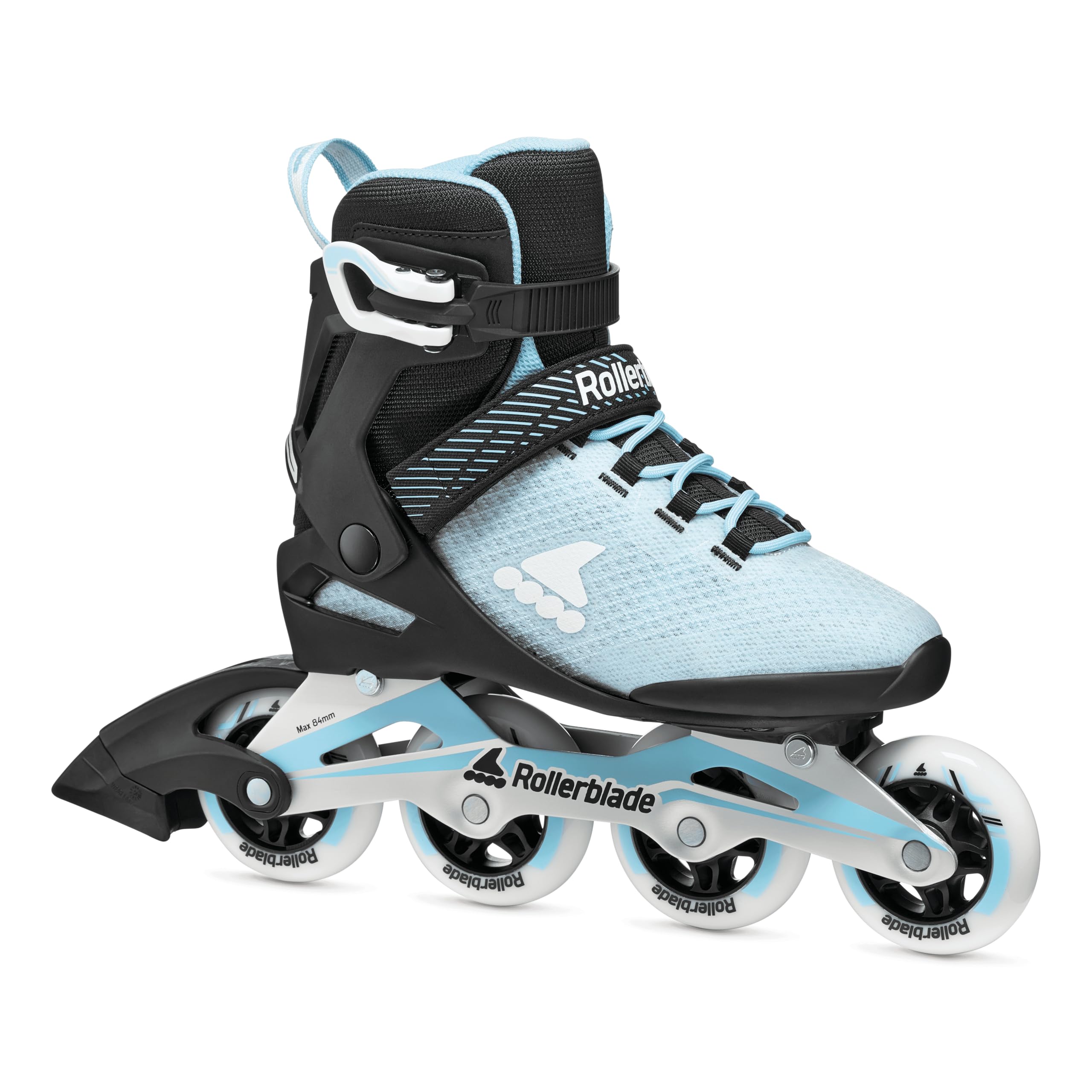
A fitness inline tuned for long, steady mileage, with one small detail that fixes a fit problem.
The clever bit here is the Footboard sizer. It lets you tighten the fit or open up more room, which is a way to fine-tune volume without changing the boot size. Around that sits a higher cuff that adds lateral stability for balance through each stride — a real benefit when you are holding a rhythm over a couple of miles, because a wobbly ankle wastes your push. The Twinblade aluminum frame runs a low-profile design for a steadier platform underfoot.
Rollerblade equips it with 80mm/82A wheels and SG5 bearings, and the upgrade path is why this pick earns its place: the frame accepts 84mm wheels for added speed when you are ready. Owners find the ride smooth and speedy with what they describe as extremely smooth wheels, and routine comparison to ski boots shows up around the comfort. The engineered mesh liner with padded tongue and ankle areas keeps it breathable, and the buckle, power strap and lace closure lock the foot in three ways.
Sizing is the one place this skate produces mixed feedback. Some say the size is correct, others find it runs small. Given the buckled shell there is limited stretch to play with, so order deliberately and read the chart. Beyond fit, there is very little to argue with — the skate holds 4.5+ stars across 700+ ratings, and a good number of buyers report they would purchase it again without hesitation. For a woman upgrading from a basic inline into a real fitness skate, this is close to a default answer.
The upgrade path: the Twinblade aluminum frame takes 84mm wheels later, so the skate grows with your speed instead of capping it at 80mm.
The fit question: a buckled shell running small leaves little margin, so anyone between sizes should go up rather than hope.
Right answer for: an adult woman moving past a starter inline and wanting a stable fitness skate with room to grow into faster wheels.
Not the one if: you want a loose, roomy fit — this is a locked-in performance boot that rewards accurate sizing.
7. Riedell R3 Indoor Quad Roller Skates
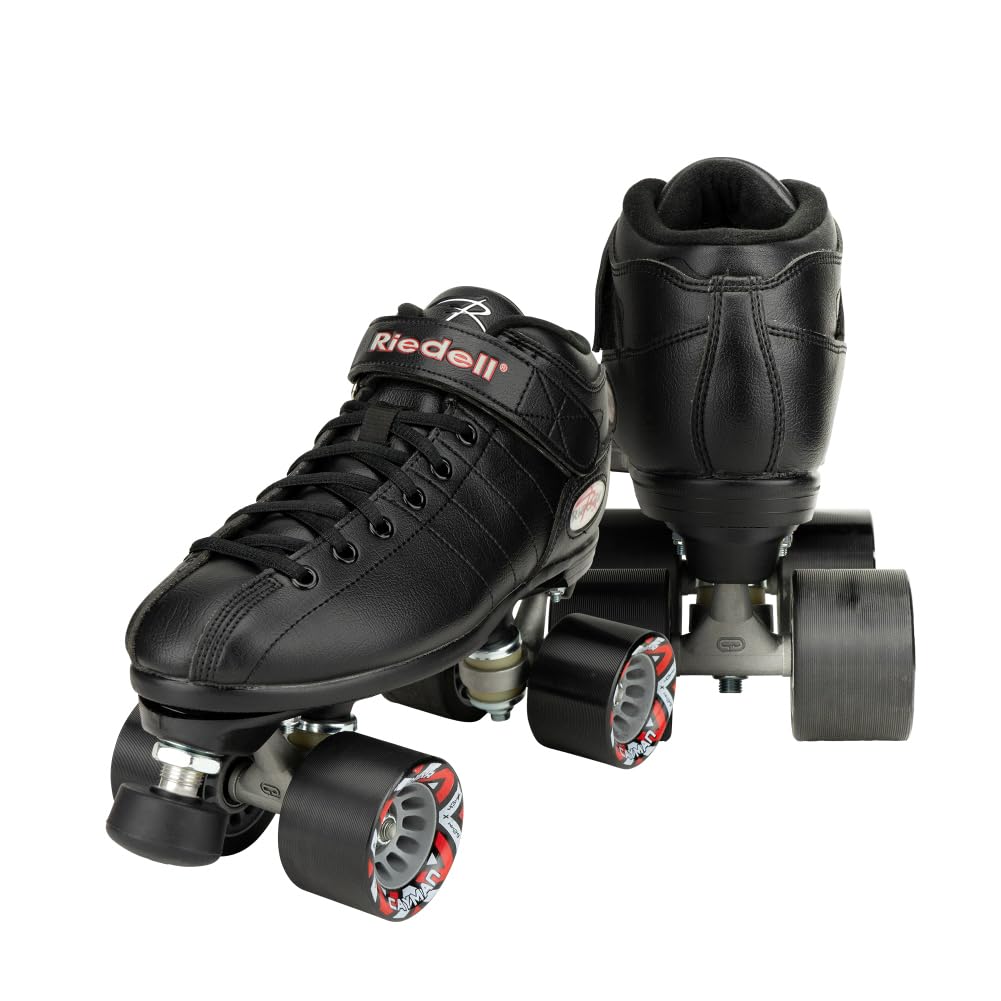
A rink quad with a hard 95A wheel that wants polished wood, not sidewalk.
The wheel number tells you the whole story: Sonar Cayman wheels at 62mm high x 43mm wide, rated 95A hardness. That is a hard compound aimed squarely at smooth indoor floors, where a firm wheel slides predictably and keeps speed. Put it on rough asphalt and it will chatter. The ABEC-5 ball bearings are polished chromed steel, built to minimize friction over long sessions. Underneath, a high-impact PowerDyne Thrust nylon plate with strong metal trucks gives you a stiff, supportive platform.
The boot is man-made vinyl over that nylon plate, cut low but precisely to boost ankle support. A padded tongue plus a Velcro cinch strap along with the laces let you dial in a locked fit — the strap is the piece that keeps the heel from wandering. Rink skaters notice the ride quality first; this one rolls easily with little effort. Quality is the runaway strength in owner feedback, and the skate carries 4.5+ stars across 900+ ratings. Note too that Riedell states plainly this is not a children’s product and is not intended for anyone 12 or under.
Frustration with fit is the recurring theme worth planning around. A portion of skaters report the toe box runs tight and pressure across the top of the foot, sometimes numbness down the middle. Size accuracy also splits, with some getting exactly what they ordered and others receiving the wrong fit. This is a competition-shaped boot, so a half-size mistake is felt. Order from the size chart with care, and if you know your feet run wide, this is likely not the shell for you.
Indoor by design: 95A Sonar Cayman wheels and ABEC-5 steel bearings are a rink-first setup that rewards smooth floor with genuine glide.
The fit tax: a precision boot with a snug toe box — accurate sizing is not optional here, it is the whole game.
Suits you if: you skate indoors regularly, want a stiff plate underfoot, and know your exact size in a roller boot.
Pass if: you plan to skate outdoors at all, or your feet run wide through the toe box.
8. Sure-Grip Fame Indoor Rollerskates

A rink quad that prioritizes padding and comfort over racing hardware, and beginners feel that immediately.
The Fame is built around the double-row quad structure — the classic two-by-two wheel layout that holds a line more calmly than an inline setup for a first-time skater. The leatherette outer is polished into a clean look and holds its shape over time, while the padded tongue and soft inner boot take the sting out of a long session. What owners praise most is comfort, with a good number finding no soreness or pinching at all after skating, and beginners are singled out as the exact audience this suits.
Fit is another place it earns trust, and the sizing shown is unisex via a Mens 8 / Womens 9 reference point. A laced leatherette boot hugs the ankle and gives a firmer grip than a casual rental skate, which is a big part of why new skaters feel steadier in it. It carries 4.5+ stars across 900+ ratings, and the wheels and padding draw consistent praise. For the money, it presents as a serious-looking rink skate rather than a toy.
The area to watch is long-term durability. Some skaters report the Fame holding up and needing no break-in period; others report components coming apart over time. Weigh that against the price tier: this is a beginner-focused rink skate, not a competition build, and expecting the lifespan of a premium boot would be unfair to it. If you skate a couple of nights a week and want comfort above all, the Fame does that job well. If you intend to skate hard and often, plan on upgrading the plate later.
Start here if: you are learning to skate indoors and comfort matters more to you than top-end hardware.
Look up-tier if: you already skate several times a week and need a boot built for sustained abuse.
9. Sure-Grip Boardwalk Unisex Outdoor Roller Skates

A suede-booted outdoor quad with a plate built to survive real pavement, not just rink floor.
Where the indoor quads above lean on hard wheels, the Boardwalk goes the other way: outdoor 57mm wheels with ABEC-3 bearings, tuned for grip on imperfect surfaces. Note that the black and tan colorways ship with 65mm wheels instead, so the roll differs by finish. Underneath sits an indestructible ROCK plate with aluminum trucks and 5/8″ adjustable rubber stoppers — the kind of hardware that takes curbs and cracks in stride rather than flexing under them. The suede leather boot with a stitched sole carries the retro look that buyers respond to hardest after the build itself.
That suede is not just styling. It is a material that molds to your foot over time, and this is one of the more handsome quads you can put on. The sizing shown is unisex at Mens 7 / Womens 8, and the skate runs as a plus-size fit. It holds 4.5+ stars across 900+ ratings, with appearance drawing almost no complaints and people describing it as matching the photos. For trail skating, boardwalk cruising, or any outdoor session where you want a proper boot rather than a plastic shell, this is the outdoor answer.
Fit is where honest expectations help. Some skaters find it extremely comfortable and great for wide feet; others find it runs too narrow and report ankle pressure. The boot is also stiff from the start and the leather does not stretch much, so break-in takes real time. At 8.5 pounds it is a substantial skate to carry and push. That is the trade for a leather boot with a metal-compatible plate — weight and stiffness in exchange for a ride that handles rough ground.
What makes it an outdoor quad
- Outdoor 57mm wheels and ABEC-3 bearings tuned for paved surfaces
- ROCK plate with aluminum trucks and 5/8″ adjustable rubber stoppers
- Suede leather boot with stitched sole that molds to the foot
- Appearance draws deep praise and matches the product photos
Honest costs of the build
- At 8.5 pounds, it is a heavy skate to push over distance
- The stiff leather needs a real break-in period and does not stretch much
Made for: outdoor skaters who want a leather boot, a hard-wearing plate and retro looks for trail and street sessions.
Know going in: it needs break-in and rewards the patient — expect a stiff first few sessions before the suede softens to your foot.
Know the Specs
Wheel hardness (the A number)
The letter A sits after a number to describe how hard a wheel’s urethane is. Lower numbers grip more and absorb bumps; higher numbers slide freely and hold speed on smooth floors. An 82A wheel handles both rink and pavement acceptably, while a 95A wheel is built for polished indoor wood and will feel harsh outdoors. Match the number to your surface and the rest of the skate follows.
Bearing grade (ABEC and SG)
Bearings are the steel rings inside each wheel, and their rating describes machining precision. ABEC-3, ABEC-5, ABEC-9 and Rollerblade’s SG3 or SG5 labels all indicate how freely the wheel spins. A higher grade means less friction and a faster roll for the same effort. It says nothing about braking or stability, so do not overpay for bearing grade alone.
Quad versus inline frame
A quad frame holds four wheels in a two-by-two block and usually carries a toe stop for braking. An inline frame runs wheels in a single line and rolls faster over distance. Hi-Lo inline frames use a bigger rear wheel and smaller front wheel, a hockey layout that balances acceleration and glide. The frame is what defines the skate’s discipline, not the boot.
Boot material and fit
Boots here range from plastic shells and vinyl to suede leather and injected comp weave. Leather molds to the foot but needs break-in; plastic shells hold shape but flex less. Skate sizing often differs from shoe sizing, and several models here tell you outright to size down or up. Read that instruction as part of the spec, because a loose boot is where ankle instability and blisters begin.
Common Questions
What is the difference between a quad skate and an inline skate?
Is an 82A wheel good for both indoor and outdoor skating?
Do I need to size down for roller hockey skates?
How do I know if a quad skate wheel is for indoor or outdoor use?
Why does skate size differ from my regular shoe size?
What does ABEC-9 mean on a skate bearing?
Can I use indoor quad skates outside on pavement?
Are leather skate boots better than plastic shells?
How much lighter are inline hockey skates than quad skates?
What does a Hi-Lo wheel setup do differently?
The Bottom Line
To choose among the types of skates, answer one honest question first: what surface and what discipline do you actually skate? That answer narrows the choice fast. For a child whose feet keep growing, the Rollerblade Microblade stands out. Its adjustable shell covers four sizes, it has a 3WD upgrade path (you can switch to three larger wheels later), and its low integrated frame helps with real balance. If you want rink speed on a tight budget, the Roller Derby STR Seven gives you race rated bearings and a speed boot without the premium tax.
For indoor rink work, the Riedell R3 pairs a stiff PowerDyne nylon plate with a hard 95A wheel that rewards polished wood. For outdoor trails, the Sure-Grip Boardwalk and its suede leather boot handle pavement the way it should be handled. And if hockey is the goal, the Alkali Cele III at 1,140 grams in a size 9 is the light boot you want for quick stops and direction changes.
One nudge worth acting on: the Microblade’s 4.5+ star rating across 450+ owners is the strongest confidence signal in this group, and buyers also praise its adjustability — a rare mix of quality and built-in growth. Whichever discipline you pick, buy for the surface you will skate most and check the sizing note before you order. The skate will do the rest.
How we choose
We do not accept paid placement. Every pick is matched to a real buyer and a real use-case; we do not hands-on test units.
Sources
Specifications: manufacturer listings and product documentation. Review insights: verified customer reviews, as of November 2026. Pricing: not shown on this page (it changes often); check the current price via the retailer link.
As an Amazon Associate, Tactical Gear Guy earns from qualifying purchases. This does not affect which products we feature.