Specs are compiled from manufacturer listings and verified buyer reviews and can change over time — please confirm the key details on the product page before buying.
If you want one answer: buy the thicker steel. A steel pan bakes pizza by holding heat in solid metal and pushing it straight into the dough — and the thicker the metal, the more heat it stores, so your crust sets fast instead of steaming. That single fact decides most of the choices below, whether you cook in a home oven or on a grill.
This guide is built by comparing the manufacturers’ published specifications and the patterns across verified customer reviews, so you get each pick’s real strengths and trade-offs instead of marketing spin.
The thickest option here hits 1000 °F, and the crowd favorite sits at 4.5+ stars across 900+ ratings. Below you’ll find which thickness suits your oven, your counter space, and your back — and the plain-English version of every spec before you commit to a slab of metal. This is the practical way to shop for a hybrid pizza steel.
Top Picks

How To Choose The Best Hybrid Pizza Steel
A hybrid steel works in your home oven and also on a grill, stovetop, or fire without warping. Three things decide your pick: how thick the plate is, whether it fits your oven, and how much weight you are willing to lift.
Thickness decides how many pizzas you get
A 3/8-inch plate stores more heat than a 1/4-inch one, so it recovers faster between pies. That matters if you are feeding a family in one sitting. A 1/4-inch steel is the lighter middle road and handles one pizza at a time comfortably. A 3/16-inch plate is the easiest to move and suits thin-crust bakes.
Measure your rack before you buy
Steel does not bend to fit. A 20-inch plate needs a large oven, while a 14-inch square slips into compact and apartment-style ranges. If your oven runs shallow, size down rather than wedge it in — a plate that blocks airflow will not heat evenly.
Rust and upkeep are part of the deal
Bare carbon steel will discolour and can spot rust if you leave it wet, so dry it on the stove after washing. Pre-seasoned plates skip the first-hour ritual; raw ones ask you to oil and bake once before the first pizza. Neither is hard, but the pre-seasoned route is friendlier if you want to cook tonight.
Side-by-Side Comparison
| Model | Best For | Thickness | Plate Size | Weight | Amazon |
|---|---|---|---|---|---|
| NerdChef Steel Stone★ Best Overall | Crust quality and back-to-back bakes | 0.38″ | 16″ x 14.2″ | 23 lbs | Amazon |
| Chef Pomodoro 14×12″Compact Pick | Small ovens and easy handling | 0.25″ | 14″ x 12″ | — | Amazon |
| VEVOR 20″ x 14″ x 3/8″ | Feeding a crowd and grill cooking | 0.38″ | 20″ x 14″ | 31.5 lbs | Amazon |
| 14″ x 14″ Pizza Steel | Standard ovens and batch cooking | 0.38″ | 14″ x 14″ | 20 lbs | Amazon |
| 15.7″ x 15.7″ Pizza Steel | Bigger pies in a full-size oven | 0.25″ | 15.7″ x 15.7″ | 16.8 lbs | Amazon |
| Baking Steel Original 14×16 | Pre-seasoned convenience and sourdough | 0.25″ | 16″ x 14″ | 15 lbs | Amazon |
Detailed Reviews
1. NerdChef Steel Stone 14.5″ x 16″
Our pick — 4.5+★ from 950+ verified ratings; the strongest balance of quality and price.
A 0.38-inch steel slab that turns a 450 °F home oven into a blistering pizzeria floor.
Here is the number that does the work: it claims 20x the heat conductivity of a ceramic stone and twice the heat capacity, so a 450 °F oven behaves like a far hotter one. It tops out at 1000 °F, which is more headroom than most home ovens can reach anyway. You get a crust with real spotting and faster bake times rather than the pale, steaming result a thin plate gives you.
At.38 inch thick and 23 pounds, it is the heavy end of this group — heavier than the 15-pound Baking Steel Original. That mass is exactly why it recovers fast between pies. The surface arrives textured, sanded smooth, and seasoned with flaxseed oil, so it is ready for the first bake rather than a raw plate waiting for oil and an hour in the oven. The makers guarantee it for life, and solid steel will not shatter from thermal shock the way a stone can.
The catch is honest and obvious: it is a 23-pound piece of metal that is not dishwasher safe, so you wash and dry it by hand every time and keep it away from soaked dishes. The weight earns genuine mixed reactions because you feel it every single time you move it. Size it against your oven before you buy, and if you are lifting a plate in and out several times a week, look at a lighter option instead.
What earns the top spot
- 20x the heat conductivity and twice the heat capacity of ceramic, so the crust sets fast and browns evenly
- Seasoned with flaxseed oil on arrival for a low-friction surface and a first bake with no prep
- Solid steel build with a lifetime guarantee and no risk of cracking like a stone
The honest trade-offs
- 23 pounds to lift, plus hand-wash only and not dishwasher safe
- Needs a 16-inch-plus oven to sit comfortably without crowding the rack
Buy this one if: you bake often and want the deepest crust char your oven can produce, even one pie after another.
Think twice if: your oven is compact or you would rather not haul 23 pounds from cupboard to rack.
2. Chef Pomodoro Pizza Steel 14×12″
The small-oven answer, with finger holes so you can actually move it safely.
The obvious starting point is its foot print — 14 by 12 inches, built to bake one 12-inch pizza at a time. At 14 inches long, it is 43% shorter than the 20-inch VEVOR, which is why it slots into a compact or apartment range the bigger plates cannot. Its 0.25-inch plate is 52% thinner than the NerdChef’s 0.38-inch slab, so it stores less heat — fine for one pizza, less ideal for a queue of them.
Where this one wins buyers is the handling. Integrated lifting holes give you a safe grip for the trip from oven to table, so you are not reaching around a hot plate with a towel. The seasoned surface just needs a scrape and rinse, and it darkens the way cast iron does with use. It works on a grill as a flat cooking surface and handles sourdough and flatbreads as readily as pizza. What wins people over is the build quality, though that is followed closely by the crust it produces.
Sixteen inches of context: this plate is fine for a single bake, but if you regularly cook two pies back-to-back, a thicker steel like the 3/8-inch 14″ x 14″ holds its temperature better between rounds.
The grab-and-go grip: those lifting holes make this the easiest plate in the lineup to move with confidence.
The small-kitchen favorite: reach for it when counter and oven space are tight and you want a steel you can set in place without straining.
The limit to know: one 12-inch pizza at a time, and lighter heat reserves than the thicker plates.
3. VEVOR Pizza Steel 20″ x 14″

The big one — a 20-inch plate built for grills, crowds, and more surface area than you know what to do with.
This is a 20 by 14 inch plate at 3/8 inch thick, and it arrives pre-seasoned after oxidation and sandblasted treatments. So you skip the oil-and-bake ritual and cook on it the day it lands. Like the NerdChef, it claims 20x the heat conductivity of a ceramic stone and twice the heat capacity. It tops out at 600 °F, which is lower than the 1000 °F ceiling on the NerdChef and thermichef plates — well beyond what a home oven hits, but worth knowing if you cook over a roaring fire.
The size is the whole point. It can fit two 10-inch pizzas, and the 20-inch length comes with real consequences — it needs a big oven, and it is 31.5 pounds. That is far heavier than the 15-pound Baking Steel Original. On a charcoal grill it turns into a proper flat-top for pizzas and even steaks, bread, and roasted vegetables. It comes with laser-cut, polished edges and a thumb hole for hanging it out of the way.
Where it delivers
- 20-inch plate fits two 10-inch pizzas at once for a hungry table
- Pre-seasoned and rustproof-treated, so there is no first-bake prep
- Handles both oven and outdoor grill as a cooking surface, not just pizza
Where it bites
- 31.5 pounds makes it the heaviest plate to haul in and out
- Some reports of the coating peeling or chipping at the corners, so treat the edges with care
Best for the backyard cook: pick it if you grill as much as you bake and want one plate that covers both.
Skip the lift if: your oven is tight or a heavy plate would stay in the cupboard more than the oven.
4. 14″ x 14″ Pizza Steel – 3/8″ Steel, 20 lbs

A 3/8-inch square sized for standard racks, and thick enough to say yes to a second pizza.
The.38-inch thickness is why this one exists. It stores more heat than a thinner plate and recovers faster between rounds, so a family bake does not stall when the second and third pies go in. Preheat your oven to 500 °F with the steel inside for 45 to 60 minutes and a pizza can cook in under 8 minutes. A 14 by 14 inch plate fits a standard or apartment rack without blocking airflow.
Tidy stack: 20 pounds, laser-cut from a single piece of low-carbon steel in Minnesota, and rated to 1000 °F. So it handles the fire end of a hybrid setup as well as the oven. It ships shot-blasted and not pre-seasoned, so your first job is a wash, a thin coat of oil, and a one-hour bake at 375 °F. After that it builds a non-stick patina like a cast iron pan, with no coating to chip or wear through.
What buyers keep praising: the crust quality is the headline — owners describe evenly heated, crispy bottoms and results that outperform their old stone, with the heat still steady after an hour of preheating.
One honest note on the build: the listing lists a weight of 320 g in one field, which reads as a spec slip against the 20 pounds stated in the description. Go by the 20-pound figure and treat this as a thick, sturdy plate.
Best when the oven is full: this is the pick for anyone who regularly bakes several pies in one sitting.
One thing to accept: you season this one yourself before the first bake.
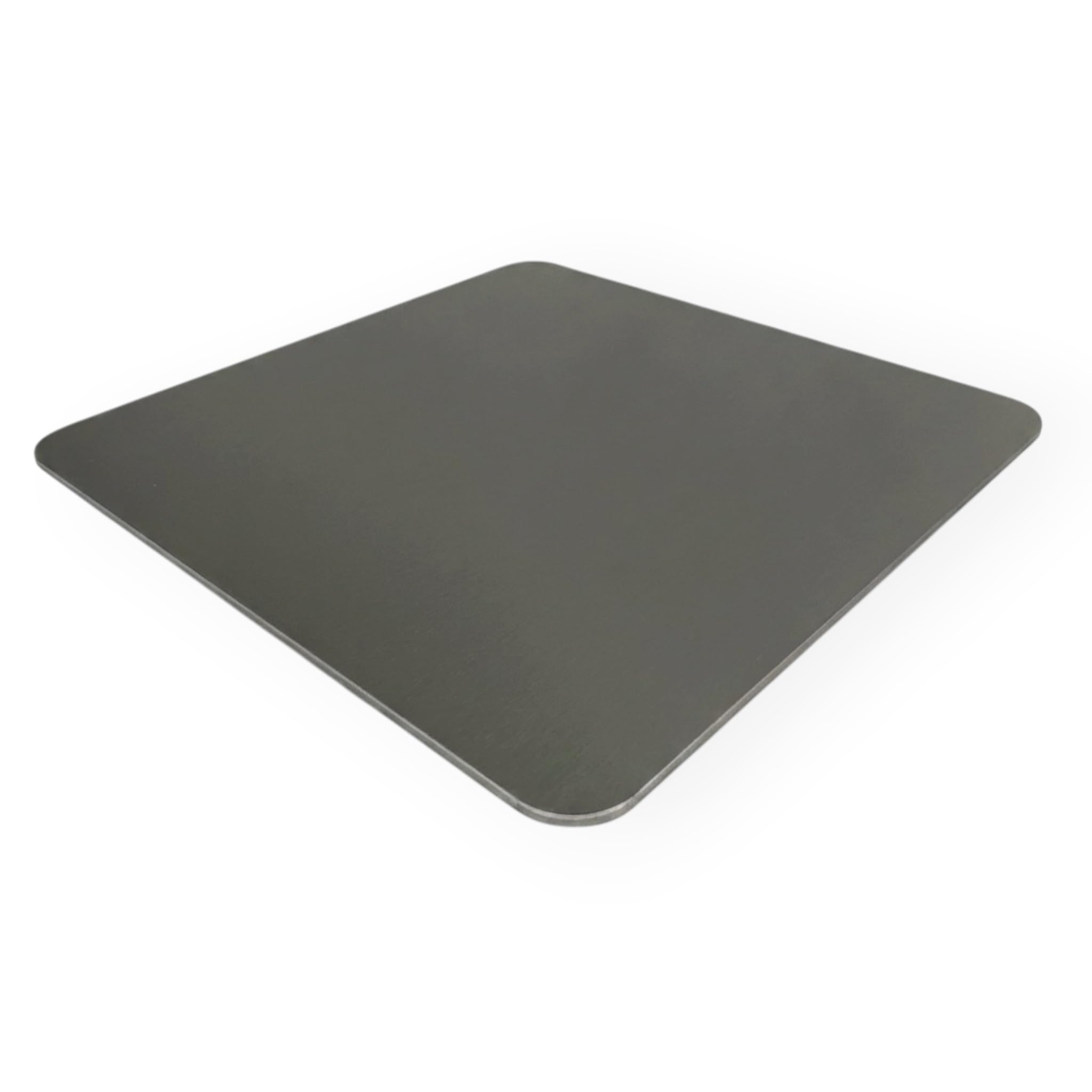
5. 15.7″ x 15.7″ Pizza Steel – 1/4″ Steel, 16.8 lbs
The wide-and-light middle ground: bigger surface than a 14-inch square, lighter than the thick slabs.
Here is where the extra width earns its keep — 15.7 by 15.7 inches takes a 14-inch pizza, and that is wider than the 12-inch Chef Pomodoro at 15.7 inches against 12. More floor space on the plate means a bigger pie. At 16.8 pounds it sits 1.2 pounds under the Baking Steel Original and about a pound heavier than nothing at all, which is to say it moves easily. It still handles direct flame on a grill and works over two burners on most stoves.
At 1/4 inch thick, this is the versatile middle thickness the makers recommend for most home cooks — enough heat for Neapolitan-style, sourdough, and frozen pies, without the 3/8-inch heft. It is built in Minnesota, laser-cut from low-carbon steel, and rated to 1000 °F, the same ceiling as the NerdChef. It ships shot-blasted, so season it once with oil and a 375 °F bake before use. Reviewers tend to like the crisp bottom and the room for a bigger pie without the constant fight with weight.
Versatility earns its share of credit: buyers use it for New York-style pies in a home oven and sourdough in the same week, and report the heat stays even throughout.
Check your oven first: measure the interior depth. This is the one plate here where fit, not performance, is the deciding question.
Reach for this one if: you want a bigger pizza than a 14-inch square allows but do not want the mass of a 3/8-inch slab.
Measure before you buy: it needs a full-size rack to sit flat.
6. Baking Steel Original 14×16

The plate that started the whole category, and it lands seasoned and ready to bake.
There is a good story here: the founder invented the baking steel while running his family’s steel business, and every plate is still made in the US shop. The practical bit is what it does — 18x more conductive than ceramic stone, so it sets and browns dough at a lower oven temperature than a stone requires. Preheat 60 minutes and it holds that heat across pizza after pizza, moving heat into the dough as it bakes. Bake thin, crispy pies in under 8 minutes at 500 °F.
What makes it a hybrid pick is the sizing and the finish. At 16 by 14 inches, it holds one 13-inch pizza or two loaves of sourdough side by side, so bread and pizza share the surface. It arrives seasoned, so there is no wash-oil-bake ritual before the first use, and it darkens into a better patina with every cook. It is the lightest plate here at 15 pounds, and 15 pounds is what you carry each time, which feels far better than 31.5.
Owners are split on one point you should know about: the metal can turn a reddish-brown colour and spot rust if it sits wet, so dry it thoroughly and keep it oiled. It also takes a while to cool once hot. Nothing fatal for a seasoned-steel owner, but more upkeep than a stone that just wipes clean.
The reasons to pick it
- Ships pre-seasoned, so the first bake is ready the day it arrives
- 14 x 16 holds a 13-inch pizza or two loaves side by side
- 18x the conductivity of ceramic, rated to 1000 °F, at a manageable 15 pounds
The reasons to pause
- Can discolour and develop rust spots if left damp, so drying and oiling are part of the routine
- Stays hot for a long time after a bake, so plan for cooling before you clean
The set-and-bake option: the pick for anyone who wants to bake sourdough and pizza on the same surface without doing prep work first.
Plan for the upkeep: keep it dry and oiled, and you avoid the rust patch owners warn about.
Know the Specs
Thickness (1/4 inch vs 3/8 inch)
Thickness is the number that decides how much heat the plate stores. A 3/8-inch steel holds more energy and recovers faster with each pie, which suits cooks baking several in a row. A 1/4-inch plate is lighter and still delivers the steel advantage for one pizza at a time. A 3/16-inch option is the easiest to handle and best for thin crust.
Heat conductivity
Steel moves heat into dough faster than ceramic, which is why makers describe their plates as many times more conductive than a stone. In practice it means the bottom of a pizza sets quickly and browns evenly instead of drying out. That same quality lets a hybrid steel work on a grill or stove as well as in an oven.
Weight and oven fit
Every plate here is heavy to some degree — from 15 pounds up to 31.5 pounds — so measure your oven depth and think about how far you carry it. A plate that fits your rack lets air flow around it, which keeps the heat even. A plate that is too big for your oven will sit awkwardly and heat unevenly.
Maximum temperature and seasoning
A higher temperature ceiling matters most if you cook over fire or a roaring grill. Pre-seasoned plates skip the initial oil-and-bake step; raw steel asks you to season once before the first pizza. Both eventually build a natural non-stick patina like cast iron, and both need hand washing and thorough drying.
Common Questions
Will a hybrid pizza steel work on a charcoal grill?
How long should I preheat a pizza steel?
Is a 3/8-inch steel better than a 1/4-inch steel?
Do I need to season a pizza steel before first use?
Can I use a pizza steel for sourdough and bread?
Is a pizza steel dishwasher safe?
How do I stop a carbon steel plate from rusting?
Will a 20-inch pizza steel fit my oven?
How heavy is too heavy for a pizza steel?
The Bottom Line
The hybrid pizza steel that earns the top spot is the NerdChef Steel Stone — the 0.38-inch plate at 1000 °F delivers the deepest crust char in this group and shrugs off back-to-back pies. If your oven is small, the Chef Pomodoro fits where the big plates cannot. And if you grill more than you bake, the VEVOR gives you a 20-inch surface for both.
The nudge is simple: pick the thickest plate your oven and your arms can live with, then commit — seasoning and all. A steel that sits in the cupboard helps no one.
How we choose
We do not accept paid placement. Every pick is matched to a real buyer and a real use-case; we do not hands-on test units.
Sources
Specifications: manufacturer listings and product documentation. Review insights: verified customer reviews, as of November 2026. Pricing: not shown on this page (it changes often); check the current price via the retailer link.
As an Amazon Associate, Tactical Gear Guy earns from qualifying purchases. This does not affect which products we feature.