Specs are compiled from manufacturer listings and verified buyer reviews and can change over time — please confirm the key details on the product page before buying.
A sliding transfer board exists to remove the lift from a wheelchair-to-bed move, and the difference between a good one and a bad one is whether it stays put under you. Get the surface, the length and the anti-slip base right and a caregiver can guide a transfer with a push instead of a haul. Get them wrong and you get a board that skates, wobbles, or leaves too wide a gap to cross.
This guide is built by comparing the manufacturers’ published specifications and the patterns across verified customer reviews, so you get each pick’s real strengths and trade-offs instead of marketing spin.
Below you’ll find nine boards sorted by how they actually move a person — rotating discs, glide grooves, slide sheets and long bridging surfaces — plus the gap heights and weight limits to check before you buy one. Every pick here earns its place as a workable sliding transfer board, and the notes on fit tell you which one matches your seat heights.
Top Picks

How To Choose The Best Sliding Transfer Board
The first thing to understand is that these boards do not lift anyone. They bridge two seats at roughly the same height so a person can slide across on a low-friction surface. That single fact drives every buying decision below.
Match the board to the height gap, not the room
A board only works when the two surfaces sit close in height. The Vie TRIOMPHE board asks you to keep the gap under 2.8 in (7 cm), and the YHK board recommends a height difference lower than 3.8 in. Measure the seat of the wheelchair against the bed or car seat before you order anything. A board cannot fix a big step down.
The sliding mechanism decides the effort
There are three ways these boards move a person. A rotating disc pivots the user so they turn and slide in one motion. A slide sheet is a separate low-friction cloth laid over the board. A plain smooth board relies on the user’s own push. Discs and sheets cut caregiver strain; a bare board asks more of the person moving.
Weight capacity and anti-slip base are the safety floor
The stated capacity ranges widely across this list, from 308 lbs on the YHK board up to 460 lbs on the Vie TRIOMPHE. Check it against the person being moved with room to spare. Then look at the underside. Toothed particles, anti-slip pads or a high-strength non-slip pattern are what stop the board shifting mid-transfer.
Side-by-Side Comparison
| Model | Best For | Sliding Mechanism | Weight Capacity | Board Size | Amazon |
|---|---|---|---|---|---|
| Transfer Board with Slide Sheet★ Best Overall | Wider gaps and slide-sheet transfers | Slide sheet over board | — | 31.75 x 12 x 1.25 in | Amazon |
| YHK Transfer Board with StrapsBest Value | Securing the board to a chair | Smooth ABS glide surface | 308 lbs | 31 x 8.3 x 0.47 in | Amazon |
| Slide Transfer Board with TurntableHeavy-Duty Build | Heavy-duty rubberwood build | 360° turntable + glide groove | 450 lbs | — | Amazon |
| Vie TRIOMPHE Swivel Transfer Board | Highest capacity and a tunable glide | 360° rotating disc on curved track | 460 lbs | 35.4 x 12.6 in | Amazon |
| LOSCHEN Slide Transfer Board | Bridging wider gaps | 360° rotating disc | — | 29.5 x 8.9 x 0.9 in | Amazon |
| SafetySure TransferEase | Long bridging across stretchers and tables | Low-friction surface | 400 lb | 22 x 72 in | Amazon |
| Slider Board Wide 72″L x 22″W | Imaging and healthcare settings | Low-friction polyethylene | — | 72 x 22 in | Amazon |
| Transfer Board with Sliding Disk | S-shaped no-lift transfers | 360° rotating disk, S shape | 400 lbs | 40.5 in long, 12.2 in disk | Amazon |
Detailed Reviews
1. Transfer Board with Slide Sheet, FSA Eligible
Our pick — 4.0+★ from 50+ verified ratings; the strongest balance of quality and price.
Two pieces, one job: a board you bridge and a sheet that does the sliding for you.
Here is the number that decides it for most buyers: this board runs 31.75 inches long and 12 inches wide. That makes it longer than the LOSCHEN board at 29.5 inches and noticeably wider than the YHK board at 8.3 inches. A wide deck matters because it gives the person being moved more landing room, so a hip does not drift off an edge halfway across.
What you actually get in the box is a board and a green slide sheet measuring 28 by 28 inches. The sheet is the smart part. You lay it under the person and the low-friction cloth takes the rubbing instead of their skin, which is what the caregiver does instead of hoisting. The board itself has three handles cut in, so there is something to hold onto on both sides and the far edge.
The honest catch is bulk, not performance. The board is bulky in a way a thin plastic one is not — 4.76 pounds and 1.25 inches thick at its highest point, so it is a stow-behind-the-door item rather than something you tuck in a bag. It is also FSA Eligible, which for many buyers turns a mobility aid into something you can claim. Pair that with a curved edge that will not scratch a bare leg on the way past, and you have the board that suits the widest range of home transfers.
What earns it the top spot
- 31.75-inch length and 12-inch width give more deck to cross than the 8.3-inch YHK board
- The included 28 x 28 inch slide sheet takes friction off skin and bones
- Three handles give the user real grip points
- Anti-slip back holds the board in place while it is loaded
Where it asks something of you
- At 4.76 pounds it is a board you store, not one you toss in a bag
- You still need both seat heights close together for the slide to work
Reach for this if: you want one purchase that supplies both the bridge and the sliding surface, with a deck wide enough to be forgiving.
Look elsewhere if: you need a thin board that lives in a car door pocket, since the 1.25-inch profile is built for storage not travel.
2. YHK Transfer Board and Slide Board with Straps
The board that ties itself down, so the only thing moving is the person.
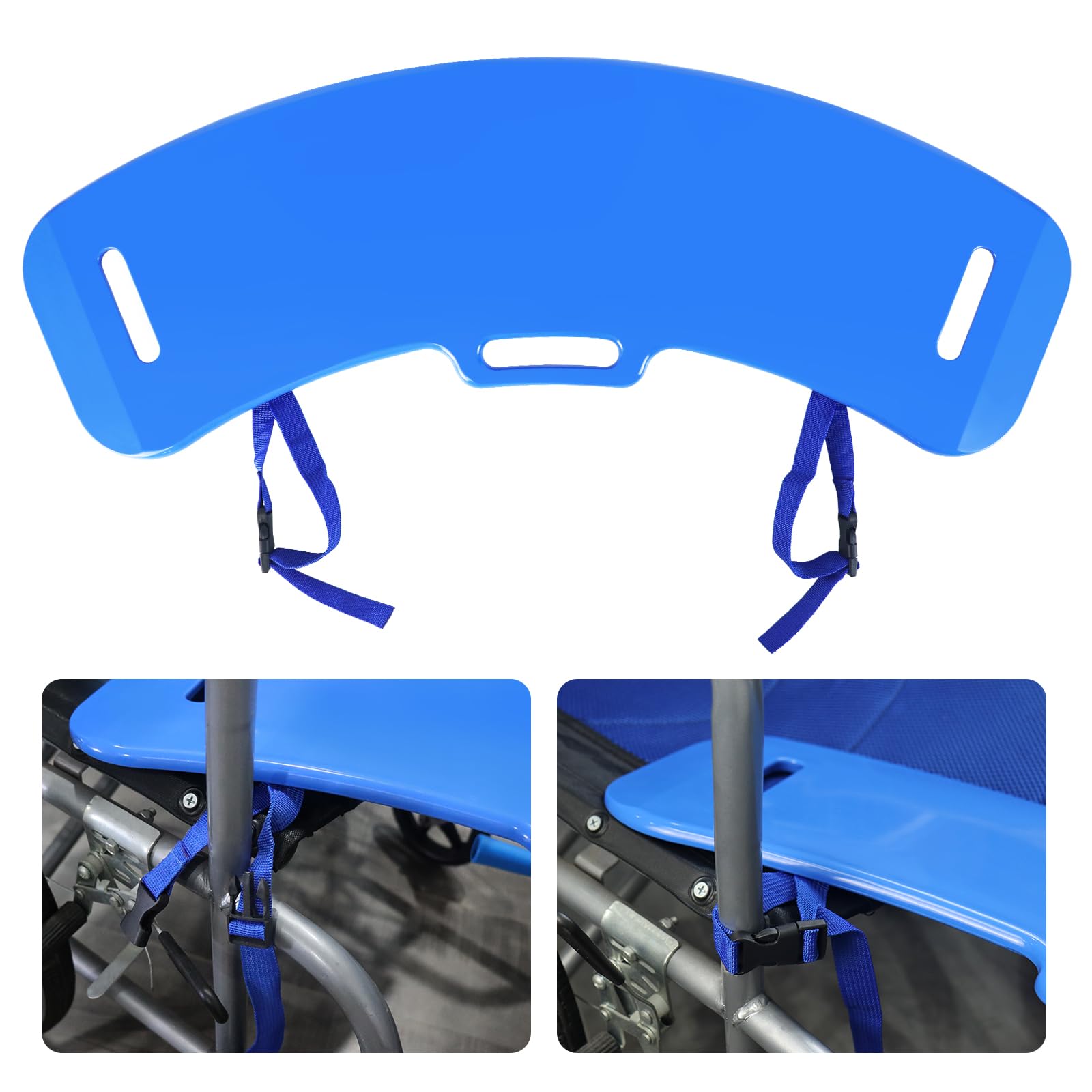
Most boards rely on a grippy underside and hope. This one adds two length-adjustable harness buckles that fasten to a wheelchair frame or another stable surface, with a buttoned-up length range of 2.6 to 7.3 inches. Once those are clipped, the board is not going anywhere when weight shifts onto it. For a caregiver working alone on a bed-to-chair move, that is the difference between two hands on the person and one hand on the person.
It is the entry-level pick here, and it acts like one in the dimensions: 31 inches by 8.3 inches, and just 0.47 inches tall. That 0.47-inch height is worth noticing. It sits flatter against the seat than the 1.25-inch board above, so there is less of a lip to get a hip over. The trade is width. At 8.3 inches the deck is narrower than the 12-inch Transfer Board with Slide Sheet, which means a less forgiving landing zone.
YHK is upfront about who this is for: it suits users with strong upper limbs and decent balance, and everyone else should have a guardian assisting. The manufacturer also tells you to check the sanded edge for sharpness before first use, and to keep the height difference between surfaces under 3.8 inches. Read that as the board’s real instruction sheet rather than a disclaimer. The ABS plastic feels sturdy, the cutout handle gives a clear grip point, and the toothed underside bites into fabric rather than sliding.
The strap advantage: A board that locks to the chair frame removes the most common failure in a solo transfer — the board shifting as the person commits their weight to it.
Know your gap: The manufacturer caps the height difference at 3.8 inches, so this is a board for two surfaces at similar heights, not a step-lowering tool.
The buyer this fits: someone who wants a board secured to the wheelchair before anyone sits on it, and who has the upper-body strength to slide themselves.
Think twice if: the person being moved cannot push themselves and no caregiver is on hand, since the board is designed around assisted or independent sliding.
3. Slide Transfer Board with Turntable
Rubberwood instead of plastic, and a turntable that lets a caregiver pivot without resetting.
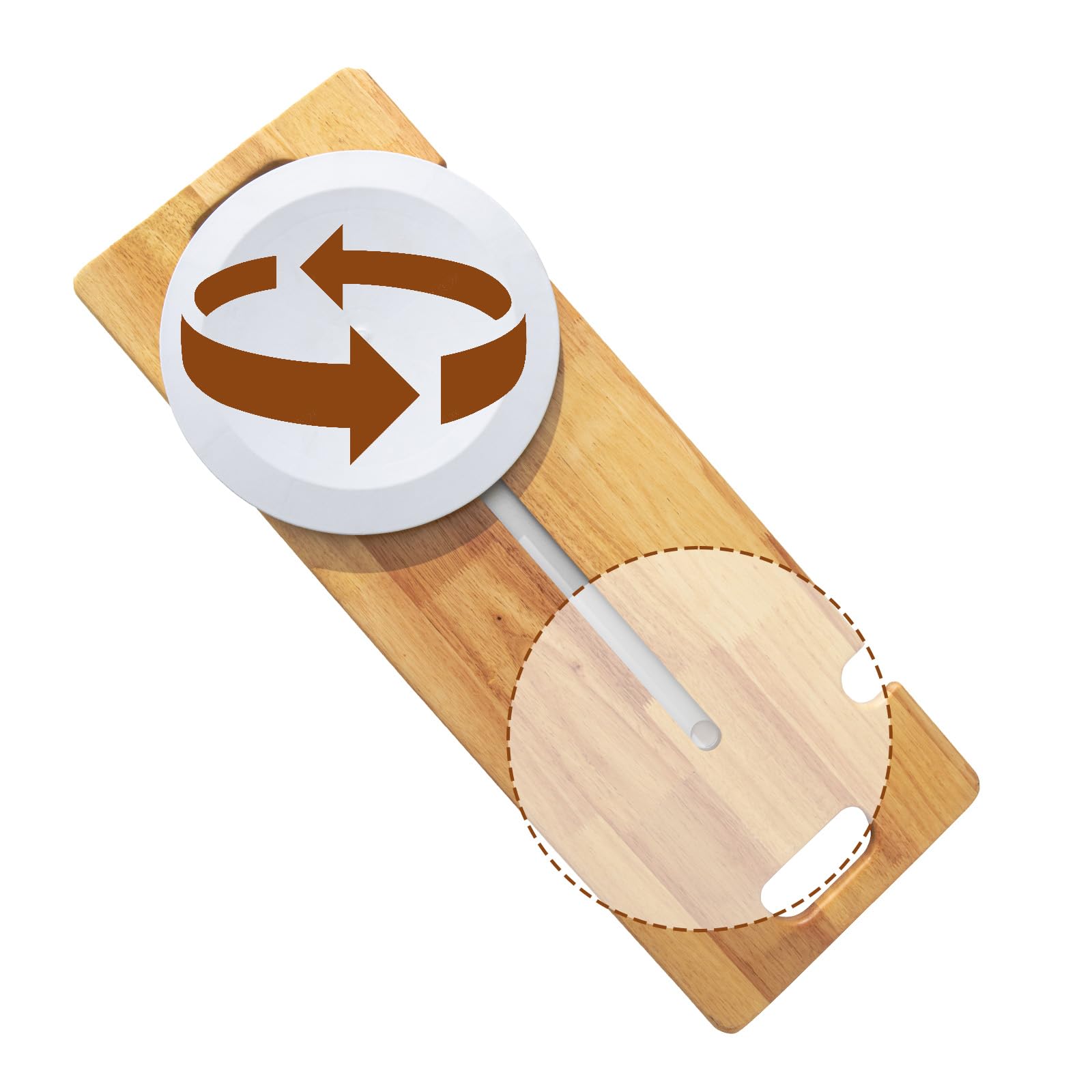
If the plastic boards feel insubstantial to you, this is the one built from premium rubberwood with a stated 450 lb capacity. It carries a 360-degree turntable so the seated user can be angled toward the target seat, and a sliding groove that lets them be repositioned without the stop-and-reset dance of a bare board. Dual cutout handles and tapered ends round out the shape so there is no sharp corner catching fabric on the way across.
The catch is weight: 9.15 pounds. This board ships at 9.15 pounds against the 4.76 pounds of the Transfer Board with Slide Sheet. That is a board you keep in one place and leave there, not one you carry room to room. Before ordering, measure the transfer gap and the seat heights, because the manufacturer asks you to confirm fit first. Positioning slots and anti-slip pads underneath help it stay put, but you should lock the wheelchair brakes before loading it.
One thing to weigh honestly: the average rating here sits lower than the plastic boards on this list. Take that as a prompt to check the dimensions against your own seating before you commit, not as a reason to dismiss a solid wood board with real capacity. For a heavier user moving between two fixed surfaces in one room, the rubberwood deck and turntable are a genuinely different class of build.
Built to stay put: Positioning slots and anti-slip pads underneath are there to stop the wobble that makes a transfer feel risky, provided the wheelchair brakes are locked first.
The pick for: a household moving a heavier user between two fixed seats who wants a wooden deck and a turntable rather than a thin plastic sheet.
Not the pick for: anyone who needs to carry the board between rooms or into a car, because 9.15 pounds makes it a fixture.
4. Vie TRIOMPHE Swivel Transfer Board
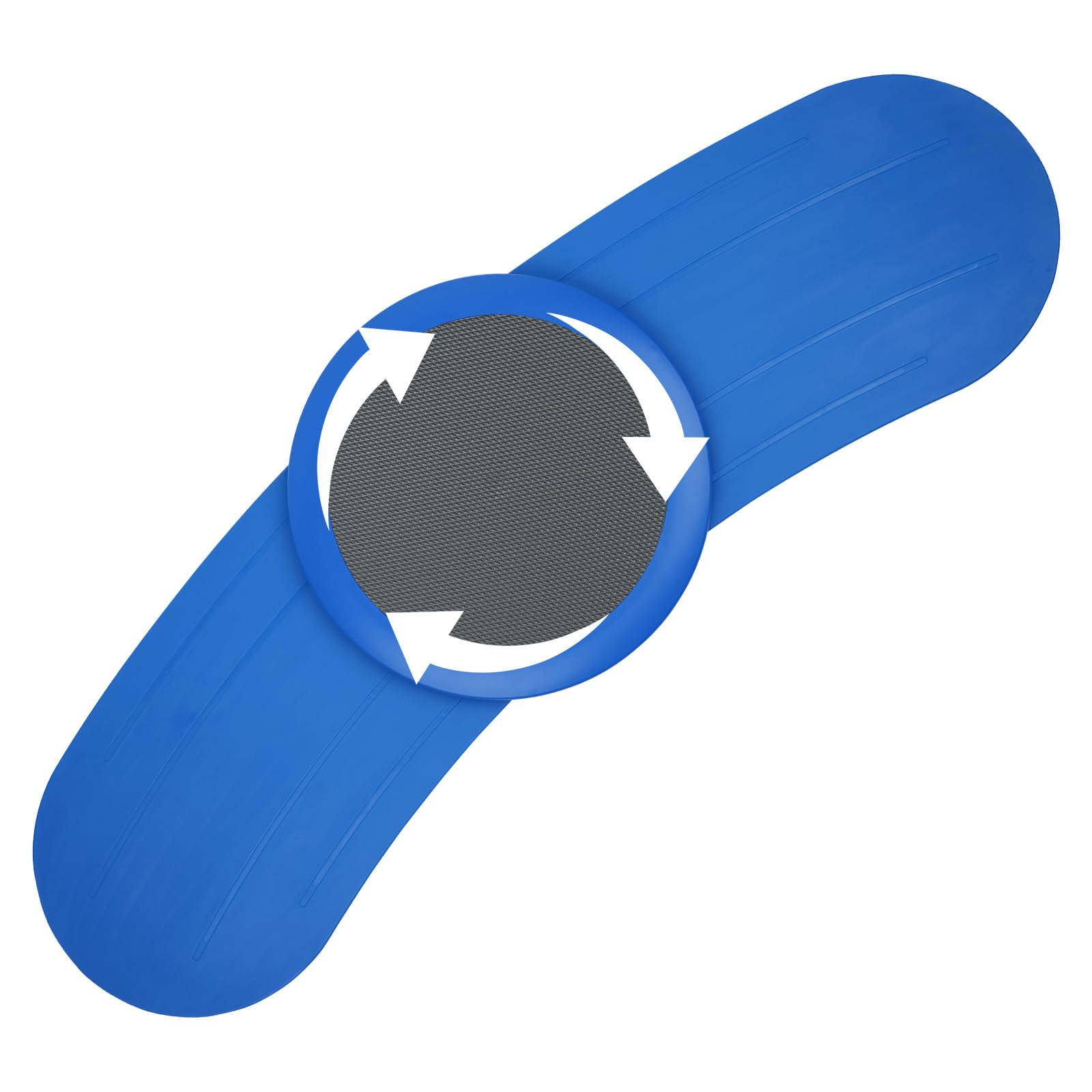
The only board here that lets you dial the slide speed up or down with a screw.
The two headline numbers are a 460 lb capacity and a 35.4 by 12.6 inch deck. And it measures 35.4 by 12.6 inches, giving a 12.6-inch wide transfer path — a wider disc surface than the LOSCHEN board’s 12-inch disc. For a larger user, those two figures alone narrow the field.
What genuinely separates it is the tension screw under the disc. Lift the rubber cap, turn the screw clockwise and the glide slows down for more control, or loosen it and the disc moves faster. You are tuning the board to the person and the caregiver rather than accepting one fixed glide. The built-in swivel disc runs a curved track and turns with the user, so a caregiver guides bed-to-wheelchair moves with a push instead of a lift. The matte grain surface is deliberately not slick, so clothing does not shoot across too fast.
The fit rule is strict and you should take it seriously. Vie TRIOMPHE asks you to keep the height gap under 2.8 in (7 cm) and says the board is not recommended for car transfers with a big height gap. Always transfer with a caregiver, seat the user centered on the disc, and check the disc and screws before each use. At 7.2 lbs it is light enough to move between rooms yet still rated for the highest load here.
Why it leads on capacity
- 460 lbs stated capacity, above the 400 lbs of the SafetySure and cerfess boards
- Tension screw lets you set how fast the disc glides
- 12.6-inch transfer path gives a wider disc surface than the LOSCHEN board
- Dual cutout handles and tapered edges for a clean grip and snag-free bridge
The rules you have to follow
- Height gap must stay under 2.8 in (7 cm) for the disc to work
- Not built for car transfers across a big height difference
- Needs a caregiver and routine checks of the disc and screws
Best for: a caregiver guiding a heavier user between bed, wheelchair and sofa who wants to tune how fast the glide feels.
Pass on it if: your main transfer is into a car with a real height step, since the maker rules that scenario out.
5. LOSCHEN Slide Transfer Board with Turntable
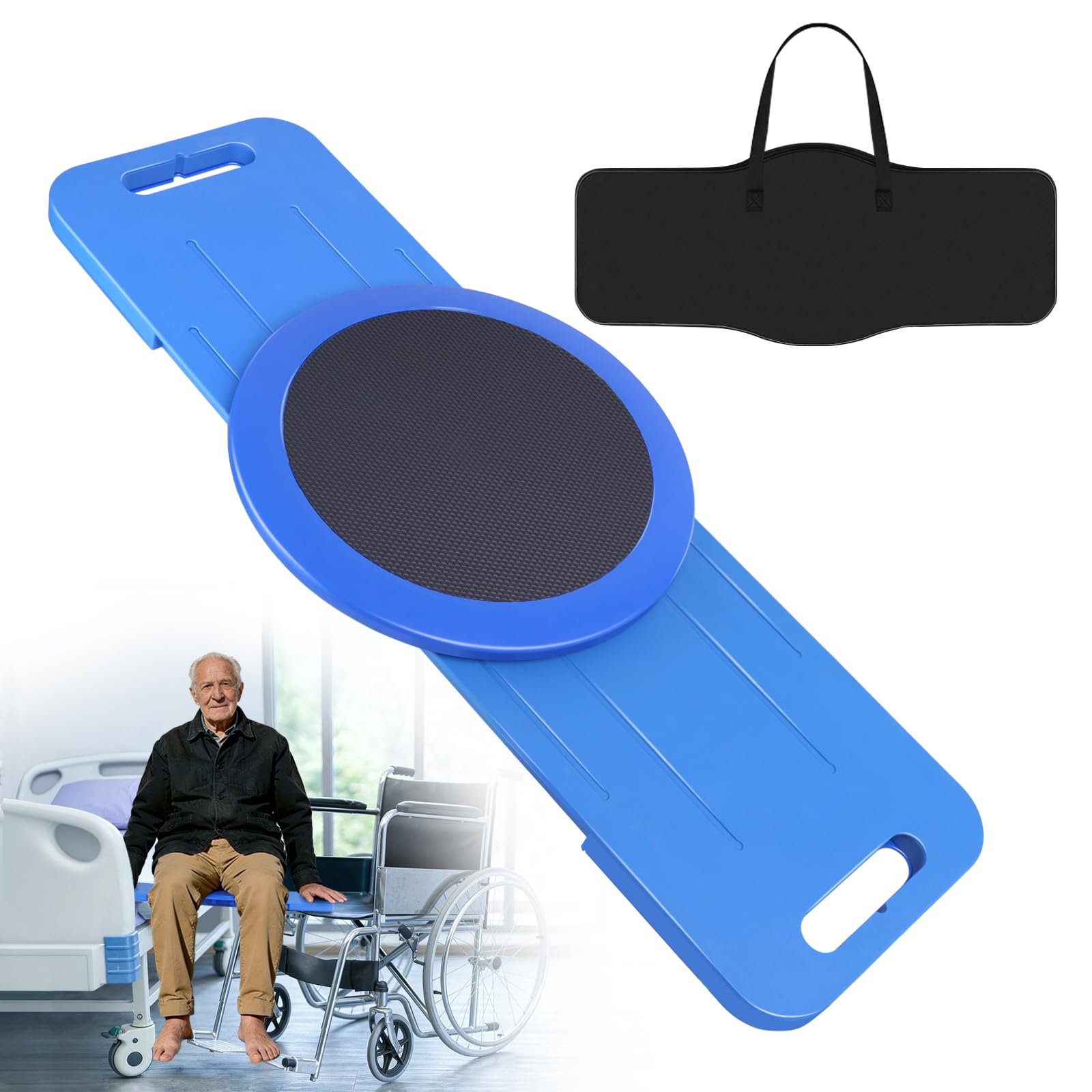
An extended deck meant to reach across the gaps a shorter board cannot close.
The design brief here was reach. The deck runs 29.5 inches long, 8.9 inches wide and 0.9 inches tall, with a 12-inch disc set into it. That puts a rotating surface under the user while the board itself spans the space between a wheelchair and a bed, sofa or car seat. The 360-degree disc lets someone pivot and slide in one continuous motion instead of turning in stages.
Grip is handled on both faces. The disc surface carries an anti-slip texture that keeps the user positioned while still gliding, and the underside has a high-strength non-slip pattern to hold the board on the seat. The ABS plastic body is finished smooth and burr-free so it will not scratch, and there is a hanging hole for storage between uses. At 7.4 pounds it sits in the same carrying class as the Vie TRIOMPHE board.
Before you use it, the manufacturer wants you to test the sliding speed of the disc and adjust its tightness, and to have a caregiver assist every time. Those are real setup steps, not fine print. Compared with the 31.75-inch board above, this one is shorter but pitched squarely at bridging wider gaps, so measure the actual span between your two surfaces before ordering.
The reach play: At 8.9 inches wide it out-spans the 8.3-inch YHK board while adding a pivoting disc the YHK board does not have, which is the combination to want when the gap is the problem.
Set it up right: The disc tightness needs testing before first use, and the board is designed to be used with caregiver assistance throughout.
Choose it when: the gap between your two surfaces is the main obstacle and you want a pivoting disc to turn the user on the way across.
Skip it when: you want a board you can set down and use without tuning the disc first, since speed adjustment is part of the setup.
6. SafetySure TransferEase – White – 22″x72″
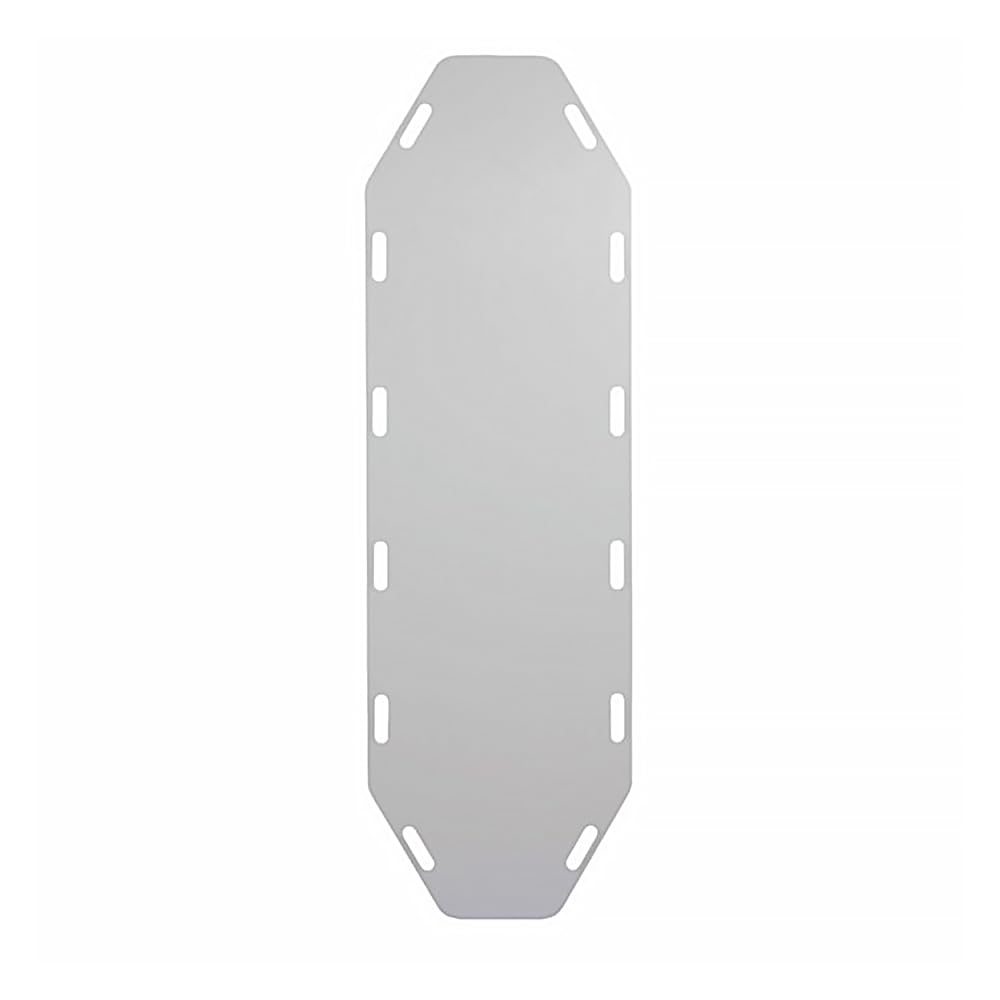
A six-foot sheet of polyethylene that turns a stretcher-to-table move into a slide.
This is not a board you carry to the car. At 22 inches wide by 72 inches long, the TransferEase is a full-body sliding surface for moving someone between a bed, a stretcher and an imaging table, including across small height gaps. It is rated to 400 lb, and it is also offered in an 18-inch width for departments working with tighter clearances.
The semi-rigid polyethylene supports body weight but flexes slightly, so it bridges an uneven surface instead of tipping over it. Twelve built-in handles give a caregiver multiple grasp points for leverage and control, and double as hanging points when the board is stored. An anti-static finish reduces static buildup for comfort during handling. Owners consistently find it does the job, with the bed-to-shower-chair move coming up as a common win.
The split in the feedback is over value for money. The board works, but the same money buys a lot of plastic, and that split opinion shows up in how people talk about it. Weigh that against its real strength: nothing else on this list bridges a distance like a 72-inch sheet can. For a facility or a home with a long stretcher-to-table gap, the length is the purchase.
Where it wins: Functionality is what people talk about most, and a 72-inch low-friction sheet helps most when the two surfaces are far apart or slightly uneven.
Where it stings: The cost-to-plastic ratio draws mixed feelings, so buy it for the length and the flex, not for the material feel.
Best fit: a care setting or home with a long stretcher, bed or imaging-table transfer where a short board simply cannot span the distance.
Look elsewhere if: you only need to cross a wheelchair-to-bed gap, since the 72-inch sheet is far more board than that job calls for.
7. Slider Board Wide 72″L x 22″W

The board that can stay under the patient while the scan runs.
Most sliding boards have to come out before imaging. This one is built to stay in. It is radiolucent, meaning X-rays pass through it, and it is MR safe for use with medical imaging equipment — so a patient can be slid onto the table and scanned without a second transfer. That single property is why it exists at this size: 72 inches long by 22 inches wide.
The rest of the spec sheet is aimed at medical personnel. Semi-rigid polyethylene with rounded edges handles the weight and bridges uneven surfaces while easing the back strain of a manual move. An anti-static coating stops patients sticking to the surface and cuts static buildup. Twelve strategically placed handles let staff position and adjust the board, and they work as hanging points for storage between procedures.
If you are equipping a home rather than a facility, be clear-eyed: this is a stretcher-and-table tool, not a bedside one. Its high rating reflects a board tuned for one job: sliding patients between beds, stretchers and imaging tables in a clinical setting. A home buyer wanting a car or bed transfer should be looking at the disc boards above instead.
The clinical advantages
- Radiolucent and MR safe, so it stays under the patient during imaging
- 72 by 22 inches spans long stretcher and table gaps
- Anti-static coating reduces sticking and static buildup
- Twelve handles for positioning, leverage and hanging storage
Who should not buy it
- Built for healthcare settings rather than home bedside use
- Its size and purpose are overkill for a wheelchair-to-car move
Made for: imaging departments and clinical staff who need a board that can stay beneath a patient during X-ray or MR procedures.
Not for you if: the transfer is a home bed-to-chair move, where the imaging-grade build adds nothing you will use.
8. Transfer Board for Wheelchair Users with Sliding Disk

An S-shaped deck with a 360-degree disk, designed so no one has to lift.
The S-curve deck is what sets this board apart. An ergonomic S curve paired with a 360-degree rotating disk lets a person turn and slide in one natural motion. The board is 40.5 inches long with a 12.2-inch disk width, and it is rated to 400 lbs. That length puts it well beyond the 31.75-inch Transfer Board with Slide Sheet, so it bridges a longer path between the two seats.
Cerfess designed this around tissue comfort. Unlike a wooden board, the sliding disk absorbs the friction of a transfer rather than passing it through skin and bones — which matters for anyone prone to skin tears. The “no-lift” system is the other half of the pitch: the caregiver guides the movement instead of hoisting, which takes strain off their back too.
Here is the part nobody can skip. The board only works when the two surfaces are kept connected horizontally, and on first use a caregiver must be there to support it. That means it is an assisted transfer tool, not a self-serve one. Its average rating is lower than the disc boards above it on this list, so check the fit and read the setup notes carefully before committing.
The friction fix: The disk is designed to absorb transfer friction instead of your skin, which is what makes it a kinder pick than a plain wooden board for a user with fragile skin.
The non-negotiable rule: The surfaces must stay level and connected while you move, so this is not a board for a big height step between seats.
Suits you if: skin comfort is the priority and the two seats sit at the same height, with a caregiver on hand for each assisted transfer.
Another board is better if: you need to transfer without a caregiver on the first attempt, since the maker requires someone supporting it.
Know the Specs
Sliding mechanism across the picks
Three types show up on this list. A rotating disc (a round turntable set into the deck that pivots the seated user) does the turning for you — the Vie TRIOMPHE, LOSCHEN and both cerfess boards use one. A slide sheet is a separate low-friction cloth laid under the user, as on the Transfer Board with Slide Sheet. A bare smooth deck, like the YHK board, relies on the user’s own push. A disc or sheet generally means less caregiver strain; a bare board asks more of the person moving.
Weight capacity and board dimensions
Capacity is a hard safety number, so match it to the person with margin. On this list the stated figures run from 308 lbs on the YHK board to 460 lbs on the Vie TRIOMPHE, with the rubberwood board at 450 lbs and the cerfess boards at 400 lbs. Length and width decide reach: the 72-inch SafetySure sheet spans far more distance than the 29.5-inch LOSCHEN board, while width controls how forgiving the landing zone feels — 12 inches on the Transfer Board with Slide Sheet against 8.3 inches on the YHK.
Common Questions
How do I know if a sliding transfer board will fit my bed and wheelchair?
What is the difference between a sliding transfer board and a pivot disc board?
Can I use a sliding transfer board on my own without a caregiver?
How much weight can these sliding transfer boards hold?
Will a wooden transfer board scratch my skin or my car seat?
What does FSA Eligible mean on a transfer board listing?
Which board is best for a car transfer?
Do these boards work for imaging or hospital procedures?
How do I store a sliding transfer board when it is not in use?
Is a longer board always better than a shorter one?
The Bottom Line
For most homes, the sliding transfer board to buy is the Transfer Board with Slide Sheet, because it supplies both the bridge and the low-friction surface in one purchase, on a deck 31.75 inches long and 12 inches wide. If you want a board that ties to the wheelchair frame before anyone sits on it, the YHK Transfer Board with Straps is the one to reach for. And if a heavier user and a fixed pair of seats are your situation, the Vie TRIOMPHE carries the highest stated capacity here at 460 lbs with a glide you can tune.
How we choose
We do not accept paid placement. Every pick is matched to a real buyer and a real use-case; we do not hands-on test units.
Sources
Specifications: manufacturer listings and product documentation. Review insights: verified customer reviews, as of November 2026. Pricing: not shown on this page (it changes often); check the current price via the retailer link.
As an Amazon Associate, Tactical Gear Guy earns from qualifying purchases. This does not affect which products we feature.