Specs are compiled from manufacturer listings and verified buyer reviews and can change over time — please confirm the key details on the product page before buying.
If you have ever watched a needle miss a vein twice in a row, you already know why a portable vein finder earns its place in a kit bag. These handheld lights shine near-infrared or high-intensity LED light through the skin so the vein underneath shows up as a dark line or a bright glow. That turns a blind stick into a guided one. The picks below cover warm, cool, and rechargeable versions, plus the newborn and pediatric tools that need a gentler touch. Match the light to your caseload and the size of your kit bag.
This guide is built by comparing the manufacturers’ published specifications and the patterns across verified customer reviews, so you get each pick’s real strengths and trade-offs instead of marketing spin.
Below you will find the full run-down on each portable vein finder.
Top Picks

How To Choose The Best Portable Vein Finder
A portable vein finder only helps if it fits the way you work. Three things decide that: the light technology, the battery, and the patient group you see most. Get those right and you avoid carrying a device that gathers dust in the trauma bag.
Transillumination Versus Near-Infrared Imaging
Transillumination works by pressing a bright light against the skin so the tissue glows and the vein shows as a dark band. It is simple, quick, and needs no screen. Near-infrared imaging uses light that veins absorb differently from surrounding tissue, then renders that picture for you. Infrared tends to reach deeper veins and handles hairy or darker skin better. Transillumination shines on superficial veins near the surface, which is where most routine IVs happen anyway. One paramedic-style owner summed it up well: “It is not magical. It doesn’t show you all the veins.” Know which depth you need before you buy.
Why Battery Type Changes Your Shift
A finder that runs on two AA batteries is easy to refill from any supply closet, but those cells run down. A rechargeable lithium-ion unit saves you the battery run, yet needs a charging habit. Read the rated runtime and the battery type before you commit. A dead light in a moving ambulance is worse than no light at all, so always carry a spare set.
Skin Tone, Age, and Patient Body Type
Dark skin, tattoos, and extra tissue all scatter light differently. Devices that explicitly state they work on all skin tones or on tattooed skin are worth the extra look. If your caseload is mostly babies, a dedicated neonatal unit with cool light is the safer match. Adult ED work calls for a device with deeper reach.
Side-by-Side Comparison
| Model | Best For | Power Source | Weight | Rating | Amazon |
|---|---|---|---|---|---|
| Veinlite LED Plus★ Best Overall | Everyday clinical IV access | Rechargeable lithium-ion (included) | 2.72 oz | 4.0+ | Amazon |
| Oncovein Pro Combo PackPediatric Pick | Baby and pediatric IV access | 1 AAA (included) | 0.35 oz | 4.5+ | Amazon |
| Veinlite EMS PROField Kit | EMTs and field response | 2 AA (included) | 9.1 oz | 4.0+ | Amazon |
| II Transilluminator | Tattooed and dark-skinned patients | Battery-operated | 3.53 oz | 3.5+ | Amazon |
| Neonatal Transilluminator | Newborn and infant vein access | Battery-operated | 3.2 oz | 4.0+ | Amazon |
| Infrared Vein Finder Viewer (B0C39LT3SR) | Traveling clinicians | — | — | 3.0+ | Amazon |
| Transilluminator Viewer (B06ZYQLGPF) | Deep-focus imaging | — | 2.16 lb | 3.5+ | Amazon |
| PULEE Infrared Vein Finder | Budget-equipped bulk orders | 1 lithium-ion (required) | 2.33 lb | 3.0+ | Amazon |
Detailed Reviews
1. Veinlite LED Plus Transilluminator
Our pick — 4.0+★ from 90+ verified ratings; the strongest balance of quality and price.
One-handed transillumination you can hold against the skin and anchor a vein with in seconds.
The LED Plus puts a bright transilluminator light against the skin so vein structures show as dark paths you can follow with a needle. Because it runs one-handed, you keep your other hand free to steady the arm and prep the site. It handles superficial and deeper veins on patients of every age, skin shade, and body size, so it holds up across a mixed caseload rather than one narrow group. That versatility is the reason this is the top pick.
It ships with a rechargeable lithium-ion battery included, so you are not hunting for a disposable cell before a night shift. The clinical side matters too: it works within INS and CDC guidelines using throwaway plastic covers, which is what a shared unit needs to cross between patients. The whole unit weighs just 2.72 ounces, so it disappears into a pocket and stays there until you need it. Customers who rate it are split cleanly on value, and for good reason. A working EMT called it a ” less” price for the same model elsewhere and then added, “Only downside is the price.”
The main thing to weigh is the pediatric adapter. A few owners find it less impressive than the adult side of the unit, so if newborns are most of your caseload, look harder at the Oncovein Pro below. And like any transilluminator, it shows the vein, not the depth. You still need solid insertion technique to put the needle where the light points. It sharpens a good stick but does not replace insertion technique.
Worth the Sticker
- Rechargeable lithium-ion cell included, so no disposable battery hunt before a shift
- One-handed hold frees the other hand to anchor and prep
- Works on superficial and deeper veins across all ages and skin tones
- 2.72 oz weight slips into any pocket
- Disposable covers keep it clean between patients under CDC/INS guidance
What to Weigh
- Pediatric adapter gets a mixed reaction from buyers
- Does not tell you vein depth, only direction
- Premium-tier outlay for a handheld light
Best for: busy clinicians who need one rechargeable light that covers adults, children, and varied skin tones.
Think twice if: your caseload is mostly newborns, where a cool neonatal unit fits better.
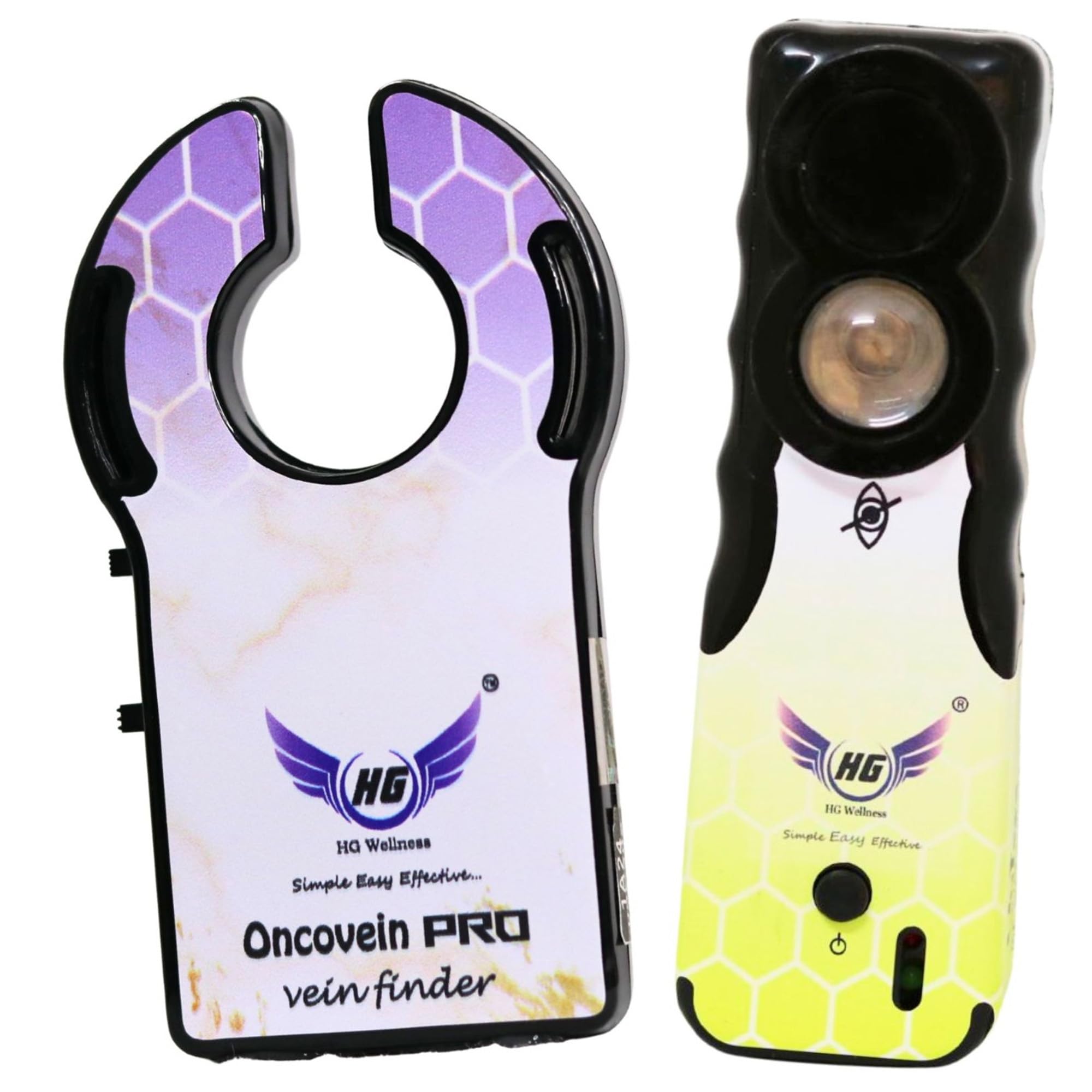
2. Oncovein Pro Vein Finder Combo Pack for Baby & Pediatric Use
The only pick here that arrives with the belt and stretch tool a squirming infant actually needs.
Tiny arms move. The Oncovein Pro answers that with a stabilization belt and a gentle skin stretch tool bundled in, so you hold the limb steady while the infrared viewer does its work. At 0.35 ounces it is the lightest handheld in this lineup by a wide margin, and next to the 9.1-ounce Veinlite EMS PRO it feels almost weightless in the hand. That matters during a long NICU procedure where your wrist would otherwise tire.
The infrared setup visualizes veins under the skin to cut the guesswork before the needle goes in. The maker lists it for hospitals, pediatric clinics, ambulances, and home care, which maps to where a mobile caregiver would actually pull it out. It runs on a single included AAA battery, the same cell as the button batteries in countless other clinic tools. Called the combo pack for a reason, it bundles the accessories so you are not tracking down a belt separately.
The honest gap is the feedback trail. Its item specs also put first availability recently, so this is a newer listing. If you want the long-proven adult workhorse instead, the LED Plus above has years of use behind it. For dedicated pediatric access, though, the belt-and-stretch-tool bundle is hard to find elsewhere in this list.
Bundled for tiny limbs: the stabilization belt and skin stretch tool ship with the viewer, so you steady a small arm without hunting for extra parts.
The lean data caveat: few ratings exist so far, so weigh the infrared spec and the accessory kit rather than a long customer track record.
Reach for this if: your patient base is babies and small children and you want the steadying accessories in the box.
Look elsewhere if: you want a device with a deep history of owner feedback behind it.
3. Veinlite EMS PRO Emergency Vein Finder
A carry-case kit built for the back of an ambulance, not the drawer of a clinic.
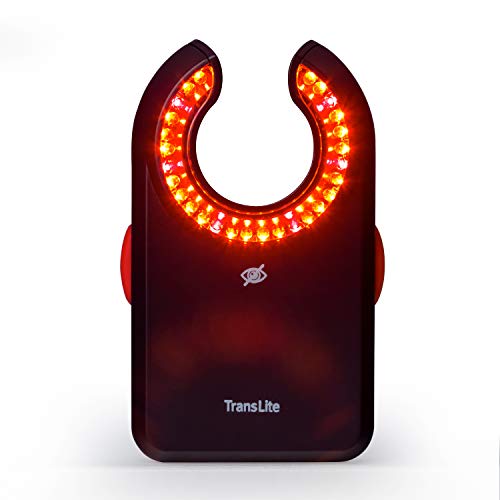
The EMS PRO is aimed squarely at EMTs, paramedics, and first responders who need a reliable vein on the first stick in rough conditions. The C-shaped head is the key detail. It lets you trap a vein and apply traction while you advance, which keeps a rolling vein from slipping away. The maker states the C-shaped head cuts down on vein rolling during insertion, and buyers confirm the trap-and-hold approach helps on surface veins.
Runtime is the field number that matters: 3-5 hours on 2 included AA batteries. That is enough for a shift, and AA cells refill from any supply closet when they run down. The complete kit adds a carrying case, 50 disposable covers, a light shield, a pediatric adapter, and the batteries, so it is ready from the start. It weighs 9.1 ounces, heavier than the 2.72-ounce LED Plus but built to shrug off a bouncing trauma bag. The maker also publishes a 93% first-attempt success figure from its own trials, not independent data.
The gap is depth. It reads surface veins well but is not as strong on deeper ones, so a very hard deep stick may want the infrared options further down. Experienced hands may also find they do not need it at all. As the review pages frame it, an experienced phlebotomist may not need the assist, while someone less confident gets real value. It is aimed at the second group, and it earns its keep there.
Built for the Bus
- 3-5 hours on 2 AA batteries with refills from any supply closet
- C-shaped head traps the vein and applies traction during insertion
- Complete kit: case, 50 covers, light shield, pediatric adapter, batteries
- Weighs 9.1 oz and stands up to a bouncing trauma bag
Where It Tapers Off
- Strong on surface veins, not as strong on deeper ones
- Confident, experienced phlebotomists may not need the assist
- The 93% first-attempt figure is the maker’s own claim, not independent
Go with this if: you ride a rig or respond to scenes and want a ready kit that survives the field.
Skip if: most of your sticks are deep, hard-to-see veins.
4. II Transilluminator Vein Finder

A dual-wavelength LED wand that gets you into tattooed arms other finders struggle with.
This one keeps it minimal: a high-intensity, dual-wavelength LED source in a wand you press against the skin. Dual wavelength means it shines two light bands rather than one, which is how it reaches veins under ink and darker skin. Owners note it works on tattooed body parts, which is a real problem area for many finders. It also reads veins even in a well-lit room, so you are not forced to kill the lights before every stick.
Where it earns its place in a bag is utility. Several reviewers describe it as a tool that hones your skills, and the whole unit weighs 3.53 ounces, so it travels easily alongside your other gear. As one owner framed it, it does not show you all the veins, but it can let you find one you could not easily see otherwise. That is the honest ceiling of a transilluminator, and it clears it.
The thing to know is the durability conversation around it. A few units arrive not turning on, so the usual advice applies: test yours early and keep the return window open. Beyond that, it is a straightforward light. It does not add depth readout or a screen, so if you need those, look to the infrared options below. For a basic wand that lights tattooed and darker skin, it does the job.
The reason it earns a slot: dual-wavelength LED output reads veins under tattoos and on darker skin, and it works even with the room lights up.
Test it on arrival: a few units show up dead, so power yours on and confirm it lights before the return window closes.
Pick this if: you regularly stick tattooed or dark-skinned patients and want a simple LED wand.
Look past it if: you need depth readout or a screen-based image.
5. Neonatal Transilluminator Baby Vein Finder

A cool light built specifically so it can rest against a newborn without burning.
Newborn skin is thin and a baby cannot tell you it is getting warm, so a neonatal finder has to stay cool. This one is built around a bright yet cool light that the maker states will not burn the baby, which is the defining requirement for neonatal units. It weighs 3.2 ounces, compact enough to steady with one hand over a tiny arm. It is battery operated, so no cord tangles near an incubator.
Venoscope is the manufacturer name on the spec sheet, and the device has been listed since 2009, so the design has been around a long while for neonatal work. The compact footprint suits a bassinet-side setup where space is tight. If your department handles neonates and infants, a dedicated cool-light unit is the safer fit than an adult transilluminator pressed into baby duty.
What you give up is a richer feature set. There is no screen, no dual mode, and no depth readout, which is consistent with a simple, purpose-built neonatal light. Its rating sits solidly positive on a modest number of ratings, so it is a proven design rather than a brand new one. For adult IV access you would be better served by one of the wider-surface unit picks above. For babies, this is a considered match.
Suits: NICU and pediatric staff who need a cool, compact light that rests against infant skin.
Not for: adult IV work, where the LED Plus handles both superficial and deeper veins across all ages.
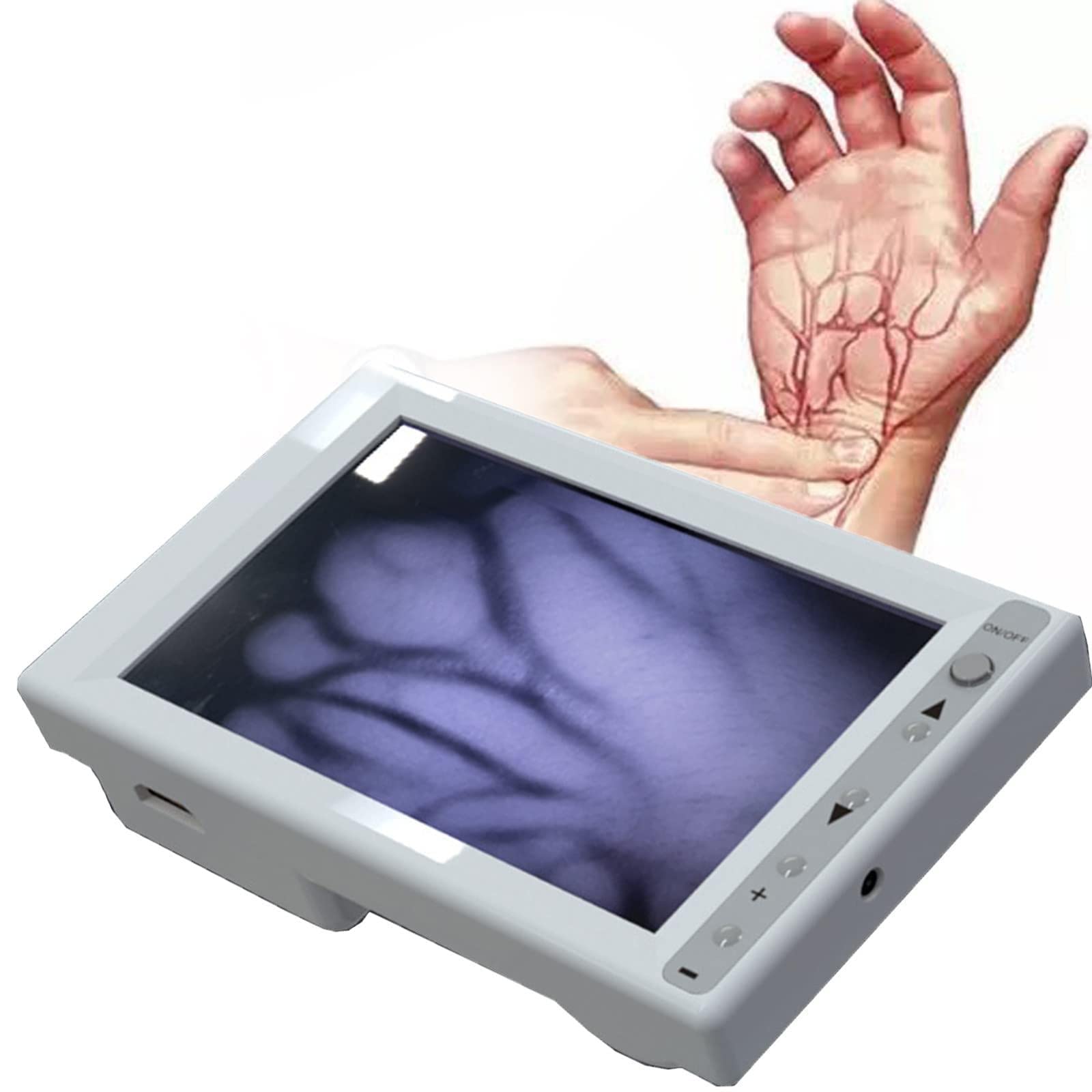
6. Infrared Vein Finder Locator Vein Viewer Adult & Baby
A screen-based infrared locator aimed at the nurse who drives between home visits.
Here is how it works, in plain terms. Near-infrared light is absorbed differently by the oxygen-carrying hemoglobin in veins than by the tissue around it. The device reads that difference through a photoelectric conversion and an image algorithm, then paints a clear vein picture on a screen. That screen-based view is the difference between this and a bare transilluminator light. The maker lists it for patients whose veins are hard to position, including obesity, swollen tissue, hairy skin, dark skin, and low blood volume.
It is built for mobility. The handheld body is meant to be carried anywhere, which the maker frames as a fit for traveling doctors and nurses working at home. It is listed for hands, arms, and legs on adults and children, so one device covers the common stick sites. It also finds a place in cosmetic and physical-exam settings as well as routine injection, infusion, and blood draw.
Weigh the downside honestly. It has only a handful of ratings so far, so the long-term track record is thin, and a screen-based device is only as good as its image in the field. There is no published weight or battery spec in its listing, so you cannot compare the carry load against the 0.35-ounce Oncovein Pro before you buy. If you want proven field feedback, the LED Plus above has the track record. If you want a screen-based infrared image in a portable body, this is the option to study.
Consider it if: you want a screen-based infrared reading you can carry to home visits and mobile calls.
Wait on it if: you need a long documented feedback trail before you commit.
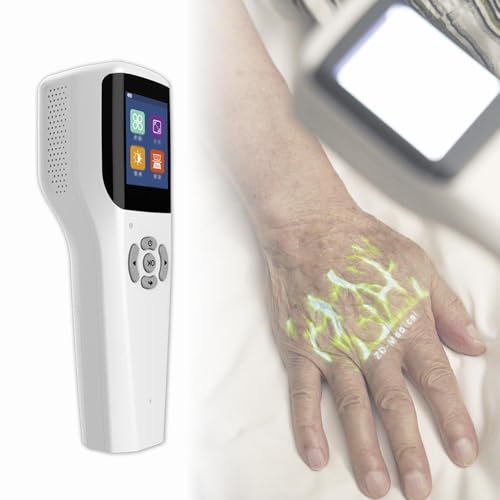
7. IInfrared Vein Finder, Transilluminator Vein Locator Viewer
Two imaging modes and the widest opening in the lineup, aimed at babies and heavier patients.
The selling point here is imaging flexibility. You get two modes, blue-and-white and red-and-green, switched with one click, so you can match the display to the skin and setting in front of you. Brightness is adjustable, and the maker lists the deepest focus of any portable Veinlite with the widest opening for easier access. It is named for baby, child, and obesity patients, the groups whose veins are hardest to bring into view.
Two safety touches stand out. The maker describes the light as medical cold light that is safe for your eyes, and a sleep function helps it run through longer sessions. It is built to be held and carried, with a slim design the maker frames as easy to take along. For clinic and hospital IV and phlebotomy work, that combination of modes and a wide access opening gives you more angles to work a hard stick.
Set your expectations on weight. At 2.16 pounds it is much heavier than the compact neonatal unit at 3.2 ounces, so this is closer to a benchtop hand-carried tool than a pocket light. The feedback is also thin, with only a handful of ratings, so treat the spec sheet as your main guide. If you want the widest access and the deepest focus in one body, this is the pick to weigh. If you need a light that disappears into a shirt pocket, look at the LED Plus instead.
What the modes buy you: one-click switching between blue-and-white and red-and-green lets you adjust the view to the patient and the room.
The weight you carry: at 2.16 lb it is a hand-carried tool, and the thin feedback trail means the spec sheet is your guide.
Best for: clinicians who want the widest access opening and a deep focus for babies and heavier patients.
Pass if: you want something light enough to forget in a pocket.
8. Infrared Vein Finder Viewer

A wide-opening infrared unit with two imaging modes, aimed at clinics that need one on hand.
The PULEE listing mirrors the feature set of the deep-focus unit above, with the same two imaging modes (blue-and-white and red-and-green), adjustable brightness, and a medical cold light the maker frames as safe for your eyes. It also carries the sleep function for comfortable longer sessions and the wide opening for easier access. It runs on one lithium-ion battery, which it needs but does not include. It is a compact hand-held package by design.
The maker pitches it for the same stubborn cases: obesity, swollen tissue, hairy skin, dark skin, and low blood volume, plus a focus on babies and obesity patients. It is a diagnostic locator with a screen-based read rather than a bare transilluminator light, so it leans toward making the vein picture easier to see in clinic and hospital IV work.
The real caution lives in the review record. Buyers split sharply, with some reporting it shows veins clearly and others finding it does not work at all. There is also a pattern of durability and power complaints, including units that stop charging and one report of a unit overheating. That is the most important thing to know before you buy. Test the power supply the minute it arrives, keep the return window open, and do not leave it charging unattended. Just verify it early.
The feature set on paper: dual imaging modes, adjustable brightness, and a wide opening make it look like the premium units on spec.
Verify on arrival: the review record splits on performance and flags charging trouble, so confirm yours works and charges before the window closes.
Worth a look if: you want the wide-opening infrared feature set for far less and are willing to test it on arrival.
Steer toward the top pick instead if: you need a device you do not have to babysit on the charging front.
Know the Specs
Transillumination vs Near-Infrared Imaging
Transillumination presses a bright LED against the skin to light it up so veins show as dark paths. It fits routine IVs on surface veins. Near-infrared shines light that veins absorb differently from the tissue around them, then renders that difference on a screen. Infrared tends to reach deeper and handles hairy or darker skin better. A dual-wavelength LED sits in between, using two light bands to reach under ink and darker skin.
Battery Type and Runtime
Cell choice decides how you refill during a shift. AA cells, as on the EMS PRO with its 3-5 hour rating, top up from any supply cabinet. A rechargeable lithium-ion cell, as on the LED Plus, needs a charging habit but saves the battery run. A single AAA, as on the Oncovein Pro, is small but easy to source. Check the type and the runtime before you commit, and carry a spare.
Infection Control and Disposable Covers
A shared vein finder touches many patients, so covers matter. Units that work with cheap disposable plastic covers and follow INS and CDC guidance are the ones to favor for a shared clinical device. Stack the covers next to the unit so you never skip one in a hurry.
Skin Tone, Age, and Patient Group
Dark skin, tattoos, extra tissue, and infant skin all change how a light performs. Choose a unit that names the groups it handles, and match it to your caseload. Neonatal work wants a cool light. Adult ED work wants deeper reach. Dual-wavelength and infrared options are the pick for tattooed and darker skin.
Common Questions
What is the difference between a transilluminator vein finder and a near-infrared one?
Will a portable vein finder work on dark skin or tattooed arms?
How long do the batteries last on a portable vein finder?
Can a vein finder replace good IV insertion skill?
Is a dedicated neonatal vein finder different from an adult one?
How do I keep a shared vein finder clean between patients?
Does a vein finder show veins under tattoos and body hair?
What should I check first when a vein finder arrives?
Is a heavier vein finder better for field use?
The Bottom Line
For most clinicians, the winner in this list of portable vein finder options is the Veinlite LED Plus because one rechargeable handheld covers superficial and deeper veins across all ages and skin tones. If your caseload is babies and small children, grab the Oncovein Pro Combo Pack with its steadying belt and stretch tool. And for riding a rig or responding to scenes, the Veinlite EMS PRO is the one to reach for. Match the light to the patients you treat and the shift you work, and test any unit on arrival before the return window closes.
How we choose
We do not accept paid placement. Every pick is matched to a real buyer and a real use-case; we do not hands-on test units.
Sources
Specifications: manufacturer listings and product documentation. Review insights: verified customer reviews, as of November 2026. Pricing: not shown on this page (it changes often); check the current price via the retailer link.
As an Amazon Associate, Tactical Gear Guy earns from qualifying purchases. This does not affect which products we feature.