Specs are compiled from manufacturer listings and verified buyer reviews and can change over time — please confirm the key details on the product page before buying.
If your baking stalls because the mixer groans through stiff bread dough or leaves dry flour stuck to the bowl walls, the fix is a stand mixer with real torque and a bowl that matches your batch size. That is what this list settles for you — which stand mixers actually knead, whip and cream without wobbling on the counter or burning out mid-recipe, and which ones suit a small kitchen versus a serious sourdough habit.
This guide is built by comparing the manufacturers’ published specifications and the patterns across verified customer reviews, so you get each pick’s real strengths and trade-offs instead of marketing spin.
You will see how bowl capacity, motor wattage and beaters that scrape the sides change what you can bake in one go. Below are the stand mixers worth your counter space, judged on build, capacity and how they handle heavy dough, so you can pick with confidence. This is the honest shortlist of the recommended mixer for baking.
Top Picks


How To Choose The Best Stand Mixer For Baking
Buying a mixer for baking is really three decisions stacked together: how much dough you make at once, how hard that dough fights back, and where the machine will live between bakes. Get those three right and the rest — colors, attachments, timers — are finishing touches.
Match the bowl in quarts to your real batch size
A 5-quart bowl such as the KitchenAid Artisan handles everyday cookie and cake batches, and KitchenAid states it mixes up 9 dozen cookies in a single batch using the flat beater. Step up to 6.5 or 8.5 quarts and you gain headroom for family loaves and big gatherings, but you also give up counter space. For daily two-person baking, a smaller bowl is easier to lift and wash.
Read the motor, not the marketing
Wattage tells you how much grunt the motor has for stiff dough; it ranges widely across this list, from a 300-watt motor up to 900 watts and beyond. A motor with a belt-driven or direct-drive transmission keeps torque steady as dough tightens. If you mainly mix cakes and cream, moderate power is plenty. If you knead whole-grain bread weekly, lean toward the higher watts and a metal body that stays planted.
Tilt-head or bowl-lift — and how the attachments reach the bowl
A tilt-head mixer lets the top swing back so you can add flour and swap the beater without moving the bowl. A bowl-lift model raises the bowl into a fixed head, which feels more solid with heavy dough. Either way, check that the flat beater and flex-edge scraper actually reach the bowl sides, because a beater that misses the edge means you scrape by hand anyway.
Side-by-Side Comparison
| Model | Best For | Bowl Capacity | Motor / Speeds | Body & Type | Amazon |
|---|---|---|---|---|---|
| KitchenAid Artisan 5-Qt Tilt Head★ Best Overall | Everyday baking all-rounder | 5 quarts | 10 speeds | Tilt-head, metal | Amazon |
| Kitchen in the box 6.5 QTCompact Pick | Compact small-kitchen baking | 6.5 quarts | 10 speeds, planetary | Tilt-head, ABS | Amazon |
| Kitchen in the box 8.5 QT 900WBig-Batch Value | Big-batch bread and dough | 8.5 quarts | 900W, 10 speeds + pulse | Tilt-head, plastic & steel | Amazon |
| CEBORY 3-IN-1 6.5QT | Beginners and gift buyers | 6.5 quarts | 660W, 10 speeds + pulse | Tilt-head, ABS & steel | Amazon |
| Camic 7.45 QT Tilt-Head | Large-family mixing | 7.45 quarts | 300W, 10 speeds | Tilt-head, ABS | Amazon |
| All Metal DC Motor 5.3 QT | Quiet kneading for bread and pizza | 5.3 quarts | DC motor, 8 speeds | Tilt-head, die-cast metal | Amazon |
| KitchenAid 5.5-Qt Bowl-Lift KSM55 | Heavy dough and big batches | 5.5 quarts | 11 speeds | Bowl-lift, die-cast zinc | Amazon |
| Zacme 7 Quart Die-Cast | Quiet power, large households | 7 quarts | 650W, 12 speeds | Tilt-head, aluminum die-cast | Amazon |
| Bosch Universal Plus 500W | Serious sourdough batches | 6.5 quarts | 500W, 4 speeds | Bottom-drive, plastic bowl | Amazon |
| SMEG SMF05 Forte 5-Qt | Looks plus kneading power | 5 quarts | 750W, 10 speeds | Tilt-head, aluminum & steel | Amazon |
| Ooni Halo Pro Spiral Mixer | Pizza and bread dough specialists | 7.3 quarts | 58 speed settings | Spiral, die-cast aluminum | Amazon |
Detailed Reviews
1. KitchenAid Artisan 5-Qt Stand Mixer
Our pick — 4.5+★ from 30,500+ verified ratings; the strongest balance of quality and price.
The 10-speed workhorse that most home bakers picture on the counter.
This is the standard against which the rest of the list gets measured. It runs on 10 speeds, so you stir dry ingredients on the low setting and whip cream near the top of the dial. The bowl is a 5-quart stainless steel model with a handle, and KitchenAid states one batch handles 9 dozen cookies using the flat beater. The tilt-head design swings the top back so you can add flour and change to the dough hook without wrestling the bowl out.
What wins people over is performance — the motor simply does the task it is asked to do, whether that is cake batter, cookie dough or a bowl of mashed potatoes. The five included pieces cover most baking jobs: the 5-quart bowl, a coated flat beater, a coated dough hook, a 6-wire whip and a pouring shield that keeps flour from dusting your counter. The metal body’s 59 touchpoints around the bowl are built to keep mixing even as batches get heavier.
The catch is the bowl finish early on: the metal bowl can turn batter grey for the first few uses until it settles, so wash it well before your first bake. The paint can also arrive less than flawless on some units, and durability is the spot where feedback splits — plenty say it lasts years while an occasional unit gives trouble early. At 22.8 pounds it stays planted but is not light to move.
Where it delivers
- 10 speeds cover stirring cream and kneading dough on one dial
- 5-quart bowl with handle mixes 9 dozen cookies in a single batch
- Tilt-head gives clear access to add flour and swap beaters
- Pouring shield plus 59 touchpoints around the bowl for even mixing
What to weigh first
- Stainless bowl can tint light batter grey for the first few uses
- 22.8 pounds stays put but is not easy to lift into a cabinet
- 5 quarts is tight for very large bread batches
Go with it for: everyday cakes, cookies and cream where you want one dial to do everything.
Think twice for: weekly whole-grain bread in bulk — the 5-quart bowl and lighter motor suit smaller batches than the 8.5-quart option below.
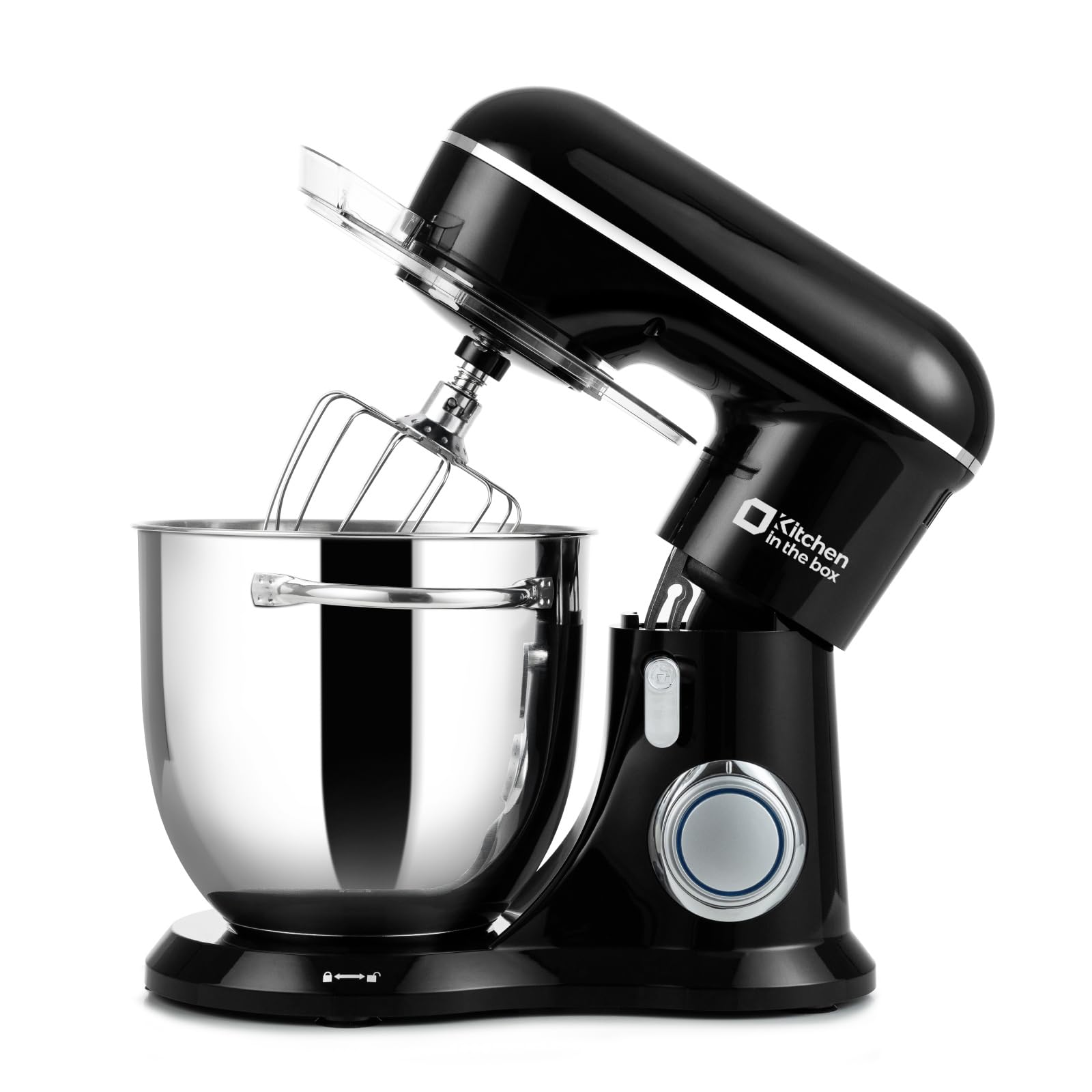
2. Kitchen in the box 6.5 QT Stand Mixer
A 6.5-quart bowl that tucks into a small kitchen without shrinking the batch.
The draw here is the footprint against the batch size: a 6.5-quart stainless steel bowl with dual handles, running on planetary mixing that moves the attachment around the bowl while it spins on its own axis. That motion is what keeps flour from hiding in one corner of the bowl. Ten speeds let you stir gently and whisk faster, and the tilt-up head makes it easy to add ingredients or change the beater.
Overhead, a clear anti-splash lid holds flour and batter in while you watch the mix come together. Dual-metal guide rails reinforce the tilt-head structure so the head feels solid going up and down. Five anti-slip suction feet grip the counter, and the low-noise operation keeps the kitchen calm. It is the kind of mixer that earns its space in a rental kitchen or a small counter run.
Stability is the honest split: the suction holds it planted, but at the highest speeds some units rock back and forth a little. Treat the top speeds as the throttle to earn your way up to rather than the default, and keep batches within a reasonable fill.
Small-kitchen logic: a 6.5-quart bowl, planetary rotation and three attachments — aluminum dough hook, aluminum flat beater, stainless whisk — mean cakes, cookies and bread from one compact body. Baking buttercream stops being a chore.
Size the speed: the wobble shows up at high speed, so it pays to start slow and step up rather than jumping to the top of the dial with a stiff dough.
Reach for this if: counter space is tight but you still want a 6.5-quart bowl for family baking.
Look elsewhere if: you plan to run thick dough flat-out — the 900-watt 8.5-quart model holds steadier under load.
3. Kitchen in the box 8.5 QT Stand Mixer
The 900-watt, 8.5-quart answer when dough gets dense and the batch gets big.
Pure capacity is the headline: an 8.5-quart stainless steel bowl next to the 5-quart KitchenAid Artisan, which is a 70% more gap in bowl size. If you bake for a crowd or knead several loaves at once, that difference is the whole reason to buy it. A 900-watt pure copper motor drives it, and the tilt-head lets you reach in to add ingredients or switch between the dough hook, flat beater and whisk.
Speeds run from 1 to 10 with a pulse function. The maker suggests low gears for bread dough, the middle for cake batter and the high end for stiff whipped cream. The bowl and accessories are dishwasher safe, including the splash guard, so cleanup after a flour-heavy session is quick.
It is a bigger machine — 16.6 inches wide against the Artisan’s 8.7 inches — so measure your counter or cabinet gap first. The suction feet are the one place the feedback splits, with the base sometimes slipping off the counter. Set it on a clean, dry surface and it stays put at the speeds that matter.
What the size buys you: an 8.5-quart bowl for family gatherings and a 900-watt copper motor for heavy dough, with a pulse function for controlled bursts and a splash guard on top.
Worth a tape measure: the wide body needs real counter room, and the suction base wants a spotless surface to grip properly.
Suits you if: you need a genuinely large bowl and the power to knead heavy dough in one pass.
Less ideal if: your counter is narrow — this is a wide machine and the suction wants a clean, dry surface to lock down.
4. CEBORY 6.5QT Stand Mixer
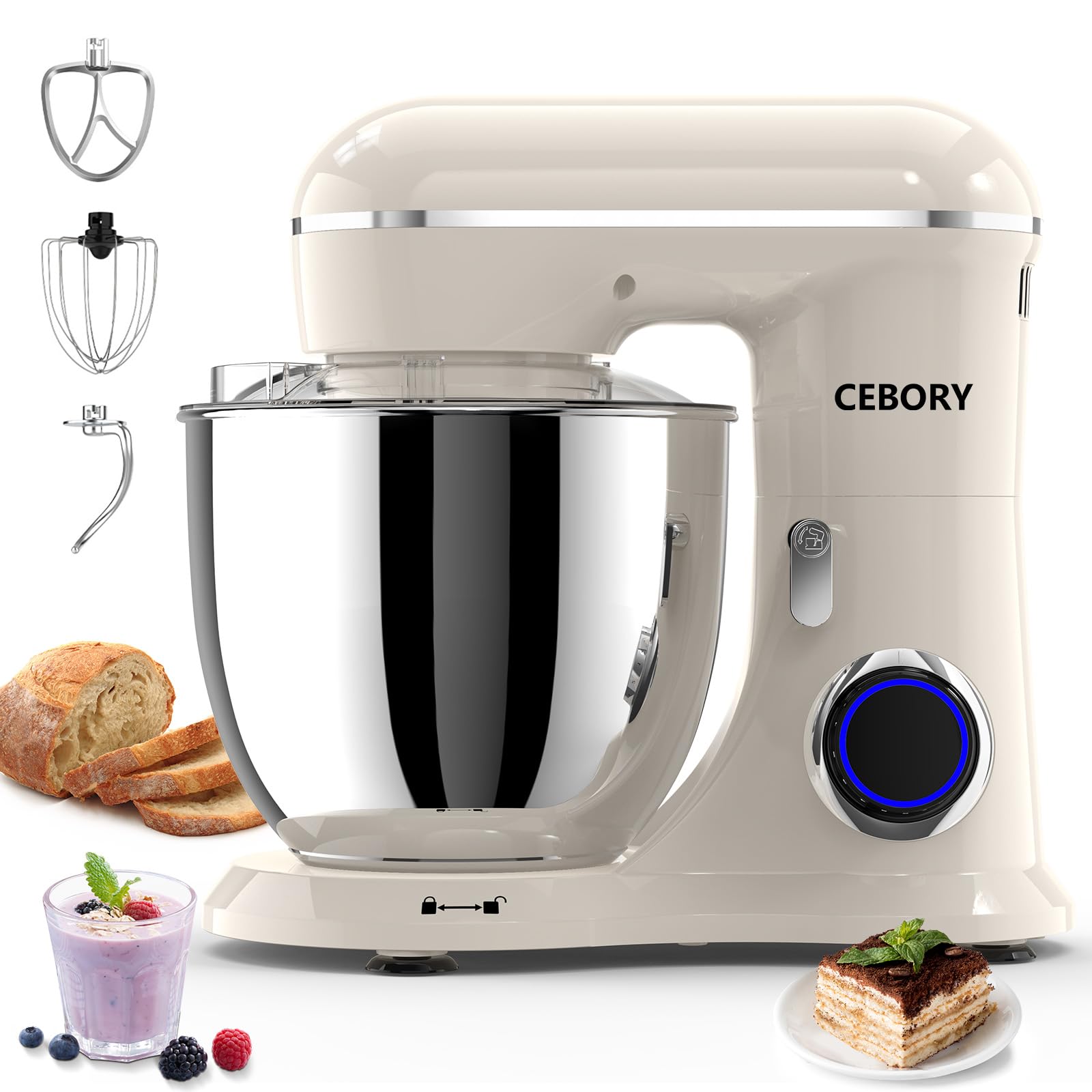
A 660-watt first mixer that makes cakes and bread feel easy from day one.
For someone stepping up from hand beating, a 6.5-quart bowl and a 660-watt DC motor cover a lot of ground. Mix, knead and whisk come from three attachments — dough hook, beater and whisk — plus ten speeds and a pulse setting for controlled bursts. The electronic controls are intuitive enough that you are not reading the manual mid-recipe.
The stainless steel bowl and accessories resist corrosion and high heat, and they detach quickly for washing. The tilt-head lets you install or remove the tools without tilting the whole machine. A safety feature also prevents you from unlatching the mixer while it is running, which saves you from a messy mid-mix surprise.
One realistic limit: with especially heavy dough it works harder, so treat it as a cake, cookie and light-bread machine rather than a brick-oven dough workhorse. Also, the beater does not fully reach the bowl edges, so a quick hand-scrape near the finish line helps. At 65 dB it is not silent but stays reasonable for a kitchen.
Pick this if: you want a forgiving first stand mixer that handles cakes, cookies and lighter dough without a steep learning curve.
Not the one if: you knead dense whole-grain loaves on the regular — heavy dough pushes it and a bowl-edge scrape is part of the routine.
5. Camic 7.45 QT Stand Mixer
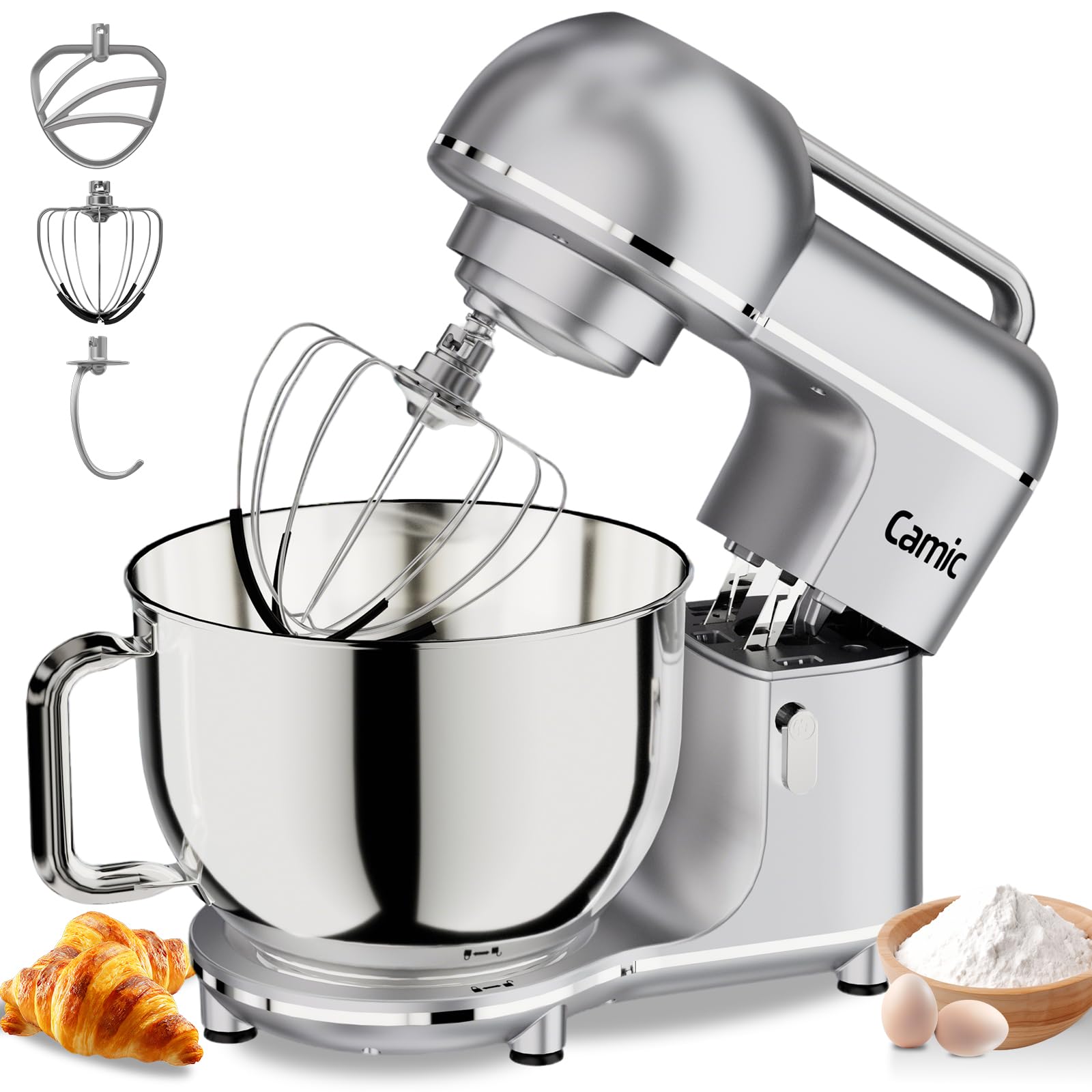
A 7.45-quart bowl with a carry handle for big-family baking days.
Capacity leads here: 7.45 quarts of single-handle stainless steel bowl, sized for mixing thick batters and bread dough in one go instead of working in rounds. A 300-watt pure copper motor sits under rugged ABS housing, and planetary action carries the beater around the bowl for uniform blending.
Ten speed options cover bread dough, meringue and whipped cream, with lower settings for delicate mixing. The built-in top handle is genuinely handy — it gives you a secure grip for adding ingredients, changing attachments, or lifting the whole head when you move the mixer to storage. The bowl and attachments are dishwasher safe.
Weighing the trade-off: 300 watts is on the modest side for very stiff dough, so it suits big cakes and moderate bread batches better than relentless heavy kneading. It ships at 9.9 pounds, which is light for the bowl size, so a firm counter spot matters while it works.
Where the size shows: a 7.45-quart bowl plus planetary mixing lets you cream and knead for a crowd without splitting the recipe. The splash guard, dough hook, whisk and flat beater all come in the box.
The power trade: 300 watts is the gentle motor on this list, so plan around cakes and softer doughs rather than back-to-back stiff loaves.
Built for: households mixing large batches who want a big bowl and a carry handle for easy storage.
Better elsewhere for: constant heavy kneading — the higher-wattage alternatives on this list push through dense dough with less strain.
6. All Metal Stand Mixer 5.3 QT

A die-cast metal body and a DC motor that kneads quietly through dense pizza dough.
This one is built around the motor and the body rather than the bowl size. The maker lists the DC motor as up to 30% more efficient than a traditional AC motor, with stronger torque and quieter running. The body is a 24.9-pound die-cast metal build that stays stable even when you are mixing dense bread and pizza dough. A 5.3-quart stainless steel bowl keeps the footprint moderate.
Noise runs at a stated ≤68dB, which is friendly to early-morning baking and open-plan kitchens. A built-in precision timer lets you track mixing time at second-level accuracy and walk away, and eight speeds with a knob control cover the range from kneading to whipping. Four stainless steel attachments include a flexible edge beater that automatically scrapes the bowl sides, plus a dough hook, flat beater and whisk. A universal power hub lets you add compatible attachments later.
The honest limit is the 5.3-quart bowl — spacious for everyday mixing but not built for the biggest bread batches. Dense dough still benefits from a hand-scrape near the edges depending on the batch, despite the flex beater.
Motor-first thinking: a DC motor, a 24.9-pound die-cast body and a built-in timer make short work of pizza and bread dough while staying quiet at ≤68dB.
The follow-up question: is 5.3 quarts enough? For two-person households and weekly loaves, yes — for large gatherings, look up the list at bigger bowls.
Ideal for: bread and pizza bakers who value a quiet, planted, timer-equipped machine over maximum bowl size.
Skip the switch if: you routinely mix for a crowd — 5.3 quarts is the ceiling here.
7. KitchenAid 5.5-Qt Bowl-Lift Stand Mixer
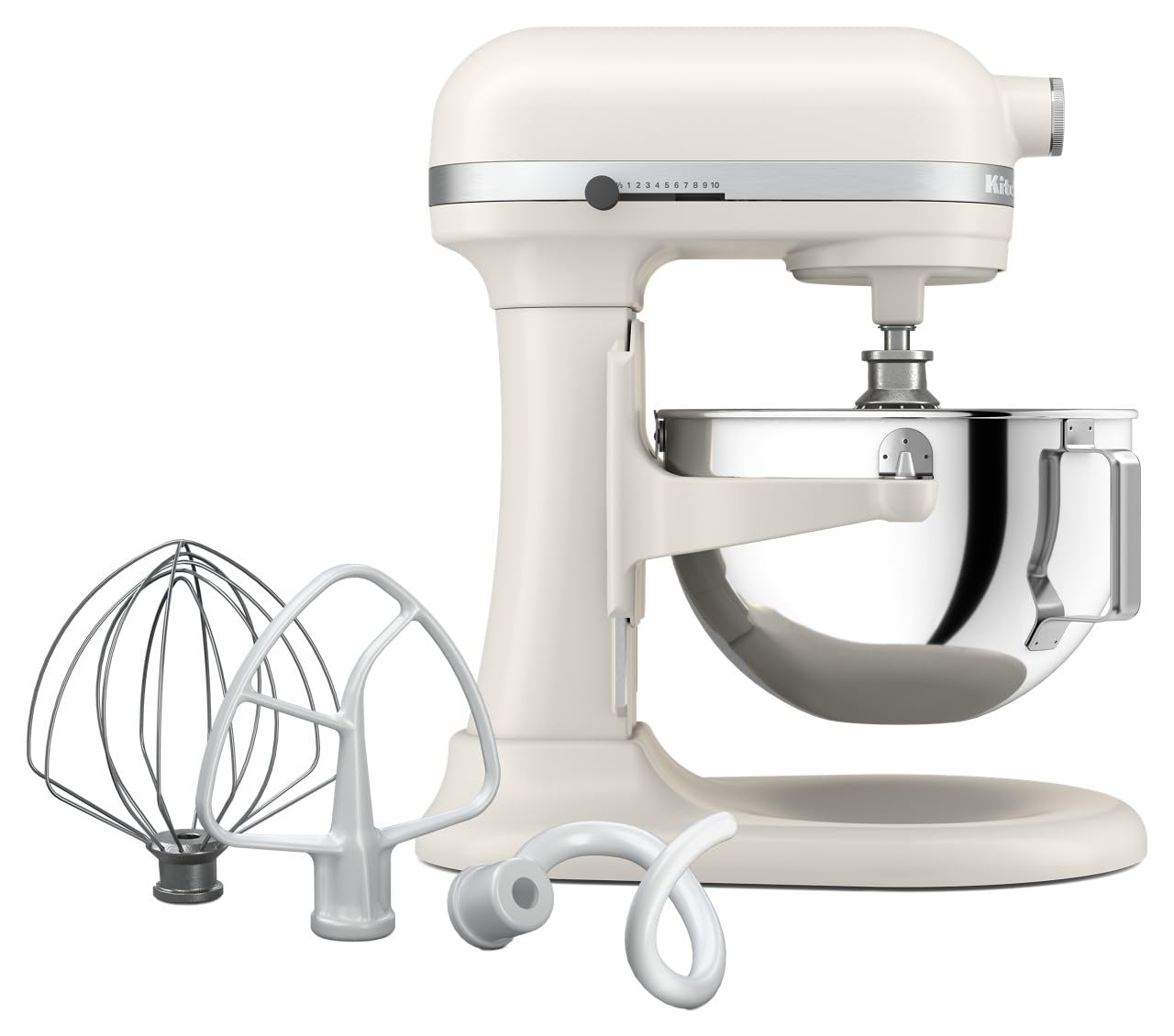
The bowl-lift KitchenAid built to take double dough batches without walking across the counter.
Where the Artisan tilts its head, this one raises the bowl into a fixed head with a 3-point locking bowl for stability. KitchenAid lists 2x the bowl power of a tilt-head model, measured as peak horsepower at speeds above 2. There are 11 speeds, including a half-speed setting for folding delicate ingredients like blueberries and egg whites without overbeating.
The 5.5-quart bowl holds up to 11 dozen cookies per batch with the flat beater, over 7 lbs of bread or 6 lbs of mashed potatoes. It comes with a 5.5-quart stainless bowl, a coated flat beater, a coated dough hook and a 6-wire whip. Over 10 stand mixer attachments sell separately to turn it into a pasta maker, veggie noodler or ice cream maker.
What wins people over is quality — a die-cast zinc frame that handles heavier doughs and double batches without creeping across the counter or running hot. It works quietly, too. The catch: it is heavy, and a few wish the bowl locking method were simpler. Its footprint is also larger than expected, so measure before you commit counter space.
Why it stays put: 2x the bowl power of a tilt-head, 11 speeds with a folding half-speed, and a 3-point locking bowl — handle double batches of cookies and 7 lbs of bread dough.
Think about the weight: this is a substantial machine with a bowl that locks rather than sits, so lifting and setup take a little more effort.
Reach for this if: you knead heavy dough and double batches and want the bowl-lift stability of the KitchenAid line.
Weigh the size first: the machine is heavier and bigger on the counter than the Artisan, and the bowl-lift takes getting used to.
8. Zacme 7 Quart Stand Mixer
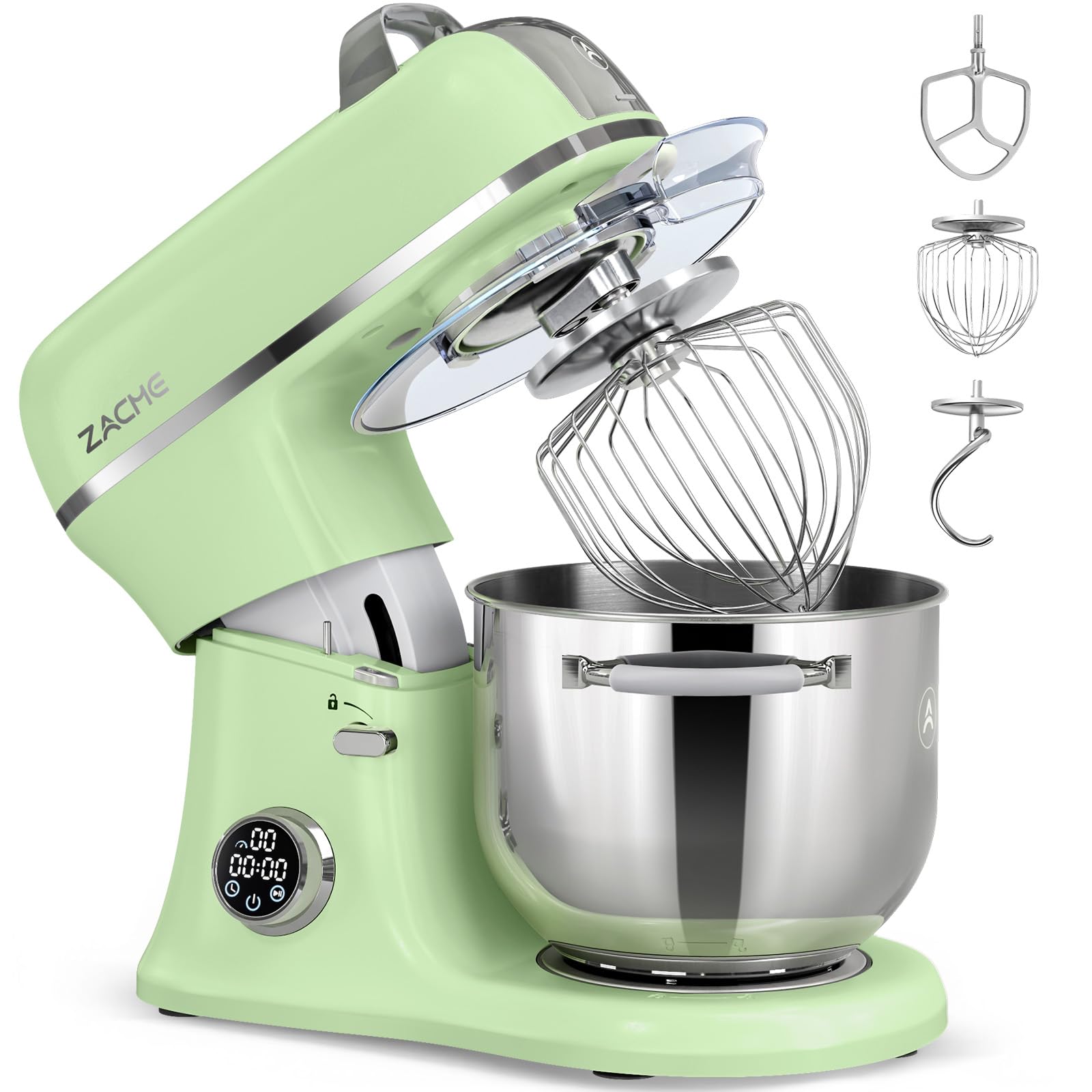
A 650-watt die-cast mixer that runs quiet enough to bake before anyone else is awake.
Quiet is the thing people notice first here. The maker lists the 650W pure copper motor as up to 40% quieter with triple noise-reduction, down to ≤48dBa at speed 1. It has 12 speeds — 11 regular plus a pulse — and a 360° planetary action that carries the tool around the bowl for heavy dough and thick cream.
An LED smart display shows the run time and speed, and a one-touch timer handles kneading, mixing or whipping automatically so you are not standing at the counter. The maker sizes the 7-quart bowl for a family of 10 to 15: 10 dozen cookies, over 5 lbs of bread or over 7.5 lbs of mashed potatoes per batch. The aluminum die-cast cladding shields the motor, and overheat protection supports 60 minutes of nonstop mixing.
What to know before you buy: the dough hook gets a couple of thumbs-down as the one part people would change. Also at 31 pounds it is the heaviest machine in this group, so pick a permanent counter spot rather than planning to move it often.
Quiet under pressure: a 650W copper motor, ≤48dBa at the lowest speed and overheat protection for 60 minutes of mixing — a big-batch machine that stays calm while you get other things done.
The one to gripe about: the included dough hook divides opinion, so budget for a replacement hook if you knead bread often.
Made for: big households that want a large 7-quart bowl, a smart timer and quiet running.
Hold up if: you need to lift your mixer regularly — at 31 pounds it wants a permanent home on the counter.
9. Bosch Universal Plus Stand Mixer

A bottom-drive, belt-driven mixer that kneads up to 14 loaves of whole-grain dough at once.
This is a different shape entirely: a bottom-drive machine with dual beaters that deliver triple whipping action. The maker states it kneads up to 14 loaves (15 pounds) of whole-grain dough or mixes up to 34 dozen cookies in a single batch. The belt-driven transmission holds torque for almost any recipe, and the bottom drive lets you add ingredients straight into the running mix.
The 6.5-quart BPA-free plastic bowl has an easy-grip handle and a removable drive shaft for cleaning, and it is dishwasher safe. The dual beaters whip as little as one egg white or mash up to 10 pounds of cooked potatoes. The bundle adds wire whips with a plastic whip drive, a dough hook, bowl, lid, splash ring and the NutriMill dough hook extender. Optional attachments sold separately extend it into a slicer-shredder, meat grinder or pasta maker.
What wins people over is dough quality — whole-grain and sourdough come out well developed, and it does not walk off the bench under load. The honest caveats: the plastic whip drive can break easily, and some find the center attachment piece is the weak link, so upgrading to the metal whip drive is a smart add.
Bread-first engineering: a bottom-drive design, belt-driven transmission and dual beaters let you knead 15 pounds of whole-grain dough or whip a single egg white in the same bowl.
Know the weak part: the plastic whip drive is the piece people replace, so plan to move up to the metal drive if you whip often.
For you if: you bake sourdough and whole-grain bread in volume and want a bottom-drive mixer built for it.
Not for you if: you want a machine you can load and forget — the plastic whip drive wants gentle handling.
10. SMEG SMF05 Forte 5-Qt Stand Mixer, 750W, 10 Speeds
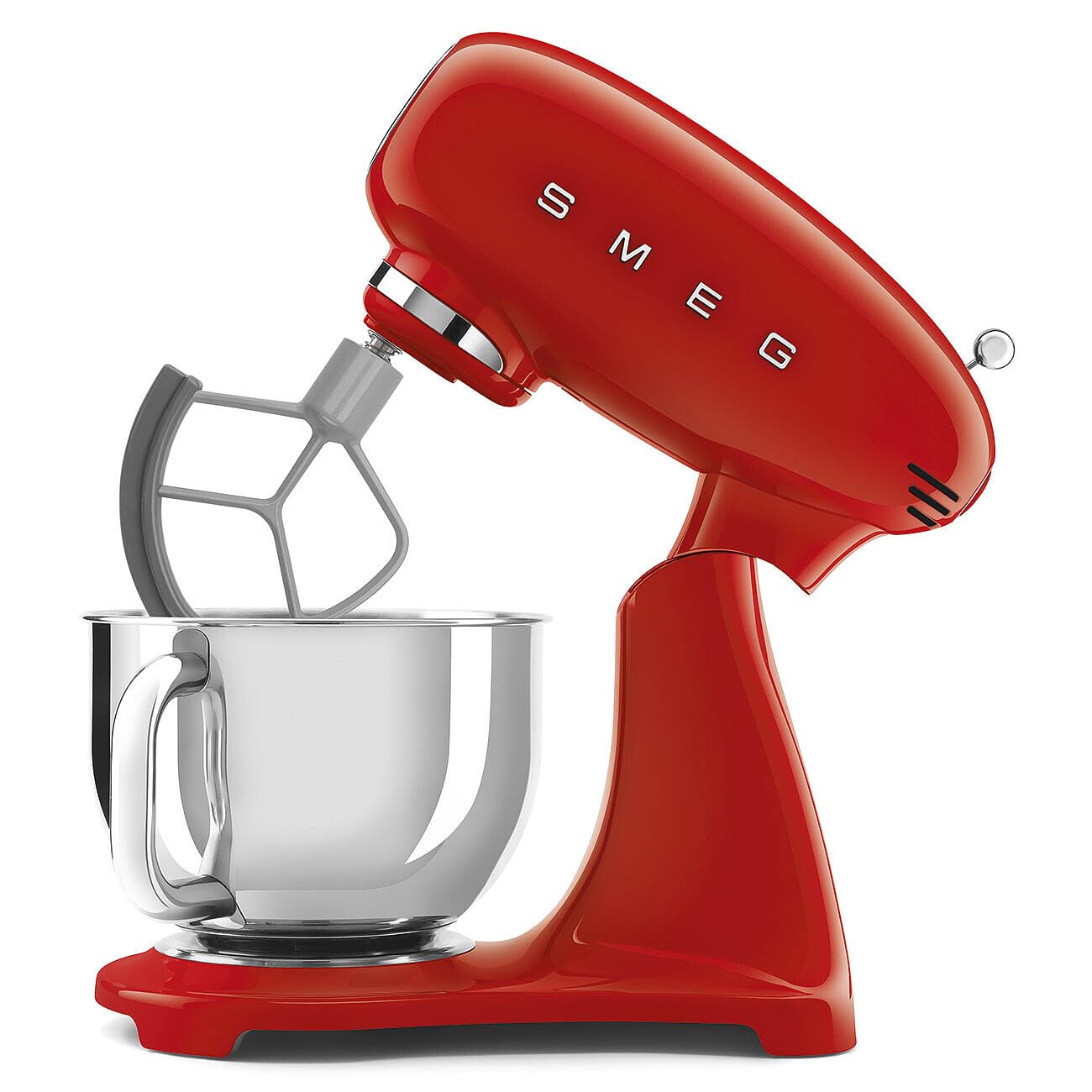
A 750-watt, direct-drive mixer that pairs real kneading torque with a look you want on display.
Under the styling is a serious motor: a 750W direct-drive unit built for high torque, so it kneads dense bread and pizza dough, mixes cookie and cake batters and preps pastry without bogging down. Ten electronic speed levels cover folding, creaming, whipping and kneading, and Smooth Start technology ramps speed up gradually so flour does not fly out of the bowl when you switch on.
A steady-mix stability system damps vibration while it works, and the spring-assisted tilting head holds itself open so it does not drop closed on your hands. The 5-quart stainless bowl has a handle for easier handling, and planetary mixing with a silicone flex-edge beater scrapes the bowl sides as it goes to cut manual scraping. Five accessories come in the box: a wire whisk, aluminum flat beater, dough hook, flex-edge beater and a Tritan pouring shield.
The look is a real selling point — the color and design are what people write home about. So is the quiet of the motor in early use. The honest split is reliability over time, which reads mixed. A few report the bowl coming loose from its pedestal or the head straining with heavy mixes, so treat it as a fashion-forward kneader rather than an industrial bread machine.
Buy it for: looks and kneading torque together — 750W direct-drive power in a mixer you will proudly leave out.
Consider alternatives if: you need proven long-term durability for daily heavy bread — the reliability record reads mixed.
11. Ooni Halo Pro Spiral Mixer

58 speed settings and a spinning bowl for bakery-grade pizza and bread dough at home.
This uses the spiral mixing approach found in professional bakeries: a rotating bowl, a spiral dough hook and a patent-pending removable breaker bar work the dough to develop gluten. The result is a dough that stretches and holds its shape, which is what you want for high-hydration pizza and country loaves. Speed is granular — 58 settings from 60 RPMs to over 1,000 — so you can dial in exactly how hard the dough gets worked.
The 7.3-quart stainless bowl and four attachments — breaker bar, flexible beater, spiral dough hook and geared whisk — cover cakes, cookies, whipped cream and frosting as well as dough. Controls are touch-operated, and the die-cast aluminum body with a removable bowl is built to clean up easily. The machine is designed to keep working while you step away to other tasks.
This is the dough specialist on the list, and it earns its price on performance: pizza dough comes out consistently well. The honest trade-offs are noise, which some find louder than expected, and value, which divides opinion given the premium position. It is also 14.6 kg and wants a dedicated corner.
Professional mechanics: 58 speeds from 60 RPM to over 1,000, plus a rotating bowl and spiral hook, develop dough the way a bakery does — a genuine step up for pizza and artisan bread.
The catch to accept: it runs louder than some expect, and the premium position means you are paying for dough performance over all-round versatility.
Worth it for: devoted pizza and bread makers who want bakery-grade dough development and fine speed control.
Overkill for: casual bakers who mostly cream butter and whip cream — the spiral focus is wasted there.
Know the Specs
Bowl capacity in quarts
Quarts measure how much batter or dough the bowl holds at once. A 5-quart bowl suits everyday cakes and cookies, while 7 to 8.5 quarts gives headroom for family loaves and big gatherings. Pick the smallest bowl that fits your real batch size — a huge bowl is harder to lift and takes more counter room.
Motor wattage and torque
Watts tell you how much power the motor has for stiff dough, and torque is the twisting force it applies to the hook. Higher watts and a belt or direct-drive transmission keep the motor from straining as dough tightens. For cream and cake batter, modest power is fine; for dense bread, more watts with a stable metal body win.
Planetary versus spiral mixing
Planetary action moves the attachment around the bowl while it spins on its own axis, which blends ingredients evenly. Spiral mixing uses a rotating bowl and a spiral hook to develop gluten for bread and pizza dough. Planetary suits general baking; spiral is the dough specialist’s choice.
Tilt-head versus bowl-lift
A tilt-head swings the top back so you can add flour and swap tools without moving the bowl. A bowl-lift raises the bowl into a fixed head, which feels more solid with heavy dough. Tilt-head is easier for quick access; bowl-lift tends to hold steadier under a dense mix.
Common Questions
What size stand mixer do I need for bread baking?
Is a tilt-head or bowl-lift mixer better for stiff dough?
Can these stand mixers knead pizza dough?
How many watts do I really need for cake batter and cookies?
Why does my stainless bowl turn batter grey?
Are the bowls and attachments dishwasher safe?
How quiet are these stand mixers?
Do I need extra attachments or does the box cover baking?
Will a big mixer fit under my kitchen cabinets?
Belt-driven or direct-drive — does it matter for baking?
The Bottom Line
For most people, the recommended mixer for baking winner is the KitchenAid Artisan because its 10 speeds, 5-quart bowl and pouring shield make everyday cakes, cookies and bread genuinely easier. If your dough gets dense and your batches get big, the Kitchen in the box 8.5-quart pairs a 900-watt motor with a much larger bowl. And for sourdough and whole-grain bread in volume, the Bosch Universal Plus is the bottom-drive machine built to knead up to 14 loaves in one go.
The one nudge worth acting on: the Artisan is the crowd favorite for general baking, holding 4.5+ stars across 30,000+ owners. Start with your real batch size and your counter space, then let the bowl capacity and motor power sort the rest.
How we choose
We do not accept paid placement. Every pick is matched to a real buyer and a real use-case; we do not hands-on test units.
Sources
Specifications: manufacturer listings and product documentation. Review insights: verified customer reviews, as of November 2026. Pricing: not shown on this page (it changes often); check the current price via the retailer link.
As an Amazon Associate, Tactical Gear Guy earns from qualifying purchases. This does not affect which products we feature.