Specs are compiled from manufacturer listings and verified buyer reviews and can change over time — please confirm the key details on the product page before buying.
Underwear is the hardest thing most home sewists ever attempt, because the fabric stretches and the elastic has to move with it. A machine that only sews straight lines will pop its seams the first time you pull a pair on. What you actually need is a zigzag or stretch stitch, plus a presser foot light enough to feed jersey without stretching it out of shape. Every pick below can handle that job. The crowd favorite is the Brother XM2701 — 4.5+ stars across 19,000+ owners — because it pairs zigzag and stretch stitches with a 12.6-pound body that is easy to lift onto a table.
This guide is built by comparing the manufacturers’ published specifications and the patterns across verified customer reviews, so you get each pick’s real strengths and trade-offs instead of marketing spin.
Below you get nine machines sorted by what they actually do for knit fabric, plus a plain-English breakdown of stitch types and needle choices. The list covers everything you need to compare when hunting for the best sewing machine for underwear.
Top Picks


How To Choose The Best Sewing Machine for Underwear
Underwear sewing lives or dies on one thing: the seam has to stretch with the elastic and recover without popping. A machine with a proper zigzag width setting and adjustable presser foot pressure gets you there. A straight-stitch-only machine does not. Here is what to weigh before you buy.
Stretch and zigzag stitches come first
Look for a machine that lists zigzag and stretch stitches in its built-in lineup. A zigzag lets the thread travel back and forth across the seam, so it opens and closes with the fabric instead of cracking. Many machines also carry a dedicated triple-step stretch stitch, which builds a seam that mimics a serger without needing one. If the spec sheet names only straight stitches, move on.
Presser foot pressure and feed dogs
The presser foot is the small metal piece that holds fabric flat against the machine bed. Pressure that is too firm drags knit fabric and stretches it out while you sew. Many computerized machines let you dial pressure down, and a 7-piece feed dog system — the toothed bars that pull fabric forward — spreads the grip across a wider area so lighter knits feed evenly without puckering.
Free arm access for waistbands and leg openings
Underwear has narrow tubes, and you need to slide a leg opening or waistband around the machine to sew it. A free arm does that job: you detach the accessory compartment and the bed narrows to a slim cylinder. Every machine here offers a free arm, which is why they work for cuffs and sleeves as well as underwear hems.
Needles, thread, and the elastic question
A ballpoint or stretch needle — one with a rounded tip that pushes between knit fibers instead of cutting them — is what you want for jersey and spandex. Pair it with a polyester thread, which has more give than cotton. For elastic, sew it in with a wide zigzag so the elastic itself can stretch. Neither needle gauge nor thread weight is set by the machine; that part is on you.
Side-by-Side Comparison
| Model | Best For | Built-In Stitches | Weight | Included Feet | Amazon |
|---|---|---|---|---|---|
| Brother XM2701★ Best Overall | First underwear project | 27 | 12.6 pounds | 6 | Amazon |
| Janome 2212Best Mechanical Simplicity | Simple mechanical mending | 12 | 14.9 pounds | — | Amazon |
| PooLin EOC02Most Stitch Options | Stitch variety on a budget | 200 | 7.5 kg | 7 | Amazon |
| Brother ST371HD | Thick seams and repairs | 37 | 6.6 kg | 6 | Amazon |
| SINGER 6700C | Lettering and decorative work | 411 stitch applications | 14.6 pounds | 10 | Amazon |
| Janome JW8100 | Even feeding on knits | 100 | 12 pounds | — | Amazon |
| Bernette B35 | Mechanical durability | 23 | 7150 g | 7 | Amazon |
Detailed Reviews
1. Brother XM2701 Sewing Machine
Our pick — 4.5+★ from 19,000+ verified ratings; the strongest balance of quality and price.
The 12.6-pound workhorse that makes a first pair of underwear feel routine.
Twenty-seven built-in stitches is far more than underwear needs, but the ones that matter sit in there: zigzag, stretch, and blind hem. Zigzag is the seam that opens with your elastic instead of cracking. Blind hem is how you finish a leg opening so no stitch line shows on the outside. An auto-size buttonhole covers the waistband option if you ever build a pair with a real closure.
Where this machine wins people over is raw reliability — reviewers consistently report it keeps sewing without fuss, pair after pair. The automatic needle threader is a small thing that saves real time when you are threading a stretch needle for the fifth pair in one sitting. The jam-resistant drop-in top bobbin means you drop the bobbin in from above rather than fishing under the bed. Six sewing feet come in the box, plus a twin needle, which is the setup for a double-needle hem on stretch knit.
The trade-off is honest and it is not about sewing quality: at 12.6 pounds it is light for a full-size machine, and light machines can walk across the table when you push thick layers through. It also ships at 120 volts for the US only, so using it elsewhere risks the warranty. Neither matters for ordinary underwear work on a normal table.
What earns it the top slot
- Zigzag, stretch, and blind hem stitches cover every underwear seam you will sew.
- Automatic needle threader and drop-in top bobbin cut setup time between pairs.
- 12.6 pounds is light enough to lift onto a shelf after each session.
- Twin needle included, which is the fast route to a clean double-stitched hem.
Where it asks something of you
- At 12.6 pounds it can shift on the table when you feed thick layers.
- 120-volt US-only build, so overseas use can void the warranty.
Take this one if: you want one machine that handles stretch seams, hems, and the occasional buttonhole without a learning curve.
Think twice if: you plan to sew in a country outside the US — the 120-volt spec puts the warranty at risk.
2. Janome 2212 Sewing Machine
No screen, no menus — just a dial and a stretch stitch that holds.
Twelve stitches sounds thin next to the 200-stitch PooLin, and it is a genuine gap if you want decorative patterns. But underwear does not need 200 stitches. It needs one good zigzag and a machine that does not distract you. The 2212 gives you dial pattern selection and a separate width and length adjustment, so you can dial in a wide, short zigzag for elastic and a narrow one for a hem. There is also a four-step buttonhole if you build waistbands with a closure.
Buyers praise this machine’s build quality more than anything else, and the pattern in their reviews is that it feels heavier and better built than its price suggests — at 14.9 pounds it stays put on the table while you feed knit fabric. It weighs 14.9 pounds, heavier than the Brother XM2701 at 12.6 pounds, and that extra weight is exactly why it does not slide around when you feed knit fabric. Snap-on presser feet (feet that click on without a screwdriver) and a 5-piece feed dog (the toothed parts under the needle that pull fabric forward) round out the hardware. Buyers report it going through heavy 60s tie quilts, so a layer of stretch jersey is light work by comparison.
What you give up is convenience tech. There is no automatic needle threader — you thread by hand — and the manual is thin on guidance. Durability feedback splits, with a share of owners reporting top thread breakage over time. Thread breakage on knits is usually a tension or needle problem rather than a machine limit, but it is worth knowing you may need to fiddle.
The honest read: this is the pick for someone who wants to understand their machine rather than menu through it. The dial forces you to learn what width and length do, which makes you better at stretch sewing.
Reach for it if: you want a mechanical machine with real heft and no computer between you and the stitch.
Look elsewhere if: an automatic threader or a thick reference manual matters to you — neither is here.
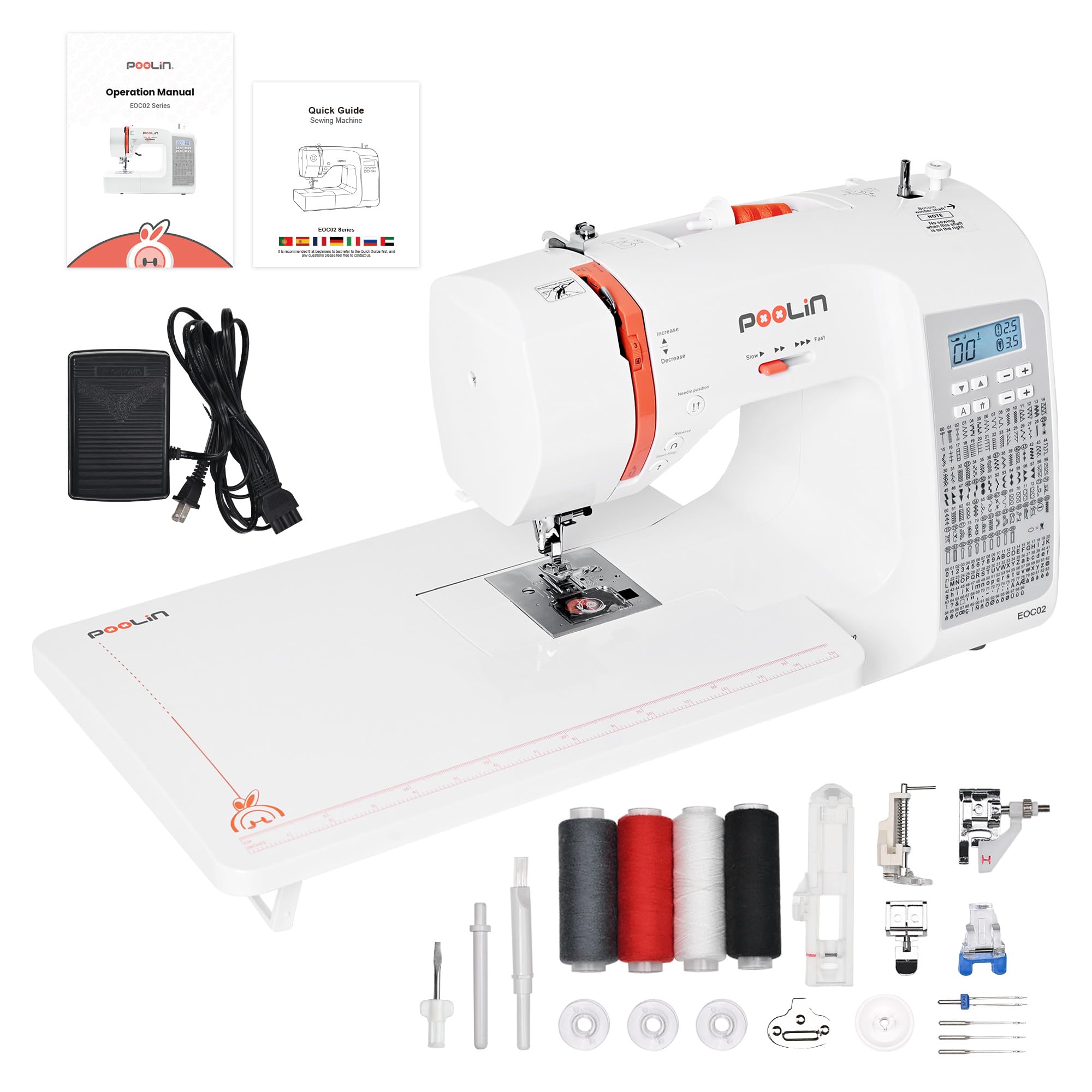
3. PooLin EOC02 Sewing Machine
Two hundred stitches on a screen, and a wide table that swallows a whole garment.
Here is the number that separates this machine from the rest of the list: 200 built-in stitches against the Janome 2212’s 12. That is a huge spread, and it matters if you want decorative options or alphanumeric lettering on a waistband tag. Utility, decorative, and alphanumeric patterns all display on the LCD screen, and a speed control slider lets you slow the needle down for a short stretch seam near an elastic edge.
The maker also lists stretch and knit materials (jersey, Lycra, spandex) as supported, though thin stretch fabrics need a stabilizer to keep stitches even. Take that seriously: a strip of tear-away stabilizer under a jersey hem is the difference between a clean seam and a wavy one. Detach the accessory compartment and the free arm is there for leg openings.
Two things to size up. The bobbin opening is plastic, and thicker material can give it trouble — so treat this as a fine-fabric specialist rather than a heavy-layer machine. And at 7.5 kg it is heavier than the Brother ST371HD at 6.6 kg, so it is a sit-and-stay machine rather than one you carry between rooms.
Best fit for: sewists who want creative control and a big work surface for garment construction. The 7 feet and wide table are a real step up from a starter setup.
Worth it for: anyone who treats underwear as the start of a garment-sewing habit and wants stitch range plus workspace.
Pass if: you mainly sew thick, layered material — the plastic bobbin opening prefers lighter fabric.
4. Brother ST371HD Sewing Machine
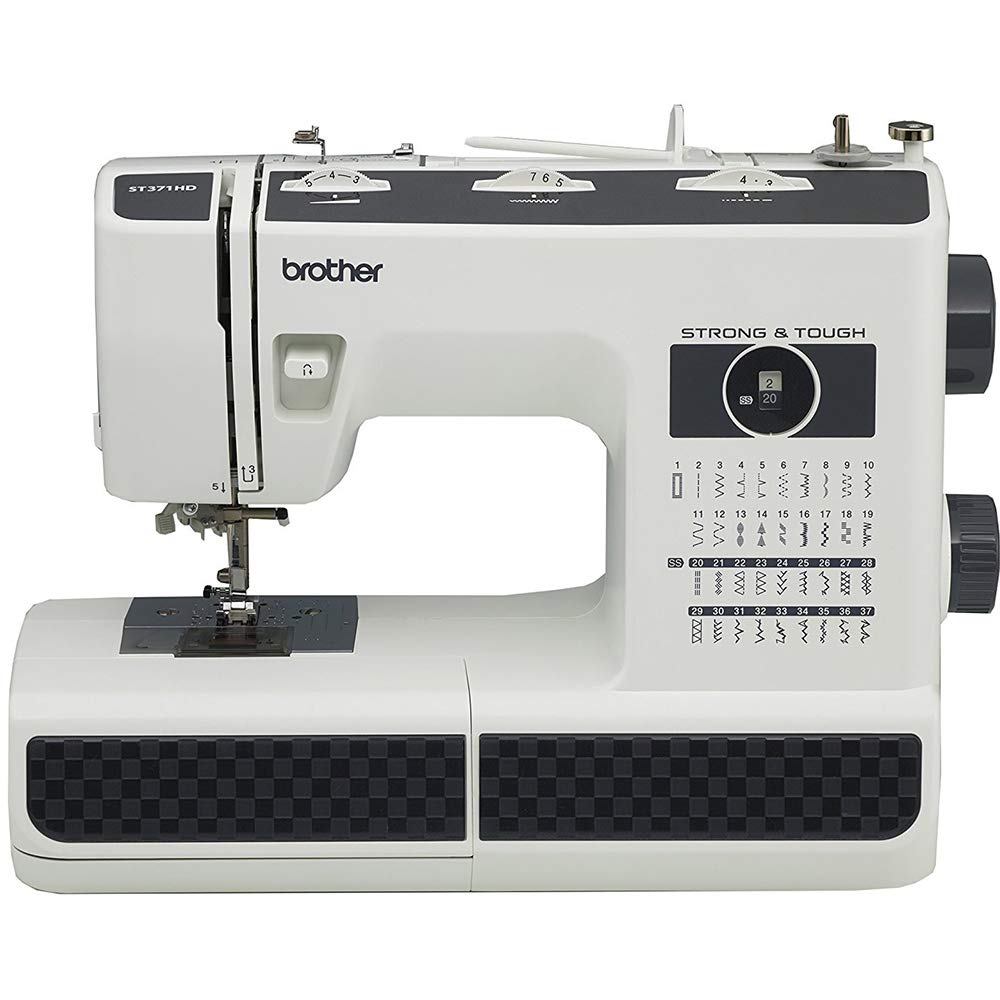
Built for the layer you did not think a home machine could push through.
Thirty-seven stitches, six feet, and a spring action zigzag foot in the box — that spring-loaded foot is the piece doing the real work on knits. It keeps light pressure on stretch fabric so the feed dogs pull it evenly instead of stretching it out. The included nonstick foot also helps on spandex and jersey blends that drag against a bare metal foot.
Owners put vinyl and layered seams through this machine without complaint — six layers of vinyl is the kind of job its spring action zigzag foot takes in stride. That makes it a sensible choice if your underwear sewing is really about repairing or altering other garments with heavier seams. The automatic needle threader and jam-resistant drop-in top bobbin are the same system found on the XM2701, so threading is quick. At 6.6 kg it is lighter than the PooLin at 7.5 kg, which makes it easier to move around.
The caveat is consistency over the long haul. Reliability and durability feedback both land as mixed, and there are reports of feeding drifting after several months of regular use. Nothing here suggests underwear seams fail early, but if you plan on years of daily sewing, factor a service into your thinking.
Why owners keep it: quality is the most praised aspect of this machine, and the practical translation is that it does not balk at bulk. Sewing through a fold of elastic and three layers of jersey is routine work for it.
The catch to plan around: threading is described as finicky at times. Give yourself a minute and a good light rather than rushing it before a seam.
Go here if: you need one machine that sews underwear and also repairs heavier garments without changing setups.
Reconsider if: you want a machine you never have to think about maintaining — long-term feeding consistency is not this one’s strongest card.
5. Brother CP100X Computerized Sewing and Quilting Machine

411 stitch applications and 1100 stitches a minute — a lot of machine, with a lesson attached.
411 stitch applications is the largest count on this list, and it includes basic, stretch, and decorative stitches plus a lettering font. That stretch category is what matters for underwear, and a one-step buttonhole with 7 different styles covers any closure you want to build. Speed tops out at 1100 stitches per minute, with an LCD screen showing stitch length and width. The speed control slider lets you cap that top speed — worth doing near an elastic edge until you trust your hands.
Ten presser feet come included, topped only by the CS7205’s eleven, and the kit adds 4 transparent bobbins, a seam ripper, needles, and a dust cover. A walking foot is in the box, which is the accessory you need for stretch feeding. The motor is tuned for piercing power through thick fabrics and multiple layers, so a folded elastic waistband is not a challenge for it. If you sew jeans and underwear on the same machine, this handles both.
What keeps it lower on this list is consistency. Reliability and durability both sit in mixed territory, with some machines stopping unexpectedly after several weeks and a portion of owners finding fault with the printed manual and preferring the online version. For a piece of equipment at this price tier, that is worth going in with your eyes open.
What the big spec gets you
- 411 stitch applications and 7 buttonhole styles — more decorative range than anything else here.
- 1100 stitches a minute with a slider to cap top speed for delicate work.
- Walking foot and 4 bobbins included in the accessory kit.
- Enhanced piercing power handles elastic and denim without a swap.
What to weigh honestly
- Reliability and durability feedback is split, with some machines failing after weeks.
- The manual draws negative notes — plan on using the free app instead.
Choose this for: the widest decorative and lettering range, with a walking foot already in the box.
Think twice if: you need a machine with a spotless service record — the failure reports here are real, not rare.
6. Janome JW8100 Sewing Machine

A seven-piece feed dog and an even feed foot, built for knit fabric that wants to shift.
Puckering is the enemy of underwear seams, and Janome attacks it from two directions. First, a 7-piece feed dog system grips fabric across a wider footprint than a basic three-piece setup, so lighter knits feed forward evenly rather than bunching at the needle. Second, the even feed foot ships in the box, and it moves fabric from above and below simultaneously. Together those two handle the sliding-layer problem that ruins jersey hems.
One hundred built-in stitches and 7 one-step buttonholes give you the stretch and overcasting options you need. The LCD screen (a small display that shows your settings) with start/stop button and speed slider means you can sew without the foot pedal if that is easier on your back. The jam-proof drop-in bobbin (the lower thread spool that drops in from the top) and built-in threader keep setup short. Extras include a hard cover, an extra-wide extension table, a quarter inch foot, and a pin cushion that attaches to the machine. At 12 pounds it is heavier than the Brother CP100X at 10.5 pounds, which helps it sit steady.
Machine quality is where this one earns its keep, and it shows up in the small things — a fast bobbin winder, quiet running, and stretch stitches that come out clean on the first pass. The one recurring note is vibration at top speed, which is a real nuisance if you like to sew fast. Slow down a notch and it goes away. Low-end durability reports exist but are the exception, not the pattern.
The case for it: this is the machine that handles the two things that break underwear sewing — shifting layers and uneven feeding — with dedicated hardware rather than settings you have to figure out.
Reach for this if: you sew a lot of knit and stretch fabric and want the feeding hardware to do the work.
Something to accept: at full speed the machine vibrates enough to notice — ease off the pedal.
7. Bernette B35 Sewing Machine Swiss Design with 23 Stitches

Manual dials, metal build, and the shortest learning curve on the list.
Twenty-three stitches, seven presser feet, and a one-step automatic buttonhole — that is the whole pitch, and for underwear sewing it is enough. Stretch and utility stitches are in the lineup. Adjustable stitch length and width let you widen a zigzag for elastic, and manual thread tension control (a dial you turn by hand) means you can dial back the tension that normally causes knit seams to pucker. There is no computer, no screen, and no menu to learn. If you want to sit down and sew a pair of underwear tonight, this is the fastest path.
A drop-in bobbin and built-in needle threader handle setup, and a strong feed system pushes thicker material through evenly. LED lighting helps when you are working on a leg opening at an awkward angle, and the extension table gives you room to lay a garment out flat. Owners describe it as sturdy for tougher projects involving thick fabrics, and the written manual gets specifically good marks — detailed enough to work from rather than a folded sheet of diagrams.
The main trade-off is that this is a manual machine with a manual threader, not an automatic one. Reliability notes mixed with some reports of the needle threader being the weak point, so treat threading as a learned skill rather than an instant step. The weight sits at 7150 g, heavier on paper than the Brother CS7205, but owners describe it as light enough to shift while sewing bigger items — so plan on a mat under it.
Why it stays on the list: quality is what people talk about here, and the specificity behind it is the metal-heavy build and a 23-stitch range that covers garment work without the screen overload.
Worth knowing: the machine can be noisy and dislikes multiple fabric layers at once — if your seams are thick, this is not the one.
Best for: sewists who want a durable mechanical machine and a manual they can actually learn from.
Not for: anyone relying on an automatic threader or quiet operation — both are compromises here.
Know the Specs
Built-in stitch count
This number tells you how many stitch patterns the machine can produce, and it is the most visible spec on any listing. For underwear, only a handful earn their keep: zigzag, a three-step stretch stitch, overcasting for edges, and blind hem for a clean hem line. A machine with 12 stitches can cover all of those. A machine with 200 gives you decorative and lettering options you might use later. The count does not tell you how well the machine sews — the two are separate specs, and a low count with good feeding hardware beats a high count without it.
Presser feet included
A presser foot is the metal or plastic piece that holds fabric down against the feed dogs. Different feet do different jobs, and the sizes range from six feet on one machine to eleven on another. The walking foot, also called an even feed foot, is the one that matters most for stretch fabric, because it pulls from above and below so jersey and spandex do not shift against each other. If a machine does not include one, you can usually buy it separately, but check that the brand sells one for your model before you commit.
Weight and table stability
The weight listed on the spec sheet tells you two things at once: how hard the machine is to move, and how much it resists walking across the table when you feed fabric through. A lighter machine, such as the 2.2 pounds on the Brother CS7205 listing, is easy to stow in a closet. A heavier one tends to sit still when you push thick layers through. Neither is inherently better. Light is right if you sew in different rooms. Heavy is right if you sew big projects with lots of fabric weight hanging off the bed.
Buttonhole styles and stitch speed
A buttonhole is the slit the button passes through, and on underwear it mostly matters for waistbands with a real closure. The style count ranges from 1 on the simplest machines to 7 on one of the picks, with auto-size versions sizing the buttonhole to the button automatically. Stitch speed, measured in stitches per minute, tells you how fast the needle moves at full throttle. Faster saves time on long seams. Speed sliders let you dial that back when you are stitching close to an elastic edge and need finer control.
Common Questions
Do I really need a zigzag stitch to sew underwear?
Can these machines sew spandex and jersey without a serger?
What needle should I use for sewing underwear?
Will a cheap mechanical machine like the Janome 2212 handle elastic waistbands?
What is presser foot pressure and does it matter for knit fabrics?
How heavy does the machine need to be for sewing underwear?
Is a walking foot worth it for sewing underwear?
Can I use these machines outside the US?
Which is better for underwear, a computerized machine or a mechanical one?
How many stitches do I actually need for underwear?
The Bottom Line
The strongest all-round answer for sewing machine for underwear remains the Brother XM2701. It puts zigzag, stretch, and blind hem stitches in one 12.6-pound machine, includes a twin needle (two needles on one shank for a double-stitched hem), and threads automatically between pairs. If even feeding on knit fabric is your whole reason for buying, the Janome JW8100 answers with a 7-piece feed dog and an even feed foot in the box. And if you want a metal-heavy mechanical machine with a manual you can learn from, the Bernette B35 is the one to reach for.
None of these machines will sew underwear for you — the needle choice and the stabilizer strip are still your job. What they will do is hold a stretch seam that survives a wash cycle and a real pull. Start with the stretch stitch, add a ballpoint needle, and your first pair will tell you more about the machine than any spec sheet can.
How we choose
We do not accept paid placement. Every pick is matched to a real buyer and a real use-case; we do not hands-on test units.
Sources
Specifications: manufacturer listings and product documentation. Review insights: verified customer reviews, as of November 2026. Pricing: not shown on this page (it changes often); check the current price via the retailer link.
As an Amazon Associate, Tactical Gear Guy earns from qualifying purchases. This does not affect which products we feature.