Specs are compiled from manufacturer listings and verified buyer reviews and can change over time — please confirm the key details on the product page before buying.
A beginner trail bike that shifts cleanly and holds together makes your first season on dirt far more enjoyable. A badly tuned derailleur or stripped pedal threads turns a first season into more walking than riding. The trick is picking a beginner mountain bike that gets the basics right: grippy tires, a frame sized to your height, and a drivetrain that holds its gear on rough trail.
This guide is built by comparing the manufacturers’ published specifications and the patterns across verified customer reviews, so you get each pick’s real strengths and trade-offs instead of marketing spin.
You do not need a race bike to start riding trails — a beginner trail bike with the right fit and brakes will do. You need the right wheel size for your height, a frame material that suits your terrain, and brakes you can trust on a loose descent. Below are the beginner-ready trail bikes that earn their place, matched to your height and your local dirt. These are the trail bicycles for beginners worth your attention.
Top Picks


How To Choose Trail Bicycles for Beginners
Most first-time trail riders get burned by one of two things: a bike sized for somebody else, or a drivetrain that was never tuned right in the box. Get the fit and the drivetrain right and most beginner trail rides turn fun instead of frustrating. Here is what actually matters when you are standing in front of a spec sheet.
Match the wheel size to your height first
Wheel diameter changes how a bike fits and how it rolls over roots and rocks. A 26-inch wheel (the classic trail size) suits shorter and mid-height riders and stays nimble in tight singletrack. A 29-inch wheel rolls over obstacles more easily and suits taller riders — the VEVOR 29er, for example, is built for adults 5’10” and up. Get the wheel size wrong and every climb and corner feels like a fight with the bike.
Decide how many gears your local trail demands
A 7-speed drivetrain (seven rear gear choices) handles gentle gravel paths and neighborhood loops fine. A 21-speed or 24-speed setup gives you a much easier climbing gear for steep dirt and keeps your legs fresh on long grinds. If your local trails have real elevation, more gears are worth having; if you ride flat crushed gravel, fewer gears mean less to tune and maintain.
Understand what a fat tire buys you
Fat tires are the wide, balloon-like tires — the Mongoose Argus runs 4-inch-wide knobby fat tires — and they float over loose sand, deep snow and chunky gravel where a narrow tire sinks or slips. The trade-off is weight and rolling resistance. On hardpack and pavement, a fat tire feels slower and heavier than a standard knobby tire.
Brakes and frame: where beginners overspend or underspend
Disc brakes (a metal rotor squeezed by a caliper) stop more consistently in mud and wet conditions than linear pull brakes (pads pressing the wheel rim). For a first trail bike, either can work — what matters is that the brakes are adjusted properly before your first real ride. Frame material matters too: aluminum is lighter and resists rust, while high-carbon steel is heavier but absorbs vibration.
Side-by-Side Comparison
| Model | Best For | Wheel Size | Speeds | Frame | Amazon |
|---|---|---|---|---|---|
| Mongoose Argus★ Best Overall | Fat-tire trail riding | 26 in | 7-speed | Alloy steel | Amazon |
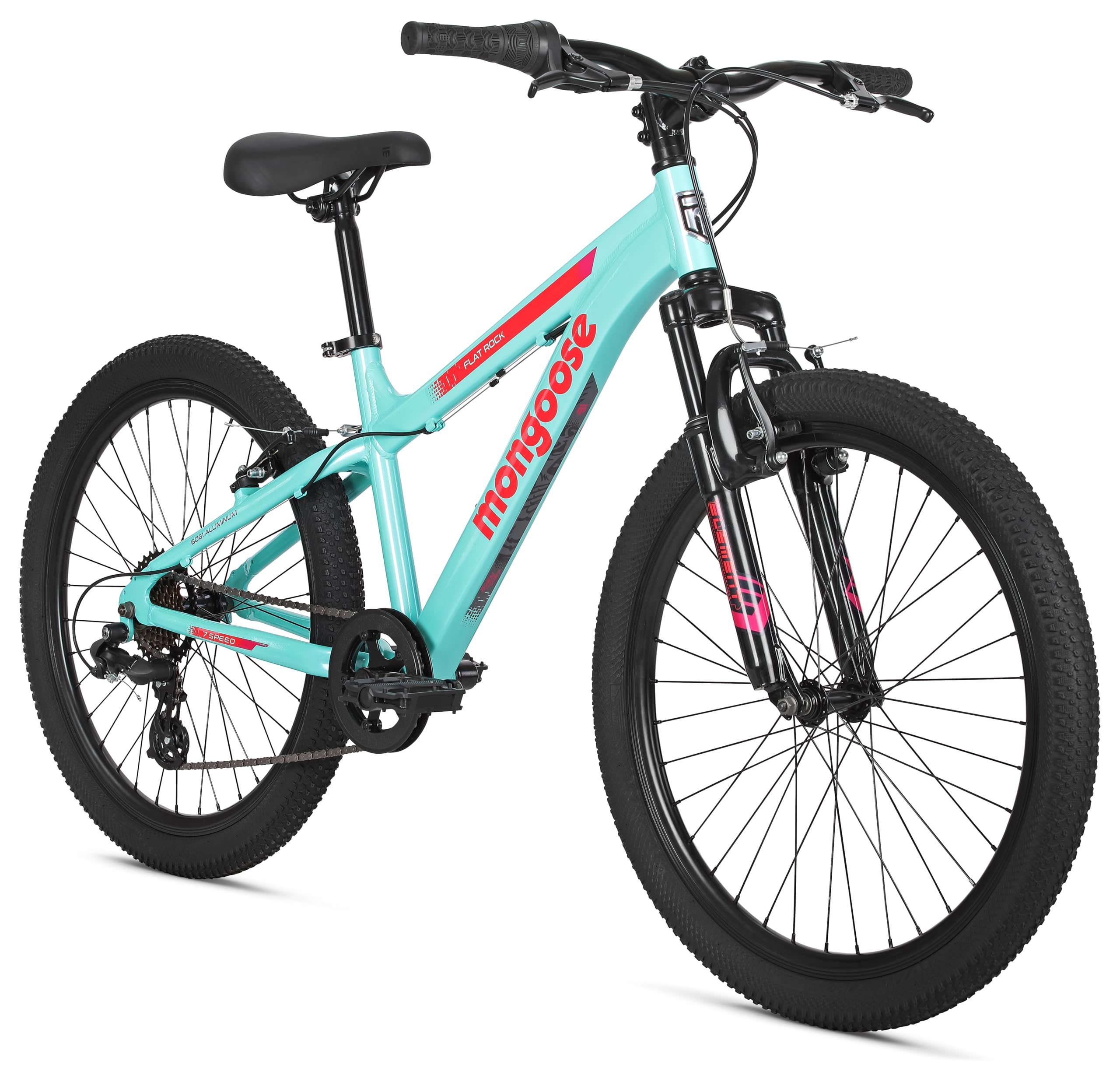
| Mongoose FlatrockBudget Starter | Budget trail starter | 24, 26 or 29 in | 7-speed | Aluminum | Amazon |
| Huffy 26″/27.5″ Mountain BikeTall Rider Pick | Tall riders on a budget | 26 in or 27.5 in | 21-speed | Aluminum | Amazon |
| VEVOR 29″ Full Suspension | Tall riders wanting cushion | 29 in | 24-speed | Aluminum | Amazon |
| VEVOR 29″ Hardtail | Tall riders, simple build | 29 in | 21-speed | Aluminum | Amazon |
| Outroad Fat Tire 26″ | Rough terrain grip | 26 in | 21-speed | High-carbon steel | Amazon |
| EUROBIKE YH-X9 | 29er value for taller riders | 29 in | 21-speed | 6061 aluminum | Amazon |
| Gravity FSX 27.5 LTD | Dual-suspension cushion | 27.5 in | 21-speed | Aluminum | Amazon |
| Schwinn High Timber | Wide size range, big brand | 26 in | 21-speed | Aluminum | Amazon |
Detailed Reviews
1. Mongoose Argus Trail or ST Fat Tire Mountain Bike
Our pick — 4.0+★ from 350+ verified ratings; the strongest balance of quality and price.
The bike that finally makes loose sand and snowy trails rideable for a first-timer
If your local terrain is more muck and gravel than smooth hardpack, start here. The Argus rolls on 4-inch-wide knobby fat tires that spread your weight over a huge contact patch, so you keep grip on loose sand, deep snow and sketchy gravel where a narrow trail tire slides out. The 26-inch wheels are sized for riders from 5’7″ to 6’1″ tall, which covers a lot of adult beginners.
Underneath, a durable steel hardtail frame (front suspension only, no rear shock) and a rigid fork take real abuse without complaint. The 7-speed setup uses Shimano twist shifters with a rear derailleur — you rotate the grip to change gear — and mechanical disc brakes handle stopping in varied conditions. Seven speeds is enough for gentle climbs and rolling paths; if your trails have long steep grinds, count on walking a few. Compared with the 21-speed Huffy further down, this drivetrain asks less of a beginner in tuning but gives you fewer climbing gears.
The thing that wins people over is the paint and stance — this bike looks far pricier than its entry-level tier. Assembly lands on the easy side, and the brakes and derailleur usually come close to tuned right from the start. The recurring gripe is the saddle; swap it or add a padded cover before your first long ride. An occasional set of rims arrives slightly out of true, so budget a quick trip to a shop for a wheel truing if yours wobbles.
Where the Argus shines
- 4-inch knobby fat tires hold grip on sand, snow and gravel that defeats narrow tires
- Steel hardtail frame shrugs off beginner abuse
- Easy in-box assembly with brakes and derailleur near-tuned
- Sharp-looking paint that punches above its tier
What to know first
- 7 speeds means fewer climbing gears on steep dirt
- Steel frame is heavier than aluminum options
- Stock saddle draws the most complaints — plan to swap it
- Occasional wheels arrive slightly out of true
Reach for this if: you ride loose, soft or snowy ground and want grip over gear count.
Look elsewhere if: you need a big spread of gears for sustained steep climbs.
2. Mongoose Flatrock
One frame, three wheel sizes, and a price that leaves room for a helmet
The Flatrock is the flexible entry point — it comes in 24, 26 or 29-inch wheels and fits riders from 4’4″ to 6’0″, which means the same bike can suit a shorter teen and a grown adult. The frame is aluminum, lighter and more rust-resistant than steel, and a suspension fork soaks up roots and uneven trail without the added complexity of a rear shock. Knobby mountain tires give you grip on singletrack and crushed gravel.
You get 7-speed twist shifting with a rear derailleur and linear pull brakes (pads that press against the wheel rim). That brake style is simpler to set up than disc, but it is less consistent in wet mud — a fair trade if your trails are dry most of the year and you want less maintenance. The sloping top tube gives it a modern stance and makes standing over the frame easy for newer riders.
The honest note here is quality control. The frame and looks impress the crowd, but a run of bikes reveals weak spots: chains that snag or fall off, derailleurs that struggle to stay tuned, and in the worst cases a drivetrain part that fails early. The vast majority of buyers ride happily for months on paved paths and light trail. Treat the Flatrock as a light-trail and neighborhood rider and check the drivetrain yourself on arrival, and it delivers real value.
Fit-versatility play: three wheel choices across a 4’4″ to 6’0″ height range is hard to match at this tier — it grows with a rider.
Set expectations on delivery: the drivetrain is the weak link, so a quick pre-ride tune makes a genuine difference.
Best matched to: a light-trail rider or a family sharing across heights.
Think twice if: you plan to hammer rough singletrack — this one rewards gentle use.
3. Huffy 26″/27.5″ Mountain Bike for Men
A 21-speed aluminum frame built for riders 60 inches and up who want climbing gears
Gear count is the headline. The Huffy packs a 21-speed drivetrain into a 17-inch lightweight aluminum frame, giving you a genuinely easy climbing gear for hill-heavy dirt and rough trail. That is a big step up in range from the 7-speed Flatrock above — worth it if your local trails roll rather than sit flat. Knobby all-terrain tires grip rocky trail and gravel, and alloy linear pull brakes handle descents.
The ergonomic saddle, comfortable grips and included kickstand are the small conveniences that make a first bike feel finished. It is rated for riders 60 inches and taller, so taller beginners get a better-proportioned fit here than on a smaller 26-inch frame. Assembly is on the simpler side for most buyers, and the bike feels smooth once dialed in.
What asks for patience is the drivetrain (the gears and chain that move you) and build consistency. The gear system sometimes needs a real tune to shift cleanly, and the brakes occasionally need adjusting. A few riders hit chain issues when pushing into the highest gear, and an early-failing pedal bearing is a rare but reported miss. One buyer report flags durability, citing a right-side crank failure and the bike coming apart within a week. Treat that as a fit warning: this is a light-trail and neighborhood bike, not a jump-and-rock machine. Check every bolt on arrival and you get a wide gear range for the tier.
What earns it a spot
- 21-speed range covers steep climbing better than a 7-speed bike
- Lightweight 17-inch aluminum frame resists rust
- Ergonomic saddle, grips and kickstand included
- Proportioned for taller beginners 60 inches and up
Where it gets rough
- Drivetrain and brakes often need a real tune on arrival
- Chain can pop off in the highest gear
- Rare pedal-assembly failures reported
- Not built for aggressive jumping or heavy rock gardens
Go with this if: you are a taller beginner who needs climbing gears on rolling dirt.
Pass on it if: you want something to take rough drops and jumps — this is a light-trail ride.
4. VEVOR 29″ Mountain Bike, Full Dual Suspension
Twenty-four gears, two shocks, and 29-inch wheels that roll over trouble
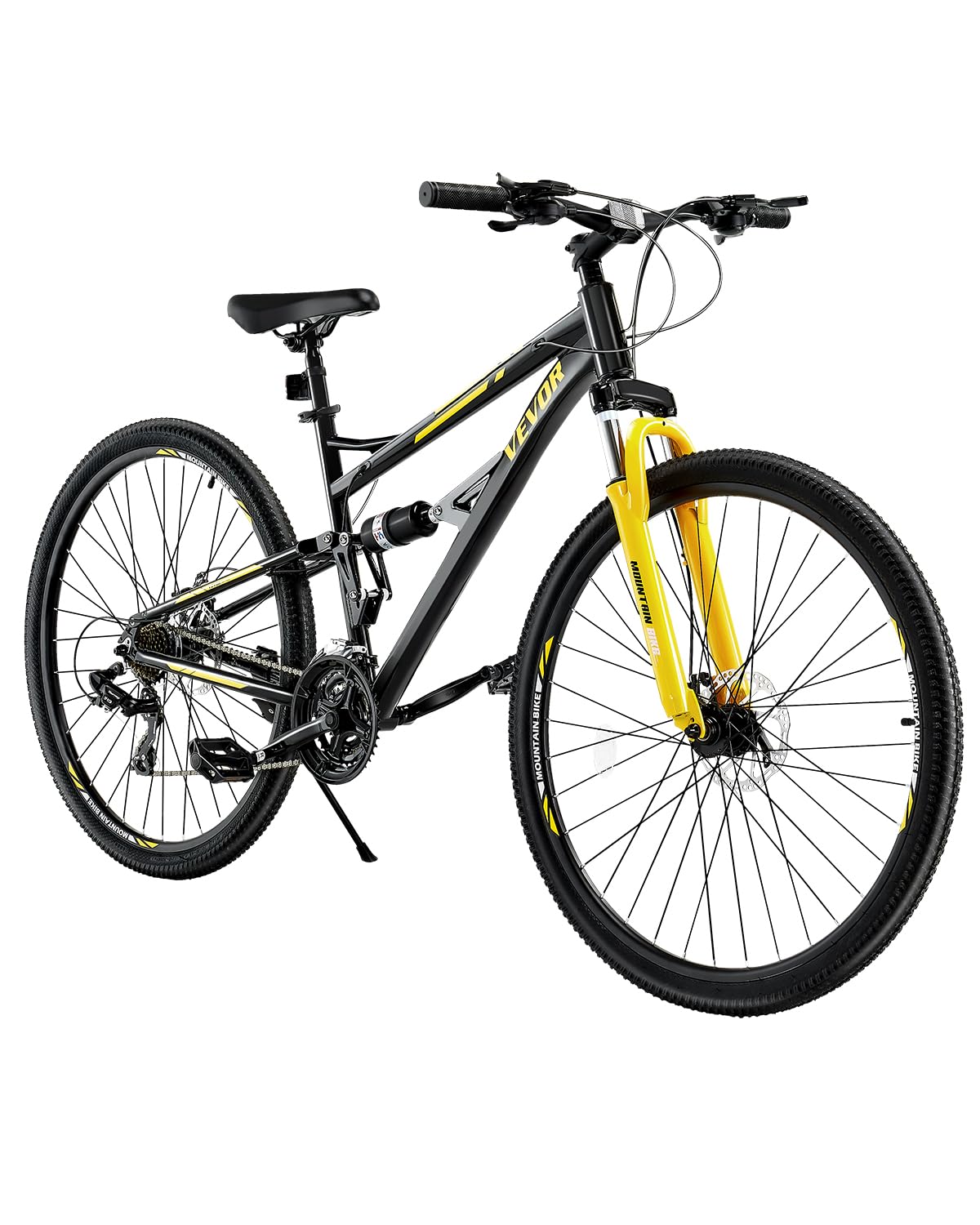
The VEVOR 29er is the most geared-up pick in this mix: a 24-speed drivetrain compared with the 7-speed Mongoose Argus. If you climb long, varied terrain and want a precise gear for every grade, that wider range is the point. It rolls on 29-inch wheels — the biggest here alongside the EUROBIKE and the 29-inch VEVOR hardtail — and is sized for adults 5’10” and taller.
You get comfort on rough ground from the rear suspension, which separates it from a hardtail (a bike with no rear shock). A full suspension setup (shocks front and rear) soaks up rocks and roots on both wheels, so you stay planted on chunky trail. Front and rear disc brakes give sensitive, consistent stopping in wet conditions, so puddles and rain do not turn into guesswork. Extra-wide double-layer alloy rims stiffen the wheels, and the thick-foam saddle is built for long rides. About 85 percent of the bike arrives pre-assembled, with basic tools in the box.
The trade-off is weight and tuning. At 38.4 pounds this is the heaviest bike on the list, so it is a chore to load onto a rack and slower to accelerate than an aluminum hardtail. Full suspension also means more moving parts that can need attention. It is a quiet listing with a small review pool, so plan to inspect and tune it yourself on arrival rather than relying on a long track record.
Comfort-first geometry: the rear shock is what sells this bike for rocky, rooty terrain — your back and hips feel the difference on longer rides.
Weight you will notice: 38.4 pounds means real effort on long climbs and when hoisting it onto a car rack.
Built for: taller riders who prioritize comfort on rough ground over light weight.
Not ideal if: you lift the bike onto a rack often or race up climbs — the heft will tell.
5. VEVOR 29″ Mountain Bike, Front Suspension 21-Speed
The hardtail version of the VEVOR 29er — same big wheels, fewer moving parts
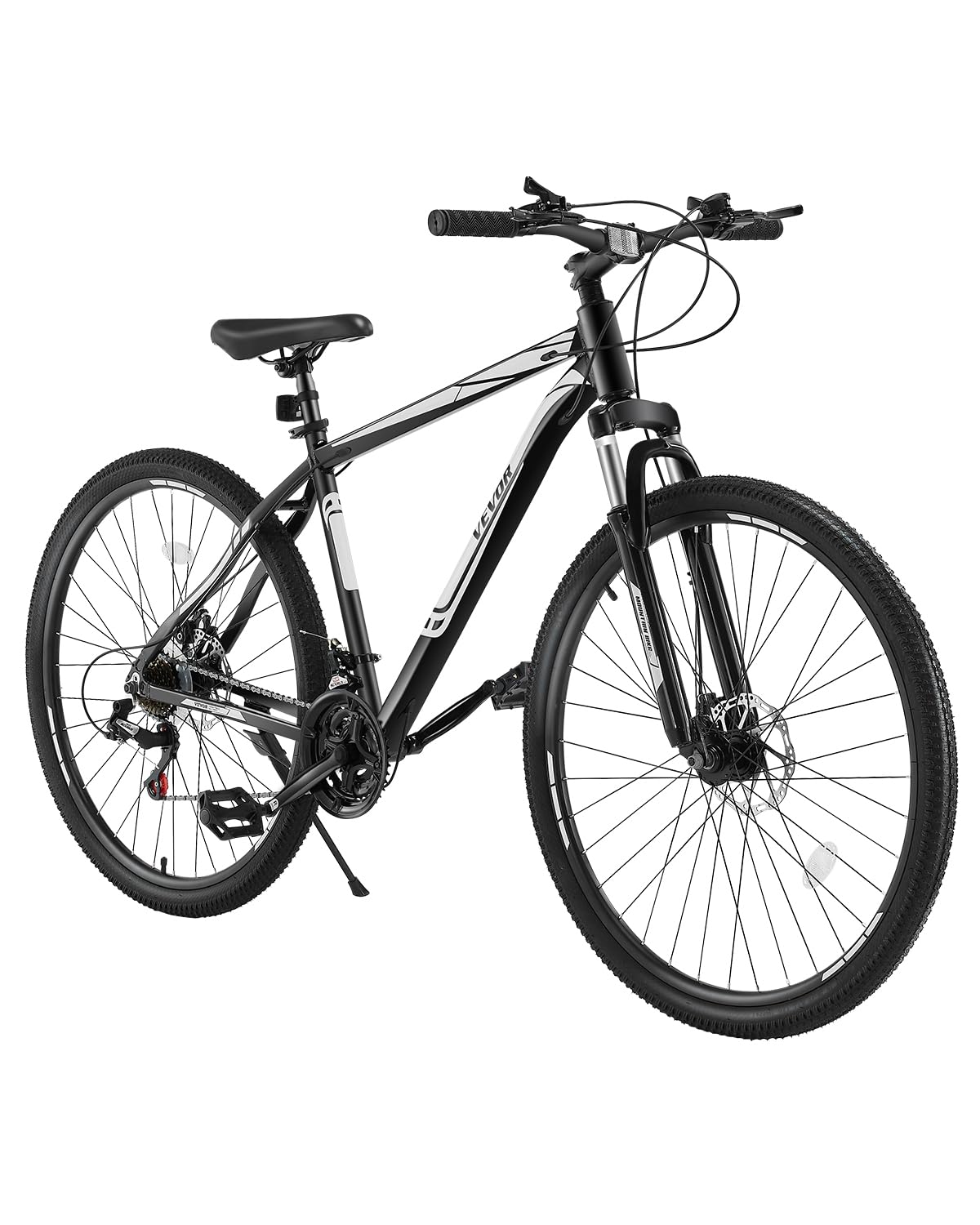
If the full-suspension VEVOR above feels like more bike than you need to maintain, this is the leaner sibling. It keeps the 29-inch wheels for adults 5’10” and taller and the lightweight aluminum frame, but drops the rear shock in favor of a single shock-absorbing front fork. Fewer pivots and linkages means less to tune and fewer things to loosen over a season of beginner riding.
Gearing here is 21-speed rather than the full-suspension’s 24, still plenty for rolling trail and dirt climbs. Front and rear disc brakes give consistent wet-weather stopping, and the broad double-layer alloy rims add stability. The thick-padded saddle is designed to keep you comfortable on longer rides, and 85 percent of assembly is done before it ships — you fit the front wheel, pedals, bars and seat.
Two honest limits. This is a very lightly reviewed model, so you are buying on spec rather than a deep track record — inspect the derailleur and brakes carefully on arrival. And like any 29er hardtail, it asks taller riders to be comfortable on a big-wheel platform; shorter beginners should look at the 26-inch options instead.
Fewer parts, fewer headaches: the single front fork is the beginner’s friend — less suspension to service than the dual-shock VEVOR.
Light record: a small review pool means you do the due diligence on setup yourself.
Worth it for: tall beginners who want big wheels and low maintenance in one package.
Look past it if: you are shorter than roughly 5’10” — the frame wants a taller rider.
6. Outroad Fat Tire Mountain Bike, 26″ 21-Speed

Fat tires plus 21 gears — the combination the Mongoose Argus leaves out
Here is the pick that pairs a fat tire with a wide gear range. The Outroad runs 4-inch-wide fat tires (the maker says they are 5 times more wear-resistant than ordinary bicycle tires) for grip on sand, gravel and rough trail, and backs it with a 21-speed drivetrain. The 21-speed system shifts faster and saves effort on uphill grinds compared with the 7-speed Argus — this is the bike for a beginner whose trails mix soft ground with real climbs.
A shock-absorbing front fork with a thickened outer wall soaks up bumps, and the high-carbon steel frame resists deformation. Double disc brakes and a trigger shifter (thumb levers instead of a twisting grip) round out the controls. Setup takes about 20 to 40 minutes with the included tool kit and a maker-provided installation video.
Owners are happiest with the saddle and the easy assembly, and one buyer summed up the appeal with “we love the monster tires on them.” The seat is the best-loved part of the package, and value for the tier comes up repeatedly. The catch is the steel frame, which is heavier than aluminum, and the trigger shifter (the lever that clicks through gears) and fat tires take some getting used to for a brand-new rider. Give it a tune on arrival and it holds up well for the money.
Why beginners like it
- 4-inch fat tires grip soft and rough ground
- 21-speed range covers climbing better than a 7-speed fat bike
- Seat quality is the most-praised feature
- Assembly done in around 20 to 40 minutes with included tools
The honest catches
- High-carbon steel frame is heavier than aluminum
- Trigger shifter and fat tires need a short adjustment period
- Small review pool — inspect on arrival
- Wear-resistance figure is the maker’s own claim
Pick this when: you want fat-tire grip and climbing gears in one beginner bike.
skip it if: light weight is your priority — the steel frame is the cost of the price tier.
7. EUROBIKE YH-X9 29″ Mountain Bike
A 6061 aluminum 29er with bold three-spoke wheels and a tall-rider fit
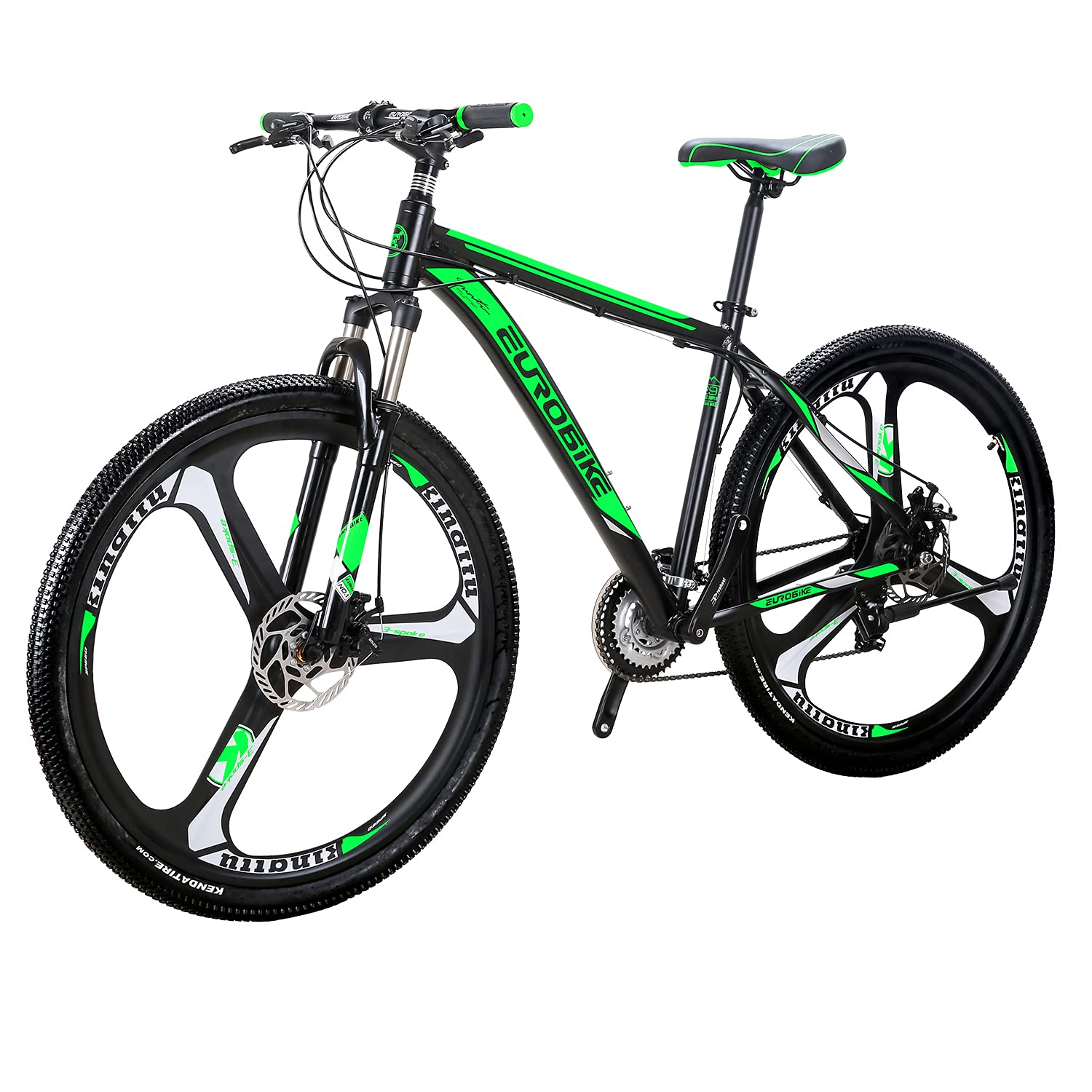
The EUROBIKE is the tall-rider’s 29er with a lightweight streak. The 6061 aluminum frame (a specific alloy grade, lighter than plain steel) is paired with a suspension fork that damps trail chatter, and the 29-inch wheels suit riders from 5’8″ to 6’2″. The standout visual feature is the three-spoke mag wheel design — cast wheels rather than wire spokes — which sets it clearly apart from the spoked bikes around it.
Front and rear mechanical disc brakes give crisp, sensitive stopping and steady speed control on descents, and a 21-speed shifter lets you swap gears easily for climbs and flats. It arrives 85 percent assembled, so you fit the front wheel, pedals, bars, seat and inflate the tires under the included instructions.
You are largely buying on the frame spec and the wheel design here, because this listing has few reviews rather than a long trail record. Inspect the brakes and drivetrain on arrival and it serves a tall beginner well. The mag wheels (one-piece cast wheels instead of wire spokes) are the love-it-or-question-it detail: striking to look at, but heavier-feeling than traditional spokes on a climb.
The frame earns its keep: 6061 aluminum is the light-and-strong upgrade over steel, and the 5’8″ to 6’2″ fit range suits most adult men.
Style-plus-trade-off wheels: the three-spoke mags look sharp but add heft on the climb compared with spoked wheels.
Right for: a taller beginner who wants a light aluminum 29er with standout looks.
Weigh other options if: you prefer classic spoked wheels for climbing feel.
8. Gravity FSX 27.5 LTD Dual Suspension Mountain Bike
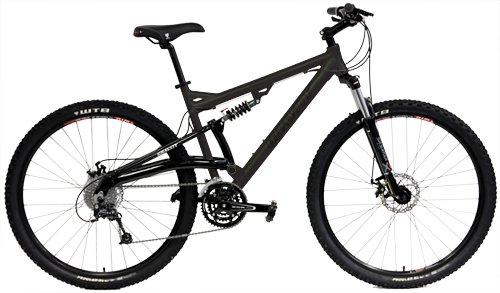
A full-suspension 27.5 with a lock-out fork you can stiffen for the climb
The Gravity FSX is the dual-suspension option for a mid-height rider. It runs 27.5-inch (650b) wheels — the mid-size between a nimble 26 and a big-rolling 29 — with an adjustable rear suspension and a front fork you can lock out. Lock-out means you can stiffen the front shock for climbing or pavement so it stops bobbing, then soften it again for the descent. That flexibility is a real luxury on a beginner trail bike.
A 21-speed drivetrain with front and rear derailleurs gives a broad gear spread, and powerful disc brakes handle stopping. The aluminum frame keeps weight down versus steel, and the matt black finish is understated. You will need to assemble and tune it before riding — that is stated plainly, so treat the first hour as setup time.
What buyers consistently rate highest is the value: a full-suspension bike with a lock-out fork is a lot of features for the tier. The quality side is mixed — most of the bike feels solid, but the pedals are the commonly flagged weak spot, with reports of them stripping or coming loose, and a rare handlebar bolt letting go early. Swap or check the pedals and it delivers the suspension ride at an entry-level tier.
What you get for the tier
- Adjustable rear suspension plus lock-out fork
- 27.5-inch wheels split the difference on roll and nimble
- 21-speed range with front and rear derailleurs
- Full-suspension feel at an entry-level price tier
Where to be careful
- Pedals are the commonly flagged weak part
- Requires real assembly and tuning before riding
- Quality is mixed across the bike
- Rare bolt failures reported — check hardware on arrival
Choose it if: you want full-suspension comfort and a lock-out fork without a premium tier tag.
Be ready to: check or upgrade the pedals and give it a careful first tune.
9. Schwinn High Timber Mountain Bike

The widest size spread on the list, backed by the biggest name in the room
The High Timber is the pick when fit range matters most. Schwinn offers it in 24, 26, 27.5 or 29-inch wheels across 7 or 21-speed setups, so a range of riders from youth to adult can find a frame that fits. The aluminum 16.5-inch mountain frame on the 26-inch build fits riders 5’3″ to 5’8″, and an alloy crank keeps gear changes smooth with low maintenance. Wide knobby tires add stability on varied terrain and weather, and a quick-release seat post makes height adjustments easy.
On this build you get 21 speeds with twist shifters and a rear derailleur, plus disc brakes. It arrives 80 percent assembled — you will need a Phillips screwdriver, 2.5 to 8mm Allen wrenches, an adjustable wrench, and pliers with cable cutters to finish it. The big-brand footprint and the enormous review base mean most buyers find something that fits their body and budget.
Riders call it smooth and good for a light trail or neighborhood loop, and finish the setup with a little cable tweaking. The recurring friction points are build consistency and the assembly instructions, and the instructions split opinions sharply. Buyers report “the bike’s durability is concerning, with multiple reports of the right side crankshaft breaking off and the bike falling apart within a week.” That is the loudest caution in a mostly happy crowd. Treat the High Timber as a light-trail and neighborhood ride, check every fastener and pedal thread on arrival, and it fits the widest range of riders here.
Fit flexibility is the whole pitch: four wheel sizes and 7 or 21-speed options from one model line means a genuine fit for many riders.
Setup rewards patience: the assembly instructions divide opinion, and build consistency is the spot to inspect — a careful first tune pays off.
Suit it to: riders who need the broadest size options and a familiar brand backing.
Pause if: you want a tough trail bruiser for hard riding — keep this one to light trail and pavement.
Know the Specs
Wheel size (24, 26, 27.5, 29 inch)
Wheel diameter is the first fit decision you make. A larger wheel rolls over roots and rocks with less effort and suits taller riders; a smaller wheel is more nimble and fits shorter riders. On this list the 29ers generally fit riders 5’10” and up, while the 26-inch builds suit mid-height riders. Pick a wheel that matches your height and your terrain before anything else.
Gear count (7, 21, 24 speed)
Gear count is the number of rear gear combinations — more gears mean a wider range for climbing steep grades without walking. A 7-speed drivetrain handles gentle gravel and flat paths; a 21 or 24-speed setup gives you a much easier climbing gear. Match the count to how much elevation your local trails throw at you, not to the biggest number on the box.
Frame material (aluminum vs steel)
Aluminum is lighter and resists rust, which makes it the friendlier choice for a beginner hauling a bike up stairs or onto a rack. Steel — especially high-carbon steel — is heavier but absorbs road and trail vibration. Both can serve a beginner well; the trade-off is weight versus a slightly cushioned ride feel.
Brake type (disc vs linear pull)
Disc brakes squeeze a metal rotor and hold their grip better in mud and wet weather. Linear pull brakes press pads against the wheel rim — simpler and lighter but less consistent when conditions turn wet. For dry-weather trail rides either works; for wet, loose or muddy ground, disc brakes are the confident pick.
Common Questions
What wheel size should a beginner trail rider pick?
Is a fat tire bike good for trail riding?
Do I need 21 gears or is 7 enough?
Are disc brakes better than linear pull for a beginner?
How much assembly is required before I can ride?
Should a beginner buy full suspension or a hardtail?
Will a 29-inch bike fit a shorter rider?
Why do cheaper beginner bikes sometimes need a tune right away?
Can I ride a beginner trail bike on pavement too?
What rider height fits a 26-inch mountain bike?
The Bottom Line
For most beginners, the winner in this lineup of trail bicycles for beginners is the Mongoose Argus — its 4-inch fat tires and easy assembly get a new rider onto loose, soft or snowy ground without the fight. If you want a broad climbing gear range, reach for the Huffy 21-speed. And for the widest size range and a familiar brand behind it, the Schwinn High Timber fits the most riders.
How we choose
We do not accept paid placement. Every pick is matched to a real buyer and a real use-case; we do not hands-on test units.
Sources
Specifications: manufacturer listings and product documentation. Review insights: verified customer reviews, as of November 2026. Pricing: not shown on this page (it changes often); check the current price via the retailer link.
As an Amazon Associate, Tactical Gear Guy earns from qualifying purchases. This does not affect which products we feature.