Specs are compiled from manufacturer listings and verified buyer reviews and can change over time — please confirm the key details on the product page before buying.
You want dry feet on a wet morning without looking like you borrowed your grandad’s wellies. A short ankle rain boot does that now: it reads like a sneaker or a work chukka, pulls on in two seconds, and keeps water out of your socks. Below you’ll find six picks sorted by what they are actually good at, from the slip-on deck boot that handles most rainy days to the classic rubber boot for when the puddles get serious.
This guide is built by comparing the manufacturers’ published specifications and the patterns across verified customer reviews, so you get each pick’s real strengths and trade-offs instead of marketing spin.
Ankle height is the whole point here: it keeps splashes and wet grass off your feet without the shin-high weight of a full wellington. So this list keeps every option short, pliable, and built around a waterproof rubber or neoprene shell, which is what makes the short ankle cut of the stylish rain boots for men so easy to wear all day.
Top Picks
How To Choose The Best Stylish Rain Boots for Men
A short rain boot has two jobs: keep water out, and look normal enough that you don’t feel silly in a parking lot. Almost every complaint in this category comes from one of those two jobs being handled badly. So pick for the wet days you actually have — the commute, the dog walk, the yard — not the boat trip you take twice a year.
The upper material decides how the boot feels
A rubber shell is rigid and easy to hose down, which suits mud, farm chores, and heavy puddle work. A neoprene upper is softer and more flexible, so it wraps the ankle instead of clunking against it. Many of these boots blend the two — a rubber foot with a stretchy neoprene collar — and that mix is what gives you a snug seal around the ankle while staying easy to walk in.
Fit is the number-one thing buyers get wrong
Ankle rain boots are notorious for wonky sizing, in both directions. Some runs come up half to a full size large, which means your normal size will slide around at the heel. Others are built narrow through the middle of the foot. Check the listing’s own fit note before you order, and if you wear thick socks or have a wide foot, size for the sock, not the bare foot.
Outsole and drainage matter more than tread depth looks
Rubber lugs are only half the story. What stops a slip on a wet deck is the channels that push water out from under the sole. Look for a slip-resistant rubber outsole with a real tread block pattern, and treat the boots to a fresh-water rinse after saltwater or mud so the rubber stays supple.
Side-by-Side Comparison
| Model | Best For | Upper Material | Waterproof Shell | Footbed / Insole | Amazon |
|---|---|---|---|---|---|
| SUREWAY Men’s Ankle Deck Boot★ Best Overall | Everyday wet-weather wear | Neoprene rubber | Waterproof upper | — | Amazon |
| HUNTER Men’s Rain BootStyle Standout | Style-first city wear | Vulcanized natural rubber | Fully waterproof | Cushioned, non-removable | Amazon |
| Men’s Insulated Working Bootie | Cold, mucky yard work | Rubber with neoprene | Waterproof | — | Amazon |
| High-Traction Deck Boot | Fishing and boating | Rubber | Waterproof, saltwater resistant | — | Amazon |
| HISEA Men’s Deck Boot | Long days on your feet | Natural rubber + 4-way stretch neoprene | Waterproof barrier | Removable EVA + memory foam | Amazon |
| Trudave Deck Boots | Sneaker-look on a budget | Neoprene to rubber | 100% waterproof | — | Amazon |
Detailed Reviews
1. SUREWAY Men’s Waterproof Ankle Deck Boots
Our pick — 4.5+★ from 600+ verified ratings; the strongest balance of quality and price.
The boot that handles a rainy commute, a muddy garden, and a wet dock without changing character.
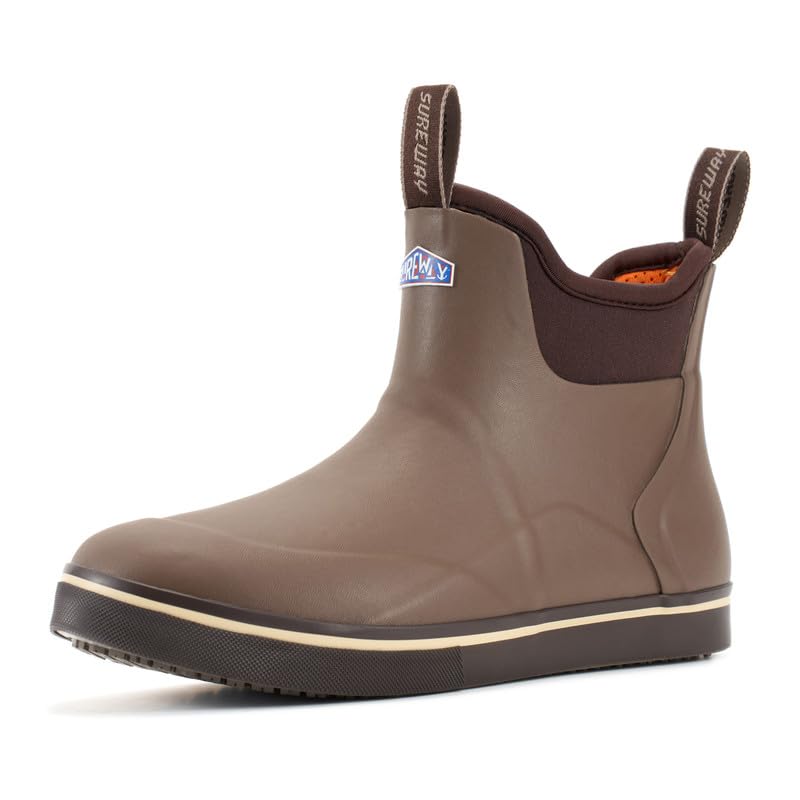
The SUREWAY SW500 is the safest first short rain boot to buy because it does not force a choice between looking like a fisherman and looking like a guy running errands. Its waterproof neoprene rubber upper keeps water off your feet, and the slip resistant outsole gives you grip on wet ground rather than a smooth rubber sole that skates. It is built for fishing, boating, hunting, gardening, and wet outdoor work, so it covers a full week of wet commutes, garden chores, and dock days.
Buyers keep coming back to the build: quality is what this boot gets known for, with comfort right behind it. The upper (the part above the sole) has enough structure to hold its shape around the ankle, yet it pulls on and off without a fight — a big part of why buyers describe them as easy to slip in and out of. One buyer’s read on the fit is that you get support without the boot feeling bulky, which is exactly what an ankle-height boot should feel like.
The catch is sizing. This is a boot where a real chunk of the feedback splits — plenty of buyers find it true to size, and a real share find it runs small. Order your normal size only if you wear thin socks; if you plan on thick wool socks or have a wide foot, size up. That one sizing call decides whether the boot disappears on your foot or pinches across the toes.
What holds up day after day
- Waterproof neoprene rubber upper keeps feet dry through rain, mud, and wet yard work
- Slip resistant outsole for stable footing on slick decks and wet grass
- Pulls on and off quickly, so it works as a daily boot, not a chore-day boot
- Shape supports the ankle without the bulk of a tall wellington
Where it asks for your attention
- Sizing feedback is genuinely split — some find the fit true, others find it runs small
- Long-term durability is the one area where reports are not unanimous
Buy this one if: you want a single short boot that covers commuting, gardening, and wet outdoor work in the same week.
Look twice if: you wear thick socks or have a wide foot — go up a size, because this boot is not forgiving on a tight fit.
2. HUNTER Men’s Rain Boot
The recognizable one — a streamlined rubber boot that looks deliberate rather than practical.
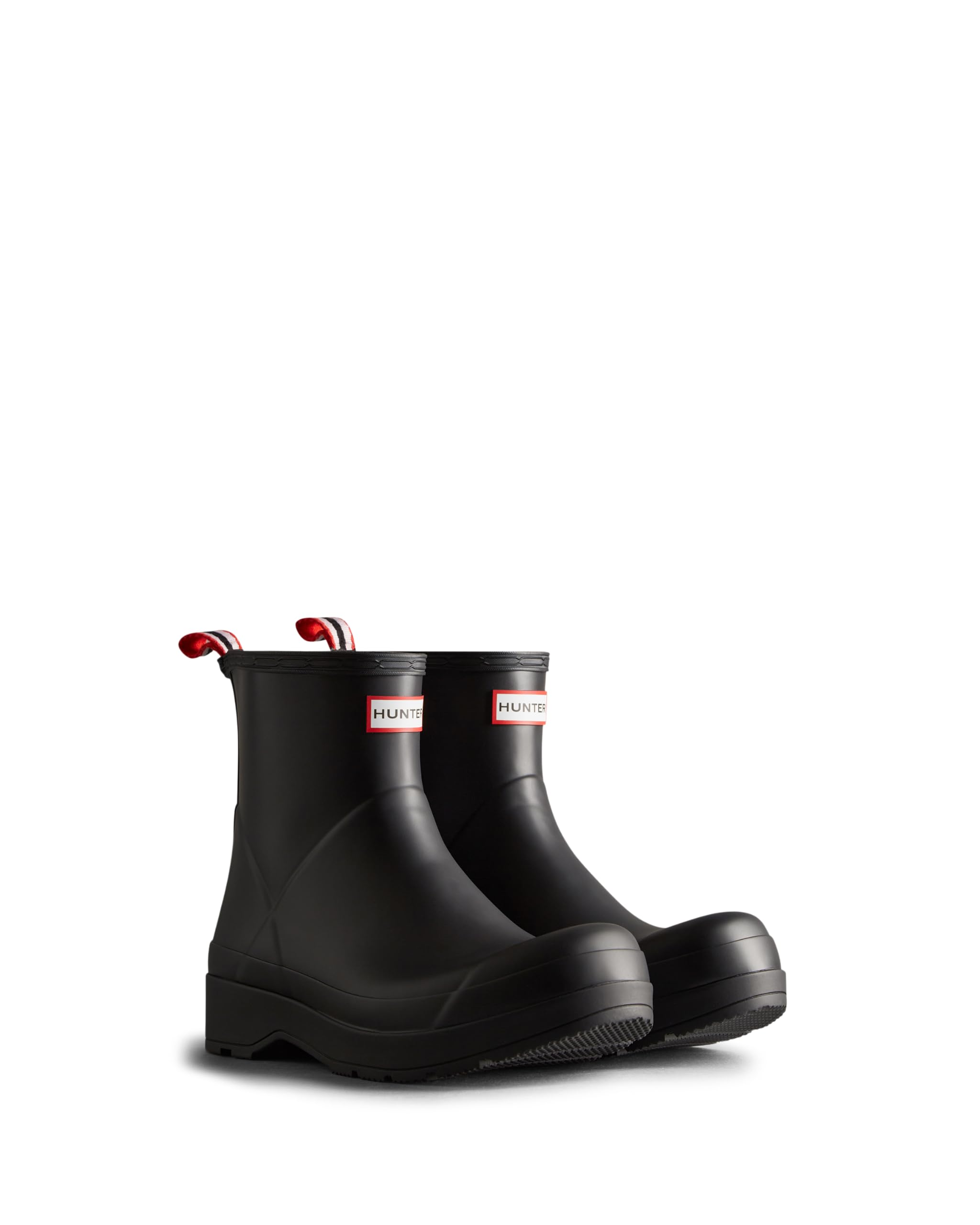
If the boots need to survive a wet city commute and still pass in a room where people notice footwear, this is the pick. The Hunter Original Play is handcrafted in vulcanized natural rubber, then re-engineered for a lightweight feel, and it is fully waterproof. The classic rounded toe and the brand logo accent at the front are the reasons it reads as style rather than safety gear.
Under the look, there is real comfort thought: a polyester lining sits against your foot, and a cushioned, non-removable footbed with a multilayered sponge insole gives you a softer step than a bare rubber boot. The Hunter branded molded outsole handles wet pavement. Style is exactly what this boot is known for after quality, and that is the whole reason anyone spends premium money on rubber footwear instead of grabbing the cheapest pair on the shelf.
Honest trade-off: it is a heavier, more substantial boot than the short deck styles here. That build is what makes it feel like a proper piece of footwear, and it also means it is not the featherweight slip-on for a quick dash to the bin. Sizing also splits, with some buyers finding their usual size perfect and others finding the boot runs too big. And the footbed (the layer your foot rests on) does not come out, so you cannot swap in a custom insole.
What the premium buys: a streamlined silhouette, a fully waterproof vulcanized rubber build, and a cushioned multilayered sponge insole under a polyester lining.
The part to plan around: the insole is fixed rather than removable, so anyone who relies on their own orthotic insert should look at a deck boot instead.
The right call for: the man who wants his wet-weather boots to be part of the outfit, not a compromise he hides in the car.
Think carefully if: you need an insole swap — the cushioned footbed is sewn in place.
3. Men’s Rubber Boots

The insulated bootie built for cold, mucky mornings — and the one people actually comment on.
This is the pick for the man who spends a wet Saturday moving mud, mucking out, or standing around in cold slush. It’s insulated, which matters when the wet is cold rather than warm rain, and its pro non-slip outsole uses skidproof rubber to keep you upright on muddy ground while blocking out winter slush and wet dew. The shell is also built to resist saltwater, acid, and alkali exposure, so it holds up around corrosive ground conditions where a soft casual boot would not be the right tool.
Appearance is the thing this boot gets noticed for, which is unusual for a working rubber bootie. Comfort is right behind it — the cushioning is designed for resilience in wet, cold conditions, so a long day of chores does not turn into a foot-fatigue day. Buyers also consistently talk about the waterproofing doing its job, keeping feet dry rather than just damp-resistant.
The honest friction points are around the fit. Long-term durability opinions are similarly mixed, with the neoprene portion being the part that wears.
Where it earns its place: insulated construction and a pro non-slip outsole add up to a bootie made for cold, wet, corrosive ground rather than a mild drizzle.
The sizing reality: narrow-footed buyers get along with it best; wide feet should expect a snug pull-on.
Worth grabbing for: cold-weather yard chores where slush, mud, and wet decking are the daily reality.
Be cautious if: you have a wide foot — the narrow cut is the recurring gripe here.
4. Men’s Deck Boots with High Traction
Traction first, everything else second — this is the one for wet boats and slick planks.
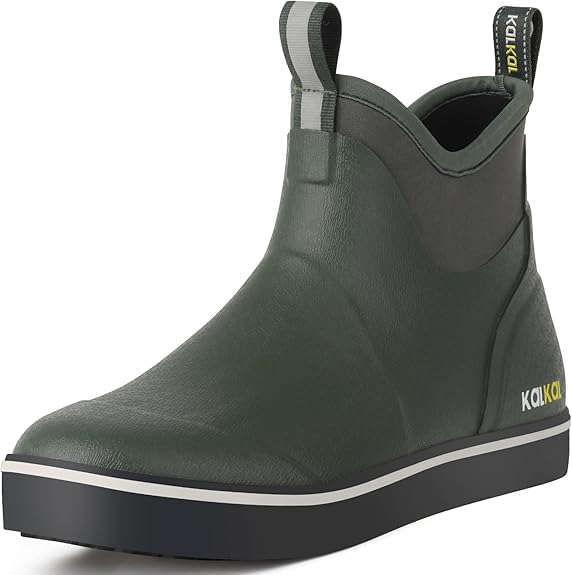
If your wet days happen on a deck, a dock, or a launch ramp, the grippy outsole (the bottom tread) is the feature that earns the purchase. The skidproof rubber sole is designed to prevent falls on muddy or slippery surfaces. The shell is also built for saltwater and corrosion resistance, which is the difference between a boot that survives coastal use and one that stiffens up after a season of salt spray.
The upper handles dew-covered lawns and slush as comfortably as it handles a wet pontoon floor, and buyers lean on it as a general outdoor boot rather than a single-purpose boat shoe. It slips on and off easily, and the comfortable lining is designed to keep feet dry through long wear. Durability reads as a genuine strength in the feedback — this is not a boot people describe as falling apart quickly.
Here is the thing you need to know before ordering: this style runs small, and the manufacturer’s own note says to go one size up from your usual size. That is unusual and worth respecting, because the fit feedback splits in exactly the way you’d expect — some buyers find them a little large, others find the boot runs short of the stated size. Pick your size against that note, not against the number on your old sneakers.
Why boat owners like it
- Skidproof rubber outsole grips muddy, slick, and dew-covered ground
- Saltwater and corrosion resistant shell for coastal and dock use
- Easy slip-on entry and a comfortable lining for extended wear
- Durability holds up in buyer feedback rather than being a weak point
What to sort out first
- Runs small — the listing itself advises ordering one size up
- Fit opinions split between running large and running short
This one is for: the fisherman, boater, or yard worker whose wet ground is also slippery ground.
Size up, not down: order a size above your usual, and the fit lands where it should.
5. HISEA Men’s Deck Boots Waterproof Ankle Rain Boots

The ankle boot that behaves like a trainer underfoot — removable insole, roomy toe box, real cushioning.
Standing all day is the use case this boot was clearly built around. A removable high-rebound EVA and memory foam insole sits under your foot for shock absorption and arch support, and because it lifts out, you can swap in your own insert or dry it out properly after a soaking. The premium natural rubber shell pairs with 4-way stretch neoprene — neoprene that gives in every direction — so you get a full waterproof barrier against saltwater, mud, and heavy rain without a stiff, clunky feel.
The neoprene collar wraps snugly around the ankle to keep debris out while letting you move freely. The toe box is deliberately roomy for wider feet, which is a meaningful detail: most rain boots squeeze across the forefoot, and this one does not. A slip-resistant rubber outsole with an aggressive tread and integrated drainage channels pushes water out from under the sole, so wet docks and slick grass are handled. Reflective webbing on the reinforced pull straps and a rear kick tab let you pull them on by hand and step out hands-free.
What you should know before you buy: HISEA says this boot runs about a half to a full size large, so size down for a snug fit — or stay at your normal size if you’re wide-footed or wear thick socks. That explains the split fit feedback, and it is a solvable problem. Also note the flexible rubber sole is meant for boating, fishing, and gardening, not heavy industrial work that needs a stiff structural sole.
The comfort case: a removable EVA and memory foam insole plus a roomy toe box make this the easiest of the short boots to stand in for hours.
Why it needs a size adjustment: the boot runs a half to a full size large by the maker’s own guidance, so your usual number will feel loose.
Reach for these: if your wet day involves long hours on hard surfaces and you want a boot that takes an insole swap.
Look elsewhere if: you need a rigid sole for construction-grade work — this one is built flexible for deck and garden duty.
6. Trudave Deck Boots
Looks like a sneaker, waterproofs like a boot — the entry-level pick that hides its budget roots.
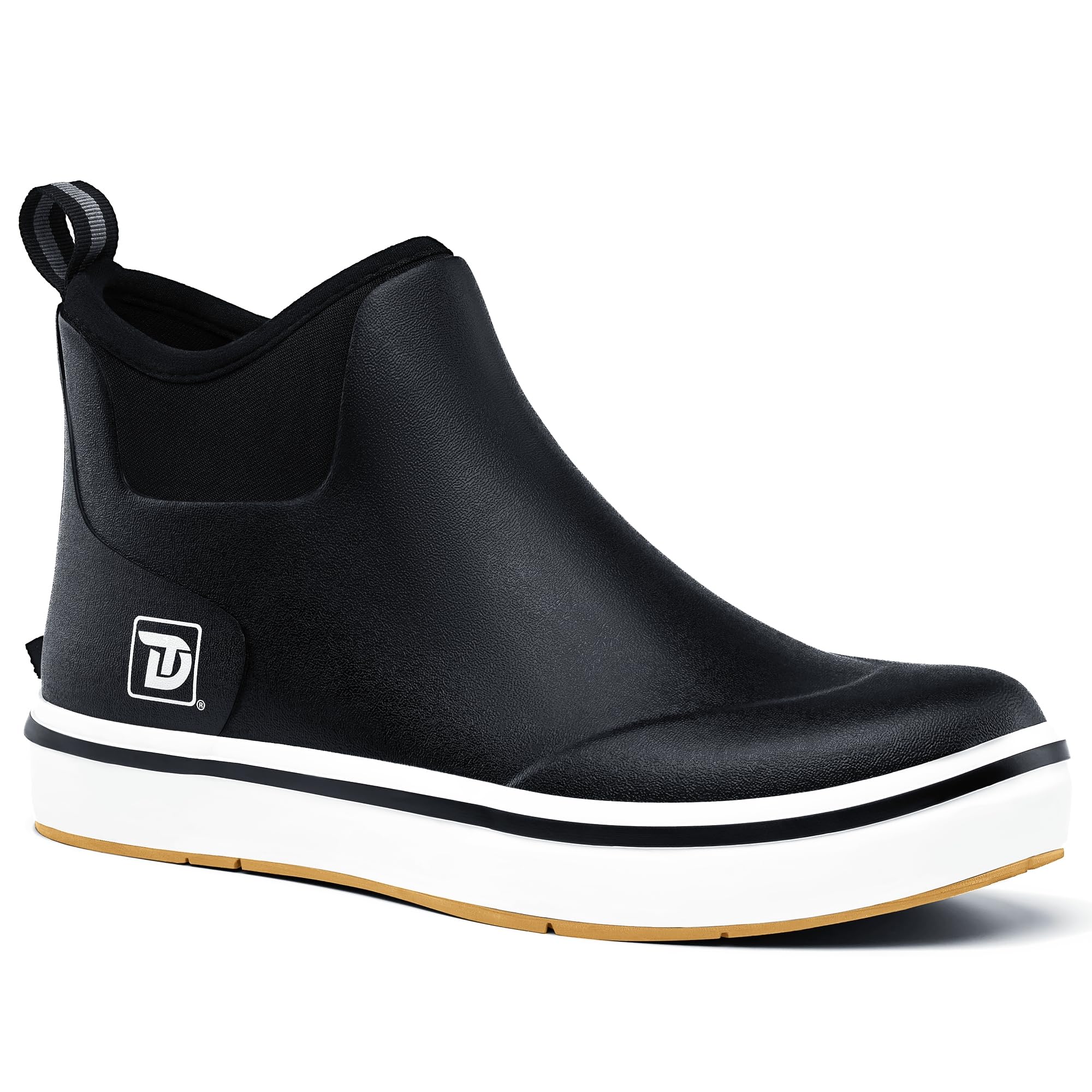
The Trudave is the cheapest way into a short rain boot that does not announce itself as rain gear, and that is its whole pitch. It is 100% waterproof from neoprene to rubber, and the thickened rubber shell is also oil resistant and corrosion resistant — a combination that pushes way past what you’d expect from an entry-level boot. The anti-slip outsole is there to keep you steady, and the pull tabs mean you can get them on and off faster without bending and hauling.
The styling is the quiet win. These look like sneakers, so you can wear them on a wet errand run without feeling like you’re in workwear. The size range runs from 5 to 14 — a genuinely broad span for a budget boot. Buyers also report the combination of comfort and a true-to-size fit, with features they’d normally associate with pricier boots.
Where you feel the lower tier: there is less long-term feedback to go on, since this model is newer to the market than the established names here. If you need a boot you’ll lean on hard for years of daily abuse, spend more. If you want a dry, decent-looking ankle boot for wet commutes, dog walks, and the occasional fishing trip, this covers it at the entry tier.
Budget value, stated plainly: waterproof neoprene-to-rubber construction, an oil- and corrosion-resistant shell, and sizes spanning 5 to 14, all at the entry tier.
The unknown: this is a newer model, so there is less proven track record on how the rubber holds up over multiple seasons.
Go here if: you want a sneaker-looking waterproof boot without paying premium rubber-boot money.
Pay more if: you need a multi-season workhorse — the long-term record on this one is still building.
Know the Specs
Neoprene versus natural rubber
Neoprene is a synthetic rubber that stretches, so it wraps the ankle and lets the boot flex as you walk. Natural rubber is denser and holds its shape, which suits a structured boot that needs to stand up to mud and abrasion. Many short deck boots combine the two — rubber through the foot for durability and neoprene at the collar for a snug, flexible seal. That is why a stretch neoprene collar feels softer against the ankle than a solid rubber cuff.
Slip-resistant outsole and drainage channels
The outsole is the bottom of the boot, and a slip-resistant one uses a rubber compound plus a tread pattern to grip wet ground. Integrated drainage channels are grooves that push water out from under the sole as your foot presses down, which is what stops the boot hydroplaning on a slick surface. A tread pattern with deep lugs helps on mud and grass, but the water-shedding channels are what make the difference on a wet deck or a smooth concrete path.
Removable versus fixed insoles
An insole is the layer your foot rests on inside the boot. A removable insole lifts out so you can dry it, replace it, or swap in your own insert — useful if you rely on arch support. A fixed footbed is often cushioned with layers of sponge, as on the Hunter, and cannot be swapped. There is no better or worse here, just a question of if you need to customize the fit.
Why rain boots run large or small
Rain boots are molded rather than stitched, so the interior volume varies more between brands than a normal shoe does. Some runs come up half to a full size large, which is common on boots with a stretchy neoprene collar — the collar grips the ankle, so a loose heel is the giveaway. Others are cut narrow across the forefoot. Always check the listing’s own fit guidance and order against the sock you plan to wear.
Common Questions
Will a short ankle rain boot keep my feet dry in heavy rain?
Should I size up or down in neoprene deck boots?
Can I wear these rain boots for a full workday on my feet?
Are neoprene rain boots as waterproof as rubber ones?
How do I stop my feet from sweating inside a waterproof boot?
What is the difference between a deck boot and a rain boot?
Will a rubber rain boot crack or go stiff over time?
Do these boots work for wide feet?
Can I wear an ankle rain boot to the office on a wet day?
How should I care for the rubber shell and outsole?
The Bottom Line
For most wet days, the winner is the SUREWAY Men’s Waterproof Ankle Deck Boots — a waterproof neoprene rubber upper and slip resistant outsole cover a rainy commute, a muddy garden, and a wet dock in one boot. If the boots need to look good first, grab the HUNTER Men’s Rain Boot with its streamlined vulcanized rubber build and cushioned insole. And for long hours standing on hard, cold, mucky ground, the Insulated Working Booties bring the cushioning and corrosion-resistant shell that chore days demand. One last thing worth knowing: sizing in this category swings widely, so order against the listing’s own fit note rather than the number on your everyday shoes — get that right and any of these six will keep your feet dry without making you look like you’re wearing rain gear.
How we choose
We do not accept paid placement. Every pick is matched to a real buyer and a real use-case; we do not hands-on test units.
Sources
Specifications: manufacturer listings and product documentation. Review insights: verified customer reviews, as of November 2026. Pricing: not shown on this page (it changes often); check the current price via the retailer link.
As an Amazon Associate, Tactical Gear Guy earns from qualifying purchases. This does not affect which products we feature.