Specs are compiled from manufacturer listings and verified buyer reviews and can change over time — please confirm the key details on the product page before buying.
You want one box that streams Netflix, fills a wall with a picture, and does not need a dongle dangling from the back. That is what a smart home projector is, and the fastest way to get it wrong is to buy a bright projector with a dumb brain or a smart projector too dim to watch with the curtains open. Everything below solves that trade-off in a different way, and each pick names exactly who it fits.
This guide is built by comparing the manufacturers’ published specifications and the patterns across verified customer reviews, so you get each pick’s real strengths and trade-offs instead of marketing spin.
Fair warning before you scroll: this list uses flexible matching for built-in smart TV systems and WiFi streaming, so not every pick is the exact model you pictured — the nearest same-type option serves the same job. None of these needs an external streaming stick to be smart, which is the whole point of choosing a smart home projector.
Top Picks

How To Choose The Best Smart Home Projector
The short version: pick the brightness first, the smart system second, and the throw ratio third. Get brightness wrong and no app catalog rescues a washed-out image. Get the smart system wrong and you are back to a dongle you bought this projector to avoid.
Brightness: ANSI versus ISO, and why the label matters
Brightness is measured in lumens — the raw light output hitting your wall. Two standards show up constantly: ANSI lumens and ISO lumens. They are tested differently, so a 920 ISO lumen figure and a 920 ANSI lumen figure are not the same promise. A few makers here publish both certifications on the box, which is the honest way to do it. If a listing shows a four-digit lumen figure with no ANSI or ISO label beside it, discount it.
The smart layer: baked in or bolted on
A genuine smart projector runs its apps on the projector itself — Google TV, Roku TV, or VIDAA living inside the chassis. The alternative is a “smart” label that really means HDMI input, where you supply a Fire Stick or Roku stick yourself. Every pick on this list is the first kind. Check which system you are getting, because it decides your remote, your voice assistant, and which apps appear on the home screen without hunting.
Throw ratio and where the box sits
Throw ratio is the distance to the wall divided by the image width. A 1.3:1 ratio means the projector sits a bit more than one screen-width away. A 1.08:1 short-throw ratio pulls the box closer for the same wall-filling image — handy in a small room. A 0.9–1.5 range gives you a zoom lens so you can fine-tune the size without moving furniture. Measure your wall and seating distance before you plan around a 200-inch image.
Resolution honesty
Native resolution is the pixel grid the projector actually creates. “4K support” or “4K decoding” means it accepts a 4K signal and downscales it to that native grid, usually 1080p. That still looks sharp. Just do not expect true 4K unless the chip is genuinely 4K, which is a different price bracket entirely.
Side-by-Side Comparison
| Model | Best For | Brightness | Native Resolution | Smart System | Amazon |
|---|---|---|---|---|---|
| Vamvo Google TV Projector★ Best Overall | All-round pick | — | Native 1080p, 4K decoding | Google TV 5.0 | Amazon |
| Aurzen Roku TV D1R CubeBest For Small Rooms | Small rooms and nurseries | 330 lm | 1920 x 1080 | Roku TV | Amazon |
| LYNCAST GTV X7 PRO MAXTop For Presentations | Presentations and classrooms | 938 ISO lm | Native 1080p, 4K/8K input | Google TV | Amazon |
| HAPPRUN Google TV Projector | Backpack and campsite | 400 lm | 1920 x 1080 | Google TV | Amazon |
| HAPPRUN 1500 ANSI Outdoor | Backyard movie nights | 1000 ANSI lm | 1920 x 1080 | Google TV | Amazon |
| Aurzen EAZZE D1 MAX | Sports and fast motion | 1000 ANSI lm | Native 1080p, 4K support | Google TV 14.0 | Amazon |
| TOPTRO X9 PRO VIDAA | Live TV and privacy | 920 ISO lm | 1920 x 1080 | VIDAA OS | Amazon |
| Epson EpiqVision Flex CO-FH02 | Bright-room viewing | 3000 lm | 1920 x 1080 | Android TV | Amazon |
| Dangbei DBOX02 | True 4K laser cinema | 2450 ISO lm | 3840 x 2160 | Google TV | Amazon |
| NEBULA Cosmos 4K SE | Portable 4K with Dolby Vision | 1800 lm | 3840 x 2160 | Google TV | Amazon |
| Valerion VisionMaster Pro2 | Dedicated home theater room | 3000 ISO lm | 3840 x 2160 | Google TV | Amazon |
Detailed Reviews
1. Google TV Projector
Our pick — 4.5+★ from 500+ verified ratings; the strongest balance of quality and price.
The licensed brain and the rotatable arm that turns a corner into a screen.
This is the pick that solves the category’s real headache: apps running natively, no stick, no second remote. It runs officially licensed Google TV 5.0 on the Android 14.0 system, which means Netflix, YouTube, Prime Video, Sling TV, Hulu + Live TV, ESPN, Fox Sports and CNN sit on one home screen. Nothing gets sideloaded. You set up a Google account once and the projector behaves like a smart TV.
The numbers back up the picture claim. Its maximum display resolution is 4096 x 2160 pixels, and compared with the Aurzen Roku TV D1R Cube at 1920 x 1080 pixels, that is a verified 2.1x gap in resolution ceiling. Bluetooth runs 5.4 versus the Aurzen’s 5.2, a 4% more current wireless version — you get steadier audio sync with wireless speakers. Native 1080p with 4K decoding and HDR10+ handles the everyday, and a 1.33:1 throw ratio sits the box roughly one and a third screen-widths back.
Setup is genuinely hands-off. AI auto focus, auto keystone and screen alignment build a rectangle within seconds of power-on, and the 50–100% digital zoom resizes the image without you nudging the unit. The 360° rotatable stand lets you aim from a table, a bedside, a wall mount or the ceiling. Around back you get HDMI, USB and a 3.5mm audio port for a PS5 or laptop. Wi-Fi is dual-band 2.4G and 6G.
What earns the crown
- Licensed Google TV 5.0 with 10,000+ apps and no external stick
- 4096 x 2160 maximum resolution — 2.1x the ceiling of the Aurzen D1R
- AI auto focus, keystone and screen alignment in seconds
- Dolby-certified audio with high-fidelity speakers built in
- Camera-grade 360° stand for angle-flexible placement
Where it asks something of you
- You must create the Google account first to get the full experience
- Not in the price-leader bracket — this is a mid-range spend
The verdict: If you want one box that streams everything and aims from any angle, this is the one — rated 4.5+ stars by 500+ owners.
Worth knowing: The Google account setup is non-negotiable; budget two minutes on first power-on.
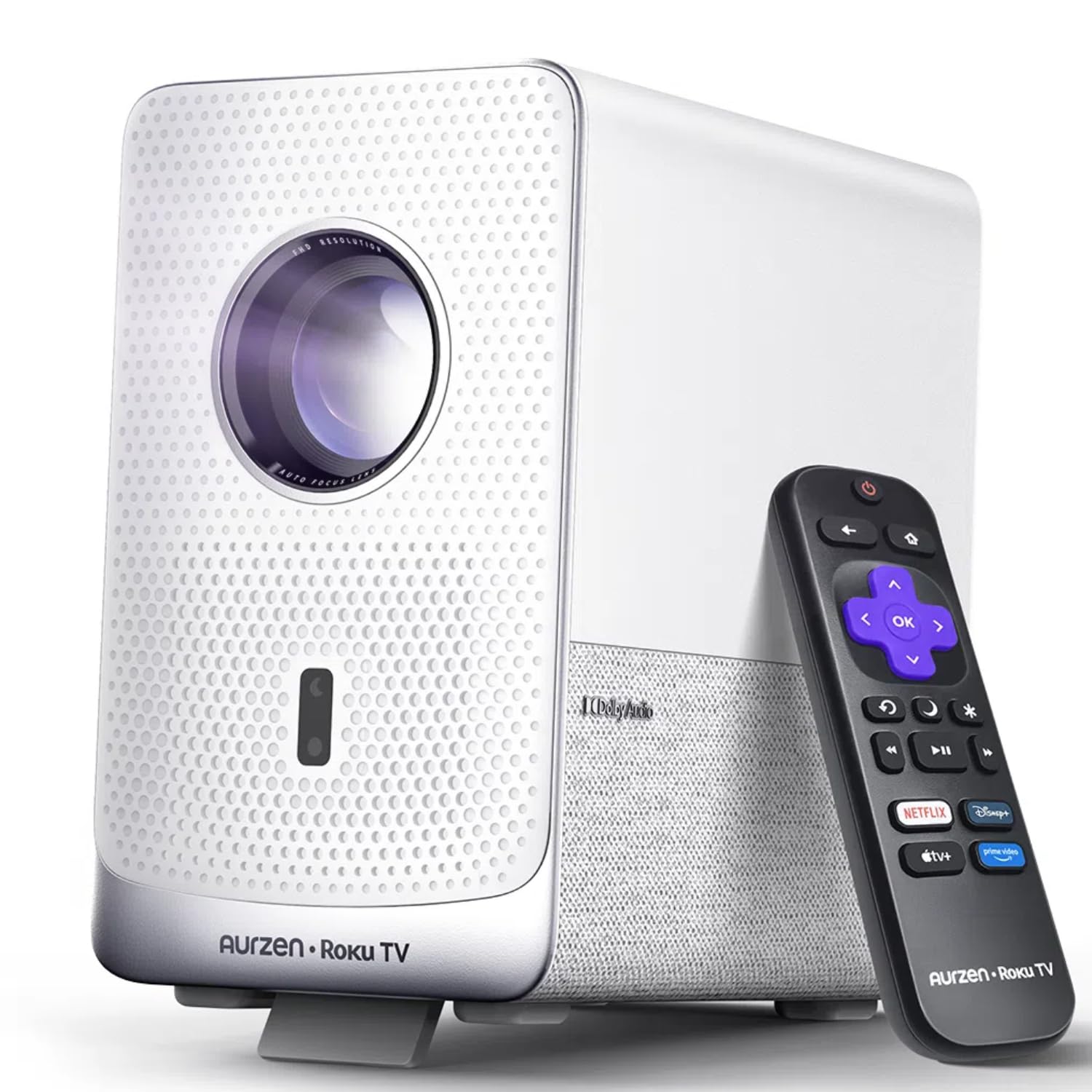
2. Aurzen Roku TV D1R Cube 1080P FHD Smart Projector
A cube the size of a lunchbox that wears Roku on its sleeve and skips the dongle.
You get a sealed optical engine (a dust-proof light path) that keeps colour and sharpness steady, so you are not chasing floating dust spots with a cloth. Roku TV is built in with Netflix, Prime Video, Hulu, YouTube, Apple TV and the Roku Channel preloaded, plus free movies, shows and live TV. It is native 1080p FHD (full high definition), and its 1920 x 1080 pixel ceiling is the counterpart to the 4096 x 2160 on the Vamvo above — the Aurzen trades the higher resolution ceiling for a lower entry point and a simpler OS.
Smart-home people will like the voice layer. It plays with Apple HomeKit, Siri, Alexa and Google Assistant, and Apple AirPlay lets you tap and cast straight from an iPhone or iPad. Auto focus and auto keystone do the alignment, 10W Dolby-certified speakers handle the sound, and Bluetooth 5.2 pairs headphones or a soundbar. Dual-band 2.4G/5G WiFi keeps streaming steady.
The trade-off is brightness honesty. Its 330 lm is dim, and the projection pages are frank about needing a dark room. What wins people over is the picture-to-effort ratio — 40 to 150 inches that just work — but the recurring gripe is you cannot watch in daylight. Set it in a bedroom or a curtained nursery and it shines.
The honest read: The best small-space Roku pick here for a room you can darken, and the sealed engine spares you the dust spot ritual.
Reach for this if: Your room has curtains and you want Roku with zero dongles.
Look elsewhere if: Daytime viewing is a must — 330 lm needs the room dark.
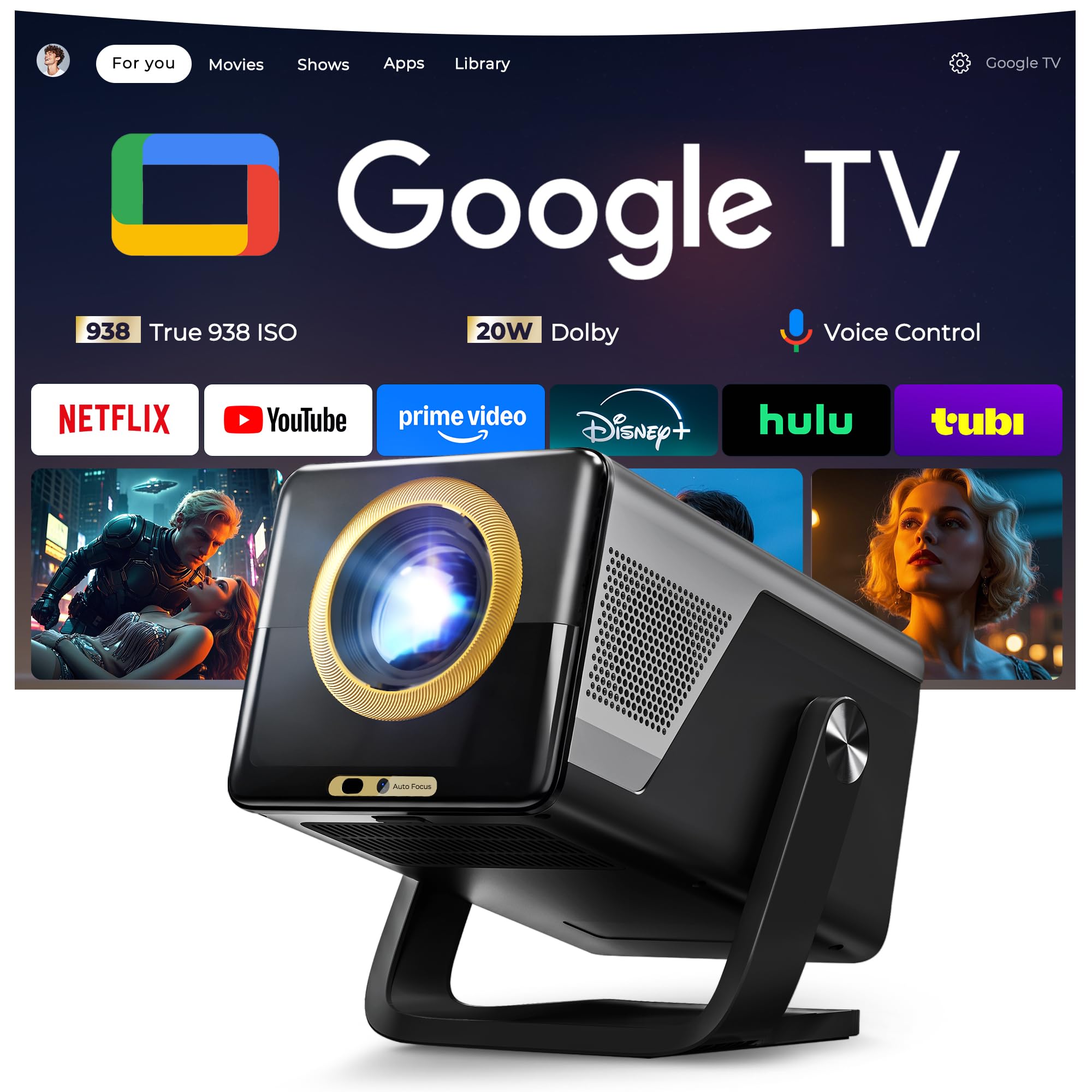
3. Google TV-Licensed Projector
A bright, short-throw projector that fills a wall from close and walks a meeting through it.
938 ISO lumens (±0.5) is the headline, measured to the ISO standard rather than a loose marketing number. That brightness lands in a moderately lit classroom or a business presentation without washing out. Native 1080p FHD with 4K/8K input support and HDR10 means a 4K source still arrives and downsamples cleanly. A 125% sRGB gamut covers more of the colour range your video expects.
Setup is where this pick earns its keep. AI auto focus, 4-point auto keystone correction at ±40°, screen fit, auto obstacle avoidance and orientation detection all work together to straighten the image on angled walls or ceiling mounts. The 1.08:1 short-throw ratio builds an 80-inch picture from just 1.6 meters away, and the 60–200 inch display flexes to your wall. The built-in 180° rotating stand means no separate mount for wall or ceiling projection.
Sound and brains round it out. 20W HiFi stereo speakers fill a room without an external bar, dual-band WiFi 6 keeps streaming and wireless mirroring stable, and Bluetooth 5.2 is two-way so the box can act as a speaker too. An officially licensed Google TV OS with Netflix, Prime Video, YouTube, Disney+ and Hulu comes preloaded — and a built-in ChatGPT answers questions through the voice remote. 64GB of storage and an 18,000:1 contrast ratio sit alongside HDMI, USB and 3.5mm audio.
What you are paying for: Genuine throw flexibility and a short-throw ratio that fixes small rooms.
The caveat to weigh: 938 ISO lumens is a moderate lift — expect a dimmed room to look best at the largest sizes.
Suits you if: You present, teach, or live in a small flat that needs a short throw.
Skip if: You want a cinema-black room — this is a room-light performer, not a bat cave monster.
4. HAPPRUN Native 1080P Projector

The backpack projector that brings Netflix to a campsite wall with no extra hardware.
Google TV lives inside, so Netflix, Prime Video, YouTube and Hulu open straight from the home screen. The voice assistant handles “open Netflix” or “search for a movie” with a held button press. Brightness sits at 400 ANSI lumens with 4K support and a native 1080p grid at 1920 x 1080. Its 2000:1 contrast ratio is a modest step below the LYNCAST above at 18,000:1, though both are honest about which standard they are measured on.
Portability is the point. It measures 7.8″L x 7.8″W x 3.85″H — small enough to slide into a backpack — and offers a 300-inch maximum screen and three installation choices (ceiling, desktop, tripod). The 5W high-fidelity speaker with Dolby effects covers casual viewing. Bluetooth 5.2 pairs headphones for a quiet session or a sound system for a crowd, and WiFi 6 cuts buffering on wireless streaming.
The picture quality and setup are what people rave about — clear detail above 100 inches and a painless first run. A few note the fan runs noticeably and the speakers are not the loudest. The reliability aspect is mixed, with a handful of longer-term units giving up after several months. Treat it as a great value travel box, not a permanent living-room install.
Why it earns the travel slot
- Backpack-friendly 7.8″L x 7.8″W x 3.85″H body
- 400 ANSI lumens with 4K support and native 1080p
- 300-inch max screen on ceiling, desktop or tripod
- WiFi 6 and Bluetooth 5.2 for lag-free casting
Keep this in mind
- Fan noise is noticeable during quiet scenes
- Built-in speakers are adequate, not room-filling
Buy it for: Camping trips, kids’ bedrooms and rooms where portability beats permanence.
Pass on it if: You need a permanent, all-evening bright install.
5. HAPPRUN 1500 ANSI Projector
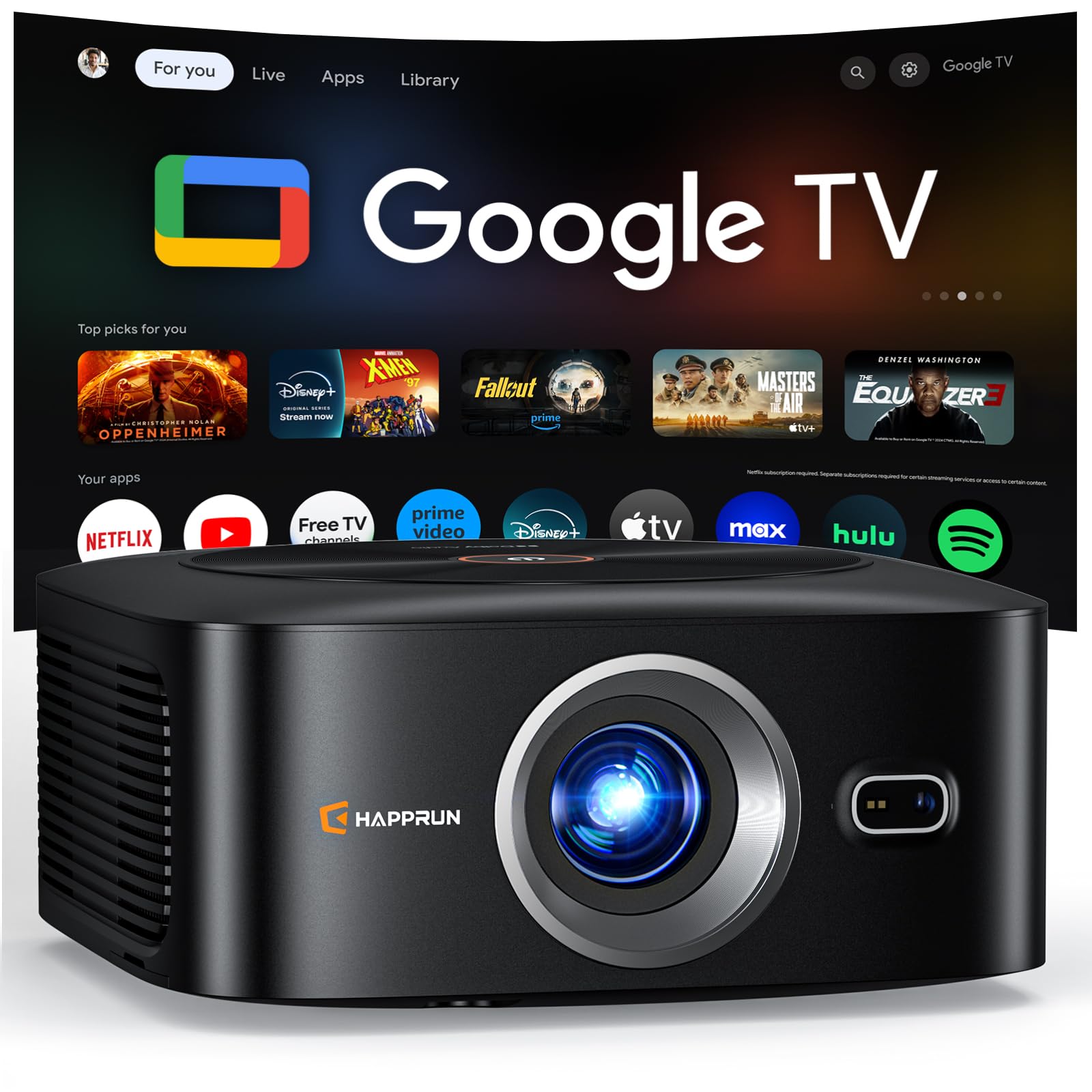
Built to throw light across a patio, not just across a bedroom wall.
Its brightness figure is 1000 ANSI lumens — note the listing brand name says 1500, but the specification sheet lists 1000 ANSI, and we go by the spec sheet. Native 1080P with 4K video decoding, a 95% NTSC wide colour gamut and HDR10+ carry the picture. A 25,000:1 contrast ratio is the highest on this list short of the laser picks, and a 1.3:1 throw ratio suits a patio setup.
Setup is fast and mostly automatic. A 3-second auto focus and auto keystone work together to square the image on an angled wall, and the 50–100% zoom resizes without moving the box. A 40 to 300 inch display flexes across 4:3 or 16:9. Dolby-certified audio with Hi-Fi dual speakers handles the sound, and Bluetooth 5.2 lets you pair headphones or a soundbar. WiFi 6 covers wireless streaming and mirroring from iOS, Android and Windows. HDMI ARC, USB and 3.5mm audio round out the ports.
The picture quality and brightness are the strongest notes — it stays watchable with light in the room. The trade-off everyone flags is the fan: it is audible, especially in quiet scenes. Sound quality is mixed, with the built-in speakers good enough but not match for a real sound system. Google TV being baked in means no stick needed.
The quick verdict: A backyard-first projector that handles light better than most of the mid-tier pack.
The honest trade: Expect to add a soundbar if audio quality matters as much as picture.
Choose this when: You host patio movie nights and want Google TV without a stick.
Compare first if: Your room is always pitch dark — a lower-lumen pick may suit.
6. Aurzen EAZZE D1 MAX Projector
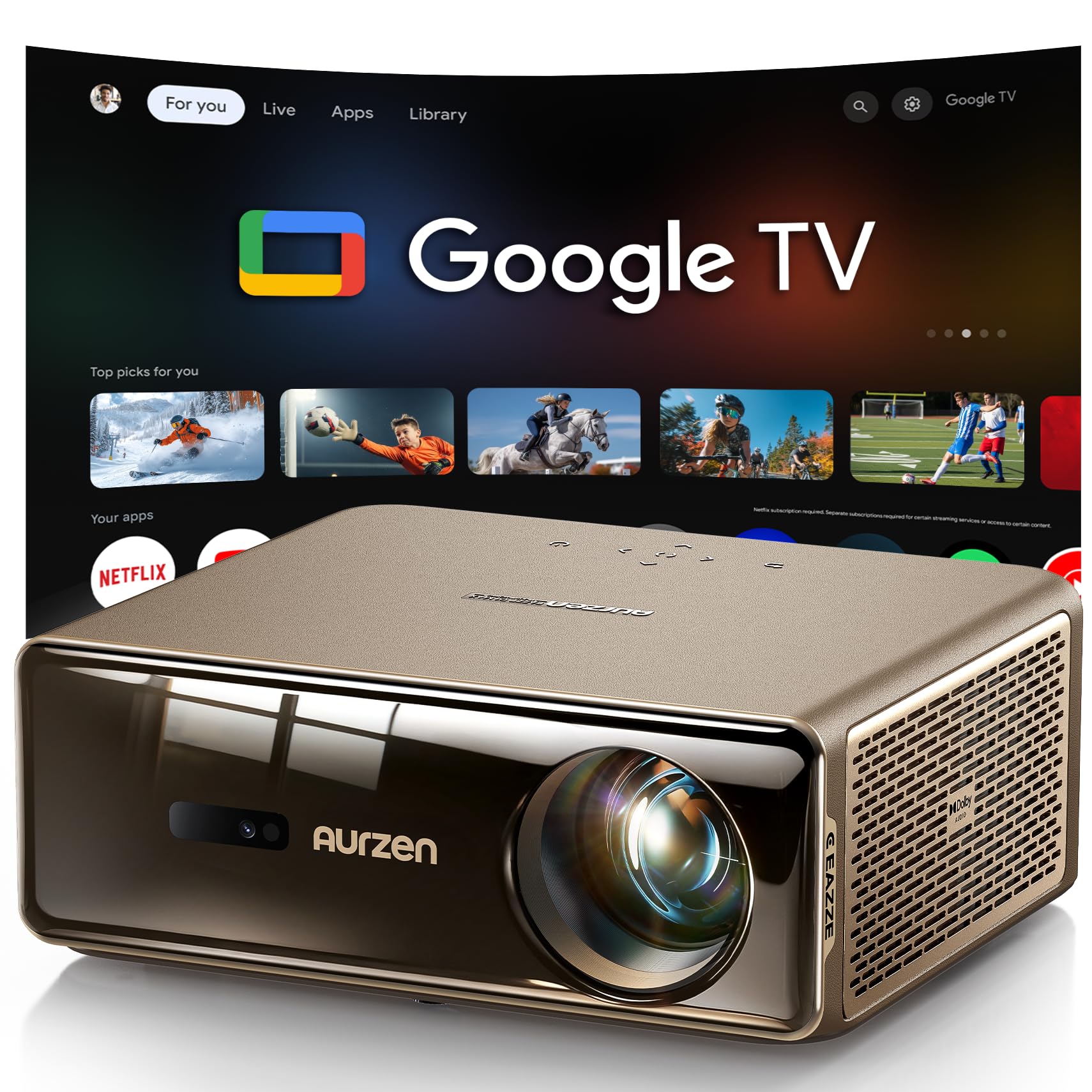
MEMC is the star — the tool that keeps a soccer ball from smearing across the screen.
MEMC (Motion Estimation and Motion Compensation) inserts frames between the fast-moving ones, so sports and action arrive blur-free. It sits on top of a 1000 ANSI lumen package tested to the ANSI/ISO 21118 standard — and the maker publishes the conservative average figure rather than the lab peak, which is the honest way to do it. Native FHD 1080p, 4K video support and HDR10 cover the rest.
Brains and family controls are on the thoughtful side. Google TV 14.0 powers browsing and streaming, with Gemini for TV answering natural questions to find content. A Kids Mode filters age-appropriate programming, and a PIN lock keeps profiles private. 800+ free live TV channels appear with a one-touch shortcut. Two 10W speakers throw 360° Dolby Audio, dual-band 2.4G/5G WiFi and two-way Bluetooth handle connectivity, and Google Cast mirrors from Android or iOS.
The trade-off: the ±15° vertical and ±15° horizontal keystone tolerance is tighter than the LYNCAST’s ±40° above, so it is less forgiving of extreme angles. And its 1500:1 contrast ratio sits below the HAPPRUN 1500’s 25,000:1. Picture quality and sound are what win people over. Reliability is mixed, with rare reports of the unit shutting off after a year. Ceiling mounts need four-arm type with at least 15 lbs capacity.
Where it shines: Sports and gaming — MEMC is a genuine edge for fast motion.
The catch: Angled shelves need care; the keystone range stops at ±15°.
Made for: Game day, football watch parties and family rooms with young viewers.
Think twice if: You need extreme-angle placement or a twenty-thousand-plus contrast figure.
7. TOPTRO X9 PRO Outdoor 4K VIDAA Smart Projector, 40W Dolby
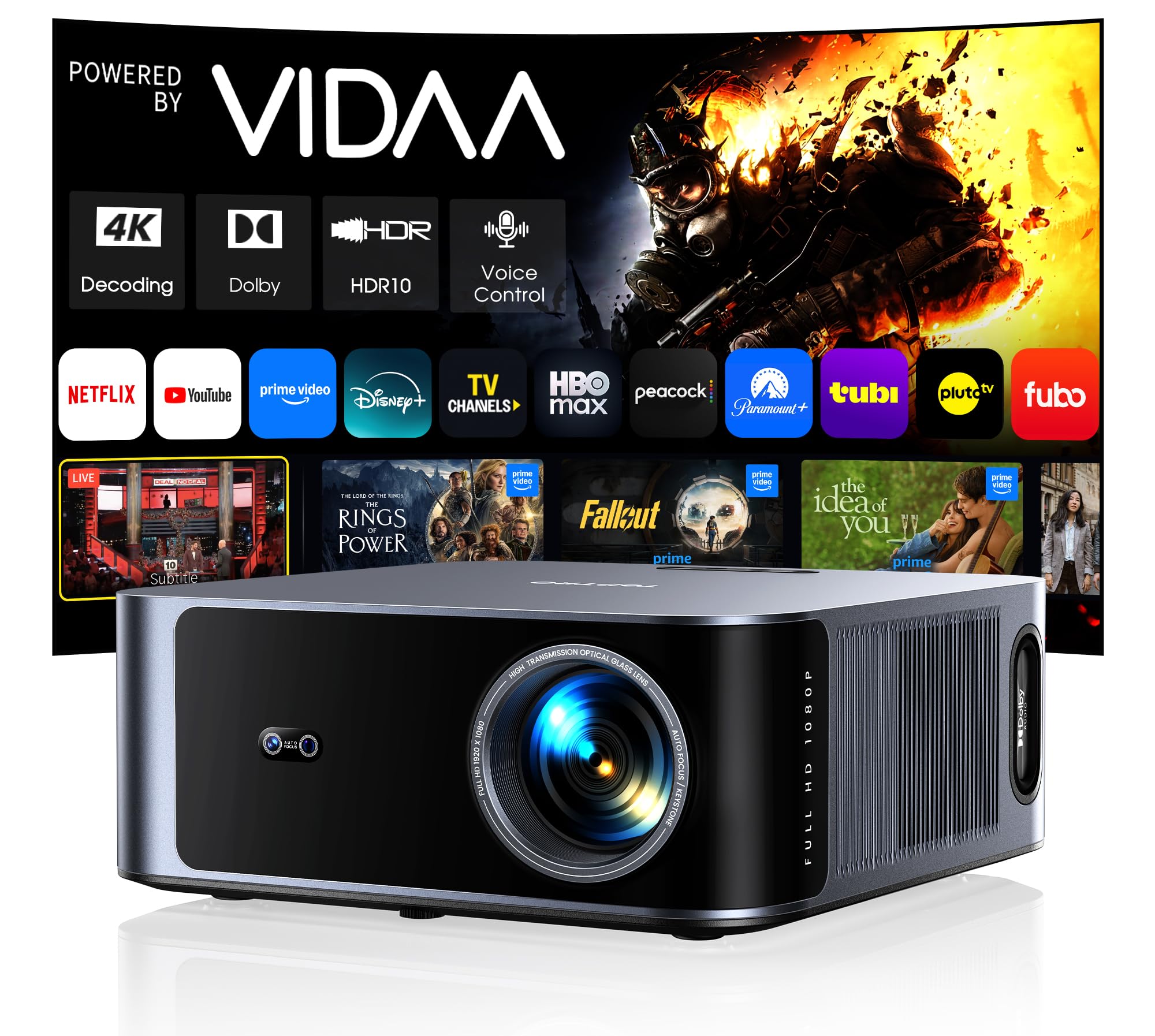
A private, ad-light VIDAA brain with 40W of Dolby and a 1,000+ channel guide.
Rather than Google TV or Roku, this runs VIDAA OS — a leaner platform with cloud storage, no data tracking and no targeted ads, plus a Kids Mode. It ships 1,000+ built-in live TV channels including Sky News (5507) and FIFA+ (5340), with Netflix, YouTube and Prime Video ready on one tap. Apple AirPlay 2 and HomeKit integration let you cast and control from iPhone, iPad or Mac.
Picture and sound go big. Its 920 ISO ANSI lumens is measured to the ISO standard, paired with 4K video decoding, native 1080P, a 130% NTSC wide colour gamut and HDR10. Two 20W dual-cavity speakers with Dolby Audio total 40W, and two-way Bluetooth 5.4 plus HDMI 2.1 with CEC/ARC let a single cable link a soundbar. A 30,000:1 contrast ratio and 1.3:1 throw ratio complete the core specs.
AI auto setup works for angled shelves and odd rooms — auto focus, 6D keystone, obstacle avoidance and screen fit square the image in about 3 seconds via a CMOS camera module. The 100%–50% zoom resizes without moving the box. Picture quality and auto-focus are what win people over; the recurring gripe is limited app flexibility compared with Google TV’s 10,000+ catalog. The 3-year warranty and 24/7 support are a reassurance for a long-term buy.
Why live-TV people pick it
- 1,000+ built-in live channels including Sky News and FIFA+
- 40W (2x20W) Dolby Audio with HDMI CEC/ARC
- 920 ISO ANSI lumens with 130% NTSC gamut and HDR10
- Apple AirPlay 2 and HomeKit control
- 3-year warranty with 24/7 support
The catch
- VIDAA’s app catalog is narrower than Google TV’s
- Not a 4K-native chip — decoding only
Fits you if: You love live channels, want Apple casting, and prefer a private OS.
Not for you if: You want every niche Android app on the home screen.
8. Epson EpiqVision Flex CO-FH02 Projector
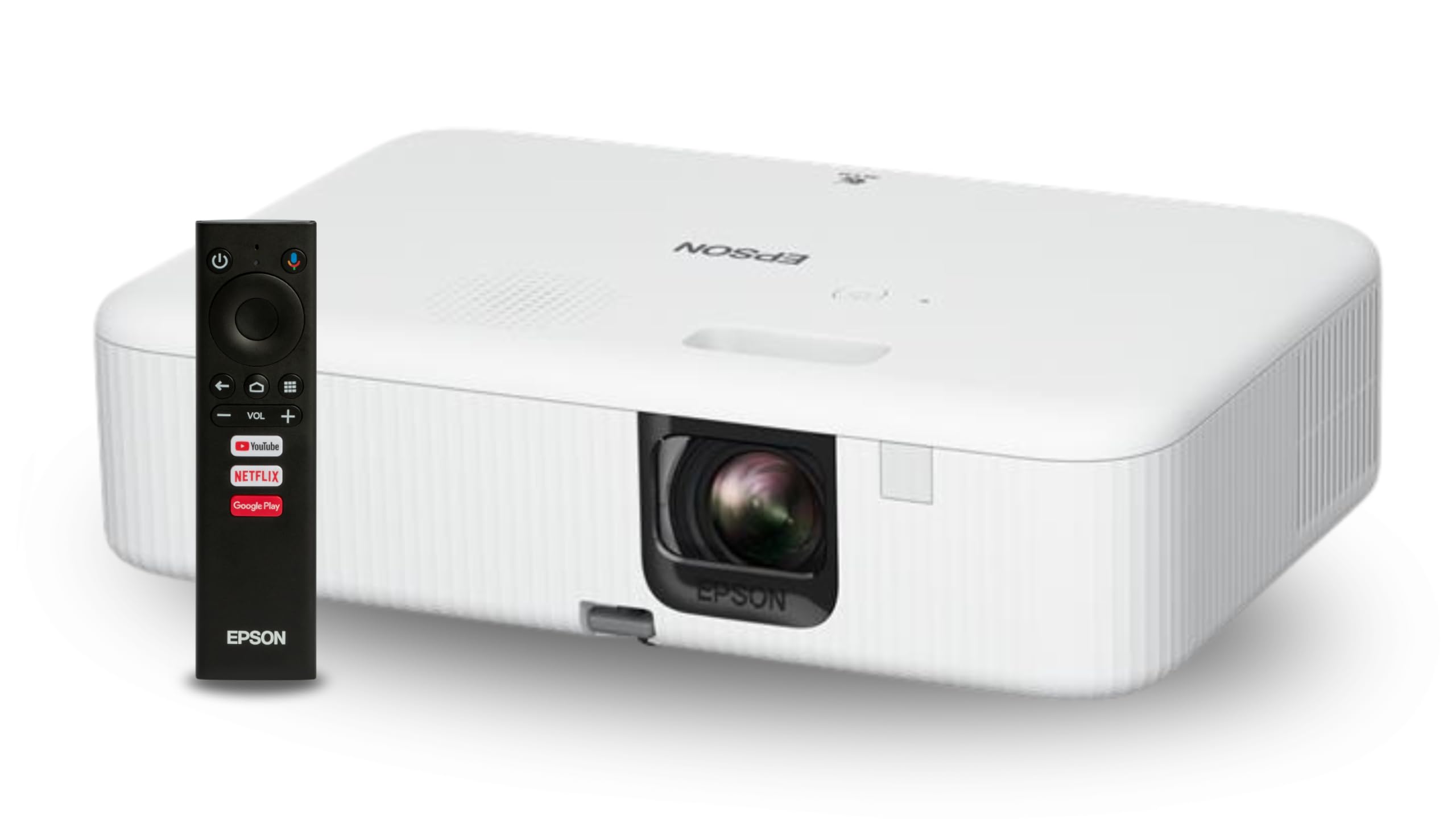
The light cannon that beats daylight — 3000 lumens with a 3-chip 3LCD engine.
Brightness is the whole reason this one exists. 3,000 lumens of colour and white brightness push a picture four times larger than a 75-inch flat panel right through a room with the lights on, which no other pick here comes close to on paper. Its Full HD 1080p resolution renders at 1920 x 1080. Advanced 3-chip 3LCD technology displays 100% of the RGB colour signal for every frame — that means accurate colour without the “rainbowing” some single-chip projectors show.
The smart layer is Android TV with a simple remote and voice search through built-in Google Assistant. Netflix, Apple TV+, Amazon Prime, Hulu, Disney+, HBO Max and YouTube all live in the interface, with live TV through apps like YouTube TV. An Android TV streaming media player ships in the box along with the HDMI cable and mini-USB cable for power. The compact, lightweight body fits in a backpack.
The honest trade-off: Android TV is a different, leaner world than Google TV, and the reviews are split. Some buyers report the unit turning off intermittently, and Bluetooth connectivity is a genuine weak point — a dedicated app, no Bluetooth speaker pairing. On the upside, its 3,000 lumens (brightness) and honest colour are class-leading here for a bright room or an afternoon outdoor screening.
What to expect: The brightest picture on the list by a wide margin, and the most honest colour engine.
Where it asks patience: Android TV’s app world is thinner, and Bluetooth audio support is missing.
Reach for it when: Daylight, conference rooms or afternoon outdoor showings are your world.
Look elsewhere if: Bluetooth speaker pairing is a must-have.
9. Dangbei DBOX02 Laser Projector 4K GTV, 2450 ISO Lumens

The real 4K laser with the muscle to throw a 200-inch picture in daylight.
This is a genuine 4K chip at 3840 x 2160, not a decoder — a real step up from the 1080p-native picks above. It pairs 2450 ISO lumens with ALPD (Advanced Laser Phosphor Display) technology, which keeps brightness and colour accuracy high while removing the speckle effect common to laser projectors. A 5000:1 contrast ratio adds depth, and it handles Blu-ray 3D discs for a home-theater crowd.
Sound and setup are built to match. Dual 12W speakers with Dolby Audio and DTS:X put surround from the start, HDMI eARC and two USB ports let a soundbar or console plug straight in, and a 180W power adapter drives the laser. InstanPro AI image setup handles autofocus, keystone, screen fit and obstacle avoidance at startup. Google TV with licensed Netflix runs 10,000+ apps including one-touch Netflix and Chromecast.
Picture quality is what everyone raves about — the kind of 4K that makes a TV look silly. The recurring gripes are reliability and fan audio: some units developed a white dot on screen or muted audio after months, and the fan is audible in quiet scenes. Autofocus and colour quality draw mixed views, with rare complaints about focus settling and a stray adjustment.
Why cinema fans pick it
- True 3840 x 2160 laser with 2450 ISO lumens
- ALPD technology removes laser speckle
- Dual 12W Dolby Audio + DTS:X with HDMI eARC
- Blu-ray 3D support for a theater crowd
The honest trade
- Fan noise is audible in quiet scenes
- A few longer-term units developed screen or audio faults
Buy it for: A dedicated room where 4K and 3D matter more than portability.
Weigh first: Laser and fan noise, plus occasional long-term faults.
10. NEBULA Cosmos 4K SE Portable Projector, 1,800 ANSI Lumens

Dolby Vision at 4K in a body you can carry with one hand and a handle.
HybridBeam technology is the trick — it merges LED and laser light sources into 1,800 ANSI lumens and 1.07 billion colours. The 4K resolution at 3840 x 2160 and Dolby Vision support deliver true-to-life colours on a 200-inch maximum screen. The NebulaMaster Image Engine handles contrast and grayscale frame by frame.
Its IEA 4.0 setup adapts to the room using real-time autofocus and keystone correction, obstacle avoidance, screen fit, wall colour adaptation and ambient light adaptation. Google TV with 4K Netflix runs natively — no dongle. Between the Dolby Vision and the Google TV 4K layer, this is the pick for shoppers who care about colour depth more than pure brightness.
Portability is real — the carrying handle makes a backyard or a friend’s place practical. The trade-off is a 400:1 contrast ratio, the lowest here, and the reliability and autofocus aspects are mixed: some report the Google UI running slowly or crashing, and the auto alignment can miss. Picture quality and brightness win people over; sound is decent, loud enough for small to medium gatherings. Autofocus over older designs is called out as a plus when it lands.
The strongest case: 4K Dolby Vision and a carrying handle in the same box.
What to accept: A low 400:1 contrast ratio and slow-fit auto alignment are the price of portability.
Fits you if: Dolby Vision colour and carry-anywhere 4K are your priorities.
Consider the alternative if: You need deep blacks — the contrast figure is the trade.
11. Valerion VisionMaster Pro2 Triple Laser Projector 4K

A triple-laser RGB engine built for the darkest room you can give it.
The core is a DLP RGB triple laser at 3000 ISO lumens with a 15,000:1 viewing contrast ratio and Enhanced Black Level (EBL) technology. That combination produces true deep blacks in the darkest scenes. A 110% Rec.2020 wide colour gamut and ISF-certified calibration cover colour accuracy, while a 3840 x 2160 chip handles true 4K UHD. AI Super Resolution sharpens detail, and HDR10+ with Dynamic Tone Mapping adjusts brightness and contrast in real time.
It is future-proof on the computing side too — an Al-SoC MT9618 chipset with 4GB RAM and 128GB ROM, well above the 2GB/32GB baseline most projectors run. Gaming is a genuine strength: 4ms input lag and 240Hz refresh on ultra-wide 21:9 or 32:9 screens, with RPG, FPS and RCG modes. The OpticFlex Lens System spans 0.9–1.5 throw ratio with auto focus and keystone, projecting up to 300 inches. Google TV+, Netflix, AirPlay 2, Miracast, Chromecast and Alexa/Google Home/HomeKit control are all in.
The recurring gripe is adjustability — the laser convergence has no manual tweak, so a close-up view can show slight misalignment. Performance and picture quality are what win people over, with quiet operation noted against other models. This is the pick for a dedicated theater room, not a backpack.
Why dedicated rooms choose it
- DLP RGB triple laser at 3000 ISO lumens
- 15,000:1 contrast with EBL for deep blacks
- 110% Rec.2020 gamut with ISF calibration
- 4ms input lag and 240Hz for gaming
- Al-SoC MT9618 with 4GB RAM and 128GB ROM
Where it asks a sacrifice
- No manual laser convergence adjustment
- Premium-tier spend and best reserved for a dedicated room
Built for: A dark theater room where gaming and 4K cinema both matter.
The single caveat: Convergence is factory-set — if pixel-perfect close-ups matter, look at other laser options.
Know the Specs
Lumens: ANSI vs ISO
Lumens measure the raw light output that reaches your wall — the higher the number, the more it competes with room light. Two standards show up: ANSI lumens and ISO lumens, and they are tested differently, so a 1000 ANSI figure and a 1000 ISO figure do not mean the same thing. A few projectors here (the LYNCAST, TOPTRO and Dangbei) publish ISO figures, while others publish ANSI. Brightness earned by brand matters here: the Epson’s 3000 lumens is the highest in this group by a wide margin, the Dangbei’s 2450 ISO is next, and the Valerion’s 3000 ISO sits at the top. A dimmer pocket projector at 330 to 400 lm needs a dark room; a 900-plus figure handles moderate ambient light; the 3,000-class machines work in daylight.
Smart OS: which system is inside
Google TV, Roku TV, VIDAA and Android TV are the four systems on this list, and each has a different app catalog, remote and voice assistant. Google TV runs 10,000+ apps and is the most flexible; Roku TV leans simple and fast; VIDAA is lean and ad-light with 1,000+ live channels; Android TV is thinner but ships with a dedicated media player in the box. Every pick here streams natively — none needs an external stick — but the app you want most (from Netflix to Disney+ to Hulu) should be on the list before you buy.
Common Questions
Do I really need a built-in smart system, or can I just plug in a Fire Stick?
Will a 330-lumen projector work in a room with the curtains open?
What is the difference between native 1080p and 4K support?
How far back do I need to place the projector for a 100-inch screen?
Can these projectors connect to a soundbar or Bluetooth headphones?
Do ceiling mounts need to be a specific type?
Is MEMC useful for sports, or is it marketing?
How long does a laser projector last compared to a lamp projector?
Do I need a screen, or can I project onto a white wall?
What about fan noise — is it a real problem?
The Bottom Line
For most people, the Vamvo Google TV Projector is the winner — it runs licensed Google TV 5.0 with 10,000+ apps and no stick, aims from any angle with its 360° stand, and pairs a 4096 x 2160 maximum resolution ceiling with a 2.1x lead over the Aurzen D1R. It backs that up with a 4.5+ star rating across 500+ owners.
If you want maximum room-light tolerance, the Epson EpiqVision Flex CO-FH02 pushes 3,000 lumens through daylight and its 3-chip 3LCD keeps colour honest — the brightest pick here by a wide margin. For a dedicated theater room where 4K and 3D are the point, the Dangbei DBOX02 is a true 3840 x 2160 laser with 2450 ISO lumens and Blu-ray 3D. And for a portable 4K Dolby Vision experience with a carrying handle, the NEBULA Cosmos 4K SE is the one to reach for.
Buy in that order — brightness, smart system, throw ratio — and every session starts with a picture that fits your room.
How we choose
We do not accept paid placement. Every pick is matched to a real buyer and a real use-case; we do not hands-on test units.
Sources
Specifications: manufacturer listings and product documentation. Review insights: verified customer reviews, as of November 2026. Pricing: not shown on this page (it changes often); check the current price via the retailer link.
As an Amazon Associate, Tactical Gear Guy earns from qualifying purchases. This does not affect which products we feature.