Specs are compiled from manufacturer listings and verified buyer reviews and can change over time — please confirm the key details on the product page before buying.
The best Smith helmet speakers are the ones that drop straight into your ear pads, stay put under a beanie, and let you hit play with thick gloves on. Get that wrong and you spend the lift ride fiddling with a plastic disc jammed against your ear. So the pick that suits most riders is the Kalence True Wireless Ski Helmet Speakers — it lists Smith among its compatible helmets, uses Bluetooth 5.3, and gives you 10 hours of play on a full battery.
This guide is built by comparing the manufacturers’ published specifications and the patterns across verified customer reviews, so you get each pick’s real strengths and trade-offs instead of marketing spin.
Below you’ll find seven helmet speaker sets ranked by what actually matters on the snow — fit, glove control, wind noise, and cold-weather battery — plus a plain-English specs section so nothing here reads like a manual. Here is how the best Smith Helmet Speakers shake out on the mountain.
Top Picks

How To Choose The Best Smith Helmet Speakers
Helmet speakers are not headphones you wear — they are small discs that sit inside the ear pockets of your helmet’s ear flaps. That one fact drives every decision below. If the disc is too thick, it presses on your ear by mid-morning. If the buttons are too small, you never touch them with mittens on. If the fit is wrong for your helmet, none of the other specs matter.
Check your ear pockets before you check the speaker
Smith helmets with audio-ready ear pads have a removable foam or fabric insert with a pocket cut into it. If yours has that pocket, a drop-in speaker slides in and you are done. If your Smith helmet has fixed ear pads with no opening, no speaker on this list will seat correctly — so pull the pad out and look first. Most of the picks here name Smith specifically in their compatibility list, which is the minimum you should expect before ordering.
Glove-friendly controls beat every other feature
On the mountain you are pressing buttons through a glove or a mitten, often while moving. Small, flush, or touch-sensitive controls are effectively unusable in that state. Look for raised, oversized buttons and a physical push-button layout rather than touch. A built-in mic also helps here, because voice control lets you change a track without hunting for anything at all.
Wind noise is the real enemy, not volume
At speed, wind rushing past your helmet can drown out music at normal volume. What you want is enough headroom to push the audio above that rush without distortion. Sealed, isolating designs block more noise but also block the sound of other skiers and boarders around you. Open-ear designs keep you aware of your surroundings but let more wind in. Decide which trade you prefer before you compare driver specs.
Battery life in the cold is not the same as battery life in your living room
Cold drains batteries faster than the label suggests. A set rated for 10 hours may not reach that on a bitter day, so a longer-rated set buys you margin. Charging style matters too — a case you can top up between runs is more forgiving than a fixed internal battery you can only charge at the lodge. Several picks here charge without being pulled out of the helmet, which saves a lot of cold-fingered fiddling.
Side-by-Side Comparison
| Model | Best For | Bluetooth | Battery | Driver Size | Amazon |
|---|---|---|---|---|---|
| Kalence True Wireless Ski Helmet Speakers★ Best Overall | Most riders | 5.3 | 10 hours | 40mm | Amazon |
| OutdoorMaster Drop-in HeadphonesBest Range | Long range and value | 5 | 15 hours | 40mm | Amazon |
| Kalence Bluetooth 6.0 Helmet Speakers | All-day battery and calls | 6 | 30 hours | 40mm | Amazon |
| ALECK Snow Series Core | Awareness-first riding | 5 | 12 hours | 40mm | Amazon |
| OutdoorMaster with Storage Case | Smith fit and easy buttons | 5.2 | 10+ hours | — | Amazon |
| ALECK Snow Series Pro | Group comms and long days | 5 | 18 hours | 40mm | Amazon |
Detailed Reviews
1. Ski Helmet Speakers
Our pick — 4.0+★ from 150+ verified ratings; the strongest balance of quality and price.
The Kalence set is the one that quietly gets everything right: Smith on the compatibility list, gloves-on buttons, 10 hours a charge.
This is the pick that solves the most common failure in helmet audio — a speaker that does not seat properly in your ear flap. Kalence names Smith directly among the helmets it fits, alongside Bern, Giro, Anon, Pro-TEC and Bolle. The speaker sits behind your ear pads instead of jamming against your ear, which is exactly why it holds up for a full day rather than an hour.
Inside, a 40mm high-efficiency driver carries the audio, paired with what Kalence calls HDR tech that adjusts the lows and highs automatically. In practice that means the volume stays usable when wind picks up, without you reaching for an equalizer mid-run. Connection runs on Bluetooth 5.3 with a rated 15-meter range — that is 15 meters, so you can leave your phone in a jacket pocket or a pack and stay connected without dropouts.
The single oversized button is the part that earns its keep. A single easy-control button let you play, pause, take calls, or trigger Siri through voice control without pulling anything out of the helmet. Owners describe sliding them straight in and using the large buttons to pause or skip mid-slope. Battery runs 10 hours on a full charge, and the set ships with a protective case for storage between trips. It is rated 4.0+ out of 5, and the crowd favorite feedback here is the sound and the build — you get a solid-feeling set that pairs cleanly with a phone and just works.
Where it lands the win
- Smith listed by name in the compatibility set, so the fit question is answered before you order
- Bluetooth 5.3 with a rated 15-meter range keeps your phone in your pocket
- One big glove-friendly button covers play, pause, calls, and Siri voice control
- 10 hours of playback per charge plus a protective case in the box
The honest trade-off
- 15-meter range is short next to the long-range alternatives on this list — fine on the hill, less so if you wander off from your pack
- 10 hours leaves less margin than the 30-hour set when temperatures drop hard
Go for it: Smith owners who want one reliable set with a big glove button and no fiddling — this is the straightforward choice.
Look past it: If you leave your phone far from your body or ride in deep cold all day, the longer-range, longer-battery sets lower on this list cover you better.
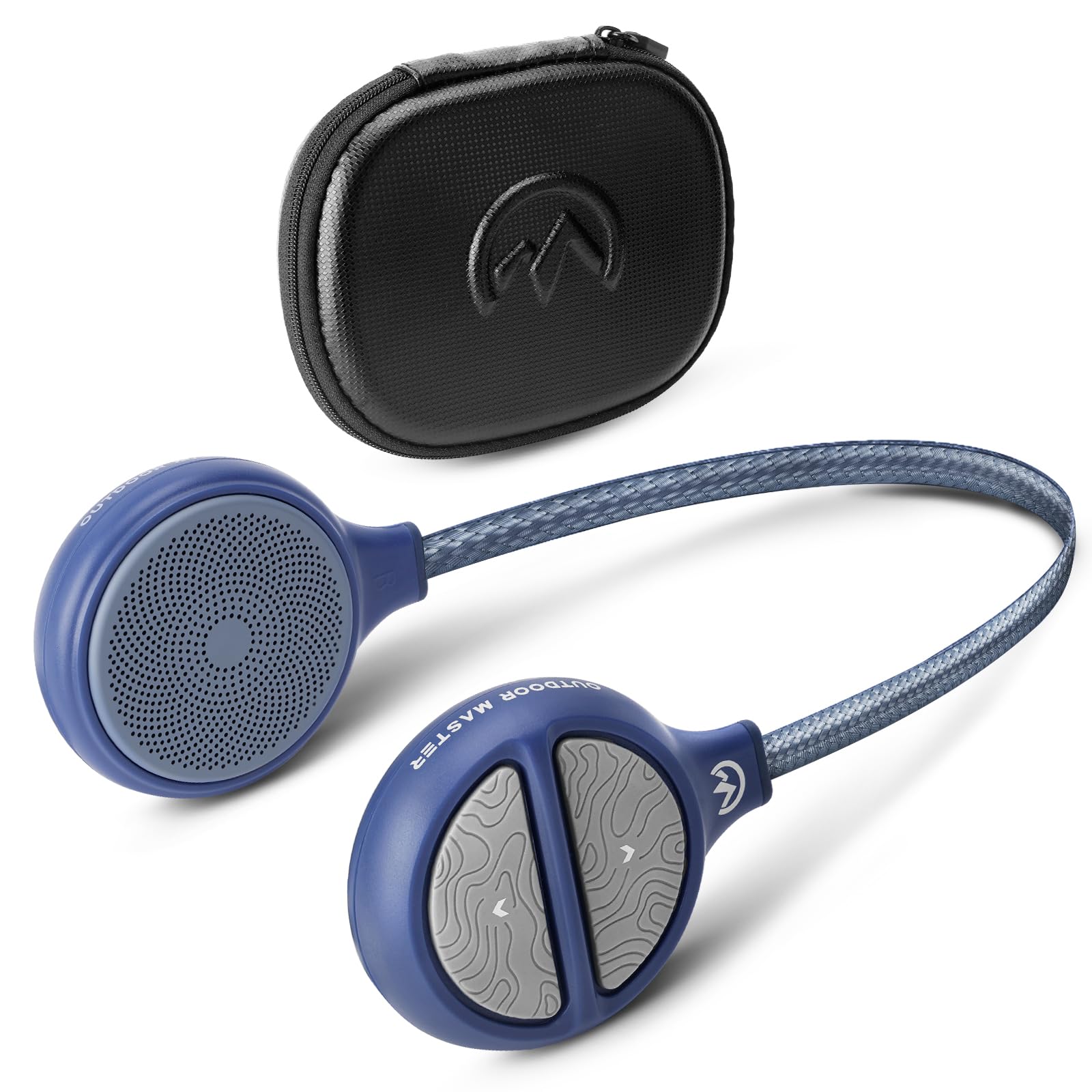
2. OutdoorMaster Ski Helmet Drop-in Headphones
A hundred meters of Bluetooth reach and fifteen hours of play, with Smith listed in the fit range.
The headline here is range. OutdoorMaster rates this set at 100 meters of Bluetooth reach, against 15 meters on the Kalence True Wireless above — a 6.7x gap that matters if you stash your phone in a daypack or leave it in the lodge bag. It runs Bluetooth 5 and 40mm dynamic drivers, with three glove-friendly buttons for volume, track changes, calls, and Siri.
Battery is 15 hours, listed as up to 10 hours of play with 50 hours of standby, which beats the 10-hour Kalence set by a comfortable margin. The design is built for winter too — OutdoorMaster says it is IP45 sweat-resistant and tested at -20°C/-4°F. Reports from the snow back it up, with riders using them past six hours in cold Alaskan weather. Sound is described as holding up even in windy conditions.
Where it gets complicated is the fit. The same 12.2-inch cord design that fits Smith, Giro, Burton, K2, POC and Anon pockets is also bulkier than some riders want inside a tight ear flap. That bulk pushes the pads outward and can press on the ear after a long run — OutdoorMaster’s own advice is to remove and reseat them after 10 minutes if pressure builds. It is rated 4.0+ out of 5, and where the fit verdict is split, the sound and build hold their ground. If you have roomy ear pockets, this is a strong, long-range set.
What stands out: The 100-meter rated range and 15-hour battery are the top numbers on this list, and the IP45 build plus -20°C testing means it is made for the cold rather than just surviving it.
What to watch: Bulk inside the ear pad is the recurring note — if your Smith ear flaps already sit snug, try the thinner options instead.
Reach for this if: you want the longest Bluetooth reach of the group and a battery that outlasts a full day of lift laps, and your ear pockets have a little room to spare.
Think twice if: your helmet’s ear pads are already tight — the added thickness is the one thing that separates happy owners from lukewarm ones.
3. Wireless Bluetooth 6.0 Ski Helmet Speakers
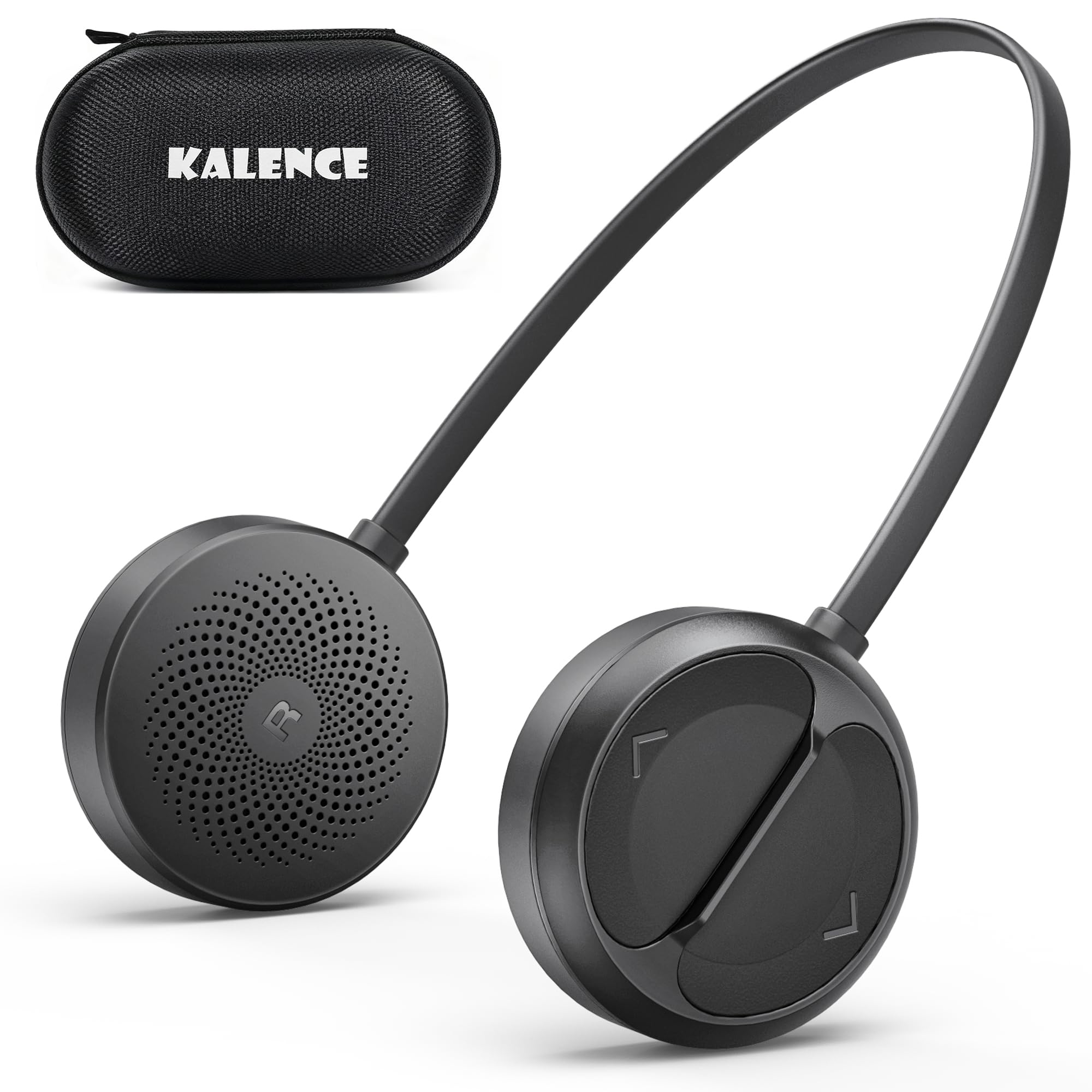
Thirty hours of playtime covers a Friday-to-Sunday trip without a single top-up.
Start with the number that changes the routine: 30 hours of playtime. That is three times the 10-hour Kalence True Wireless set at the top of this list, so a Friday-to-Sunday trip happens without a single top-up. It pairs with Bluetooth 6.0 — the newest version here, a step up from the Bluetooth 5 on the OutdoorMaster Drop-in — and Kalence rates it for -4°F operation with an IPX5 rating that shrugs off snow and sweat.
The build is genuinely slim at a 0.47-inch profile, and Kalence lists Smith among the helmets it drops into. Raised oversized buttons work through any glove, and there is a true hands-free voice option — say “Hey Siri” or “Hey Google” to change a playlist or check mountain conditions. It ships with a rugged protective case and a detachable carabiner, so it clips to a pack instead of getting lost in a boot bag.
Here is where you need to read carefully. Sound quality is the most-discussed topic in the feedback and it lands split — plenty of riders find the basslines strong, while others say the volume tops out too low for their taste. The controls draw a similar mixed verdict, with the up and down buttons hard to tell apart by feel for some. Kalence does not hide the number either: this set is rated 4.3, with the quiet, no-dropout connection and the fit in the ear flaps being what people like most. If loud music is the whole point, this may not be the one.
The case for it: 30 hours of playtime, Bluetooth 6.0, IPX5, and a slim 0.47-inch profile that slots into Smith ear pockets — the endurance and durability here are the best on the list for a multi-day trip.
The honest caveat: Volume and button layout divide opinion, so buy this for the battery and the voice control, not for thumping bass.
Best match: riders who ski back-to-back days and would rather not think about charging, and who value hands-free voice over volume.
Where it falls short: if you want the loudest music in your helmet, the mixed reports on volume make this a gamble.
4. ALECK Snow Series Core Wireless Bluetooth Speakers
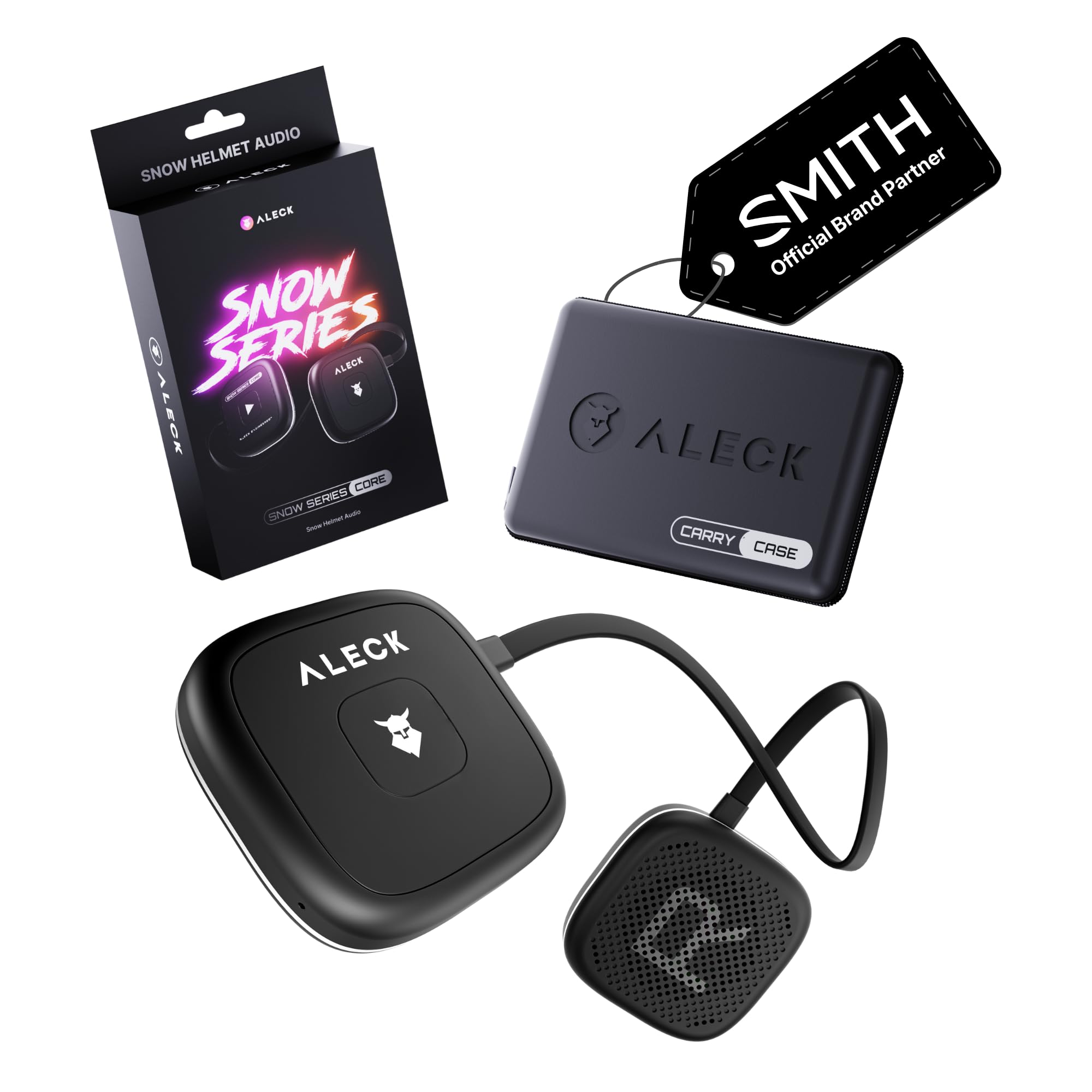
Open-ear speakers built so you hear the boarder carving behind you as clearly as the track you queued up.
ALECK takes a different design path than most of this list. The Snow Series Core is an open-ear speaker, which means it does not seal off your ear — you get music while staying aware of what is happening around you on the mountain. For anyone who rides busy terrain or shares a lift line with beginners, that awareness is worth more than isolation.
Hardware is 40mm drivers with premium Bluetooth chips, plus dual-side tactile buttons and a built-in mic for Siri or Google Voice. Physical push buttons rather than touch means you press through a glove instead of poking at a screen. ALECK also names Smith as a fit, with low-profile modules that slide into standard ear pocket cutouts. ALECK lists Smith in its fit range, and the low-profile modules slide into standard ear pocket cutouts.
Cold is handled with construction rated to -20°C, and battery runs up to 12 hours of continuous play with smart power management to stretch it across sessions. Charging is USB-C, which you can top up from the same cable as your phone. At 4.0+ out of 5, this is the awareness-first pick rather than the loudest one. If hearing the mountain matters to you as much as hearing music, this is the set that was designed around that priority from the start.
Why riders pick it: The open-ear layout keeps your surroundings audible, the buttons are built for mittens, and ALECK names Smith in the fit list — awareness and glove control in one package.
The catch: Open-ear also means less isolation from wind, so on a fast, exposed run you may want more volume than the design gives.
Suits you if: you ride crowded slopes or with family and want to hear what is happening around you while music plays.
Skip over if: you want maximum wind blocking and a fully sealed sound — the open-ear design works against that.
5. OutdoorMaster Ski Helmet Headphones with Storage Case
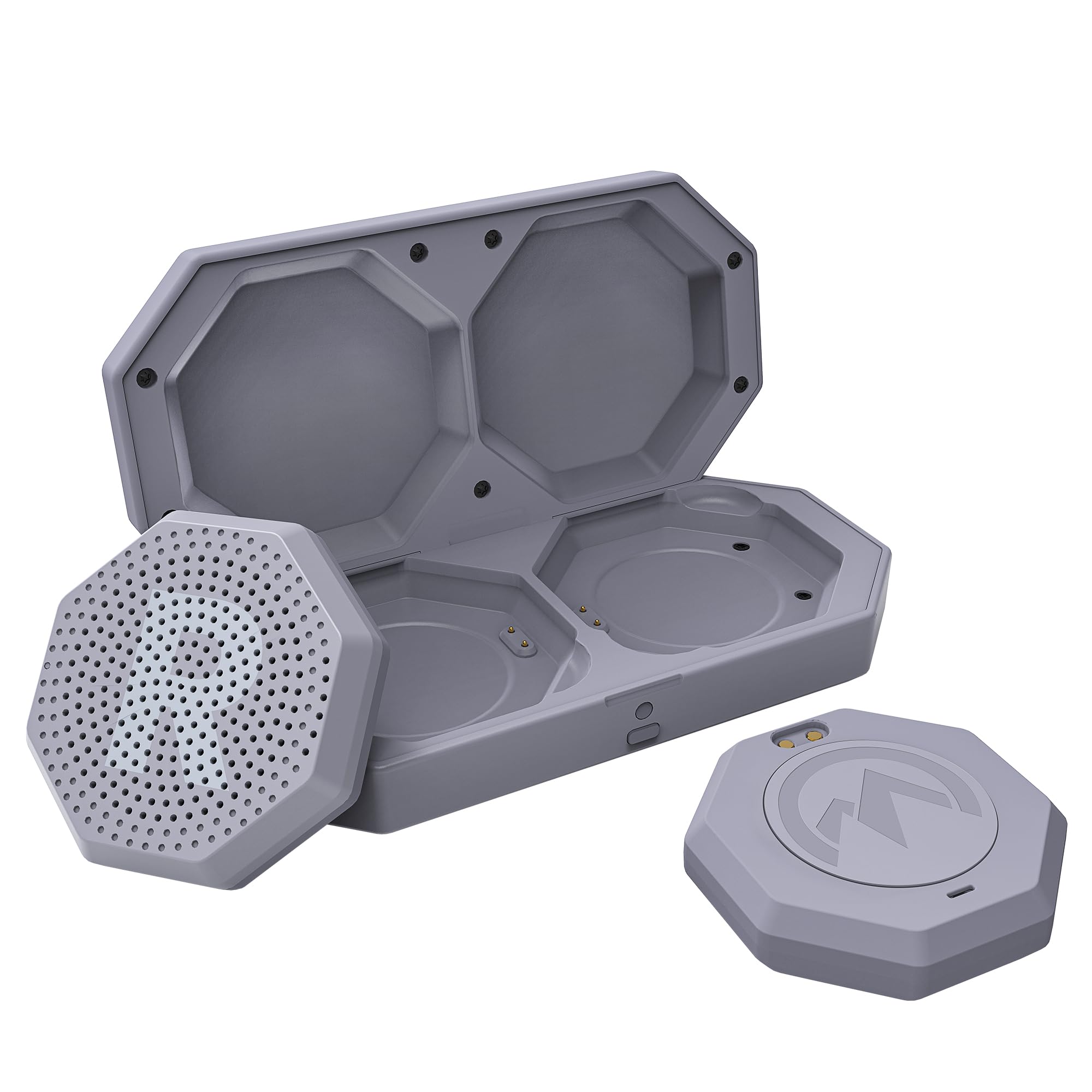
A thinner MZ04m module and a big sensitive button — the combination Smith owners keep coming back to.
OutdoorMaster’s second entry answers the bulk complaint that hangs over the blue Drop-in set. The MZ04m is an upgraded thinner design at 13.7mm thick by 51.42mm across, which is why it seats into Smith ear pockets without the pad bulging outward. Riders describe it fitting very well into a Smith helmet, sitting behind the pads rather than pressing on the ear.
Audio comes from HDR tech that adjusts the lows and highs, with a built-in mic for calls and voice control. Bluetooth 5.2 handles the connection with the faster, more stable transmission benefits that version brings. The oversized function button works through thick ski gloves for play, pause, track skip, volume, and the voice assistant.
Cold performance is rated from -20°C to 45°C, and you get more than 10 hours of playback on a charge with 50 hours of standby. The storage case is genuinely useful for keeping the set safe between trips. It carries a 4.0+ rating, and the buttons draw steady praise as the easiest to press in a helmet with gloves on. One honest note: a few riders have found the battery stops holding a charge over time, which is worth knowing if you plan to leave it sitting all summer.
Reasons it earns a place
- Thinner 13.7mm module seats into Smith ear pockets without the pressure the bulkier sets cause
- Oversized sensitive button works through thick ski gloves for every function
- Rated for -20°C to 45°C with more than 10 hours of playback
- Storage case included to keep the set protected between seasons
What to keep in mind
- No physical off switch — you rely on the case or letting it idle down
- Battery longevity is the recurring weak point over a full season of use
The fit-first choice: Smith riders with snug ear pads who want the thinnest seating module and a button they can find without thinking.
The trade-off: You give up a dedicated off switch and long-term battery confidence, so this suits a seasonal rider more than a year-round gear junkie.
6. ALECK Snow Series Pro Wireless Bluetooth Ski & Snowboard Helmet Speakers, Fits Audio-Ready Helmet Ear Pockets, Glove Friendly Controls, Built-in Mic for Hands-Free Calls
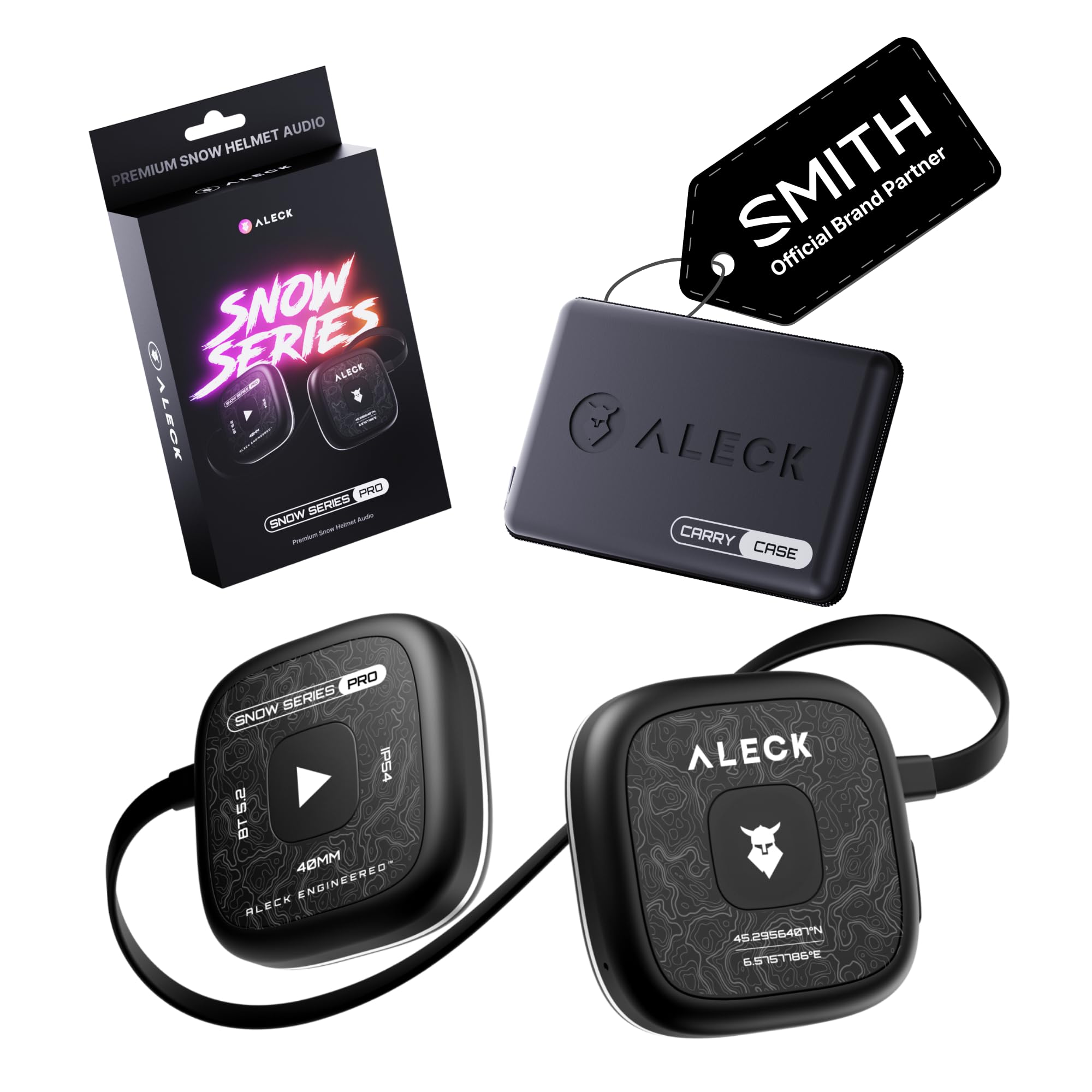
Built for group comms across the mountain, not just music on the lift.
ALECK’s Pro model is the only set here built to pair with a second product — the Aleck Off Grid — to create a group communication setup. Pair the two and you can talk to your crew across terrain, map runs, and stay in touch without cell service. No other pick on this list offers that, and it is the reason the Pro exists in the lineup.
The audio side is serious too. 40mm drivers with premium Bluetooth chips deliver clear vocals and crisp podcast audio that cuts through wind, and the open-ear design keeps your surroundings audible. Reinforced composite housing handles temperatures down to -20°C and is sweat and moisture resistant. Battery runs up to 18 hours of continuous playtime — the longest single-set figure here — with smart power management for multi-day use, and it charges over USB-C in about an hour.
ALECK lists Smith, Giro, Anon and Bolle in its fit range, and the low-profile modules slide into those ear pockets without gaps. The dual-button interface is made to be found and pressed with heavy gloves. Where this set asks more of you is the price of entry and the learning curve — this is the premium pick, and the extra capability is aimed at riders who will actually use group comms rather than casual listeners. At 3.5+ out of 5, it is the most specialized set in the group.
Why it exists: Group comms over the Off Grid, 18 hours of playtime, and a reinforced housing rated to -20°C — this is the set for crews who ride together and talk.
The catch: The extra capability only pays off if you buy into the ecosystem, and the specialized feature set is overkill for a solo rider playing music.
The right rider: a group that wants to talk across the mountain and needs the longest single-charge runtime with a rugged cold-rated build.
The wrong rider: someone who only wants music on the lift — the group-comms capability and premium positioning are capability you will not use.
Know the Specs
Bluetooth version and range
The Bluetooth version (5.2, 5.3, 6.0 and so on) is the language your speaker and phone use to talk. A higher number generally means a faster, more stable link with less interference. Range is a separate number — it tells you how far your phone can be before the audio drops. A 15-meter range covers a phone in your jacket pocket; a 100-meter range covers a phone left in a pack at the base. Neither number tells you how good the music sounds.
Driver size and audio tuning
The driver is the small speaker cone inside the module, measured in millimeters. A 40mm driver is the common size in helmet speakers — big enough to move air for bass, small enough to sit in an ear pocket. Digital tuning (things like HDR tech) adjusts the highs and lows so the sound stays usable as wind noise rises. Driver size alone does not guarantee a loud set, so read the mixed reports on volume before you commit.
Battery playtime and cold weather
Playtime is how long the set runs on a full charge, and it is a rating, not a promise — cold shrinks it. A set rated for 10 hours may fall short on a bitter day, while a 30-hour set has margin to spare. Some sets add a charging or storage case for backup power. Look at how you charge it as well: USB-C means one cable for your phone and your speakers.
Glove-friendly controls and voice assistant
Physical push buttons with a raised, oversized surface are the ones you can find and press with mittens on. Touch controls and small flush buttons are the ones that frustrate you on the slope. A built-in mic lets you take calls and trigger Siri or Google Voice hands-free, so you can change a playlist without touching anything. Some riders find the up and down buttons hard to tell apart by feel, so layout matters as much as size.
Common Questions
Will these speakers fit my Smith helmet?
Do I need to remove the ear pads to install the speakers?
Is Bluetooth 6.0 better than 5.2 or 5.3?
Can I make calls and use voice control with gloves on?
Will the music block out wind noise and other skiers?
How long does the battery actually last in cold weather?
Can I use helmet speakers while snowboarding instead of skiing?
How do I turn the speakers off without removing them?
Do these speakers work with a motorcycle helmet too?
The Bottom Line
The smith helmet speakers pick for most riders is the Kalence True Wireless Ski Helmet Speakers — Smith on the fit list, a glove-sized button, Bluetooth 5.3, and 10 hours a charge. If range and cold-weather headroom matter more, the OutdoorMaster Drop-in Headphones give you 100 meters of reach and a 15-hour battery. And if you ride back-to-back days, the Kalence Bluetooth 6.0 set carries 30 hours so you never think about the charger.
How we choose
We do not accept paid placement. Every pick is matched to a real buyer and a real use-case; we do not hands-on test units.
Sources
Specifications: manufacturer listings and product documentation. Review insights: verified customer reviews, as of November 2026. Pricing: not shown on this page (it changes often); check the current price via the retailer link.
As an Amazon Associate, Tactical Gear Guy earns from qualifying purchases. This does not affect which products we feature.