Specs are compiled from manufacturer listings and verified buyer reviews and can change over time — please confirm the key details on the product page before buying.
Red ski glasses exist for one reason: bright snow throws glare back at you from every angle, and a raw eye simply cannot hold the line on a sunny slope. A good red-tinted lens calms that bounce-back light and sharpens the texture of the snow under your skis. The picks below cover the whole spread, from an entry-level lens that fits over your prescription frames to a premium pick with a mirror coating that handles everything from flat light to full sun.
This guide is built by comparing the manufacturers’ published specifications and the patterns across verified customer reviews, so you get each pick’s real strengths and trade-offs instead of marketing spin.
Below you will find picks sorted by real-world use, a plain-English breakdown of lens widths and foam layers, and the honest trade-offs nobody lists.
Top Picks
How To Choose The Best Red Ski Glasses
The tint is the easy part to shop for; fog rolling up the inside of the lens is what actually ruins a day. What actually ruins a day on the mountain is fog rolling up the inside of the lens or a pair that pinches your head under a helmet. Start there, then worry about the red.
Decide what the red is doing for you
Red appears two ways in this category. Sometimes it is a red or rose tint on the lens itself, which softens the blue-white glare of snow. Sometimes the frame or strap is the red element and the lens is a mirror or amber base. Both are legitimate, but only one changes how the snow looks to you. Read the listing for which part is red before you buy.
Check the over-the-glasses gap
If you ski in prescription frames, the goggles need extra volume inside the frame to swallow them. That is what an OTG (over-the-glasses) rating means. A goggle marked OTG has a deeper cavity, but depth alone is not a promise. The listing’s lens width and height are the best guide to how much room sits in front of your face.
Foam and vents beat coating claims
A double-layer lens traps a pocket of air between two sheets of plastic, which slows the temperature swing that causes fog. Three layers of foam do the same job at the face, sealing warm breath away from the lens. Add a vent path and the warm air has somewhere to go. Coatings help, but they wear away, and a scratched inner coating is the most common way anti-fog stops working.
Side-by-Side Comparison
| Model | Best For | Lens Width | Weight | Red Element | Amazon |
|---|---|---|---|---|---|
| ZIONOR Lagopus★ Best Overall | Helmet wearers who want the fit figured out | — | — | Red colorway | Amazon |
| findway OTGMost Versatile | Swapping lenses for changing light | — | — | Red lens option | Amazon |
| Giro RoamBest Contrast | All-day comfort with an amber base | — | — | Red colorway | Amazon |
| SMITH Squad | Serious riders who want optics first | — | — | Red Mirror lens | Amazon |
| FMY Anti Fog | Budget-friendly clarity | — | — | Red frame option | Amazon |
| WISTON W1 | Snowblower and winter chores on a budget | — | — | Black Frame/Red Lens | Amazon |
| SPOSUNE Dual Lens | Wider coverage on the slope | 7.08 IN | 5.29 oz | Matte Red frame option | Amazon |
| Giro Cruz | Mixed cloud-and-sun days | — | — | Amber Scarlet lens, 39% VLT | Amazon |
| SPOSUNE OverGlasses | Narrower faces and lighter setups | 6.69 IN | 4.12 oz | Red frame option | Amazon |
Detailed Reviews
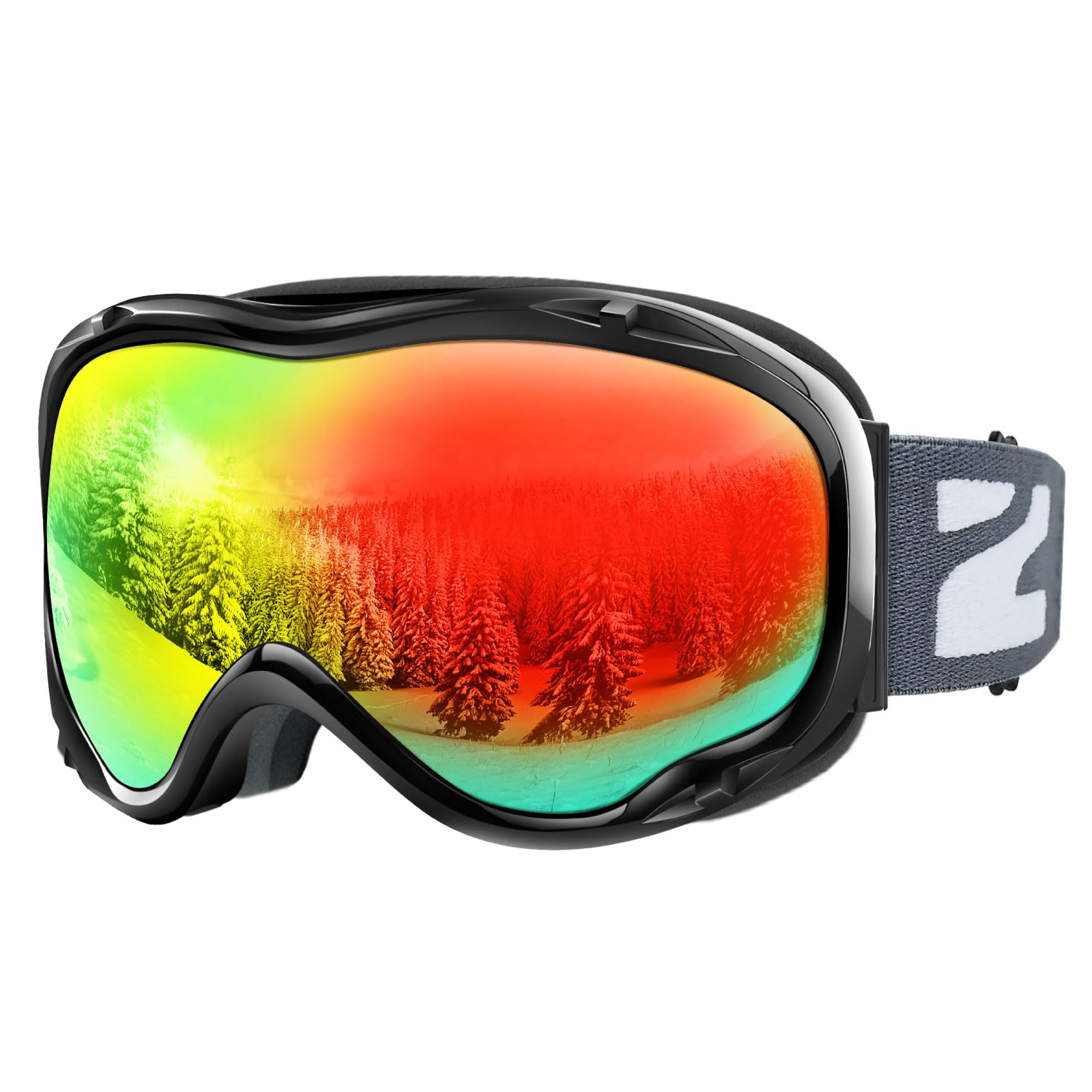
1. ZIONOR Lagopus Ski Snowboard Goggles
Our pick — 4.5+★ from 20,500+ verified ratings; the strongest balance of quality and price.
A 39-inch strap and triple-layer foam that settle helmet fit before you ever clip in.
Most first-time goggle buyers get burned by the strap, not the lens. A short band pulls the frame off-center the moment you add a helmet, and then the foam seal breaks and fog pours in. The Lagopus sidesteps that with a maximum strap circumference of 39 inches, which the maker says fits most helmets. That is a big enough band to sit outside a shell instead of fighting it.
The lens is a double-layer design, meaning two sheets are bonded with an air gap between them. That gap is a thermal barrier, and it is the single most useful anti-fog feature you can buy at this level. Underneath sits a triple layer of padding foam, which does two things at once: it seals breath out and it spreads pressure across your brow instead of one hard line. The strap uses an upgraded adjustable buckle, so you can tighten it with gloves on.
4.5+ stars across 20,000+ ratings, with comfort and helmet fit carrying most of that score. Where it divides people is fogging: plenty of buyers report it stays clear through heavy snowstorms, and a smaller group finds theirs fogs badly. Sunglass-style protection is the other consistent note, keeping eyes shielded from snow, ice and wind. If you ski hard and sweat hard, dry the foam between runs and the fogging side of that split gets much rarer.
What earns the top spot
- 39-inch maximum strap circumference, built to clear most helmet shells
- Double-layer lens creates a thermal barrier that resists fogging
- Triple-layer foam seals breath away and spreads pressure evenly
- Buckle adjusts easily with gloves on
Where it splits the room
- Fogging is the honest divide — many report clear vision in storms, a minority see fog build up
- No listed lens width or weight, so you cannot size it against the SPOSUNE pairs by numbers
Made for: helmet-wearing skiers who want the fit question settled before anything else.
Look past it if: you ride in prescription frames and need a proven OTG cavity, since this listing does not publish one.
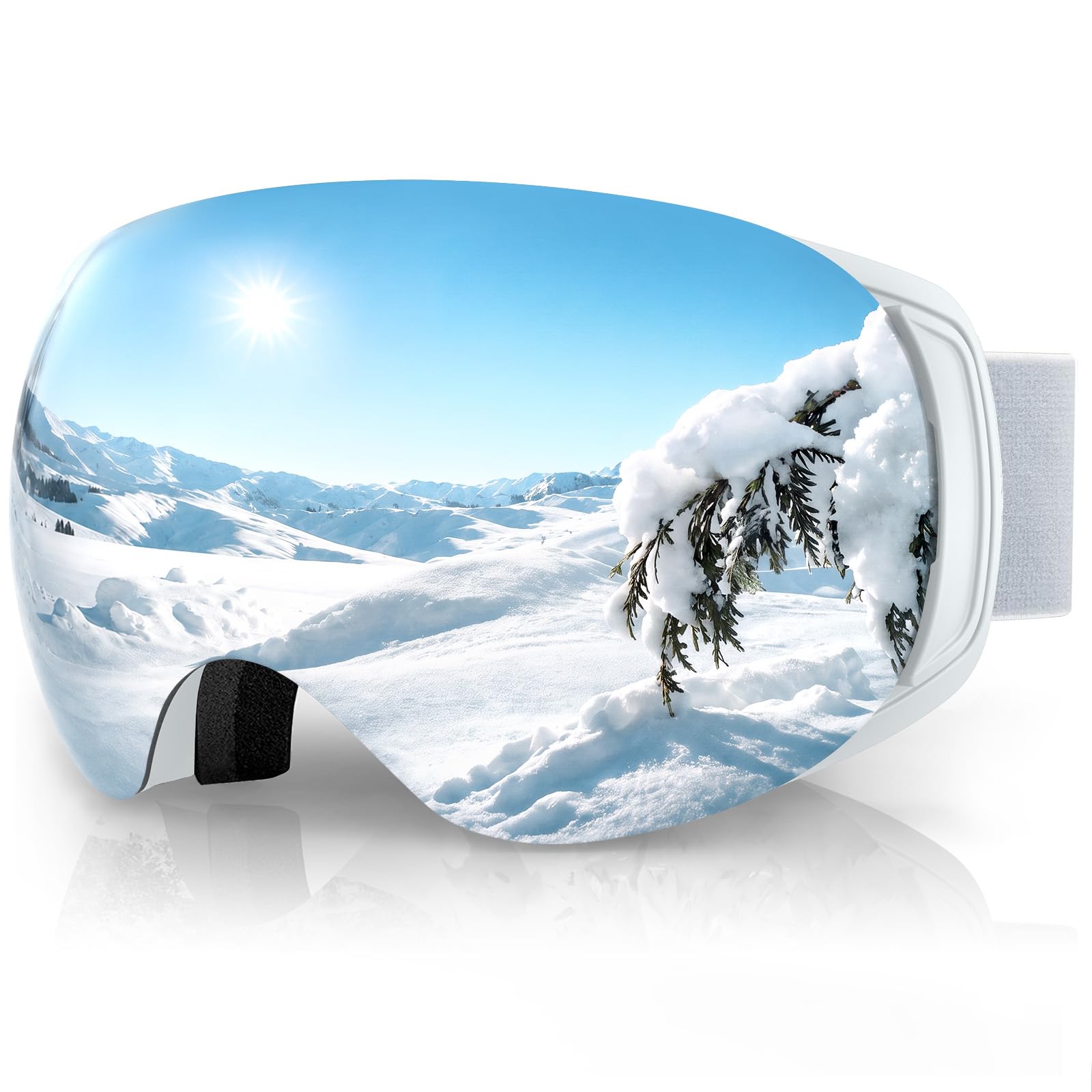
2. findway Ski Goggles OTG
One frame that changes clothes when the weather does.
Light on a mountain changes hour by hour, and that is where this pair earns its keep. The lens pulls off and clicks back on in under 60 seconds using six rare earth N45 magnets — N45 is a strength grade for the magnet, and a higher number means a firmer hold. The point is simple: you carry one goggle and a spare lens instead of a second pair of goggles. Extra lenses are sold separately, including Silver, Yellow and Clear.
Magnets alone would be a worry on a hard fall, so findway adds a side-clip locking system to pin the lens in place. The optics are a spherical dual lens with anti-fog and anti-scratch coatings, giving a panoramic view without distortion. A two-way vent path pushes heat out, and OTG volume in the frame means your reading or myopia glasses go underneath. Triple-layer foam with an inner flannel facing keeps the seal soft against your face.
What buyers keep coming back to is the fit — it is the most praised single trait here, and it shows up in everything from a first-season snowboarder to a Japan trip in cold, humid conditions where the dual lens held its clarity. Value gets consistent nods, with riders noting even hard falls did not crack or scratch them. The honest catch is delivery condition: some arrive with the lens partly popped out or a scratch already on it, and a loose lens that will not click back is a real headache.
The swap is the sell: six N45 magnets plus a clip lock give you one frame across sun, flat light and storm without carrying a spare goggle.
Inspect it on arrival: lenses have arrived displaced or scratched often enough that a quick check before your first run is worth the minute.
Reach for this if: you ski through shifting conditions and hate packing two pairs.
Think twice if: you want the extra lenses included rather than bought separately.
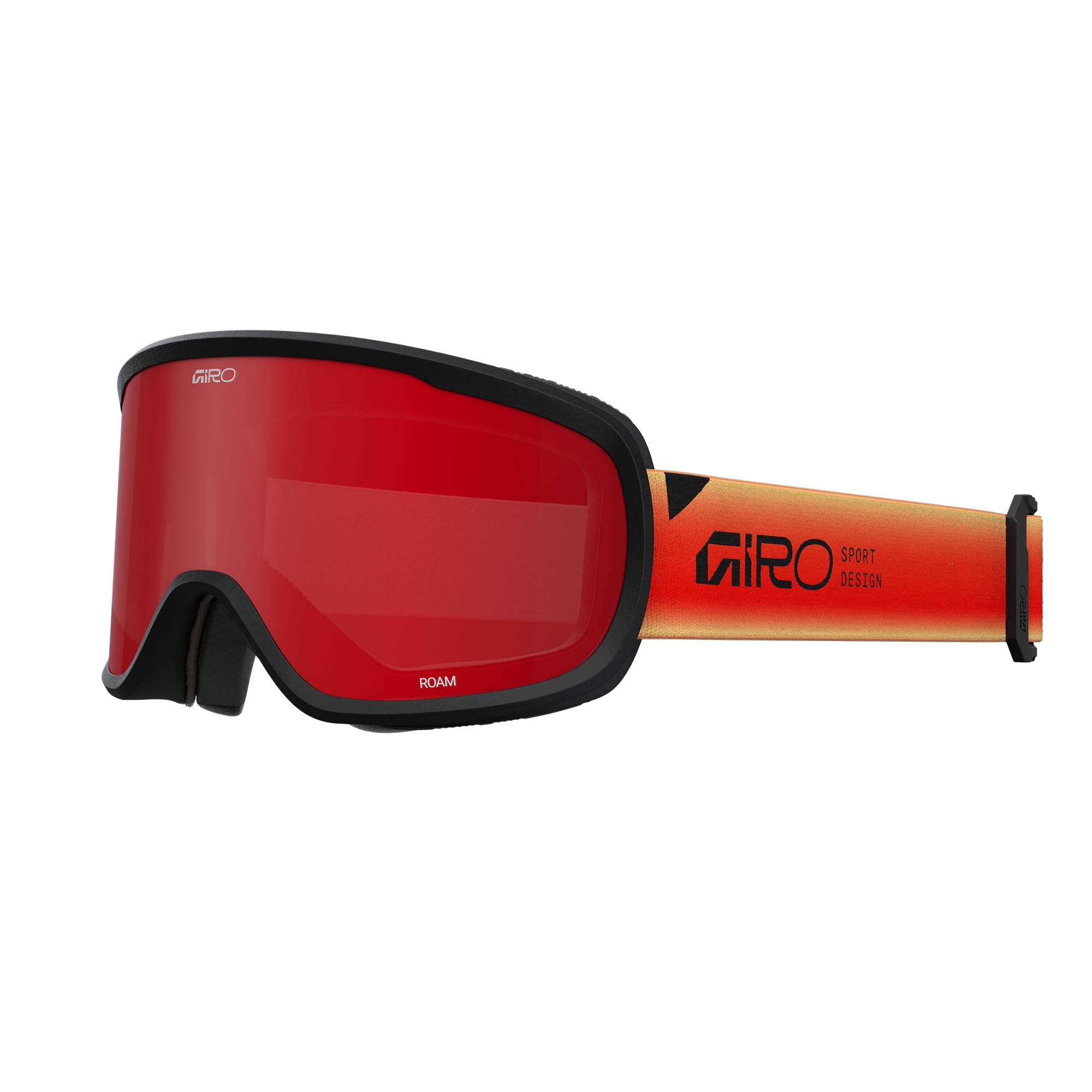
3. Giro Roam Adult Snow Goggles
An amber base that turns flat white snow into readable texture.
Fog is a temperature problem first and a coating problem second. Giro builds the Roam around an amber-based lens tint, which bumps contrast and definition so dips in the snow read as shapes instead of a white blur. That matters most on a long day where the light swings from bluebird to overcast, because your eyes get less tired when they are not hunting for edges.
The frame is contoured with an adjustable strap, cut to sit cleanly under a snow helmet and stay put from first chair to last run. It comes in a unisex one-size fit with a range of frame and lens colorways, so the red option is one of several rather than a specialty. Eye protection is the thing people note most, alongside no real complaints about fogging.
Where this one stands apart from the budget names is the lens philosophy. The Giro Cruz below uses an Amber Scarlet lens with 39% VLT (visible light transmission — the share of light that reaches your eye), which is tuned for mixed cloud and sun. The Roam’s amber base chases the same goal from a broader colorway spread. Pick the Roam if you want Giro’s snow-helmet fit and a lens that flatters flat light rather than a pure mirror.
Contrast first: the amber-based tint is the whole pitch — snow texture stays legible when the clouds roll in.
The limit to know: no lens width, weight or VLT figure is published for this one, so you are buying on the tint description and the unisex one-size fit.
Worth it for: skiers who ride through changing light and want contrast over a dark mirror.
Skip if you need numbers: the missing spec sheet makes it hard to compare against the SPOSUNE pairs.
4. SMITH Squad Goggles with ChromaPop Lens

ChromaPop optics plus a spare low-light lens in the box, for riders who ski enough to feel the contrast.
ChromaPop is Smith’s lens technology, and its job is to boost definition, contrast and natural color so the texture of snow separates from shadow. The frame is semi-rimless with an oversize cylindrical lens (a curved sheet, wider than a sphere), and together they stretch the field of view well past a standard goggle. Smith also ships an extra lens for low-light days, so the same frame covers bright sun and grey afternoon.
Where this one leads the pack on paper is the detail work. Smudge- and moisture-resistant coatings make the lens easy to clean, and the double-layer face foam with microfleece facing is built to conform without crushing your brow. The fit is listed as medium with a low bridge fit, which is a real specification rather than a vague “adjustable”. Silicone on the inside of the strap stops it sliding over a helmet or beanie.
Riders consistently rate the quality above everything else, and the fog resistance and field of view follow close behind — a full week in Colorado with no fogging is the kind of report that recurs. The clear trade-off is value: opinions split hard on whether the optics justify the top-tier spend, and swapping lenses takes some patience and elbow grease. It is the biggest jump on this list, so it belongs to someone who rides enough to feel the difference.
Why the optics crowd loves it
- ChromaPop coating lifts contrast and definition so snow texture reads clearly
- Oversize cylindrical lens plus semi-rimless build widens your field of view
- Extra low-light lens ships in the box
- Medium, low bridge fit and silicone-backed strap keep it steady
The honest ledger
- Value is the loudest split — plenty call the optics worth it, plenty do not
- Swapping the lens takes patience and a firm hand
- Higher outlay than every other pick here
Buy this if: optics are the reason you ski and you ride often enough to notice the contrast difference.
Leave it if: a hoodie-and-one-goggle weekend warrior will not feel what the lens is doing.
5. FMY Ski Goggles for Men Women & Youth

An entry-tier TPU frame with an HD UV400 lens that reads pricier than its price tag.
Owners routinely say these look like goggles costing several times more, and quality is the trait buyers single out most, with value close behind. Under the shell, a TPU frame (thermoplastic polyurethane — a flexible, rubbery plastic) gives the flex and impact resistance that keeps a hard knock from cracking the build. It is also listed as skin-friendly and eco-safe.
Vision runs through an HD multi-layer coated lens that carries UV400 protection, which blocks the UV rays that cause snowburn in bright conditions. Three layers of padding foam form a custom seal, and a ventilation system keeps air circulating so fog has less chance to settle. The OTG design means the frame offers a wide range of fit for glasses wearers.
This is the pick where the fit caveat actually matters. Some find the size right, others find them simply too big, and functionality splits the same way. Think of it as a generous frame that suits larger faces better. At the entry level, the look and the numbers you get — UV400, triple foam, dual-layer lens — make it an easy first pair or a spare for a friend.
Looks costlier than it is: HD multi-layer coated UV400 lens and a TPU frame at the entry tier, and the appearance gets noticed.
Sizing is the gamble: the frame runs generous, so smaller faces may find it loose while larger ones find it right.
Pick it for: a first pair or a spare setup where looks and UV400 coverage matter more than a tailored fit.
Pass if you are small-faced: the generous frame is the recurring rub.
6. WISTON Ski Goggles OTG W1
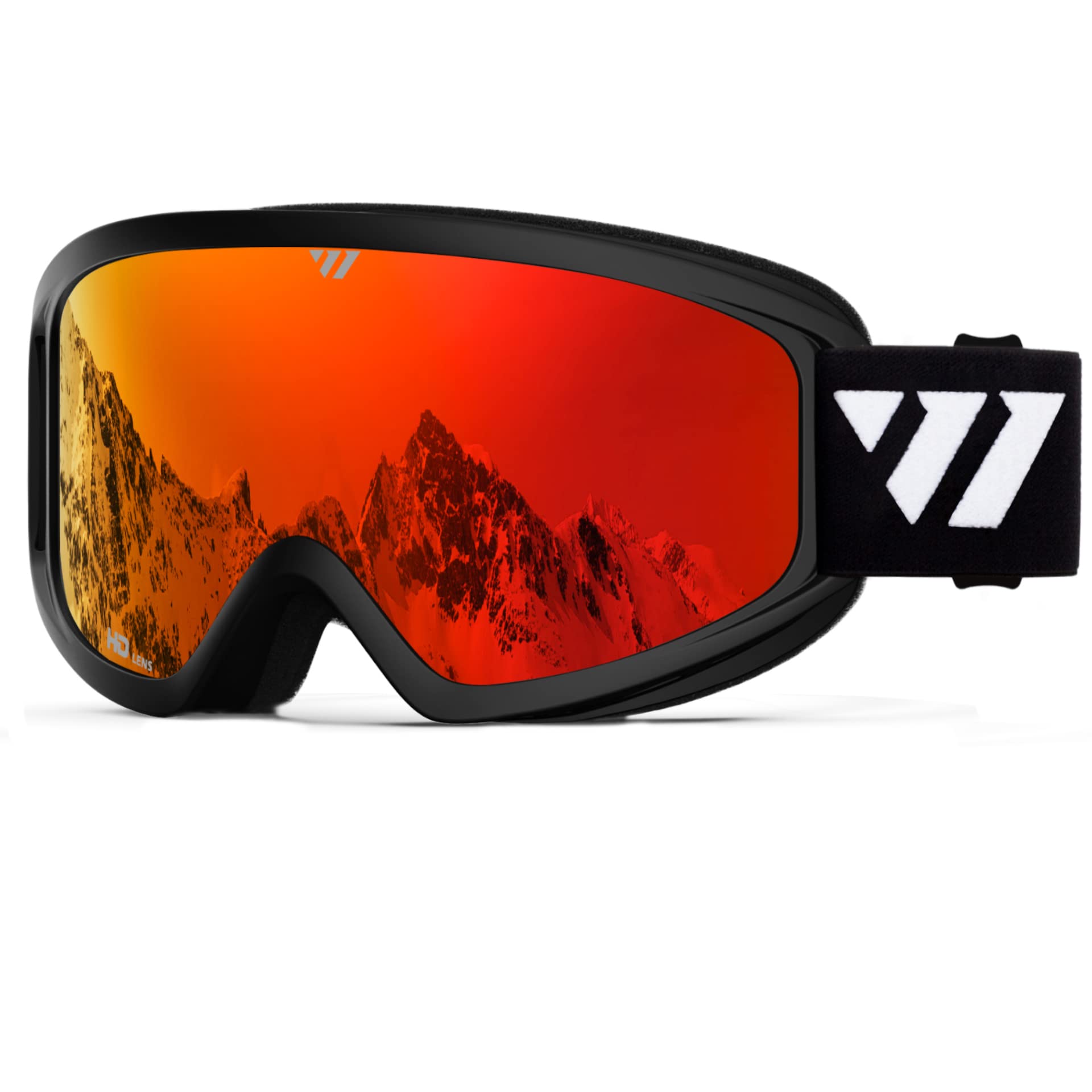
Black frame with a red lens — the clearest red-on-face option on the list.
This is the pair where the red is unmistakable: a black frame fitted with a red lens. If you came to red ski glasses because you want the look as much as the function, the W1 delivers it literally. The lens itself carries 100% UV400 protection and a dual-layer build with an anti-fog coated inner sheet, so it is glass with a job rather than a costume piece.
The frame is soft TPU in a rimless build, matched to an extra-long strap for helmet compatibility and an elastic, fully adjustable fit. Ventilation is a smooth air-flow path that pulls fresh air in and pushes moisture out. The anti-fog is the one owners keep vouching for — people who had been burned by goggles that claimed it and did not deliver report this one actually holds. The glare off snow stops blinding, the face stays warm, and eyes stop watering in wind.
Where it goes beyond the slopes is worth knowing. Owners wear it for snowy boat rides to a duck blind and winter chores around a snowblower, which tells you the seal and the glare cut work in real cold, moving air. The fit note is honest: some find it does not clear a pair of prescription glasses underneath, even with the over-the-glasses design.
Red you can see: black frame, red lens, 100% UV400 — the colorway is the point and the protection is real.
Glasses may not fit: despite the OTG design, the interior has not cleared everyone’s prescription frames.
Great for: snowblower duty, icy boat rides and anyone who wants a plainly red lens at the entry tier.
Not for: prescription-frame wearers who need a sure-fire over-the-glasses cavity.
7. SPOSUNE Ski Goggles Dual-Lens
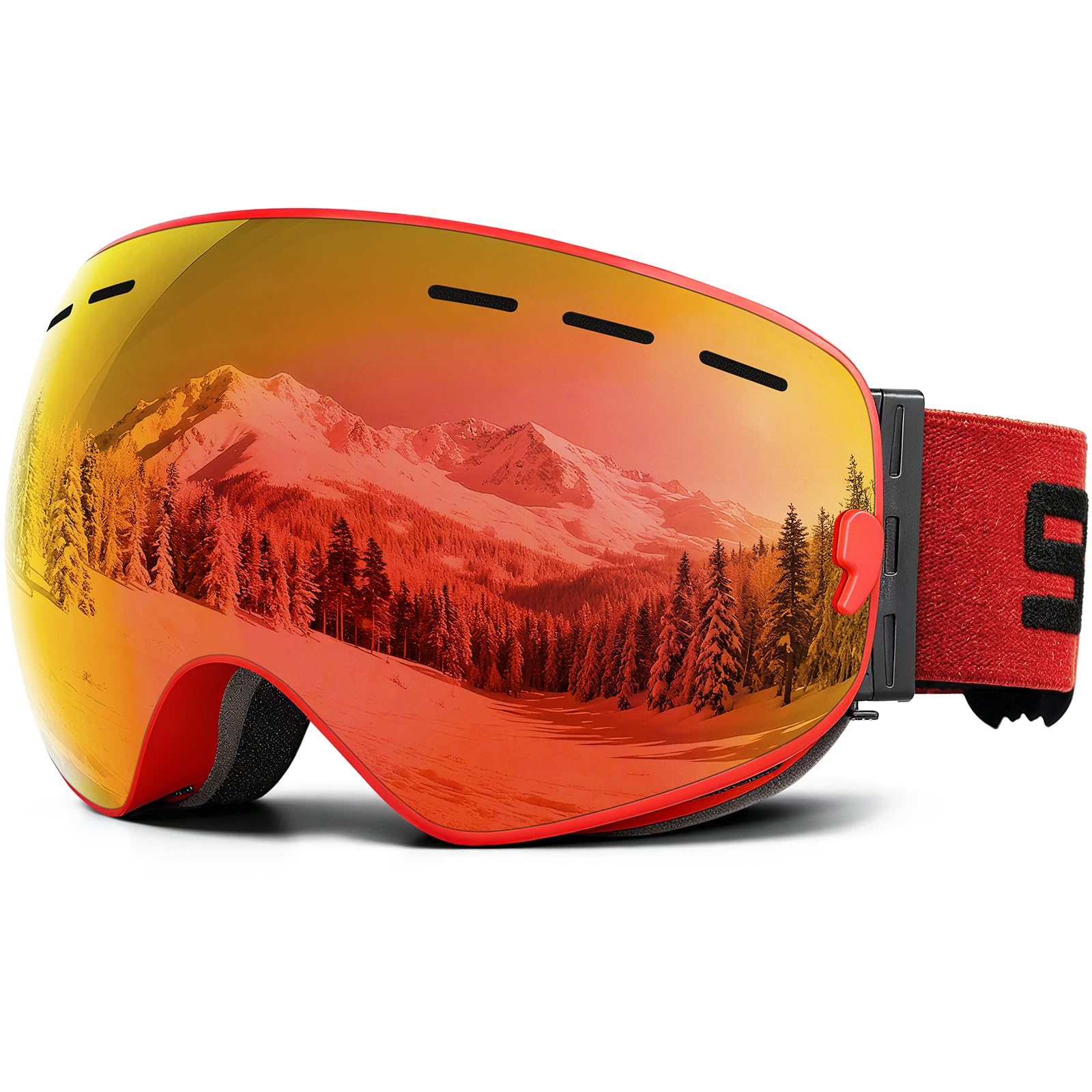
Wider and heavier than its sibling, and that extra glass buys you coverage.
Here is a direct number for you: the SPOSUNE Dual-Lens runs a 7.08-inch lens width against the 6.69 inches of the SPOSUNE OverGlasses below, and it weighs 5.29 oz against 4.12 oz. Put plainly, this one puts more glass in front of your face and more material on your head. For riders who feel hemmed in by a narrow goggle, that width shows up as peripheral vision you do not have to hunt for.
The rest of the build is purpose-stated: UV400 protection, anti-fog and anti-reflection coatings, a double-layer lens and a mirror coating. The frame is TPU with PC lenses (polycarbonate — a tough, impact-resistant plastic), a lens height of 3.54 inches, and the box includes a goggle bag and a hard case. Matte Red is one of the listed frame colors.
Owners rate quality above everything, then fit, then fog control — and the fit-over-glasses crowd is explicit about being served well here. The one durability note in the wider picture is the band; it has broken on some units and not been repairable. Treat the strap as the wear item and the optics will outlast it.
More glass, more view: a 7.08-inch lens width beats the 6.69-inch SPOSUNE OverGlasses, so peripheral vision opens up.
Heavier on the face: at 5.29 oz it carries more than the 4.12 oz sibling, and the band is the part that fails first.
Buy it if: a wide view over your glasses is worth the extra ounces.
Weigh the strap: it is the one component that has let owners down, so handle it gently at the buckle.
8. Giro Cruz Ski Goggles
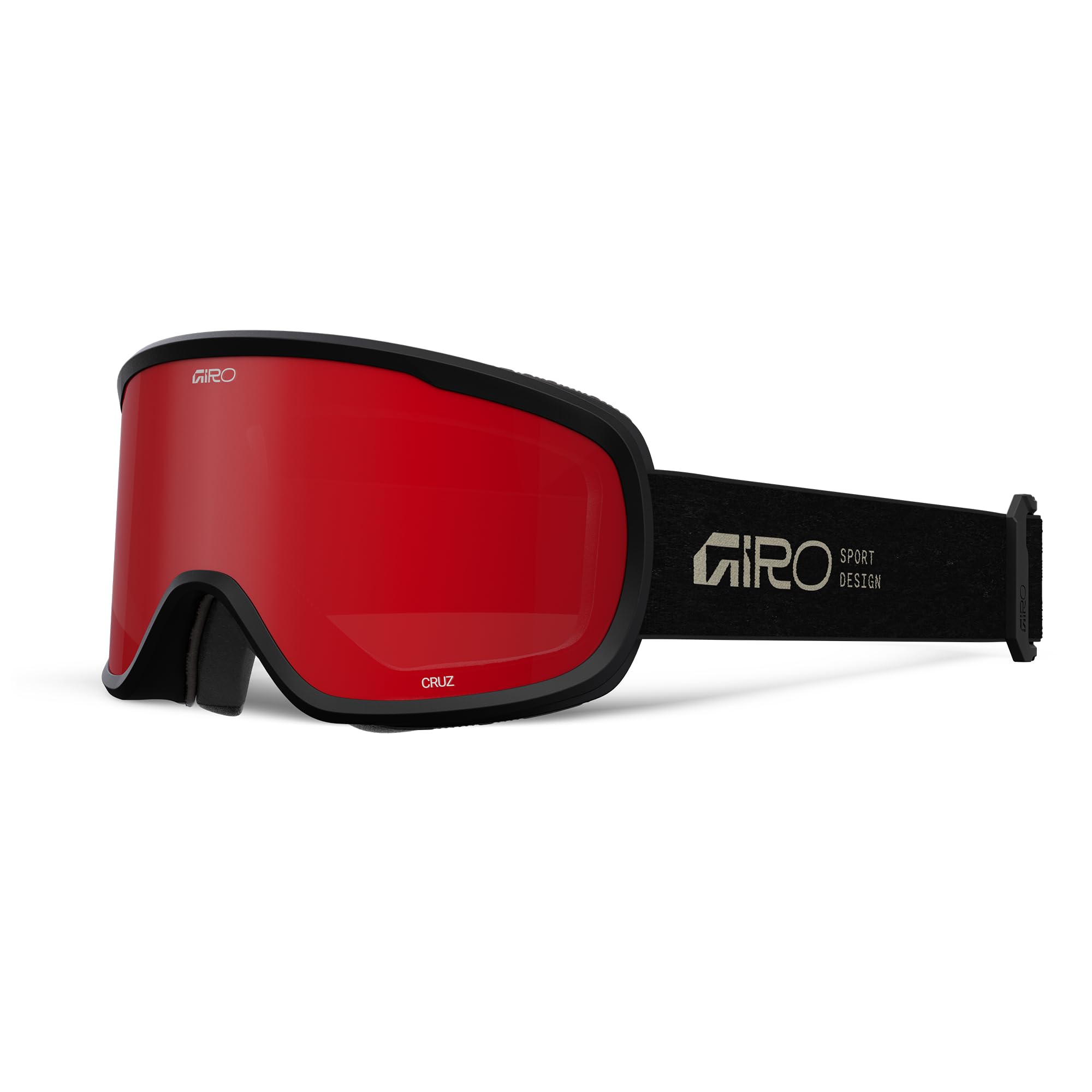
A 39% VLT Amber Scarlet lens tuned for the grey-and-sunny mix most ski days actually deliver.
The number that matters here is 39% VLT. VLT stands for visible light transmission, the share of light that gets through the lens to your eye, and 39% sits in the middle band. That makes the Amber Scarlet lens a mixed-clouds-and-sun tool rather than a dark sunglasses substitute, which is exactly what most resort days throw at you. The cylindrical thermoformed lens is built to hold that tint accurately across the curve.
Fit is the trait buyers talk about most, and the construction explains it. Extra volume inside the frame accommodates prescription glasses, and the double-layer face foam with microfleece facing presses softly instead of pinching. Silicone inside the strap keeps it from creeping over a helmet or beanie. Giro’s frameless EXV zones push the spherical lens out to a wider peripheral field, and the PressFit system lets you swap lenses.
Anti-fog gets consistent credit, including in freezing temps and wind where the goggle kept eyes and face protected with no fog build-up. Riders report no fogging and a solid fit over a helmet. What rounds it out is that owners take these far beyond the lift line — a cruise to Antarctica, glare and wind on shore excursions, and everyday mountain use all land in the same verdict. It is the best all-day compromise on this list between coverage and comfort.
Where the Cruz shines
- 39% VLT Amber Scarlet lens reads well in mixed cloud and sun
- OTG interior volume with extra air space for prescription frames
- EXV frameless zones widen the peripheral view
- Silicone-backed strap grips helmets and beanies
Small print to note
- The lens is tuned for mixed light, not a pure bright-sun mirror
- It is the pricier of the two Giro pairs here
Right call for: the skier who rides one lens all day across changing light and wants their glasses to fit underneath.
Wrong call if: you need a dark mirror for full-sun exposure from open to close.
9. SPOSUNE Ski Goggles Over Glasses
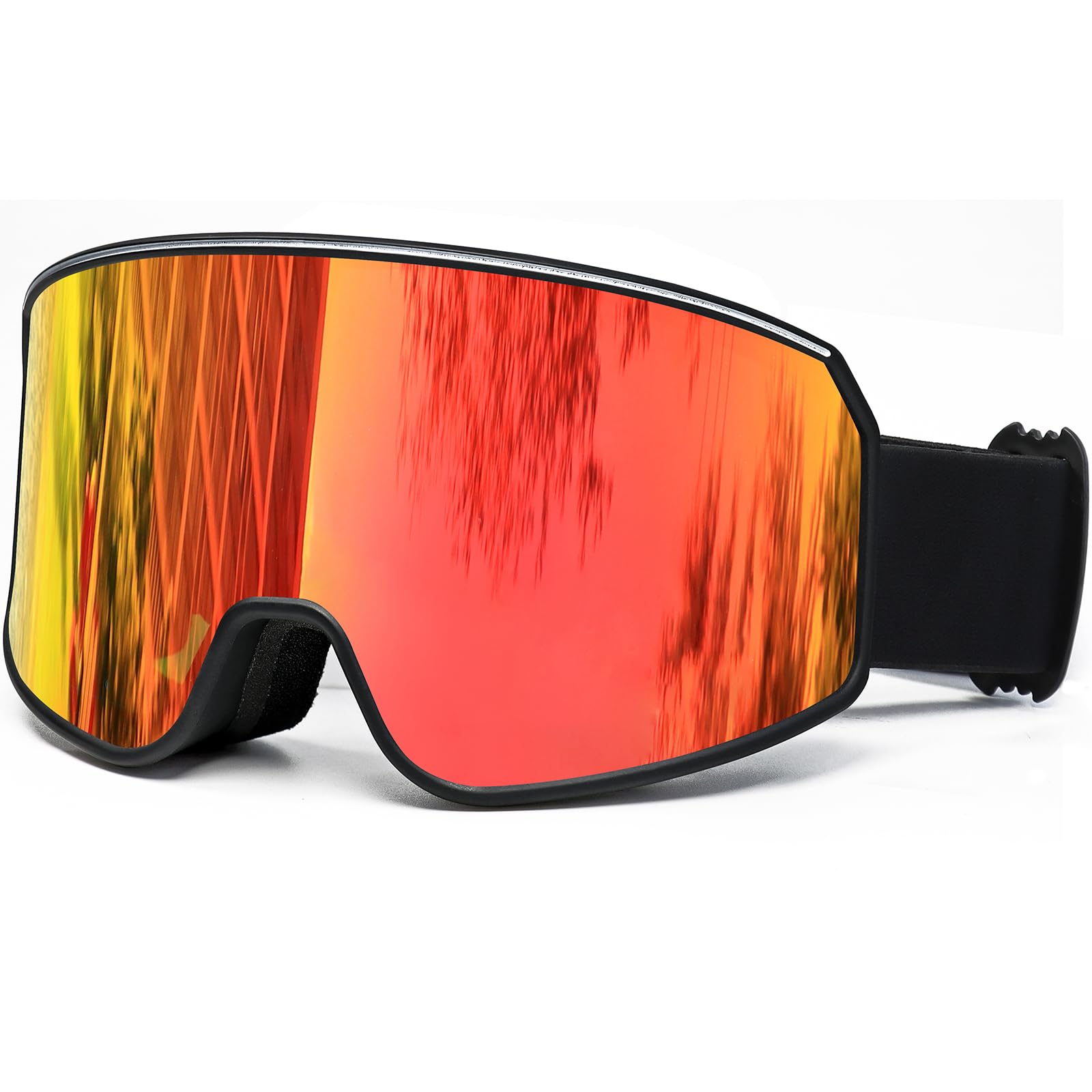
At 4.12 oz and 6.69 inches wide, the lighter, narrower SPOSUNE with full UV400 cover.
At 4.12 oz this is the lightest goggle on the list, and it carries a 6.69-inch lens width against the 7.08 inches of its wider sibling above. For a smaller face or someone who notices every extra ounce by the last run of the day, that combination is the right trade: less glass, less weight, less bounce. A 3.54-inch lens height keeps the vertical coverage intact.
Protection runs through UV400 and an anti-fog, anti-reflection double-layer lens with mirror coating. The frame is TPU and the lens is PC plus CA, which is the polycarbonate-and-cast-acrylic pairing used to keep the optics clear and tough. The box includes a goggle bag. Sun protection is the trait owners point to, with the goggle keeping out sun and dust in one case and handling cold-weather ebike rides in another.
There is a maintenance rule in the maker’s own notes that decides whether the anti-fog lasts: peel the protective film inside before you use it, and never wipe the inner lens. Wiping it wipes off the coating, and the fog comes back permanently. Air-dry after every session and it keeps working.
Featherweight coverage: 4.12 oz with a 6.69-inch lens width — the lighter, tighter SPOSUNE for smaller faces.
Care is not optional: never wipe the inner lens or the anti-fog coating is gone for good.
Fits you if: you want the lightest possible coverage or a narrower frame.
Mind the routine: peel the inner film, air-dry after use, and keep your fingers off the inside.
Know the Specs
Lens Width and Height
Lens width is the horizontal span of the glass, and it drives how much peripheral vision you get. Lens height sets the vertical coverage from brow to cheek. A wider lens, like the 7.08-inch SPOSUNE, gives more side view; a narrower 6.69-inch lens suits smaller faces and lighter setups. Neither number tells you the fit alone — pair the width with the strap circumference for the full picture.
Visible Light Transmission (VLT)
VLT is the share of light a lens lets through to your eye, written as a percentage. A lower figure blocks more sun and suits bright days; a higher figure lets more light in for flat or overcast conditions. Giro’s Amber Scarlet lens sits at 39% VLT, which is built for mixed clouds and sun. Read VLT as the lens’s weather setting, not its quality grade.
Weight in Ounces
Weight tells you how the goggle will feel by the end of a long day. A 4.12 oz frame sits lighter on the face than a 5.29 oz one, which matters if you are sensitive to pressure at the brow. Heavier glass usually buys you more lens area, so the trade is coverage against comfort.
Dual-Layer Construction and Foam
A double-layer lens bonds two sheets with an air gap between them, creating a thermal barrier that slows the temperature swing fog needs to form. Triple-layer foam does the same at your face, sealing warm breath out while spreading pressure evenly. Coatings add a second line of defense, but the construction and the vent path do the heavier lifting.
Common Questions
Does a red lens actually cut glare better than a plain grey one?
Will these fit over my prescription glasses?
What does 39% VLT mean for a ski day?
Why did my anti-fog stop working after a few trips?
Can I swap lenses without buying a second goggle?
Do these goggles work with a helmet?
Are heavier goggles worse for skiing?
Is the SMITH Squad worth more than the budget picks?
How should I store and dry these between ski days?
The Bottom Line
If you want the easiest decision, start with the ZIONOR Lagopus. A 39-inch strap built for helmets, a double-layer lens and triple foam padding cover the three things that actually ruin a ski day, and the following behind it is large. Want one frame across sun, flat light and storm? The findway swaps lenses on six N45 magnets. And if you want the clearest red-on-face look at the entry tier, the WISTON W1 pairs a black frame with a red lens and 100% UV400 protection — a quiet, sensible nudge for anyone who has already decided the color is half the reason they are shopping.
How we choose
We do not accept paid placement. Every pick is matched to a real buyer and a real use-case; we do not hands-on test units.
Sources
Specifications: manufacturer listings and product documentation. Review insights: verified customer reviews, as of November 2026. Pricing: not shown on this page (it changes often); check the current price via the retailer link.
As an Amazon Associate, Tactical Gear Guy earns from qualifying purchases. This does not affect which products we feature.