Specs are compiled from manufacturer listings and verified buyer reviews and can change over time — please confirm the key details on the product page before buying.
The hard question with a wearable panic button is not whether it looks nice on a wrist or a necklace. It is whether the thing actually reaches a human being when someone is on the floor. Every pick here carries built-in GPS location tracking and is worn on the body, so nobody is depending on a phone left in the other room. The differences that decide the buy are battery hours between charges, whether a live monitoring center answers or a family member does, and whether a fall triggers the alert without any button press at all.
This guide is built by comparing the manufacturers’ published specifications and the patterns across verified customer reviews, so you get each pick’s real strengths and trade-offs instead of marketing spin.
You will see which devices need a monitoring subscription, which call family directly, and where the charging routine makes or breaks daily wear. We cut through the spec sheets so you can spot the wearable panic button with gps that fits your household.
Top Picks

How To Choose The Best Wearable Panic Button with GPS
Start with the one question that changes everything else: when the button is pressed, who picks up? A professional monitoring center answers 24/7 and can dispatch help, but it comes with a monthly subscription. A direct-to-family device rings your own contacts, which can be faster and cheaper but puts the response on your family. Decide that first, then shop the battery numbers.
Where the alert goes matters more than any spec
Devices tied to a live monitoring center, like the ADT pendant or the Family First Alert mini, route the call to trained operators who follow emergency procedures. Family-alert units like the Seculife line ring preset contacts instead. Neither is wrong. Choose the monitoring center if no one in the family can reliably answer a 3 a.m. call; choose family alerts if someone can.
Battery hours between charges decide whether it gets worn
A pendant that lasts 40 hours can survive an overnight charge and a day out. One rated around a single day needs a nightly charging habit. If the wearer has memory issues and may forget to charge, a longer-rated battery or a reminder on the unit itself reduces the risk of a dead device during an emergency.
Fall detection is a plan feature, not a guarantee
Automatic fall detection means the device itself notes a possible fall and sends an alert without a button press. On several models it requires a qualifying monitoring plan and, as the makers state, may not detect every fall. Treat it as a backup to the button, never a replacement.
Side-by-Side Comparison
| Model | Best For | Battery | Network | Wear Style | Amazon |
|---|---|---|---|---|---|
| ADT On-The-Go Mobile★ Best Overall | Live monitoring center + waterproof wear | 40 hours | Cellular (AT&T network) | Pendant or wristband | Amazon |
| Smart Med Alert NecklaceBudget Pendant | Budget pendant with live monitoring | — | LTE cellular | Necklace (woven lanyard) | Amazon |
| Smart Med Alert Smart WatchWatch Style | Watch-style with SpO2 and fall detection | 3 days | 4G cellular | Wrist watch (2-inch touchscreen) | Amazon |
| Family First Alert Mini | Compact pendant on Verizon + AT&T | Up to 5 days | 4G LTE (AT&T + Verizon) | Pendant, lanyard or belt clip | Amazon |
| Home & WELLNESS Stride Watch | No-contract watch with AT&T coverage | 24 hours | 4G (AT&T network) | Wrist watch | Amazon |
| Seculife SOS Wristband | Family alerts with geofencing | 1 day (680 mAh) | Cellular | Screen-free wristband | Amazon |
| Seculife Medical Alert Pendant | Family alerts with a display and long battery | Up to 6 days (1000 mAh) | 4G LTE cellular | Pendant necklace | Amazon |
| Seculife Smartband | Family alerts with heart-rate and geofence | 1 day (680 mAh) | 4G LTE cellular | Wristband | Amazon |
| Fajocru Fall Detection Watch | Video calling and dementia tracking | 2 hours (600 mAh) | 4G, pre-installed data SIM | Wrist watch, IP67 | Amazon |
Detailed Reviews
1. ADT On-The-Go Mobile Medical Alert System
Our pick — 4.0+★ from 30+ verified ratings; the strongest balance of quality and price.
The one that puts a trained ADT operator on the line the moment the button goes down.
What makes this ADT pendant the pick to beat is the response chain, not a screen. A single press sends an immediate call for help over the nationwide AT&T cellular network, answered by U.S.-based monitoring staff who have handled emergencies for over 150 years as a company. You get a plastic and rubber pendant body that weighs 1.76 ounces, light enough that it does not swing against the chest all day.
Battery life is the standout number: 40 hours on a charge. That covers a full day out plus an overnight charge without the wearer having to think about it, and it is the reason this unit suits someone who is not reliable about plugging things in. The built-in kit includes the mobile device, a wristband and a cradle charger, and the same unit can be worn on the wrist or as a necklace. It is also described as waterproof, so showering does not mean taking it off.
The honest catch is the activation. You must call in to start the service, and a monthly monitoring plan is required before the device does anything, with flexible options and no long-term contracts. Caregivers also get step-by-step updates from the trained agents in an emergency, including what first responders report back, which is a feature family-alert devices rarely match.
Where it earns its keep
- 40-hour battery means one overnight charge covers a normal day out.
- Live ADT monitoring answers the press, not a family phone that might be silent.
- Pendant or wristband in one kit, both described as waterproof for showers.
- Caregivers get agent updates on what first responders find.
What to plan around
- Requires phone activation plus a monthly monitoring plan to function.
- 1.76-ounce pendant body is heavier in feel than a bare tag.
Reach for this if: you want a monitoring center answering 24/7 and a battery that shrugs off a full day and night.
Look elsewhere if: you want alerts to ring family directly with no monthly subscription at all.
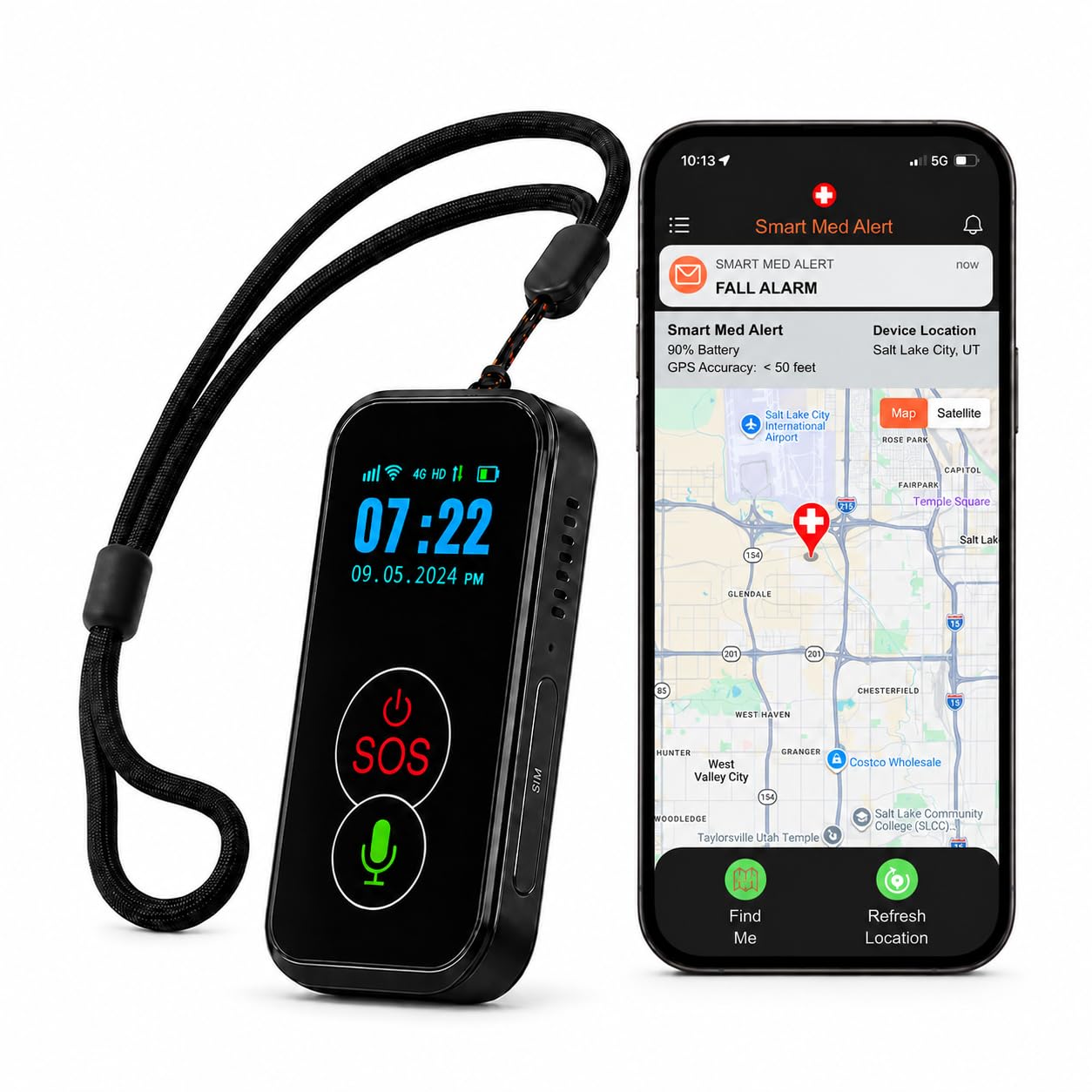
2. Smart Med Alert Cellular Medical Alert Necklace
A lightweight lanyard pendant that speaks to a live monitoring professional without a phone nearby.
For the entry-level shopper who still wants a real monitoring center, this necklace delivers the core function at the low end of the range. Hold the SOS button for roughly 3–5 seconds and you are connected to a live professional through the built-in speaker and microphone, so the wearer needs no smartphone in the room. If the wearer cannot respond, the center can try the customer’s phone, ring emergency contacts in their chosen order, and request local services when appropriate. Fall detection is also here, sending an alert with device location even without a button press, provided the plan includes it.
The app is a genuine convenience: it shows device location, battery percentage and GPS accuracy, and pushes SOS and fall notifications to family. Each device registers to one app account, and one account can monitor up to three compatible devices, which helps if you are watching over two parents with the same login. The body is black, uses a silicone band material with an adjustable woven lanyard, and charges magnetically — no fiddly plug for stiff fingers.
Buyers consistently praise the everyday usability: it is small, light, and straightforward to set up. What they flag honestly is that a subscription is required and it adds a monthly cost, and that the unit is water resistant rather than waterproof, so it should not be submerged. Reliability is the mixed variable — cellular signal matters, and homes with metal roofs are named as a weak spot. Treat it as a good fit for a home with clean coverage.
Fit in one line: best for the buyer who wants a live voice on the line for the least upfront outlay, with a simple lanyard they will actually keep on.
The trade-off: water resistant only, and metal-roof homes can cut the cellular link — check coverage before committing to the subscription.
Worth it when: a family needs a monitoring-backed pendant and is willing to handle a monthly plan and a nightly charge.
Think twice when: the wearer takes long showers in the device or lives under a metal roof with patchy signal.
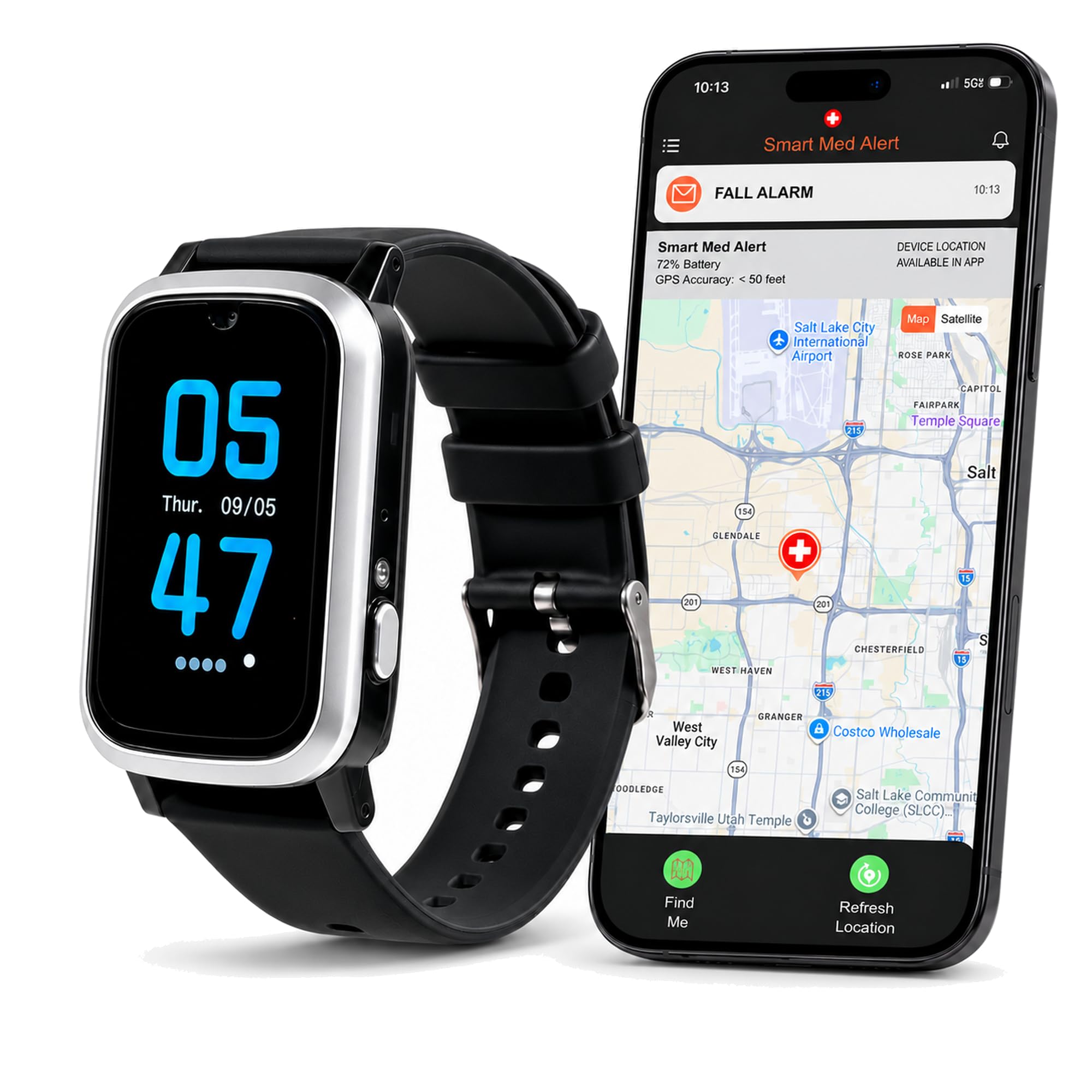
3. Smart Med Alert Cellular Medical Alert Smart Watch
A two-inch touchscreen watch that wears like a timepiece and hides a full monitoring link behind the SOS button.
Some people will not wear a lanyard. This watch answers that objection with a rectangular 2-inch touchscreen, a replaceable silicone band, and a buckle closure, so it reads as a normal watch on the wrist. Hold the SOS button for 3–5 seconds and a live monitoring professional answers through the built-in speaker and microphone. Your monitoring profile can list preferred contact order and response instructions, which keeps the handoff clean.
Battery is the reason to pick this over a pendant for many owners: it is rated for 3 days between charges, and a full charge takes 2 hours over a magnetic cable. That is a different rhythm from the daily-plug pendant crowd. The battery capacity reads 12 milliamp_hours, a figure that does not square with a 3-day rating, so rely on the stated days rather than that number. Fall detection is included with a qualifying plan and sends an alert with available location, and the spec sheet also lists an SpO2 (blood oxygen) sensor and a sedentary reminder.
The quality caveat is real and specific: this is not the right device for someone with more than mild dementia, because operating a touchscreen watch takes a step of recall. Functionality is the most-discussed mixed point, with some units failing to switch on or charge and getting swapped by support. For a senior who is cognitively sharp and wants to disguise the alert as a watch, the fit is much better.
For the dignity-conscious wearer: the watch shape beats a lanyard for anyone who resists looking like a patient.
Where it can falter: a unit that arrives not charging, and the dementia limitation — mild cases only.
Pick this for: an active senior with clear thinking who wants a watch, 3-day battery, and a monitoring center on call.
Pass if: the wearer has more than mild dementia or needs a device with no screens to learn.
4. Medical Alert System Mini Device
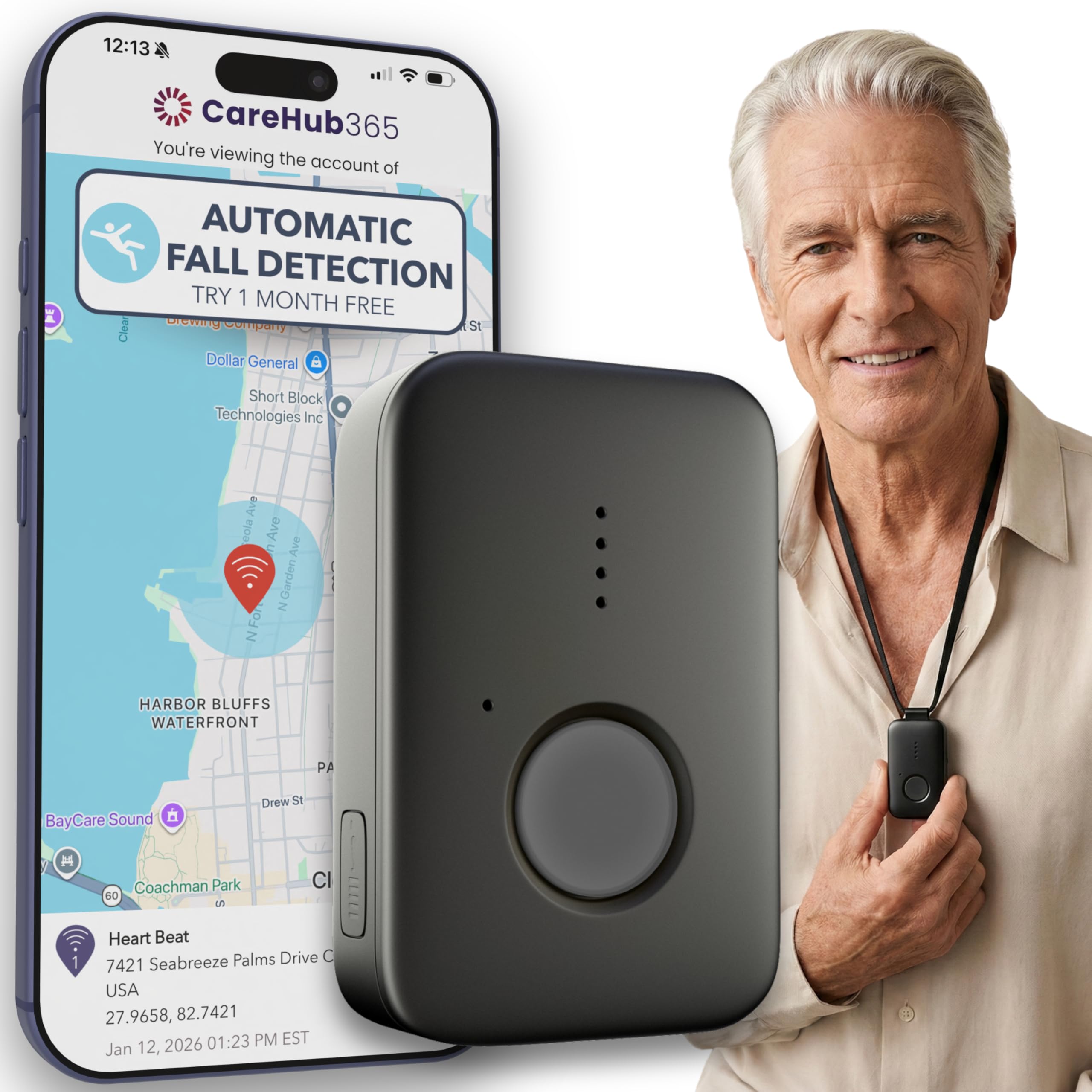
The mini pendant that disappears under a shirt and runs on two carriers at once.
Size is this device’s whole pitch, and the numbers back it. At 1.3 x 0.5 x 2.3 inches it is genuinely small, and compared with the ADT pendant at 0.63 x 1.75 x 2.75 inches the body is a different footprint — the Family First unit is wider and thicker but shorter, so it tucks flatter rather than dangling. The kit includes two lanyards and a belt clip, so the same device can be worn three ways depending on the day.
Coverage runs on Verizon + AT&T networks through 4G LTE, which matters because a dead zone on one carrier often means a live signal on the other. Press the button and a trained operator answers, described as a rapid response in just seconds. Fall detection is optional as a separate add-on, and the pendant is water resistant, which the maker says means it can be worn in the shower. A charge is stated to last up to 5 days, though the maker recommends daily charging for readiness.
Activation is straightforward but requires contact — scan the QR code or call — and the monthly subscription starts at the mid-range of the group. This pick rewards the wearer who wants something almost invisible on the chest and values the Verizon + AT&T safety net. The 5-day claim should still be treated as a ceiling, not a routine, since the maker itself suggests plugging in nightly.
The stealth advantage: tiny enough to be forgotten under clothing, with two networks chasing a signal.
The routine it asks for: daily charging even with the 5-day ceiling, and fall detection costs extra each month.
Best for: the wearer who refuses a bulky device and wants carrier redundancy on Verizon and AT&T.
Not for: someone who wants fall detection baked in — it is an optional add-on plan here.
5. SENIOR SAFETY SYSTEM Stride Medical Alert Watch

A watch-shaped alert button with no long-term contract and the first month of service included.
Contract flexibility is the differentiator. There is no long-term contract on this watch, the monthly fee is stated at, and you can cancel anytime without penalty — the first month of service is included, so you can test the fit before committing. Press the alert button and a live support representative answers day or night, with the cellular link running on the 4G AT&T network.
It is built to pass as an ordinary watch, which the maker lists as a deliberate design goal — a plastic case, a black plastic band, a tang buckle, and bezel markings rather than a screen. Inside, it pairs medical alert with GPS tracking for location monitoring, and the spec sheet lists fall handling among the safety features. The battery is 580 milliamp_hours and rated for 24 hours, and it charges in 1 hour, so a quick morning top-up covers the day.
This suits the family who wants a live responder without a long-term contract. The catch to size honestly is the 24-hour battery — it is a device you charge daily, not one you forget for a weekend, so the wearer needs a routine or a caregiver who prompts it. For that trade-off you get contract freedom and a watch that does not shout “medical device.”
Why families lean on it: a live representative, GPS tracking, and a cancel-anytime arrangement with the first month included.
The honest limit: 24 hours per charge, so daily charging is part of ownership, not optional.
Choose this when: you want a live responder and the freedom to cancel without a penalty.
Keep looking when: the wearer will not reliably charge something every single day.
6. Seculife SOS Wristband
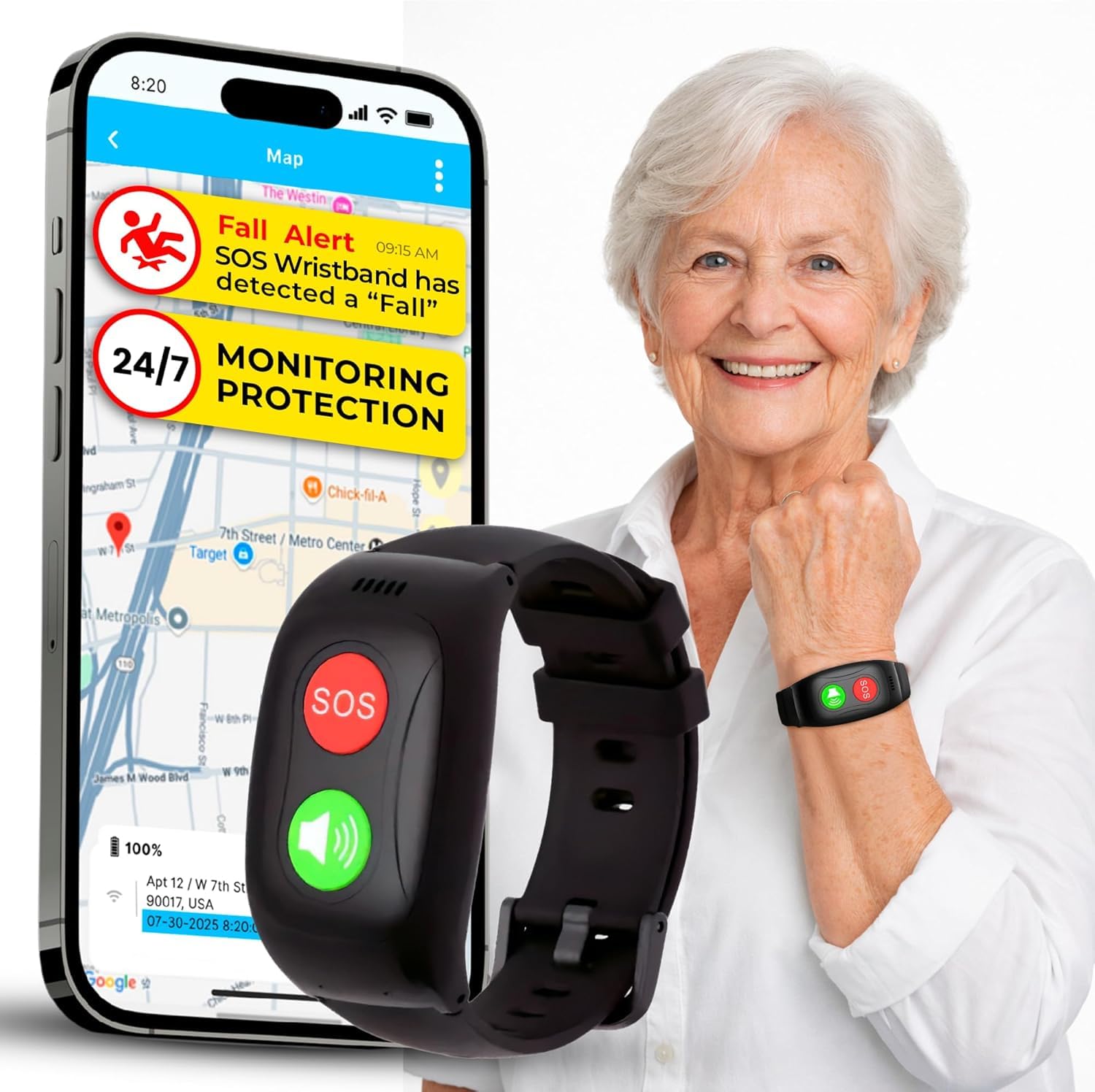
No screen, no call center, no learning curve — one press rings the people who will actually drive over.
Geofencing is where this wristband pulls ahead of the pendants. You set safe zones in the Seculife app and get an instant alert the moment the wearer enters or leaves them, and the app keeps 1 year of location history, so a wandering episode is a notification rather than a search party. The bracelet itself has no screen at all, a deliberate choice for seniors and kids who find a display confusing, and the single SOS button plus automatic fall detection triggers a call to pre-set contacts rather than a monitoring center.
The draw here is geofence alerts and 1 year of location history, so a family member out alone shows up as a ping on your phone. It is also easy for an 89-year-old to work, and the two-way calling behaves like a speakerphone with auto-answer, so a caregiver can reach the wearer without them pressing anything. The 680 milliamp_hours battery is rated for 1 day, and the body carries an IP67 water-resistance rating (a standard that means it survives rain, splashes and handwashing, though it is not built for swimming).
Reliability is the mixed variable, and the experience depends on getting the pairing right on day one. Some users report it beeping and lighting up without doing what it was meant to, which points at pairing, not the hardware shape. The monthly plan runs at the lower end of the group, which softens the cost question for a family-alert device. It is a strong pick for the household that wants alerts on their phones, not on a stranger’s desk.
The geofence edge: safe-zone alerts and 1 year of location history turn a wander into a ping on your phone.
Setup is the hinge: get it paired and tested properly on day one, or the bracelet can sit lit up and useless.
Made for: families who will respond themselves and want geofence alerts for a wanderer.
Skip if: nobody in the family is reliably reachable — this one has no call center behind it.
7. Seculife Medical Alert Pendant
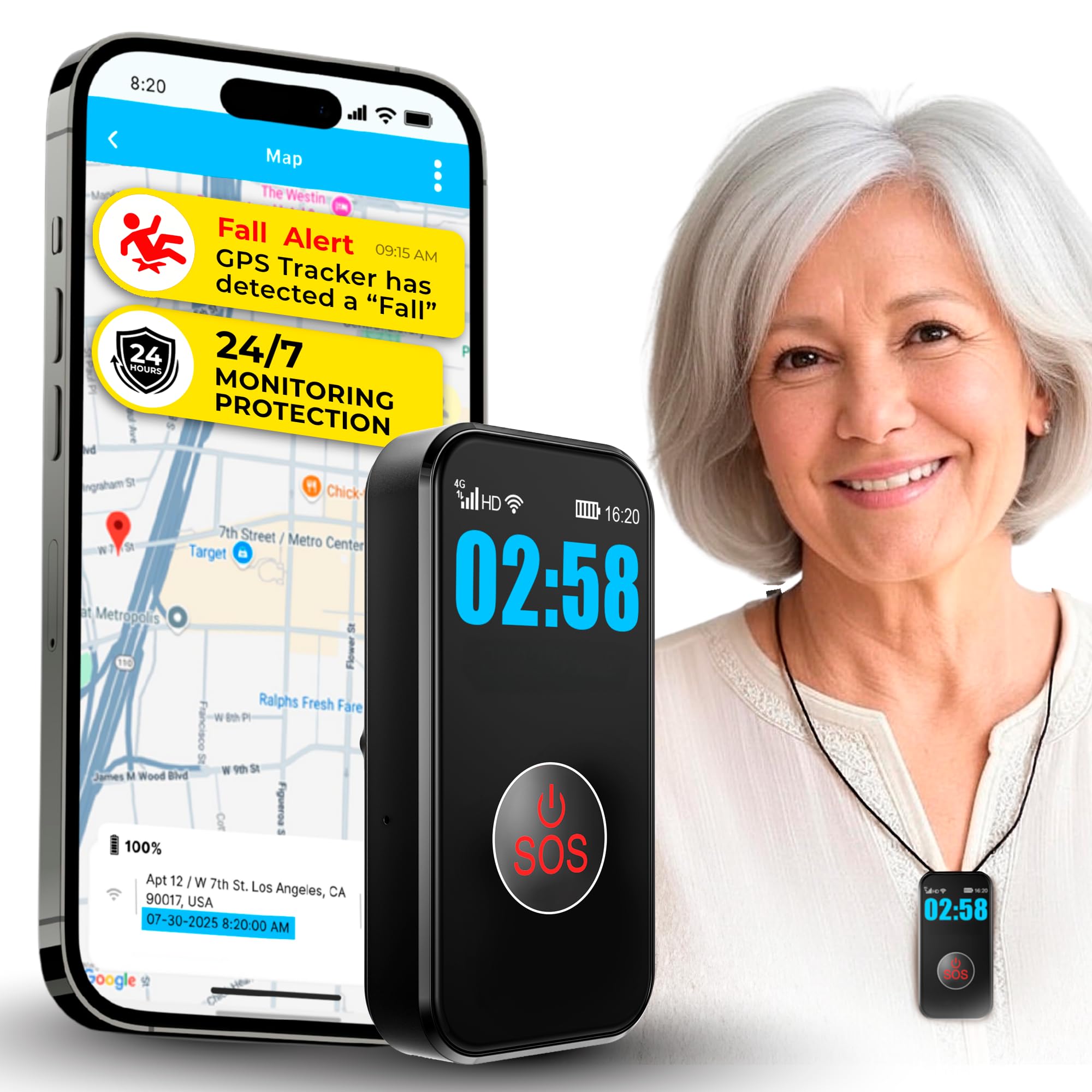
The pendant with the longest stated battery in the lineup and a small display that keeps the wearer oriented.
Battery is the headline here: up to 6 days on a charge, backed by a 1000 milliamp_hours cell, and rated for 5 days as the average. That is the longest gap between charges among the pendants here, and it changes the ownership experience — a forgetful wearer has a real buffer before the device goes quiet. Unlike the daily-charge units, you can charge this on a Sunday and stop worrying midweek.
The display is the second reason to choose it. It shows time, battery and signal, so the wearer can see the device is alive without needing an app, and the large SOS button sits beside a 4G LTE cellular link. Real-time GPS tracking plus geofence zones let you draw safe areas and get alerted when the wearer crosses them, with 1 year of location history stored. The pendant is IP67 rated (survives rain and splashes, not swimming) and fully mobile, so it works away from home. The kit includes the charging cable, a SIM card and a manual.
The recurring real-world note is that battery reports vary — some see closer to 6 hours between top-ups, which suggests heavy tracking drains faster than the rating. Service and setup, though, draw strong praise, and the small size is a genuine plus on the neck. For a household that wants alerts to go straight to family with the fewest charging interruptions, this is the pendant to beat.
Why this one leads the pendants: up to 6 days on a 1000 milliamp_hours cell, plus a display that shows the wearer it is working.
The fair caveat: keep tracking dialed back if you want the full rated battery, and remember calls go to family, not a center.
Go for this: when you want a pendant you charge less often, with a display and family alerts.
Reconsider if: you need a 24/7 monitoring center — this pendant rings your contacts instead.
8. Seculife Medical Alert Smartband
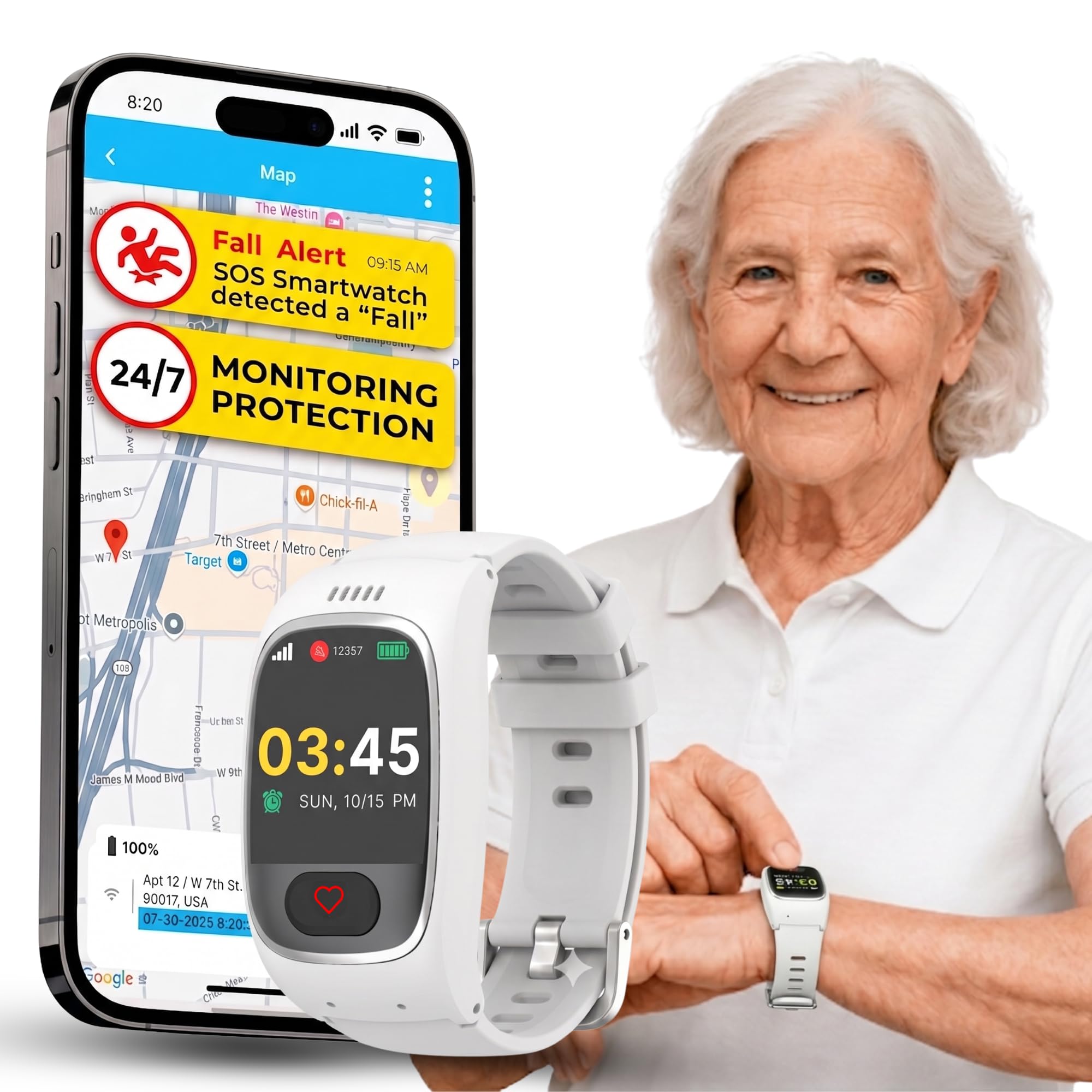
A white smartband that auto-answers calls so nobody has to find a button to pick up.
The auto-answer feature is the quiet hero of this band. When an approved contact calls, the device picks up on its own, so a senior does not have to press anything to hear a familiar voice, and the maker positions it as a simple stand-in for a cellphone without the smartphone clutter. Press the heart button for 3 seconds, or let the auto fall detection trip, and the band calls pre-selected emergency contacts directly.
Tracking is the strength: real-time GPS, geofence zones that ping the app or send an SMS when the wearer leaves or enters a safe area, and 1 year of location history — the maker names dementia and Alzheimer’s care as the target use. The app also surfaces heart rate and other health readouts, so caregivers can glance at more than just a pin on a map. IP67 water resistance covers everyday splashes, and the 680 milliamp_hours battery is rated for 1 day.
Setup is the make-or-break step. Some families get it running smoothly and find it light enough that mom forgets it is on; others hit pairing trouble and unreliability, which is the most-discussed mixed point. The monthly plan starts at the mid-range of the group, with unlimited fall alerts, tracking and voice minutes included. When it is configured right, it is a comfortable everyday band with real calling behind it.
Why it stands out
- Auto-answer means an incoming call connects without the wearer pressing a thing.
- Geofence zones and 1 year of history suit dementia and Alzheimer’s watching.
- Heart rate and health readouts sync to the family app.
- Light enough that wearers forget it is on, per the maker’s comfort design.
Where it needs care
- Setup is the make-or-break step — pairing trouble leads to reliability complaints.
- Rated around 1 day per charge on a 680 milliamp_hours battery.
Strong match for: a family who will take the time to set up the app and wants auto-answered calls and geofence pings.
Weaker match for: a buyer who wants zero setup and a longer battery than a single day.
9. Fall Detection Smart Watch
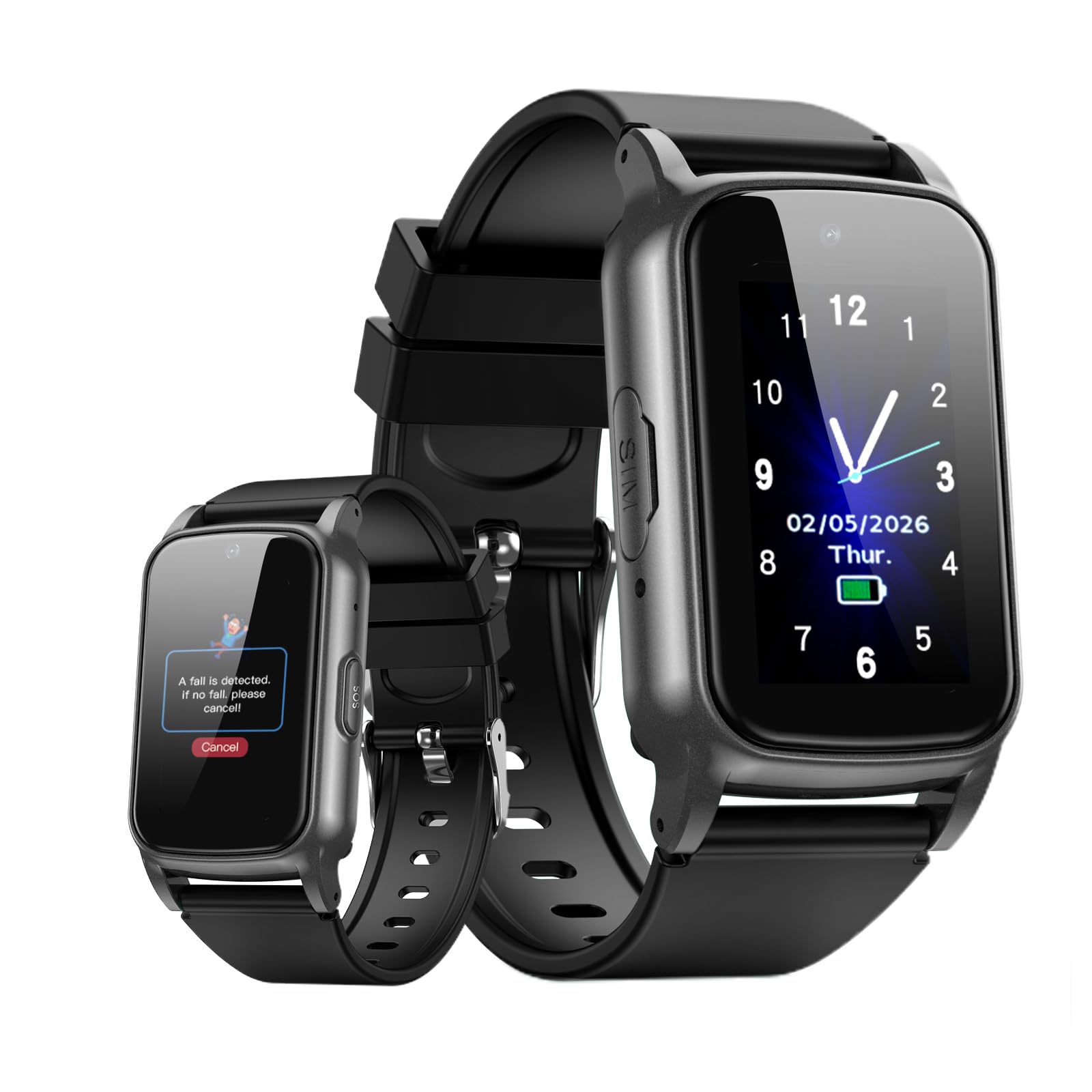
The rare alert watch that lets a face-to-face video call happen right from the wrist.
Video calling is the standout here, and it is unusual in this category. The watch runs 4G HD video calls and voice chat like a wrist phone, so a senior can see a family member’s face without holding a smartphone, and it works with both iPhone and Android users through the SeTracker2 app, which is always free. GPS tracking is real-time, and geofence zones alert caregivers the moment the wearer wanders outside them — the maker names dementia and Alzheimer’s care directly.
The catch you must plan around is the power. The battery is 600 milliamp_hours and the stated average life is 2 hours, with a 2-hour charge time — video calling and GPS will eat that fast, so it is a watch for short check-ins, not all-day cover. There is also a pre-installed data SIM with 1 year of free data service, but it supports app data only; for direct calling and SOS calls you need your own SIM with VoLTE. Read the fine print before you rely on it for the emergency button.
What it does that others do not: 4G video calls face to face, plus dementia-focused geofencing and a full health readout.
What you must accept: a 2-hour average battery life and the need for your own VoLTE SIM for calls.
The pick for: a family who wants video check-ins and memory-care geofencing more than all-day battery.
The risk for: anyone relying on it as an always-on emergency button — 2 hours is not all-day cover.
Know the Specs
Battery hours versus battery capacity
Battery capacity is the stored charge, measured in milliamp_hours (mAh). Battery hours are how long a full charge actually lasts. They are not the same figure, and a bigger mAh cell does not always mean more hours — tracking frequency and screen size pull charge down. For a wearable alert, go by the stated battery average life, and pick a device whose charge cycle matches the wearer’s routine. A 40-hour pendant suits an overnight charger; a 24-hour unit needs a daily habit.
Fall detection, geofencing, and who answers
Fall detection uses the device’s motion sensor to notice a possible fall and send an alert without a button press — on many models it needs a qualifying plan and may not catch every fall. Geofencing lets you draw a safe zone and get a ping when the wearer crosses it. Finally, ask who receives the alert: a professional monitoring center that can dispatch help, or your own emergency contacts. That single choice decides the monthly cost and the response speed.
Common Questions
Does a wearable panic button with GPS work if the wearer leaves the house alone?
Do I need a monthly subscription for these devices to work?
Will fall detection call for help if my parent cannot press the button?
Which is better, a pendant, a wristband, or a watch?
Can these panic buttons be worn in the shower?
How accurate is the GPS tracking on a wearable alert device?
What happens to the alert if the wearer has dementia and cannot press the button?
Do these devices call 911 directly or call family?
How long does the battery last on a wearable GPS panic button?
Will a metal roof or weak cell signal stop the alert from going out?
The Bottom Line
When you want a monitoring center answering 24/7 and a battery you rarely think about, the ADT On-The-Go pendant is the pick — 40 hours per charge, waterproof wear, and trained operators on the line. If alerts should go straight to family with the least charging hassle, the Seculife pendant runs up to 6 days and shows the wearer a live display. And for a dementia-wandering case where you want geofence pings on your phone, the Seculife smartband auto-answers calls and holds 1 year of location history.
One practical nudge: the ADT is the pick that puts a human operator on the press without you building a family phone tree, and its 40-hour cell means fewer dead-device mornings. Match the response path to your household first, then the battery to the wearer’s habits, and you will land on the right button.
How we choose
We do not accept paid placement. Every pick is matched to a real buyer and a real use-case; we do not hands-on test units.
Sources
Specifications: manufacturer listings and product documentation. Review insights: verified customer reviews, as of November 2026. Pricing: not shown on this page (it changes often); check the current price via the retailer link.
As an Amazon Associate, Tactical Gear Guy earns from qualifying purchases. This does not affect which products we feature.