Specs are compiled from manufacturer listings and verified buyer reviews and can change over time — please confirm the key details on the product page before buying.
Buying soccer shoes for competitive play is not about chasing the flashiest colourway. It is about matching your foot shape, your pitch surface, and your style of play to the right upper and stud setup. Get that match wrong and you will feel it every time you touch the ball. This guide walks you through nine pairs worth your attention, from heritage leather classics to featherweight speed boots, with plain-English notes on who each one actually suits.
This guide is built by comparing the manufacturers’ published specifications and the patterns across verified customer reviews, so you get each pick’s real strengths and trade-offs instead of marketing spin.
Below you will find the surface each pair is built for, the upper material that changes how the ball feels, and the fit quirks that decide whether a boot is comfortable on day one or needs breaking in. Every pick includes the honest trade-off so you can choose with your eyes open, and the top pick earns its place with best professional soccer shoes.
Top Picks

How To Choose The Best Professional Soccer Shoes
The most common mistake is buying a boot for how it looks instead of how it plays. A leather control boot on firm grass is a completely different animal from a knit speed boot, and the wrong pairing will bother you for ninety minutes. Start with your surface, then your foot shape, then your playing style — in that order.
Match the outsole to your pitch
Firm ground studs suit dry natural grass, while artificial ground studs are shaped for synthetic surfaces and split the load differently across the sole plate. Several pairs here are built to handle both, and those are the safest all-round choice if your club rotates between surfaces. Playing a firm-ground plate on artificial grass wears the studs down faster and can feel unstable underfoot.
Upper material decides your touch
Soft leather gives a cushioned, forgiving feel and lets the ball sink in slightly on contact — many players describe it as the truest first touch. Microfiber and knit uppers are lighter and wrap tighter to the foot, which helps when you are sprinting at defenders. Neither is better in isolation; leather suits control passers, knit suits players who live in top gear.
Fit is where most buyers get burned
Soccer boots run narrower than everyday sneakers, and some models here run small enough that you may want to size up. Leather stretches with wear, so a leather boot can feel snug on day one and open up within a few sessions. Synthetic uppers hold their shape, which means the fit you feel in the box is the fit you will play in.
Weight and stud layout for your position
Lightweight boots, measured here in the 2.1-to-2.4-pound range, favour players who rely on acceleration and long sprints. Heavier leather models trade a little weight for durability and a softer, more protective touch. Stud orientation matters too — angled or rounded studs on the outside edge help you pivot and cut without slipping, which matters most for wingers and attacking midfielders.
Side-by-Side Comparison
| Model | Best For | Surface | Upper Material | Stated Weight | Amazon |
|---|---|---|---|---|---|
| adidas Men’s Mundial Team★ Best Overall | Heritage leather feel on turf and hard courts | Synthetic turf surfaces | Split suede leather | — | Amazon |
| New Balance 442 Pro FG V3Best Value | Wide-footed players who want pro-level ball feel | Firm ground | Premium microfiber | — | Amazon |
| PUMA Future 9 MatchMost Agile | Playmakers who rely on agility and pivots | Firm and artificial ground | Mesh with knitted collar | 2.43 pounds | Amazon |
| PUMA Ultra 5 Pro | Straight-line sprinters switching between pitches | Firm and artificial ground | — | 2.43 pounds | Amazon |
| adidas League Predator Fold-Over | Ten-pin control on a mixed surface schedule | Firm and multi ground | — | 2.43 pounds | Amazon |
| adidas F50 Pro FG | Lightest-feeling fit in a firm-ground speed boot | Firm ground | — | 2.13 pounds | Amazon |
| adidas Copa Mundial | The classic leather boot for firm grass | Firm ground | Soft leather | 2.43 pounds | Amazon |
| adidas Predator Pro Fold-Over | Serious strikers who want a precision fit | Firm ground | — | 2.43 pounds | Amazon |
| Nike Mercurial Superfly 10 Elite | Pure pace on short, damp grass | Firm ground | Gripknit and Atomknit | — | Amazon |
Detailed Reviews
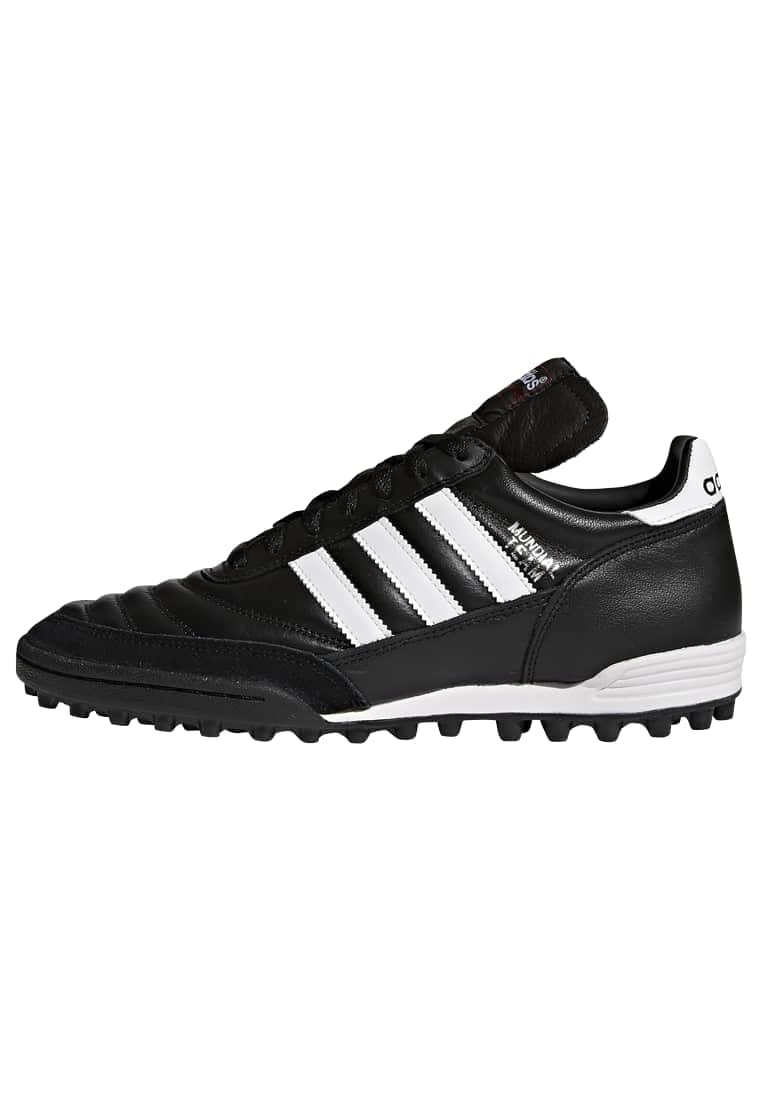
1. adidas Men’s Mundial Team Shoes
Our pick — 4.5+★ from 6,000+ verified ratings; the strongest balance of quality and price.
A split-suede turf boot that has stayed in adidas’s lineup for decades as the go-to for leather control on synthetic surfaces.
If your boots live in a bag and come out on a synthetic turf pitch three times a week, start here. The Mundial Team wraps your foot in split suede leather — a soft, slightly hairy hide that grips the ball rather than letting it skip off. Under your foot sits an EVA midsole (a cushioned foam layer) that takes the sting out of hard court surfaces. The TRAXION sole is shaped for synthetic turf, so it plants and turns without the studs digging in where they shouldn’t.
It holds 4.5+ stars across 6,000+ ratings, and the long-run reputation backs that up. Players come back to it season after season because the leather softens into the shape of your foot and the sole holds together past a single campaign. Traction on hard surfaces is the thing that wins people over, with indoor futsal also showing up as a regular use case in the feedback.
The honest catch is sizing. These run snug at first for some feet and noticeably larger than typical cleats for others, so try before you commit if you can, or order with a return in mind. The suede also needs a brush and a dry-out after wet sessions to keep its nap. Brush the suede and dry it out after wet sessions and the upper will outlast most boots in this list.
What earns it first place
- Split suede leather upper that softens with wear and holds the ball on contact
- EVA midsole cushions the foot on unforgiving synthetic turf and hard courts
- TRAXION outsole built specifically for turf surfaces rather than borrowed from grass
- Durability that carries past a full season, per long-run buyer feedback
Where it asks for patience
- Sizing splits opinion — snug for some feet, roomy for others
- Leather needs regular brushing and drying to stay supple
- Not the pick for firm natural grass
Buy it for: turf leagues and indoor courts where you want a leather touch that improves with age.
Pass if: you play exclusively on natural grass or need a boot that fits right from the start with no break-in.
2. New Balance Unisex Adult 442 Pro FG V3
A modern microfiber boot that borrows the quilted look of a much older classic.
The 442 Pro FG V3 is built for firm natural grass, and its headline material is a premium microfiber upper with twin stitch quilting. Microfiber is a synthetic leather alternative: lighter than hide, more consistent in feel, and it does not need the same break-in period. The quilting adds a stitched texture across the upper that gives you a familiar, padded contact point when you strike the ball. New Balance pitches this as pro-level traction and stability, and the sole plate matches a firm-ground pitch rather than turf or artificial grass.
Buyers single out the classic silhouette as timeless rather than trendy. Quality and comfort both land as the strongest positives in owner feedback, and durability follows close behind. It is a boot for the player who wants a clean look and a soft touch without the leather-maintenance routine.
Here is the one to think about carefully: fit is the most-discussed topic by a clear margin, and the split runs both ways. Extra-wide feet often find a comfortable home in these, while narrower feet report them feeling too tight. That makes this a pair to order in your true size, try on carpet, and return if the toe box pinches. If you have wide feet and have struggled to find a boot that does not squeeze, this is a strong candidate.
Who it fits: the player with generous-width feet who wants pro-level ball feel without the price of the flagship boots.
The width gamble: microfiber holds its shape, so the fit you feel on day one is the fit you keep — there is no leather stretch to bail you out.
Made for: wide-footed attackers and midfielders on dry grass who want a soft synthetic touch.
Think twice if: you have narrow feet or a high instep, since the upper will not loosen up the way leather does.
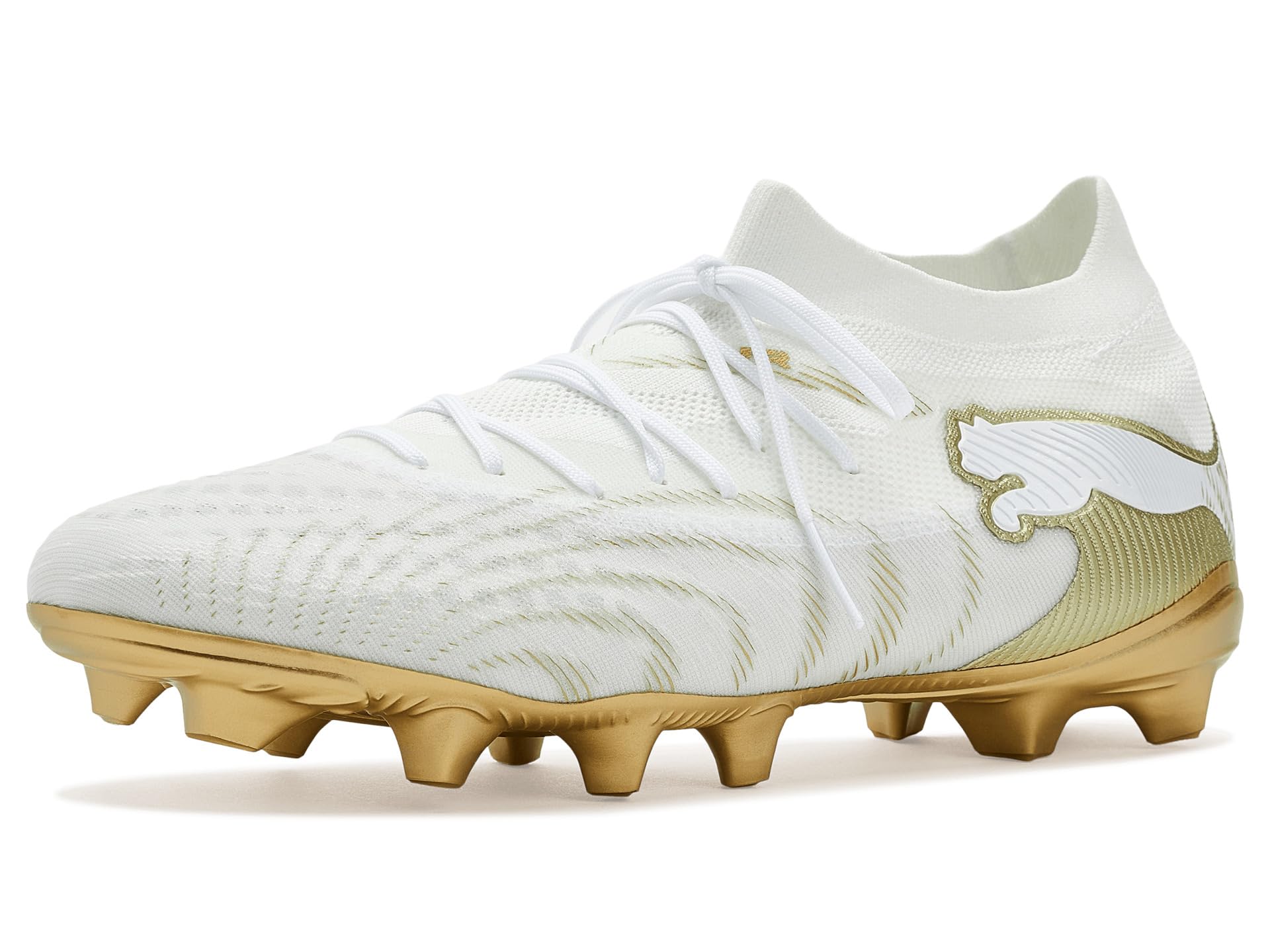
3. PUMA Mens Future 9 Match Soccer – Red
Built for the player who changes direction faster than the defender can react.
The Future 9 Match is the agility play in this list. Its stud design and placement are oriented for quick pivots and 360-degree turning on both firm ground and artificial grass, which is exactly the motion a winger or attacking midfielder makes ten times a match. The mesh upper uses a soft, lightweight base with a stretchy knitted collar and mid-cut construction, so the boot hugs the ankle without the stiffness of a full leather cuff.
Two details stand out for ball control. Embossed zones across the upper add texture that grips the ball on contact, and support tape across the midfoot locks the foot down so it does not slide inside the boot during a hard cut. The cushioned insole and polyester lining keep it comfortable through a full session, and PUMA states at least 20% recycled material in the build. At 2.43 pounds it sits in the mid-weight bracket rather than the featherweight class.
PUMA describes this one as suitable for regular to wide foot types, which matters because knit uppers are less forgiving than leather. If your feet are very narrow, the stretchy collar may feel loose around the ankle. And because it is a newer release with a smaller track record, you are buying partly on the spec sheet rather than years of accumulated feedback.
The agility case: stud orientation plus midfoot tape is a deliberate pairing aimed at players who turn sharply and often.
Pick this if: you play on a mix of grass and artificial surfaces and your game is built on cutting and pivoting.
Look elsewhere if: you have very narrow ankles or want a boot with a long, proven track record behind it.
4. PUMA Mens Ultra 5 Pro Firm Ground/Artificial Ground
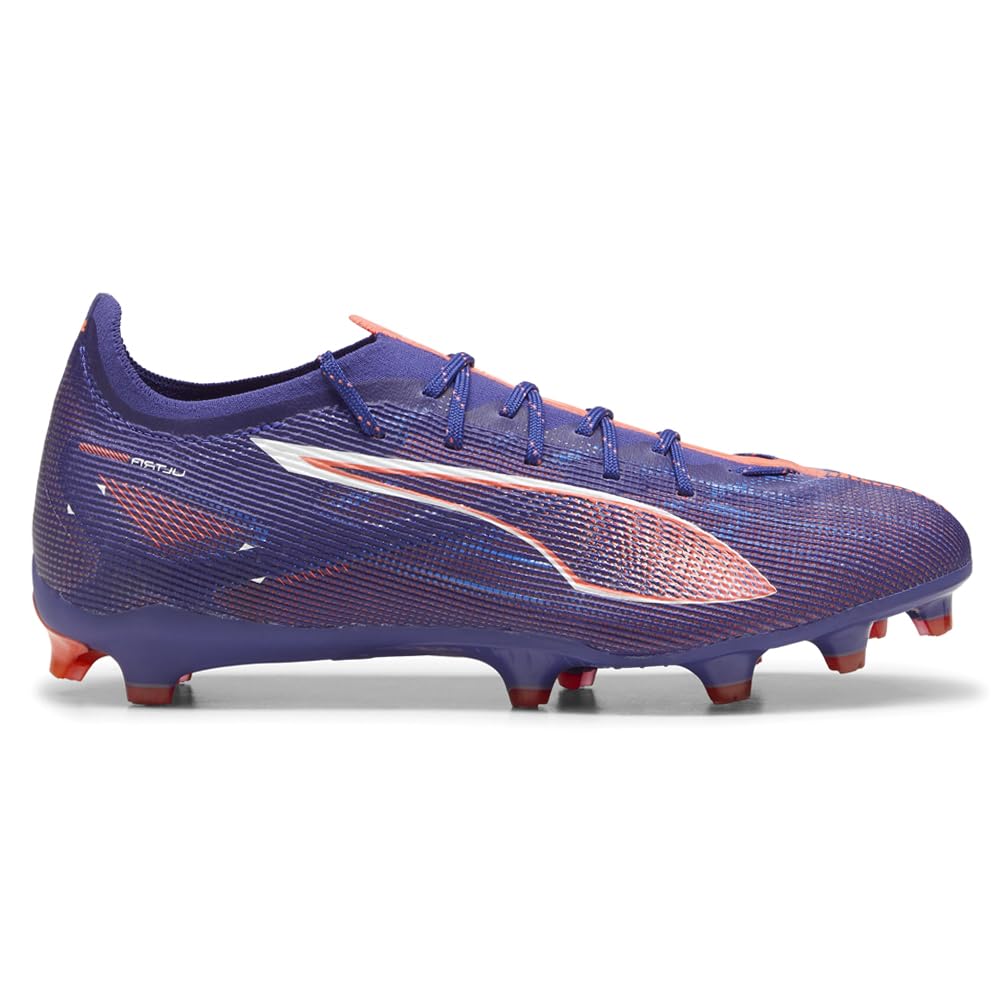
One boot for two pitches, with studs angled to let you switch surfaces without switching boots.
Most boots force you to pick a surface. The Ultra 5 Pro is built around the idea that you should not have to. Three rounded studs on the lateral side — the outer edge of the sole — let you move between firm ground and artificial grass without the plate feeling wrong on either. PUMA pairs its SpeedSystem outsole with the FastTrax stud design for traction, and pitches this version at the aspiring pro who plays with speed as the primary weapon.
The positioning is clear: this is a straight-line boot. If your game is about beating a defender to the ball over five yards, the geometry of the sole is designed for that first step. Where a control boot like the Mundial Team wants the ball to settle on your foot, this one wants you moving.
The trade-off for that surface flexibility is weight — at 2.43 pounds it is not the lightest boot in this guide. The F50 Pro below runs 2.13 pounds, so if pure lightness is your priority the numbers point there. The Ultra 5 Pro makes more sense when you cannot guarantee the same pitch every week and want one boot that handles both.
The two-surface trick: rounded lateral studs are the mechanism that lets you play grass on Saturday and artificial on Wednesday without a second pair.
Reach for this if: your schedule rotates between natural and artificial pitches and you want one pair to cover both.
skip it if: shaving every possible ounce matters more to you than surface flexibility.
5. adidas Unisex-Adult League Predator Fold-Over Tongue
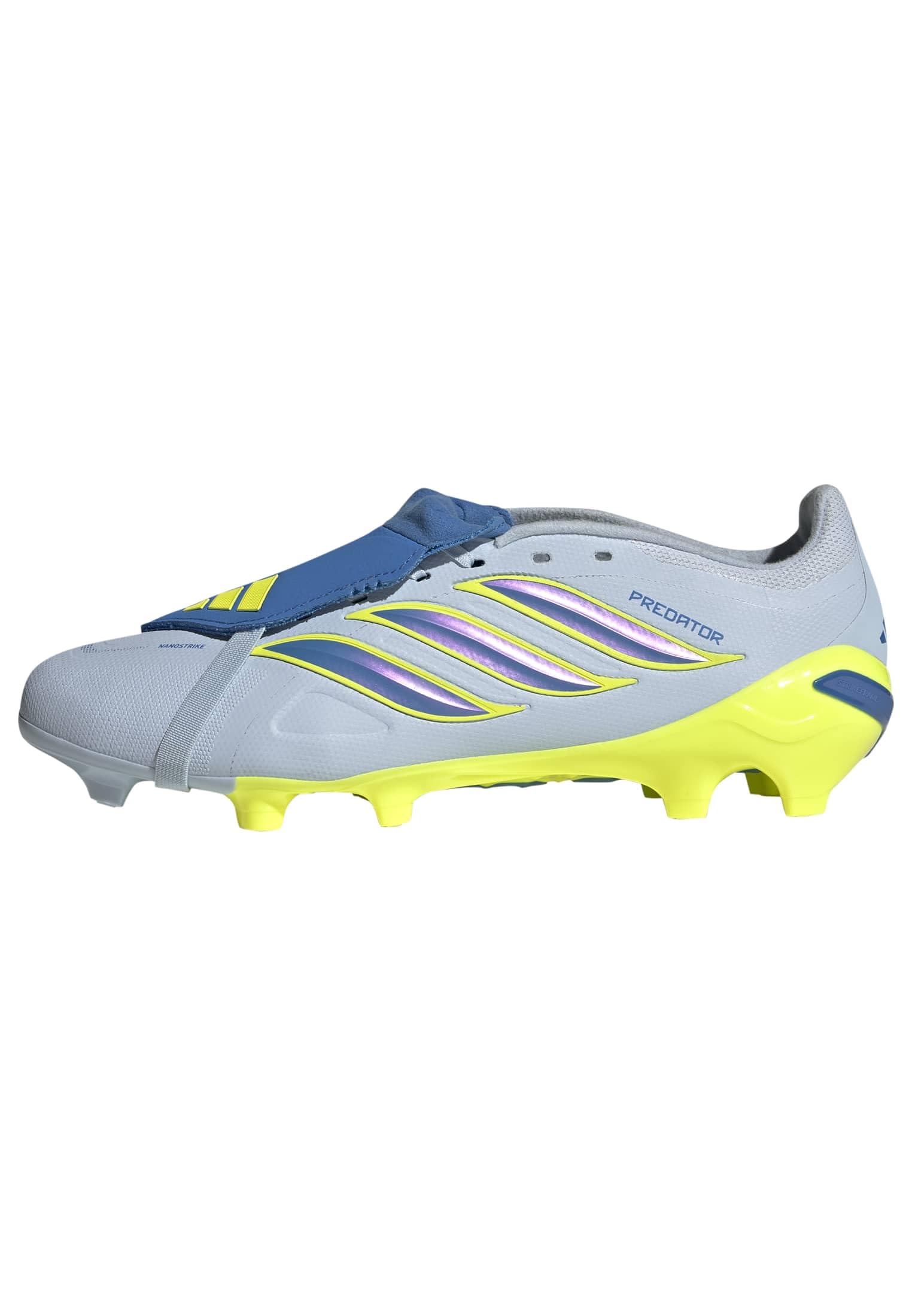
The fold-over tongue design gives you a cleaner striking surface and a locked-down lacing feel.
This is the Predator silhouette in its League tier, and the detail that defines it is the fold-over tongue. Instead of laces sitting exposed across the top of your foot, the tongue folds over to create a smooth surface — exactly where a lot of players want the ball to meet the boot on a driven shot. The sole is rated for firm and multi ground, so it covers grass and firmer synthetic surfaces without needing a second pair.
Quality is the top positive in owner feedback, comfort ranks second, and the value read holds up. The fold-over design also keeps laces from catching on the ball or on a defender’s studs in a challenge, which is a small thing that matters in a tight match.
Two honest notes, and they are the main reasons buyers hesitate. The most-repeated concern is sole durability — a share of players report the sole detaching after about two months, so rotate it rather than grinding through every training session. Sizing is also a known issue: multiple players say it runs small with a snug toe box, so size up if you are between sizes. Buyers otherwise praise the upper’s quality strongly, which makes the sole the sticking point rather than the upper.
Why players gravitate to it
- Fold-over tongue creates a flat, clean striking surface across the top of the foot
- Firm and multi ground sole covers more than one pitch type
- Predator identity and quality leave a strong impression on most buyers
The two things to weigh
- Sole separation shows up in a share of feedback after roughly two months
- Runs small with a snug toe box — size up if between sizes
Worth it for: strikers and set-piece takers who value a clean strike surface and rotate boots through the week.
Reconsider if: you need one pair to survive heavy daily training without sole wear concerns.
6. adidas Unisex-Adult F50 Pro Firm Ground
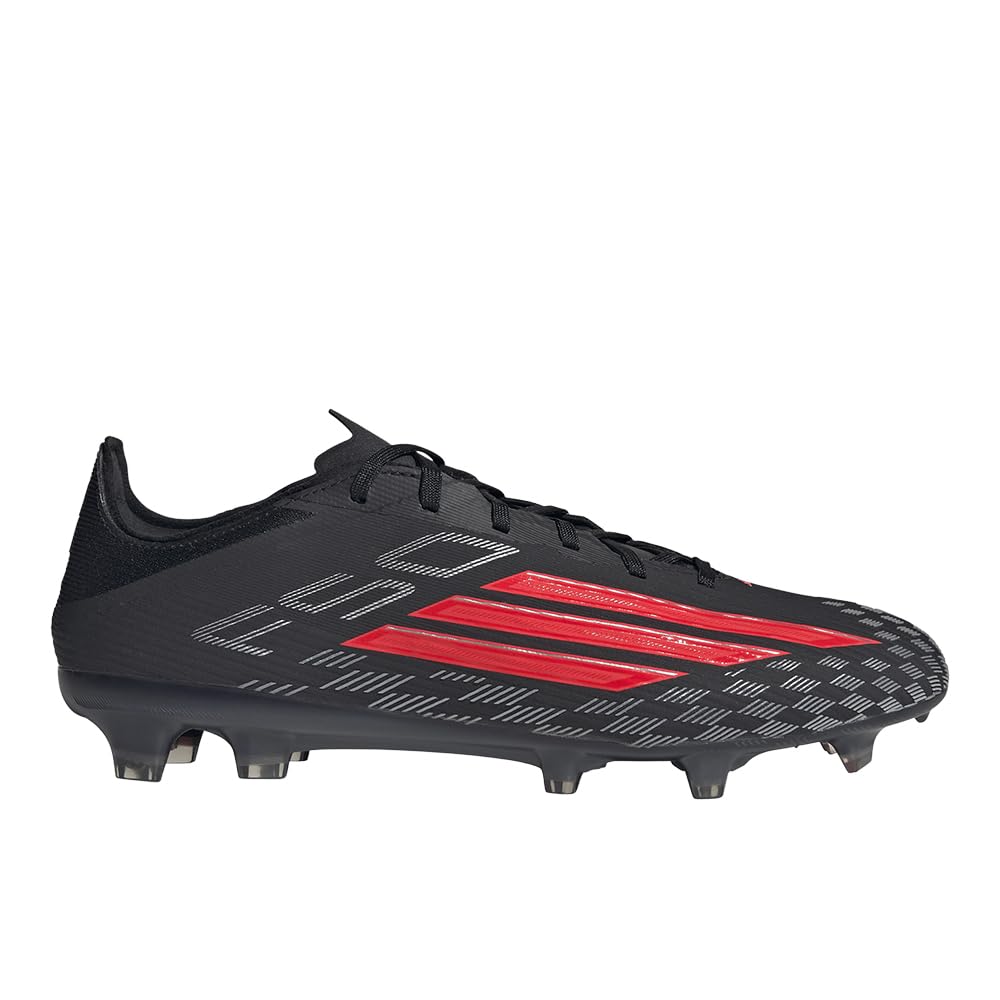
The lightest boot on this list, and the one that disappears on your foot at full sprint.
Weight is the whole argument here. The F50 Pro is listed at 2.13 pounds against 2.43 pounds on the Ultra 5 Pro and the Predator League — which is, per the verified figures, roughly 14% lighter. On a ninety-minute match that difference shows up in the last twenty minutes, when your legs are heavy and every gram on your foot feels like more. It is a firm-ground boot, so it is aimed squarely at dry natural grass.
The F50 line is adidas’s speed silhouette, and this Pro tier is the version for players who want that geometry without the flagship price. The package dimensions suggest a compact fit, and the boot is built for a direct, fast running style rather than a possession game. It suits a forward who plays on the shoulder of the last defender.
The honest note: it earns its lightness partly by keeping things minimal, so this is not the boot for a player who wants cushioning and a padded leather feel. It is also firm ground only, so artificial pitches are out. If your game is physical and you spend a lot of time in challenges, a heavier leather boot will feel more forgiving. If your game is about getting there first, this is the one.
The weight math: 2.13 pounds versus 2.43 on the heavier boots here — that is a real difference over a full match, and the reason this pick exists.
This is your boot if: you play on grass, you rely on pace, and you want the lightest feel in this lineup.
Best left alone if: you split time between grass and artificial surfaces, or you want more padding underfoot.
7. adidas Men’s Copa Mundial Soccer Cleats
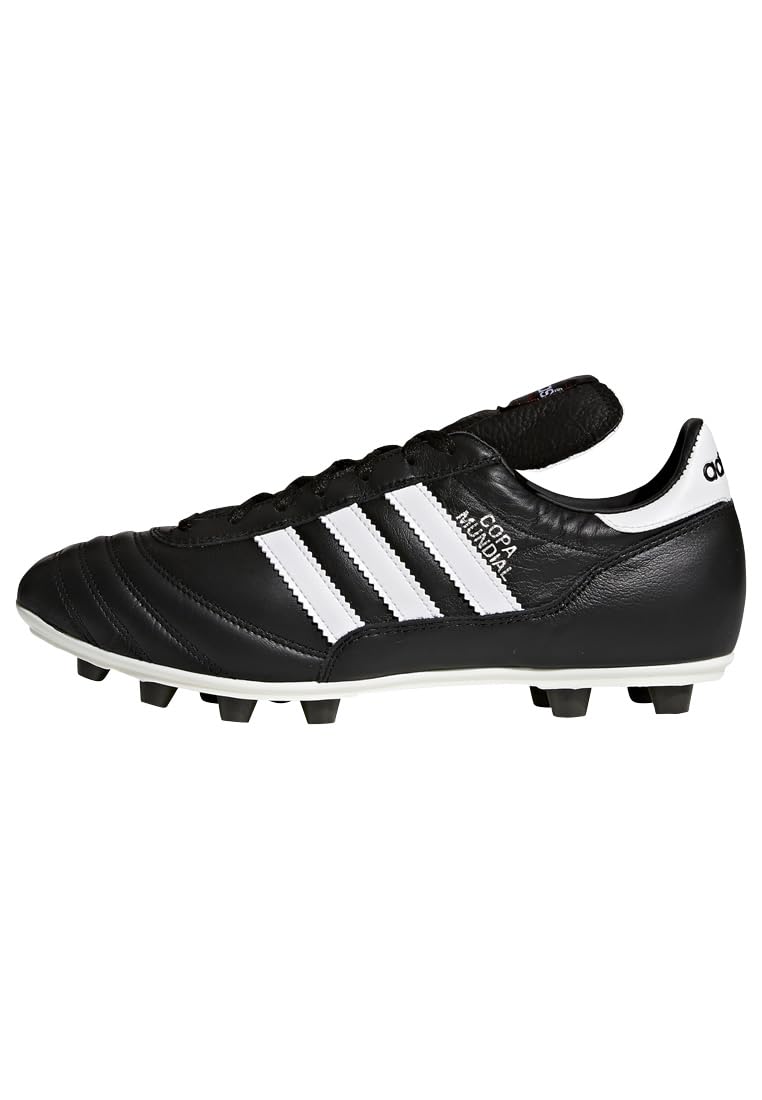
First released in 1979 and still doing the same job: soft leather, firm ground, no gimmicks.
There are very few boots you can point to that have been in continuous production since 1979. The Copa Mundial is one of them. It is made in Germany with a soft leather upper that gives a cushioned, familiar touch on the ball — the kind of contact that lets the ball settle rather than skid away. The lacing is straightforward, the fit is described as regular, and the sole is a synthetic rubber outsole for firm ground. Textile and synthetic lining sit inside, with a rubber insole underfoot.
Where a modern knit boot pulls your foot into a tight, aerodynamic shape, the Copa asks less of your foot and gives more back in comfort. The leather feels great on contact and the feedback notes that feet stay comfortable after playing. That is the appeal of the classic: it does not try to change how you play, it just gives you a clean surface and enough padding to feel connected.
The catches are honest. Fit draws mixed feedback, so it may feel loose on narrow feet or snug on wider ones. The design is dated in the sense that it offers no modern materials or speed geometry, and at 2.43 pounds it is heavier than the speed boots here. Longevity also splits opinion rather than being universally praised. This is a boot for the player who wants a leather touch and the heritage look, not the one chasing the lightest possible shoe.
The reasons it survives
- Soft leather upper that gives a muted, controlled first touch
- Comfort holds up through a full match — no hot spots after playing
- Made in Germany, with the classic silhouette buyers recognise instantly
What to know before ordering
- Fit feedback splits, so narrow and wide feet both have opinions
- Heavier than the speed boots in this guide at 2.43 pounds
- No modern upper material or speed geometry — it is a classic by design
The classic call: pick the Copa if you want a leather boot that has been refined for decades and you play on firm grass.
Not for you if: you want a modern speed boot or you need the lightest possible weight on your foot.
8. adidas Unisex Pro Fold-Over Tongue Firm Ground
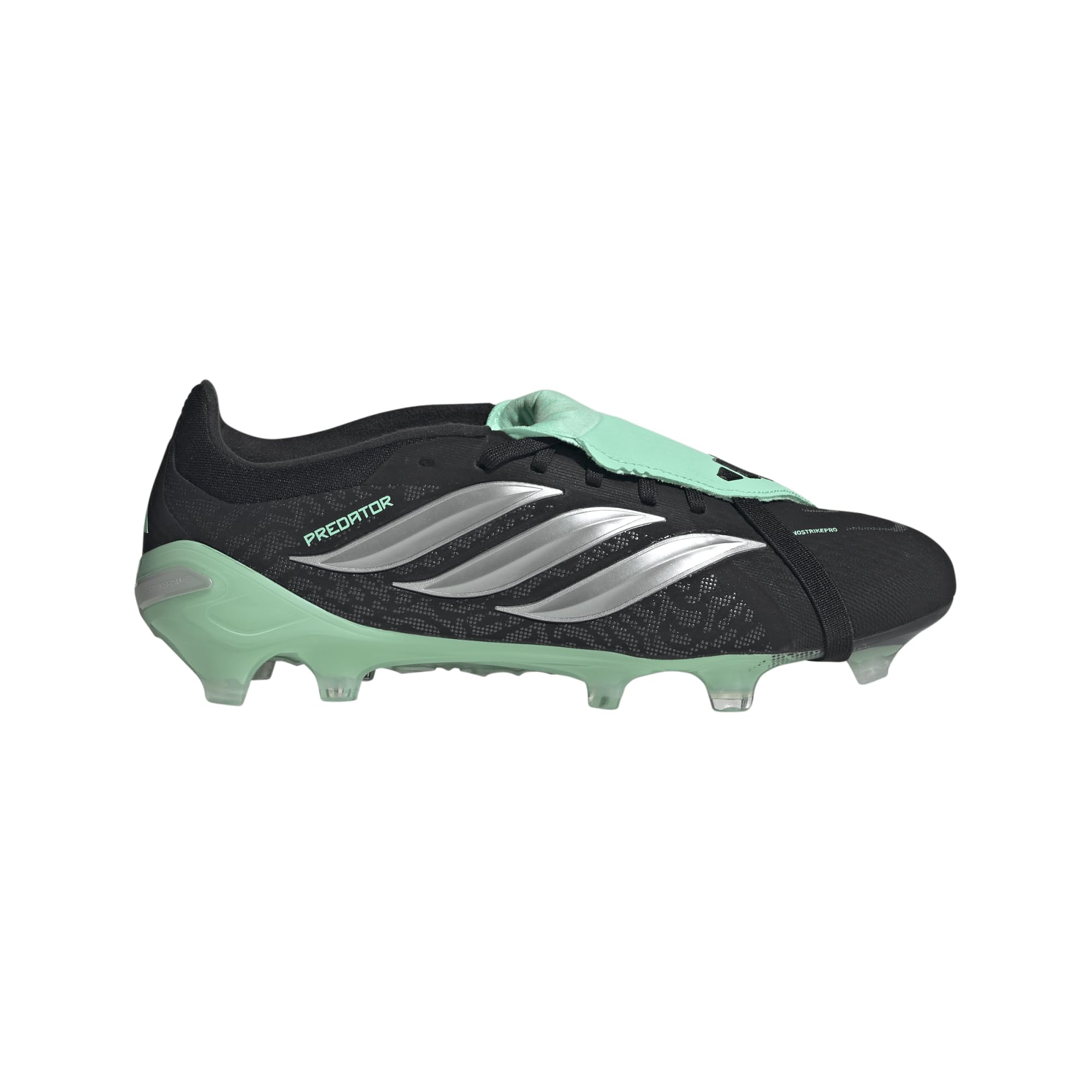
The Pro-tier Predator: same fold-over idea as the League, built for a tighter, firmer hold.
If the League Predator above is the accessible version, this is the step up — the Predator Pro with the same fold-over tongue but a Pro-tier build. The fold-over tongue creates a clean surface across the lacing area for striking, and the firm-ground sole plate is built for natural grass. The 2.43-pound listed weight is identical to the League Predator and the Copa Mundial, so the difference is in the tier of construction rather than the scales.
The clearest head-to-head here is against the League Predator. Both share the fold-over concept, but this Pro version sits a tier higher in the adidas range and has the tighter, more precise feel you would expect from pushing up a level. The buy-in is that the track record is much thinner — this is a newer, less-reviewed boot, so you are leaning heavily on the spec sheet and the tier, not on years of accumulated owner experience.
What you are really buying is the fold-over tongue combined with Predator Pro positioning on firm grass. If you already know the Predator shape suits your foot and you want the Pro version, this is the natural pick. If you want a safer bet with a lot of voices behind it, the League Predator or the Copa Mundial both have far more history to judge by.
The tier upgrade: same 2.43-pound weight and fold-over tongue as the League, but a Pro-tier construction that sits higher in the adidas line.
Go for it if: you know the Predator fit and want the Pro-grade version with a clean striking surface on firm grass.
Hold off if: you want a boot with an established track record rather than a newer release still building its reputation.
9. Nike Mercurial Superfly 10 Elite
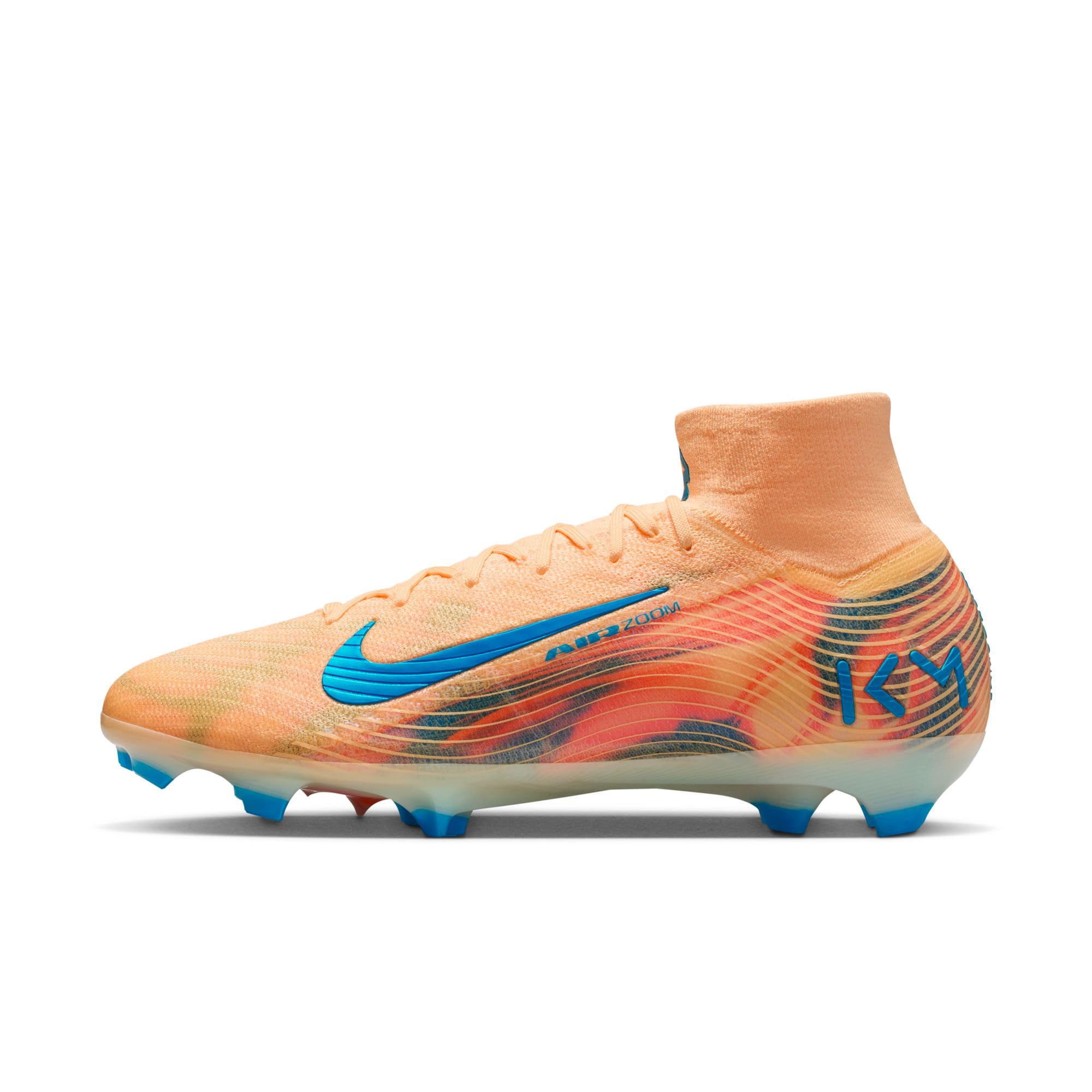
Nike’s thinnest Mercurial upper yet, built to put your foot as close to the ball as possible.
The Superfly 10 Elite is the most technically ambitious boot here. Nike’s headline feature is a 3/4-length Air Zoom element — a cushioning unit that runs through most of the sole — paired with a wave-shaped traction pattern of cascading studs. Those studs also increase the surface area of the Air Zoom unit, so the cushioning and the grip are designed together rather than bolted onto each other. The largest stud is described as just as high as Nike’s proven medium cleats, so traction stays consistent with a standard boot.
The upper is where it gets interesting. Nike combines Gripknit, Atomknit, and Flyknit into what it calls the thinnest Mercurial upper yet, which brings your foot closer to the ball. Gripknit is a grippy material designed to hold the ball in both wet and dry conditions, and the micro-moulding structure hugs the foot for more consistent contact. A Dynamic Fit collar of soft, elastic material wraps the ankle for a secure hold without a stiff cuff. Nike describes the fit as similar to an athletics shoe.
This is a player’s boot for short, slightly damp grass — the surface where a high-pace game lives. The catch is that a boot this minimal demands a foot that fits it closely; a loose fit ruins the point of the thin upper. It is also firm-ground only and priced in the flagship bracket, so it suits the committed player rather than the occasional kickabout. If you want a boot that gets out of the way and lets you feel everything, this is that boot.
Where the engineering shows
- 3/4-length Air Zoom unit cushions the run while cascading studs add grip
- Gripknit holds the ball in wet and dry conditions alike
- Thinnest Mercurial upper yet brings your foot closer to the ball
- Dynamic Fit collar locks the ankle without a stiff, restrictive cuff
The reality of a minimal boot
- Firm-ground only, so artificial pitches are out
- Thin upper leaves little room for break-in — a close fit matters more here
- Flagship-tier positioning puts it at the top of the range
Your boot if: you play a high-pace game on short, damp grass and want the closest ball feel Nike offers.
Not your boot if: you need artificial-ground versatility or a padded, forgiving upper.
Know the Specs
Surface: Firm Ground vs Artificial Ground
A firm-ground sole is shaped for dry natural grass, with studs that sink and grip that surface. Artificial-ground soles spread the load differently for synthetic turf, which is firmer and less forgiving underfoot. Some boots here, like the PUMA Future 9 Match and the PUMA Ultra 5 Pro, cover both, and those are the safest choice if you cannot guarantee a single surface every week.
Upper Material and Ball Feel
Leather uppers, like the Copa Mundial and the Mundial Team’s split suede, soften over time and take the sting off a firm pass. Microfiber, like on the New Balance 442 Pro, is lighter and more consistent but does not stretch. Knit uppers, like Nike’s Gripknit, put your foot closest to the ball for the sharpest feel at the cost of padding.
Weight and the 2.1-to-2.4-Pound Range
Weight splits the boots here into two camps. The lightest, the F50 Pro at 2.13 pounds, is built for players who live in top gear. The heavier classics at 2.43 pounds trade some of that lightness for durability and a more cushioned feel. Neither is wrong — pick based on how much of your game is sprinting versus holding the ball.
Stud Shape and Pivot Ability
Rounded studs on the outer edge, like the Ultra 5 Pro’s lateral design, let you turn sharply and switch surfaces without slipping. Cascading, wave-shaped studs on the Mercurial spread grip across the sole. Twisted or angled stud layouts help with 360-degree agility. If your game is built on cutting, this is the spec to study most closely.
Common Questions
Can I wear firm-ground soccer cleats on artificial grass?
Do leather soccer boots stretch and should I size down?
What is a fold-over tongue and why does it matter?
Are speed boots like the F50 Pro and Mercurial bad for wide feet?
Should a striker choose the Predator or a speed boot?
How long should a pair of soccer boots last?
What does the Air Zoom unit on the Mercurial Superfly 10 Elite actually do?
Is a heavier boot a disadvantage for a midfielder?
Do I need different boots for wet grass?
The Bottom Line
For most players chasing the professional soccer shoes decision, the adidas Mundial Team is the safest bet — split suede that softens into your foot, an EVA midsole for turf and hard courts, and a durability record that carries past a full season. If you play on natural grass and want that leather touch, the Copa Mundial is the heritage answer with the same soft-leather feel. And if your game is built on pace on firm ground, the adidas F50 Pro at 2.13 pounds is the lightest option here and the one to reach for. Start with your surface, then your foot width, then your style — that order will land you on the right boot more often than any marketing claim.
How we choose
We do not accept paid placement. Every pick is matched to a real buyer and a real use-case; we do not hands-on test units.
Sources
Specifications: manufacturer listings and product documentation. Review insights: verified customer reviews, as of November 2026. Pricing: not shown on this page (it changes often); check the current price via the retailer link.
As an Amazon Associate, Tactical Gear Guy earns from qualifying purchases. This does not affect which products we feature.