Specs are compiled from manufacturer listings and verified buyer reviews and can change over time — please confirm the key details on the product page before buying.
At seven months your baby has outgrown the newborn bucket seat but is nowhere near ready to face forward. The right seat here keeps them rear-facing — the safest direction for a small neck and spine — until they hit the seat’s rear-facing weight limit. That means the number that decides your purchase is the rear-facing weight limit, not the color or the cup holders. This list covers seats that genuinely work rear-facing at seven months, from narrow three-across shells to rotating seats that save your back.
This guide is built by comparing the manufacturers’ published specifications and the patterns across verified customer reviews, so you get each pick’s real strengths and trade-offs instead of marketing spin.
Your seven-month-old still needs to ride facing backward, and the seat you pick now has to last through toddlerhood. One honest note first: these picks use flexible matching, so a few seats list a rear-facing range that starts above your baby’s current weight. A couple rotate or convert rather than sit still — the closest same-type fit does the same job. Below are the best rear facing car seats for a 7 month old, sorted by what actually matters at this stage.
Top Picks

How To Choose The Best Rear Facing Car Seat for 7 Month Old
At seven months, most babies sit somewhere in the middle of an infant-to-toddler weight band. Your job is to buy a seat whose rear-facing range comfortably covers that weight now and keeps covering it for another year or more. Everything else — rotation, fabric, cup holders — is secondary to that one fit question.
The rear-facing weight ceiling is the real buying decision
The higher the rear-facing limit, the longer your child rides in the safest orientation. Seats on this list stretch from a 50 lb rear-facing ceiling down to a 40 lb ceiling, and that gap is exactly the difference between turning your child around early and keeping them backward through the toddler years. Check the rear-facing number before anything else.
Legroom and recline decide how long they stay happy
A rear-facing seat pushes your child’s feet toward the vehicle seatback, and a cramped child complains. An adjustable extension panel — one seat here adds up to 5″ of extra legroom — buys months of comfort. A deep recline or a flip foot does the same for napping babies, letting the head rest back instead of flopping forward.
Back seat width and 3-across installations
If you have other children or carpool duties, shell width is your second number. Narrow shells around 17″ to 17.5″ are built to sit three in a row in many vehicles. A rotating seat, by contrast, needs extra clearance to swing, so measure your door opening before you commit.
Side-by-Side Comparison
| Model | Best For | Rear-Facing Weight | Forward-Facing Weight | Shell Width / Mode Count | Amazon |
|---|---|---|---|---|---|
| Graco Extend2Fit 2-in-1★ Best Overall | Longest rear-facing ride on a mid-range budget | 4–50 lb | 26.5–65 lb | 2-in-1 convertible | Amazon |
| Chicco KeyFit 30 ClearTexBest for Small Babies | Small babies and tight back seats | Infant carrier with stay-in-car base | — | Rear-facing infant carrier | Amazon |
| Diono Radian 3R MaxBest 3-Across Fit | Three-across families and travel | 5–50 lb | 26–65 lb | 16.9″ | 3-mode all-in-one | Amazon |
| Joie Saffron SI 4-in-1 | Plush padding in a compact car | 4–40 lb | 30–65 lb | 19″ | 4-mode convertible | Amazon |
| Evenflo Revolve360 Extend | One-handed loading with a bad back | Up to 50 lb | — | 360° rotating all-in-one | Amazon |
| Safety 1st Turn and Go 360 ST | Visible install confirmation | Part of 5–100 lb range | Part of 5–100 lb range | 360° rotating 3-in-1 | Amazon |
| Britax One4Life Slim | A decade in one seat | 5–50 lb | 30–65 lb | 17.5″ | 3-mode all-in-one | Amazon |
| Britax Poplar | Rear-facing in a sedan | Up to 50 lb | — | 17″ | 2-in-1 convertible | Amazon |
| Graco Turn2Me 3-in-1 | Back-saving rotation in a mid-size SUV | 4–40 lb | 22–65 lb | 360° rotating 3-in-1 | Amazon |
| UPPAbaby Rove | Portable between cars | 14–50 lb | 30–65 lb | 2-in-1 convertible | Amazon |
| Cybex Callisto G 360 | Swivel plus buckle alerts | 4–65 lb harness | Booster to 120 lb | 360° rotating all-in-one | Amazon |
Detailed Reviews
1. Graco Extend2Fit 2-in-1 Convertible Car Seat, Gotham
Our pick — 4.5+★ from 57,000+ verified ratings; the strongest balance of quality and price.
The seat that keeps a growing toddler facing backward until they hit 50 lb.
The Graco Extend2Fit wins this category on one number: it stays rear-facing all the way to 50 lb, well past the point where most seven-month-olds are ready to turn around. The Joie Saffron SI tops out at 40 lb rear-facing, so the Extend2Fit gives your child a meaningfully longer backward ride. It also gives those growing legs somewhere to go — a four-position extension panel slides out for up to 5″ of extra legroom, so knees stay bent instead of jammed into the seatback. That legroom is what keeps a rear-facing toddler from kicking the seatback.
Comfort is what carries this seat in real homes. The padding and the recline angle settle a fussy baby fast, and the Simply Safe Adjust harness moves the headrest and straps together in one motion — so you never rethread straps during a growth spurt. Two cup holders handle a snack and a drink at once. The shell also stays narrow front-to-back, a genuine help in a Jeep Wrangler or any tight second row. It grows into a forward-facing harness from 26.5 to 65 lb, so this is not a one-stage purchase.
The catch is size in the other direction. At 50 lb rear-facing you need to keep the front passenger seat forward, and taller front-seat riders will feel it. If your car is genuinely tiny, the Britax Poplar’s narrow 17″ shell is the better squeeze. Otherwise this is the strongest all-rounder here — the one most families should start with.
What earns it first place
- 50 lb rear-facing limit — the longest backward ride among the mid-range picks
- Up to 5″ of added legroom from the 4-position extension panel
- No-rethread harness adjusts with the headrest in one motion
- Two cup holders and a narrow front-to-back footprint
What to plan around
- Rear-facing depth pushes the front seat forward in compact cars
- Harness tightening takes a firm, deliberate pull
Start here if: you want maximum rear-facing years without a premium price and your second row can spare some depth.
Look elsewhere if: your front passenger already sits knees-to-dash — go narrow instead.
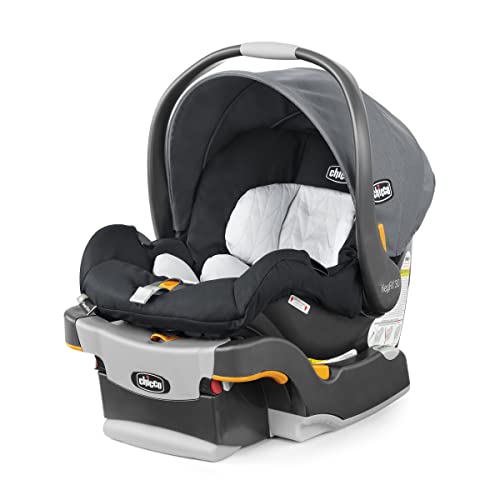
2. Chicco KeyFit 30 Infant Car Seat
The carry-out option for a seven-month-old on the smaller side of the growth curve.
A seven-month-old who still fits an infant carrier gets a huge practical perk: you can unclip the whole seat and carry a sleeping baby inside. The KeyFit 30 is that seat, and the install is its headline trick — a SuperCinch force-multiplying LATCH tightener pulls the base snug with leverage instead of muscle. Two bubble-level indicators and a spring-loaded leveling foot take the guesswork out of the base angle.
It nests into tight spaces nicely, which is why it suits a small car or a city apartment that doubles as a garage. The shell is lined with EPS foam (energy-absorbing foam that cushions an impact), and the seat pad is machine washable. The fabric is flame-retardant-free and GREENGUARD Gold certified (a third-party label for low chemical emissions) — a real plus if you care about what surrounds your baby’s face on a long drive. It also clicks into compatible Chicco strollers for a car-to-sidewalk handoff.
The trade-off is longevity. This is a rear-facing-only carrier, so the day your child outgrows it you buy again — unlike the convertible picks here that keep going to booster age. Weight and padding split opinions: it is manageable to carry but not feather-light with a baby inside, and very small newborns can look scrunched until they fill out. Chances are good this is a short-term bridge rather than your ten-year seat.
Where it shines: the SuperCinch tightener makes a rock-solid base install repeatable, and small-back-seat fit is exactly where it was designed to win.
Honest limit: rear-facing-only means it will not last past the carrier stage, and the padding is a matter of taste rather than plush.
Pick it when: you want the carry-anywhere convenience of an infant bucket seat and your baby still fits one.
Think twice if: your seven-month-old is already long and heavy — a convertible will serve you far longer.
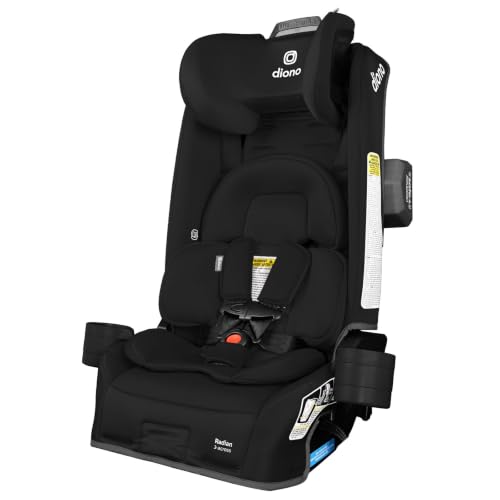
3. Diono Radian 3R Max Convertible Car Seat
Sixteen point nine inches wide, so three kids can share one bench seat.
When you are fitting three car seats across a single row, width is the only spec that matters, and this shell measures 16.9″ — narrow enough for a three-across setup in most family vehicles. The removable Safe+ side impact pods are the clever bit: keep them on for door-side protection, pop them off when you need every inch for a tight multi-seat arrangement. It also folds flat for trunk storage and is FAA-approved for flights, rare in a full-size convertible.
Rear-facing it holds 5 to 50 lb, then converts to a forward-facing harness at 26 to 65 lb and a high-back booster at 40 to 120 lb. That is three stages on one steel-reinforced frame, which is why the maker frames it as a ten-year seat. A 10-position headrest and 6-position harness adjust as your child grows, and a detachable infant support and wedge help a small baby sit snugly from day one.
The honest caveat is installation effort — this is a rigid, heavy shell that rewards careful belt routing, so budget real time on the first fit, not five minutes in a parking lot. Compared with the Joie Saffron SI’s 4–40 lb rear-facing band, the Diono’s 5–50 lb band keeps your seven-month-old backward for longer. Two dishwasher-safe cup holders and a washable pad round out the daily-grind details.
The reason to buy: 16.9″ of width plus removable side pods is the most space-efficient setup here, and the fold-flat frame travels well.
What you accept: a steel-core seat is heavy and the first install takes patience.
Made for: families juggling three seats in one row, or anyone who wants a seat that packs down for travel.
Skip if: you want a featherweight shell you can move between cars without breaking a sweat.
4. Joie Saffron SI Convertible Car Seat
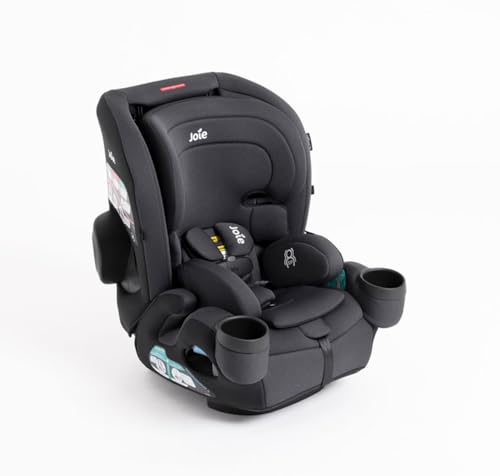
The one with the padding soft enough that a fussy baby settles in on the drive.
Four modes in one shell is the pitch here: rear-facing harness from 4 to 40 lb and up to 43″, forward-facing harness from 30 to 65 lb and up to 49″, then high-back booster and backless booster on top of that. For a seven-month-old you will live in that first mode. The plush cushioning is what owners talk about — soft fabric, a high-quality feel, and a cover that wipes clean without a fight. For a baby who fights every ride, that padding is the difference between a calm drive and a screaming one.
The 3-position recline adjusts in seconds, and an integrated flip foot gives the deeper lay-back angle specifically for rear-facing, so a napping infant’s head rests instead of droops. A 10-position headrest and harness move together at the press of a button, and the AutoClick magnetic chest clip holds the harness out of the way while you load. It is also a smaller-car-friendly seat — owners with a WRX and other tight cabins report a good fit.
Where it differs from the Diono is the rear-facing ceiling: 40 lb here versus 50 lb there, so the Diono keeps a heavy toddler backward longer. The Joie’s other edge is the booster stages that stretch all the way to 120 lb and 60″. Expect to pay for the comfort — and check your child’s growth curve, because a big seven-month-old may hit 40 lb sooner than you expect.
Why it earns a spot: plush padding and the flip-foot rear recline make this the coziest ride for naps, and four modes cover infant through booster.
Fair warning: the 40 lb rear-facing ceiling is the lowest among the convertibles here, so a fast-growing toddler turns earlier.
Ideal for: compact cars and parents who want a plush, adjustable seat without stepping up to the premium tier.
Reconsider if: your child is already tracking large — you will want the higher rear-facing limit of a 50 lb seat.
5. Evenflo Revolve360 Extend All-in-One Rotating Car Seat

Swings toward the door so you can buckle a rear-facing baby without contorting.
Getting a seven-month-old into a rear-facing seat means reaching into the back seat at an awkward angle, and the whole point of this seat is that you do not have to. It rotates a full 360°, so it swings toward the door for loading and back into position with one hand. Combined with a rear-facing limit of up to 50 lb, you get both the comfort of an easier lift and the safety of keeping your child backward longer.
Install is set up to be done once: the Sure360 system with LockStrong belt-tensioning and Tether360 technology holds the seat for both rear and forward-facing use. A Quick Clean cover zips off for washing, and L.I.F.E. Guard linear impact engineering targets side-impact crash forces. The rotation is the star — owners describe the one-handed swing as the feature that sold them, and it is a back-saver on a heavy baby.
The honest wart is the install. This is not the seat to hand off between two cars every week, and a few owners find the fit tight or the base wobbly if the lock does not click in fully. Read the manual and confirm it says locked in. The rotation also needs door clearance, so measure before you buy if your garage is snug.
What wins people over: the 360° rotation plus a 50 lb rear-facing limit, a combo that makes daily loading genuinely easier.
The recurring gripe: fit and base stability split opinions — get the lock confirmed and install it once, properly.
Best fit for: parents with back trouble or a heavy baby who load rear-facing every single day.
Second thoughts if: you share one seat between two vehicles and reinstall often.
6. Safety 1st Turn and Go 360 ST Car Seat
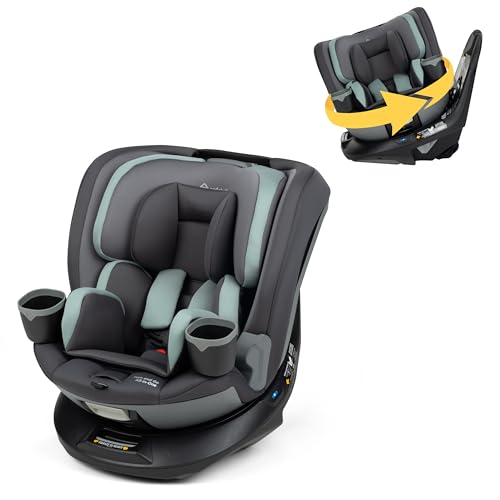
Red-to-green indicators take the guesswork out of a tight belt install.
Loose vehicle belt tension is the install mistake this seat was built to fix. SecureTech red-to-green indicators sit on the base and show you, visually, when your belt has reached proper tension — no more rocking the seat to guess. A built-in belt lock-off arm adds another hand, and the base installs the same way across all three modes, so you do not reinstall as your child grows from rear-facing to forward-facing to booster.
The full 360° SafetySwivel rotation handles the loading problem: turn the seat toward you, buckle a seven-month-old, and swing it back. It covers 5 to 100 lb across the three modes, from rear-facing through booster. Owners describe the swivel turning the daily buckle into a quick, low-strain motion, and the adjustable harness grows with the child.
Installation and value split opinions — some find the setup easy, others wrestle with it, and it is the priciest of the non-premium rotating seats. Rotation also only helps while rear-facing, and a few buyers report the mechanism needing careful, correct use to stay smooth. Get it installed right the first time and the feedback lights do their job.
Why it stands out: SecureTech red-to-green indicators and one-time base installation make confident setup the whole design goal.
Worth knowing: install effort divides owners, so set aside proper time and read the manual before you judge it.
Reach for it if: you want visual proof the belt is tight and a rotation that grows through three modes.
Hold off if: you want a no-fuss install you can do in a parking lot on the first try.
7. Britax One4Life Slim All in One Car Seat, Raven Black

One shell that starts rear-facing at five pounds and ends as a booster at 120.
Ten years of coverage from a single seat is the promise, and the range backs it up: rear-facing infant from 5 to 50 lb, forward-facing harness from 30 to 65 lb, then a high-back booster from 40 to 120 lb. For a seven-month-old that means a 50 lb rear-facing ceiling. The slim 17.5″ shell is built to fit three across in select vehicles — though Britax cannot guarantee three-across in every car, so measure first.
The install is the reason to step up to this level. ClickTight works in three steps — pinch open, thread and buckle, click closed — and color-coded belt paths make each mode obvious. The seat adds a patented V-shaped tether, a high-strength steel frame, two layers of energy management, and a SafeWash cover that is naturally flame-retardant with no added FR chemicals. A 15-position no-rethread harness and 9-position recline are both one-hand adjustments.
Where it wobbles is fine-tuning the harness: padding and comfort draw the most affection, but tightening the straps is where opinions cool, with some owners finding it stubborn. Built-in cooling channels and three infant inserts help a small baby stay comfortable through a long ride. Expect a heavier seat too — thick padding and a steel frame have a weight cost.
Where the money goes
- 5–50 lb rear-facing, then harness and booster through 120 lb — a decade in one box
- ClickTight three-step install with color-coded belt paths
- No-rethread 15-position harness and 9-position recline, both one-hand
- Flame-retardant-free SafeWash cover plus built-in cooling channels
Where it asks patience
- Harness tightening is the most-divided detail — some find it stiff
- Three-across fit is not guaranteed in every vehicle
Worth it if: you want one seat to carry you from infant insert to booster and you value an install you can trust without a tech.
Not your match if: you want the lightest seat you can move car to car.
8. Britax Poplar Convertible Car Seat

A rear-facing toddler seat that saves the front passenger’s legroom in a sedan.
Sedan owners face a specific problem: a rear-facing seat eats the front legroom. The Poplar’s 17″ slim shell does not take up much space front-to-back when rear-facing, which owners in small cars notice immediately. It stays rear-facing up to 50 lb, then switches to forward-facing as your child grows, and the ClickTight system opens the belt path fully — open, thread, buckle, click closed.
Comfort and the install both earn strong reviews: the padding is generous, the shell stays tight without wiggle in a sedan, and a 14-position harness and headrest adjust together so one seat fits two siblings of different heights. Underneath is a steel frame and crumple zone for absorbing crash energy, plus a patented V-shaped tether to slow forward movement. The cover is naturally flame-retardant with no added FR chemicals and goes washer and dryer friendly, with two dishwasher-safe cup holders.
Two things to weigh: it is genuinely heavy for a convertible, so this is not a seat you toss between cars casually, and some owners find they want to add a rebound bar depending on their setup. If you need three-across in a wide vehicle, the Britax One4Life Slim’s 17.5″ shell is the closer spec; for pure sedan rear-facing fit, this is the pick.
What it gets right: 17″ width and a shallow rear-facing footprint solve the tight-sedan problem, with ClickTight making setup repeatable.
Heads-up: a steel frame and thick padding make it heavy, so shared-seat households should plan the lift.
Great for: sedan and small-car drivers who want a rear-facing-friendly footprint and a trusted brand’s install system.
Less ideal for: someone who needs to move the seat between cars every day.
9. Graco Turn2Me 3-in-1 Rotating Convertible Car Seat, Brighton

Rotate, buckle, swing back — the daily-loading shortcut for a 99th-percentile baby.
If your seven-month-old is already tipping the scales, the lift is the hardest part of any car ride, and this seat’s one-handed rotation is aimed straight at that. It swings rear to forward-facing to give you a face-to-face angle while you buckle, and owners with heavy babies describe the back relief it delivers. It covers 4 to 40 lb rear-facing, then a 22 to 65 lb forward-facing harness, and up to 100 lb as a high-back booster.
SnugLock installs in under a minute using either the seat belt or LATCH, and the InRight LATCH push-button gives an one-second attachment with an audible click, so you can hear it lock. A 10-position headrest and no-rethread Simply Safe Adjust harness move together, and ProtectPlus engineering covers frontal, side, rear and rollover crash forces.
The catch is the rear-facing ceiling: 40 lb here, versus the 50 lb you get from the Graco Extend2Fit or Evenflo Revolve360, so a large toddler turns around sooner. And the rotation only works while rear-facing — a detail owners flag because it stops helping once you move forward. Fits comfortably in vehicles from an older car to a mid-size SUV, so check your cabin width before you buy.
Where it earns its keep: SnugLock plus one-hand rotation turns a strain-filled lift into a quick swing and click.
The limit to plan for: 40 lb rear-facing and rotation that stops once you face forward.
Choose it if: your body needs a break from lifting a chunky baby and you want a fast, audible-click install.
Look past it if: you want to keep your child rear-facing past 40 lb.
10. UPPAbaby Rove Convertible Car Seat — Kavneer
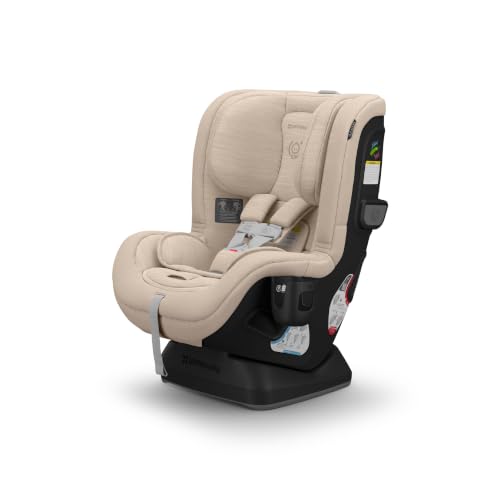
A full convertible that stays under 25 lb, so moving it between cars is real.
Most convertible seats are anchors you install once and never lift again. This one weighs under 25 lb, which makes it genuinely portable between vehicles and light in a travel setup. It also sits lower, which helps driver visibility, and it is FAA-certified for flying. Rear-facing it holds 14 to 50 lb with a Comfort Inlay sized for 14 to 22 lb, so your seven-month-old sits properly positioned rather than swimming in a big shell.
The install is the draw: QuickGuard sets up in three steps with spring-loaded lock-off doors that secure the belt without the Automatic Locking Retracting System. A SmartSecure tension indicator shows red-to-green so you can see the belt is tight. There is also an Active Support headrest for side-impact protection, engaged side impact pods that stay activated, and a multi-directional tether to reduce seat rotation on impact. Fabric removal is zippered so a spill or accident comes apart quickly.
The honest catch is that adjustability and secure fit divide owners — some find it locked down, others sense it loosening over time, so check the belt tension periodically. It runs toward the premium end for a two-mode seat. Compared with the Evenflo Revolve360’s rotation, the Rove trades the swivel for lightness, which is the right call if you are the one moving the seat.
The standout: under 25 lb, FAA-certified, and a three-step QuickGuard install with a red-to-green tension indicator.
The trade-off: secure-feel splits opinions and it costs more than a basic two-mode seat.
Made for: households that move the seat between cars or fly with a child, and want a light shell with visual install feedback.
Weigh the cost if: you only need a fixed seat in one vehicle.
11. Cybex Callisto G 360 Convertible Car Seat
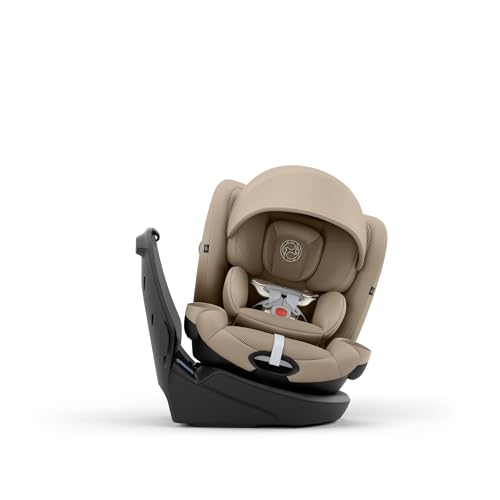
A swivel seat that also taps you on the shoulder if the chest clip comes undone.
SensorSafe smart technology is the differentiator: the chest clip alerts you when a child unbuckles while the car is moving, sits too long, or is left behind after you exit. For a seven-month-old that peace-of-mind layer matters, and it sits on top of a 360° swivel that turns toward the door in any recline position for easy loading. It covers 4 to 65 lb in harness mode and up to 120 lb as a booster.
Comfort details are thoughtful: a 12-position adjustable headrest, breathable mesh fabric, a UPF50+ sun canopy, and two dishwasher-safe cup holders. SafeLock setup is a one-time install — fasten the tether to the anchor, route the belt through the guide, click in, close the SafeLock door. Quality and the smooth swivel are what owners appreciate most about it.
The main caveat is size: this is a large shell, and owners in a Mazda CX5 report it takes a seat and a bit more, crowding the back row. Fit dividers and opinions on value follow that bulk — it is the priciest seat here, and you should measure before you commit. If the footprint fits your car, the swivel plus buckle alerts make it a strong choice.
what separates it
- SensorSafe chest clip alerts on unbuckling, sitting too long, or leaving a child behind
- 360° swivel turns in any recline position
- 12-position headrest, breathable mesh, UPF50+ canopy, two dishwasher-safe cups
- 4–65 lb harness and booster to 120 lb
What to check first
- Large footprint crowds a compact back seat
- The priciest pick here, so measure before committing
The right call for: parents who want the buckle-alert safety layer and a swivel in a roomier vehicle.
Measure first if: your back seat is tight — this shell wants space.
Know the Specs
Rear-facing weight range
This is the weight band your seat is rated to carry when facing backward. A higher ceiling — 50 lb is the common target — lets a child ride in the safest orientation longer. A lower one, like 40 lb, means a fast-growing toddler turns around sooner. Check this number first, because it drives how many years you get from the seat.
Forward-facing and booster range
These carry the seat from toddler to school age. The forward-facing harness band typically runs mid-20s to 65 lb, then a high-back booster picks up toward 120 lb on some seats. A wider total range means fewer replacements over the years, so a 4-in-1 or all-in-one shell can be cheaper over a decade than buying stage by stage.
Install confirmation systems
ClickTight, SecureTech, and QuickGuard are all ways of telling you the belt is tight without a fight. Some show a red-to-green indicator, some use a lever that clicks closed over the belt path. Here is the plain benefit: they replace the rocking-and-guessing with a repeatable process, which matters if you reinstall often or share the seat.
Rotation and 3-across width
A 360° rotating seat swings toward the door so you can buckle a rear-facing child without reaching at an angle. A narrow shell around 16.9″ to 17.5″ is the opposite solution — it lets three seats share a bench. You rarely get both: rotation needs door clearance, while narrow shells trade swing for row width. Decide which problem you actually face.
Common Questions
Can a 7 month old use a convertible car seat rear-facing instead of an infant carrier?
How long can my baby stay rear-facing in these seats?
Will a rotating car seat fit in my car?
Is a narrow 3-across seat better than a wide one for a seven month old?
Do I need an infant insert for a 7 month old in a convertible seat?
What does flame-retardant-free fabric actually mean on a car seat?
Rear-facing with a harness or a rotating all-in-one which lasts longer?
How do I check the harness is tight enough on a rear-facing seat?
Is rear-facing still safer once my child’s feet touch the seatback?
Can I use a rotating car seat in a booster later and does the rotation still work?
The Bottom Line
For most families buying a rear facing car seat for 7 month old, the Graco Extend2Fit is the seat to start with — a 50 lb rear-facing ceiling, up to 5″ of added legroom, and a no-rethread harness at a mid-range price. At 4.5+ stars across 57,000+ ratings, it holds up on the details that matter once a baby becomes a toddler. If your back needs a break from daily loading, the Evenflo Revolve360 Extend swings toward the door and still keeps your child rear-facing to 50 lb. And if you are fitting three seats across one row, the Diono Radian 3R Max at 16.9″ wide is the one to reach for.
How we choose
We do not accept paid placement. Every pick is matched to a real buyer and a real use-case; we do not hands-on test units.
Sources
Specifications: manufacturer listings and product documentation. Review insights: verified customer reviews, as of November 2026. Pricing: not shown on this page (it changes often); check the current price via the retailer link.
As an Amazon Associate, Tactical Gear Guy earns from qualifying purchases. This does not affect which products we feature.