Specs are compiled from manufacturer listings and verified buyer reviews and can change over time — please confirm the key details on the product page before buying.
If you want the short answer: the right PS5 3D headset lets you pin an enemy’s footsteps to a spot behind your left shoulder, and the wrong one flattens that same moment into mush. Everything below is about which pairs of ear cups actually deliver that — the ones that make PlayStation’s Tempest 3D Audio (Sony’s object-based surround system for the PS5) feel like cheating instead of just advertising. You do not need to understand the tech to pick well.
This guide is built by comparing the manufacturers’ published specifications and the patterns across verified customer reviews, so you get each pick’s real strengths and trade-offs instead of marketing spin.
Below you’ll find nine sets sorted by what they do best — wired and wireless, budget-friendly and premium — each judged on how it handles spatial cues, comfort, and the mic your squad actually hears. These are the PS5 3D Headsets that earn a place on your console.
Top Picks


How To Choose The Best PS5 3D Headsets
A headset can be comfortable, loud, and well reviewed and still be the wrong pick for you — because 3D audio on the PlayStation 5 is a chain, and any weak link collapses the direction cues you bought the thing for. Here is the short version of what matters, in plain words.
Driver size sets how much space you can hear
A driver is the speaker disc inside each ear cup, and its diameter in millimeters tells you how much air it can move. Bigger drivers tend to push bass harder and widen the soundstage — the sense that sounds come from around you rather than inside your skull. The Turtle Beach Atlas 200 and the Razer BlackShark V3 X HyperSpeed both run 50mm drivers, while the Sony INZONE H5 uses 40mm units. Neither size is automatically better; the tuning matters as much as the number.
Does the headset support Tempest 3D Audio?
Tempest 3D AudioTech is Sony’s positional audio engine built into the PS5, and it is switched on per-game in the console menu. It works over almost any stereo connection, but a headset that explicitly lists Tempest or 360 Spatial Sound support usually has the tuning to make height cues — a helicopter overhead, a drone above a doorway — land clearly. Look for that wording on the listing rather than assuming every gaming headset handles it well.
Wired, 2.4GHz, or Bluetooth
A 3.5mm wired connection is the simplest and has no charging to think about, which is why the RIG R5 Spear Pro HS and the Sony INZONE H3 keep it as their only option. A 2.4GHz wireless connection uses a USB dongle to send audio with low latency — the delay between what happens in the game and what you hear. Bluetooth is the easiest but adds delay and is usually better saved for phone calls and music. If you play ranked shooters, plug in or go 2.4GHz.
The mic you will actually be judged on
Your squad hears the microphone far more than you do. A flip-to-mute boom arm is the easiest design because it silences you physically instead of requiring a menu. Look at whether the mic is detachable — useful if you also want to wear the headset on a commute or while listening to music.
Side-by-Side Comparison
| Model | Best For | Driver Size | Connection | Battery / Cable | Amazon |
|---|---|---|---|---|---|
| Sony INZONE H5★ Best Overall | Wireless all-rounder | 40mm | 2.4GHz wireless or 3.5mm | Up to 28 hours | Amazon |
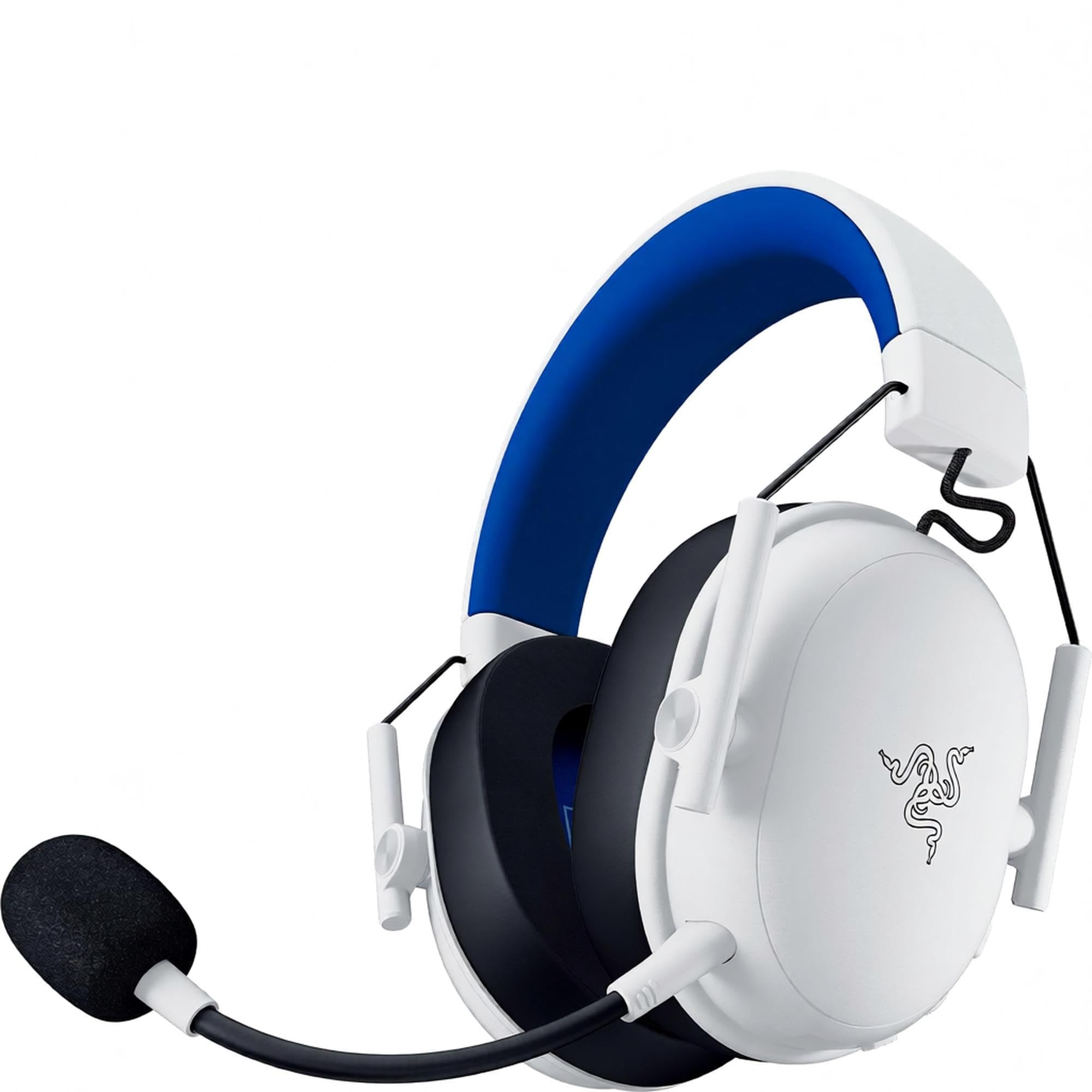
| Razer BlackShark V3 X HyperSpeedLightest Wireless Pick | Light wireless pick | 50mm | 2.4GHz or Bluetooth 5.3 | 270g build | Amazon |
| Sony INZONE H3Best Plug-In Value | Plug-in simplicity | — | Wired 3.5mm | 3.94 ft cable | Amazon |
| Turtle Beach Atlas 200 | Glasses wearers on a budget | 50mm | Wired 3.5mm | Approx. 280g | Amazon |
| RIG R5 Spear Pro HS | Competitive FPS tuning | 40mm | Wired 3.5mm | 1.5 m cable | Amazon |
| RIG 900 MAX HS | Marathon sessions | 40mm | 2.4GHz or Bluetooth 5.2 | Up to 60 hours | Amazon |
| Razer BlackShark V3 Pro | Noise-cancelling play | 50mm | 2.4GHz, Bluetooth 5.3, USB-C, 3.5mm | 10 ms latency (claimed) | Amazon |
| Turtle Beach Stealth Pro II | Multi-device premium | 60mm | USB wireless plus Bluetooth 5.3 | 2 swappable batteries, up to 80 hours | Amazon |
Detailed Reviews
1. Sony INZONE H5 Wireless Gaming Headset
Our pick — 4.0+★ from 350+ verified ratings; the strongest balance of quality and price.
The set that goes wireless for a full weekend without hunting for a cable.
Twenty-eight hours of continuous play on one charge is the headline spec here — enough to cover a week of evening sessions between charges. Charge it Sunday night and you get roughly three full gaming sessions before the low-battery warning. That figure comes from the spec sheet, and it is the main reason this sits at the top of the pile for a PS5 owner who plays across a week rather than in one sitting.
Sony’s own 360 Spatial Sound for Gaming is the piece that earns the 3D label. You open the 360 Spatial Sound Personalizer app, upload a photo of your ear, and the headset tunes the positional audio to your head shape rather than a generic average. That matters on the PS5 because the footsteps and reloads land at a height and angle that matches your actual ears. The 40mm drivers are smaller than the 50mm units on the Razer BlackShark V3 X HyperSpeed, so it does not push bass with the same force — but the directional tuning is sharper than the bigger driver in this case.
What wins people over is the sound-and-comfort balance. The set is light enough to forget about, does not squeeze the skull, and works over the top of glasses without pinching. Connection is stable enough to wander away from the console, and the AI noise-cancelling boom mic pulls a fair amount of room noise out of your voice. Where it splits opinion is the microphone and the long-term reliability question — some units develop problems outside the return window, and a few owners find the build bulky in the “airplane captain” sense. That is a small slice of an otherwise strong record, but worth knowing if you intend to leave it plugged in permanently.
Why it earns the top slot
- Up to 28 hours per charge means weekend-long wireless play with no cable hunting
- 360 Spatial Sound Personalizer tunes the 3D image to your own ear photo
- Dual-mode: 2.4GHz dongle for low latency or 3.5mm wired when the charge runs out
- Light, wide headband that stays comfortable over glasses
What to weigh first
- 40mm drivers give less bass weight than the 50mm competition here
- The headset is physically bulky for some head sizes
- Occasional units develop faults after the return window opens
Reach for this if: you want a wireless PS5 headset that does 3D audio properly and lasts a whole weekend on a charge.
Look elsewhere if: you crave thumping low-end — the 50mm Razer set further down delivers more of that.
2. Razer BlackShark V3 X HyperSpeed Wireless Gaming Headset
Fifty-millimeter drivers at 270 grams — big sound, small weight penalty.
Fitting a 50mm driver into a 270-gram frame is rare, and it is why this set feels lighter than its driver size suggests. At 270 grams it is lighter than the Turtle Beach Atlas 200 at 280g, yet it still fits the larger 50mm driver — a full 10mm over the 40mm unit in the Sony INZONE H5. In practice, the bigger disc with Gen-2 tuning widens the soundstage, so a sniper shot’s left-to-right direction reads more clearly.
The wireless side is deliberately simple. Razer’s HyperSpeed 2.4GHz connection runs through a USB dongle for the low-latency response competitive play needs, and Bluetooth 5.3 covers phone calls, music, and handheld devices when you are away from the console. Note that it connects to one device at a time, so you are not mixing game and phone audio at once. The detachable HyperClear Cardioid 9.9mm mic is a strong feature — unidirectional, which means it picks up your voice more than your surroundings, and it pops off completely when you just want headphones.
The trade-offs are honest ones. The mic is not especially flexible, so you need to find your angle rather than bend it to your mouth. And the sound profile — while excellent for gaming — leans into the competitive tuning rather than a warm music feel. What keeps it in the list is the build: buyers report no static or breakage across long use, which is where a lot of gaming headsets fail.
Where it shines: the 50mm Gen-2 drivers put footsteps and cues across a wider stage than the smaller Sony H5, and it does that while weighing 10 grams less than the Turtle Beach Atlas 200.
The catch: one-device-at-a-time connectivity and a stiff mic arm mean you will want a dedicated setup, not a headset you ping-pong between game and phone.
The one that fits you: a PS5 owner who wants 50mm audio without a heavy headset or a battery-anxiety trip.
The one that does not: you want simultaneous game audio and a phone call happening at once.
3. Sony INZONE H3 Wired Gaming Headset
No battery, no dongle, no drama — just plug it into your controller.
If you never want to think about charging, this is the set for that. The 3.5mm wired connection runs straight off the DualSense, so there is nothing to pair and no low-battery beep mid-fight. You still get the same 360 Spatial Sound personalization as the pricier H5 — upload an ear photo through the app and the PS5’s 3D audio adapts to your head. That is unusual value at the wired end of this list.
The mic is Discord certified and flips up to mute, and the headset carries ergonomic on-cup controls for volume. The soft headband and smooth nylon ear pads are built for long sessions, so an evening of co-op does not end with a hot, pinched feeling. A retractable cable measuring 3.94 feet gives you a little slack without a tangle to manage.
Here is where the honesty comes in, because this set has a split record on longevity that you should not ignore. The comfort earns its place and the sound is strong for the tier — but there are recurring reports of the left ear losing audio and the mic arm giving out over time. Physical damage of that sort is often outside warranty. It is still a fine pick for the money, but if you are rough on gear, the added durability of a wireless set may be the smarter long play.
Straight assessment: the clean PS5 plug-and-play experience and personalized 3D tuning are excellent, and wearing one all day without pain is a real win.
The honest caveat: durability is the weak spot — this is a great first headset, less so a forever headset.
Go with it if: you want 3D audio with zero battery management and a friendly entry point.
Think twice if: you upgrade gear every few years and expect a set to go the distance.
4. Turtle Beach Atlas 200 Wired Gaming Headset
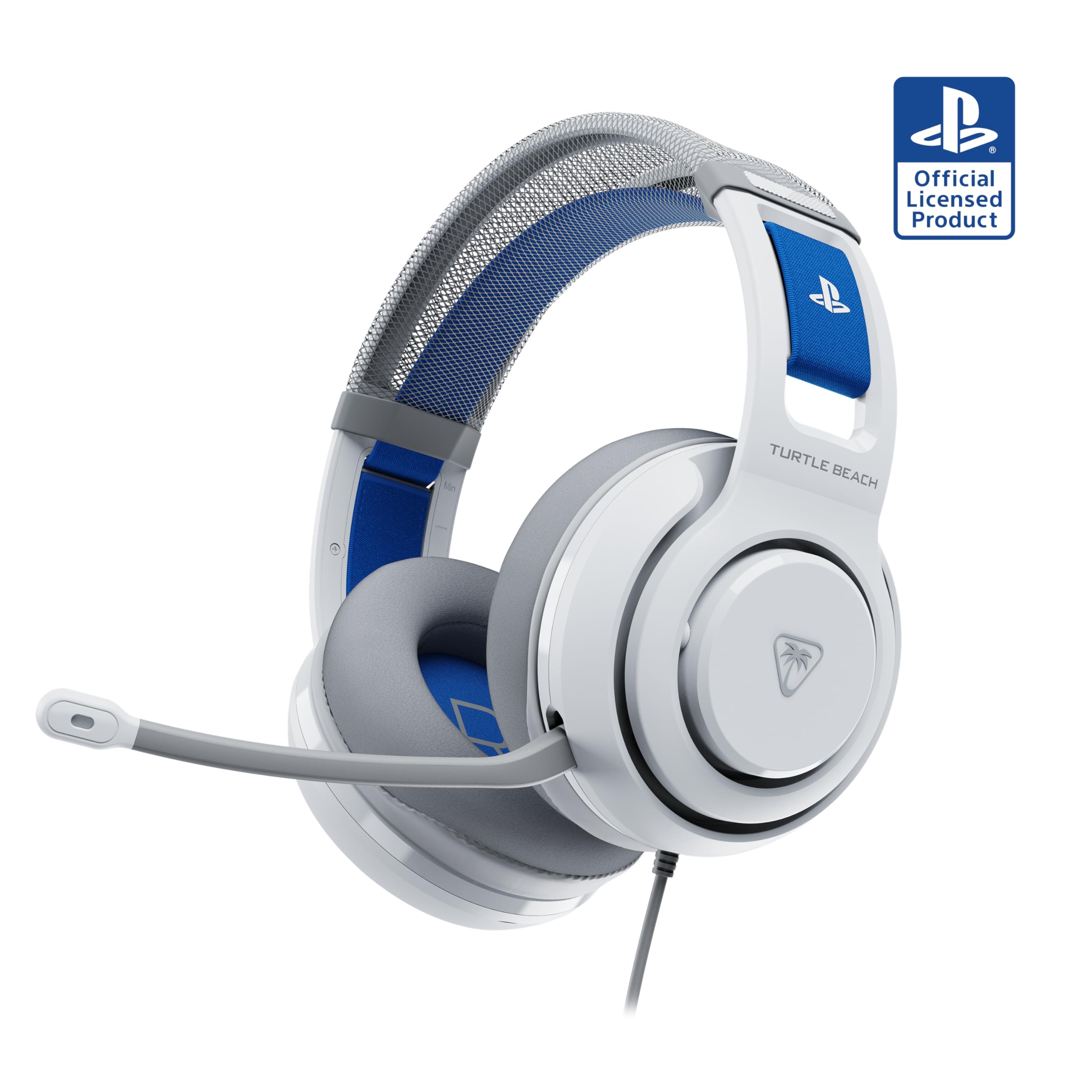
Dual-foam ear cushions built to stop your glasses arms digging in.
Turtle Beach’s ProSpecs design splits the ear cushion into two foam layers, so a glasses frame nestles into a soft channel instead of being pressed into your temple. The floating headband and memory foam add to that, which is why you can leave these on for a full evening.
On the audio side, the 50mm Nanoclear drivers push deep bass and handle Tempest 3D AudioTech on the PS5. Footsteps in a shooter come through with real weight, and the unidirectional flip-to-mute mic captures speech cleanly without many complaints from teammates. The 3.5mm connection works with the DualSense controller and a wide spread of other devices, so it doubles as a PC and tablet headset without fuss.
The weak point is the long haul. There are durability notes about speakers giving out after several months of use, which is a quieter story than the sound quality but a real one. Noise isolation also splits opinion — the deeper notes land, but the overall volume ceiling is not high, so if you want wall-rattling loudness this is not it. For a wired, budget-friendly pick that pampers glasses wearers, though, the fit and the bass make it a genuine bargain.
The reasons to grab them
- ProSpecs dual-foam cushions are noticeably easier on glasses frames
- 50mm drivers with deep bass and tempest 3D support
- Wired 3.5mm means instant connection and no charging
- Flip-to-mute mic keeps the squad clear
The honest snags
- Some long-term units see the speaker fail after a few months
- Volume ceiling is modest for a set this bass-heavy
- Wired-only design rules out wireless freedom
Built for you if: you wear glasses and hate the pinch, and you want 50mm bass without a premium bill.
Better skipped if: you want a set to survive years of heavy use or you need very high volume.
5. RIG R5 Spear PRO HS Wired Gaming Headset
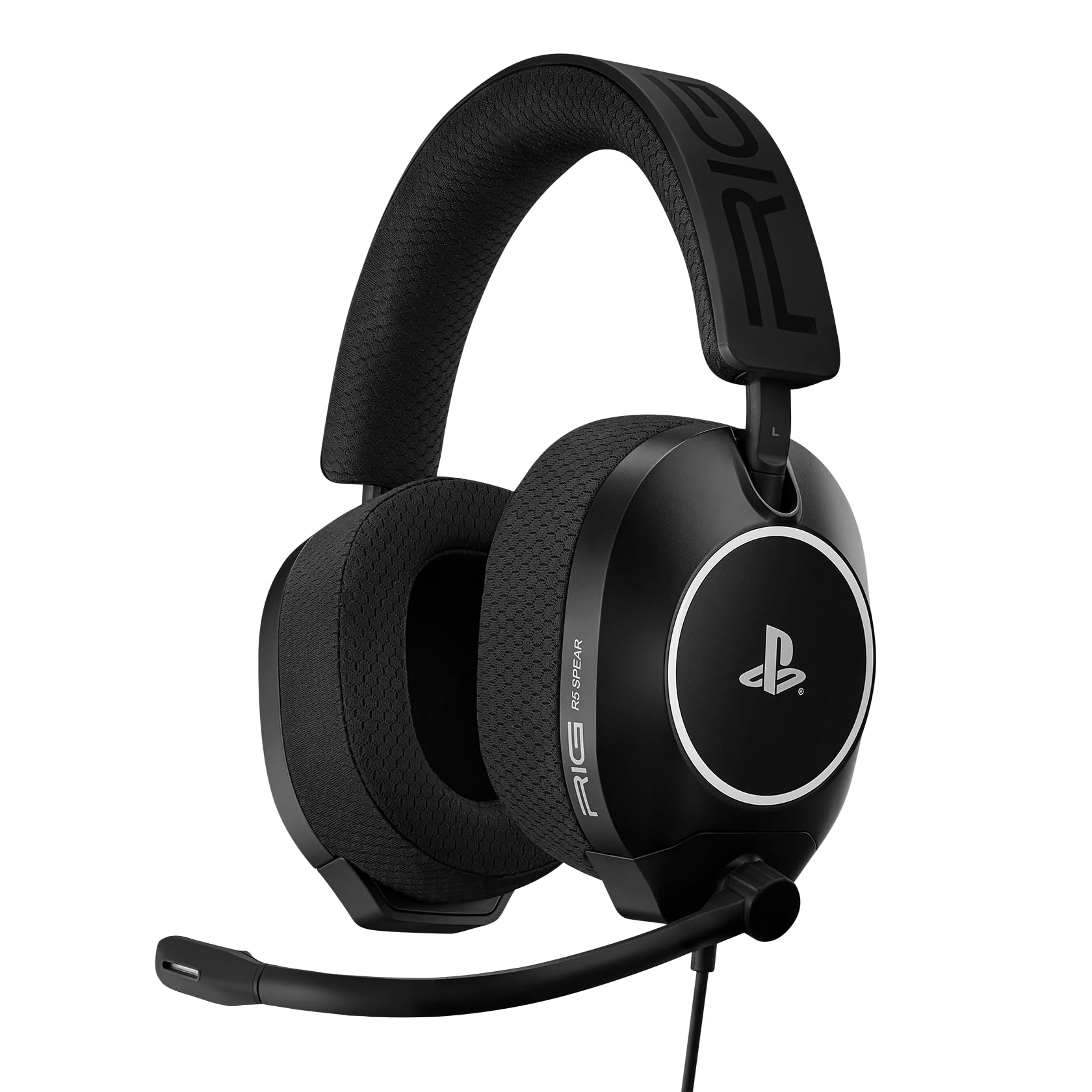
Graphene-coated drivers tuned to make footsteps and reloads leap out.
Most headsets aim for a balanced sound; this one deliberately does not. The 40mm graphene drivers carry a boosted signature in the upper mid-range, which is the exact band where reload clicks, footfalls, and weapon flicks live. The result is that competitive detail cuts through even when explosions are firing around you. Graphene as a coating keeps harmonic distortion below 0.5%, so that emphasis doesn’t come with a harsh, scratchy edge.
The extended frequency response of 20 Hz to 40kHz is a wider band than the Sony INZONE H5 advertises, and while your ears won’t hear the top, the point is headroom — the set is designed to reproduce a lot without straining. Tempest 3D Audio gets its directionality from those graphene drivers, so the spatial cue of an enemy rounding a corner is meant to be clearer than a standard dynamic set. A 6mm flip-to-mute mic with a 50Hz to 15kHz range handles voice, and the 1.5-meter tangle-free cable gives you room to move without yanking the controller.
Durability is the honest concern here. There are reports of the headband coming apart after a few months, and the reliability picture is mixed for a set that otherwise earns strong marks for sound. If you treat it with care and use it at a desk, it delivers competitive tuning that punches well above its tier — but this isn’t a headset to stuff loose into a backpack.
The competitive edge: that upper-mid boost is the difference between “I think someone’s there” and “they’re through the left doorway.”
Where it needs care: the headband build is the part to baby, not the audio.
Made for: the ranked shooter player who wants audio tuned to hear the enemy first.
Not the pick if: you want a set that shrugs off daily travel and rough handling.
6. RIG 900 MAX HS Wireless Gaming Headset
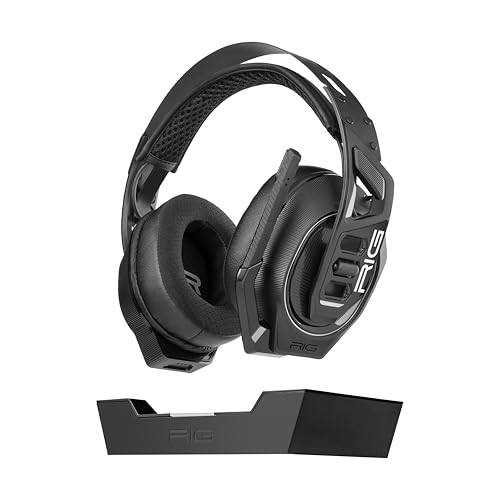
Sixty hours on Bluetooth, fifty on 2.4GHz — a battery that outlasts your weekend.
If your headset always dies mid-match, this is the answer. RIG rates the 900 MAX HS at 50 hours over the 2.4GHz wireless connection and up to 60 hours on Bluetooth 5.2, and includes a charging base station so you just dock it when you finish. For most people that is a charge every couple of weeks, not every night. The dual-mode setup lets you switch between low-latency 2.4GHz for PS5 and Bluetooth for a phone call or a Steam Deck with a press of the mode button.
The audio side centers on 40mm drivers in a tuned acoustic chamber, built to reduce listening fatigue over long sessions. Tempest 3D Audio is supported, so positional cues get the surround treatment on PS5. The self-adjusting headband strap and Snap-Fit earcup design let you size the fit to your head, and the breathable fabric cushions are made for all-day wear rather than a short burst.
The compatibility layer is where some owners hit friction — reports surface of the mic not working properly on PS5 in certain setups, and of the Bluetooth and USB transmitter not running at the same time the way people hoped. The audio itself and the price-to-quality ratio are the headline strengths, but if you need flawless simultaneous Bluetooth and 2.4GHz mixing, check that expectation before you buy.
The case for it: 60 hours of battery and a dock means the headset is simply always ready when you sit down.
Worth knowing: some users report PS5 mic and simultaneous-connection quirks, so plan around the 2.4GHz path for gaming.
A fit for: gamers who play in long marathons and refuse to babysit a charging cable.
Questionable for: anyone who needs the Bluetooth and 2.4GHz feeds live at once.
7. Razer BlackShark V3 Pro Wireless Gaming Headset
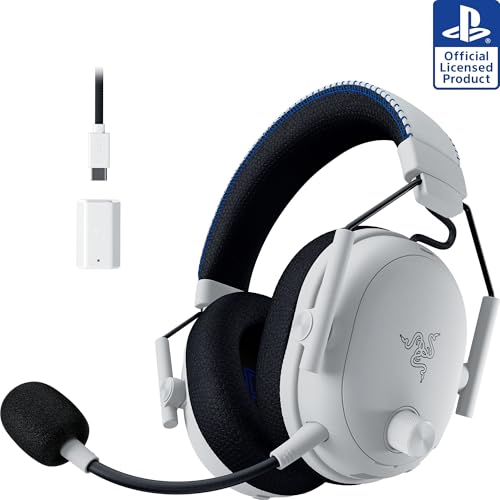
Active noise cancellation and 10 ms wireless latency in one competitive shell.
Razer claims latency as low as 10 ms over HyperSpeed Wireless Gen-2, which is the short, sharp measure of how far behind the on-screen action the audio sits. At 10 ms the audio gap stops being noticeable, so the shot lands when you hear it. Pair that with Hybrid Active Noise Cancellation — which actively fights the drone of a fan or a busy room — and the idea is that you are sealed into the match and nothing else gets in.
The drivers are TriForce Bio-Cellulose 50mm Gen-2, tuned for positional performance, so the separation between a nearby reload and a distant rifle is clean. A detachable HyperClear Full Band 12mm mic captures more vocal detail than the smaller mics on the wired picks here, and the dual-layered Flowknit memory foam cushions keep things comfortable over long sessions. On the connection front you get 2.4GHz, Bluetooth 5.3, USB-C, and 3.5mm, so it travels across PS5, PC, Mac, mobile, and handhelds.
The honest tension is in the extras. There are reports of the game/chat scroll wheel being finicky, soft ANC performance compared with a dedicated noise-cancelling headphone, and some plastic breakage after several months. It is a strong audio set with a premium feature list, but expect to treat the controls and hinges gently rather than throw it in a bag.
What earns the ANC label
- Hybrid active noise cancellation fights room drone so cues stay clear
- Razer-claimed latency as low as 10 ms over 2.4GHz keeps audio synced
- Detachable 12mm mic with a wide pickup for clear callouts
- Four connection paths cover PS5, PC, mobile and handhelds
What to treat gently
- The game/chat scroll wheel can be fussy under thumb pressure
- ANC is decent but not flagship-grade for silencing
- Some units see plastic failure over months of use
Pick it for: a loud room, a competitive lobby, and a player who wants the sync tight enough to trust.
Leave it for: someone who bounces gear around in a bag and needs bombproof hinges.
8. Turtle Beach Stealth Pro II Wireless Gaming Headset
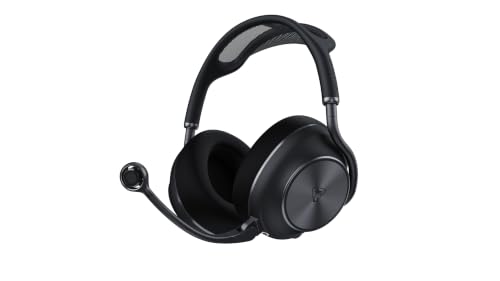
Two swappable batteries and 60mm drivers — the set that never stops playing.
The pair of interchangeable batteries is the standout idea. One sits in the headset while the other charges in the dock, so you can run for up to 80 hours with two units and essentially never hit a dead set. For a marathon or a tournament weekend, that removes the one interruption every other wireless headset in this list still has. CrossPlay 2.0 lets it switch wirelessly between up to four audio sources, which is how people end up hearing game audio and a phone call at the same time.
The audio hardware is serious. Two 60mm Eclipse drivers per side deliver deep bass and detail, Dolby Atmos adds spatial height for supported content, and the latency figure is around 20 milliseconds. A 9mm floating mic adds AI noise reduction and flip-to-mute, while the anodized aluminum frame with chrome accents feels like a premium object rather than plastic. Dual-layer memory foam with athletic fabric rounds out the comfort build.
The one thing to weigh carefully is weight. A set built this heavily is not the lightest on your head, and some buyers find long sessions wear on the ears. It is also the most premium option here, so if your budget tops out at the mid-range it is a stretch. But as a multi-device gaming and music set that never runs out of charge, it stands at the top of the pile.
The premium case
- Two swappable batteries give up to 80 hours with the dock
- 60mm Eclipse dual drivers push bass detail further than anything else here
- Dolby Atmos spatial audio and around 20 ms wireless latency
- Simultaneous USB wireless and Bluetooth for game plus phone
The weight of the matter
- Heavier build can tire your ears in long sessions
- The premium tier is a real cost step up
- You need to actually use the dock to get the battery benefit
Go premium if: you want one headset to rule game, phone, and music with a battery that never quits.
Stay mid-range if: a light head matters more to you than 80 hours of charge.
Know the Specs
Driver size in millimeters
The driver is the speaker disc inside each ear cup, and bigger discs move more air. That tends to mean deeper bass and a wider stage — the 60mm units in the Turtle Beach Stealth Pro II push harder low notes than the 40mm sets. But size alone does not decide positional accuracy; the tuning and coating (like the RIG’s graphene layer) matter just as much. A well-tuned 40mm can place footsteps better than a loose 50mm.
Latency in milliseconds
Latency is the delay between an event in the game and the sound reaching your ears. A wireless set sends audio through a dongle, and the electronics add a small gap. Razer claims as low as 10 ms on the V3 Pro, while Turtle Beach lists around 20 ms on the Stealth Pro II. Lower is better for competitive shooters where a gunshot’s direction tells you where to turn; for single-player, either is fine.
Battery hours and charging
The battery spec is quoted as continuous playtime on one charge. A 28-hour set like the Sony INZONE H5 needs charging roughly weekly for most players, while a 60-hour set like the RIG 900 MAX HS stretches to weeks. Quick charge is the other useful column — Sony lists 5 minutes giving up to 1 hour on the H9 II. Swappable batteries, as on the Turtle Beach, sidestep the waiting entirely.
Mic type and pickup pattern
A cardioid mic is directional, picking up your voice in front of it and blocking the sides — that is why the Razer 12mm cardioid mic filters room noise better than an omni mic. An omni mic, like the one on the RIG 900 MAX HS, picks up all around and relies on noise-rejection processing. Flip-to-mute physically lifts or closes the mic; a detachable mic can come off when you just want headphones.
Common Questions
Do I need a special headset to use Tempest 3D Audio on the PS5?
Is a 50mm driver better than a 40mm driver for 3D audio?
How long does a wireless PS5 headset actually last on a charge?
Will a wired headset still give me 3D audio on the PS5?
Can I use a PS5 headset on my PC and phone too?
Does active noise cancellation help or hurt game audio awareness?
How do I know if my mic will be clear enough for my squad?
Are heavier headsets a problem for long gaming sessions?
What does the 360 Spatial Sound Personalizer app actually do?
Which connection should I pick for a PS5 headset?
The Bottom Line
For most people, the ps5 3d headsets winner is the Sony INZONE H5, because it pairs 28 hours of wireless play with the ear-photo 360 Spatial Sound tuning that makes Tempest 3D Audio feel personal rather than generic. If bass weight and a lighter head matter more to you, the Razer BlackShark V3 X HyperSpeed fits 50mm drivers into 270 grams. And if you want a battery that simply never quits, the Turtle Beach Stealth Pro II with its two swappable batteries is the one to reach for.
The one nudge worth making: the top pick does not carry the largest review base in this roundup — the wired Sony INZONE H3 has more behind it — but the H5 holds the stronger score while adding the wireless freedom and spatial personalization that most PS5 owners actually want. Start there, and let the driver-size and battery numbers above move you only if they match how you play.
How we choose
We do not accept paid placement. Every pick is matched to a real buyer and a real use-case; we do not hands-on test units.
Sources
Specifications: manufacturer listings and product documentation. Review insights: verified customer reviews, as of November 2026. Pricing: not shown on this page (it changes often); check the current price via the retailer link.
As an Amazon Associate, Tactical Gear Guy earns from qualifying purchases. This does not affect which products we feature.