Specs are compiled from manufacturer listings and verified buyer reviews and can change over time — please confirm the key details on the product page before buying.
Pick the wrong converter for your Turbo 350 and the car drives worse than it did before. The stall speed (the rpm the engine revs to before the converter locks up and moves the car) has to match your engine. Set it too low and your cam falls flat off idle. Set it too high and a street car turns into a slipping, heat-building headache in traffic. Below, the real TH350-fitment converters are sorted by what they actually do — stall range, bolt circle (the diameter of the bolt pattern that mates to the flexplate), diameter and weight — so you pick the one that suits your combo instead of the flashiest box.
This guide is built by comparing the manufacturers’ published specifications and the patterns across verified customer reviews, so you get each pick’s real strengths and trade-offs instead of marketing spin.
The stall figure is the whole ballgame here, and the list below separates street-friendly 2000 RPM units from a 3800 RPM track piece. Read on for the best torque converter for TH350 builds, sorted by what each one is actually good at.
Top Picks


How To Choose The Best Torque Converter for TH350
Your TH350 swap lives or dies on two numbers: stall speed and bolt circle. Get those two right and the rest is packaging. Get either wrong and you are pulling the transmission back out.
Match stall speed to your camshaft and rear gear
Stall speed is the engine RPM the converter lets the motor reach before it really grabs and moves the car. A 2000-2200 RPM unit behaves close to a factory converter, so it suits a mild engine and a highway-friendly rear gear. A 3500-3800 RPM unit lets a big-cam small block rev into its powerband before the car leaves the line — great at the track, thirsty and hot on the street.
Check your bolt circle before you order
The bolt circle is the diameter of the ring the converter bolts to on your flexplate. These converters list 10.5-inch and 10.750-inch bolt circles, and your flexplate has to match. Measure yours first; a converter that bolts up cleanly is worth more than any stall figure on the box.
Diameter and weight matter more than you think
Smaller-diameter converters spin less mass, and that shows up on the scale. The B&M 20404 lists 32.8 pounds, while the JEGS 2700-3000 RPM unit lists 22.2 pounds. Lighter rotating mass helps an engine rev freely, which is why track-oriented units tend to run smaller.
Side-by-Side Comparison
| Model | Best For | Stall Speed | Bolt Circle | Weight | Amazon |
|---|---|---|---|---|---|
| JEGS TH350/TH400 2700-3000 RPM★ Best Overall | Mild street build | 2700-3000 RPM | — | 22.2 lb | Amazon |
| Assault Racing 600002Stock-Style Swap | Stock-style replacement | 2000-2200 RPM | 10.5 in | — | Amazon |
| Allstar ALL26908Project Saver | Factory-stall project | 2000-2200 RPM | 10.750 in | 32.1 lb | Amazon |
| B&M 20400 Tork Master 2000 | Street rods and mild builds | 1900-2100 RPM | 10.75 in | 31.7 lb | Amazon |
| JEGS TH350/TH400 3500-3800 RPM | Track launch | 3500-3800 RPM | — | 22.2 lb | Amazon |
| Allstar ALL26900 10-inch | Racing diameter | 2700-3000 RPM | — | 22.4 lb | Amazon |
| B&M 20404 Tork Master 2400 | Harder launches | — | — | 32.8 lb | Amazon |
| Assault Racing 600003 | Drag-oriented combo | 3200-3600 RPM | 10.5 in | — | Amazon |
Detailed Reviews
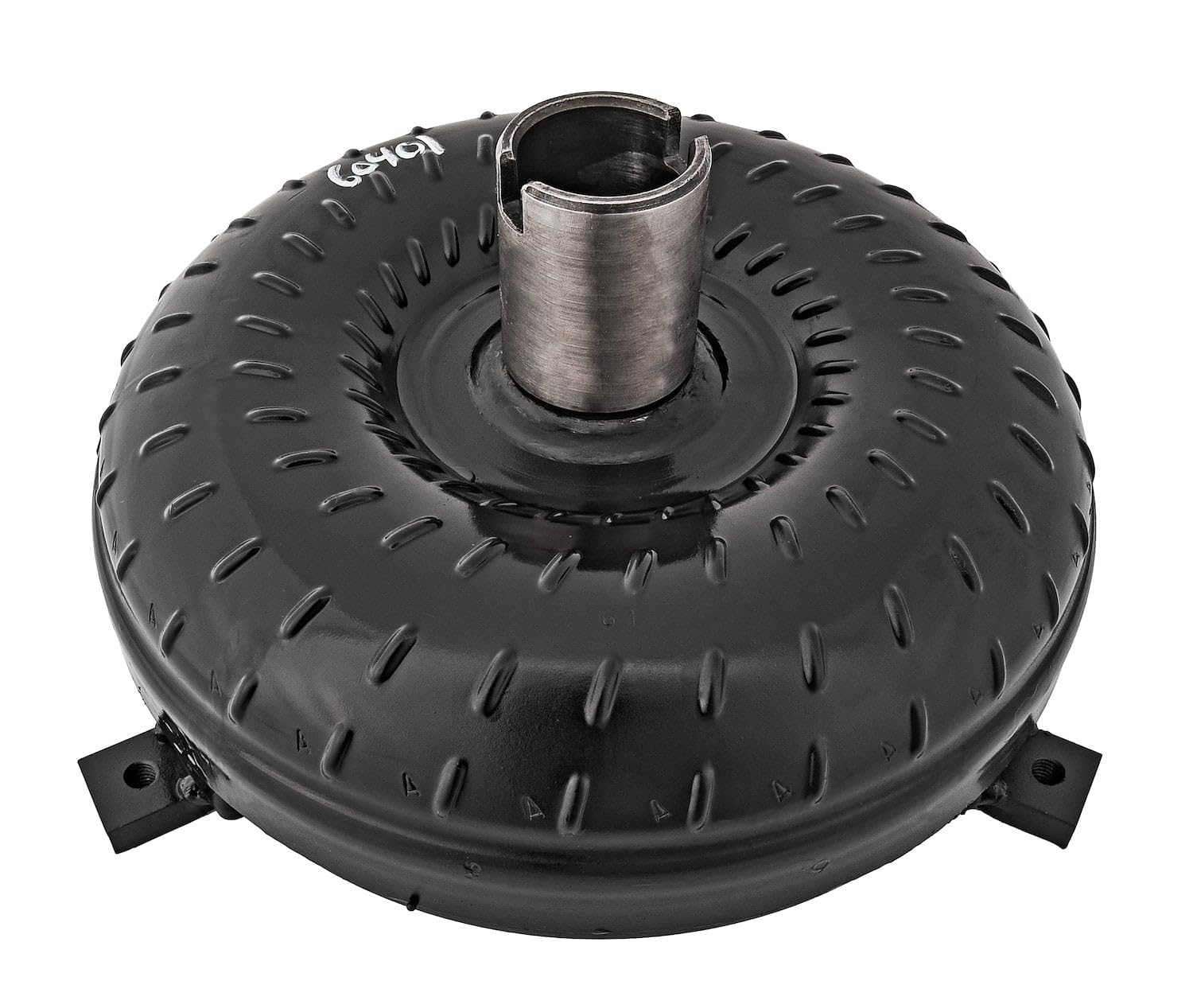
1. Torque Converter TH350/TH400 2700-3000 RPM
Our pick — 4.5+★ from 100+ verified ratings; the strongest balance of quality and price.
The street-and-strip middle ground that lets a warmed small block wake up without ruining the commute.
Here is the converter that hits the widest useful window for a TH350 build. Its 2700-3000 RPM stall speed sits above a factory unit but well below a dedicated race piece, so the engine gets to rev into its powerband before the car hooks up. JEGS rates it for small block applications up to 500 horsepower without nitrous or a supercharger or turbo. If your combo is a cammed 350 that still sees weekend street duty, that stall range is close to what you want.
Where it wins people over is build quality. That is the trait that comes up most in owner feedback, with functionality right behind it. Owners running it behind a 350 small block report the stall speed is right and say they would order it again. Driveability on the street is another recurring note: the car picks up noticeably over a stock converter without turning into a handful in traffic. And yes, it ships with a generous stack of JEGS stickers, which owners clearly enjoy.
The catch is honest and physical. This thing weighs 22.2 pounds and is a full-size converter, so you want a helper and a proper jack when you stab it onto the input shaft. It also lists no bolt circle in its published specs, so measure your flexplate and confirm fitment before it ships. The crowd favorite here holds 4.5+ stars, a strong score for a drivetrain part where one bad fitment tanks a rating.
What it brings to the build
- 2700-3000 RPM stall speed suits a cammed small block on the street
- Rated by the maker for small block builds up to 500 horsepower, no power adder
- Buyers report noticeably better street driveability than stock
- 22.2 pounds is easy to handle compared with the 32.8-pound B&M 20404
What to plan around
- No bolt circle listed — measure your flexplate before ordering
- Above stock stall means a little more heat in stop-and-go traffic
- Not intended for nitrous or forced induction builds
Reach for this if: you run a mild-to-cammed small block that still sees regular street miles and want the launch to feel alive.
Look elsewhere if: you are chasing a full race launch or running a power adder — this one is built for the street-and-track overlap.
2. Assault Racing 600002 TH350 Torque Converter
The factory-mannered replacement for a tired Turbo 350 that just needs to drive right again.
Assault Racing built this one around a 12-inch diameter and a 2000-2200 RPM stall, the closest thing to stock behavior in this lineup. It is a non lock-up unit, meaning it behaves like the older converters with no clutch inside to lock the engine to the driveline on the highway. The bolt circle measures 10.5 inches, so check your flexplate ring matches before you commit. For a smog-era cruiser or a truck you just want moving, that combination keeps shifts calm and the engine happy at low revs.
The trade-off is that the buyer feedback here is thinner and more divided than the top picks, sitting at 3.5+ stars. Fewer owners have logged miles on it, so you are leaning more on the spec sheet than on a long track record. That is not a knock on the design — it is a reality of a part with a smaller footprint in the community. What you are buying is a straightforward 2000-2200 RPM converter at a sensible price, and that is exactly what the listing describes.
Best use case: a stock-ish 350 that needs the factory feel back — a 12-inch diameter and 2000-2200 RPM stall keep it mild and predictable on the street.
Measure first: that 10.5-inch bolt circle is not universal, and a mismatch means the transmission comes back out.
The right call if: you want factory-mannered behavior and a 10.5-inch bolt pattern matches your flexplate.
Think twice if: you want a proven track record from a big pool of owners — this one has less history behind it.
3. Allstar Performance Torque Converter TH350/400
A 10.750-inch bolt circle and factory stall that gets a stalled project rolling again.
Allstar’s approach here is simple: a 2000-2200 RPM stall converter in a 10.750-inch bolt circle, made in the United States. That stall range puts it near factory behavior, which is why it shows up in builds that just need to move under their own power. Owners describe it as landing close to factory stall speed — enough to get a project rolling so you can enjoy it while you upgrade the rest. For someone deep in a TH350 swap who needs a working converter now, that is the value proposition.
It weighs 32.1 pounds, so it is one of the heavier pieces in this group and wants a steady hand during the install. Feedback is mixed on the quality front, leaning positive on performance — meaning the people running it for its intended job are the ones happiest. Not every build is going to be a forever combo, and this converter is priced and pitched as the one that gets you back on the road.
What earns its keep: the 10.750-inch bolt circle covers a common flexplate pattern, and the 2000-2200 RPM stall keeps a mostly-stock combo well-mannered.
Size it honestly: at 32.1 pounds this is a two-hand lift, and the quality feedback splits — fine for a get-it-running build, less certain as a forever piece.
Pulls its weight if: you have a 10.750-inch bolt circle and a project that needs a near-factory converter to move again.
Keep looking if: you want the lighter end of the lineup — the JEGS 2700-3000 RPM unit clocks in at 22.2 pounds against this one’s 32.1.
4. B&M 20400 Tork Master 2000 Torque Converter TH400/TH350

The name-brand value upgrade for mild street builds that want better launches without drama.
This is the Tork Master 2000, a remanufactured converter sold as a value-priced step up from stock for mild performance applications and street rods. It stalls 1900-2100 RPM based on an engine making 230 lb. ft. of torque at 2500 RPM, and the bolt circle measures 10.75 inches. B&M fits a new precision pump drive tube and backs the unit with a 1 year limited warranty. The alloy steel construction and powder-coated finish speak to a piece built to hold up rather than just bolt in.
The fitment story is where this converter earns its fans. Owners mention it slides right into a TH350 without issues, and the bolt spacing comes up as dead-on. One owner with a mild 383 and a 2.73 rear in a 1980 C10 notes it stalls right at 2000 RPM just as it should. Plenty of buyers run it behind a 153-tooth flexplate with a 10 3/4 / 10.75 bolt pattern and report a clean bolt-up. Specific fitment reports like that carry more weight on a converter than any spec line.
Compare it to the JEGS 3500-3800 RPM unit in this list and the difference is obvious: 1900-2100 RPM versus 3500-3800 RPM is a vast gap in how the car leaves the line. This one is the street-friendly end of the scale. It also runs heavier than the JEGS 2700-3000 RPM converter — 31.7 pounds versus 22.2 — so handle it accordingly. Four-plus stars with a hundred or so ratings says most people got exactly what they expected.
Where it shines
- 1900-2100 RPM stall keeps a street rod easy to live with
- 10.75-inch bolt circle matches common flexplate patterns
- New precision pump drive tube and 1 year limited warranty
- Fit reports are specific and positive — clean bolt-up, right stall
Weigh before you lift
- 31.7 pounds is on the heavy side for a one-person install
- 1900-2100 RPM is too low if your cam needs a big stall
Buy this one if: you want a name-brand converter behind a mild engine that still drives comfortably on the street.
Skip the jump if: your combo wants a race stall — this unit tops out at 2100 RPM and you need far more.
5. Torque Converter TH350/TH400 3500-3800 RPM
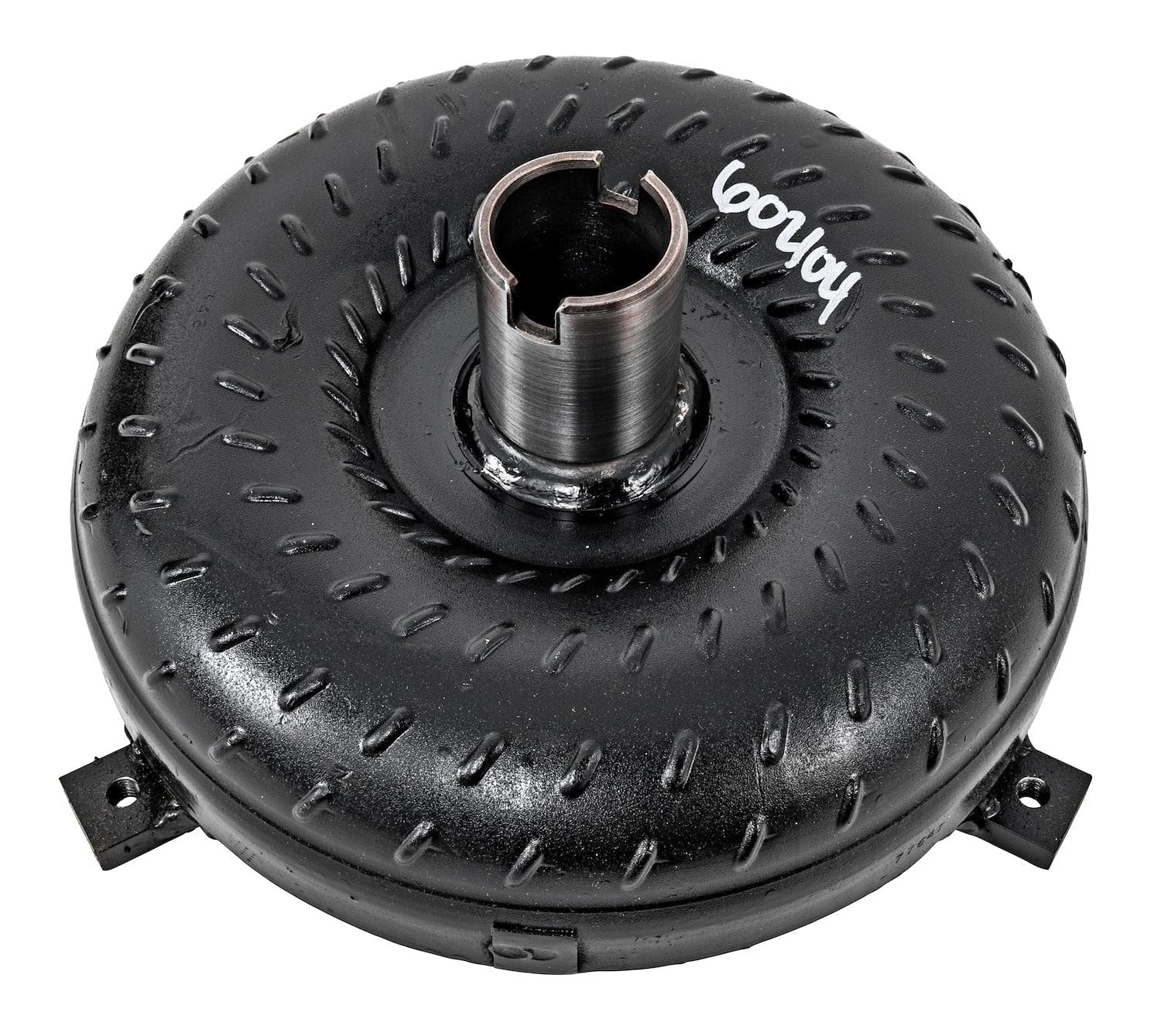
A big-cam track piece that lets a 350 rev to 3800 before it hooks — and drives like it, too.
If your small block has a lumpy cam that only comes alive up high, this is the converter built for you. The 3500-3800 RPM stall speed lets the engine climb deep into its powerband before the tires bite. JEGS slots it for small block applications up to 500 horsepower without nitrous or forced induction. It measures 13.1 inches, the largest dimension in this lineup, and tips the scale at 22.2 pounds.
Compare it to the JEGS 2700-3000 RPM unit above and the gap is dramatic: 3500-3800 RPM versus 2700-3000 RPM changes the whole character of the car. One wants a hot cam and a loose rear gear; the other is happy on the street. This unit is meant to launch hard and often, so pair it with the gearing and cooling to match.
Buyer feedback is thin — a small pool of ratings — but the score sits high at 4.5+, the top number in this list. A 4.5+ score from a small pool of ratings means the owners who run it are pleased, even if there are not many yet. Know what you are signing up for, though: a stall this high builds heat quickly in stop-and-go traffic and drinks fuel around town. This is a weekend-and-strip converter, not an everyday cruiser.
Who it’s built for: a cammed small block with track ambitions and gearing that suits a high stall — 3500-3800 RPM is a serious jump over the street picks here.
The honest limit: driven daily, a stall this loose generates heat and burns fuel, so treat it as a play-weekend part.
Made for you if: you have the cam, the gear and the cooling to use a 3500-3800 RPM launch.
Not for you if: the car is a commuter — the street-oriented 2700-3000 RPM pick will be far kinder in traffic.
6. Allstar Performance ALL26900 Torque Converter

A compact 10-inch converter that trims rotating mass while holding a 2700-3000 RPM stall.
Allstar’s ALL26900 shrinks the housing to 10 inches across while holding a 2700-3000 RPM stall range, and that smaller diameter is the whole point. Less mass spinning means the engine revs more freely. It weighs 22.4 pounds, right in line with the lighter JEGS units and well below the heavier B&M pieces. Behind a hot small block, that combination of a mid-range stall and a compact body can sharpen throttle response without going full race.
For a driver that wants a little more snap than a factory converter but still needs to behave, this sits in a useful slot. The 2700-3000 RPM window matches a mild cam, and the 10-inch size keeps the rotating weight down. It is a sensible middle step. There are not many owner write-ups floating around for this exact part, so go in with measured expectations and confirm your flexplate bolt pattern on your own before ordering.
The engineering angle: a 10-inch diameter plus a 2700-3000 RPM stall and 22.4 pounds adds up to a converter that spins up quickly without the bulk of the heavy units.
Due diligence: published fitment details are sparse, so verify your bolt circle and input shaft fitment yourself rather than assume.
Right for: a mid-stall build that wants lighter rotating mass and quicker revs.
Hold off if: you rely on a large body of user fitment reports — this one is quieter on that front.
7. B&M 20404 Tork Master 2400 Torque Converter TH400/TH350

The step-up Tork Master that trades a little civility for quicker launches and harder acceleration.
B&M’s 2400 version follows the same playbook as the 2000 but pushes the stall higher for a punchier feel. The listing promises quicker launches and harder acceleration, which is exactly what a mid-range stall buys you. Build quality matters here: it uses a new needle thrust bearing where the factory equipped one, a new precision alloy steel pump tube, and every unit is fully balanced and pressure tested. A fresh needle thrust bearing and pressure testing are the internals that separate a durable converter from a cheap one.
At 32.8 pounds, this is the heaviest converter in the whole lineup — heavier than the JEGS 2700-3000 RPM unit at 22.2 pounds by a wide margin. Plan for a two-person install when you slide it onto the input shaft. Buyers and builders speak well of the B&M name on these Tork Master units for durability, and the fully balanced, pressure-tested build backs that reputation. Reviews on this exact part are relatively few, so weigh the spec sheet and the brand’s track record together.
What you’re paying for: a balanced, pressure-tested unit with a fresh needle thrust bearing and alloy steel pump tube — internals built to last.
The weight tax: at 32.8 pounds it is the heaviest pick here, and it wants a helper on install day.
Go for it if: you want a stouter launch than the 2000-stall version and trust the Tork Master internals.
Pass if: you are chasing minimum weight — the 22.2-pound JEGS units are far lighter to wrestle into place.
8. Assault Racing 600003 TH350 Torque Converter
A 10-inch drag converter that wants a big-cam combo revving to the moon before it grabs.
Assault’s 600003 takes the same 10-inch, non lock-up layout as the milder 600002 and cranks the stall way up into the 3200-3600 RPM zone. The bolt circle holds at 10.5 inches, matching the smaller pattern. Shrinking to a 10-inch diameter from the 12-inch piece in the same family means less rotating mass for a track-focused build. It needs a cam with real duration and a rear gear that lets the engine rev into the 3200-3600 RPM range.
Do not mistake this for a street part. A stall this high on a TH350 will feel loose around town, so budget for the cooling and gearing to match if you plan to drive it on the road at all. Owners who run it at the strip report the 3200-3600 RPM stall launches exactly as intended. There are not many ratings behind it, so treat it as a specialist piece chosen by people who already know their combo.
Track-focused: the 3200-3600 RPM stall and 10-inch diameter are built for a hard launch, not a commuter.
Know the setup: pair it with the right gear and cooling, and accept looser behavior on the street.
Choose it if: you are building a strip car with a big cam and a 10.5-inch flexplate pattern.
Cross it off if: the car still does daily duty — you want the lower-stall street picks for that.
Know the Specs
Stall Speed (RPM)
Stall speed is the engine RPM the converter lets the motor spin to before it really loads up and moves the car. A 2000-2200 RPM unit behaves close to a factory converter and stays calm in traffic. A 3500-3800 RPM unit lets a big-cam engine rev into its powerband before the tires bite — brilliant at the strip, hot and thirsty around town. Match the stall to your camshaft’s powerband and your rear gear, not to the biggest number on the box.
Bolt Circle and Diameter
Bolt circle is the diameter of the ring the converter bolts to on your flexplate — the listings here run 10.5-inch and 10.750-inch, and your flexplate has to match. Diameter is the size of the converter body itself: a 10-inch unit spins less mass than a 12-inch one, which helps an engine rev more freely. Check both before ordering, because a mismatch is a transmission-out job.
Common Questions
What stall speed should I pick for a TH350 on the street?
Will a 10.5-inch bolt circle fit my TH350 flexplate?
Is a higher stall speed better for a daily driver?
What does non lock-up mean on these converters?
Does a smaller-diameter converter make a difference on a TH350?
Can I run a 3500-3800 RPM stall converter on the highway?
How do I match a converter to my camshaft and horsepower?
Do these converters come with a warranty?
Why do some TH350 converters weigh more than others?
Will the same converter fit both a TH350 and a TH400?
The Bottom Line
For most TH350 builds the winner is the JEGS 2700-3000 RPM converter because its stall range suits a cammed small block on the street and it is light enough to handle at 22.2 pounds. If you want factory-mannered behavior and your flexplate matches the 10.75-inch bolt circle, the B&M 20400 Tork Master 2000 brings name-brand internals and a 1 year limited warranty. And for a serious track launch, the JEGS 3500-3800 RPM unit is the one to reach for. Whatever you pick, match the stall to your cam and confirm the bolt circle before ordering.
How we choose
We do not accept paid placement. Every pick is matched to a real buyer and a real use-case; we do not hands-on test units.
Sources
Specifications: manufacturer listings and product documentation. Review insights: verified customer reviews, as of November 2026. Pricing: not shown on this page (it changes often); check the current price via the retailer link.
As an Amazon Associate, Tactical Gear Guy earns from qualifying purchases. This does not affect which products we feature.