Specs are compiled from manufacturer listings and verified buyer reviews and can change over time — please confirm the key details on the product page before buying.
Most pinball machines do not die from bad electronics — they die from a dry playfield and a flipper that stopped flipping. If your ball is crawling, your inserts look dull, or the machine is sitting in a corner waiting for a part you never ordered, this is the shortlist that fixes it. These are the small, cheap parts that determine whether a machine plays fast and clean or feels tired and slow, and every pick below is chosen for whether it actually fits the machine you own.
This guide is built by comparing the manufacturers’ published specifications and the patterns across verified customer reviews, so you get each pick’s real strengths and trade-offs instead of marketing spin.
Pinball repair rewards matching the part number to your machine far more than spending more, so the picks below separate the universal fits from the model-specific ones. That is what makes this a practical shortlist of pinball machine parts.
Top Picks


How To Choose The Best Pinball Machine Parts
The part that matters most is the one your machine’s reference number actually calls for. Pinball was built by a handful of manufacturers over four decades, and two machines that look identical on the outside can take completely different flippers, bulbs, and shooter rods. So the first job is not picking the best part — it is confirming the fit.
Match the reference number before anything else
A reference number is the manufacturer’s internal code printed on the part or in the manual, and it is the only reliable way to know a replacement will drop in. A leg leveler listed against a Williams/Bally reference is telling you the thread and length match that family of machines. Buy the part that names your machine, and treat universal listings as a fit to check rather than a promise.
Understand the bulb base code
Pinball lamps sit in a socket, and the socket type is written as a base code — #44 and ba9s are the same bayonet fitting under two names. Get the base right and the bulb twists in. Get it wrong and no amount of brightness helps. Voltage matters just as much, because a lamp rated for 6.3V expects the machine’s own lamp circuit, not a wall outlet.
Decide what you are actually fixing
Dull, slow play is usually a dirty, unwaxed playfield, not a broken mechanism. A ball that dribbles off the flipper is usually worn rubber. A machine that will not sit level is usually a cracked leg leveler. Naming the symptom first stops you from buying a flipper set when a ring kit would have solved it.
Side-by-Side Comparison
| Model | Best For | Part Type | Fit Scope | Quantity | Amazon |
|---|---|---|---|---|---|
| Pinball Playfield Wax Cleaner Polisher Protector★ Best Overall | Routine playfield upkeep | Playfield wax | Any playfield | — | Amazon |
| PA LED #44/#47 T11 ba9s LED BulbsBrightest Upgrade | Relamping insert and GI lights | Bayonet LED lamp | #44 ba9s sockets | 10 bulbs | Amazon |
| Ultimate Leaf Switch Adjuster Tool | Dialing in switch contacts | Adjuster tool | Any leaf switch | 1 tool | Amazon |
| Pinball Heavy Duty Leg Leveler, 3 Inch, Set of 4 | Leveling a wobbling cabinet | Leg levelers | Williams/Bally and Jersey Jack references | 4 levelers | Amazon |
| Flipper & Shaft – Bally Pinball (Early) – Set of 2 | Rebuilding early Bally flippers | Flipper and shaft | Early Bally machines | 2 count | Amazon |
| Brunswick Alive Pinball White Rubber Ring Kit | Restoring playfield bounce | Rubber ring kit | Machine-specific kit | Full kit | Amazon |
| Universal Pinball Ball Shooter Assembly | Replacing a bent shooter rod | Shooter assembly | Universal, many makes and models | 1 assembly | Amazon |
Detailed Reviews
1. Pinball Playfield Wax Cleaner Polisher Protector
Our pick — 4.5+★ from 150+ verified ratings; the strongest balance of quality and price.
A fresh coat of wax is the cheapest speed upgrade for a pinball machine that still works but has gone sluggish.
This is the pick for the owner whose machine still works fine but has gone sluggish. A ball that used to snap around the playfield starts dragging, and the usual culprit is a dry, dirty surface rather than a worn mechanism. Wax goes on in a circular motion with a cloth, sits for 10-15 minutes, then gets polished off — which means the whole job fits into a single evening and needs no disassembly.
The reason it earns the top slot is that it protects the machine you already own instead of replacing a part on it. Game Room Guys says the formula is built by people maintaining their own showroom games, and claims a worn playfield comes up looking close to new after one use. What owners respond to most is that it does the job without a rebuild.
The catch is patience. Ten to fifteen minutes of dry time means you cannot rush a coat, and you need the playfield clear of balls while it sets. It is also a maintenance item, not a repair — it will not fix a dead flipper or a snapped rubber. Anyone expecting a mechanical cure from a jar will be disappointed.
What earns it first place
- One application in circular motion covers a full playfield.
- 10-15 minute dry window keeps the job to a single sitting.
- Works on any machine make, so no fit research needed.
- Protects a large investment before wear sets in.
Where it asks you to slow down
- Dry time means you cannot play immediately after applying.
- Maintenance only — it will not repair a broken mechanism.
Own a working machine: start here — it is the single lowest-effort step toward faster, cleaner play.
Chasing an actual fault: wax will not do it, so look at the rubber and flipper picks below instead.
2. PA LED 10PCS #44#47#1893#756#1847 T11 ba9s 2 SMD 2835 LED 6.3V DC Bayonet Pinball Gaming Machine Light Bulb Warm White 2700K
Ten bayonet lamps that turn dated inserts bright again without washing the playfield cold.
Ten bulbs in one pack is the right quantity for a relamping job that always turns out bigger than planned. Each one is a #44 ba9s bayonet base rated for 6.3V AC/DC — that voltage figure is the important one, because it tells you these run on the machine’s own lamp circuit rather than needing a separate supply. The 2700K colour temperature is a warm white, the tone closest to the original incandescent glow.
Illumination is where this pack earns its keep. The LEDs light evenly across the insert instead of leaving a hot spot, and the round shape keeps the light soft rather than harsh. Owners use them across arcade coin doors and jukeboxes as well as pinball machines, which says a lot about how drop-in the fitting really is.
Be clear-eyed about the colour question, though. Brightness and function are solid; colour is the split — some buyers find these too cold and tinted for their taste, and there is a real debate over whether a warmer or cooler lamp suits a given machine. If you are matching lamps to an existing set, buy a small run first rather than counting on the exact box to be identical.
On brightness and fit: At 0.4 watts, each lamp draws a fraction of the 150-watt incandescent equivalent, and the even spread across the insert is what makes old inserts read as new again.
On matching expectation: Warm white at 2700K is genuine warm white, yet contrast with ageing bulbs varies by machine, so test before committing a whole cabinet.
Freshening a dull cabinet: this is your relamp — even, warm, and cheap enough to buy in bulk.
A stickler for exact colour: LED tints are the most opinionated part of pinball, so order one pack and judge with your own eyes.
3. Ultimate Leaf Switch Adjuster Tool (1 Pack)
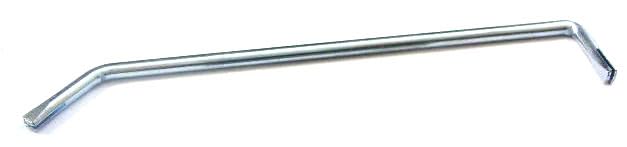
A single steel tool that bends a leaf switch contact without gouging the board beneath it.
A leaf switch is the pair of thin metal contacts that fire a flipper or score a hit, and it only needs a tiny nudge to be right. The wrong gesture is a screwdriver blade, which slips, scratches the playfield, and leaves a mark you cannot undo. This tool is case hardened — heat-treated steel that keeps its edge — so it can push a contact precisely without digging in, and it is built to adjust any leaf switch rather than one brand’s set.
It is metal and silver and 6 inches long, which against the 3-inch leg leveler set gives it genuine reach into tight corners under a playfield. That extra length is the practical difference: you can work down past a row of components without pulling half the playfield apart.
The honest trade-off is that a tool is only as good as the hand holding it. Leaf switches are delicate, and a single tool does one job in one pack. If you are new to adjustment, expect to practice on a spare switch before touching a scoring contact — a bent leaf is easy to straighten and easy to ruin.
Why it’s in a part list: bad switch contact is a common cause of a flipper or score that fires late or not at all, and this fixes that without stringing the playfield.
For the hands-on owner: this is desktop-drawer insurance for any machine that scores oddly.
Not for the casual player: if you do not plan to adjust switches yourself, this will sit unused.
4. Pinball Heavy Duty Leg Leveler, 3 Inch, Set of 4 (Black)

Four steel levelers that stop a cabinet rocking and let you actually dial in the pitch.
Pinball machines are deliberately sloped, and a leveler is the threaded foot that lets you set that slope and stop the cabinet rocking on an uneven floor. This is a set of four in black steel, 3 inches tall, with zinc plated tightening nuts in the box so you are not hunting for hardware. The part is listed against Williams/Bally reference #08-7377 and Jersey Jack Pinball reference #98-000001-00, plus Williams #23-6327 and 23A-6327 — so before you order, compare those codes to your machine’s own list. If they match, the fit is settled.
A rocking cabinet changes how the ball rolls, knocks scoring contacts out of true, and makes every shot feel vague. Four sturdy feet at once is the fix, and having the tightening nuts included means the install is a straight swap.
The limit is that the fit hinges entirely on the reference numbers. These are sized for the families listed, not for every cabinet ever built, so the one thing worth double-checking is your own machine’s code. Treat a leveler as a precise part, not a universal foot.
Reasons this earns the cabinet job
- Four levelers at once means one install and a stable base.
- Zinc plated tightening nuts come in the box.
- Reference numbers given for Williams, Bally and Jersey Jack machines.
- Steel construction at 3 inches for real height adjustment.
What to verify before ordering
- Fit depends on matching your machine’s reference number.
- Not a universal replacement for every cabinet.
Wobbly cabinet, uneven floor: this set solves both the step-back-and-measure problem and the stability one.
Unknown model: find your reference number first — that is the whole decision.
5. Flipper & Shaft – Bally Pinball (Early) – Set of 2

A pair of bare flippers built to mirror the originals on an early Bally machine.
Flippers take the most abuse of any part on a machine, and when they chip or go flat you feel it in every shot. This is a set of two, both blank — no logos or branding moulded in, which keeps a restoration looking right instead of stamped with a modern brand. They are described as built similar to the original construction, so a collector dating a machine does not get a giveaway replacement part.
Weight tells a story here. The pair comes in at 2.24 ounces, which against the 13.6-ounce shooter assembly makes one point clear: these are the light pieces that move fast, not the sturdy metal rods. That matters when you are handling them during a rebuild, and it is the honest limit — the flipper and shaft is the unit, so the coil and bushings beneath are a separate matter.
Fit is the whole story with these, and it is tight by design. They are for early Bally machines only, not a general flipper replacement. If you are working on a later machine or a different maker, this is the wrong pair, and no amount of patience will change that.
Restoration read: a blank flipper of near-original construction is exactly what a period-correct rebuild needs, and the pair format means both sides get refreshed together.
The quiet warning: early Bally is a narrow fit — confirm the era before you buy.
Early Bally owner: grab the pair and do both sides in one session.
Different machine, different make: look for the flipper matched to your model instead.
6. Brunswick Alive Pinball White Rubber Ring Kit

A full set of white rubber rings that puts the bounce back into a tired playfield.
Rubber rings are the banded bumpers and posts scattered across the playfield, and when they age they go hard and the ball stops springing. This kit is built for one specific machine, which is exactly why it works — a general bag of rings never quite covers the layout. Inside you get the rubber rings, the flipper rubbers, and a ball shooter tip, at 4.64 ounces of rubber in total.
Replacing the set changes how the machine reacts, not just how it looks. Fresh rubber means livelier bounces off every post, and it is the standard upkeep task for a bar or game room that runs machines night after night.
One thing to plan for: post caps are not in the kit. Those are the little plastic covers that sit over the posts, and pulling old rings often means dealing with them too. If yours are brittle, order caps alongside rather than discovering it mid-job. Also verify the kit matches your machine, since this is a tailored set, not a universal assortment.
What you’re really buying: a matched ring set is the difference between a plodding ball and a snappy one, and this one covers rings, flipper rubbers and the shooter tip in a single order.
Machines showing their age: fresh rubber is the most noticeable playfield upgrade you can make.
Ordering blind: confirm the kit fits your model and add post caps if yours are tired.
7. Universal Pinball Ball Shooter Assembly
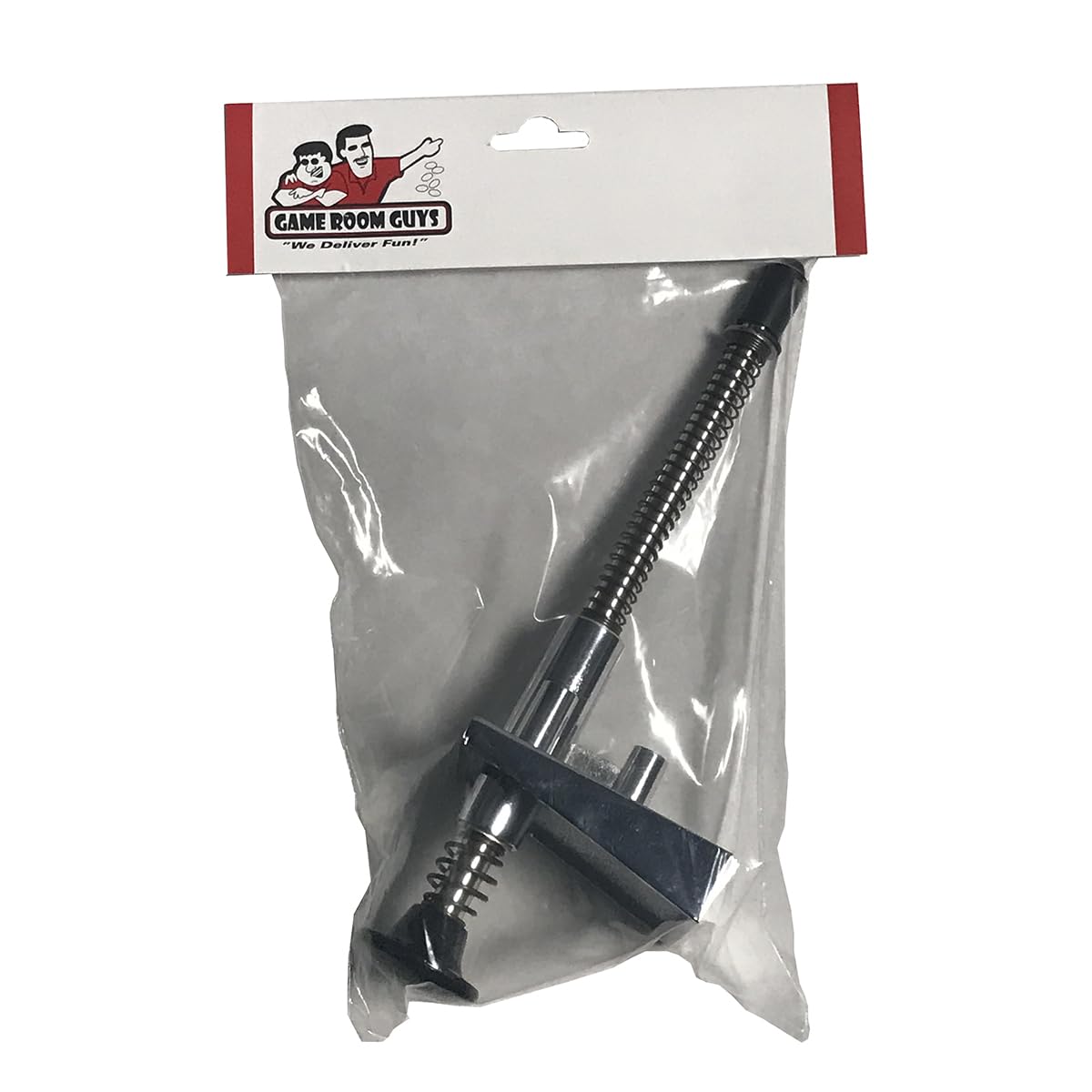
The whole shooter rod in one piece, for the machine that will not launch a clean ball.
When the plunger feels loose or the rod is bent, replacing the whole shooter assembly is faster than chasing individual pieces. This is one complete unit with a black knob and a black shooter tip, built to go into a range of makes and models rather than one brand. The maker lists part number 95-0086-00, so check that code against your machine’s manual — a universal part still wants a confirmation.
It is the heaviest item on this list at 13.6 ounces, which is the point: a shooter takes real load every launch, and that weight is steel meant to survive it. The difference in build class against the 2.24-ounce flipper pair is stark, and it explains why this is the part you replace whole rather than patch.
For a bar or home game room running machines constantly, a shooter that launches true is basic upkeep. The one risk is the word “universal” — it fits many machines, not every one, so the part number check is not optional. Get that right and this is a straight swap.
Why it’s worth the whole unit
- Complete assembly with knob and tip ready to install.
- Fits many pinball makes and models.
- 13.6 ounces of steel built for repeated launches.
- Part number 95-0086-00 listed for a clean cross-check.
The trade-off to know
- “Universal” still needs your part number verified.
- Not a fix for a scored playfield — that is a different job.
Weak or bent plunger: swap the whole assembly and stop patching it.
Working shooter, tired playfield: this is not your problem — the wax and ring kit above are.
Know the Specs
Bulb base codes and voltage
A base code such as #44 or ba9s is the physical fitting of the lamp into its socket — the same bayonet shape under two names. The voltage figure, like 6.3V AC/DC, tells you the lamp runs on the machine’s own lighting circuit rather than a wall supply. Get the base and voltage right and a replacement twists in and lights up; get either wrong and it will not work no matter how bright the bulb is. Colour temperature in Kelvin does not affect fit at all — it only changes how warm or cool the light looks.
Reference numbers and fit scope
A reference number is the manufacturer’s own code for a part, and it is the fastest way to know a replacement matches. A leg leveler listed against specific Williams, Bally and Jersey Jack codes is telling you those cabinets’ threads match. Universal parts, by contrast, are sold to fit many makes and models and still want your part number checked. Pinball parts are sold by fit first and features second, which is why two similar-looking flippers can belong to completely different machines.
Common Questions
Will a #44 bulb fit my machine’s lamp socket?
Do I need playfield wax if my machine is already clean?
Are these leg levelers a universal fit for any cabinet?
What is the difference between blank flippers and branded ones?
Does the rubber ring kit include post caps?
How do I know the shooter assembly fits my pinball machine?
Can a leaf switch adjuster tool damage my switch?
What should I fix first on a slow-playing machine?
Are LED bulbs safe in an old pinball machine?
Is waxing a playfield worth the effort on a well-used machine?
The Bottom Line
Start with the Pinball Playfield Wax, because it costs the least effort and improves every ball that rolls across the surface. If your inserts are dim, the PA LED bulb pack relamps a cabinet in one order. When the flush is dead and the bounce is gone, the Brunswick rubber ring kit is the piece that puts the machine back in action.
The real rule for pinball parts is that fit beats features every time. Check the reference number, confirm the bulb base, and verify the machine family — a part that matches is worth more than a part that is fancy. Order the one that fits your machine, and you will be playing the same evening rather than waiting on a return.
How we choose
We do not accept paid placement. Every pick is matched to a real buyer and a real use-case; we do not hands-on test units.
Sources
Specifications: manufacturer listings and product documentation. Review insights: verified customer reviews, as of November 2026. Pricing: not shown on this page (it changes often); check the current price via the retailer link.
As an Amazon Associate, Tactical Gear Guy earns from qualifying purchases. This does not affect which products we feature.