Specs are compiled from manufacturer listings and verified buyer reviews and can change over time — please confirm the key details on the product page before buying.
At this price, a machine has to hold a steady brew temperature and keep working long after the first week. The picks below cover the flagship end of the market: fully automatic bean-to-cup units, dual-boiler semi-automatics, and heat-exchanger machines hand-built in Italy. Each one is a real machine with a real price tag and real trade-offs. Below, you’ll see which one fits your counter space, your patience level, and the way you actually drink coffee.
This guide is built by comparing the manufacturers’ published specifications and the patterns across verified customer reviews, so you get each pick’s real strengths and trade-offs instead of marketing spin.
Some machines here grind and tamp for you while others expect you to learn the craft. The trick is matching the automation level to how much control you want to hand over. That is exactly what this breakdown of very expensive coffee machines is built to settle for you.
Top Picks
How To Choose The Best Very Expensive Coffee Machines
At this tier, every machine can pull a good shot on a good day. What separates them is how they behave on a bad day — when the beans are a little stale, when the milk is oat instead of dairy, when you have guests and need six lattes back to back. The spec sheet lists the hardware; the design philosophy tells you who the machine was built for.
Automatic Vs. Semi-Automatic: Pick Your Workload
A fully automatic machine grinds, doses, tamps, and brews at the push of a button. A semi-automatic hands you the portafilter and expects you to grind, dose, and tamp yourself. The trade-off is simple: automation buys convenience and costs you control over grind, dose, and tamp. If you want to learn to dial in a shot by feel, a semi-automatic with a PID (a small computer that holds the boiler at an exact temperature, usually to the degree) rewards the effort. If you want coffee before you are fully awake, a super-automatic is the honest answer.
Boiler Design: Dual, Heat Exchanger, Or Single
A dual boiler gives you one boiler for brewing and a separate one for steam, so you can pull a shot and steam milk at the same time without either one stealing heat from the other. A heat exchanger uses one large boiler with a tube running through it — brew water passes through the hot steam boiler and picks up heat on the way. Both let you brew and steam simultaneously. A single boiler forces you to wait between the two, which is why single-boiler machines tend to sit lower in this tier.
Grinder And Temperature Control Are The Real Money
Your grind quality shapes the cup more than pump power does. A conical burr grinder (two cone-shaped steel burrs that crush beans into an even grind) with dozens of settings lets you chase the balance for each bag of beans. Temperature control is the other half: a PID (a digital thermostat that holds a set brew temperature) lets you nudge the heat to suit a light, bright roast or a darker, chocolatey one. A machine with neither is just an expensive kettle with a portafilter (the handle that holds the coffee puck).
Milk: Do You Want A Steam Wand Or A Push-Button?
Automatic milk systems froth and dispense at the touch of a button, which is wonderful until the milk tube clogs and you spend twenty minutes cleaning it. A manual steam wand asks you to learn texture but rarely fails and cleans in seconds. Count how many milk drinks you make a week and how much patience you have for a weekly deep clean before you pay for the automatic version.
Side-by-Side Comparison
| Model | Best For | Boiler / System | Water Capacity | Milk System | Amazon |
|---|---|---|---|---|---|
| De’Longhi PrimaDonna Aromatic★ Best Overall | Hands-off variety | Fully automatic | 75 fl oz | LatteCrema Hot & Cool | Amazon |
| Bosch VeroCafe 800 SeriesApp Control Pick | App control & options | Fully automatic | — | Integrated milk container | Amazon |
| Breville Barista Touch ImpressGuided Learning Pick | Guided learning curve | Semi-automatic | 67.6 fl oz | Auto MilQ steam wand | Amazon |
| Diletta Bello+ | Manual craft in Italy | Single boiler, PID | 3 liters | Manual steam wand | Amazon |
| Terra Kaffe TK-02 | Coffee & drip hybrid | Fully automatic | 75 fl oz | Froths all milk types | Amazon |
| Nuova Simonelli Oscar II | Café power, low fuss | Semi-automatic, heat exchanger | 3 liters | Milk frother included | Amazon |
| Rocket Appartamento TCA | Compact Italian style | Heat exchanger, hybrid PID | 2.5 liters | Commercial-style steam | Amazon |
| Rancilio Silvia Pro X | Dual boiler precision | Dual boiler, dual PID | 1 liter | Optional steam at pressure | Amazon |
| Miele CM 6160 MilkPerfection | Latte convenience | Fully automatic | 1.8 liters | Milk frother | Amazon |
| Breville Oracle Touch | Full automation with touchscreen | Dual boiler | 67 oz | Automatic microfoam steam wand | Amazon |
| Jura J8 twin | Dual grinder flexibility | Fully automatic | 64 fl oz | Sweet Foam function | Amazon |
| Jura Z10 | Hot & cold brew range | Fully automatic | 81 fl oz | Cold Extraction Process | Amazon |
Detailed Reviews
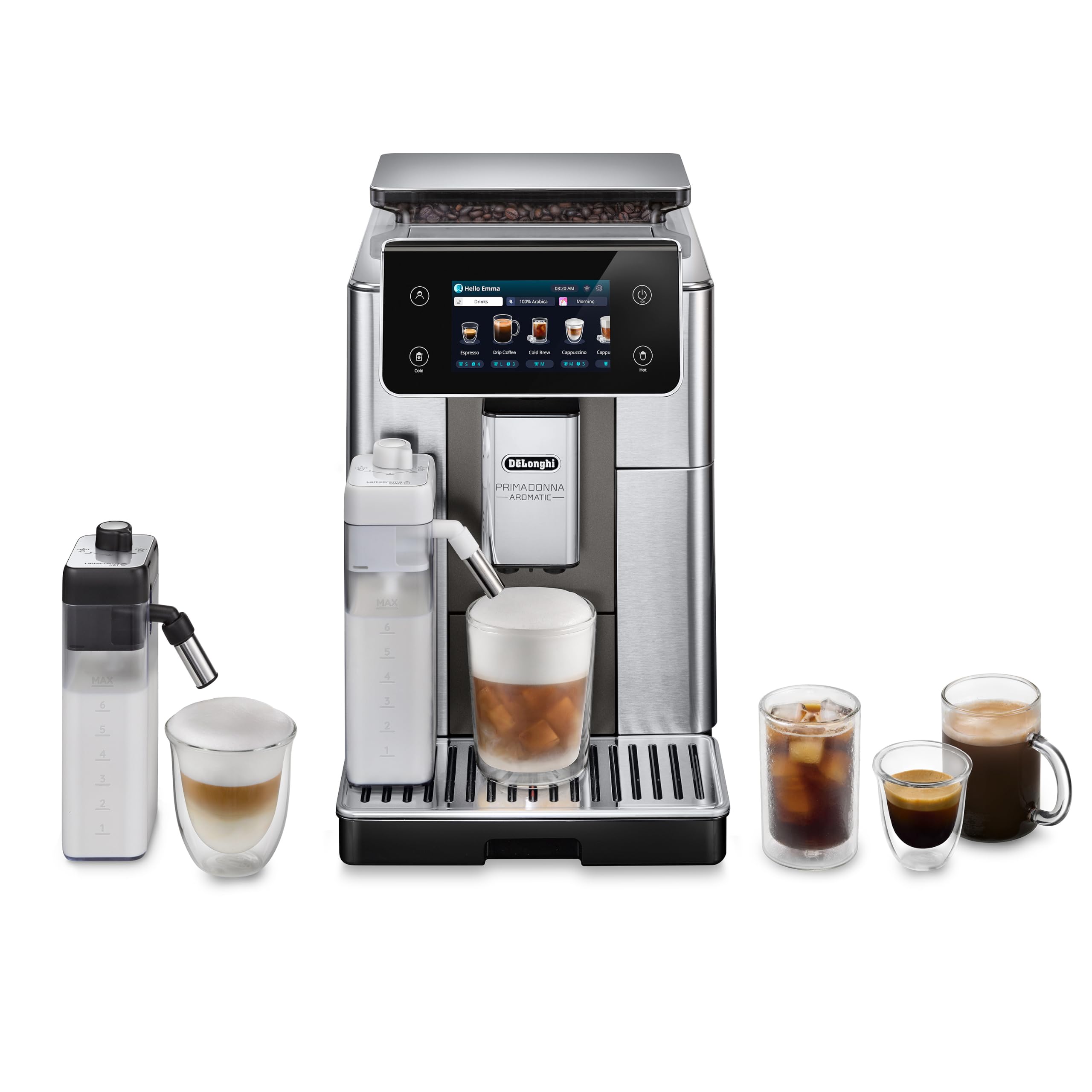
1. De’Longhi PrimaDonna Aromatic
Our pick — 4.5+★ from 50+ verified ratings; the strongest balance of quality and price.
A bean-to-cup machine that reads your beans and picks the grind so you never guess.
If you want café-level variety without becoming a barista, this is the machine the research points to first. Its party piece is Bean Adapt and Adaptive Grinding — sensors that recognize the beans you drop in and set the grind for you, alongside a built-in burr grinder built to hold up over time. You get 38 hot and iced presets, a number that covers espresso, drip coffee, americano, cold brew, iced coffee, iced lattes, cappuccinos, cortados, and flat whites without you touching a dial.
You get silky steamed milk or light cold froth from dairy or plant milk, thanks to the LatteCrema Hot and Cool systems, and the removable frother goes straight in the dishwasher. The machine is a big presence on the counter, though: 21.65 by 12.2 by 18.9 inches and 27.7 pounds. That body is 14% heavier than the Barista Touch Impress at 24.2 pounds, so measure your counter first and lift with your legs.
The crowd favorite in this category, it holds a 4.5+ star rating, and what wins people over is the cup itself — owners repeatedly describe the espresso as exceeding expectations and stacked against their previous machines. The value read lands the same way: a recurring owner sentiment is that it is worth the spend. One honest catch is footprint; the same owners who love the brew warn that it is a large machine and you need real counter space before it arrives.
What Earns The Top Spot
- Adaptive grinding sets the dose for your beans, no manual dialing needed
- 38 hot and iced presets across espresso, drip, and cold brew
- 75-fluid-ounce tank outpaces the Barista Touch Impress at 67.6 fluid ounces
- Dishwasher-safe removable milk carafe for hot and cold froth
The Honest Catch
- Large footprint at 21.65″D x 12.2″W x 18.9″H — measure first
- Heavier than the Barista Touch Impress: 27.7 lbs vs 24.2 lbs
- The burr grinder is built for longevity but the machine still needs regular cleaning cycles
Best for: anyone who wants a full café menu at the push of a button without learning grind dialing.
Think twice if: your counter is tight — this machine eats real estate.
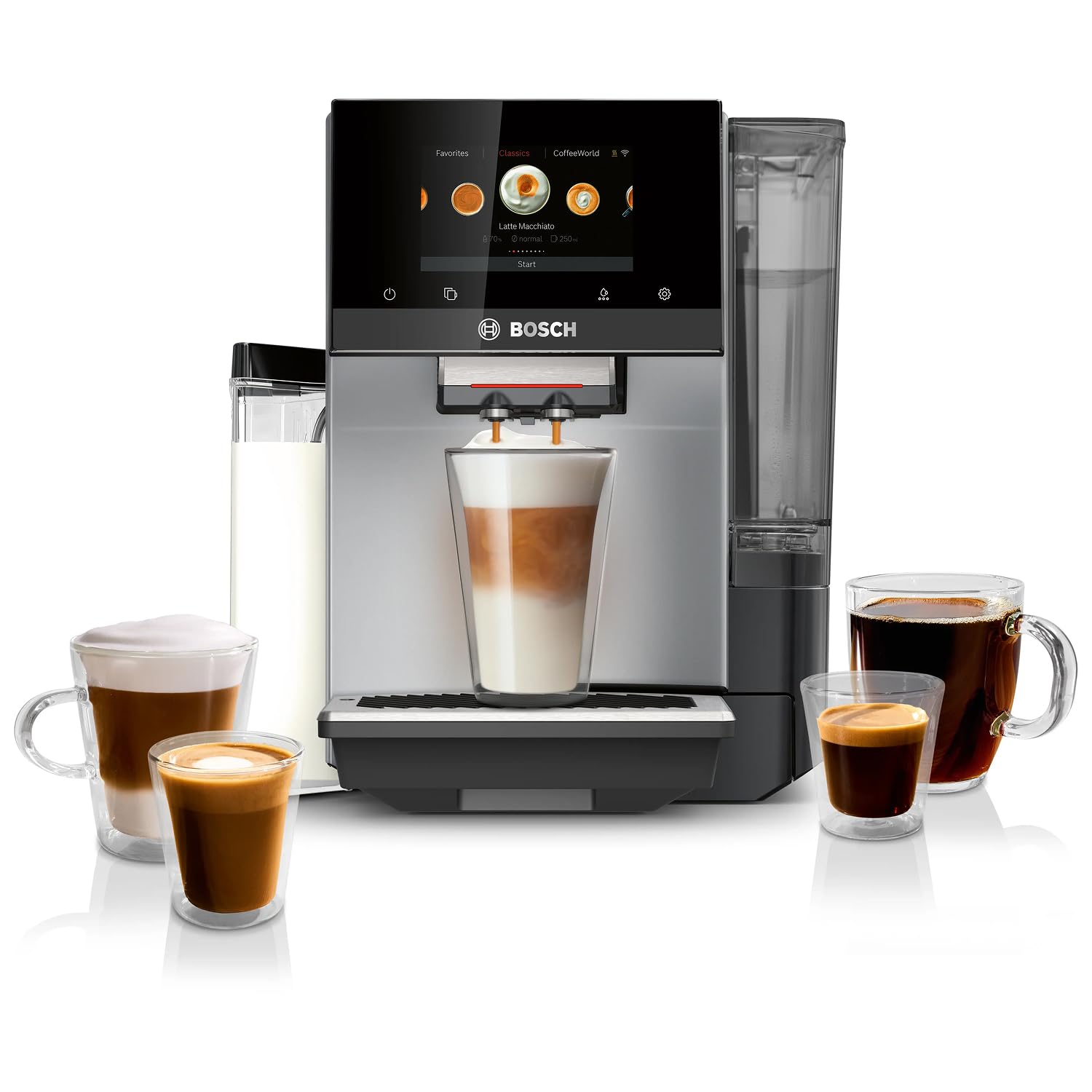
2. Bosch Fully Automatic Coffee Machine
Start a latte from the couch, then customize every ratio on a large touchscreen.
Bosch built this one around the phone in your pocket. The Home Connect app lets you fire up a brew remotely — over 35 beverages are on the menu — while the large touchscreen handles the counterside work. What makes it worth your attention is the depth of personalization: strength, size, milk ratio, and even aroma are all adjustable, which is more knobs than most automatic machines at this price hand you. It runs quieter than its spec sheet suggests, using a steel grinder with an AromaticSystem brewing approach and a BrilliantLight LED that lights the cup area.
The performance is where the consensus lands, and owners single out the cup freshness first. The machine grinds and brews to order, one owner’s “very fresh coffee” is the kind of line that shows up repeatedly, and drink variety — including cappuccino and macchiato — is called out as a real strength. At 10 kg, it is noticeably lighter than the Breville Oracle Jet at 12.6 kg, so shoving it into place on a shelf is far less of a chore.
The honest trade-off is drink temperature. A recurring gripe is that even at the maximum setting, drinks come out warm rather than hot — a coolant problem that lives with the machine, not your technique. Milk-container handling is the other friction point, with the plastic lid needing a firm push. If you preheat your cup or add a splash of hot milk, the temperature issue softens considerably. That one quirk is the main reason some buyers pass this machine over.
Where it shines: you can dial in 35+ drink options right down to the milk ratio and aroma, which makes this the most tuneable automatic on the shorter mid-priced end. Phone control also means the machine is warming up before you reach the kitchen.
The trade-off: coffee temperature is the recurring complaint — even the “maximum” setting lands lukewarm for some, and the plastic milk lid needs patience to seat properly.
Reach for this if: you want remote brewing and the most granular customization at this price point.
Look elsewhere if: you want your coffee piping hot straight out of the spout.
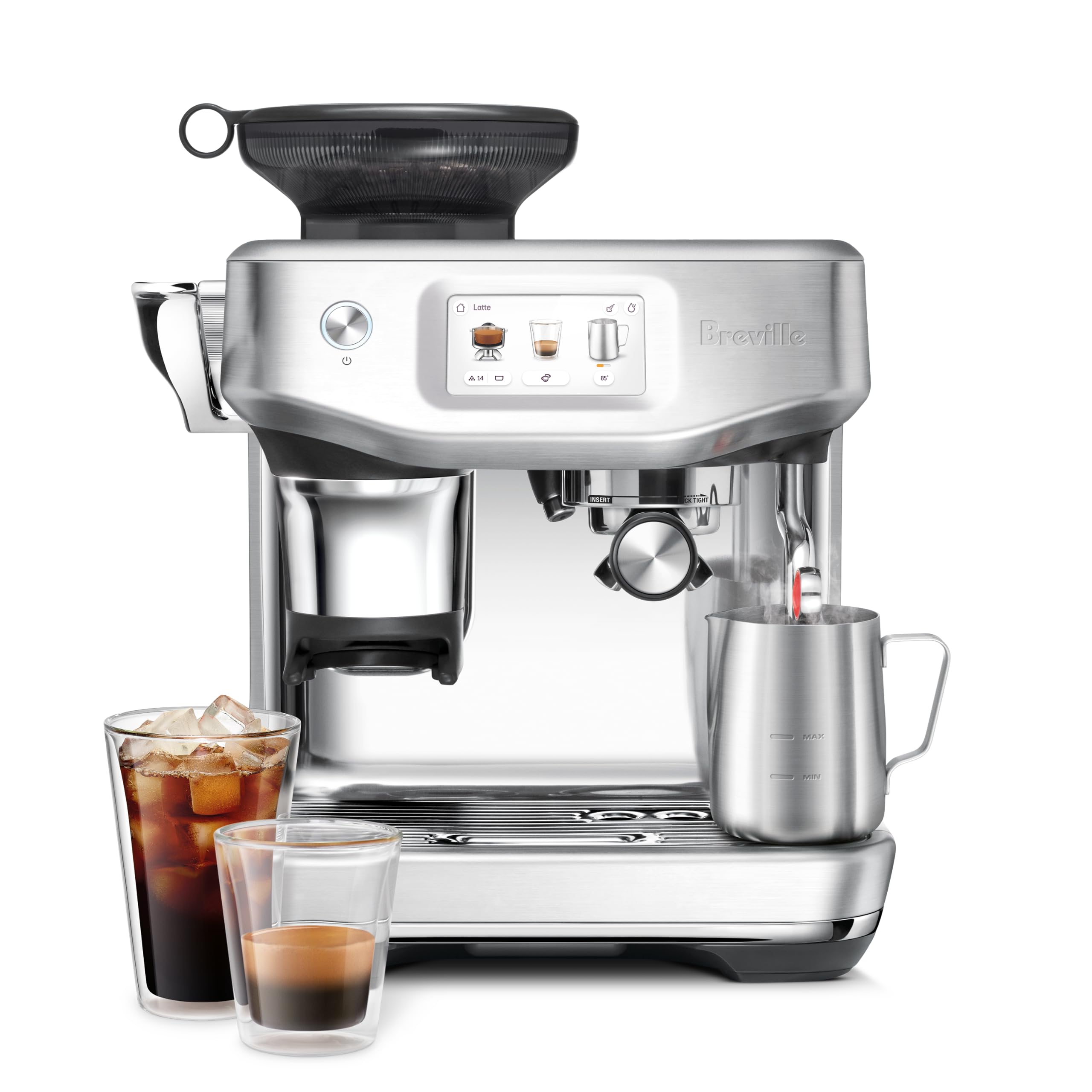
3. Breville BES881BSS Barista Touch Impress
A semi-automatic that holds your hand through grind, dose, and tamp — then teaches you the rest.
For anyone who wants to learn espresso but does not want to waste a bag of beans doing it, the Barista Touch Impress is the on-ramp. Its Impress Puck System handles intelligent dosing and assisted 22lb tamping automatically, then gives you step-by-step barista guidance in real time with corrections for your next dose. Baratza European precision burrs give you 30 grind settings to explore, and the ThermoJet heating system hits extraction temperature in 3 seconds.
The screen does the heavy lifting — swipe and pick from 13 café favorites or customize up to 6 drinks. The Auto MilQ steam wand adds three alternative-milk settings that dial air injection and temperature for oat, soy, and almond, so you are not fighting plant milk every morning. It also has a Cold Brew Function. At 67.6 fluid ounces, the tank is slightly smaller than the De’Longhi PrimaDonna’s 75 fluid ounces, and at 24.2 pounds it is lighter, so it fits a tighter corner.
Where the experience separates is in what happens after you dial it in. The consensus is that once the grind is set, the machine is simple and the coffee is excellent — plenty of owners say it takes the guesswork out. The catch that shows up with more frequency is reliability over the long haul; a meaningful slice of reviews describe units that need service, and milk frothing can stumble on certain days. Treat it as a machine you learn on and maintain carefully, not a set-and-forget appliance.
The standout spec: assisted 22lb tamping plus real-time guidance makes this the easiest semi-automatic to learn on, and 30 grind settings give you somewhere to grow.
The honest limit: long-term reliability is the recurring theme, so budget time for maintenance and plan the occasional service visit.
Who should pick this: first-time espresso owners who want coaching rather than guesswork.
Who should look on: anyone who wants a machine that never asks for attention.
4. Diletta Bello+ Espresso Machine

Hand-built in Milan for the brewer who wants to earn every shot.
The Bello+ is the anti-automation pick. Every lever and knob is manual — this machine is built for someone who wants to develop barista skills, not skip them. The front-mounted PID screen shows and adjusts your steam boiler temperature, and the same screen doubles as a shot timer while you brew. Programmable preinfusion of up to 10 seconds soaks the puck at low pressure before full extraction, which is the sort of control most automatic machines simply cannot give you.
A low-power eco mode drops boiler temperature between sessions to save energy and then recovers to brew temp quickly, an increasingly rare consideration on a machine this size. The stainless steel case, frame, and boiler are built for longevity. The 58mm portafilter, tamper, and baskets ship in the box. At 3 liters of tank capacity, it holds more water than the Rancilio Silvia Pro X at 1 liter, so you refill less often during a long weekend of pulling shots.
This is also a machine that makes a statement — the hand-built construction and stainless steel finish make it a focal point on the counter. The honest limit is the learning curve: with all-manual brew and steam controls, you will pull some bad shots before the good ones become routine. If you want consistency without thinking, this is the wrong machine. If you want to feel your improvement in the cup, it is the right one.
what separates it: you get real craft control from a 3-liter boiler and a 10-second programmable preinfusion (a short low-pressure soak that wets the grounds before the full shot). The stainless build is meant to last.
What you give up: fully manual brew and steam mean every drink is your responsibility — no push-button shortcuts.
For the tinkerer: if you want a hand-built Milanese machine and a real shot at barista-level control, this is it.
Not for you if: you want to press one button and walk away.
5. Terra Kaffe TK-02 Super Automatic Espresso Machine – White
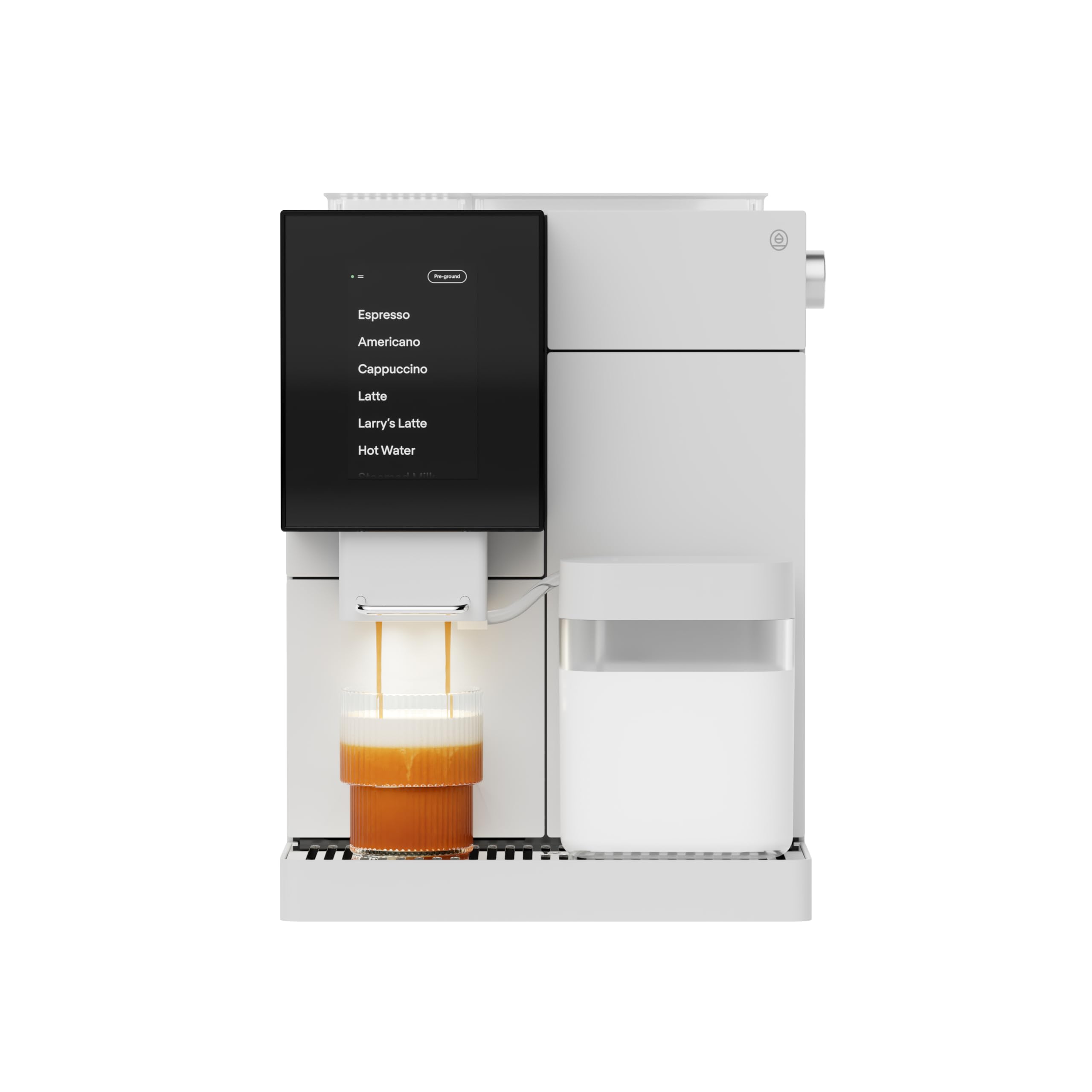
A super-automatic that brews real drip coffee and espresso from the same hopper.
Most automatic espresso machines stop at espresso. The TK-02’s hybrid brew unit makes both genuine drip coffee and espresso from whole beans or pre-ground — a real differentiator if your household is split between drip drinkers and espresso drinkers. Over 100,000 drink combinations are on offer, and the Roaster-Approved settings work by scanning a QR code on Terra Kaffe coffee purchases to auto-tune the machine to that roast.
The app layer matters here. Every drink you build saves to your Terra Kaffe account and syncs to any TK-02 machine, so your custom profiles follow you. Auto wake and sleep can be scheduled from the app, meaning the machine is ready before you reach the kitchen. At 75 fluid ounces, the tank is the same size as the De’Longhi PrimaDonna’s 75 ounces, and the touchscreen guides you through refills — it flags when the water tank is low or the drip tray needs emptying.
What owners rate highly is the quality and the ease of day-to-day maintenance. Cleaning cycles are straightforward, the wipe-down is simple, and the customizability lets you chase the exact strength and temperature you want. The honest catch is reliability: a handful of owners describe units that threw error codes or lost milk frothing after a few weeks. It is a capable machine when it runs right, so keep the support line handy.
Where It Delivers
- Brews both drip coffee and espresso from one machine
- 100,000+ drink combinations with custom profiles saved to your account
- 75-fluid-ounce tank and easy cleaning cycles
- Roaster-Approved QR settings auto-tune for purchased beans
Where It Stumbles
- Reliability is the recurring concern — some units throw error codes
- Value read is split between owners
- Milk frothing can degrade over time on some units
Best if: your household wants real drip coffee and espresso from one countertop machine.
Think twice if: you need a machine that never needs support.
6. Nuova Simonelli Oscar II Espresso Machine

Café heat and steam pressure in a footprint that barely fits a corner.
The Oscar II is a semi-automatic heat-exchanger machine — one boiler doing brew and steam duty with a heat exchanger running through it, so you can pull a shot and steam milk at the same time. It runs at 110 volts and pulls from a pour-over water source, meaning you top it up by hand rather than plumbing it in. The 3-liter reserve is generous, matching the Diletta Bello+ at 3 liters and outpacing the Rancilio Silvia Pro X at 1 liter, so you are not refilling constantly.
The stainless and copper exterior gives it a professional look, and the keypad interface keeps operation simple. What reviews consistently flag is the performance — the taste and power of a coffee shop, at home. The keypad plus 58mm portafilter and included milk frother mean you can build a full workflow without extra parts. It is a machine that rewards someone willing to treat it like a café workhorse.
The catch is the same one café machines carry: it wants attention. Some owners describe units that arrive less than perfect, and the value read is split between those who find it worth the money and those who feel it is too expensive. If you want a machine that will punch out espresso after espresso and you are comfortable pulling maintenance yourself, this is a serious option. If you want a button and a latte, keep looking.
The case for it: a 3-liter tank and heat-exchanger design deliver café-level steam power and simultaneous brew, and the included portafilter and frother get you brewing straight away.
The caveat: some units arrive less than perfect, and the value split is genuinely mixed — it asks you to be a hands-on owner.
Worth it for: someone who wants café-grade power and does not mind topping up the tank by hand.
Not ideal if: you want out-of-the-box reliability without hands-on care.
7. Rocket Espresso Appartamento TCA
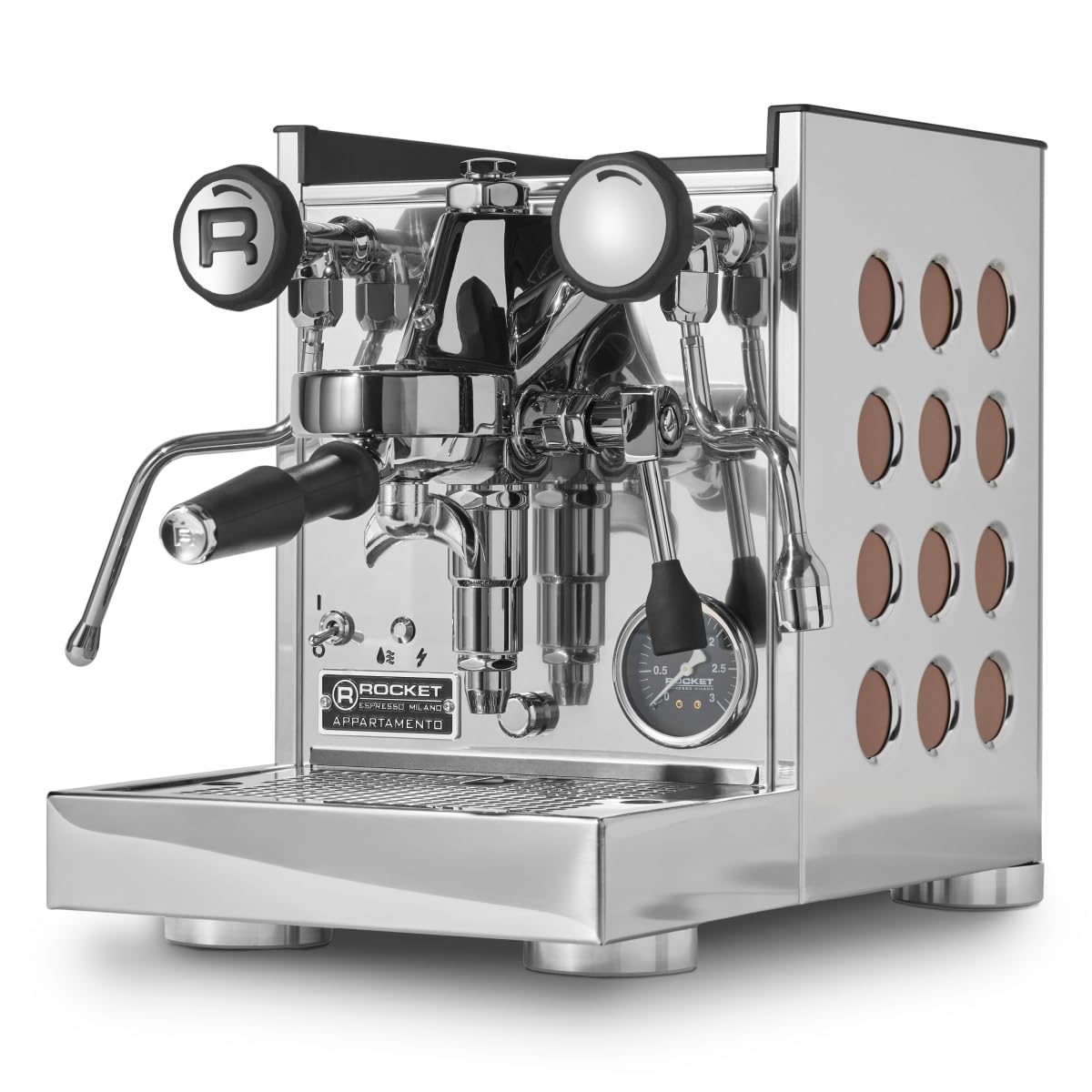
A Milan-built showpiece that is narrow enough for the tightest counter.
The Appartamento TCA is a heat-exchanger machine with a commercial-style E61 group head — a heavy brass group that holds temperature steady through the whole extraction, which is what keeps espresso balanced instead of sour or scorched. A 1.8-liter heat-exchanger boiler runs the brewing side. A hybrid PID gives you four selectable brew temperatures, adjusted right at the brew lever, so you can go cooler for bright light roasts and hotter for chocolatey dark ones without a touchscreen.
Because it is a heat exchanger, you can brew and steam simultaneously — the strong dry steam textures milk into glossy microfoam quickly, enough to pour a full round of lattes back to back. All of this sits in a 10.7-inch-wide body, narrower than most in this tier, with a top-fill 2.5-liter reservoir and a 30-minute eco standby plus RGB status light. Rustic Italian build quality shows in the stainless steel, copper side panels, and polished cup rail. It also carries a 3-year manufacturer warranty.
The spec that surprises most buyers is weight — 68 pounds. That is a machine meant to stay put, so plan its spot permanently. The espresso consensus is positive, and people are glad they spent up rather than down. The honest tension: the value read is split, because a machine this expensive still demands that you learn the E61 workflow and manage the heat exchanger’s temperature recovery. It is designed to be a skill machine, not a convenience machine.
What you pay for: a commercial-style E61 head, 1.8-liter heat exchanger, and four brew temperature presets in a 10.7-inch body, all handmade in Milan with a 3-year warranty behind it.
What to know: 68 pounds makes it a permanent fixture, and the manual E61 workflow asks you to learn it.
Choose it if: you want a narrow, Italian-built showpiece that rewards learning to work a commercial group.
Look past it if: you want push-button coffee — this one wants your hands.
8. Rancilio Silvia Pro X

Twin boilers and to-the-degree temperature control in a compact stainless body.
The Silvia Pro X is the machine for someone who wants dual boiler capability in a small footprint. A 1-liter steam boiler and a 300ml brew boiler run on separate circuits, so you can pull a shot and steam milk at the same time. Dedicated brew and steam PIDs let you adjust temperature to the degree — the sort of control that turns pulling espresso into a craft rather than a chore. Adjustable low-pressure soft preinfusion gives you one more lever to pull for smoother shots.
The PID screen doubles as a shot timer during brewing, and a programmable wake-up time lets you set when you want the machine ready. The upgraded stainless portafilter — from Rancilio Specialty — plus the included tamper, baskets, and cleaning kit get you brewing immediately. The 1-liter water tank is smaller than the Nuova Simonelli’s 3 liters, so you refill more, and the user is expected to know the workflow rather than be coached through it.
Owners describe a machine built like a tank, with brass internal components and a strong reputation for build quality. What earns consistent praise is the espresso quality and the sense that this is a long-haul machine. The reliability read is more mixed; a few describe units that did not fire on arrival, and the return experience can be frustrating. That said, the broader pattern points to a machine designed to last if you handle it correctly and buy from a reliable seller.
Where It Excels
- Dual boilers with separate brew and steam PIDs
- Programmable wake time and built-in shot timer
- Soft preinfusion for smoother shots
- Premium stainless portafilter and brass internals
The Fine Print
- Smaller 1-liter tank than the Nuova Simonelli’s 3 liters
- Reliability is mixed — some units did not fire on arrival
- Return experience can be frustrating
For: someone who wants dual-boiler control and a long-term build without a huge footprint.
Against: you want a bigger tank and a more forgiving reliability record.
9. Miele CM 6160 MilkPerfection
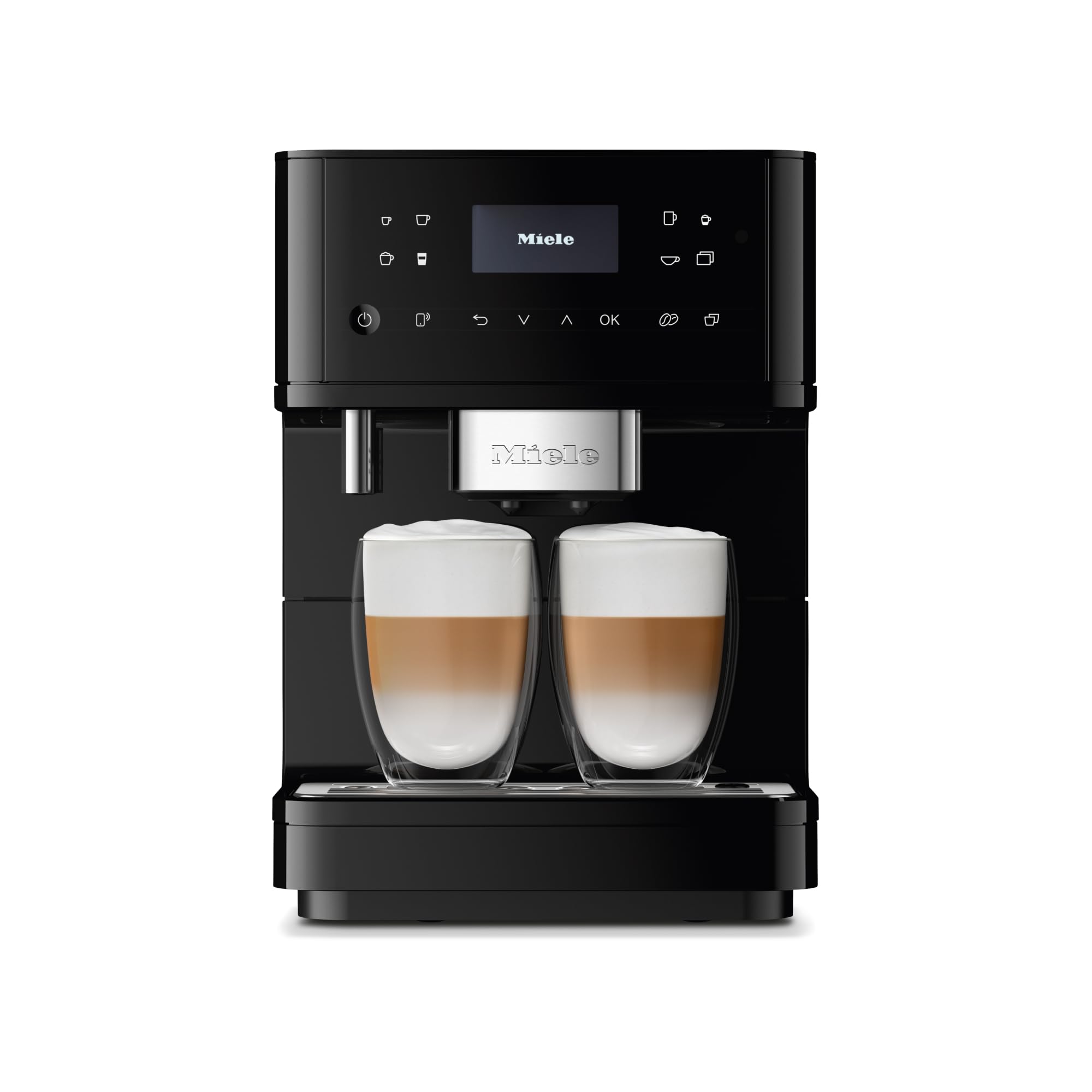
Automatic milk drinks for two, built around a quiet steel grinder.
Miele’s pitch with the CM 6160 is milk and convenience, and the specs back it up. OneTouch for Two makes two of any specialty drink with a single touch, and up to four connoisseur profiles let each household member save their own. The DoubleShot function doubles the quantity of any beverage. The grinder is steel, made quiet for early-morning service, and the AromaticSystem brewing approach plus a BrilliantLight LED makes the machine feel considered from the moment you walk up.
WiFiConnect adds app control, so the machine can be prompted from across the house. A 1.8-liter water tank matches the Rocket Appartamento TCA at 1.8 liters, and the machine runs at 21.8 pounds — lighter than most in this tier, so it is easier to move into place. The milk frother is the draw; owners describe the milk-based drinks as the highlight, and the lattes specifically come in for repeated praise.
The honest downside is durability, and it is the one that keeps this from a higher slot. Some owners describe the machine failing within a couple of years, a water tank breaking, and service costs adding up. That puts the value read under real scrutiny even though the drinks themselves deliver. If milk-forward convenience is your priority and you accept that a service call is possible, it is a lovely machine to use. Just go in with eyes open about long-term care.
The draw: OneTouch for Two, four personal profiles, and a quiet steel grinder make this the most considerate milk-first machine in the group.
The concern: durability is real — a water tank breaking and service calls are the patterns that keep the value read in question.
Fits you if: you drink milk drinks daily and want them made automatically for two.
Does not fit if: you want proven long-haul reliability for the money.
10. Breville BES990BSS Oracle Touch

Swipes a touchscreen and pulls a café shot — until it asks for service.
You get Breville’s most automated semi-automatic here: a dual boiler with a built-in precision conical burr grinder that doses and tamps 22 grams automatically. A self-cleaning steam wand on a dedicated boiler textures milk to whatever barista-quality microfoam level you choose. The touchscreen swipes you through espresso, long black, latte, flat white, and cappuccino, and you can save up to 8 personalized drinks by name. An Over Pressure Valve (a valve that caps pump pressure during the shot) limits maximum pump pressure through extraction, while low-pressure preinfusion gently expands the grinds for even extraction.
The 4 keys formula is the Breville story here: the right dose, precise temperature via PID, optimal water pressure, and true microfoam. The 58mm full stainless steel portafilter, 480ml milk jug, and full cleaning kit all come in the box. The 67 oz water tank is on par with the Barista Touch Impress’s 67.6 fluid ounces, but the dual boiler layout means it delivers more simultaneous brew-and-steam capability. At 37.3 pounds it is a serious appliance — plan its spot permanently.
The performance reviews land on café-level when the machine is running well, with consistent shots and a touchscreen that makes drink selection remarkably fast. The honest catch is the long-term reliability: a significant share of buyers report heating failures, grinder issues, or coating problems, and that impacts the value assessment. If you are willing to back it with an extended warranty and clean it carefully, it delivers great coffee. If you want a machine that runs forever without help, this may not be it.
What Works
- Dual boiler with automatic grind, dose, and tamp
- Touchscreen makes drink selection fast and simple
- Over Pressure Valve and preinfusion help even extraction
- Save up to 8 personalized drinks by name
What Doesn’t
- Long-term reliability is the recurring concern
- 37.3 pounds makes it hard to relocate
- Coating durability can wear over time
Fits you if: you want full automation and professional milk texture from one machine.
Look past it if: you cannot accept a possible service call on a flagship machine.
11. Jura J8 twin Diamond White Automatic Coffee Machine
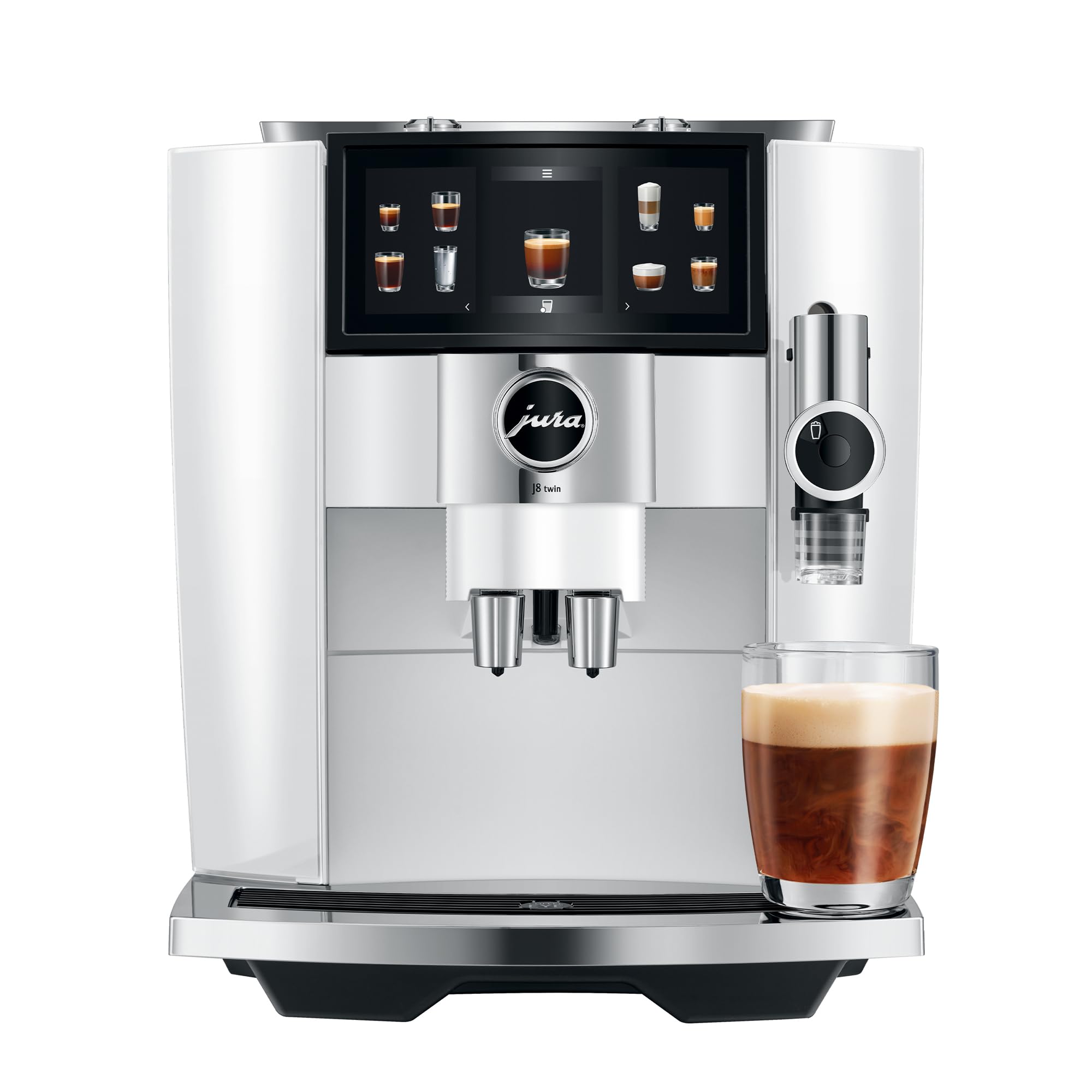
Two bean hoppers, two grinders, and 31 drink options on a big panoramic screen.
If your household argues about which beans to load, the J8 twin ends the argument. It carries two 6.3-ounce bean containers, each with its own high-performance conical grinder featuring Aroma Control — a system that actively monitors grind consistency so every cup lands where you set it. That is a genuinely different design from the single-hopper machines in this group. Thirty-one drink options are on the menu, including the exclusive Sweet Foam function for a different style of milk sweetness.
The 6.7-inch Panorama Coffee Panel is the largest touchscreen in this lineup and is built to be easy to read at a glance. Grind consistency, strength, volume, and milk or foam amount are all programmable, and the Specialty Selection expands what you can prepare. The 64-fluid-ounce tank is smaller than the Jura Z10’s 81 fluid ounces, so consider that if you drink a lot of coffee. Pulse Extraction Process, One-Touch Americano, and the Eighth-Generation Brew Unit round out the hardware.
What people consistently praise is performance and cup quality — the milk froth in particular earns dedicated enthusiasm, and there are happy stories of skeptical spouses being converted by a single latte. The honest limit is capacity: the bean holder and water tank are not huge for a machine at this level, and that is the recurring size complaint. If you drink several cups a day, you will be refilling often. The espresso itself rarely disappoints.
The differentiator: twin 6.3-ounce hoppers each with their own Aroma Control grinder, plus a 6.7-inch Panorama Coffee Panel, make this the versatility pick.
The limit: the 64-fluid-ounce tank and bean hoppers are modest — frequent refills are the routine trade-off.
Choose this if: you want two bean options ready to go and a screen that is easy to read.
Pass if: you want a large tank so refills are rare.
12. Jura Z10 Diamond White
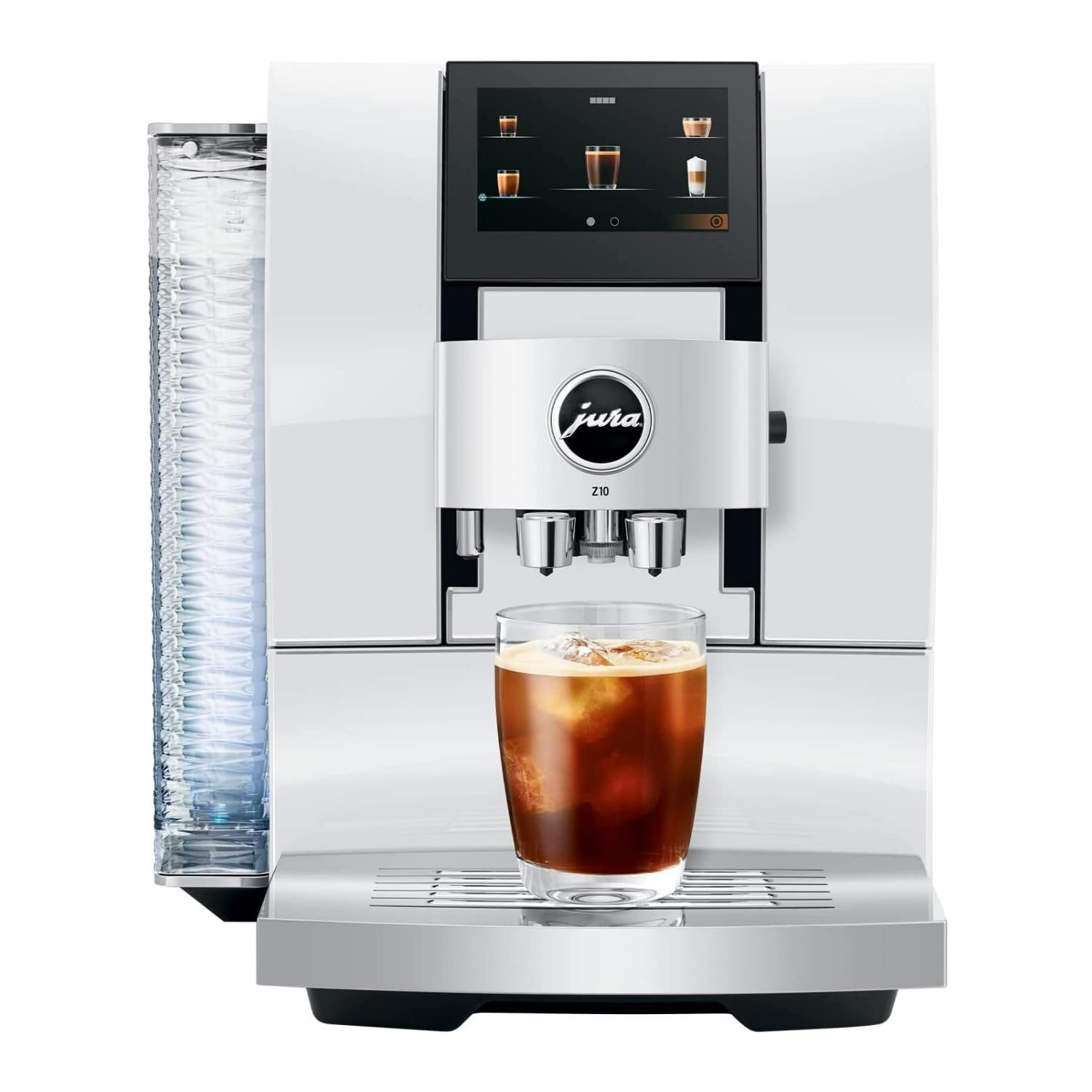
The only machine here that brews hot and cold specialties from one unit.
Jura’s biggest swing in this group is the Cold Extraction Process — 32 beverage options spanning hot and cold brew specialties, a first in the automatic category. That cold-extraction capability is what separates it from every other super-automatic here, and it matters if you actually drink iced coffee in the summer instead of just tolerating it. The Exclusive Product Recognizing Grinder adjusts in a fraction of a second to your chosen grind consistency, and the Eighth-generation Brewing Unit and Pulse Extraction Process round out the tech.
The interface is a touchscreen with optional artificial intelligence and WiFi Connect for use with the J.O.E. app — you can customize, duplicate, rename, and reposition your favorites. An 81-fluid-ounce tank is the largest in this lineup, bigger than the J8 twin’s 64 fluid ounces, so refills are rare. It also accepts pre-ground coffee alongside whole beans, giving you a fallback when you finish a bag. A quick 3-minute milk-system cleaning cycle keeps the daily maintenance short.
The strengths here are real: owners love the brewing capability, the flavored Americanos and lattes come up repeatedly as highlights, and the machine notifies you when it is time to clean or replace the filter. But durability is the persistent concern — some owners mention units that stopped working after a couple of months, and the cold brew function specifically has been faulted. The value read is split between people who think it pays for itself and people who think the maintenance cost is too high. That split is the most important thing to know before buying.
What It Gets Right
- Cold Extraction Process for genuine cold brew specialties
- Largest tank in this lineup at 81 fluid ounces
- 32 drink options with customizable favorites
- Quick 3-minute milk-system cleaning
What To Note
- Durability is the recurring concern — some units fail early
- Cold brew function has been specifically faulted
- Value and maintenance cost are split among owners
If you drink iced coffee: this is the only automatic here that brews cold specialties on demand.
If you want confidence: weigh the durability reports first — that is the number to check before you commit.
Know the Specs
Dual Boiler vs. Heat Exchanger
A dual boiler uses two separate boilers: one for brewing, one for steam. That lets you pull a shot and steam milk at the same time without one stealing heat from the other, which is why the Rancilio Silvia Pro X and the Breville Oracle Touch both run this layout. A heat exchanger uses one large boiler with a tube running through it: brew water passes through the hot steam boiler and picks up heat on the way. The Rocket Appartamento and the Nuova Simonelli Oscar II use this design. Both let you brew and steam at once, so the practical difference usually depends on footprint and price rather than capability. A single boiler forces you to wait between the two, which is why machines with that layout sit lower in this tier.
PID Temperature Control
A PID is a small controller that holds the boiler at an exact temperature, usually to the degree. Where a thermostat swings up and down, a PID stays put — which matters because a few degrees of drift can turn a balanced shot sour or scorched. The Diletta Bello+ shows its PID on a front-mounted screen, the Rancilio Silvia Pro X uses separate brew and steam PIDs, and the Rocket Appartamento’s hybrid PID gives you four selectable brew temperatures adjusted at the brew lever. If you drink mostly one style of beans, a PID may sound overkill. If you like to switch between bright light roasts and chocolatey dark ones, it is the single spec that lets you make that switch well.
Burr Grinders and Grind Settings
A burr grinder crushes beans between two shaped steel surfaces instead of chopping them with a blade, which produces a more even particle size. An even grind is what lets water flow through the puck (the packed bed of grounds) consistently. The number of grind settings tells you how fine your adjustment steps can be. The Breville Barista Touch Impress offers 30 grind settings with Baratza European precision burrs, the Oracle Jet bumps that to 45, and the Jura J8 twin runs two separate grinders with Aroma Control monitoring consistency. More settings do not automatically make better coffee, but they give you more room to chase the balance for each new bag of beans.
Milk Systems: Automatic vs. Steam Wand
An automatic milk system froths and dispenses at the push of a button — the De’Longhi’s LatteCrema Hot and Cool and the Breville’s Auto MilQ are examples. A steam wand asks you to texture milk by hand, which takes practice but rarely fails and cleans in seconds. Automatic systems make latte mornings easy but add cleaning steps; the Jura Z10 lists a 3-minute milk-system cleaning cycle, and the De’Longhi carafe is dishwasher-safe. If you drink milk drinks daily, the automatic version earns its keep. If you drink espresso mostly black and only occasionally make a cappuccino, a steam wand is the simpler, lower-maintenance choice.
Common Questions
What is the real difference between a dual boiler and a heat exchanger machine?
Does a built-in burr grinder actually matter on a machine this expensive?
How often do I need to descale and clean a high-end coffee machine?
Can I make cold brew on an automatic espresso machine?
Is a super-automatic machine easier to use than a semi-automatic?
How much counter space does one of these machines really need?
Do I need a dedicated electrical circuit for a high-end espresso machine?
How long do these machines typically last?
Is an automatic milk frother better than a manual steam wand?
What is preinfusion and does it really change the shot?
The Bottom Line
If you want the best very expensive coffee machines can offer without crossing into barista territory, the winner is the De’Longhi PrimaDonna Aromatic. It adapts the grind to your beans automatically, offers 38 hot and iced presets, and holds the strongest rating of any pick here at 4.5+ stars. If you want café-grade steam power and you are happy topping up a tank by hand, grab the Nuova Simonelli Oscar II. And for a hand-built Italian machine that rewards learning a commercial E61 group (the brew head that holds the portafilter), the Rocket Appartamento TCA is the one to reach for.
One purchase nudge worth making: the De’Longhi’s bean-adaptive grinding removes the single biggest source of bad espresso — an incorrectly set grind — so it is the pick for anyone who wants exceptional coffee without a learning curve. Every machine here has real strengths and real trade-offs. The best one for you is the one whose workflow matches the way you actually drink your coffee.
How we choose
We do not accept paid placement. Every pick is matched to a real buyer and a real use-case; we do not hands-on test units.
Sources
Specifications: manufacturer listings and product documentation. Review insights: verified customer reviews, as of November 2026. Pricing: not shown on this page (it changes often); check the current price via the retailer link.
As an Amazon Associate, Tactical Gear Guy earns from qualifying purchases. This does not affect which products we feature.