Specs are compiled from manufacturer listings and verified buyer reviews and can change over time — please confirm the key details on the product page before buying.
Your check engine light comes on and suddenly every decision feels expensive. A plug-in OBD2 code reader hands you the actual fault code in minutes, so you know whether it is a loose gas cap or a real problem before you pay for a repair. This guide separates the pocket-sized readers that simply display a code from the full-system tools that talk to your airbag, ABS and transmission modules — and tells you which one fits the way you actually work on cars.
This guide is built by comparing the manufacturers’ published specifications and the patterns across verified customer reviews, so you get each pick’s real strengths and trade-offs instead of marketing spin.
Every pick below is a genuine OBD2-compatible scanner, sorted by what it can actually do rather than by the badge on the box. By the end you will know exactly which obd2 code reader matches your garage, your budget and your vehicle year.
Top Picks

How To Choose The Best OBD2 Code Reader
Start with the question that decides everything else: do you only want to read engine codes, or do you need to reach the airbag, ABS and transmission modules too? A basic reader answers the first. A full-system scanner answers the second. Most buyers overpay for an engine-only reader they outgrow, or underbuy a full-system tool that cannot reach the airbag module.
Engine codes versus full-system codes
A basic OBD2 reader pulls the P-codes that live in the engine computer. That is what turns the check engine light on. Full-system scanners reach B, C and U codes that live in body and chassis modules, so a glowing airbag or ABS lamp becomes readable instead of mysterious. If your dash has ever lit up the SRS or ABS light, a basic reader will stare back at you blankly.
Live data and freeze frame explained
Live data is a real-time stream of what the engine computer sees right now — RPM, coolant temperature, fuel trims, oxygen sensor voltage. Freeze frame is a snapshot of those same numbers at the exact moment the fault was set. Together they tell you whether a misfire is constant or a one-off hiccup, and that difference changes what you repair.
Vehicle year and protocol support
OBD2 has been the US standard since 1996, but not every scanner speaks every protocol. Older cars use KWP2000, ISO9141 and J1850 variants; newer cars lean on CAN. Some tools, including the Autel AutoLink AL619, cap coverage at 2015 and earlier, so a 2018 model may not answer at all. Check the year window before you buy.
Updates and subscriptions
Software is what teaches a scanner about new models. Free lifetime updates keep a tool useful for years. A subscription that lapses can quietly lock features you already paid for. Read the update terms as carefully as the spec sheet — a lapsed subscription can lock features you already paid for.
Side-by-Side Comparison
| Model | Best For | System Coverage | Screen | Updates | Amazon |
|---|---|---|---|---|---|
| Autel MaxiCheck MX808S★ Best Overall | Full-system diagnostics and bi-directional testing | Engine, ABS, SRS, Transmission, TPMS, Battery and more | 1024×600 | Paid subscription per Autel | Amazon |
| FOXWELL NT301The Proven Crowd Favourite | Everyday check engine light reading | Engine (OBD2 modes) | 2.8-inch color | Free software updates | Amazon |
| TOPDON AD600 ProBig-Screen Full-System Pick | Full-system scanning with 16 core service resets | Engine, Transmission, ABS, BCM, Airbag, Chassis, Powertrain | 5-inch 1280×720 HD touch | Lifetime free via Wi-Fi | Amazon |
| FOXWELL NT604 | Four-system diagnostics with AutoVIN | Engine, ABS, SRS, Transmission | 4.3 inches | Lifetime free, no subscription | Amazon |
| INNOVA 5310 | ABS and SRS reading with app-based repair solutions | Engine, ABS, SRS | 2.8 inches | Via RepairSolutions2 app | Amazon |
| GEARWRENCH GWSMARTBT | Bi-directional control through your phone | Full bi-directional control, 23 reset/relearn functions | Your smart device | Free, no subscriptions | Amazon |
| Autel AutoLink AL619 | ABS and SRS on 1996–2015 vehicles | Engine, ABS, SRS (1996–2015 only) | 2.8 inches | Free lifetime online | Amazon |
| VDIAGTOOL VD30 Pro | Fast check engine light scans on a budget | Engine (all 10 OBD2 modes) | 2.8 inches | Lifetime free via USB | Amazon |
| TOPDON AL400 | Simple CEL checks for beginners | Engine (10 OBDII functions) | 2.4-inch color | Free lifetime | Amazon |
Detailed Reviews
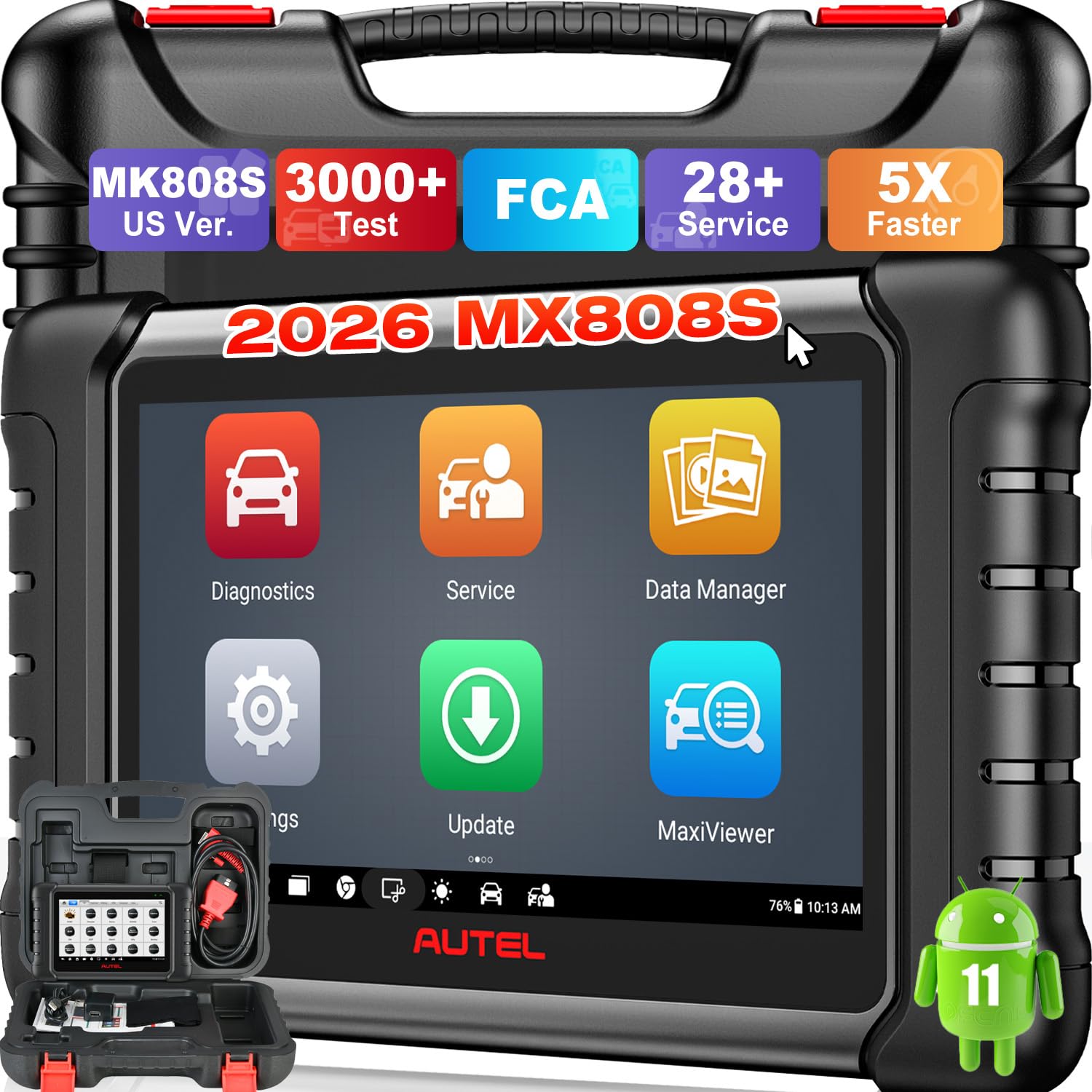
1. Autel Scanner MaxiCheck MX808S
Our pick — 4.5+★ from 800+ verified ratings; the strongest balance of quality and price.
A shop-grade tablet that lets you command the part, not just read the complaint
The number that sets this apart is 3000+ active tests — meaning you can send a command to a component and hear it click, spin or pump on demand. That is the difference between a reader that reports a code and a tool that confirms the faulty part. You can fire a fuel pump to check pressure, buzz an injector, or spin the cooling fan, all from the 1024×600 screen instead of crawling under the hood with a multimeter.
Inside there is a Rockchip RK3566 4-Core CPU (the processor that runs the tool) with 4GB RAM and 64GB ROM on Android 11. In plain terms: it boots in seconds and switches between Engine, ABS, SRS and Transmission without lag. Autel rates it 5X faster than the older MK808/MX808 generation, and that speed is what keeps a real scan from eating your afternoon. Coverage is 10,000+ US, Asian and EU vehicles from 1996 to today, with FCA Aut0.Auth support for 2018-onward Chrysler, Jeep, Dodge and Fiat models.
It pulls dealer-level data and displays live values in five formats, including graph and waveform, for RPM, fuel trims, O2 sensors and MAF. Twenty-eight service functions cover oil reset, ABS brake bleeding, EPB reset, BMS, SAS calibration and DPF work. The Autel diagnostic tool also accepts the MV108S endoscope (sold separately) for peering into tight spaces.
What earns the top slot
- 3000+ bi-directional active tests confirm a faulty part before you swap it
- Full-system coverage including Engine, ABS, SRS, TPMS and Battery
- Rockchip RK3566 processor, 4GB RAM and 64GB ROM on Android 11
- 28+ service functions across 200+ brands
- Coverage of 10,000+ vehicles from 1996 onward
Where it asks more of you
- Wi-Fi connectivity splits opinion — pairing and updates are the recurring friction point
- Wi-Fi updates can need account setup before you first scan
- It is a substantial tablet — 6.93″L x 1.42″W x 10.66″H — so it lives in the shop, not the glovebox
Built for the home shop: pick this if you diagnose your own fleet or run a small repair business and want one tool that reaches every module.
Pass if: you only need to clear an occasional check engine light — a pocket reader does that for a fraction of the size.
2. FOXWELL NT301 OBD2 Scanner
The plug-and-play classic that has diagnosed a small city of driveway repairs
This is the reader most people picture when they picture a code reader, and 4.5+ stars from tens of thousands of owners back that reputation. The format is dead simple. You plug it into the 16-pin OBD2 port under the dash, it powers itself from the car, and the 2.8-inch color screen shows you the code alongside its definition. No batteries, no charging, no pairing.
Where it goes beyond basic is live data and graphing. You can watch engine RPM, coolant temperature, fuel trims and oxygen sensor readings in real time, which is how you catch an intermittent misfire that vanishes by the time you park. The one-click I/M Readiness hotkey lights red, yellow or green so you know before a scheduled inspection whether your monitors are set.
The honest limit is scope. This reads the engine computer, not the airbag or ABS modules — for those you need something like the FOXWELL NT604 further down. There is also a split on compatibility: most 1996-and-newer US-market cars, SUVs and light trucks answer correctly, but a BMW owner found the box overpromised. Confirm your year and model against the protocol list (CAN, ISO9141, KWP2000, J1850) before you count on it.
The real-world read: free software updates, 12 months of warranty, and a 0.16 kg body that rides in the door pocket without you noticing it. For a first scanner or a second one for the truck, this is the sensible starting line.
Reach for this if: the check engine light is your concern and you want a tool that just works the moment it touches the port.
Look elsewhere if: a glowing airbag or ABS lamp is what sent you shopping — this one stops at the engine.
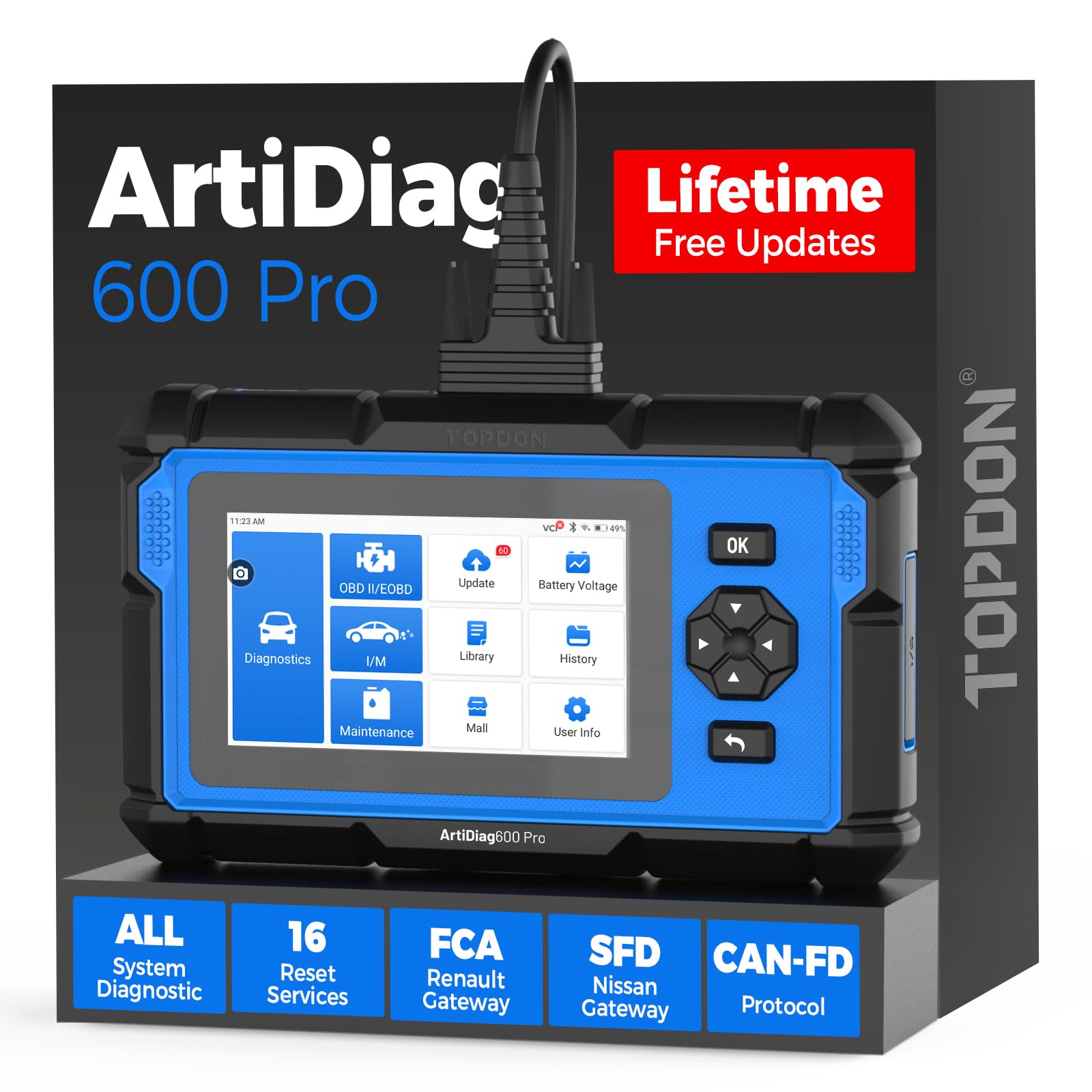
3. TOPDON AD600 Pro OBD2 Scanner
Full-system diagnostics with a screen you can actually read across the engine bay
Pop the hood on any modern car and there are a dozen computers talking to each other. This tool walks all of them — Engine, Transmission, ABS, BCM, Airbag, Chassis and Powertrain — pulls the fault codes from each and hands you a consolidated report. The 5-inch 1280×720 HD touchscreen is what makes that multi-system view usable with greasy fingers.
Sixteen core service functions stay free for life: oil reset, ETS, brake, DPF, TPMS, SAS, BMS, ABS bleeding, injector coding, window calibration, gearbox, airbag, suspension, AdBlue, EGR and A/F reset. Thirty days after activation, 14 more services open up for a free 30-day trial, bringing the working total to 30. After the trial, those 16 stay and the extras step back.
Modern protocol support is where this earns its place — CAN-FD, plus FCA, Renault, NISSAN and SFD Secure Gateway access, which is what lets it reach newer vehicles that lock out generic readers. Hardware is 2GB RAM and 32GB ROM on Android 11, with AutoVIN, AutoScan and ECU Identification so you are not typing a 17-character VIN by hand. Coverage runs 90+ brands and over 10,000 models built after 1996. The catch: some protocol access may require an additional purchase or subscription, and connectivity is mixed — one owner found it needed to stay within Wi-Fi range to function properly.
The all-system scan is the draw: it reads four live data streams at once, records and replays them, and pulls freeze frame from the moment of the fault.
Budget note: lifetime Wi-Fi updates mean no subscription just to keep the tool current.
Who it beats: the pocket readers — by a mile on system coverage and screen real estate.
Who should hold off: drivers who only ever see an engine light and would never touch a reset menu.
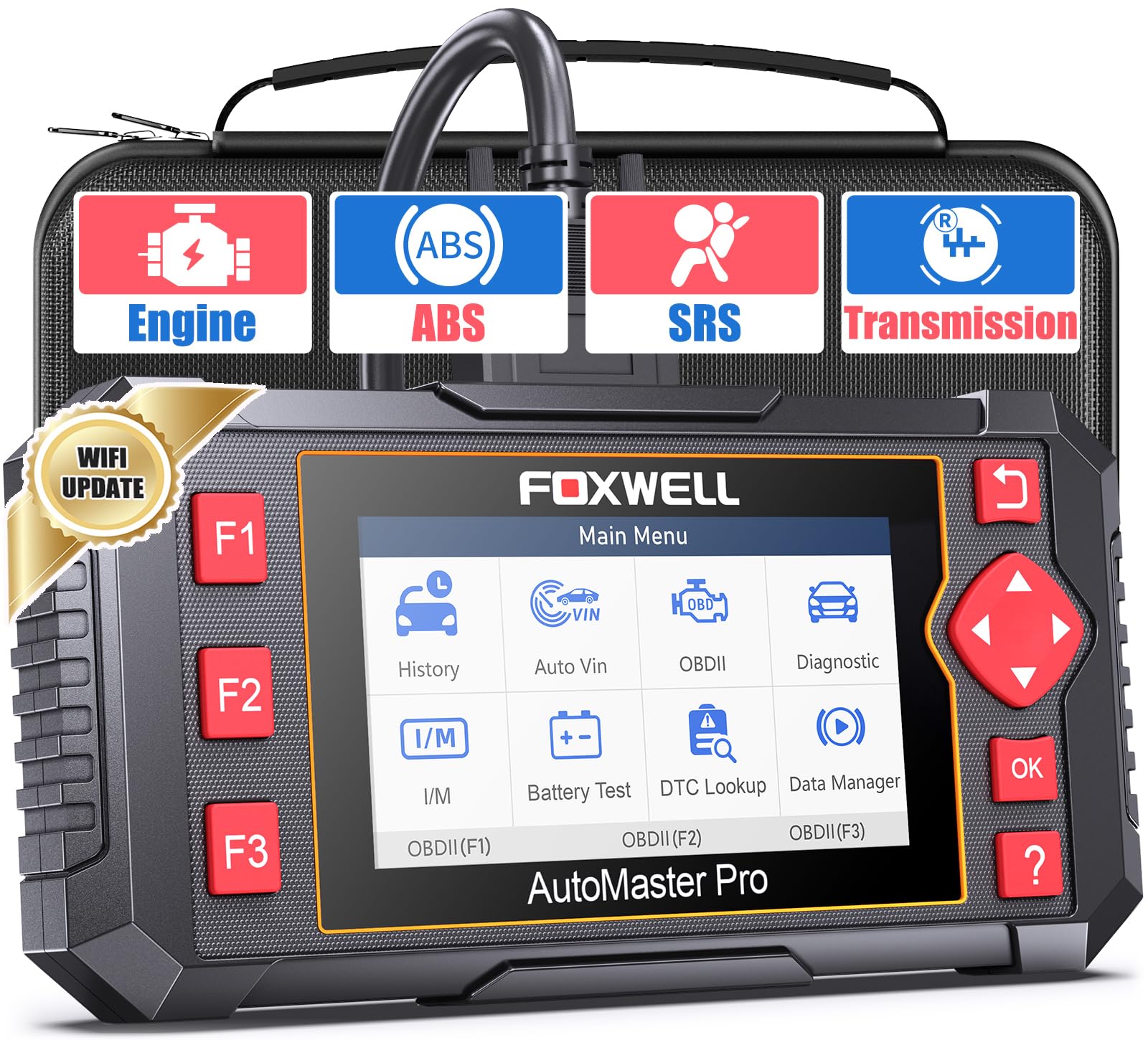
4. FOXWELL NT604 OBD2 Scanner
Four critical systems, one automatic VIN read, and a report you can hand to the shop
Take everything the NT301 does and add the three modules that actually scare people: ABS, SRS airbag and Transmission. An airbag light on a 2002 Toyota Tacoma is readable here — precisely the situation a basic reader cannot touch. It covers all 10 standard OBDII functions on top of that, plus live data streaming and a 4-in-1 view.
AutoVIN is the quiet convenience. Rather than pecking at a tiny keypad to type your VIN, the tool grabs it and pulls the vehicle info automatically, then scans all four systems in a single pass and lists the faults together. You can print a diagnostic report and take it to the repair shop, which is often enough to skip paying for their inspection fee.
Coverage stretches to 10,000+ cars across 60+ makes, from 1996 through 2025, with the 4.3-inch screen making the results easy to read at a glance. Lifetime updates come with no subscription fee, no microSD card to lose and no registration hurdle. The one thing to expect is a learning curve on the interface — the menu layout is denser than a basic reader, and a few owners found they still had to look up what a code meant elsewhere.
Why it earns the spot
- Reads and clears Engine, ABS, SRS and Transmission codes
- AutoVIN pulls your vehicle info without manual typing
- Lifetime free updates with no subscription and no memory card
- 4.3-inch screen and printable diagnostic reports
Worth knowing before you buy
- The interface takes a session or two to learn
- A few codes still need outside explanation
- Menus get crowded once you leave the engine section
Best fit: the DIY owner who wants airbag and ABS coverage without jumping to a full shop tablet.
Not for: someone chasing bi-directional actuation tests — this reads and clears, it does not command components.
5. GEARWRENCH Professional Bi-Directional Diagnostic Scan Tool

Your phone becomes the screen — bi-directional control without paying for a tablet
The GWSMARTBT deletes the screen entirely. The hardware is a 0.11 kg module that plugs into the OBD2 port, and the display is whatever smart device you already carry. Run Android 10.0 or newer, connect over Bluetooth, and the app shows OE-level diagnostics with live data mapping and freeze frame capture on the hardware you are already comfortable reading.
Bi-directional control is the headline capability — you can actuate components and run live actuation tests rather than only reading what the car reports. Add 23 vehicle reset and relearn functions, among them throttle matching, ABS bleeding and TPMS reset, across 185+ car manufacturers. The software updates are free with no subscriptions and no fees, which is rare at this capability level.
The honest trade-off is that Bluetooth is the whole ballgame. Connectivity and compatibility split opinion here, and when pairing works you get a clean, easy-to-decipher data screen on a Samsung phone; when a vehicle or a phone fights the connection, you have no fallback screen to look at. There is an activation step to get through before first use, too. The tool is genuinely capable, but it asks you to troubleshoot a wireless link occasionally.
The pitch, judged: 23 reset functions and full bi-directional control, a remarkably small 0.11 kg footprint, and a 2-year manufacturer warranty backing it.
Fair warning: budget a few minutes for setup and pairing before your first real scan.
Made for: the phone-comfortable DIYer who wants bi-directional capability without a dedicated tablet in the toolbox.
Think twice if: you want a device that works standalone with no app, no pairing and no phone involved.
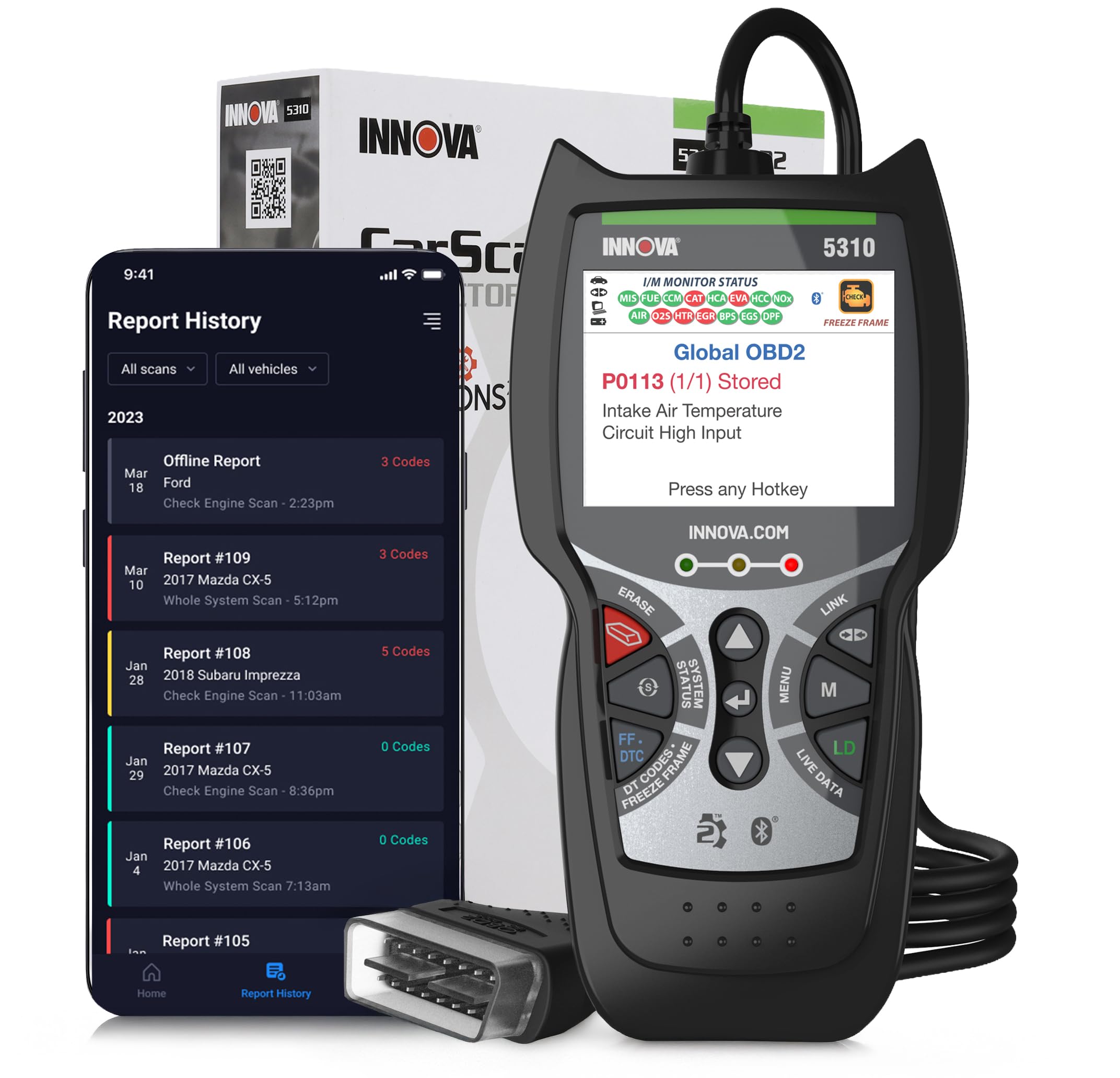
6. INNOVA 5310 OBD2 Scanner
Pairs with your phone for ABS and SRS repair guidance, not just a code number
Most readers stop at the code. This one keeps going. The 5310 connects over Bluetooth to Innova’s RepairSolutions2 app, which shows verified fixes, lets you buy the exact repair part and lays out maintenance schedules from the code you just pulled. It reads and clears ABS and SRS codes, and it also runs battery and alternator tests — the kind of checks that tell you whether a weak battery is behind a cluster of strange faults.
Daily use is light. The 2.8-inch bright screen stays readable on a sunlit driveway, and at 12.8 ounces the body is easy to hold while you work down on the floorboards. Live data covers RPM, speed and oil temperature, and an emissions status view tells you whether you will pass a smog check before you drive to the station. English, Spanish and French are all supported.
The recurring grumble is documentation — there is no paper quick-start guide, and reading an online manual on the same phone that is Bluetooth-paired to the tool gets clumsy. Connection can also be picky on certain older vehicles, so Innova’s Coverage Checker is worth a look before you buy. It covers most 1996-and-newer OBD2 vehicles, including hybrids.
What you are really paying for: the app ecosystem. Verified fixes and part lookups turn a fault code into a repair plan on the phone in your pocket.
Pick it when: an airbag or ABS light is on and you want repair guidance, not just a number to Google.
Skip if: your car predates 1996 or you want zero phone dependency in your diagnostic workflow.
7. Autel AutoLink AL619 OBD2 Scanner
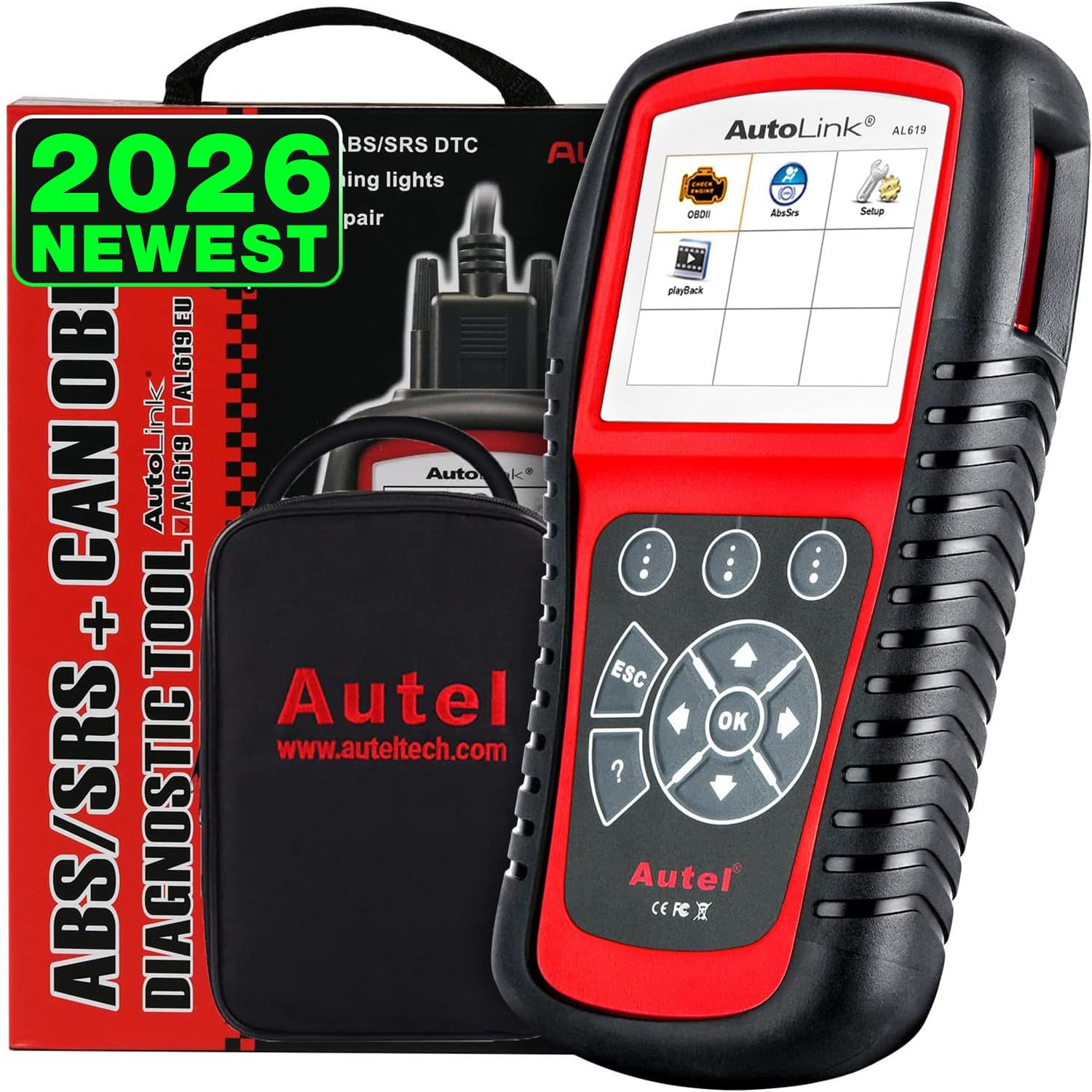
The budget route to airbag and ABS codes, if your car is 2015 or earlier
This is the tool that made its name on the lights a basic reader ignores. The AL619 reads and clears ABS and SRS codes, shows live sensor data in graph form, and covers all 10 OBDII test modes including the oil-change-adjacent I/M readiness check. On a 2007 Hyundai Tiburon SE, the ABS and airbag codes are exactly what buyers report pulling cleanly.
The DTC lookup is genuinely useful in the driveway — the tool holds a database of fault definitions so you are not standing there Googling P0 numbers. It speaks all the major OBD2 protocols (KWP2000, ISO2000, ISO9141, J1850 VPW, J1850 PWM and CAN) and lists coverage for more than 80 US, Asian and European vehicles. Free lifetime software updates mean the database grows with you.
Here is the line you must read before buying. The AL619 supports 1996 to 2015 vehicles only — Autel states plainly that it cannot support cars after 2015. That single year cutoff is the deciding factor. Accuracy also splits opinion, so factor in a little verification against a second source before you commit to a major repair.
The case for the AL619
- Reads and clears ABS and SRS codes, not just engine codes
- DTC lookup shows definitions without a Google detour
- Free lifetime updates and a 12-month warranty
- All 10 OBDII test modes, including I/M readiness
The limits are written in
- 1996–2015 coverage only — newer cars are not supported
- Accuracy feedback is mixed
- Android 4.4 platform feels dated next to newer tools
The right buyer: an owner of a pre-2016 vehicle chasing an airbag or ABS light on a tight budget.
The wrong buyer: anyone with a 2016-or-newer car — check the year before anything else.
8. VDIAGTOOL VD30 Pro OBD2 Scanner
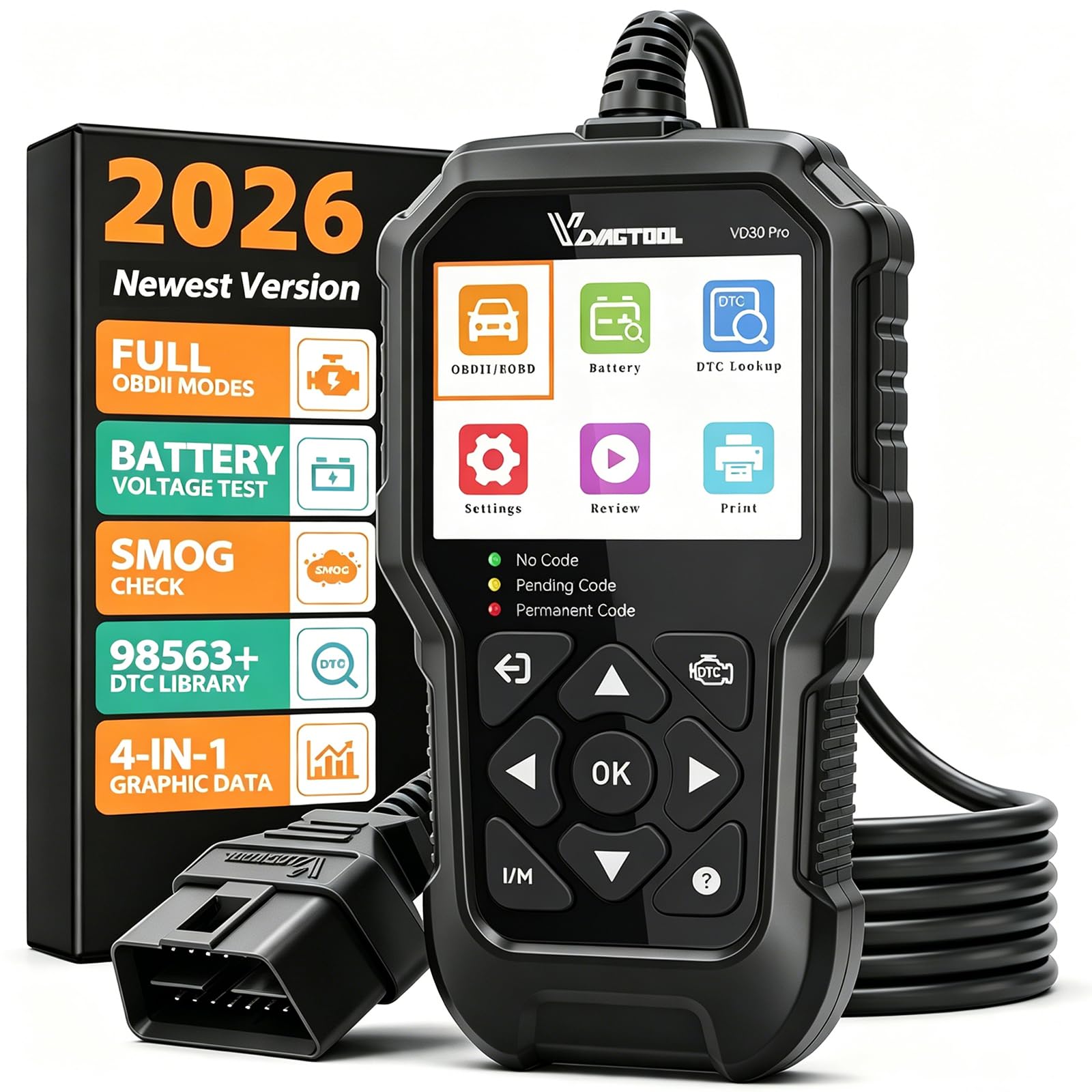
A pocket scanner that explains 98,000 codes in plain English on its own screen
The trick that makes the VD30 Pro worth a look is the built-in library of over 98,000 DTC definitions. Instead of handing you a cryptic code and a shrug, the 2.8-inch screen tells you in plain words what the fault means, which is a genuine time saver when the light comes on at a rest stop.
Coverage of the basics is thorough — all 10 essential modes including live data with 4-in-1 graphing, freeze frame, one-click I/M readiness, on-board monitor test and O2 sensor test. A dedicated I/M hotkey puts emission monitor status on one screen without you diving through submenus, which is the whole point when a state inspection is coming up. There is also a voltage reading, so you get a heads-up before a no-start morning. The rugged, drop-resistant housing is built for a life spent in a toolbox. Updates run free for life, loaded via the included USB cable on a Windows PC.
The scope is the thing to know. This tool does not support TPMS reset and it does not diagnose ABS, SRS, airbag or TPMS systems — it is an engine-and-emissions specialist. Connection on some vehicles also proved fussy, so it pays to check your model against the supported list. The 3-year warranty is a reassuring cushion behind the purchase.
Why owners keep it: the code explanation happens on the device itself, and the drop-resistant build suits garage life.
What it will not do: airbag, ABS or TPMS diagnostics — for those you need to step up the list.
Ideal for: the first-time DIYer who wants the code explained on the spot without an app.
Not the one for: a car with an airbag light on — this cannot reach that system.
9. TOPDON AL400 OBD2 Scanner

Drops in the glovebox and tells you what the check engine light wants
Small is the point here — the AL400 measures 2.95″L x 0.96″W x 5.67″H, which is why it disappears into a glovebox or door pocket and stays there for the moment you need it. The 2.4-inch color screen is bright enough to read in a dark garage or full sunlight, and the buttons are laid out so you can navigate without reading a manual first.
Functionally it covers the check engine job with 10 OBDII functions — read and erase codes, reset monitors, stream live data in graphs, view freeze frame, and run I/M readiness, EVAP, O2 sensor, catalyst and misfire monitors. Coverage is most 1996-and-newer vehicles on KWP2000, ISO9141, J1850 VPW, J1850 PWM and CAN protocols, so older cars are well served. Free lifetime updates keep the DTC library current.
What keeps this last on the list is the missing capability, not the price. It reads and clears engine codes — it does not touch ABS, SRS or transmission modules, and the amber, red and green LED status lights are less informative than a full text readout. If those lights are your concern, the AL619 above covers ABS and SRS on the same era of vehicles. The AL400 is for the simplest job done well.
Where the AL400 shines
- Compact 2.95″ x 0.96″ x 5.67″ body that lives in the glovebox
- Bright 2.4-inch color screen readable in daylight
- Free lifetime updates on a 10-function OBDII tool
- Simple button layout with no app or pairing required
Where it reaches its edge
- Engine codes only — no ABS, SRS or transmission access
- The LED status lights are less informative than a text display
- Not the tool for a full-system diagnostic session
The right call if: you want a bright, simple reader that clears a check engine light and tucks away out of sight.
Goal elsewhere if: you regularly chase airbag or ABS faults that need module access.
Know the Specs
System coverage
This is the line between an engine reader and a full-system scanner. An engine reader speaks only to the powertrain computer, so it can read and clear the codes behind a check engine light. A full-system tool also reaches the body and chassis modules where airbag, ABS, transmission and TPMS codes live. If a warning lamp other than the check engine light is what sent you shopping, system coverage is the first spec to read.
Live data and freeze frame
Live data is the engine computer’s real-time view of what it is sensing — RPM, coolant temperature, fuel trims, oxygen sensor voltage. Freeze frame is a saved snapshot of those numbers from the moment the fault triggered. Together they let you tell a one-off fault from a persistent one, which changes whether you repair now or wait and watch.
Protocol support and vehicle year
OBD2 has been the US standard since 1996, but the underlying communication protocols differ by era. Older cars use KWP2000, ISO9141 and the J1850 variants; newer ones use CAN. A scanner that lists CAN but not the older protocols will leave an older vehicle silent. Some tools cap coverage at a specific year, so check the window before you buy.
AutoVIN and AutoScan
AutoVIN reads your vehicle identification number automatically rather than making you type it into a keypad. AutoScan then runs every available system in one pass and consolidates the results. Both features save time on a first scan, but AutoVIN is not universal — some vehicles still need a manual VIN entry.
Common Questions
Will this OBD2 scanner work on my 2018 model?
Can an OBD2 code reader turn off the check engine light?
What is the difference between a basic reader and a bi-directional scanner?
Do OBD2 scanners need a subscription to work?
Will a scanner read airbag and ABS codes or just engine codes?
How long does it take to scan a vehicle?
Do I need a separate power source for my OBD2 scanner?
Can a code reader diagnose a transmission problem?
What does DTC lookup actually mean on these tools?
Can I use a Bluetooth scanner without a dedicated screen?
The Bottom Line
For most serious DIYers, the best OBD2 code reader here is the Autel MaxiCheck MX808S, because 3000+ active tests and full-system coverage let it confirm a fault rather than guess at it. If the check engine light is your only concern, the FOXWELL NT301 handles that job with live data and a plug-and-play simplicity that is hard to argue with. And for a first-time buyer on a pre-2016 vehicle who needs airbag and ABS access, the Autel AutoLink AL619 is the one to reach for. Whatever you choose, confirm the year and protocol window before you buy — that one detail determines whether the tool works at all.
How we choose
We do not accept paid placement. Every pick is matched to a real buyer and a real use-case; we do not hands-on test units.
Sources
Specifications: manufacturer listings and product documentation. Review insights: verified customer reviews, as of November 2026. Pricing: not shown on this page (it changes often); check the current price via the retailer link.
As an Amazon Associate, Tactical Gear Guy earns from qualifying purchases. This does not affect which products we feature.