Specs are compiled from manufacturer listings and verified buyer reviews and can change over time — please confirm the key details on the product page before buying.
If your toes go numb before the first chair, the fix is a cover that traps warm air around the boot shell, not another pair of socks. Fabric toe warmers slide out of place, and thick socks squeeze circulation inside a rigid shell. This guide sorts the nine covers worth strapping on, from insulated winter shells to slip-on soles that save your boot from gravel at the lodge.
This guide is built by comparing the manufacturers’ published specifications and the patterns across verified customer reviews, so you get each pick’s real strengths and trade-offs instead of marketing spin.
You will see what keeps feet warm at single-digit temperatures, which covers stay put on a walk to the lift, and where sizing goes wrong. The nine picks below are ranked by how well each one handles cold, snow, and parking-lot pavement.
Top Picks


How To Choose The Best Ski Boot Covers
A ski boot cover is a shell that wraps around the outside of your boot, so the material between your boot and the cold air does the work. Nail the material, the closure, and the size and your toes stay warm through a full lift line. Miss on any one of the three and you feel it on the first run.
Match the cover to the job
Insulated covers built for hunting and cold-weather sits use layers like aluminum foil and pearl cotton (a fluffy synthetic batting) to hold warmth in. Ski-specific boot gloves use neoprene (a stretchy rubberized fabric) that hugs the shell and shields it from wind and snow spray. Gaiters cover your lower leg and the top of the boot to keep snow and debris from dropping inside. Sole protectors are a different tool entirely — they cap the bottom of the boot so gravel and pavement don’t chew the plastic.
Weight and packability
Weight matters if these live in your pack. A light pair around 0.27 kg (about the weight of a large apple) packs down into a small pouch. Heavier insulated shells can run past 0.5 kg and take up real space, which is fine if they stay on your boots all day.
Closure and fit
Look for a full-length zipper or a hook-and-loop (Velcro) strap, plus a top drawstring or elastic band that seals against your calf. Zippers that glide and straps that adjust let you tension the cover over both a slim boot and a bulky one. Sizing is the most common miss — covers sized over a boot shell often need a size up or down from your shoe size, and skinny calves can leave a gaiter loose.
Side-by-Side Comparison
| Model | Best For | Insulation | Waterproofing | Weight | Amazon |
|---|---|---|---|---|---|
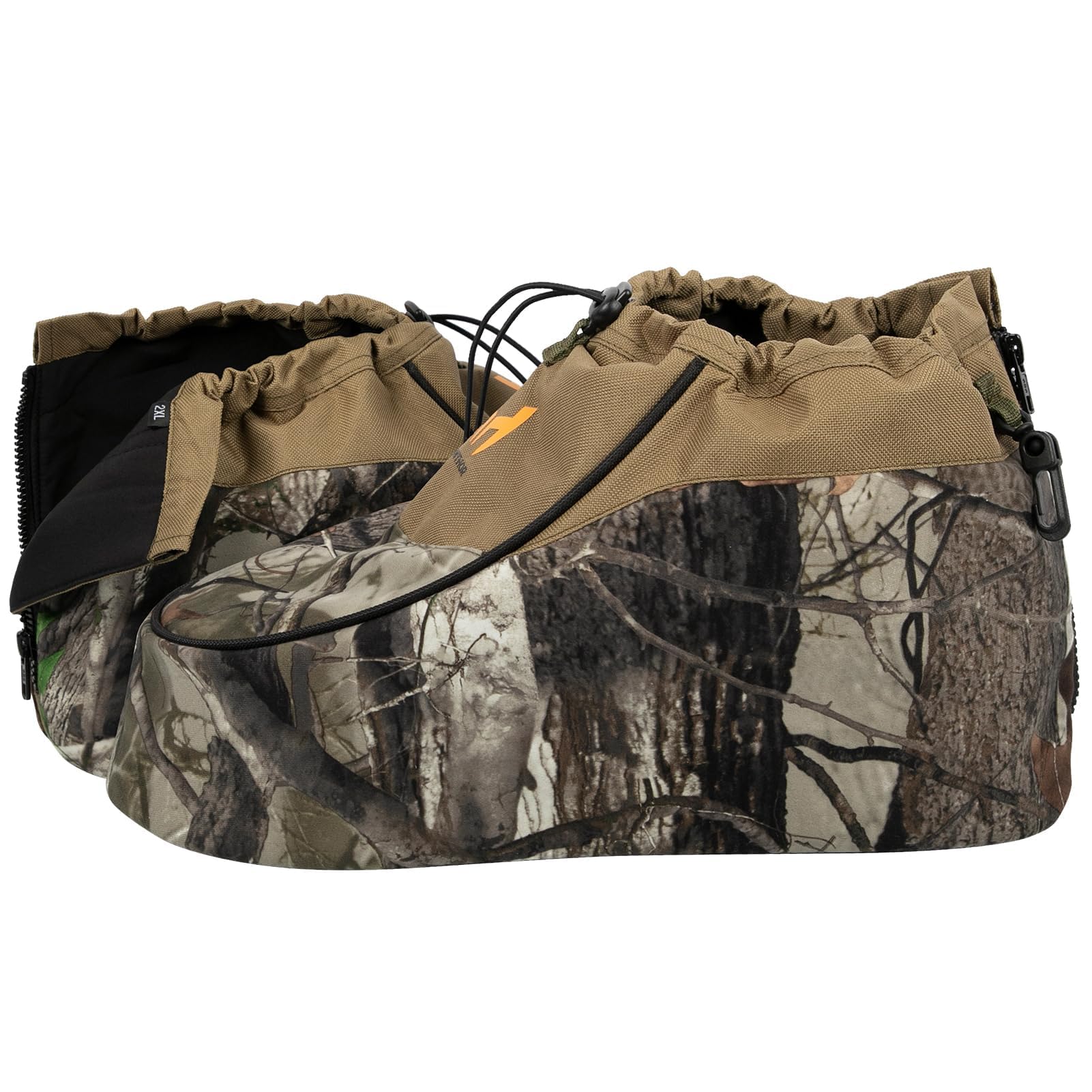
| Hunthor 600D Insulated Boot Covers★ Best Overall | Cold-weather sits and deep winter | Aluminum foil + 5MM pearl cotton | Waterproof upper and sole | 0.5 kg | Amazon |
| SnuYucto Waterproof Leg GaitersBest for Trail Hikes | Trail hiking and wet-weather coverage | Nylon shell | Waterproof design | 0.35 kg | Amazon |
| Hikenture Hiking GaitersTop Snow Performance | Deep snow and rugged terrain | 600D Oxford lower + ripstop upper | Waterproof zipper | 0.27 kg | Amazon |
| Tryly 2 Pairs Ski Boot Covers | Skiing and winter warmth on a budget | Stretch neoprene | Weather-resistant fabric | — | Amazon |
| USHTH Waterproof Rain Boot Shoe Cover | Rain and wet pavement | PVC shell | Waterproof zipper | 0.34 kg | Amazon |
| MEQI Waterproof Shoe Covers | Commuting and cycling over boots | PVC shell | Waterproof zipper | 0.46 kg | Amazon |
| Seirus 4150 Cat Tracks | Protecting ski boot soles off the slope | — | — | 6.74 ounces | Amazon |
| NatureBlend Hunting Gaiters | Hunting and mountain climbing | 900D coated Oxford | Tested 100% waterproof | 0.27 kg | Amazon |
| Bootaclava Neoprene Ski Boot Covers | Cold feet on long ski days | Neoprene | Weather-resistant | — | Amazon |
Detailed Reviews
1. Hunthor 600D Insulated Boot Covers
Our pick — 4.5+★ from 150+ verified ratings; the strongest balance of quality and price.
The camo shell that holds heat through a wind-chilled sit in the blind.
This is the warm end of the field. Hunthor builds the cover from aluminum foil and 5MM pearl cotton, two insulation layers that reflect and trap heat around your boot, and the maker rates the pair for temperatures down to -4℉. Buyers report feet staying warm in 8 mph -20 wind chill conditions, which is the deep-winter scenario most ski covers never face.
The 600D shell (a 600-denier fabric, which means a tightly woven yarn with a heavier, tougher hand) keeps water out, and the skid-proof PU leather sole (polyurethane leather, a smooth synthetic that grips wet ground) handles rain and slippery parking lots. A zipper plus an adjustable elasticized drawstring makes on and off quick. Sizing runs S to XX-Large, and one note from a size-10 owner: a medium fits fine over hiking boots, but a large works better over rubber boots.
This is the heaviest cover here at 0.5 kg. Compared to the Hikenture Hiking Gaiters at 0.27 kg, that’s a noticeably bulkier-shell pair — you feel it in a pack but not on your feet. The camouflage print is aimed at hunters, so it won’t suit a clean snow-white ski kit. The recurring gripe is tear resistance: a few freezer workers found the fabric less tough than the label promises, and the make’s rating lands at 4.5+ stars.
Warmth and weather protection
- Aluminum foil and 5MM pearl cotton, rated to -4℉
- Waterproof upper plus skid-proof PU sole
- Quiet camouflage fabric for hunting and birdwatching
- Zipper and drawstring for fast on/off
The trade-offs to weigh
- 0.5 kg takes up bag space versus lighter gaiters
- Fabric tear resistance is a mixed point
- Camo pattern is a hunter look, not a ski look
Reach for this if: you face single-digit temperatures and want the thickest insulation on this list over a boot shell.
Look elsewhere if: you want a lightweight shell that stuffs into a jacket pocket — the Hikenture gaiters are lighter.
2. SnuYucto Waterproof Leg Gaiters
A lightweight nylon gaiter that keeps snow and grit from dropping inside your boot on the walk up.
Where the Hunthor shell is a full boot wrap, this SnuYucto gaiter is a lower-leg cover that sits over the boot’s collar. The nylon build is aimed at mud, rain, sand, gravel, and trail debris, keeping your socks and pant legs cleaner on forest and mountain routes. At 0.35 kg it’s lighter than the insulated Hunthor but heavier than the Hikenture pair.
It’s a Large in black, sold as a single item, and the adjustable fit is meant to cinch over hiking boots, trail shoes, or winter footwear so nothing creeps in across rocky ground. The compact design is built to fold into a backpack, which suits backpackers who want wet-weather protection without the bulk of a full boot glove. If you’re hiking to the lift and want snow kept out of your boot tops, this covers that job.
The honest limit is the scope: this is weather coverage for your lower leg, not a thermal boot cover, so it won’t warm a cold shell the way an insulated neoprene glove does. It runs at 4.0+ stars, and the build is a straightforward single-layer nylon rather than a cold-rated fabric. For a hiking-focused pair of gaiters that adds a snow shield without extra insulation, it’s a fair everyday pick.
What it does well: Keeps mud, rain, sand, and gravel out of your boots and off your pant legs on forest and mountain trails.
Where it stops: It’s a weather gaiter, not an insulated boot warmer, so treat it as coverage rather than cold-weather heat.
Best fit: hikers and trekkers who want lightweight lower-leg protection that stows in a pack.
Consider another pick if: your main goal is warming cold ski boots — this gaiter isn’t built for insulation.
3. Hikenture Hiking Gaiters
The rugged gaiter that handled deep snow for a 10-hour hike without a complaint.
Hikenture’s lower section uses 600D Oxford cloth (a tight, heavy-denier woven fabric) to shed water, snow, and brush, while a 3-in-1 ripstop upper adds breathability so sweat can escape. The result is dry legs through wet, cold conditions. At 0.27 kg it’s the lightest gaiter tier here, and it packs into the included carry pouch.
The closure is the upgrade worth noting: a waterproof zipper that slides smoothly instead of Velcro that snags dirt. Reinforced instep straps resist low temperatures and adjust over icy and rocky ground. A stretchy PU fabric hugs your calves, and three unisex sizes plus an adjustable top closure let you seal the boot. Owners note it stands up to rugged conditions — one wore it through a 10-hour snow hike with no problems, and it works with snowshoes.
The catch is sizing: the run tends to be small, and skinny calves can end up with a baggy fit — a few owners found them oversized for very slim legs. It’s rated 4.0+ stars and carries a 365-day warranty. If you want a single gaiter that handles deep snow and wet brush, this is the one to start with.
Snow-day strengths
- 600D Oxford lower handles snow, water, and brush
- Waterproof zipper replaces snag-prone Velcro
- Weighs 0.27 kg and packs into a pouch
- 365-day warranty included
Where sizing bites
- Runs small — buyers often size up
- Loose over very skinny calves
Worth it for: skiers and hikers who need a rugged, light gaiter for deep snow and wet brush.
Size with care if: your legs are slim — the adjustable top helps, but the run is small.
4. 2 Pairs Ski Boot Covers, Boot Gloves for Skiing, for Warmth

Two pairs of neoprene boot gloves that warm your feet — as long as the straps hold.
The appeal is simple: this pack gives you two pairs of ski boot covers in stretch neoprene, so you have a spare or a set for a partner. Owners agree on the warmth — feet stay warm in 20-degree weather and on a very cold day — and the price-to-value read is strong given the double pack. Sizing covers Medium (women’s 7-10.5, men’s 6-10) and Large (women’s 9.5+, men’s 9-15).
The build uses neoprene throughout with nylon stitching and abrasion-resistant side pads on both sides. An adjustable hook-and-loop heel strap and a simple pull-up design keep the glove seated. They fold flat, clean up easily, and carry well.
The honest catch is long-term durability: strap failures come up more than any other point, and a handful of buyers saw ripping after the fifth or so wearing. It’s rated 3.5+ stars. Warmth and value are its strengths; if you want a cover you’ll trust for several seasons of hard skiing, look at the neoprene Bootaclava instead — but for a budget two-pack that warms feet on cold days, it does the core job.
The value argument: Two neoprene pairs in one pack, with side pads and an adjustable heel strap, for warm feet on cold ski days.
The cave to accept: Straps are the weak link — treat them gently and expect to baby the closure over repeated use.
Grab it if: you want spare boot gloves at an entry-level cost and warmth is your only goal.
skip it if: you ski often enough that strap durability matters most — the closure is the weak point.
5. USHTH Rain Boot Shoe Cover 1 Pair

The PVC pull-on that keeps feet dry through a downpour — as long as you nail the size.
This USHTH cover is built from high-elastic PVC (polyvinyl chloride, a rubbery waterproof plastic) to block water, oil, and dust, with an anti-skid sole. A safety reflector on the heel and a full-length waterproof zipper are the practical touches: the zipper gets you in and out fast, the reflector helps when you’re walking in the dark. It’s a Large, folds flat, and comes with a waterproof bag for stashing it.
The drying performance is the standout — owners wore them 12 miles and stayed dry, and one kept feet dry on a wet zodiac landing in high water over hiking boots. Water resistance holds up on heavy downpour days.
Two honest limits. Sizing is mixed — a share of buyers find them too small and hard to get on, so check the size chart first. And durability is the main complaint: a portion report the PVC wearing through over time. It carries 4.0+ stars from a very large pool of buyers, which tells you most are satisfied. Read the chart, size up if you’re between, and this handles rain better than any lighter cover here.
Wet-weather wins
- High-elastic PVC blocks water, oil, and dust
- Full-length waterproof zipper for quick on/off
- Heel reflector and anti-skid sole
Points to plan around
- Sizing runs small for many buyers
- PVC can wear through over time
Right for you if: you need a waterproof pull-on for rain, slush, and wet pavement and will check the size chart.
Look elsewhere if: you want a warm shell for sub-zero ski days — this is a rain cover, not insulation.
6. MEQI Waterproof Shoe Covers

A full-length zip cover that slips over work boots for the ride in and the walk after.
MEQI’s cover uses premium PVC with high elasticity, so it stretches over shoes and boots to block oil, dirt, mud, rain, and snow. A thickened striped rubber sole resists slipping on rainy days, and reflective tape makes you visible walking in the dark. The side full-length zipper is the feature that sells it for daily use — you get in and out in seconds, and a top elastic strap keeps the cover from sliding off as you walk.
Owners put it to work over work boots: it fits well, stays secure on a ride, and keeps feet dry on a year-round commute. One regular rider noted it keeps feet dry day in and day out. It folds up for a bag and travels well.
The honest note is durability under rough ground: seams have torn on muddy, slightly rocky terrain, and a zipper can fail after a few wears. It’s rated 4.0+ stars. For everyday commuting and cycling over boots, the waterproofing and easy slip-on are worth it — just treat the seams as the wear point and keep it to pavement and light trail.
The daily-use case: A side-zip PVC cover with a rubber sole and reflector, built for the commute and light outdoor work.
The honest caveat: Seams can tear under rocky, rough terrain, so save it for pavement and mud rather than scree.
Pick it for: commuting, cycling, or car washing where you need quick waterproof coverage over work boots.
Think twice if: you’ll be scrambling over rocky ground — the seams are the first thing to give.
7. Seirus 4150 Cat Tracks Boot Sole Protectors Small

A slip-on sole that saves your ski boots from gravel and gives you grip in the lodge lot.
Cat Tracks are a different tool from a boot cover: they cap the bottom of your boot, not the top. The purpose is to prevent binding malfunctions caused by wear and gravel contamination on your boot soles, and to add grip and cushioned walking comfort. Boot and binding makers recommend a sole protector for exactly this. This is the Small, at 6.74 ounces — a piece you add to your boot, not your pack.
Traction and durability are the winning points. Owners use them for years for grip on snowy and icy ground and to prevent wear on the sole. A size-24.5 Salomon owner used a Small and found the plastic thick and durable; a Lange 26.5 owner found the Small fit after soaking in hot water to soften it.
The catch is installation: the plastic needs coaxing onto the boot, and some find it hard to fit with the boot already on your foot. A hiker found them awkward to put on and reported one coming loose. It’s rated 4.0+ stars. Size down rather than up — a Small is better than a large, which loosens too easily — and this is the smart buy for protecting an expensive boot sole from pavement.
Where it earns its keep
- Caps the sole to stop gravel from chewing the boot
- Adds grip on snow and ice
- Thick, durable plastic build
The fitting friction
- Takes effort to stretch onto the boot
- Can come loose if sized too big
Best for: skiers who walk across pavement and gravel in their boots and want the sole protected.
Keep in mind: soak in hot water to soften the plastic before fitting, and size down rather than up.
8. NatureBlend Leg Gaiters
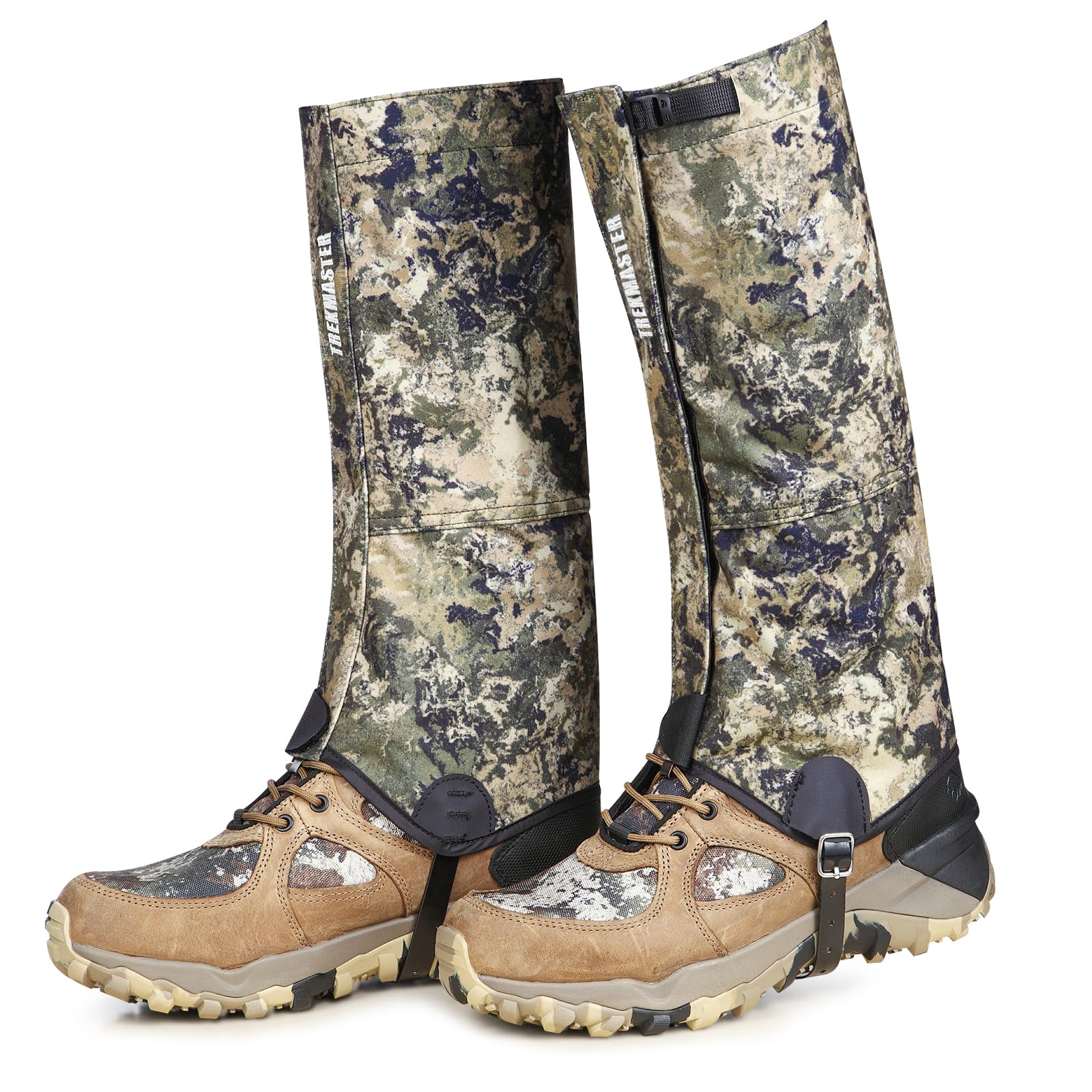
A 4.5-layer camo gaiter built to hold out mud, snow, and water on the roughest ground.
NatureBlend builds this from 900D anti-tear waterproof coated Oxford fabric (a heavy-denier woven shell with a water-blocking coating), tested 100% waterproof and claimed to be 50% more durable than most other brands. A 4.5-layer construction keeps out mud, grime, snow, and water. It’s a camo Medium at 0.27 kg and covers hunting, hiking, snowshoeing, and mountain routes.
The fit system is adjustable throughout: a top drawstring, an elastic band, a 2-inch-wide Velcro opening, calf straps, reinforced hook-and-loop closures, and a buckled adjustment to stop slipping. The lining manages moisture by wicking sweat and drying quickly. Upgraded 3-layer high-abrasion rubber instep straps with metal buckles grip the boot. A 2-year warranty backs it.
The honest read: this is designed for hunting and snake-terrain coverage more than insulated ski-boot warmth, so it shields your legs without adding heat. It’s rated 4.5+ stars, the highest score in this shortlist, from a smaller set of buyers. If rugged, waterproof leg protection for brush and mountain climbing is the goal, it delivers.
Built for the brush: A 900D waterproof shell, 4.5-layer construction, and rubber instep straps with metal buckles for hunting and steep climbs.
What it isn’t: This is weather and brush protection, not a thermal boot warmer — it doesn’t insulate the way a neoprene glove does.
Made for: hunters and climbers who need rugged, waterproof leg coverage and a secure strap system.
Not your pick if: you’re after warmth — this gaiter protects, it doesn’t heat.
9. Bootaclava Neoprene Ski Boot Covers
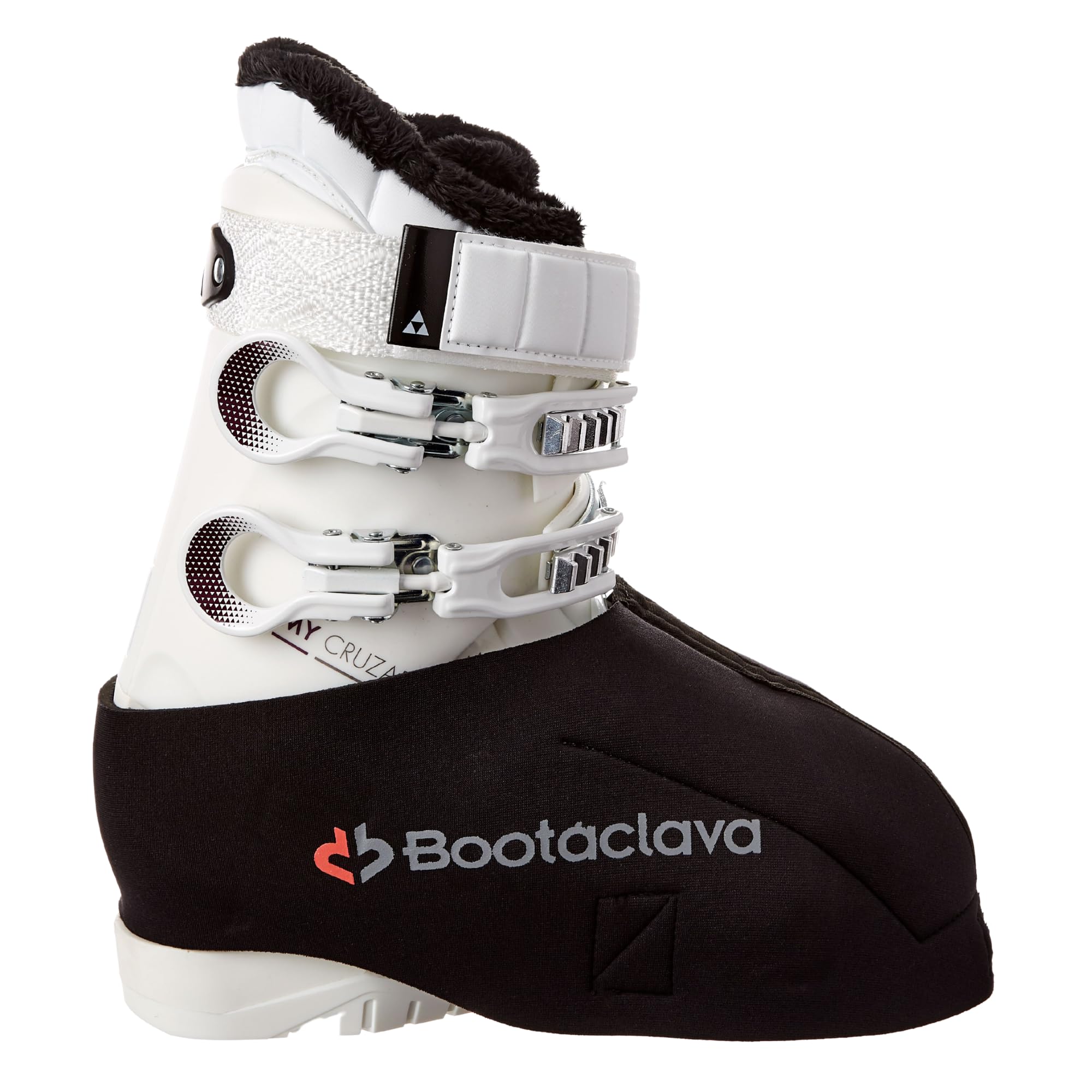
A neoprene boot glove with a built-in pouch that turns hand warmers into ski boot heaters.
The feature that sets the Bootaclava apart is the built-in pouch: drop in hand-warmer packets and the cover becomes a ski boot heater for frigid sessions. That’s a genuinely different approach from a plain insulated shell. Owners mention the warmth holds — feet stayed warm at -8 degrees, and one skier’s partner wore them every day on the mountain without complaining about cold feet. The neoprene and nylon stitching shield the boot from wind and snow while staying flexible.
Sizing is clearly spelled out: Medium fits women’s 6-11 and men’s 5-9.5, Large fits women’s 11.5-14 and men’s 10-15. A simple strap system attaches to the boot fast, so you spend less time gearing up. This is the Large in black, sold as a single unit.
The honest catch is the closure: the Velcro is the weak spot, and straps coming loose is a common note — a few owners sewed the back together or added patches to keep it on. It’s rated 4.0+ stars. If cold feet are your main battle and you want the hand-warmer option, this is the cleverest warmth pick here — just plan to reinforce the strap.
The standout trick: A built-in pouch for hand warmers that adds heat to a neoprene shell already rated to hold warmth well below freezing.
The strap reality: Velcro closure is the weak link, so a little reinforcement goes a long way.
Choose this when: cold feet are your biggest ski-day problem and the hand-warmer pouch is the edge you want.
Know before you buy: the Velcro strap can loosen, so budget a stitch or a patch to keep it seated.
Know the Specs
Insulation materials
Insulation is what turns a boot cover from a windbreak into a warmer. Hunting-style shells use layers like aluminum foil, which reflects body heat back toward the boot, and pearl cotton, a fluffy synthetic batting that traps warm air. Neoprene does a different job: the stretchy rubberized fabric forms a thermal barrier between the boot and cold air. A higher insulation build keeps toes comfortable longer in single-digit temperatures, but it adds weight and bulk.
Waterproofing and closures
Waterproofing keeps melted snow and slush from soaking through to your boot. Look for fabrics rated for water like PVC or coated Oxford, and a full-length waterproof zipper that closes the opening cleanly. Zippers beat Velcro in wet, gritty conditions because Velcro snags dirt and loses grip over time. A top drawstring or elastic band seals against your calf so snow can’t drop in from above.
Fabric denier and durability
Denier measures the thickness of the yarn in a woven fabric — a higher number means a heavier, tougher cloth. A 600D shell resists brush and abrasion well; 900D is heavier still. Heavier fabric protects your boot and legs longer but adds some weight. Where straps and seams sit is the real wear point, so check the instep strap and the closure before you trust a cover for a full season.
Sizing over a boot shell
Covers are sized over a boot, not a bare foot, so your shoe size is only a starting point. Ski boot gloves often list women’s and men’s ranges (for example Medium covering women’s 6-11 and men’s 5-9.5). Gaiters can run small and need a size up, and very slim calves can leave a gaiter loose. Always check the size chart for the specific product and pick based on the boot you’ll wear underneath.
Common Questions
Do ski boot covers actually keep your toes warm?
Should I size up or down for ski boot covers?
What is the difference between a boot cover and a gaiter?
Can I wear ski boot covers walking through the parking lot?
Are neoprene boot covers waterproof?
How do I stop my boot covers from sliding off?
Do boot gaiters work in deep snow?
Can I use a hand warmer inside a ski boot cover?
How long should a pair of ski boot covers last?
Are gaiters safe to wear over ski boots while skiing?
The Bottom Line
The strongest pick for the coldest days is the Hunthor 600D Insulated Boot Covers: aluminum foil and 5MM pearl cotton rated to -4℉, plus a waterproof upper and skid-proof sole — the most insulation on this list at 4.5+ stars. If deep snow and light weight matter more, the Hikenture Hiking Gaiters at 0.27 kg with a waterproof zipper handle rugged conditions. And for a neoprene glove that adds a hand-warmer pouch for extra heat, the Bootaclava Neoprene Ski Boot Covers is the clever warmth choice — just reinforce the Velcro strap.
How we choose
We do not accept paid placement. Every pick is matched to a real buyer and a real use-case; we do not hands-on test units.
Sources
Specifications: manufacturer listings and product documentation. Review insights: verified customer reviews, as of November 2026. Pricing: not shown on this page (it changes often); check the current price via the retailer link.
As an Amazon Associate, Tactical Gear Guy earns from qualifying purchases. This does not affect which products we feature.