Specs are compiled from manufacturer listings and verified buyer reviews and can change over time — please confirm the key details on the product page before buying.
If you want the short answer: buy the one that folds down small enough to forget it is in your bag, then check the camera and the flight time before anything else. A drone that stays in the closet helps nobody, no matter how good its footage looks on the spec sheet. Below you will find honest picks sorted by what each one actually does well, plus the trade-offs you should know about before you fly.
This guide is built by comparing the manufacturers’ published specifications and the patterns across verified customer reviews, so you get each pick’s real strengths and trade-offs instead of marketing spin.
One quick note up front: this list uses flexible, human-like matching so not every pick is the exact size or spec you typed into the search bar. The nearest same-type model that serves the same travel purpose is what you will find here. Every option is a compact, foldable flyer you can realistically pack for a trip, and each one earns its spot on real specs and real owner experience. Read on for the pick that fits the way you actually fly.
Top Picks


How To Choose The Best Ultra Portable Drone
The portability part is easy to check and the camera part takes a little reading. Start with the folded footprint and the takeoff weight, because those two numbers decide whether the drone rides in a jacket pocket or stays home. Then look at what the camera sits on. A mechanical gimbal physically holds the lens steady in the air, while electronic stabilization (often shortened to EIS) smooths the footage afterward in software. For travel clips you actually want to share, the mechanical gimbal wins almost every time.
Weight and the registration line
A drone that takes off under 249 g generally skips FAA registration and Remote ID requirements in the US. That is the single most useful number on any travel drone listing, and several picks here clear it. Read carefully though. One pick on this list weighs in above 249 g, and one lists a weight figure that includes packaging. When the number is close to the line, check it before you assume you are exempt.
Honest flight-time math
Advertised flight time usually adds up every battery in the box. A listing that says 96 minutes typically means three batteries of roughly 32 minutes each, not one continuous flight. Single-battery time in the real world also runs shorter than the label, especially in wind. Think of total kit time as your shooting budget for a whole outing, and single-battery time as how long you get per launch.
Camera and gimbal basics
Resolution labels get loud fast, but what matters is how stable the footage looks. A 3-axis gimbal counteracts tilt, roll, and shake on three separate axes, so the horizon stays level in a breeze. Sensor size matters too, because a bigger sensor gathers more light and holds detail in shade and at dusk. Pair a real gimbal with a decent sensor and you get footage that looks planned instead of accidental.
Side-by-Side Comparison
| Model | Best For | Weight | Max Flight Time | Camera / Video | Amazon |
|---|---|---|---|---|---|
| Potensic ATOM★ Best Overall | All-around travel pick | 249 g | 96 mins (3 batteries) | 4K/30fps, 3-axis gimbal | Amazon |
| Holy Stone HS175D PLUSBudget Champion | First-time flyers on a budget | 215 g | 60 mins (2 batteries) | 4K photos, adjustable camera | Amazon |
| Potensic ATOM LTBest for Travel | Pocket carry and long sessions | 249 g | 80 mins (2 batteries) | 2.5K/30fps, EIS | Amazon |
| HOVERAir X1 | Hands-free follow shooting | 0.07 kg | ~11 mins per battery | 2.7K/30fps, 1080P HDR | Amazon |
| Holy Stone HS790 | High-res stills on a budget | 375.5 g | 60 mins (2 batteries) | 6K photos, 4K/30fps | Amazon |
| Skyrover S1 | Fast-motion video and verticals | 249 g | 40 mins (1 battery) | 4K/60fps, 8K photos | Amazon |
| DJI Flip | Guarded propellers and polish | Under 249 g | 31 mins (1 battery) | 4K/60fps HDR, 3-axis gimbal | Amazon |
| SKYROVER X1 | 360° obstacle sensing | 249 g | 32 mins (1 battery) | 4K/60fps HDR, 8K photos | Amazon |
| DJI Mini 5 Pro | Low-light and LiDAR safety | 249 g | 36 mins (1 battery) | 4K/60fps HDR, 1-inch CMOS | Amazon |
| HOVERAir X1 PROMAX | 8K action sports footage | — | 16 mins | 8K/30fps, 4K vertical | Amazon |
Detailed Reviews
1. Potensic ATOM 4K GPS Drone with 3-Axis Gimbal
Our pick — 4.5+★ from 4,000+ verified ratings; the strongest balance of quality and price.
A palm-sized flyer that keeps its camera dead level and stays out for the whole afternoon.
Three batteries in the box add up to 96 minutes of total flight, and that is the number that makes this the pick for a full-day outing. A parallel charging hub tops all three at once in about 1.3 hours with its 60W quick-charge setup, so you can refill the whole kit over lunch. For a travel drone, that combination means less time hunting outlets and more time actually filming. It sits right at the 249 g mark, which is the weight line that generally keeps a drone out of FAA and Remote ID registration in the US.
The camera hangs on a real 3-axis brushless gimbal, which is the mechanical arm that holds the lens steady in the air. That gimbal keeps footage smooth even in level-5 wind, which is the kind of breeze that makes a phone camera shake. A Sony CMOS sensor behind it records 4K at 30fps, and owners consistently describe that footage as sharp and steady. Transmission is rated up to 6 KM, which is the PixSync 3.0 link that lets you push out beyond what your eyes can track. Visual Tracking follows a subject on its own, and QuickShots like Rocket, Circle, and Boomerang give you moving shots without touching the sticks.
What wins people over here is sheer image quality, and it is not close to the next category down. The footage looks professional rather than hobby-grade, and the return-to-home button brings the drone back to its takeoff point on a tap. The recurring gripe is durability. This airframe does not shrug off a hard knock the way some heavier drones do, so buy the protection plan and treat landings gently. The other honest limitation is the battery estimate: a 96-minute figure is spread across three packs, so each individual flight runs a good deal shorter than the headline. If you want a drone under the weight limit, with a level horizon and a full afternoon of total fly time in one box, start here.
What earns it the top slot
- 96 minutes of total flight across three batteries, refilled together in about 1.3 hours
- 3-axis brushless gimbal keeps the horizon flat in level-5 wind
- Sits at 249 g, generally clear of FAA and Remote ID registration in the US
- 6 KM PixSync 3.0 transmission with Visual Tracking and five QuickShot modes
- Auto return-to-home lands it back at takeoff with a single tap
Where it asks for care
- The airframe is not built to shrug off hard impacts, so a protection plan is smart money
- The 96-minute figure is spread across three packs, not one continuous flight
- No SD card in the box, so add one before your first trip
Reach for this if: you want the most balanced travel drone on the list — real gimbal stability, sub-249g weight, and a full afternoon of total flight time in one box.
Look elsewhere if: you regularly fly in tight spaces and need built-in propeller guards, which this one does not carry.
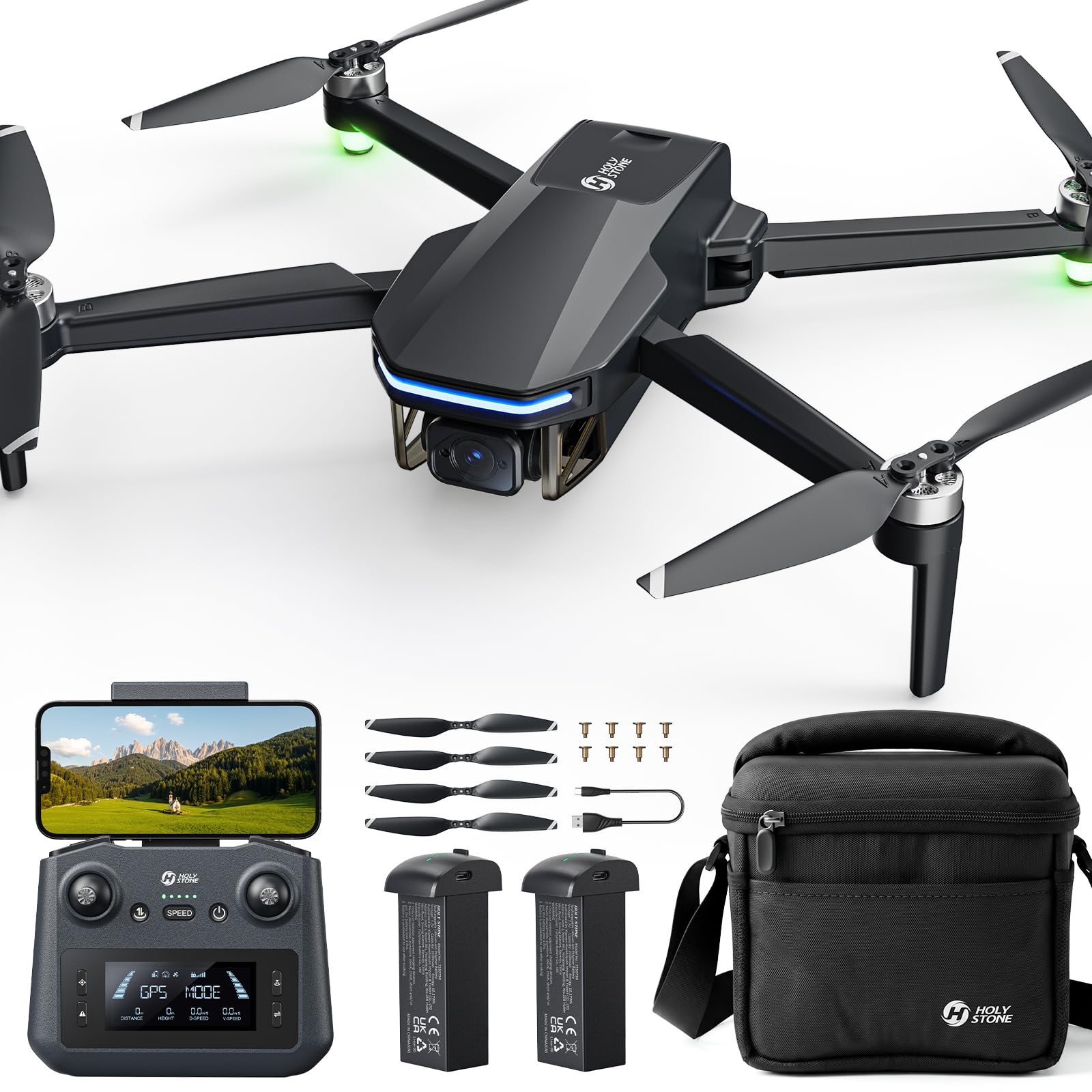
2. Holy Stone HS175D PLUS Drone with 4K Camera
The lightest airframe here, and the easiest place to learn without sweating the stakes.
At 215 g, this is the lightest drone on the entire list, and you feel that in the bag. It also folds up and slides into the included travel shoulder bag, which is the whole point of an ultra portable drone. Compared with the Potensic ATOM LT at 249 g, this one gives up 34 g of body weight, and it is 21.5 cm shorter in its unfolded length than the HS790 — an easier black shape to tuck into a daypack. Two batteries deliver up to 60 minutes of total flight, which is a shorter kit budget than the 96 minutes the ATOM brings, but plenty for a beginner’s session.
What wins people over is the overall quality of the build for the money. It arrives complete with a shoulder bag, spare blades, and the tool you need to change them, so there is no first-trip shopping run. GPS handles One-Key Return, Low Battery Return, and Signal Loss Return, which means the drone heads back on its own when the battery dips or the link drops. The 4K camera is adjustable, so you can switch from a forward shot to an overhead shot mid-flight. Beginner aids like One-Key Takeoff and Landing, Headless Mode, and three speed modes flatten the learning curve for someone who has never flown anything.
The recurring gripe is stability. Some units drift or misbehave beyond what a pilot expects, and that is the trade-off you accept at this tier. Real-world flight time also runs nearer 19 minutes per battery rather than anywhere close to the 60-minute total split evenly. Neither is a dealbreaker for casual park flying, but if you plan to push long distances far from where you stand, step up to a GPS model with a stronger link. For a first drone that will not swallow your gear budget, this is the sensible entry.
Bag-friendly advantage: the 215 g airframe is the lightest here, folds flat, and comes with its own travel bag — the easiest of the lot to carry on a hike or a city break.
The honest caveat: stability is the weak spot. Some units wander more than you would like, so keep your flights short and close until you trust the link.
Buy it because: it is the lightest, most packable starter drone here, with GPS return safety and a complete accessory set in the bag.
skip it if: long-range reliability is the priority — this is a park flyer, not a distance runner.
3. Potensic ATOM LT GPS Drone
Folds down to a shape you can genuinely pocket, then flies for 40 minutes a pack.
The defining number here is the battery capacity: 3000 mAh of cells across two packs, which delivers 40 minutes per battery and 80 minutes total. Compared with the 2230 mAh in the bigger ATOM, that is 770 mAh more capacity in the same weight class — and it is why this pocket drone outlasts machines that cost more. The folded size is listed at 3.5 x 5.6 x 2.3 inches, which is the real reason it qualifies as an ultra portable drone. It fits in a pocket, not just a bag. At 249 g it clears the FAA and Remote ID registration line in the US.
The camera is a 2.5K EIS setup with a Sony sensor, capturing 2560 x 1440 stills and 2.5K at 30fps footage. ShakeVanish 2.0 handles the smoothing, and the lens covers a 118° field of view, so you get a wide sweep of the scene without a fisheye bend. The gimbal tilts from plus 20° to minus 90°, which lets you point straight down for top-down shots. 4 GNSS satellite systems (GPS, GLONASS, Galileo, and BeiDou) keep the return-to-home function accurate, and PixSync 2.0 pushes an HD feed out to 4 KM. One warning that matters: this drone only flies in GPS mode, so you start every flight outdoors in open sky.
Owners describe it as a joy, and the reasons stack up — it feels lighter than it is but holds up to use. Flight features like Follow Me and Circle Fly work without fuss. The catch is wind and range reality: the 4 KM figure is a maximum, and one pilot reports the feed dropping around 2000 feet, so keep the aircraft where you can see it. There is also a setup curve before your first launch. Read the reminder that the app needs iOS 11 or Android 7.0 or newer, and confirm your phone cable before you go.
Pick this for: the traveler who wants the smallest folded footprint plus a genuinely long two-pack kit — it is the most pocketable drone on the list that still flies 40 minutes per battery.
Think twice if: you fly indoors or in tight spaces, since GPS mode is the only flight mode it offers.
4. HOVERAir X1 Self-Flying Camera Drone
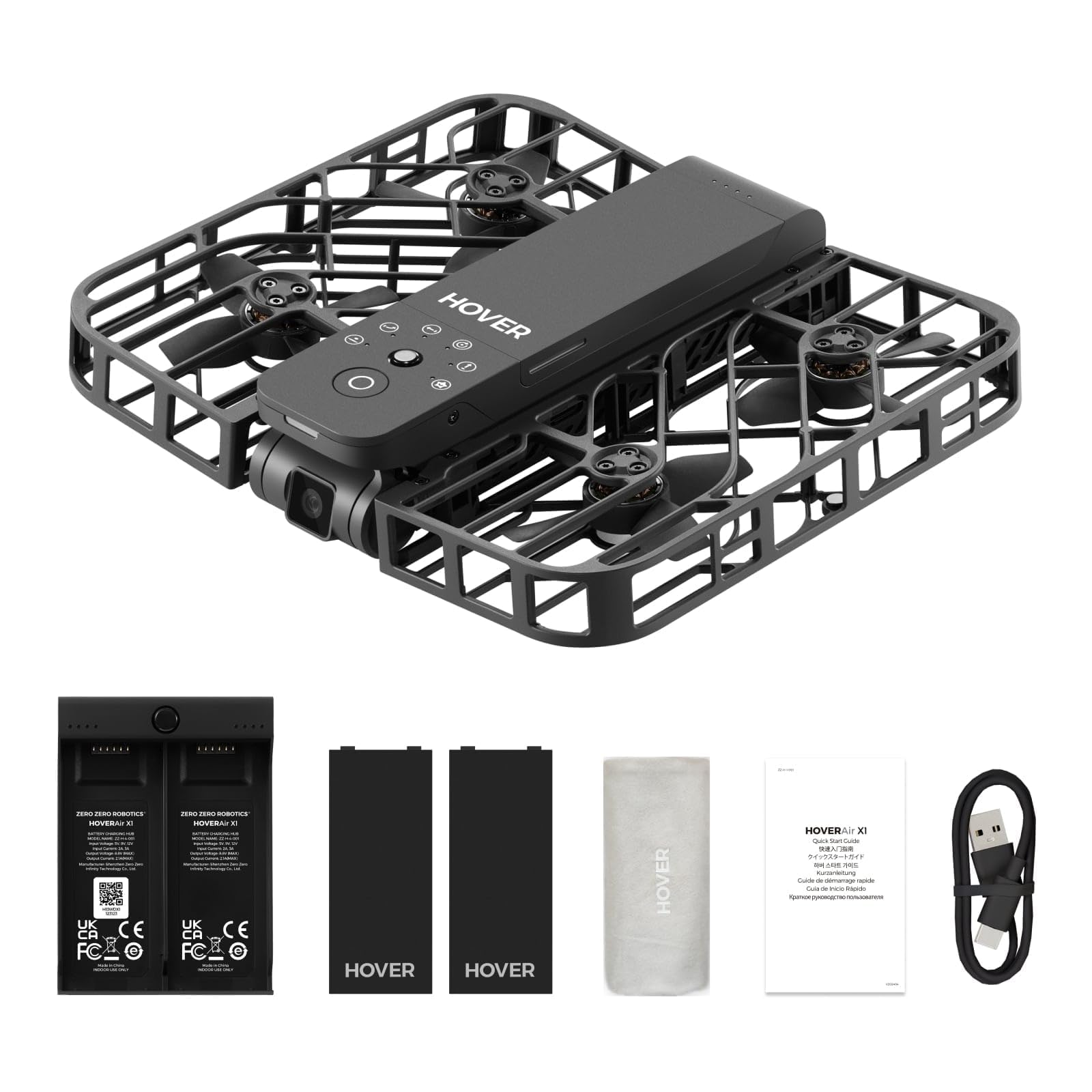
A cameraman that lives on your palm and follows you without a controller.
This one is a different animal. There are no sticks to learn, because the follow-me tracking handles the flying at speeds up to 15 mph, which is brisk enough to keep up with a cyclist or a skateboarder. You launch it from your hand with a click, pick a pre-programmed path, and it films. The modes include Hover, Follow, Zoom Out, Orbit, Bird’s Eye, and Manual Control, and each battery supports roughly 20 intelligent flight paths within about 11 minutes of flight. That short per-battery window is the tax you pay for the completely enclosed, guarded body.
Video tops out at 2.7K at 30fps and 1080P HDR, with a triple stabilization system smoothing the motion. There is 32GB of internal storage, so you skip SD cards entirely and keep your footage on the device until you download it. The app handles real-time previews and manual control if you want to steer, and photos and clips download straight to your phone for sharing. The fully enclosed propellers mean you can shoot at close range without worrying about open blades near people or pets.
What wins people over is how well built it feels for such a light device. It folds into its case and stays stable in ordinary conditions, though the picture gets shaky in genuine wind — that is the weak spot. Battery life is honestly shorter than the label implies, and tracking can wander in crowded scenes. None of that changes what it is for: solo creators, hikers, and riders who want footage without a pilot. It is not a replacement for a GPS photography drone. It is the drone you hand to someone who wants video of themselves, hands free.
The reasons it earns its keep
- Flies itself with follow-me tracking up to 15 mph — no controller skills needed
- Palm takeoff and pre-programmed paths, including Hover, Follow, Orbit, and Bird’s Eye
- 32GB internal storage removes the SD card from your packing list
- Fully enclosed guards let you shoot close without exposed blades
What to expect before you buy
- About 11 minutes of flight per battery caps longer outings
- Footage gets unstable in strong wind
- Following in a busy scene can drift off target
The one-line verdict: buy it to film yourself, not to fly it — it is a self-flying camera, and it does that job cleanly.
Better choices exist if: you want a stick-flown photo drone with long range and long per-battery flight.
5. Holy Stone HS790 6K Photo Drone
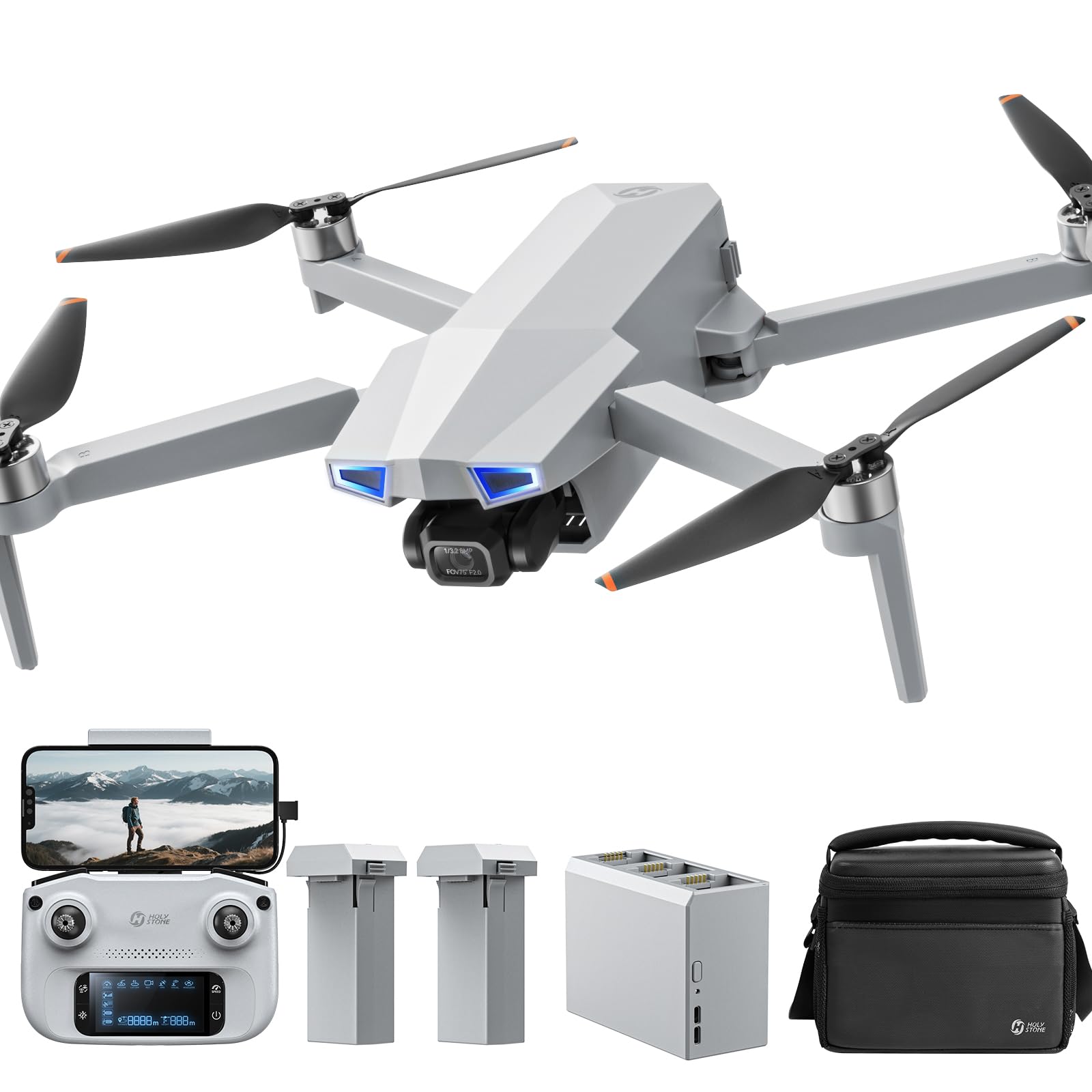
The high-resolution stills shooter that trades a little pocketability for real image detail.
Six-K photos are the headline, and the 3-axis mechanical gimbal is what makes them usable. That gimbal holds the 4K/30fps camera steady in wind, so both stills and video come out cinematic instead of jittery. Transmission reaches 9 KM via a Wi-Fi repeater setup, which is a long link for a drone you can fold into a case. Two modular batteries give 60 minutes of total flight, and the included Smart PD charging hub doubles as a power bank, so you can top up a phone with the same brick. This is the heaviest drone here at 375.5 g, and that means it does need FAA registration and Remote ID, which it has built in.
Its 38 MP effective still resolution and 6K photo capture set it apart for stills work, which is why it lands on this travel list despite the extra weight. The foldable body fits the included premium case, and the 1506 brushless motors resist wind and stay quiet compared with brushed designs. Night Mode adds visibility during twilight flights, and GPS functions like Auto Return, Follow Me, and Waypoint Flight cover the safety basics. Beginners get Altitude Hold, Headless Mode, and Speed Adjustment, while experienced pilots can switch to full manual control.
The recurring gripe is battery life — per-flight time runs about 20 to 25 minutes, so the 60-minute total leans on both packs. Building on that, the built-in Remote ID has some owners noting an upgrade needed for full FAA compliance, so check what your current firmware requires. Video transmission also gets weak far beyond line of sight. For stills-first travel, though, the image detail here is the reason to pick this over lighter flyers.
Why it holds this spot: no other drone here pairs 6K stills with a real 3-axis gimbal at a mid-range price, and the built-in Remote ID keeps you legal where heavier drones are regulated.
The trade you accept: at 375.5 g it needs registration, and per-flight time lands nearer 20 to 25 minutes than the 60-minute total implies.
Choose it for: stills-heavy trips where big 6K images and a stable gimbal matter more than pocket weight.
Choose lighter if: registration is a hassle you want to avoid — several sub-249g picks here skip it.
6. Skyrover S1 Mini Drone
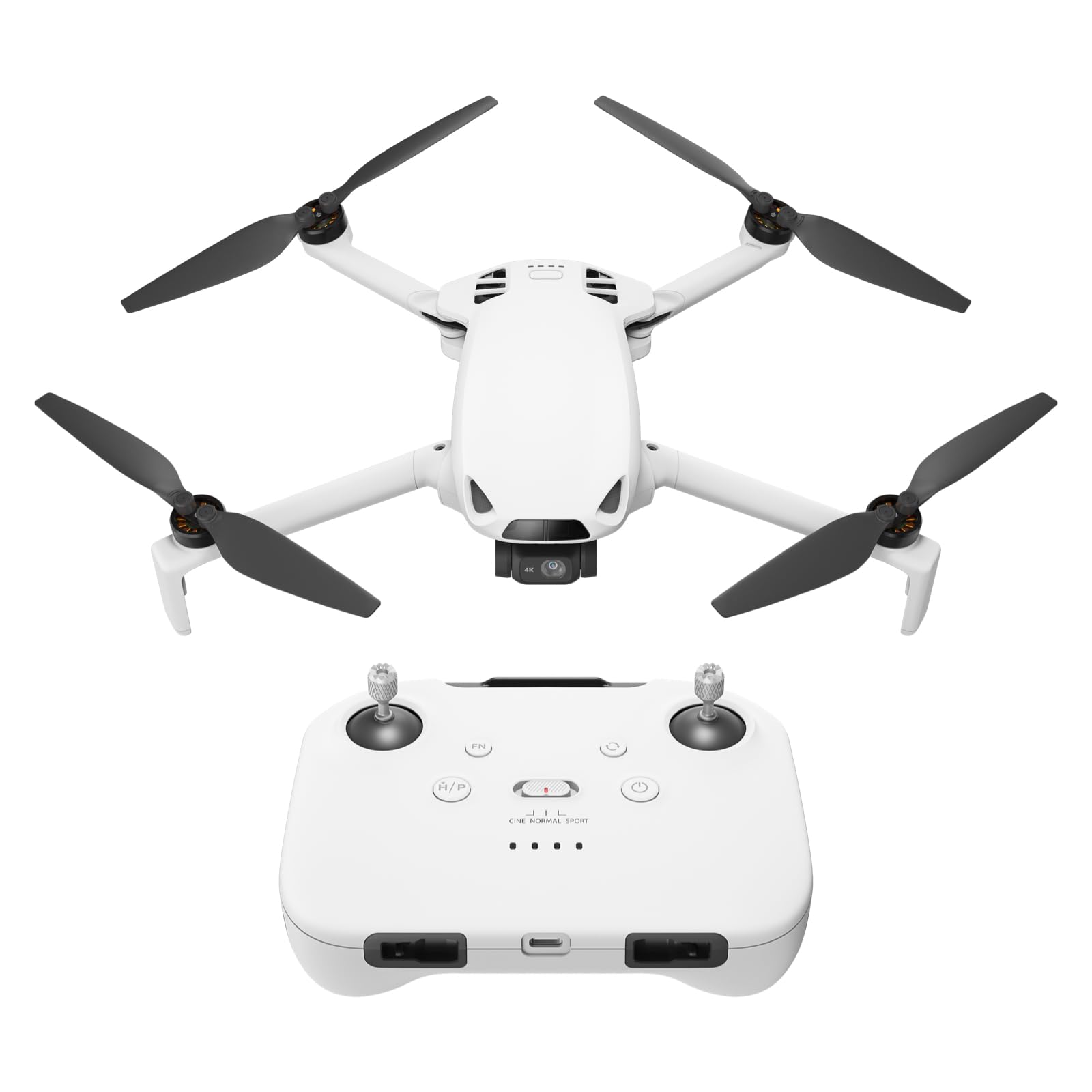
A 1/2-inch sensor and 60-frame video squeezed into a sub-249g folding body.
The 1/2-inch CMOS sensor here supports 4K at 60fps video and 8K at 48MP photos. That higher frame rate matters for action: 60fps gives you smoother motion and clean slow-motion when you slow it down. Flight time runs up to 40 minutes per battery on a single pack, and you get vertical 2.7K video with smart cropping built for social clips. It weighs in under 249 g, so it flies in the FAA-friendly weight class. A 3-axis mechanical gimbal keeps the camera steady when you are moving fast or flying in a breeze.
The transmission is where this one stretches. Live view runs at 1080P 60Hz out to 39,000 ft, which is the 7.45-mile link. Compare that with the 4 KM feed on the ATOM LT above, and the S1 lets you explore much farther from your launch point before losing signal. Forward obstacle avoidance, one-tap takeoff and landing, and Smart Return-to-Home handle the safety side, while Auto Track follows you and SmartGo gives you one-tap cinematic moves. Time-Lapse stitches sunrise or city-traffic shots automatically, so you can set it and walk away.
Owners compare it to a DJI Mini for less money, and the quality consensus backs that up. Flight time in practice lands near 29 to 35 minutes, plenty for most shoots. The honest weak spots: front obstacle avoidance can skip when the link drops, and the instructions do not cover every finer point — so plan on some trial and error. Neither is unusual at this level, and both are worth knowing before your first flight.
Where it leads the pack
- 1/2-inch CMOS with 4K/60fps video and 8K/48MP stills
- 7.45-mile (39,000 ft) transmission with 1080P 60Hz live view
- 3-axis mechanical gimbal plus forward obstacle avoidance
- Up to 40 minutes of flight on a single battery
Fine print worth reading
- Forward obstacle avoidance can drop out with the signal
- The manual skips some finer points, so expect some learning by trial
The standout-spec mic drop: 7.45-mile transmission, 4K/60fps, and a real 3-axis gimbal in a sub-249g frame — that is the package to beat here.
Pass it over if: you need hand-holding through every feature, because the documentation is thin.
7. DJI Flip (RC-N3)

Full-coverage carbon-fiber guards and a camera that punches above its compact frame.
Full-coverage propeller guards made from lightweight carbon fiber wrap the blades here, which is the feature that makes this a beginner’s drone you feel comfortable handing to a nervous flyer. A 1/1.3-inch CMOS sensor sits behind the lens, and that larger sensor gathers more light for clearer detail in scenery and portraits. Video shoots at 4K/60fps with HDR, so sunrise and sunset skies hold onto detail instead of blowing out. Flight time runs up to 31 minutes on the included battery, and the whole drone stays under 249 g in the US, which means no FAA registration or Remote ID needed.
Transmission reaches 44,000 ft (13 km), a long link that lets you range farther than most hobby pilots should anyway. Subject tracking keeps a person centered while moving, which turns the Flip into a personal cinematographer on a hike or at a party. It ships with the DJI RC-N3 controller, and the app covers FlightPilot control if you prefer your phone. The carbon-fiber build is the reason it survives small bumps with the guards in place.
The trade-off is battery and accessories. Per-flight time lands closer to 20 to 25 minutes than 31, and you will want spare batteries, storage, and a case to go with it, which adds to the real outlay. Connectivity to the app sometimes takes patience on the first try. Neither undercuts what the Flip does well. If guardrails and polish matter more than maximum range, this is the friendly choice.
Who it fits: new pilots and families who want a protected airframe and a proven sensor, without the registration chore.
Where it falls short: per-flight time runs nearer 20 to 25 minutes, and the accessory stack adds up fast.
8. SKYROVER X1 Drone
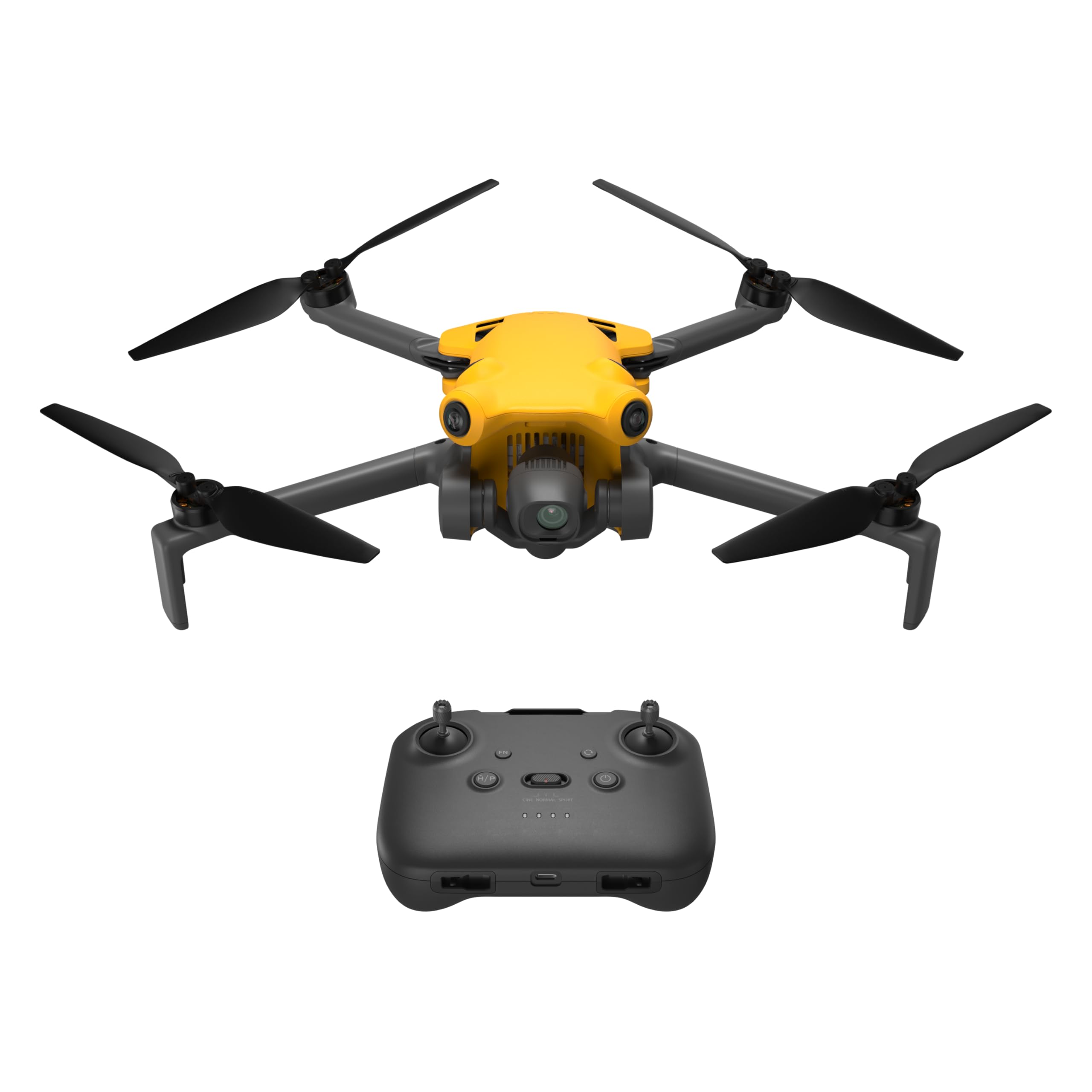
Senses obstacles in every direction, then flies like nothing is in the way.
360-degree obstacle sensing is the standout spec, and it is what makes this drone feel safer in unfamiliar places. Sensors watch in every direction and feed Smart Return to Home, which is what keeps you calm when you wander into new terrain. Add the 1/1.32-inch CMOS sensor and f/1.7 aperture, and you get more light to the sensor for clearer shots at dusk and night. Video records at 4K/60fps HDR plus 4K/100fps slow motion, and photos come in at 48MP. A 3-axis gimbal handles the stability throughout.
Transmission reaches 9.32 miles over the SkyBridge link with a 1080p/60fps live view, which is a strong match for wide-open landscapes. AI Auto Track, Smart Spotlight, and Dual Tracking cover the creative shots. Vertical shooting is included for social clips, and time-lapse handles sunsets and city scenes. Flight time is up to 32 minutes per battery on a single pack. At 249 g it stays travel-friendly, and it folds for packing. In short, this is the pick for exploring parks, trails, and open fields with a stronger safety net around you.
Performance is what owners praise most — the flight feels smooth, responsive, and sturdy. Note that spare parts are not always easy to find, so consider picking up an extra propeller set and a battery early. Battery life is honest at about three quarters of an hour in the air, though it runs shorter under constant filming. For confident flying with a high-resolution camera, this is a strong mid-list pick.
Where the money goes: 360-degree obstacle sensing, a 1/1.32-inch sensor with f/1.7 glass, and 4K/60fps HDR with 100fps slow motion — the safety and image package is the point here.
Plan ahead on: spare parts availability, which is tighter than the mainstream brands, so stock a spare battery and props.
Best matched to: pilots who fly new locations often and value all-around obstacle awareness over minor savings.
Not the pick if: easy parts replacement and brand support are your priority.
9. DJI Mini 5 Pro
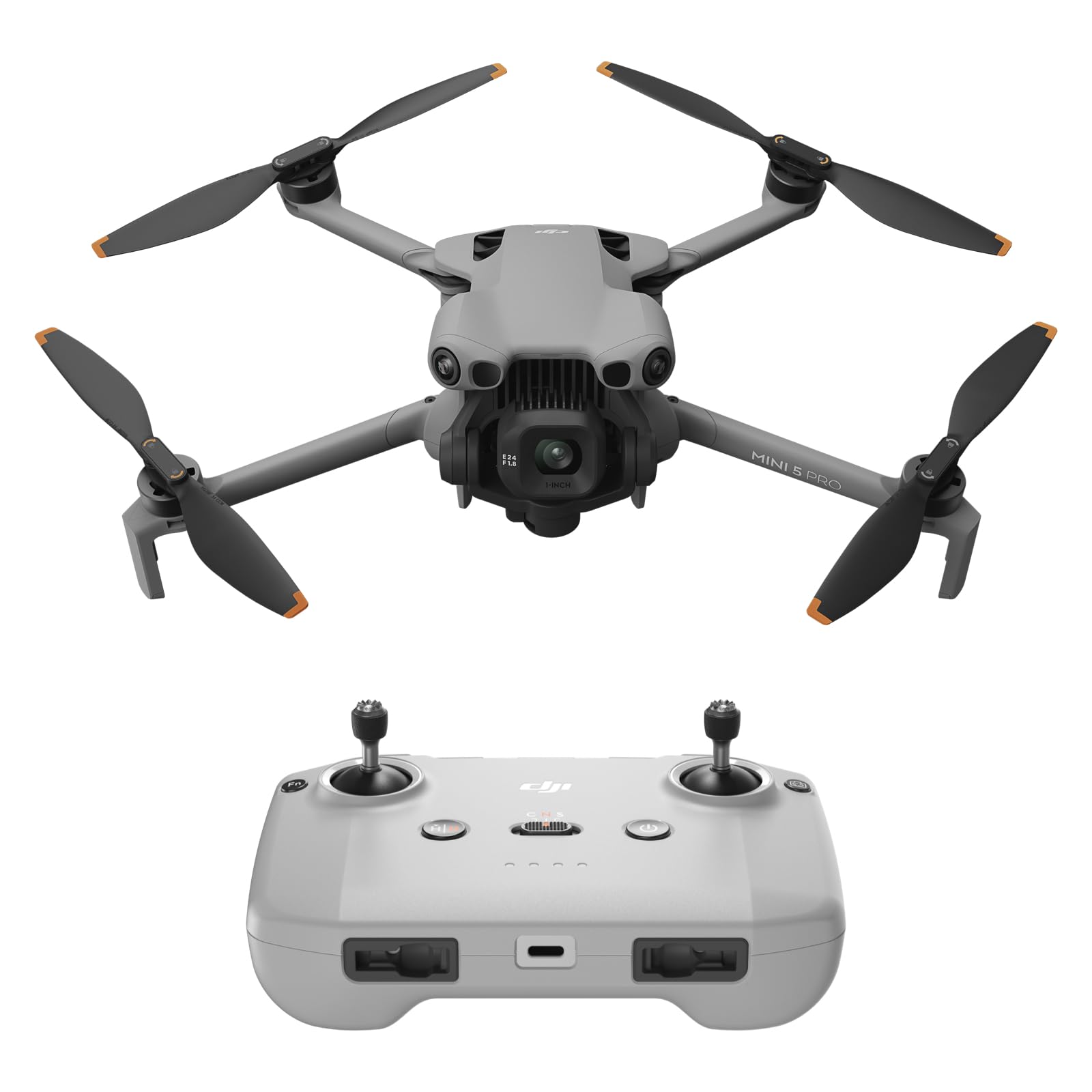
A one-inch sensor and LiDAR that sees obstacles in the dark.
The 1-inch CMOS sensor is the spec that matters most here, and it is how this drone captures 4K/60fps HDR footage with real detail and color. Nightscape Omnidirectional Obstacle Sensing adds forward-facing LiDAR plus vision sensors that detect obstacles on every side, which is the feature that makes night flights far less nerve-wracking. ActiveTrack 360° keeps a subject in frame with customizable modes, useful for cycling and other moving shots. The gimbal tilts to 225° for true vertical filming and fresh angles. It weighs around 249 g, and there is 42GB of internal storage for recording without hunting down a card.
Battery time runs up to 36 minutes on the included Intelligent Flight Battery, and a fast charger tops three packs in about 115 minutes. The RC-N3 controller comes in the box, along with spare propellers. It also includes a storage cover and the cables you need. Video transmission is rated to 20 km, which is head-turning for a drone that folds into a pocket. In short, this is the model for dusk and night footage where the larger sensor and the LiDAR sensing both pull their weight.
The honest caveats are about support and the box contents. Some buyers find the included battery is lower-capacity than the one sold in the Fly More kit, so check what you are getting before your trip. DJI reportedly does not support repairs on this model, which puts the onus on you to fly carefully. Note too that local rules can require permits for night flight. If big-sensor night footage is the goal, this is the pick — just plan around the support limits.
Why night shooters choose it
- 1-inch CMOS with 4K/60fps HDR video
- LiDAR + vision omnidirectional obstacle sensing
- 225° gimbal tilt for true vertical filming
- 42GB internal storage and 36 minutes of flight
Read before you fly
- Check which battery is in the box — it may be lower-capacity than the Fly More version
- Repair support reportedly is not offered, so treat the airframe with care
Best fit for: dusk and night creators who want big-sensor footage with obstacle sensing that works after dark.
Look first if: easy repairs and a known high-capacity battery in the box are must-haves.
10. HOVERAir X1 PROMAX Fly Joy Combo
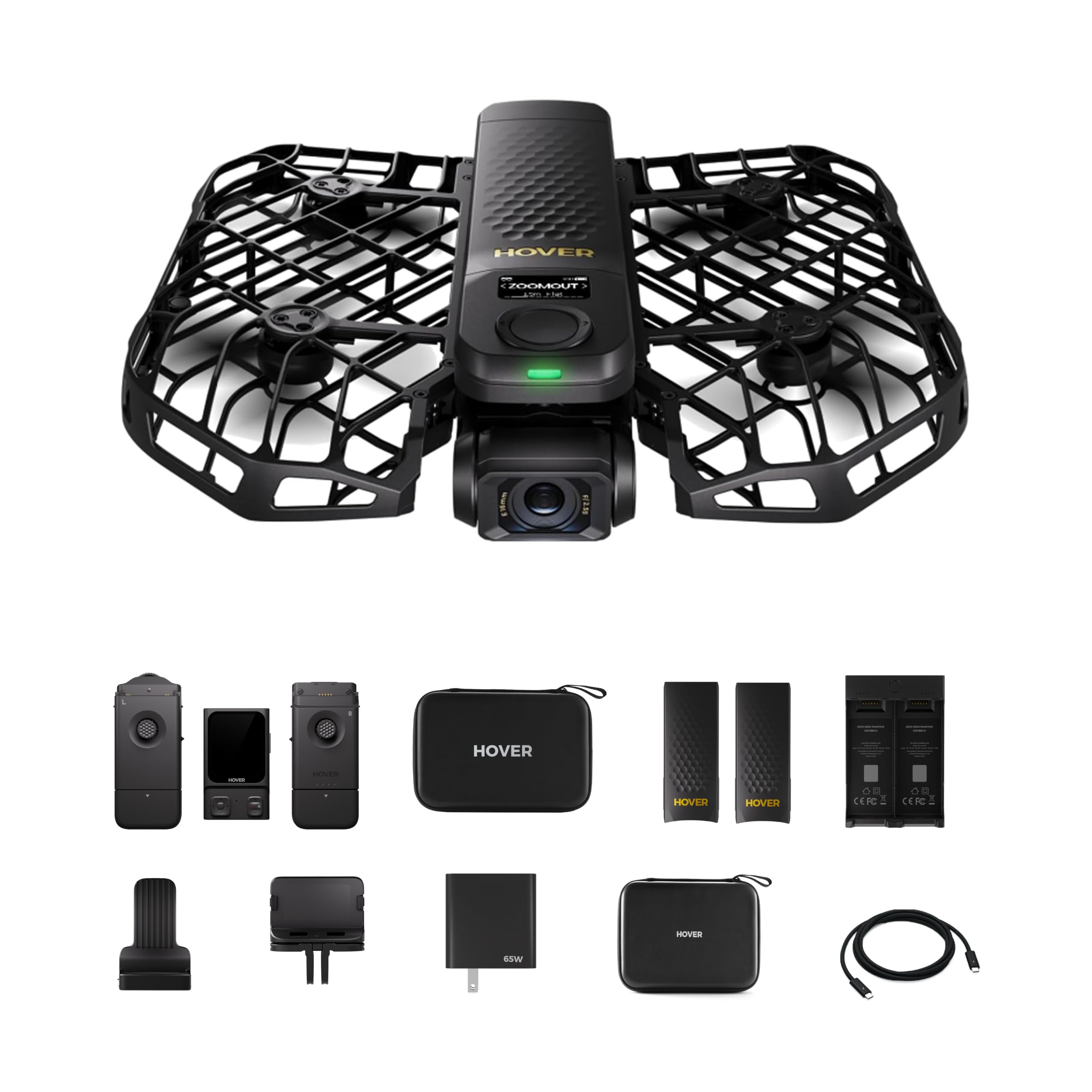
A flying action camera built for a downhill ride, skis, or the middle of a wave.
This is the top of the ladder for high-speed action, and the numbers say why. It captures 8K at 30fps horizontally and 4K at 30fps vertically, and it reaches a follow speed up to 42 KM/H (26 mph) with a 60 KM/H burst. The improved aerodynamics keep it tracking you through a fast descent or a ski run while the enhanced algorithm holds you centered. OmniTerrain lets it fly over snow, water, and cliffs, so you are not limited to open fields. Rear ToF and visual sensors brake before collisions at speeds up to 3 m/s, which covers a lot of indoor and close-outdoor tracking moments.
The flight time is 16 minutes per battery, which is the tightest budget on this list. That short window is the cost of flying 8K on a tiny airframe. It packs 64GB of internal storage, with support for an external SD card up to 1TB if you need more. Handsfree operation is the draw: launch by click or voice command, and let the automated modes and SmoothCapture 2.0 stabilization (two-axis gimbal plus electronic stabilization and horizon leveling) keep the footage steady. The App handles configuration, downloads, and manual control, and it hand-loads onto a computer through a cable as well.
What to expect: short flights and fast action. The 16-minute battery is honest, and the unit needs your attention to swap packs between runs. Vertical and horizontal modes are baked in, so clips fit TikTok, Reels, and YouTube Shorts without cropping. For a skier or a trail rider who wants one camera that films the ride and follows along, the 8K output here is the reason it sits at the top of this list.
The action angle: 8K/30fps horizontal, 4K vertical, follow speed up to 26 mph, and rear sensor braking at 3 m/s — a purpose-built action cam that happens to fly.
The trade you accept: 16 minutes per battery means a run-by-run rhythm with pack swaps, not a single longflight.
Go for it when: you film fast sport — skiing, cycling, surfing — and want 8K footage that tracks you automatically.
Rule it out when: you need long flights per battery, since 16 minutes is the tightest window here.
Know the Specs
Takeoff Weight and the 249 g Line
Takeoff weight is the number that decides whether your drone needs registration. In the US, a drone that weighs under 249 g generally skips FAA registration and Remote ID for recreational use. That is why the Portensic ATOM, the ATOM LT, the Skyrover S1, and the DJI Flip all advertise sub-249g claims. Heavier drones like the Holy Stone HS790 at 375.5 g do need registration, though the HS790 has Remote ID built in to make that simpler. A drone that packs lighter is also easier to carry all day, which is the practical side of the same number.
Gimbal versus Electronic Stabilization
A 3-axis gimbal is a motorized mount that physically holds the camera level on three separate axes. It fights shake in the hardware, so footage looks smooth even when the drone is buffeted by wind. Electronic image stabilization, or EIS, smooths the video after the fact in software. EIS can crop the frame slightly and struggles with fast, sharp movements. The best travel drones pair a real mechanical gimbal with good sensors, which is why the ATOM, the Skyrover S1, and the DJI Mini 5 Pro all put a 3-axis gimbal at the center of their pitch. If stable, shareable clips matter to you, prioritize the mechanical gimbal over a higher resolution number.
Common Questions
Do I need to register an ultra portable drone with the FAA?
Is a 3-axis gimbal better than electronic stabilization for travel video?
Why do some drones list 80 or 96 minutes of flight time?
How far can I actually fly these drones?
Will a foldable drone fit in my carry-on or backpack?
Can these drones fly at night?
What is the difference between 4K/30fps and 4K/60fps video?
Do these drones come with everything I need to fly?
Is a self-flying drone better for beginners than a stick-controlled one?
How long does a drone battery typically last before it needs replacing?
The Bottom Line
For most travelers, the ultra portable drone that makes the most sense is the Potensic ATOM, because it puts a real 3-axis gimbal, sub-249g weight, and 96 minutes of total flight into one travel-ready box. If long-range reach is what you chase, grab the SKYROVER X1 for its 360-degree obstacle sensing and 9.32-mile link. And for hands-free action footage, the HOVERAir X1 PROMAX is the one to reach for when you want 8K video that follows you down a slope or a trail.
The ATOM holds a 4.5+ star score across 4,000+ ratings, so its gimbal stability and easy flight are backed by a lot of owners.
How we choose
We do not accept paid placement. Every pick is matched to a real buyer and a real use-case; we do not hands-on test units.
Sources
Specifications: manufacturer listings and product documentation. Review insights: verified customer reviews, as of November 2026. Pricing: not shown on this page (it changes often); check the current price via the retailer link.
As an Amazon Associate, Tactical Gear Guy earns from qualifying purchases. This does not affect which products we feature.